Cali
Cali, Colombia
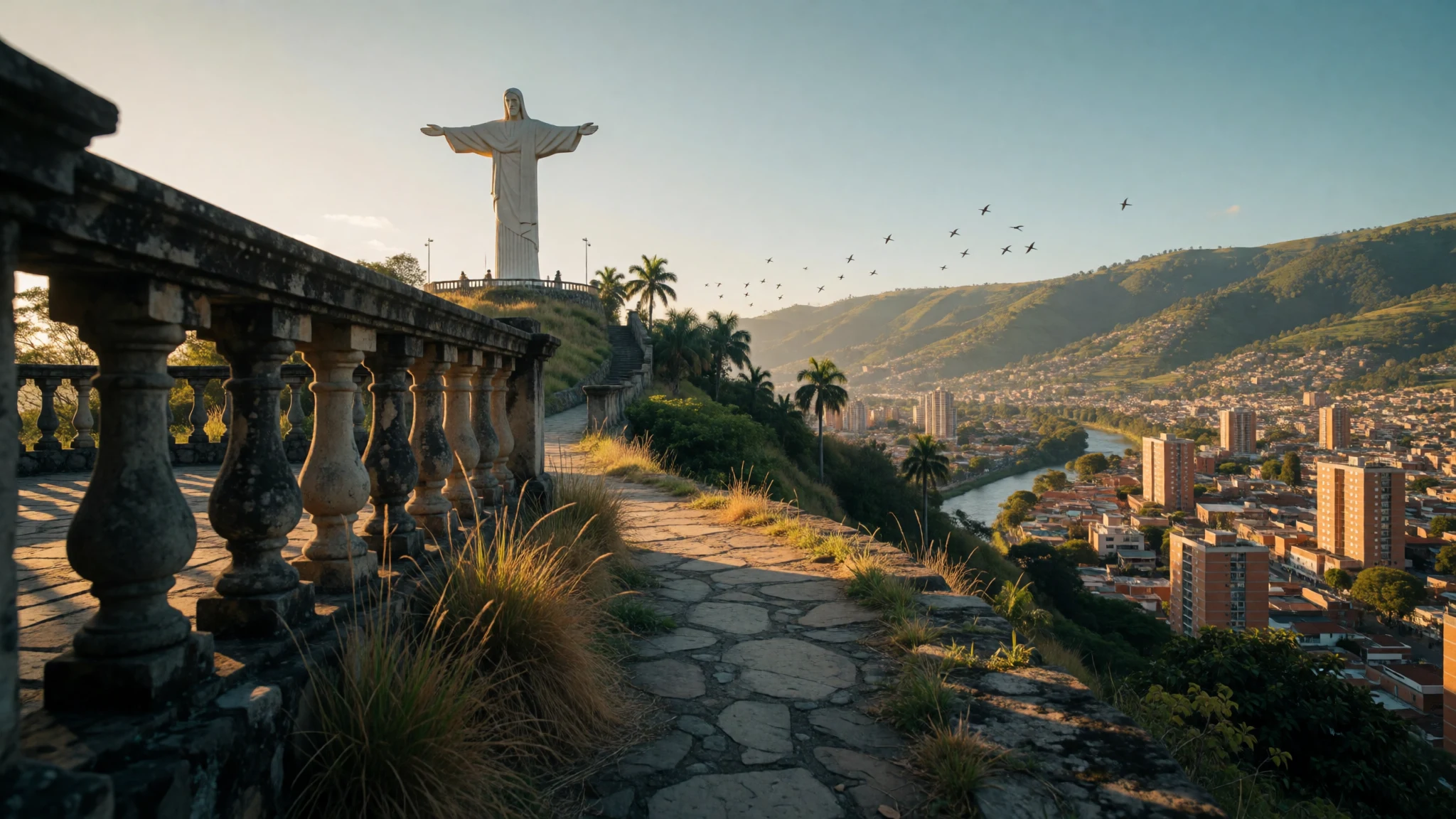
Cali is a warm valley city of salsa, river parks, Spanish-era churches and Pacific-coast cooking, with a relaxed pace once the sun drops.
The place
Cali sits in the Cauca Valley in south-west Colombia, about 1,018 metres above sea level, and is home to roughly 2.5 million people. That altitude gives it warm days and softer nights than the lowland coast, without the chill of the Andean capitals. The city is the capital of Valle del Cauca department and the main urban and economic centre of the country's south. It lies west of the Cauca River, with the green wall of the Western Cordillera rising behind it and the Farallones de Cali hills marking the skyline. Beyond that range, the Pacific port of Buenaventura is a long bus ride away, which helps explain why Cali's cooking and music carry so much of the coast. The old centre is flat and walkable, built around plazas, churches and the small Cali River, which gives the middle of town a green ribbon. Further out spread neighbourhoods of brick towers, leafy residential streets and busy avenues. To the north-east sit the industrial town of Yumbo and the international airport, Alfonso Bonilla Aragón (CLO). Cali is also a sporting city that has hosted a string of international championships. Evenings are when it comes alive: salsa clubs, open-air terraces and families strolling beside the river. It is not a showpiece city of one big monument. Its pleasures are small, local and frequent, and the heat means the day starts early while the real socialising begins after dark. A visit works best when planned around that rhythm rather than against it.
Its story
Cali's story begins well before the Spanish arrived. The Cauca Valley was home to several indigenous peoples, among them the Gorrones, the Morrones and the Jamundíes, who traded with neighbours such as the Quimbayas to the north. The gold and fine pottery these cultures left behind still fill the region's museums. When Sebastián de Belalcázar's expedition pushed into the valley, some groups, like the Timbas, simply withdrew. The Jamundíes fought hard, using poisoned darts and arrows against steel swords and early firearms, but the Spanish eventually prevailed. The chief Petecuy then gathered an alliance of many peoples and met the invaders in battle on Holy Tuesday. That was in 1536, the same year Belalcázar founded the city. After the conquest, Cali grew into a colonial town in a fertile valley, with churches and plazas set out on the usual Spanish grid, a few of which survive in the historic centre. Over the following centuries the valley's farmland gained importance, and in the modern era Cali became the main commercial hub of the south-west, drawing migrants from the Pacific coast and the surrounding highlands. That mixture is why the city feels Afro-Colombian, Andean and Spanish all at once, and why its reputation for music and sport is a twentieth-century chapter built on that blend. Visitors should know the colonial layer is thin: growth and rebuilding mean the present city is mostly modern, with older fragments tucked between.
What to see
- Cathedral of St Peter the Apostle — Plaza de Caycedo, historic centre
Cali's mother church stands on the main square of the old centre, a calm building among palms and pigeons. Inside it is cool and plain, a good place to escape midday heat. Visit in the morning, when office workers cross the plaza and the surrounding streets feel most like the real centre.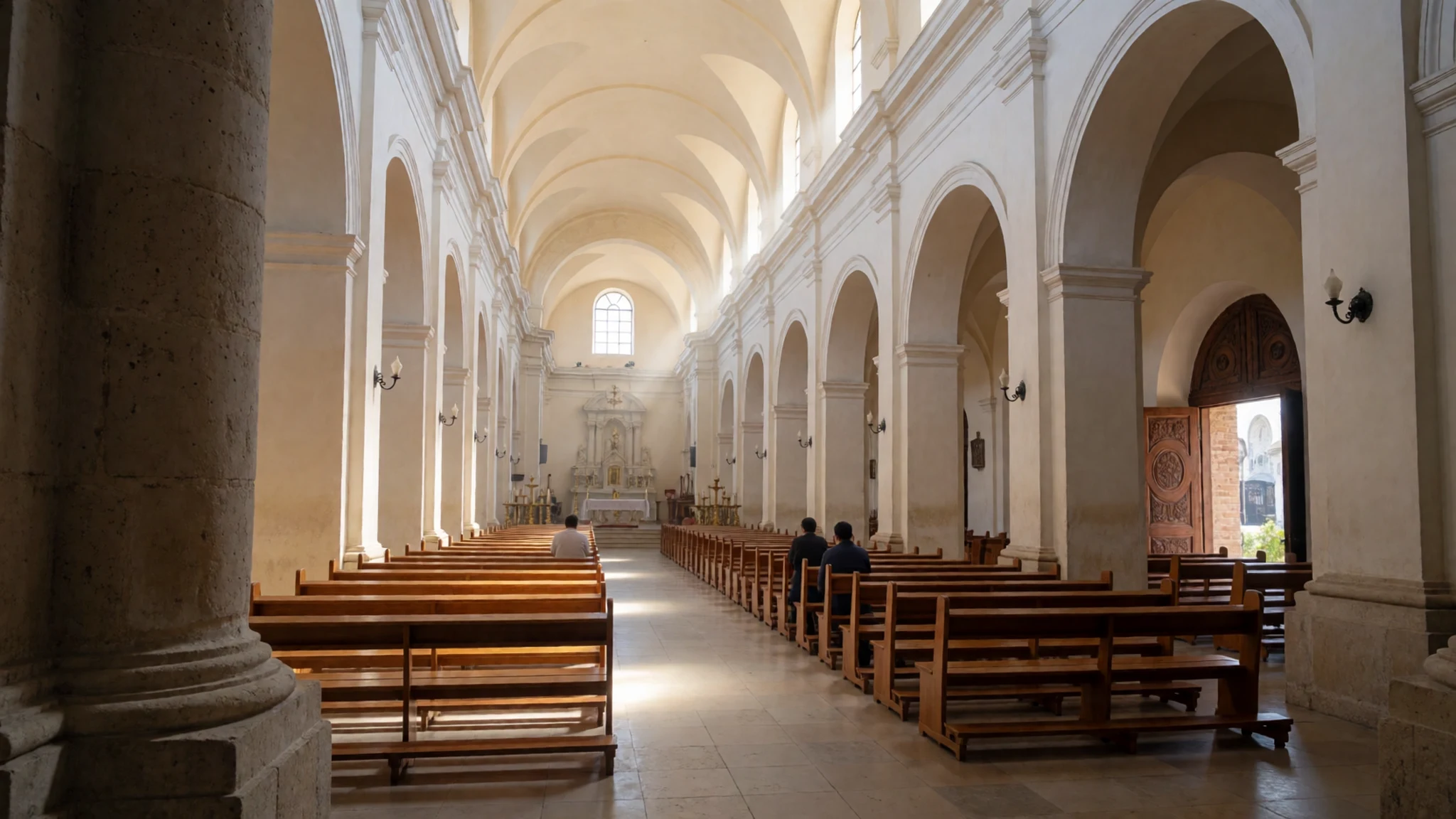
- El Gato del Río — Cali River, beside El Peñón
The River Cat is a giant sculpted cat on the bank of the Cali River, across from the El Peñón neighbourhood. Along with the Belalcázar statue and the Three Crosses, it has become a symbol of the city. Come for a stroll along the water, a photograph and the smaller cats that have gathered around it.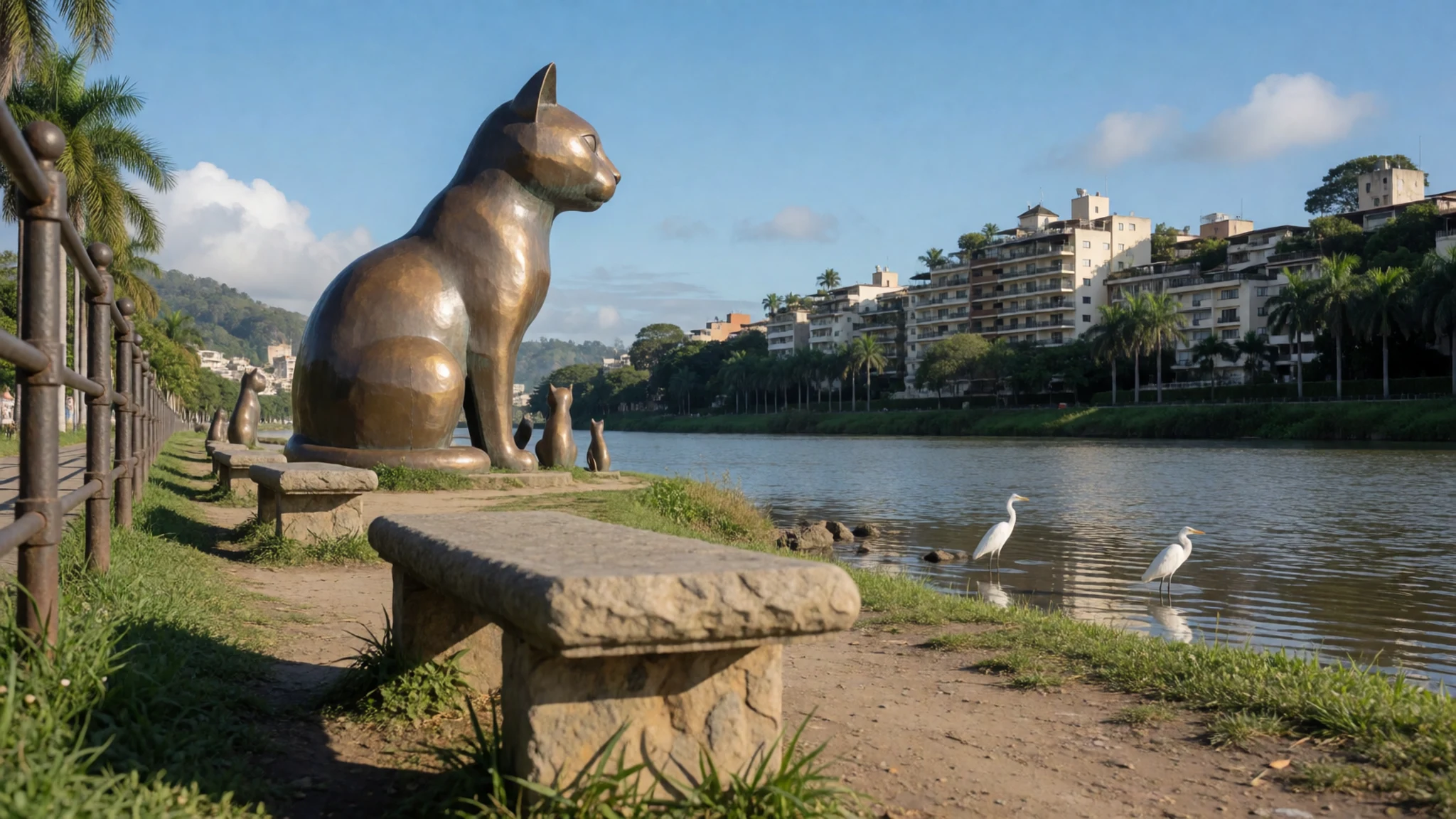
- La Merced church and archaeological museum — Downtown, historic centre
La Merced is a colonial-style church in the downtown area that also houses an archaeological museum. Its rooms show pre-Hispanic pottery and religious art from the peoples who lived in the valley before the Spanish. It is a compact visit, easy to combine with the cathedral and the gold museum nearby.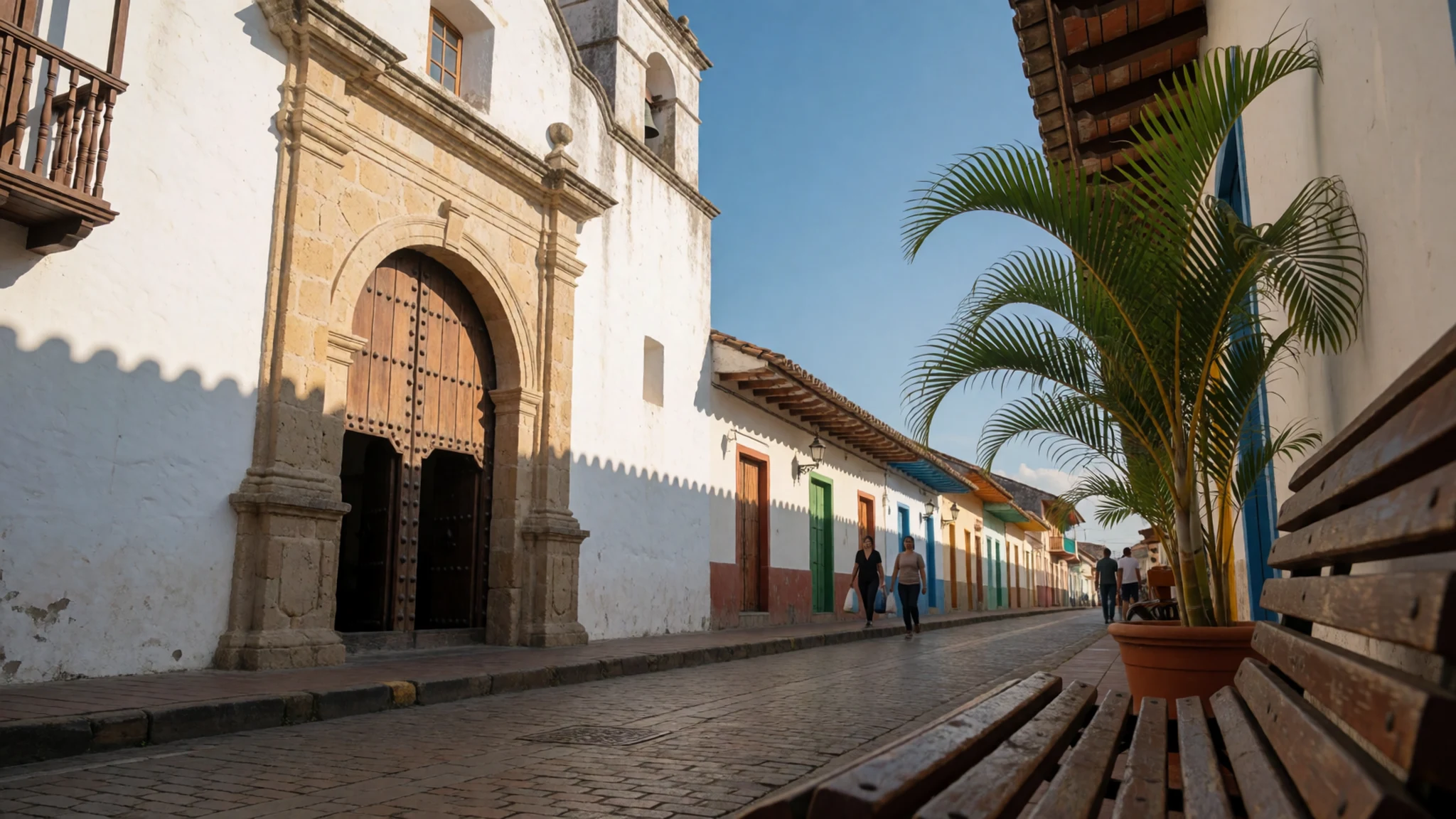
- Museo del Oro, Banco de la República — Downtown, historic centre
Cali's gold museum shows goldwork and pottery from the pre-Columbian cultures of the region, along with a small art space. It sits downtown and is quick to see. Opening days and entry terms can change, so check the official city site, https://www.cali.gov.co/, or the bank's own page before going.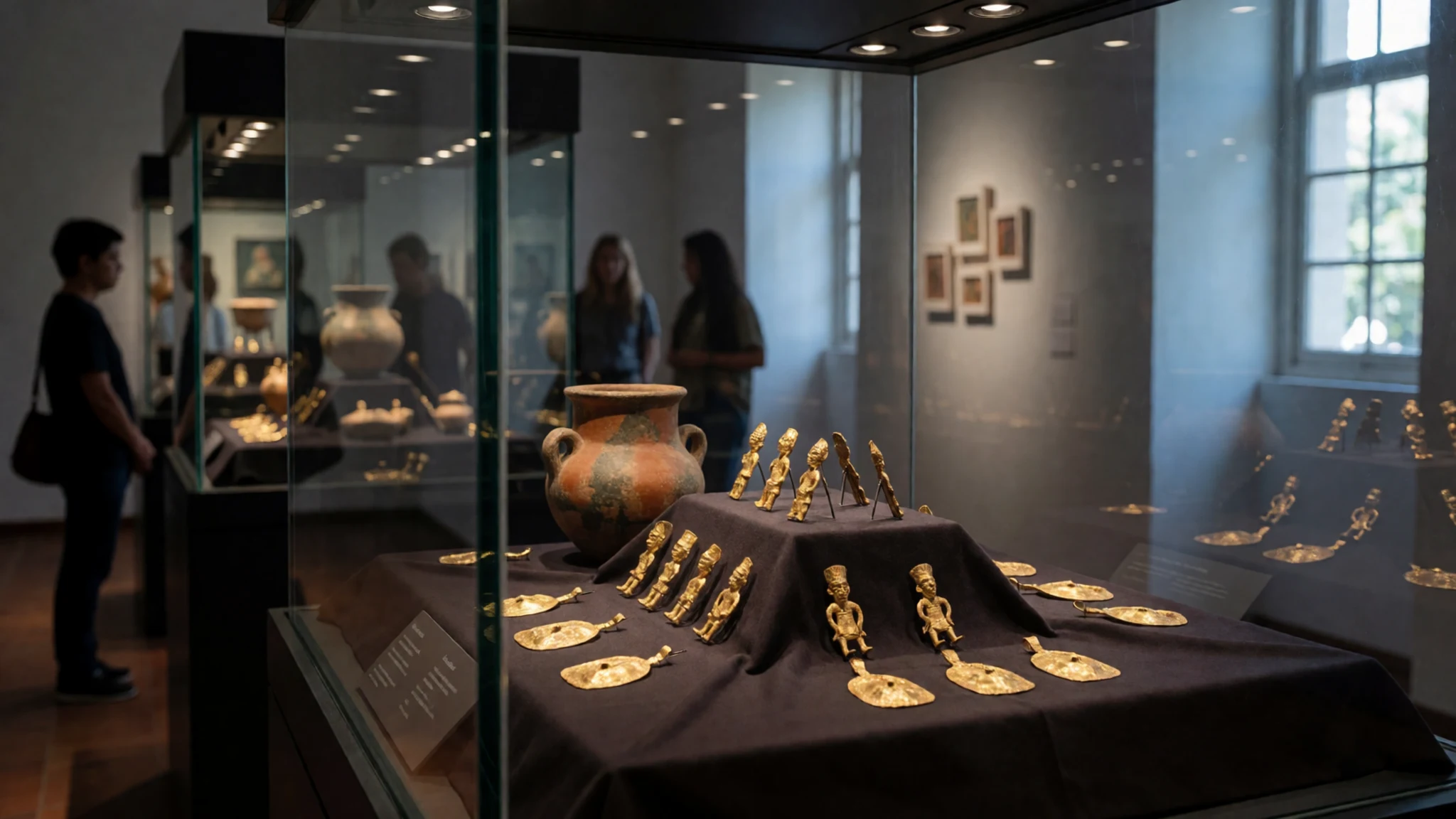
- Cristo Rey — Cristo Rey hills, west of the centre
Cristo Rey is a large statue of Christ on a hill above the city, and the view over the valley is the reason most people go. Reach it by taxi or organised transport rather than on foot, and aim for late afternoon, when the heat eases and the lights come on across Cali below.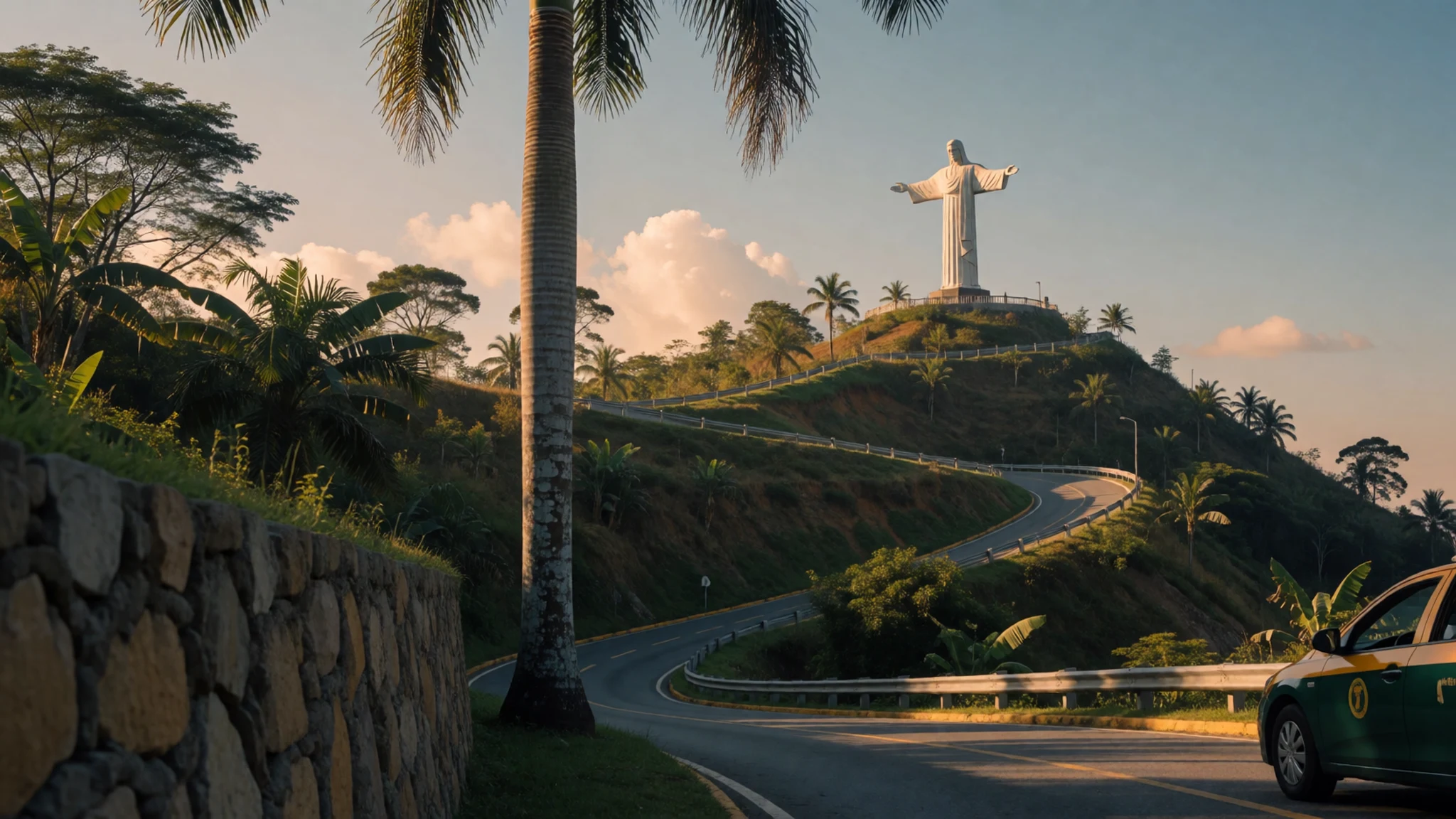
- Iglesia de San Antonio — San Antonio neighbourhood
The Iglesia de San Antonio sits on a small hill just west of the centre, with a plaza and cafés near its foot. The neighbourhood is pleasant for a walk at golden hour, with views across the rooftops. Treat it as a gentle evening stop rather than a long visit.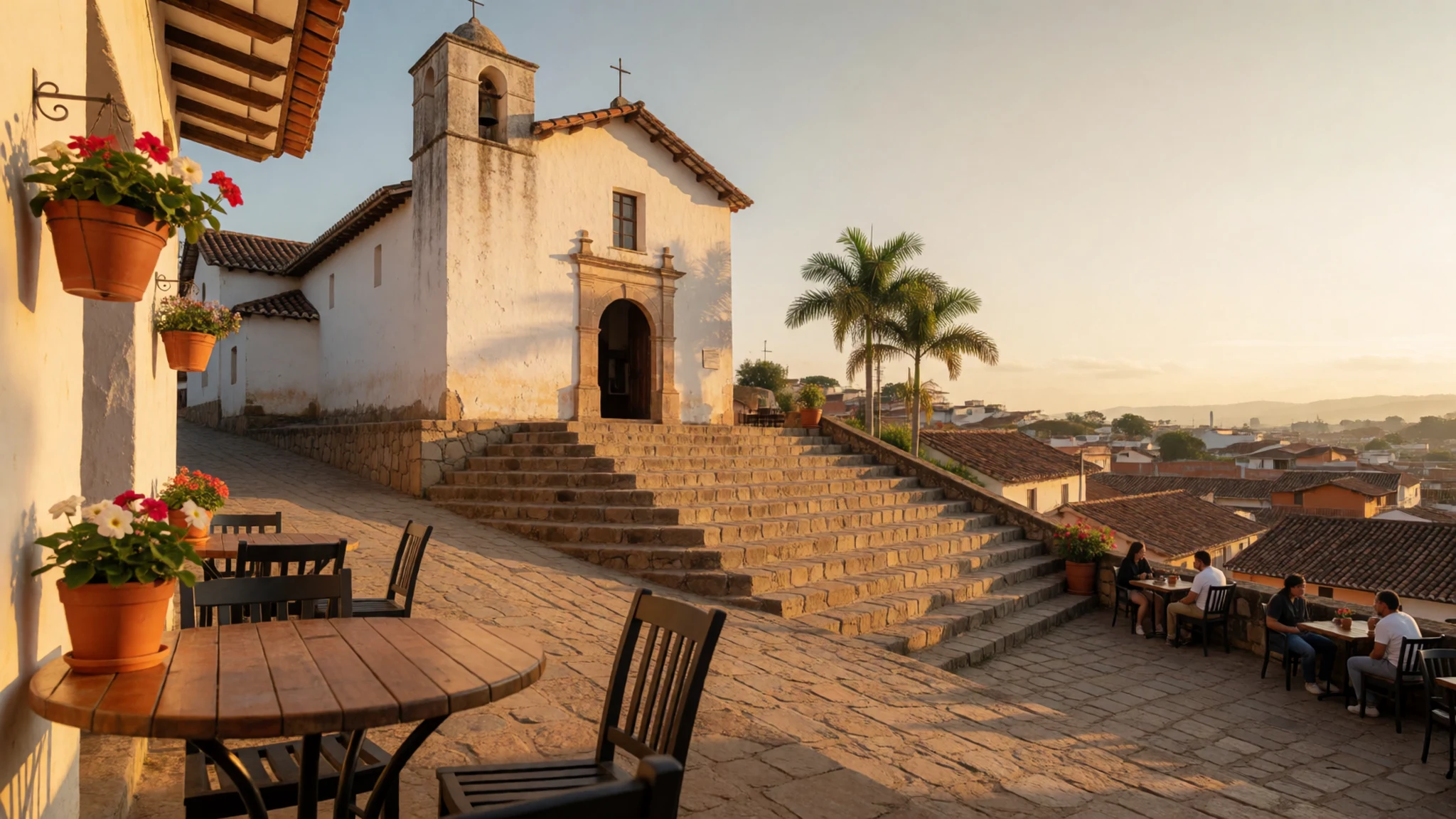
Culture
Cali's culture is shaped by music, family life and an easy sociability that locals carry from the dance floor into daily routine. Salsa is the soundtrack, and the city takes dancing seriously, from neighbourhood schools to late-night clubs. Beyond that, a handful of cultural centres anchor the arts scene. The Casa de la Cultura Proartes occupies a house that has long hosted cultural life and now holds exhibition rooms and a cinema. The Centro Cultural de Cali was designed by the Colombian architect Rogelio Salmona and houses the municipal tourism and culture offices. Lugar a Dudas, set up under the artist Oscar Muñoz, focuses on contemporary art. Alongside these institutions, the strong Afro-Colombian presence, rooted in the Pacific coast, shapes the music, food and festivals of the city. People tend to be warm and chatty, greetings matter, and plans are often loose. Weekends revolve around family meals, parks and live music, and football and dancing are good ways into a conversation. Religion is visible too, with churches busy on Sundays and during Holy Week. A night out here often begins late and is spent at outdoor tables or in a club with a live band. Greet shop staff and neighbours with a polite "buenos días" before asking for anything, and ask before photographing people, especially in churches and at dance venues.
What to wear
Cali has no single costume, because its traditions come from several regions. At festivals and folk dance shows, Afro-Colombian dancers from the Pacific coast wear wide, brightly coloured cotton skirts, white blouses and headwraps, while men wear white shirts and trousers with a kerchief. Valley country dress means a straw hat and a simple white shirt, and the woollen ruana, a poncho-like cloak, belongs more to the cooler Andean highlands than to warm Cali. These outfits appear at fairs, school events and performances, not in daily life. What people wear now is smart-casual and fitted: cotton or linen shirts, jeans, sundresses, and for the evening, salsa-ready outfits with shoes that grip the floor. Locals dress up for going out, and leather shoes or sandals are more common in clubs than worn trainers. For visitors, the climate is warm, so light, breathable cotton or linen is best, with a thin layer for air-conditioned malls and cooler evenings. Pack a small umbrella or rain jacket, since showers can arrive suddenly. Wear sturdy sandals or trainers for uneven pavements, and shoes with grip for any hill walking. In churches, cover shoulders and avoid very short shorts. Leave flashy jewellery and expensive watches at the accommodation, which helps visitors blend in.
What to eat
- Cholado — Street carts and juice stalls around the centre
Cholado is the city's signature cooling treat: shaved ice piled with chopped tropical fruit, then drenched in fruit syrups and condensed milk and topped with a wafer. Find it at street carts, juice stalls and ice-cream parlours around the centre, especially on a hot afternoon.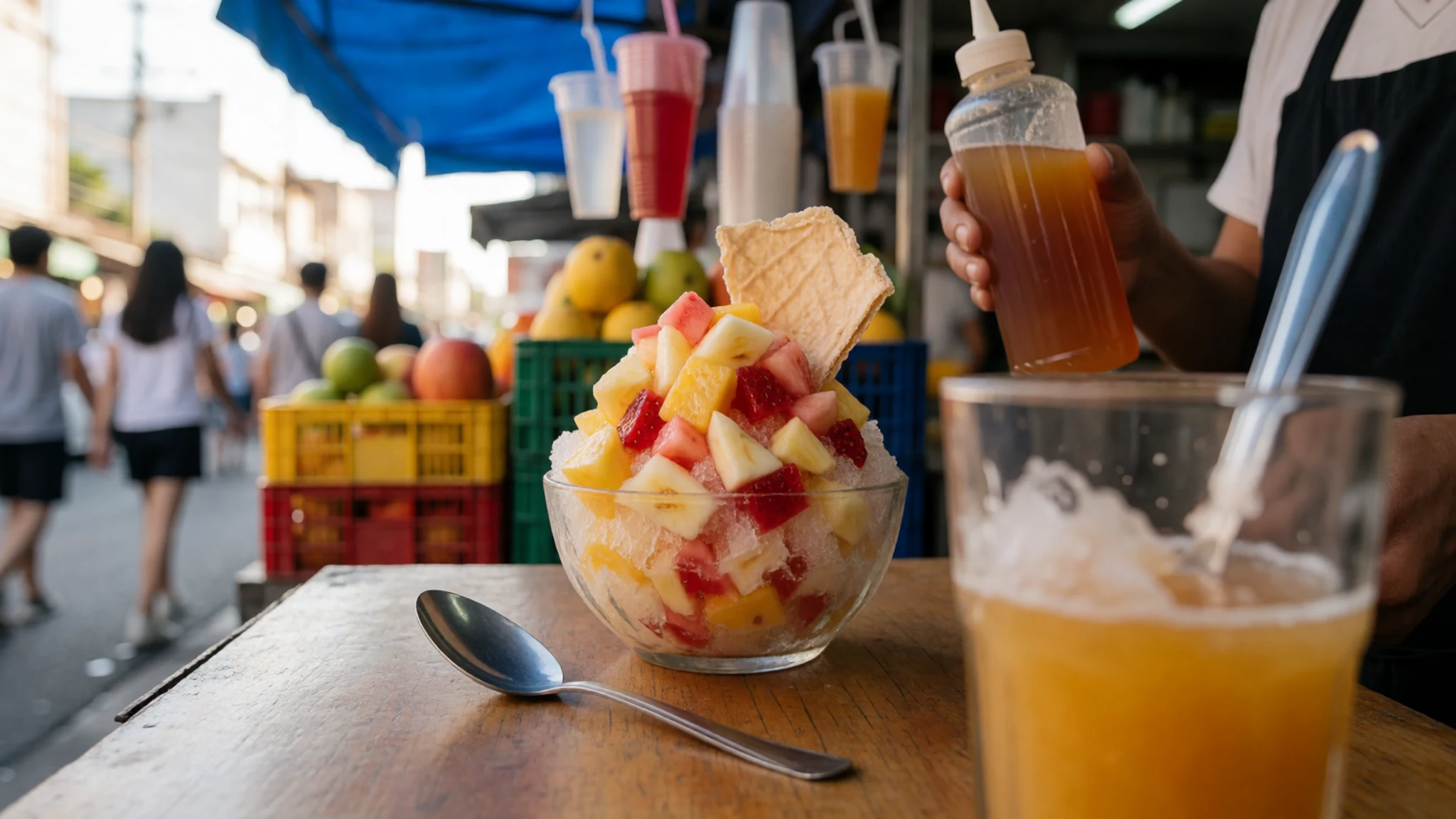
- Encocado de pescado — Restaurants serving Colombian Pacific recipes
Encocado de pescado is a Pacific-coast dish of fish simmered in a coconut sauce with onion, tomato and herbs, usually served with rice and fried plantain. Look for it at restaurants specialising in Pacific cooking.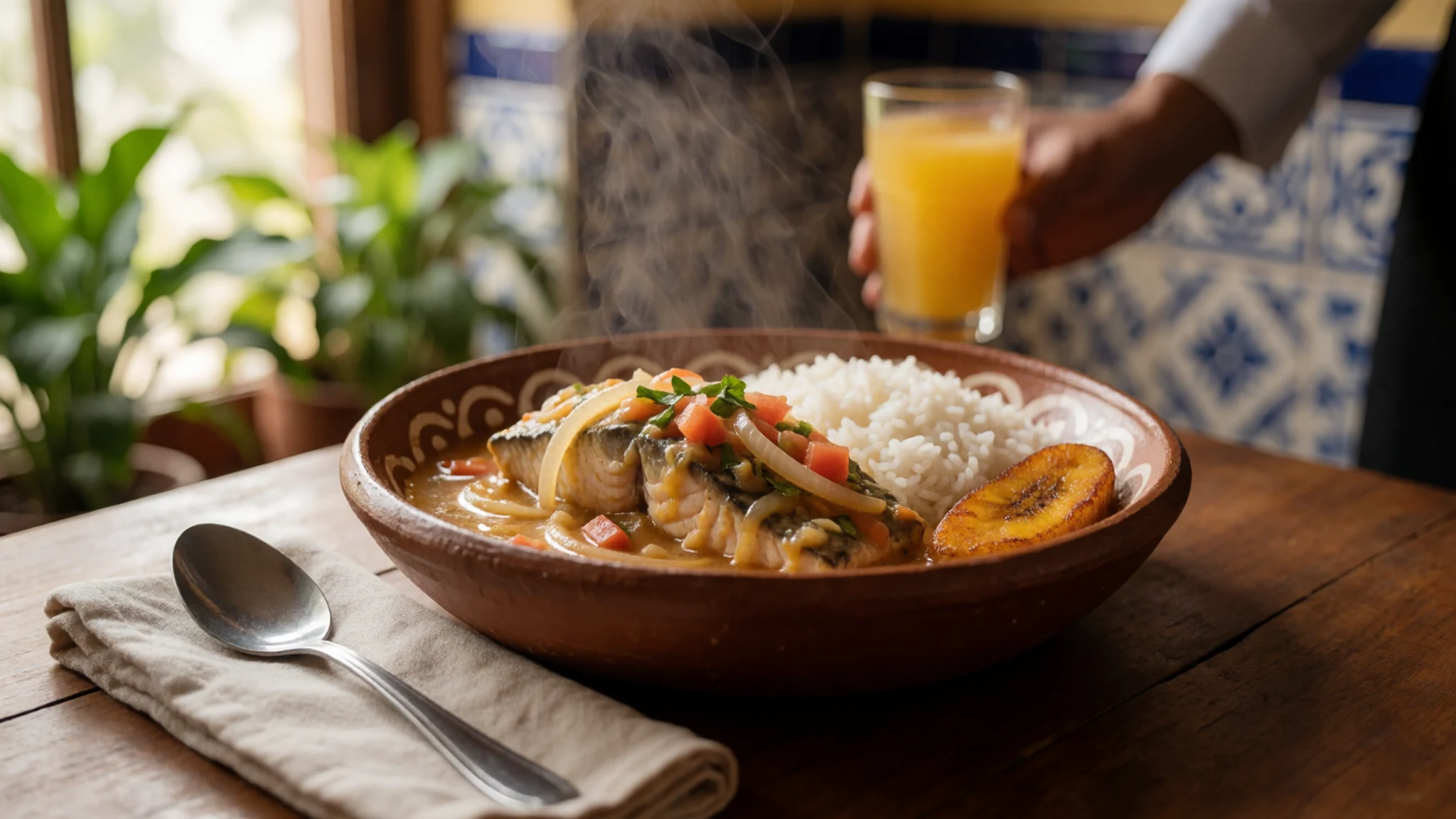
- Pandebono — Neighbourhood bakeries, early morning
Pandebono is a small, chewy bread baked from cassava starch, cheese and egg, best eaten warm from the oven. Bakeries across Cali sell it from early morning, and it is the usual partner to coffee or a morning hot chocolate. - Champús — Street stalls and traditional cafés
Champús is a chilled, lightly sweet drink of maize, lulo fruit, pineapple, panela (unrefined cane sugar), cinnamon and clove, served in a glass with a spoon. Try it at street stalls, bakeries and traditional cafés, particularly on warm days. - Aborrajado — Casual eateries serving valley and Pacific food
Aborrajado is a ripe plantain slice stuffed with cheese, dipped in batter and fried until golden, sweet and salty at once. It appears as a side or snack in restaurants serving valley and Pacific food, and at casual eateries with plantain-heavy menus. - Sancocho de gallina — Family-run eateries and market food halls
Sancocho de gallina is a hearty hen soup with plantain, cassava and potato, usually eaten at weekend lunch with rice and avocado. Family-run eateries and market food halls serve it, and the soup often draws large groups on Sundays.
Plan it
Best time. Cali is warm all year at its altitude. The drier months, roughly December to February and July to August, are easiest for walking and viewpoints; the wetter spells bring heavy showers, usually in the afternoon, but the city stays pleasant.
How long. 2–3
Getting there. Alfonso Bonilla Aragón International Airport (CLO) lies north-east of the city near Yumbo; take a taxi or minibus to the centre. Long-distance buses arrive at the main bus terminal, a short ride from the centre, with services from Bogotá, Medellín, Popayán and Buenaventura on the Pacific. Choose certified companies such as Expreso Palmira or Expreso Bolivariano.
Budget. low
Tips
- Sightsee in the morning and rest in the afternoon, when heat and showers both peak
- Use licensed taxis or ride-hailing apps after dark, and ask your accommodation which areas to avoid
- Carry a little cash for street food and small shops, and cards for larger restaurants
- Go to Cristo Rey by taxi or organised transport, in daylight
- Check the official site, https://www.cali.gov.co/, for museum opening days and event dates
Etiquette
- Greet people with a polite buenos días or buenas tardes before asking for anything
- Cover shoulders and knees when entering churches
- Ask before photographing people, especially children and worshippers
Nearby
Sources
- Wikidata Q51103 (CC0)
- Wikipedia: Cali (rev 1384639188) (CC BY-SA 4.0)
- Wikivoyage: Cali (rev 5406794) (CC BY-SA 4.0)
- Panorámica nocturna de Cali, 2023 (Futbolero) (CC BY-SA 4.0)
- Santiago de Cali panoramic view from Cristo Rey Hills (Aleko) (CC BY 3.0)
- Contrastes (KANDU) (CC BY 3.0)
- Iglesia de San Antonio, Cali (Joaquinfranke) (CC BY 3.0)
- Gato de Tejada, Cali (Mario Carvajal) (CC BY 2.5)
- Estatua de Cristo Rey, Cali (Reg Natarajan) (CC BY 2.5)
- Calima ceremonial tweezers, Walters 57262 (CC BY 3.0)
- La Merced, Santiago de Cali (Alekow) (CC BY 3.0)


