Tasik Chini
Tasik Chini, Malaysia
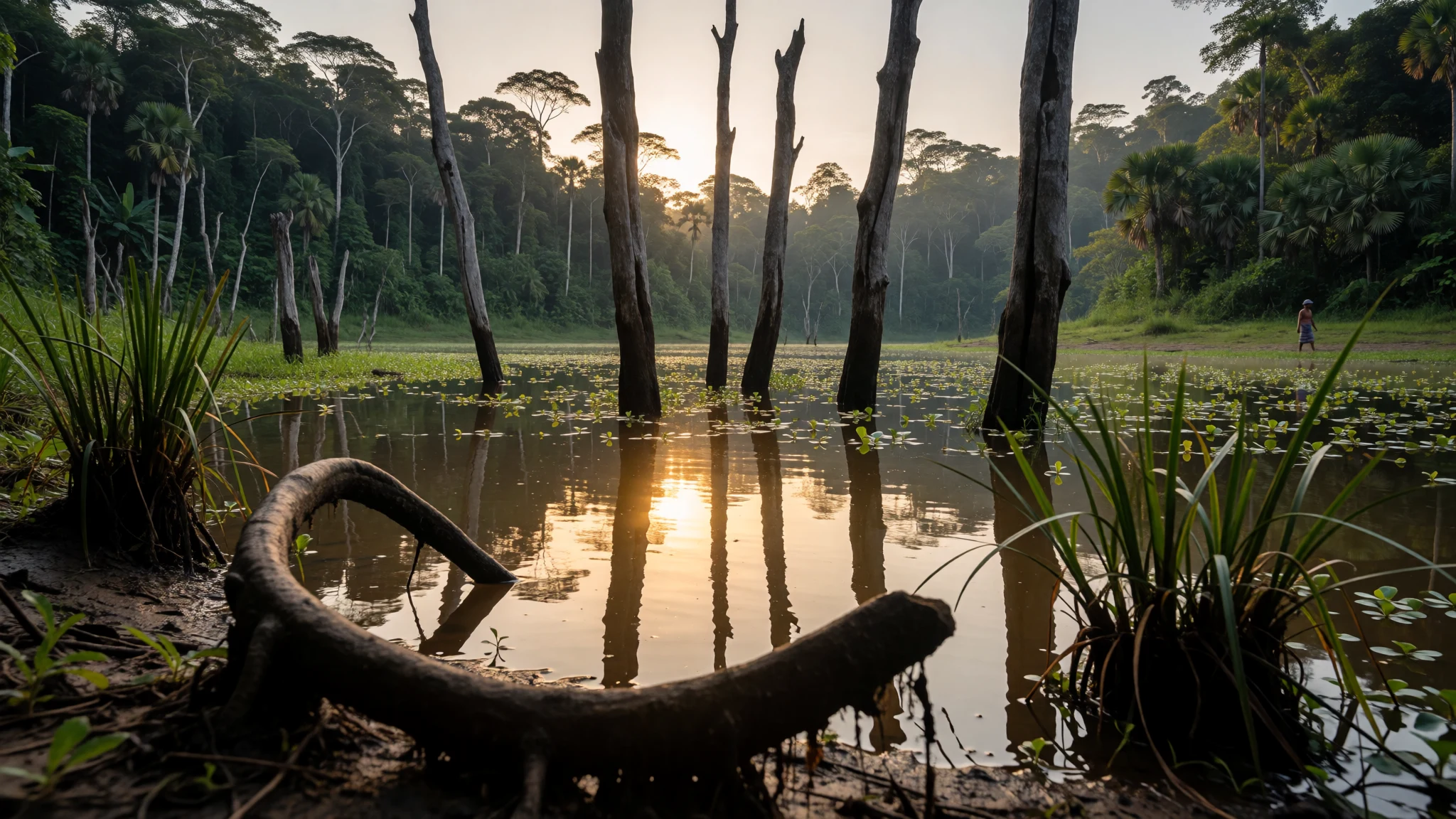
Tasik Chini is a chain of quiet freshwater lakes in Pahang where Jakun villages, rainforest and slow boat rides share one shoreline.
The place
Tasik Chini sits in Pekan District in the Malaysian state of Pahang, inland from the east coast and well away from the usual resort circuit. It is not a single sheet of water but a series of 12 connected lakes, linked by channels and fringed by forest, and it counts as the second largest freshwater lake in Peninsular Malaysia. Its outflow, the Chini River, runs on into the Pahang River, the main waterway of the state.
The shoreline is home to the Jakun, one of the Orang Asli peoples, the indigenous communities of Malaysia. Their villages sit along the water's edge and the lake remains part of daily life, a source of fish, plants and routes between settlements. The area is also a UNESCO Biosphere Reserve, one of only two in Malaysia, the other being the Crocker Range in the east of the country.
The lake is managed rather than wild. The river is dammed to hold the water level up through dry spells, which helps boats and fishing but has also upset the natural rhythm of the lake. Higher water has killed trees along parts of the shore, and visitors may see bare trunks standing in the shallows.
Expect a gentle, humid, sometimes muddy place rather than a dramatic one. The appeal is stillness, birdsong and the chance to see how a living community and a fragile ecosystem share the same water.
Its story
Tasik Chini has a human story older than any road to it. The Jakun have lived around these waters for generations, and their relationship with the lake is carried in memory, custom and local legend as much as in anything written down. One widely repeated tale tells of a dragon-like guardian that lives beneath the surface, and villagers speak of it with a mix of respect and humour. It is best treated as local lore, not as a fact the lake needs to prove.
The modern chapter is about water management and pressure on the land. To keep the lake deep through the dry season, the Chini River was dammed. That solved one problem and created another: the artificial high water disturbed the natural cycle of rising and falling, and trees on the shore drowned. Researchers, conservation bodies and the community have been arguing over how to balance these needs ever since.
The lake's recognition as a UNESCO Biosphere Reserve reflects an effort to treat the place as a working landscape in which people, wildlife and visitors all have a stake. Tourism is part of that picture. Done well, it brings income to Orang Asli families and gives outsiders a reason to care about the lake's health.
The story is therefore unfinished. Tasik Chini is less a monument to the past than a case study in how a community and a delicate freshwater system try to stay in balance.
What to see
- A boat trip across the lakes — Main jetty area, Tasik Chini
Tasik Chini rewards a slow boat ride more than any single viewpoint. Local boatmen take visitors through the channels linking the lakes, past forested banks and stands of floating plants. Go early if possible, when the light is soft and the water is calm. Agree the route and duration before setting off.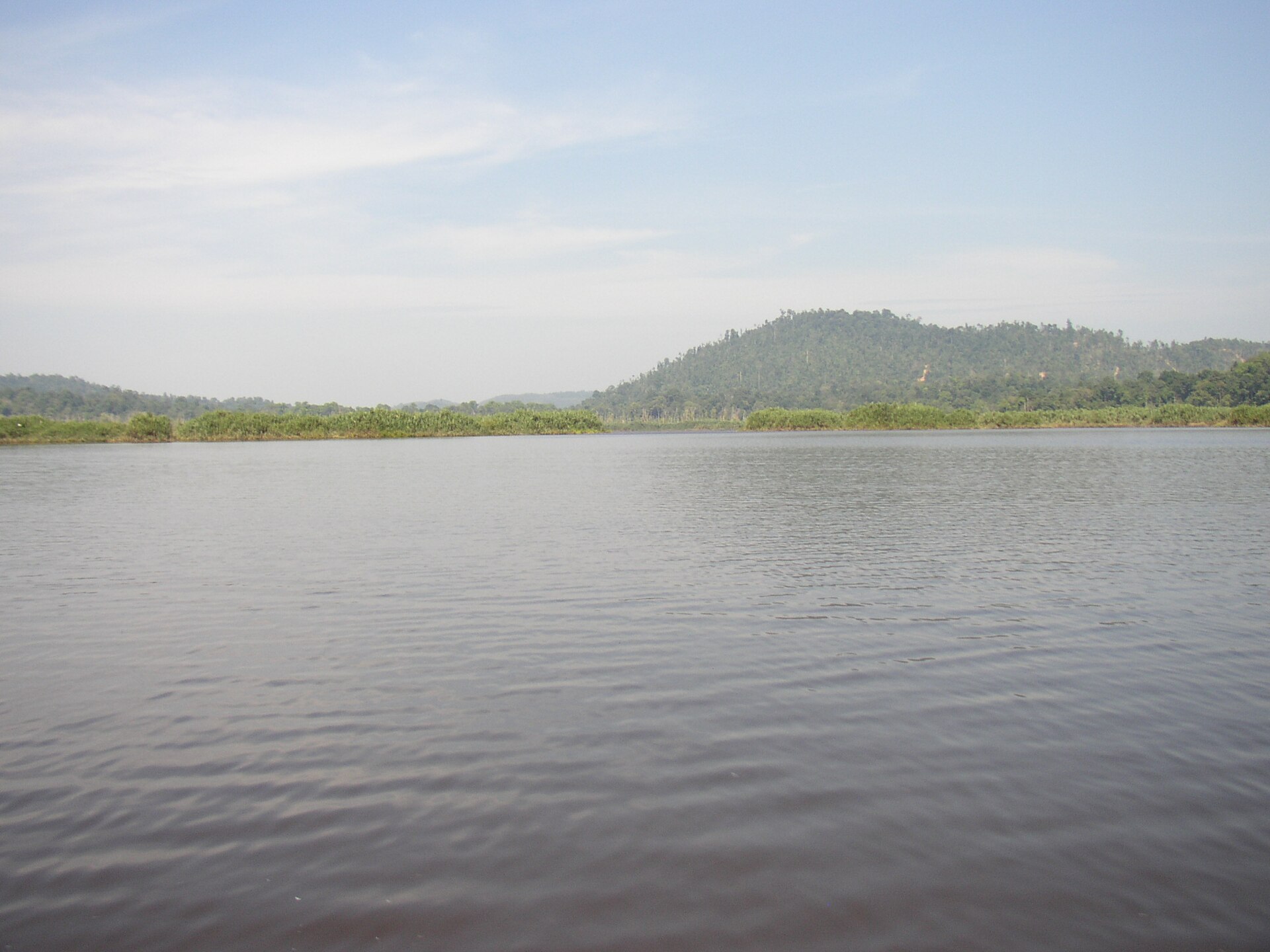
- Jakun villages on the shore — Lakeshore settlements
The villages around Tasik Chini are home to the Jakun community, and a respectful visit offers a glimpse of how people live beside the water. Stay on the paths, ask before taking photographs, and consider buying crafts or a meal locally so that the money stays in the community. - The information boards and visitor area — Visitor area near the jetty
Near the lake there are information boards explaining the ecology, the wildlife and the biosphere reserve. They are worth a few minutes before getting on the water, because they make sense of what is seen later, such as the dead trees, the linked lakes and the conservation efforts under way.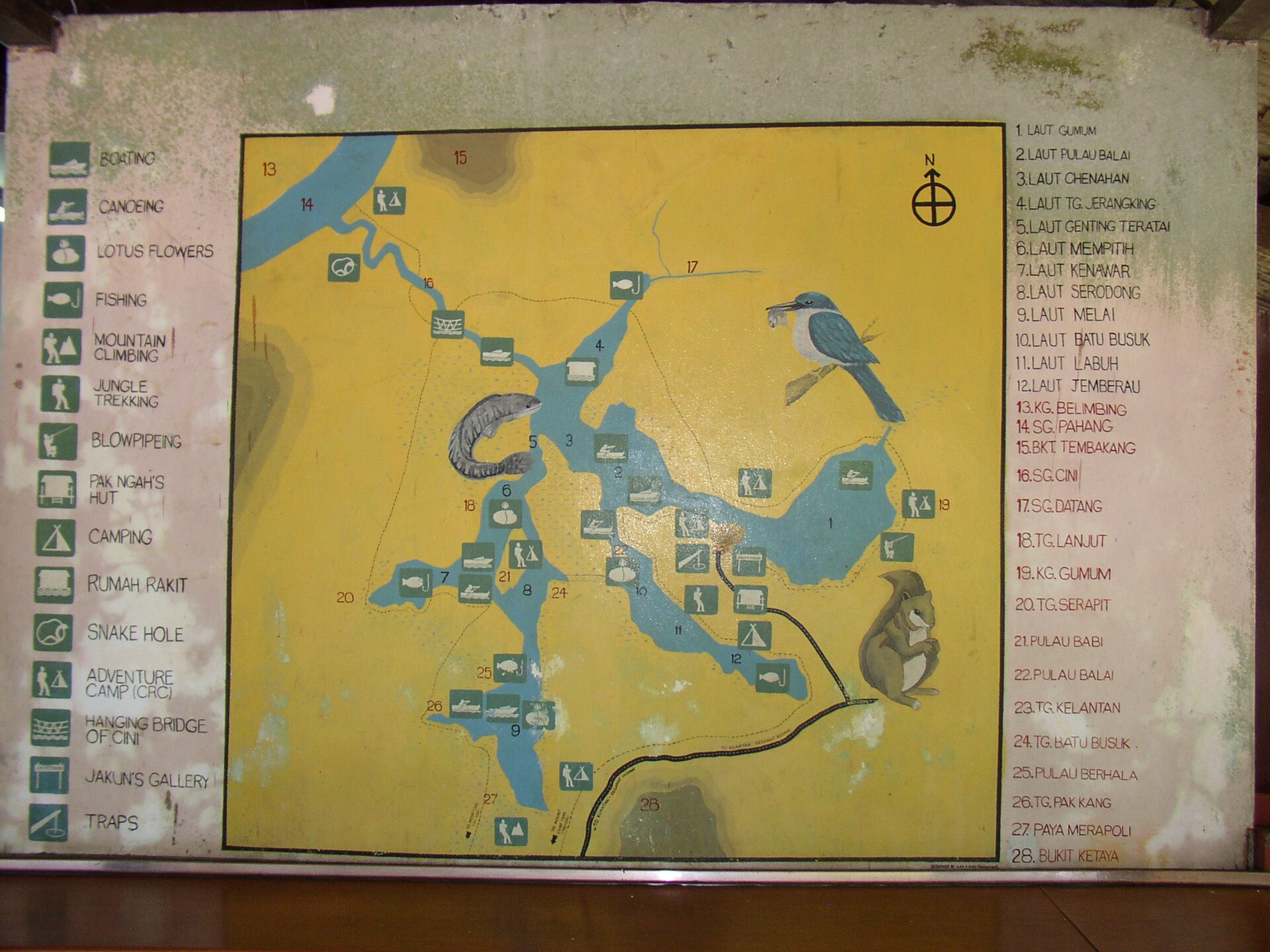
- Forest edge walks — Forest fringe around the lakes
Short walks along the forested margins show a different side of Tasik Chini: damp ground, tall trees, insects, birds and the occasional lizard. Wear closed shoes, carry water and keep to marked tracks. Local guides can point out plants and animal signs that are easy to walk past unnoticed. - Still water and shoreline views — Lake margins
Several spots along the shore give open views across the water, where the tea-coloured surface mirrors the sky and the tree line. Late afternoon is pleasant, though heat and humidity can linger. Bring insect repellent, and keep voices low to improve the chance of spotting waterbirds.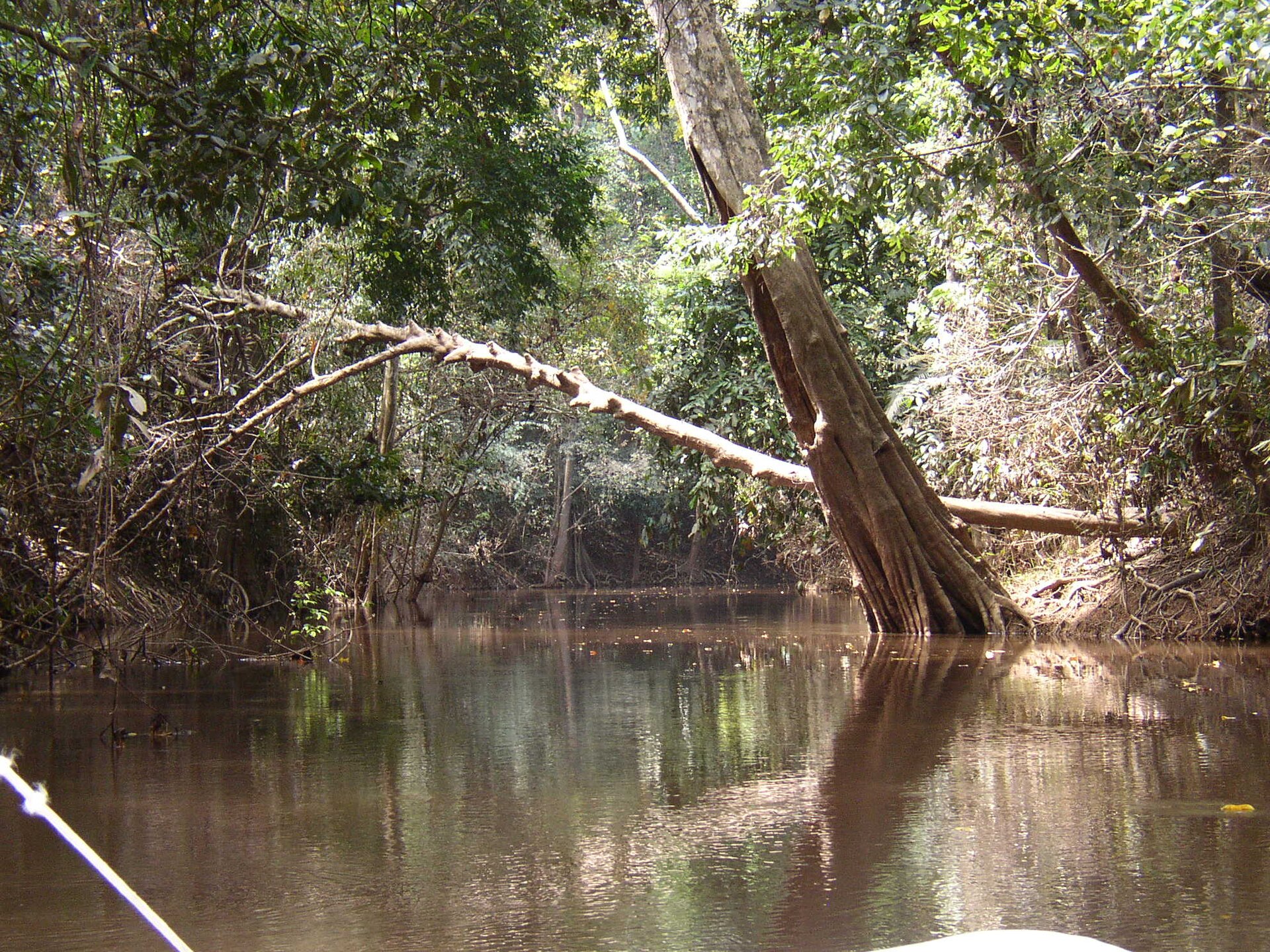
Culture
Tasik Chini is, above all, the home of the Jakun, one of the Orang Asli peoples of Peninsular Malaysia. Their culture is tied to the forest and the lake: fishing, gathering plants, building from natural materials and passing on knowledge through families and stories. Visitors will also meet Malay communities in the wider district of Pekan, so the region is a mix of traditions, languages and religious practice, with Islam widely followed in the surrounding state.
Many Orang Asli families now balance traditional livelihoods with wage work, small tourism businesses and handicraft sales. That mix is worth keeping in mind. A village is not a museum, and the people living in it are managing change, land questions and environmental pressure while also running ordinary households.
Good visits are usually arranged through local guides and boat operators from the community, which keeps income local and gives a clearer sense of what is appropriate. Ask questions, listen to the answers and accept that some places, stories or ceremonies may not be open to outsiders.
The lake itself carries cultural weight, with legend, memory and subsistence all bound up in it. Treating it with care, by not littering, not disturbing wildlife and not wandering into private land, is part of respecting the people who depend on it. Always ask permission before photographing residents or their homes, and respect a refusal without argument.
What to wear
Tasik Chini's Jakun community has historically made clothing from natural materials such as bark cloth and woven plant fibres, suited to forest life and a hot, wet climate. Detailed practice varies between families and settlements, and much of it survives mainly in craft, ceremony and memory rather than daily wear. Woven items made from forest plants, such as baskets and mats, remain part of local craft work and may be on sale in villages.
Day to day, people around the lake dress much like rural Malaysians elsewhere: cotton T-shirts, shirts, sarongs or long skirts, light trousers and rubber sandals or boots for muddy ground. In nearby Malay communities, women often wear the baju kurung, a loose long tunic and skirt, and many wear a headscarf. Men may wear a baju Melayu or simple shirts and trousers, especially for Friday prayers and festivals.
Visitors should dress for heat, humidity and sudden rain. Lightweight, quick-drying long sleeves and trousers help against sun and insects. Shoulders and knees should be covered in villages and when passing mosques or surau, out of courtesy to local norms. Bring a hat, a light rain jacket and sandals that grip wet boat steps. Closed shoes or trail shoes are better for forest walks, and a spare dry top is useful after a boat ride.
What to eat
- Ikan patin masak tempoyak — Local eateries in Pekan and nearby kampung
A Pahang favourite in which river catfish is simmered in a sour, funky sauce of fermented durian. It is an acquired taste but a strong marker of regional cooking. Look for it at family-run eateries in Pekan and the villages near the lake. - Ikan bakar — Roadside stalls and riverside eateries in the district
Grilled fish, usually brushed with a spiced marinade and served with rice, sambal and fresh greens. Freshwater and sea species both appear depending on the day's catch. It is simple, filling food and an easy choice for first-time visitors. - Gulai and kampung curries — Warung (small family eateries) around the lake and Pekan
Coconut-based curries of fish, chicken or vegetables, thick with turmeric, chilli and lemongrass. They are served with rice and often a side of ulam, raw herbs and leaves. Order a few dishes and share them for a fuller picture of home cooking. - Nasi lemak — Morning stalls and small cafés in nearby towns
Rice cooked in coconut milk and served with sambal, fried anchovies, peanuts, cucumber and egg. It is a Malaysian breakfast staple that also works as a cheap, quick lunch before or after a boat trip. Flavours differ from stall to stall. - Teh tarik and local kopi — Any kopitiam or roadside drinks stall
Sweet milky tea pulled between jugs to give it a froth, alongside strong, sugary coffee served in small glasses. Both are reliable refreshment in the humidity. Ask for less sugar if preferred, or choose unsweetened tea when available.
Plan it
Best time. Roughly March to August is a sensible window for drier, easier days on the water, though rain can come at any time in Malaysia's humid climate. The northeast monsoon towards the end of the year can bring heavy rain to the east coast, which may affect boat trips and road conditions, so check local advice before travelling.
How long. 1–2
Getting there. Most visitors fly into Kuala Lumpur, then continue by road across Pahang towards Pekan District, with the final stretch usually by car or arranged transfer to the lake. Public transport to the lake itself is limited, so a hired car or a tour with a local operator is the practical choice.
Budget. low
Tips
- Start early for cooler air and calmer water
- Arrange boats and guides locally and agree the route first
- Carry water, insect repellent and a rain layer
- Bring cash for village purchases, as card use may be patchy
- Check road and weather conditions before setting out
Etiquette
- Ask before photographing residents or their homes
- Dress modestly in villages and keep to marked paths
- Take all rubbish away and do not disturb wildlife
Nearby
Sources
- Wikidata Q3237429 (CC0)
- Wikipedia — Chini Lake (rev 1365916620) (CC BY-SA 4.0)
- Wikivoyage — Chini Lake (CC BY-SA 4.0)
- Photo: Lake Chini 2 — Biberbaer (Public domain)
- Photo: Location map of Malaysia — Uwe Dedering (CC BY 3.0)
- Photo: Information Board at Lake Chini — Biberbaer (Public domain)
- Photo: Information Board at Lake Chini II — Biberbaer (Public domain)
- Photo: Lake Chini — Biberbaer (Public domain)
- Photo: KadFon Tin Mining — Tofeiku (CC BY-SA 4.0)
- Photo: The beauty (Tasik Chini 01) — Rubenjoker (CC BY-SA 4.0)
- Photo: The beauty (Tasik Chini 02) — Rubenjoker (CC BY-SA 4.0)


