Tanais
Tanais, Russia
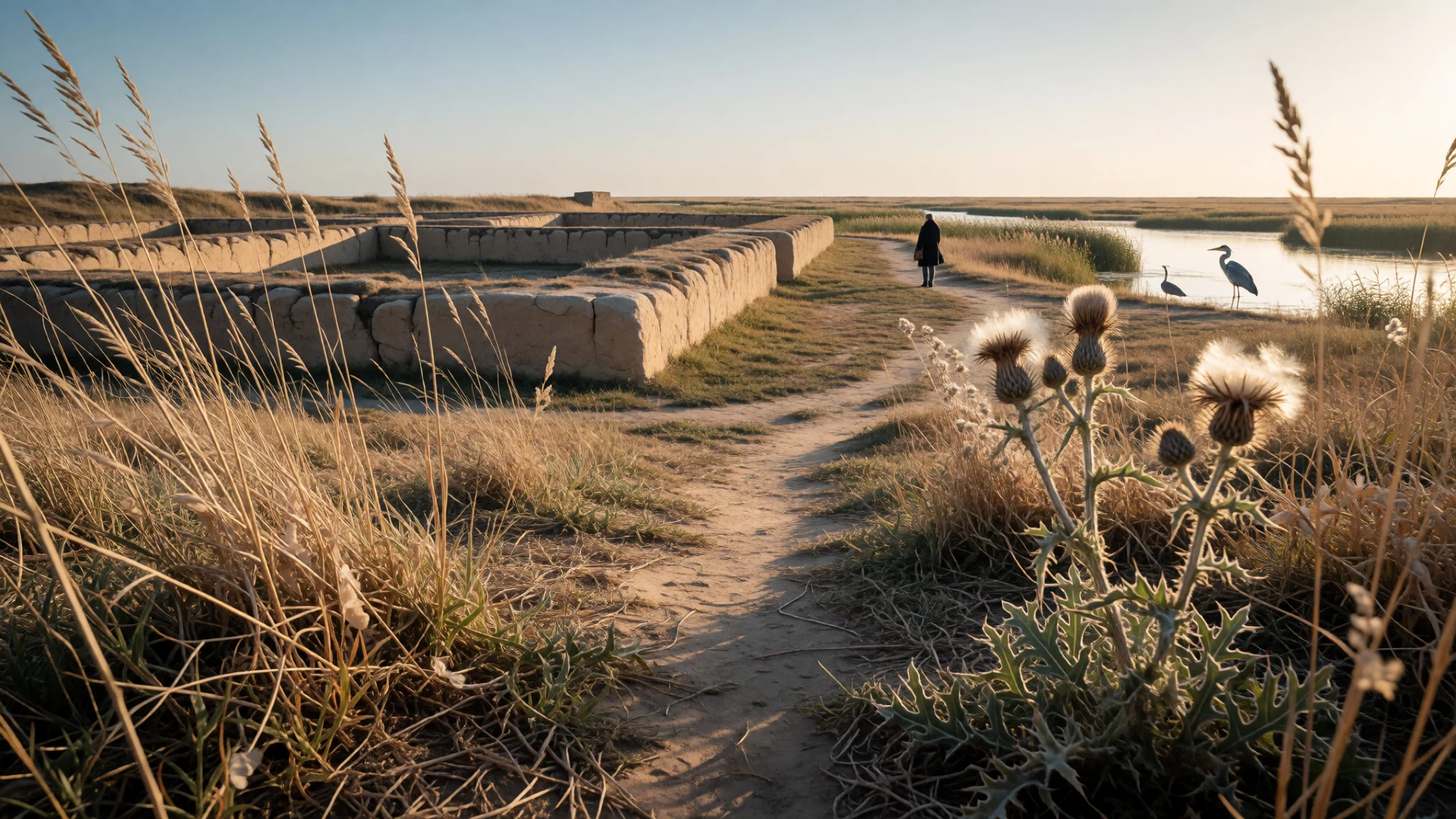
Tanais is a Greek trading town on the edge of the steppe, where ruined walls and a museum show how two worlds met.
The place
Tanais stands in the Don delta, on the north-eastern shore of the Sea of Azov, near the village of Nedvigovka in the Rostov region. The ancient Greeks knew the surrounding wetlands as the Maeotian marshes. Today the site is an archaeological museum-reserve, a protected area of Russia, and it is open ground: low foundations, reconstructed stretches of wall, grass, wind and a great deal of sky.
The city was founded around 300 BCE by Greeks from the Bosporan kingdom, and it sat at the very edge of the Hellenistic world. That position was the whole point of it. Greek merchants from the Black Sea coast met nomads from the steppe here, and the town worked as a marketplace between two ways of life. The ancient geographer Strabo called it a common trading post for the nomads of Europe and Asia.
The population was mixed from early on. Inscriptions show a civic body split into two groups, the Hellenes and the Tanaitai, each with its own officials, and many residents carried Iranian names. That blend is what makes Tanais more interesting than a simple colony: it was a frontier town where Greek institutions were adopted by people of several origins.
For a visitor the appeal is atmosphere and context rather than monuments on the scale of Athens or Rome. The ruins are modest, the setting is wide and quiet, and the museum fills in what the stones cannot say. It suits people who like archaeology, maps and empty horizons, and who are content to read a landscape slowly.
Its story
Tanais was not the first Greek foothold in the Don delta. Pliny the Elder preserved a note that several peoples held the area before the Bosporans, including Carians and Clazomenians. Archaic Greek pottery has been pulled from the seabed of Taganrog Bay, and an underwater survey in 1960 confirmed a submerged settlement. Some scholars read it as an early trading post, possibly planted from Miletus, and a few even call it the original Tanais, though that is disputed.
A large fortified settlement at Elizavetovka, on an island in the delta, later became the main centre of exchange. One scholar argued it was a native town drawn into Greek trade rather than a colony: its pottery was mostly handmade, its houses were wattle and daub, and its graves held weapons, quivers and horse burials in steppe fashion.
Then came Tanais itself, founded by Bosporan Greeks in the early third century BCE. It grew into a major market. Its imports were overwhelmingly wine and oil jars from Rhodes, which show up in the amphora stamps found by excavators. Exports are harder to trace, but Strabo names slaves and hides, and fish was probably sold too. He also says the nomads blocked the river upstream, which made Tanais the furthest point Greek traders could reach.
The city's fortunes were not smooth. King Polemon sacked it around 8 BC after it refused to obey him, and the burned western district was never reoccupied. The city nevertheless continued for centuries, as inscriptions of the second and third centuries AD show.
What to see
- The excavated city — Nedvigovka, Myasnikovsky district
The main attraction is the open site itself, where foundations of houses, streets and defensive walls trace the layout of the Greek town. Reconstructed sections help the eye. Walk the whole circuit slowly, ideally with the museum's plan, and look for the burned western district that marks Polemon's sack.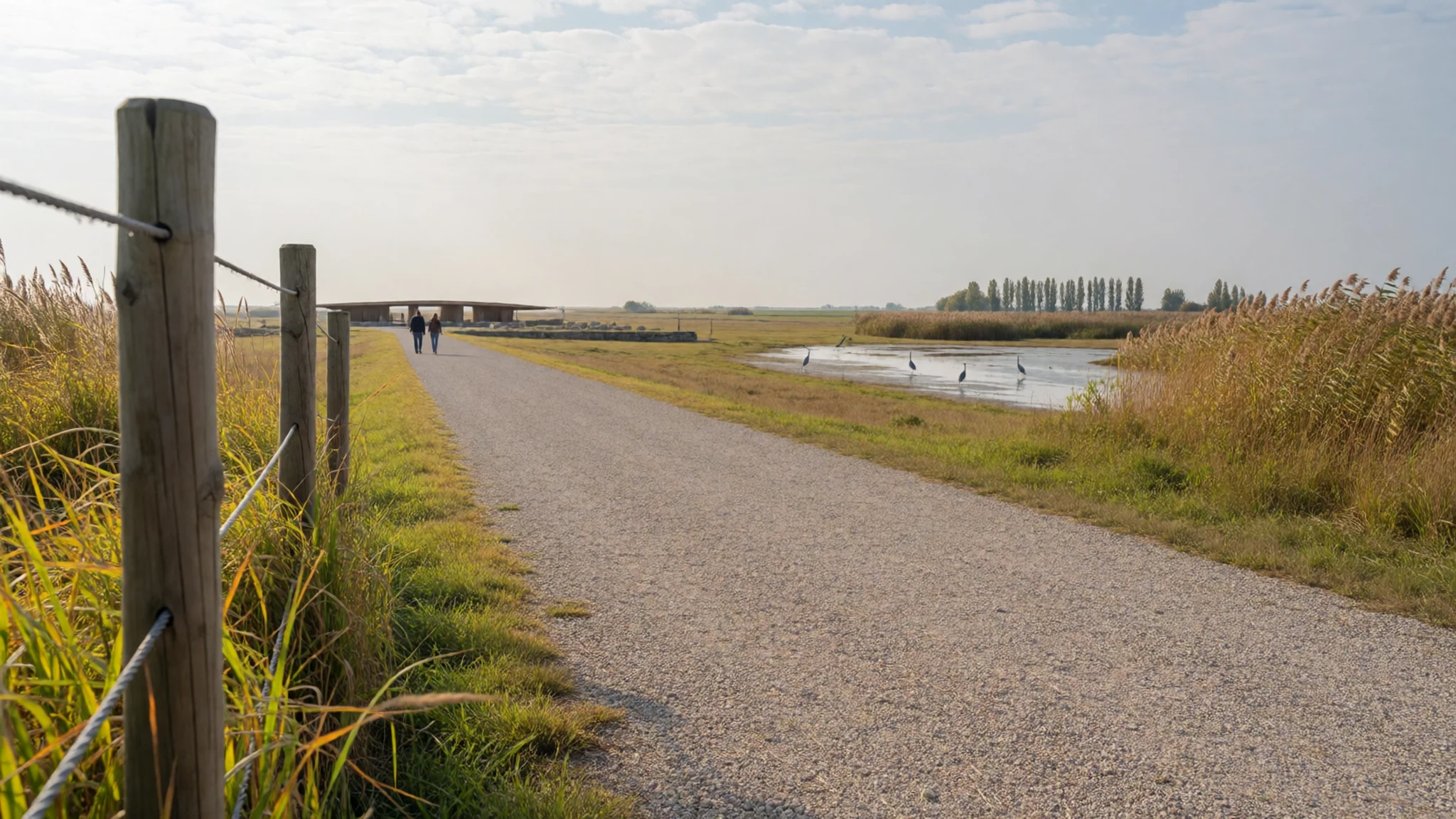
- The entrance and museum buildings — Site entrance
The entrance area gathers the visitor facilities and the museum displays. Finds from the digs, such as amphorae, inscriptions and everyday objects, explain who lived here and what they traded. Start here before heading out, since the ruins make far more sense with the exhibits fresh in mind.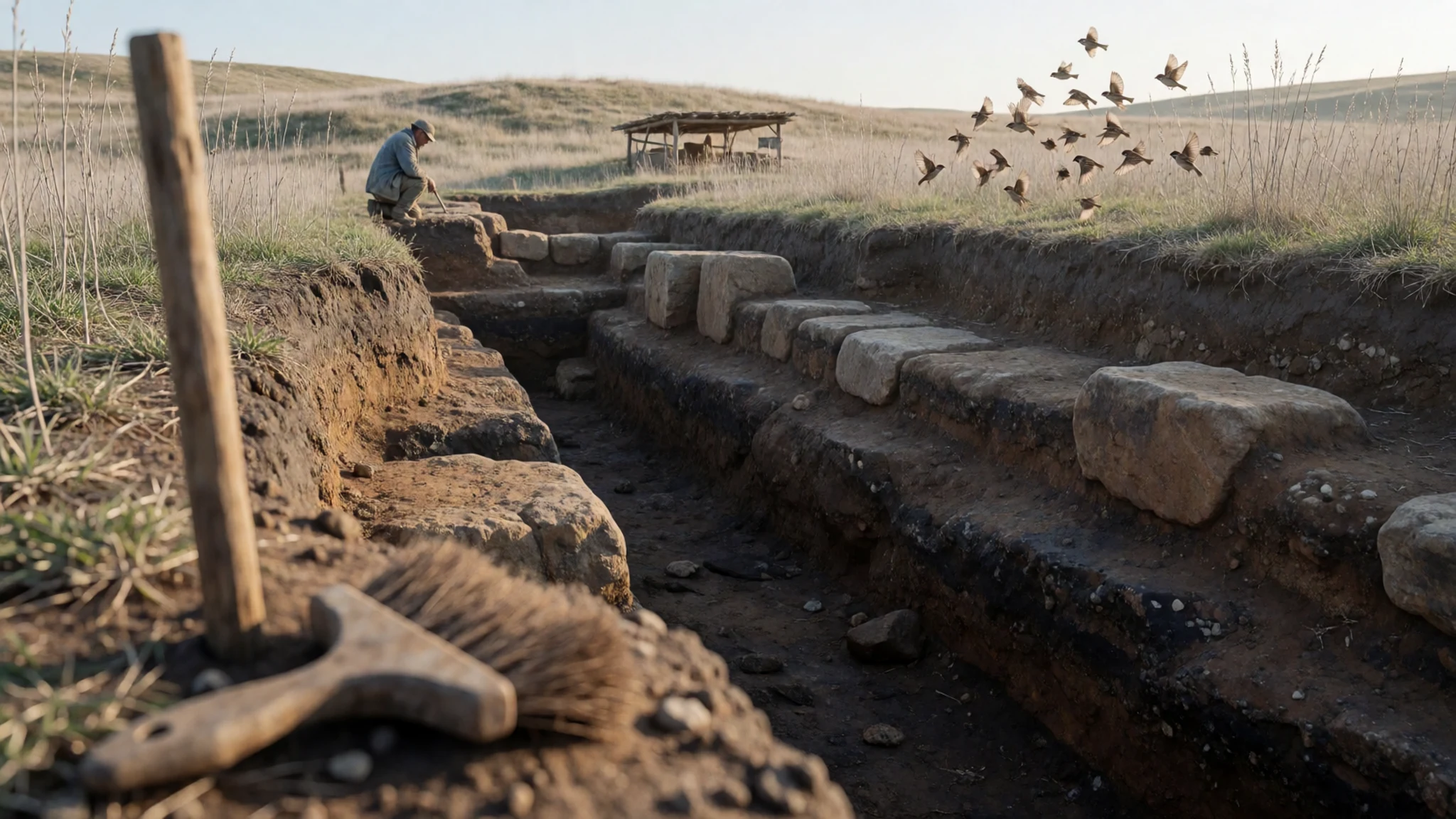
- Inscriptions and dedications — Museum displays
Tanais yielded many stone inscriptions, including dedications to Apollo, the river god Tanais and the god Theos Hypsistos. They reveal religious life and the two civic groups of the town. Check the museum for original pieces and ask staff which texts are on display on the day.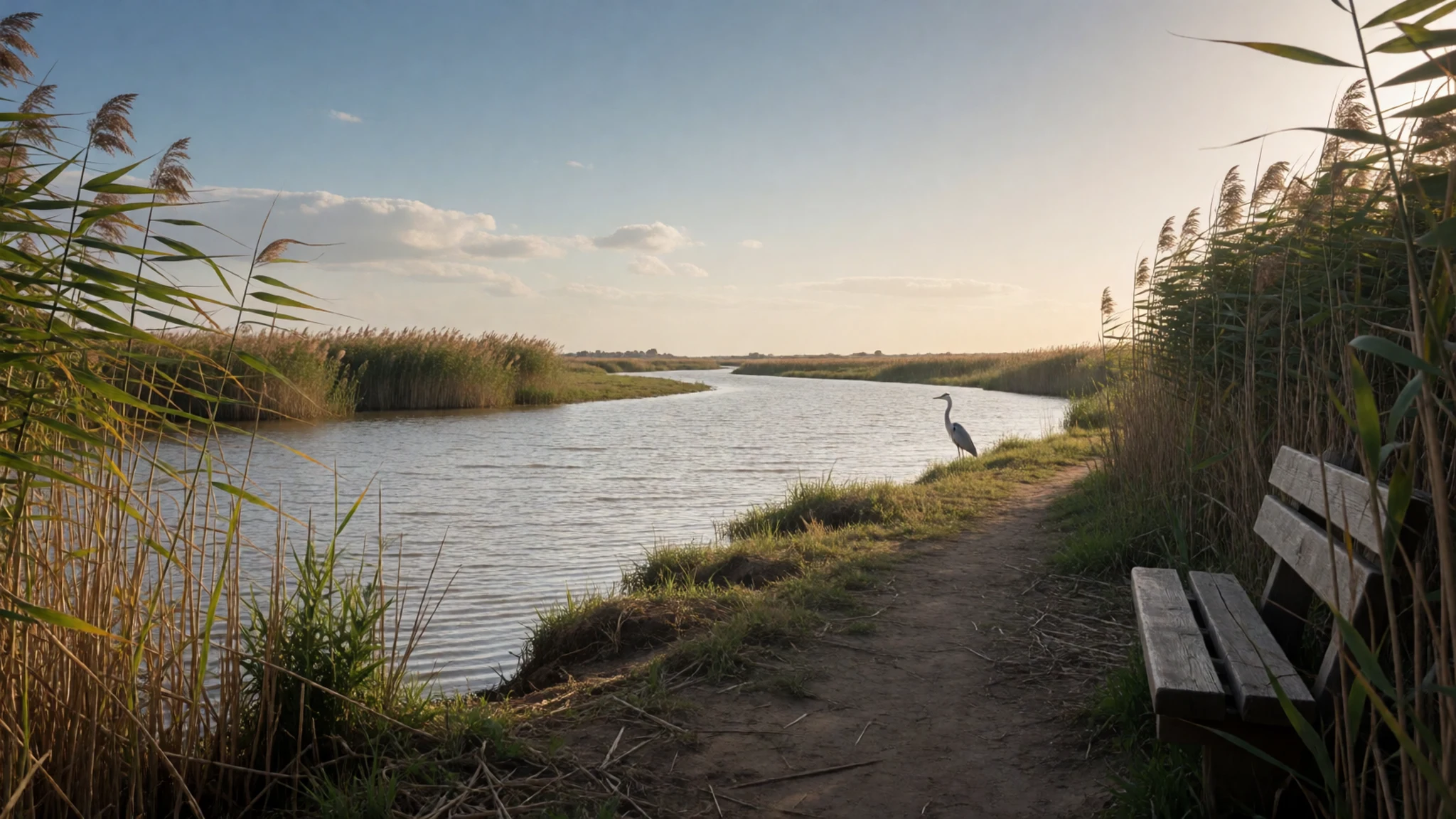
- The delta landscape — Edge of the site, towards the water
Look out over the flat shoreline where the Don meets the Sea of Azov. Understanding why a market grew here, at the end of Greek navigation and the start of the steppe, is half the value of the visit. Early morning light and wind make it atmospheric.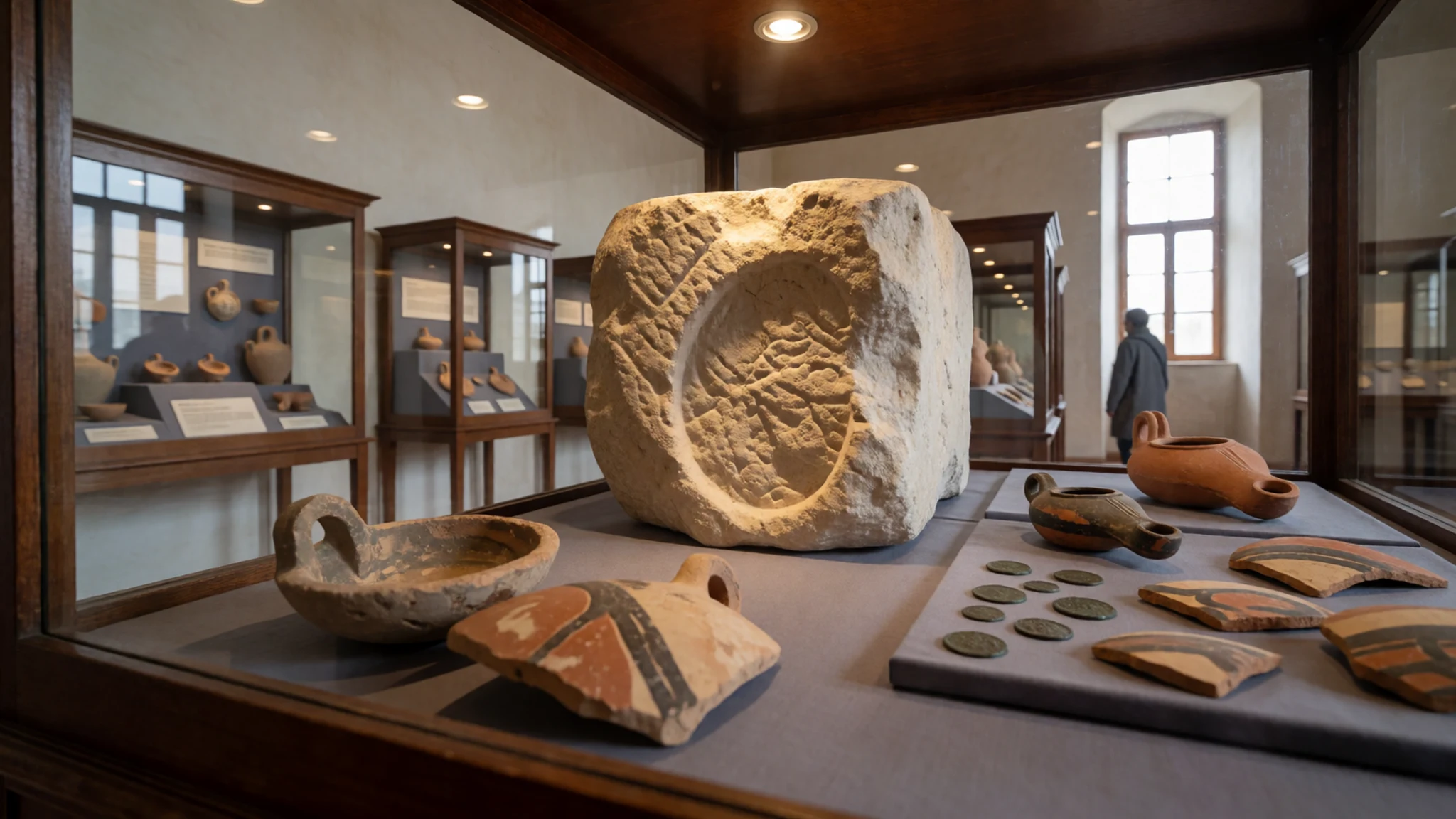
- Old maps and engravings — Museum and reference material
The photo archive includes an eighteenth-century French chart of the Don mouths and a nineteenth-century engraving of ancient tombs on the river's European bank. Seen beside the ruins, they show how long travellers have been trying to place Tanais on the map.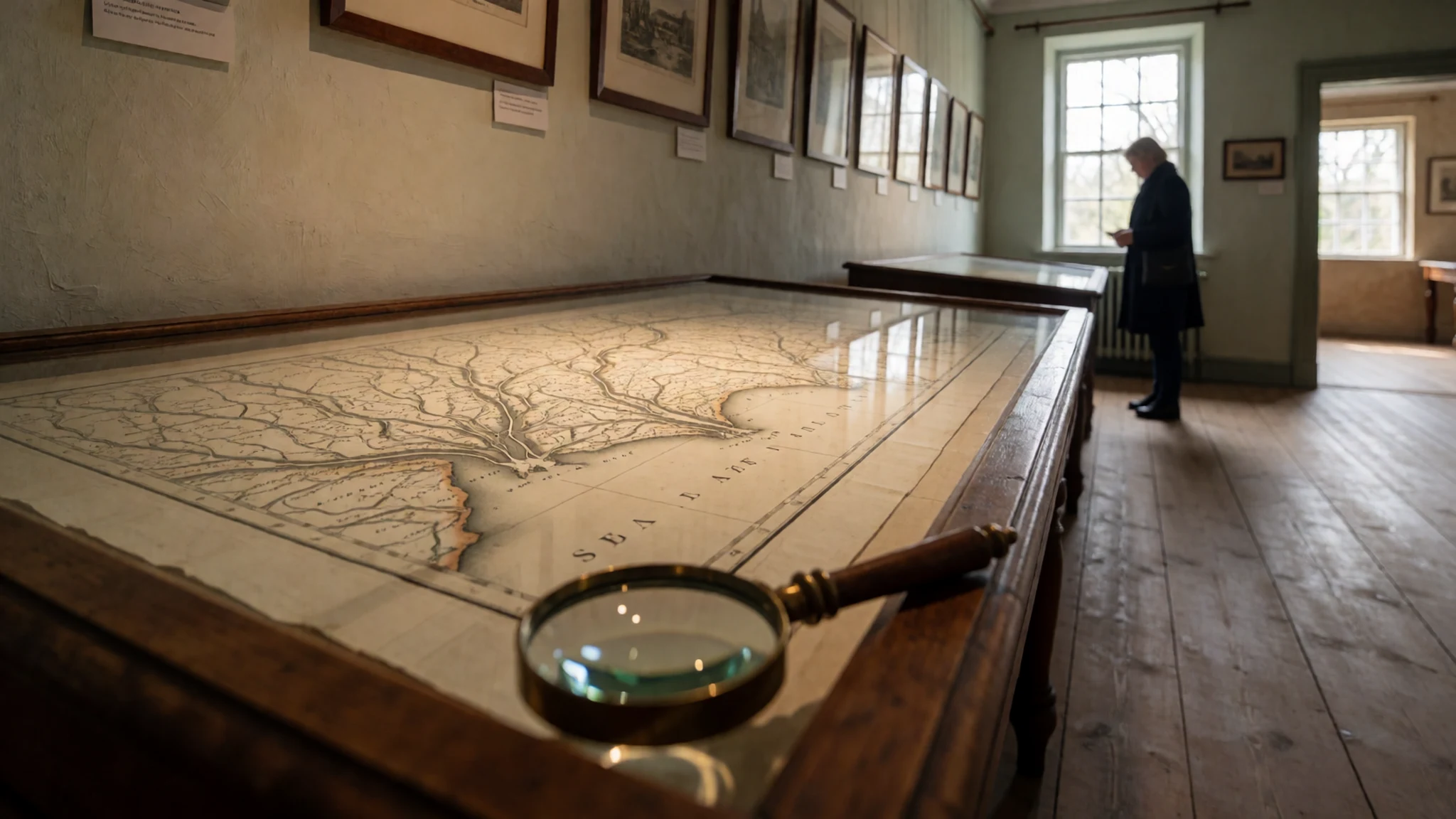
Culture
Tanais had a layered religious life that reflects its mixed population. A sanctuary of Apollo is known from inscriptions, probably inherited from the mother city of Panticapaeum, though archaeologists have not yet found it on the ground. A cult of the river god Tanais is recorded in dedications by private associations, called thiasoi, including one marking a day in honour of the god in the early second century AD.
The site also produced most of the Bosporan documents about Theos Hypsistos, the Most High God. Associations devoted to this god seem to have included almost the whole male citizen body, which suggests a shared civic religion that was not simply Greek or simply Iranian. Together with the Hellenes and Tanaitai, and the many Iranian names, it paints a society that blended customs rather than keeping them apart.
Today the culture of the place is that of a Russian museum-reserve: guided tours, school groups, summer events and archaeological work. Visitors will find that explanations are mostly in Russian, so a translation app or a guide helps. The surrounding countryside is agricultural, and Nedvigovka is a small village rather than a tourist town.
Stay on the marked paths and do not climb on the ancient walls or lift any loose stones or pottery fragments from the ground.
What to wear
Tanais has no surviving costume of its own, but inscriptions and finds point to a mix of Greek and steppe dress. Greek townspeople would have worn woollen and linen tunics and cloaks, while nomad traders brought in the trousers, felt and leather typical of the steppe. Strabo says the nomads received clothing in exchange for their goods, so textiles were part of the trade.
In the region today, people dress plainly and practically. In towns around Rostov, expect jeans, light shirts and trainers in summer, and padded coats in winter. Nothing about the museum requires formal dress, and locals visiting the reserve wear everyday casual clothes.
A visitor should dress for the weather and the terrain, because the site is open, exposed and has little shade. In summer bring a hat, sunscreen, sunglasses and a light long-sleeved top, with sturdy closed shoes or trainers for uneven grass and stony paths. In spring and autumn the wind off the delta can be cool, so a windproof layer is wise. There are no religious dress rules at the ruins, so ordinary modest clothing is fine. Carry a rain jacket if showers are forecast, as there is little shelter.
What to eat
- Fried or baked river fish — Roadside eateries around Nedvigovka and Rostov
The Don delta has long supported fishing, and fish is a staple on local tables. Expect pan-fried or baked freshwater fish served with potatoes and herbs, often at simple roadside eateries and family-run cafés in villages around the delta.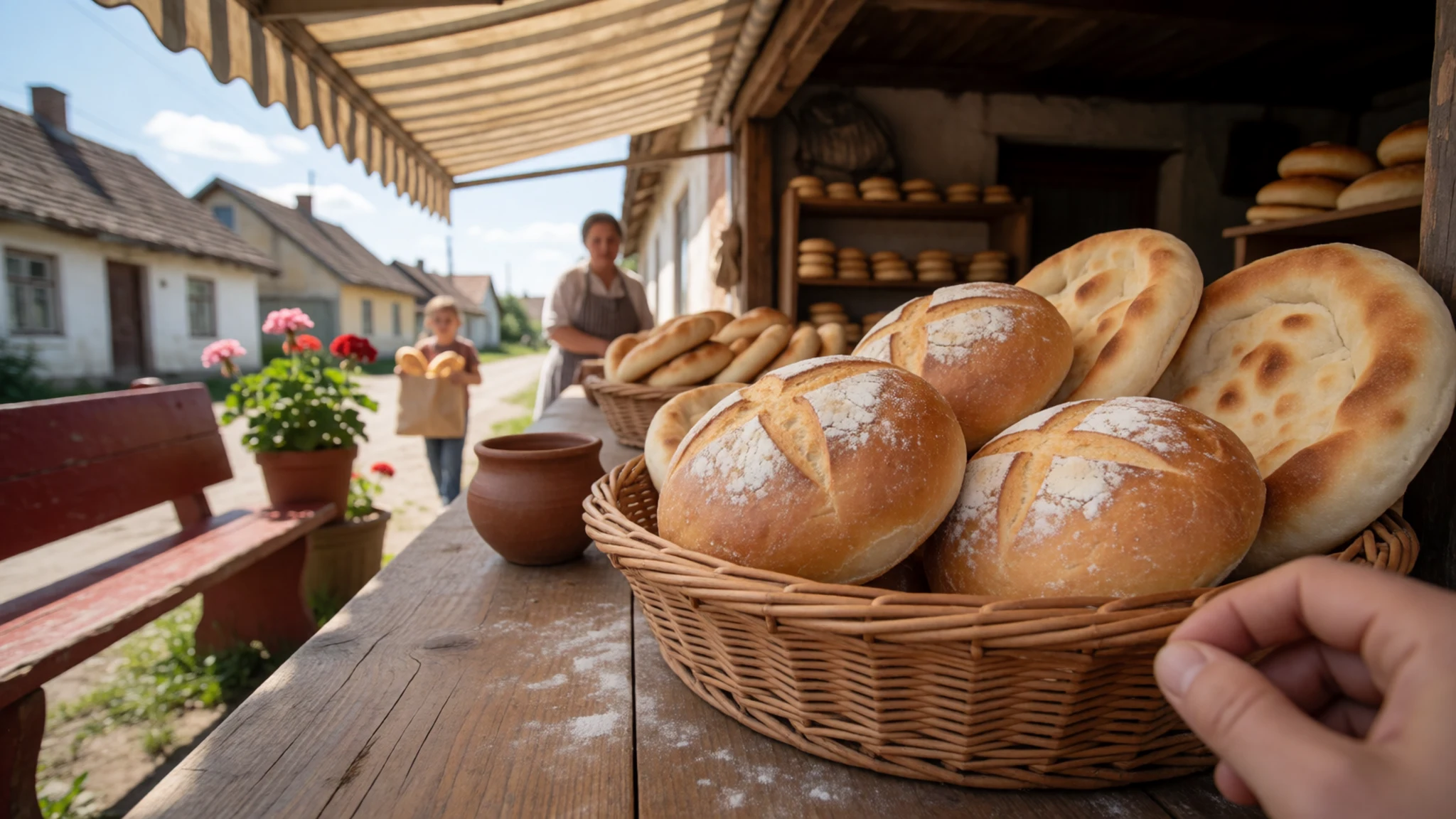
- Ukha — Cafés and family restaurants in the delta area
A clear fish soup common across southern Russia, made with river fish, onion and bay leaf, and served hot with bread. It is a sensible lunch after walking the exposed site, and is often on the menu in country eateries.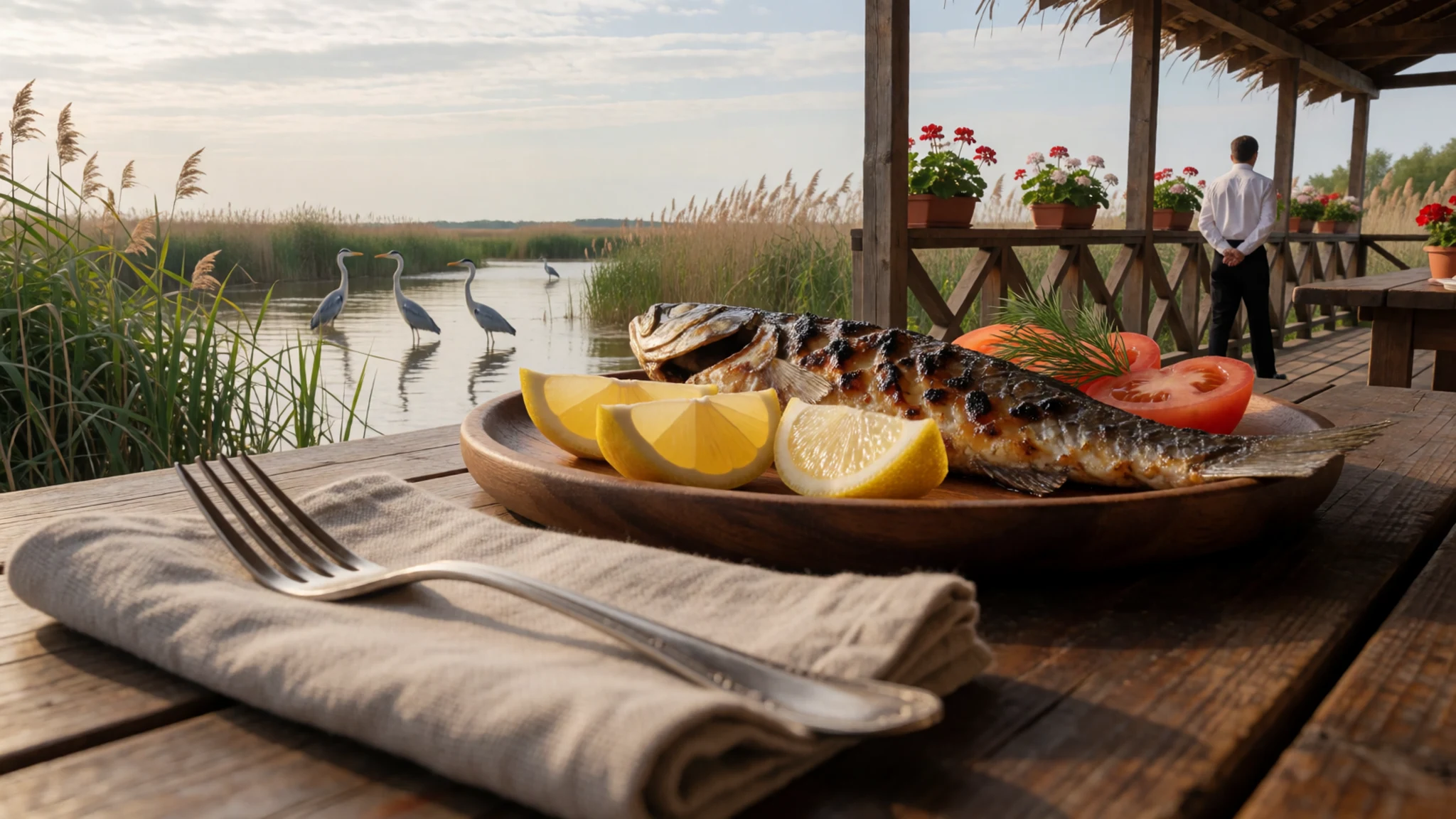
- Vareniki — Cafés and canteens in Rostov and nearby towns
Dumplings filled with potato, cheese or cherries, boiled and served with sour cream or butter. They are popular across southern Russia and Ukraine, and make a filling, inexpensive meal. Ask whether the filling is savoury or sweet before ordering. - Fresh market vegetables and fruit — Morning markets in Rostov and larger villages
The fertile Don region produces tomatoes, cucumbers, melons, watermelons and stone fruit in summer. Buying from a market stall gives a cheap, fresh snack, and a good way to taste the local produce while travelling between sites. - Dried and smoked fish — Market fish stalls in Rostov and coastal towns
Dried and smoked fish are traditional preserved foods in the Azov and Don region, sold by weight and eaten with bread or beer. Look for them at market stalls, and ask the seller to show you what is freshest before buying.
Plan it
Best time. May–June and September–October, when the weather is mild and the open site is comfortable to walk. July and August can be hot and exposed, and winter is cold and windy.
How long. 1
Getting there. Fly to Rostov-on-Don, then travel west by road to Nedvigovka, around the Don delta. Local taxis, organised tours or a hired car are the practical options; check the official museum site for current access details.
Budget. low
Tips
- Check opening days and tickets on the official site, museum-tanais.ru, before setting out
- Go early in the day to avoid midday heat and to have the ruins mostly to yourself
- Bring water, sun protection and a windproof layer, as shade and shelter are limited
- Carry some cash for small purchases in the village, and a translation app for Russian-language exhibits
Etiquette
- Stay on marked paths and do not climb on ancient walls
- Do not remove stones, pottery or any object from the ground
- Ask before photographing staff or other visitors
Nearby
Sources
- Wikidata Q1153416 (CC0)
- Wikipedia: Tanais (rev 1384570321) (CC BY-SA 4.0)
- Wikivoyage (CC BY-SA 4.0)
- Photo 01-6.jpg, JukoFF (CC BY-SA 4.0)
- Photo 02, Repubblica di Venezia, -kayac- (CC BY 3.0)
- Photo 03, Edward Daniel Clarke (Public domain)
- Photo 04, Bellin chart of the Don mouths (Public domain)
- Photo 05, Entrance of Tanais, Davide Mauro (CC BY-SA 4.0)
- Photo 06, Maxim Karpinskiy (CC BY 3.0)
- Photo 07, Maxim Karpinskiy (CC BY 3.0)
- Photo 08, Maxim Karpinskiy (CC BY 3.0)


