Tamsui
Tamsui, Taiwan
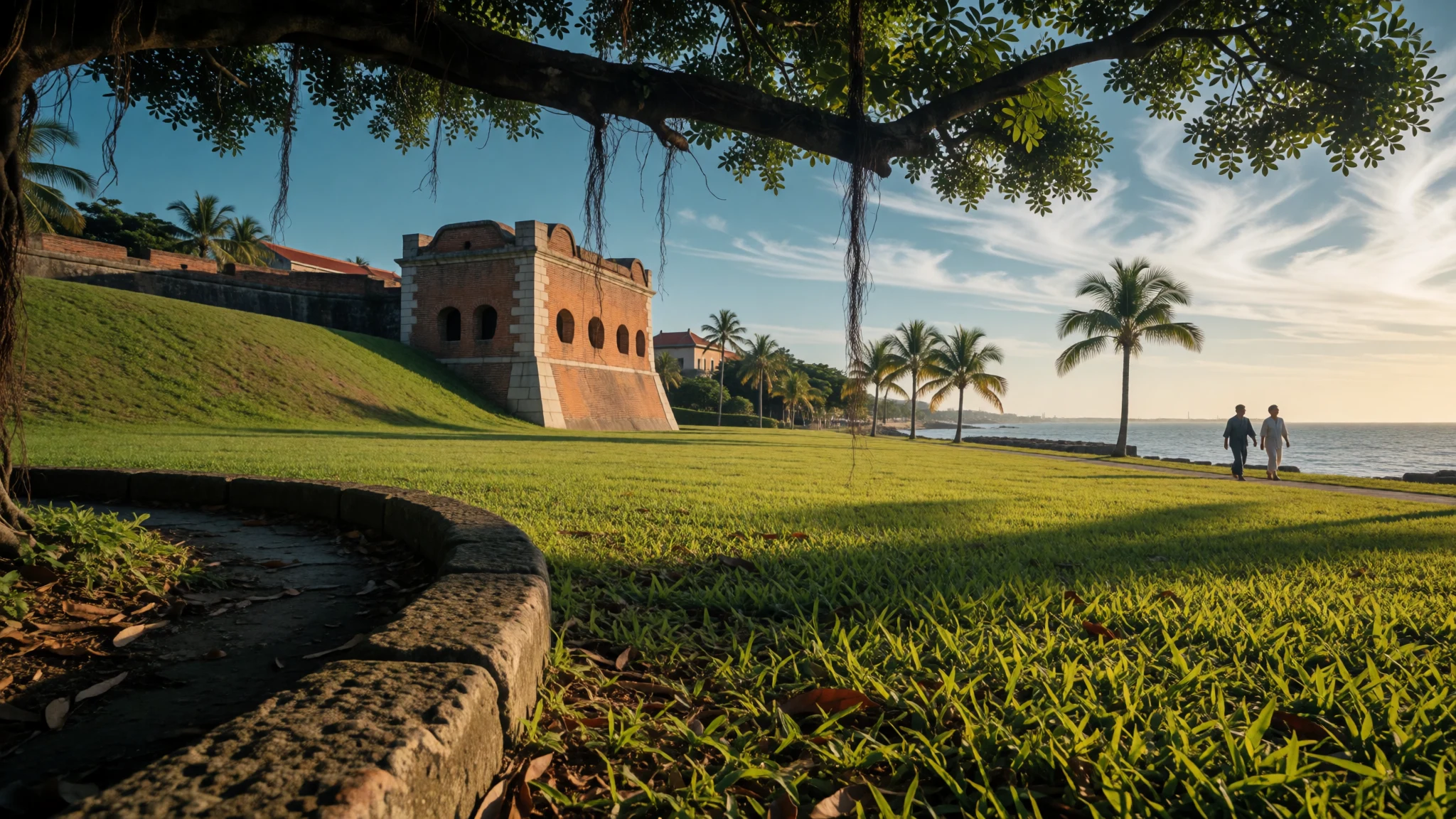
Tamsui is where Taipei comes to walk by the river, eat street snacks and climb through Spanish, Dutch, British and Qing layers of history.
The place
Tamsui is a seaside district of New Taipei City, set where the Tamsui River runs out into the Taiwan Strait, about 40 minutes by metro from central Taipei. Around 209,000 people live here, on hills that rise to about 139 metres, and the name simply means "fresh water" in Chinese (淡水, Dànshuǐ). The river mouth shaped everything. A sheltered harbour drew indigenous communities first, then Spanish, Dutch, Han Chinese and British traders. The shipping trade has since gone, because silt built up in the channel and pushed the big ports towards Keelung. In its place the town has found a second life as the spot where Taipei residents come for an unhurried afternoon. The waterfront is the heart of it: a long promenade, cafés facing the water, street stalls, and a crowd that thickens at weekends and around sunset. Behind it, narrow lanes climb steeply to old forts, a former consulate and colonial-era houses, and the higher ground gives wide views over the river and out to sea. Tamsui is a place of layers rather than a single headline sight, and a day here is mostly walking, snacking and sitting. Summers are hot and humid, winters can be grey and damp, and the Old Street is busy on any fine weekend. Weekday mornings are calmer and better suited to the forts and hillside lanes.
Its story
Tamsui's story starts at the river mouth, long home to Formosan indigenous peoples before outsiders arrived. In the autumn of 1629 the Spanish founded the town and mission of Santo Domingo here, a base meant to protect their shipping between the Fujian coast and the Philippines and to open trade with China and Japan. They left the site in 1638. The Dutch, already established in the south of the island, built a new fort over the ruins in 1641, and that fort is the core of today's Hongmao Castle, whose name means "red-hair fortress" and refers to the Dutch themselves. The Dutch encouraged Han Chinese settlers and traded in sulphur and animal skins. After they lost their main southern fort to Koxinga in 1662, his government kept bringing in settlers until it surrendered to the Qing in 1683. A Qing naval outpost followed in 1808, and in 1862 the terms of a treaty opened Tamsui to foreign trade. Tea, camphor, sulphur, coal and dyes went out through the harbour, while foreign merchants and diplomats built warehouses, residences and a consulate on the slopes above it. In 1886 a fort was raised to guard the river mouth, and its remains can still be visited. Those buildings are the main reason the district looks as it does. Once silt choked the channel, the port declined and Keelung took over, leaving behind a town rich in layered architecture and close to the capital.
What to see
- Hongmao Castle (Fort Santo Domingo) — Hillside above the river, near Tamsui Station
Hongmao Castle stands on a rise above the river, and its core dates to the Dutch fort of 1641. The compound later served as a British consulate, and the former consul's residence sits beside the main keep. Exhibits cover the Spanish, Dutch and British years. Check the official site for opening times and any entry charge.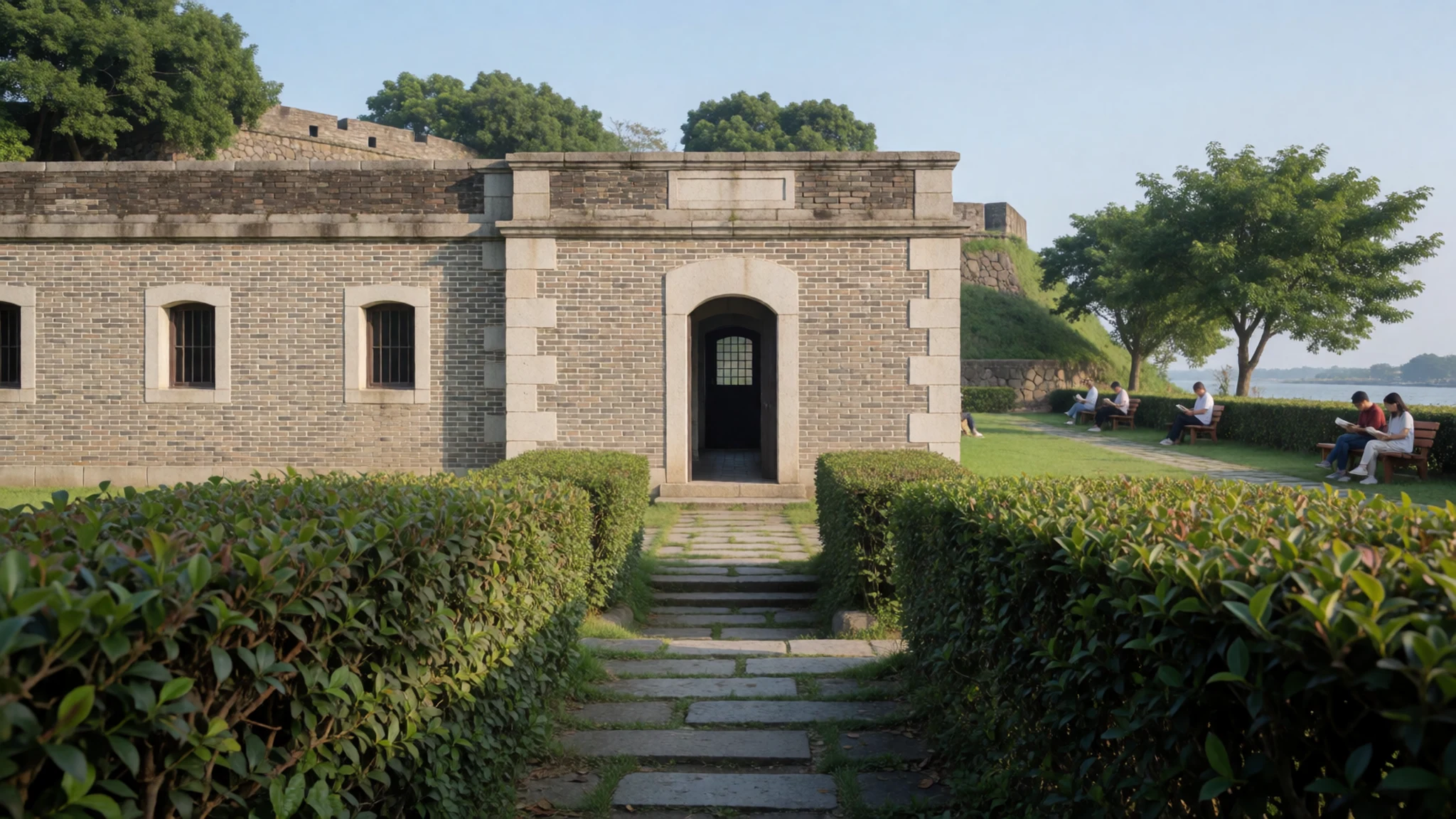
- Tamsui Old Street and waterfront — Along the Tamsui River
The Old Street runs close to the river and is the busiest part of town, lined with snack stalls, small restaurants, arcades and handicraft shops. The riverside promenade beside it is the best place to watch the light change at dusk. Both are crowded on weekends, so a weekday visit is easier.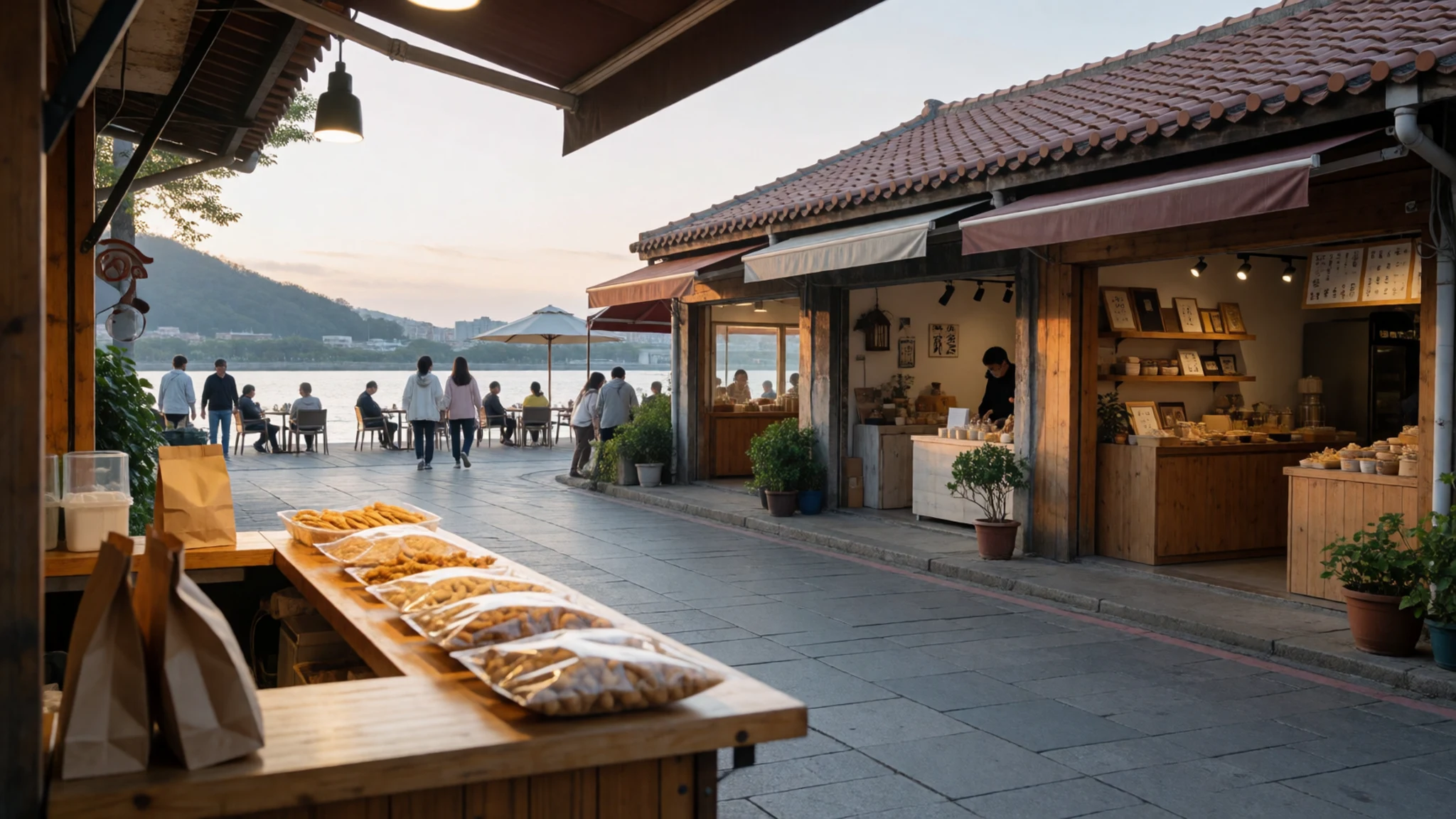
- Former British Merchant Warehouse — Near Hongmao Castle
This was once a store for tea products handled by British merchants, later bought by Shell Oil, which expanded it into four large warehouses and oil tanks. It is a useful reminder that the town's trade was commercial before it was scenic, and the building sits close to the castle hill.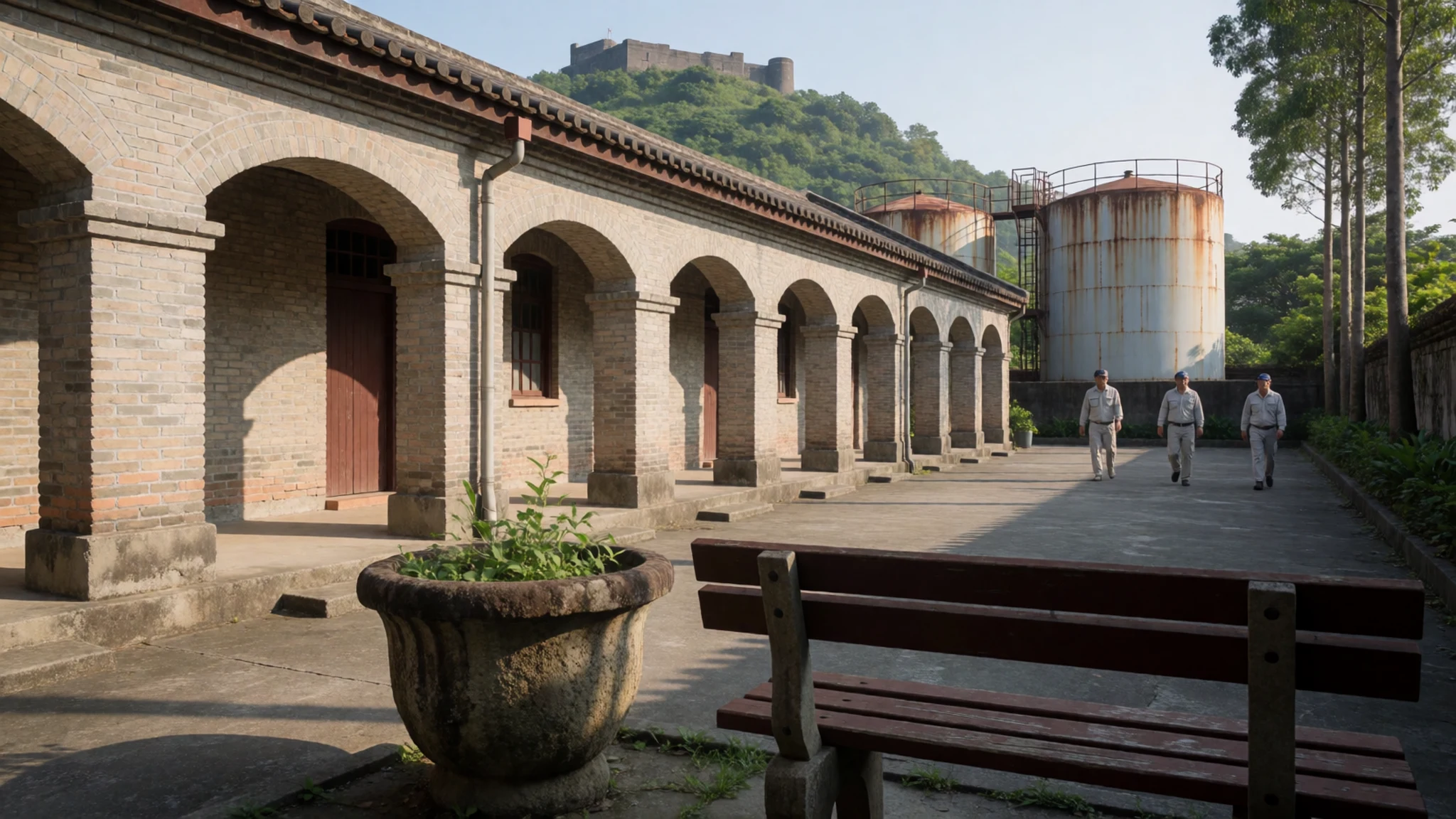
- Hobe Fort — Headland at the river mouth
Hobe Fort was built in 1886 to defend the river mouth against attack from the sea. Its brick and stone gun positions, set among trees on the headland, are easy to walk around in an hour or less. The site is quieter than the Old Street, and the shade helps on hot days.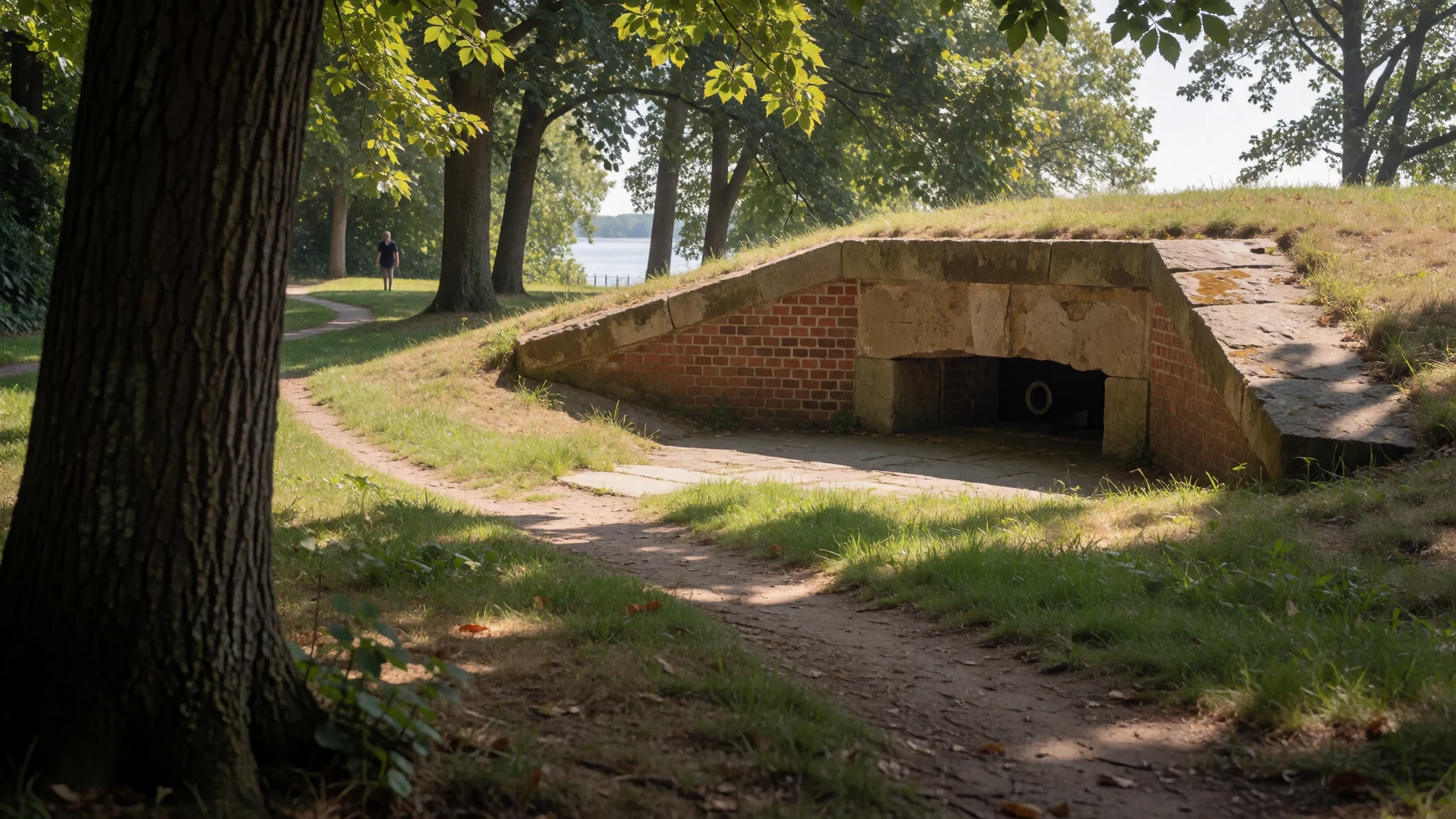
- Tamsui Customs Officers' Residence — Hillside near Hongmao Castle
This white colonial-style house is nicknamed the Little White House. It was built for the officials who ran the port's customs service, and its verandas and symmetrical facade show how foreign administrators liked to live on the hillside. It makes an easy stop on the walk between the castle and the old town.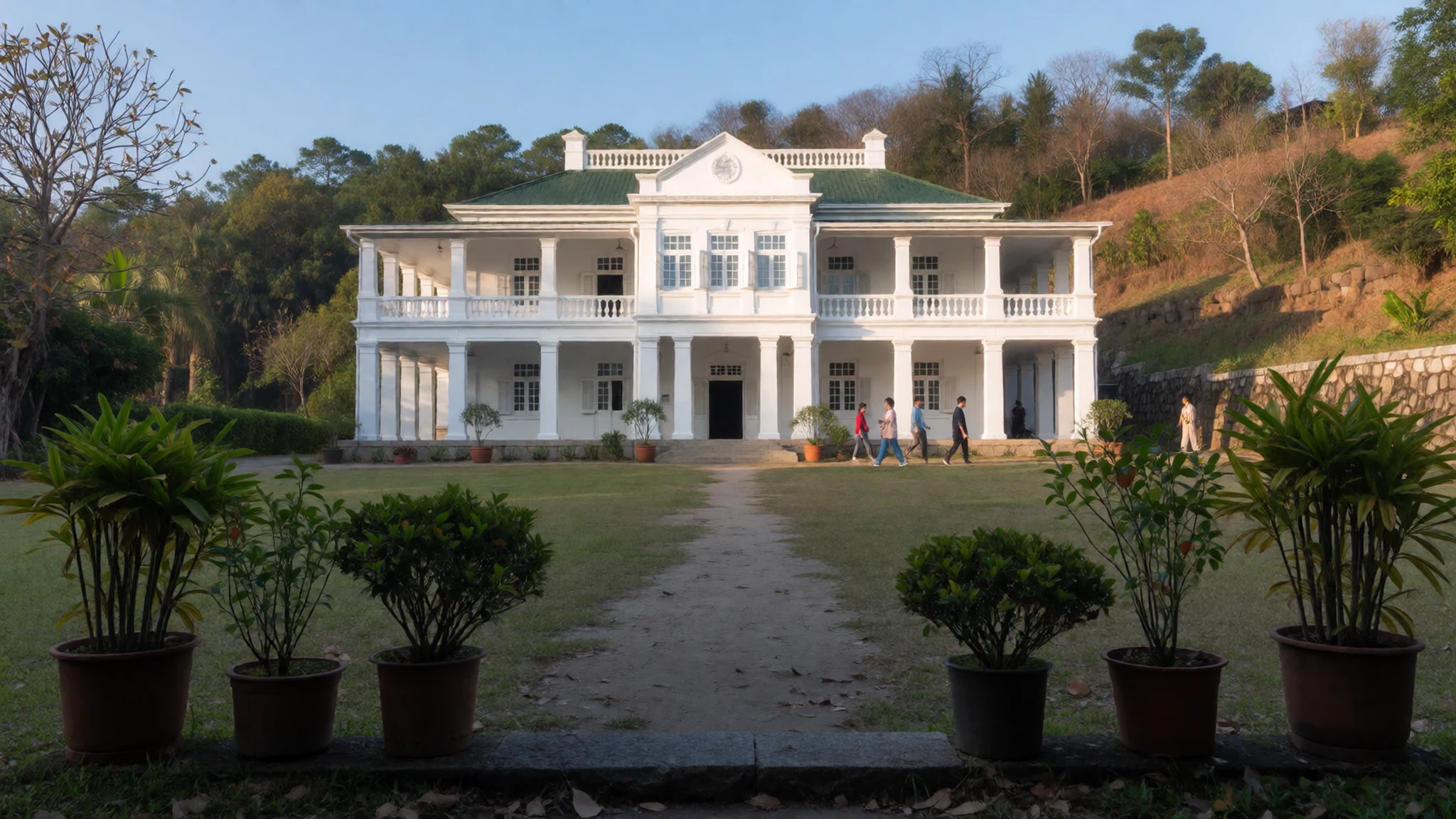
Culture
Tamsui's culture is a layered one, built by successive arrivals rather than a single tradition. Indigenous communities, Han Chinese settlers from across the strait, and Spanish, Dutch, British and Qing officials each left marks. The place name is still heard in Hokkien (Tām-chúi) as well as in Mandarin. Local life is tied to the river: the old trading wharves, the tea warehouses and the habit of an evening stroll along the waterfront. Taipei residents treat Tamsui as an easy escape, so weekends feel like a social event, with families, couples, buskers and queues at snack stalls. Active temples stand in the lanes behind the Old Street, where incense, offerings and quiet prayer carry on beside the tourist trade. The colonial buildings now work as museums and heritage sites, telling the Spanish, Dutch, British and Qing past from several angles, and many people come mainly to see how those layers sit on top of each other. Evening is the social high point, when the light over the strait draws crowds to the railings. Weekday mornings are the calm time. In an active temple, keep your voice low, do not step on the threshold, and ask before photographing worshippers.
What to wear
Tamsui's traditional clothing reflects the people who settled it. Han Chinese communities wore the changshan and qipao, cut from silk, brocade or cotton, and these now appear mainly at weddings, festivals and formal photographs. Hakka communities in Taiwan are known for plain blue cotton work clothes. Taiwan's indigenous peoples have their own woven and embroidered garments, with beadwork and bold patterns that differ from group to group, worn today mostly at ceremonies and cultural events. Everyday dress in Tamsui is casual and practical: T-shirts, shorts or light trousers, trainers or sandals, and umbrellas or thin rain jackets that come out at the first sign of drizzle. Cafés and riverside restaurants call for nothing smarter than neat casual wear. Visitors should pack light, breathable, quick-drying clothes for the humid summer, with a hat and sun protection for the open waterfront. A compact waterproof layer is useful at any time of year, and a light fleece helps in the damp winter months. Shoes with a decent grip matter, because the lanes up to the forts and consulate are steep and can be slippery when wet. For temples, cover shoulders and knees, as a courtesy to worshippers.
What to eat
- Iron eggs (鐵蛋) — Shops along Tamsui Old Street
Iron eggs are stewed over and over in spices, then air-dried until they turn dark, chewy and roughly half their original size. They are salty, dense and made for snacking or carrying home as a souvenir. Look for specialist shops along the Old Street.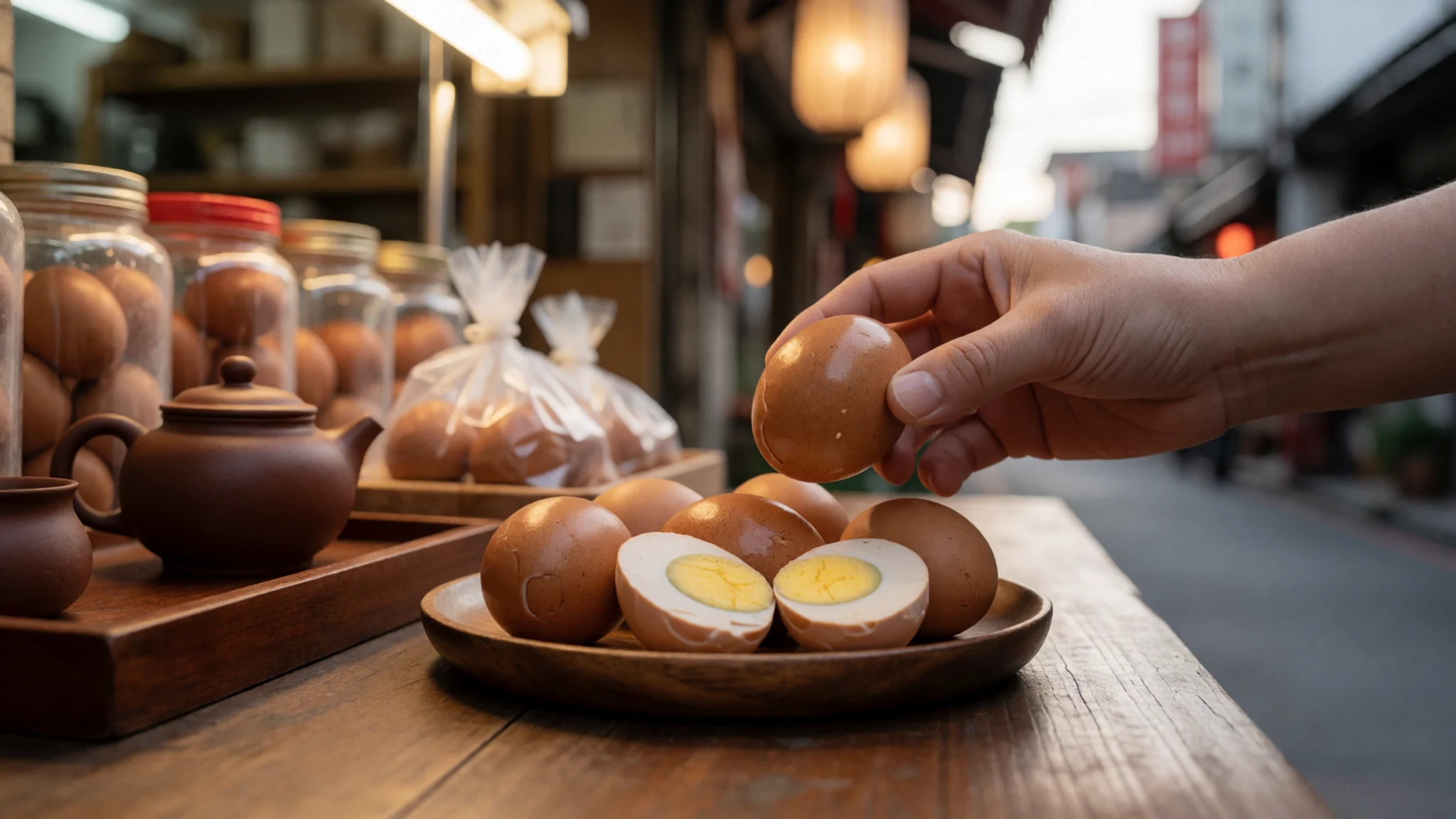
- A-Gei (阿給) — Small eateries on the lanes up from the waterfront, such as Zhenli Street
A-Gei is a fried tofu pouch stuffed with seasoned glass noodles and sealed with fish paste, usually served with a spicy sauce. A vegetarian version also exists. It is a local invention and easy to find, though some of the long-standing stalls sit on steep side lanes such as Zhenli Street.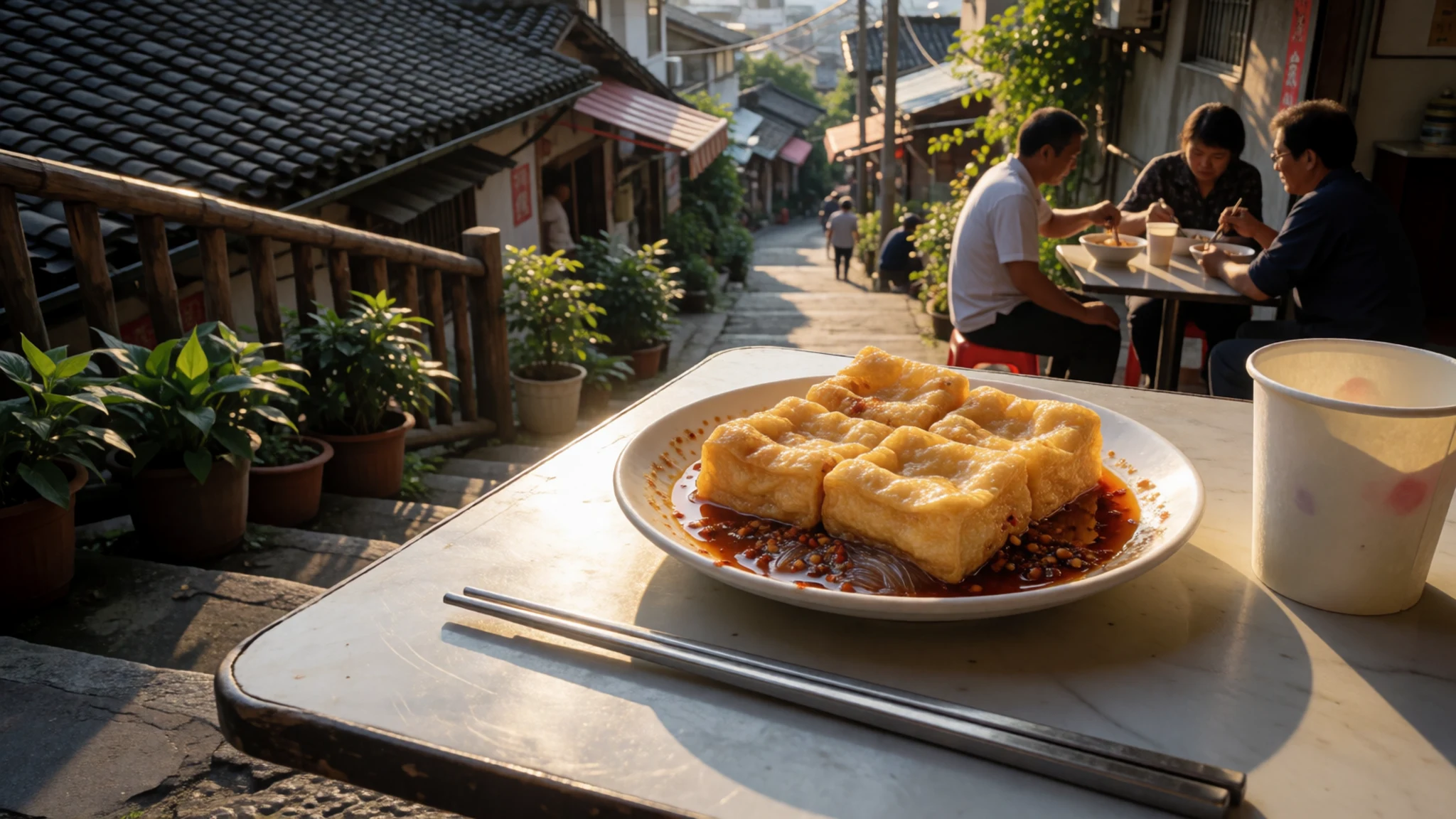
- Tamsui fish balls (淡水魚丸) — Noodle and soup shops around the Old Street
Tamsui fish balls are made of pounded fish paste with a filling of meat and garlic, served in a light broth. The texture is bouncy and the flavour is gentle, so they suit a first snack while walking the waterfront. - Fish crisps (魚酥) — Snack stalls and shops on the Old Street
Fish crisps are light, crunchy fish snacks, similar in texture to prawn crackers. They are sold by weight in bags, which makes them practical to carry along the promenade or take home to share, and they hold their crunch better than many local sweets. - Traditional Taiwanese seafood — Seafood restaurants near the river and the Old Street
Seafood is the natural order for a harbour town, and the district has traditional Taiwanese seafood restaurants serving fresh fish, shellfish and shared dishes. Choose a table by the water in the evening, and ask what the staff recommend that day rather than ordering from the menu alone.
Plan it
Best time. October to December and March–April bring the mildest weather for walking. Summer is hot and humid, with typhoon risk and sudden heavy rain, and winters are often grey and drizzly, so bring a rain layer whenever you go.
How long. 1–2
Getting there. Fly into Taiwan Taoyuan International Airport or Taipei Songshan Airport, reach central Taipei by road or metro, then take the MRT Tamsui (Red) Line to its northern end at Tamsui Station, about 40 minutes from Taipei Main Station. The riverfront and Old Street are a short walk from the station.
Budget. low
Tips
- Go on a weekday morning to avoid the weekend crowds on the Old Street and waterfront.
- Wear shoes with grip, since the lanes up to the forts and the consulate are steep and can be wet.
- Carry some cash for small snack stalls and shops, even though many places take cards.
- Check the official district website for opening times and ticket details before visiting the forts and museums.
- Stay for sunset on the waterfront, but allow extra time for the metro back to Taipei, as it can be busy.
Etiquette
- Keep voices low and ask before photographing worshippers in active temples.
- Queue patiently at popular snack stalls and avoid blocking the narrow Old Street while eating.
- Dispose of litter and food packaging in bins rather than leaving it on the promenade.
Nearby
Sources
- Wikidata Q570509 (CC0)
- Wikipedia: Tamsui District (rev 1378397455) (CC BY-SA 4.0)
- Wikivoyage: Tamsui (rev 5419487) (CC BY-SA 4.0)
- Photo: Skyline of Tamsui district, New Taipei, Taiwan in 2013 — pang yu liu (CC BY-SA 2.0)
- Photo: Hongmao Castle — Sdfery (CC BY-SA 4.0)
- Photo: The Guandu Bridge — Eshium (CC BY 2.5)
- Photo: Tamsui Old Street — susan curry (CC BY 3.0)
- Photo: Oxford College in Tamsui — Mingwangx assumed (CC BY-SA 2.0)
- Photo: Former Tamsui Customs Officers' Residence — 張雅倫 (CC BY-SA 4.0)
- Photo: Hobe Fort — Sonic427 (CC BY-SA 4.0)
- Photo: Tamsui Church — 張雅倫 (CC BY-SA 4.0)


