Taijiang National Park
Taijiang National Park, Taiwan
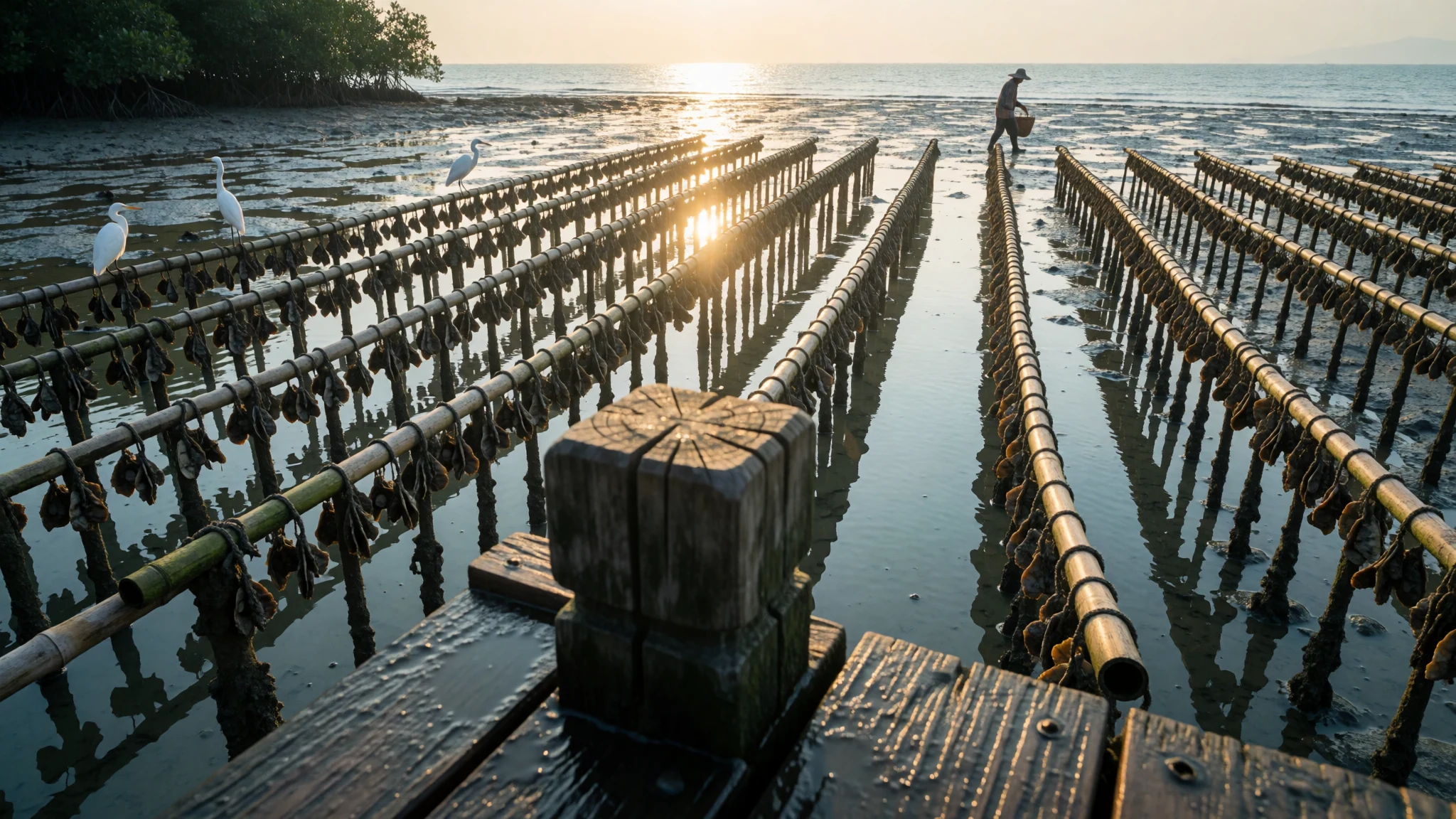
Taijiang National Park is Tainan's tidal edge of mangrove tunnels, oyster racks and sandbars, close to some of Taiwan's oldest colonial-era forts.
The place
Taijiang National Park (台江國家公園) covers a broken stretch of Taiwan's southwestern coast in Tainan, where land and sea have never quite settled on a boundary. The planned area runs from the sea wall at Qingshan Fishing Harbor down to the south bank of the Yanshui River, and most of it is public coastal land and shallow water rather than one fenced reserve. Tidal channels, mudflats, mangrove thickets and low sandbars make up the scenery, along with long lines of oyster racks standing in the shallows that give the horizon a ragged, working look. Guosheng Port Lighthouse, the westernmost point on the island of Taiwan, falls inside the boundary. This is not a mountain park. It is flat, open and mostly shadeless, so the appeal lies in water, light and birdlife, in the way a tide can change a view within an hour, and in the oyster farmers who still work the shallows. The park also sits beside a city with deep history. Fort ruins, temples and old warehouses in Tainan's Anping district are a short ride from the mangroves, which makes the park easy to fold into a wider stay rather than a trip on its own. Expect strong sun for much of the year, patchy English signage, and a pace that suits a hired scooter, a bicycle or a boat tour better than a long walk. Crowds stay modest outside Taiwanese holidays, with weekends busiest at the mangrove tunnel.
Its story
Taijiang National Park was created in 2009, but its name points back much further, to the Taijiang Lagoon that lay along this coast in the 17th century. The lagoon was sheltered water, and that shelter drew outsiders. The Dutch East India Company established a colony in Anping in 1624, where they spent several years constructing Fort Zeelandia. Chihkan Tower, in the city, grew out of a second Dutch fort begun in 1653. In 1662 the Dutch lost the island to Koxinga, the Ming loyalist general, and a new chapter began for the south. Silt then did what armies could not. Over the following century the lagoon was choked off, and open water became mudflats, ponds and farmland. Anping, once a harbour town, ended up further from the sea than its founders had planned. The Qing dynasty, the Japanese and later the Kuomintang each inherited this changed coast. The Qing built the Eternal Golden Fortress and armed it with cannon, while under Japanese rule an Anping warehouse served the Japan Salt Company. The park's name therefore describes something that no longer exists, and a visit is partly an exercise in reading the land for what it used to be. The mangroves and oyster racks of today are the newest layers on a shoreline that has never stayed still.
What to see
- Sihcao Green Tunnel of Mangroves — Sihcao, Annan District, Tainan
A narrow waterway threads through dense mangroves at Sihcao, in the part of Tainan planned as national park land. Boats slide beneath a canopy that closes overhead, and the light turns green and dim. Go on a weekday morning if possible, as weekends bring queues for the boats. Mosquitoes and heat are real, so cover up.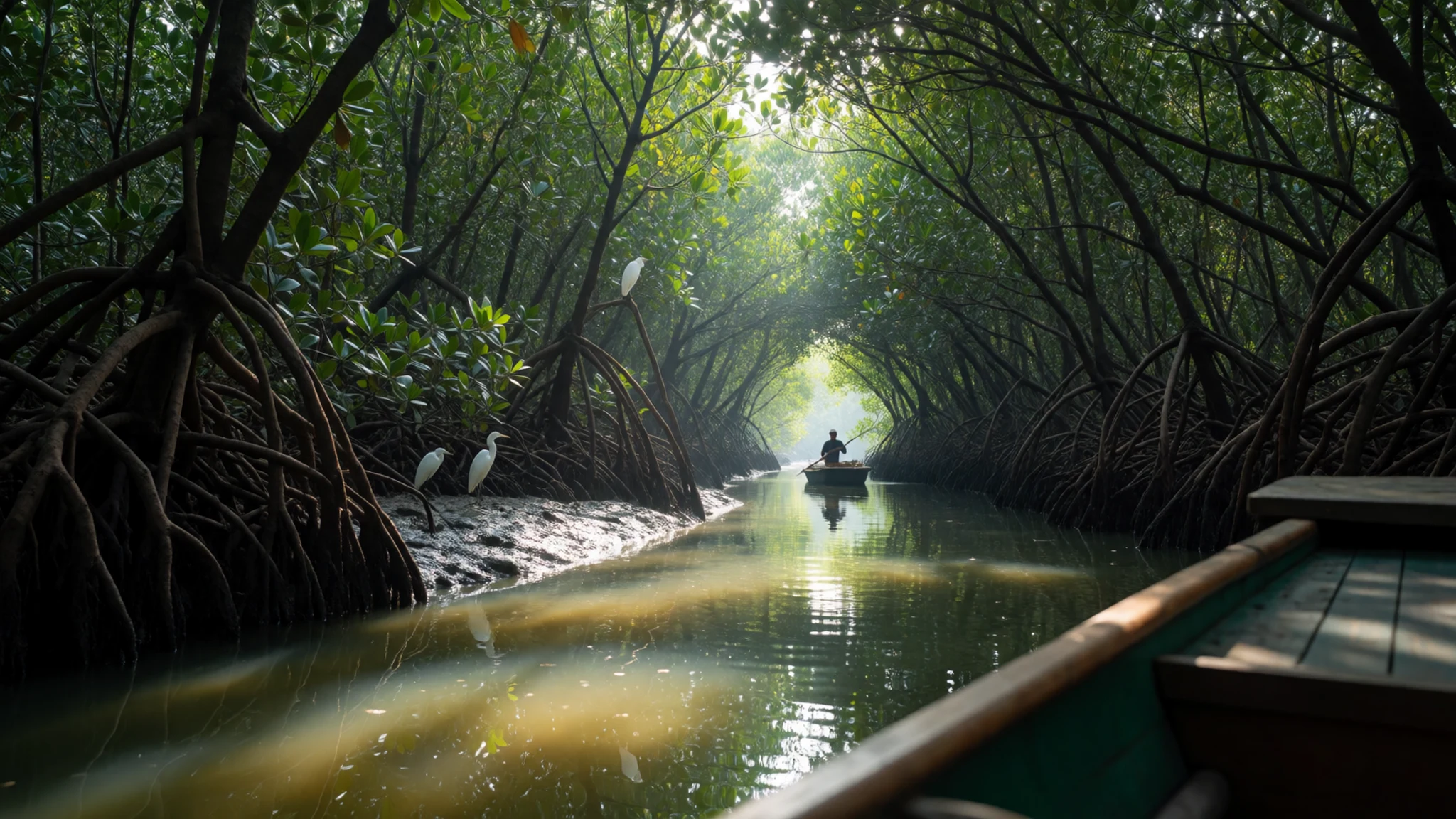
- Dingtou Sandbar — Coastal sandbar, Tainan
Dingtou Sandbar is a seaside bank of pale sand that photographers call the Taiwanese Sahara. It is exposed, bright and without shade, so a hat, water and sunglasses matter more than good shoes. Tides and weather reshape it, so the view varies between visits. Check conditions and access before travelling.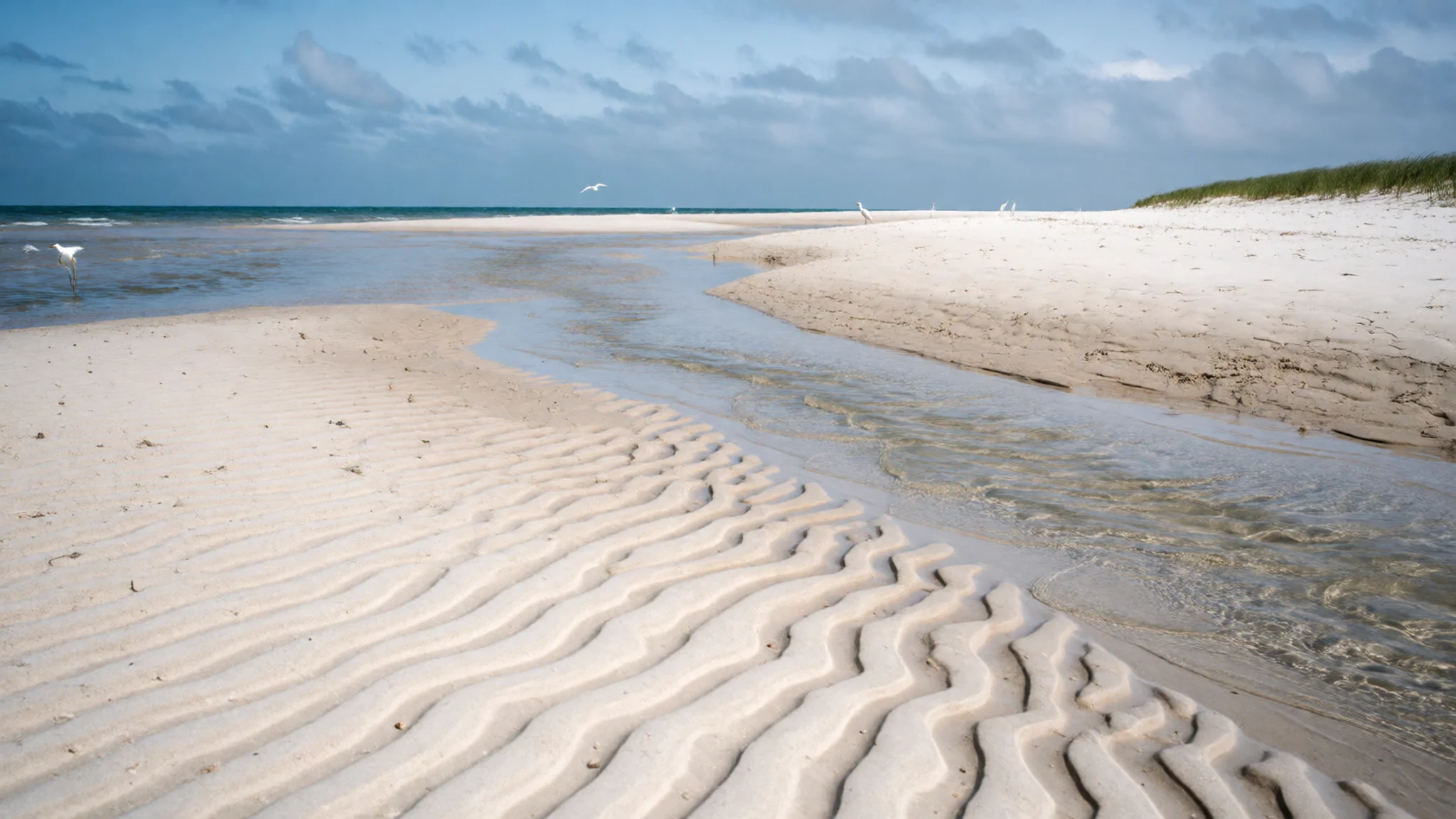
- Oyster racks at the shore — Coastal wetlands, western Tainan
Along the park's shore, rows of oyster racks stand in the shallows and farmers collect the harvest at low tide. Evening is a favourite time to watch, when the sea breeze rises and the sun drops behind the racks. Keep to roads and paths, as the mud is soft and this is a working area.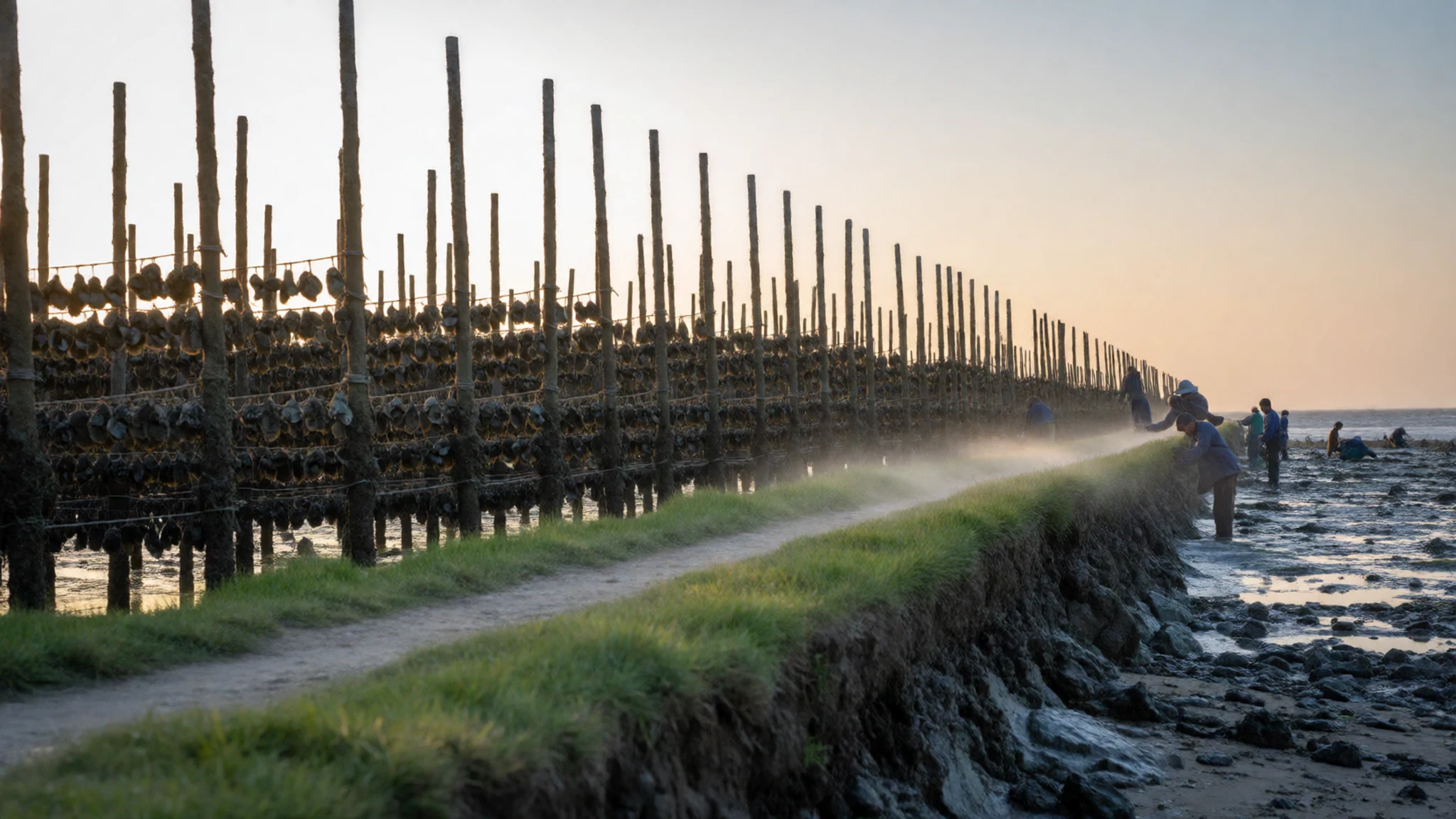
- Anping Fort — Anping District, Tainan
Anping Fort stands on the site where the Dutch began building Fort Zeelandia after occupying Anping in 1624. It gives a clear picture of how Taiwan's southwest became a colonial trading base. Allow an hour or so, go early to avoid the midday heat, and check the official site for opening hours.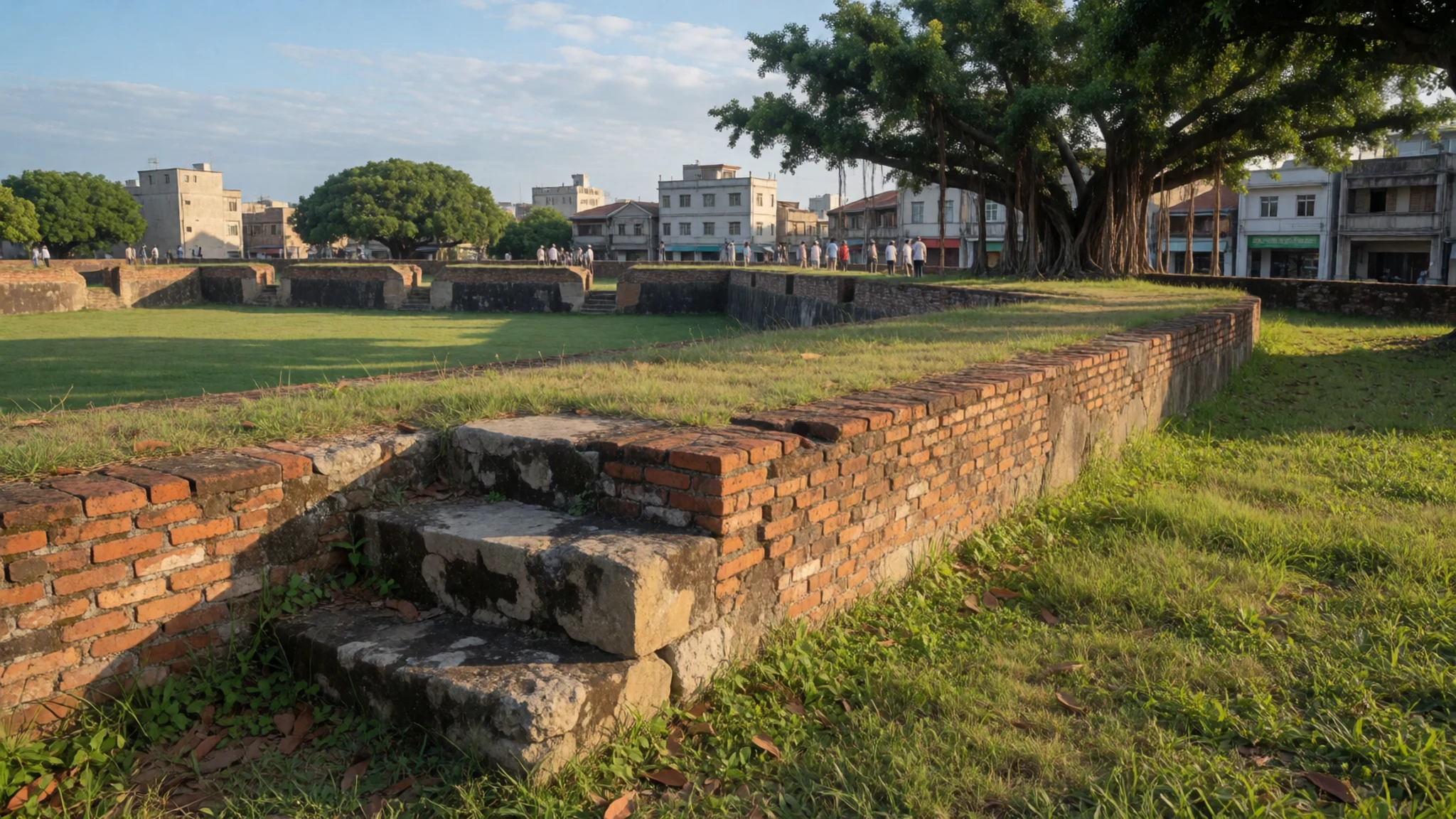
- Anping Tree House — Anping District, Tainan
Anping Tree House began as a warehouse for the trading firm Tait & Co., and later served as office and store for the Japan Salt Company. Banyan roots have since wrapped its walls and roof, so brick and tree now share the building. Walkways keep visitors above the roots, and it gets crowded around midday.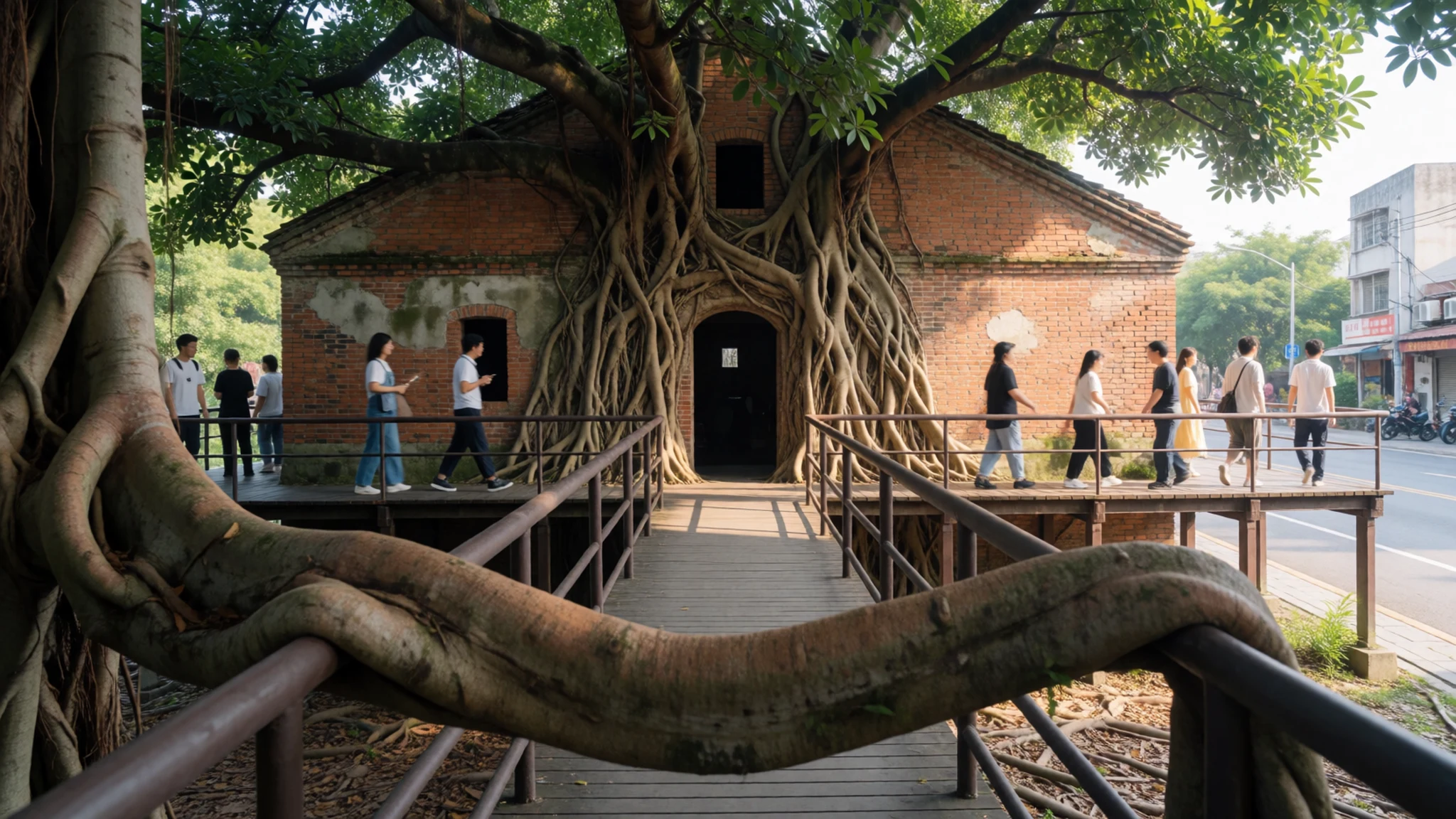
- Eternal Golden Fortress — Anping District, Tainan
The Eternal Golden Fortress is a 19th-century coastal fort from the Qing dynasty, armed with cannon against the threat of Japanese invasion. It is a compact site that can be seen in a short stop, and works well paired with a slow walk through the surrounding Anping streets in the cooler part of the day.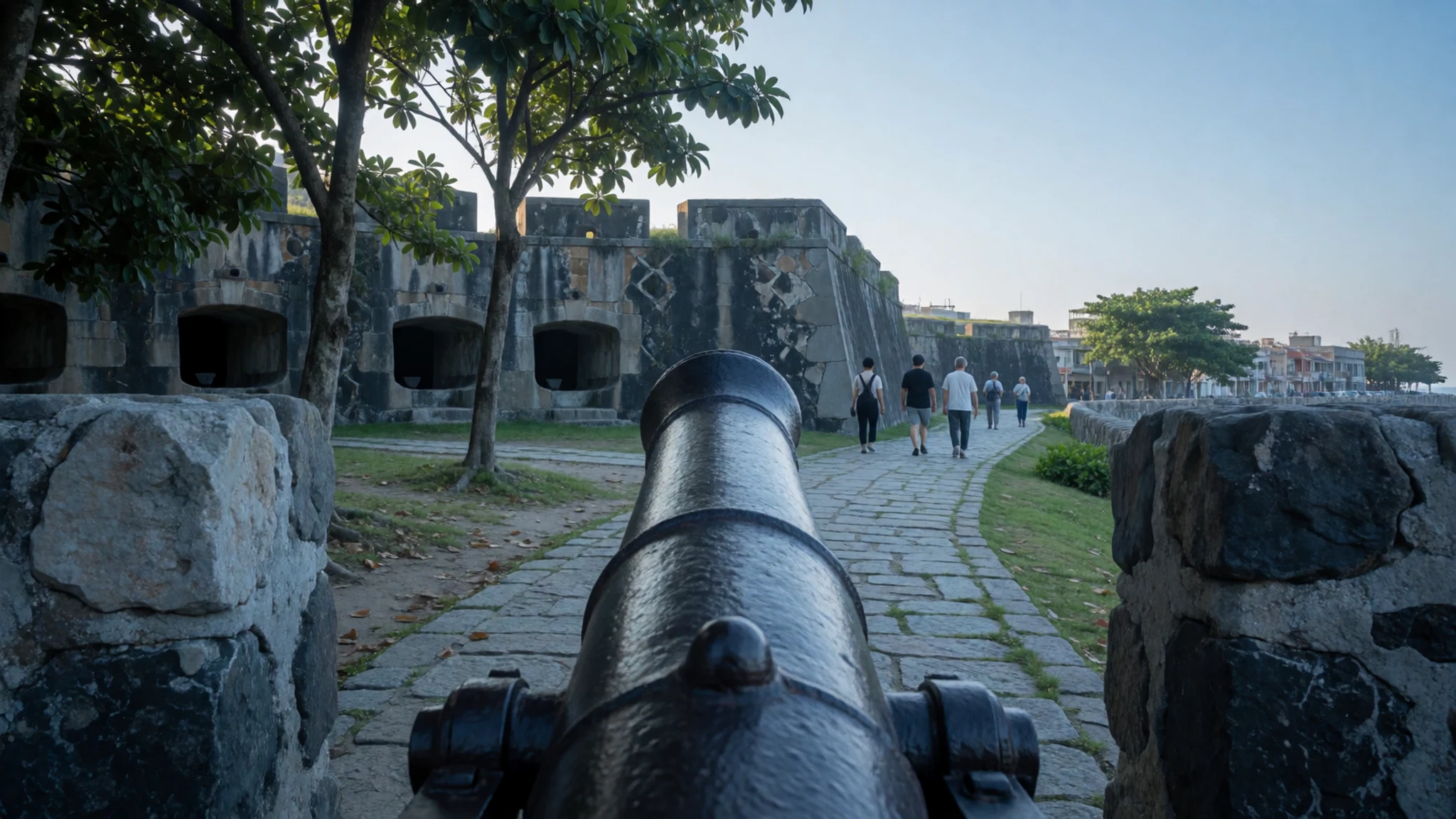
Culture
Taijiang National Park lies in the part of Taiwan where much of the island's early colonial story unfolded, and the culture around it is Tainan's: temple-centred, food-loving and unhurried. Folk religion is part of daily life. Neighbourhood temples blend Taoist and Buddhist elements, and incense, offerings and processions follow the lunar calendar. The Tianhou Temple, thought to be the oldest surviving Mazu temple in Taiwan, honours the sea goddess who protects fishing communities, which explains why her worship matters on a coast of oyster farmers and boatmen. The Confucius Temple, built in 1665, is calmer and more scholarly, set in a small park, and is regarded as Taiwan's first academy. Koxinga, known locally as Zheng Chenggong, has his own shrine in the city, and people read his legacy in different ways, so it is worth listening rather than assuming. Fishing and oyster farming are working trades, not performances, so the racks and boats along the shore are someone's livelihood. Festivals bring drums, firecrackers and street processions, and they can close roads at short notice. Mornings are when temples are busiest with locals. Time spent over a bowl of noodles and in a temple courtyard will teach more than a checklist of sights. At working temples, keep your voice low, step over thresholds rather than on them, and ask before photographing anyone who is praying.
What to wear
Taijiang National Park sits in a region where everyday clothing is practical first. Traditional dress in Taiwan varies by community. Hakka households are known for plain indigo-dyed cotton jackets, and Indigenous peoples weave garments from cotton, ramie and other fibres, decorated with bold colour and beadwork. Such clothing is mostly seen today at festivals, weddings, performances and cultural centres, not on the street. What people wear now is light and casual: T-shirts, cotton trousers or shorts, sandals or trainers, and scooter helmets everywhere in Tainan. Oyster farmers and boat crews dress for mud and sun, with long sleeves, wide-brimmed hats or cloth head coverings, neck guards and waterproof boots or waders. Visitors should dress for heat, glare and wet ground. Pack breathable long sleeves, a hat, sunglasses and high-factor sunscreen, since there is little shade on the sandbars and shoreline. Closed shoes with grip suit muddy paths and fort stones, while sandals are fine for boats and promenades. Bring a light rain jacket for sudden showers and the typhoon season. For temples, cover shoulders and knees, and avoid anything very short or sleeveless. Carry a thin scarf or shirt that can be pulled on at the door. Insect repellent is as much a part of the outfit as the hat, especially near the mangroves at dawn and dusk.
What to eat
- Dan zai mian (擔仔麵) — Old-town noodle shops, central Tainan
Small bowls of noodles in a savoury shrimp-based broth with minced pork and a prawn on top, originally sold by fishermen from roadside stalls. The portion is meant as a snack, so order two. Look in the old-town streets around the Confucius Temple.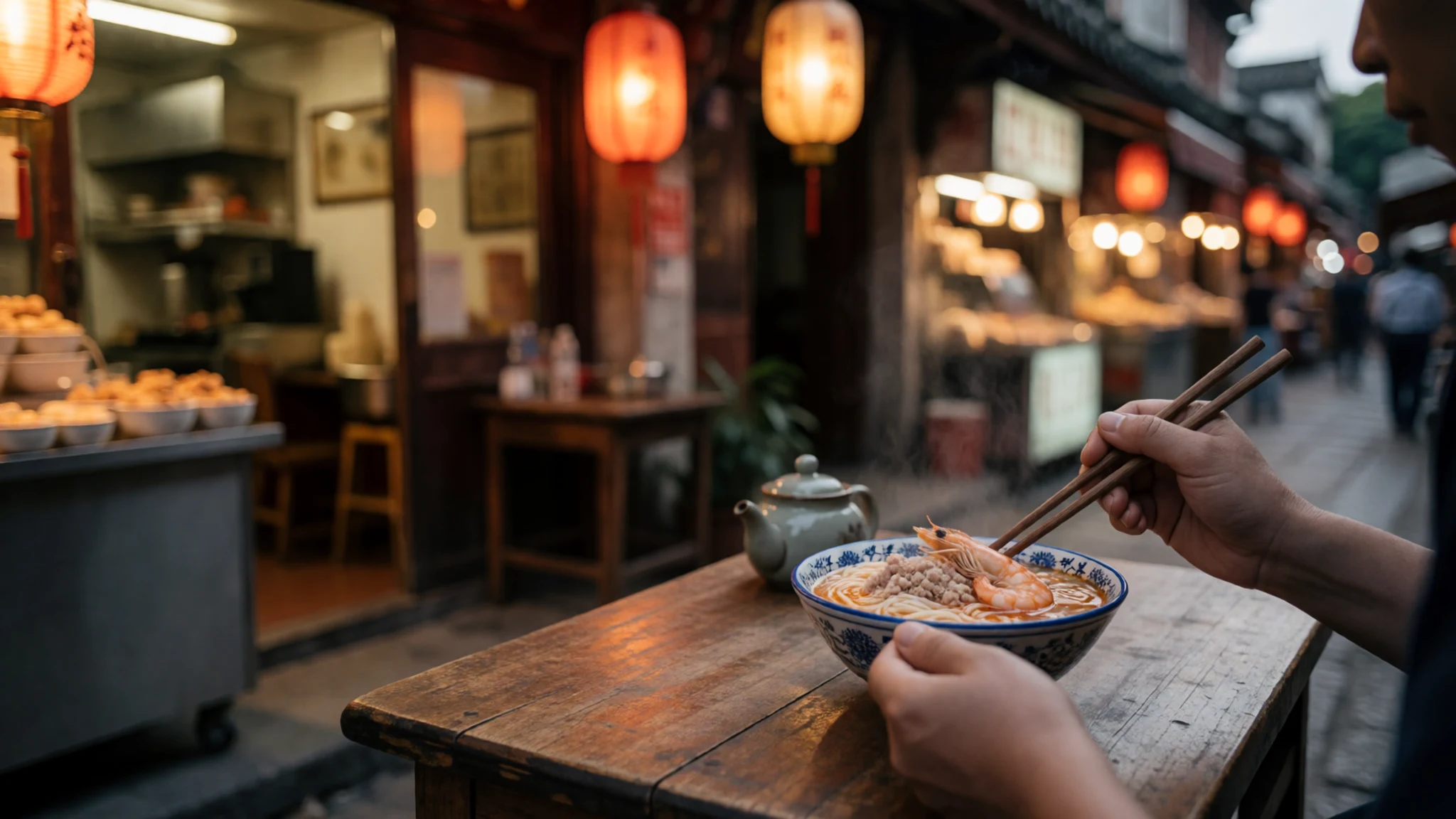
- Crab sticky rice (紅蟳米糕) — Banquet-style restaurants in the old city
Glutinous rice steamed with mushrooms and pork, topped with a whole red crab. It is a celebration dish in Tainan, often ordered by groups. Go with friends so the crab can be shared, and ask the restaurant what is in season.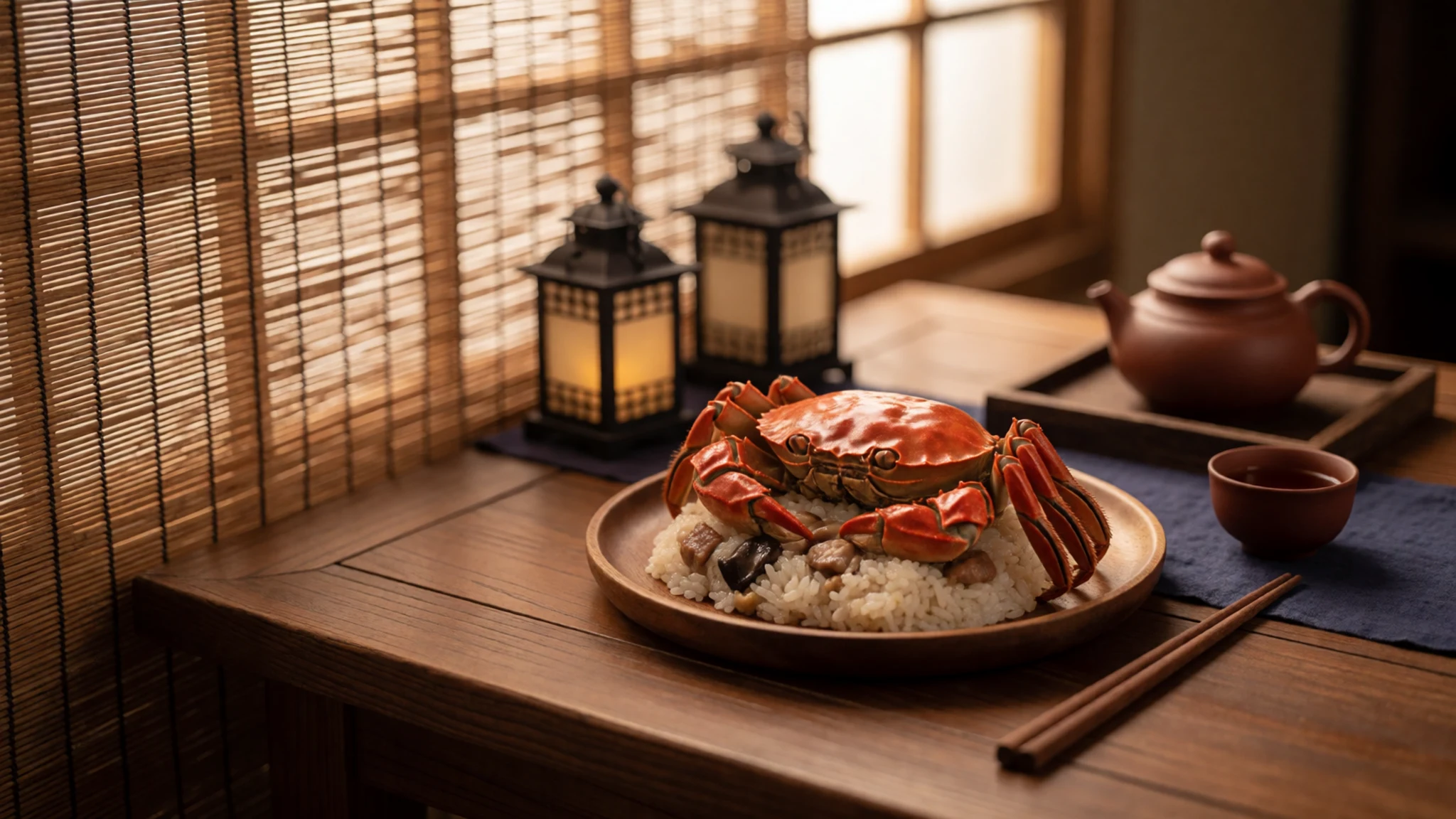
- Braised meats and rice — Family eateries near the old city centre
Tainan is known for slow-braised pork and other meats in sweet-salty soy sauce, spooned over rice. The best versions have a glossy sauce and meat that falls apart. Small family eateries in the old centre often specialise in nothing else. - Oyster omelette — Night markets and roadside stalls near the coast
Fresh oysters from the coastal farms are cooked with egg and starch batter, then glazed with a sweet red sauce. The texture is soft and slightly chewy. It makes sense to eat it near the coast, where the oysters have travelled the shortest distance. - Night-market snacks — Garden, Da Dong and Wu Sheng night markets, Tainan
Tainan's night markets, including Garden, Da Dong and Wu Sheng, mix stalls of grilled meat, fried snacks, sweet drinks and carnival games. They suit a relaxed evening of grazing. Bring cash, arrive hungry and check which nights each market opens.
Plan it
Best time. November to December and March to April, when the heat is easier and the shore is pleasant for walking and boat trips. Summer is hot, humid and exposed to typhoons and sudden storms, with little shade on the sandbars.
How long. 2–3
Getting there. The closest international airport is Kaohsiung, then a train, bus, taxi or rental car to Tainan in about 45 minutes to an hour. Taiwan Taoyuan International Airport also works, with the High Speed Rail south to Tainan HSR Station, about 10 km southeast of the city centre. From there, take a taxi, a free shuttle bus, or a local train from Shalun to Tainan Station. From Tainan, reach the mangroves and Anping by scooter, bus, taxi or tour.
Budget. low
Tips
- Start coastal and mangrove visits in the morning, before the sun and the crowds build
- Carry water, a hat and insect repellent, as shade and shops are scarce along the shore
- Check the official park website for boat tours, tide conditions and access before setting out
- Take cash for night markets and small eateries, and keep a card for larger purchases
- Combine the park with Anping's forts and old streets, which are close together
Etiquette
- Keep to paths and roadsides near oyster racks, as the area is a working farm
- Dress modestly and speak quietly in temples
- Ask before photographing farmers or worshippers
Nearby
Sources
- Wikidata Q6121227 (CC0)
- Wikipedia: Taijiang National Park (rev 1377817690) (CC BY-SA 4.0)
- Wikivoyage: Taijiang National Park (rev 5432365) (CC BY-SA 4.0)
- Koika, Sihcao Green Tunnel of Mangroves (CC BY 3.0)
- Sinjhong0227, Taijiang National Park (CC BY-SA 4.0)
- Cheetah mi, Dingtou Sandbar (CC BY-SA 4.0)
- Ashahikawa, Taijiang National Park (映) (CC BY-SA 4.0)
- Ashahikawa, Taijiang National Park (水道) (CC BY-SA 4.0)
- Ashahikawa, Taijiang National Park (烏雲與蚵棚) (CC BY-SA 4.0)
- 邱文強, oyster racks at sunset (CC BY-SA 4.0)
- WEN CHIANG CHIOU, oyster fields (CC BY-SA 4.0)


