Tai O
Tai O, People's Republic of China
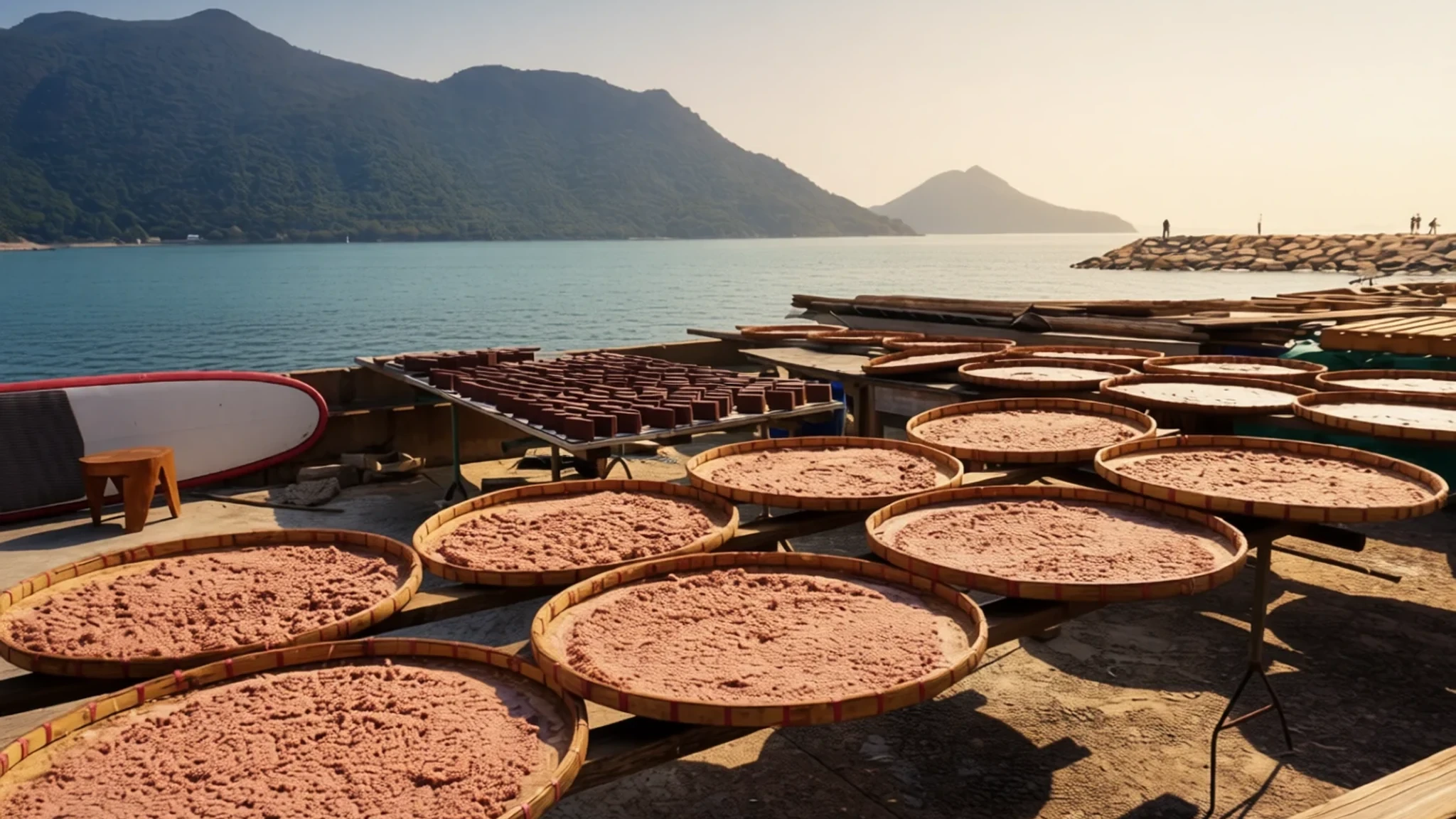
Tai O is a stilt-house fishing village on Lantau, where a tidal creek, a street market and temple incense still shape daily life.
The place
Tai O (大澳) is the stilt-house settlement where Lantau meets the Pearl River estuary, a short tidal creek running through the houses to open water. The village is built as much over the creek as beside it. Rows of wooden houses, called pang uk, stand on stilts above the mud and the rising tide, linked by narrow plank walks. At low water the channel shows its bed; when the tide returns, boats sit almost at the doorsteps. A footbridge crosses the creek and joins both banks, which are dense with houses, drying racks and small workshops.
The settlement is a fishing village rather than a harbour city. Nets, plastic crates and buckets of catch occupy the lanes. Dried seafood hangs outside shops. The smell of shrimp paste is part of the street, strong and salty, and it comes from family workshops that still ferment the paste in the old way. Behind the houses, low green hills close the view; in front, the water opens towards the estuary and, on a clear day, towards the far shore. Mangroves fringe parts of the channel.
Tai O is within Hong Kong, yet the pace is that of a small coastal town. Residents move through lanes that were never meant for crowds, and many of the stilt houses are family homes, not exhibits. Weekends bring visitors off the buses, and the market lanes fill; on a weekday morning the same lanes are mostly local. The timber walks can be wet, the sun on the water is hard, and the summer air is heavy. What remains is how ordinary life continues above the tide: laundry, cooking, a radio, a boat tied under the floor.
Its story
Tai O grew as a home for people who lived by boats and by the tide. The community most closely tied to the village is the Tanka, fishing people of the south China coast who long lived on the water and who built houses on stilts here so that the tide still ran under the floor. The work was fishing: inshore nets, small wooden boats, and the salting and drying of the catch. Salt was the other trade. Shallow pans around the settlement once evaporated seawater, and salt, fish and dried goods left by boat when the west of Lantau was a long journey from the city by land.
Distance from the urban centre gave the village its own calendar. Temples, rather than offices, marked the year. Yeung Hau Temple, devoted to a protector of seafarers, stands in the lanes and becomes the heart of festival days, when neighbours gather, offer incense and carry the celebration outdoors. Smaller shrines to other sea deities sit close by and stay in daily use. The creek was the high street. Until a footbridge was built, crossing the creek meant a small boat hauled over by rope, a memory older residents still tell.
Roads and bus routes later tied Tai O to the rest of Hong Kong. The salt pans went quiet, and fewer households now live from the boats alone. Some stilt houses have been mended, some tilt with age, and some stand empty. Visitors fill part of the gap, coming for the pang uk, the dried-seafood market and a short ride out towards open water. The story that remains visible is practical rather than grand: a community that set its houses over the tide, kept its temples, and is still working out how a fishing village lives beside a large city.
What to see
- Pang uk — Along the creek
Tai O's pang uk stand on stilts above the creek, linked by plank walks. Washing, crates and small boats occupy the space beneath the floors. These are family houses, so the interesting view is also someone's doorway. Visitors keep to the public boards. Low tide shows mud and pilings; high tide lifts the water to the thresholds.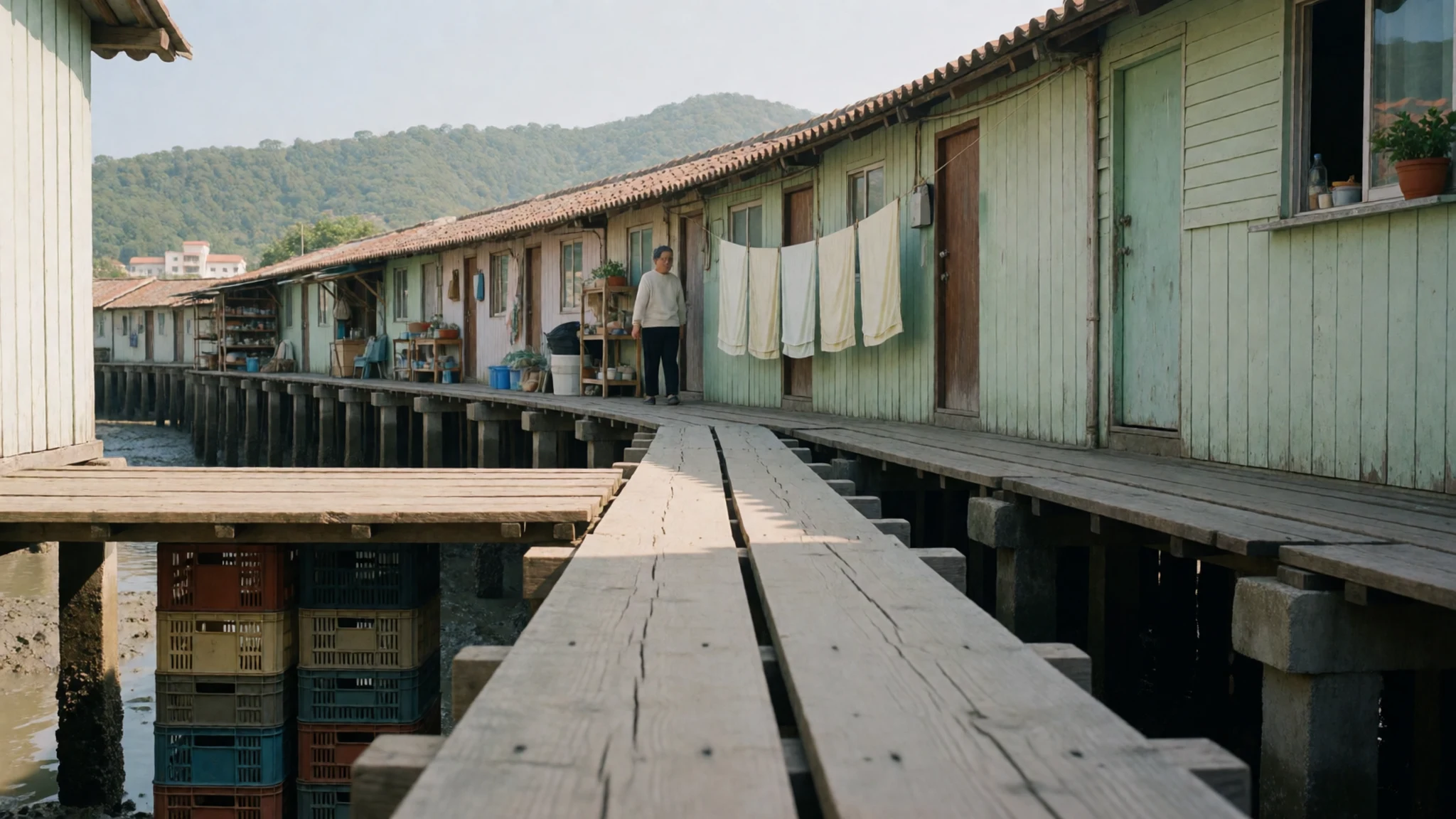
- Creek footbridge — Centre of the village
The creek is Tai O's main axis, and the footbridge is where both banks become a single walk. Houses press close on either side, and boats tie up in the channel below. From the span the plan of the village is clear: stilts, lanes, and open water beyond the last roofs. People stop here because the whole settlement reads at once, from doorways down to the tide.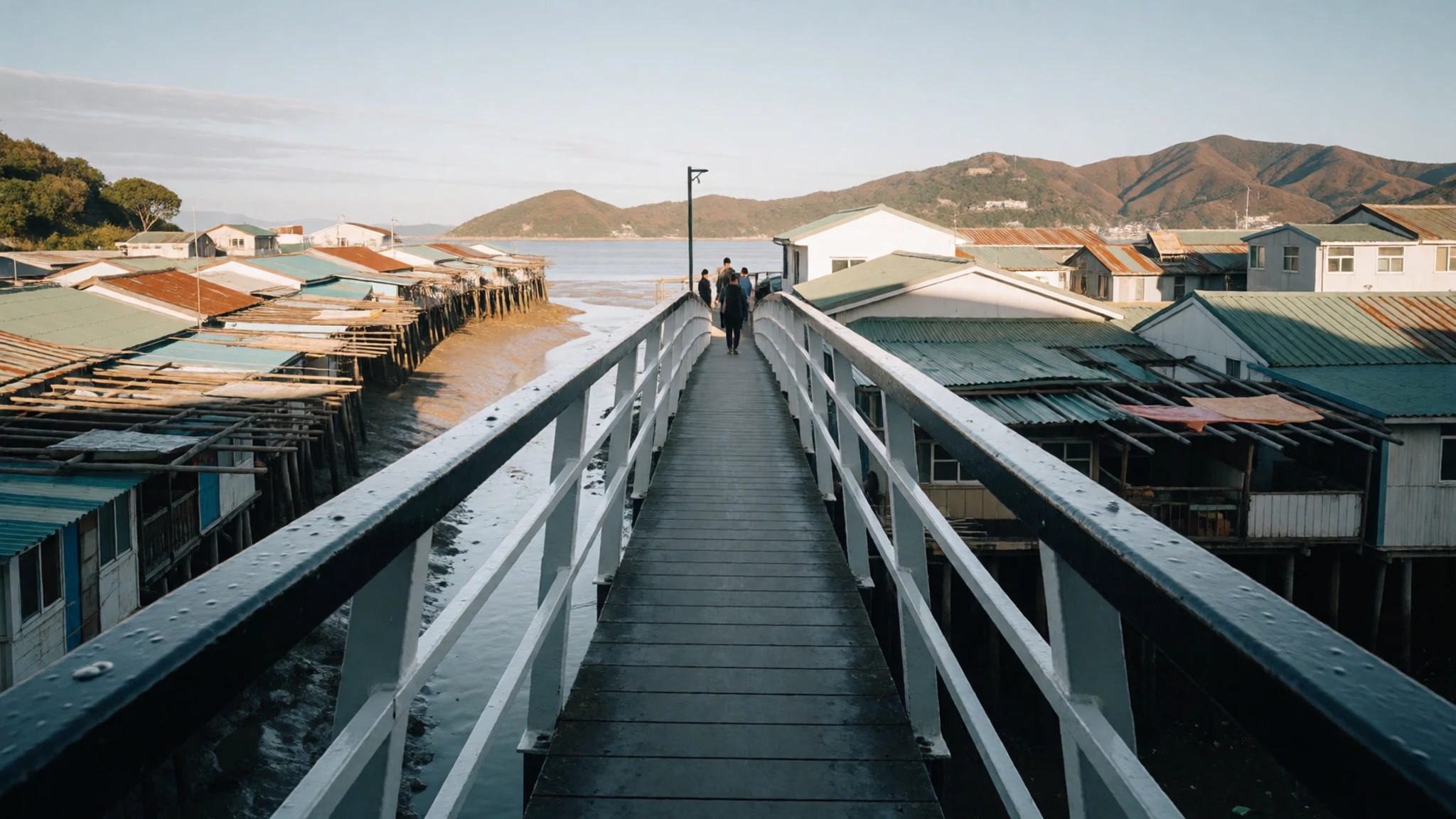
- Yeung Hau Temple — Village lanes
Yeung Hau Temple sits in Tai O's lanes, a neighbourhood shrine rather than a monument on a plaza. Fishing families have long asked its deity for protection on the water. Inside, incense hangs in coils, the altar is red and crowded with offerings, and the light is dim against the bright street. Festival days fill the forecourt. A few people bow, then walk on towards the market.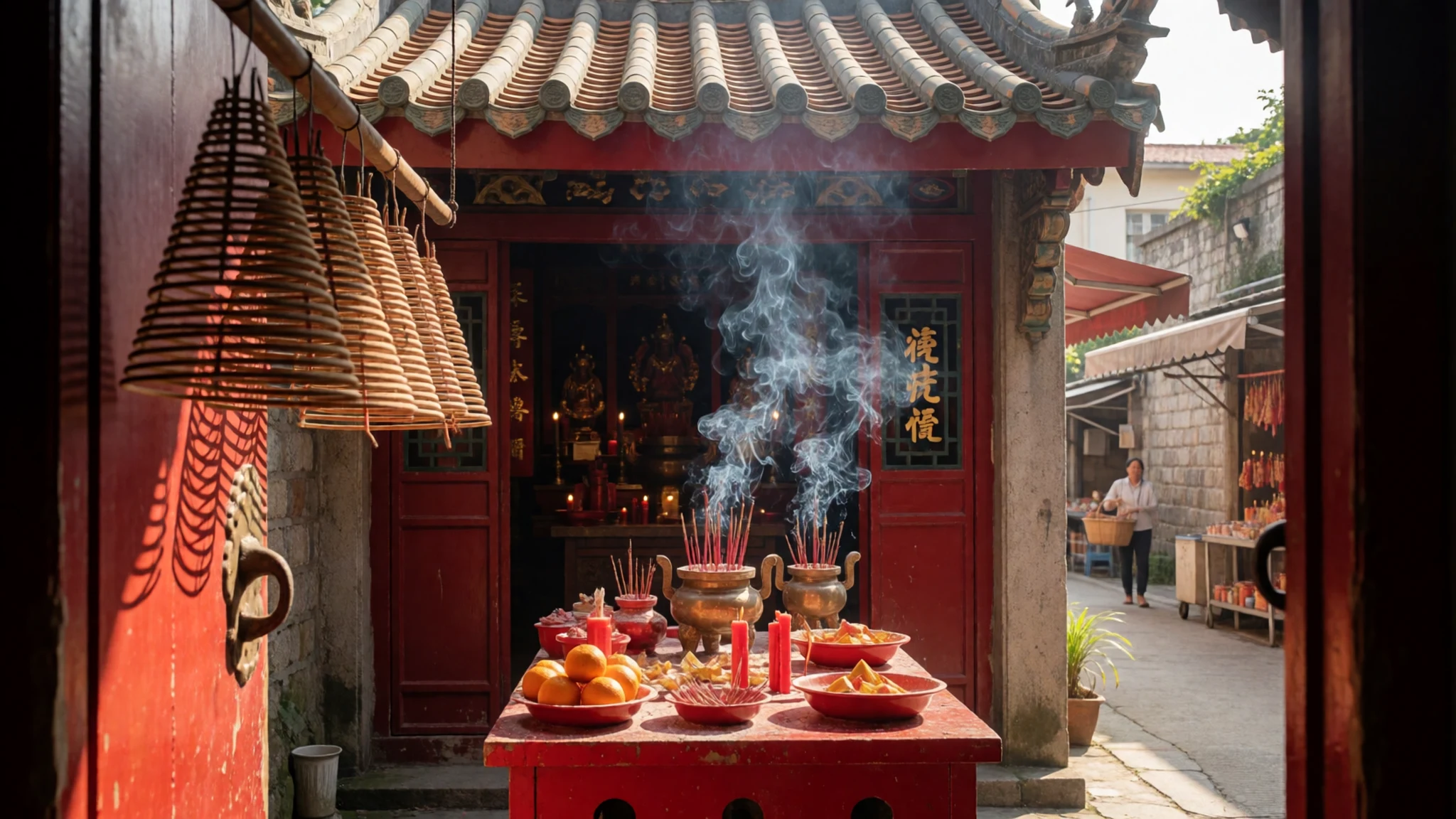
- Dried-seafood market — Market lanes by the creek
Tai O's market lanes sell the village's own goods: shrimp paste, salted fish, dried shrimp and squid. Stalls open straight onto the street, and the paste often sits in open tubs, the smell ahead of the display. The lanes are busiest once the buses have arrived and calmer early in the day. Shoppers taste, compare and move aside so residents can pass.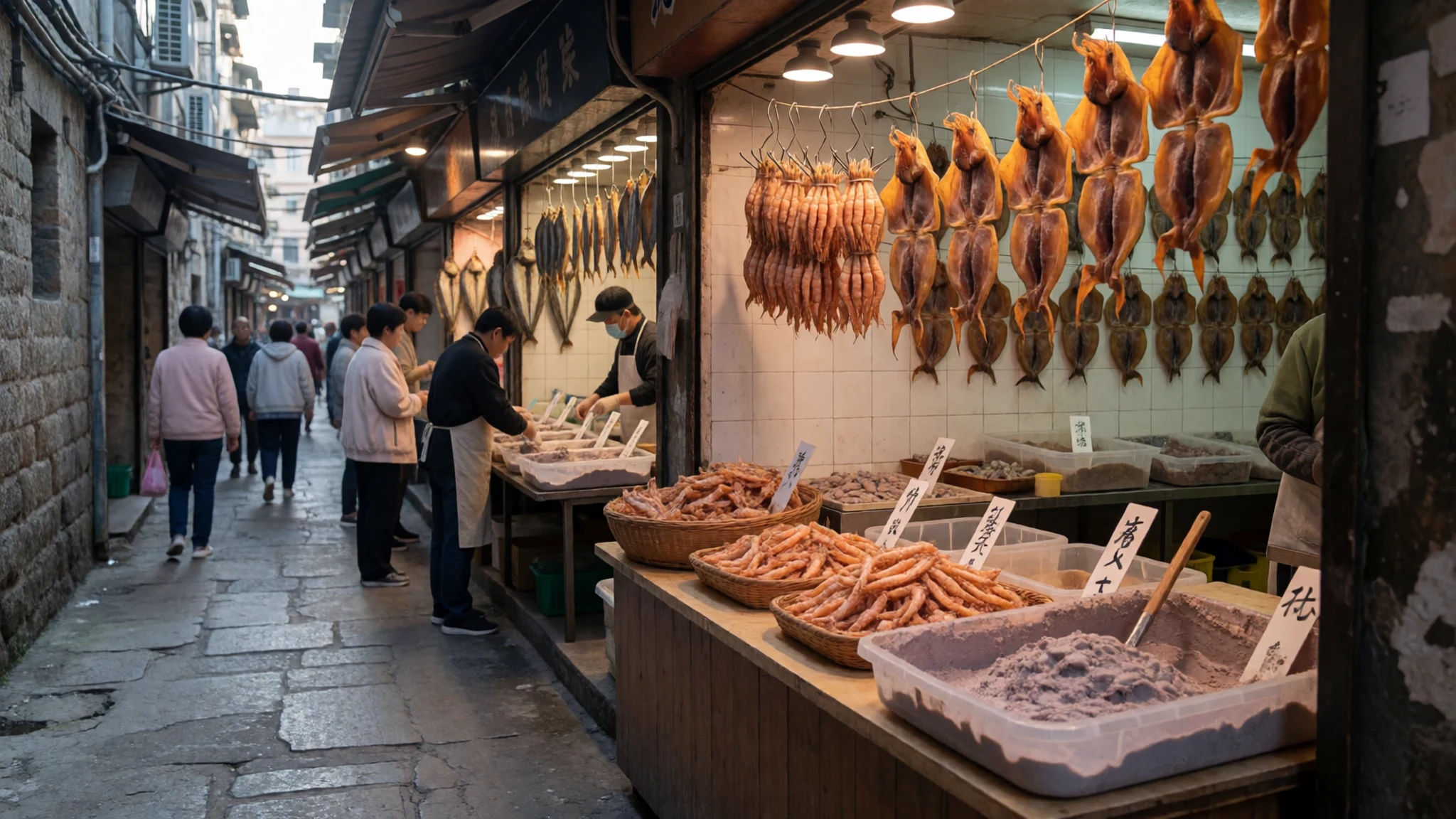
- Estuary boat ride — Village waterfront
Small boats leave Tai O's waterfront for the wider estuary, where the village roofs give way to open, often brown-green water and distant hills. Chinese white dolphins live in these waters and are sometimes seen, sometimes not; the ride is a boat trip, not a guarantee. Mangrove edges the channel on the way out. The quay itself is a good lookout back at the stilts.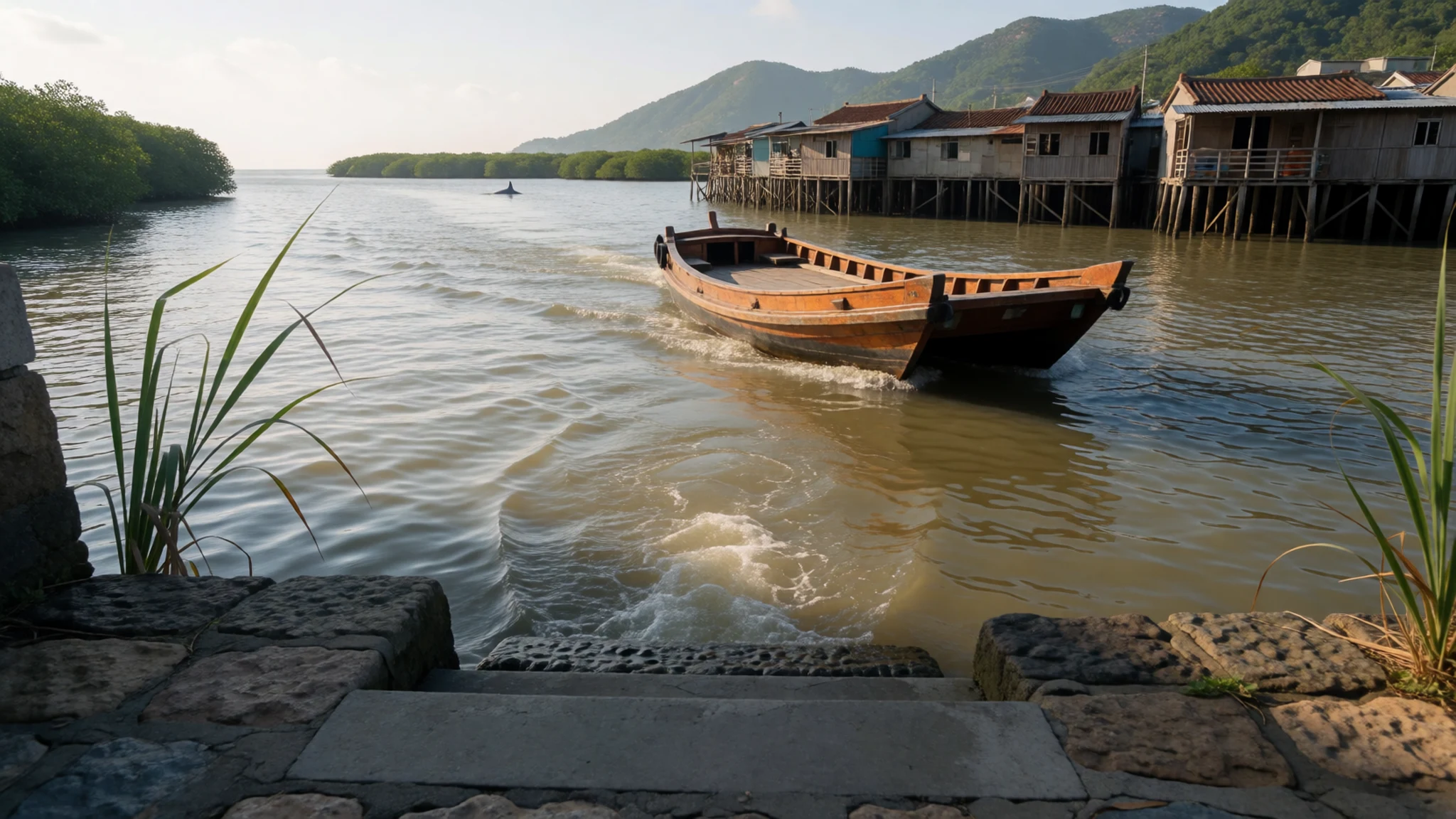
Culture
Tai O's culture is a fishing culture that moved onto land without giving up the tide. Tanka families, together with other coastal households, organised life around boats, salt and the stilt house. Cantonese carries the gossip, the bargaining and the temple announcements. The gods that matter here look after people on the water. Yeung Hau and the smaller sea shrines take incense across the year, and festival days turn the lanes into a shared rite: drums, a short procession, food set out for neighbours. Dried seafood and shrimp paste belong to that same habit of keeping the catch. They are pantry and product at once.
The pattern is thinner than it was. Many younger people earn a living away from the boats, some pang uk stand empty, and weekend visitors now share alleys built for a village. What remains is still local, not a show. A resident hanging laundry over the creek is at home. Ask before you photograph people in a doorway or on a private deck, and do not step onto a stilt house that is clearly someone's home.
What to wear
Tai O never developed a court costume of its own. The dress that belongs to the village is the working clothes of south China fishing people. Older women still sometimes wear the samfu, a plain cotton tunic and trousers, often in black, indigo or a small floral print, with cloth shoes or sandals. A broad bamboo hat, the kind that shades a face on a boat deck, appears on the water and in old photographs more than in the market today. Cloth was chosen to wash, to dry fast in salt air, and to let a person squat, haul and climb a plank.
Along the creek now, dress is ordinary Hong Kong casual. T-shirts, shorts, house trousers and trainers are what residents actually move in, with a sun hat when the quay is bright. Festival days bring smarter blouses and the occasional samfu, especially among older women at the temple, but there is no requirement to dress in costume.
Visitors do well in light, covering clothes that can take sweat and a little spray. Shoulders and knees covered are the comfortable choice at Yeung Hau Temple. Slippery wet timber is the real clothing problem: flat shoes with a grip beat new sandals, and a brim beats an umbrella in the wind off the estuary. A light rain layer earns its place in the humid months.
What to eat
- Shrimp paste — Family workshops and the market lanes
Tai O's shrimp paste, haam haa, is the village preserve: tiny shrimp fermented in salt until the result is dense, purple-grey and deeply savoury. Households still make it, and stalls sell it by the tub to take home or to cook with.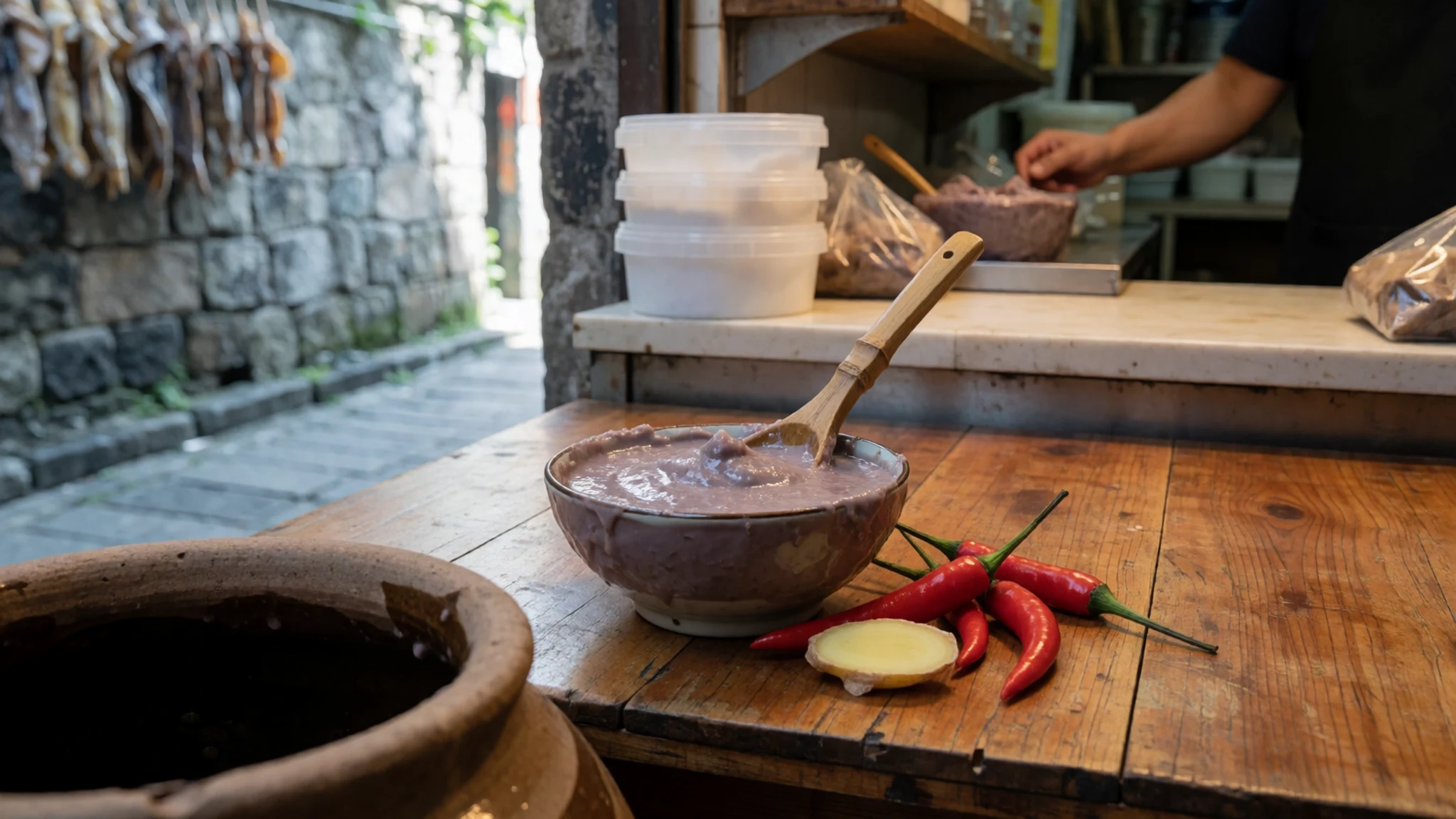
- Salted fish — Drying racks and market stalls by the creek
Salted fish hangs and stacks all through Tai O, a plain result of salt, sun and time. Stalls sell it whole or in pieces, from small dried fish to meatier cuts meant for steaming. At home it goes over rice or into a little oil with pork.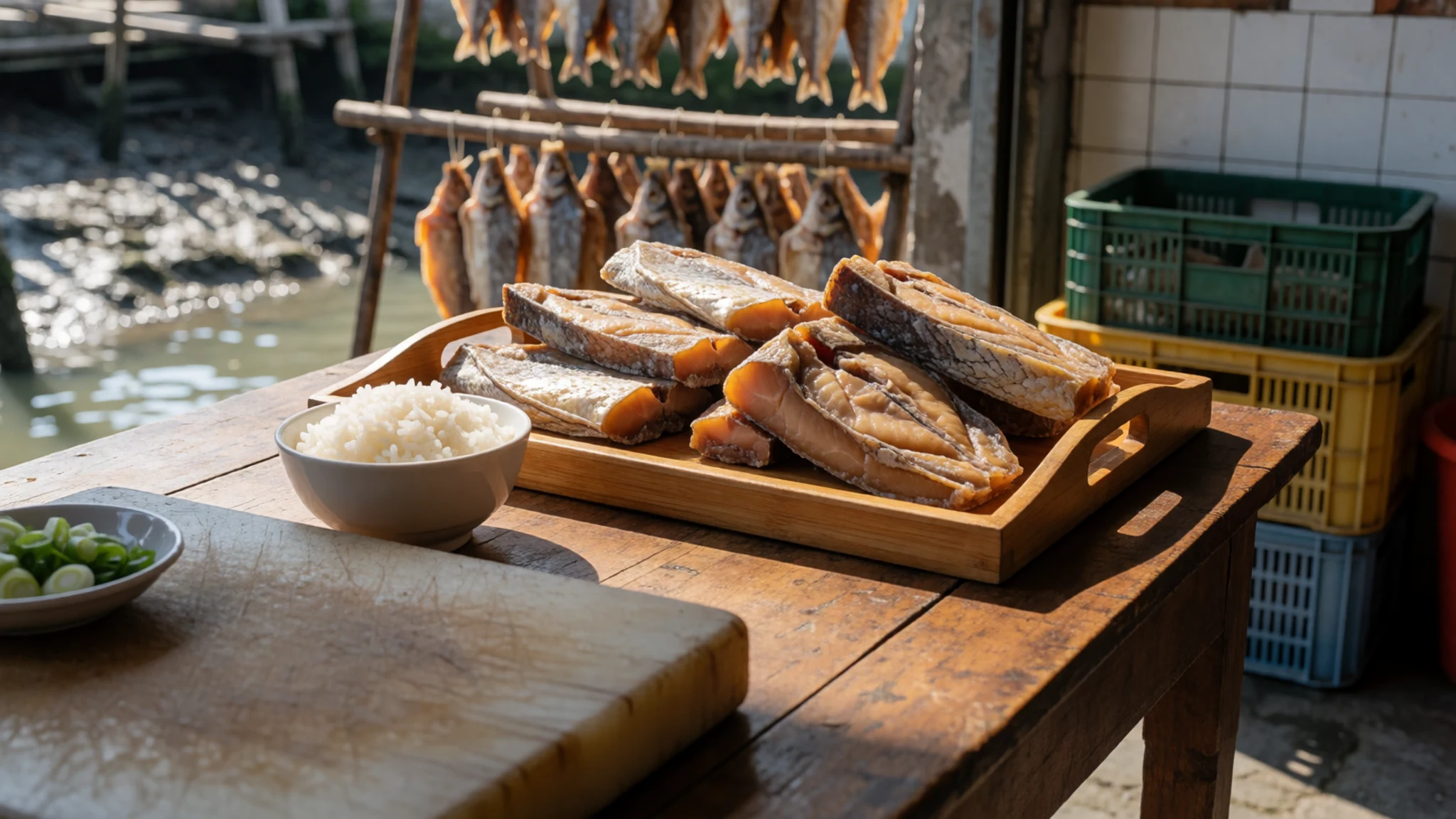
- Dried shrimp — Market lanes
Dried shrimp are the sweeter, lighter cousin of the paste, scattered in bags and baskets along Tai O's market lanes. They keep for the trip home and return to life in soups, fried rice and winter melon. Vendors grade them by size. A clean marine smell is the useful guide. - Shrimp-paste fried noodles — Cooked-food stalls in the market lanes
Several cooked-food stalls in Tai O toss yellow noodles with a spoon of local shrimp paste, garlic and a little chilli. The result is a hot, salty lunch, closer to a household wok than to a banquet plate, and easy to eat before the walk back to the bus. - Charcoal seafood — Street stalls near the waterfront
Street stalls on the way to Tai O's waterfront grill squid, fish balls and other small seafood over charcoal, to eat from a skewer while walking. It is snack food, smoky and straightforward, and pleasant when residents are in the queue as well.
Plan it
Best time. December to February is the easier season in Tai O, with drier, cooler air on the exposed quay and the footbridge. March can be mild, though by April the air turns humid and the hills sometimes sit in mist. July and August are the hottest months and June the wettest, and typhoons can close the coast road and stop the boats.
How long. 1–2
Getting there. Hong Kong International Airport is on Lantau, north of Tai O. The usual last leg is a bus from Tung Chung along the coast road into the village. Fortune Ferry also runs daily between Tai O and Tuen Mun, Tung Chung, and Sha Lo Wan; sailings change, so check the operator before relying on a boat. There is no rail station in the village itself.
Budget. mid
Tips
- Prefer a weekday if a quiet lane matters; weekend buses unload a lot of day-trippers at once.
- Walk the market soon after you arrive; the dried-seafood stalls are livelier before the main rush.
- Carry cash for small stalls, which may not take cards.
- Wear shoes with a grip; plank walks stay wet and slick.
- In the humid months, check the weather before setting out; heavy rain and typhoons interrupt the coast road and the boats.
Etiquette
- Ask before photographing people in a doorway or on a boat.
- Stay on public walkways and do not step onto a private stilt-house deck.
- Inside Yeung Hau Temple, keep your voice down and leave room for people who are praying.
- Let residents pass on the footbridge and in the narrow market lanes.
Nearby
Sources
- Wikidata (CC0)
- Wikipedia — Tai O (CC BY-SA 4.0)
- Wikivoyage — Tai O (CC BY-SA 4.0)
Wildlife
- Chinese white dolphin (animal)
The Chinese white dolphin is a coastal dolphin, known across the wider region by that pale, memorable name. It lives in the waters around Tai O, and the way to look for it is a boat trip. Some days it appears and some days it does not, so think of the outing as a hopeful search rather than a promise. Go with patience and an open mind, and be glad of whatever the sea chooses to show you.