Taeanhaean
Taeanhaean, South Korea
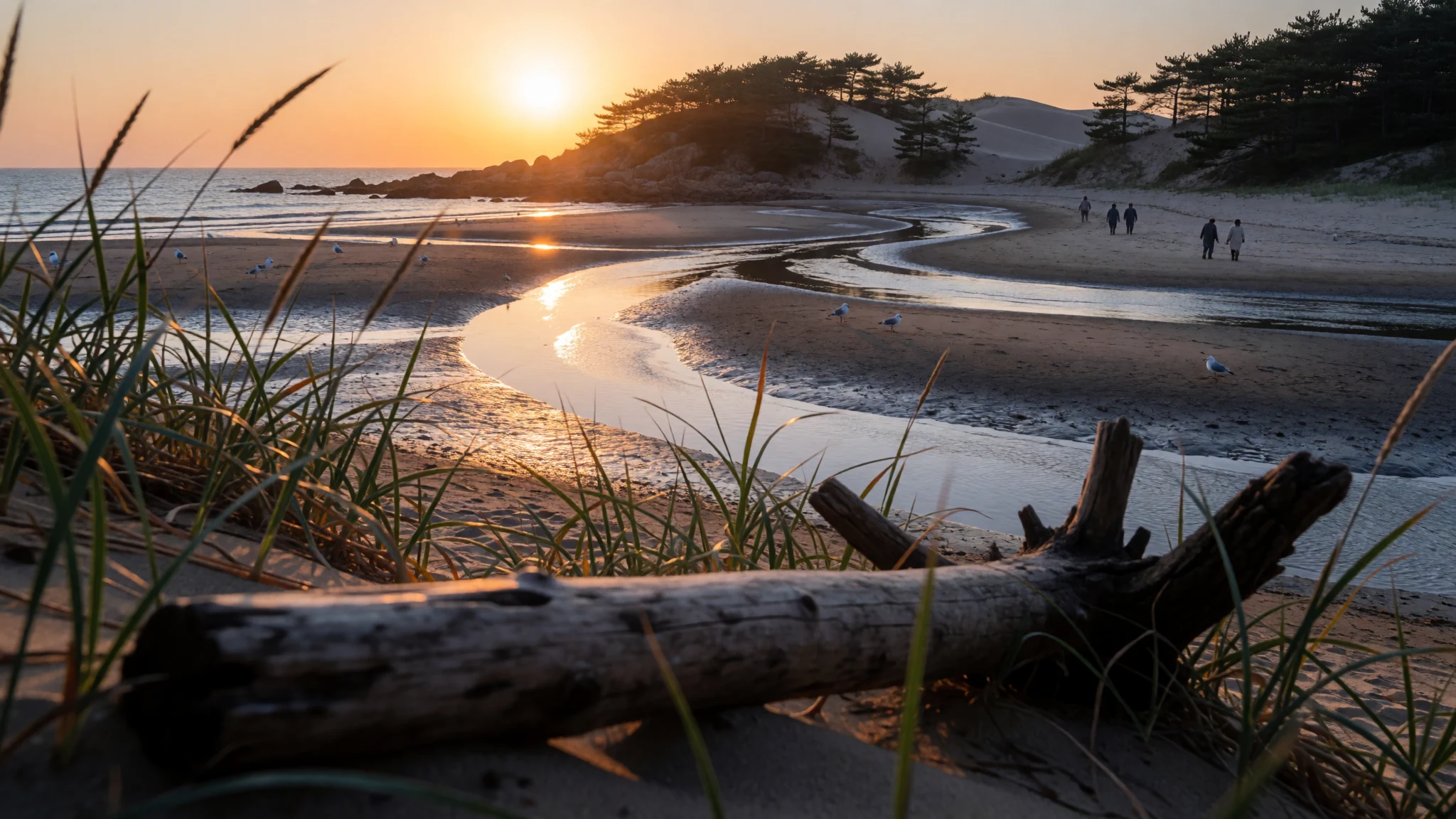
Taeanhaean is a protected West Sea coast within easy reach of Seoul, with dunes, tidal flats, islands, sunsets over open water and good seafood.
The place
Taeanhaean National Park wraps around the shoreline of Taean County, a ragged peninsula in South Chungcheong Province that pushes into the Yellow Sea, which Koreans call the West Sea. The province lies just south of Seoul, so this is a wild-looking coast that city families can reach for a weekend. The park is mostly water. Its protected area takes in far more sea than land, and it follows a coastline of roughly 230 km, scattered with about 72 islands. Between the headlands sit 26 beaches, along with dunes, rocky shores, pine woods and wide tidal flats.
The character changes from bay to bay. Some beaches are broad and sandy, with holiday villages behind them. Others are small, stony and used mainly by fishing families. The tide is the thing to understand. The West Sea has a large tidal range, so the same bay can be a swimming beach at high water and a plain of glistening mud at low water. Birds feed on the flats, porpoises and whales are recorded in the surrounding sea, and rarer animals such as otters survive in quieter corners.
Because the coast faces west, sunsets over open water are the main draw, along with camping, cycling and seafood. Summer weekends are crowded and traffic on the approach roads can be slow. Spring and early autumn are calmer, and winter is cold, windy and very quiet. The park was designated in 1978, and much of it is still a working landscape of boats, oyster racks and small farms.
Its story
Taeanhaean National Park was designated in 1978, but people had lived off this coast for far longer. Families worked the tidal flats for shellfish, fishing boats crossed the channels between the islands, and salt was made on shallow shore pans along the West Sea. Protecting a seashore like this was always going to be a negotiation. The park boundary sits around villages, farms and harbours rather than replacing them, and those livelihoods are still easy to see.
The coast's best-known modern episode was a tanker accident offshore that spilled a large quantity of oil onto these shores. Volunteers came from across South Korea to wipe rocks and scoop oiled sand by hand through a cold winter. The clean-up is remembered locally as a shared effort. Recovery of the shoreline and its marine life was slow and uneven, and monitoring has continued since.
The park's story since then has been one of balance. Holiday building, tourism, fishing and conservation all pull in different directions on a thin strip of land close to Seoul. Conservation work centres on the dunes, which shift with the wind and are easily damaged by foot traffic, and on the tidal flats, where birds feed on small creatures in the mud. Boardwalks, fenced paths and seasonal closures are the practical result, and ignoring them does real harm. Taeanhaean is easy to enjoy and just as easy to treat carelessly. It is best understood as a working coast that happens to be protected.
What to see
- Mongsan-ri shore — Nam-myeon, Taean County
Mongsan-ri is a good first stop for the park's ordinary, lived-in coast: sand, low pines, a fishing village behind and a long view west. It is calm outside summer weekends. Come at low tide to see the flats, and at sunset to see the sky.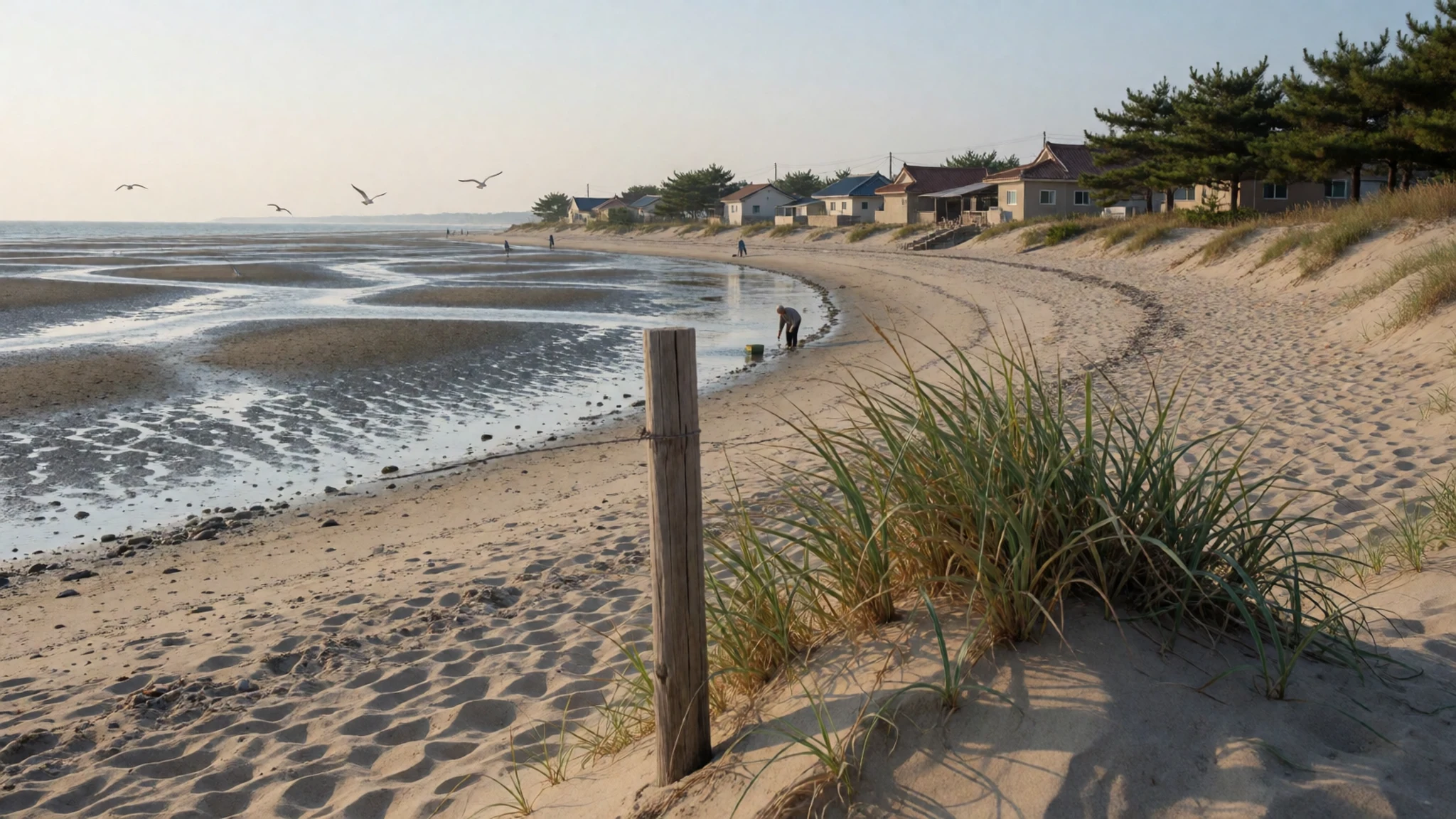
- Sindu dunes — Sindu-ri, near Wonbuk-myeon
The Sindu dunes are a belt of wind-blown sand set behind the shore, protected as a natural monument. Boardwalks and marked paths keep walkers off the fragile crest. Morning and late afternoon light bring out the ripples. Carry water, because there is almost no shade.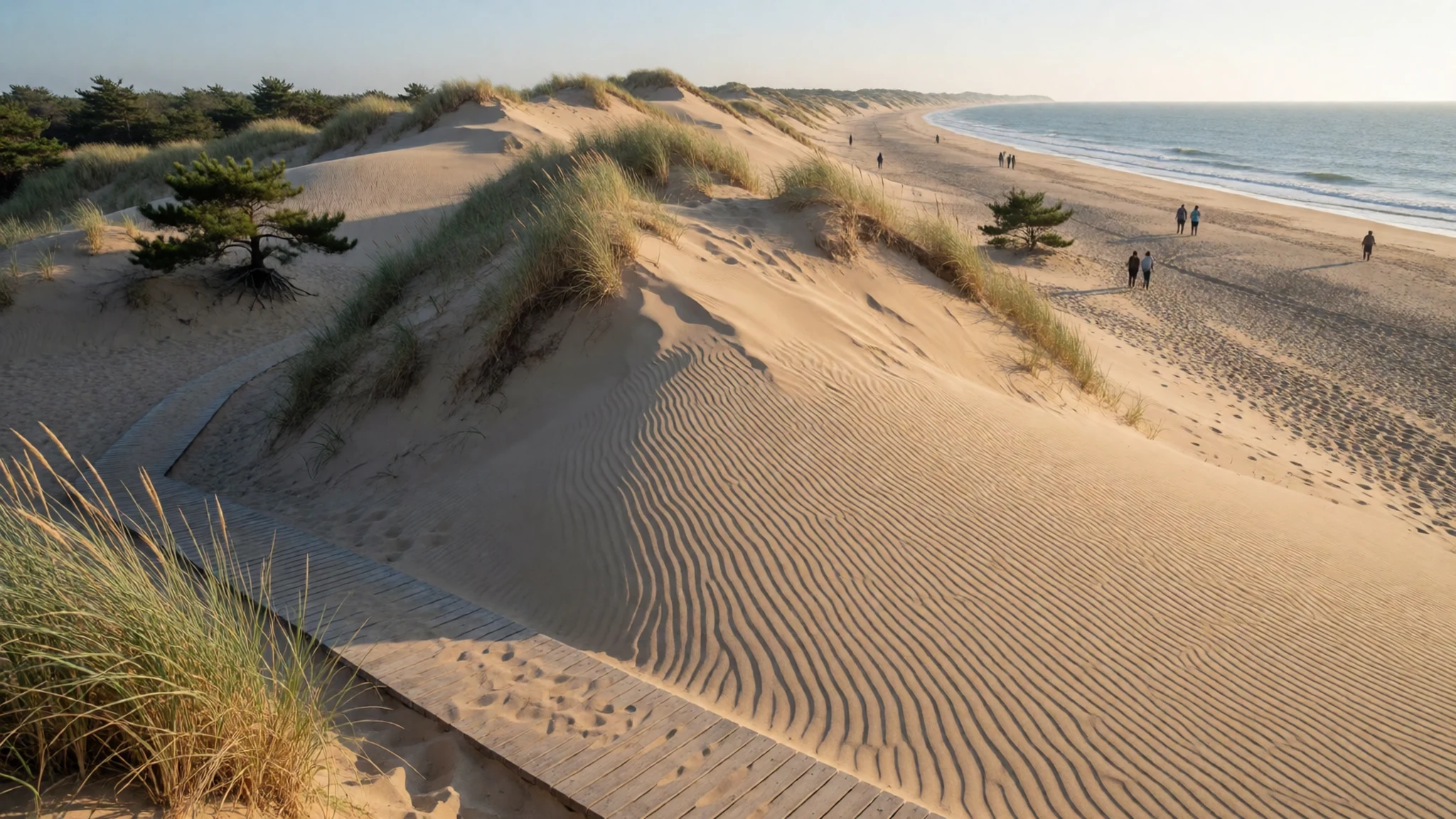
- Gaui-do — Offshore island, south of the peninsula
Gaui-do is a small island with a rocky shoreline, quiet paths and a slower pace than the mainland beaches. It suits a half-day or an overnight stay. Check current access and ferry or bridge arrangements before travelling, as weather can change plans.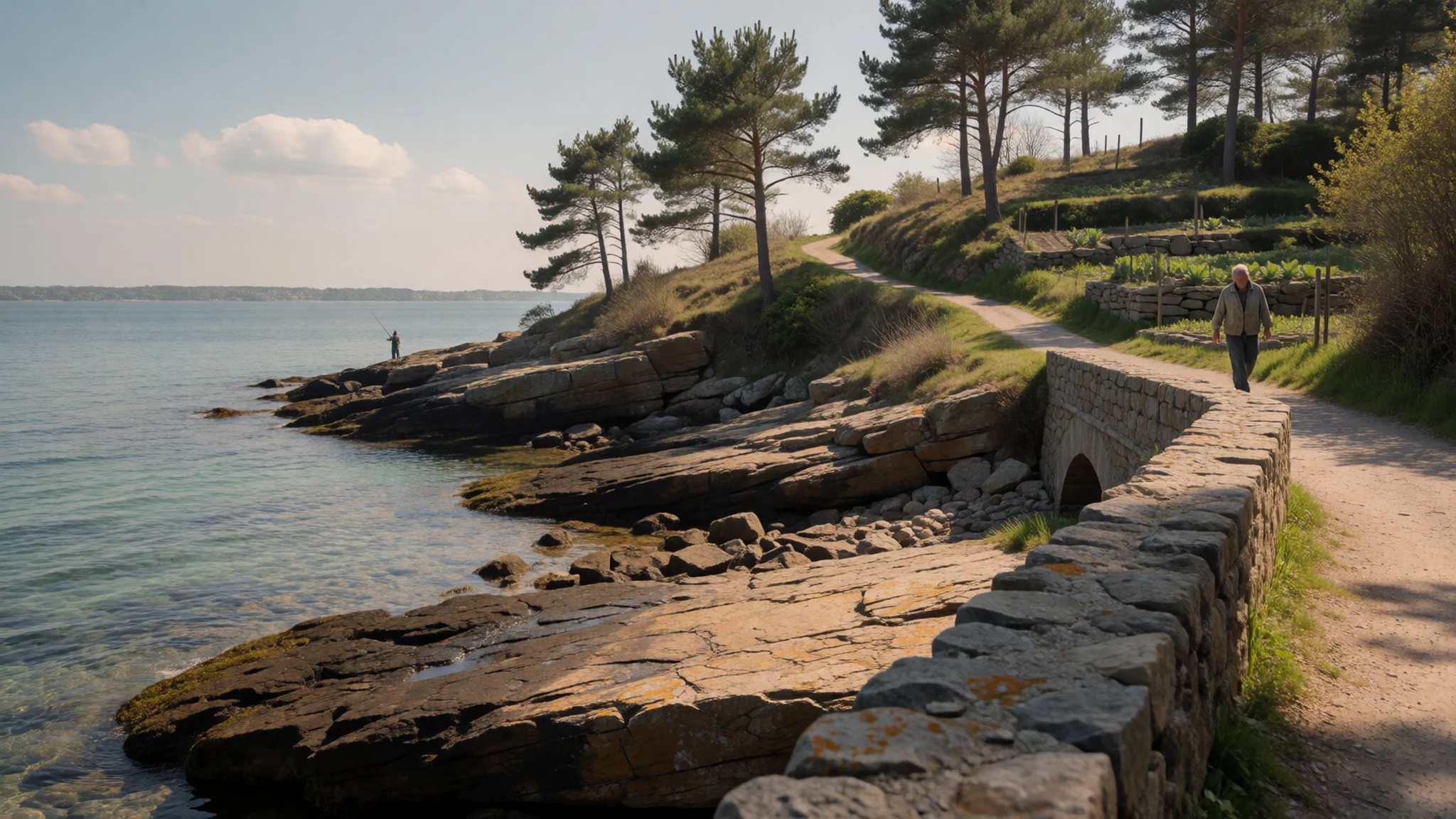
- Byeongpung-do and the offshore islets — Taean coastal waters
Byeongpung-do is one of the rocky islands that give this coast its jagged outline, noted locally as a natural monument. It is best seen from the shore or from a boat tour in settled weather. Binoculars help with seabirds and the crumpled rock faces.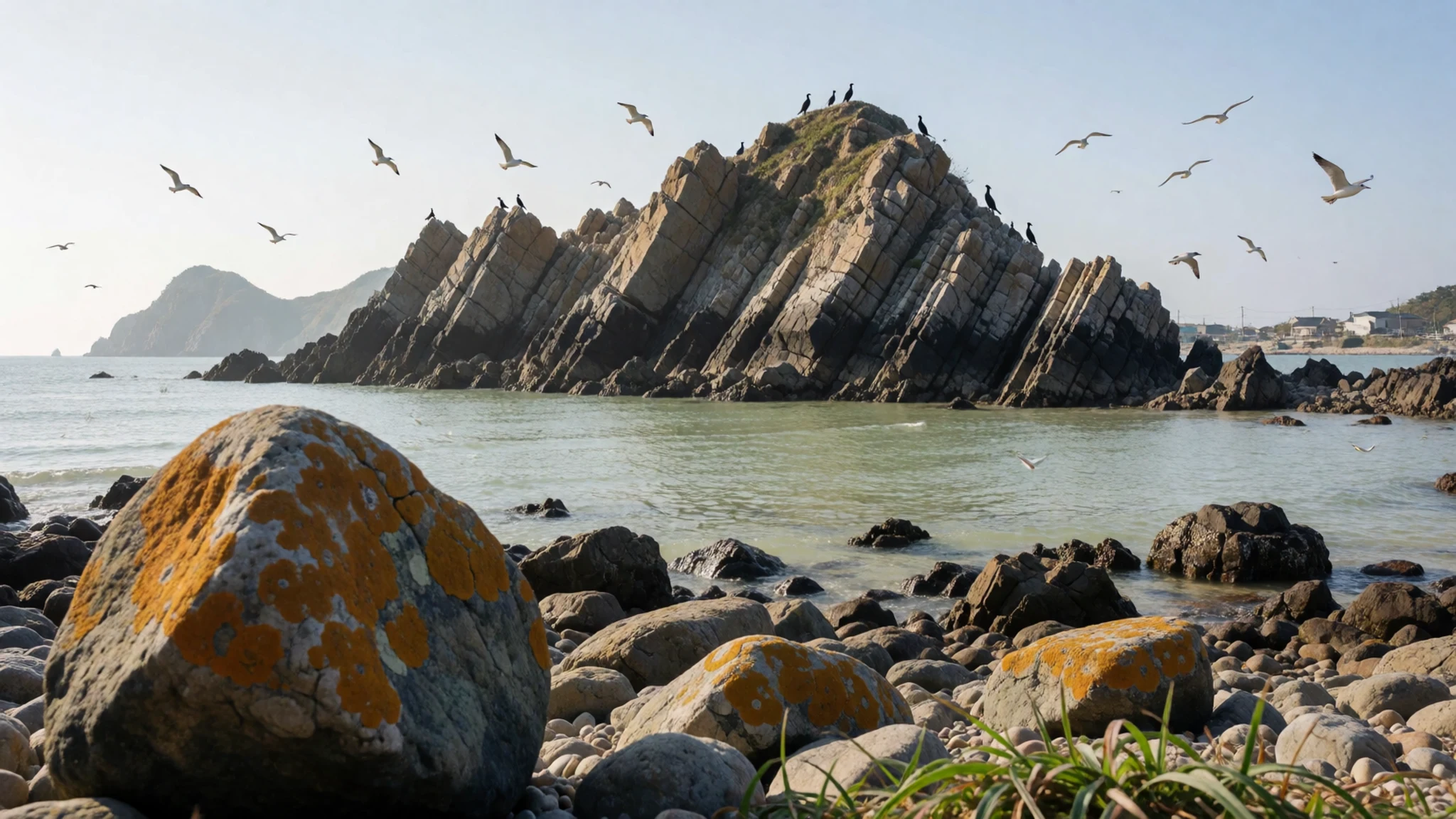
- Kkotji beach — Anmyeon-eup, Anmyeondo
Kkotji is a wide sandy beach on Anmyeondo, a long island joined to the mainland by road. It is busiest during the spring flower season and in summer. The tide runs out a long way, leaving a hard, flat shore that is good for walking at low water.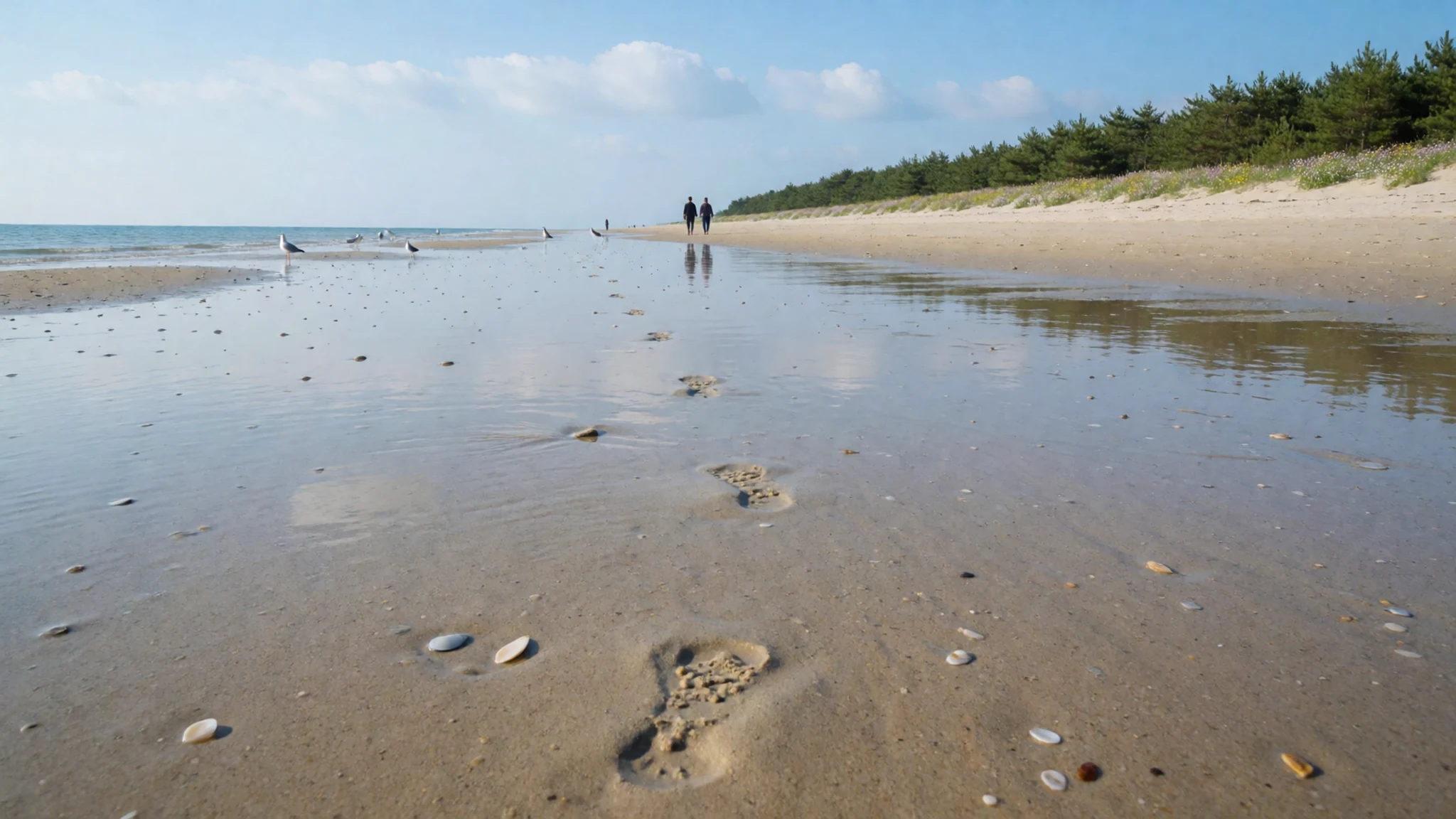
Culture
Taeanhaean's culture is a fishing and farming one, and the park is simply the stage it plays out on. Villages along the shore still depend on the tide. Shellfish are gathered from the flats at low water, boats go out from small harbours, and many West Sea communities mark the seasons with rites asking for a safe catch. Other Koreans often describe Chungcheong people as unhurried and mild in manner, and a visit here tends to feel that way.
For most South Koreans, though, this is a leisure coast. Families come from Seoul and nearby cities for weekend camping, barbecues on the sand, guesthouse stays and spring flower festivals. Beach culture is social and practical rather than showy. Tents and shade shelters line the sand, children dig for clams, and evenings revolve around food and watching the sun go down over the water.
There is also a quiet pride in the landscape itself. The dunes, islands and flats are treated as shared heritage, and local schools and volunteer groups run beach clean-ups. Visitors who treat the shore well are made welcome in shops, eateries and village stalls.
Take all your rubbish back with you, stay on the marked paths over the dunes, and leave shellfish on the flats unless a local guide or sign says gathering is allowed.
What to wear
The traditional dress of Korea is the hanbok: a short jacket (jeogori) over a full wrap skirt (chima) for women, and a jacket with roomy trousers for men. It is made in silk for celebrations, in cotton for everyday wear, and in ramie or hemp for hot summers. People wear it today for weddings, the Lunar New Year and Chuseok, and for photographs at heritage sites, rarely on a coastal trip. Hanbok has no special link to Taean, but families here put it on for the same holidays as everyone else.
What people actually wear on this coast is practical. Residents who work the shore wear rubber boots, waterproof aprons, wide-brimmed hats and long sun sleeves. Weekend visitors from Seoul wear outdoor-brand windproof jackets, quick-dry trousers, caps and sturdy sandals or trainers, often in bright colours. Swimwear is for the beach itself, and people usually cover up again once they leave the sand.
A visitor should dress for wind, sun and mud. In summer, bring light, quick-drying clothes, a hat and strong sunscreen. In spring and autumn add a windproof layer, as evenings on open sand turn cool. Winter needs a proper coat, gloves and a scarf. Wear shoes that can get wet and muddy for the tidal flats, ideally with a closed toe and good grip, and carry a spare pair of socks. If you plan to visit a temple or a village shrine, keep shoulders and knees covered.
What to eat
- Ganjang gejang — Crab restaurants in Taean's market towns and harbour villages
Raw crab cured in a soy-based brine, eaten with plain rice, which soaks up the savoury liquid. It is rich, salty and a regional favourite. Order it as a set meal, and expect small side dishes with it.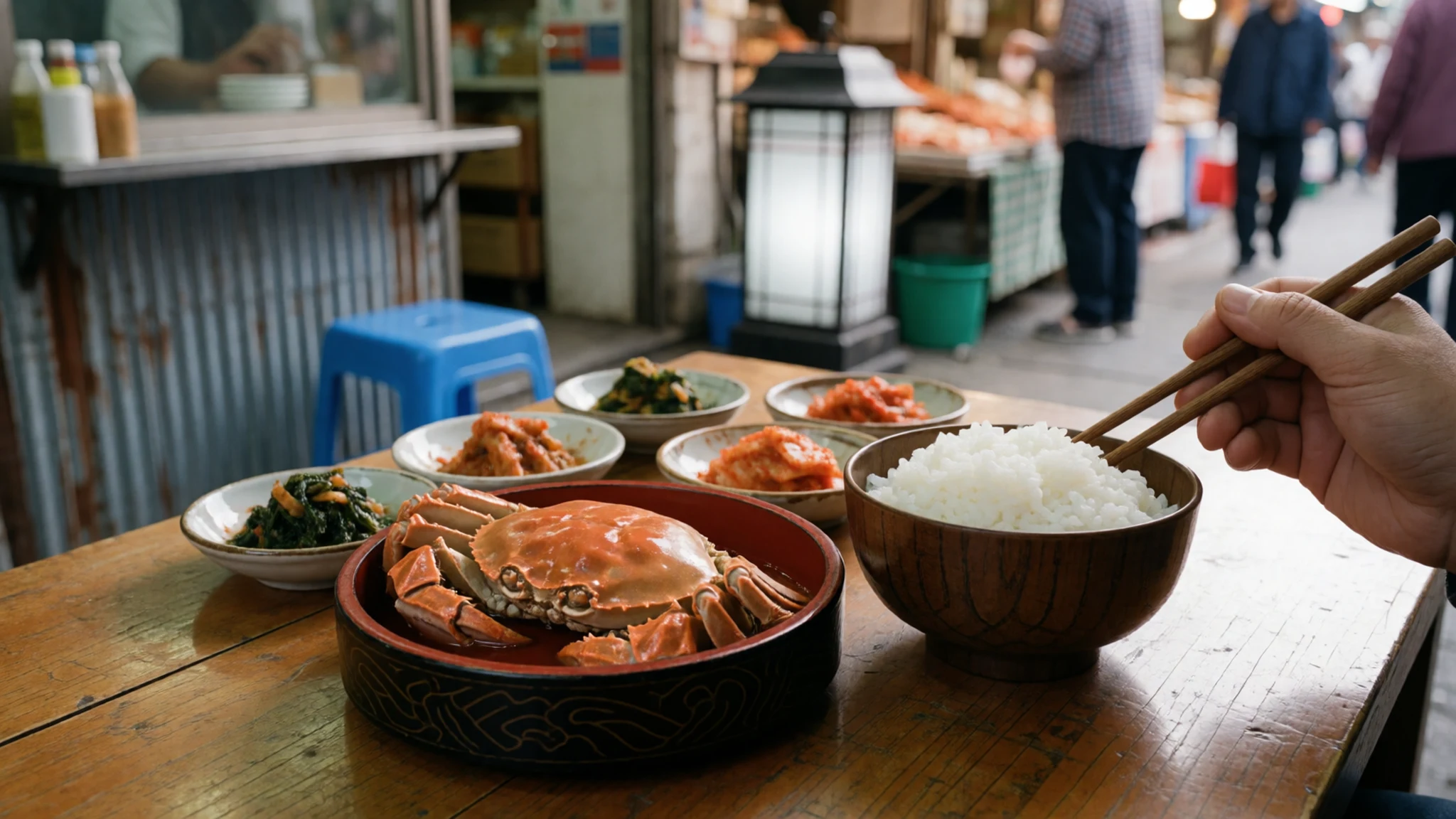
- Bajirak kalguksu — Noodle eateries near the beaches and fish markets
Knife-cut wheat noodles in a clear broth made with clams. It is a warming, simple bowl, popular on cool or windy days. The broth tastes of the sea without being heavy, and it suits a lunch after a flats walk.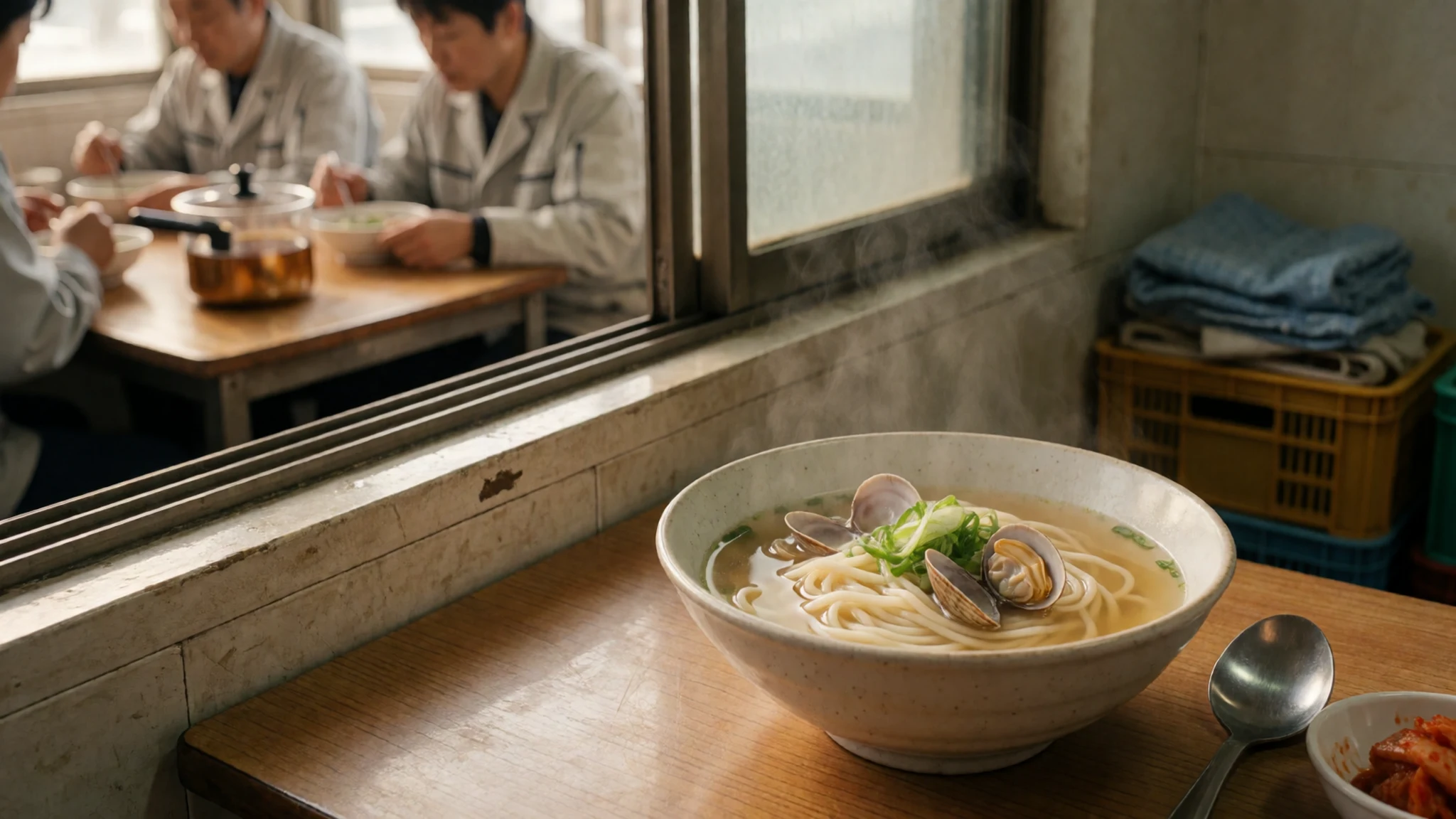
- Jogae-gui — Open-air grills and shellfish stalls by the beaches
Mixed shellfish grilled in the shell over charcoal or gas, served at tables by the shore. Scallops, clams and other catches open as they cook. It is communal, smoky and best shared among a group. - Saengseon hoe — Fishing harbours and fish markets
Thinly sliced raw fish, usually eaten with lettuce leaves, garlic, chilli paste and dipping sauces. What is on offer depends on the season and the day's catch, so ask what came in that morning. - Maeuntang — Seafood restaurants in harbour towns
A spicy fish stew, red with chilli and loaded with vegetables, bubbling at the table. It is a good way to use the leftover bones and fish heads from a raw-fish meal. It is hot, strong and very filling.
Plan it
Best time. May–June and September–October are the most comfortable months, with mild days, good light and thinner crowds than midsummer. July and August are hot, humid and busy at weekends, and winter is cold and windy.
How long. 2–3
Getting there. Fly into Incheon International Airport near Seoul, then take an intercity bus from Seoul to Taean town; check the operator's site for current times. The final leg to beaches and villages is by local bus, taxi or hire car. A car makes the scattered coast much easier.
Budget. mid
Tips
- Book weekend and summer lodging well ahead, since the coast fills up with Seoul families
- Check the tide table before walking out on the flats and keep an eye on the return route
- Visit on weekdays or at sunrise and sunset to avoid the crowds and the heat
- Carry some cash and a card, because small village stalls may not take both
- Bring sun protection and water, since many beaches and dunes have little shade
Etiquette
- Stay on boardwalks and marked paths over the dunes
- Do not gather shellfish or other sea life unless a sign or local guide says it is allowed
- Take your rubbish with you, including from the beach
Nearby
Sources
- Wikidata Q488639 (CC0)
- Wikipedia: Taeanhaean National Park (rev 1362939433) (CC BY-SA 4.0)
- Wikivoyage: South Chungcheong (rev 5415917) (CC BY-SA 4.0)
- Photo: Mongsan-ri, Nam-myeon, Taean-gun (gary4now) (CC BY 3.0)
- Photo: Gauido at Taeanhaean National Park, image 2 (Jjw) (CC BY-SA 4.0)
- Photo: Byeongpung-do, Taeanhaean National Park (Jjw) (CC BY-SA 4.0)
- Photo: Gauido at Taeanhaean National Park, image 1 (Jjw) (CC BY-SA 4.0)
- Photo: Gauido at Taeanhaean National Park, image 3 (Jjw) (CC BY-SA 4.0)
- Photo: Gauido at Taeanhaean National Park, image 4 (Jjw) (CC BY-SA 4.0)
- Photo: Sindu sandhills, image 1 (Jjw) (CC BY 3.0)
- Photo: Sindu sandhills, image 2 (Jjw) (CC BY-SA 4.0)


Wildlife
- Otter (animal)
The Eurasian otter is a water-loving mammal that mostly eats fish and likes to guard its own patch. It is a rare treat in Taeanhaean, where otters survive in the quieter corners, away from busy spots. Sightings cannot be promised, and I have no season or hour to give you. Go with a guide, stay well back, and keep very still and quiet so you do not disturb it. Never feed an otter, and never crowd its territory.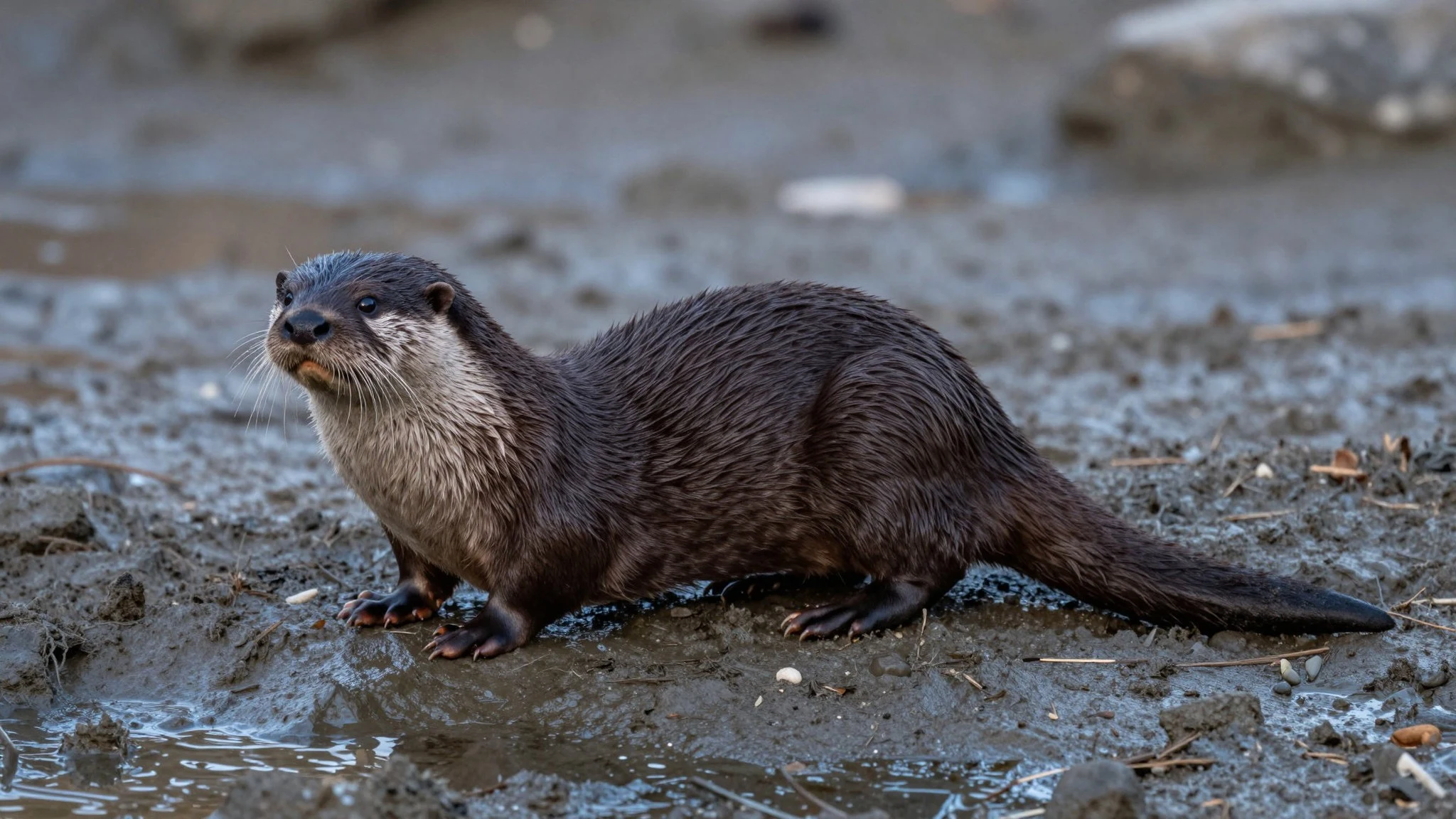
- Finless porpoise (animal)
Remember the finless porpoise as the porpoise with "no fin" right there in its name. In Taeanhaean, porpoises are recorded in the sea around the area, so lift your eyes from the shore and scan the open water. I cannot promise a season or hour, so ask a local guide what is likely during your visit. Watch from a generous distance, keep your voice low and your movements calm, and never offer food. Let the animal decide how close to come.