Tabon Caves
Tabon Caves, Philippines
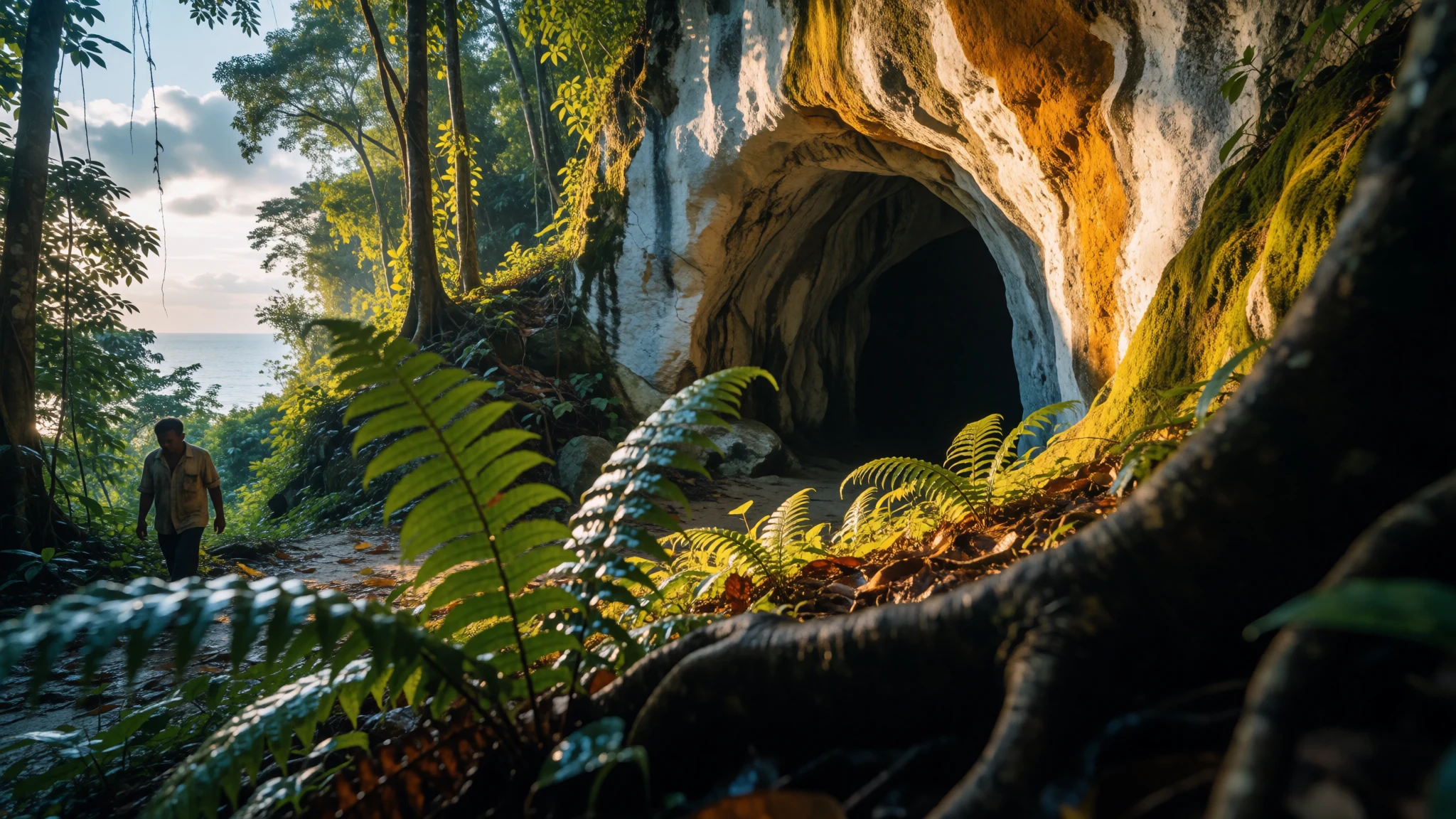
Tabon Caves, on a quiet Palawan headland, hold some of the Philippines' oldest-known human traces, from stone tools to elaborate burial jars.
The place
Tabon Caves is a cluster of limestone caves on Lipuun Point, a headland on the south-western coast of Palawan island, in the municipality of Quezon. The caves are named after the tabon scrubfowl, a ground-dwelling bird that buries its eggs in warm earth rather than sitting on them. The point is bounded by Quezon town on one side and by the South China Sea on the others, so the setting is a mix of forest, rock and shoreline, with water close by in almost every direction. The whole headland is protected as a museum reservation rather than a conventional park. The idea is to keep logging out and to leave the artefacts where they were found. A great many caves are known here, but only 29 have been fully explored, and just a few are open to the public. The National Museum of the Philippines manages the complex, and excavated material that has not yet been studied is stored on site. The Philippine government has also named the complex a National Cultural Treasure and has put it forward as a possible future World Heritage nomination. The place is remote and quiet rather than polished. There is no theme-park feel, crowds are thin, and the experience depends on guides, boat and weather. Heat and humidity are constant, and access to individual caves has been restricted at times while the site is rehabilitated, so it pays to confirm what is open before setting out.
Its story
Tabon Caves entered the scientific record in the 1960s, when excavations on Lipuun Point began turning up evidence of people living and dying here long before written history. Archaeologists recovered stone flake tools, the remains of hearths, animal bones and fragments of human skull and jaw. The best-known find is called Tabon Man, a name that has become shorthand for the earliest people to leave their traces in the Philippine islands. Later layers tell a different story. People in the caves practised secondary burial, in which the bones of the dead were gathered some time after death and placed in pottery jars. The jars range from plain to ornate, and some were set in chambers that were probably chosen for their shelter and darkness. The most famous is the Manunggul Jar, topped by two seated figures, one of them the deceased. Many readers see it as a vessel carrying the dead on a journey to another world, and its curved, boat-like lid is often cited in support of that. The shape of the story matters more than any single date. Different groups used the same limestone chambers over a very long span, as shelters, workshops and burial places. Because only a fraction of the caves has been explored, the site is still being read, and the full account remains unfinished. Protection of the headland is what keeps that possibility open.
What to see
- Lipuun Point Reservation — Lipuun Point, Quezon
Lipuun Point is the whole protected headland, and the walk through it is part of the visit. Forest closes in over limestone outcrops, with the sea glinting beyond the trees. Most visitors arrive with a local guide, and the setting makes sense of why people sheltered here for so long.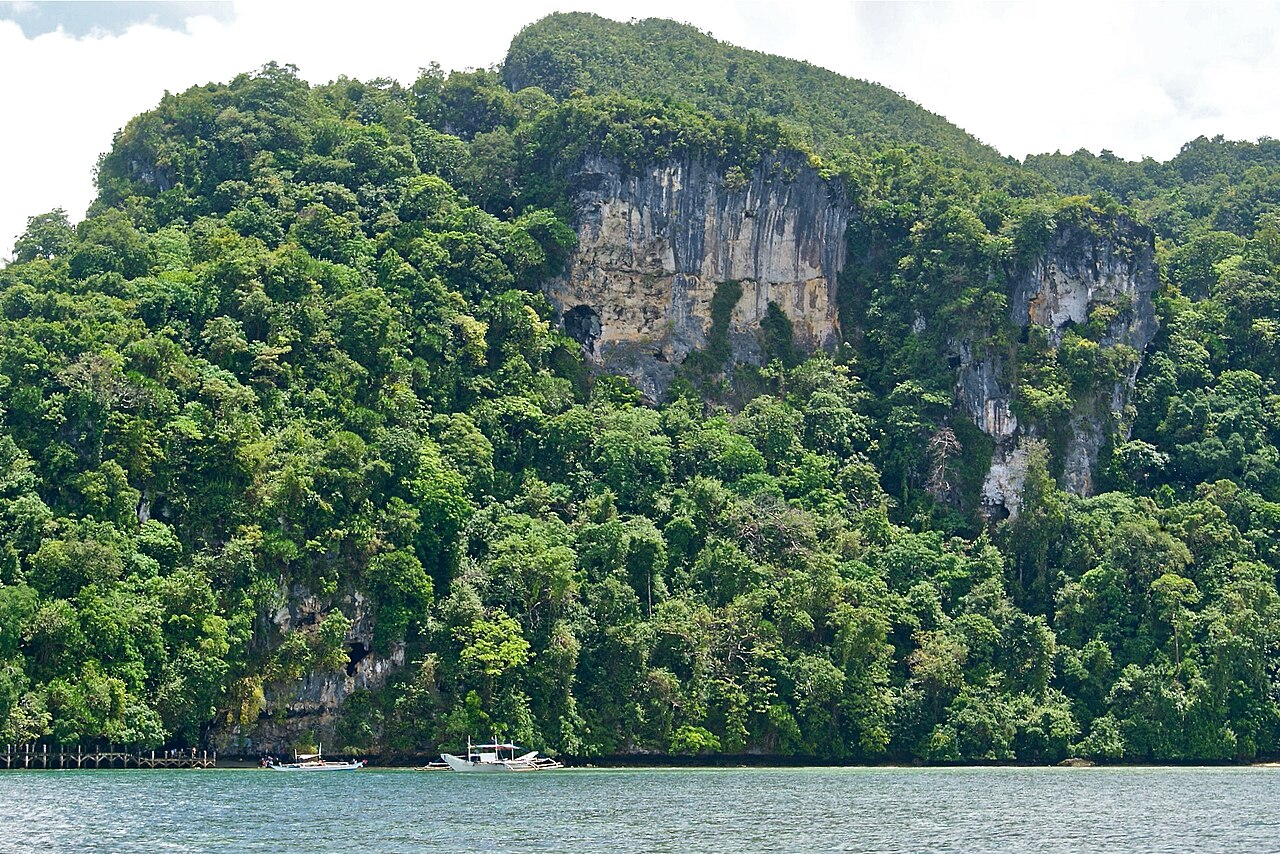
- Diwata Cave and Liyang Cave — Lipuun Point, Quezon
Diwata Cave and Liyang Cave are the chambers normally opened to the public, though access depends on the rehabilitation work under way. Expect uneven limestone, low light and damp air. Inside, the scale is modest, and the interest lies in imagining the hearths, tools and burials that were found.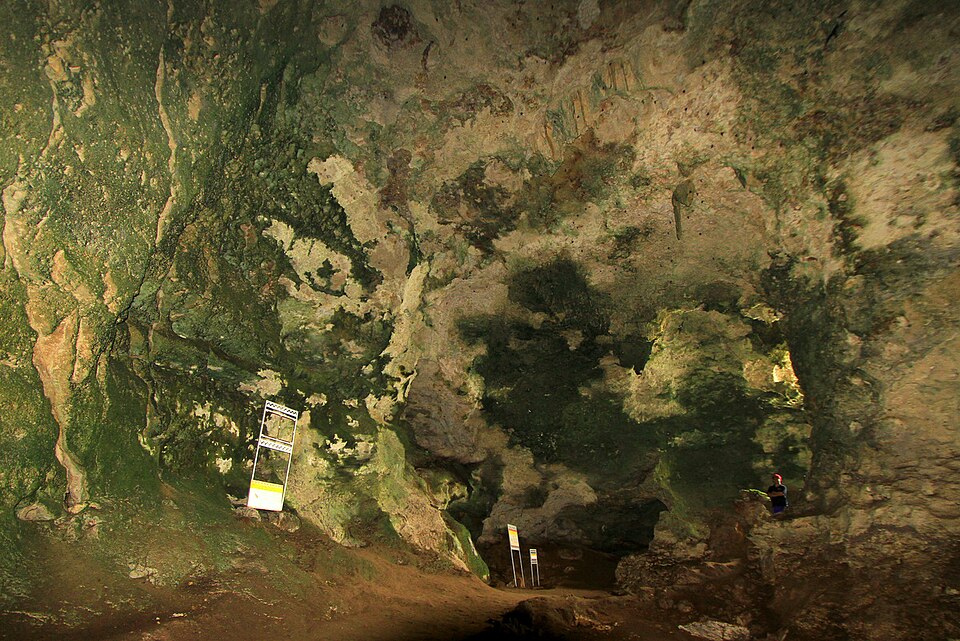
- The cave mouths from outside — Lipuun Point, Quezon
Even when a chamber is closed, the entrances are worth seeing from outside. Dark openings sit in pale rock under thick vegetation, and some are fenced while restoration continues. A guide can explain which caves yielded tools, which held jars and why some remain unexcavated.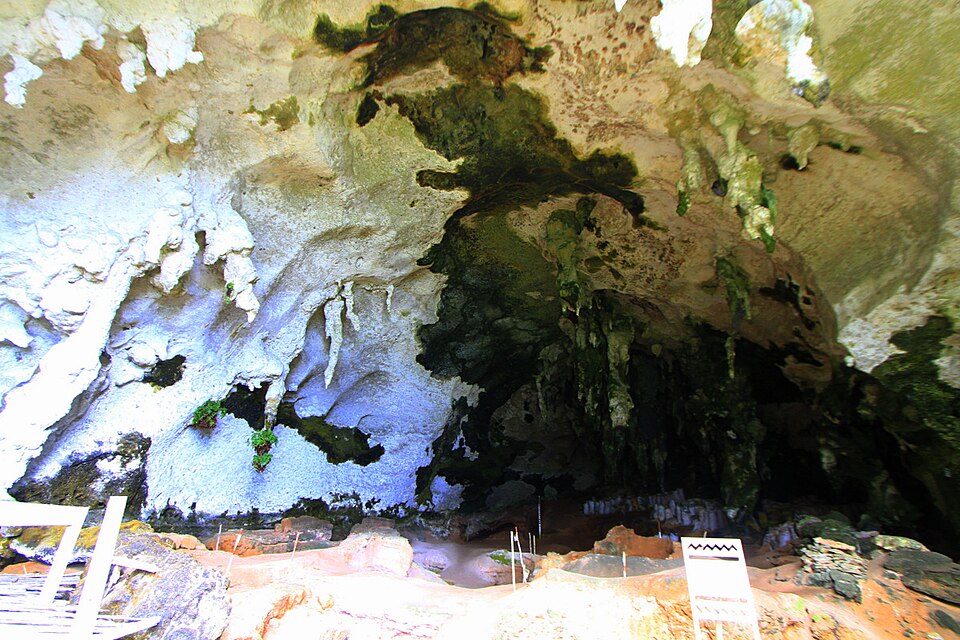
- The Manunggul Jar — National Museum of the Philippines
The Manunggul Jar is the standout object from the caves: a burial jar crowned with two figures, the deceased in front. The original is kept by the National Museum of the Philippines rather than at the caves, so ask the museum where it is displayed before planning a trip around it.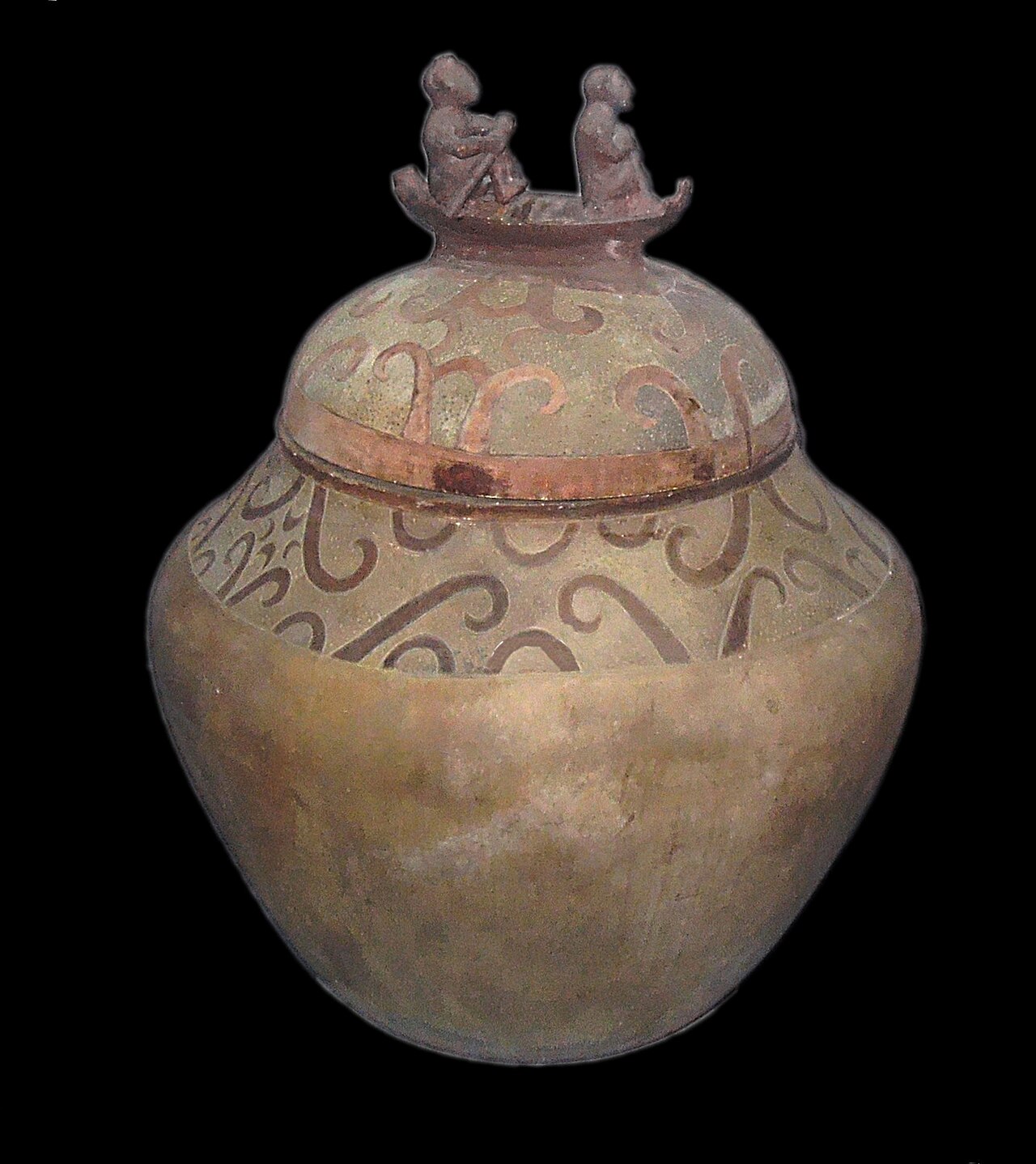
- Elephant sculptures — Near the Tabon Caves site, Quezon
Near the site stand the surviving parts of old elephant sculptures, a mother and calf whose trunks have been damaged over time. They are a curiosity rather than an ancient monument, but they show how the place has been presented to visitors and how much has weathered since.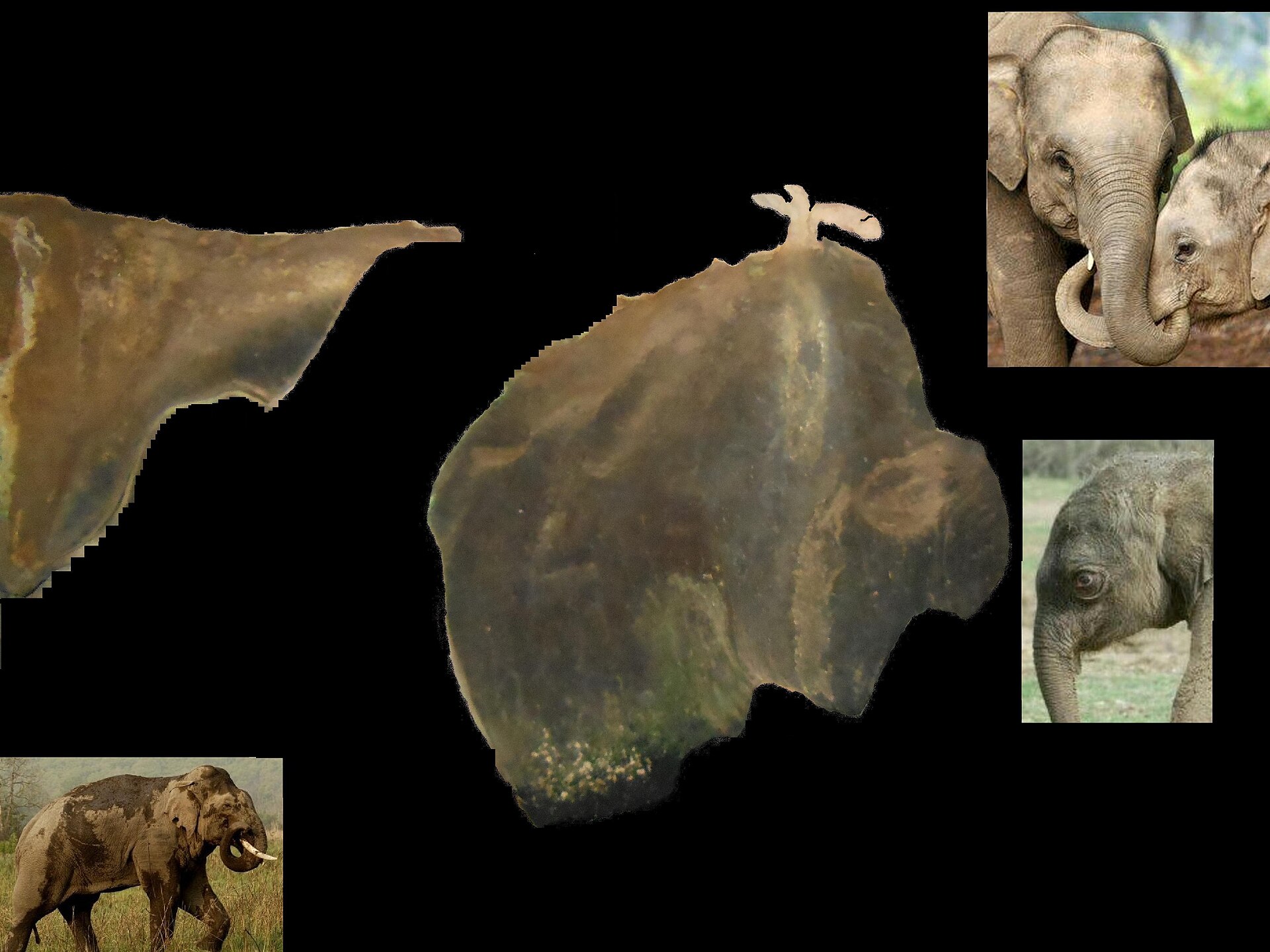
- Quezon's coast and sea — Quezon town and the coast
The sea around Quezon is the other reason to stay a night or two. Operators here offer snorkelling, diving, island hopping, bird watching and fishing, and hikers can explore the forest around the point. Conditions change with the season, so confirm tides and weather with local boatmen.
Culture
Tabon Caves matter culturally because they show how early island communities thought about death. Secondary burial, in which bones are collected into jars and set in a sheltered chamber, implies shared beliefs about the dead and about a passage between worlds. The Manunggul Jar, with its two figures riding the lid, is often read as an image of that journey. Today the caves are looked after as a national treasure, and the National Museum of the Philippines decides what can be opened, excavated or restored. Palawan is also home to Indigenous communities, including the Tagbanwa and the Palaw'an, whose own histories and living traditions are part of the island's story. A visit is best treated as a visit to a burial ground and a working research site, not simply as an adventure outing. Guides are usually local, and their knowledge of the point, its wildlife and the stories attached to the caves is a large part of what a visitor takes away. Quezon is a small town where evenings are quiet, Catholic and community customs are visible, and polite, patient manners go a long way. Do not touch, lift or take anything from the caves, including small stones and pottery fragments, and follow your guide's instructions about where to walk and what to photograph.
What to wear
Tabon Caves sit in a part of Palawan where everyday dress is relaxed and tropical. Traditional clothing among Indigenous Palawan communities has relied on plant materials: bark, woven vine and rattan, beadwork and handwoven cloth, with baskets and ornaments made from the same fibres. Fine woven textiles are more strongly associated with other parts of the Philippines, while the barong tagalog, an embroidered shirt of sheer plant fibre, and the Filipiniana dress with its stiff butterfly sleeves, are worn for weddings, official events and national occasions. In Quezon itself, people dress for heat and sea air: cotton T-shirts, shorts, light dresses, flip-flops, and rash vests or boardshorts near the water. Church-going clothes are neater, with shoulders and knees usually covered. A visitor should dress for humidity, rough ground and wet limestone. Wear light, quick-drying clothes, a hat, sunscreen and sturdy shoes or sports sandals with a real grip, since the cave floors and the boat landing can be slippery. Bring a change of clothes, as sweat and sea spray are certain. Carry a light rain layer in the wetter months. Swimwear is fine on the boat and beach, but cover up with a shirt or sarong when walking through town or visiting a church. Bare feet are not a good idea on the cave paths.
What to eat
- Baboy damo (wild boar) — Local eateries in Quezon town; ask what is available that day
Baboy damo is wild boar, usually stewed or grilled and one of the dishes Palawan eateries sometimes advertise as local game. It is not always on the menu. Ask where it comes from and whether it is legally sourced before ordering. - Palawan tamilok — Seafood stalls and small restaurants near the waterfront
Tamilok is a long, soft-bodied shipworm that lives in mangrove wood and is eaten raw in a sharp vinegar dip, much like a seafood ceviche. It is an acquired taste, and the texture divides opinion. Try it only from a vendor you trust. - Grilled or steamed crab — Seaside eateries and open-air grills along the coast
Giant crabs are a local seafood staple, served steamed, grilled or cooked in coconut milk. They are messy, shared dishes, best eaten with rice and plenty of napkins. Ask whether the price is by weight before you order. - Lobster — Waterfront restaurants in Quezon and nearby coastal towns
Lobster appears on menus along this coast, usually grilled with garlic, butter or a simple soy and calamansi dressing. Availability depends on the catch and the season. It is a treat, not a daily meal, so agree the price in advance. - Edible seaweed and shellfish — Morning market stalls and small family-run eateries
Fresh seaweed is dressed with vinegar, onion and tomato as a cooling salad, and shells and small fish come grilled or in broth. These are everyday coastal foods and the easiest way to eat locally without spending much.
Plan it
Best time. The drier months, roughly February to May, give the best chance of clear skies and calm seas for the boat leg. The wet season brings rough water, slippery cave paths and the risk of closures, so check conditions before travelling. It is hot and humid at any time of year.
How long. 2–3
Getting there. Fly into Puerto Princesa, the main airport on Palawan. From the city's San Jose terminal, coaches and shared vans run south-west to Quezon, stopping for a meal and toilet break at Narra along the way. The last leg to Lipuun Point is by local transport and boat. Ask the National Museum or the local tourism office to confirm access and guide arrangements.
Budget. low
Tips
- Confirm which caves are open before you go, as access has been restricted during rehabilitation
- Hire a local guide, as the point is easier to read with one and your fee supports the community
- Carry cash for transport, guides and small eateries, since cards are rarely accepted
- Start early to beat the heat and give yourself margin for the boat
- Bring plenty of drinking water, insect repellent and sun protection
Etiquette
- Do not touch, move or remove anything from the caves
- Follow your guide's instructions about where to walk and photograph
- Dress modestly in town and when visiting a church
Nearby
Sources
- Wikidata Q477329 (CC0)
- Wikipedia: Tabon Caves (rev 1385749189) (CC BY-SA 4.0)
- Wikivoyage: Quezon (Palawan) (rev 5199764) (CC BY-SA 4.0)
- Photo: Tabon Cave 2014 04 (Jimaggro) (CC BY-SA 4.0)
- Photo: Tabon Caves (Alexcooper1) (CC BY 3.0)
- Photo: Manunggul Jar (Philip Maise) (CC BY 3.0)
- Photo: Tabon Cave 2014 01 (Jimaggro) (CC BY-SA 4.0)
- Photo: Tabon Cave 2014 02 (Jimaggro) (CC BY-SA 4.0)
- Photo: Tabon Cave 2014 03 (Jimaggro) (CC BY-SA 4.0)
- Photo: Dark blotch mid-way up cave wall (Philip Maise) (CC BY-SA 4.0)
- Photo: Elephants of Tabon Caves (Pbmaise) (CC BY 3.0)


Wildlife
- Tabon scrubfowl (animal)
Think of the tabon scrubfowl as a bird that never sits on its eggs: it buries them and lets the warm soil keep them snug. The caves carry its name. Beyond the Philippines it also lives in northeastern Borneo and Sulawesi, in forests and on small islands. Keep well back, speak softly, and ask a guide where to look. Never feed it; a wild bird should stay wild.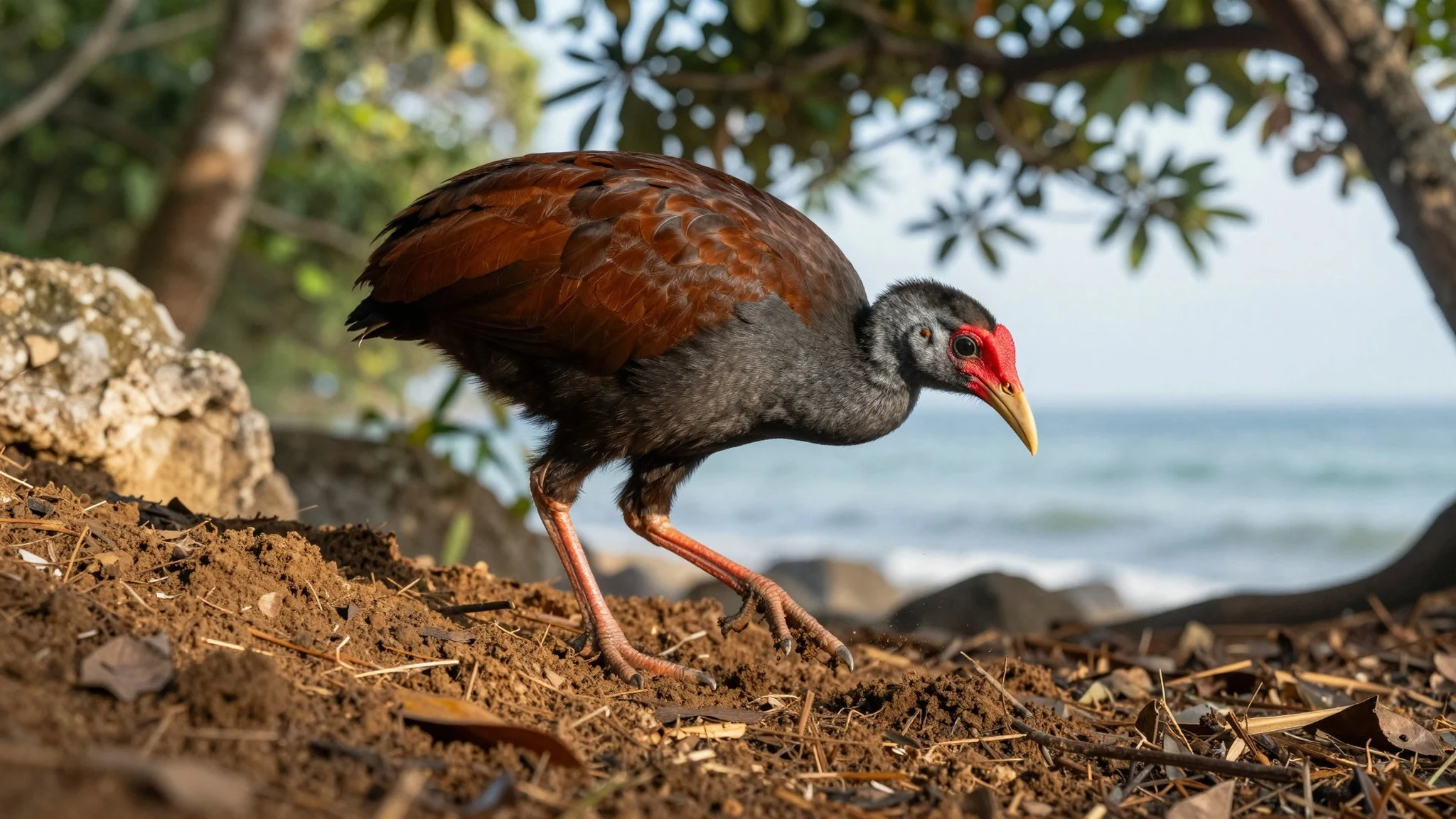
- Tabon scrubfowl (bird)
Think of the tabon scrubfowl as a bird that never sits on its eggs: it buries them and lets the warm soil keep them snug. The caves carry its name. Beyond the Philippines it also lives in northeastern Borneo and Sulawesi, in forests and on small islands. Keep well back, speak softly, and ask a guide where to look. Never feed it; a wild bird should stay wild.