Sun Moon Lake
Sun Moon Lake, Taiwan
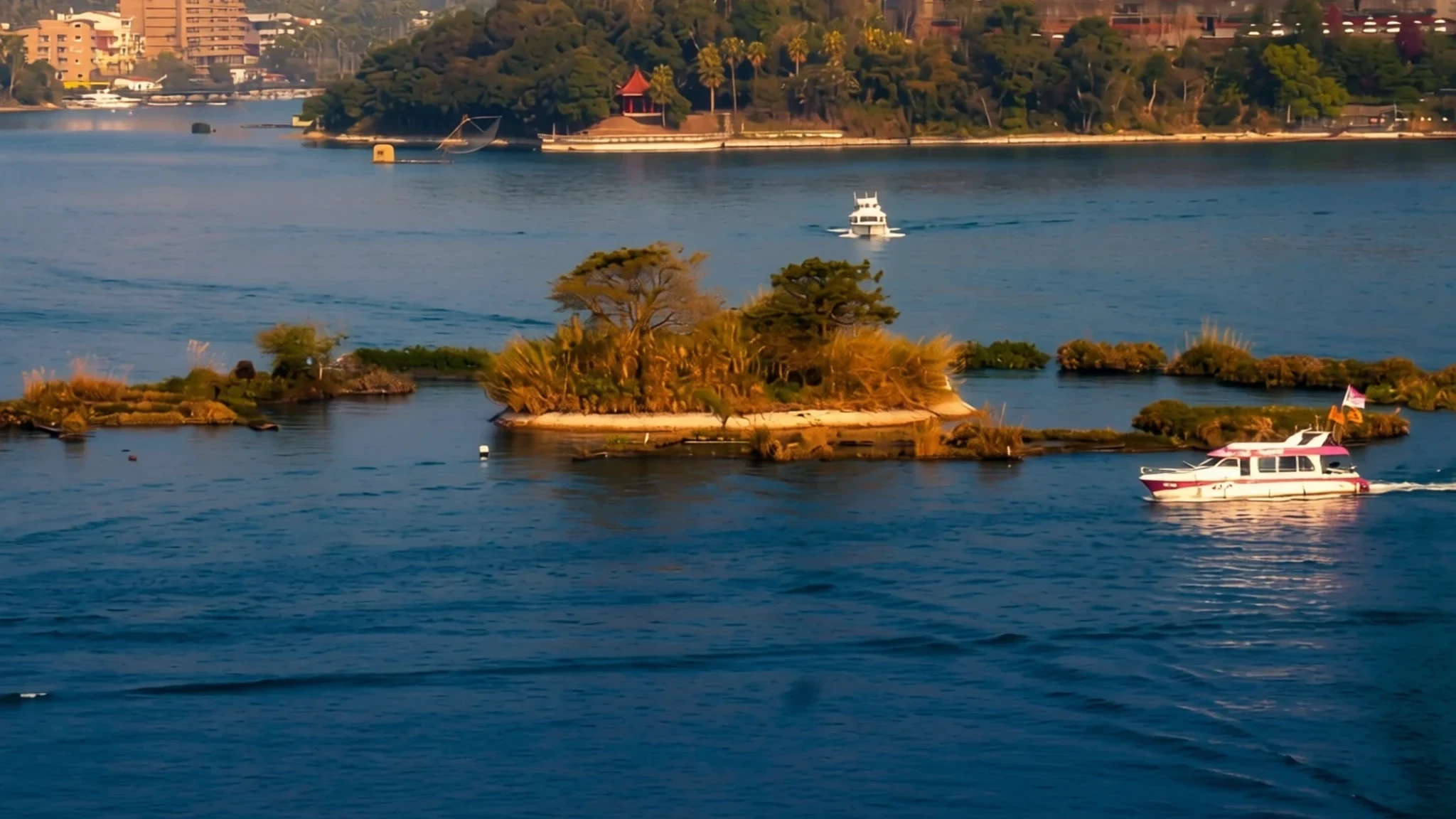
Sun Moon Lake is Taiwan's largest lake: a calm, mist-hung basin of cycle paths, boat piers, temples and Thao village life.
The place
Sun Moon Lake sits 748 m above sea level in Yuchi Township, Nantou County, in the middle of Taiwan, and it is the island's largest lake. The name comes from the shape: the eastern shore curves roughly like a sun disc, the western like a crescent moon, with a small island, Lalu, between them. The lake is about 27 m deep and covers close to 7.93 square kilometres, so it is broad rather than dramatic, a sheet of green-grey water ringed by forested hills that often hold mist in the early morning. The Thao, one of Taiwan's indigenous peoples, live around it, and their village, Ita Thao, is on the southeast shore. The surrounding countryside is one of thirteen national scenic areas in Taiwan, with cycle paths, hiking trails, boat piers and a scatter of temples. It is popular: about 5.3 million visits were recorded in 2023, so weekends and public holidays are busy around the piers and the main visitor centre at Shuishe, while weekday mornings are much calmer. Swimming is normally not allowed, with one exception: a 3 km mass swim held around the Mid-Autumn Festival, begun in 1983, with fireworks and concerts alongside. The Chinese name is Rìyuè tán (日月潭); in the Thao language the lake is Zintun.
Its story
Sun Moon Lake has carried several names, and each says something about who was in charge. Older English writing calls it Lake Candidius, after the 17th-century Dutch missionary Georgius Candidius. For the Thao, Lalu island at the centre is holy ground, and their legend says hunters chasing a white deer through the mountains were led down to the shore and found water full of fish. A marble deer on Lalu now recalls that tale. The lake itself was reshaped in the twentieth century. In 1919 the Tosha Dam closed the southern end of the original crescent-shaped lake, and the rising water forced several small temples to be moved, which is why Wen Wu Temple was built. The island's names follow the politics. Under Japanese rule it was Jade Island. After the Nationalist government arrived from the mainland it became Kwanghwa Island, and in 1978 a pavilion for weddings went up there. The earthquake of 1999 wrecked that pavilion and left most of the island beneath the water. Later, with growing recognition of Taiwan's indigenous peoples, it was renamed Lalu in the Thao language. Tzu-En Pagoda, ordered by Chiang Kai-shek in 1971 in memory of his mother, belongs to the same layered story: a lake where legend, empire, engineering and memory sit one on top of another.
What to see
- Wen Wu Temple — Northern shore
Wen Wu Temple stands on the northern bank and is the largest temple on the lake. It was built after dam-building raised the water and displaced several smaller shrines. It is an easy first stop on the eastern shore, with a courtyard and a lake view from the steps.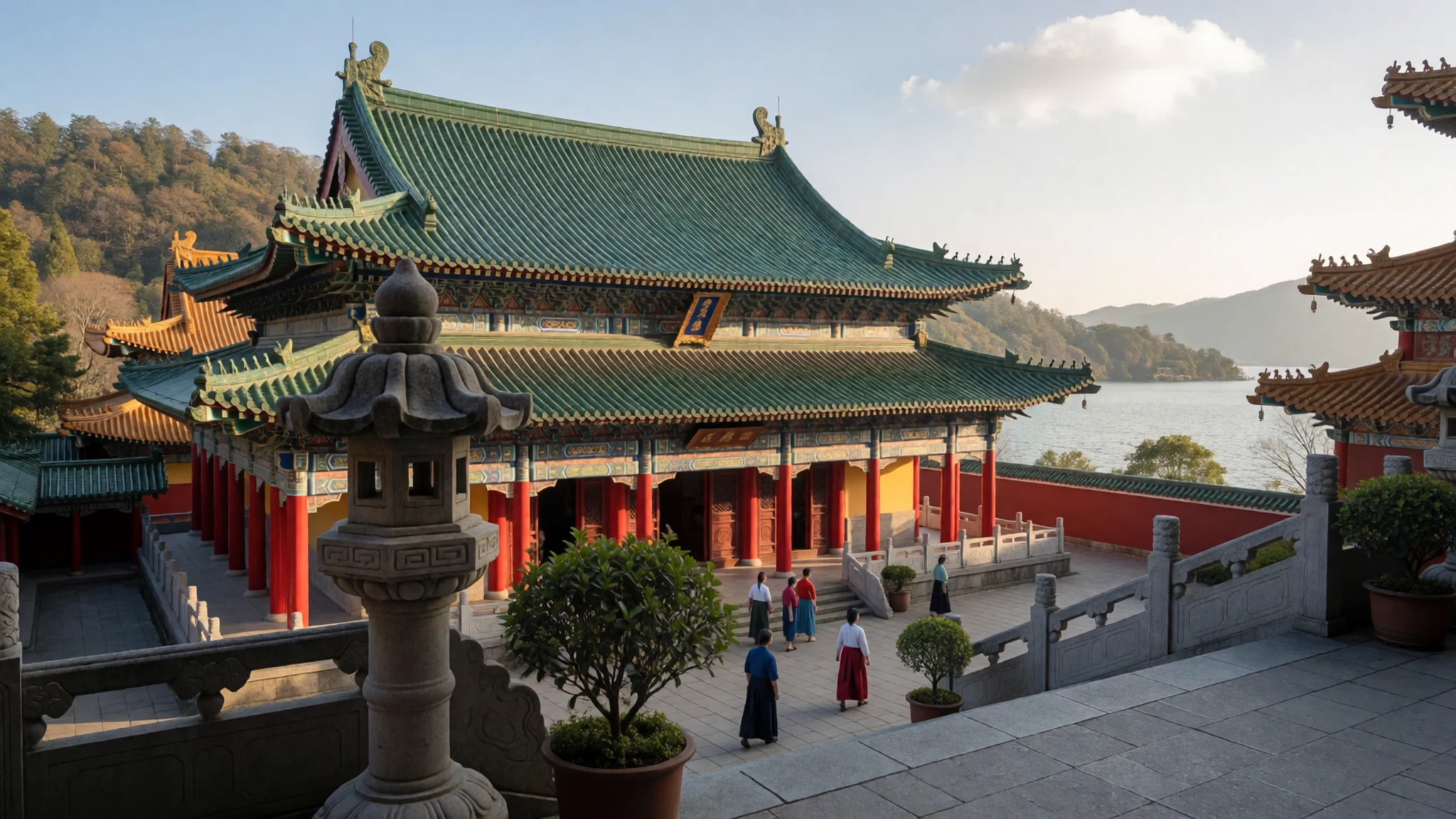
- Tzu-En Pagoda — Southern hillside above the lake
Tzu-En Pagoda is a Chinese-style tower about 46 m tall, built in 1971 on a hilltop. The climb is on foot or by road, and from the top the lake spreads out below with its crescent edges and Lalu in the middle. Go early, before the haze and tour groups arrive.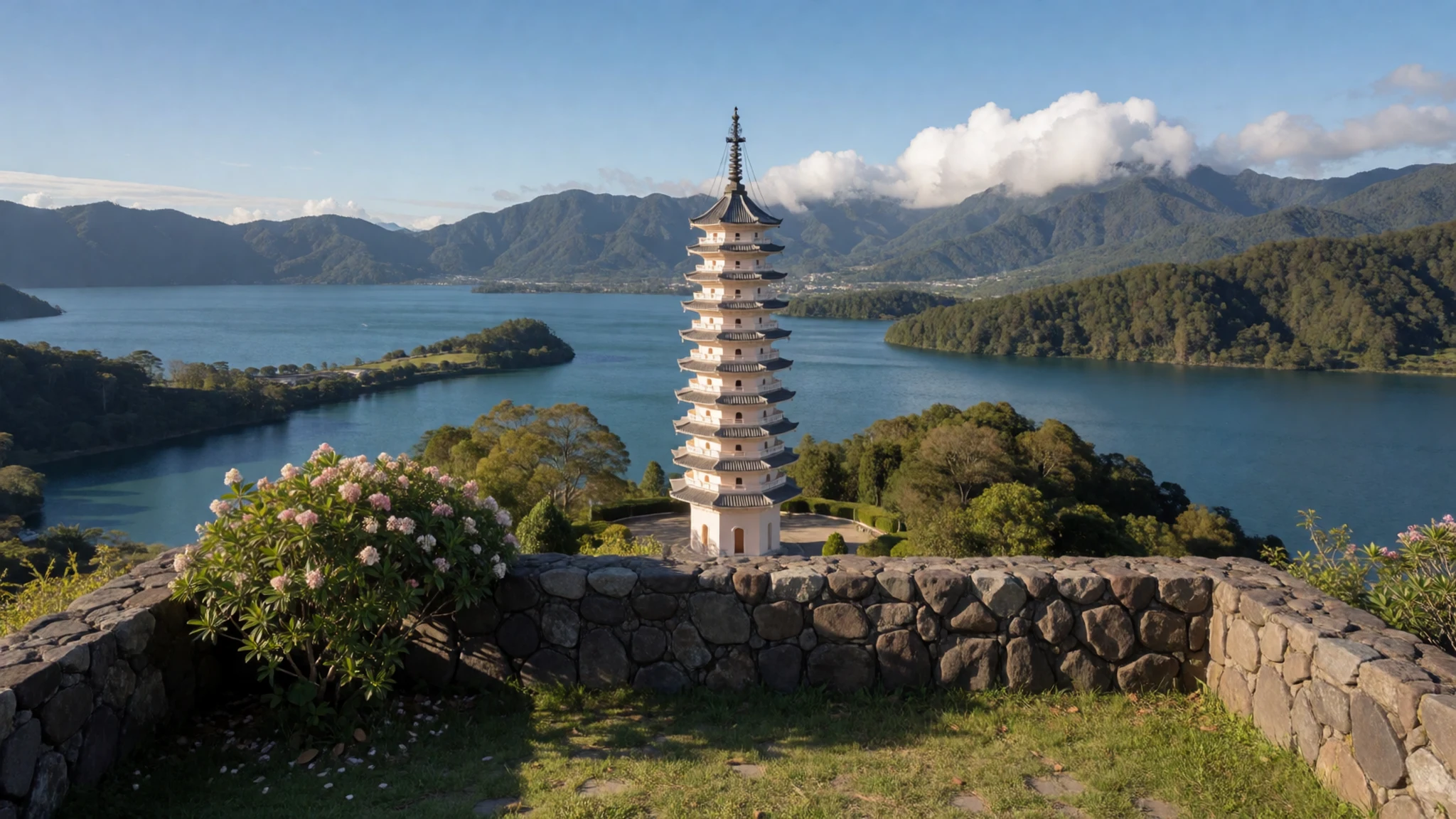
- Ita Thao — Southeast shore
Ita Thao, also called Dehua village, is the Thao community on the southeast shore. Lanes of small shops and snack stalls run down to the pier. A boat shuttle links it to Shuishe, so it works as the halfway point for cyclists who want to cut the ride short.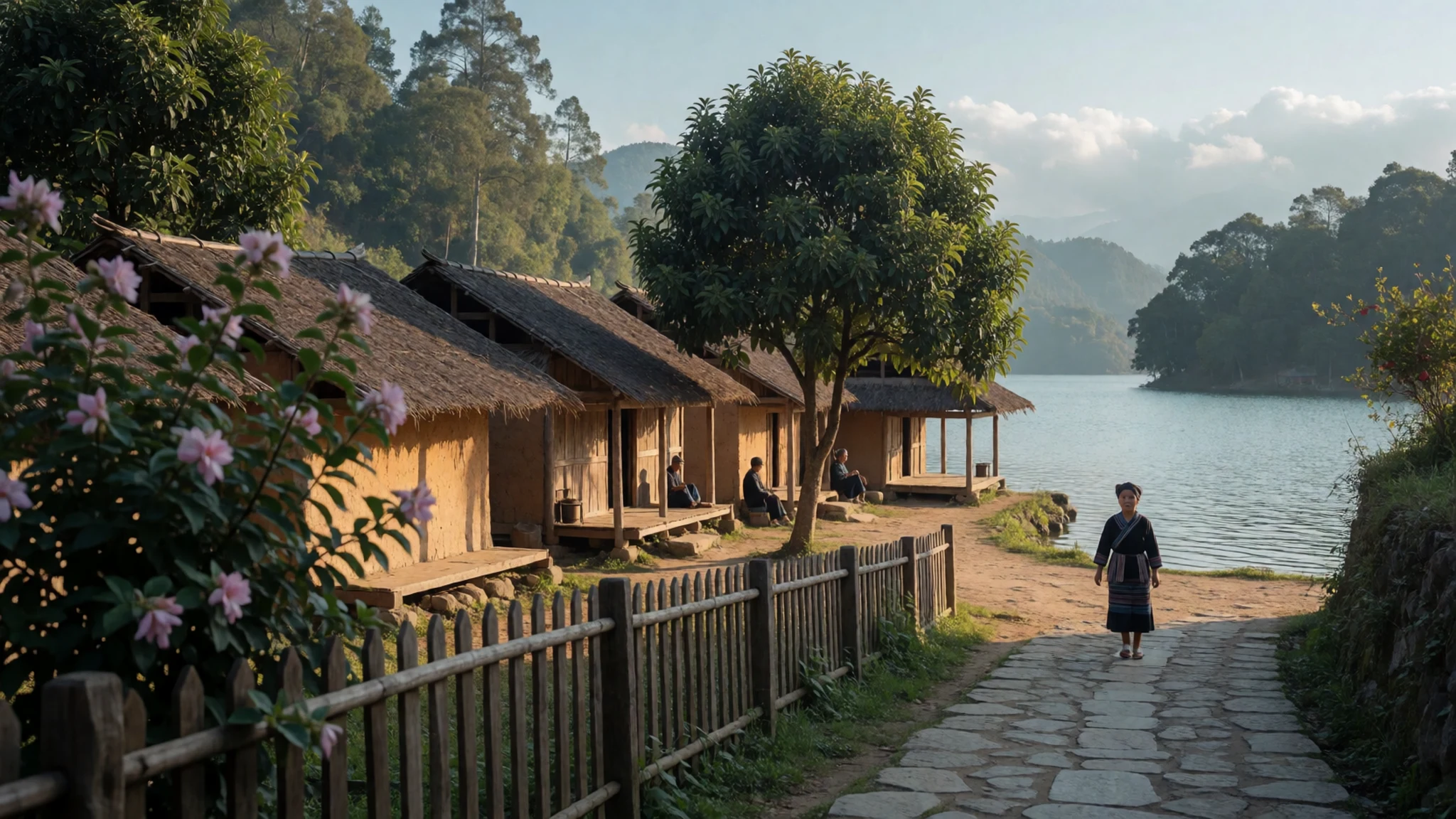
- Lalu Island — Centre of the lake
Lalu is the small island at the heart of the lake and sacred ground for the Thao. Much of it went under the water in 1999. Visitors normally see it from the water on a boat tour, with the marble white deer commemorating the founding legend. Respect it as a place of belief, not a viewpoint.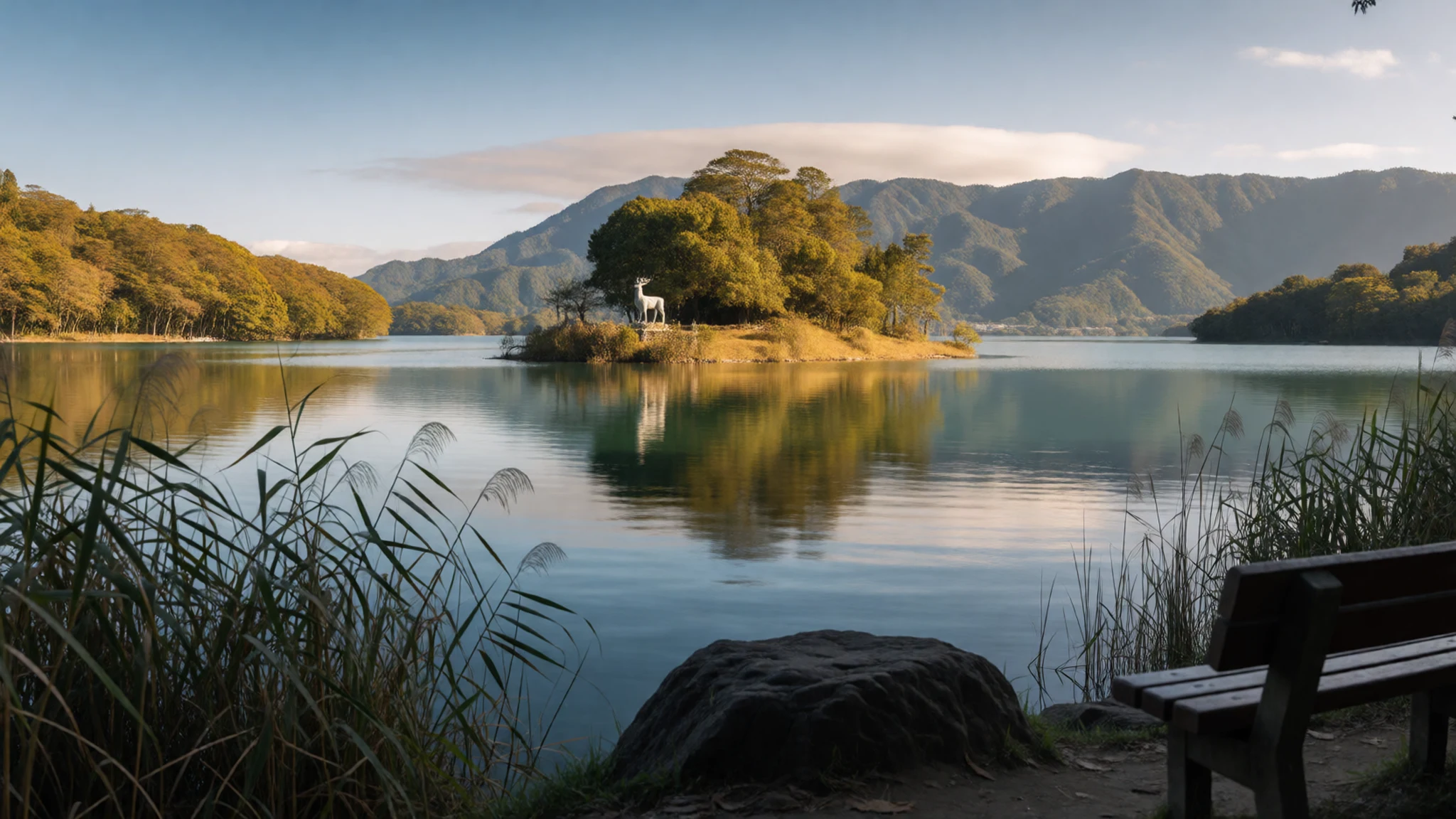
- Formosan Aboriginal Culture Village — Hills near the lake
This theme park and cultural village presents the cultures of nine of Taiwan's indigenous groups, among them the Amis, Atayal, Bunun, Paiwan and Tsou. It is a commercial attraction, so treat it as an introduction and then spend time with Thao people in Ita Thao.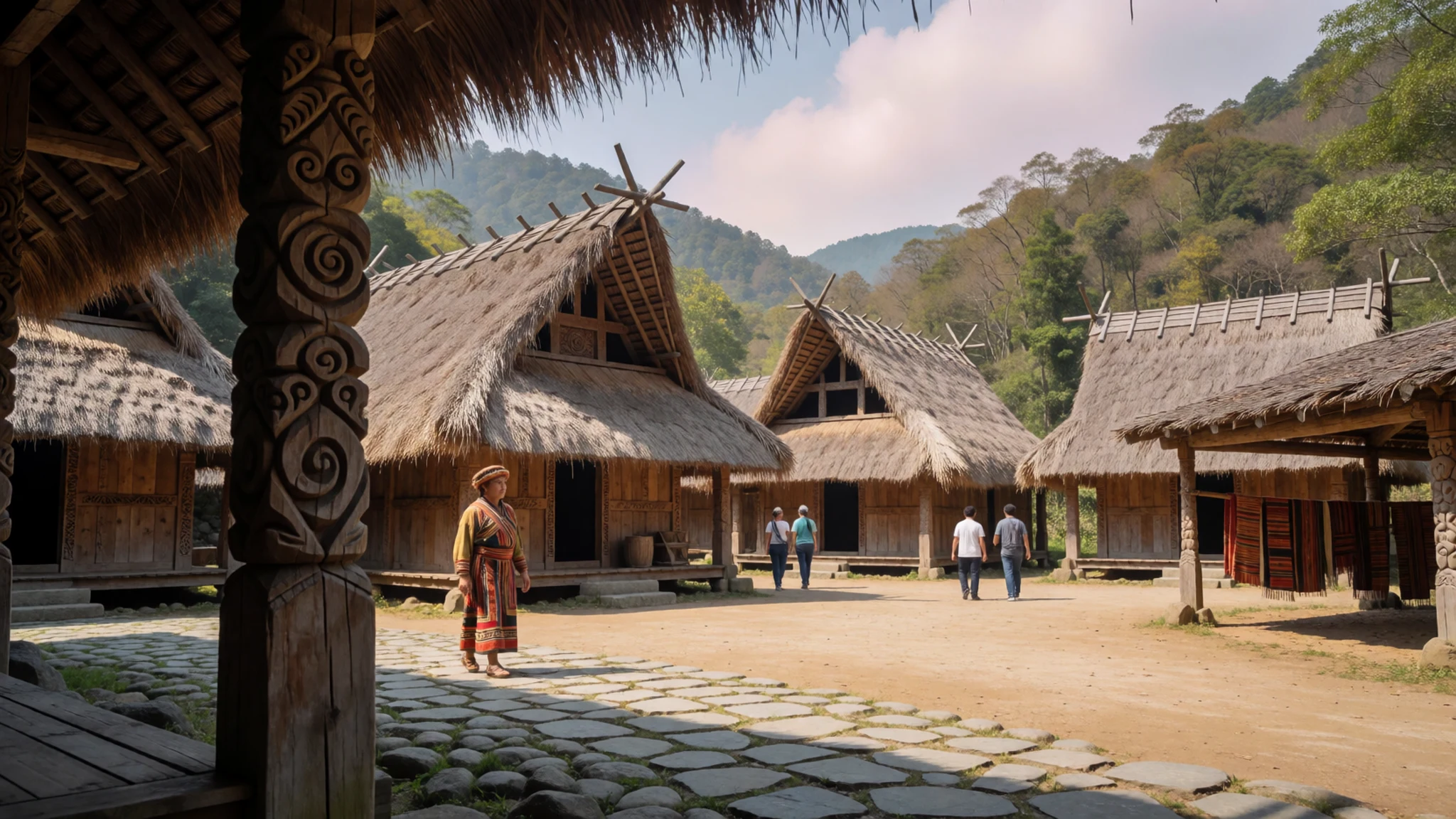
- Round-the-lake cycle path — Whole lake, starting at Shuishe
Bicycle shops cluster near the Shuishe visitor centre. A semi-fit rider needs roughly five hours to cover the 30 km loop with stops. The western shore has the best dedicated path, the eastern shore passes Wen Wu Temple, and the boat will carry bikes back from Ita Thao.
Culture
Sun Moon Lake is Thao country, and that shapes how the place is read. The Thao are one of Taiwan's indigenous peoples, and for them Lalu island and the lake carry meaning that long predates the temples, hotels and dams. The white deer legend is the founding story, and the fact that the island took back its Thao name after 1999 shows how much local attitudes have shifted. Ita Thao is a living village, not a stage set. Alongside it sit Chinese temples such as Wen Wu, built for the community displaced by rising water, and Tzu-En Pagoda, a monument of the Nationalist era. The lake therefore holds three layers at once: indigenous belief, Taiwanese Chinese religious life, and a modern leisure economy of boats, cycling and mass swims. Festivals follow the lunar calendar; the Mid-Autumn Festival swim is the best known, but the Thao also hold their own seasonal ceremonies, which are worth asking about locally rather than assuming a date. Tea is another thread, with black tea grown in the hills around the lake and offered as a point of local pride. Treat the village and the island with the same courtesy as any place of worship: ask before photographing Thao residents or ceremonies, and keep to the paths and quiet around temples and Lalu.
What to wear
Sun Moon Lake sits within Thao country, and traditional Thao clothing is mostly seen at festivals, performances and cultural events rather than in daily life. It is typically made from woven cloth with decorative detail, and the pieces are worn on ceremonial occasions. A cultural performance or the village museum-style displays are the best way to see it, and it is polite to ask before photographing anyone in ceremonial dress. In daily life, locals and visitors alike wear ordinary modern clothing: T-shirts, light trousers or shorts, cycling gear on the shore paths, and sandals or trainers. Taiwanese visitors often dress smartly for temple outings and photographs. The lake sits at 748 m, so mornings and evenings are cooler than the lowlands, and mist and rain can arrive quickly. Visitors should bring a light layer and a compact rain jacket in any season, and sun protection for the water. Wear comfortable shoes with grip for the pagoda stairs and hillside paths, and padded shorts or a small cushion if cycling the full loop. At Wen Wu Temple and other shrines, cover shoulders and knees, avoid beachwear and take off hats indoors. If visiting Ita Thao or a cultural event, a modest, tidy look shows respect for the community.
What to eat
- Tea-braised eggs — Stalls at Xuan Guang Si pier
Eggs simmered in a spiced tea broth, sold hot from pots near the Xuan Guang Si pier. A well-known stall there, Jin Men Ah Ma, is famous for them. They make a cheap, warm snack on a cool misty morning.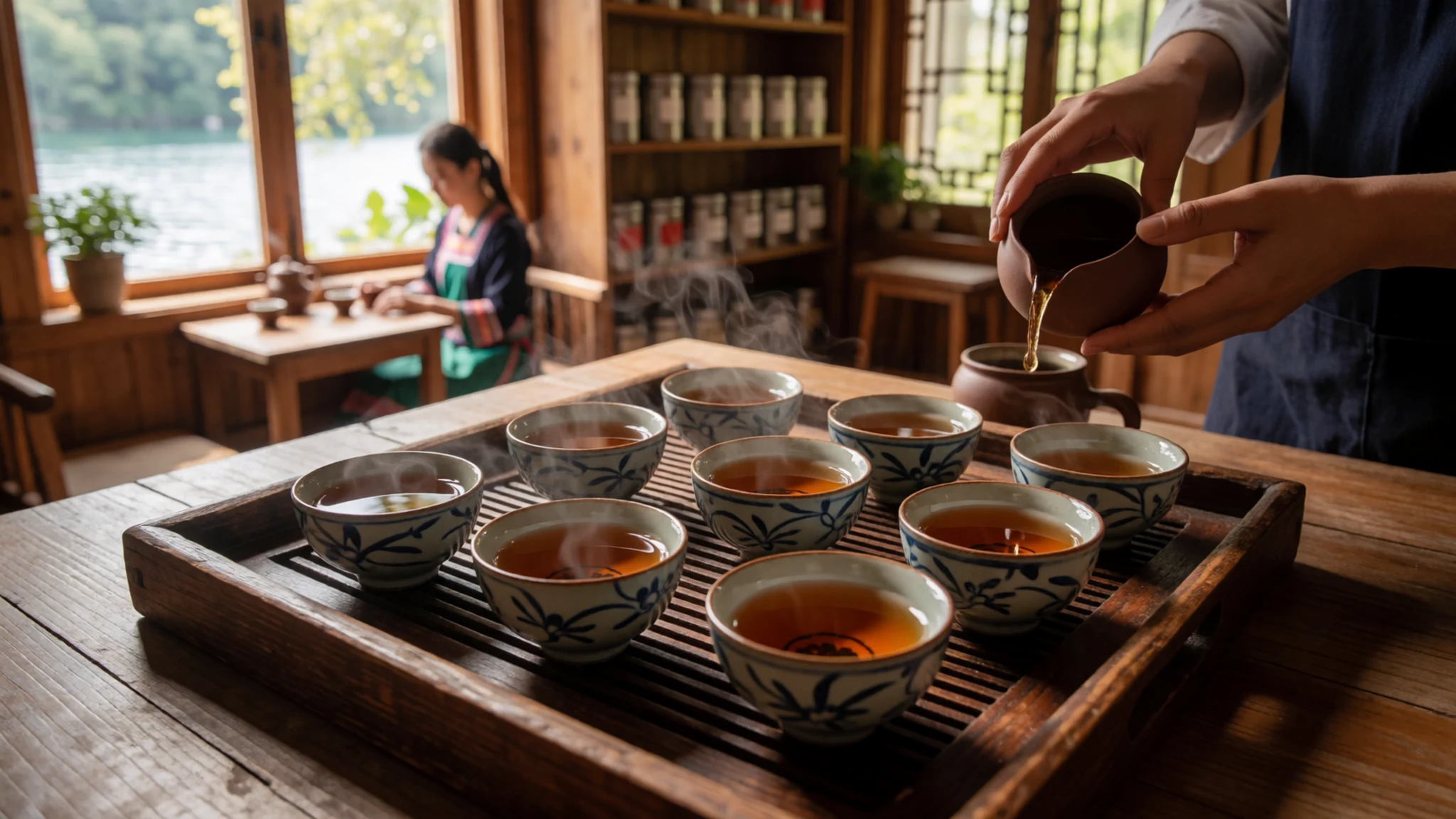
- Thao traditional food — Shuishe pier and Ita Thao lanes
Thao dishes are sold around the Shuishe pier and in Ita Thao, drawing on local ingredients and indigenous cooking. Ask the vendor what is in each dish, and try something you would not find on the mainland.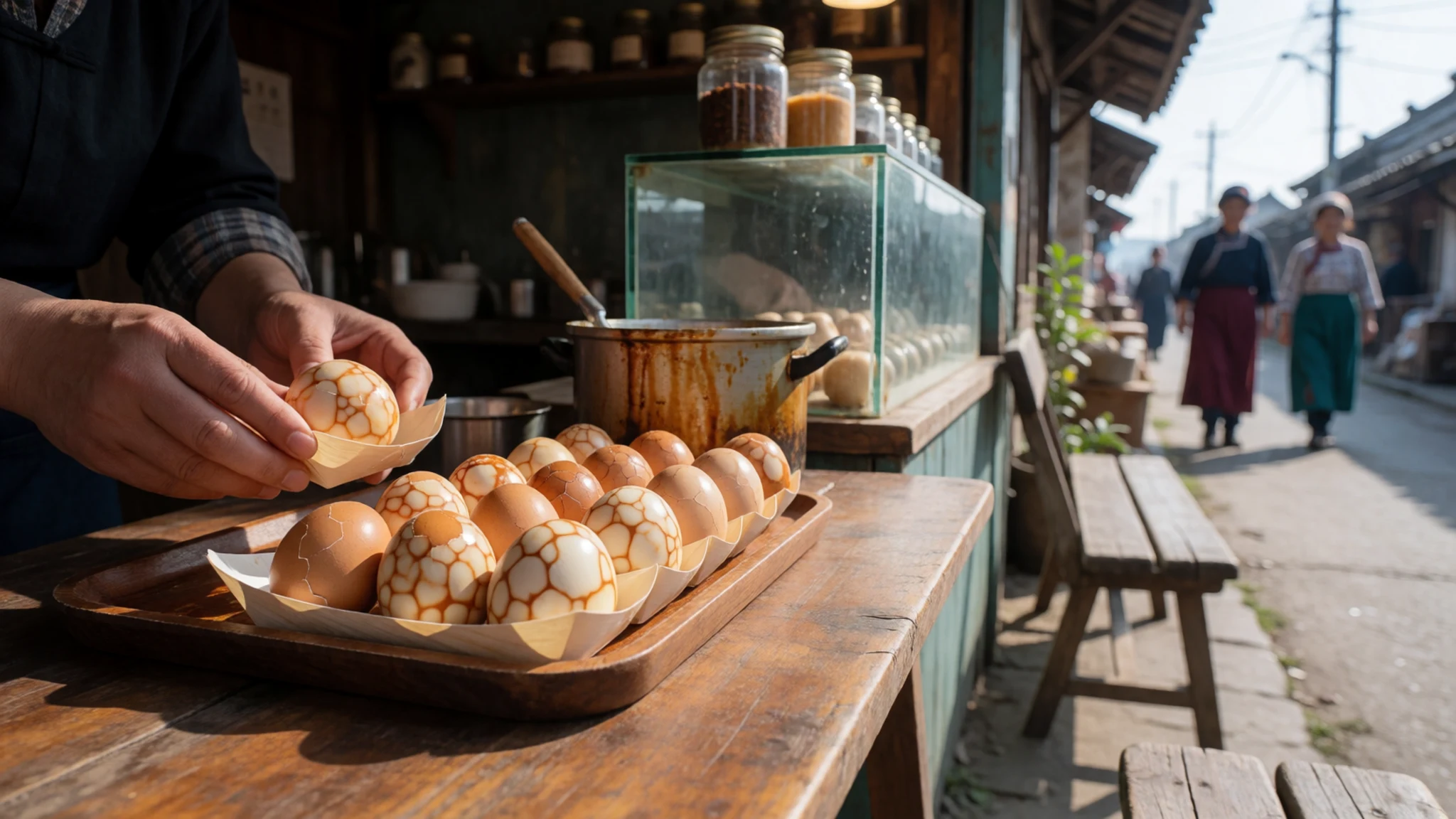
- Local black tea — Tea farms and tasting rooms around the lake
Black tea is grown in the hills around the lake, including Assam varieties, and is a regional pride. Tasting rooms serve it brewed properly and sometimes alongside tea liquor. Visit a tea farm or tasting lab to compare leaf grades. - Lake fish — Eateries along the Ita Thao and Shuishe shorefront
The founding legend promises a lake rich in fish, and freshwater fish is still a feature of lakeside menus, usually fried or steamed. Ask what is local that day and order it with rice and greens.
Plan it
Best time. March–April and October–November give the clearest, mildest days for cycling and boats. The lake sits at 748 m, so it stays cooler than the lowlands, but mist and rain can arrive at any time; the Mid-Autumn Festival swim brings large crowds.
How long. 2
Getting there. No trains go to the lake. Take the train or high-speed rail to Taichung, then a direct bus, or go via Puli and change for the roughly half-hour ride to Sun Moon Lake. Direct buses also run from Taipei. Hualien has no direct bus.
Budget. mid
Tips
- Check fares and timetables on the official site, https://www.sunmoonlake.gov.tw/
- Buy onward bus tickets at the Shuishe visitor centre and check the last bus to Puli
- Visit weekdays or early morning to avoid the weekend crowds at the piers
- Carry cash for small stalls and bike rental
- Bring a light rain layer and water for the cycle loop
Etiquette
- Ask before photographing Thao residents or ceremonies
- Do not swim in the lake outside the organised event
- Dress modestly and keep quiet at temples
Nearby
Sources
- Wikidata Q716206 (CC0)
- Wikipedia: Sun Moon Lake (CC BY-SA 4.0)
- Wikivoyage: Sun Moon Lake (CC BY-SA 4.0)
- Photo 01, Fcuk1203, round-the-lake cycle path (CC BY 3.0)
- Photo 02, Isderion, Swimming Carnival (CC BY-SA 3.0 de)
- Photo 03, Government of Formosa, 1926 report page (Public domain)
- Photo 04, Army Map Service, Formosa map (Public domain)
- Photo 05, Army Map Service, Hualien County map (Public domain)
- Photo 06, Tosha Dam (CC BY 3.0)
- Photo 07, Nichigettan Daiichi power station (Public domain)
- Photo 08, Eric Deng, Ming-Tan power station (CC BY-SA 4.0)


