Sōunkyō Gorge
Sōunkyō Gorge, Japan
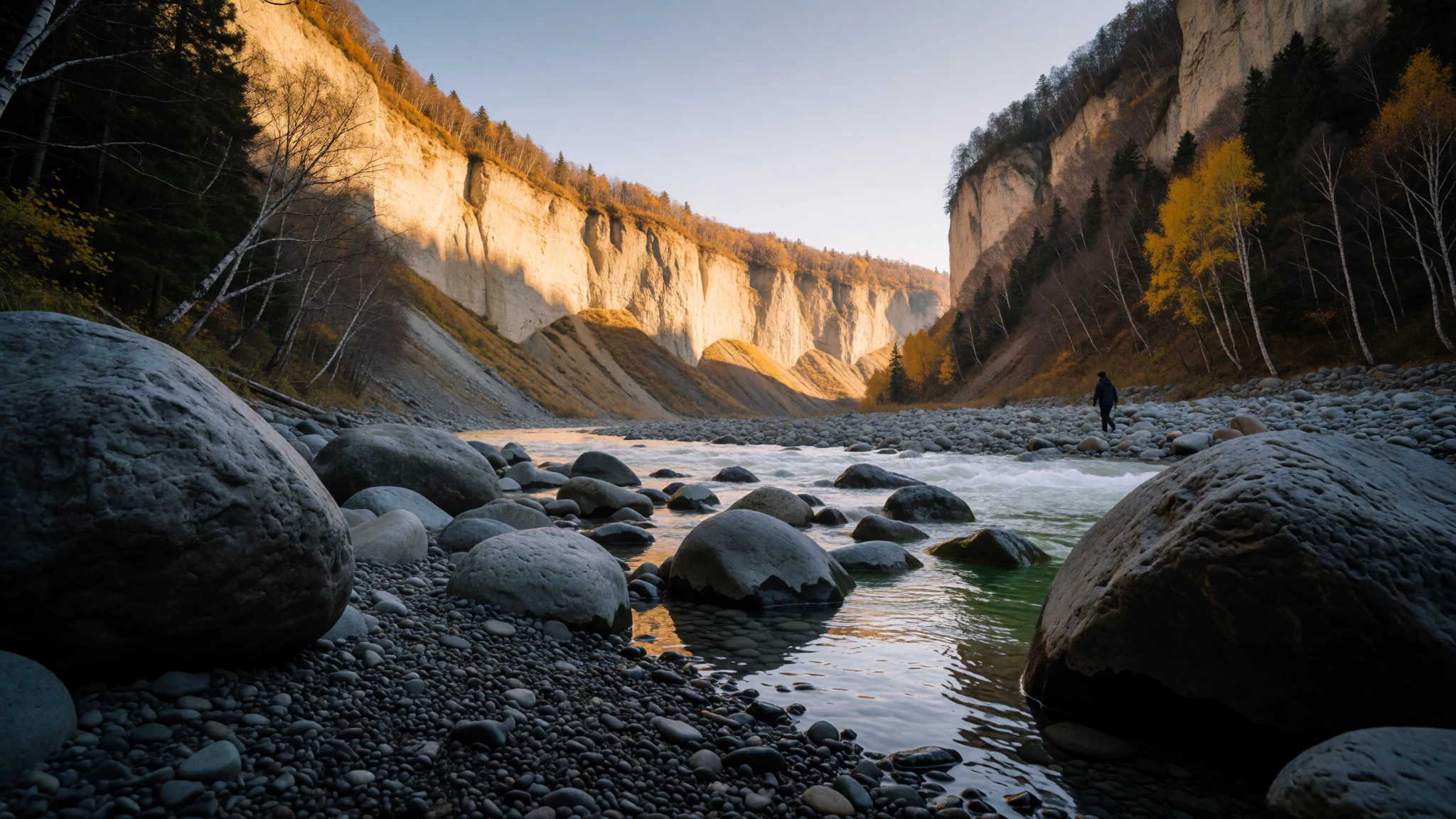
Sōunkyō Gorge pairs towering volcanic cliffs and hot-spring baths in Hokkaido's Daisetsuzan National Park, with autumn colour and winter snow on the doorstep.
The place
Sōunkyō Gorge (層雲峡) is a stretch of steep-walled river canyon in Kamikawa, Hokkaido, inside Daisetsuzan National Park. The Ishikari River runs through it, and tall cliffs of pale volcanic rock close in on both sides, streaked with waterfalls after rain or snowmelt. The name starts with the Ainu word Souunbetsu, usually glossed as a river with many waterfalls; the Japanese characters were chosen to match, roughly meaning layered cloud gorge. Most visitors base themselves not in the gorge itself but at Sōunkyō Onsen, a small hot-spring village at its mouth, where large resort inns, souvenir shops and a covered shopping street sit under the mountains. From there, trails and a ropeway lead up toward the high country of the park. Down the valley, the town of Kamikawa is quieter, more a practical stop for supplies on the road east from Asahikawa than a destination in its own right. The setting is remote by Japanese standards: bear country, with long winters and a short green summer. Autumn colour arrives early here compared with most of Japan, and snow follows not long after. The main event is the landscape, with an onsen bath and a bowl of ramen as the sensible rewards for a day outdoors. Weekends in the colour season and school holidays are busy; midweek days and the shoulder months are calmer.
Its story
Sōunkyō Gorge owes its shape to the Daisetsuzan volcanic group, whose eruption roughly 30,000 years ago blanketed the area in welded tuff, a rock formed from compacted volcanic ash. The Ishikari River has been cutting through that deposit ever since, leaving cliffs that run for about 24 kilometres, with joints and columns rising to around 200 metres in places. Long before tourism, the valley belonged to the Ainu, whose name for the river survives in the place name. The modern village has a more recent, more planned history. In 1957 the Kamikawa authorities gathered the scattered shops and inns of the area into one spot, which became Sōunkyō Onsen. Many of those buildings had grown up to serve climbers, and over time they aged as visitors drifted to other Hokkaido destinations such as Shiretoko. A rebuilding scheme with the Ministry of the Environment began in 1987: 36 older buildings were pulled down and replaced by 18 resort inns, designed with pale walls and sharp roof lines echoing the peaks. Most were finished by July 1998. The centre of the village was later reshaped as the Canyon Mall, styled on mountain resorts in Canada. Visitor numbers have since reached about 3 million a year, according to Wikipedia. That planning explains the look of the village today: coherent and tidy, closer to an alpine resort than to an old Japanese hot-spring town.
What to see
- Ōhako (大函) — Upper gorge, near Sōunkyō Onsen
Ōhako is where the gorge shows its drama, near the meeting of the Ishikari River with a tributary. Tall walls of pale volcanic rock rise straight from the water, and in autumn the slopes above turn red and gold. Ask at the village information office about current access and path conditions before setting out.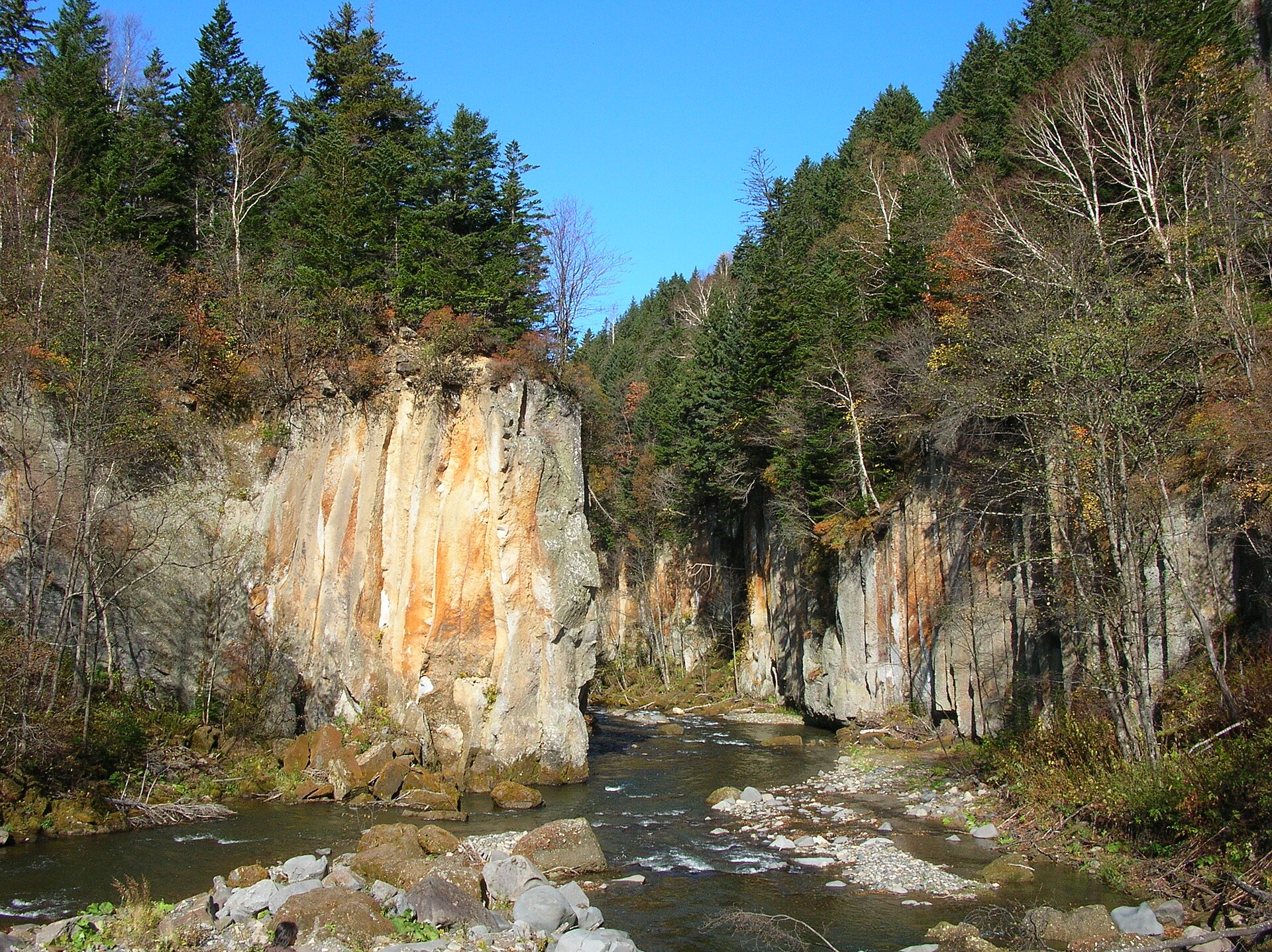
- Sōunkyō Onsen village — Sōunkyō Onsen
The hot-spring village at the mouth of the gorge is where most people sleep. Large resort inns with pale walls and steep roofs surround a compact centre, with a mall of shops and eateries between them. It is easy to explore on foot, and a soak after a day on the trails is the obvious plan. Check each inn about day bathing.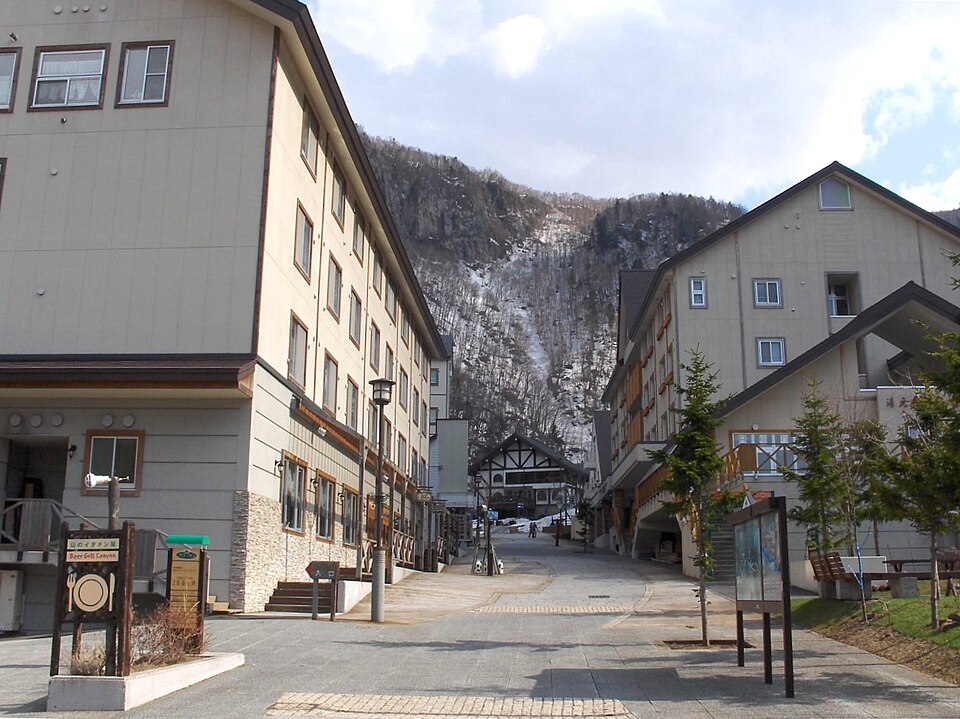
- Bell of Espoir — Hilltop park, north-west of Kamikawa town centre
Bell of Espoir is a belfry on a hill on the north-west side of Kamikawa town. From the park around it the town spreads out below, with the Daisetsuzan peaks standing behind. It is a short, easy outing, well suited to the end of a day when the higher trails feel like too much. - Kita no Mori Garden — Roadside, Kamikawa
Kita no Mori Garden is a roadside rest area with shops, a restaurant and a bear enclosure that is free to enter. Its reconstructed cise, an Ainu house covered in sasa bamboo leaves, is the reason to stop. Despite the similar name, it is a separate place from Daisetsu Mori no Garden. - Daisetsu Mori no Garden — Asahigaoka hill, south-east of Kamikawa
Daisetsu Mori no Garden is a botanical site situated atop Asahigaoka hill, located a few kilometres south-east of the town. It runs events in spring and autumn and has a gift shop and café. A Michelin-starred restaurant sits within the complex, and winter snow activities are sometimes offered nearby. - Rafting and hiking — Ishikari River and Daisetsuzan National Park
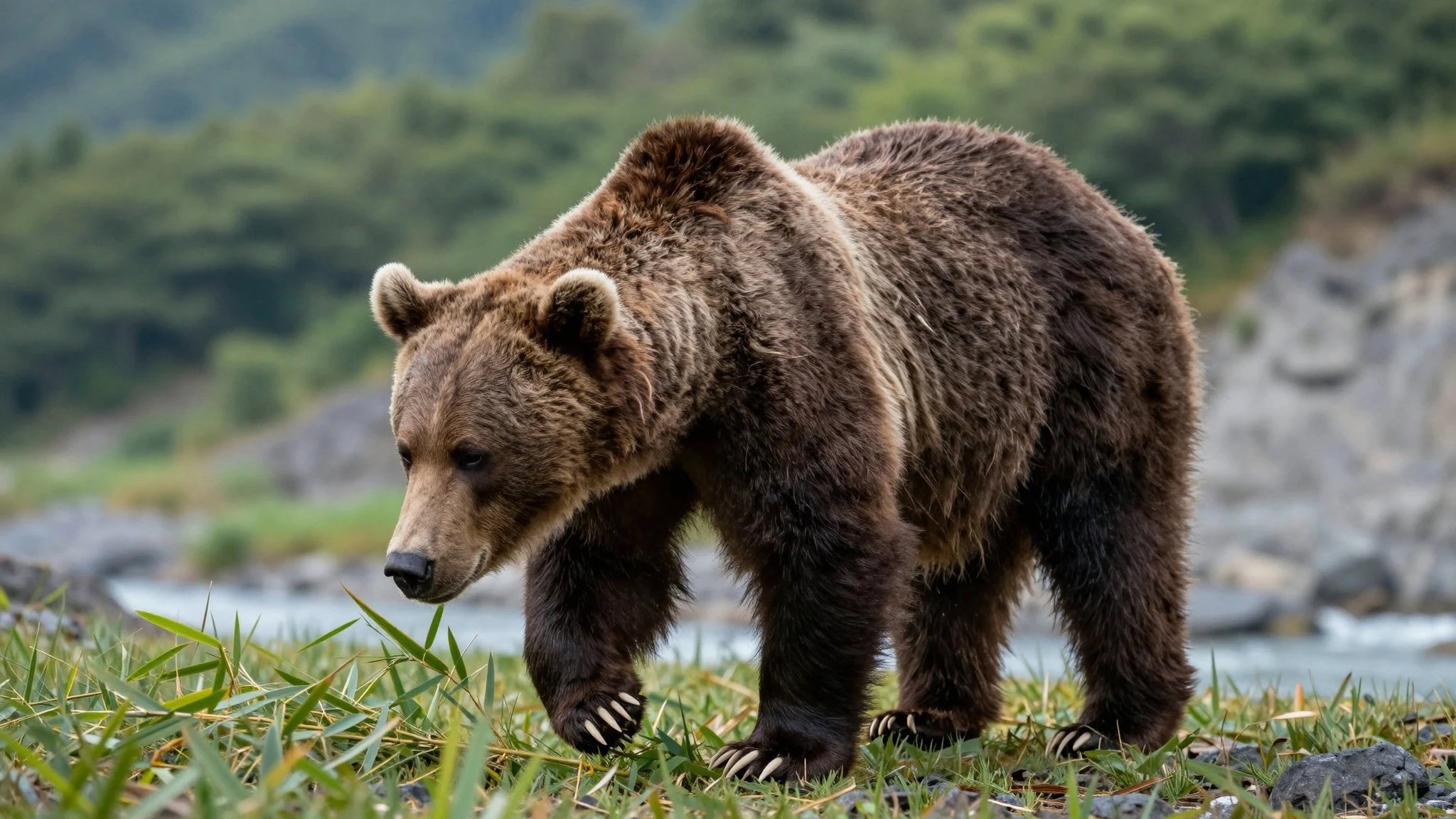
The Ishikari River is run by rafting operators, including one offering trips in English and Japanese. The best hiking lies inside Daisetsuzan National Park, with most routes reached from Sōunkyō Onsen. Bears are active near the edges of Kamikawa in summer, so carry a bell, stay alert, and note that fishing inside the park is illegal.
Culture
Sōunkyō Gorge sits on land with Ainu roots, and the name itself is Ainu in origin: Souunbetsu, a river with many waterfalls. The Ainu are the Indigenous people of Hokkaido, and the area acknowledges that heritage most visibly in a reconstructed cise, a house covered in sasa bamboo leaves, at a roadside rest area near the town. It is a small display rather than a museum, but it gives the place names around the valley some meaning. The village's other culture is the onsen. Bathing here is a daily habit as much as a holiday treat: people wash thoroughly at the taps first, then soak in water that is often hot enough to make a short dip plenty. Many resort inns have shared baths with views of the cliffs, and some accept day visitors, so a soak does not require a night's stay; check each inn's own site. Mountain culture matters too. Hikers in Daisetsuzan National Park carry bells or make noise in bear country and take their rubbish home. Bear sightings near the edges of Kamikawa are not unusual in summer, and locals treat that as a fact of life rather than a drama. Rafting guides and trail staff are the best source of current conditions, and their advice on weather and river levels is worth following. Wash and rinse fully before entering any communal bath, keep your towel out of the water, and never photograph other bathers.
What to wear
Traditional dress around Sōunkyō Gorge begins with the Ainu robe. Garments such as the attus were woven from the inner bark of elm trees, then decorated with appliqué and embroidery in bold curling patterns, and are worn today mainly at ceremonies, festivals and cultural events rather than day to day. At the resort inns, the garment visitors actually meet is the yukata, a light cotton robe lent to guests for moving between bath, dinner and bed, tied with a simple sash and worn left side over right. Everyday clothing in Kamikawa and the onsen village is practical: fleece, waterproof shells and walking boots, with plenty of locals in work clothes or ski gear in season. Nothing about the dress code is formal, and the inns are relaxed about outdoor clothes in public areas. For a visitor the main question is weather. Mountain air is cool even in summer, and winters are properly cold, so pack layers, a waterproof jacket, and a hat and gloves outside the warm months. Sturdy shoes with grip suit the riverside paths and park trails; in snow, boots with a good sole or clip-on spikes make a difference. Quick-dry fabric is useful for rafting. Baths are used unclothed and separated by gender, so no swimwear is needed there, and covered shoulders and knees are a respectful choice if visiting a shrine.
What to eat
- Kamikawa ramen — Small ramen shops in Kamikawa town centre
Kamikawa is known regionally for its ramen, and most local restaurants serve it alongside other dishes. Opening hours vary, so the local habit is to wander the town centre until a shop shows its noren curtain and lit window. Some places have English menus. - Miton pork — Seafood and set-meal restaurants in Kamikawa town
Miton is the premium pork of Kamikawa, and some restaurants give it its own section on the menu. It pairs naturally with the cold climate, in set meals, grilled dishes or alongside seafood. Ask staff what is on that day. - Fresh trout — Trout hatcheries around Kamikawa
Two trout hatcheries near town have stocked ponds where visitors catch their own fish. One lets you rent equipment and cook your catch yourself, and another has staff who cook it for a fee. Check each hatchery directly for opening and booking. - Housemade sausage and bacon — Izakaya in Kamikawa town
A town izakaya, the Japanese pub-style eatery, makes its own sausage and bacon to go with drinks. It is a change from noodles, suits a cold evening, and is open on weeknights only, so plan around that. - Local sake — Izakaya in Kamikawa and shops stocking Hokkaido drinks
Kamikawa has a newly established sake brewery that has done well in a shrinking market, and a few eateries pour its sake alongside bottles from elsewhere in Hokkaido. The local spring water is also bottled and sold across the island.
Plan it
Best time. Late September–October for autumn colour and hiking, which comes early in the Hokkaido mountains; July–August for green trails, though bears are active near the town edges in summer; February for snow and skiing on Kurodake. Winters are cold and deep in snow.
How long. 2–3
Getting there. Fly to Asahikawa or Sapporo, then take the train on the Sekihoku Main Line to Kamikawa Station. Buses from Asahikawa to Sōunkyō Onsen also stop at Kamikawa Station; confirm boarding rules with the bus company. By car, the Asahikawa–Monbetsu Expressway runs toll-free past Kamikawa.
Budget. mid
Tips
- Book resort inns early for autumn colour weekends and school holidays; use the official site, https://sounkyo.net/, for current information
- Kamikawa is the last supermarket and fuel stop for about 100 km east towards Engaru and Kitami, so stock up before driving on
- Carry a bear bell and ask locally about current sightings before walking at the edges of town or on park trails
- Check train and bus timetables on the day, as services on the Sekihoku Main Line and the Sōunkyō route are limited
- Carry some cash for small eateries and shops, and check which inns take day visitors for baths
Etiquette
- Wash and rinse fully before entering a communal bath, and keep your towel out of the water
- Do not fish inside Daisetsuzan National Park, where it is illegal
- Take your rubbish home from the trails
Nearby
Sources
- Wikidata Q3511708 (CC0)
- Wikipedia: Sōunkyō (rev 1260741772) (CC BY-SA 4.0)
- Wikivoyage: Kamikawa (Hokkaido) (rev 5345408) (CC BY-SA 4.0)
- Photo: Autumn in valley (pakku) (CC BY 3.0)
- Photo: HPIM2742 (Daigaku2051) (Public domain)
- Photo: Sounkyo1.jpg (Public domain)
- Photo: Sōunkyō information (Public domain)
- Photo: The forest is the sweetheart of the sea (Sjors Provoost) (CC BY 2.5)
- Photo: Japan Hokkaido, Sounkyo gorge 01 (Marie-Sophie Mejan) (CC BY 4.0)
- Photo: Japan Hokkaido, Sounkyo gorge 02 (Marie-Sophie Mejan) (CC BY 4.0)
- Photo: Night sky over Sounkyo Canyon (Big Ben in Japan) (CC BY-SA 2.0)


Wildlife
- Brown bear (animal)
The brown bear is a very big bear with a muscly hump and wide paws made for digging, and its fur can be anything from cream to reddish to dark brown. In summer, bears roam near the outskirts of Kamikawa, so that is the time to be most careful. Bring a bell so the bear hears you coming, keep your eyes open as you walk, and remember that fishing within the park is against the law.