Songgwangsa
Songgwangsa, South Korea
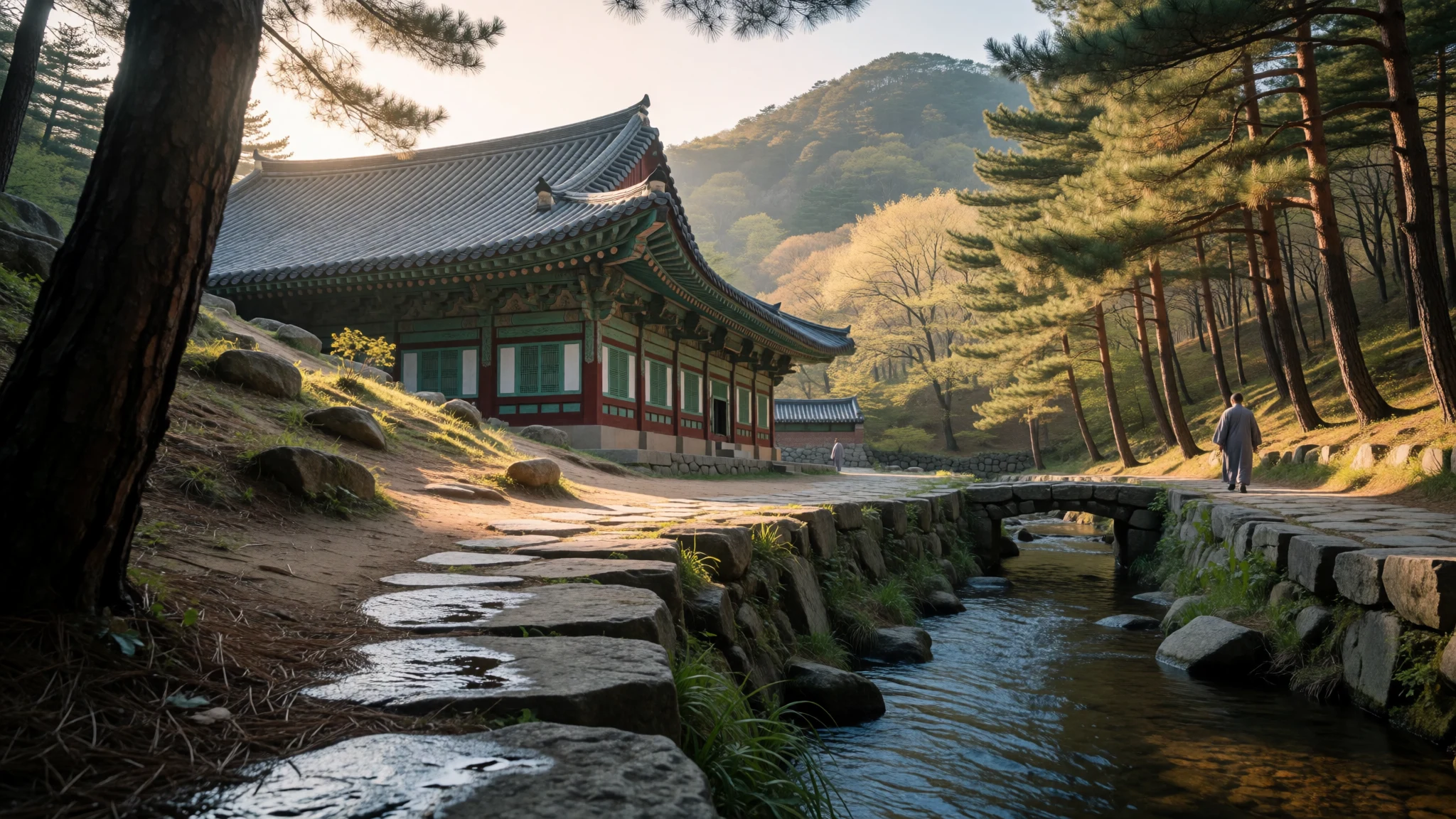
Songgwangsa is a working Seon Buddhist monastery in the pine forests of South Jeolla, where monks still train and visitors can stay overnight.
The place
Songgwangsa sits on Mount Jogye in South Jeolla Province, inside Jogyesan Provincial Park, about 29 km from the sea and roughly an hour and a half from the centre of Suncheon. Its name is usually translated as Spreading Pine Temple, and the setting explains why: dark trunks above a stream, a forested ridge close behind, and the sound of water rather than traffic. This is a working Seon (Zen) monastery, not a museum, and monks live and train here. Within Korean Buddhism it is counted as the Sangha Jewel, one of the Three Jewel Temples, which stand for the Buddha, the dharma and the monastic community. The other two, Tongdosa and Haeinsa, are in South Gyeongsang Province. Songgwangsa is the smallest of the three but is honoured as the home of the sangha itself. Administratively it belongs to the Jogye Order, headquartered in Seoul, yet it runs as a largely self-governing body. It oversees a network of 49 smaller branch temples whose abbots are chosen from its own monks, and those branches are expected to pay their own way. On the ground, the compound is a run of courtyards, halls and small bridges laid along the slope. It is quieter than the temples most visitors meet near Seoul, though weekends and autumn colour bring tour groups. A day trip from Suncheon is possible, but an overnight temple stay suits the place far better.
Its story
Songgwangsa began as Gilsangsa, a small Silla-period temple about which very little is certain. Tradition credits a Seon master named Hyerin with building it, along with a hermitage where he lived, and with a community of a few dozen monks. One scholar, Robert Buswell, suggests Hyerin may be a legendary figure invented to give the site an earlier past than Jinul. The temple then lay abandoned for more than fifty years. In 1190 Jinul, the Seon master later honoured as National Master Bojo, began rebuilding it, and the work took about nine years. From here he taught a meditation method that still shapes Korean Seon practice, and the monastery became a centre of study and reform. A local legend says Jinul launched a wooden black kite from nearby Mount Mohu and named its landing spot Chirakdae, 'the place where a black kite landed'. The mountain was later renamed Songgwang. The monastery's later centuries were rough. It suffered during the Japanese invasions of 1597–1598 and again in the Korean War. In 1932 the abbot Sokchin compiled an anthology of surviving records about the temple's history. In the 1940s the Seon master Kusan, who lived from 1901 to 1983, was ordained and spent time here. The present buildings are therefore a mix of rebuilt and restored halls rather than one untouched medieval site.
What to see
- The main temple precinct — Songgwang-myeon, Suncheon
Songgwangsa's central courtyards are best taken slowly, hall by hall, following the slope uphill from the stream. The roofs are tiled and the beams are painted in faded greens and reds, with the forest pressing close behind. Mornings are calmest, before tour coaches arrive. The Dharma hall and meditation hall are working spaces, so watch for signs.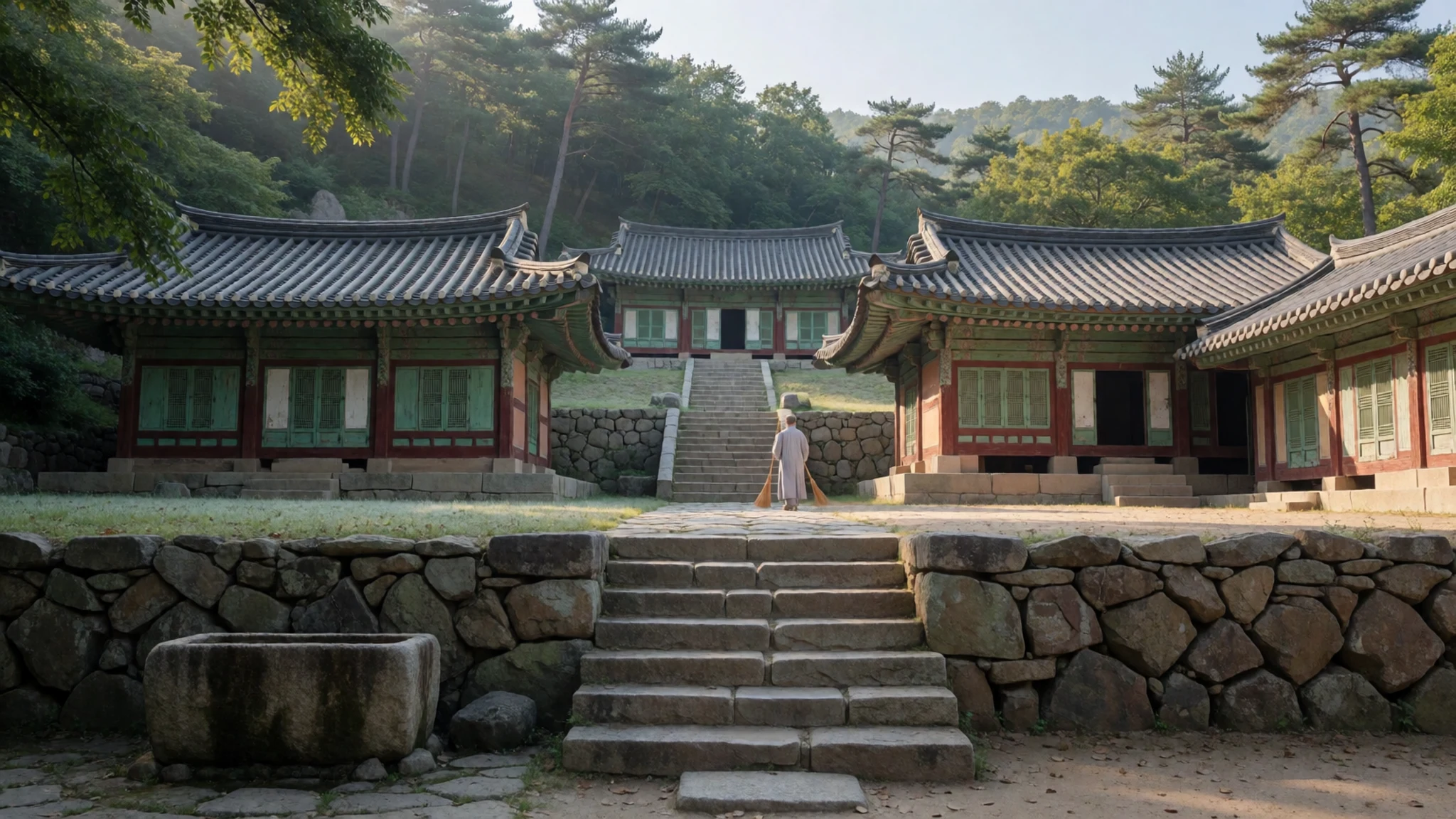
- The entrance and stream approach — Songgwangsa approach path
The walk in from the entrance gate is part of the visit. A path runs beside the stream under tall pines, with small bridges and a gate before the first courtyard. It sets the mood, shedding road noise gradually, and is worth doing on foot rather than rushing to the halls. Autumn colour here draws the biggest crowds.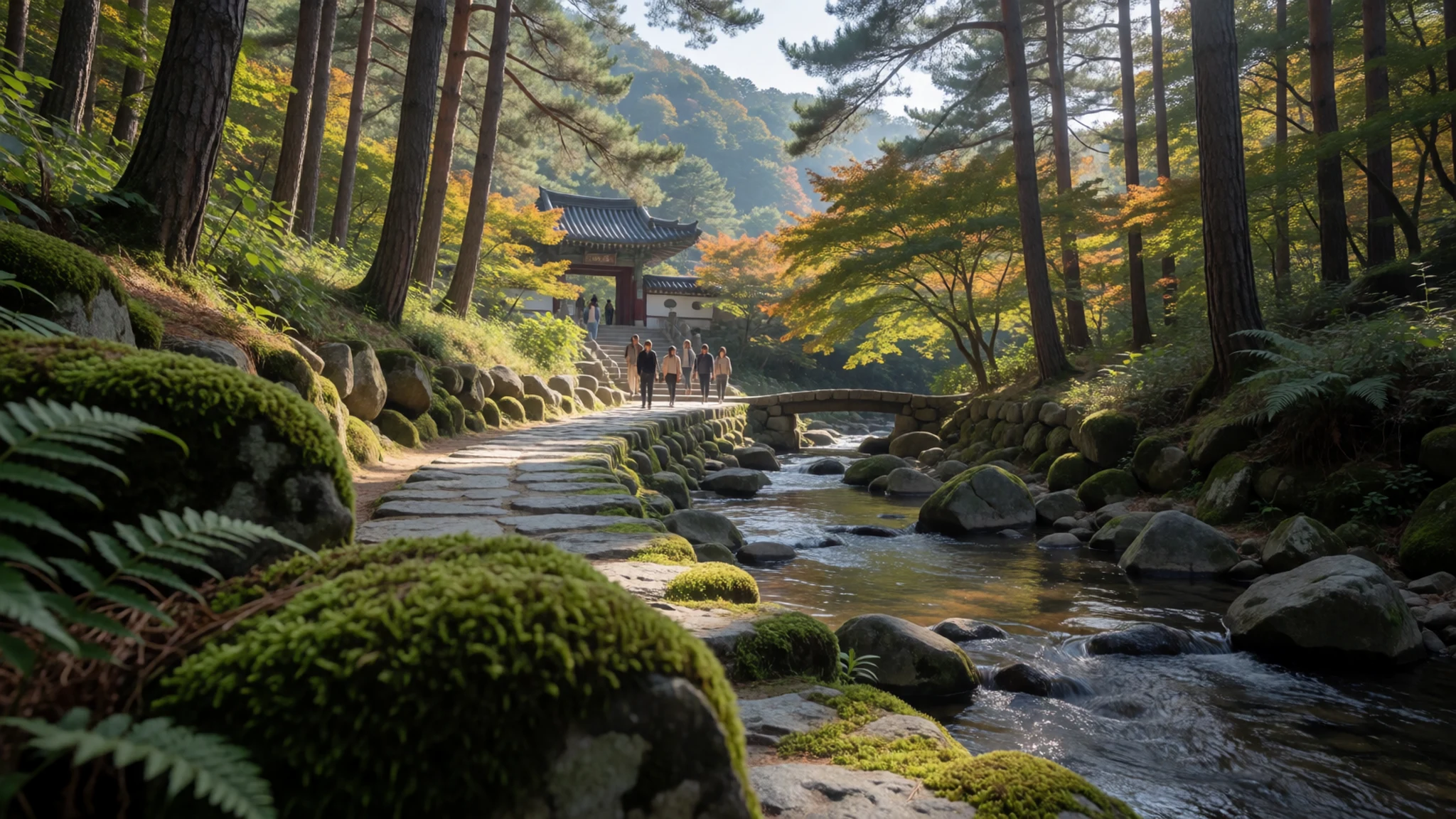
- Wall paintings in the halls — Inside the temple precinct
Several buildings at Songgwangsa carry painted walls and decorated eaves, in the mineral colours typical of Korean temple art. Figures, scenes from Buddhist stories and floral patterns cover surfaces that look plain from a distance. Look up as well as ahead, and take photographs only where signs allow.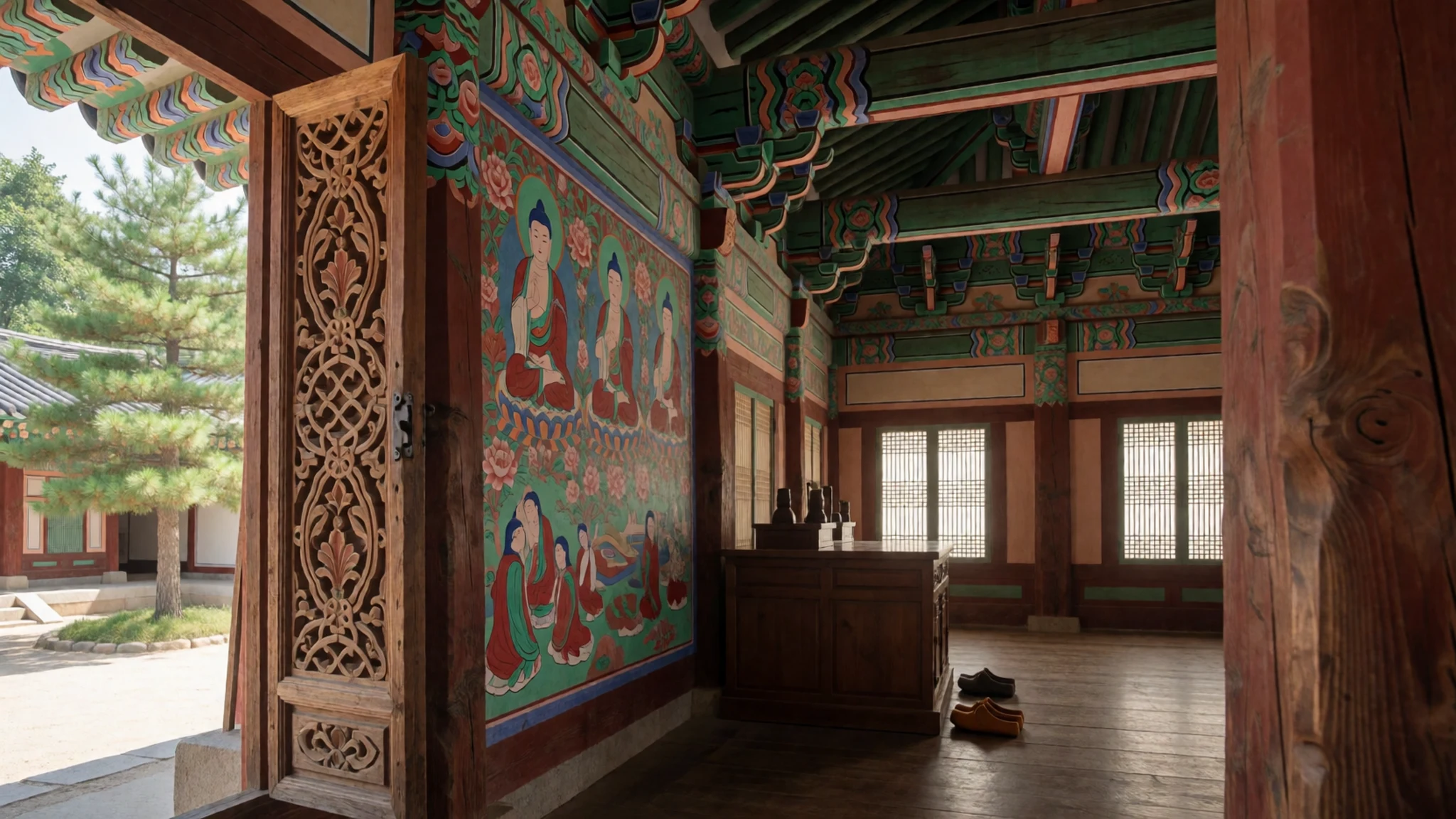
- Seonamsa Temple — Suncheon, South Jeolla
Seonamsa is a large temple complex on the next mountain over, with a history reaching back to the ninth century. It is known for tea fields that have grown naturally and been tended for many centuries. From Suncheon it takes about an hour. Pairing it with Songgwangsa makes a full day in the hills.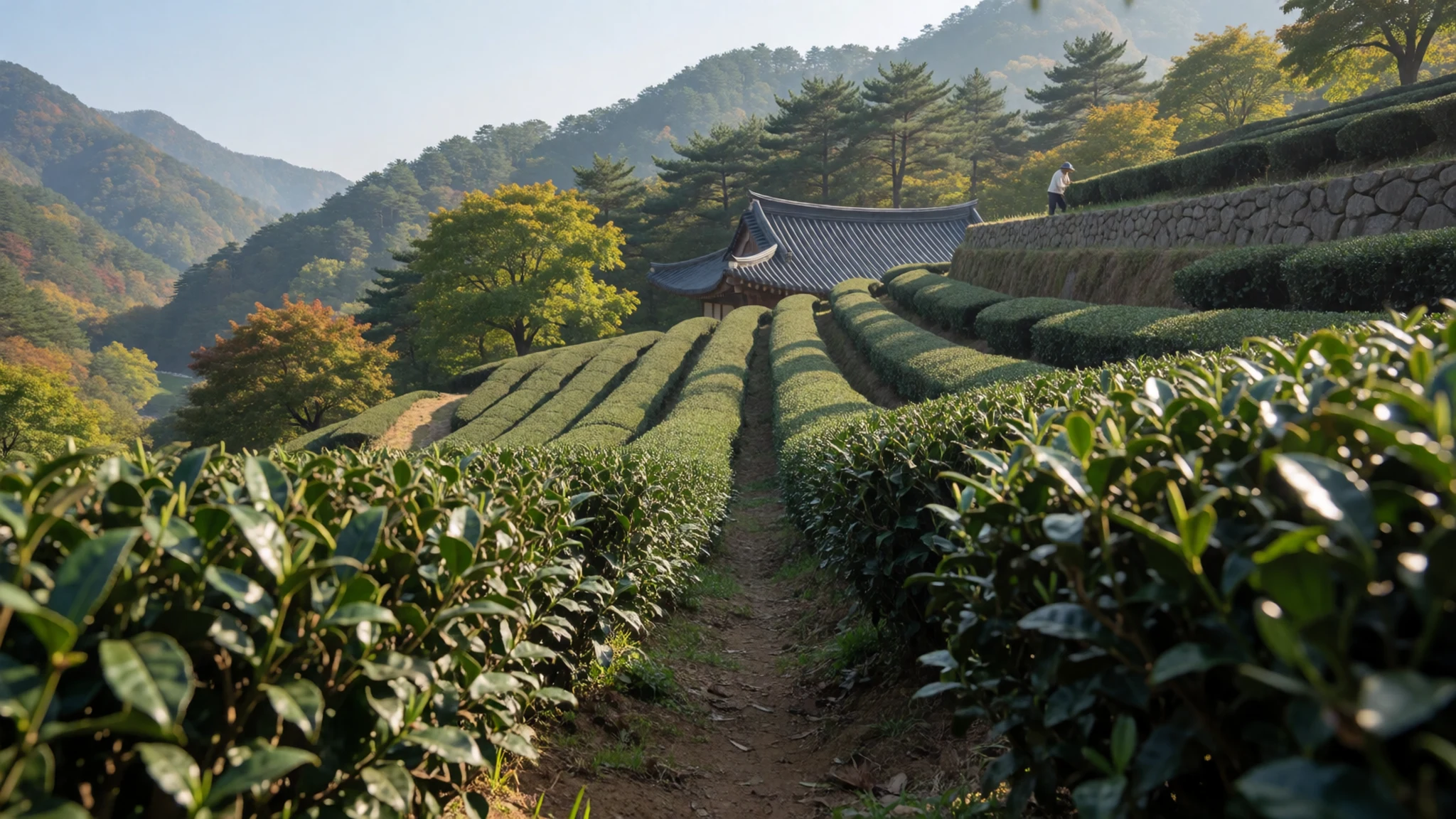
- Naganeupseong Castle — Outside Suncheon
Naganeupseong is a walled Joseon-era town and castle, begun in 1397 and one of the better preserved in Korea. Walking the ramparts shows how a fortified settlement was laid out, with the surrounding farmland spread beyond. It is about an hour from downtown Suncheon, so it suits visitors with a car or a patient timetable.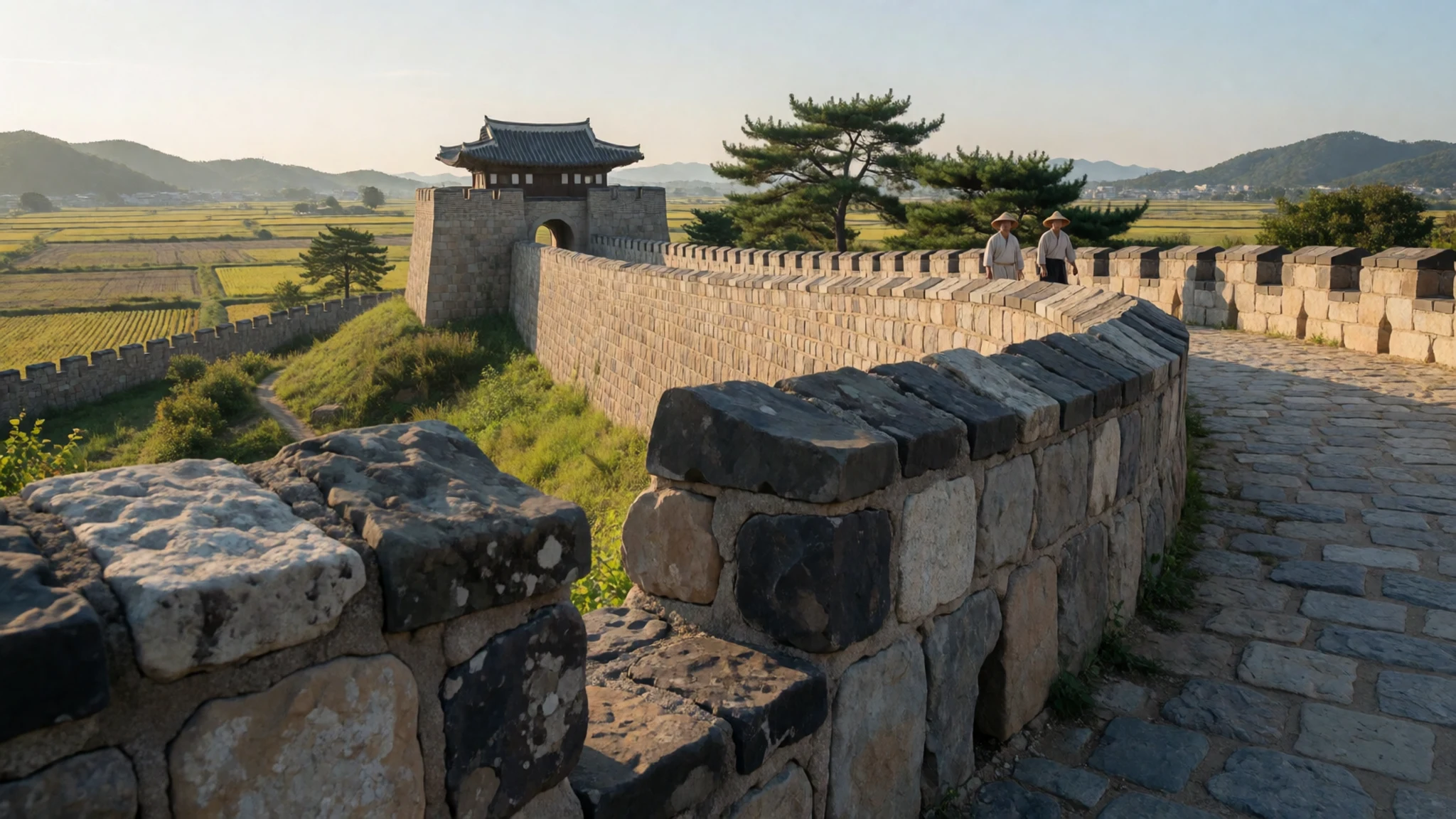
- Suncheon Bay Wetland — Southern edge of Suncheon
Suncheon Bay is a coastal wetland of reed beds and tidal flats, with migratory birds in the right seasons. It makes a good contrast to the mountain temple: open, flat and full of sky. Boardwalks cross the reeds, and the nearby national garden adds a more landscaped option. Check opening hours before going.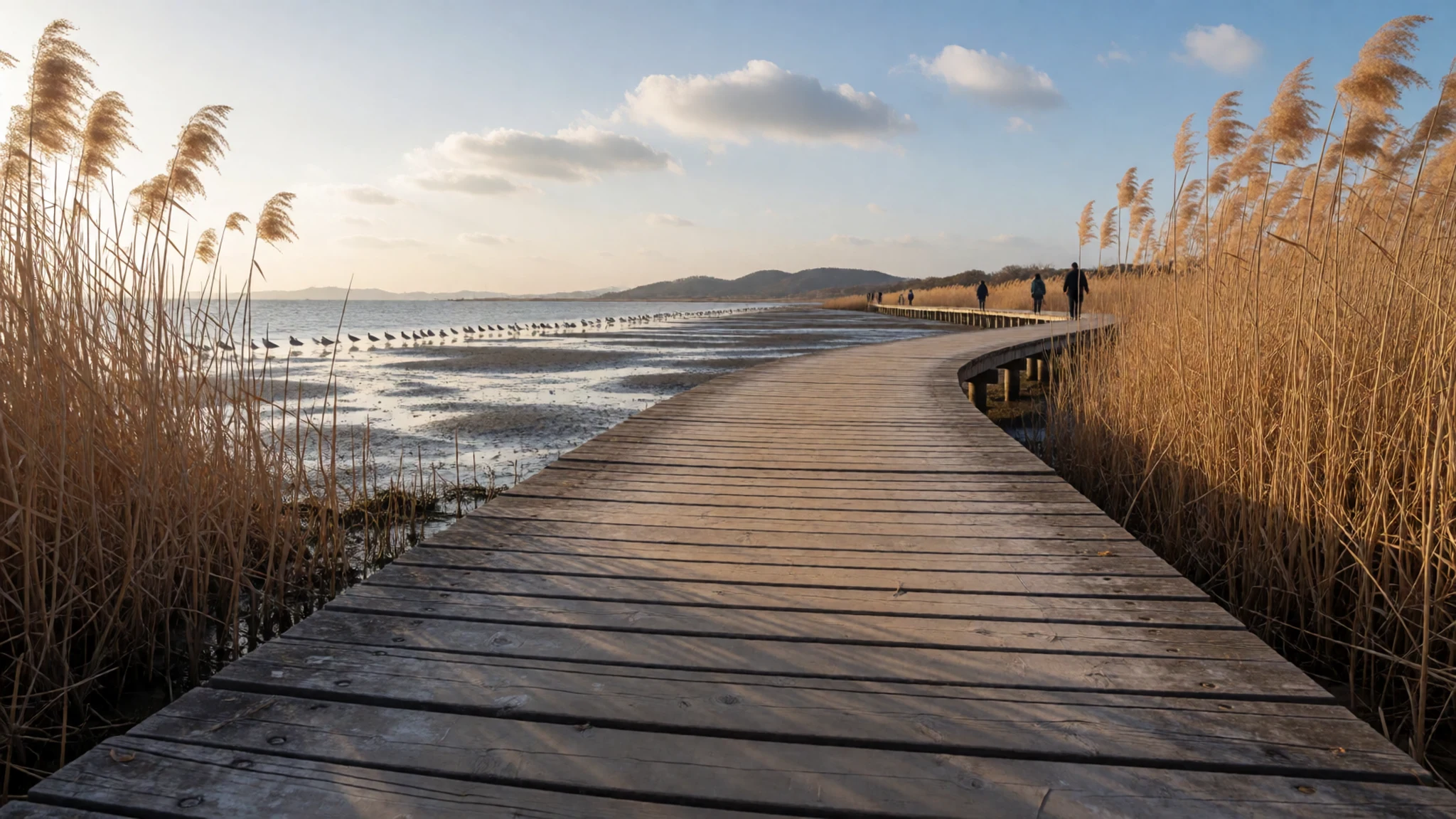
Culture
Songgwangsa is a living centre of Seon, the Korean branch of Zen, and its culture is built around meditation, study and daily monastic routine. Jinul's teaching on combining insight with steady practice is still the backbone of Korean Seon, and the monastery is honoured as the Sangha Jewel, the home of the monastic community. Daily life follows set times for chanting, meals, work and sitting practice, and much of it begins before dawn. The temple also offers temple stays, an arrangement found across Korea that lets visitors share a simplified version of that routine: early rising, chanting, sitting meditation, simple vegetarian meals eaten in silence, and sometimes tea with a monk. Even a day visit takes place inside that rhythm, so the atmosphere is closer to a retreat than a sightseeing stop. Pine, water and mountain are not just scenery; they are part of how Korean monasteries are sited and understood. The surrounding region also has a tea tradition, with nearby Seonamsa known for its old tea fields, and tea is often offered to guests in a quiet, unhurried way. If you visit, keep your voice low, remove your shoes where you see a step up into a hall, and do not walk into meditation or prayer areas or photograph monks and worshippers without permission.
What to wear
Around Songgwangsa, traditional Korean dress means the hanbok: a short jacket (jeogori) over a wrapped skirt (chima) for women, and jacket and loose trousers (baji) for men. Cotton, silk and ramie are the classic materials, ramie and hemp for hot summers and silk for ceremonies. It is worn today mainly for weddings, Seollal, Chuseok and photographs. The temple's own dress is more austere. Monks wear plain grey or brown robes, with a layered outer garment worn during ceremonies, and laypeople who join temple stays are often lent loose grey tops and trousers for the duration. Everyday Suncheon looks like the rest of provincial Korea: practical casual clothes, neat and layered, with outdoor brands common among hikers heading into the hills. For a visit, dress modestly: cover shoulders and knees, and avoid anything sheer or slogan-heavy. Shoes come off at hall doors, so slip-on footwear or socks without holes help. Because the compound is a slope of stone paths, stairs and sometimes wet ground, wear shoes with grip. Bring a light layer, since mountain shade is cooler than the town, and a rain jacket, because showers can arrive quickly.
What to eat
- Sanchae jeongsik (temple-style set meal) — Temple stay meals; vegetarian eateries around Suncheon
Temple cooking in Korea is vegetarian and avoids strong pungent seasonings, relying on mountain greens, tofu, roots and fermented sauces. Temple stays serve it as part of the routine. Expect rice, soup and a spread of small seasonal dishes, eaten quietly and finished completely.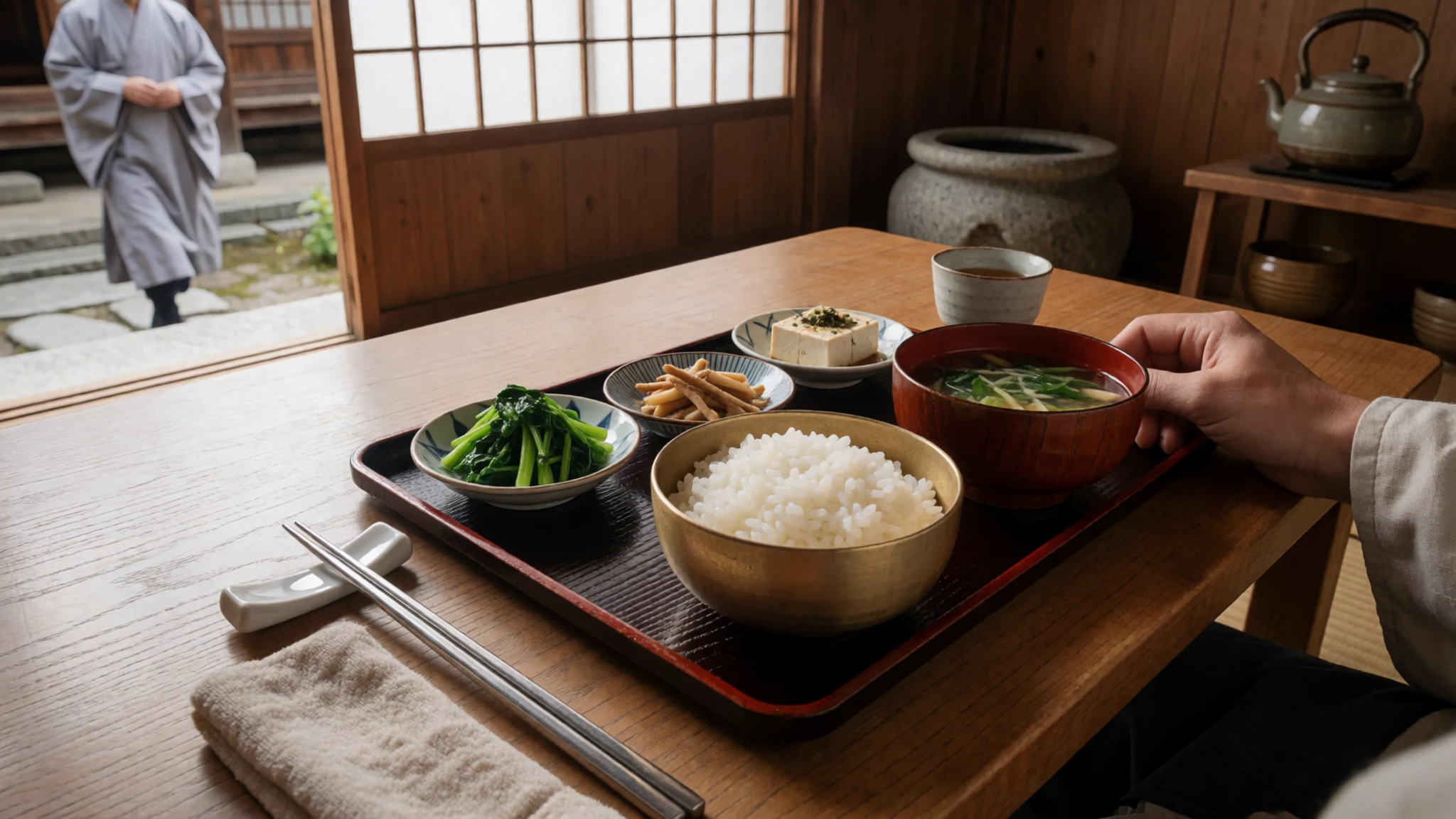
- Pork stew — Ut-jang market, Suncheon
Suncheon's Ut-jang market has a street known for pork stew, a hot, savoury bowl suited to cool mornings after the mountain. It is a plain, local meal rather than a refined one, and the market setting is part of the pleasure.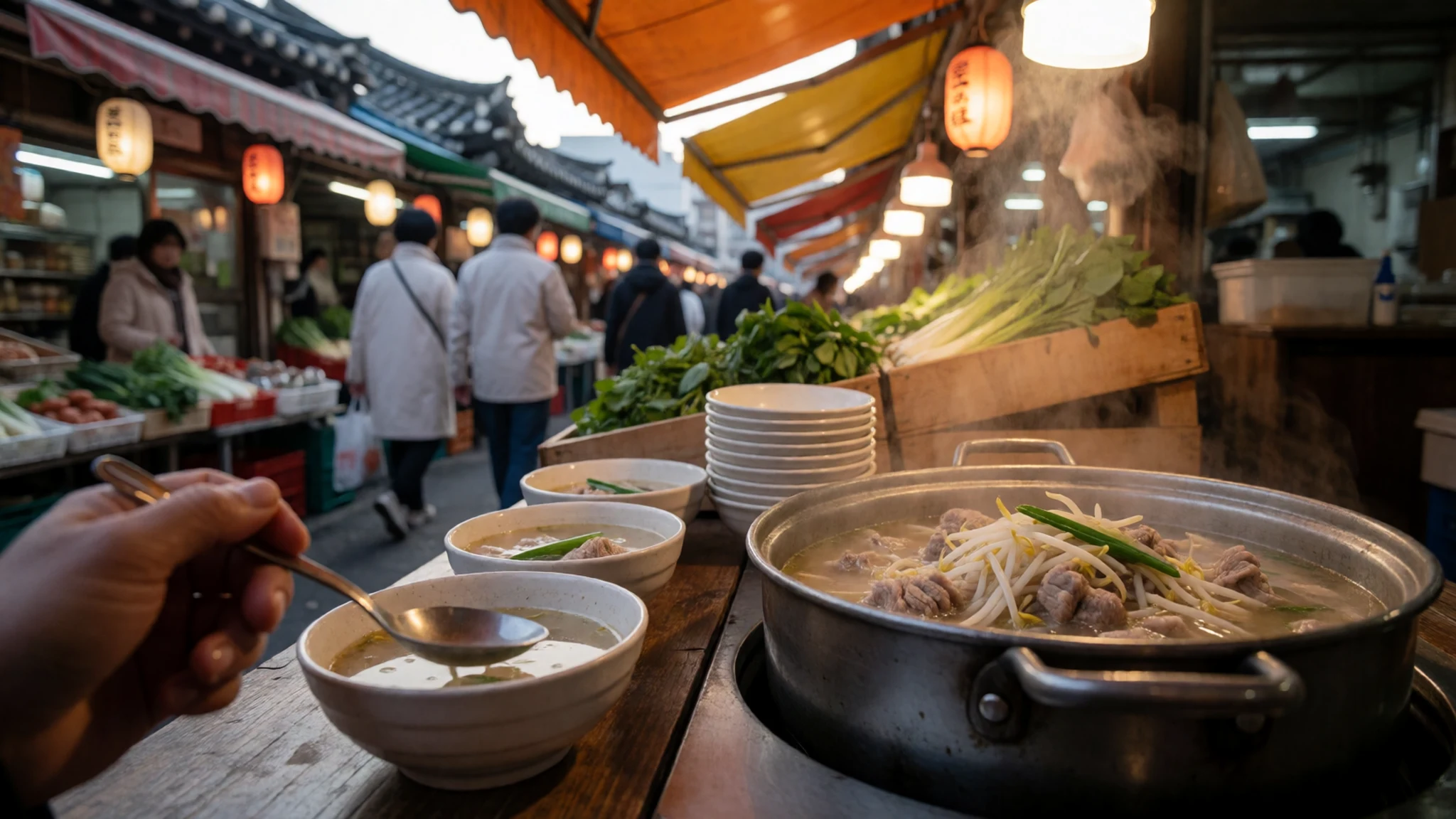
- Mudskipper soup — Eateries near Suncheon Bay
A spicy local soup made with mudskippers from the tidal flats of Suncheon Bay. It is an acquired taste for some, but one of the most local dishes you can order in the area, best tried in a small eatery near the bay. - Duck stew and duck barbecue — The duck street in Suncheon's town
South Jeolla is known for its duck dishes, and Suncheon has a street of restaurants serving duck stew or barbecue. Dishes are shared and arrive with the usual side dishes, so go with company and order to share. - Barley rice — Family-run restaurants in central Suncheon
Barley rice is a plain, filling local favourite, served with a spread of seasonal side dishes in the regional style. It suits a lunch stop before or after the hills and is easy to find in family-run restaurants. - Reed tea — Tea shops in the old town and near the bay
A cup of tea made with the reeds of Suncheon Bay is a gentle, slightly grassy drink. Try it in a tea shop, or alongside traditional teas on the street of tea shops and handicraft stalls in the old town.
Plan it
Best time. April–May and October–November, when spring growth and autumn colour frame the forest and walking is comfortable; summer is hot and humid, and winter is cold in the hills.
How long. 1–2
Getting there. From Seoul, take a KTX train from Yongsan Station to Suncheon Station, or a bus from the Express Bus Terminal, which takes about 3 hours 50 minutes. From Suncheon, a local bus or taxi covers the last leg to Songgwang-myeon; allow about an hour and a half from downtown.
Budget. mid
Tips
- Check the official site (http://www.songgwangsa.org/) for temple stay booking and any visiting rules
- Arrive early in the morning for the calmest courtyards, especially in autumn
- Check Korail for current train schedules and fares before booking
- Carry some cash and snacks, as the temple area is not a town
- Stay in Suncheon near the station or bus terminal if not doing a temple stay
Etiquette
- Remove shoes before stepping into any hall
- Keep voices low and do not photograph monks or worshippers without asking
- Dress modestly, with shoulders and knees covered
Nearby
Sources
- Wikidata Q490384 (CC0)
- Wikipedia: Songgwangsa (CC BY-SA 4.0)
- Wikivoyage: Suncheon (CC BY-SA 4.0)
- Photo: Korea-Songgwangsa-01, The Chosun Bimbo (CC BY 2.5)
- Photo: Korea-Songgwangsa-02, The Chosun Bimbo (CC BY 2.5)
- Photo: Korea-Songgwangsa-06, The Chosun Bimbo (CC BY 2.5)
- Photo: Korea-Songgwangsa-05, The Chosun Bimbo (CC BY 2.5)
- Photo: Korea-Songgwangsa-wall.painting-01, The Chosun Bimbo (CC BY 2.5)
- Photo: Korea Korail Temple Stay 03, Republic of Korea (CC BY-SA 2.0)
- Photo: Korea Korail Temple Stay 04, Republic of Korea (CC BY-SA 2.0)
- Photo: Korea Korail Temple Stay 05, Republic of Korea (CC BY-SA 2.0)


