Son Doong Cave
Son Doong Cave, Vietnam
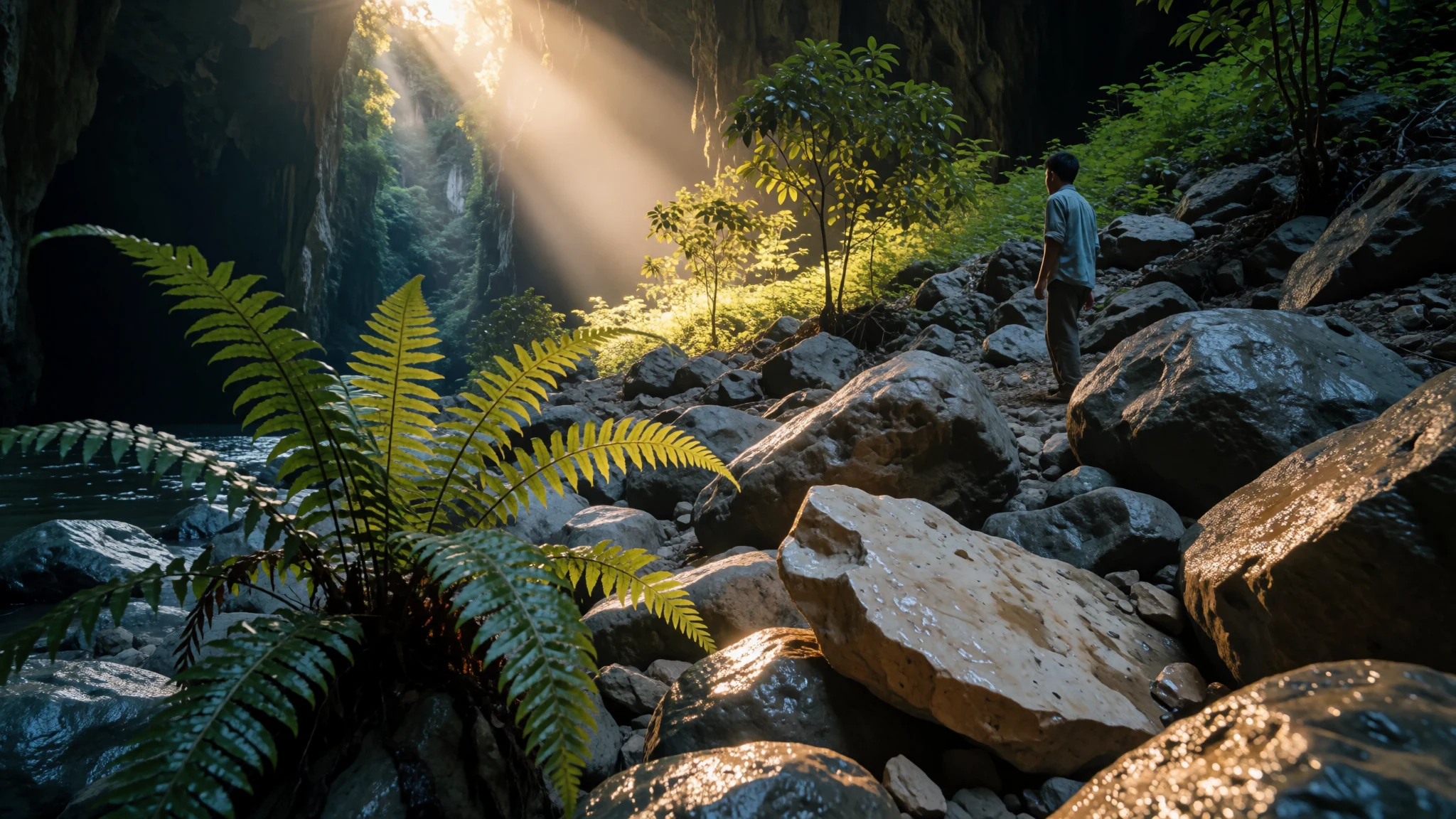
Son Doong Cave is a mountain hollowed out so completely that it has its own river, jungle and weather, reached only on foot.
The place
Son Doong Cave sits inside Phong Nha–Kẻ Bàng National Park in Quảng Trị province, central Vietnam, close to the border with Laos, at about 390 metres above sea level. Wikidata lists it as the largest cave passage in the world, and the measure that counts is volume: the main gallery is roughly 200 metres from floor to roof, about 150 metres across, and the whole route runs for around 9 kilometres. A fast-flowing river moves through the dark below. In two places the ceiling has fallen in. These openings, called dolines, admit daylight and rain, so ferns, shrubs and young trees grow on the rubble inside the mountain. The rock is Carboniferous and Permian limestone, and water is thought to have dissolved the cave out over somewhere between two and five million years. The name means, loosely, the cave of the mountain behind Đoòng, which is a village of the Vân Kiều people. In 2019 explorers established that the underground river also links Son Doong to a neighbouring cave called Hang Thung, enlarging the system further. This is not a cave for a casual afternoon. The way in runs through jungle and across rivers, and access is limited to organised, permitted expeditions, so most people meet its scale through photographs.
Its story
The story of Son Doong Cave is mostly one of measurement and surprise. The name comes from the Vân Kiều village of Đoòng, and local people knew the mountain long before outsiders arrived with survey tape. The scientific picture was built up by caving expeditions, among them those led by Howard Limbert of the British Cave Research Association, who helped establish how big the main passage really is. Their figures put its volume well beyond anything else known, and its cross-section at roughly double that of the next passage on the list, in Deer Cave in Malaysia. Surveys kept turning up odd details. Some stalagmites rise as much as 80 metres, among the tallest known anywhere. Behind a calcite barrier that explorers nicknamed the Great Wall of Vietnam, they found cave pearls about the size of baseballs, far larger than such formations usually grow. The underground river also kept giving up secrets: by mid-2019 it had been shown to connect with Hang Thung, so the cave's potential volume grew by well over a million cubic metres. The honest point for any reader is that Son Doong is still being mapped. The numbers are the work of a few expeditions, and the cave remains a place that very few people have ever stood inside.
What to see
- The first doline — Son Doong Cave, Phong Nha–Kẻ Bàng National Park
Where the roof has collapsed, daylight drops into the dark in a slanting column. In certain seasons and at certain hours a clear beam of sun crosses the chamber, lighting mist and plants below. It is the moment most photographs of Son Doong try to catch, and it depends on weather.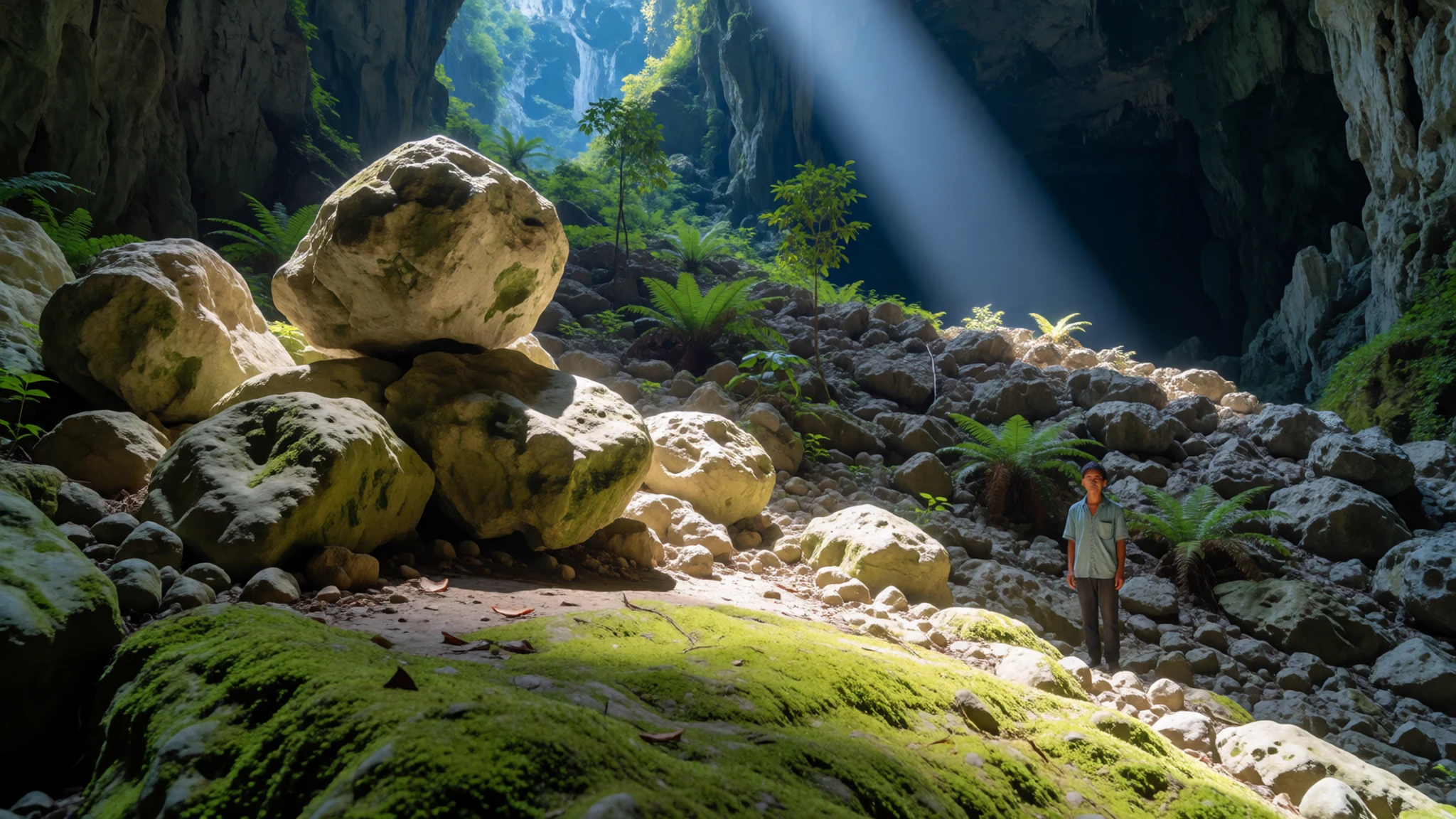
- The second doline — Son Doong Cave, Phong Nha–Kẻ Bàng National Park
The second collapse is wide enough to let a small forest take hold on the cave floor. Trees reach for the opening, and the air feels damp and green after the black passages. Parties usually camp near here, so it doubles as the expedition's rest stop.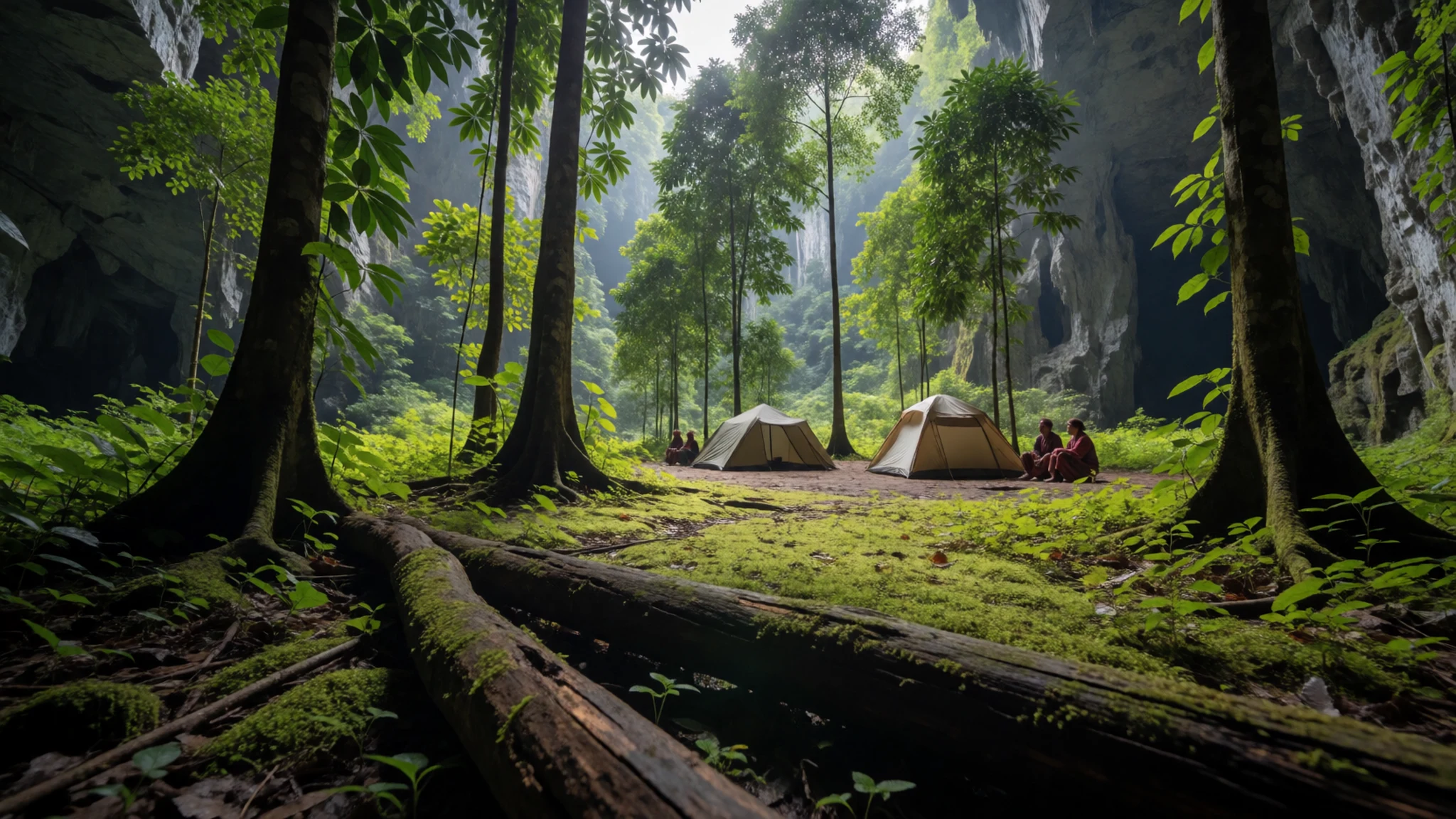
- The stalagmite forest — Main passage, Son Doong Cave
Some of the mineral columns in Son Doong are enormous, with the biggest reaching around 80 metres. They stand in lines along the passage like a dim, frozen skyline. Headlamps struggle to reach the tops, and people in photographs look like specks beside them.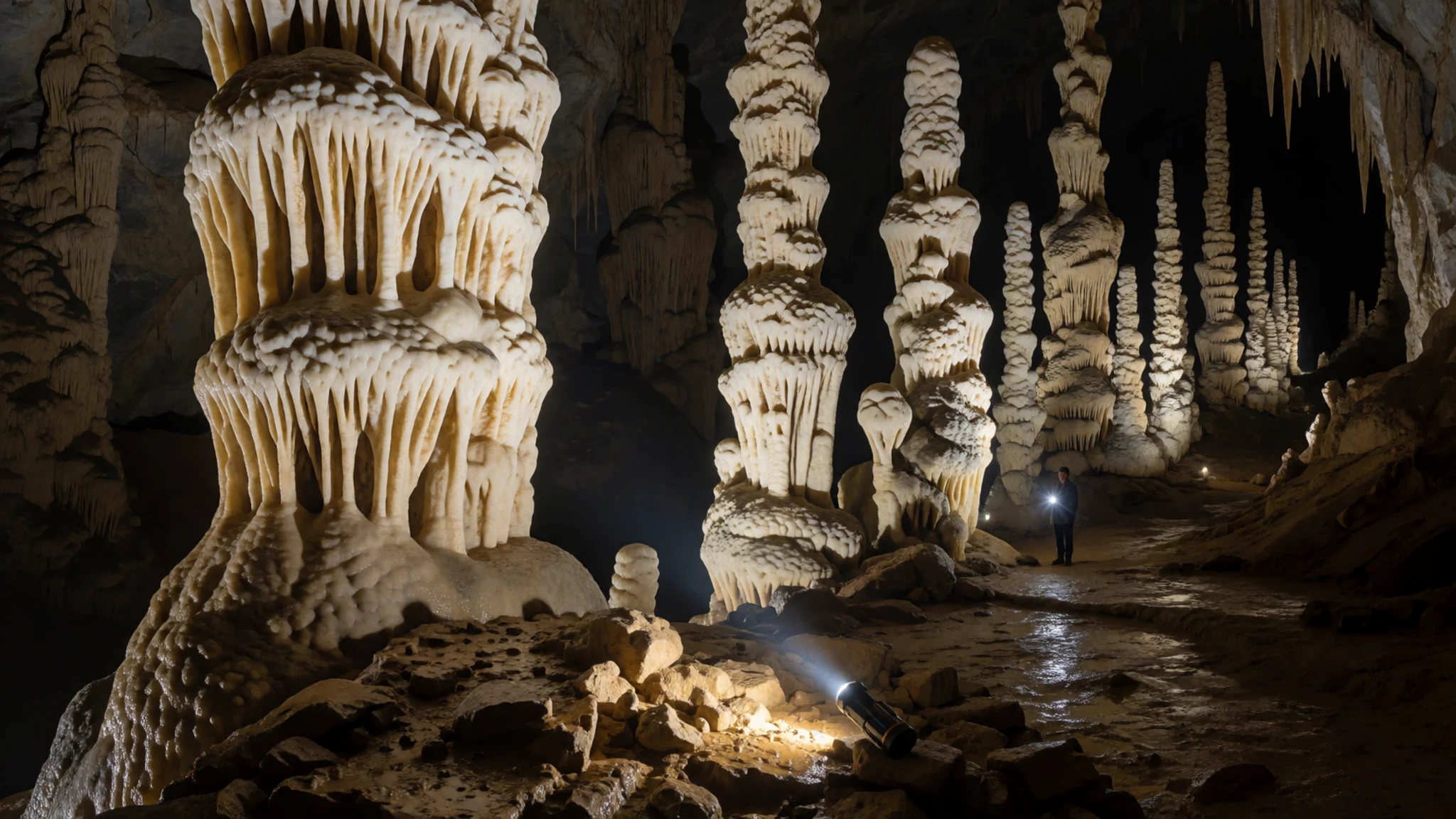
- The great passage and river — Main passage, Son Doong Cave
The main gallery is the reason the cave is famous. Its width and height make ordinary caving feel like hiking through a dark canyon, with a fast underground river running alongside. Sound behaves strangely here: voices vanish quickly, while water echoes far down the tunnel.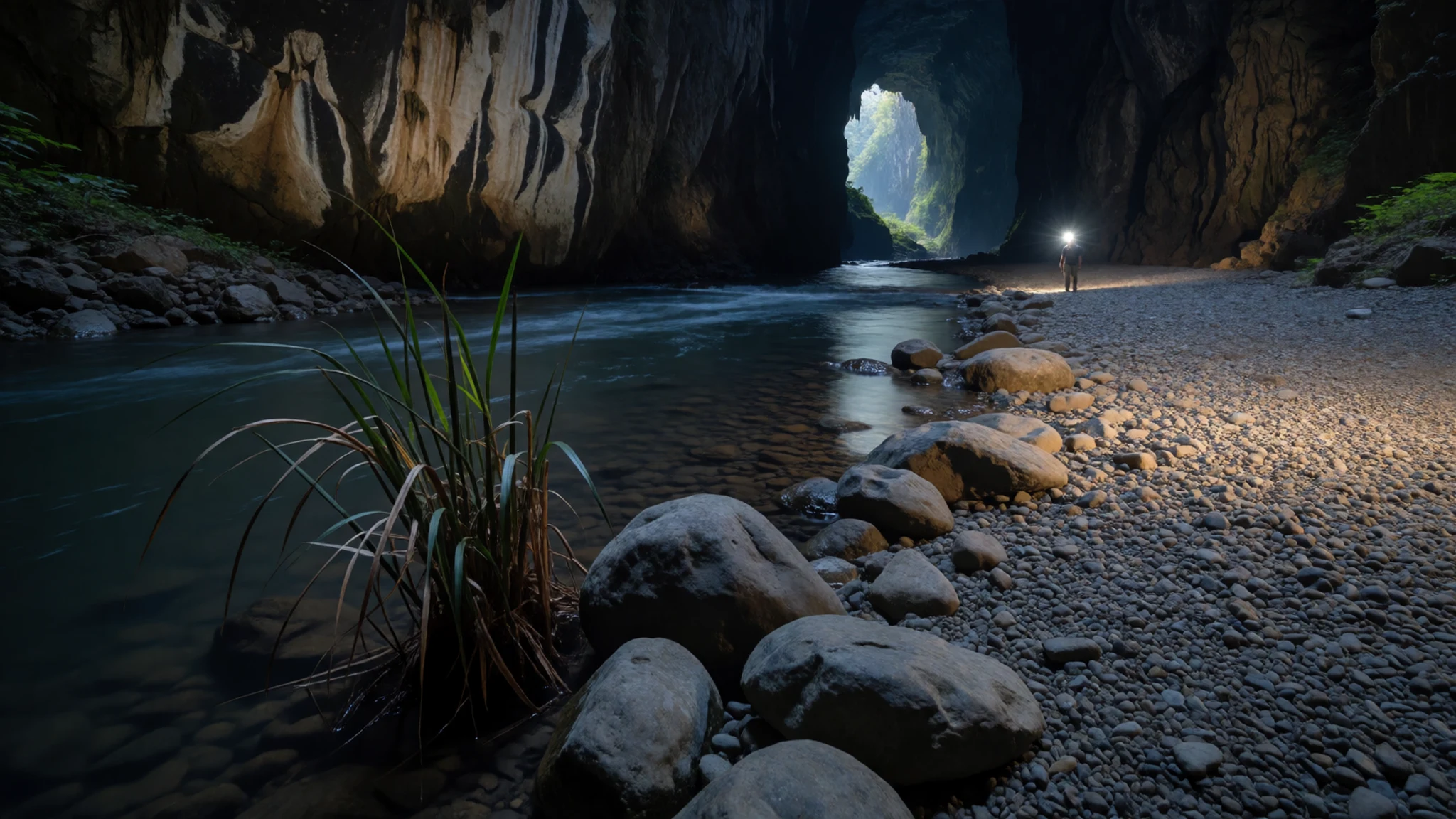
- The Great Wall of Vietnam and cave pearls — Deep section of Son Doong Cave
A massive calcite barrier crosses part of the cave, and explorers gave it this nickname. Beyond it they found cave pearls about the size of baseballs, unusually large for such formations. Visitors on a trip can look but should never pick one up, since the pools are fragile.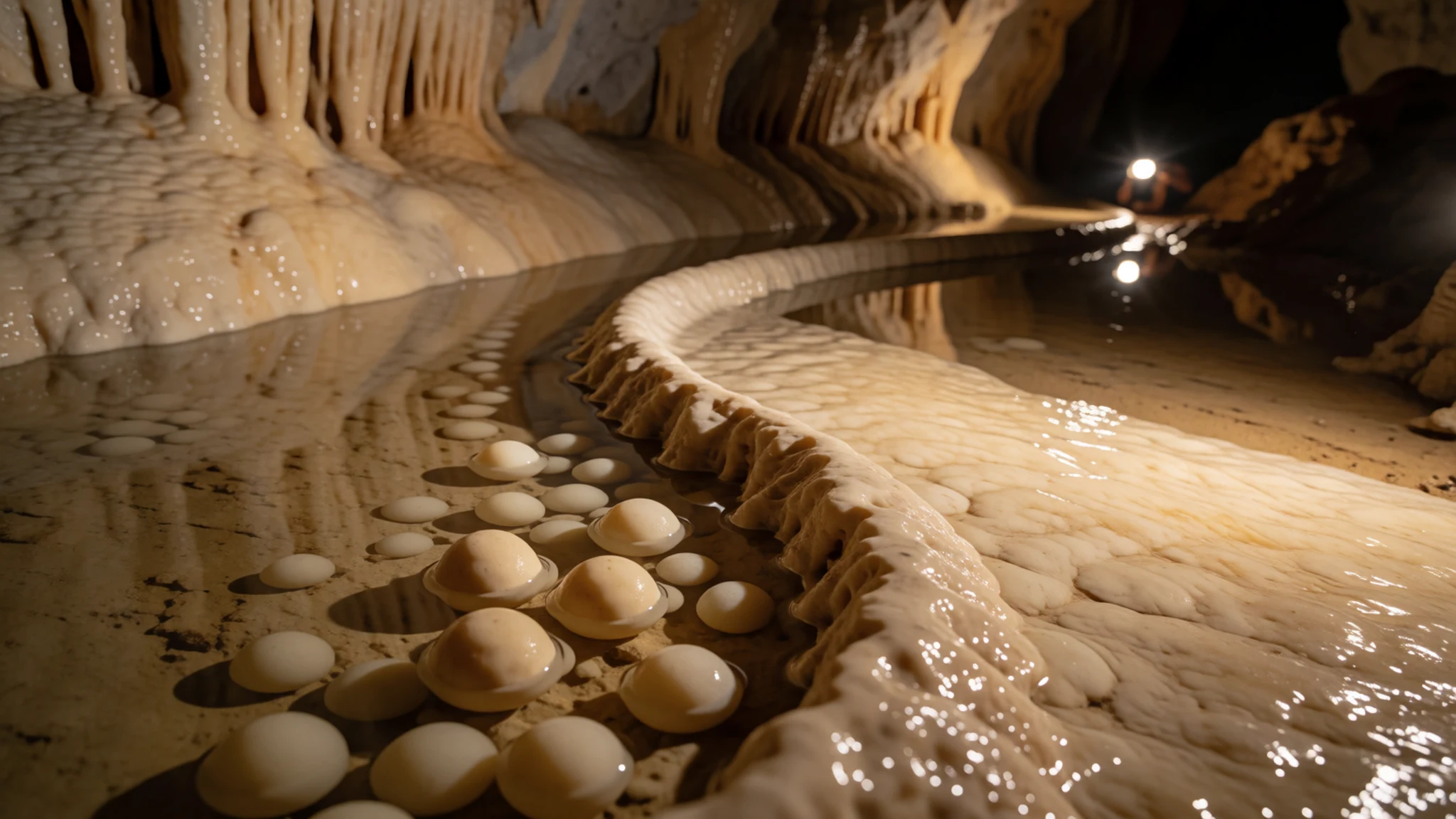
Culture
Son Doong Cave lies in country where the Vân Kiều and other communities have farmed the valleys for generations, and the manners of the wider Vietnamese countryside apply on the way in. Elders are treated with real deference, and visitors are expected to show politeness and a little restraint towards anyone who looks older than themselves, even though foreigners are given some leeway. Outside the big cities, and particularly in rural districts, it is normal to be looked at with open curiosity. Conversations tend to begin with personal questions about age, marriage and children. These can feel nosy to British or Indian ears, but they are friendly and practical: people use the answers to decide how to address you, so the best response is to answer cheerfully and ask something back. Food and hospitality sit at the centre of village life, and an offer of tea or a meal is usually a gesture of welcome rather than a sales pitch. The cave itself is treated by the national park and its guides as a protected natural site, and the rules of the expedition, such as carrying out all waste and keeping to marked routes, are part of the local ethic of care. On the trail through farmland and villages, greet older people politely, ask before photographing anyone, and stay on the marked path so that crops are not trampled.
What to wear
Around Son Doong Cave, traditional dress follows two layers. Across Vietnam the best-known garment is the áo dài, a long fitted tunic worn over trousers and traditionally made from silk, now often from lighter synthetics, and put on for weddings, Tết (the lunar new year) and formal occasions. In the countryside the older everyday costume was the áo bà ba, a loose cotton top and trousers suited to farm work. Highland communities such as the Vân Kiều have their own hand-woven cotton cloth with patterned borders, which appears mainly at festivals rather than daily life. What people wear now is practical and plain. Farmers and guides in the valley wear shirts, trousers or shorts, rubber boots or sandals, and conical hats or caps against the sun. In towns, jeans and T-shirts are normal. For visitors, the terrain matters far more than modesty here. Expeditions involve jungle, river crossings and slippery rock, so wear quick-drying long trousers and a long-sleeved top, with grippy waterproof boots that are already broken in. Operators normally supply helmets and headlamps, and may advise gloves and leech socks. Bring a light rain jacket, as weather in the hills turns quickly. In villages and at any shrine, keep shoulders and knees covered as a courtesy.
What to eat
- Cà phê sữa đá (Vietnamese iced coffee) — Street cafés and small eateries in Phong Nha town
Strong filter coffee poured over ice with sweetened condensed milk. It is the standard morning and mid-afternoon drink across the country. Find it at any roadside café or small eatery in Phong Nha town, often served slowly through a metal filter at the table.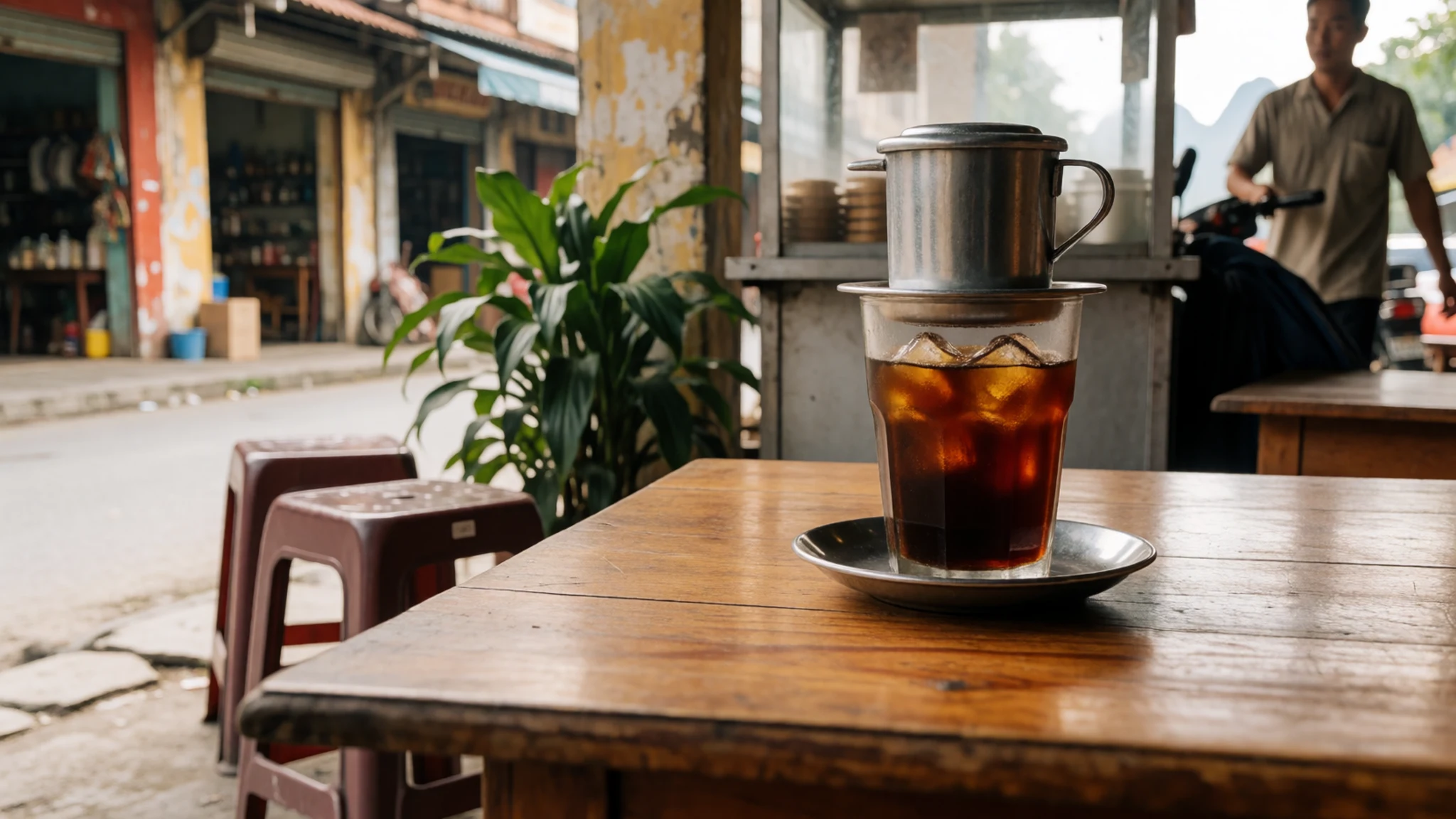
- Bún bò (beef noodle soup) — Morning noodle stalls and family-run eateries in Phong Nha and Đồng Hới
Central Vietnam is known for spicier cooking, and this noodle soup with beef, lemongrass and chilli is a good example. It is usually a breakfast or lunch dish, with fresh herbs and lime on the side so each bowl can be adjusted.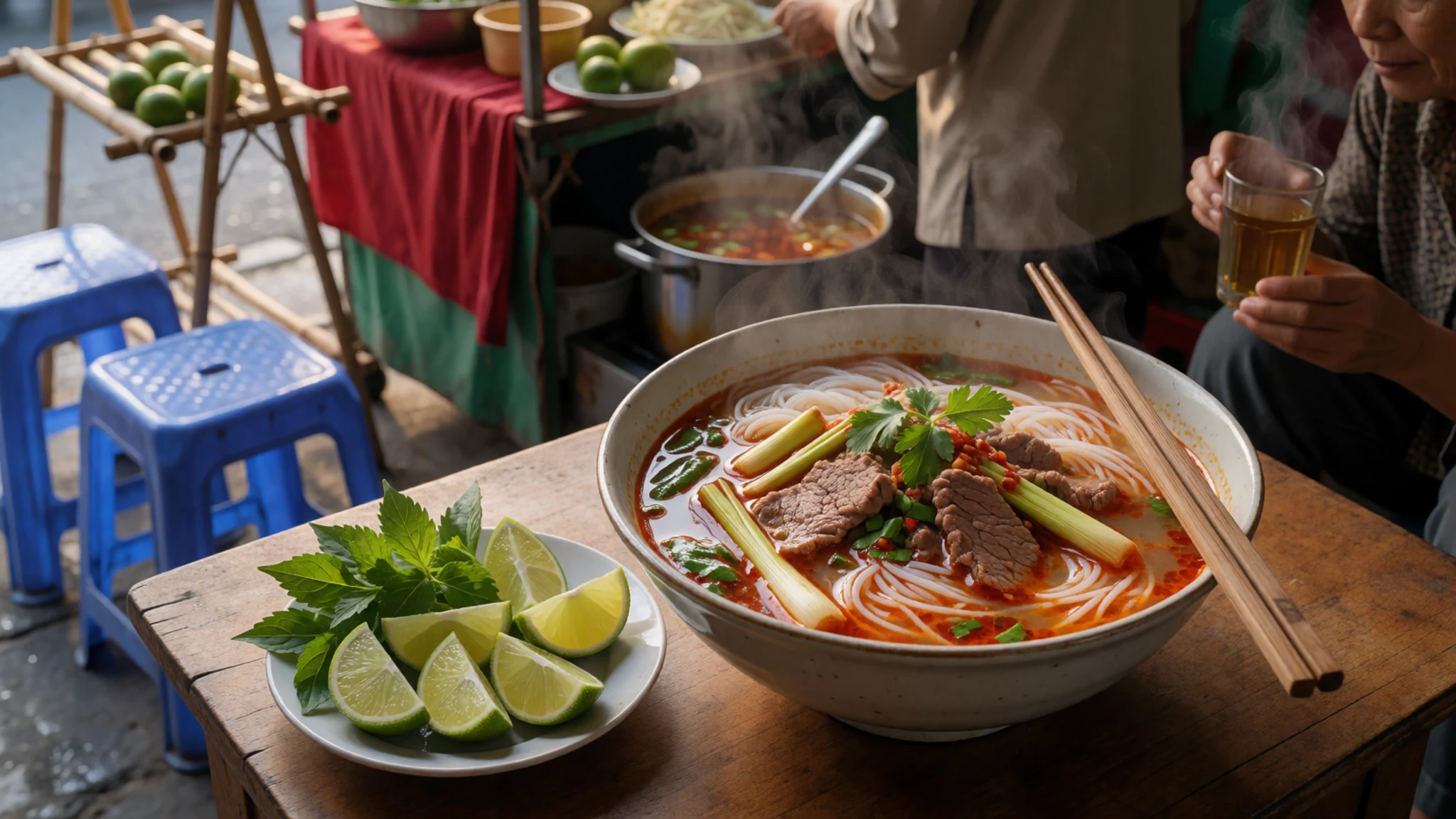
- Bánh xèo (crisp rice pancake) — Local eateries in Phong Nha town
A thin, crackling pancake folded around pork, prawns and bean sprouts, wrapped in lettuce and herbs and dipped in a sharp sauce. It is eaten with the hands and works well as a shared dish after a long day outdoors. - Phở — Breakfast stalls and small eateries in towns along the road to the park
A clear beef or chicken noodle broth, the most familiar Vietnamese breakfast. Northern versions tend to be subtle, while those in the centre are often bolder. Bowls come with herbs and chilli on the side so everyone can season to taste. - Cơm with river fish and greens — Homestays and village eateries near the national park
A simple home-style meal of steamed rice, fish or pork braised in a pot, a soup, and stir-fried vegetables. It is the everyday food of the region, and farmstay hosts often serve it family-style on the evening before an expedition.
Plan it
Best time. Roughly March to August, when expeditions generally run; the rainy season brings flooding that can close the cave, so confirm dates with a licensed operator. The hills are hot and humid in summer, and the cave itself stays cool and damp.
How long. 4–5
Getting there. Fly to Đồng Hới Airport, the closest airport, then travel by road to Phong Nha village, the base for the national park. The last stage is a multi-day guided trek through jungle and across rivers; Huế or Da Nang are alternative gateways with longer road transfers.
Budget. high
Tips
- Book through a licensed operator many months ahead, as permits and group sizes are tightly limited; check the national park's official information for current rules
- Train beforehand, since the trek involves long days on rough, wet ground
- Carry cash for Phong Nha town, as small eateries and shops may not take cards
- Pack a dry bag, spare socks and a light rain jacket for river crossings and sudden showers
- Drink plenty of water and use purification supplied by your guides in the humid heat
Etiquette
- Follow your guides' instructions on routes and campsites at all times
- Never touch formations or remove cave pearls, and carry out all rubbish
- Ask before photographing villagers and greet older people politely
Nearby
Sources
- Wikidata Q44889 (CC0)
- Wikipedia: Hang Sơn Đoòng (rev 1369093718) (CC BY-SA 4.0)
- Wikivoyage: Vietnam (rev 5410523) (CC BY-SA 4.0)
- Son Doong-47, Doug Knuth (CC BY-SA 2.0)
- Son Doong Cave Doline with Scale, Linhcandng (CC BY 3.0)
- Large stalagmites in the passage of Hang Son Doong, Dave Bunnell (CC BY-SA 4.0)
- Large stalagmites in the Hang Son Doong, Dave Bunnell, edited by Cart (CC BY-SA 4.0)
- The massive Second Doline in Hang Son Doong, Dave Bunnell (CC BY-SA 4.0)
- A Beam Through the Darkness - Son Doong Cave, Trantuanviet (CC BY-SA 4.0)
- Son Doong-17, Doug Knuth (CC BY-SA 2.0)
- Son Doong-90, Doug Knuth (CC BY-SA 2.0)


