Ben En National Park
Ben En National Park, Vietnam
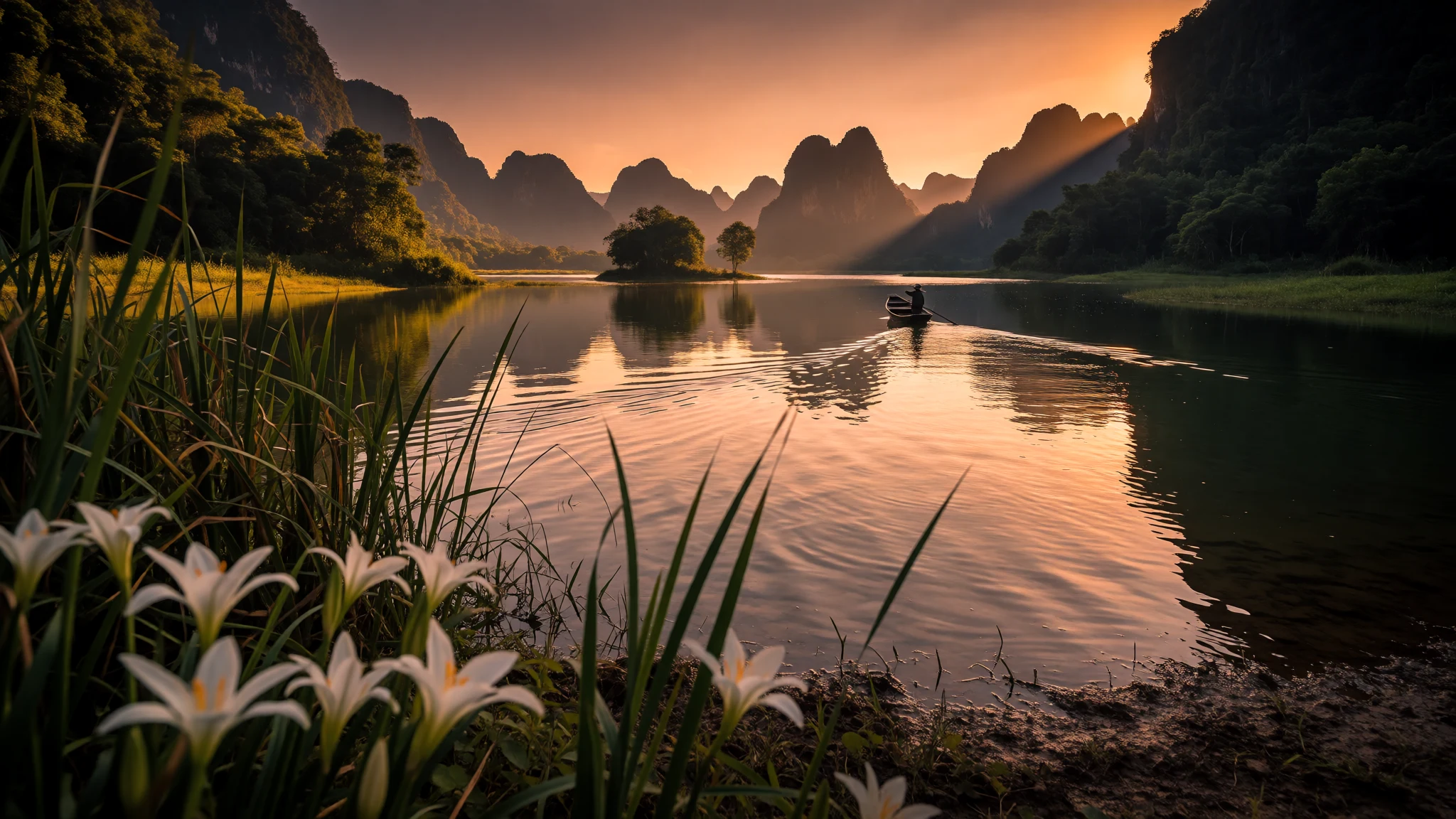
Ben En National Park in Thanh Hóa pairs a big forest-fringed lake and its islets with quiet boat trips, kayaking and caves.
The place
Ben En National Park lies in Thanh Hóa Province in north-central Vietnam, straddling the Như Thanh and Như Xuân districts, roughly 46 km from Thanh Hoa City to the southwest. It covers 14,735 hectares, and 8,544 hectares of that is primitive forest, so well over half the park is older woodland. The rest is a mix of uplands, ridges, streams and rivers that feed the water at its centre.
That water is Lake Song Muc, a reservoir of about 3,000 hectares scattered with 21 islets. Most visitors come for the lake rather than for any single summit: the shoreline is a tangle of green slopes, and the islands appear as low wooded humps when the light is soft. A dam holds the lake, and the park's basic guesthouse stands near it.
The park is not a resort. Facilities are modest, trails are few, and the main activities are slow ones: a motor-boat run across the lake, a kayak among the islets, a walk on a forest trail, a look into a cave. Because Thanh Hóa is a provincial destination rather than a headline one, the park tends to feel quiet outside Vietnamese holidays and weekends, though that is worth checking locally rather than assuming. Heat and humidity are the norm in summer, and rain can change a boat day at short notice, so flexible plans work better than tight ones. The park was formally established in 1992.
Its story
Ben En National Park was established in January 1992 under a decision from the head of Vietnam's then national cabinet, which places it among protected areas created in the country's early reform years rather than sites with an ancient royal or religious past. That date is the firm part of the record; the rest of the story is largely told by the landscape.
The lake at the centre, Song Muc, is held back by a dam, and that explains much of what is seen. Once a valley floods, the high ground that stays dry becomes islands, which is the likely origin of the 21 islets now scattered over about 3,000 hectares of water. The surrounding hills still carry forest, and 8,544 hectares of the park is primitive forest, the part least touched by past clearing.
Protection here has a practical purpose as well as a scenic one. A forested catchment helps keep a reservoir cleaner and steadier, so conserving the slopes and looking after the water go together. The guesthouse near the dam and the two holiday homes on one island show that visiting has been built around the lake, in small buildings, with the water as the reason to come.
Anyone wanting deeper local history, such as the communities who lived around the valley before the dam, should ask at the park office, since the written record behind this reading is thin.
What to see
- Lake Song Muc by motor boat — Lake Song Muc, Như Thanh district
Lake Song Muc is the main reason to visit Ben En National Park, and a motor boat is a straightforward way to take it in. The water covers about 3,000 hectares, so a boat gives a sense of scale that the shore cannot. Go early, when the air is cooler and the hills are clearer, and agree the route before setting off.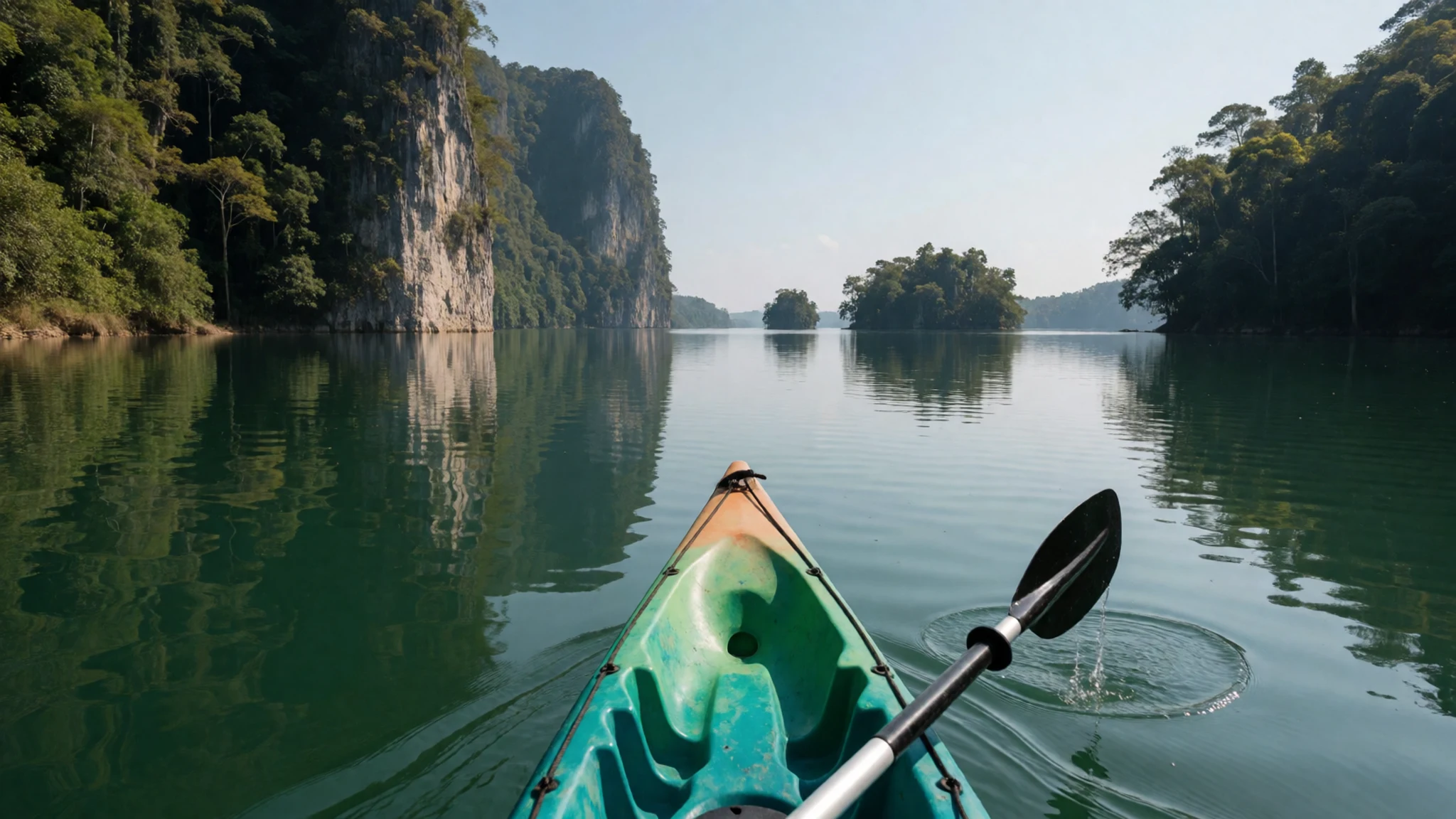
- Kayaking among the islets — Islets of Lake Song Muc
The 21 islets of Ben En National Park are best seen from a kayak, where the main sounds are paddles and birdsong. Hops between neighbouring islands suit an unhurried loop, though wind can rise across open water in the afternoon. Beginners should stay close to the shore and islands, and ask park staff about conditions before setting out.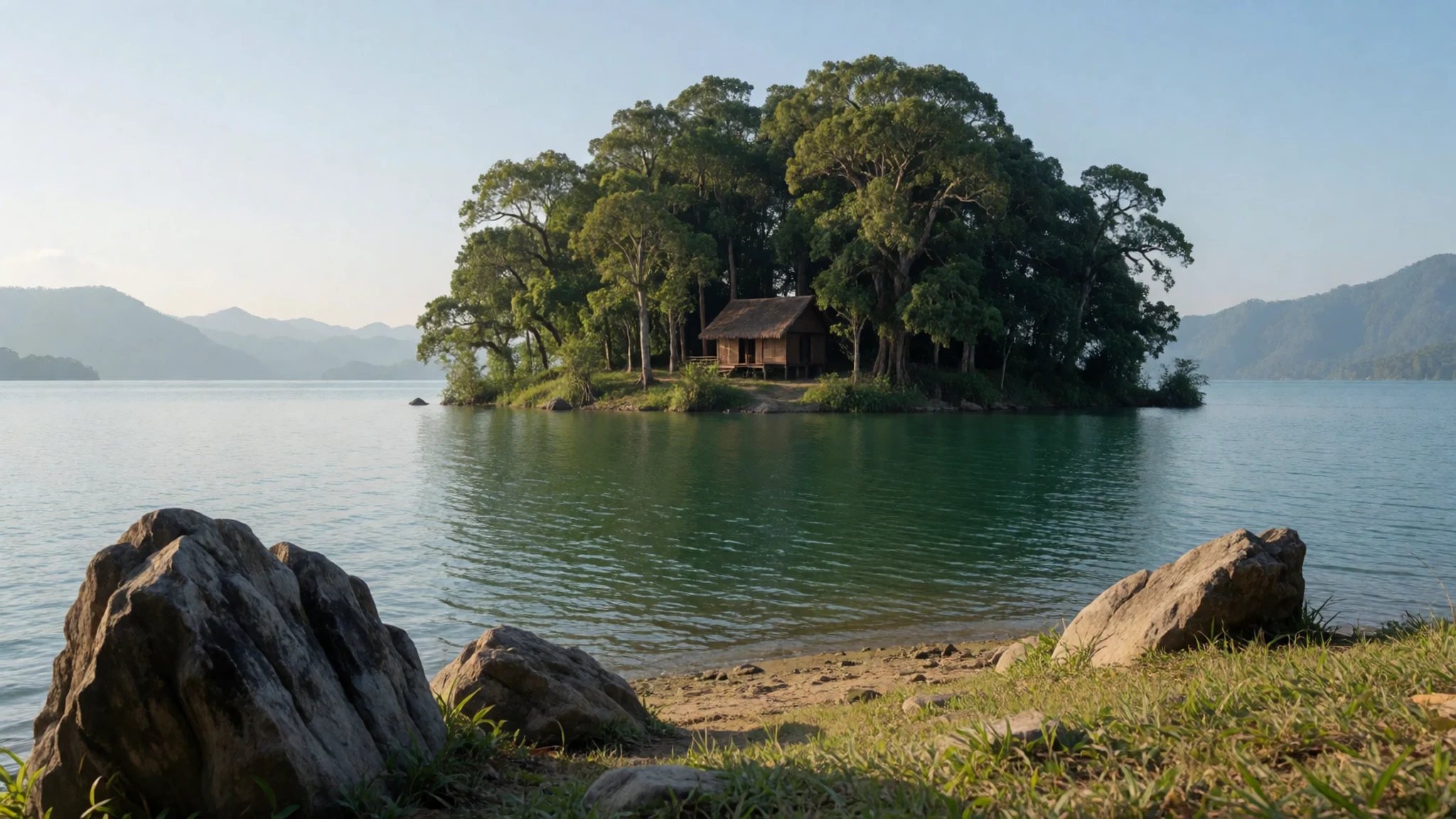
- Forest trail by the guesthouse — Near the park guesthouse and dam
One of Ben En National Park's two forest trails begins near the guesthouse, which makes it an easy way to leave the water and step under the trees. It is a walk rather than a hike, and the primitive forest is the reason to look up and slow down. Wear shoes with grip, since paths can be slick after rain, and carry water.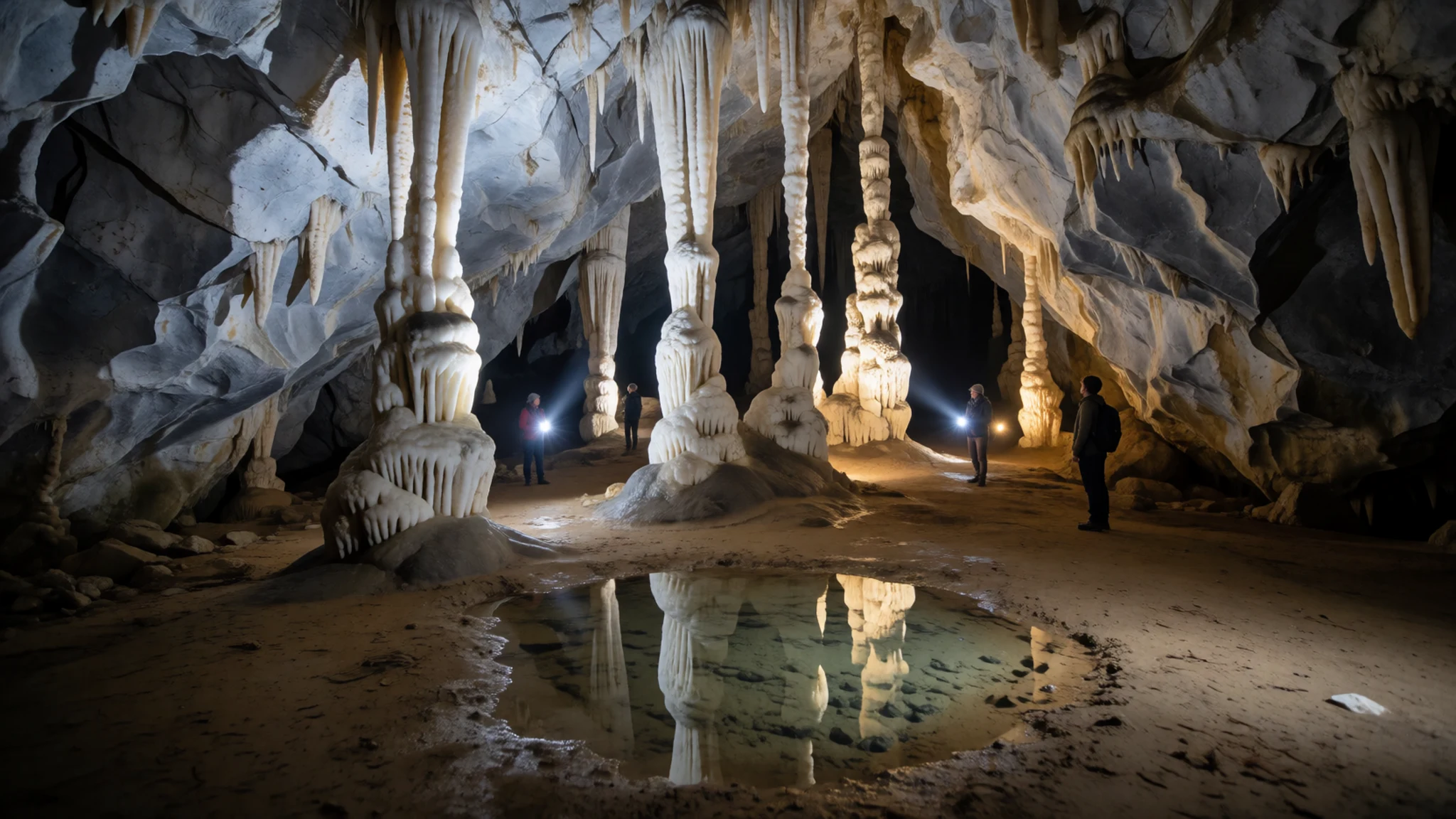
- Island trail and holiday homes — An island in Lake Song Muc
The second forest trail is on one of the islands in the lake, and the same island has two holiday homes that can be rented. Staying there turns Ben En National Park into an overnight trip with the lake on every side. Availability and conditions change, so check with the park before planning around it, and bring food and water.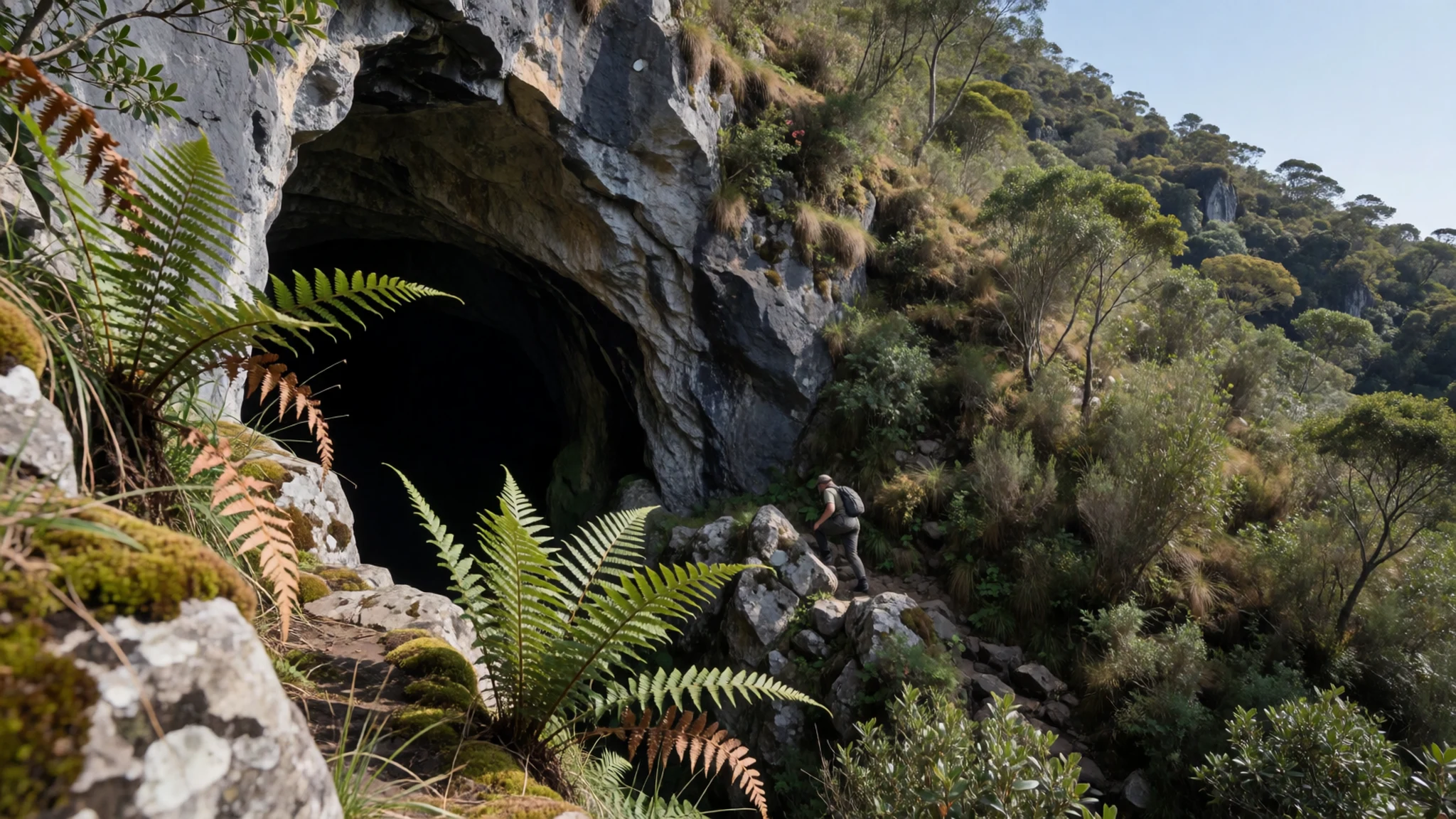
- Caves of the north and south — Northern and southern parts of the park
Ben En National Park has caves in both its northern and southern areas, and they are another notable draw alongside the lake. Facilities inside are likely to be basic, so go with a local guide from the park, wear sturdy shoes and carry a torch. Ask staff which caves are open and safe to enter, particularly after heavy rain.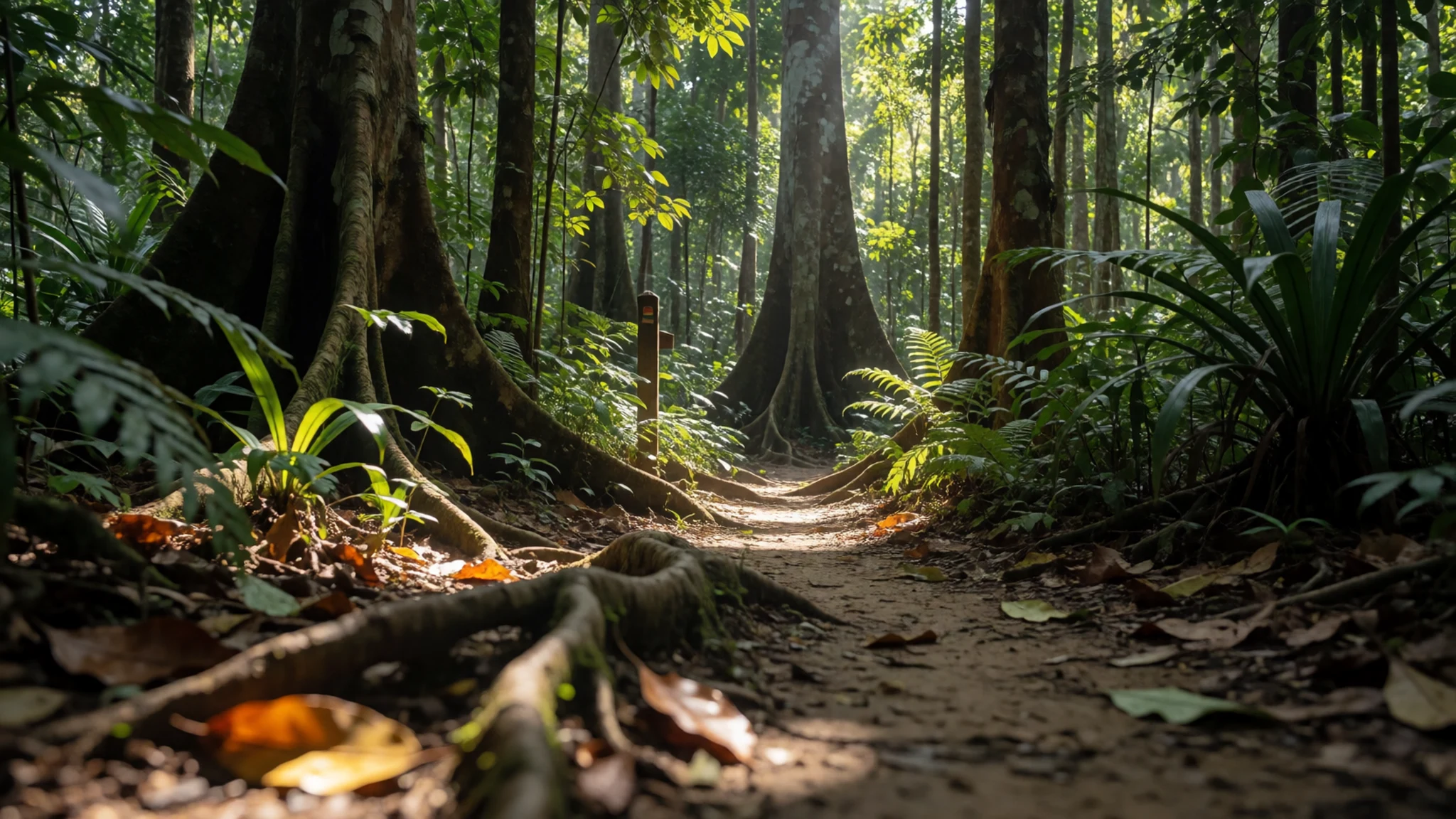
- The dam and guesthouse — Dam area, Như Thanh district
The dam holds back Lake Song Muc, and the park's guesthouse stands near it, offering basic accommodation. It makes a practical base for a first morning on the water, and a good spot to watch the light change over the lake at dusk. Expect simple rooms rather than resort comforts, and ask the park about meals and booking.
Culture
Ben En National Park is a protected area in Thanh Hóa Province, and its everyday culture is that of provincial north-central Vietnam: polite, practical and built around family, food and the water. Most people a visitor meets here will be park staff, boat operators and Vietnamese day-trippers from nearby towns.
Domestic tourism drives the place. Families often arrive in groups with picnics, share food from central plates and treat the lake as a day out, so weekends and public holidays are livelier than weekdays. Foreign visitors are likely to be a minority, and a friendly greeting in Vietnamese, such as xin chào for hello or cảm ơn for thank you, is noticed and returned.
Money and arrangements are informal. Boat trips and guides are usually agreed before setting off, so confirm what the price covers, and carry small notes in cash, because card machines are not something to count on at a lakeside guesthouse or boat landing.
The forest is part of the culture of a national park too. Marked paths exist to protect both visitors and plants, and the quiet of the lake is part of what other people have come for. Voices carry over water, so loud music from a boat is poor form.
At Ben En National Park, keep to the marked trails, ask before photographing local people, and take your rubbish back with you.
What to wear
Ben En National Park calls for practical clothes, but the Vietnamese dress tradition is worth knowing. The áo dài is a fitted long tunic, split at the sides and worn over loose trousers, usually in silk or a silk-like fabric. It appears at Tết, the lunar new year, at weddings and on formal occasions, and some schools and offices use it as a uniform. The cotton or light-silk áo bà ba and the palm-leaf conical hat, nón lá, are older everyday working clothes in the countryside.
Today, people around the lake wear ordinary casual clothes: T-shirts, light trousers, sandals or trainers, and often a hat or sleeve covers against the sun. Park staff may wear uniforms, and boat operators dress for work on the water.
A visitor should pack for heat, humidity and sudden rain. Lightweight, quick-drying layers with long sleeves protect against sun and insects on forest trails, and a hat, sunscreen and thin waterproof jacket earn their space. Closed shoes with good grip suit trails and cave floors, while strapped sandals are fine on boats. No special covering is needed at the park itself, but modest clothes are wise if a village or temple stop is added.
What to eat
- Lake fish, grilled or in sour broth — Simple lakeside eateries near the dam
Fish from reservoir lakes is a common meal at lakeside eateries, often grilled over charcoal or simmered in a sour broth with herbs. Availability depends on the day's catch, so ask what is fresh. It is usually eaten with rice, dipping sauce and greens, and shared around the table.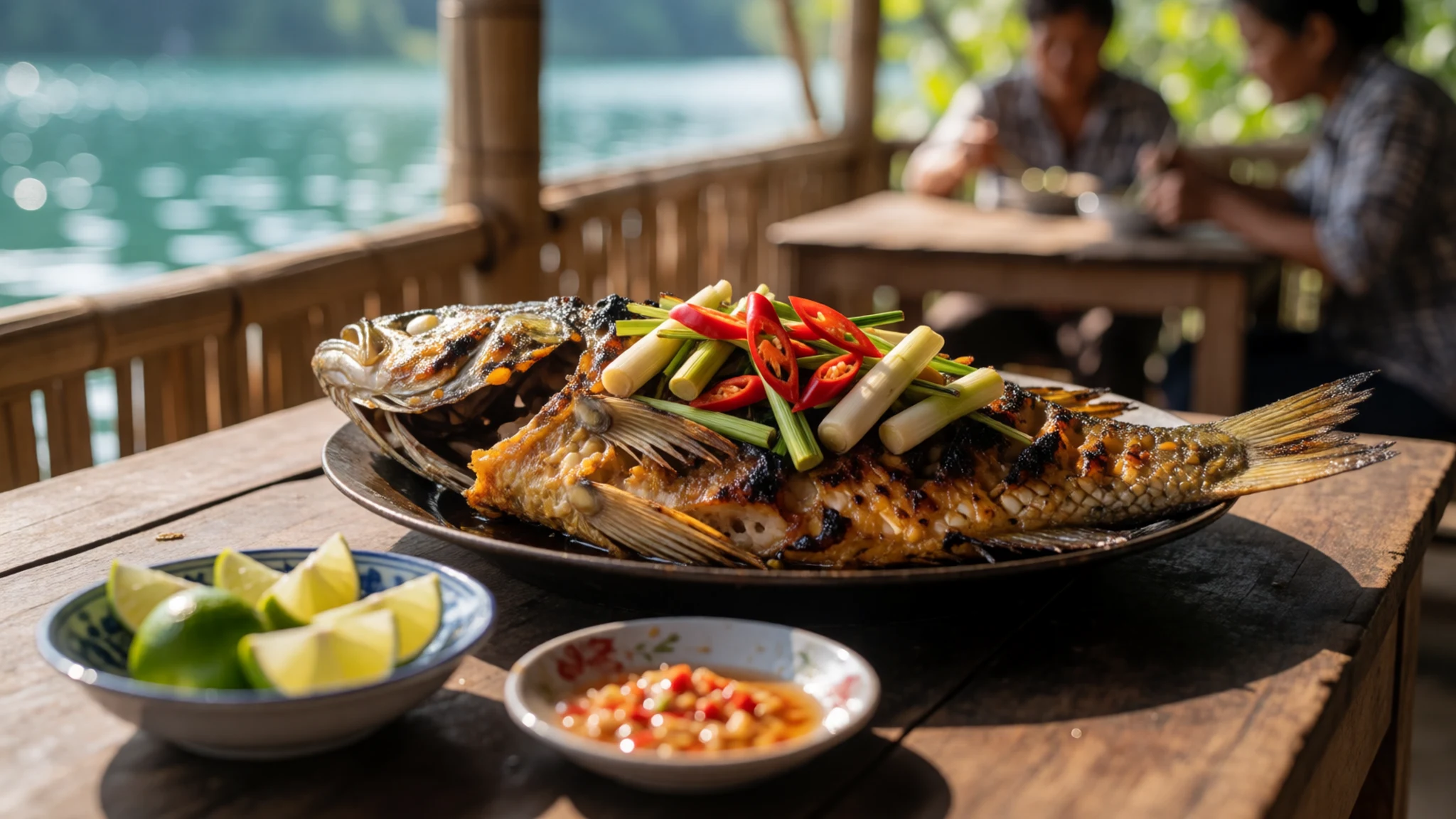
- Hill chicken with sticky rice — Village eateries and market towns near the park
Free-ranging hill chicken, firm and flavourful, is usually boiled or grilled and served with xôi, glutinous sticky rice, and a dip of salt, lime and chilli. It is a typical upland meal, best from village eateries near the park or in nearby market towns.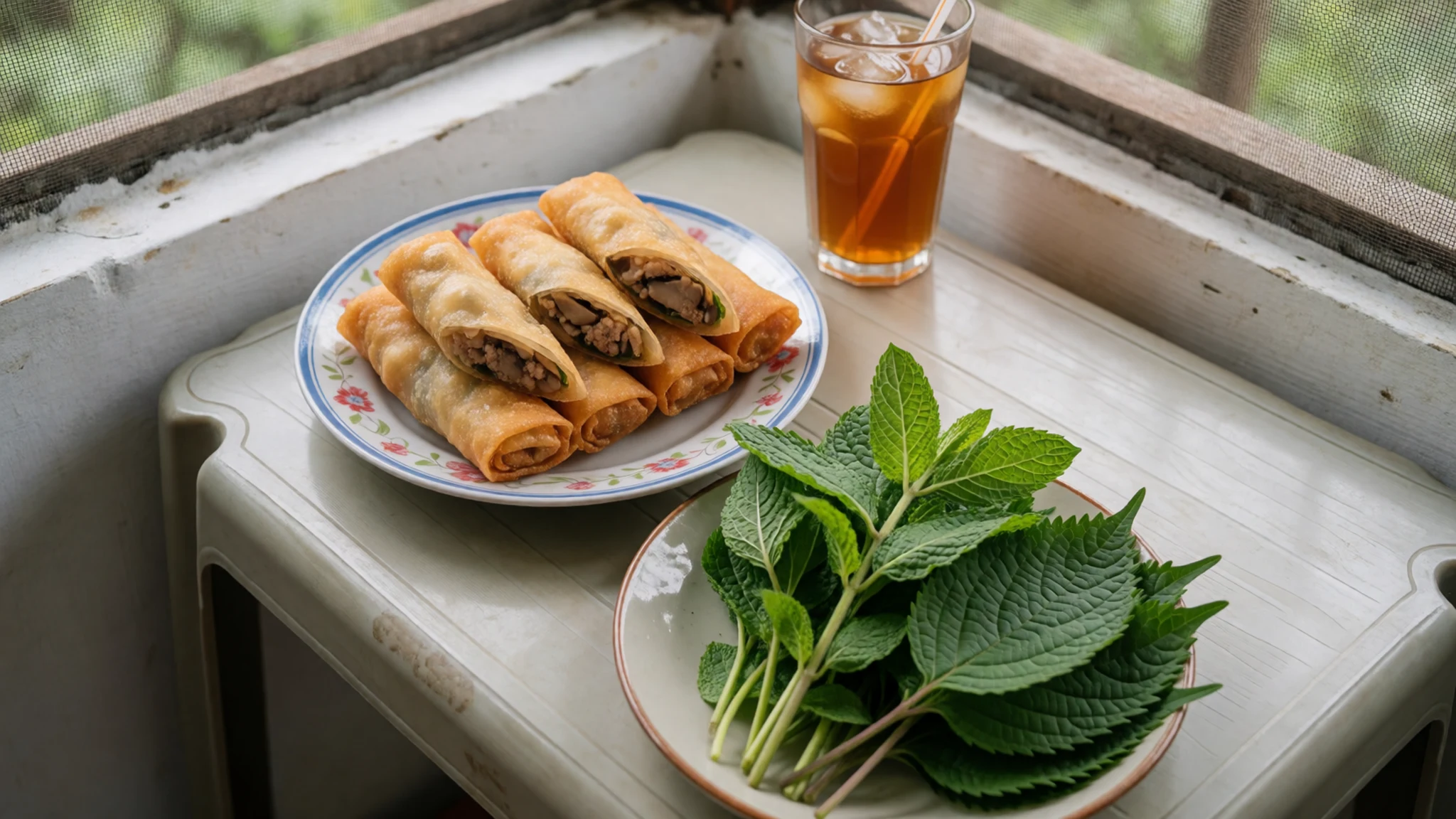
- Bánh cuốn — Street stalls and breakfast eateries in nearby towns
Bánh cuốn are thin steamed rice-flour sheets, rolled around minced pork and wood-ear mushroom, and eaten with a sweet-sour fish-sauce dip, fried shallots and herbs. They are a morning dish, served at street stalls and small breakfast eateries in the towns around the park. - Nem chua — Market stalls and roadside shops in Thanh Hóa
Nem chua is a fermented pork roll, sour, savoury and a little chewy, wrapped in leaves and strongly associated with Thanh Hóa. It is eaten as a snack with chilli and garlic, and is sold in packs at market stalls and roadside shops in the province. - Bamboo shoot dishes — Set-meal tables at lakeside and village eateries
Bamboo shoots are a staple of upland cooking in northern and central Vietnam, stir-fried with garlic or simmered with pork or duck. The flavour is mild and slightly bitter. Look for them on set-meal tables at lakeside and village eateries, particularly in the wetter months.
Plan it
Best time. March–April and October–November are the usual comfortable windows, with warm days and calmer conditions for boats. Summer is hot, humid and wet, and heavy rain can disrupt trips; winter can turn cool and grey.
How long. 1–2
Getting there. Fly to Hanoi's Noi Bai International Airport, or to Tho Xuan Airport in Thanh Hóa for domestic flights (check current routes), or take the north–south train or a bus to Thanh Hoa City. The park is roughly 46 km to the southwest by road; arrange a taxi, car or motorbike, then continue by boat on the lake.
Budget. low
Tips
- Check with the park office before travelling about boats, kayaks, cave access and the guesthouse or island homes, rather than relying on a fixed schedule
- Go on a weekday, or early in the day, to avoid livelier weekend and holiday crowds
- Carry cash in small notes; card payment is not something to rely on
- Bring drinking water, sunscreen, insect repellent and a light rain jacket
- Plan flexibly, since rain can cancel or shorten boat trips
Etiquette
- Keep to marked trails and take all rubbish back with you
- Ask before photographing local people
- Keep noise low on the water
Nearby
Sources
- Wikidata Q770339 (CC0)
- Wikipedia — Bến En National Park (rev 1362706042) (CC BY-SA 4.0)
- Wikivoyage — Bến En National Park (CC BY-SA 4.0)
- Photo: Lake Song Muc (Hannes Zimmer) (CC0 1.0)
- Photo: Vietnam relief location map (Uwe Dedering) (CC BY 3.0)
- Photo: Afternoon on lake (Classic) (CC BY 2.5)
- Photo: Bến En national park in Vietnam 2 (Hungda) (CC BY 3.0)
- Photo: Bến En national park in Vietnam (Hungda) (CC BY 3.0)


