Ba Na Hills
Ba Na Hills, Vietnam
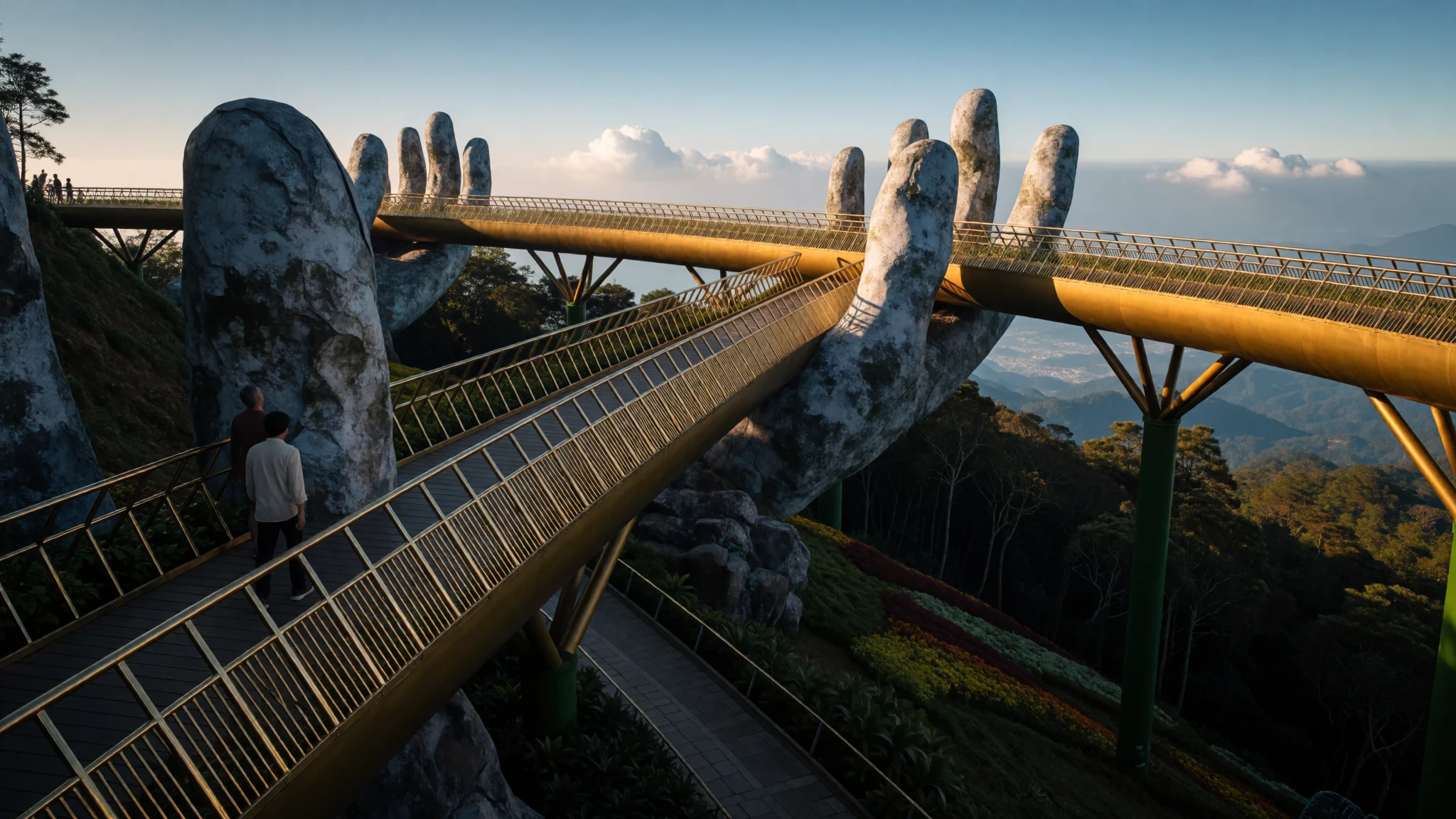
Ba Na Hills is a cool, cloud-wrapped mountain escape above Da Nang, part Cham sacred name, part French retreat, part modern theme park.
The place
Ba Na Hills sits in the Trường Sơn range, in Hòa Vang district, a short way west of Da Nang on Vietnam's central coast. It began as a colonial retreat and now operates as a themed mountain resort, with a cable car as the main way up. The summit is a compact cluster of attractions rather than a village: a faux-European quarter of pastel façades and plazas, flower gardens, a fun park, a temple precinct and a footbridge that has become the site's best-known image. Because it is built for day visitors, it feels closer to a managed park than a mountain town, and weekends and holidays bring long queues at the cable car stations. The altitude is the real draw for many. The coast below can be punishing, while the air up here is noticeably cooler, and mist often rolls through the lanes, hiding the view of the East Sea one moment and clearing it the next. That is worth knowing in advance: a bright morning at the bottom does not promise a clear top. Visitors tend to fall into two camps. Some come for the rides and the spectacle and leave happy. Others hope for quiet mountain scenery and find it only at the edges, on the forest paths near the temple and in the early hours before tour groups arrive. The honest summary is that Ba Na Hills is engineered, busy and photogenic, and it rewards those who arrive expecting exactly that.
Its story
Ba Na Hills carries a name older than the resort. The name Bà Nà is traced to the Cham language and to Po Inu Nagar, the goddess at the centre of Cham worship along this coast, so the mountain had a sacred meaning long before anyone built a road or a cable car to it. The modern station dates from 1919, when French colonists picked the heights as a cool refuge from lowland heat, much as they did at other hill retreats across Indochina. Local tourism promoters later compared it to Da Lat, the famously cool highland town further south, a comparison that says more about the climate than the character. Today's summit is largely the work of Sun Group, which expanded the site into the resort of plazas, gardens and rides that visitors see now. That layering is the interesting part of the story: a Cham sacred name, a colonial idea of a healthy mountain escape and a modern leisure development all sharing one ridge. At about 1,500 metres above sea level, the top looks out to the East Sea and across the neighbouring mountains, which explains why each of these owners wanted it. Linh Ung temple stands nearby, and the cable car now carries people up the slope that once had to be climbed with effort.
What to see
- The cable car ride — Lower station to summit, Hòa Vang district
The cable car is the first sight at Ba Na Hills, not just transport. It climbs from the lowlands over forest, ravines and streams, and the view widens steadily towards the coast. Go on a clear morning if possible. Queues build later in the day, and cloud can close the view completely.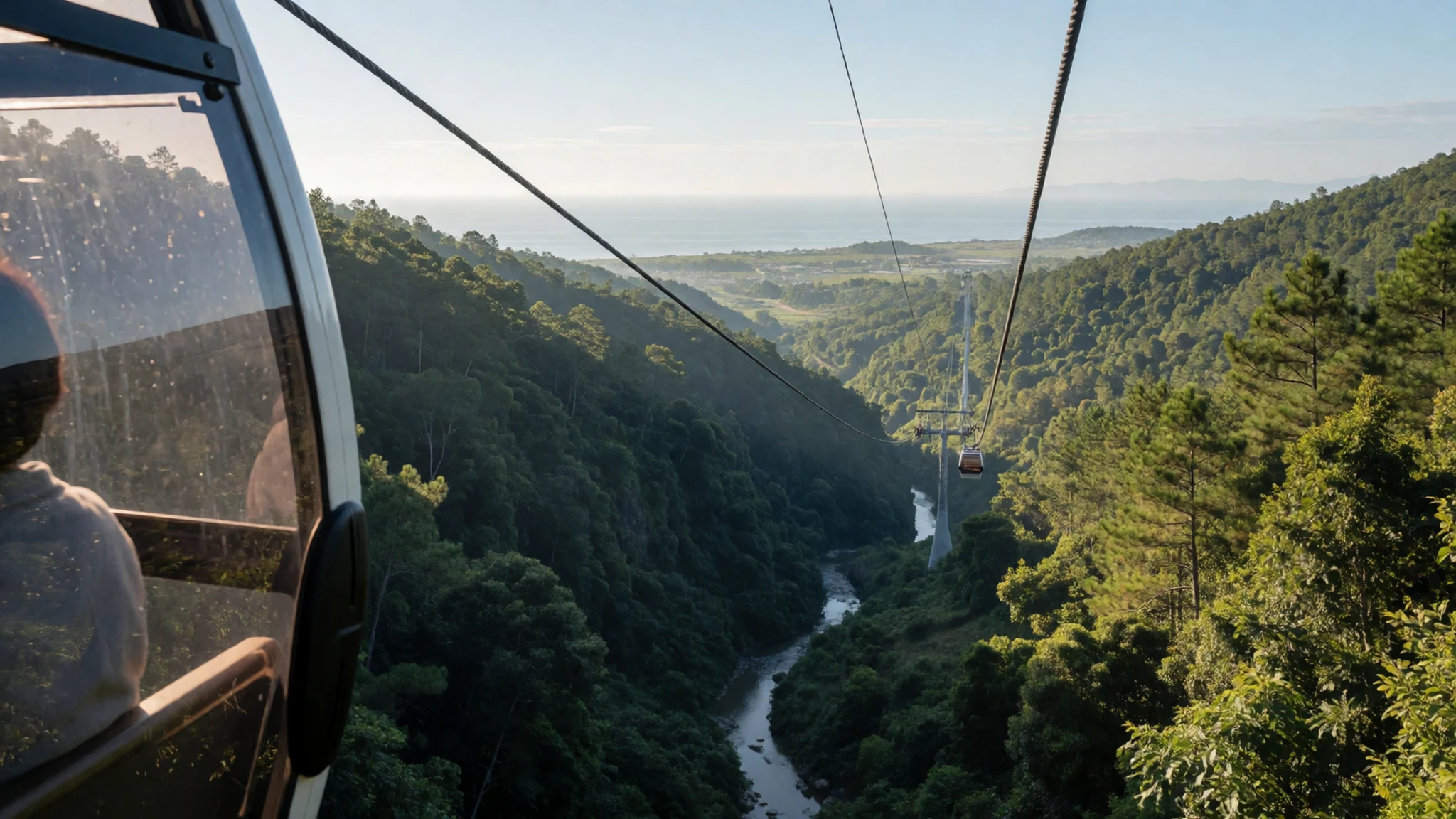
- The Golden Bridge — Summit gardens
The Golden Bridge is a curved footbridge held up by two huge stone hands that seem to rise out of the hillside. It is the most photographed spot on the mountain and gets crowded quickly. Arrive early, or on a misty day, when the bridge appears to float in cloud.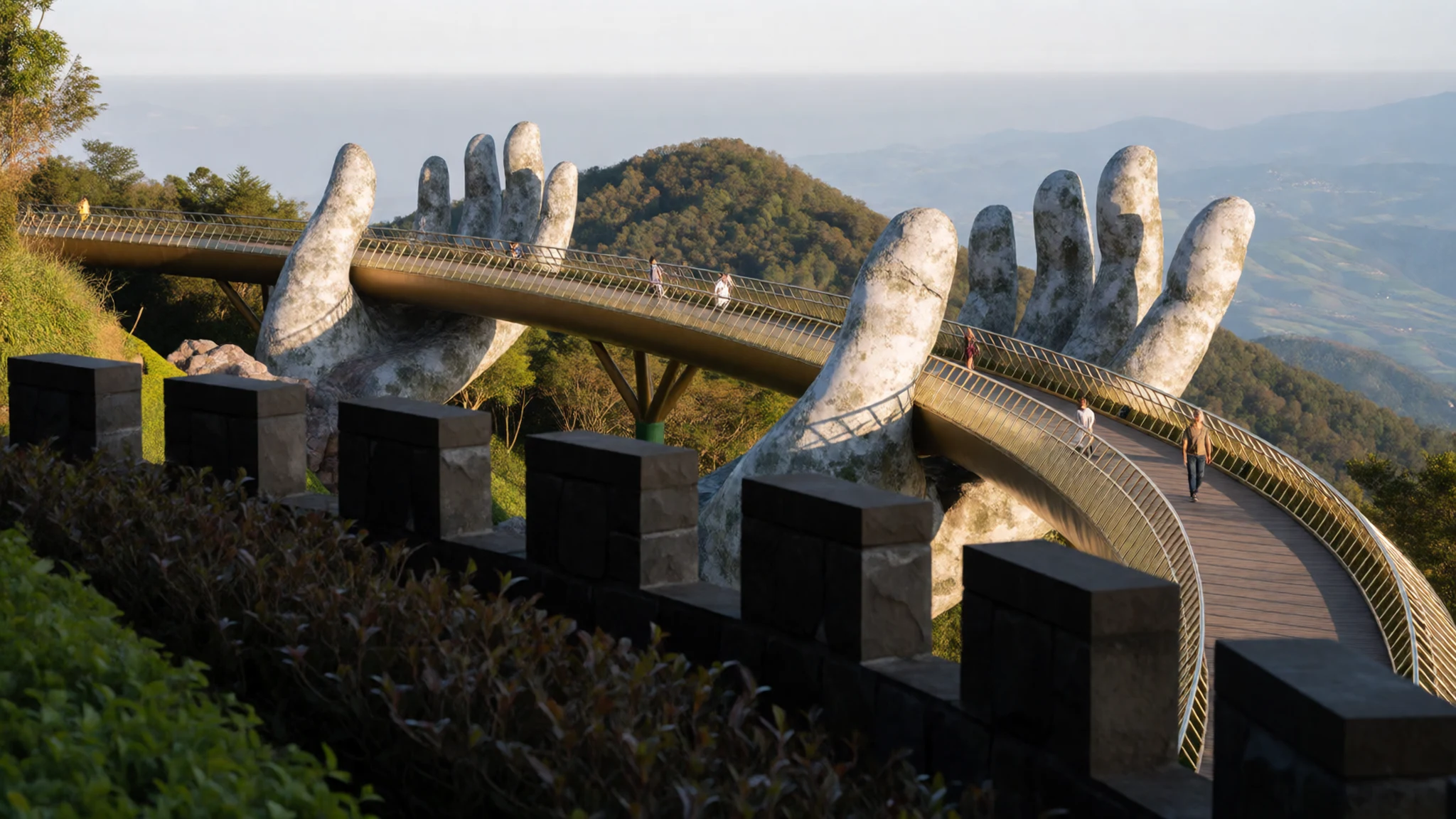
- Linh Ung Pagoda — Ba Na summit area
Linh Ung is a Buddhist temple on the Ba Na slopes, reached from the resort area. It offers a quieter pause from the rides, with courtyards, statuary and a wide outlook over the coast. Dress modestly and keep voices low while worshippers are present.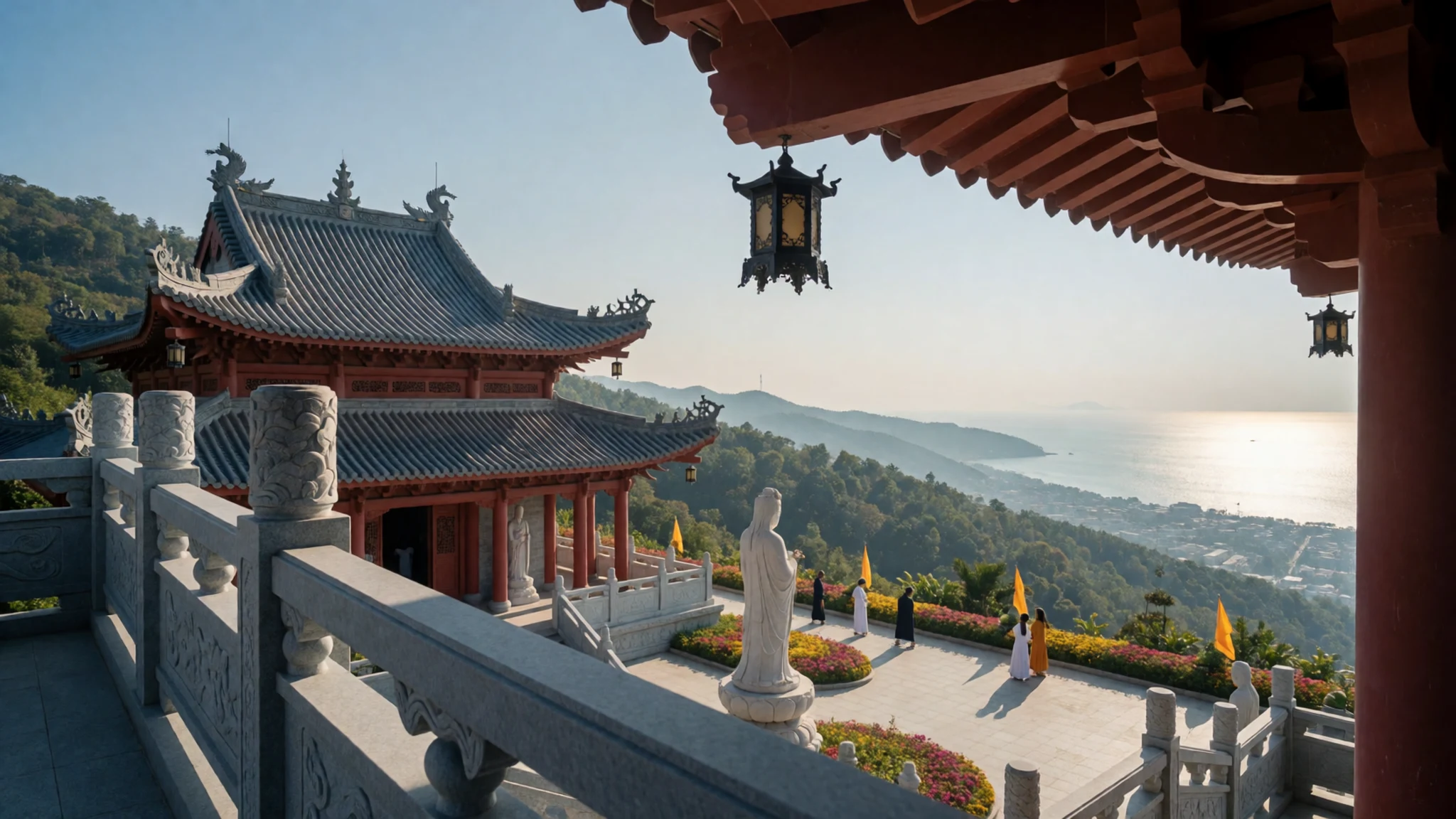
- The French Village — Central summit area
The French Village is the resort's imitation of a European hill town, with pastel façades, a square and narrow streets. It is not a surviving colonial settlement but a modern recreation, and it works best as a stage for photographs and a place to sit out the rain.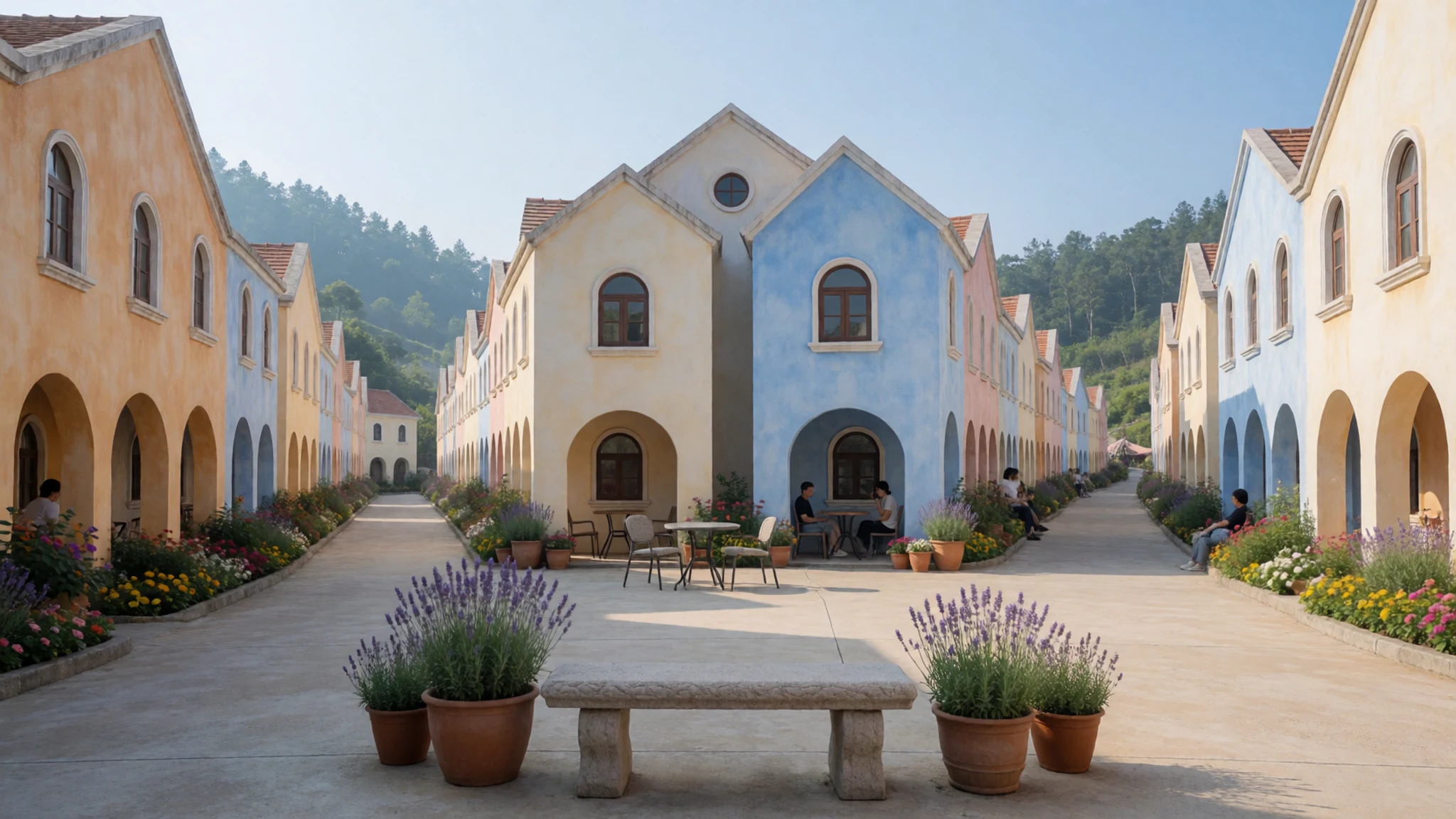
- Summit viewpoints — Ridge terraces
Several lookouts on the ridge face the East Sea and the surrounding Trường Sơn peaks. On a clear day the coast is visible far below, and early morning gives the best chance of an open sky. When cloud settles, the layered ridges are still atmospheric.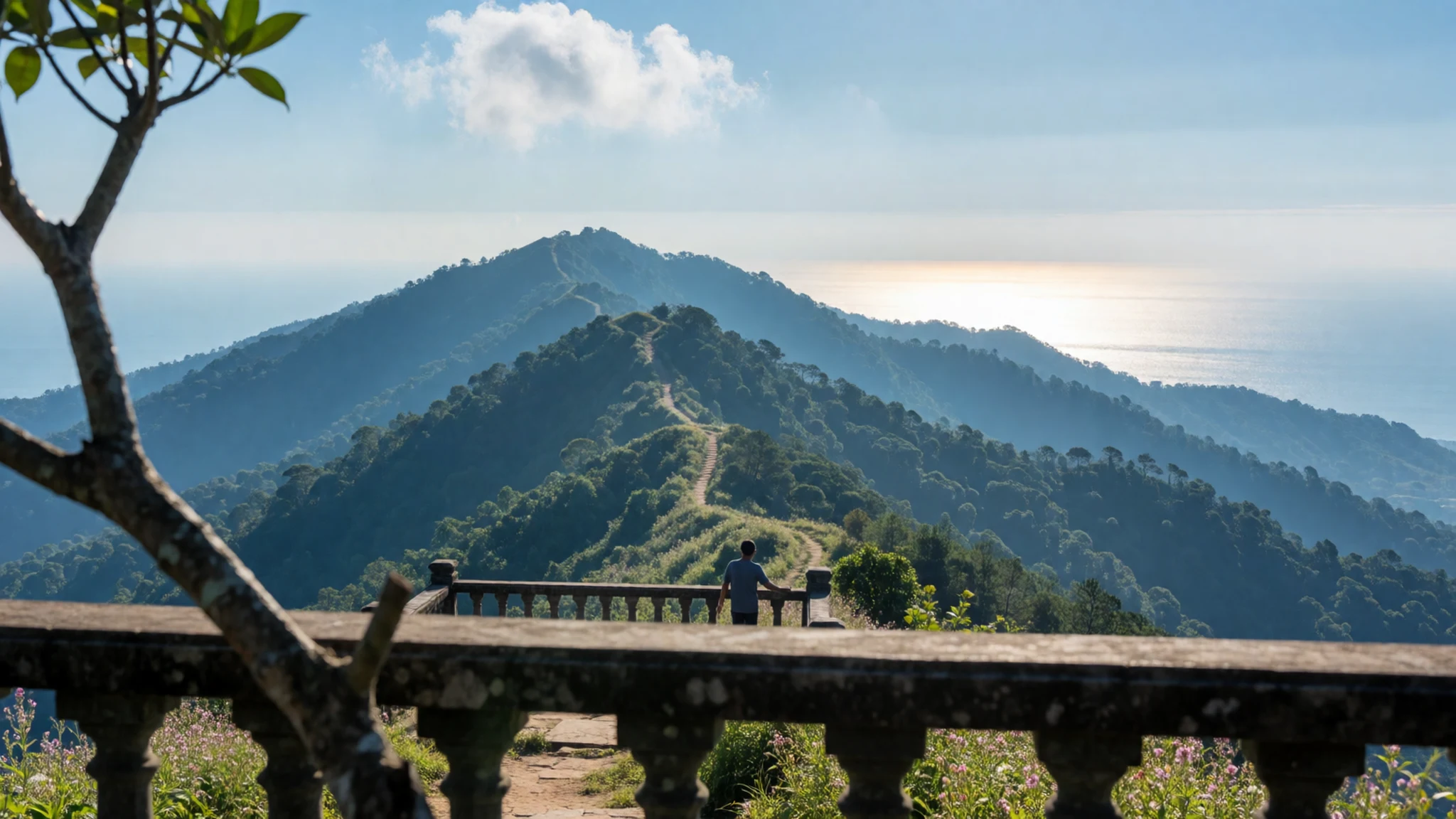
Culture
Ba Na Hills layers several cultures on one summit, and it helps to know which is which. The name comes from the Cham language and from Po Inu Nagar, a goddess honoured by the Cham people of this coast, so the mountain has a deeper spiritual history than its theme-park surface suggests. The French colonial period left the idea of the hill station, and the resort's European-style quarter is a modern echo of it rather than an original settlement. The living religious presence today is Vietnamese Buddhism. Linh Ung temple draws local families, who come to light incense, pray and walk the grounds, and the atmosphere there is distinctly different from the rides and plazas elsewhere on the hill. Domestic tourism is the heart of the place: large groups of Vietnamese families, school parties and friends make up much of the crowd, and weekends feel festive and loud. Outside the temple, the mood is relaxed and photographic, with people queuing patiently for the best spots on the bridge and in the gardens. Staff are used to international visitors, and polite patience goes a long way during busy periods. At Linh Ung temple, dress with shoulders and knees covered, keep your voice low, and ask before photographing worshippers.
What to wear
Ba Na Hills draws on several dress traditions, though the one most visitors will recognise is the Vietnamese áo dài, a long fitted tunic worn over trousers, usually in silk or silk-blend fabrics and kept for weddings, Tết and formal occasions. In the countryside around Da Nang, the looser cotton áo bà ba and the conical nón lá hat of palm leaf are older everyday wear. Cham communities of the region have their own weaving traditions in cotton and silk, with patterned cloth worn at festivals. On the mountain today, most people wear ordinary modern clothes: T-shirts, light dresses, shorts, trainers and cheap rain ponchos. Some visitors hire or bring áo dài or period costume for photographs in the French-style plaza and on the bridge, which suits the setting well. For visitors, the key point is that the summit is cooler and wetter than the coast, so a light waterproof and a thin layer are sensible even in warm months. Wear comfortable shoes with grip, since paths and steps can be slick in mist, and bring sun protection for clear spells. If planning to visit Linh Ung temple, carry something to cover shoulders and knees, as shorts and sleeveless tops are not appropriate in the worship halls.
What to eat
- Mì Quảng — Neighbourhood eateries and markets in Da Nang city
Mì Quảng is the central Vietnamese noodle dish served with a little rich broth, turmeric-coloured wide noodles, herbs, peanuts and a crisp rice cracker. Pork, prawn or chicken may be the topping. It is a local staple around Da Nang.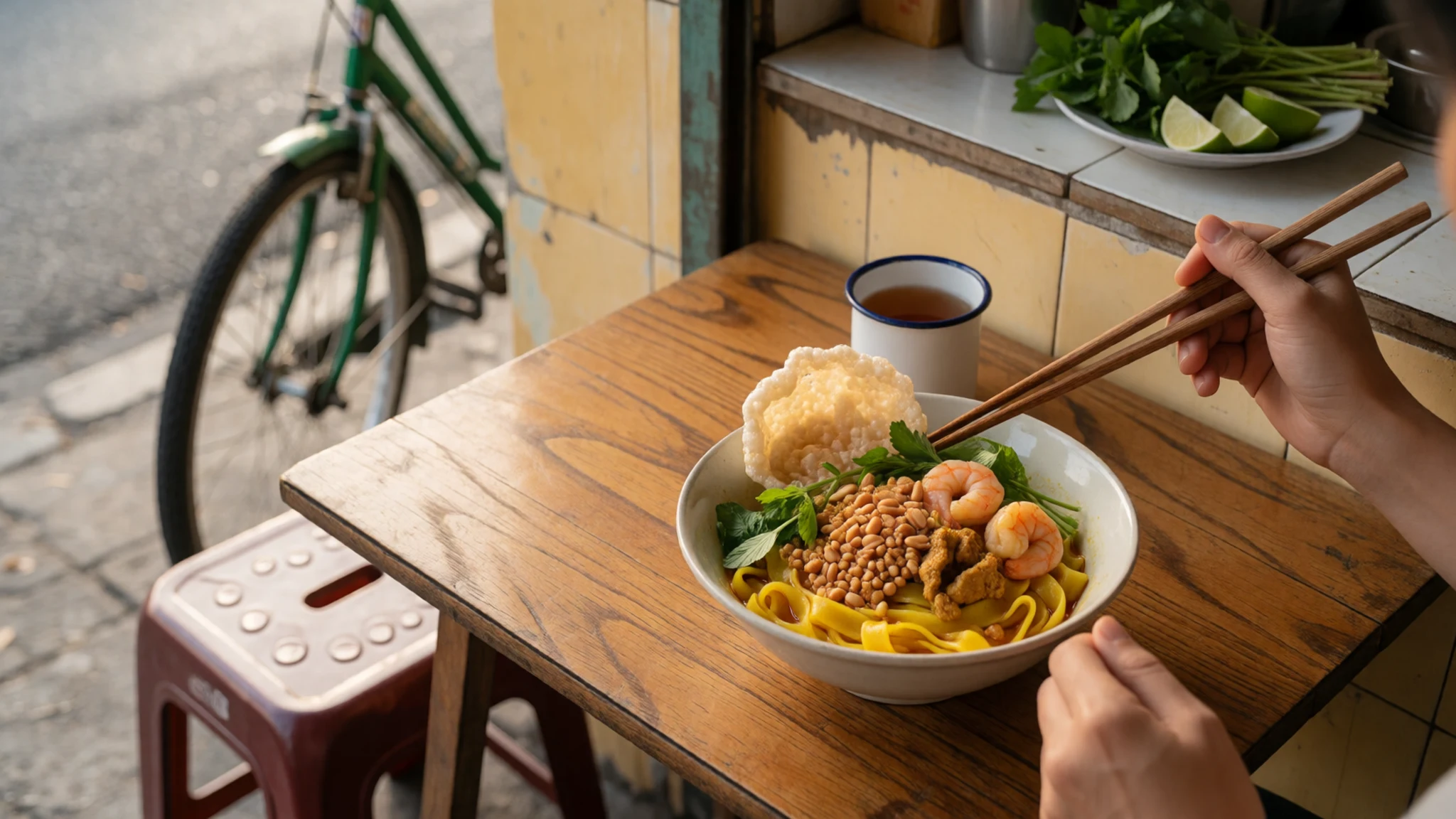
- Bánh xèo — Specialist pancake restaurants in Da Nang, often with open courtyards
Bánh xèo is a crisp, turmeric-yellow pancake folded around prawns, pork and bean sprouts. It is eaten by wrapping pieces in lettuce and herbs, then dipping in a sweet-savoury sauce. The central style tends to be small and very crisp.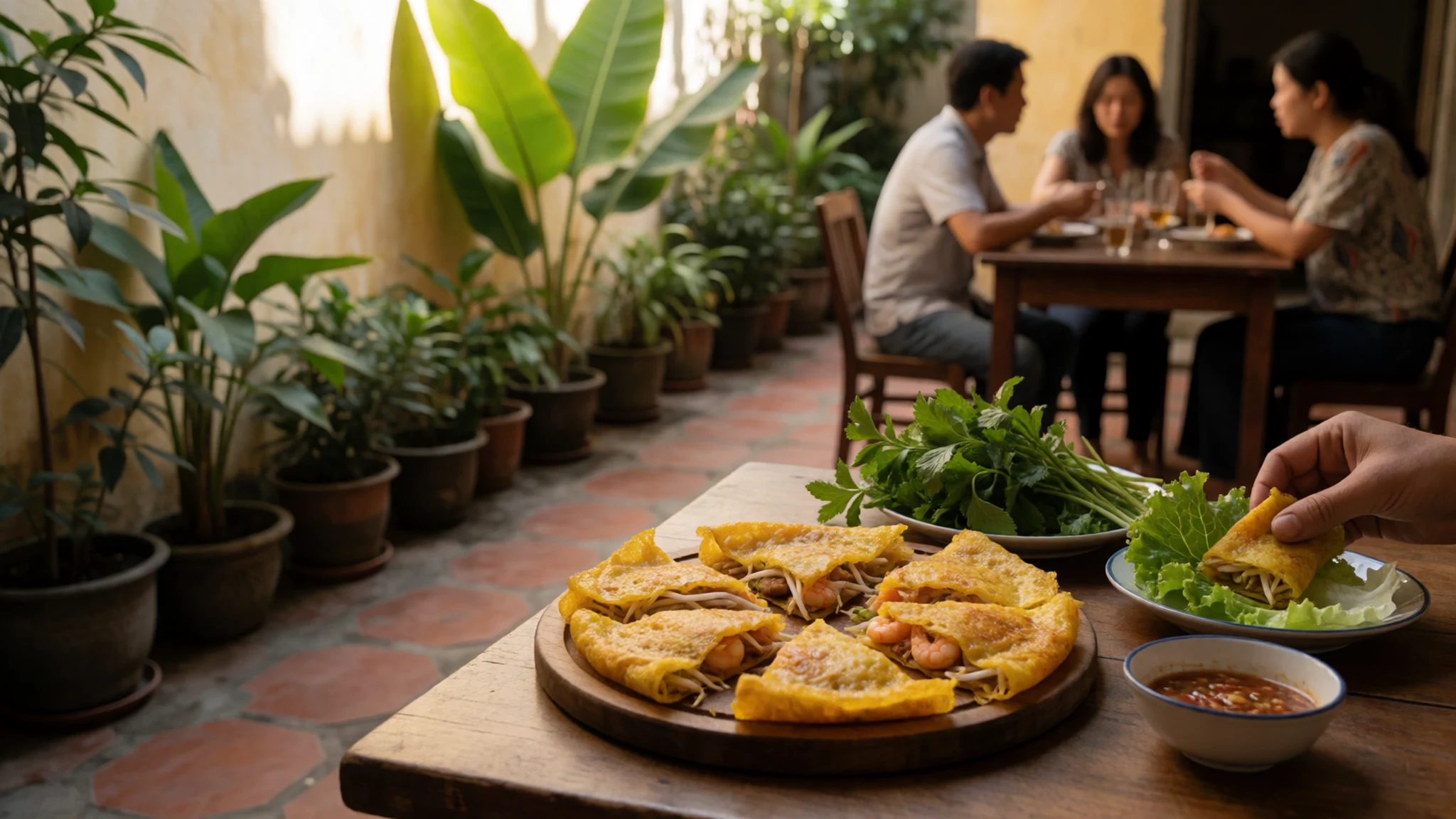
- Bánh tráng cuốn thịt heo — Casual restaurants and local eateries around Da Nang
This is a do-it-yourself rice paper roll, built from boiled pork slices, fresh herbs, greens and rice noodles, then dipped in a fermented fish or shrimp sauce. It is a popular group meal and suits visitors who like fresh, herb-heavy food. - Bún chả cá — Small street-side eateries and morning stalls in Da Nang
Bún chả cá is a clear, gently sweet fish broth with rice noodles and slices of fish cake, often with tomato and pineapple. It is a light, restorative dish, good before or after a day in the cooler mountain air. - Bánh mì — Bakery stalls and street carts across Da Nang
Bánh mì is the Vietnamese baguette, light and crackly, stuffed with pâté, cold cuts, pickles, herbs and chilli. It is the practical choice for a picnic or an early start before the cable car, and a lasting trace of the French period.
Plan it
Best time. March to May is usually the more settled stretch, with fewer wet days on the coast and clearer chances of a view from the summit. The mountain is cooler than the coast all year, but later in the year heavy rain, cloud and typhoon weather can close views and disrupt travel, so check forecasts.
How long. 1
Getting there. Fly to Da Nang International Airport, then take a taxi or ride-hailing car to the lower cable car station in Hòa Vang district, west of the city. The cable car carries visitors up to the resort.
Budget. mid
Tips
- Check the official Ba Na Hills resort site for current tickets, opening hours and any closures before you go
- Arrive early to beat queues at the cable car and on the Golden Bridge, especially at weekends and holidays
- Bring a light rain jacket and a thin layer, as the summit is cooler and often misty
- Look at the weather before going, since cloud can hide the views completely
- Carry some cash and a card for food, drinks and small purchases on the hill
Etiquette
- Dress modestly with shoulders and knees covered at Linh Ung temple
- Keep voices low and do not photograph worshippers without asking
- Queue patiently at cable car stations and photo spots, and keep to marked paths
Nearby
Sources
- Wikidata Q5004763 (CC0)
- Wikipedia: Bà Nà Hills (rev 1383734823) (CC BY-SA 4.0)
- Wikivoyage: Da Nang (CC BY-SA 4.0)
- Photo: View from historic post office location (Thevu69) (CC BY 3.0)
- Photo: View of Ba Na Hills Resort from Cable Car (DvTor8303) (CC0 1.0)
- Photo: Linh Ung Pagoda (Thevu69) (CC BY 3.0)
- Photo: Ba Na ecological Resort, Da Nang, Vietnam (Fa2f) (CC BY 3.0)
- Photo: Golden Bridge at Ba Na Hills (DvTor8303) (CC0 1.0)
- Photo: Bà Nà Hill, Da Nang, Vietnam (xiquinhosilva) (CC BY 2.5)
- Photo: Bà Nà Hill, Da Nang, Vietnam (xiquinhosilva) (CC BY 2.5)
- Photo: Bà Nà Hill, Da Nang, Vietnam (xiquinhosilva) (CC BY 2.5)


