Cao Dai Holy See
Cao Dai Holy See, Vietnam
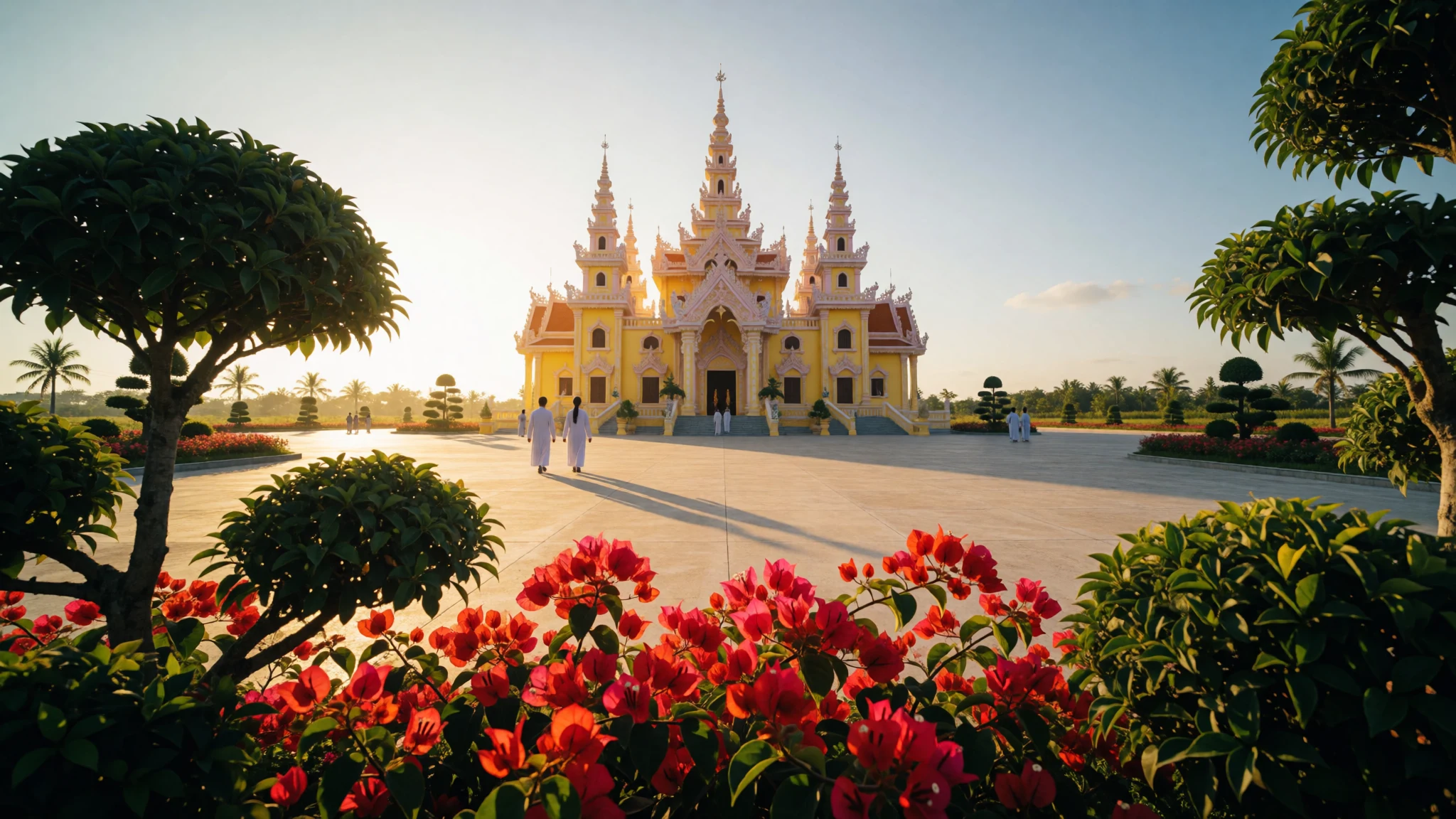
Tay Ninh's Great Divine Temple is a pastel blend of Asian and European styles, where worshippers in white robes gather beneath a painted sky.
The place
The Great Divine Temple, also called the Cao Dai Holy See or Tòa Thánh Tây Ninh, stands in Tây Ninh province in south-east Vietnam, not far from the Cambodian border. It is the principal church of Caodaism, a Vietnamese faith that draws ideas from several traditions into one system of worship, and the building makes that mixture visible. Two tall towers frame a façade of pastel yellow, pink and blue, with coiling dragons, rounded windows and a roofline that borrows from both pagodas and European cathedrals. The temple sits inside a larger walled compound of offices, residences, workshops and gardens, so a visit feels closer to entering a small religious town than to stepping into a single hall. Most visitors come from Ho Chi Minh City on a day trip, often paired with the Cu Chi tunnels, and the drive takes a couple of hours depending on traffic. Tây Ninh itself is a working provincial town in flat country of rice, cassava and rubber, broken only by the lone cone of Núi Bà Đen on the horizon. Visitors are welcome, but they are guests at a living place of worship rather than an exhibit. Services draw the biggest audiences and the upper gallery fills quickly, so arriving early helps. The hall is open-sided and breezy, which is a relief in the heat. Check the official site, https://caodai.com.vn/en, for current visiting arrangements.
Its story
The Great Divine Temple belongs to the story of Caodaism, a faith that took shape in southern Vietnam in 1926, while the country was under French colonial rule. Its followers needed a permanent headquarters, and they acquired a stretch of forested land at Bàu Cà Na, in Long Thành hamlet, that had belonged to a Frenchman named Aspar. Groundbreaking came in 1931, but money was short and real construction waited until 1936. The temple was finished in 1947. Those years were not calm ones. The building rose through the Japanese occupation, the return of French forces and the opening phase of the war of independence, and the religion grew in the same unsettled period. Followers describe the design as guided by spirit messages, which helps explain its unusual mixture of influences. The faith honours teachers and saints from many traditions, and figures such as Victor Hugo appear among them, which is why a French novelist can turn up in a Vietnamese temple. Historians would add a social reading: in a colonised country, a new religion with its own land, officials and ceremonies was also a way of organising a community. Today the complex remains the spiritual centre for Caodaists, and the temple's slightly improbable colours and carvings record a faith that borrowed freely and built on a grand scale.
What to see
- The Great Divine Temple façade — Cao Dai Holy See complex, Tây Ninh
The twin towers and pastel front are the image most people carry away from Tây Ninh. Look closely at the dragons, the rounded windows and the mixed roofline, then step back across the forecourt for the full view. Early morning light is soft, and the crowds are thinner than later in the day.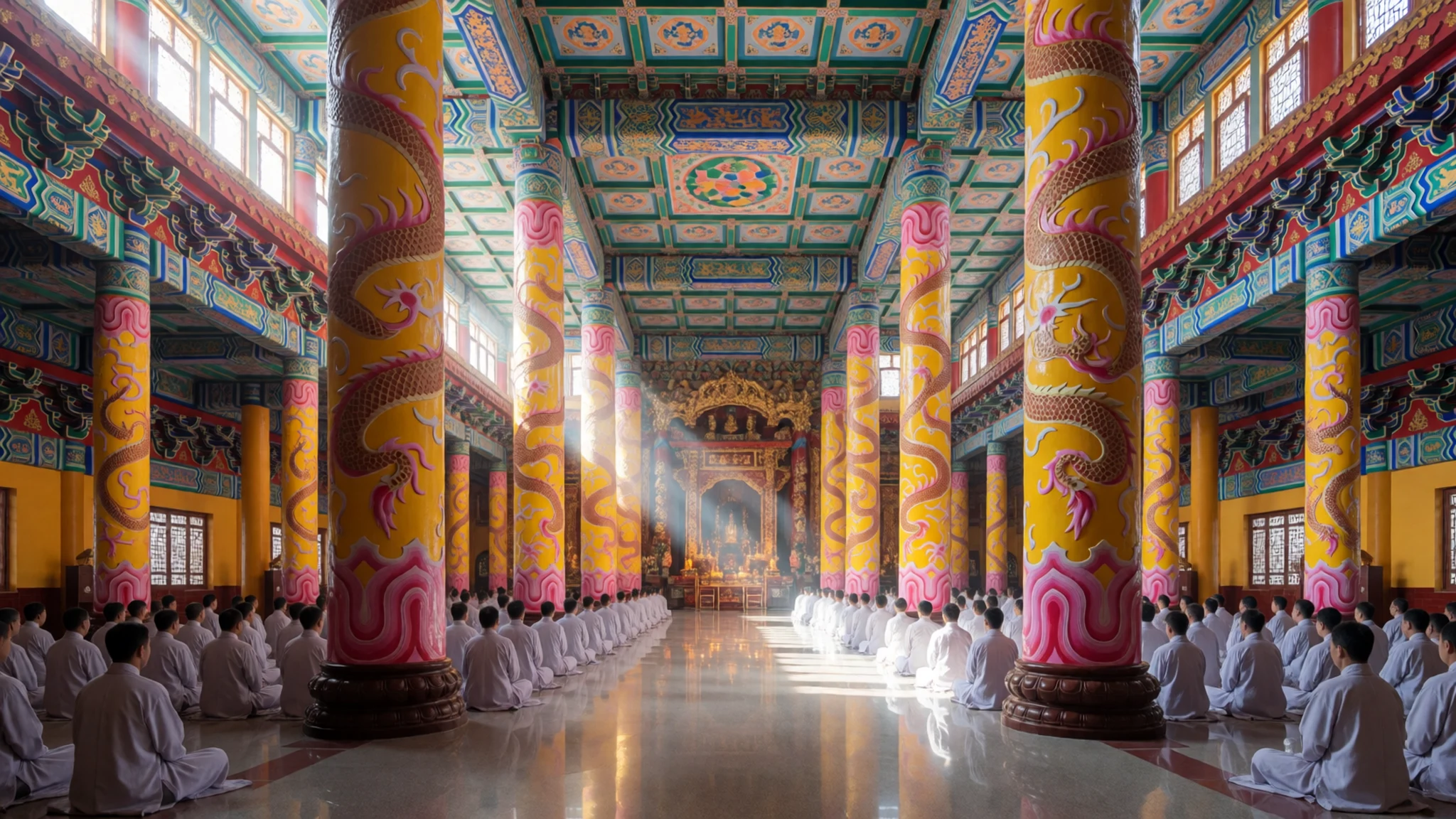
- The main hall and its painted ceiling — Inside the Great Divine Temple
Inside, the long hall is lined with pillars wrapped in coloured dragons, and the ceiling is painted blue with clouds and stars. Floor and walls are decorated in bright but orderly patterns. Shoes come off before entering, and the space feels calm even when it is busy.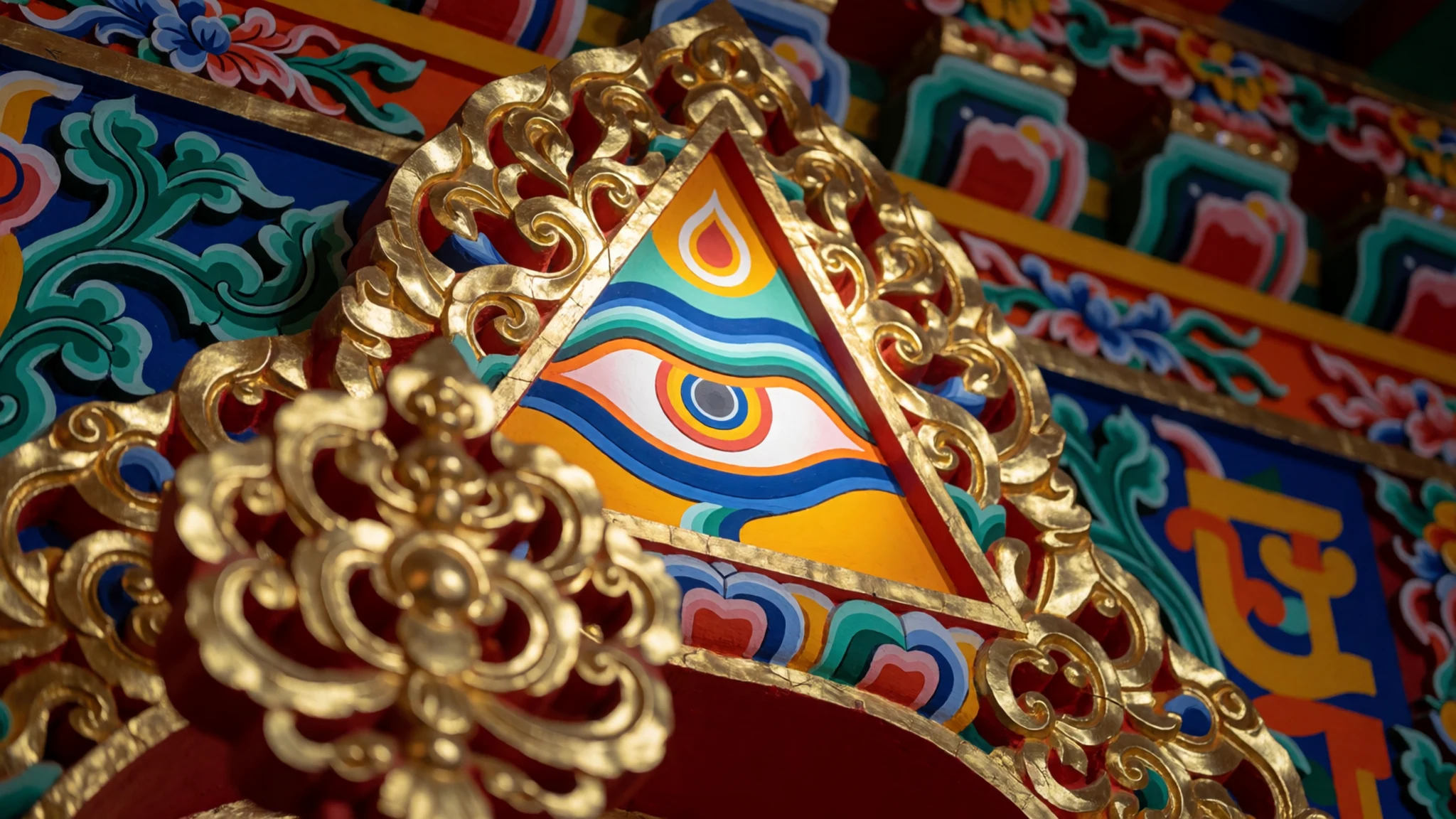
- The Divine Eye — Altar end of the main hall
A single eye within a large blue globe is the emblem of Caodaism and is set near the altar end of the hall. It stands for the watching presence of the divine. Notice that the same symbol recurs on banners, doorways and publications across the compound.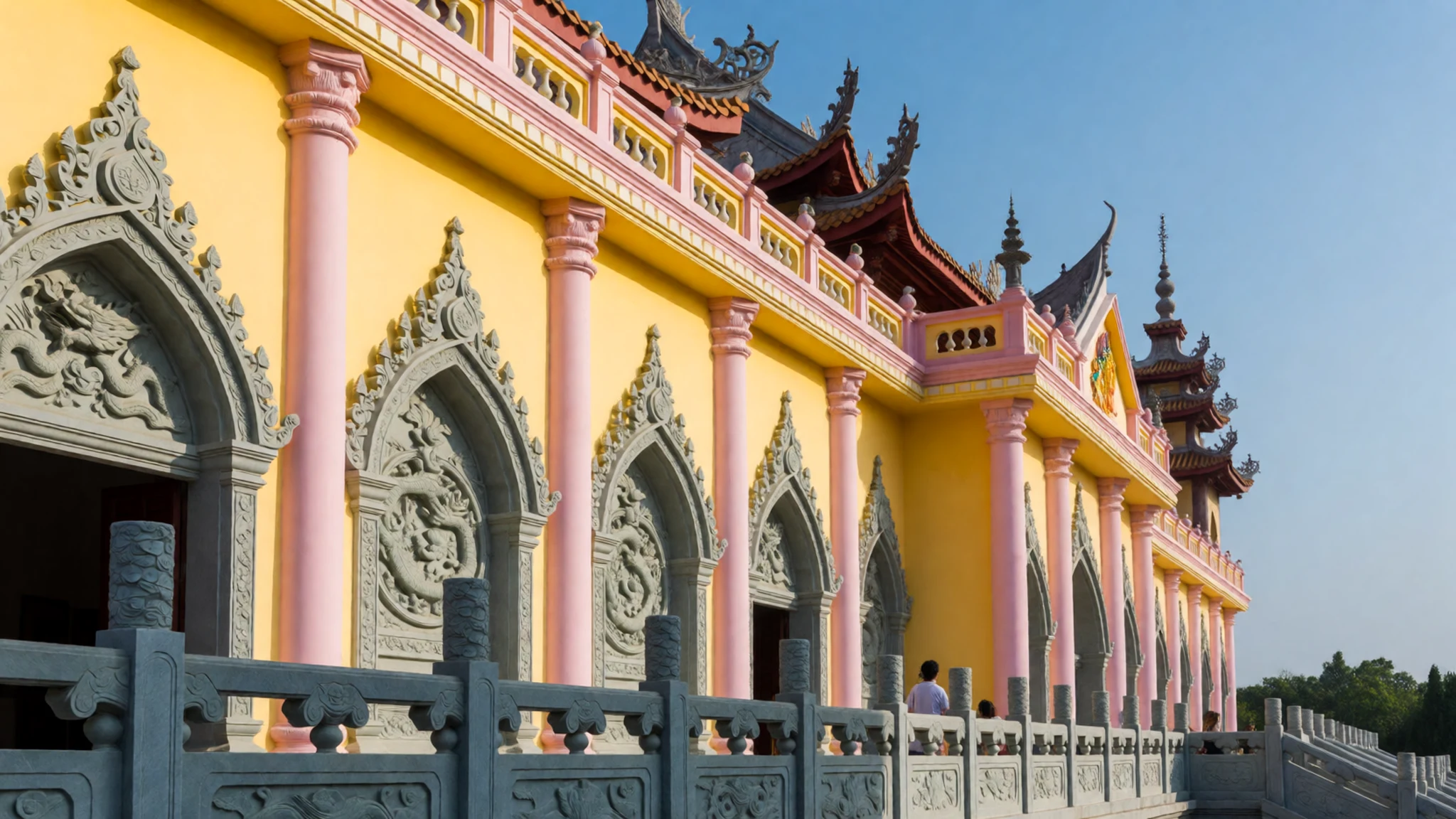
- The upper gallery for services — Galleries above the main hall
Visitors are normally directed to the upper galleries to watch worship, looking down on rows of worshippers in white with robed dignitaries in colour. Music and chanting rise through the hall. Keep quiet, avoid walking about during the service and ask before photographing individuals.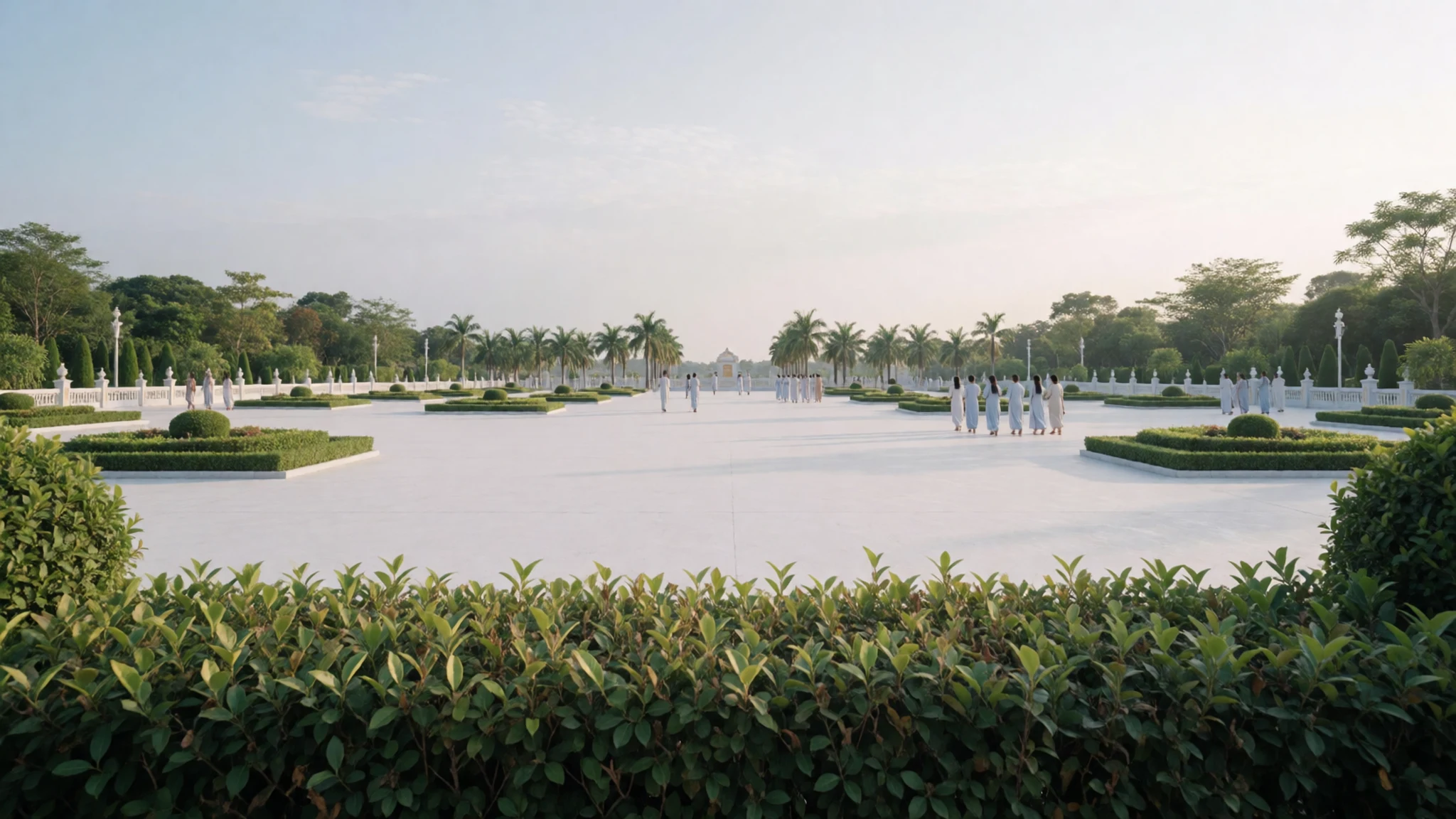
- Núi Bà Đen — North-east of Tây Ninh town
The isolated cone of Núi Bà Đen rises from the plain north-east of the Holy See and is visible for miles. It is a place of pilgrimage as well as a viewpoint for local visitors. Treat it as a separate outing rather than something to squeeze in after the temple.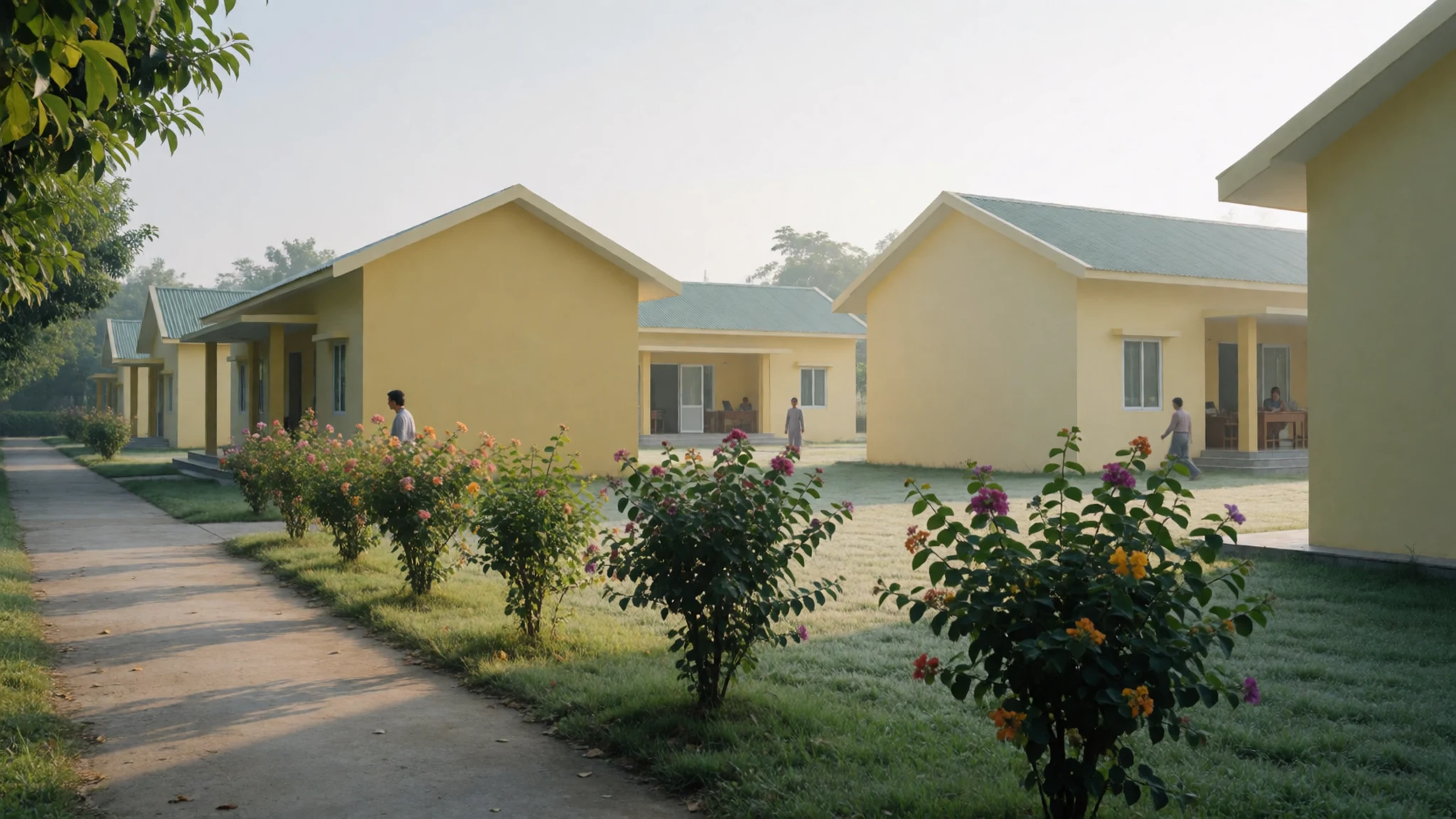
Culture
Cao Dai Holy See is the centre of a faith that treats several traditions as parts of one truth. Caodaism blends elements of Buddhism, Confucianism and Taoism with ideas from Christianity and other sources, and its teachers and saints come from many countries. Worship is communal and ordered, with chanting, music, incense and offerings, and it follows a daily rhythm that members take seriously. White is the colour of ordinary followers, while senior figures wear yellow, blue or red, each linked to a different branch of the tradition. Vegetarianism is encouraged, and many members observe it on some days or all the time, which is why meat-free food is easy to find around the compound. The wider Vietnamese setting matters too. Elders are treated with deference, and visitors who are polite, patient and a little reserved tend to be received warmly. Southerners are used to foreigners, but questions about age, marriage and family are common and are meant kindly. It is easy to treat the temple as a photo stop because it is so colourful, but for the people inside it is a place of daily prayer. Enter quietly, remove your shoes at the hall door, cover your shoulders and knees, and stay in the visitors' gallery rather than walking among the worshippers.
What to wear
Cao Dai Holy See sits in a country where the áo dài is the best-known traditional dress: a close-fitting silk or silk-blend tunic with side slits, worn over loose trousers. It appears at weddings, Tết and formal occasions, and many schoolgirls and office staff wear versions of it. At the temple, the clothing that matters is the white robe of ordinary Caodaists, usually of plain cotton or similar light cloth, with a white head covering for many worshippers. Senior figures wear robes and hats in yellow, blue or red, and the more elaborate ceremonial dress is worn by dignitaries rather than by the congregation. Away from worship, everyday clothing in Tây Ninh is practical for the heat: light cotton shirts, loose trousers, sandals and, on the road, long sleeves, face masks and helmets for motorbike riders. Conical palm-leaf hats, nón lá, are still seen among farmers and market traders. Visitors should dress for both heat and modesty. Choose breathable cotton or linen that covers the shoulders and knees, avoiding sleeveless tops and short shorts. Bring a hat and sunscreen for the forecourt, and wear sandals or shoes that slip off easily, since footwear comes off at the hall entrance. A light scarf is handy for covering up and for dust on the road.
What to eat
- Bánh tráng phơi sương — Eateries and market stalls in Tây Ninh town
Tây Ninh's dew-dried rice paper is soft, slightly chewy and made to be rolled. It is usually served with boiled pork, fresh herbs, lettuce and a dipping sauce. It makes a light lunch and is easy to find in town restaurants and local eateries.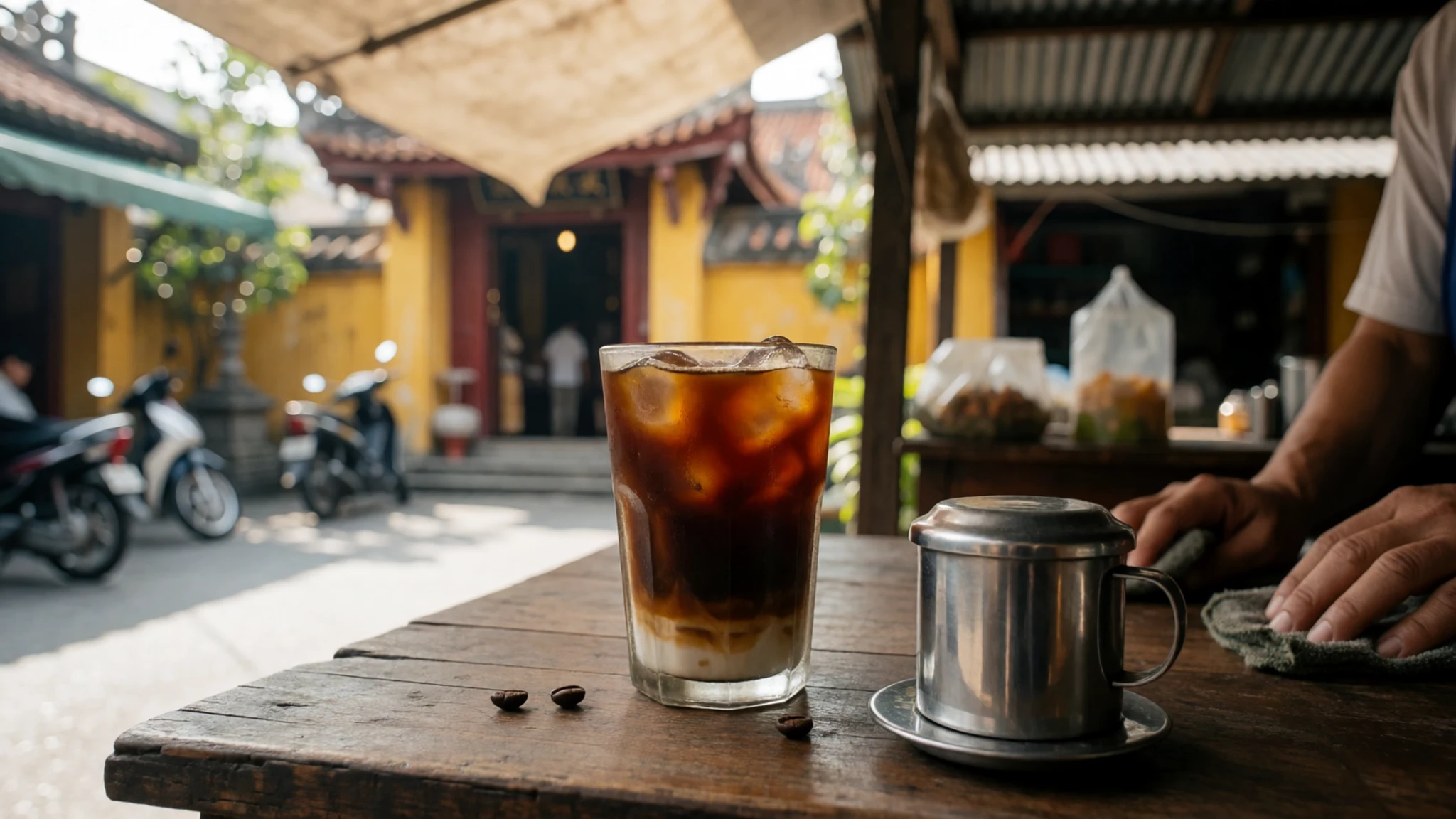
- Muối tôm Tây Ninh — Market stalls and roadside shops around Tây Ninh
This red-orange shrimp salt is a local favourite, made with chilli and used as a dip for green mango, tamarind and fruit. It is salty, spicy and sharp all at once. Small packets are sold as souvenirs and travel well.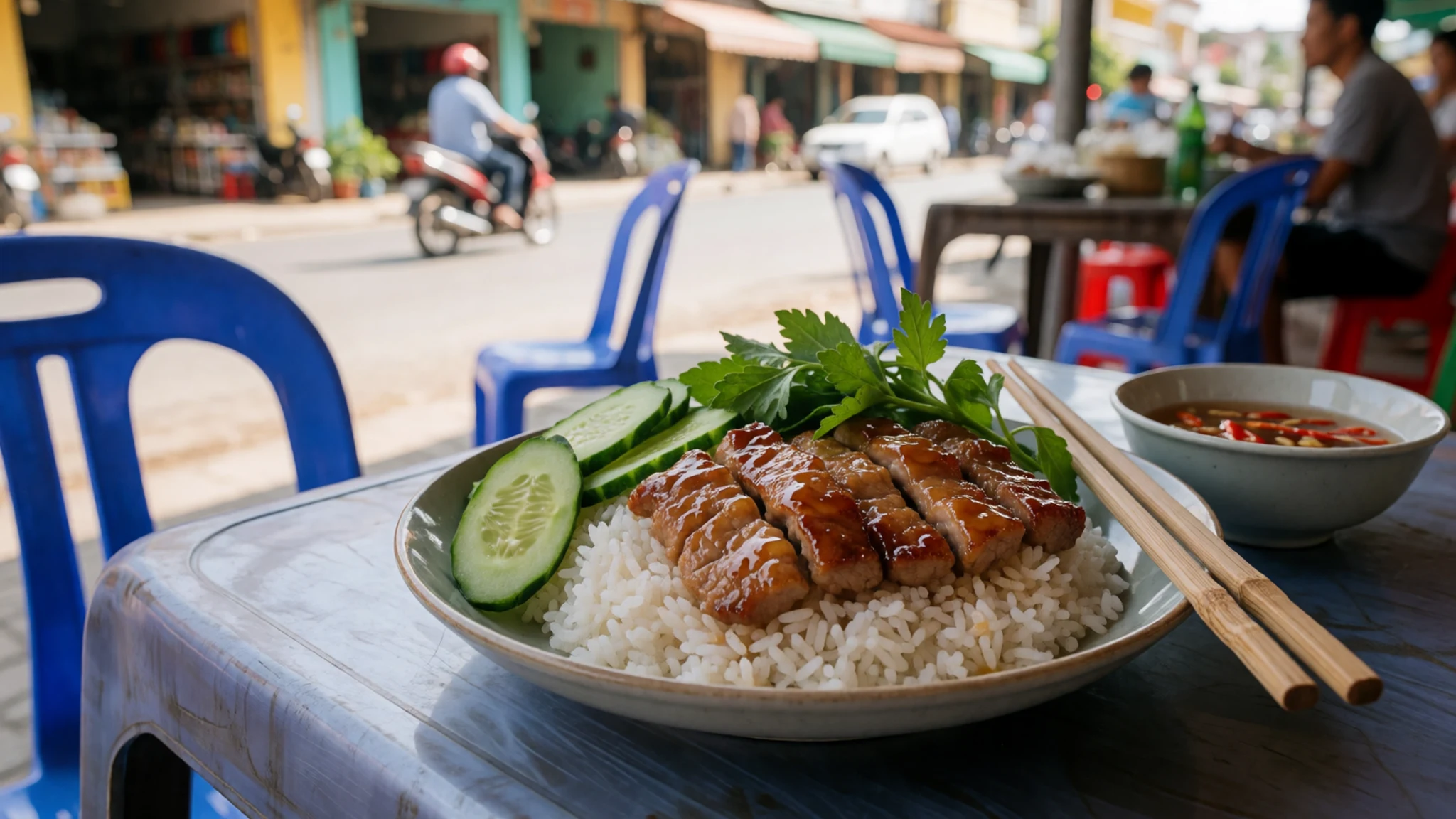
- Bánh canh Trảng Bàng — Roadside eateries in Trảng Bàng and Tây Ninh
A thick, slippery noodle soup from the Trảng Bàng area of Tây Ninh province, served in a pork-based broth with meat and herbs. It is warming, hearty and usually eaten for breakfast or lunch. Look for busy roadside eateries, where turnover keeps it fresh. - Vegetarian set meals — Vegetarian eateries near the Holy See complex
Because many Caodaists follow a meat-free diet, vegetarian canteens and eateries cluster around the Holy See. Expect rice with tofu, mushrooms, vegetables, soups and mock-meat dishes. They are simple, cheap and a good way to eat the way local worshippers do. - Cà phê sữa đá — Any café or roadside stall in town
Vietnamese iced coffee, strong and sweet with condensed milk, is the standard answer to the heat. It arrives slowly through a small metal filter. Ask for less ice or less sugar if you prefer, and be cautious about ice in other drinks.
Plan it
Best time. November to April is the drier season, with the least rain for a day trip, though March and April turn very hot. May to October brings heavy showers, often in the afternoon, and a muggier, slower journey.
How long. 1
Getting there. Fly to Tan Son Nhat International Airport in Ho Chi Minh City, then take a bus, taxi or hired car to Tây Ninh, a journey of a couple of hours depending on traffic. Many visitors join a day tour. The last leg from town to the complex is short by taxi or motorbike taxi.
Budget. low
Tips
- Check the official site, https://caodai.com.vn/en, or ask your driver or tour operator about service times before you set out, and arrive early to get a spot in the gallery
- Carry some cash for food, drinks and small purchases, as card acceptance is patchy outside Ho Chi Minh City
- Bring water, a hat and sun protection, since the forecourt has little shade
- Combine the temple with a visit to Núi Bà Đen or the Cu Chi area only if you start early
Etiquette
- Remove your shoes before entering the hall, and cover your shoulders and knees
- Stay in the visitors' gallery during services, and keep conversation and phone use to a minimum
- Ask before photographing individual worshippers
Nearby
Sources
- Wikidata Q10831162 (CC0)
- Wikipedia: Great Divine Temple (rev 1367845469) (CC BY-SA 4.0)
- Wikivoyage: Vietnam (rev 5410523) (CC BY-SA 4.0)