Ba Be National Park
Ba Be National Park, Vietnam
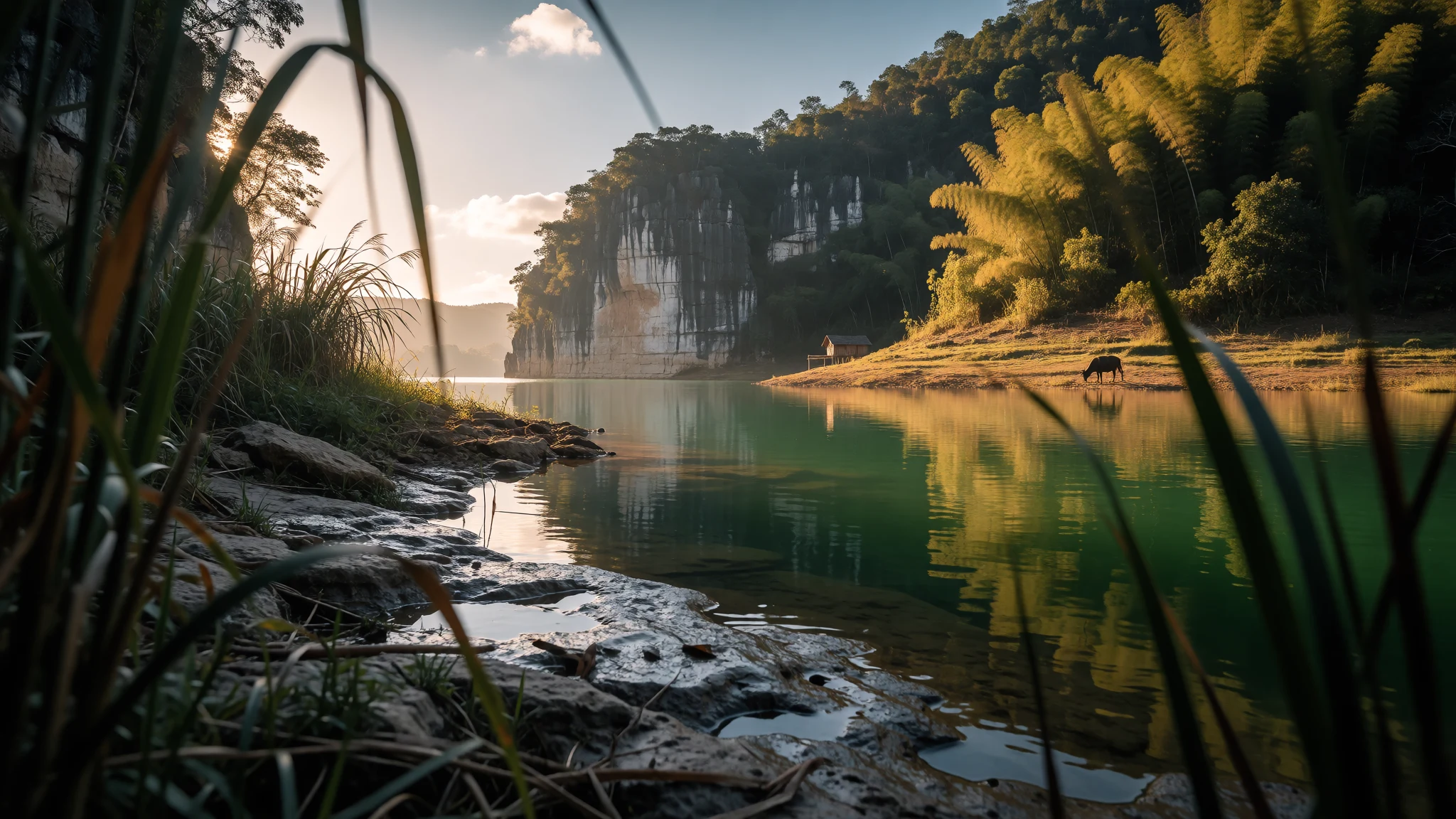
Ba Be National Park holds a freshwater lake among limestone hills, where boats, mist and village landings set the pace.
The place
Ba Be National Park sits in Thái Nguyên Province, in the karst country of northern Vietnam, where a long freshwater lake threads between limestone cliffs. The water is the reason for the visit: it is calm in the early hours, often covered by a thin mist that lifts off the surface and leaves the cliffs standing in soft light. In the dry season the shores pull back and the rock shows pale and sharp; after rain the lake sits higher and the forest comes down to the water in a darker green. The park is a working landscape as much as a protected one. Villages of stilt houses stand along the banks, fields and gardens run behind them, and small boats move between landings with visitors, firewood and market goods. The lake is not a single round basin. It bends, narrows and opens again, so a boat ride feels like a sequence of rooms, each closed by a wall of rock or a stand of trees. Caves open at water level where a river passes through the limestone, and a waterfall drops at the far end of the usual boat route, white against dark stone. Wildlife is present but shy. Forest covers the slopes above the cliffs, and birds move across the lake in the morning. What most visitors actually meet is the daily life of the shore: children at the landing, nets drying, smoke from a kitchen under a house. The entrance is a simple gate on the road, and from there the water takes over. There is no city inside the park, and evenings belong to the villages, the frogs and the sound of boats knocking gently against bamboo poles. Heat and rain shape the day.
Its story
Ba Be National Park takes its name from the Tày language of the villages beside the lake. People who live on the shore tell a story about how that water arrived. In the telling, a village once stood in the valley and turned a hungry stranger away, except for a woman who gave him something to drink. He warned her to climb with her household and not to look back when the valley cried out. The ground gave way, the houses went under, and the woman, glancing over her shoulder, became part of the rock. An island in the lake is pointed out as her place, and a small temple there keeps the story in the landscape. Whether or not the flood happened as the tale says, the story explains the feeling of the water: a settled place that became a lake, with life continuing at the edge. Tày families have farmed and fished here for generations, building houses on stilts above the damp ground and keeping boats as ordinary tools. Dao and Hmong communities live higher on the slopes, coming down to trade. The lake was a local road long before it was a national park, a way through the karst when the hills were hard to cross on foot. Protection changed the bargain. Forest on the cliffs is watched rather than cut freely, and visitors now pay for the boats that once carried only neighbours. Homestays in the lakeside villages turned spare rooms into a livelihood, and the morning trip to the cave and the waterfall became a shared route with a known rhythm. The park is still remote enough that the day bends around the boat and the weather.
What to see
- Ba Be Lake — Ba Be, Bắc Kạn
Ba Be Lake is the water at the centre of Ba Be National Park, a long reach of freshwater held between limestone cliffs in Thái Nguyên. In the early morning a low mist often lies on the surface and the rock walls show through it in pieces. By late morning the light hardens and the colour of the water turns a clear green against the forest.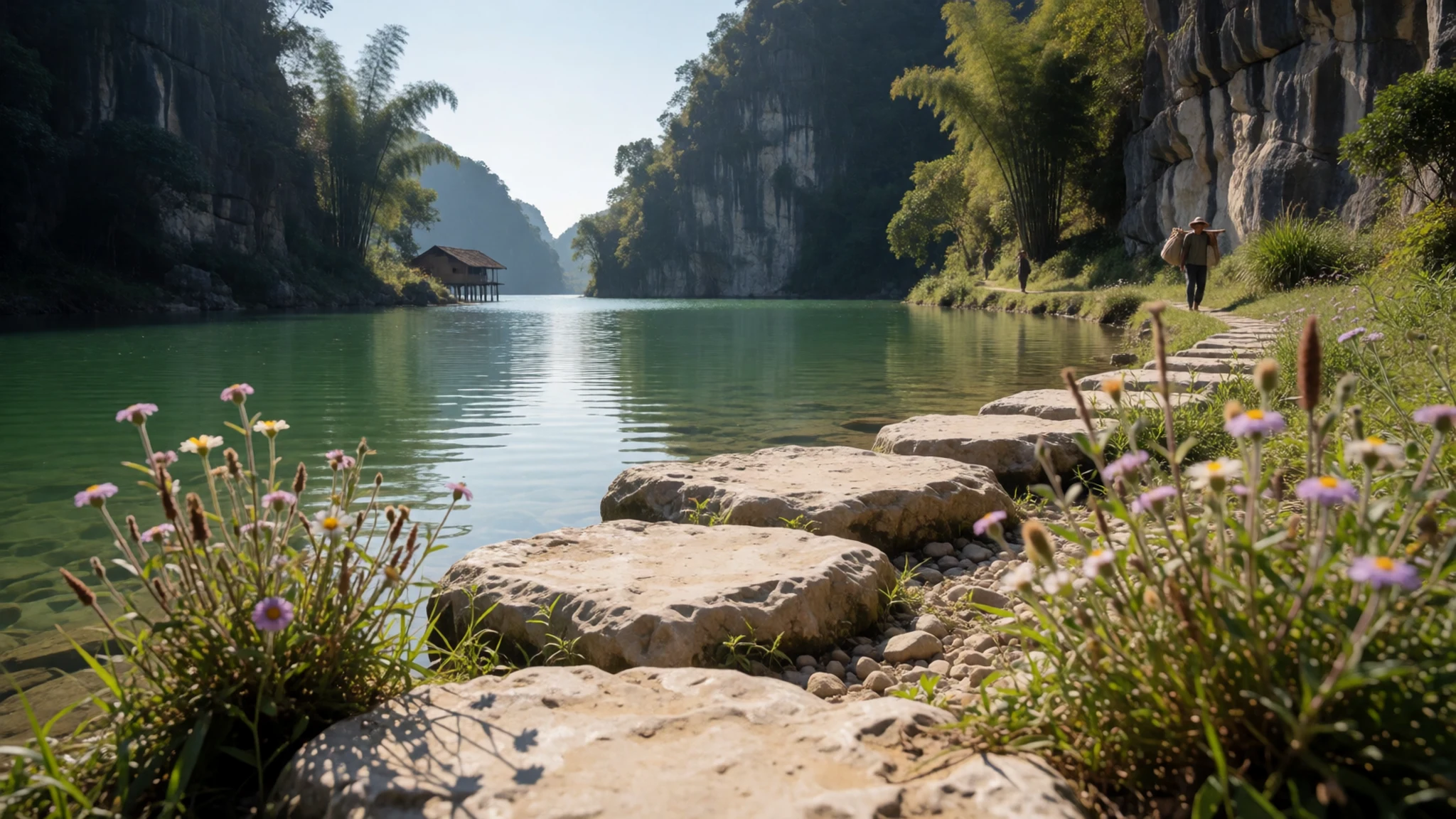
- Puong Cave — Nang River, Ba Be
Puong Cave is the water-level passage in Ba Be National Park where the river runs straight into the limestone and out the other side. Boats go in under the overhang, and the daylight shrinks to a bright mouth behind and another mouth ahead. The roof is damp, and in the warmer months bats shift and call in the dark above the gunwales.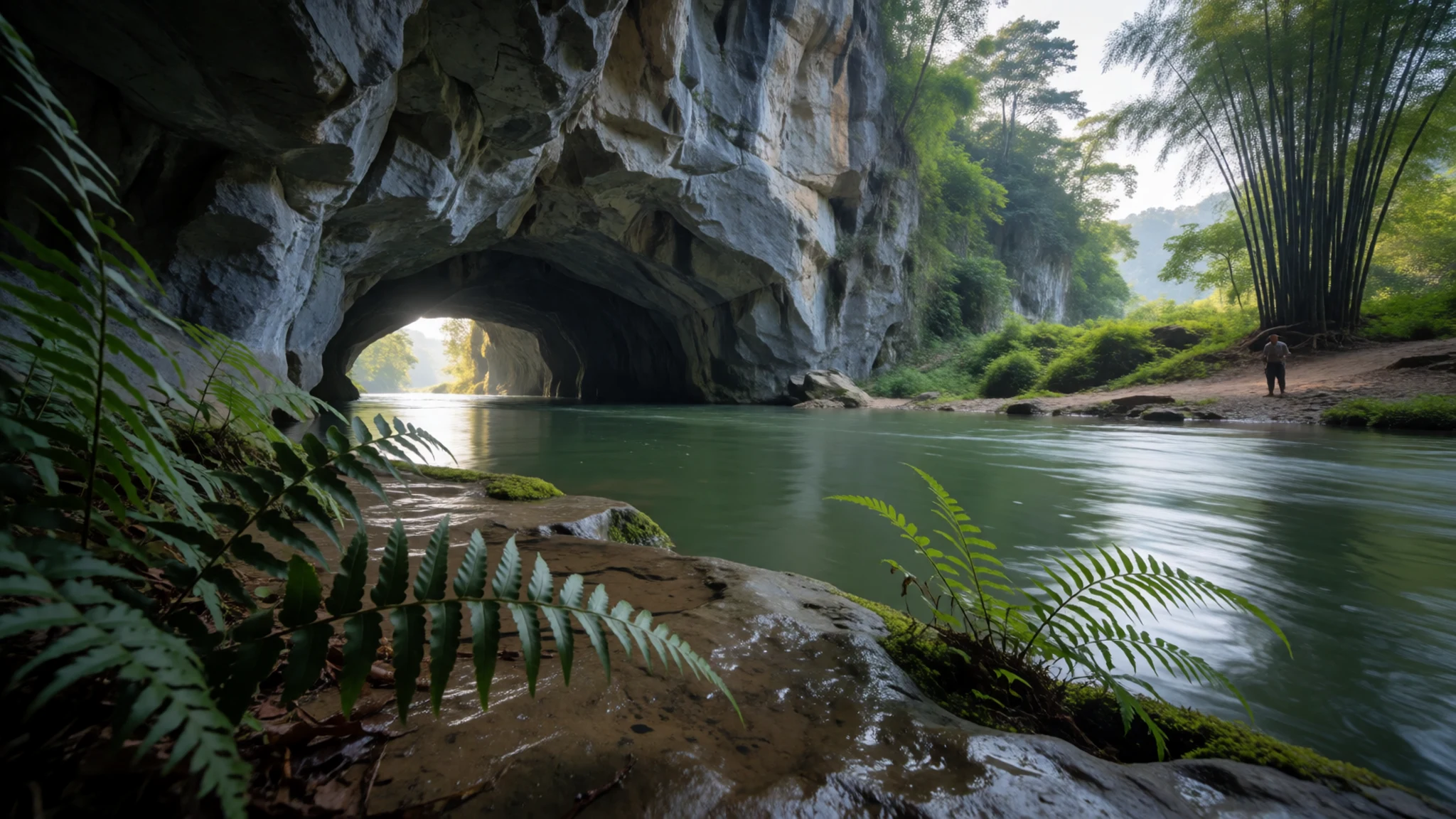
- Dau Dang Waterfall — lower river, Ba Be
Dau Dang Waterfall is the drop at the lower end of the boat route in Ba Be National Park, where the river leaves the quieter lake water and breaks over a broad shelf of rock. The usual approach is by boat, then a short walk along the bank if the landing allows it. In the drier months the fall splits into pale threads across dark stone.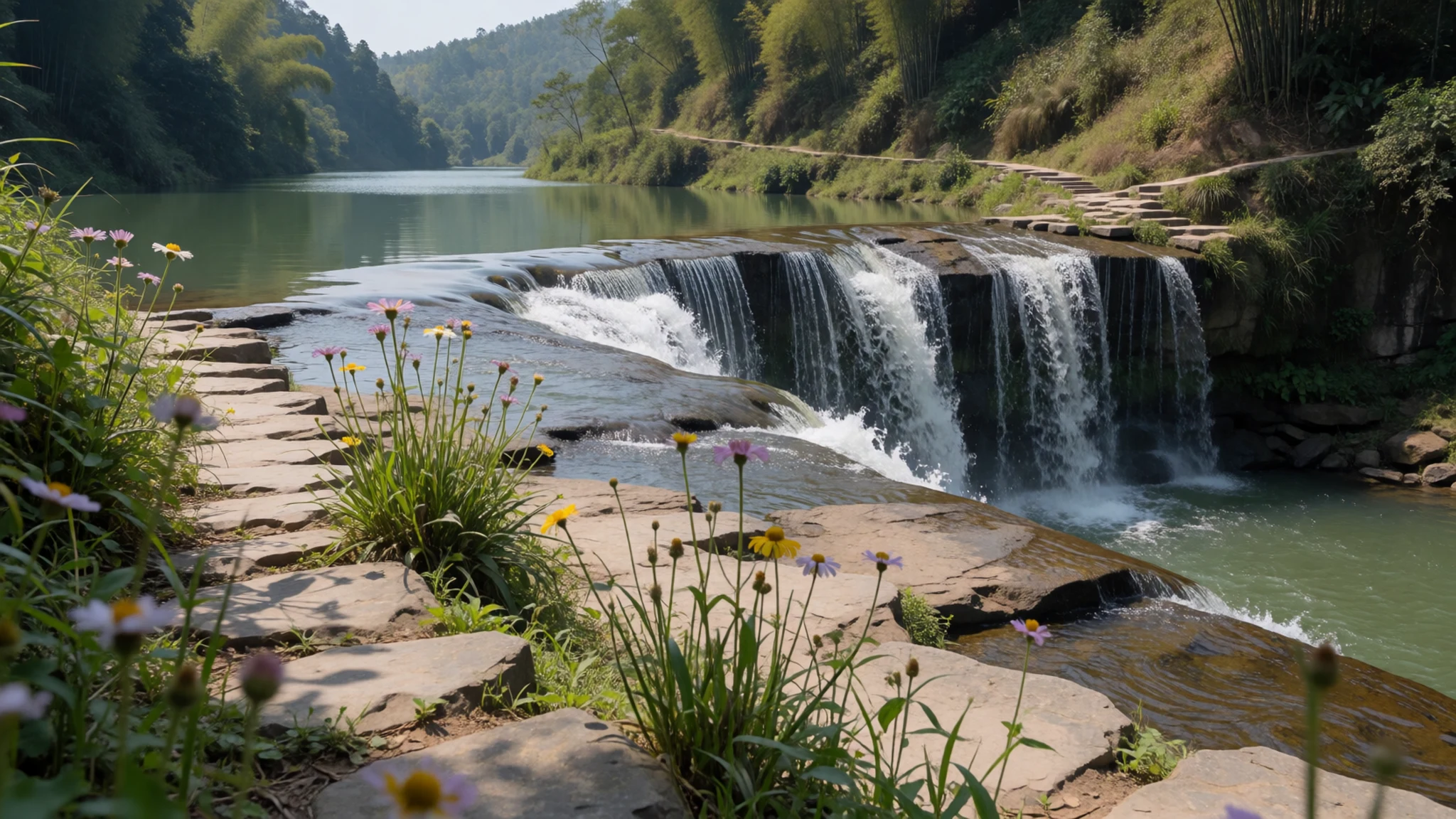
- Pac Ngoi — lakeside, Ba Be
Pac Ngoi is the lakeside village in Ba Be National Park where many travellers sleep, a line of stilt houses facing the water with gardens and small fields behind. Life here is visible from the boat: washing at the steps, motorbikes on the path, kitchens under the floorboards. Evenings are quiet, with families eating early and the lake going dark beyond the last porch light.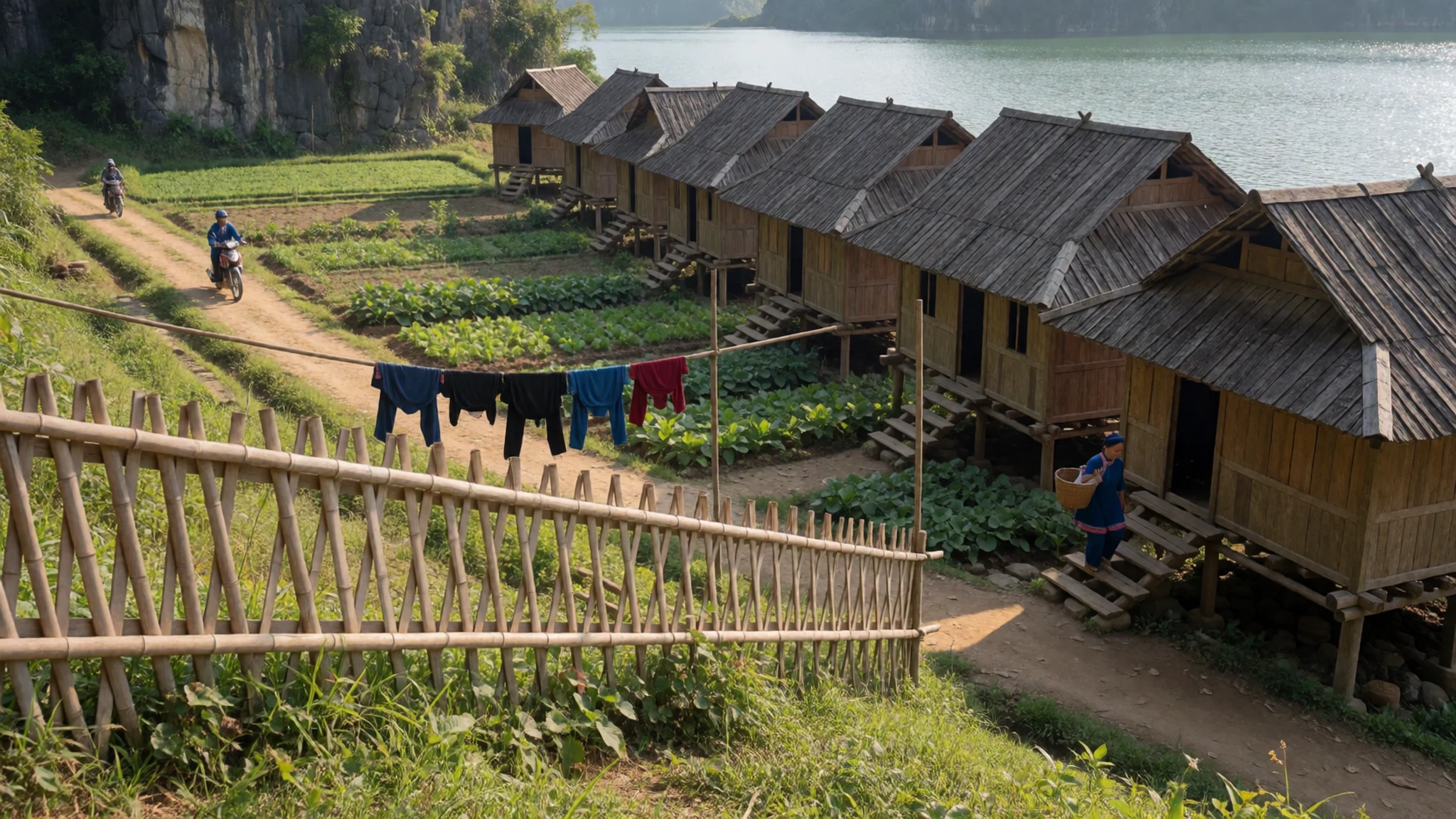
- Widow's Island — on the lake, Ba Be
Widow's Island stands in the lake inside Ba Be National Park, a small wooded rise that boat crews point out when they tell the story of the woman who looked back. A modest temple on the island keeps that local memory, and the stop is short: a landing, a path, and a pause among the trees. Crews rarely linger here.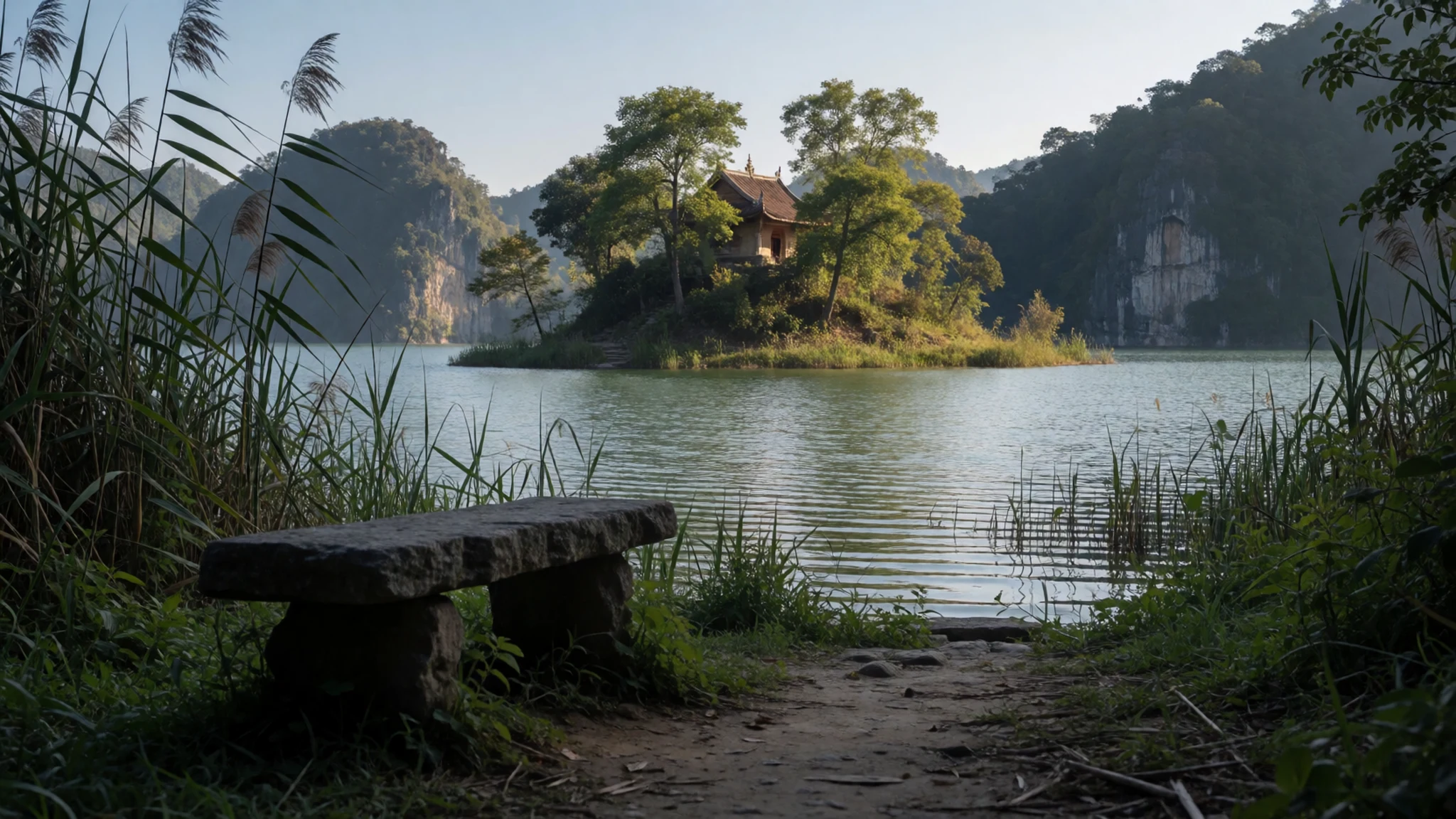
Culture
Ba Be National Park is Tày country at its core. The lakeside villages speak Tày at home, keep ancestor altars in the house, and mark the year with festivals that thank the fields and the water, above all the spring gathering known as Lồng Tồng. Then singing, the long melodic verse called hát then, is still performed at weddings and village rites, sometimes with a đàn tính lute. Houses stand on stilts, with the family living above and tools, bikes and firewood below, and a visit often begins with tea on the porch. Dao communities in the hills keep their own embroidery, silver and ritual calendar, and Hmong families come down to the lake to trade. The cultures meet at the market and on the boat more than they blend into a single style. Belief sits close to the landscape: the island temple, the care taken on the water, and the habit of leaving a small offering rather than treating every rock as scenery. Tourism has added homestays and a set route for boats, yet the park still runs on village time. Ask before you photograph people, take your shoes off at the stair of a stilt house, and do not touch altars or offerings.
What to wear
In Ba Be National Park the traditional cloth is still a village language, worn fully at festivals and in pieces on ordinary days. Tày women keep indigo and black cotton, often a long tunic over trousers, with a checked or embroidered headscarf and a silver belt or buttons brought out for Lồng Tồng, weddings and then singing. The cloth is handwoven in some households and bought in the district market in others, but the colours stay dark so that the silver and the bright scarf read clearly. Dao women in the hills wear dense red embroidery, silver neck rings and a headdress for rituals, more often than in the rice field. Daily dress on the lake is practical and modern. People work in T-shirts, football shirts, jeans or loose trousers, rubber sandals and a jacket against the boat wind, and schoolchildren wear uniform. Synthetic cloth has replaced a lot of homespun because it dries faster in the damp. Traditional dress is not a costume for greeting guests; it comes out when the village has a reason. A visitor is comfortable in light, covering clothes that can take spray and mud: long trousers, a shirt with sleeves, and shoes that grip a wet boat edge or a slick path. In cooler months a light layer helps at dawn, a rain jacket earns its place in the wet, and at the island temple or inside a stilt house modest dress with easy-off shoes is the right form.
What to eat
- Cơm lam — homestay kitchens and boat picnics
Cơm lam is the sticky rice of Ba Be National Park, steamed inside a tube of fresh bamboo until the grain smells of the green wood. Households and homestay kitchens serve it with grilled meat or sesame salt, and it travels well on a boat, still warm in the tube.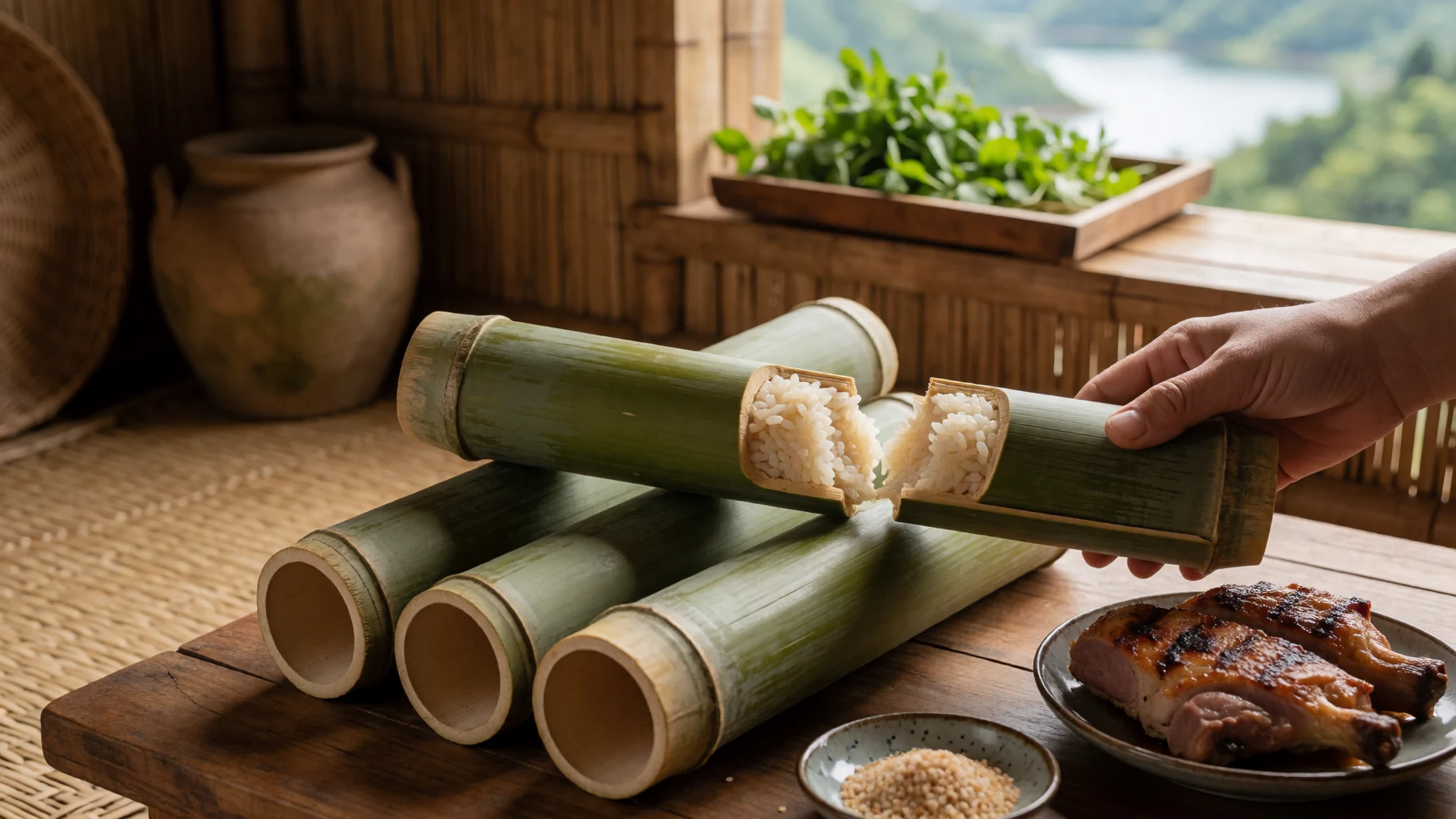
- Cá nướng — homestay kitchens and boat landings
Cá nướng, fish grilled over charcoal, is the lake meal in Ba Be National Park. The catch is usually a freshwater fish from the lake or a nearby stream, split, salted and cooked until the skin blisters. Homestays plate it with herbs and rice.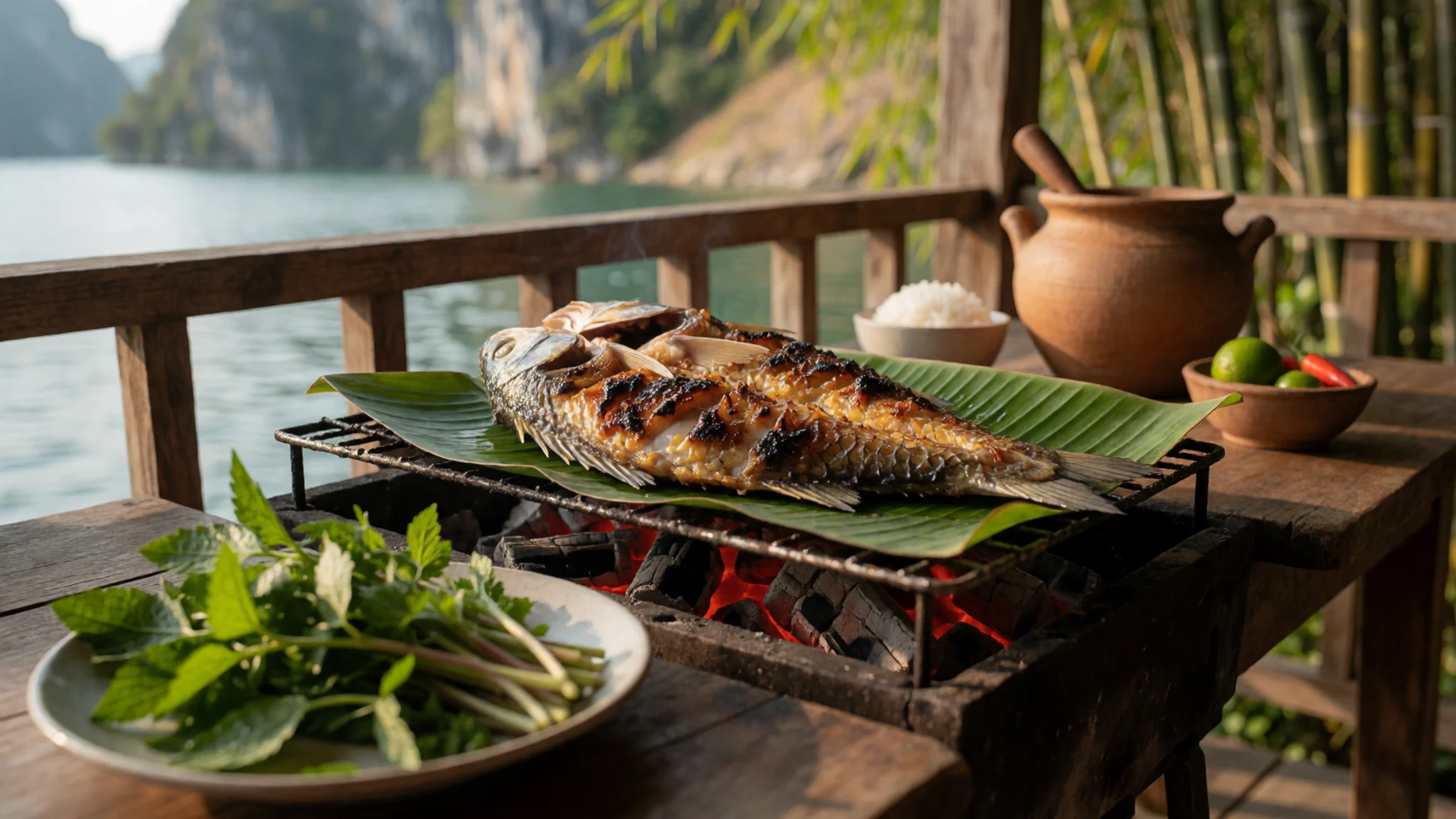
- Lạp xưởng — homestay kitchens and the market in Chợ Rã
Lạp xưởng is the cured pork sausage of the Tày kitchen in Ba Be National Park, smoked or air-dried until the slices are firm and slightly sweet. It is fried with egg or eaten with cơm lam, and it keeps for a boat day. - Măng đắng — homestay kitchens
Măng đắng is the bitter bamboo shoot cooked in Ba Be National Park, boiled and rinsed, then simmered with fish or pork so the bitterness settles into something clean and sharp. Homestay cooks serve it as a shared bowl with rice. - Rau rừng — homestay kitchens and the morning market in Chợ Rã
Forest greens, gathered around Ba Be National Park and often called rau rừng at the table, are stir-fried with garlic or dropped into a clear soup. The mix changes with the week: young leaves, fern tips, and herbs that do not appear in a city market.
Plan it
Best time. October to April is the drier season at Ba Be National Park. October, November and March are the most comfortable, with clearer air and easier paths; the middle of that stretch is cooler, with mist on the lake at dawn. May is the hottest month and April nearly matches it, while June through August is wettest and August rainiest, with higher water, mud on the trails and a louder river at the waterfall.
How long. 2–3
Getting there. The nearest airport is Noi Bai in Hanoi. From the city the journey goes by road through Thái Nguyên to Chợ Đồn, and a van then carries you to the landing at Bó Lù for the boat.
Budget. low
Tips
- Book a lakeside homestay ahead for weekends in the drier months
- Start the boat early, when the water is calmer and the mist has not yet lifted
- Carry cash; card machines are rare in the villages
- In the wet months, check with the boatman before planning the cave or the waterfall, because landings and paths change with the water
Etiquette
- Take shoes off before entering a stilt house
- Ask residents before taking photographs
- Do not leave rubbish on the boat, the shore or the island
Nearby
Sources
- Wikidata (CC0)
- Wikipedia (CC BY-SA 4.0)
- Wikivoyage (CC BY-SA 4.0)