Bai Tu Long Bay
Bai Tu Long Bay, Vietnam

Bai Tu Long Bay is a working coast of limestone islets, fishing boats and island harbours just beyond Ha Long Bay.
The place
Bai Tu Long Bay (Vịnh Bái Tử Long) is a broad inlet of the Gulf of Tonkin in Quang Ninh, on Vietnam's northeastern coast, just beyond Ha Long Bay. Limestone islets rise from green water, and wooden fishing boats move between them toward floating houses and island harbours. The bay takes in Bai Tu Long National Park, a spread of karst, sea and island forest. There is no waterfront city standing over the bay. Cai Rong, the harbour town of Van Don, is the gateway, where passenger boats, supply runs and overnight junks set out for the islands. Further out, Quan Lan, Minh Chau, Ngoc Vung and Tra Ban are inhabited islands: sandy shores, fishing hamlets, pagodas, and lanes where boats are mended in the shade. The rock is drowned karst — towers and ridges of limestone, sea-cut at the waterline, with caves where the tide has worked the stone. Mangrove clings to the flatter shores. In the cooler dry months the bay can be bright and calm enough for long island hops; in the humid months haze, sudden rain and tropical storms shorten the day and keep smaller boats in harbour. Families still live on the water and on the islands, drying squid, mending nets and selling the morning catch. The visit runs through those working lanes as well as the karst.
Its story
Bai Tu Long Bay takes its name from a dragon story that northern Vietnamese families still tell about this coast. In that telling, a mother dragon came down from the sky to defend the people of the shore, and her children followed. Where her body thrashed, the sea filled with the karst towers now called Ha Long, the descending dragon. The children settled the next reach of water, and the islets here are said to be the trace of their bodies and tails. The name is usually heard as a gesture of respect toward those young dragons. Beside the legend is a plainer history of fishing, salt and small trade, a screen of harbours between the open gulf and the inland towns. Cai Rong grew as the place where that traffic comes ashore. Floating villages — houses on rafts and barrels — were the practical answer to a bay with little flat land. Some have since been encouraged onto the islands, so a boat now passes raft houses, shore hamlets and tour junks in the same channel. Before dawn the lamps of squid boats still prick the dark between the karsts, and by mid-morning the catch is sorted on deck while the limestone turns pale in the haze. The bay's story is that double life: a sacred dragon in the rock, and a fishery that has not handed the water over entirely to sightseeing.
What to see
- Karst channels — open bay
Bai Tu Long Bay's karst is a field of limestone towers and low ridges standing out of the sea, threaded by narrow channels. Boats slip between walls stained dark at the waterline, where the tide has undercut the rock. Mangrove takes the shallower shelves, and each turn opens another corridor of stone, fishing stakes and green water.
- Floating villages — karst channels
Bai Tu Long Bay's floating villages are wooden houses on rafts and barrels in the lee of the karsts, with boats at the step and squid drying overhead. Families live by nets and the market run into Cai Rong. Some households have moved ashore, so the rafts now share the channels with island hamlets.
- Quan Lan and Minh Chau — Quan Lan and Minh Chau
Quan Lan and Minh Chau are islands Bai Tu Long Bay's boats head for from Cai Rong, low and sandy after the steep karst. Quan Lan holds a long beach, a fishing harbour and a temple ground among the houses. Minh Chau, across a narrow strait, offers pale sand, casuarina shade and shallow water.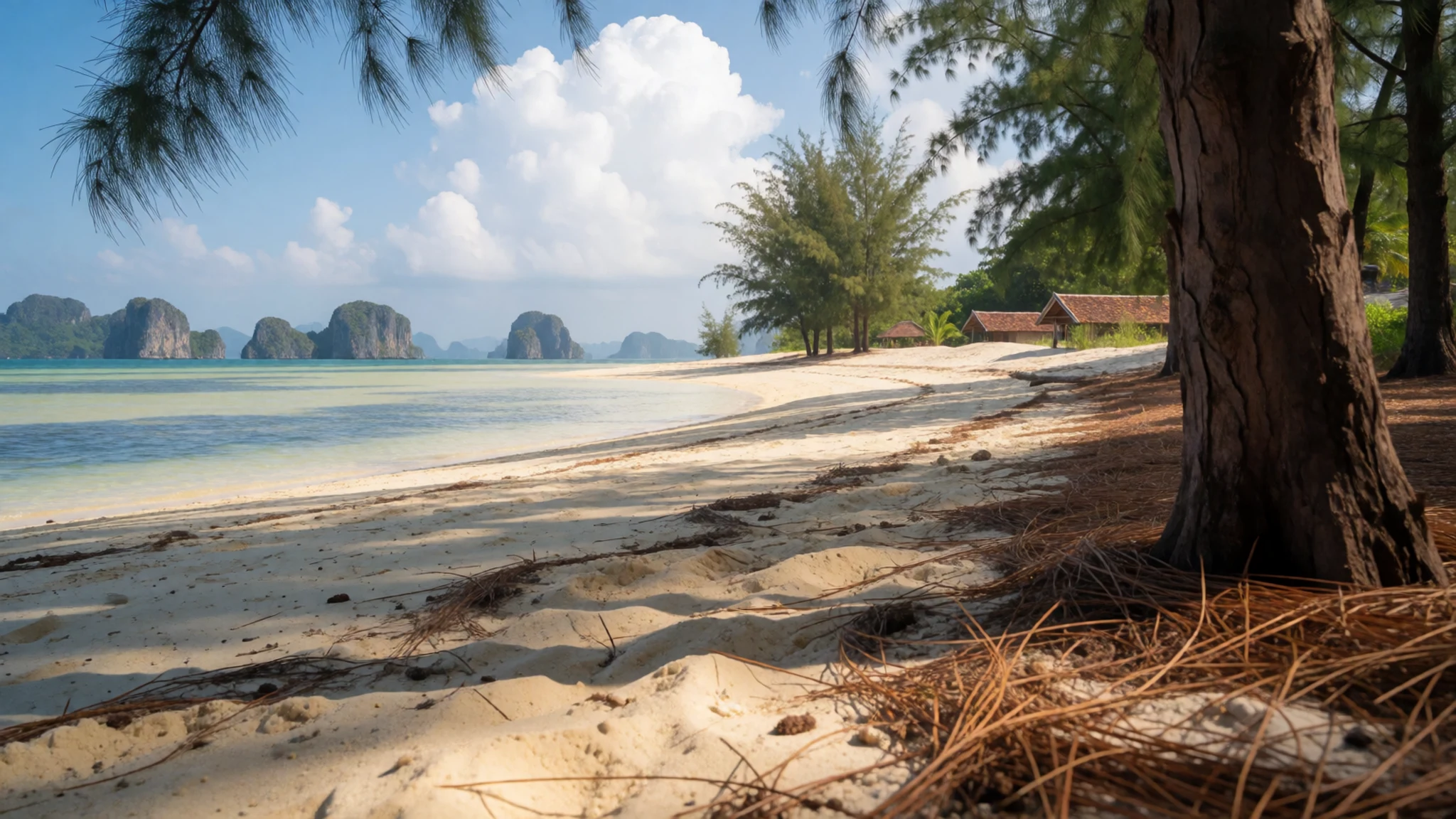
- Cai Rong harbour — Van Don
Cai Rong is the harbour town where a trip into Bai Tu Long Bay begins, on the Van Don side of the water. The quay is a working front of passenger boats, supply runs, ice and the night boats that go out for squid. The morning market just inland shows what the bay landed before anyone cooks it.
- Island pagodas — Quan Lan
Island pagodas in Bai Tu Long Bay are small compounds of tiled roofs and incense, set back from the sand on Quan Lan and neighbouring shores. They are working places of worship for fishing families, so the courtyard may hold only fruit, flowers and a stick of incense. A path beyond the houses runs through casuarina toward a headland.
Culture
Bai Tu Long Bay's culture is a fishing culture first. The day follows tide, weather and the squid season. Families on the islands and the rafts speak Vietnamese with the coastal accent of Quang Ninh, and village life still turns on the harbour, the market and the pagoda. Festivals follow the lunar calendar: boat blessings and Tet, when people who work away come home and the yards fill with incense. The dragon legend is a way of saying why the karst exists and why the sea deserves respect. It sits beside ordinary Buddhism and the cult of ancestors, with family altars in the house and offerings before a risky month afloat. A catch is shared and a wedding feeds the whole lane. Strangers who sit down are usually fed before they are questioned, because food and kinship are the same subject on this water. Tourism has added junk crews, homestays and a trade in shells, which older fishers watch with mixed feelings. Ask before photographing people or the inside of a house, and take your shoes off at a pagoda door.
What to wear
Bai Tu Long Bay dresses as northern Vietnam does, adapted to salt, sun and boats. The formal garment is the áo dài, a long tunic split at the sides over trousers, worn for weddings, festivals and Tet rather than for hauling nets. Silk is the ceremonial cloth, sometimes brocade, more often a plain strong colour; everyday cloth is cotton. On the rafts and in Cai Rong people wear what the work demands: T-shirts, loose trousers, a nón lá or a cap against the glare, and rubber sandals that kick off on a wet deck. Young people add jeans and trainers on the mainland run. Visitors need light clothes that dry quickly, a hat, sun cream and a layer against the boat wind. Rubber-soled sandals grip wet limestone better than smooth soles. At a pagoda, covered shoulders and knees, and shoes left at the step, match what local families already do. A thin raincoat earns its place in the humid months, when a crossing can turn wet without warning. Swimwear stays on the beach.
What to eat
- Chả mực — Cai Rong morning market and quay-side eateries
In Bai Tu Long Bay, chả mực is squid pounded with spice, fried as small cakes and eaten with rice, herbs and nước chấm. The cakes turn up at Cai Rong's morning market and at eateries inland of the quay.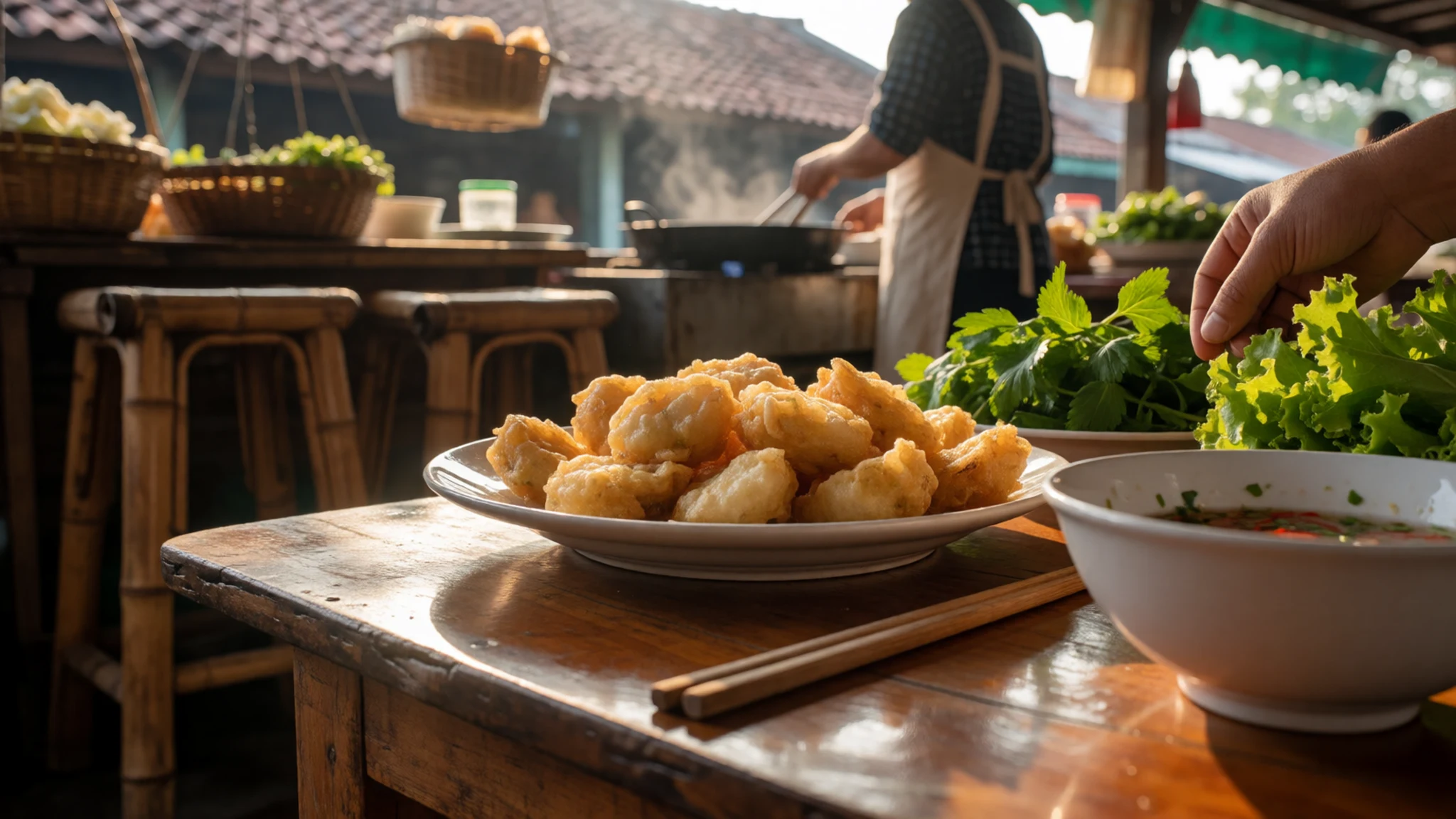
- Grilled squid — island beaches, Cai Rong pavement braziers, overnight junks
Grilled squid is the simplest meal on Bai Tu Long Bay: whole squid scored, charcoal-grilled and served with salt, chilli and lime. It shows up on island beaches in the late afternoon, at pavement braziers in Cai Rong, and on overnight junks.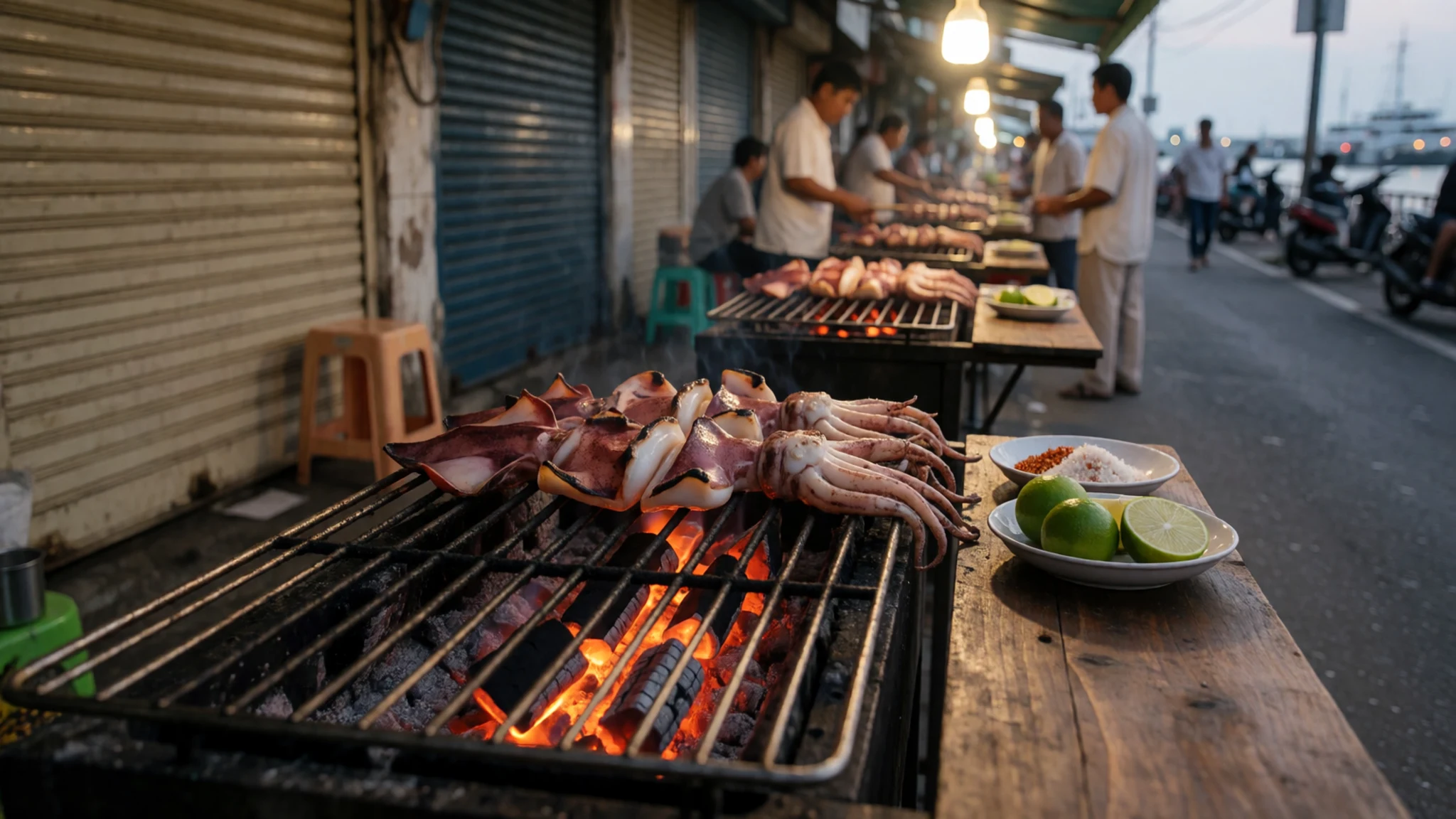
- Steamed clams — Cai Rong market and island harbours
Steamed clams are a Bai Tu Long Bay staple, opened over lemongrass, ginger or a sharp broth and eaten with herbs and rice. Stalls around Cai Rong market and the island harbours sell them by the bowl when the boats come in. - Bún hải sản — eateries by Cai Rong quay and island villages
Bún hải sản is Bai Tu Long Bay's breakfast bowl: rice noodles in a clear seafood broth with squid, fish or crab and a pile of herbs. Eateries by Cai Rong quay ladle it out from early morning, and island villages serve a plainer pot when the boats are in. - Rươi — Cai Rong kitchens in season
Rươi, a seasonal sea worm, is the dish Bai Tu Long Bay's cooks wait for. Gathered for a short stretch of the lunar year, the worms are fried in omelettes or simmered with onion and herbs, and they appear in Cai Rong kitchens only while that season lasts.
Plan it
Best time. In Bai Tu Long Bay, March and April bring warmer dry days and easier crossings, and October and November are cooler and more settled after the summer rains. From May to September the bay is hot, humid and open to heavy rain and tropical storms, and smaller boats stay in harbour.
How long. 2–3
Getting there. Fly into Noi Bai at Hanoi and continue by road to Cai Rong, or use Van Don Airport, which sits close to the bay. From Cai Rong quay, hired boats and overnight junks make the last leg into the islands. Check operators for current crossings.
Budget. mid
Tips
- Book boats ahead for March, April, October and November, when the quay is busiest.
- Start crossings early, before wind and haze build.
- Carry cash; cards are unreliable on the islands and at the market.
- Take drinking water and sun cover, and stay in Cai Rong if a storm warning is posted.
Etiquette
- Ask before photographing people, homes or catch on deck.
- Remove shoes at pagoda steps and cover shoulders and knees there.
- Keep wake low beside floating houses and set nets, and do not buy coral or turtle products.
Nearby
Sources
- Wikidata (CC0)
- Wikipedia (CC BY-SA 4.0)
- Wikivoyage (CC BY-SA 4.0)