Cat Ba
Cat Ba, Vietnam

Cat Ba is a limestone island of forest, small coves and a working harbour beside the channels of Lan Ha Bay.
The place
Cat Ba sits in the Gulf of Tonkin off northern Vietnam, a limestone island whose ridges fall straight into green water. Its town holds a sheltered harbour on the southern shore, a waterfront and a market pressed between the quay and the first steep hill. Behind that strip, forest covers most of the island: sharp karst, sinkholes and narrow valleys under a heavy canopy. East and south, small sandy coves open out, Cat Co among them. West and north, the coast breaks into the islets and channels of Lan Ha Bay. The harbour is a fishing port as well as a holiday stop. Wooden boats and tour junks share the quay. Family beach trips and budget boats into Lan Ha are the working life of Cat Ba, beside a market of squid, herbs and charcoal. By late afternoon the promenade fills, and the ridge behind the roofs goes dark early. Inland, trails and caves are reached on foot. Paths are steep and often slick, and the forest is loud with insects rather than engines. A modest road links town with the beaches, the park gate and a few villages; much of the coast is practical only by boat. April and November are the months for walking and for boats. Summer is hot, humid and stormy enough that a day on the water can vanish. Winter nights can be cold, grey and misty, which quiets the harbour and hides the ridges.
Its story
Cat Ba's story is a fishing coast that learned, late, how to live with war and then with visitors. For generations the harbour and the villages on the water supplied Hai Phong with fish, squid and shellfish. People kept boats before they kept solid houses, and the channels were a workplace long before they were a view. The name said as Cat Ba is Cát Bà in Vietnamese, often explained locally as an island linked with women; the folk version is gentle, and daily memory is more practical than mythical. Above town, the hill keeps a harder chapter. During the American war, medics cut a hospital into the rock — corridors, wards and an operating room hidden from aircraft — now open as the Cave Hospital. Gun positions nearby, remembered as Cannon Fort, watched the sea lanes toward Hai Phong. The concrete is low, plain and military, and it stands a short walk from a waterfront that sells kayak trips. The ferries have not improved the lot of the Cat Ba langur, a golden-headed primate of these karsts that was hunted for years. Park rules and local conservation now treat the animal as a limit on use: parts of the forest are kept quiet. Travellers followed Ha Long's fame and then drifted to Lan Ha, where the boat traffic is thinner. The harbour still wants the trade; the limestone interior cannot take all of it.
What to see
- Cat Ba town — southern harbour
Cat Ba town is the harbour settlement: a low waterfront of boats, a market and a promenade under the first ridge. At dawn the quay is still a port of ferries and fishing boats. By evening it becomes the island's walk, with grilled squid under the dark hill. Crossable on foot, it is the base for trails and boat landings.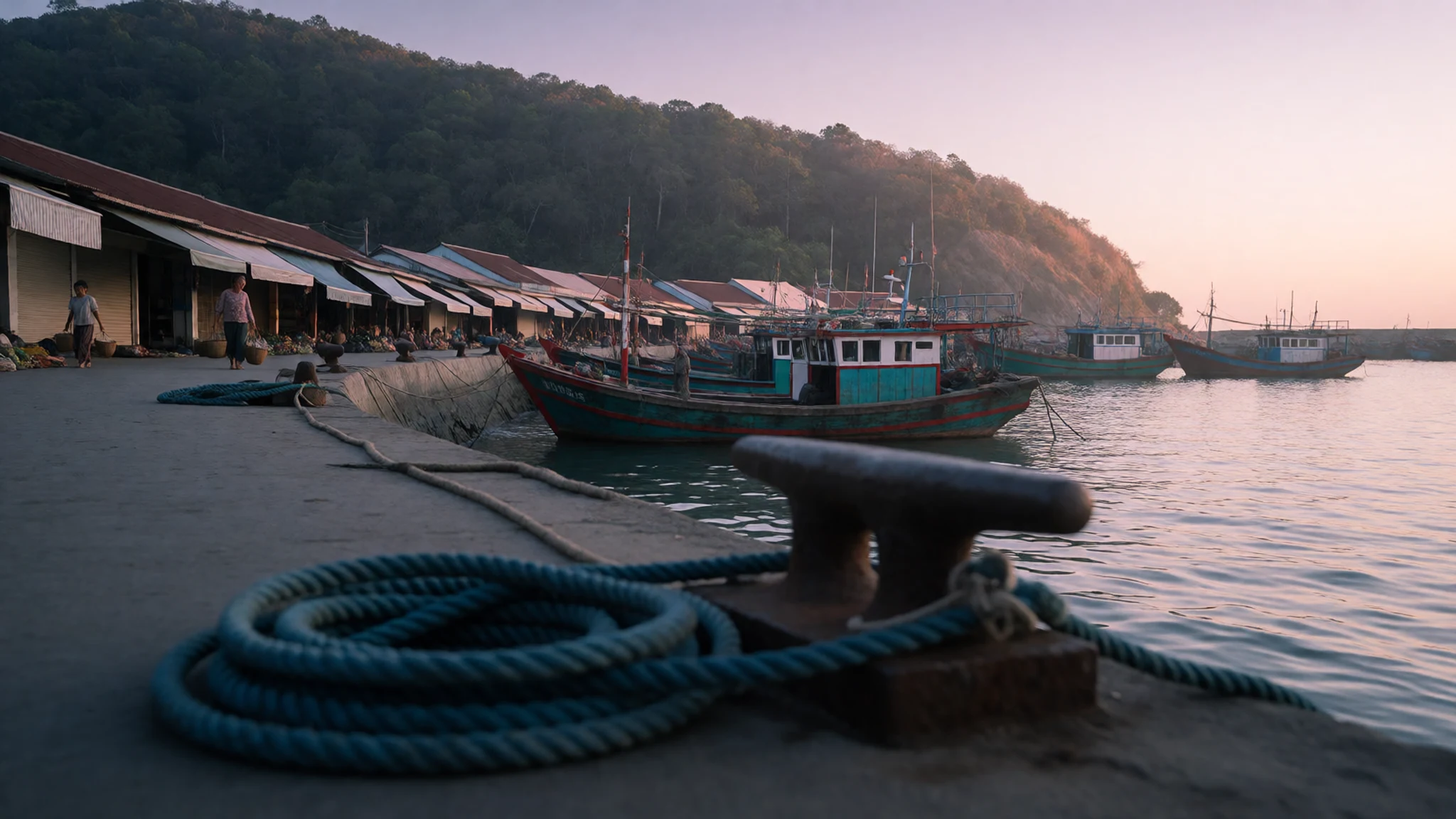
- Lan Ha Bay — western and northern waters
Lan Ha Bay is the broken water on Cat Ba's western and northern flank, limestone islets and narrow channels. A boat day is the island's main excursion: kayaks in lagoons, a swim under the walls, lunch on a junk as the cliffs slide past. Morning boats miss the worst of the mainland traffic, and a summer storm can cancel the trip before anyone leaves.
- Cat Co — south-eastern shore
Cat Co is a string of small sandy beaches on Cat Ba's south-eastern shore, a short ride from town. The cove nearest the road has a curve of sand, beach cafés and water that stays calm when the wind drops. Neighbouring coves fill on hot weekends and feel roomier on a weekday. After heavy rain the shallows turn murky.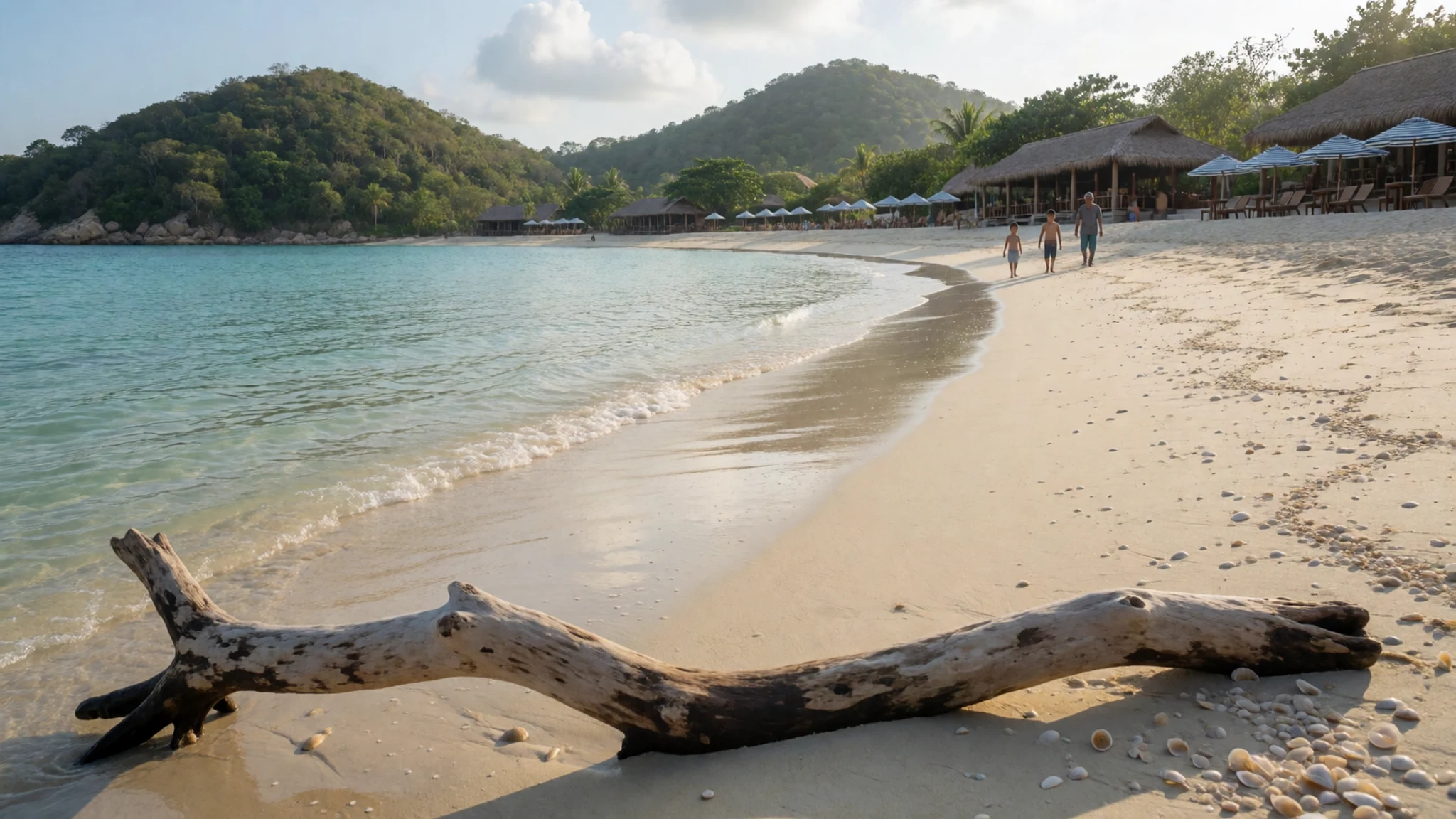
- Cave Hospital — hill above town
The Cave Hospital is a wartime medical complex cut into the hill above Cat Ba town so that care could continue under bombardment. Concrete corridors run back into the rock, through rooms that held beds, stores and an operating table. The air is cool and nothing is dressed up: it remains a field hospital, a short walk from the harbour.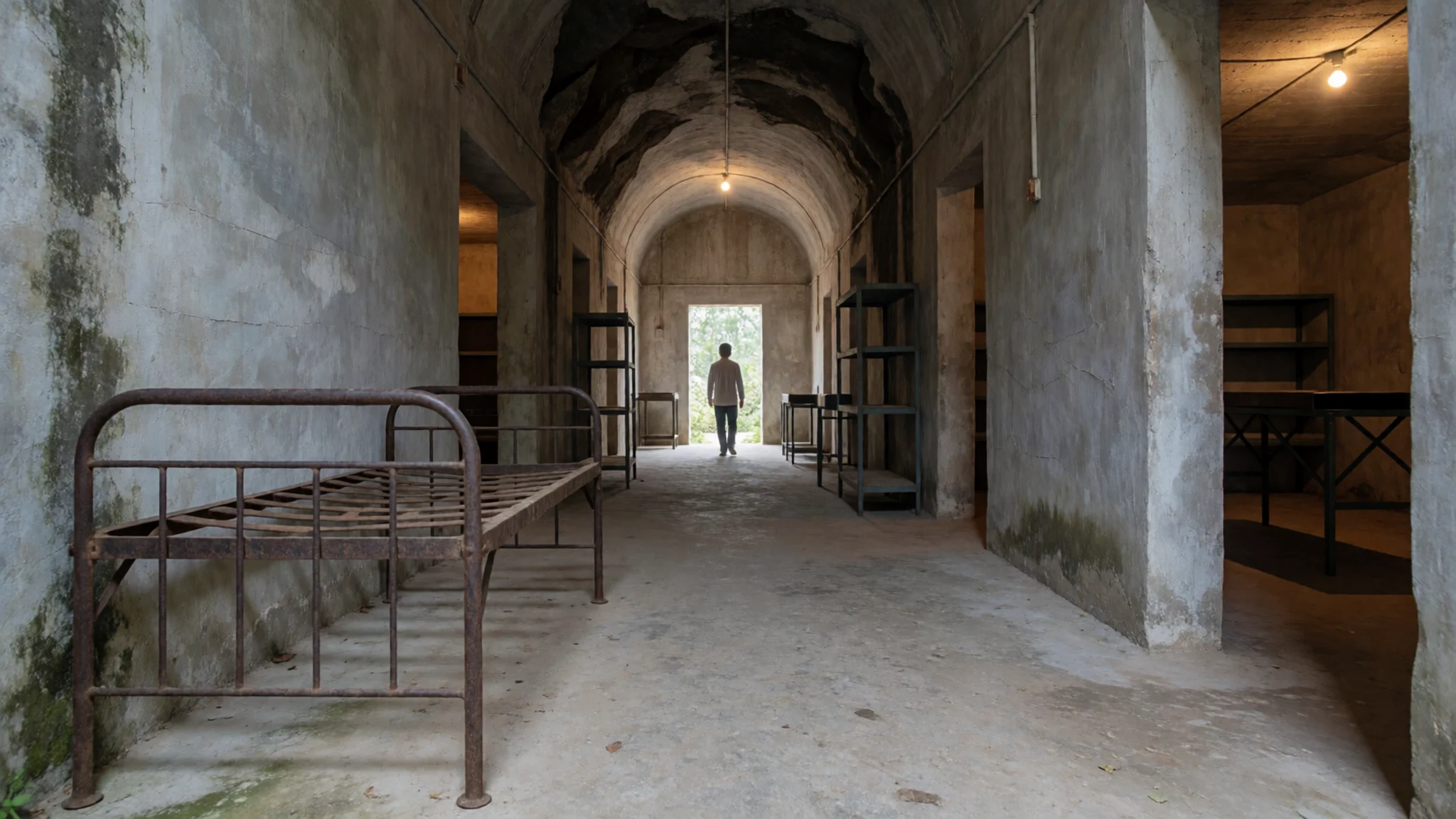
- Ngu Lam Peak — forested interior
Ngu Lam Peak is a lookout in Cat Ba's forested interior, on a park trail through humid karst woodland. The path is steep, rooted and slippery. In clear weather the top looks over ridges and islets; mist, common outside the sunny months, can erase the view. The climb is worth making for the forest alone.
Culture
Cat Ba's culture is that of a northern fishing town: Vietnamese-speaking, tied to the lunar calendar, and organised around the sea and the family altar. The morning market is the social centre, where neighbours eat phở on their feet and the catch is talked over before it is cooked. Ancestor offerings — fruit, incense, photographs — stay inside ordinary houses, not on show for visitors. Pagodas are modest. At Tết many boat workers leave; the town quiets into family meals rather than a public festival. Tourism is now ordinary work. Young people guide kayaks, ride the harbour road and crew boats into Lan Ha, moving between Vietnamese holidaymakers in the hot months and foreign travellers when the air is milder. English is patchy and practical. A late boat is usually weather or a crowded quay, and a greeting in Vietnamese, xin chào or cảm ơn, lands better than a raised voice. The night promenade belongs to loud music, massage shops, touts and drunk visitors. Take your shoes off when you step up into a pagoda or a family house, and ask before you photograph anyone at the market or a fisher on a boat.
What to wear
Cat Ba dresses as a working harbour, not as a stage for costume. Vietnam's traditional áo dài — a long tunic over trousers, in silk or a light synthetic — comes out at Tết, weddings and school ceremonies, and is rare on the quay at noon. Older fishers and market women wear loose cotton trousers, a faded long-sleeve shirt and a conical nón lá, an outfit for sun, salt and a day on deck. Highland indigo is something visitors bring in their imagination; here the cloth that matters is cotton, nylon and a thin raincoat. Most days on the promenade are T-shirts, shorts or jeans, and sandals. Crews add a hat, a wind jacket and shoes that can soak. A winter evening needs a warm layer; summer dress barely changes between boat and street. Visitors to Cat Ba need clothes for heat, a sudden downpour and a pagoda door. Quick-drying layers, a hat and swimwear cover the beach and the bay. Trainers or firm sandals are the footwear that works: town is paved, but Ngu Lam and the Cave Hospital steps are slick. A scarf or long shirt over the shoulders is enough for a shrine. Heels and pale linen suit drier ground.
What to eat
- Bánh đa cua — the morning market and harbour-road noodle shops
Bánh đa cua is the crab noodle soup of the Hai Phong coast, and on Cat Ba it arrives as rice noodles in a reddish broth with fried shallot. Morning-market stalls and harbour-road noodle shops serve it from early in the day.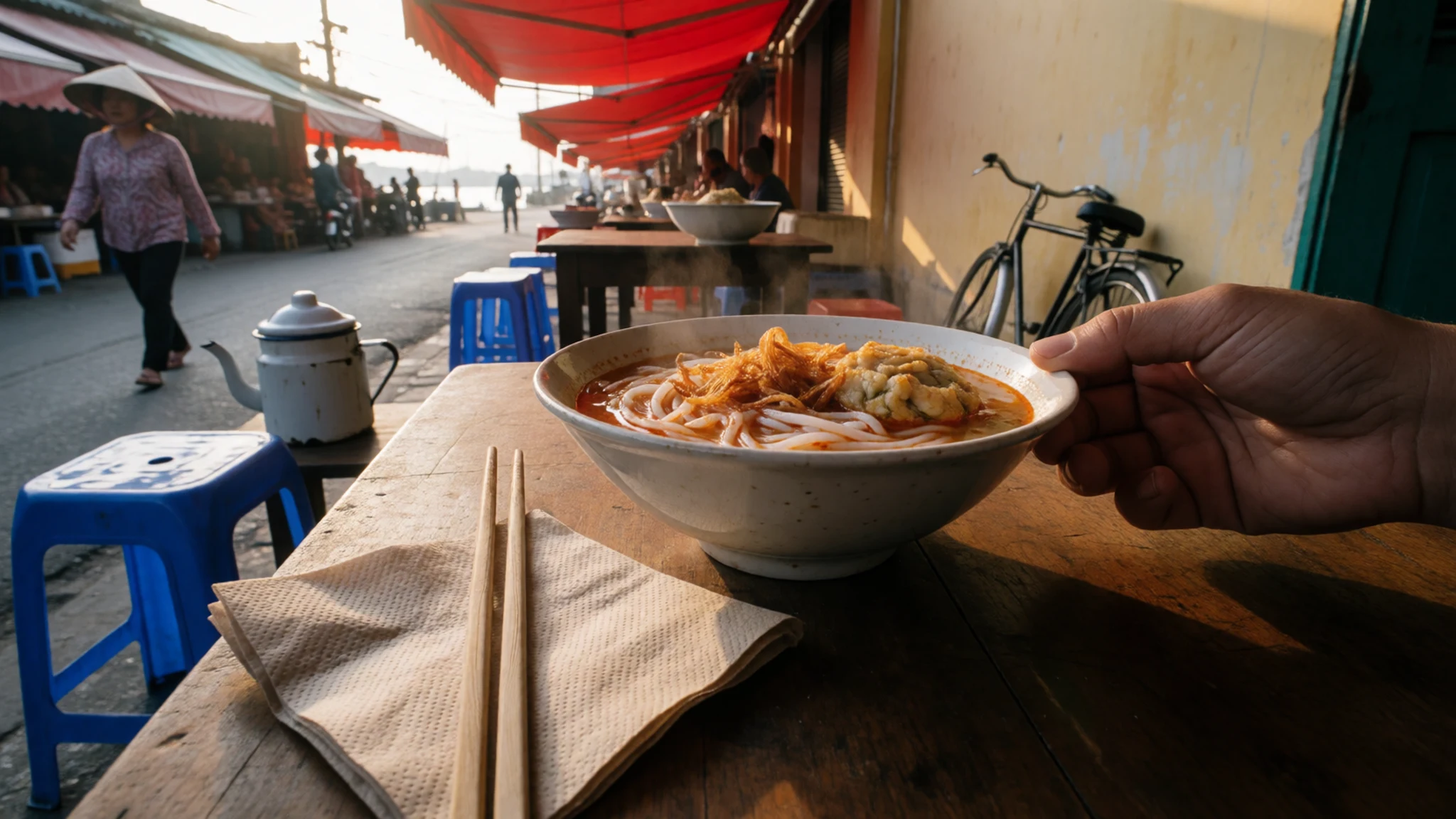
- Chả mực — the market and eateries off the promenade
Chả mực is a fried squid cake, a Hai Phong habit that Cat Ba makes with the morning's catch. The squid is pounded, seasoned and fried in patties. It turns up at the market and at family eateries off the promenade, with rice or in a noodle bowl.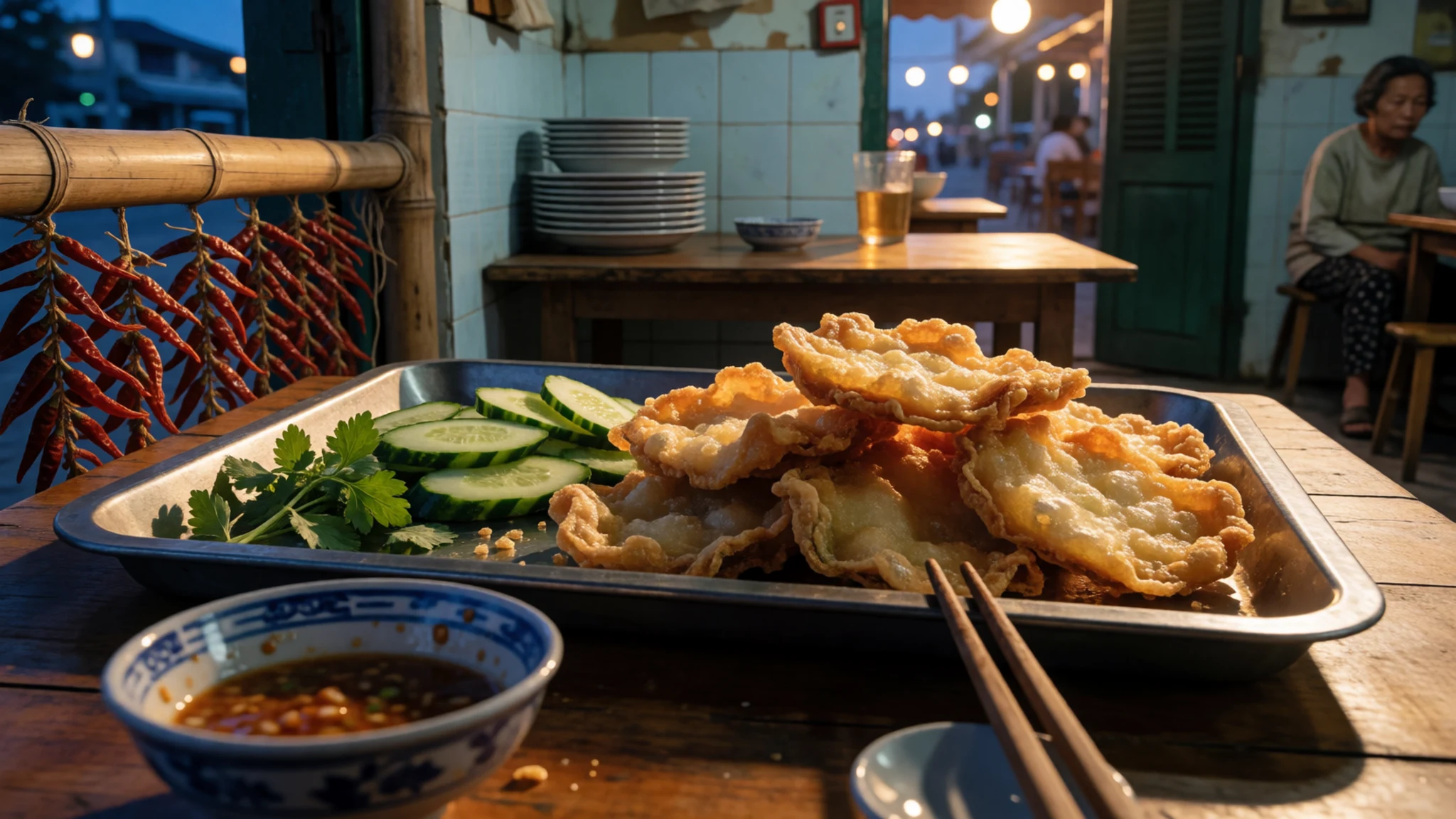
- Mực nướng — promenade stalls after dark
Mực nướng, squid grilled over charcoal, is Cat Ba's waterfront meal after dark. Whole squid are scored, brushed with oil, chilli and lime, and cooked at plastic-stool stalls along the promenade. It is eaten hot, with salt, pepper and a sharp chilli dip, while the edges are blistered. - Ghẹ — seafood eateries behind the waterfront
Crab on Cat Ba is a harbour product rather than a luxury import. Ghẹ, the swimming crab, is steamed or stir-fried with tamarind at seafood eateries behind the waterfront, cooked from whatever the boats landed. The meat needs little more than tamarind, fish sauce and a little sugar. - Lẩu hải sản — family eateries a street back from the quay
Lẩu hải sản, a seafood hotpot, is the shared evening meal on Cat Ba when several people want the day's catch in one pot. Shrimp, fish, squid and greens go into a sour or clear broth at family eateries a street back from the quay.
Plan it
Best time. May is the hottest month and August the wettest; April and November are the comfortable ones for boats and walking, and April is the one warm enough to swim. Summer is hot, wet and liable to storms that cancel Lan Ha. Winter nights can be cold, grey and misty.
How long. 3–4
Getting there. Cat Ba is reached from Hanoi, via Noi Bai Airport or the city, by road towards Hai Phong and then a ferry or speedboat to the island harbour. Boats also leave from the Ha Long side. There is no airport and no railway on the island; the last leg is by water and is the one weather delays.
Budget. mid
Tips
- Book the Lan Ha boat a day ahead at weekends, and keep the next morning spare if a storm cancels it.
- Begin Ngu Lam and the Cave Hospital early, ahead of the heat and the groups.
- Carry cash for the market, beach cafés and small boats; cards fail outside larger guesthouses.
- Agree a seafood price before a tank crab is cooked, and drink bottled or boiled water.
Etiquette
- Remove shoes at a pagoda step or a family doorway.
- Ask before photographing fishers, vendors or children.
- Leave shells, coral and rock in place, and do not feed monkeys on the trails.
Nearby
Sources
- Wikidata (CC0)
- Wikipedia — Cát Bà Island (CC BY-SA 4.0)
- Wikivoyage — Cat Ba (CC BY-SA 4.0)
- Cat Ba town, Vietnam (Public domain)
- A corridor of Cave Hospital, Cat Ba Island (CC BY-SA 4.0)
- Cat Co 1 Beach (CC BY-SA 4.0)
- Lan Ha bay (CC BY-SA 4.0)
- View from Ngu Lam Peak, Cat Ba Island, Vietnam (CC BY-SA 4.0)


Wildlife
- Cat ba langur (animal)
The Cat Ba langur is a monkey with a golden head, and it lives nowhere else in the world but this island. It is among the rarest primates on Earth, with very few left, after years of being hunted. It belongs to the island's rugged limestone hills, though nobody can promise a sighting. If you are lucky enough to glimpse one, keep a good distance, stay quiet, go with a local guide, and never offer it food.