Can Tho
Can Tho, Vietnam
Can Tho is the Mekong Delta's working river city, where boats still carry the trade, mornings start on the water and the pace stays gentle.
The place
Can Tho (Cần Thơ) sits on the south bank of the Hậu River, the larger of the two main branches of the Mekong as it nears the sea. It is the regional hub of the delta, with about 3.2 million people, and a recent merger with two neighbouring provinces has stretched the municipality well beyond the old city. The heart of town is still Ninh Kiều, the riverside district where the port, the park and most of the eateries cluster.
What sets the place apart is how the water shapes everything. Rivers and canals thread through the city and the farmland around it, so boats work as buses, delivery vans and shops. Markets form on the river at dawn, and orchards, rice fields and small workshops, such as the villages that make rice paper, sit a short boat or road ride from the centre.
The climate is tropical and monsoonal. A wet season runs from May to November, and a drier one from December to April. Average temperature is about 27°C and humidity averages 83%, so expect sticky air even on clear days. Rain tends to arrive as heavy afternoon downpours rather than all-day drizzle.
Can Tho feels like a provincial town grown large rather than a metropolis. Traffic is busy but far calmer than in Ho Chi Minh City, which lies 169 km away, roughly 3 hours by road. Locals have a reputation for friendliness, and visitors often find that a few words of Vietnamese and a smile open conversations quickly.
Its story
Can Tho dates its founding to 1789, and its history is the history of the delta itself: a land built by river silt, settled slowly, and farmed for rice. The Mekong's branches were the roads long before tarmac, so a town on a major channel naturally became a place where farmers, boatmen and traders met to swap goods.
The region has layered cultures. Before it was Vietnamese territory, much of the delta belonged to the Khmer world, and that inheritance survives in Khmer Buddhist temples around Can Tho, with their distinctive roofs and monks in saffron robes. Chinese merchants left pagodas as well, and the French added churches and villa-style buildings along the waterfront. One small pagoda near the riverside park is said to have sheltered communist revolutionaries during the war, which gives a modest building a long memory.
The old quarters reward slow walking. Xuan Khanh, where the main street is named after the 1968 Tet Offensive, keeps a village feel inside the city, and its main street runs for over 30 km, a length that surprises most newcomers.
A regional saying praises the city for its white rice and clear water, and claims that anyone who comes finds it hard to leave. The water is browner than clear these days, but the sentiment still fits the welcome. More recently the city has grown by absorbing neighbouring provinces, a change that widened its territory and its role as the delta's centre. Even so, the river remains the organising idea of the place.
What to see
- Ninh Kiều Park and riverfront — Ninh Kiều district
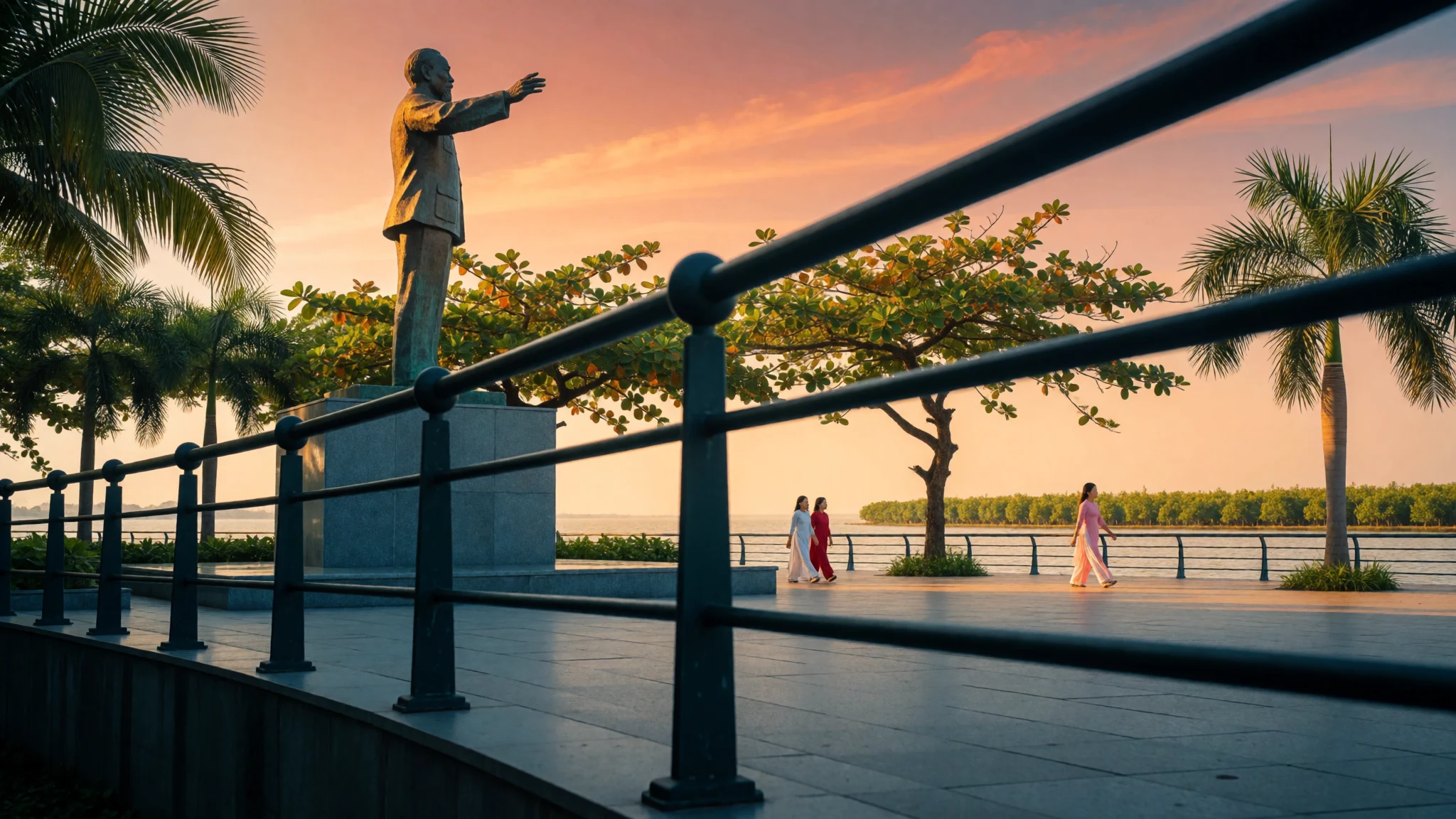
The city park runs along the Cần Thơ River from the ferry terminal towards the end of Hai Ba Trung Road. It is where locals stroll in the cool of the evening, with food stalls, boat touts and a statue of Ho Chi Minh. Come at dusk, when the heat eases and the river lights up.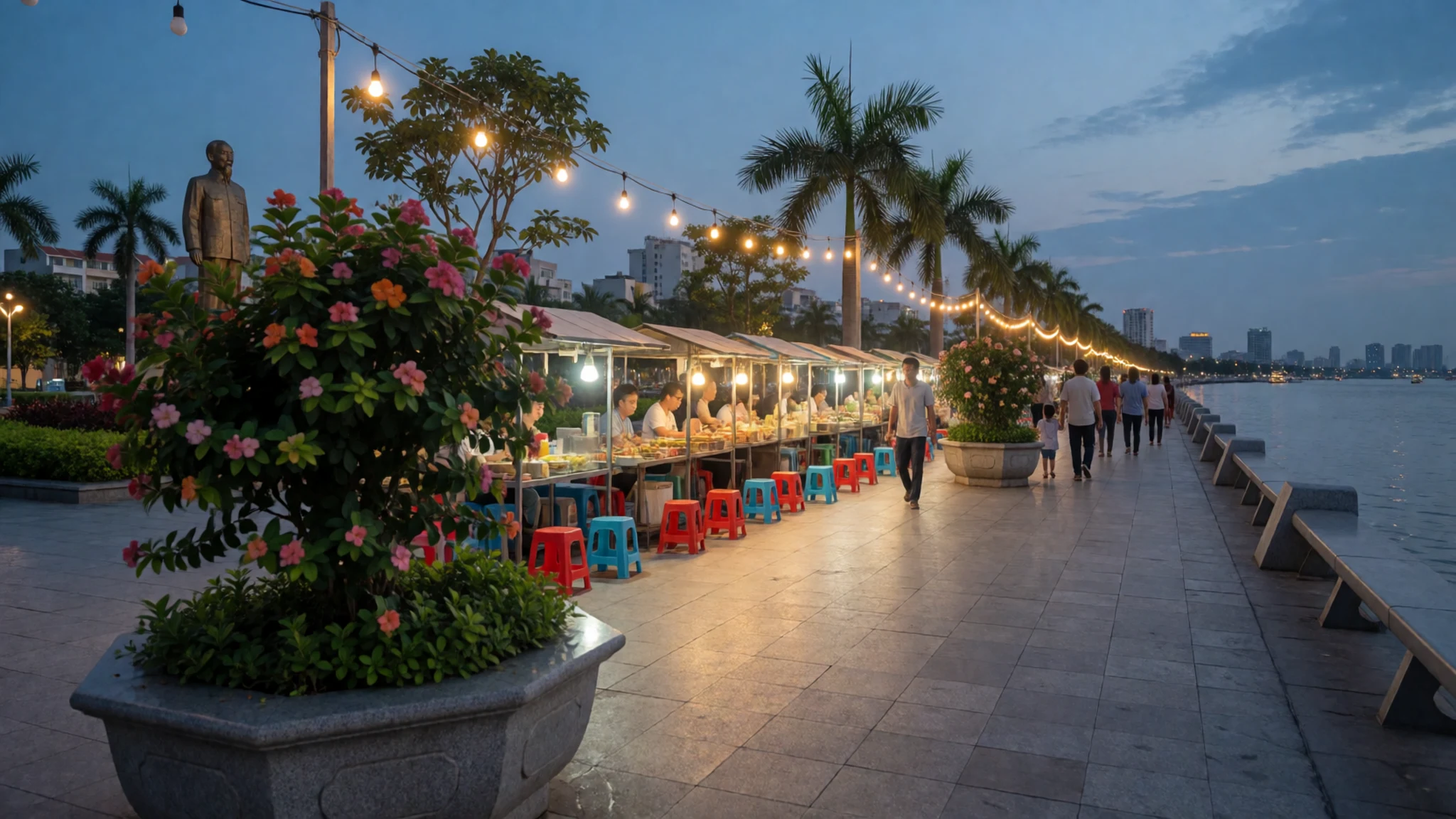
- Ong Pagoda (Chùa Ông) — Ninh Kiều waterfront
A small Chinese-style temple across from the statue in the riverside park, built in the late nineteenth century. Incense coils hang from the ceiling and the interior is dim and quiet. It is a short stop, but a good one for understanding the city's layered communities.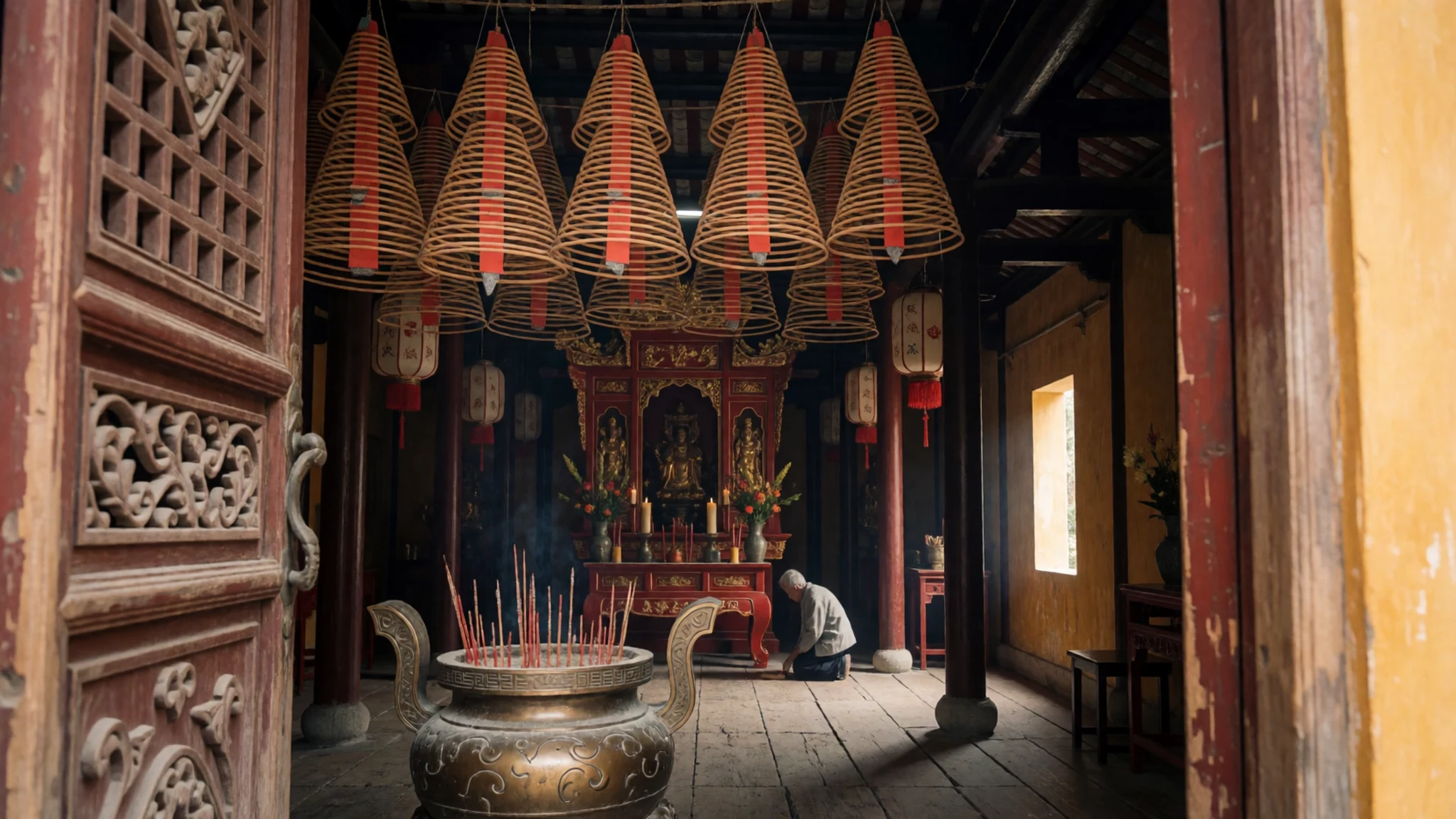
- Munirensay Temple — Central Can Tho
A Khmer Buddhist pagoda that recalls the delta's Cambodian heritage, with ornate rooflines and a calmer atmosphere than the riverfront. It is a working temple rather than a showpiece, so visit quietly, dress modestly and ask before photographing monks or worshippers.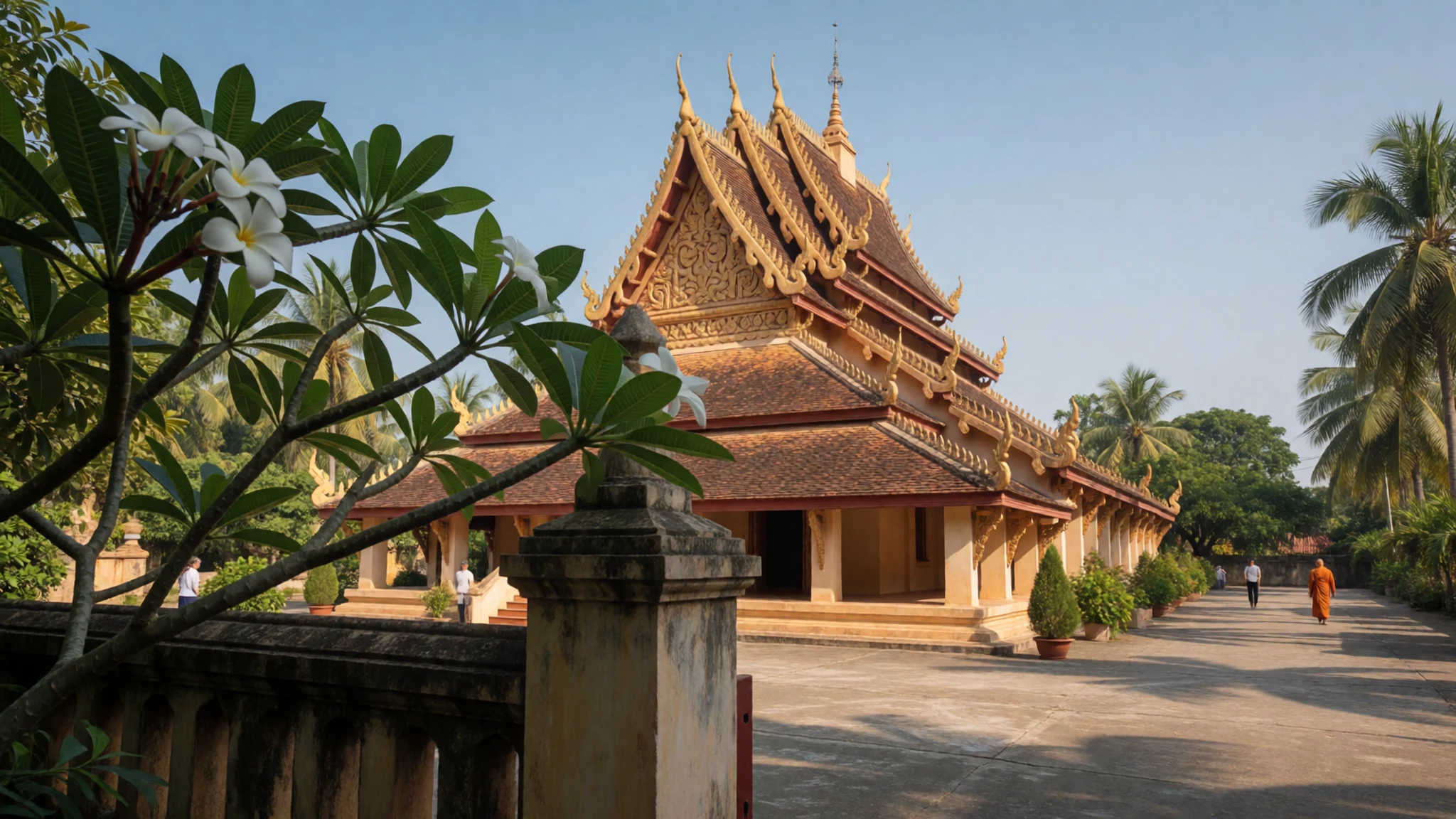
- Floating markets — Cái Răng and nearby river channels
Wholesale boats gather on the river in the early morning, advertising their cargo of fruit and vegetables on a pole at the bow. Small boats can be hired from the riverfront, and the earlier the start, the livelier and cooler it is. By late morning, trade thins out and the sun gets fierce.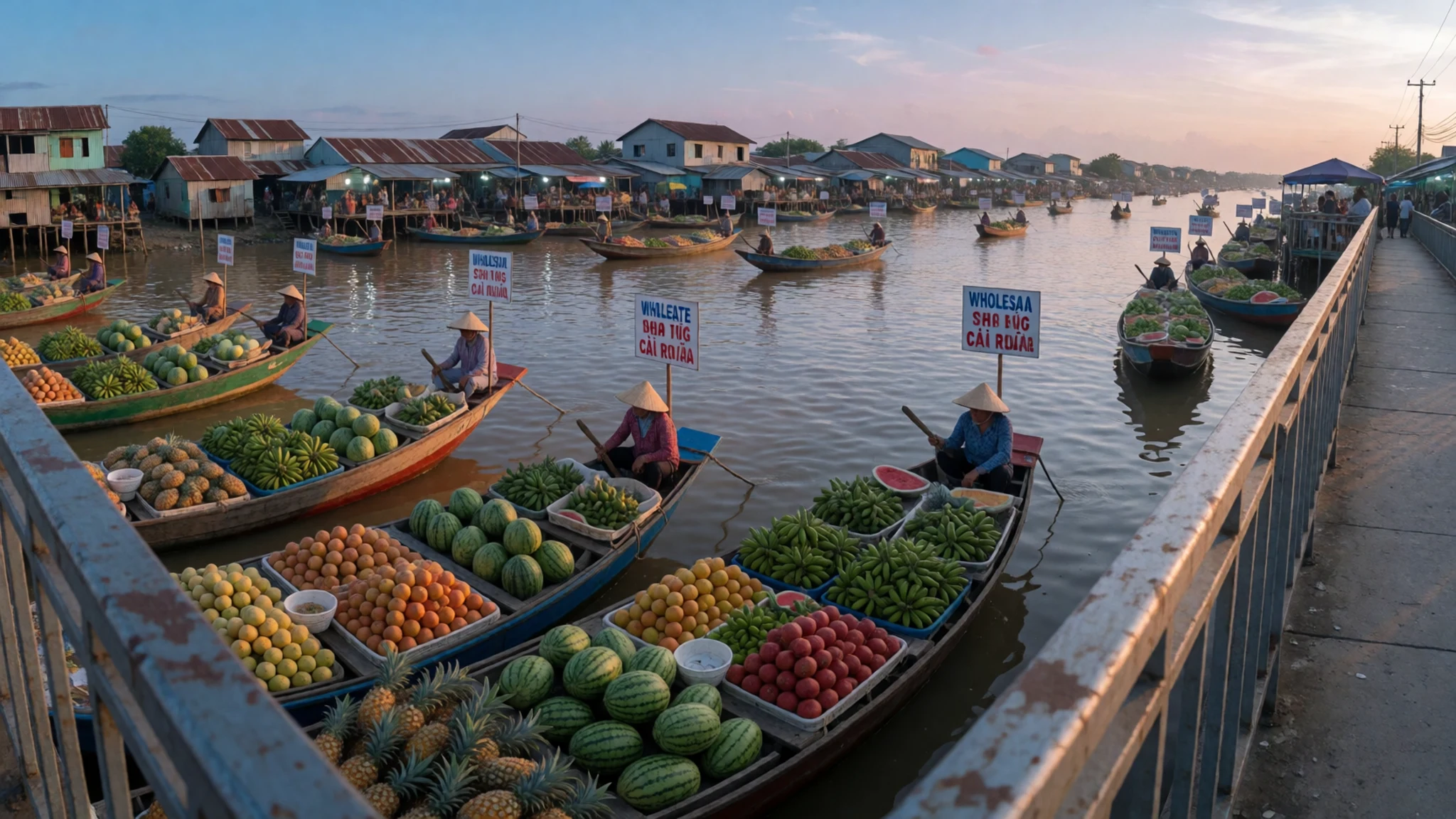
- Canals and countryside — Rural districts around Can Tho
A small boat, often with a motor, takes visitors off the main river into narrow canals lined with stilt houses, coconut palms and orchards. The shade and slower pace make this a good way to see delta life. Agree the route and duration with the boatman beforehand.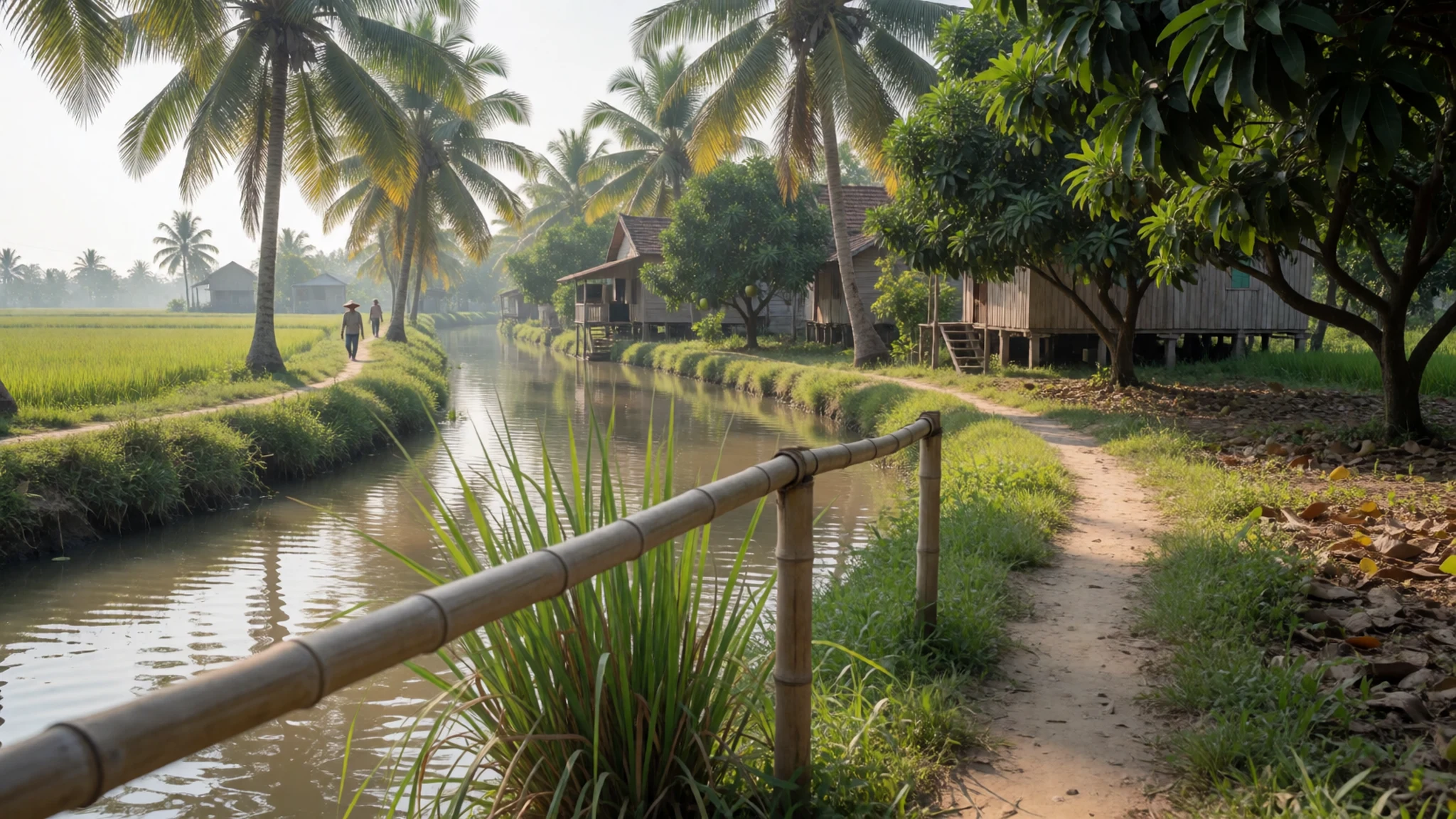
Culture
Can Tho's culture is a delta blend of Vietnamese, Khmer and Chinese influences, held together by river life and rice farming. Buddhism is the most visible faith, with Vietnamese pagodas, Khmer temples where monks are a common sight, and Chinese assembly halls. There are also Catholic and Protestant churches, a reminder that the region has never been uniform.
Daily life follows the water. Many families still live on or beside canals, shop at floating or covered markets, and measure the day by when the boats leave. Mornings start early, often before sunrise, with coffee and a bowl of noodles or a bánh mì from a roadside stall. Afternoons are slow in the heat, and evenings bring people out to the riverfront.
Social manners here are warm and unhurried. People greet visitors readily, and conversations often begin with food, family and where you come from. Music in the delta includes đờn ca tài tử, a style of southern folk music played on string instruments at gatherings, weddings and festivals, and it may turn up in homestays or riverside venues.
The Mekong Delta's reputation for hospitality is real, and visitors who show curiosity and patience tend to be rewarded with invitations to taste fruit, try a local snack or look around an orchard.
When visiting a pagoda or temple in Can Tho, cover your shoulders and knees, take off your shoes before stepping onto the prayer-hall floor, and ask before photographing monks or worshippers.
What to wear
In Can Tho, the traditional dress most associated with Vietnam is the áo dài, a fitted long tunic split at the sides and worn over loose trousers, usually in silk or lightweight synthetic cloth. It appears at weddings, Tết (Lunar New Year), school uniforms and formal photos. The delta has its own everyday tradition too: the áo bà ba, a simple, loose, collared cotton shirt with trousers, worn by farmers and boat people because it is cool and practical. The chequered khăn rằn scarf, common in the south, shades the neck from sun, and the conical nón lá hat of palm leaf is still a familiar sight on boats and in fields.
What people wear now is mostly casual and designed for heat: T-shirts, light shirts, cotton trousers, sandals and flip-flops. Office workers dress neatly but lightly, and many people on motorbikes cover up with long sleeves, gloves and face masks against sun and dust. Young people in the city follow regional fashion, so jeans and trainers are common in the evening.
Visitors should pack breathable, quick-drying clothes, since humidity is high all year. A wide-brimmed hat, sunglasses and sunscreen are useful on the river, and sandals with a grip are better than smooth soles on wet boat decks and muddy canal paths. For pagodas and temples, carry a light scarf or shirt that covers shoulders and a pair of trousers or a long skirt for the knees. In the rainy season, a thin waterproof jacket or poncho is more practical than an umbrella on a small boat.
What to eat
- Nem nướng — Eateries specialising in nem nướng around central Ninh Kiều
Grilled pork patties, served with rice paper, fresh herbs, vegetables and a rich dipping sauce. Diners roll their own at the table. It is a satisfying lunch or dinner, and the dipping sauce is half of the pleasure.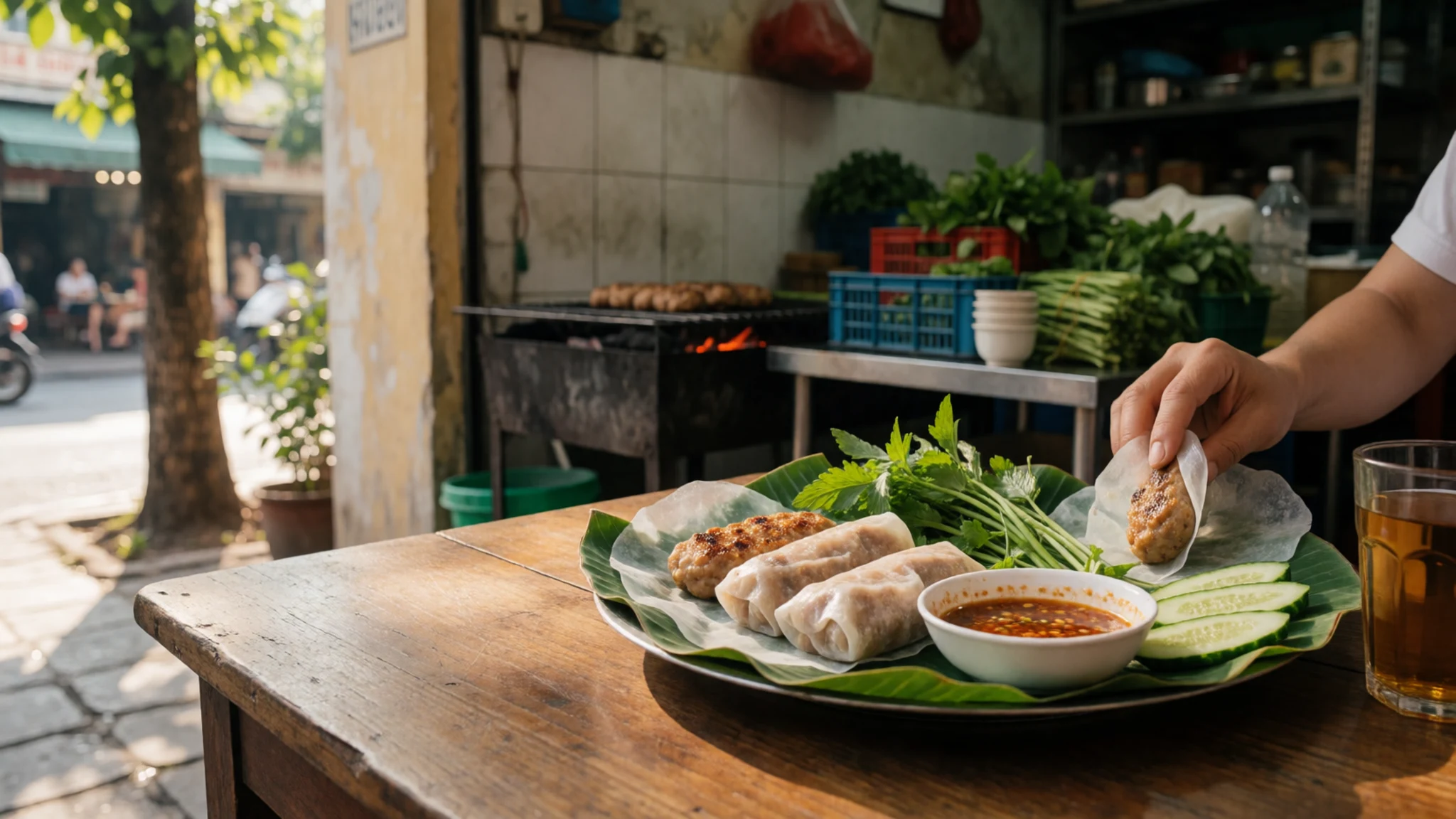
- Can Tho hot pot (lẩu) — Hot Pot Alley, a lane of restaurants near the centre
A broth simmers on a small burner at your table, and you add fish or meat, vegetables and noodles yourself. It suits groups and relaxed evenings, and the sour, herby broths reflect delta ingredients.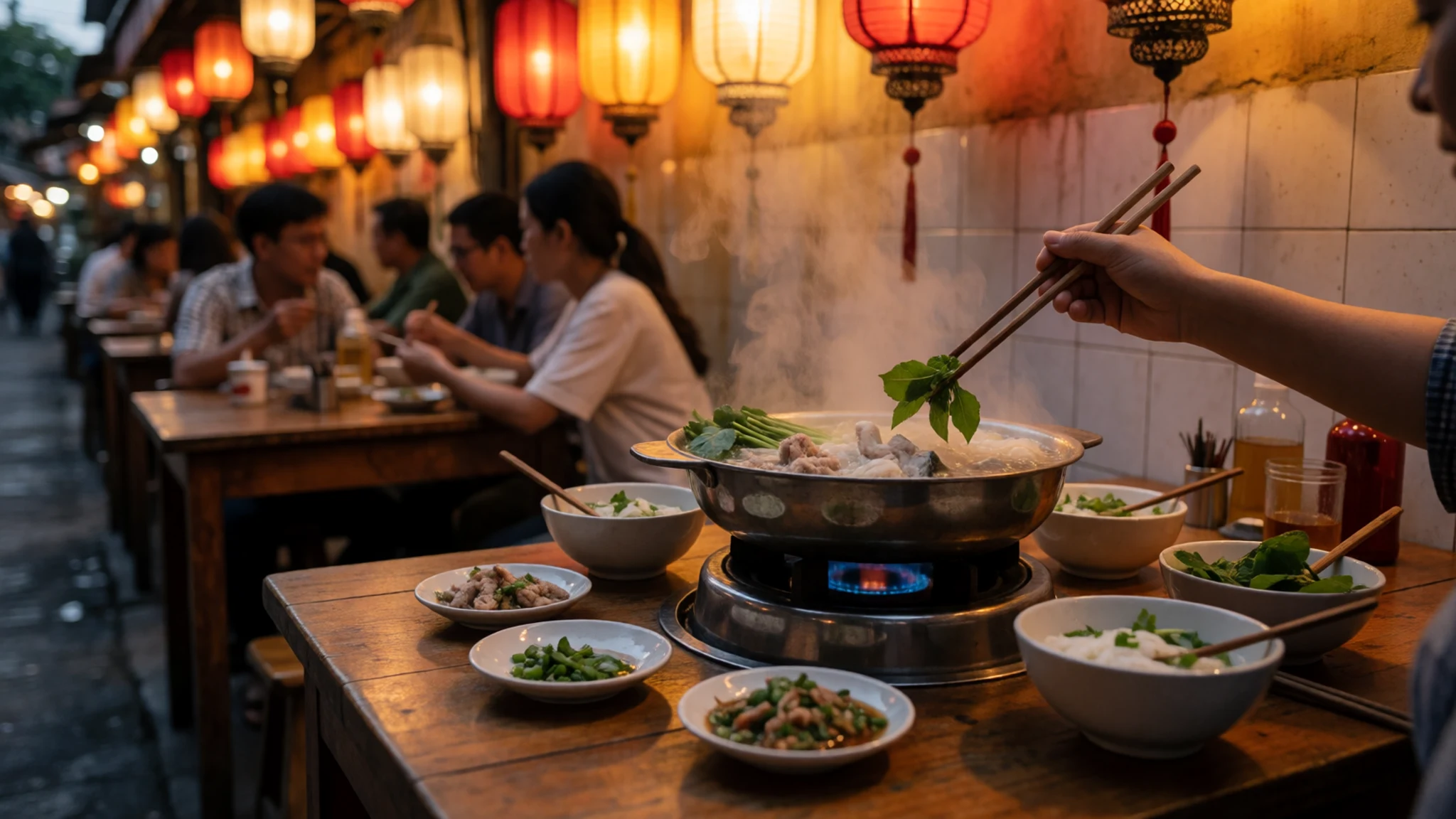
- Bánh xèo — Evening food stalls beside the central covered market
A crisp, turmeric-yellow pancake folded around prawns, pork and bean sprouts, then wrapped in leaves and dipped in sauce. It is best eaten hot, so go to stalls where the batter is made to order. - Bánh mì — Bakeries and street carts along Mau Than Street
A crusty baguette filled with pork, pâté, pickles and herbs. It makes a cheap breakfast or snack before an early boat trip and is easy to find in any neighbourhood. - Delta fruit — Xuan Khanh Market and fruit boats on the river
Seasonal fruit from the surrounding orchards, such as mango, rambutan, pomelo and longan, depending on the month. Ask stallholders what is in season and let them cut it for you.
Plan it
Best time. December to April is the drier season, with less rain and easier boat trips, though the hottest temperatures occur from March to May. May to November is the wet season, with heavy afternoon showers and greener countryside. Average temperature is about 27°C all year, so mornings are best for markets and canals.
How long. 2–3
Getting there. Most visitors come from Ho Chi Minh City, 169 km away, by bus from the Western Bus Station (Bến Xe Miền Tây), with services every 1–2 hours and a journey of roughly 3 hours. Buses and minibuses also link Can Tho to other delta towns such as Long Xuyen, Chau Doc and Vinh Long. The last leg into the centre is a short taxi or motorbike-taxi ride.
Budget. low
Tips
- Book floating-market boats for first light, when trading is busiest and the air is cooler
- Agree route, duration and price with the boatman before you board
- Carry cash for markets, small eateries and boat hire, as cards are less widely used
- Drink bottled or boiled water and carry sun protection, as humidity and heat are constant
- Check the city's official site, https://cantho.gov.vn/, for current local information
Etiquette
- Dress modestly and remove shoes before entering pagoda prayer halls
- Ask before photographing monks, worshippers or people at work on the river
- Be polite but firm when bargaining, and smile when you decline
Nearby
Sources
- Wikidata Q216075 (CC0)
- Wikipedia: Cần Thơ (rev 1381862463) (CC BY-SA 4.0)
- Wikivoyage: Can Tho (rev 5396782) (CC BY-SA 4.0)
- Photo: Can Tho City - Stadt aus Sicht vom Boot (Franzfoto) (CC BY-SA 1.0)
- Photo: Can Tho, Viet Nam (tuonglamphotos.com) (CC BY-SA 4.0)
- Photo: Chợ Cần Thơ (Bùi Thụy Đào Nguyên) (CC BY-SA 2.5)
- Photo: Chợ nổi Cái Răng (Bùi Thụy Đào Nguyên) (CC BY-SA 4.0)
- Photo: Chùa Hội Linh (Bùi Thụy Đào Nguyên) (CC BY 3.0)
- Photo: Can Tho Museum (Daaé) (Public domain)
- Photo: Administrative map of Can Tho city (ThienVu239) (CC0 1.0)
- Photo: Can Tho University entrance (Kauffner) (CC BY 3.0)


