Sokcho
Sokcho, South Korea
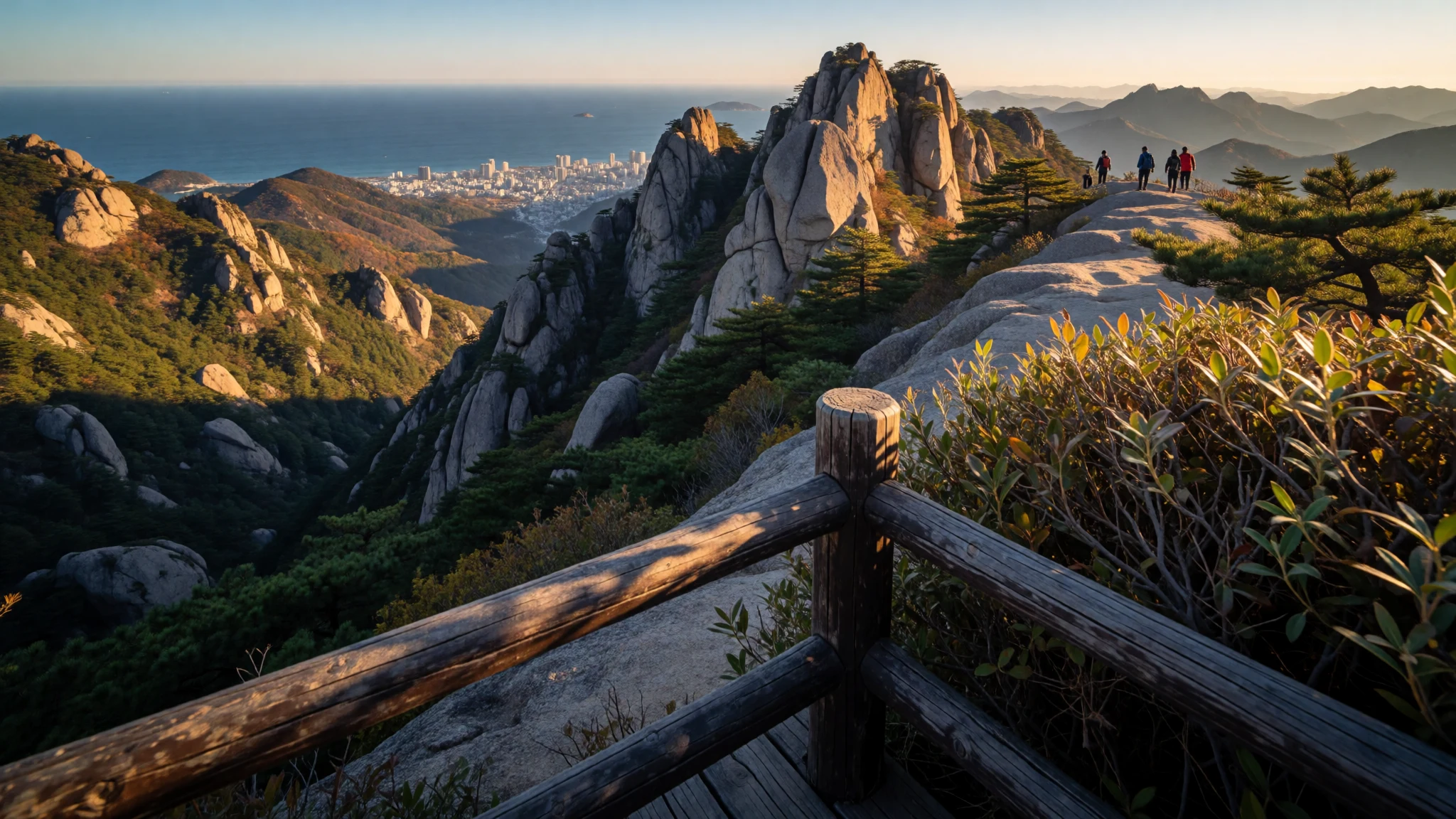
Sokcho puts a working fishing port, a long pale beach and the granite peaks of Seoraksan into one compact coastal city.
The place
Sokcho sits on the north-east coast of South Korea, in Gangwon province, where the Taebaek mountains drop towards the East Sea. No other South Korean city lies further north. Its 79,846 residents live on a coastal strip only two metres above sea level, with Seoraksan National Park filling about half of the city's area, so jagged ridges are in view from the harbour and the beach alike.
That pairing defines the place. Sokcho is a working fishing port, and boats, drying squid and a busy central market are part of daily life rather than a show for visitors. It is also a holiday town for Koreans, with a long strip of pale sand, cafés on rooftops and hillsides, cycling around a lagoon, and hot-spring spas.
Water cuts the town into pieces. A river, a lagoon and sea channels divide the neighbourhoods, and bridges, plus a small hand-pulled ferry, link them. Two separate bus terminals serve the city, one at each end, which catches out first-time arrivals.
The climate sits on the border between humid subtropical and humid continental, which in plain terms means hot, sticky summers and properly cold winters. The beach is pleasant rather than spectacular, and it gets crowded in high summer, when Korean families and student groups fill it and set off fireworks after dark. Sokcho rewards visitors who treat it as a base for mountain walks, seafood and slow café afternoons, not as a checklist of monuments. Weekends and autumn colour season are the busiest times, and midweek visits feel noticeably calmer.
Its story
Sokcho's modern story begins with the division of the Korean peninsula at the end of the Second World War. The town fell on the northern side of the dividing line and was administered from the north. During the Korean War, southern forces took it, and the armistice that ended the fighting left it on the southern side, where it has stayed ever since.
That shift turned a northern town into South Korea's frontier port on the east coast. People originally from the north settled by the water, and their presence is still visible in Abai Village, a small community across a narrow channel from the main street. Visitors reach it on a hand-pulled boat called a gaetbae, which feels closer to a village crossing than a city transport link.
For much of its modern life Sokcho made its living from the sea. Fishing boats, squid, the market and the processing of the catch fed the town, while the mountains next door gave walkers and pilgrims a reason to pass through. Once the Seolak and Cheongho bridges opened, crossing the channels became easy, and the cable ferry shifted from necessity to curiosity. The city has since given the shoreline there tourist status, to keep the old crossing alive.
Local pride shows up each autumn at the Seorak Cultural Festival, the town's main local celebration, which began in the 1960s. A procession, concerts and a fireworks finale take over the Expo lawn and the Rodeo Street area. The history here is unshowy: there are few grand monuments, and the past survives in the fishing economy, the refugee neighbourhood and the northern tilt of the map.
What to see
- Seoraksan National Park — Western edge of the city
Seoraksan fills about half of Sokcho's area and is the reason many Koreans come. Granite ridges, forested valleys and the rounded dome of Ulsanbawi rise right behind the city. Trails range from gentle valley walks to long, steep climbs, and autumn colour and summer weekends bring queues at the main entrances.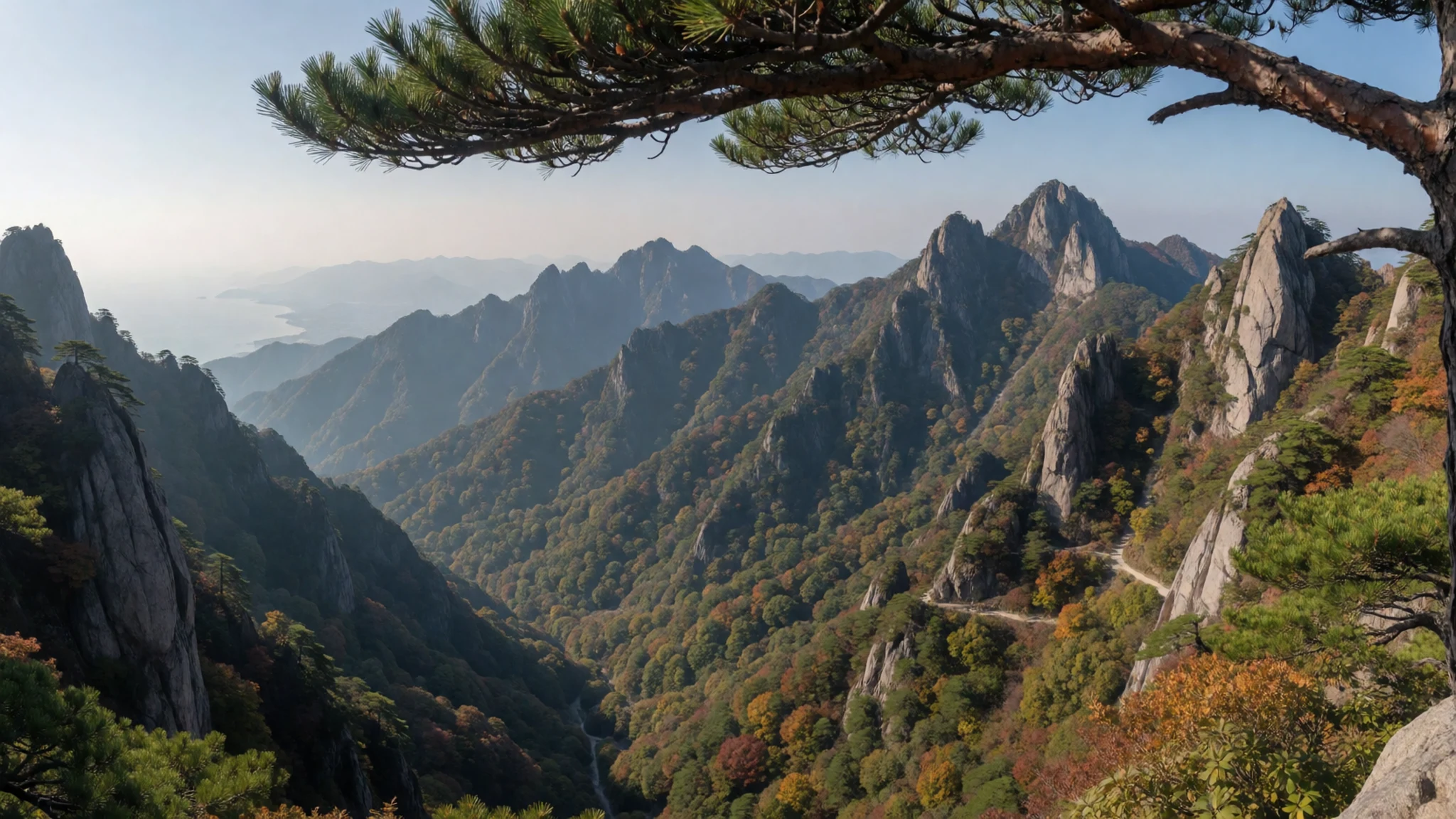
- Abai Village and the gaetbae ferry — Cheongcho Lake channel, central Sokcho
Abai Village is a small community of people with roots in the north, tucked just off the main street. A hand-pulled boat carries passengers across the narrow channel for a tiny fare. The village is modest and lived-in, so walk quietly, and treat it as a neighbourhood, not an attraction.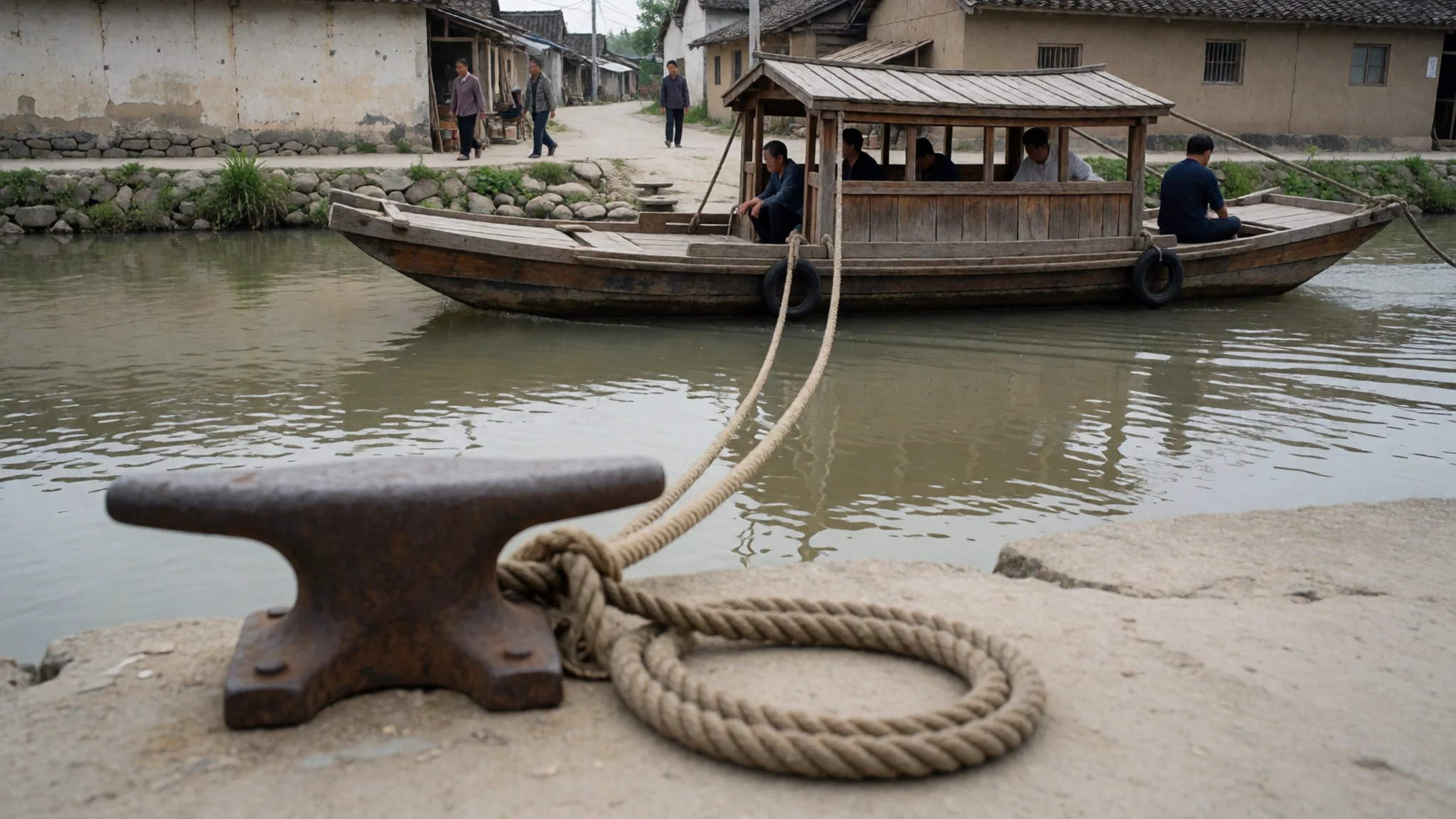
- Sokcho Beach — Eastern waterfront
The white-sand beach runs along the districts of Cheongho, Joyang and Daepo. The official swimming season is short, roughly mid-July to late August, but the sand is open and pleasant for a walk out of season. Evenings in summer bring groups with fireworks, so expect noise.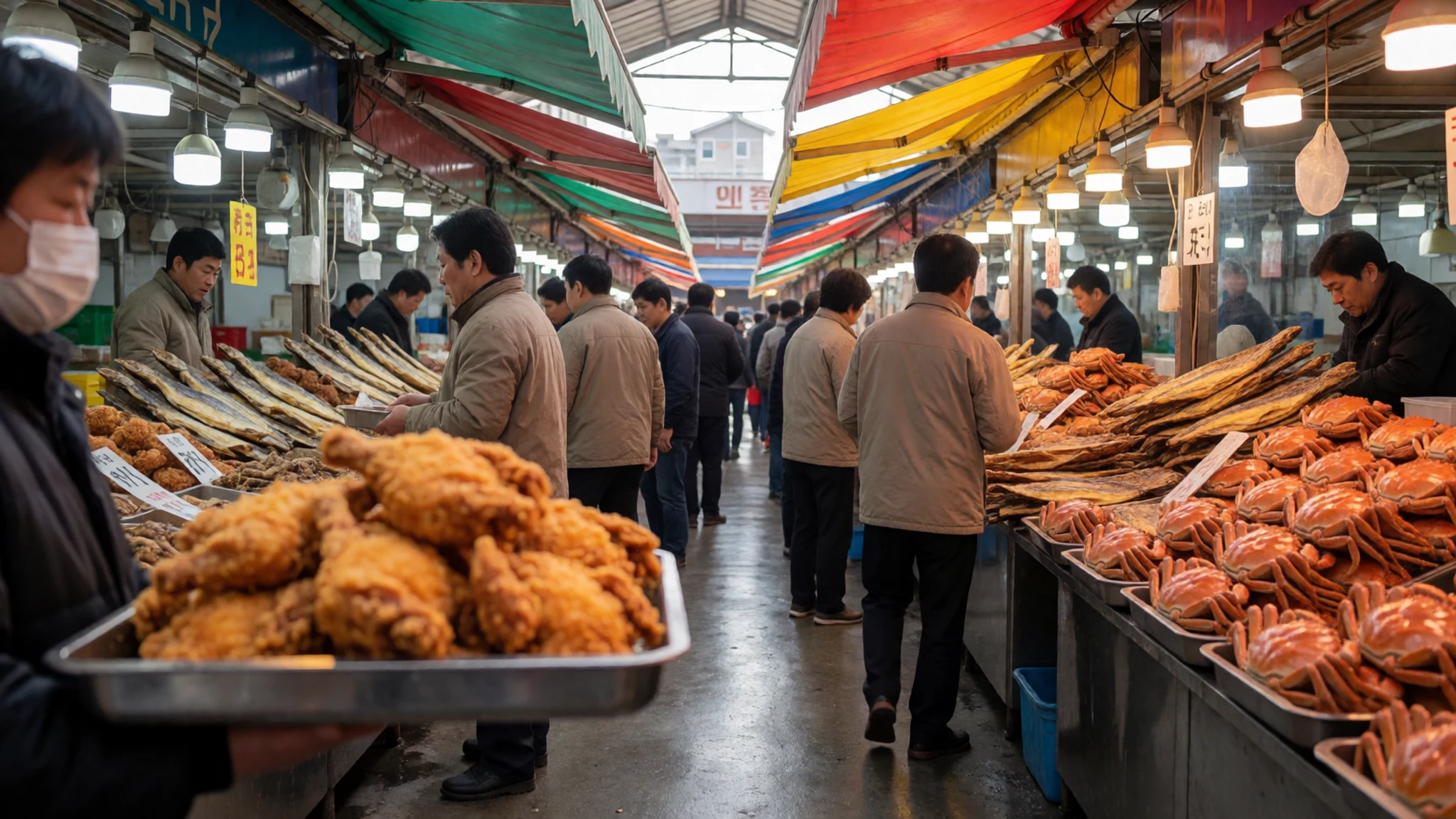
- Sokcho Expo Tower — Near Yeongnang Lake
The tower stands near the lawn used for the autumn festival and gives a wide view over the town, the lagoon and the mountains behind. It is a useful first stop for getting your bearings. Bicycle hire is available nearby, which makes it a handy starting point for the lake loop.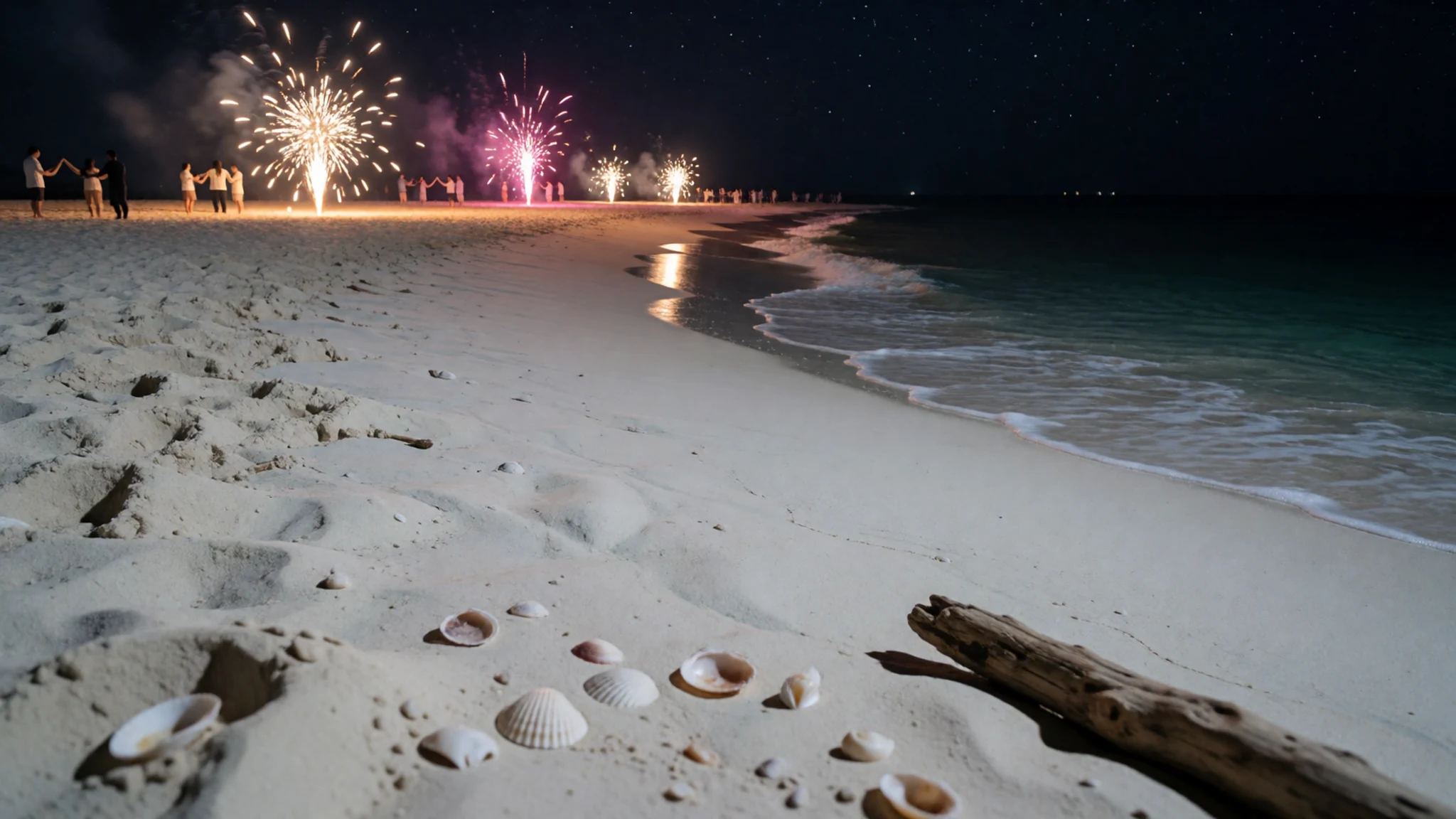
- Yeongnang Lake cycle loop — North-east of the centre
A flat route circles Yeongnang Lake, a lagoon that drains into the East Sea. A full circuit takes about an hour at an easy pace. It makes a good low-effort contrast to the mountain, with water birds, sea air and cafés along the shore for a rest.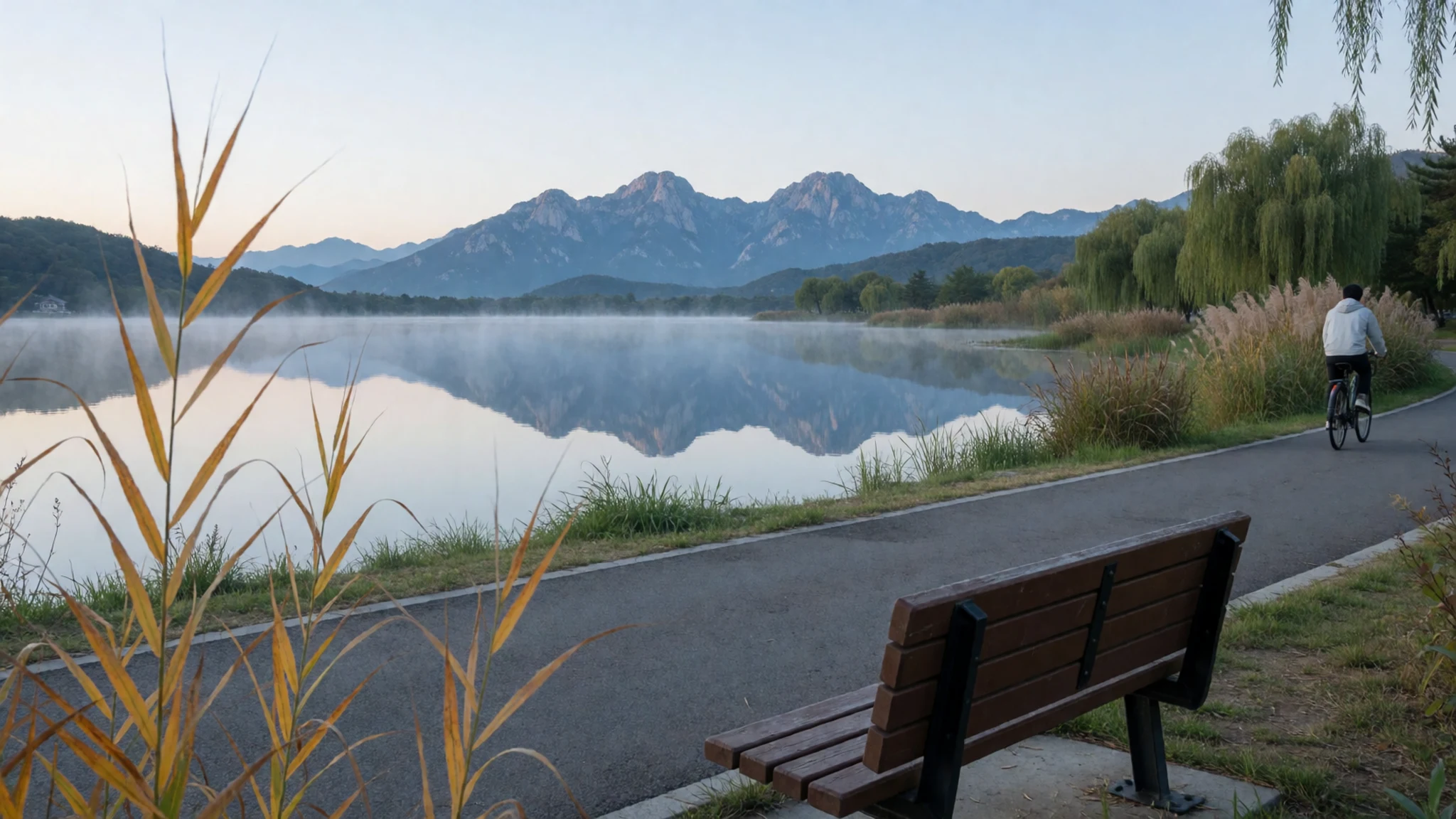
Culture
Sokcho's culture is shaped by three things: the fishing trade, the mountain and Korean holiday habits. Fishing gives the town its market rhythm. Fishmongers sort the day's catch at the central market and port, squid hang to dry in rows, and restaurants are built around whatever came in that morning. Eating is social. Dishes arrive in the middle of the table for sharing, and almost every restaurant serves beer and soju alongside the food.
The mountain brings a hiking culture that is visible in the streets. Many Korean visitors arrive in full walking kit, with sticks, caps and bright jackets, and a day on the trail is treated as a proper outing, often followed by a long meal. Temples and hermitages in and around the park are working religious places, and monks and worshippers use them for their own practice.
Sokcho also carries a quiet frontier identity. It was once on the other side of the line, and some residents trace family roots north of it. That history tends to come up gently, in conversation or at Abai Village, not in loud displays.
Summer brings beach culture, with families, tents on the sand and late-night fireworks, while autumn belongs to colour-viewing and the town's own festival. Evenings are lively around the seafront and market streets, and cafés are an important social space all year.
Before entering a temple hall or any restaurant room with a raised floor, take your shoes off where others have left theirs, and keep your voice low near monks and worshippers.
What to wear
Traditional Korean dress is the hanbok. Women wear a short jacket called a jeogori with a full wrapped skirt, the chima, and men wear a jacket with loose trousers called baji. Silk is used for formal and festive pieces, while ramie and hemp suit summer and cotton suits everyday use. Hanbok are worn today mainly for weddings, family celebrations and the Seollal and Chuseok holidays, and Sokcho has no distinctive local costume of its own.
What people wear day to day is plain and practical. Anyone heading for Seoraksan is likely to be in technical outdoor gear: quick-dry layers, trekking shoes and sun caps, often in bright colours. In town, casual clothes dominate, with neat, fashionable cafégoers on weekends. Fishmongers and market workers wear boots, aprons and waterproof gloves. In summer, the beach fills with swimwear, rash vests and wide-brimmed hats.
For a visitor, think layers and footwear. Summers are hot and humid, so light breathable clothes, a hat and sun protection help. Winters are cold, particularly by the sea with the wind, so bring a proper coat. A rain jacket is worth packing in any season. Sturdy shoes with good grip are essential for Seoraksan trails, which can be steep and slippery after rain. For temples and hermitages, cover shoulders and knees, and wear shoes that slip off easily because shoes come off at the hall door. Swimwear belongs on the beach or at spas, not in town.
What to eat
- Red crab — Sokcho Jungang Market and the fish market by the harbour
The coast is known for red crab, which is sold steamed and sold raw with side dishes. It can be pricey as a sit-down meal, so many visitors buy takeaway steamed crab instead and eat it by the water. Ask which crab is in season before ordering.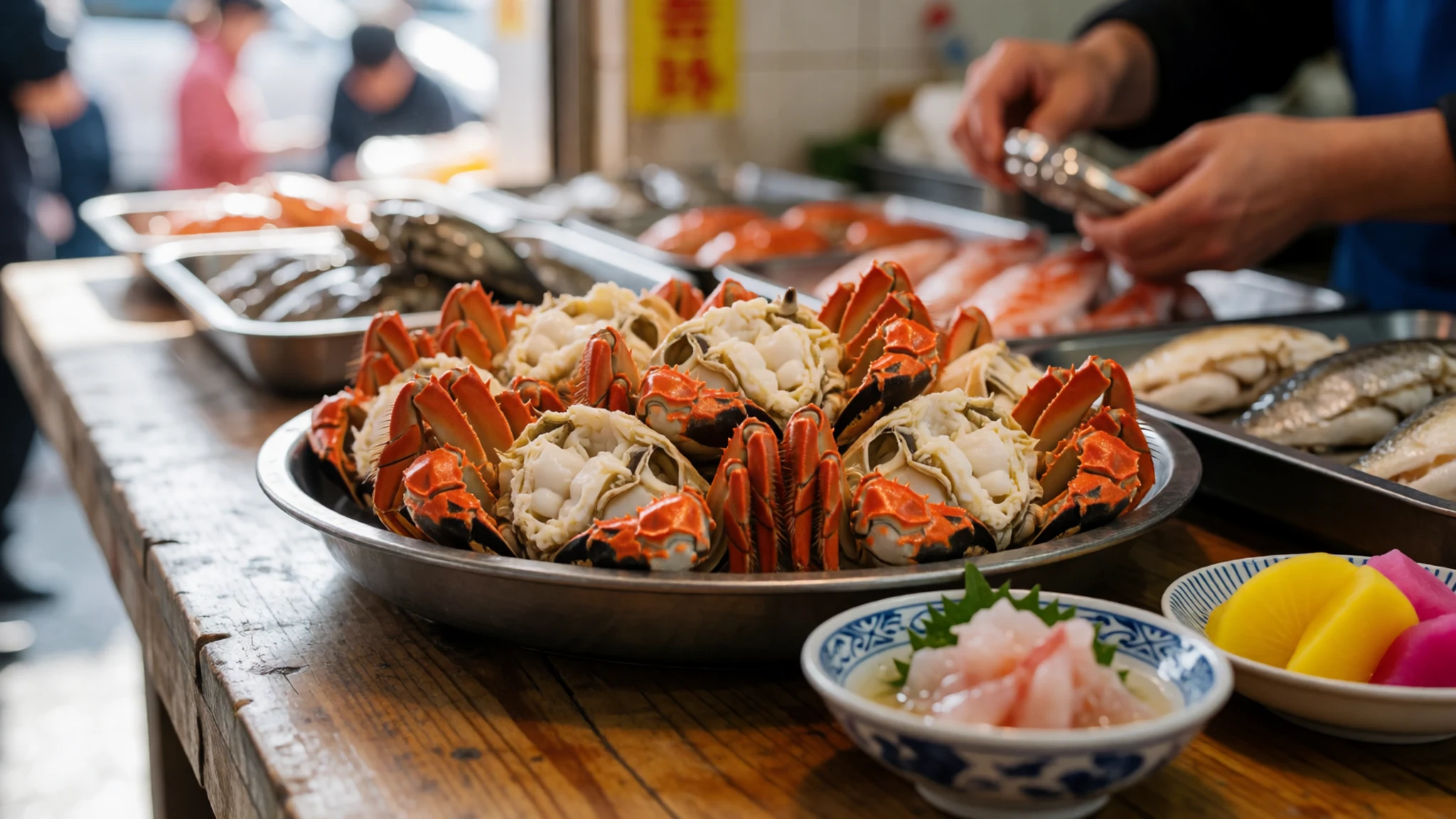
- Mulhoe — Seafood restaurants near the port and beach
A cold raw-fish bowl, mulhoe uses finely sliced flatfish, sea bream and shellfish, seasoned and served in a chilled, tangy broth with a splash of soy sauce. It is refreshing in hot weather and a good way to try raw seafood.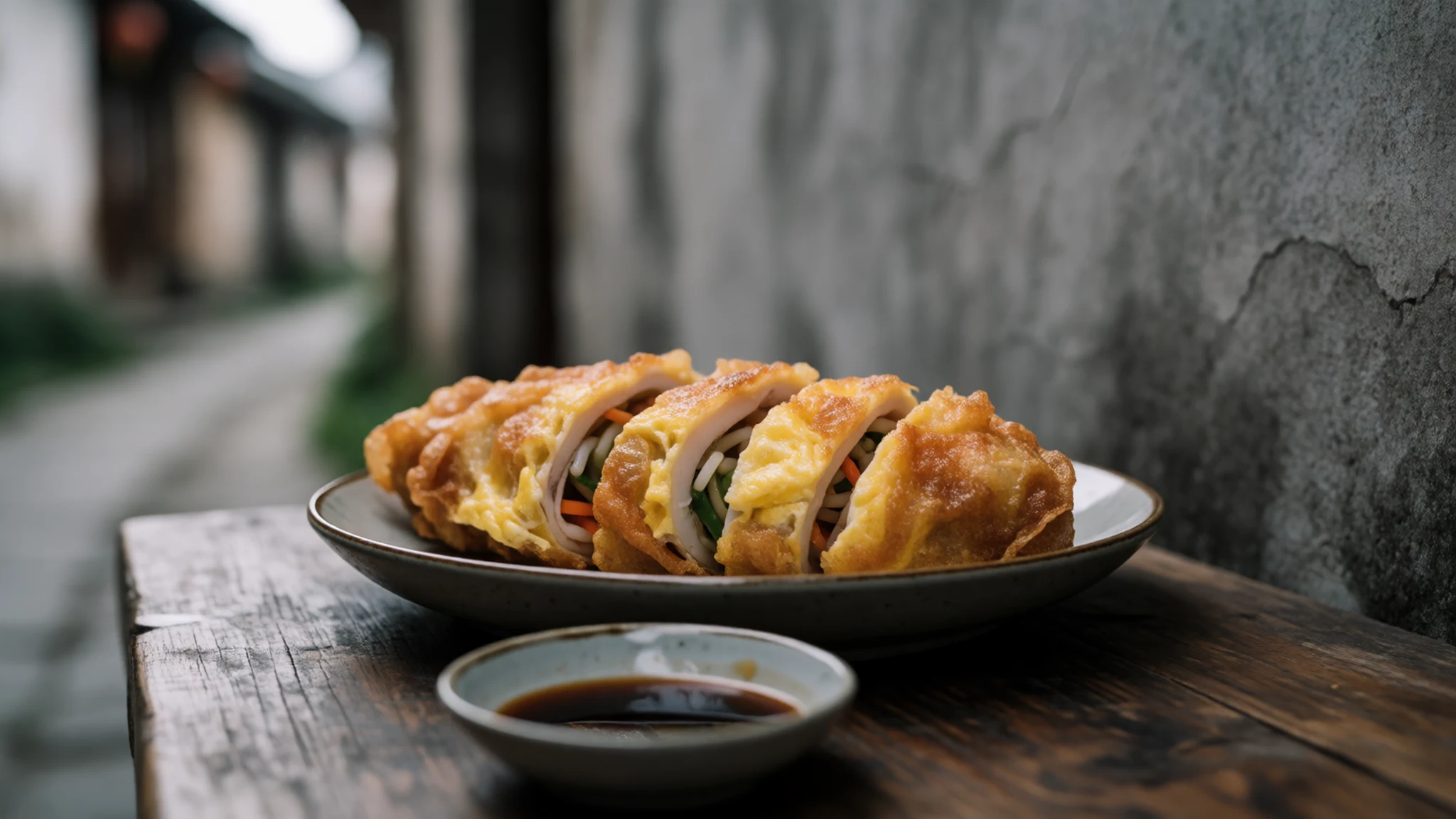
- Cold noodles with pollack — Noodle restaurants in the town centre
A spicy, savoury cold noodle dish, topped with seasoned pollack or flounder. The noodles are chewy and made from starch, from sweet potato, potato or buckwheat. It is a regional speciality built around the local catch and works well on a warm day. - Sundubu soft tofu — The tofu restaurants in Hakhakpyeong, on the old road towards Ulsanbawi
Sokcho's soft tofu is made with water from the mountain and, according to local tradition, seawater. It is silky, mild and usually served as a bubbling stew with rice and side dishes. It makes a good, inexpensive meal after a day on the trail. - Squid sundae — Street stalls and snack counters in the central market
A Sokcho twist on the Korean blood sausage, squid sundae replaces pork intestine with squid. It is stuffed with noodles and vegetables, coated in egg and fried, then sliced. Rich and chewy, it is often shared as a snack alongside a drink.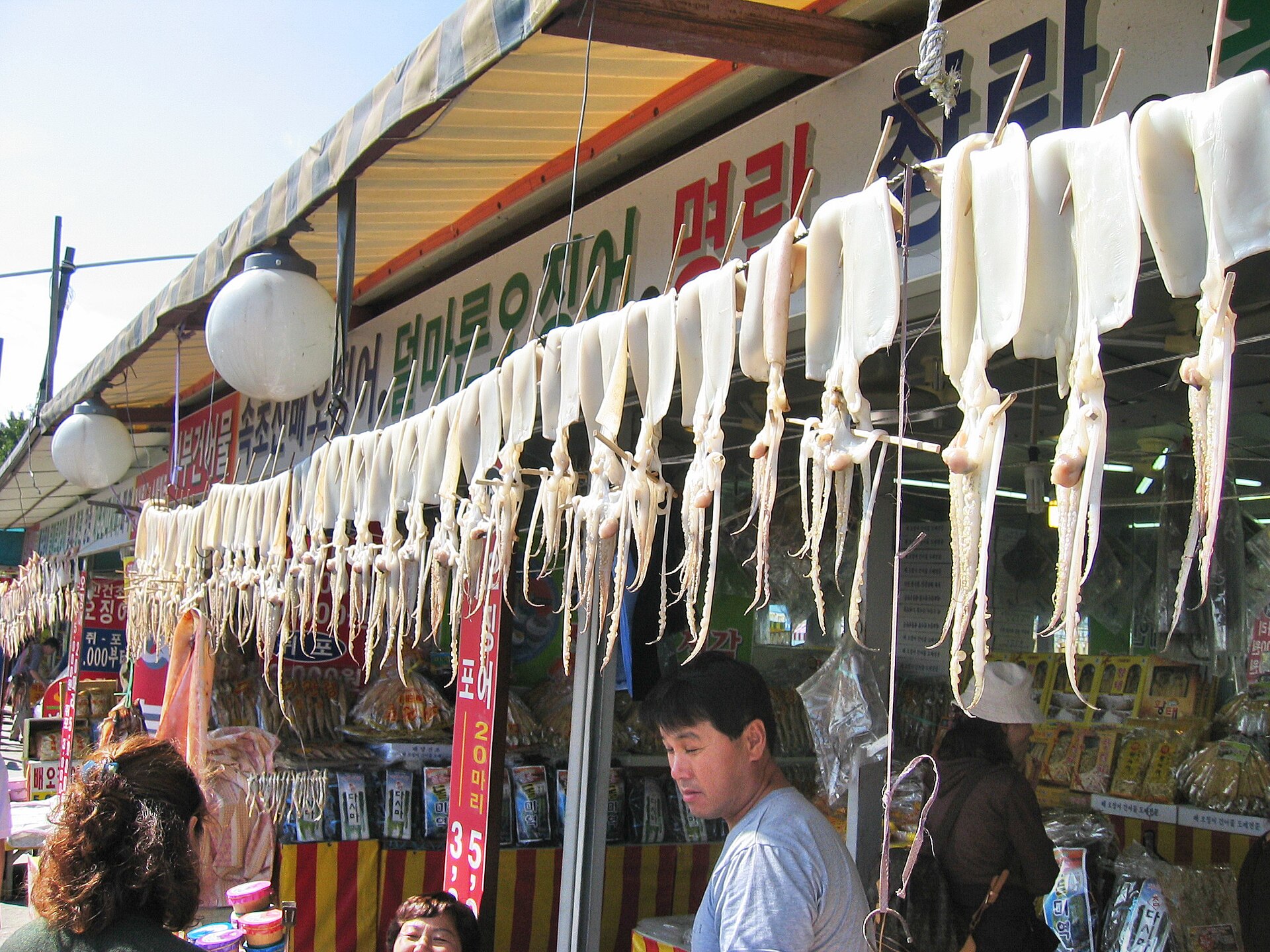
Plan it
Best time. May–June and September–October. Spring and early summer are mild and good for walking, and early October brings autumn colour and the town's festival. July–August is hot, humid and crowded, though it is the only official swimming season. Winters are cold.
How long. 2–3
Getting there. Fly to Seoul, then take an express bus from the Seoul Express Bus Terminal or Dong Seoul terminal; coaches leave regularly and the ride takes a few hours. No train serves the city. Check whether your coach stops at the Express or Intercity terminal, which lie at opposite ends of town.
Budget. mid
Tips
- Reach Seoraksan early, especially on weekends and in autumn, to avoid queues at the main trailheads
- Load a T-money or Cashbee card for city buses, as some postpaid cards are not accepted
- Check the official city site (http://sokcho.gangwon.kr/foreign/eng/html/main.html) for festival dates and events
- Pack a rain jacket and layers, because weather on the coast and in the mountains can differ
Etiquette
- Remove your shoes at temple halls and raised-floor restaurant rooms
- Keep noise down near temples, monks and the quiet residential channels
- Walk respectfully through Abai Village, which is a home neighbourhood
Nearby
Sources
- Wikidata Q42109 (CC0)
- Wikipedia: Sokcho (rev 1385035553) (CC BY-SA 4.0)
- Wikivoyage: Sokcho (rev 5418407) (CC BY-SA 4.0)
- Photo: Sokcho from Mount Gwongeumseong, Seoraksan (Steve46814) (CC BY 3.0)
- Photo: Geumgang Bridge, Sokcho (Bernard Gagnon) (CC0 1.0)
- Photo: Sokcho Central Market (Bernard Gagnon) (CC0 1.0)
- Photo: Daepo Port, Sokcho (Bernard Gagnon) (CC0 1.0)
- Photo: Ulsanbawi, Seoraksan National Park (kallerna) (CC BY-SA 4.0)
- Photo: Hongryeonam at Naksansa Temple (Bernard Gagnon) (CC0 1.0)
- Photo: Half-dried squids at a Sokcho market (mera136) (CC BY 2.5)
- Photo: Seolak Bridge, Sokcho (Bernard Gagnon) (CC0 1.0)


