Şirince
Şirince, Turkey
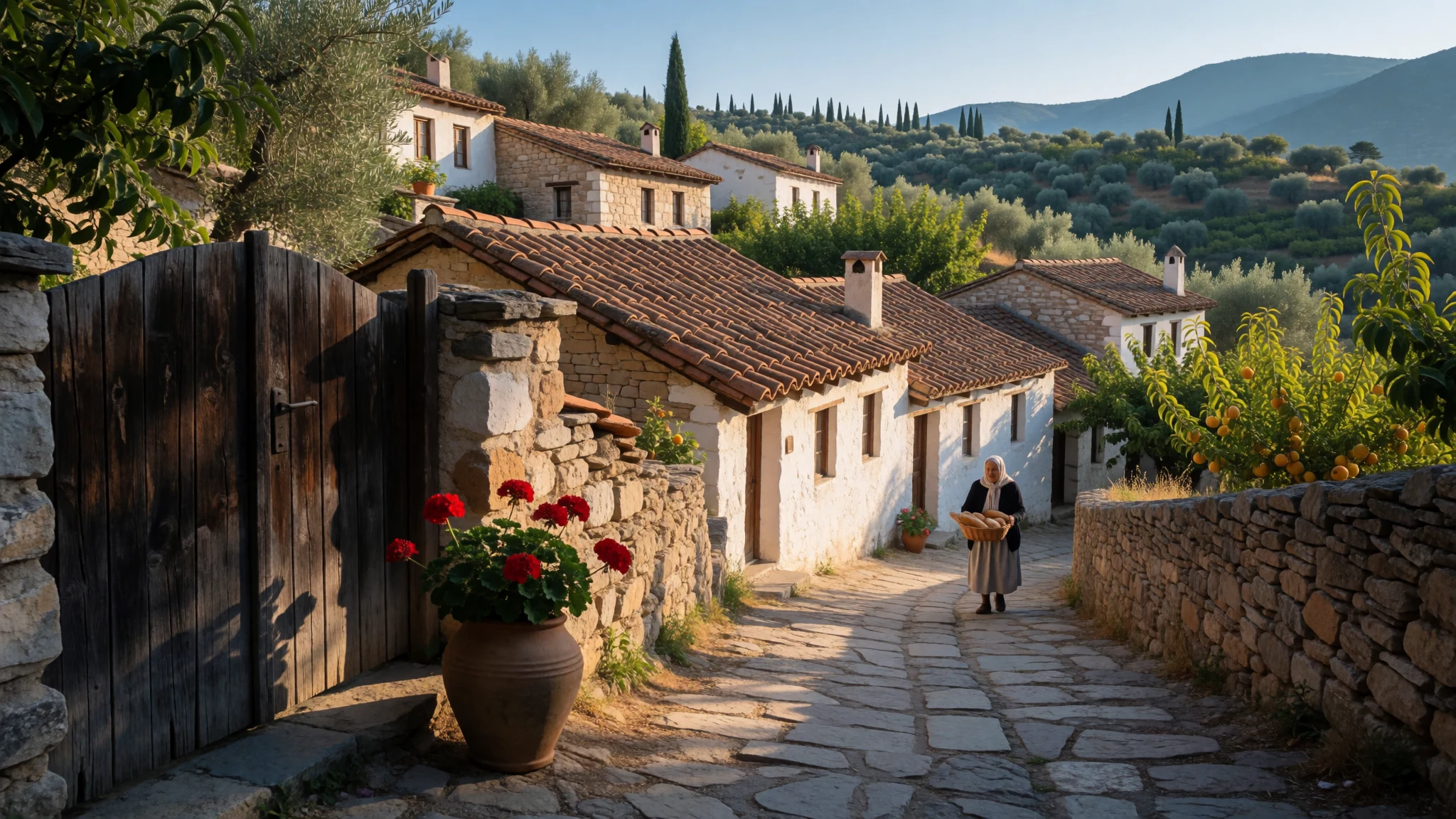
Şirince is a small Ottoman-era hill village near Ephesus, worth visiting for its lanes, fruit wines and olive-covered walks.
The place
Şirince is a small hillside village in the Selçuk district of İzmir Province, western Turkey, about eight kilometres from both Selçuk town and the ruins of Ephesus. Wikidata records a population of 483, so on a summer weekend visitors can easily outnumber residents. Stone and whitewashed houses with tiled roofs step up the slope, and narrow lanes bend between them without much logic. Around the village the land is still farmed: olive groves, peach orchards and vineyards cover the hills, and forestry tracks cross the upper slopes. Farming and tourism sit side by side in the bazaar, where jars of olive oil, bottles of fruit wine and souvenirs share the same shelves. The architecture is the main reason people come. Much of what stands dates from the Ottoman period, and Şirince is regarded as a rare surviving example of Ottoman Christian village building, which makes it feel very different from the busier towns and resorts nearer the coast. Remains of Roman aqueducts along the road up are a reminder that these hills once supplied water to Ephesus. A few honest notes belong here. The village is popular, and the lanes and cafés fill by late morning, especially at weekends and in high summer, when the heat also builds. Many shops lean heavily on the tourist trade, and not everything on sale is made locally. Early mornings and evenings, once the day-trip groups have left, are when Şirince is calmest and its residents are most visibly at home. It works well as a half-day outing from Selçuk, and better still as an overnight stay in one of the converted village houses.
Its story
Şirince's story is bound up with Ephesus. The hills above supplied water to the ancient city, and the village gained importance after Ephesus was abandoned in the fifteenth century. Most of the buildings seen today, however, date from the nineteenth century, when the village was large and prosperous on vines, tobacco, figs, olives and vegetables, with sheep, goats, dairy cattle and beehives besides. Its people were Greek Orthodox Christians, and travellers' accounts note that Turkish was the everyday language even though villagers knew some Greek. By the early twentieth century a provincial yearbook counted more than a thousand houses. The name has two explanations. One tale says that freed Greek slaves settled here and chose the Turkish name Çirkince, meaning ugly, to discourage others from following. Another reading traces it to a nomadic Turcoman tribe recorded in Ottoman registers under spellings such as Cirkin. Its Greek name was Kirkintzes (Κιρκιντζές). In 1926 the governor of İzmir Province renamed it Şirince, meaning pleasant. The compulsory population exchange agreed between Greece and Turkey in 1923 ended the village's Greek community: Christians were sent to Greece, and Muslims from Greece were settled in Turkey. The exchange is the background to Farewell Anatolia, a novel by Dido Sotiriou, who was born in Şirince. It follows the Greco-Turkish War through the eyes of a fictional villager, and it is the book most often recommended to anyone wanting the human side of this place.
What to see
- The village lanes — Village centre
Wandering Şirince itself is the main activity. The lanes climb and twist between old stone houses, courtyards, gardens and fruit trees, and there is no fixed route. Going slowly and taking side turns pays off, as the quieter upper streets show everyday life that the main bazaar lane hides.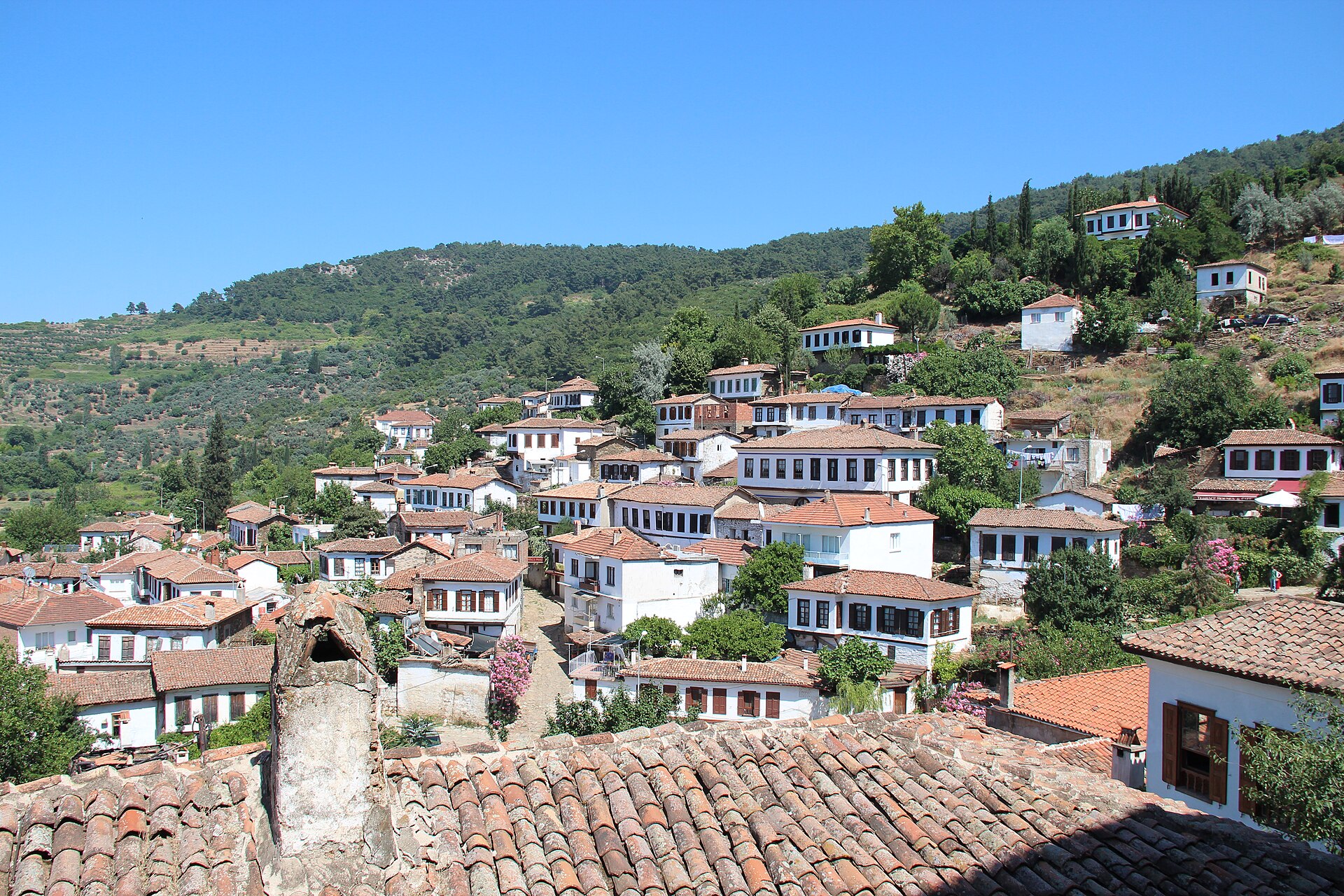
- The two restored churches — Upper and central village
Two churches survive from the village's Greek Orthodox past, and both have been restored. They are among the clearest reminders of who built Şirince before the population exchange. Check locally for opening arrangements, as these can change, and treat them as places of heritage rather than just photo stops.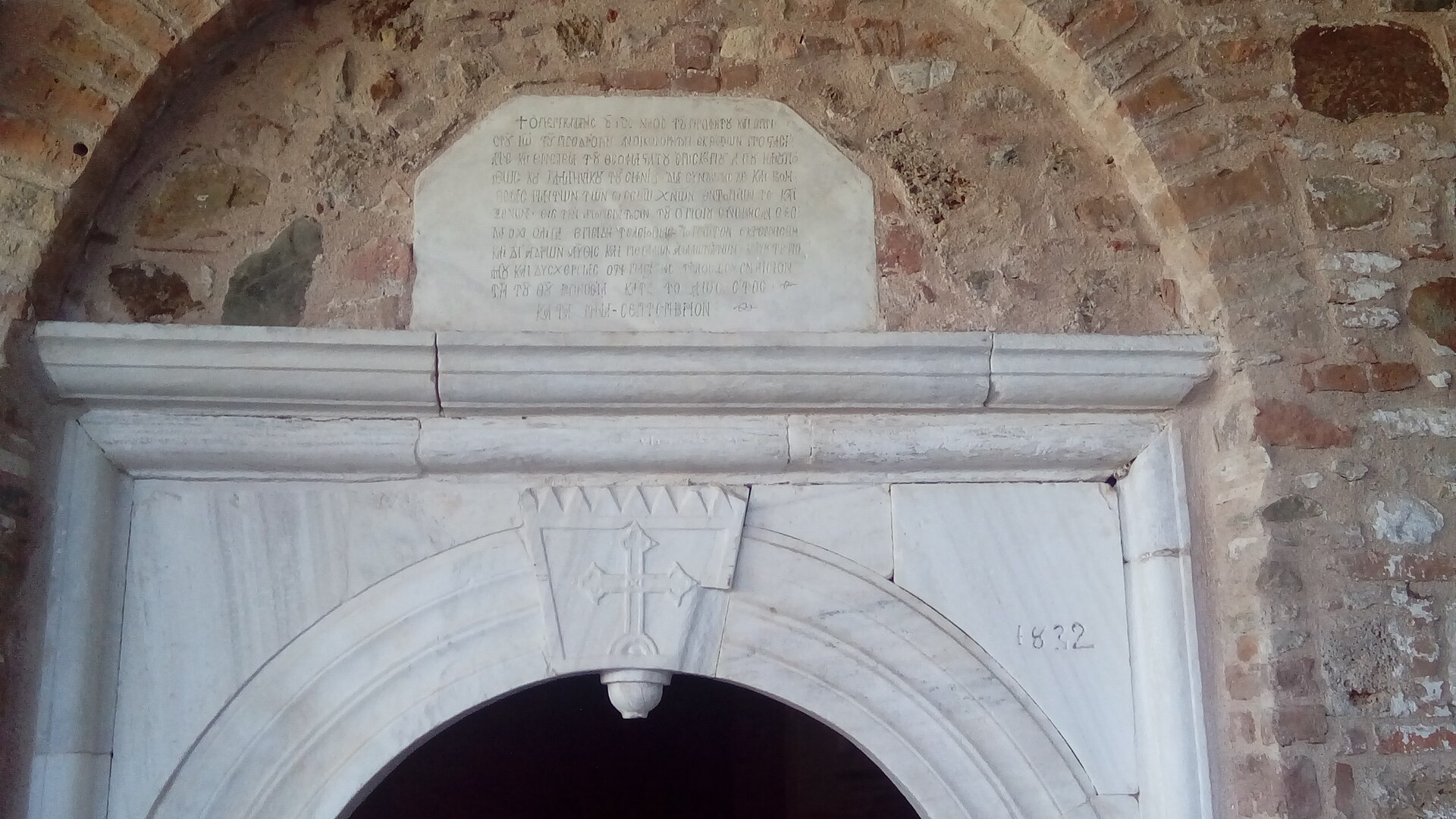
- The bazaar — Village centre
The bazaar in the village centre is lively and busy, with stalls and small shops selling olive oil, dried fruit, fruit wines, textiles and crafts. It is worth browsing even without buying, and a covered section holds simple eateries. Prices are not fixed everywhere, so a polite comparison between a few stalls is sensible. - Walks above the village — Hills around the village
Tracks leave the village in every direction and join the forestry roads that criss-cross the slopes. The walking passes olive groves, peach orchards and vineyards, with wide views back over the tiled roofs. Paths are not always signed, so carry water, wear proper shoes and avoid the hottest part of summer afternoons.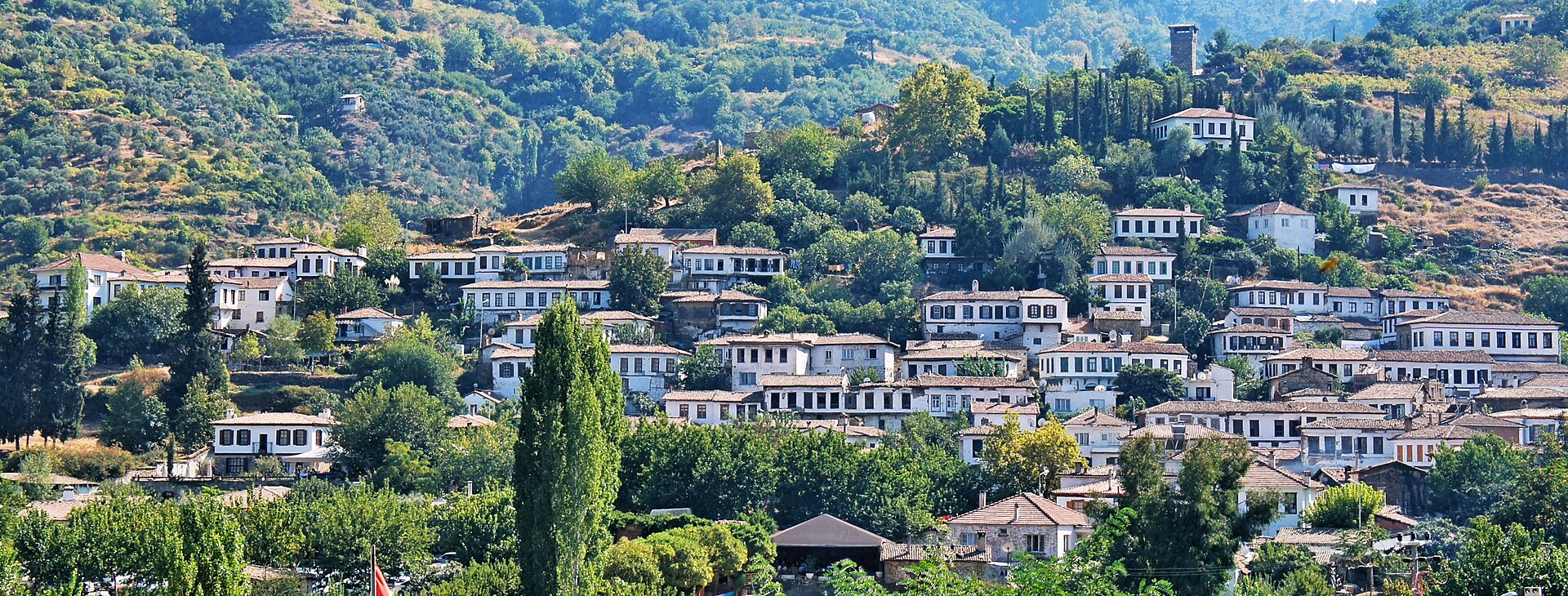
- Café terraces with village views — Village centre and slopes
Many cafés and restaurants in Şirince are built on the slope, so their terraces look back across the rooftops and orchards. A coffee or a glass of local fruit wine here is a good way to spend the hottest part of the day. Weekend evenings are the busiest, so earlier visits are quieter.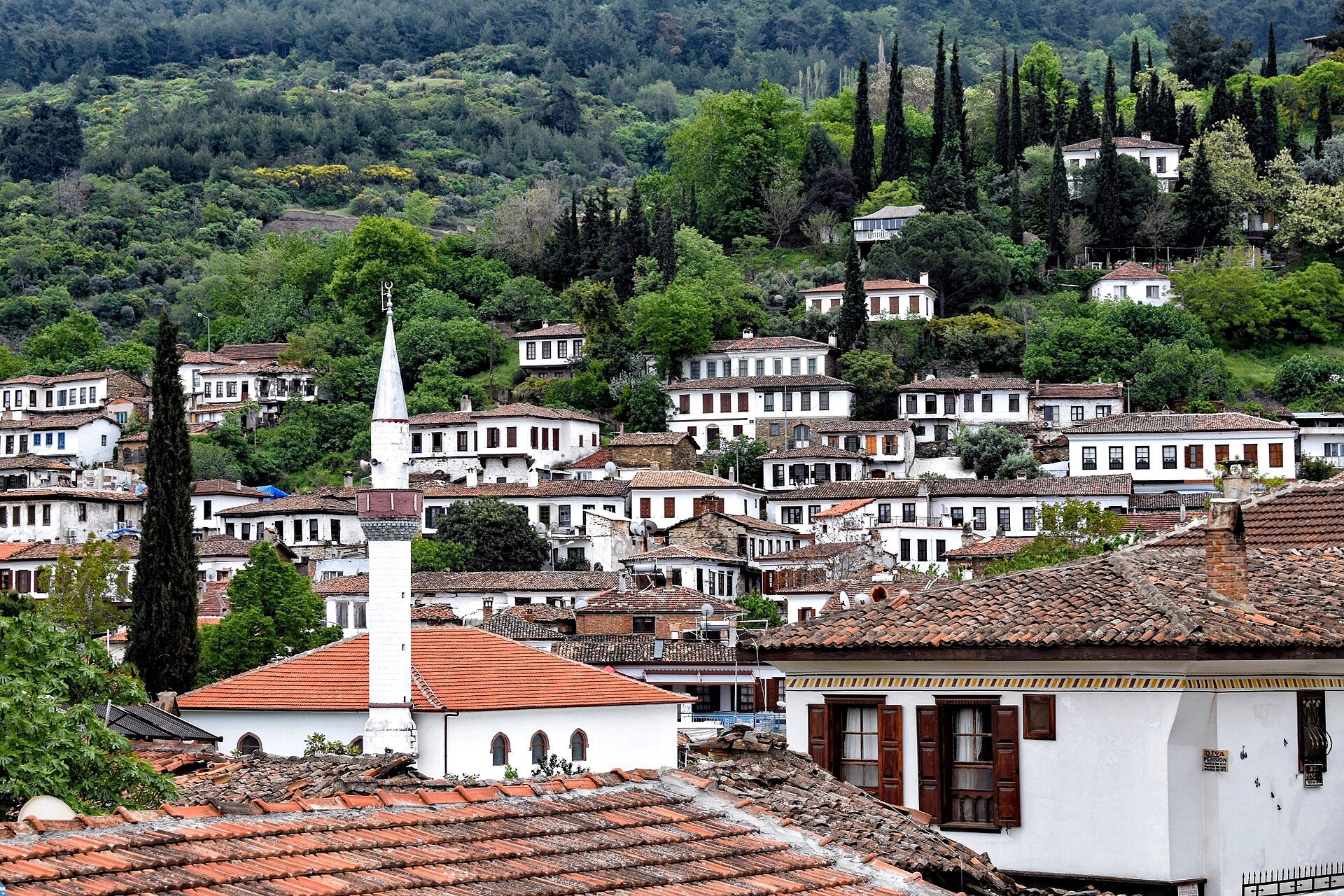
- Roman aqueduct remains on the approach road — Road from Selçuk
On the road up from Selçuk, the remains of several Roman aqueducts can be seen. They are a modest sight rather than a destination, but they explain why this hill village mattered to ancient Ephesus. Anyone travelling by minibus gets the view from the window, and drivers can pull over safely.
Culture
Şirince's culture is shaped by what the village has lost and kept. For centuries it was a Greek Orthodox community, and the 1923 population exchange replaced its residents with Muslim families from Greece. Today the village is Muslim in practice, yet the Ottoman Christian houses and restored churches remain, and local people are conscious of that layered heritage. Many have family histories that run back to Greece, and visitors who show real interest in the story are generally met with warmth. Farming still shapes daily rhythm. Olives are pressed, peaches ripen in season, and households have a long tradition of making their own wine, along with fruit wines from apple, berries and even myrtle. Alcohol is sold in nearly every restaurant, except those close to the mosque, which is a quiet reminder that this is a living religious community rather than a museum. Cafés and shops are busiest around the bazaar, but the upper lanes are residential, and the sound of the call to prayer, hens and children is part of the setting. Villagers have asked visitors to remember that Şirince is a home, not a theme park, and rubbish left on paths and hillsides is the complaint heard most often. Take all litter away with you, keep your voice low in the residential lanes, and ask before photographing anyone, especially women and children, or entering a courtyard.
What to wear
Dress in Şirince reflects Anatolian village life rather than a single famous costume. Traditional village clothing in this part of western Turkey drew on cotton, wool and homespun cloth: loose trousers (şalvar), long tunics or dresses, vests, and headscarves worn by many women, often with embroidery or printed patterns. Historic travellers noted that the Greek women of Şirince dressed much like their Turkish neighbours. Such clothing is now mostly seen at festivals, in photographs or in shops selling handmade textiles and souvenirs. What people actually wear today is ordinary and practical: jeans, shirts, cotton dresses and trainers among younger residents, and for older women, longer skirts or trousers with a headscarf, depending on personal and family custom. Shopkeepers often dress smartly for the bazaar, and farmers wear work clothes in the fields. A visitor should plan for heat and hills. Light, breathable cotton or linen suits the long summer, and a thin layer helps on cooler evenings and outside the warm months. Shoes matter most: the lanes are steep, uneven and often paved with stones that become slippery when wet, so closed shoes or sturdy sandals with grip are better than flip-flops. Shoulders and knees should be covered when visiting churches and the mosque, and modest dress is appreciated generally, since this is a residential village. A hat, sunscreen and a scarf, useful for both sun and religious sites, are worth carrying.
What to eat
- Pide — The covered bazaar
Pide is Turkish flatbread baked with toppings such as cheese, minced meat or vegetables. It is baked in a hot oven and eaten fresh, and it makes a filling, simple lunch. Good versions are found in the covered bazaar at the village centre. - Gözleme — Small home-cooking restaurants on the upper lanes
Gözleme is a thin hand-rolled flatbread, filled with spinach, potato or white cheese and cooked on a griddle. It is usually made to order by women in small family-run places, and it pairs well with ayran or tea. - Grilled meat — Village restaurants around the centre
Grilled lamb, chicken and meatballs are the standard main dishes in the village's restaurants, served with salad, bread and local vegetables. Portions are generous and shared plates are common. Many restaurants offer shaded courtyards or terraces. - Fruit wines — Wine shops along the main lanes
Şirince is known for its homemade wines, including grape wine and fruit wines made from apple, berries and unusual local fruit such as myrtle. Many shops let visitors taste before buying. Styles are often sweet, so sample a few and ask about dryness. - Olive oil and peaches — Bazaar stalls and village shops
Olive oil is pressed from the groves around the village, and peaches come from local orchards in season. Bottled oil and dried or preserved fruit are easy to carry home, though quality varies, so ask where a product was made.
Plan it
Best time. April–May and September–October. Spring brings green hillsides and comfortable walking, and early autumn follows the harvest with warm days that are less intense than midsummer. July and August are hot and crowded, and winter can be cool and quiet, with some places closed.
How long. 1–2
Getting there. Fly to İzmir airport, then travel by train or road to Selçuk. From Selçuk bus station, minibuses run regularly to Şirince, and can also be flagged on their route. Private cars can reach the village but need to pay for parking.
Budget. mid
Tips
- Arrive before late morning or stay for the evening, when the lanes are calmer.
- Book village-house accommodation ahead for weekends and summer, since it is limited.
- Carry some cash for small shops, stalls and cafés, as card machines are not guaranteed.
- Wear sturdy shoes and bring water for steep lanes and hill walks.
- Combine with Ephesus, but visit the ruins early in the day and the village later.
Etiquette
- Take your litter with you, since villagers live here and have asked visitors to do so.
- Cover shoulders and knees at churches and the mosque, and ask before photographing people.
- Do not drink alcohol or behave loudly near the mosque.
Nearby
Sources
- Wikidata Q4116807 (CC0)
- Wikipedia: Şirince (rev 1379062961) (CC BY-SA 4.0)
- Wikivoyage: Şirince (rev 5423424) (CC BY-SA 4.0)
- Şirince — Ahmet Tuna Yesilyayl… (CC BY 3.0)
- Overview Photo of Sirince, İzmir — Cheyrek (CC BY 3.0)
- Şirince — Buda2000 (CC BY-SA 4.0)
- Sirince, Turkey — Jocelyn Erskine-Kellie (CC BY-SA 2.0)
- Church entrance in Şirince — Ertly (CC BY 4.0)
- Kilise — Tamer BÜKE (CC BY 3.0)
- Kilise Şirince Selçuk İZMİR — SADIK YURTMAN (CC BY 3.0)
- Parking Lada Niva side of the road at Izmir's Şirince — Carl9311 (CC BY 4.0)


