Sibu
Sibu, Malaysia
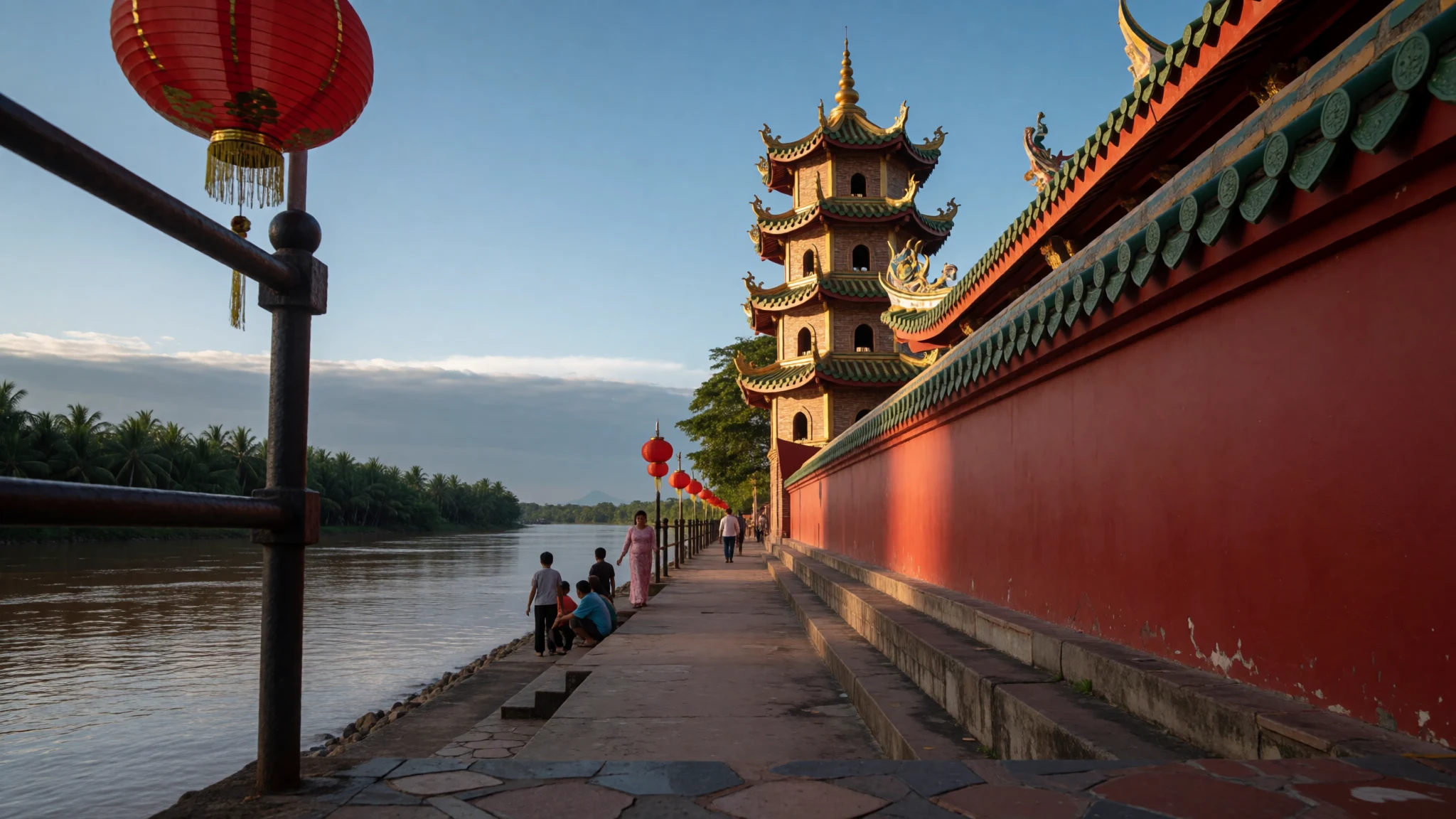
Sibu is a working river town in Sarawak where Chinese, Iban and Malay life meet at the junction of two big rivers.
The place
Sibu sits in central Sarawak, on the island of Borneo, where the Rajang and Igan rivers meet. The sea is a river journey away, and the town still feels organised around the water: shipyards line the Igan, logs are stacked beside sawmills, and from the end of the main square the two rivers can be seen coming together. It is the seat of Sibu District and the centre of Sibu Division, home to 247,995 people, so it is a proper city, though it moves at a small-town pace.
The ground is the unusual part. Sibu stands on deep peat, a soft soil that lets roads and buildings settle slowly after they are built, and the land around it is flat peat swamp and river plain. Floods are a recurring fact of life, arriving a few times in a typical year, which is why a flood-mitigation project was started. The highest point is the modest rise of Bukit Aup Jubilee Park, a reminder of how level everything else is.
The climate is tropical rainforest: hot and humid all year, with daytime highs in the low thirties Celsius, warm nights and rain in every month. Heavy downpours are normal rather than exceptional. Most visitors arrive by air from Kuching or Kuala Lumpur, and many use Sibu as a base for the Rajang river country rather than as a destination in itself. It rewards a slow couple of days of markets, temples, noodles and riverfront walks.
Its story
Sibu's recorded story begins with movement. Some centuries ago, Iban communities pushed north from southern Sarawak and settled in the Rajang basin. Through the seventeenth and eighteenth centuries the basin saw repeated clashes between the Iban and the peoples already living there. Iban groups sometimes formed loose alliances with nearby Malay communities, and those partnerships could turn into joint raids on neighbouring peoples or on boats passing through.
The Melanau are regarded as the earliest inhabitants of the Sibu area, with Iban and Malay settlers arriving in numbers during the 1850s. The political frame then shifted under the Brooke family. James Brooke acquired the territory around Kuching from the Bruneian Empire in 1841, and the Sibu region was brought into Sarawak in 1853.
The founding date Wikidata gives for the town is 1862, the year Rajah Brooke had a fort built at what is now Channel Road. That fort gave the settlement an administrative anchor on the river, and the modern town grew around it. Chinese migration, especially by Foochow families, shaped what Sibu looks and tastes like today: the temples, the shopfronts and the noodle stalls. The Sungai Merah Heritage Walk was built to mark a century of that Foochow arrival.
The result is a layered history of river peoples, colonial administration and migrant communities, written in streets and waterfront buildings rather than in a single grand monument.
What to see
- Tua Pek Kong Temple — Riverfront, central Sibu
Tua Pek Kong Temple is a Chinese temple on the riverfront whose history reaches back to 1870. Its tower is the main draw: late afternoon is a favourite time, and visitors can ask at the temple about going up to the top floor for a view over the rooftops and the river. It is still a working place of worship.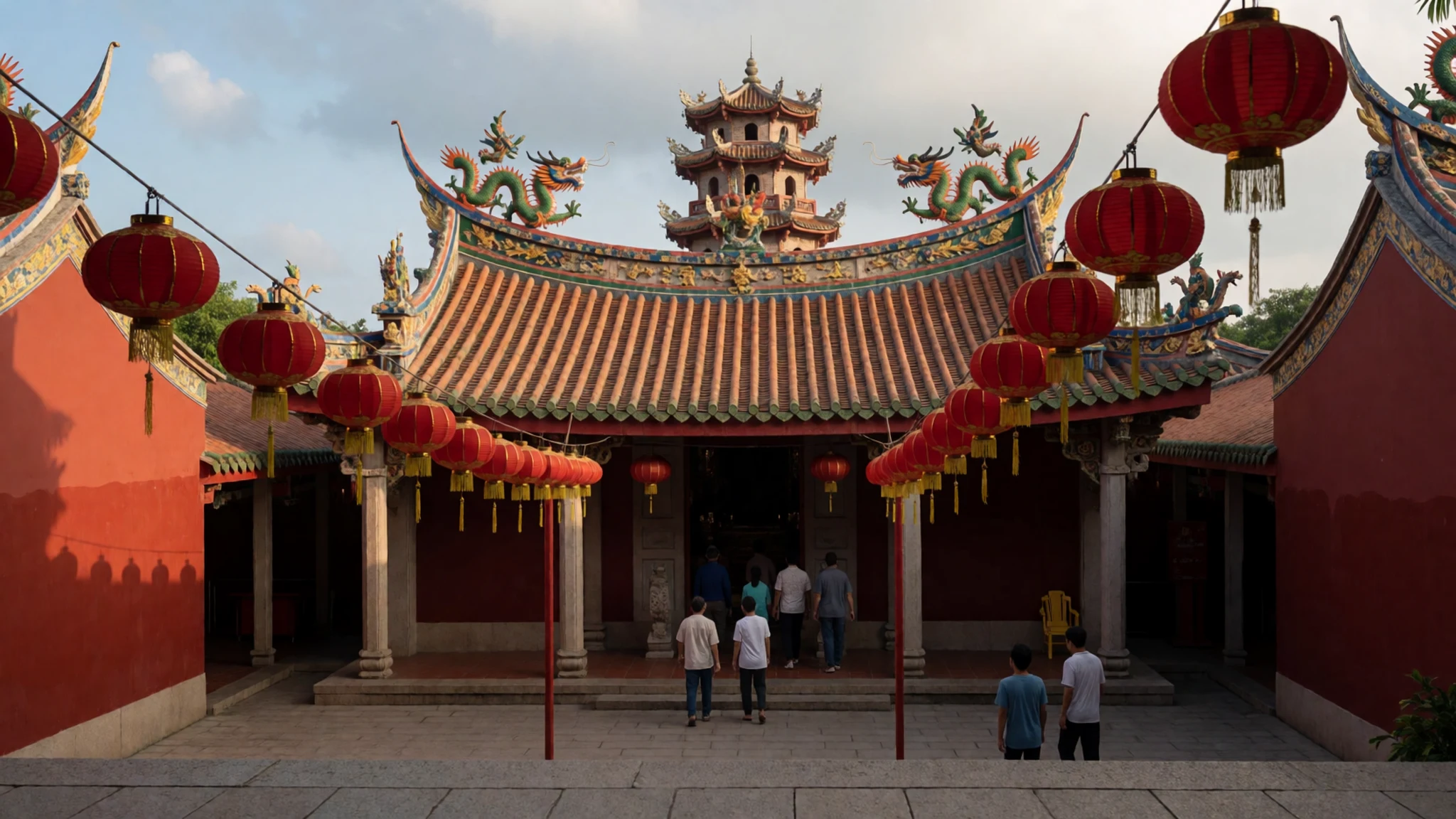
- Sibu Town Square — Central waterfront
Sibu Town Square is the open civic space at the heart of the waterfront. Walking to its far end brings the Rajang and Igan rivers into view together, with brown water, boats and the opposite bank. It is a central gathering point for the town, offering a view of the river's activity if a visit falls then.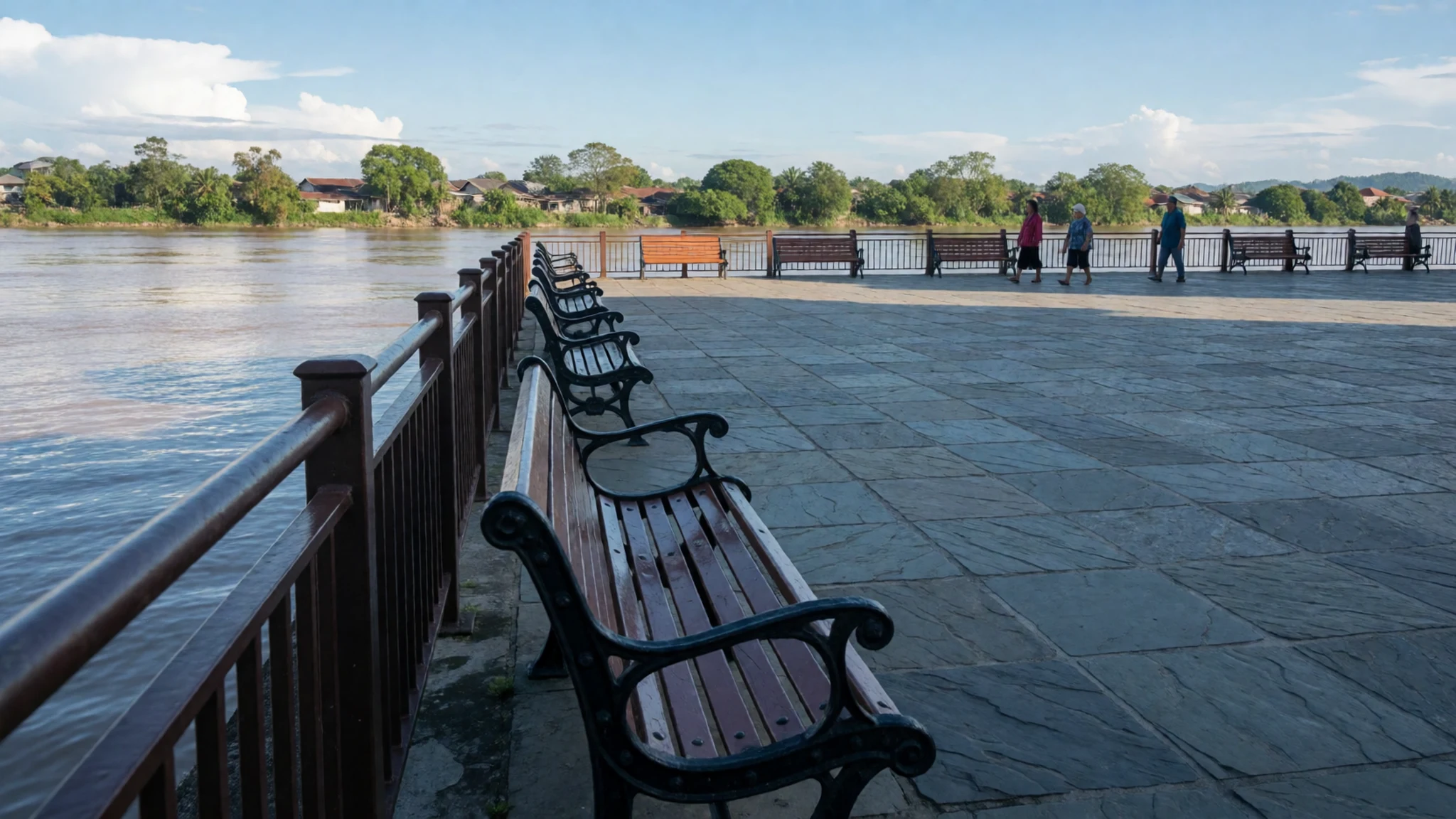
- Sibu Central Market — Central Sibu
Sibu Central Market is a big covered market where the town shops and eats. Stalls sell local produce and household goods, and clothing is sold at modest prices on the first floor. Eat there too: the food area upstairs is where many visitors end up, ideally early, before the heat and the crowds build.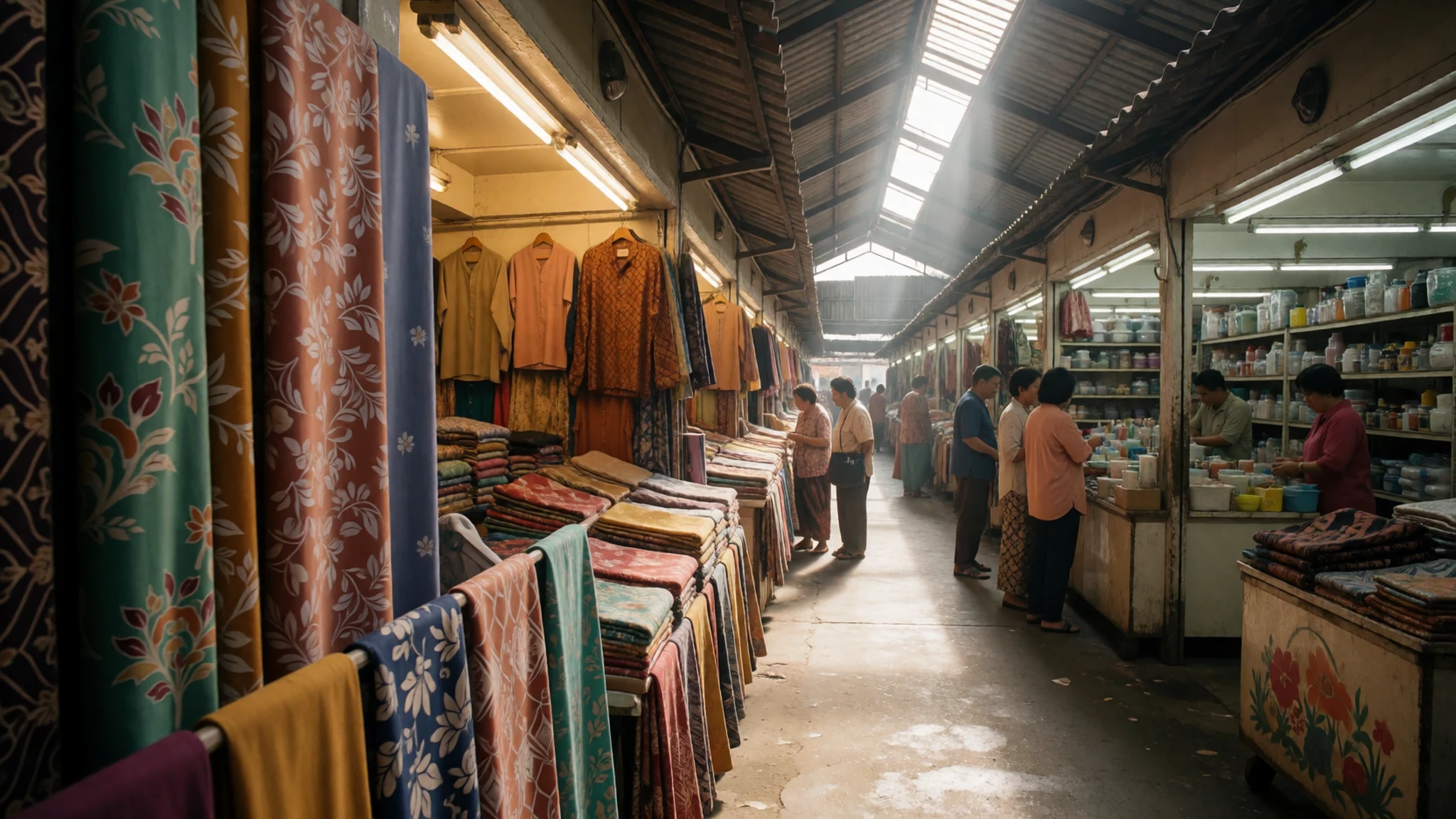
- Bukit Aup Jubilee Park — Edge of town
Bukit Aup Jubilee Park is the town's green escape and its highest ground. Paths climb through the trees to a viewpoint over the Igan river and the roofs of Sibu. A lake in the park holds plenty of fish that visitors feed. Walk early or late, as a midday climb in tropical heat is hard work.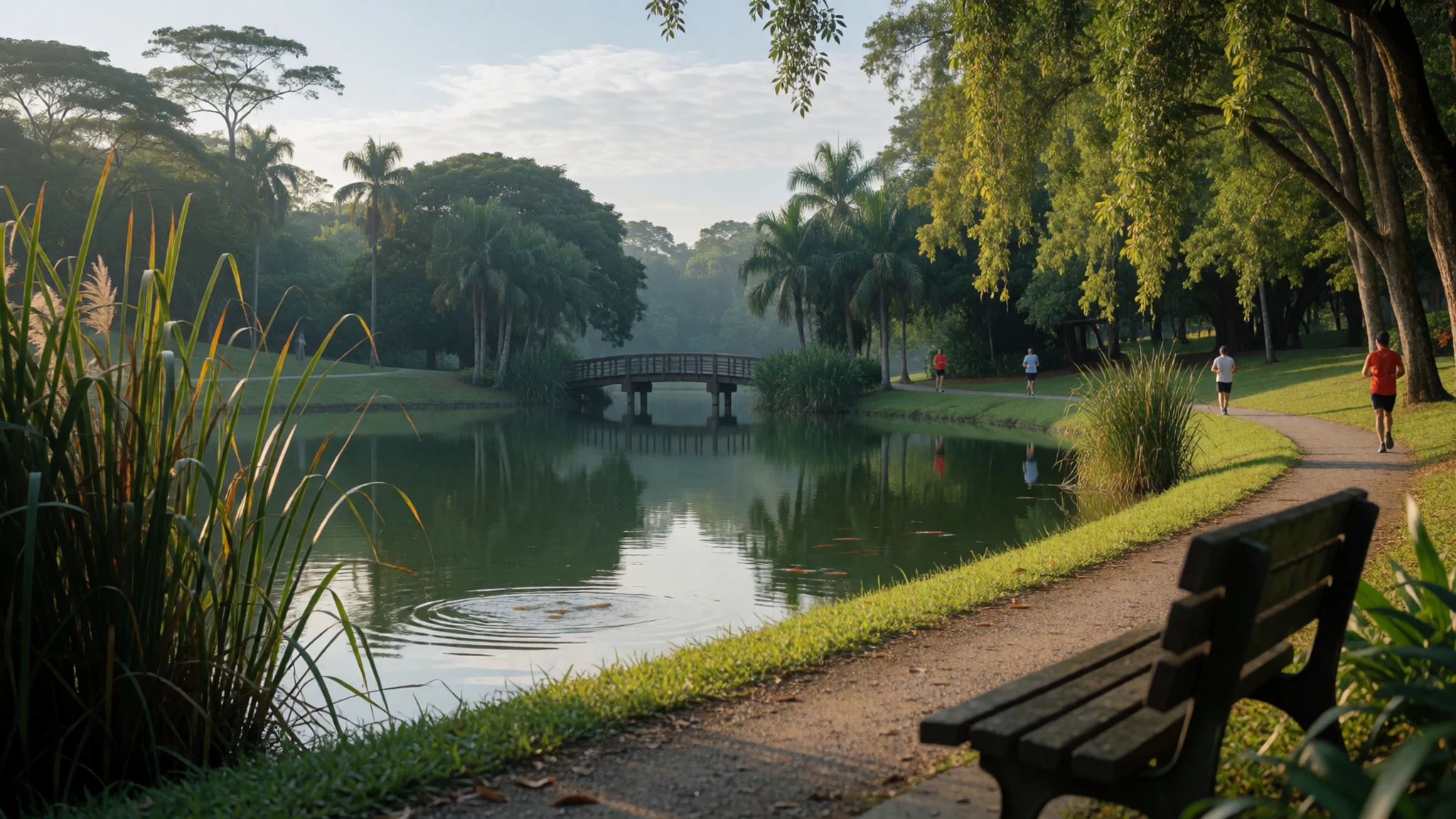
- Sungai Merah Heritage Walk — Sungai Merah quarter
Sungai Merah Heritage Walk was laid out to mark a century of Foochow settlement in Sibu. It suits a slow stroll that links the town's migrant story to the streets where it unfolded. Check locally for the current route, and consider the Lau King Howe Hospital Memorial Museum for more local history.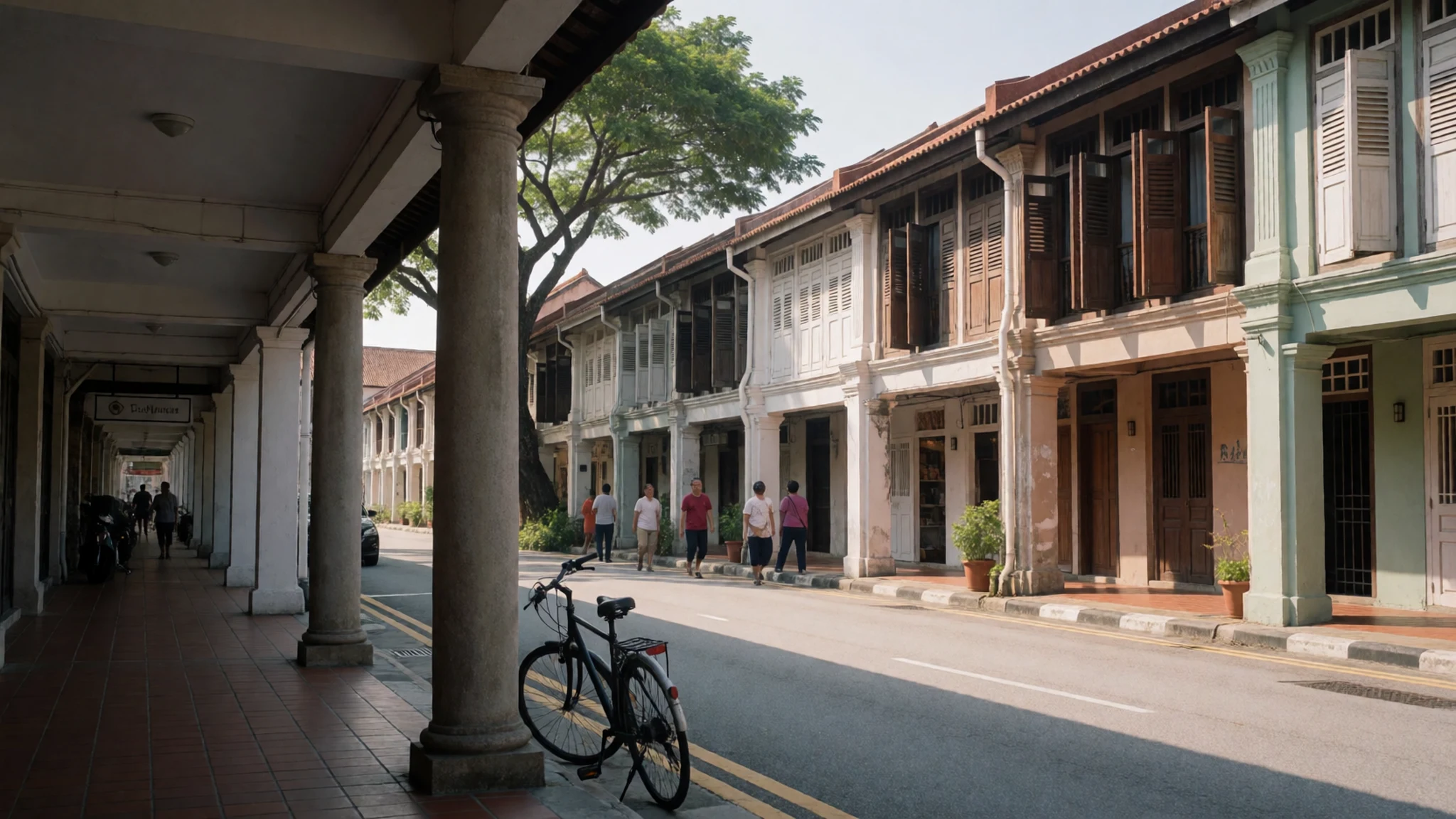
Culture
Sibu's culture is Chinese, Iban and Malay at once, and the town stages that mix openly. The town square often hosts local events and gatherings, where traditional music, dance, and food stalls showcase the region's diverse heritage. Local celebrations often feature Iban, Chinese and Malay performances, so a single evening can move from one tradition to another. These cultural displays are a regular part of the town's community life.
The town has also hosted the National Chinese Cultural Festival twice, with a cultural village, lantern riddles, dragon dances and calligraphy, and it has its own international dance festival that began in the early 2010s.
Everyday religion is just as visible. Chinese temples, a mosque, Methodist churches and Iban communities in the surrounding countryside all belong to the same landscape, and the temple by the river is a working place of worship rather than a museum. Food is another marker of identity: Foochow dishes such as kampua mieng are the town's calling card, while halal eateries serve the Malay community. Festivals are the best moment to see traditional dress, music and dance in one place, and the square fills with families in the evenings.
At temples, the mosque and churches, dress modestly, take your shoes off where others have left theirs at the door, and ask before photographing worshippers.
What to wear
Sibu's traditional dress reflects its communities. Iban women wear the ngepan on festive occasions, a woven skirt with silver ornaments and beadwork, and Iban weaving is known for pua kumbu, a ceremonial cloth patterned by tying threads before dyeing. Malay families wear baju kurung and baju melayu for religious days and weddings, often in songket or batik. Chinese residents bring out cheongsam and silk jackets for festivals such as Lunar New Year. Most of this is seen at local festivals, weddings and holidays.
Day to day, people dress for heat and humidity: cotton T-shirts, light shirts, shorts or knee-length skirts, sandals, and umbrellas or light rain jackets. Many women wear headscarves; others do not. Offices lean smart-casual.
Visitors should pack light, breathable cotton or linen and quick-drying fabrics, plus a compact umbrella or poncho, because showers are frequent. A hat and sunscreen help on riverfront walks. Shoulders and knees should be covered at temples, the mosque and churches, and a light scarf is handy. Sandals that slip off easily make sense, since shoes come off at doors, while closed shoes with grip suit the hill paths at Bukit Aup after rain. Central Market sells inexpensive clothing if something has been forgotten.
What to eat
- Kampua mieng — Coffee shops and breakfast stalls around the old town
Kampua mieng is the Foochow dry noodle dish, with noodles served on a plate rather than in broth and tossed in a light savoury dressing. It is a typical local breakfast and a good first meal in Sibu.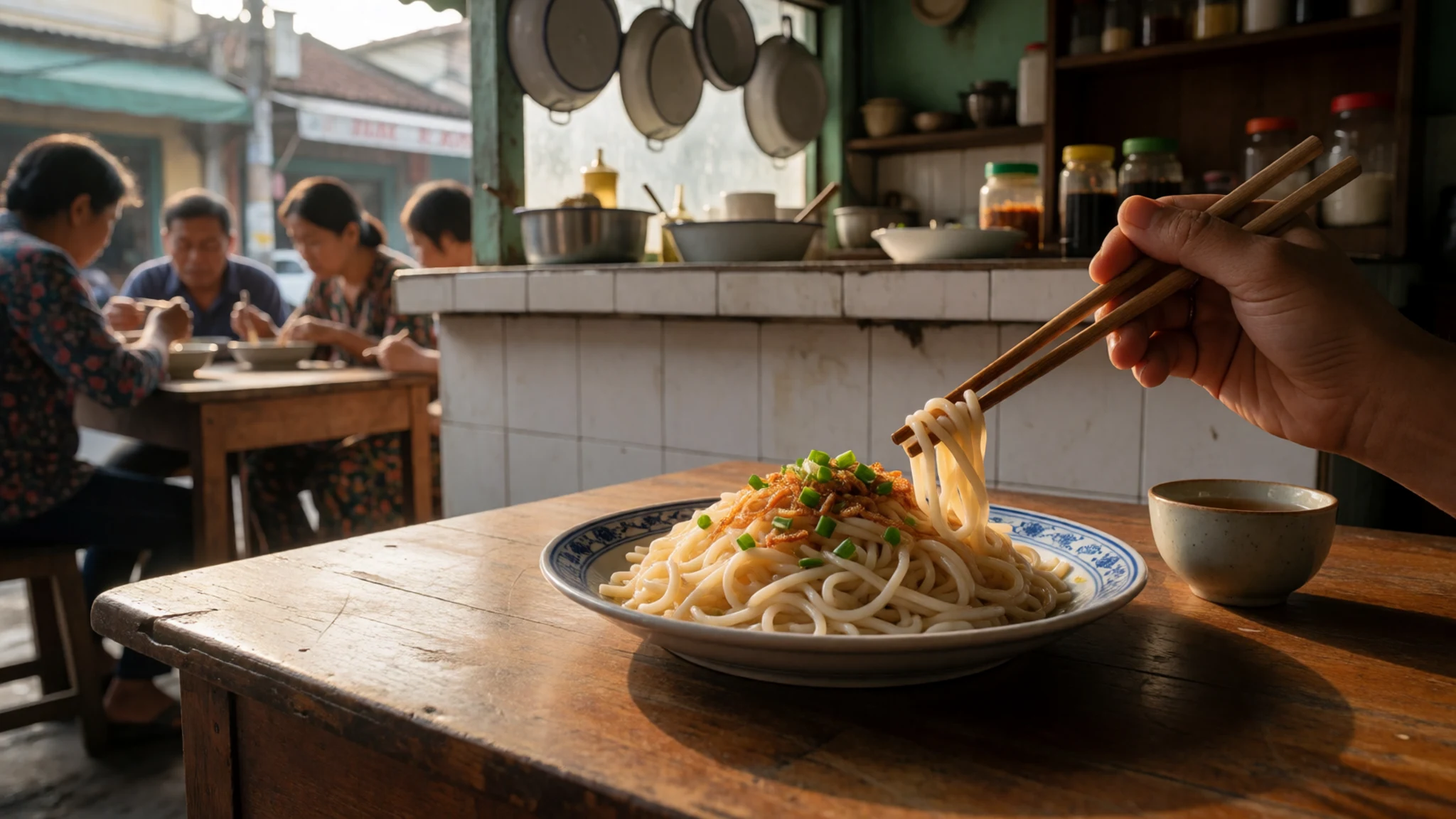
- Chai pau — Hawker stalls and the food area at Central Market
Chai pau is a steamed bun filled with vegetables, with a thin skin and a generous filling. It began as cheap dim sum for hawkers and labourers, and remains an easy snack between sights.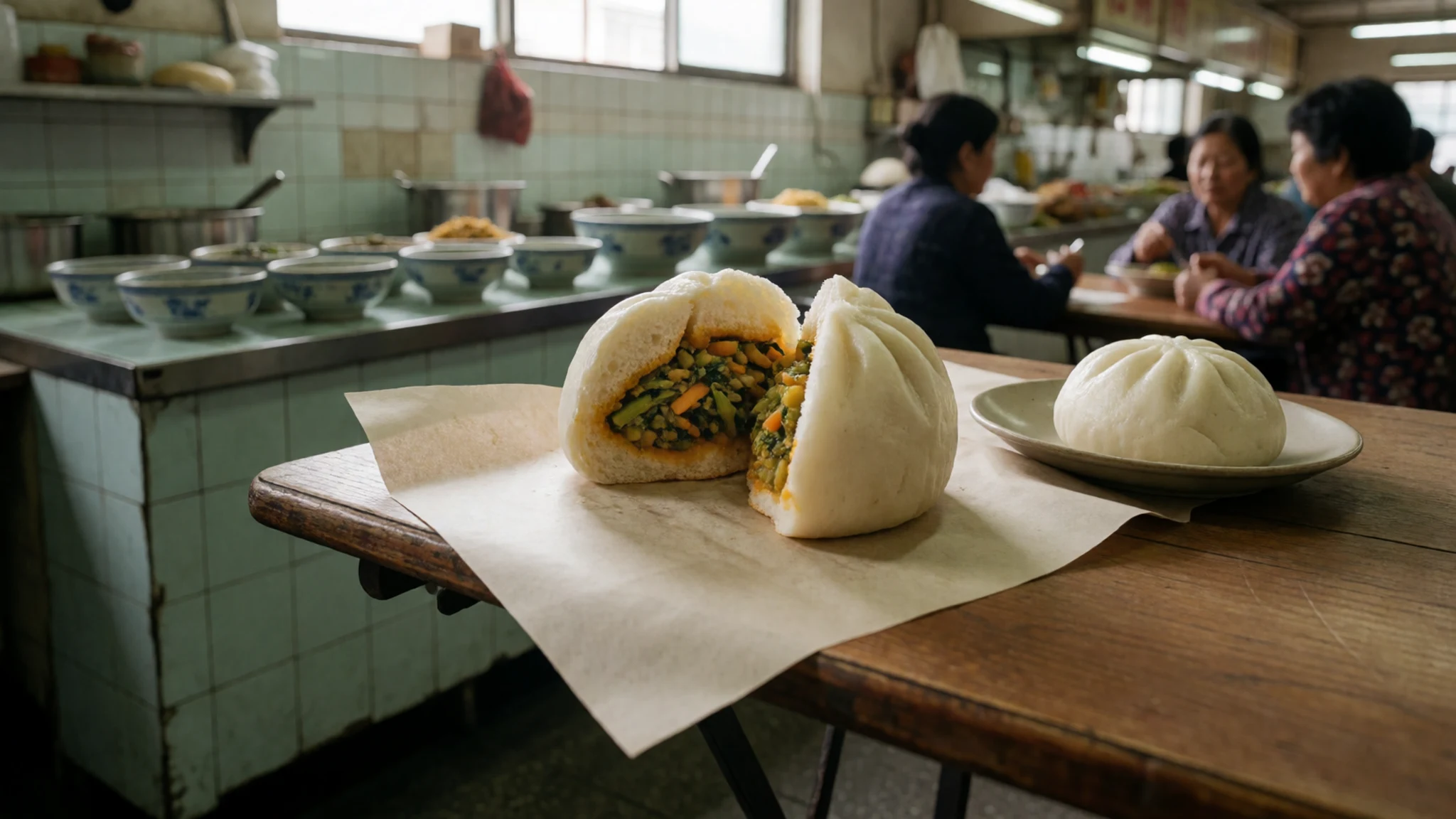
- Diang biang hu — Eateries specialising in Foochow food
Diang biang hu is a Foochow porridge made from ground rice cooked against the heated surface of a wok. The name describes the wok and its side. It is a home-style dish, less common than noodles, so ask around. - Nasi goreng — Malay warung serving halal food
Nasi goreng, Malay fried rice, is a staple at halal warung, with seafood and house-style versions common. It makes a filling lunch and a good counterpoint to the town's Chinese noodle dishes. - Tom yam kung — Halal Malay eateries and warung
Soto is a fragrant meat soup served at halal Malay eateries. Order it with compressed rice cakes (ketupat) or steamed rice for a shared meal, especially welcome when a downpour keeps everyone indoors.
Plan it
Best time. Sibu is hot and humid all year, with the wettest period from December to January and the driest months around June to August. June to August are the most comfortable months for visitors due to lower rainfall. Allow flexibility for heavy showers and the chance of local floods.
How long. 2–3
Getting there. Fly to Sibu from Kuala Lumpur, Kuching or Kota Kinabalu with Malaysia Airlines, AirAsia or MASwings (check current schedules). From the airport, buy a taxi coupon for the ride downtown, as there is no bus. Long-distance buses from other Sarawak cities arrive at the Sibu Bus Terminal on Jalan Pahlawan; local buses link it with the centre.
Budget. low
Tips
- Do the market, temple tower and hill walks early or late to avoid the midday heat
- Carry a compact umbrella or poncho, as showers can arrive without warning
- Check the official site (http://www.sibu.gov.my) or local news for flood warnings and festival dates
- Carry some cash for market stalls and small eateries
- Drink plenty of water and use sunscreen and a hat on the riverfront
Etiquette
- Remove shoes where you see them left at a door
- Dress modestly at temples, the mosque and churches
- Ask before photographing worshippers or stallholders
Nearby
Sources
- Wikidata Q1048700 (CC0)
- Wikipedia: Sibu (rev 1384515047) (CC BY-SA 4.0)
- Wikivoyage: Sibu (rev 5418130) (CC BY-SA 4.0)
- Photo: Sibu composite image (CC BY-SA 4.0)
- Photo: Wisma Sanyan side view (CC BY-SA 4.0)
- Photo: Masland Methodist Church, Sibu (CC BY-SA 4.0)
- Photo: Chinese style temple at Jade Dragon Temple (CC BY-SA 4.0)
- Photo: An-Nur Mosque (CC BY-SA 4.0)
- Photo: Another pile of logs (CC BY 3.0)
- Photo: Toung Aik Shipyard in Sibu (CC BY-SA 4.0)
- Photo: Aerial view of Sibu port operation centre (CC BY-SA 4.0)


