Shravasti
Shravasti, India
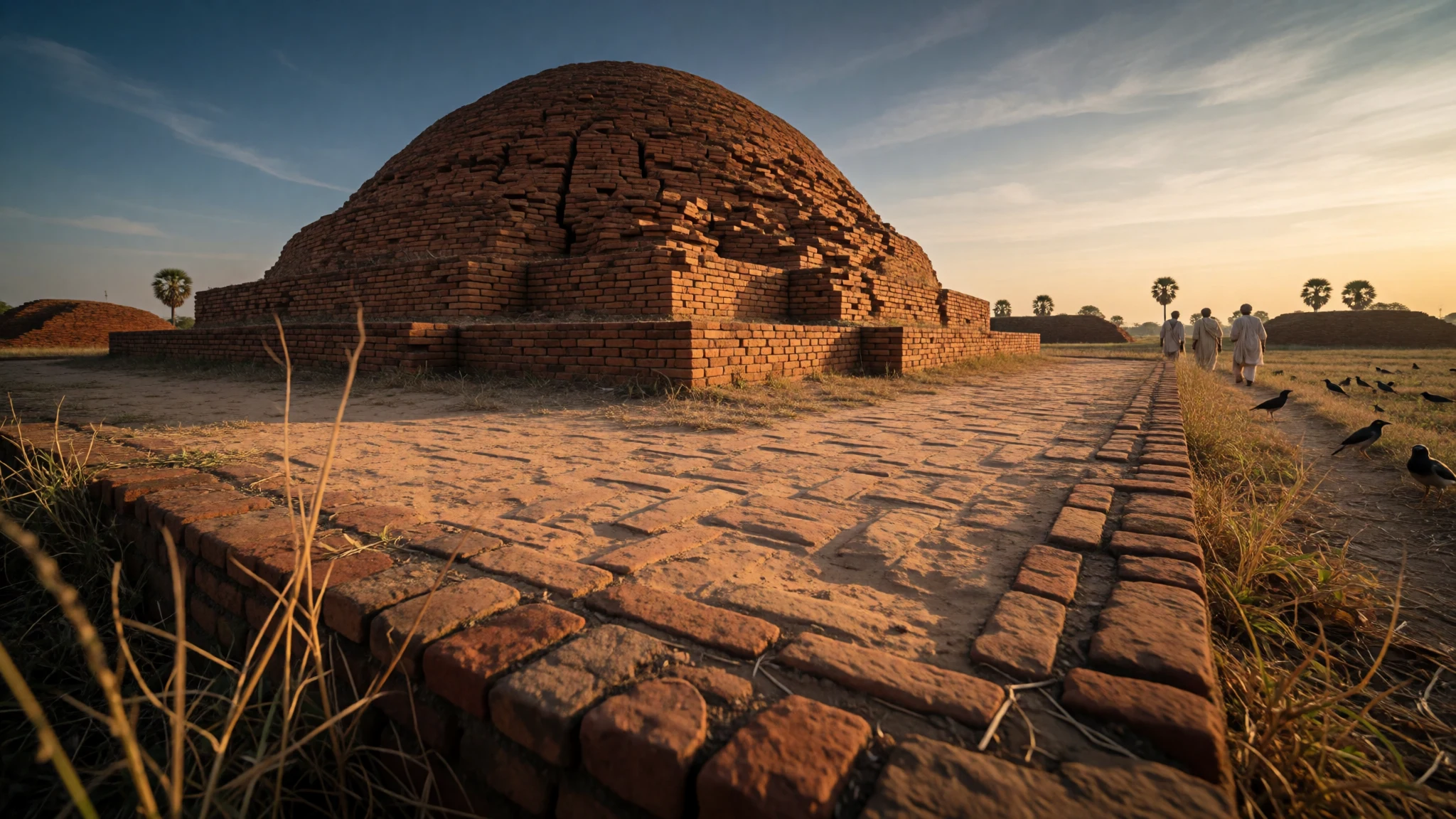
Shravasti is the quiet Uttar Pradesh plain where the Buddha taught for years, now a spread of brick ruins, monasteries and mango groves.
The place
Shravasti is a quiet archaeological site in northeastern Uttar Pradesh, beside the Rapti river and close to the Nepal border. The landscape is flat farmland, mango groves and low brick mounds, and the ruins are spread over a wide area rather than packed into one compound. In the Buddha's lifetime this was the capital of the kingdom of Kosala, and it stood where three major trade routes met, which explains both its wealth and the steady traffic of monks, merchants and kings. Two clusters of remains survive, known locally as Saheth and Maheth. Saheth holds the monastery grounds of Jetavana, while Maheth is the older fortified city, now a field of mounds, gateway foundations and temple bases. Buddhists, Jains and Hindus all weave Shravasti into their early texts, and excavations have turned up art and buildings linked to each of the three. The modern town is small. The sites are looked after partly by the state archaeological authorities and partly by monasteries built by Buddhist communities from Thailand, Sri Lanka, Myanmar, Korea and elsewhere, each in its own architectural style. The result is a pilgrimage place with a calm, scattered feel: long walks between sights, birdsong, and chanting drifting from the temples. It is rarely crowded outside the pilgrim season, though the heat of the plains can be punishing in summer.
Its story
Shravasti's story is told in the literature of every major Indian religion, but the Buddhist sources are the fullest. Tradition says the Buddha spent many rainy-season retreats here, and a very large share of the discourses in the Pali canon are set in the city. Scholars debate what that means: either he truly lived here for much of his teaching life, or the early oral tradition was gathered and organised here. Either way, almost everything his followers remembered seems to pass through Shravasti. Two local figures dominate the tales. King Prasenajit of Kosala was the Buddha's royal patron, and a scene of his procession leaving the city to meet the teacher is carved on a gateway at Sanchi. Anathapindada, a wealthy banker, is remembered for buying and giving away the Jetavana grove so monks could shelter there. The city is also tied to the Buddha's great miracle and twin miracle, a favourite subject of reliefs and statues across the Buddhist world. Chinese pilgrims later recorded what they found here. Inscriptions and sculpture show that the place prospered for well over a thousand years, until it was ruined and buried under mounds around the time the Delhi Sultanate took hold. Later in the twentieth century, Japanese-led excavations showed that building and expansion had continued through the first millennium.
What to see
- Jetavana — Saheth, western edge of the site
Jetavana is the monastery grove that Anathapindada is said to have given to the Buddha. Today it is a tidy, shaded park of brick foundations, small shrines and old trees, ideal for slow wandering. Look for the stupa mound associated with the donor and the walkways between former monks' quarters.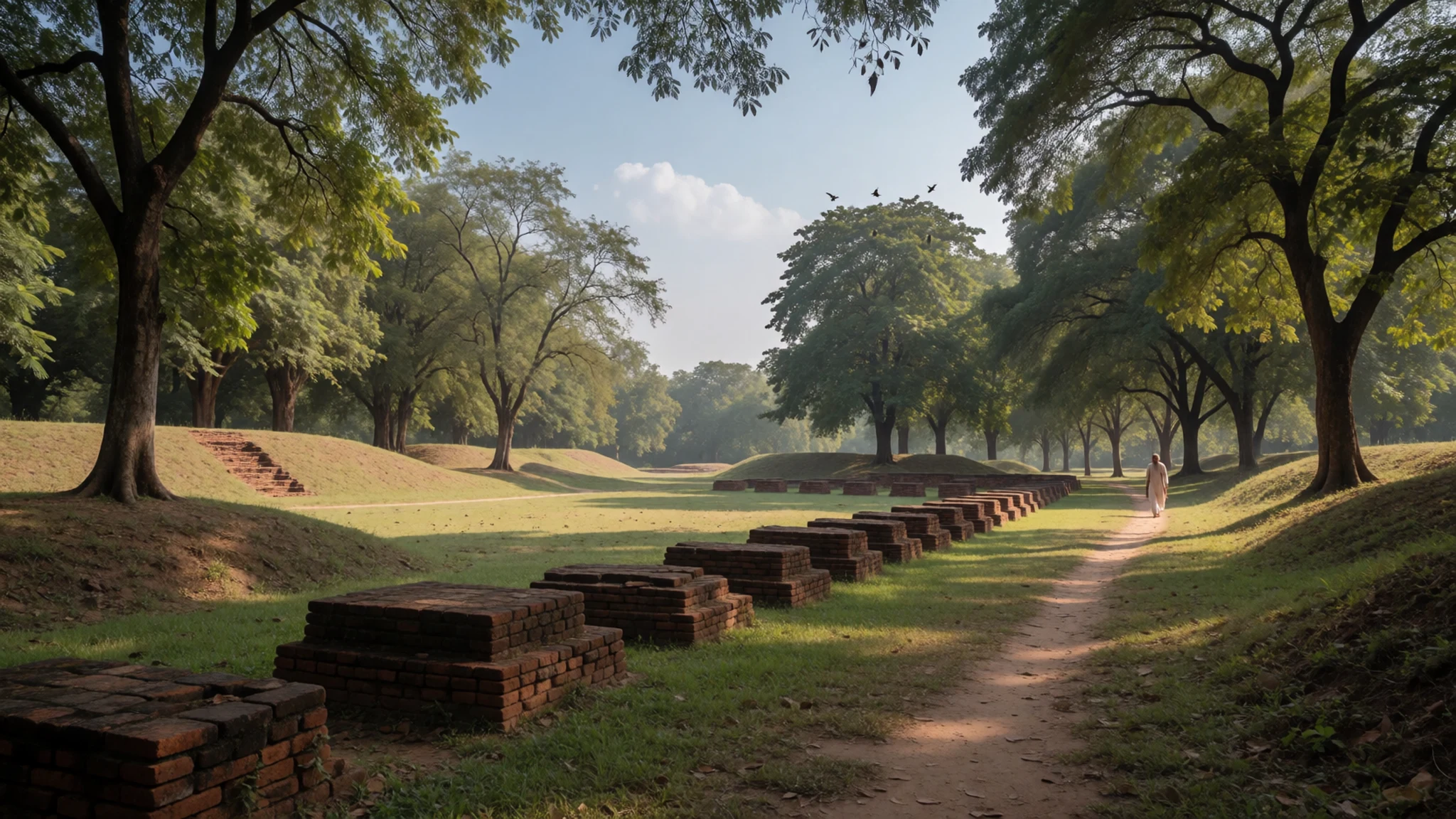
- Nava Jetavana — Near Jetavana
Nava Jetavana is a modern Buddhist temple and monastery close to the old grove. It serves pilgrims and resident monks, so it feels more alive than the ruins. Step inside to see a calm shrine hall, then ask politely about meditation or chanting times if you want to join in.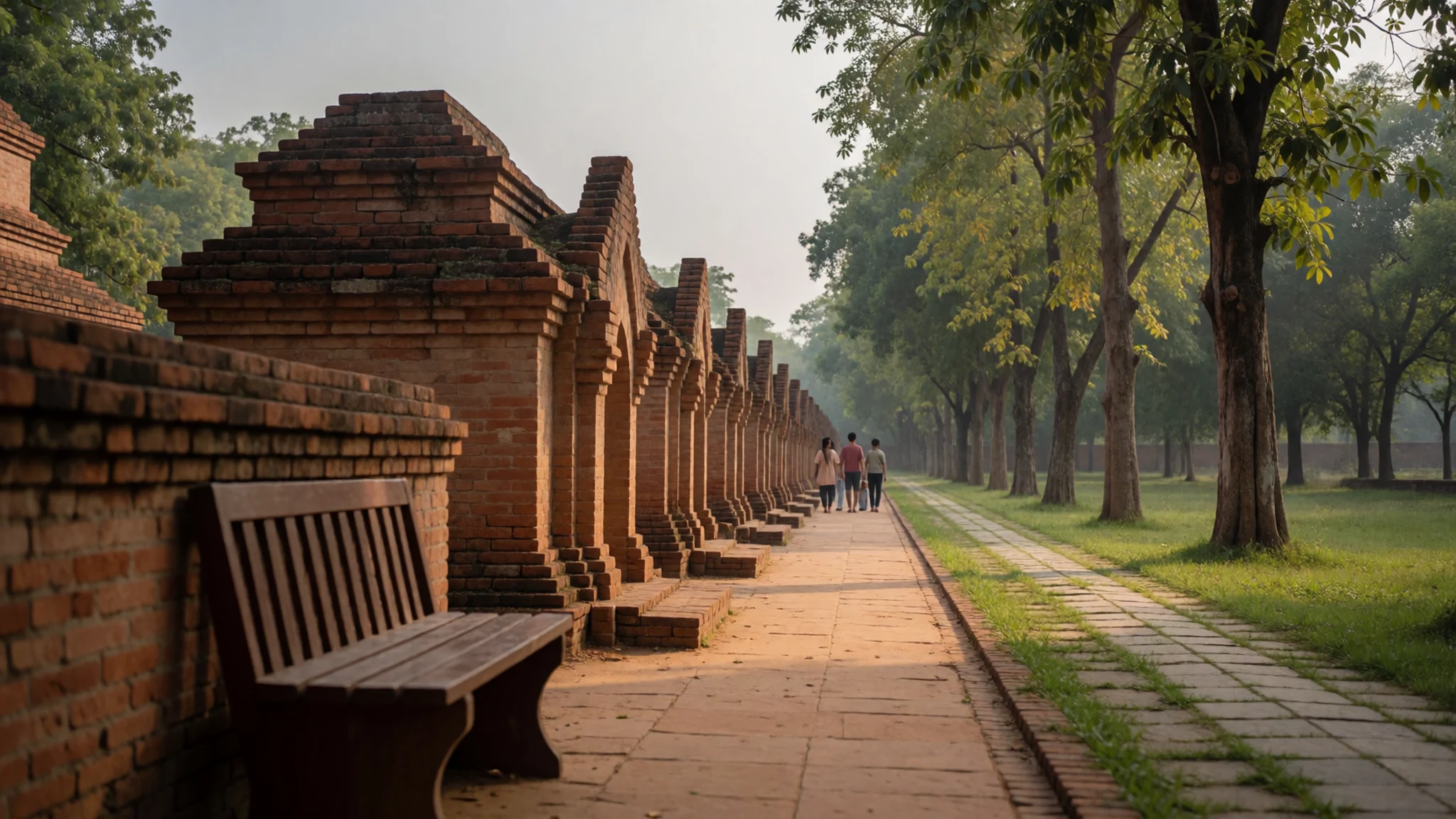
- Mahamongkol Stupa — North-west of the main ruins
Mahamongkol Stupa is a Thai-style temple complex with a gleaming stupa and landscaped grounds, a sharp contrast to the weathered brick of the ancient site. It is a good place to see how living Buddhist communities have made Shravasti a meeting point for many countries and traditions.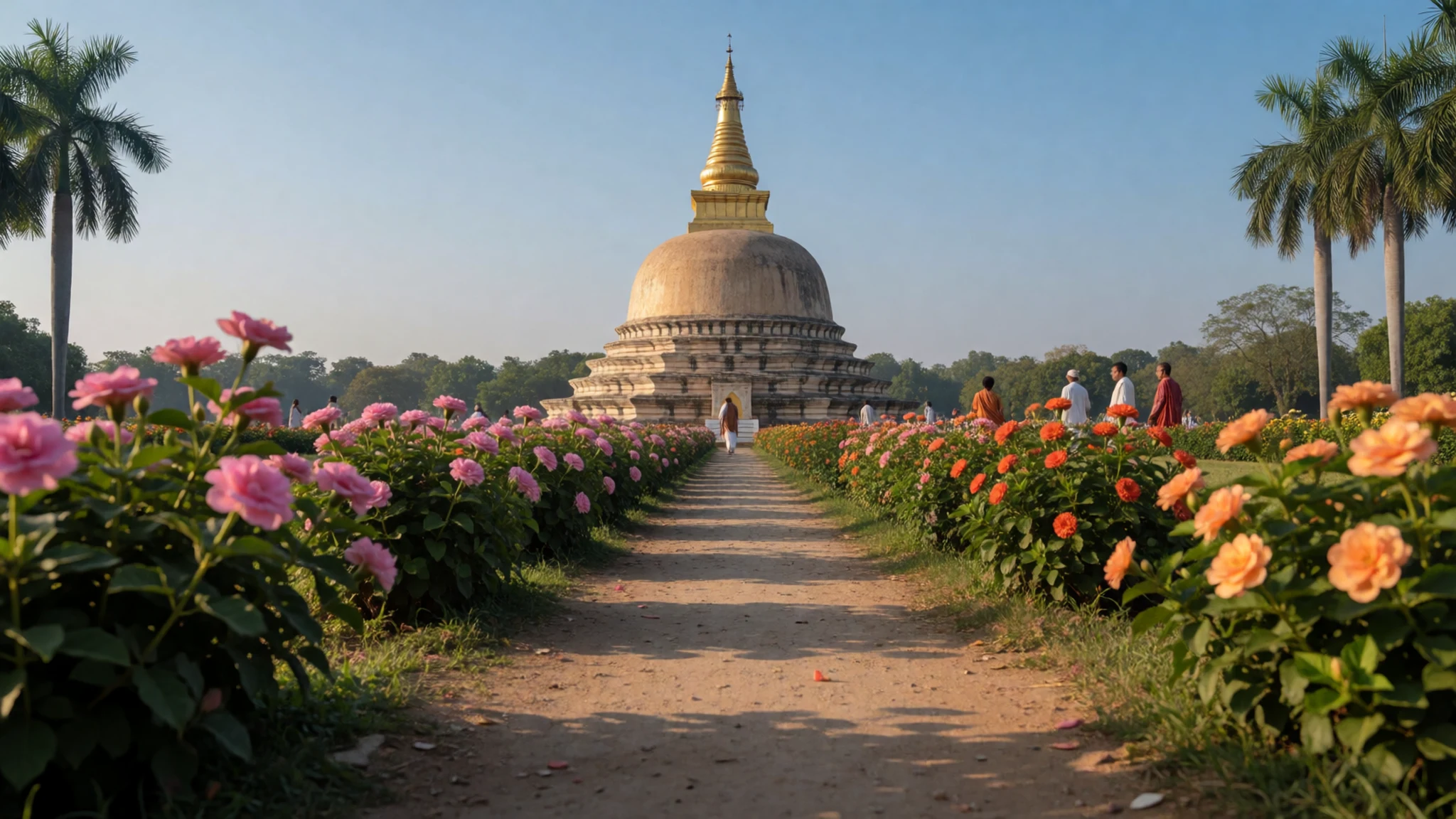
- Buddha Statue — Between the temples and the ruins
The large Buddha statue stands in open ground between the monastery clusters and is easy to find on a walk or rickshaw ride. It is a handy landmark, and the quiet surrounding lawns make a pleasant place to rest out of the midday sun before heading to the next site.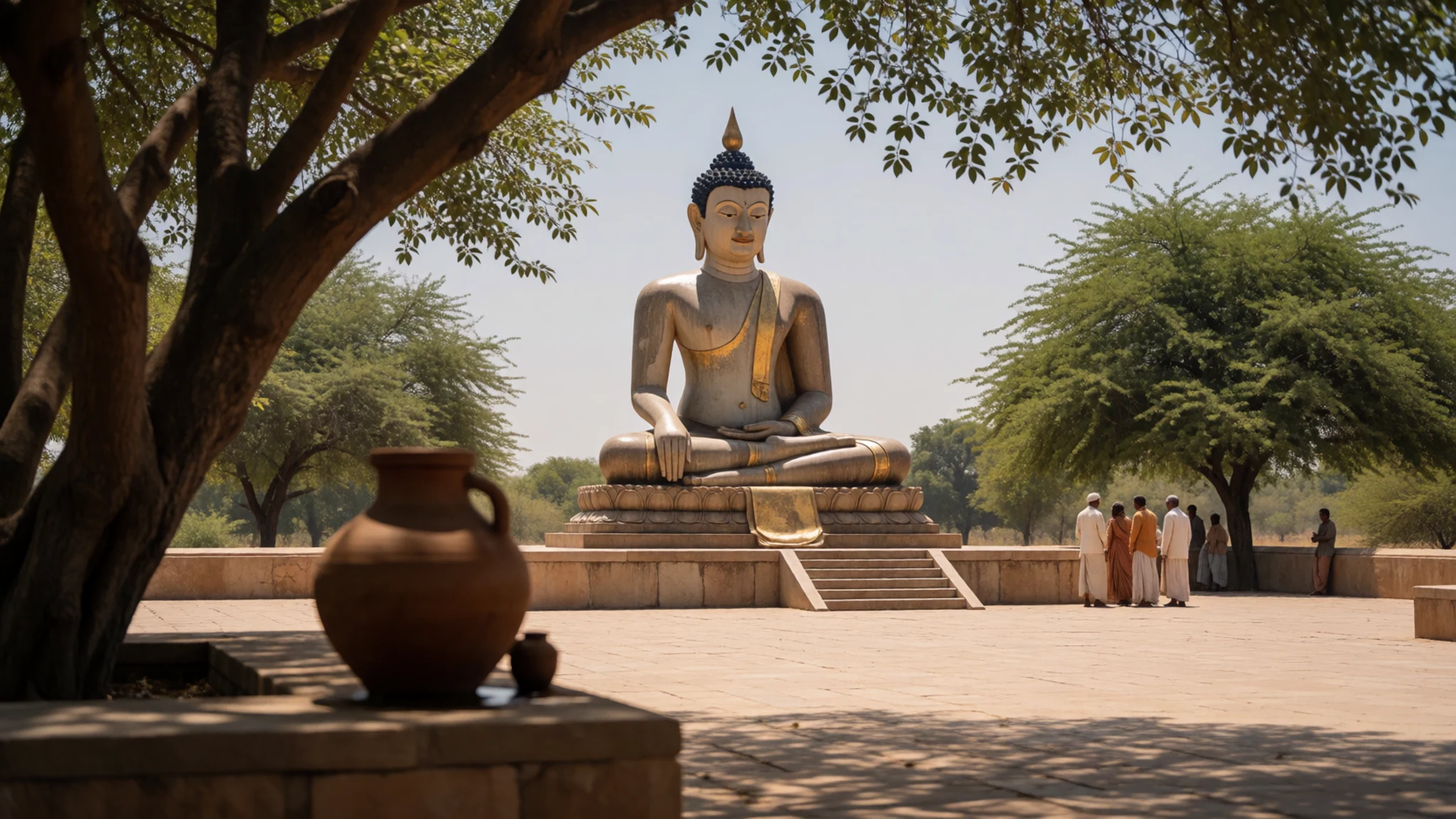
- Shobhnath temple — Maheth, the old city mounds
Shobhnath temple is a ruined Jain shrine dedicated to Sambhavanatha, the third tirthankara. Later Islamic-period brickwork sits among the older fabric, so the layers of history are visible in one spot. It is a useful reminder that Shravasti belongs to more than one tradition.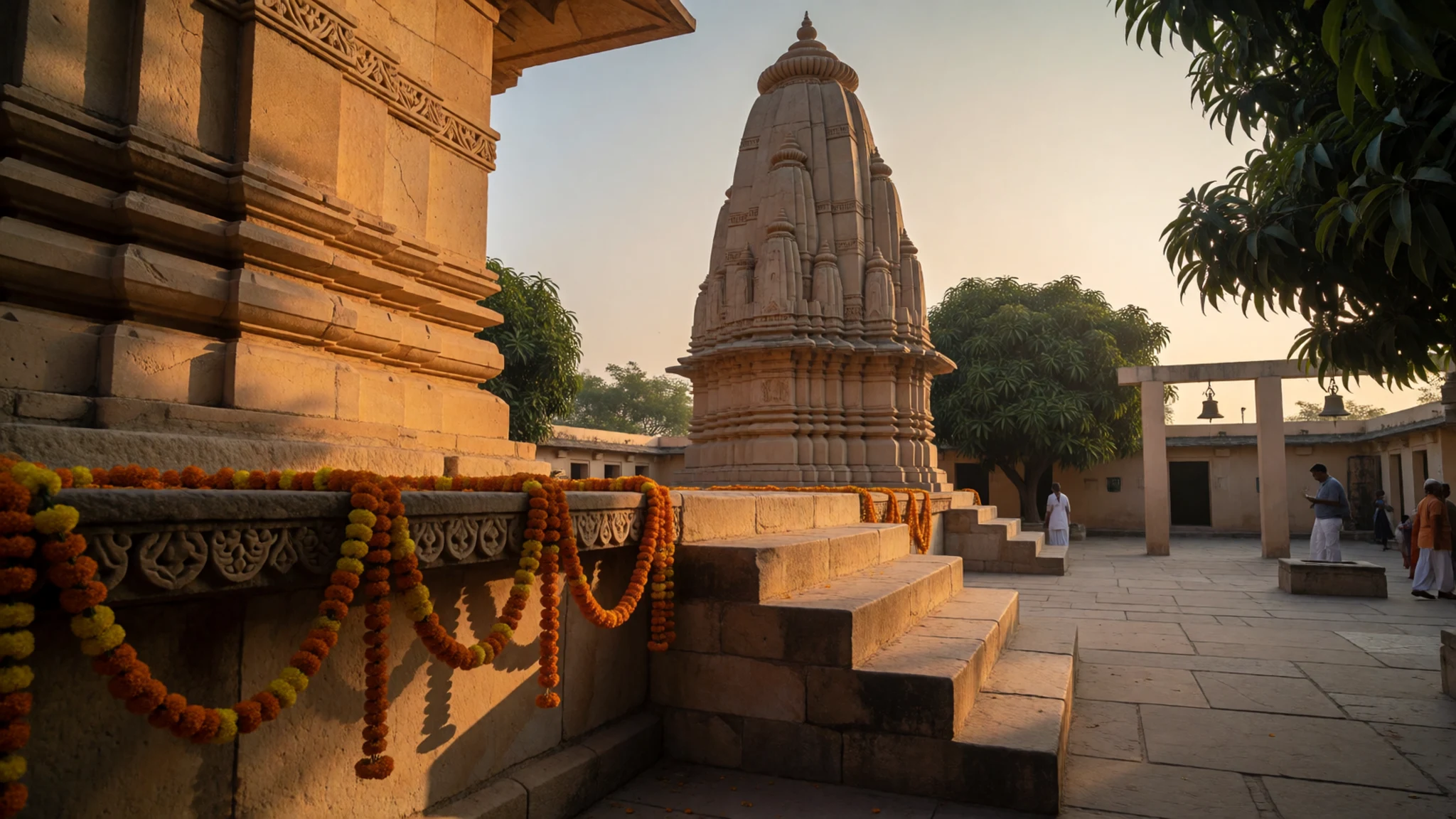
Culture
Shravasti's culture is pilgrimage culture. Most visitors arrive as Buddhists from India, Sri Lanka, Thailand, Myanmar, Korea, Japan, Tibet and beyond, and the temples keep the rhythm of the day: dawn chanting, offerings of flowers and incense, and circling stupas clockwise. Sitting quietly under a tree, as the Buddha is said to have done, is as much a part of a visit as reading the ruins. The Anandabodhi tree in Jetavana is honoured as a living link to Bodh Gaya, and pilgrims often tie threads or leave small garlands nearby. Because the site belongs to three religions, the atmosphere changes from place to place. At the Jain remains, visitors pause in reverence for Sambhavanatha, and a few Hindu shrines in the area still receive local worshippers. The surrounding villages are farming communities in which Hindi and Awadhi are spoken, and the pace of life is slow. Monks and nuns may be happy to chat, but many are in the middle of retreats or study, so a respectful greeting and a little patience go a long way. Pilgrim groups can fill the monasteries at festivals, particularly around Buddha Purnima. Dress modestly, remove your shoes before entering any shrine hall or temple, and never point your feet at a Buddha image or touch a monk if you are a woman.
What to wear
Shravasti sits in the Awadh and Purvanchal belt of Uttar Pradesh, where traditional dress is the sari for women and the dhoti-kurta for older men, usually in cotton, with silk and woven borders kept for weddings and festivals. Chikankari, the white-on-white embroidery best known from Lucknow, is a regional pride and appears on kurtas and dupattas. Pilgrim groups add their own colour: Buddhist monks and nuns wear saffron, maroon or ochre robes depending on their tradition, and Thai, Sri Lankan and Tibetan visitors often wear white for temple days. Day to day, locals wear salwar kameez, kurta with trousers, or shirts and trousers, with a towel or scarf as protection from sun and dust. A visitor should dress for heat and for holy ground at once. Light cotton or linen with long sleeves and trousers or long skirts works well, since shoulders and knees should be covered at monasteries. Choose a wide-brimmed hat or scarf for the open ruins, with sunscreen and sunglasses. Footwear matters: the site involves long walks over uneven brick, grass and dust, so wear sturdy sandals or trainers that slip off easily, as shoes come off often. Carry socks for hot paving in summer, and a light shawl for cool winter mornings and evenings.
What to eat
- Puri sabzi — Roadside eateries and tea stalls in Shravasti town and nearby Balrampur
Puri sabzi is the standard breakfast of the region: puffy fried wheat bread with a spiced potato curry, often with pickle. It is hot, filling and cheap, and suits an early start before touring the ruins in the heat.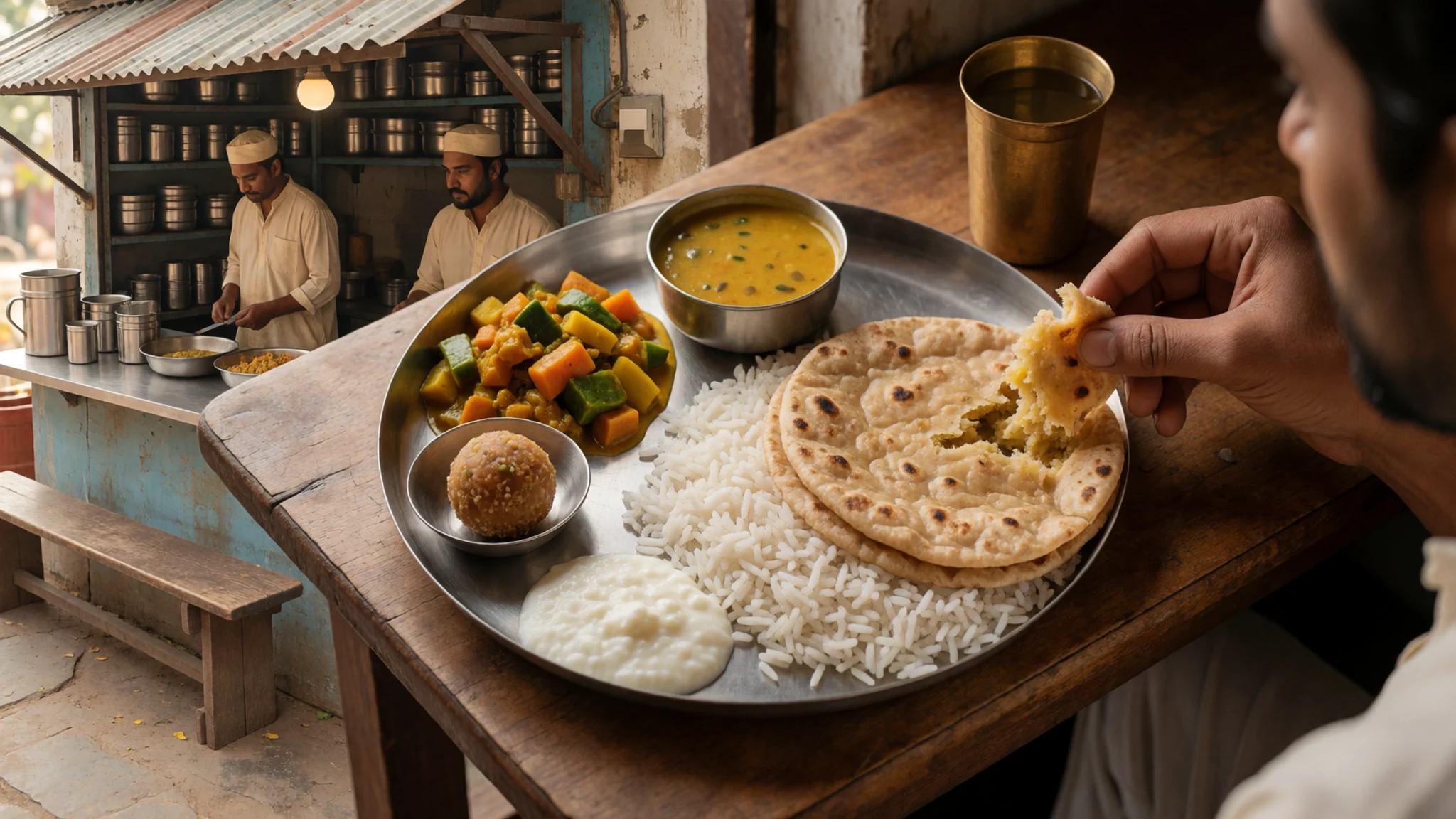
- Litti chokha — Local dhabas on the main roads around the site
Litti chokha is a rustic eastern Uttar Pradesh meal of roasted wheat balls stuffed with spiced gram flour, served with mashed aubergine and potato and a spoonful of ghee. It is hearty pilgrim fuel for a long walking day.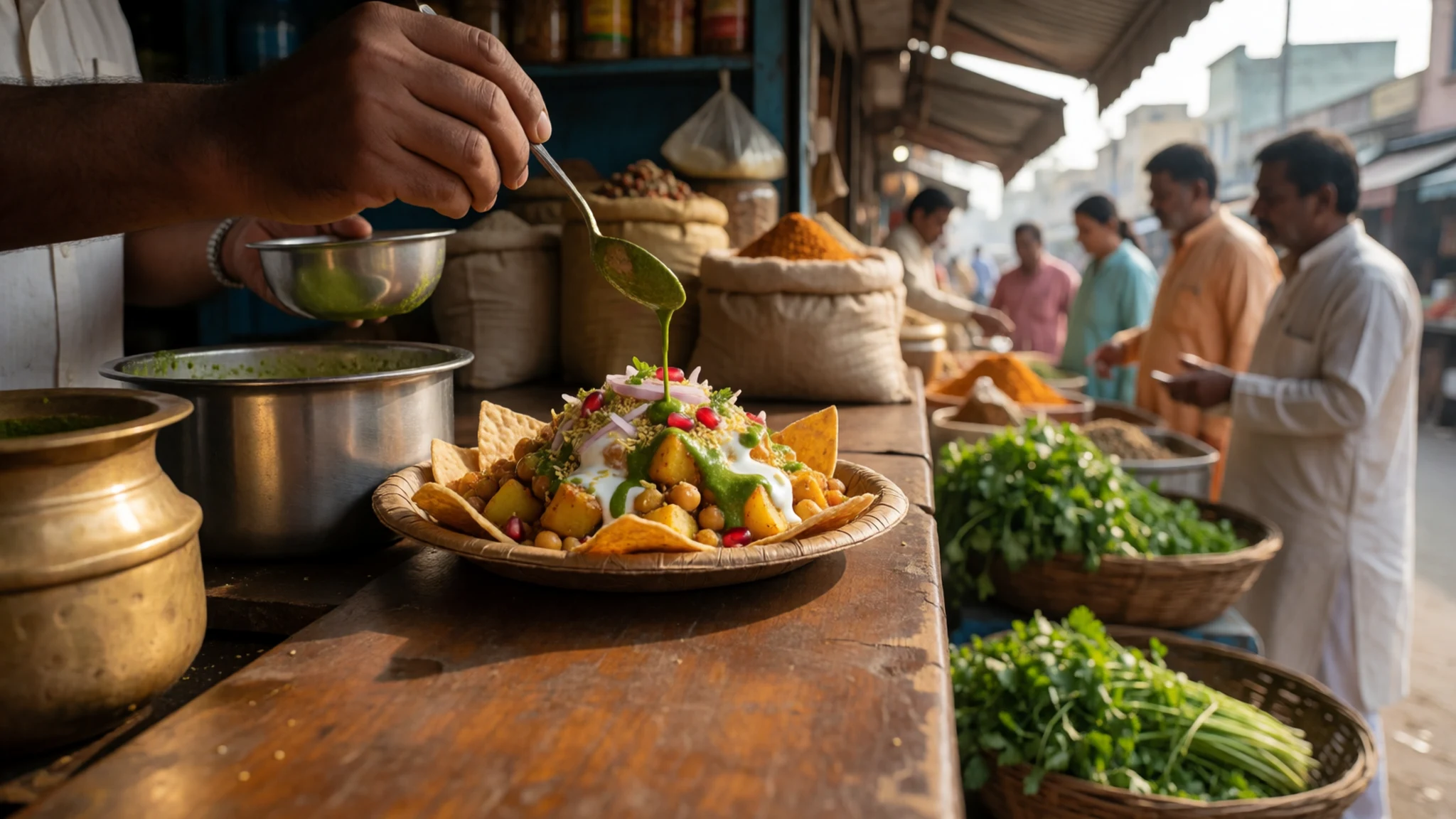
- Dal, rice and roti thali — Pilgrim guesthouses and vegetarian eateries near the temples
A simple vegetarian thali of dal, seasonal vegetables, rice, roti and pickle is the safest and most common lunch. Many monasteries and pilgrim guesthouses serve this plain, home-style food to guests without meat or onion. - Jalebi and milk — Sweet shops in the market of Shravasti and Balrampur
Jalebi, crisp spirals of fried batter soaked in sugar syrup, is a morning treat across northern India. Locals often eat it with a glass of hot, thick milk, which makes a sweet, energetic start before sightseeing. - Masala chai — Tea stalls at the crossroads and outside the monastery gates
Masala chai, brewed strong with milk, sugar and ginger or cardamom, is served in small clay cups or glasses all day. A stop at a roadside stall is a good way to rest between sights and chat with locals and pilgrims.
Plan it
Best time. November to February are the most comfortable months, with cool, dry days and clear skies; March is still pleasant. April to June is very hot on the plains, and the monsoon from about July brings humidity and muddy paths. Early mornings are best at any time of year.
How long. 1–2
Getting there. Check current flights and trains before you travel: Lucknow and Gorakhpur are the usual larger gateways, and Balrampur is the closest big town. The final leg is by road, by taxi or bus, so arrange transport in advance. Shravasti is also on a pilgrim route with Lumbini, Kushinagar, Sarnath and Bodh Gaya.
Budget. low
Tips
- Start early, as the ruins are open and shadeless and midday heat is fierce for most of the year.
- Carry cash and drinking water, since cards and shops are scarce around the sites.
- Hire a rickshaw or taxi for the day, as the sights are spread out.
- Check the official archaeological site and each monastery for opening times and any entry fees before you go.
- Book accommodation ahead around festivals such as Buddha Purnima, when pilgrim groups fill the guesthouses.
Etiquette
- Remove shoes before entering temples and shrine halls, and cover shoulders and knees.
- Do not touch monks or sit with your feet pointing at Buddha images.
- Ask before photographing worshippers, and keep voices low in meditation areas.
Nearby
Sources
- Wikidata Q2594448 (CC0)
- Wikipedia: Shravasti (rev 1365210324) (CC BY-SA 4.0)
- Wikivoyage: Shravasti (rev 5305390) (CC BY-SA 4.0)
- Photo: Twinmiracle.jpg (CC BY-SA 2.5)
- Photo: Shobhnath temple (cropped) (CC BY 2.5)
- Photo: Stupa icon Thailand (CC0 1.0)
- Photo: Procession of Prasenajit of Kosala (CC BY 3.0)
- Photo: Shravasti Buddhist site, Saheth Maheth (CC0 1.0)
- Photo: 1st century Sravasti Bodhisattva (CC0 1.0)
- Photo: Anathapindikastupa1.jpg (CC BY-SA 2.5)
- Photo: Anandabodhi.jpg (CC BY-SA 2.5)


