Taj Mahal
Taj Mahal, India
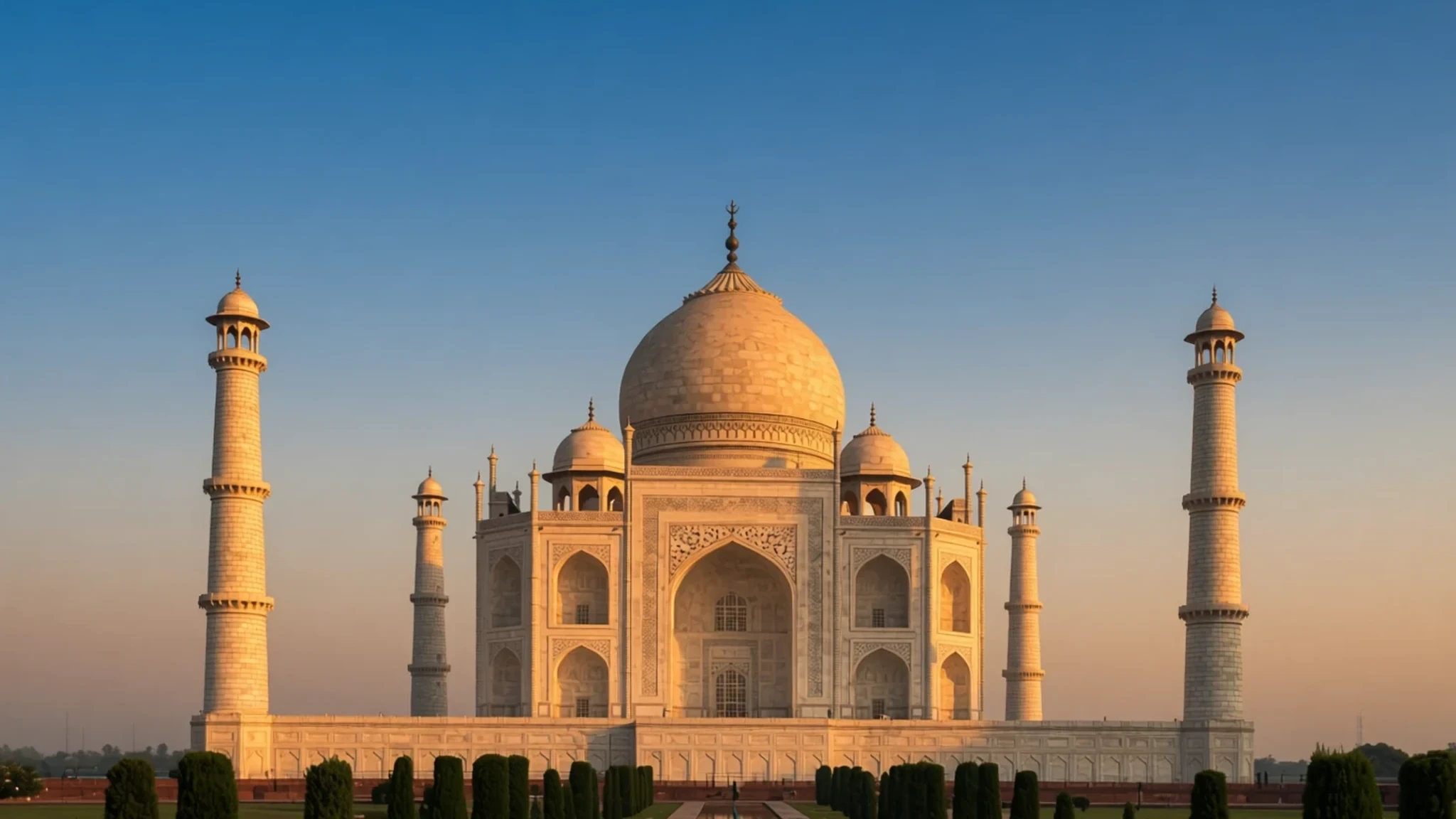
Visit the Taj Mahal to witness an extraordinary marble masterpiece of Indo-Islamic architecture rising above the Yamuna River.
The place
You'll find the Taj Mahal sitting on the right side of the Yamuna River in the city of Agra, Uttar Pradesh, India—its famous outline is known across the globe. As an ivory-white marble mausoleum, it forms the centrepiece of a large enclosed precinct that includes formal gardens, a mosque, and a guest house bounded by a crenellated wall. The approach to the sanctuary leads through vast red sandstone structures that frame the luminous central tomb. Visitors arriving at the complex step into a landscape designed around strict symmetry, reflecting pools, and water channels that mirror the shifting light across the white marble facade throughout the day. The entire precinct blends the structural traditions of Indo-Islamic and Mughal design, utilising intricate geometric layouts and symbolic forms. While the grand mausoleum itself gleams with carved white marble inlaid with semi-precious stones, the surrounding boundary buildings use deep red sandstone, creating a striking visual contrast that defines the monumental character of the compound. Walking through the gateways, travellers encounter a living monument where the sheer scale of the courtyards and the meticulous detail of the floral stonework draw the eye in every direction. It is a bustling destination that pulls in crowds from across the globe, requiring patience at the security gates and pathways, yet offering moments of profound stillness when standing before the central reflecting tank.
Its story
The creation of this monumental tomb is a tale of love, grief, and imperial ambition rooted in the golden age of the Mughal Empire. It was commissioned by the fifth Mughal emperor, Shah Jahan, to house the final resting place of his beloved wife, Mumtaz Mahal. Construction began shortly after her passing, serving as an eternal testament to her memory and eventually becoming the final resting place for the emperor himself. Master builders and artisans from across the empire and beyond gathered by the Yamuna River to raise the vast marble structure, integrating symmetric courtyards, soaring gates, and ornamental waterways. Work on the mausoleum reached completion while development across the wider precinct continued for several more years, drawing on immense resources and an army of craftsmen. The first major ceremony held at the completed shrine marked an anniversary of Mumtaz Mahal's passing, presided over by the grieving emperor. Over the centuries, the complex has weathered the fall of empires, political shifts, and the pressures of modern tourism, remaining a symbol of devotion carved into stone. Today, it stands protected as a major heritage site, inviting millions of travellers to walk the very same stone pathways laid down during the height of the Mughal era.
What to see
- Darwaza-i-Rauza
The grand entry gate leading visitors into the main complex. Three monumental archways converge to form the threshold, offering the first framed glimpse of the white marble mausoleum beyond. Videography is permitted up to the red sandstone platform of this imposing gate.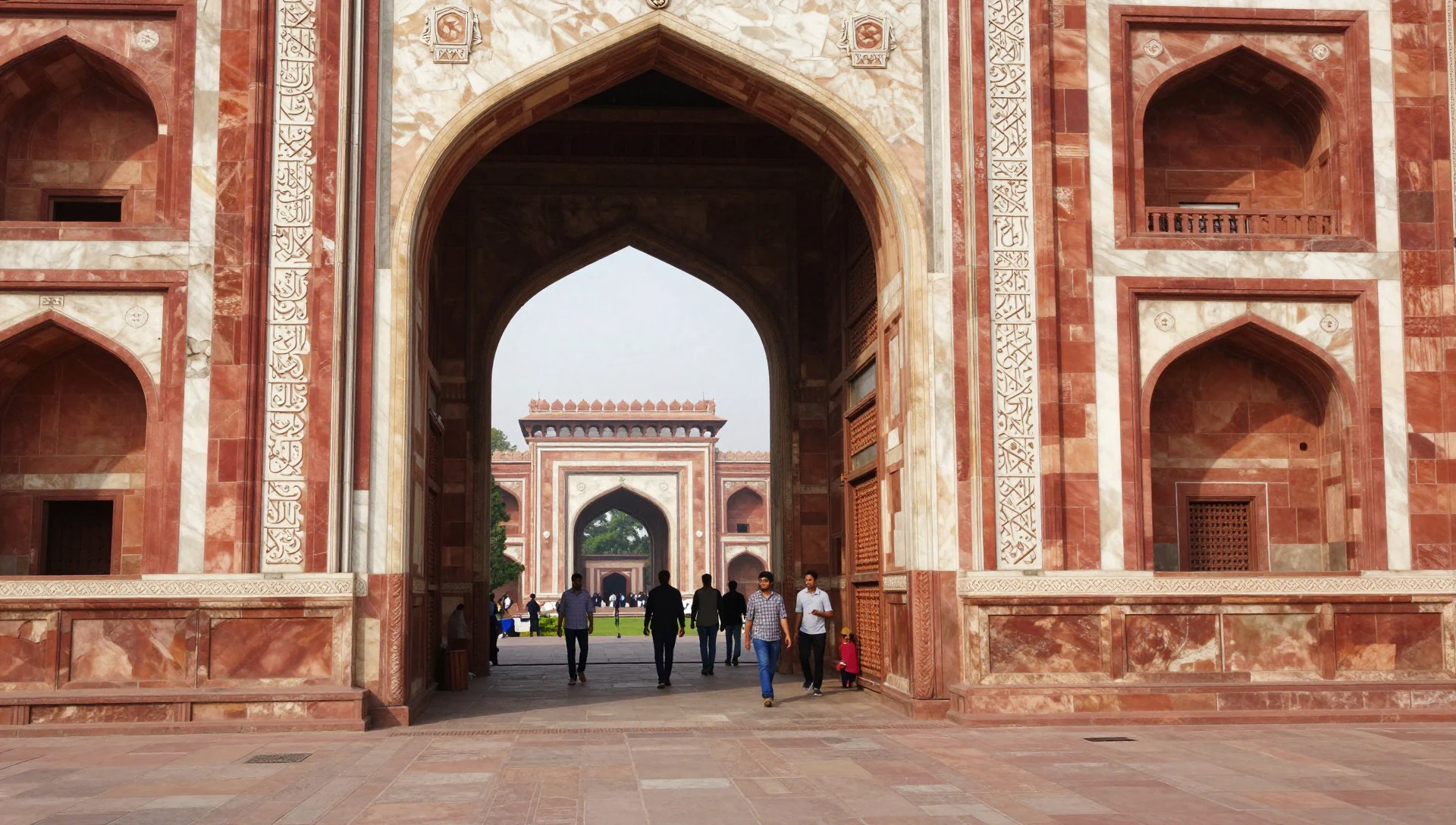
- Hawd al-Kawthar
The raised marble water tank positioned precisely at the centre of the formal garden layout. Known as the Tank of Abundance, its calm surface creates a mirror image of the main mausoleum for those walking along the central stone pathways.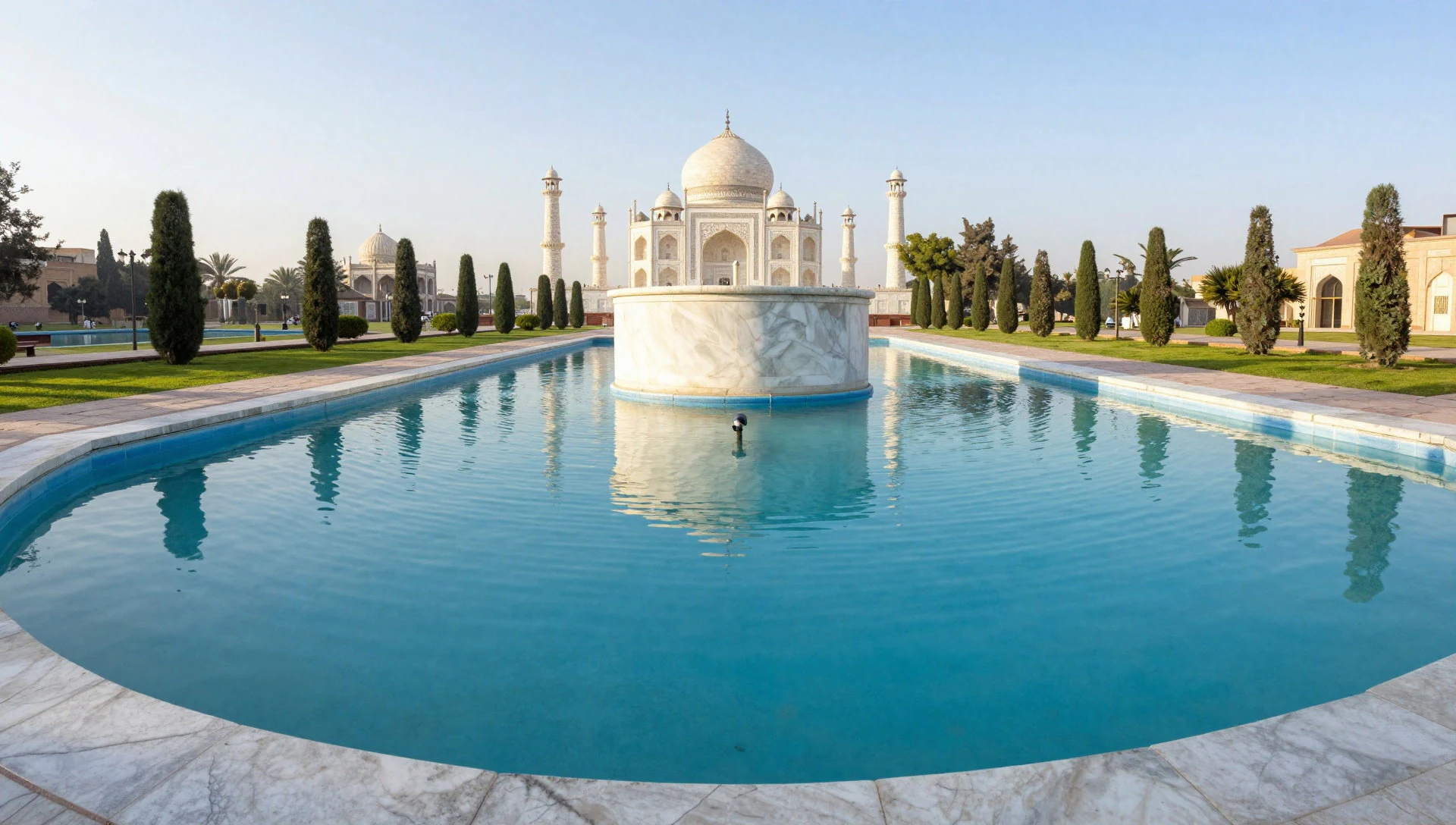
- Naubat Khana
A two-storey drum house built from red sandstone on the eastern flank of the precinct. Capped with a white marble chhatris supported by eight slender columns, it reflects the balanced symmetry characteristic of the wider architectural complex.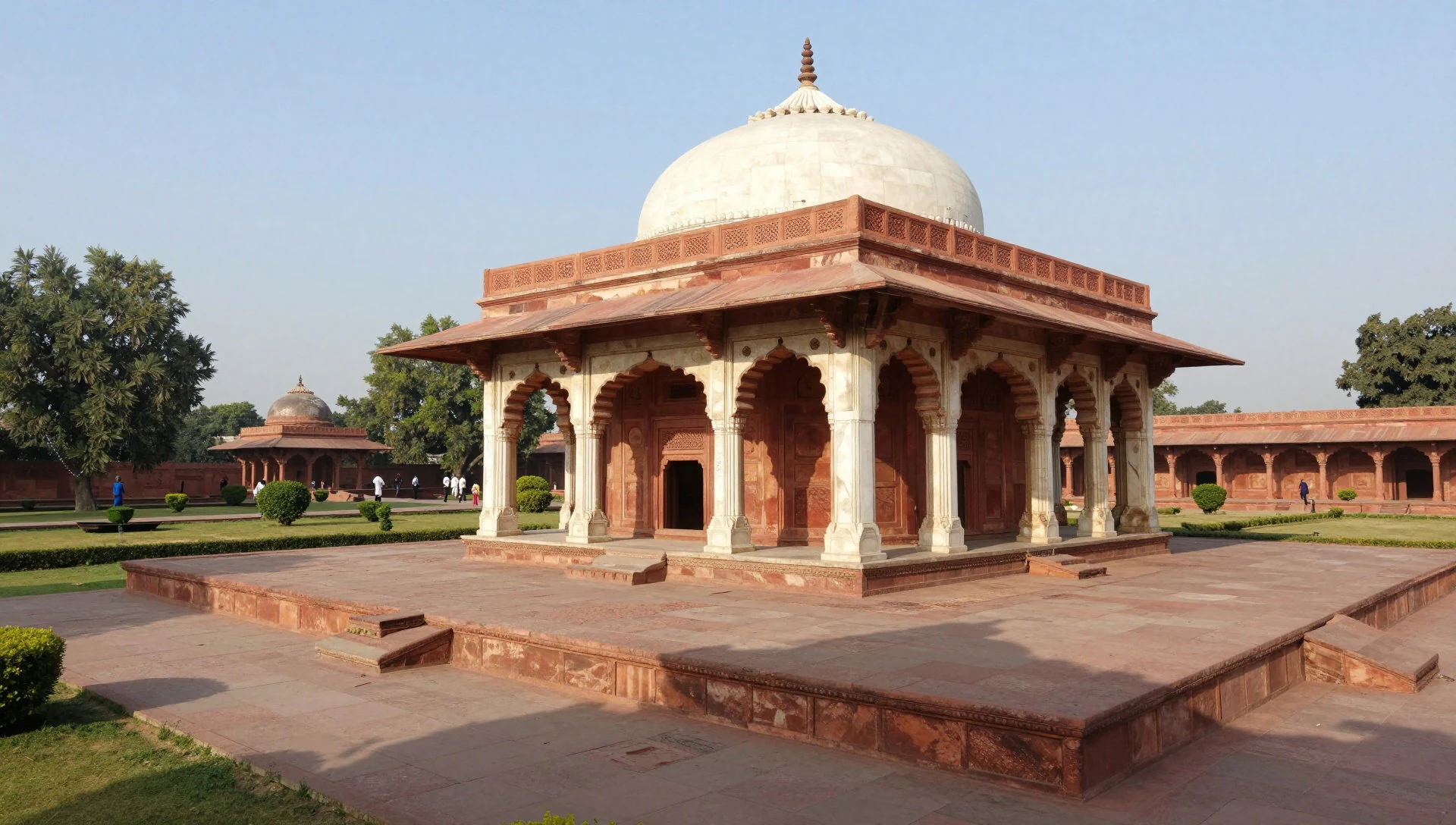
- Taj Museum
A dedicated exhibition space housed within a structure identical to the eastern drum house. Inside, visitors can examine historical artifacts, architectural drawings, and objects connected to the construction and heritage of the monument.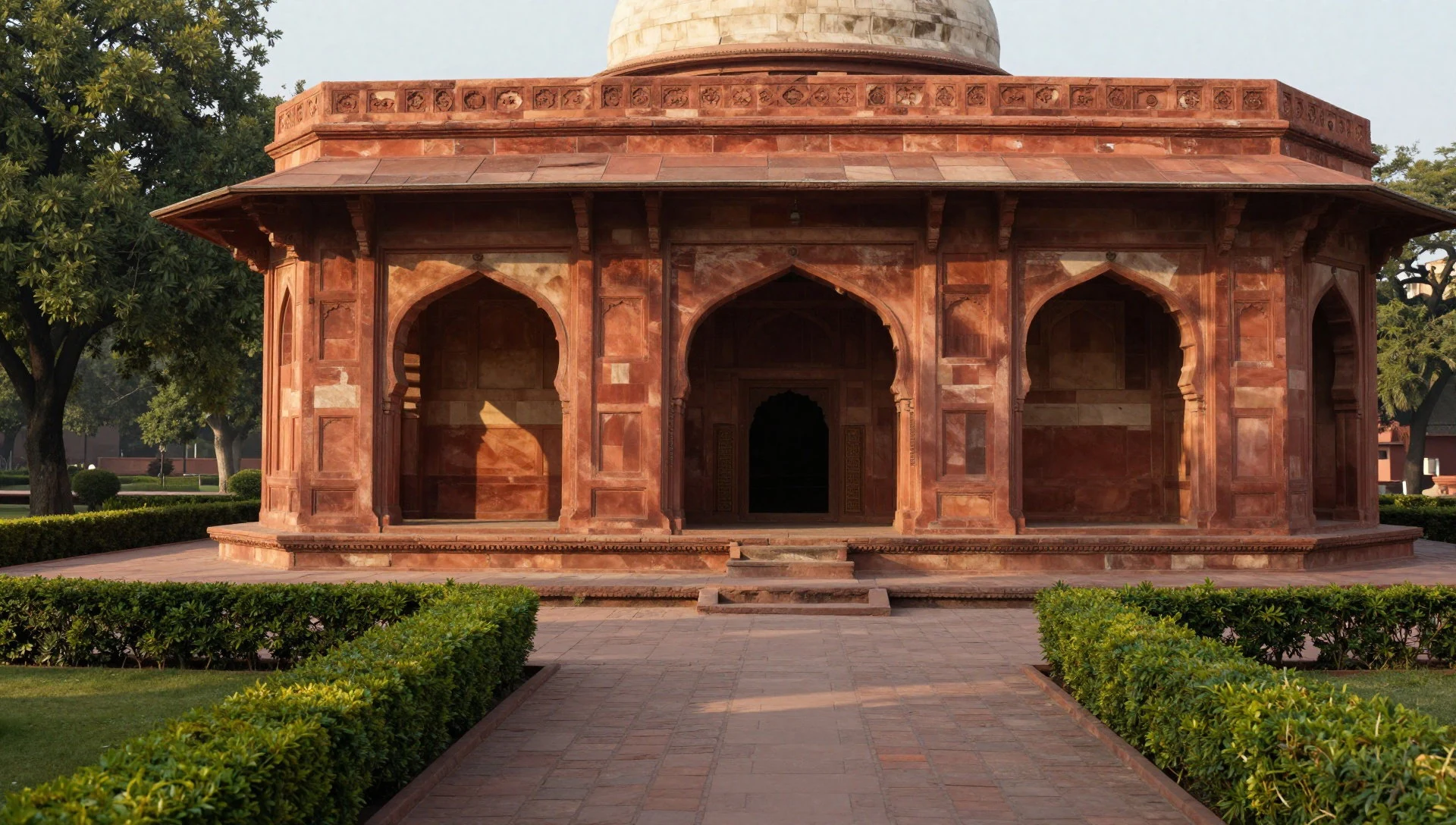
- Tomb of Fatehpuri Begum
A dedicated memorial structure honouring Fatehpuri Begum, a royal consort of the emperor and a noted patron of the arts who also established a notable mosque just outside the western entrance gates of the complex.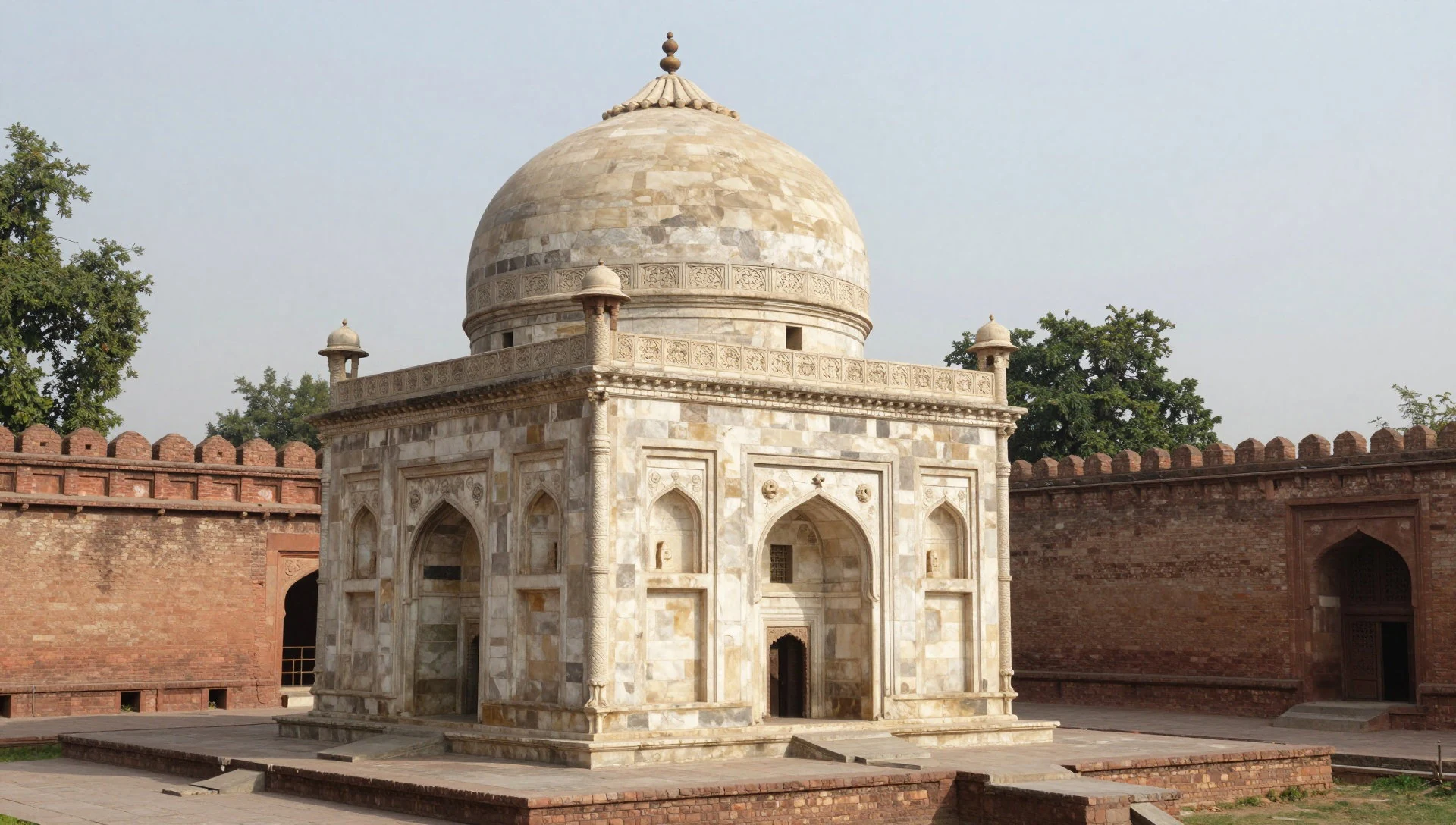
Culture
The Taj Mahal is both an architectural wonder and an active religious site, encompassing working mosques within its walls. Visitors moving through the grounds encounter a blend of international tourists and domestic pilgrims, creating a vibrant atmosphere filled with quiet reverence and bustling crowds. Because the complex holds deep spiritual significance and serves as a sacred mausoleum, community norms emphasize respectful behaviour and modest attire. Craftsmen and caretakers work continuously to preserve the ancient stone surfaces against the heavy footfall of daily visitors. The Taj Mahal is a masterpiece of marble and inlay work that spans over four centuries of history. Built by Emperor Shah Jahan as a mausoleum for his wife Mumtaz Mahal, it sits on the south bank of the Yamuna River in Agra and remains one of the world's most recognizable buildings.
### The Vibe
The white marble changes color throughout the day—pinkish at sunrise, dazzling white by noon, and soft amber under a full moon. Expect crowds from the moment the gates open. It is loud, busy, and surrounded by aggressive touts, but the sheer scale of the symmetry and the intricate pietra dura work of semi-precious stones inlaid into the walls will still take your breath away.
### Practicalities
Tickets for foreign visitors are significantly higher than for locals, but buying them online in advance saves you from massive queues. Arrive for sunrise if you want softer light and slightly smaller tour groups. Leave large bags, tripod stands, and food behind, as security is strict and lockers fill up fast.
### Preservation Warning
Do not touch or carve into the historic walls and surfaces, as these ancient heritage structures require delicate preservation.
### When to Go
December to February brings the most pleasant weather, though December and January mornings are often shrouded in thick fog. Avoid the scorching summer months from April to June, when temperatures routinely exceed 40°C.
What to wear
Traditional dress across Uttar Pradesh reflects a rich heritage of textiles and regional styles, with women frequently wearing sarees or flowing salwar kameez crafted from lightweight cottons, silks, and handwoven brocades, while men often opt for kurtas and loose trousers suited to the climate. In contemporary daily life around Agra, younger generations blend these traditional garments with casual western wear such as jeans and shirts, though modest cuts remain the norm in public spaces. For travellers visiting the Taj Mahal and its surrounding religious areas, dressing modestly is essential out of respect for local customs and the sacred nature of the site. Both men and women should wear clothing that covers their shoulders and knees. Lightweight, breathable fabrics such as cotton or linen help manage the heat, and comfortable shoes that can be slipped on and off easily are recommended for exploring the stone courtyards and shoe-cover stations.
What to eat
- Joney's Place — Taj Ganj area near the West Gate
A popular neighbourhood spot ideal for an early breakfast before heading out to catch the sunrise at the monument gates, serving morning staples like toast, coffee, and cereal.
- Treat Restaurant — Taj Ganj streets
A welcoming local eatery serving a wide variety of traditional Indian dishes, making it a reliable stop for a hearty lunch after a morning walking around the courtyards.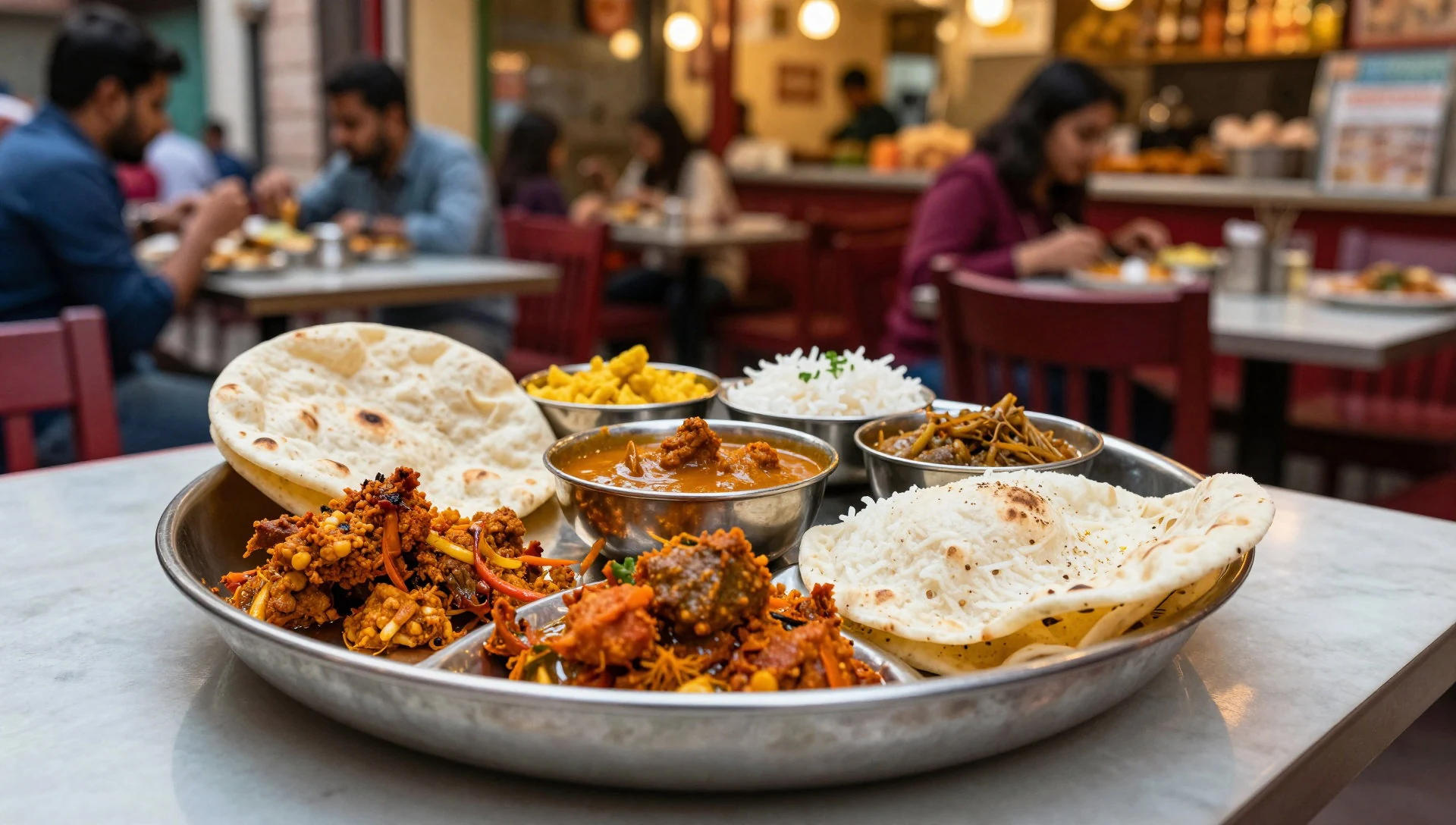
- Taj Restaurant — Near the West Gate approach
A well-positioned dining venue offering classic regional meals with views looking out towards the surrounding neighbourhood streets. - Amar Vilas Bar — Luxury hotel terrace near the complex
An upscale venue offering refreshing drinks and cocktails on a terrace that provides sweeping views of the distant marble dome. - Downing Street Bar — Taj Ganj neighbourhood
A lively establishment serving beverages alongside comfort foods like pizzas and tandoori chicken prepared in-house.
Plan it
Best time. December to February offers the most comfortable daytime weather, while the summer months bring intense heat and humidity.
How long. 1–2
Getting there. Arrive in Agra via train or road, then complete the final leg to the pedestrian-only zone around the monument using an electric vehicle, horse-drawn carriage, or a short walk.
Budget. mid
Tips
- Arrive early at sunrise to beat the heavy daytime crowds and midday heat.
- Use the East or South Gates on busy weekends to avoid the lengthy queues at the main West Gate.
- Pack light and leave large bags in the lockers provided at the gates to speed up security checks.
- Check the official site for updated opening hours, as the complex is closed on Fridays.
Etiquette
- Dress conservatively with shoulders and knees covered since the site includes active mosques.
- Avoid touching or leaning against the historical marble and stone inlay surfaces.
Nearby
Sources
- Wikidata Q9141 (CC0)
- Wikipedia (rev 1382536237) (CC BY-SA 4.0)
- Wikivoyage (rev 5348008) (CC BY-SA 4.0)