Shilin Official Residence
Shilin Official Residence, Taiwan
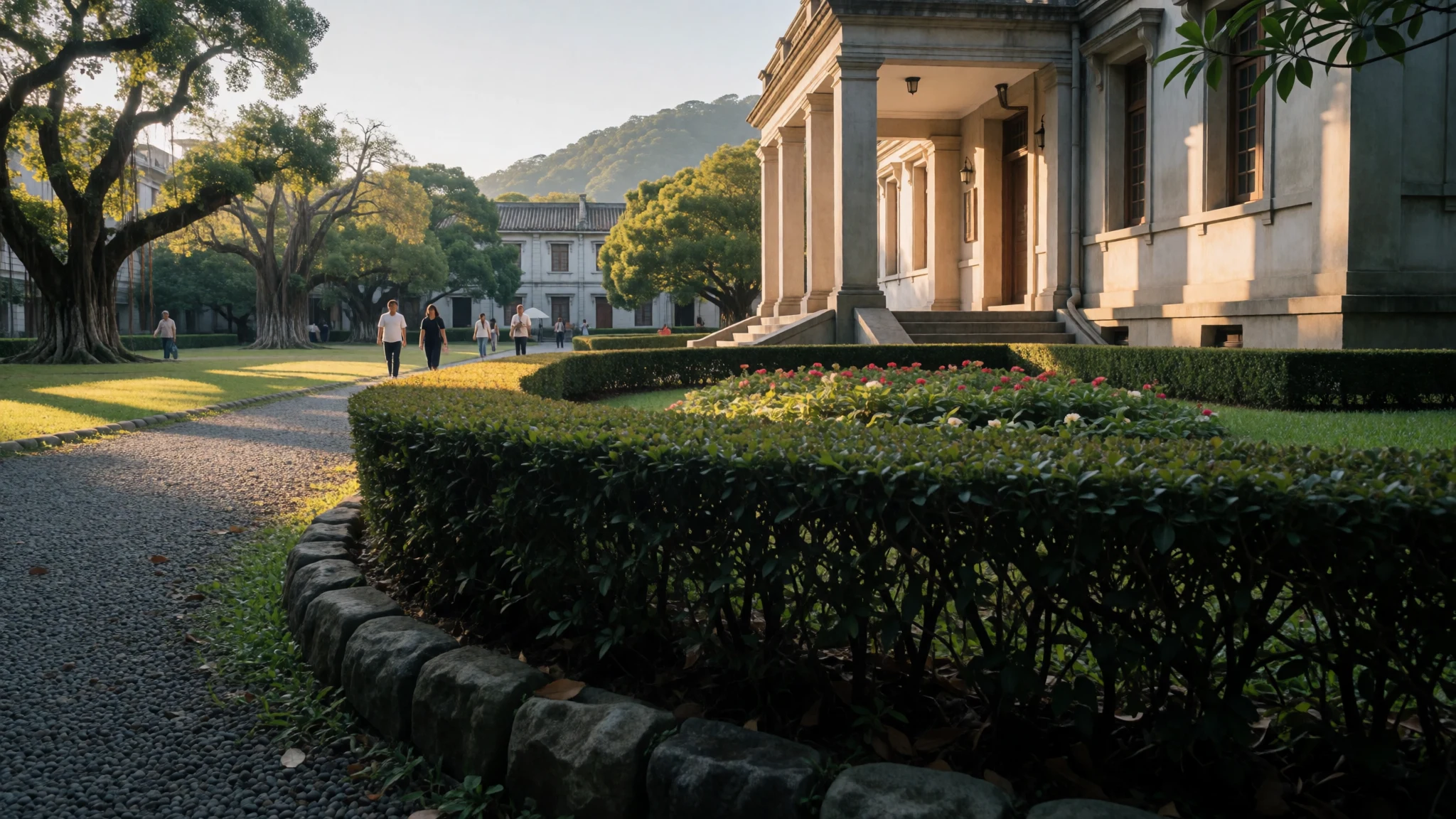
Shilin Official Residence lets visitors walk through the gardens, chapel and rooms of Chiang Kai-shek's Taipei home, once closed behind military fences.
The place
Shilin Official Residence (士林官邸, Shìlín Guāndǐ) stands on Zhongshan North Road in Shilin District, in the northern part of Taipei, Taiwan. It was the home of Chiang Kai-shek and his wife Soong Mei-ling, and it is now run as a public park and house museum. The compound is a mix of lawns, formal flower beds, old trees and a handful of separate buildings, so a visit feels closer to a long garden stroll than a museum queue.
The main house is a Western-style residence of two floors, with a pillared entrance, a vestibule and a set of reception rooms that have been kept as period interiors. Around it are a guest house, a small chapel, a pavilion and a rose garden. Chinese-style planting and Western-style planting sit side by side, with paths that curve between them.
Shilin itself is mostly residential. Tianmu, a neighbourhood nearby, has long been popular with foreign residents, and the district also holds the National Palace Museum, the foothills of Yangmingshan National Park and the Taipei Astronomical Museum. That makes the residence an easy half-day anchor for a northern Taipei itinerary.
The atmosphere is calm, a little formal and quite green. Families, school groups, wedding photographers and retired locals with cameras all share the grounds, and the traffic of Zhongshan North Road fades quickly once the gates are behind. It is a place for people who like gardens, twentieth-century history and unhurried walking in a big city.
Its story
Shilin Official Residence began life under Japanese colonial rule, when the land served as a horticultural experimental station. Plants and growing trials gave the site its green character long before any politician moved in, and much of that planted landscape still shapes the grounds.
The turning point came after the Republic of China lost the civil war on the mainland in 1949 and its government retreated to Taiwan. The site was taken over by the state and rebuilt as a home for Chiang Kai-shek and Soong Mei-ling. The architect was Yang Cho-cheng, and the Continental Engineering Corporation carried out the construction. Facts record the place as founded in 1950.
In those early years the compound was heavily guarded, fortified and shut to outsiders. Ordinary people knew it only as a walled estate on the road north out of the city. Several stories grew around it, including a claim by a later president, Chen Shui-bian, that a hidden tunnel links the grounds to the Presidential Office Building in Zhongzheng District. That claim is worth repeating only as a claim, since visitors will not find a tunnel on the tour.
In 1996 the gates opened to the public, and the estate became a park. Over the following years the house itself was also made accessible. Today the visit covers the gardens and the former living quarters, together with a chapel the couple used for worship, a pavilion where birthday celebrations were once held, and the Cadillac limousine that belonged to Madame Chiang. Few places in Taipei show so plainly how a private fortress became a shared public space.
What to see
- The main residence — Shilin Official Residence grounds
The former home of Chiang Kai-shek and Soong Mei-ling is a Western-style house of two floors. Rooms such as the vestibule and the small early reception room have been kept as period interiors, with furniture and fittings of the mid-twentieth century. Allow time for the quieter corners, which say more than the grand entrance.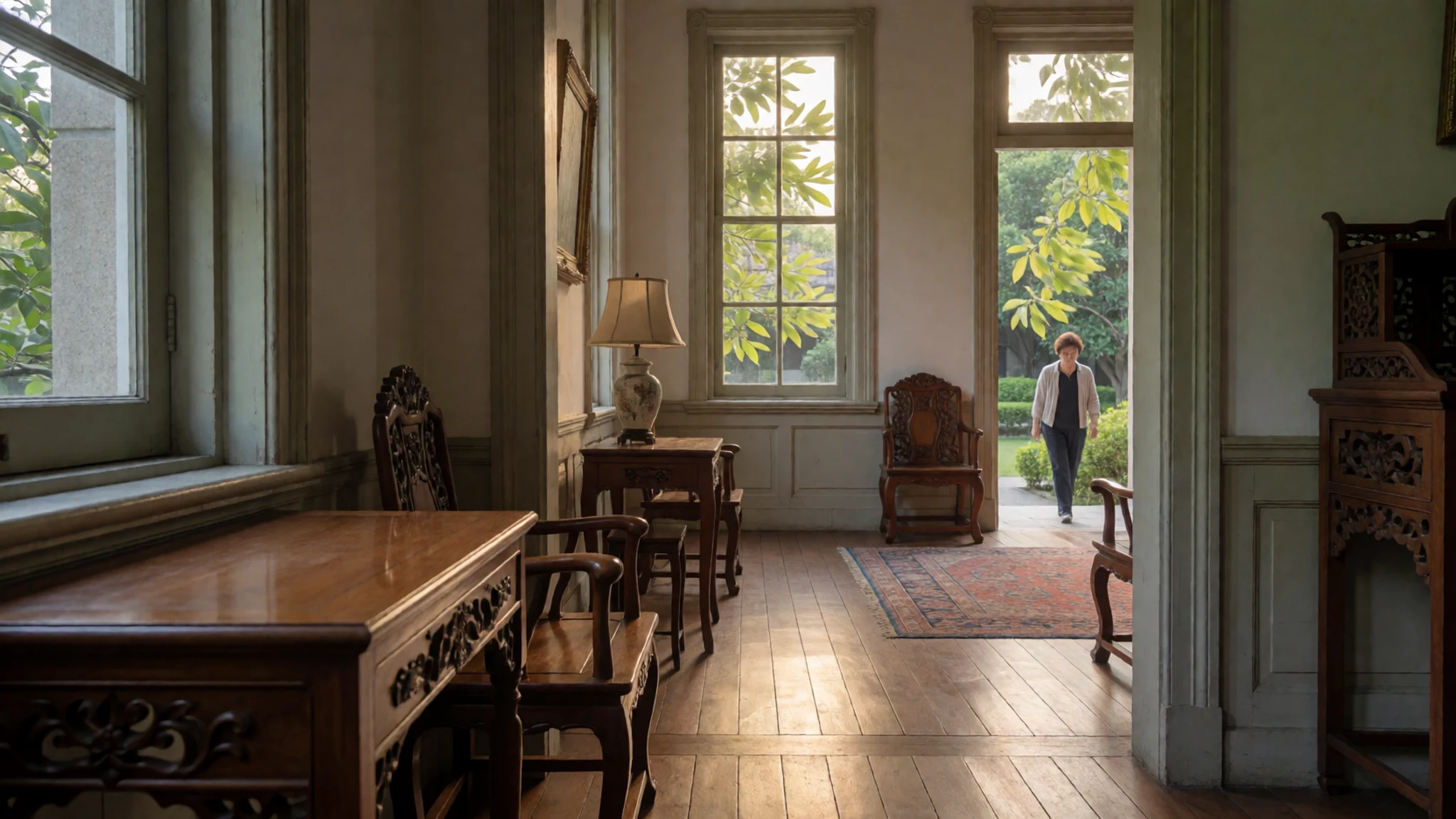
- Victory Chapel — Shilin Official Residence grounds
This small chapel was Chiang Kai-shek's personal place of worship within the compound. It is modest in scale and sits among trees, away from the main house. The setting is quiet and a little austere, and it makes a useful stop for understanding the private side of a very public family.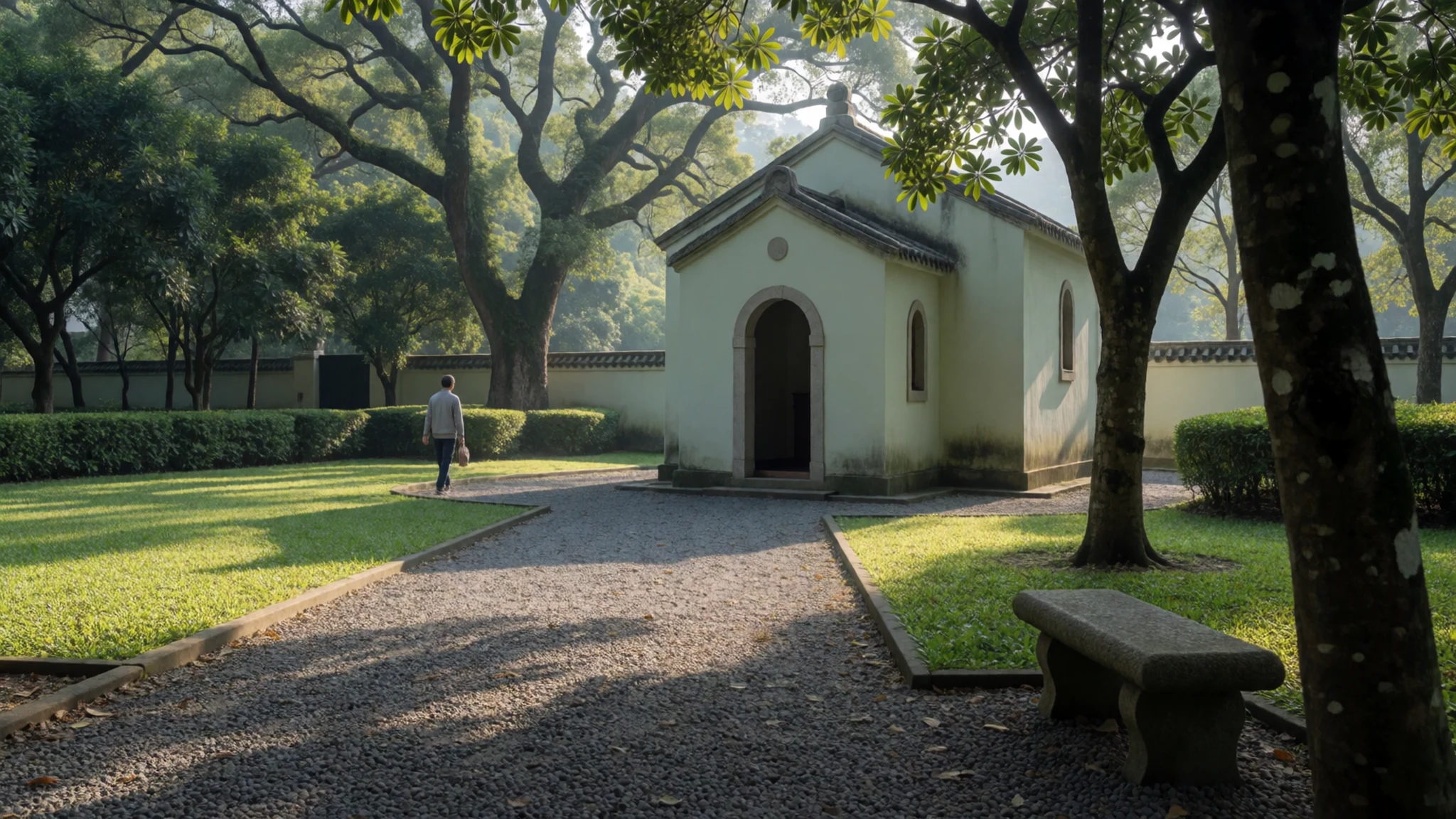
- The Rose Garden — Shilin Official Residence grounds
The formal rose garden is the part of the estate that draws the most photographers. Plum blossom appears here in January, and roses follow later in the year. Chinese-style and Western-style horticulture meet along the paths, so the beds reward a slow loop rather than a quick walk-through.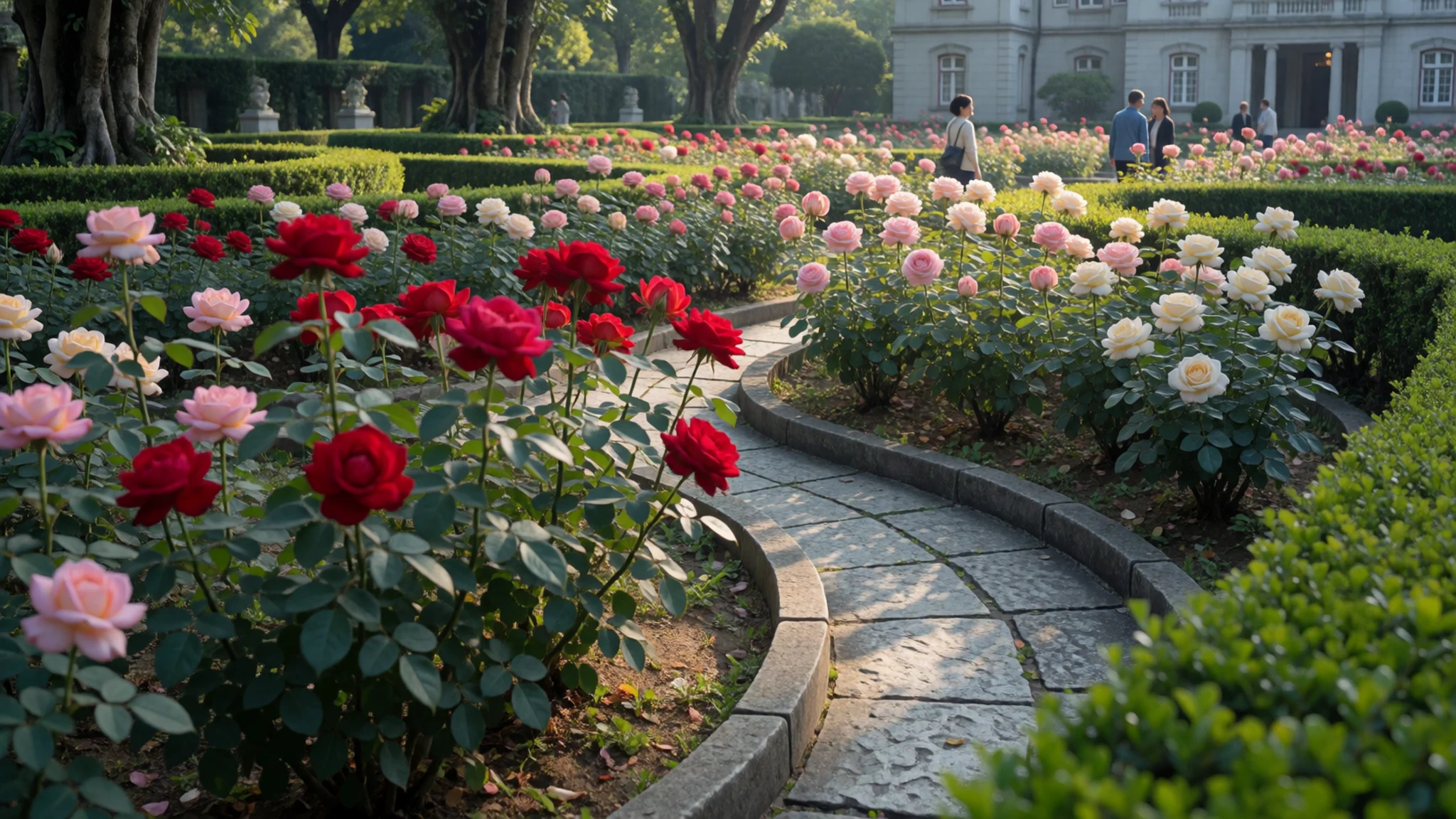
- National Palace Museum — Shilin District, northern Taipei
A short ride from the residence, this museum holds a large collection of treasures once owned by the emperors of China. It suits a separate half-day, because the galleries are extensive and busy with tour groups. Check the official site for opening arrangements before planning around it.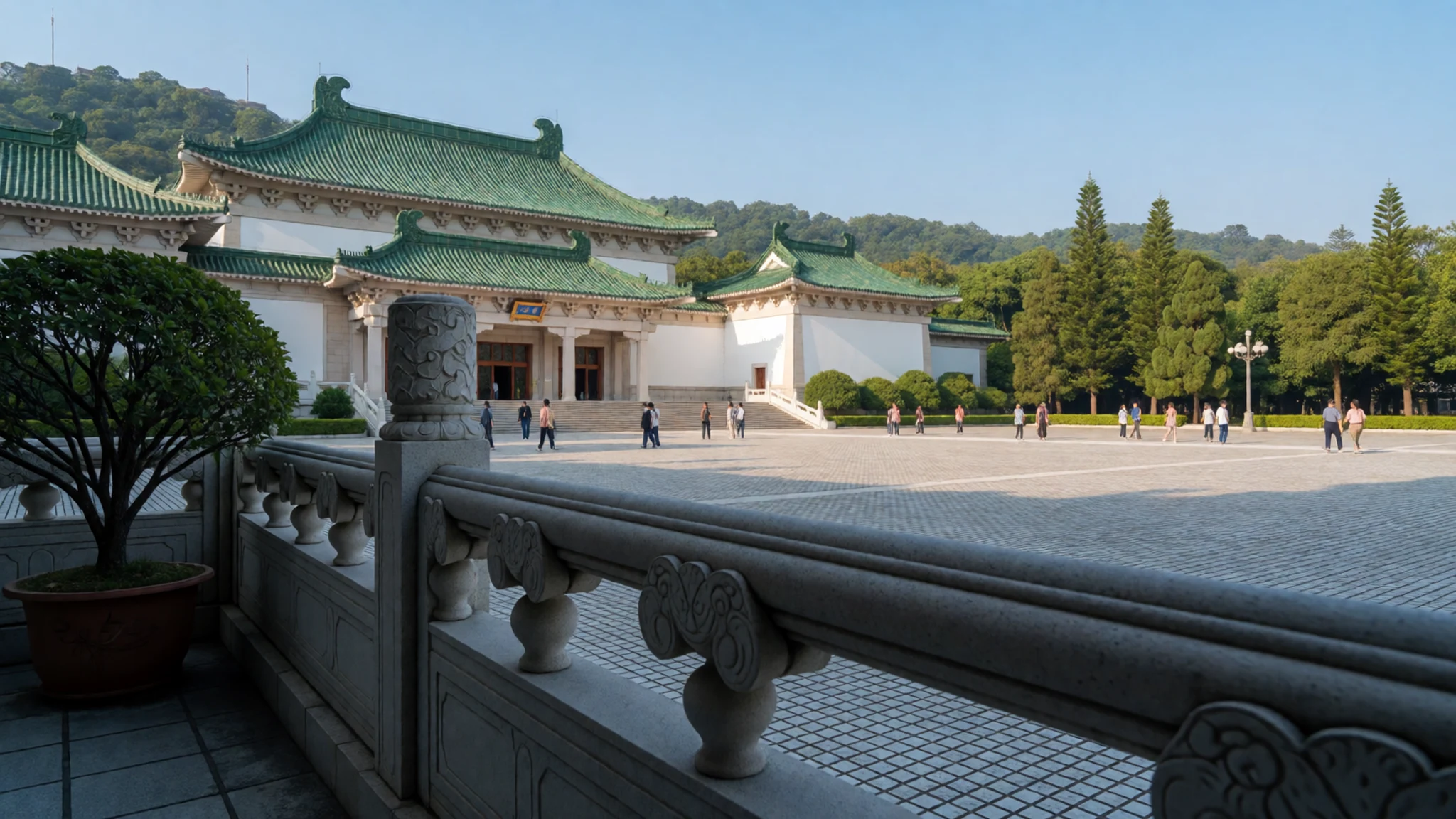
- Zhishanyan Cultural and Ecological Garden — Tianmu, Shilin District
A small hill near Tianmu, Zhishanyan is known as an archaeological excavation site, and it is also a pocket of green and a quiet contrast to the museums. It works well as a short, low-key walk for anyone who wants nature and local history without a long journey out of the district.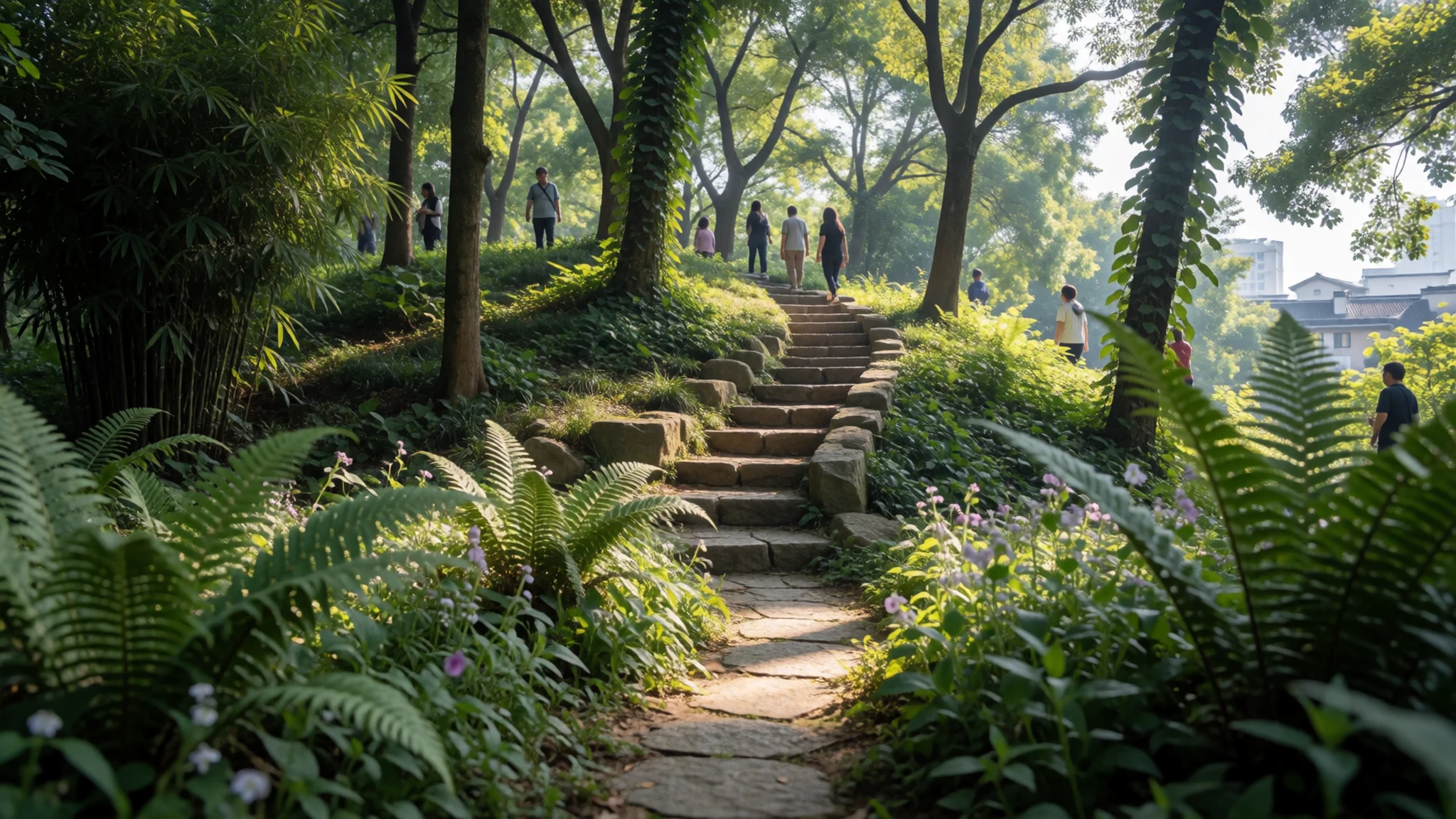
Culture
Shilin Official Residence carries the history of the Republic of China's years in Taiwan, and the way people treat it reflects a divided public memory. For some Taiwanese families it is a place of respect for a wartime leader. For others it is a reminder of decades of authoritarian rule and military guard. Most visitors simply treat it as a heritage park, and the staff and signage keep the tone neutral.
The compound blends influences that tell their own story. The house follows a Western pattern, the gardens combine Chinese and European planting, and the chapel reflects the couple's Christian faith. Together they show a household that moved between worlds, in a city that itself has absorbed Japanese, Chinese and Western layers over the last century.
The estate is also a living local space. Retired residents walk the lawns in the morning, couples pose for wedding photographs among the roses, and school groups arrive on weekdays. Seasonal flower displays are part of the calendar, and plum blossom in January is a particular favourite with photographers.
Politics is a topic in Taiwan that people treat with care, and opinions about Chiang Kai-shek differ widely, so it is wise to listen before offering a view. Inside the house and chapel, voices drop naturally and nobody expects ceremony, but good manners go a long way. Keep your voice low inside the house and chapel, follow the marked visitor routes, and ask before photographing other people, especially wedding parties and children.
What to wear
Shilin Official Residence belongs to a Taiwan where the traditional dress most associated with the period is the qipao, a close-fitting one-piece dress with a high collar, usually made in silk, brocade or fine cotton. Madame Chiang was often photographed in it, and it remains the formal dress for weddings, banquets and cultural events. Men's formal wear of the era was a long gown or a Western suit. Taiwan's Indigenous peoples have their own woven and embroidered costumes, which the museums of Shilin showcase.
Everyday dress in Taipei today is relaxed and practical. People wear light cotton and synthetic fabrics, sneakers, and T-shirts or shirts in the heat, with a thin jacket for air-conditioned interiors and the cooler months. Umbrellas are close to a uniform, used for both rain and sun. Smart-casual is the norm for restaurants and museums, and few places ask for anything stricter.
For a visit, dress for the weather and the walking. The grounds are mostly outdoors, with gravel and paved paths and some grass, so comfortable closed shoes or sturdy sandals are best. In summer, choose breathable fabrics, a hat and sunscreen, and carry water. In winter and the rainy months, bring a light waterproof layer, because showers arrive quickly and the damp can feel cool. No special modesty rules apply to the park, but shoulders and knees covered is a considerate choice inside the chapel, and it also helps if you plan to visit a temple elsewhere that day.
What to eat
- Vegetarian set meal — Vegetarian eateries in the streets near the residence
Chinese vegetarian eateries around Shilin serve simple set meals on a tray, with rice, a few vegetable dishes and tofu or mock-meat items. They are quick, filling and gentle on the budget, and a good choice after a morning of walking the grounds.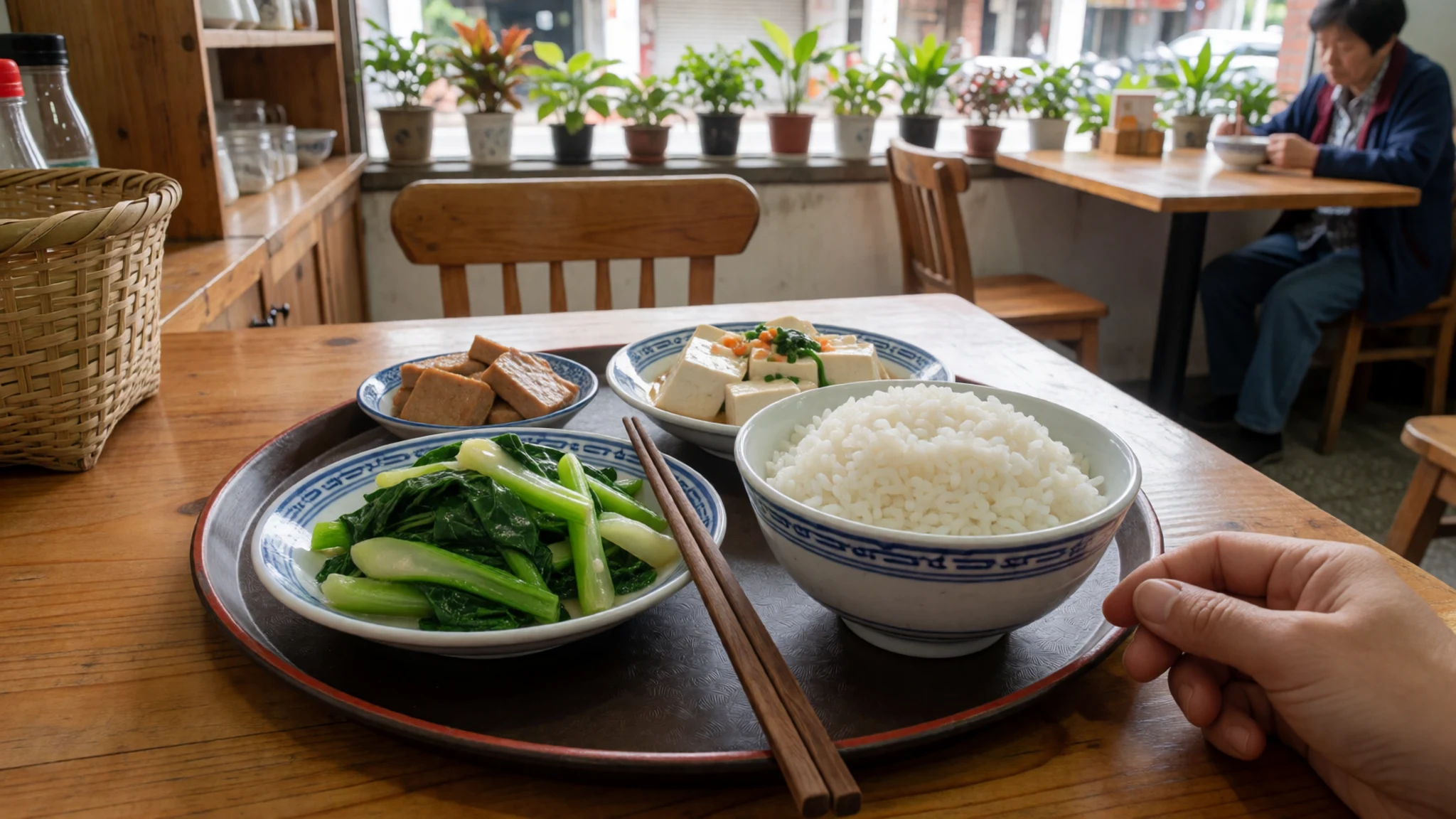
- Vegetarian rice dumplings — Takeaway counters at vegetarian kitchens in Shilin
Sticky rice wrapped in leaves and steamed, these dumplings are sold by some vegetarian kitchens as a takeaway item. They are dense and savoury, easy to carry to a park bench, and a handy picnic lunch for the gardens.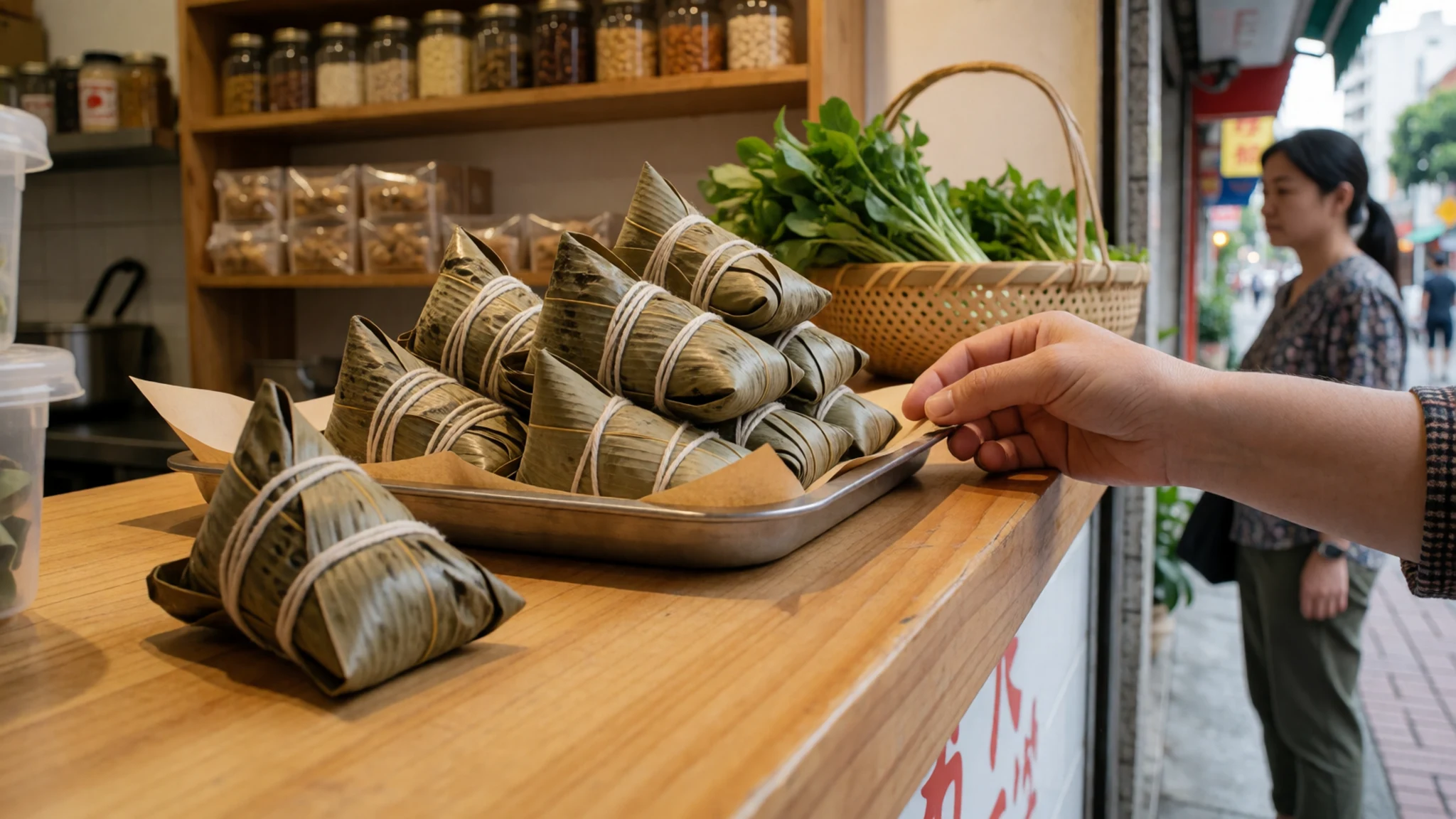
- Taiwanese home-style dishes — Family restaurants in Tianmu and northern Shilin
Local restaurants in Tianmu and Shilin serve everyday Taiwanese cooking such as stir-fried greens, braised pork, soups and shared plates. Locals and long-term foreign residents both eat at them, so groups are common and ordering several dishes to share is normal. - German-style pork knuckle — Western-style cafes in Tianmu
Tianmu's expat history shows up on the menu, and a few cafes serve roast pork knuckle with sauerkraut or potatoes, alongside pasta and steak. It is hearty food and a change from local fare, best shared between two. - Tea and light snacks — Teahouses near the National Palace Museum
Teahouses in the area serve pots of Taiwanese tea with small snacks, often with a view. One sits above the National Palace Museum and looks more expensive than it turns out to be. Tea is a calm way to end a day of sightseeing.
Plan it
Best time. October to December and March are the most comfortable months, with milder temperatures for walking the grounds. January brings plum blossom in the rose garden. Summer is hot and humid, and rain can arrive at any time of year, so carry an umbrella.
How long. Half a day to 1
Getting there. Fly into Taipei, then take the MRT's red line towards Shilin; the residence stands on Zhongshan North Road, a short walk or bus ride from the nearest red-line station. Buses along Zhongshan North Road also connect Jiantan MRT Station with the area, and the same corridor continues towards Yangmingshan National Park.
Budget. low
Tips
- Go on a weekday morning for the quietest gardens and the best light
- Check the official site before you travel for opening days, ticketing and any seasonal closures
- Pair the visit with the National Palace Museum and plan lunch in Tianmu or Shilin
- Carry water and an umbrella, as the grounds are mostly outdoors
- Bring a payment card and a little cash for small cafes and snack stalls
Etiquette
- Keep to the marked paths and lawns where signs ask
- Speak quietly inside the house and chapel
- Ask before photographing people, especially wedding parties
Nearby
Sources
- Wikidata Q7496651 (CC0)
- Wikipedia: Shilin Official Residence (rev 1364378957) (CC BY-SA 4.0)
- Wikivoyage: Taipei/Shilin (rev 5357022) (CC BY-SA 4.0)
- Photo: Shilin Official Residence1 (Peter Bronski) (Public domain)
- Photo: Shilin Official Residence 02 20250723 (阿道) (CC BY-SA 4.0)
- Photo: Victory Chapel, Shilin Official Residence (Kaihsu Tai) (CC BY-SA 4.0)
- Photo: Plum blossoms in the Rose Garden (阿道) (CC BY-SA 4.0)
- Photo: Rose Garden, Shilin Official Residence (阿道) (CC BY-SA 4.0)
- Photo: Guest House of Shilin Official Residence (阿道) (CC BY-SA 4.0)
- Photo: Vestibule of Shilin Official Residence (阿道) (CC BY-SA 4.0)
- Photo: Small Living Room of Shilin Official Residence (阿道) (CC BY-SA 4.0)


