Shey Phoksundo National Park
Shey Phoksundo National Park, Nepal
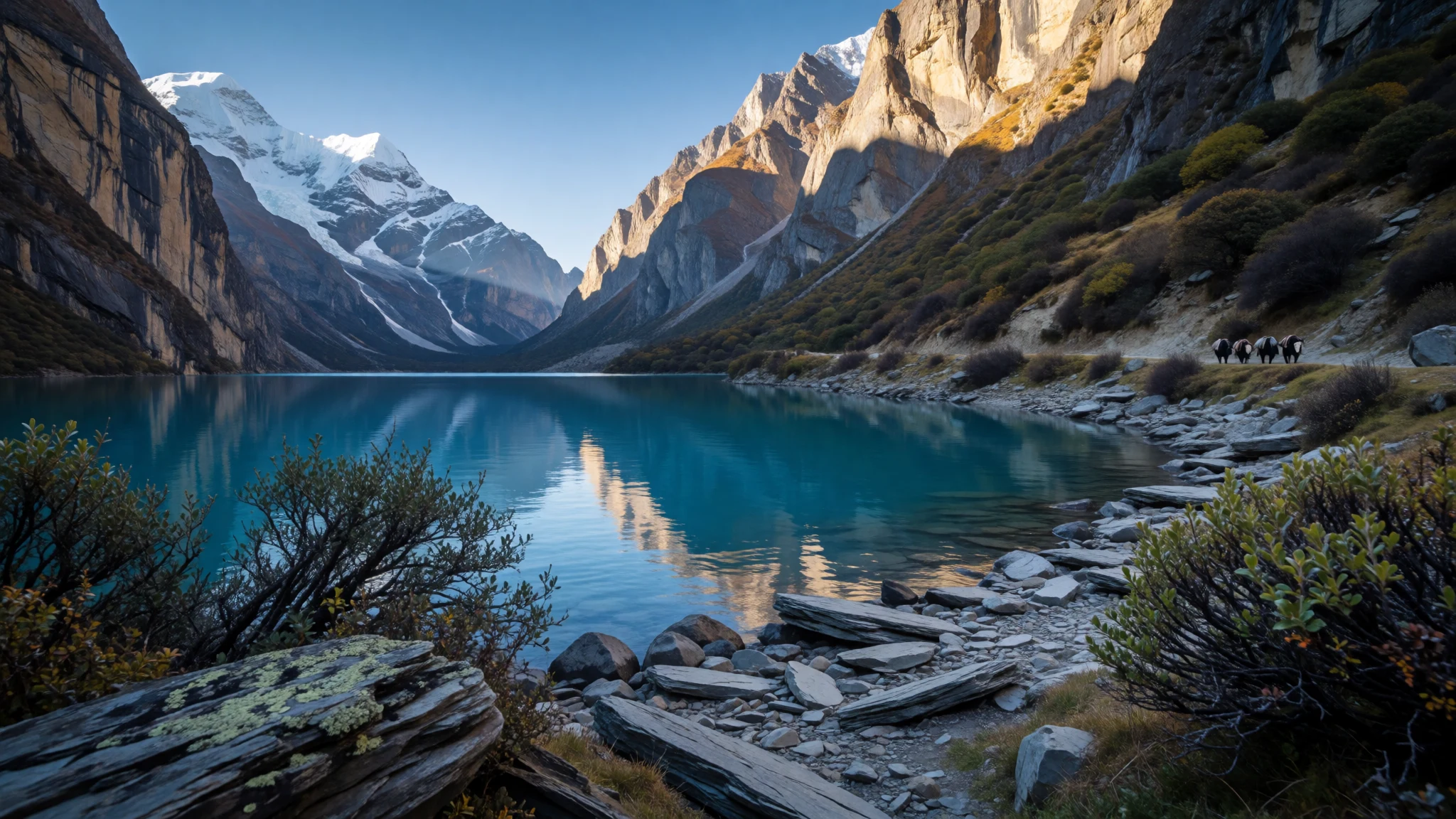
Shey Phoksundo National Park pairs a turquoise glacier-fed lake with remote Tibetan Buddhist valleys, and every kilometre of it is reached on foot.
The place
Shey Phoksundo National Park lies in Karnali Province in western Nepal, across the districts of Dolpa and Mugu, and was established in 1984. It covers 3,555 square kilometres, and the land climbs from 2,130 metres near Ankhe in the southeast to the glaciated summit of Kanjiroba Himal on the edge of the Tibetan Plateau. That spread of height is the point of the place: forested river gorges below, then juniper and rock, then bare high plateau that feels closer to Tibet than to the Nepal of rice terraces. Phoksundo Lake is the centrepiece, a deep turquoise basin in the upper Suligad valley with glaciers above it. It covers 494 hectares, reaches about 145 metres at its deepest, and has been a Ramsar wetland site since September 2007. The park's water splits two ways. The Langu river drains the high Dolpo plateau in the northeast, while the Suligad and Jugdual rivers gather in the south and run into the Thuli Bheri. The park headquarters are at Palam in Dolpa District. Few people live inside the boundary and facilities are simple: family-run lodges and camping, not resorts. Most visitors fly to Dolpa airport in the east and walk in. Weather, altitude and landslides shape every itinerary, so the park rewards slow planning and spare days far more than a tight schedule.
Its story
Shey Phoksundo National Park is a protected area whose story is as much about pilgrimage as about wildlife. The lake and the monastery of Shey Gompa both matter to Tibetan Buddhists, and Shey Gompa dates to the 11th century, which makes it far older than the park itself. For generations this was a country of high passes and seasonal movement, where villages lived on barley, livestock and trade over the mountains with Tibet. Gompas (monasteries) were the fixed points in that landscape, and several still stand within today's boundary. Nepal created the park in 1984 and named it after both the monastery and the lake. Its trans-Himalayan position, with dry northern valleys tucked behind the main range, gives it a different mix of habitat from most Nepali parks, which was part of the case for protecting it. Protection did not empty the land. Villagers still live along the southern approaches, and herding, farming and worship carry on beside the trails. In 2007 the lake was added to the Ramsar list of internationally important wetlands, recognising the freshwater system as well as its spiritual weight. Visitors now arrive by small plane and on foot, a slow approach that echoes how traders once crossed this terrain. The story here is continuity: a living religious landscape that has been given a legal boundary.
What to see
- Phoksundo Lake — Upper Suligad valley, Dolpa District
A turquoise freshwater lake in the upper Suligad valley, ringed by glaciers and steep slopes, and sacred to Buddhists. At its deepest it reaches about 145 metres, and its colour shifts with cloud and sun. The shore path rewards an early start, before afternoon wind ruffles the surface and the light turns flat.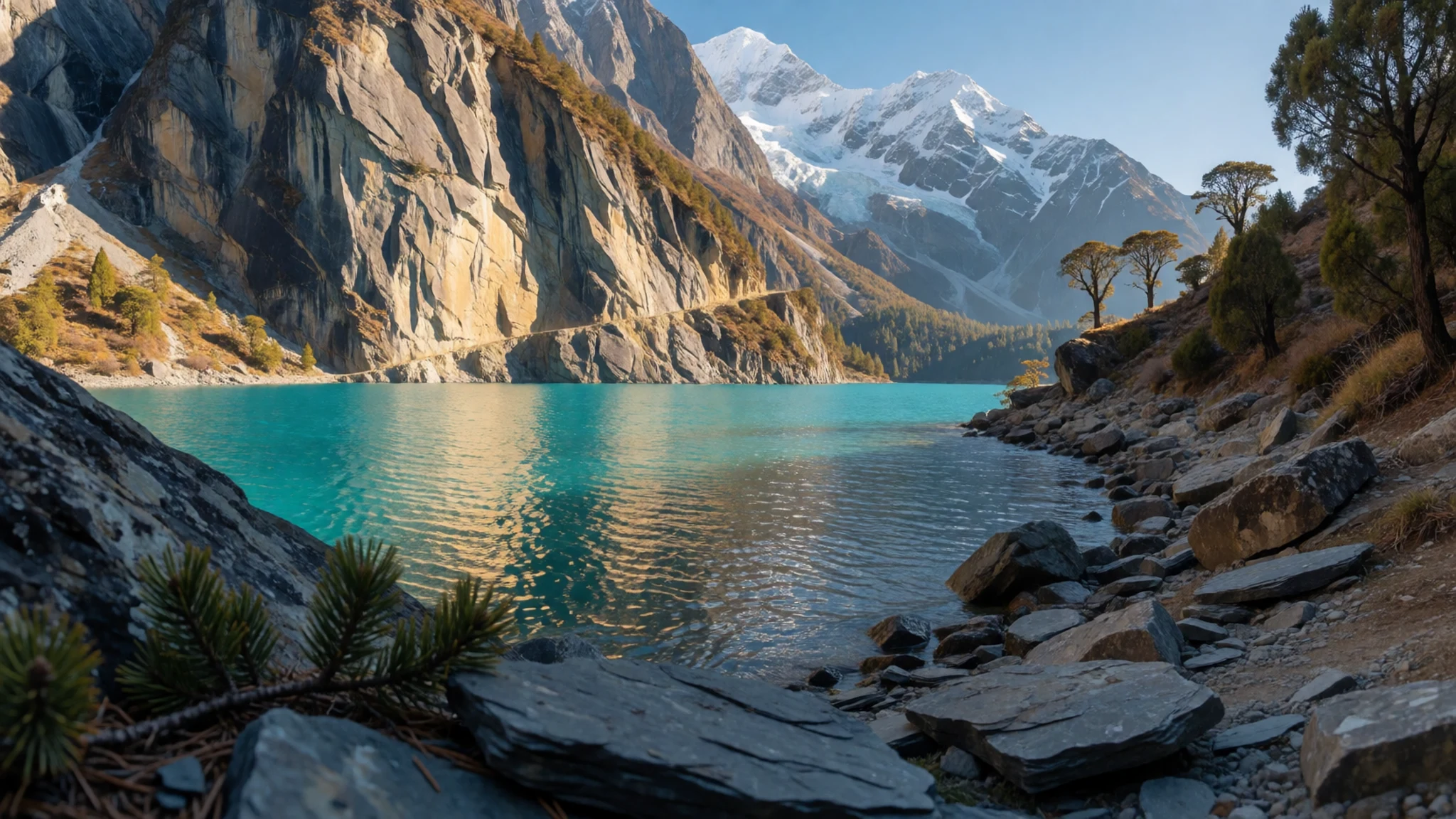
- Suligad Waterfall — Below the lake, Suligad valley
Water leaving Phoksundo Lake tumbles down the Suligad Waterfall, which is reached on the trail between the lake and the lower valley. The paths here are narrow and rocky, so footing matters more than the view. Go in dry weather, and treat the slopes above the trail with caution, since landslides are a known hazard in the park.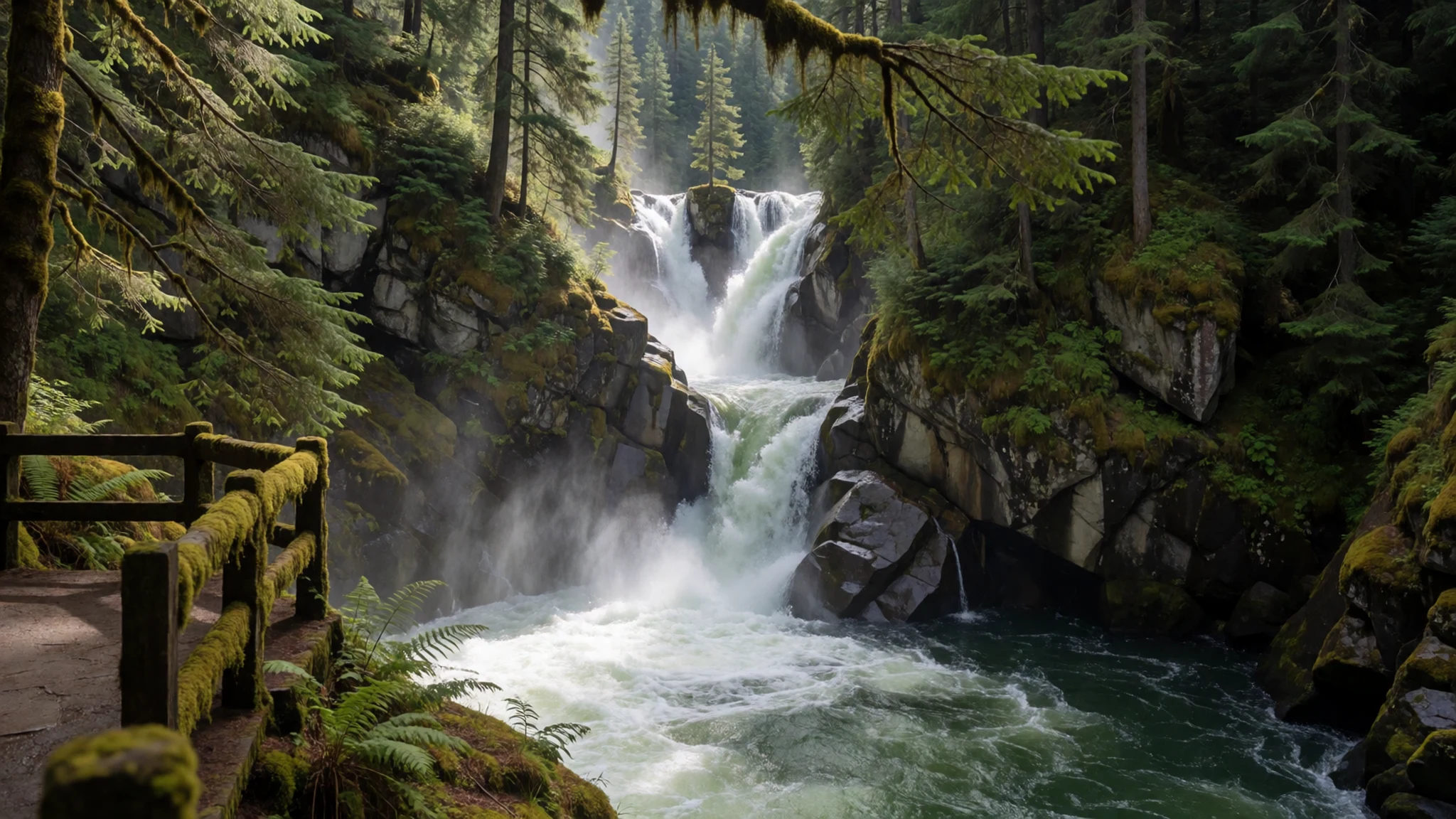
- Ringmo village — Beside Phoksundo Lake, Dolpa District
Ringmo is the village nearest the lake, and where most walkers spend the night. Flat-roofed stone houses, prayer flags and chortens (small Buddhist shrines) line the lanes. Solo trekking and hiking is permitted on the route to Ringmo and the lake, but rules change, so confirm with the park office before setting out.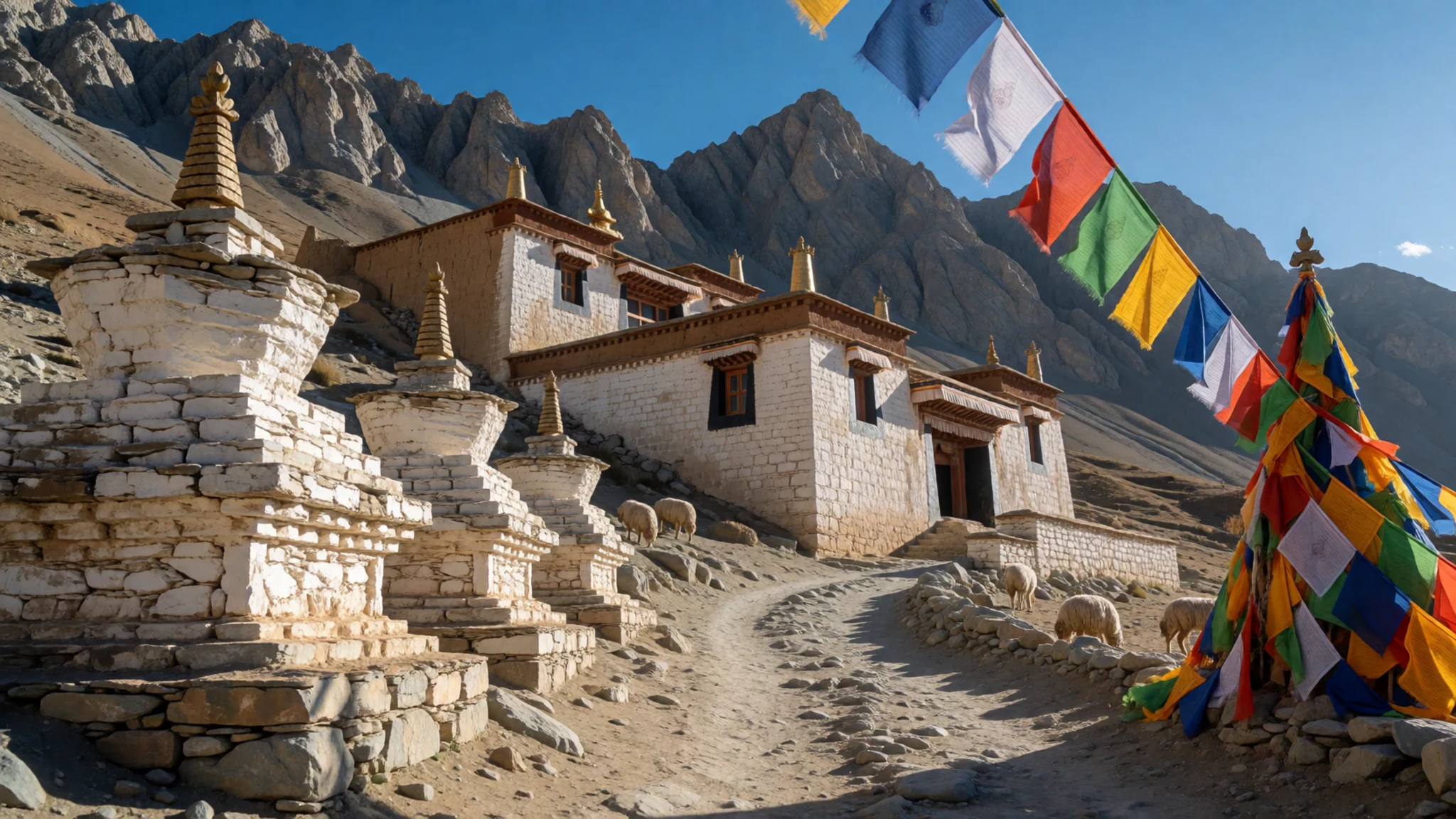
- Shey Gompa — Upper Dolpo, northern Dolpa District
Shey Gompa is a Buddhist monastery in the park's remote north, founded in the 11th century and still important to Tibetan Buddhists. It sits in dry, high country far from the lake crowds. Getting there is a longer, higher journey than the lake walk, so organise permits, a guide and acclimatisation days in advance.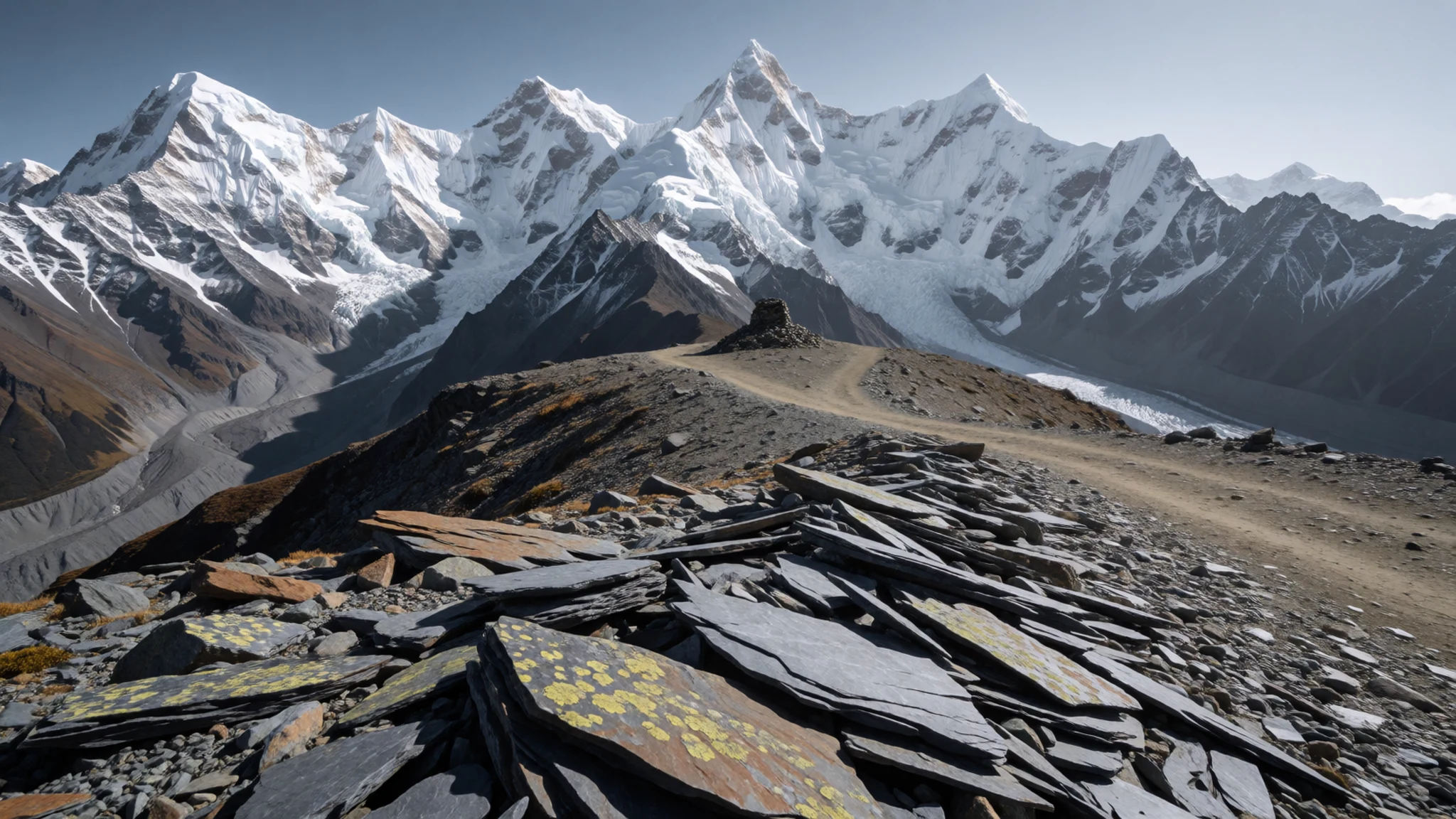
- Kanjiroba Himal — Southern edge of the Tibetan Plateau
Kanjiroba Himal is the massif that marks the park's high point, on the southern edge of the Tibetan Plateau. It is mountaineering terrain rather than a walk, and for most visitors it appears as a white skyline from high ground. Treat it as a landmark to look at, not a destination to plan around.
Culture
Shey Phoksundo National Park sits in a Tibetan Buddhist cultural zone, and religion is part of the landscape rather than a separate attraction. Phoksundo Lake is sacred, Shey Gompa has drawn pilgrims since the 11th century, and several other gompas (monasteries) stand within the park boundary. Along the trails, mani walls (stone slabs carved with prayers) and strings of prayer flags mark passes, bridges and village edges. Communities here have long lived by herding, barley farming and trade across the mountains, and that rhythm still shapes the year: people move with the seasons, and winter is hard. Villagers are used to walkers, but lodges are family homes and kitchens are shared spaces, so a polite greeting and some patience go a long way. Supplies arrive on foot or by animal, so nothing is wasted lightly, and a guest who finishes the plate is noticed. Respect for the lake is part of local belief, which makes loud behaviour, washing in the water and littering at its shore out of place. At Shey Gompa and other gompas, walk clockwise around chortens and mani walls, remove shoes and hats before entering, and ask before photographing monks or the inside of a prayer hall.
What to wear
Shey Phoksundo National Park is home to Tibetan-influenced communities whose traditional dress is built for cold, dry altitude. The core garment is the chuba, a long wrap-over robe of handwoven wool, tied at the waist so the fabric can be hitched up for walking and loosened when the day warms. Sheepskin versions, worn with the fleece inside, are common in winter, and felted or woven wool boots keep feet warm. Married women traditionally wear a striped woollen apron, and turquoise or coral beads are common. Traditional dress appears most at festivals and monastery events. In daily life, people now wear a mix: fleece, down jackets, track trousers and trainers or rubber boots, often layered over a chuba. A visitor should dress in layers, since mornings and nights are cold while the midday sun at altitude is fierce. Bring sturdy, broken-in boots with good grip for rocky, steep trails, a warm hat for nights, a sun hat for days, gloves and sunglasses. For gompas and villages, cover shoulders and knees; trekking trousers and a long-sleeved top are both practical and polite.
What to eat
- Dal bhat — Lodge dining rooms in Ringmo and along the trail
Rice, lentil soup and vegetable curry, usually with refills, and the standard fuel in trekking lodges across Nepal. Expect a simple version here, since ingredients are carried in. Order it at midday or in the evening, when the kitchen is already busy.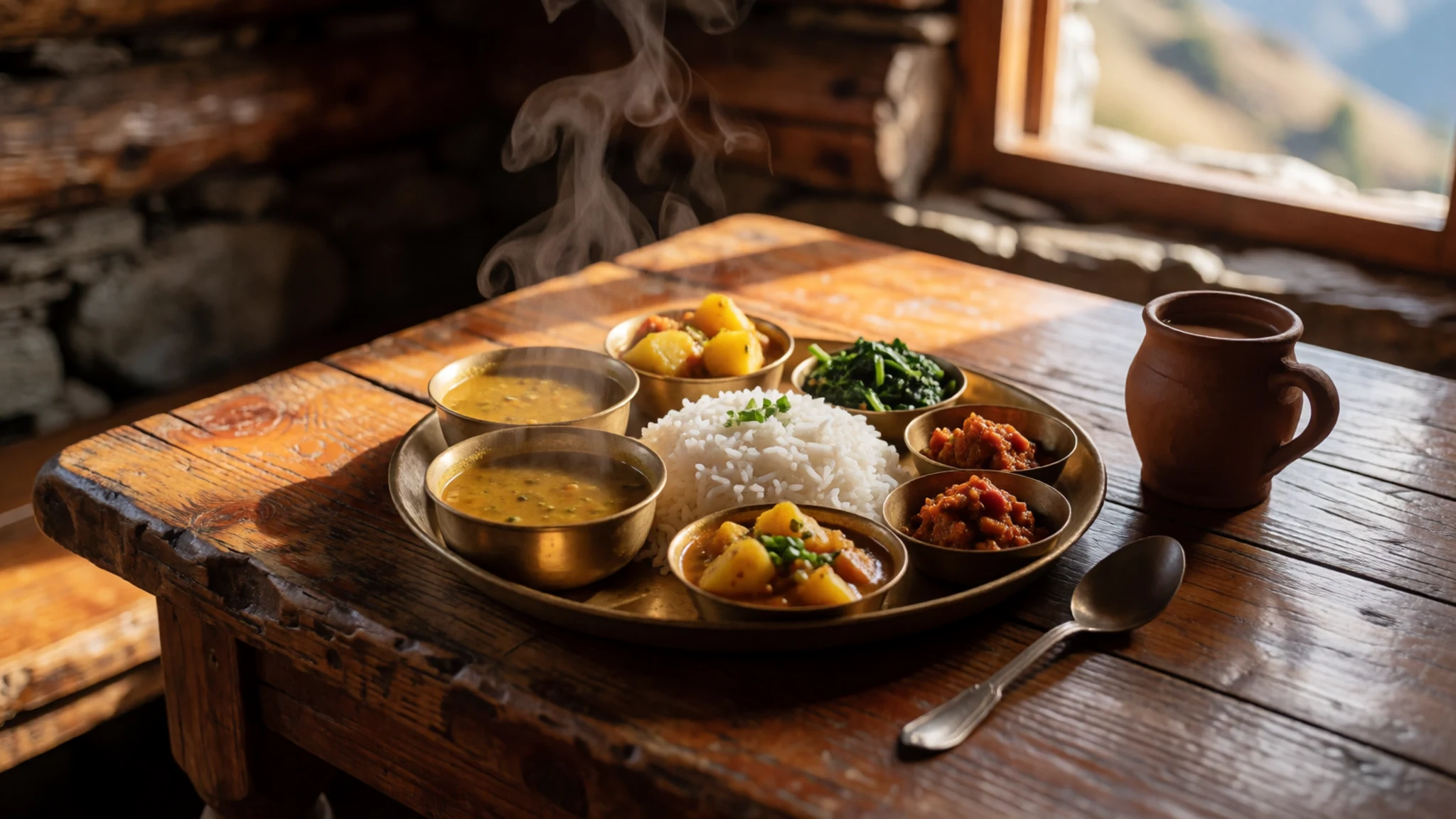
- Tsampa — Village homes and family-run lodges
Roasted barley flour, kneaded with butter tea or water into a dough, or stirred into porridge. It is the traditional high-altitude staple of Tibetan communities because barley grows where other crops struggle. Ask a host to show how it is mixed.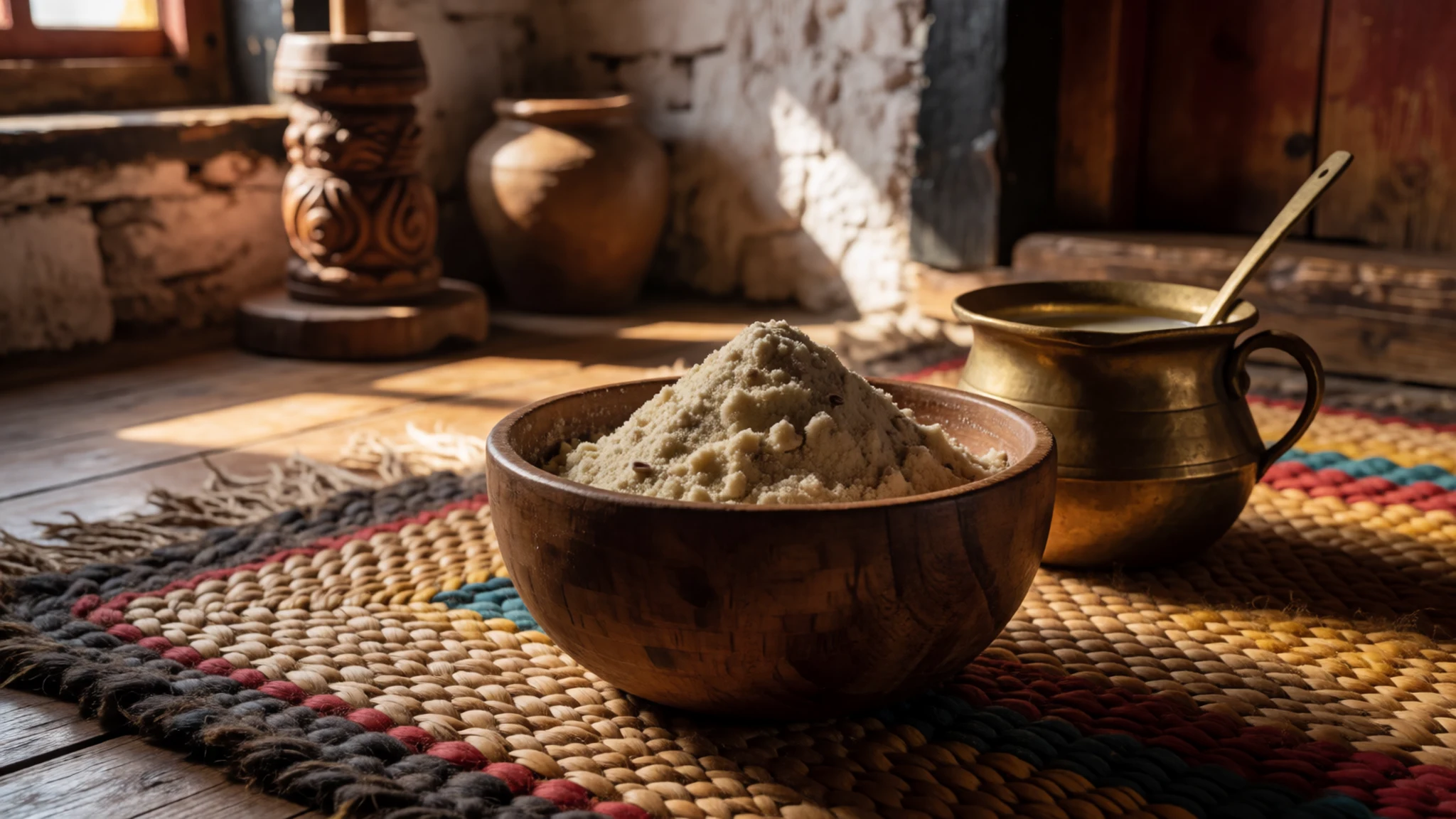
- Butter tea (po cha) — Village homes and lodge kitchens
Salty tea churned with butter, served hot and often topped up before the cup is empty. It tastes closer to broth than tea, and it is genuinely welcome in cold, dry air. Try a cup in a village home before deciding whether it suits. - Thukpa — Lodges and tea shops on the trail
A hot noodle soup with vegetables and sometimes meat, and a dependable warm meal after a cold day on the trail. The broth is usually mild, with chilli served on the side. Many lodges offer it as a quick lunch. - Momos — Lodges and tea shops near the trailheads
Steamed dumplings filled with vegetables or meat and served with a chilli dip. They take time to make, so lodges often ask for an order in advance. They suit sharing at the end of a walking day.
Plan it
Best time. May–June and September–October are the usual windows, when trails are open and the days are workable. July–August is monsoon, with rain and landslides on the southern approaches. Winter brings snow, very cold nights and closed high passes.
How long. 5–7
Getting there. Fly to Nepalgunj, then on to Dolpa Airport in the east of the park with Nepal Airlines, Sita Air, Summit Air or Tara Air; from there it is a half-day trek to enter the park, and a further walk to Ringmo and Phoksundo Lake. Mountain flights depend on weather, so keep spare days.
Budget. mid
Tips
- Acclimatise gradually and ascend no more than 500 m a day; carry medication for acute mountain sickness
- Check permits, rules and fees on the official site (http://dnpwc.gov.np/protected_areas/details/shey-phoksundonationalpark) before booking flights
- Carry enough cash for the whole walk, as there is nowhere to withdraw it on the trail
- Take a satellite phone or radio and insurance that covers helicopter evacuation
- Build spare days into the schedule for delayed flights and landslide detours
Etiquette
- Stay on marked trails and keep a safe distance from wildlife
- Walk clockwise around chortens and mani walls
- Ask before photographing people, monks or prayer halls
Nearby
Sources
- Wikidata Q3236458 (CC0)
- Wikipedia: Shey Phoksundo National Park (rev 1380747550) (CC BY-SA 4.0)
- Wikivoyage: Shey-Phoksundo National Park (rev 5336297) (CC BY-SA 4.0)
- Phoksumdo lake in Dolpo — Carsten.nebel (Public domain)
- South Asia non political, with rivers — DEMIS Mapserver, पाटलिपुत्र (CC BY 3.0)
- Dusky Proceddings, Upper Dolpo — Outlaw Django (CC BY-SA 4.0)
- Beside slopes of Yala Kang. — Sergey Pashko (CC BY 3.0)
- More blue more beautiful sky at Upper Dolpo — Outlaw Django (CC BY-SA 4.0)
- Bridge over the Tora Khola. — Sergey Pashko (CC BY 3.0)
- Camp at an altitude of 5080 m. Upper DOLPA trekking in August. — Sergey Pashko (CC BY 3.0)
- Camp under a rock. — Sergey Pashko (CC BY 3.0)


Wildlife
- Snow leopard (animal)
The snow leopard is a big mountain cat that wears a thick, pale-grey coat dotted with black, as if dressed for a blizzard. Small round ears, wide paws and a bushy tail help it cope with the cold. In Shey Phoksundo it roams the high, wild pastures. Watch it with a local guide, from a long distance, staying quiet and still, and never offer food.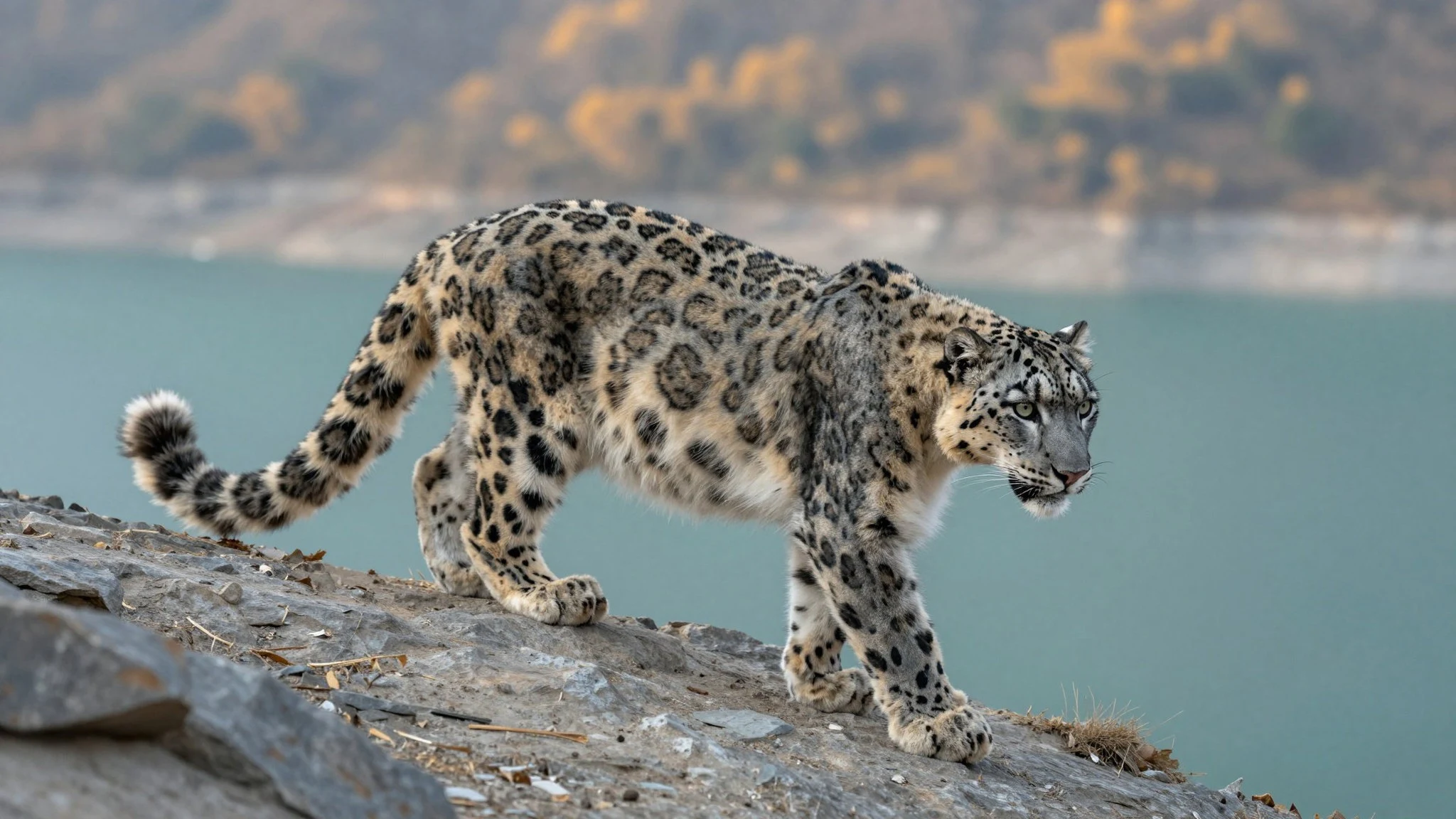
- Blue sheep (animal)
The bharal, also known as the blue sheep, is a sturdy Himalayan climber that treats steep, rocky slopes like a playground. In Shey Phoksundo it roams the high alpine pastures. Watch from a respectful distance, ideally with a local guide who knows where to look. Move slowly, speak softly so the animals stay calm, and never feed them, however curious they seem.