Shekhawati
Shekhawati, India
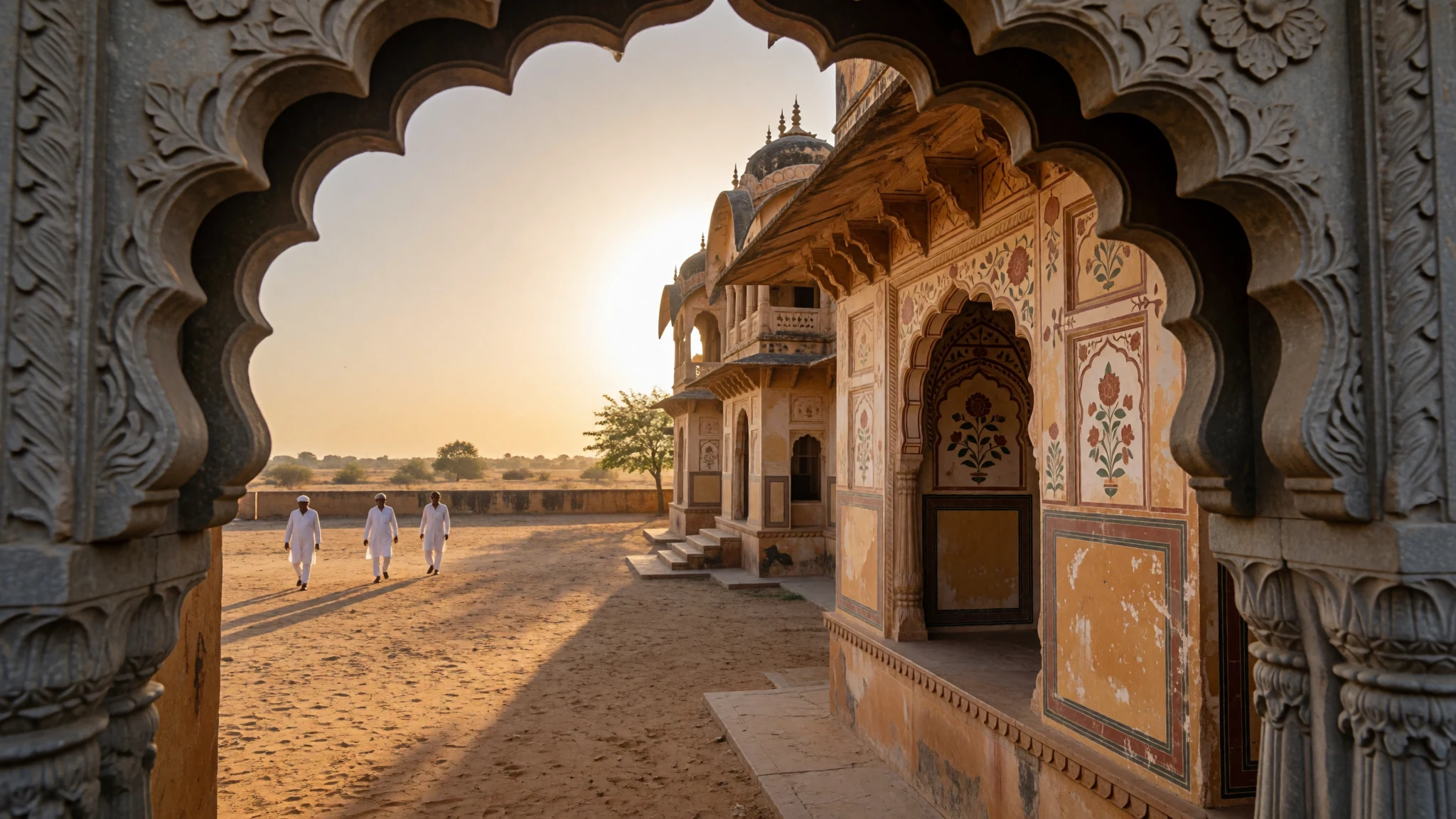
Shekhawati is a dry corner of Rajasthan where merchants' mansions are painted from gateway to rooftop with gods, animals and epic stories.
The place
Shekhawati occupies the north of Rajasthan and takes in three districts: Sikar, Jhunjhunu and Churu. Its name is shared by the local speech, one of the dialects within the wider Rajasthani language. The country belongs to the Thar Desert, with a slice of the Bagar tract along the Haryana border, and almost everything about daily life follows from that dryness. Rain falls mainly in July and August, and households have traditionally gathered it from roofs and courtyards into covered tanks that must see them through the long dry months. Groundwater sits far below the surface and is brackish in places, which is why a stepwell or a rooftop tank often says more about how people lived here than a palace does. Winters are cold enough for frost at night. Summers bring the loo, a scorching wind, and the temperature can pass 50 °C. The towns are small market centres: Mandawa, Nawalgarh, Fatehpur, Jhunjhunu, Churu, Bissau and Pilani among them. Each has lanes of tall mansions with faded colour on their walls, some restored as guesthouses, others shuttered or left in the care of a watchman. Distances are short, so Shekhawati works less as one destination than as a loose string of towns that can be threaded together by road. Visitor numbers are modest compared with Jaipur, though the better-known havelis do see tour groups around midday, and the lanes feel very different early in the morning and late in the afternoon.
Its story
Shekhawati carries layers of history older than its painted walls. Tradition places the region within the Matsya kingdom of the Mahabharata age, stretching towards the Sarasvati river, and Dhosi Hill on the Haryana border appears in that epic as the hermitage of the sage Chyavana, where the herbal tonic chyawanprash is said to have been first prepared. Historians point to the Rigveda and the Manusmriti as signs that the land mattered in ancient times, though much of this rests on tradition rather than excavation. In later centuries the area changed hands. The Gaur Rajputs once held almost all of it until repeated wars wore their power down, and the Chauhans took charge after the Gupta empire broke apart. The Shekhawat clan, from whom the region takes its name, eventually became the ruling lineage. Their rule set the stage for the period that draws visitors today. Between the seventeenth and nineteenth centuries, Marwari merchants and Shekhawat rulers built havelis, temples and stepwells across the towns. Trade passing through the desert made some families rich, and they displayed that wealth in courtyards and façades covered with murals. Under British rule, traders kept building in the same manner for new houses, which is why the painted walls change in style from older to later buildings. Many merchant families later moved to the big port cities and metros, leaving the mansions behind. That migration explains both the neglect many buildings now suffer and the survival of so much paint.
What to see
- Mandawa — Jhunjhunu district
Mandawa is where most visitors begin, and its lanes carry murals of deities, animals and scenes from the epics. Several mansions are now guesthouses, while others can be entered with a caretaker who expects a tip. Mornings are quiet; tour groups cluster around midday, so an early walk pays off.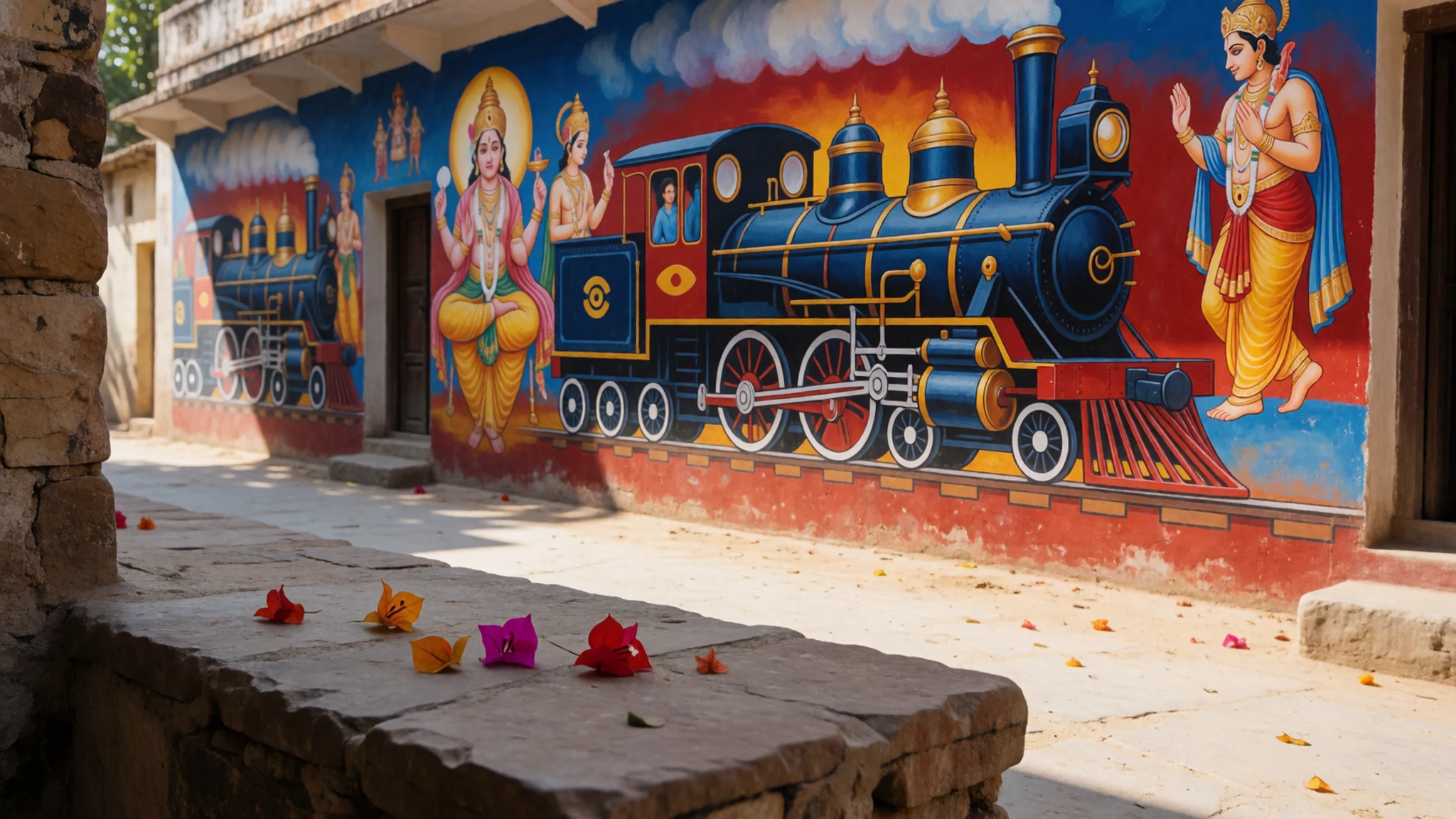
- Nawalgarh — Jhunjhunu district
Nawalgarh has a dense web of merchant mansions, some restored as small museums and others still lived in. A local guide helps here, because the panels reward slow looking: gods, hunts and royal processions share the walls with later scenes from colonial-era life. Check what is open before heading out.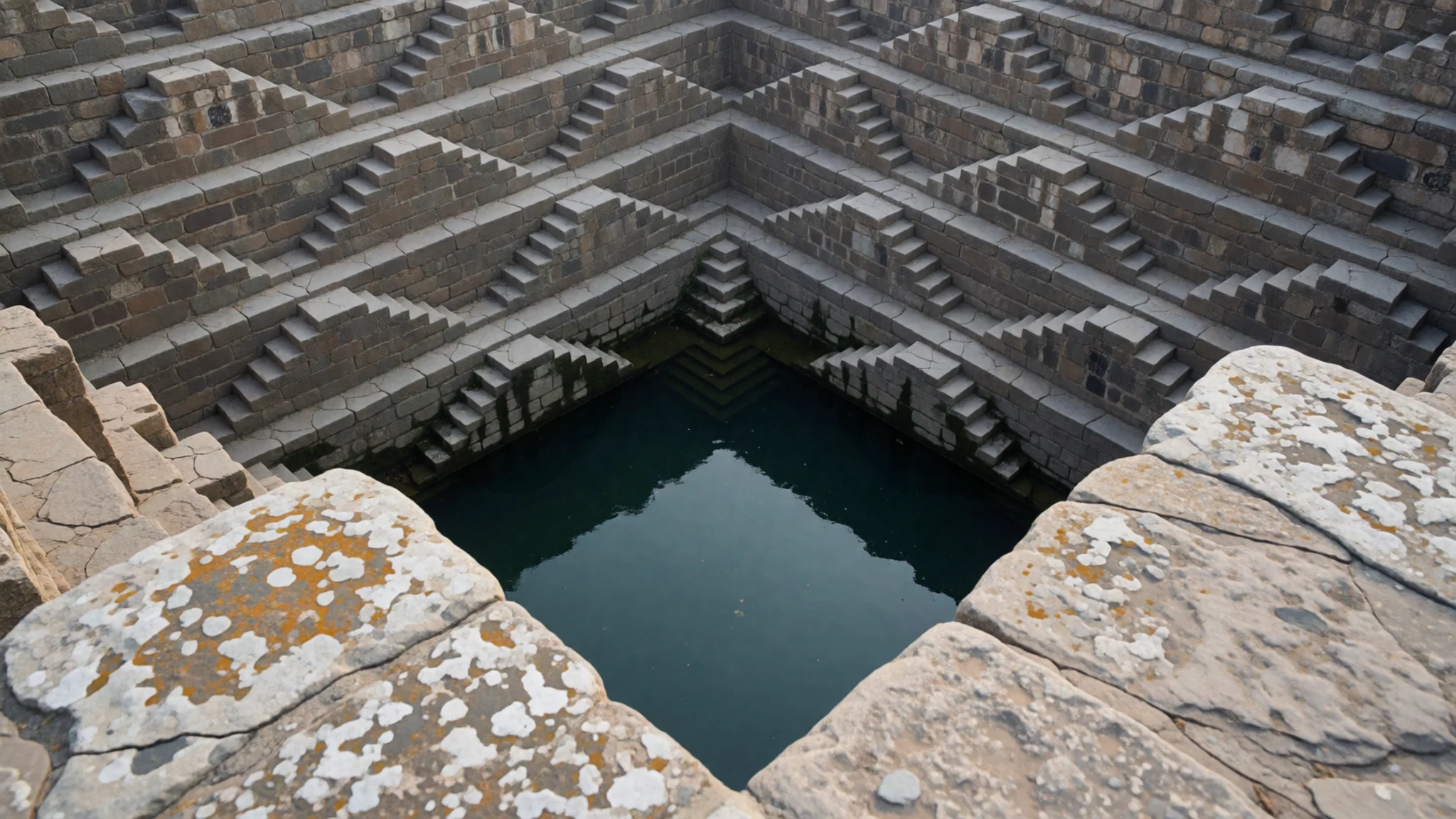
- Fatehpur and its stepwell — Sikar district
Fatehpur is a quieter town of painted havelis and a stepwell, a reminder that storing water mattered as much as display in this desert. Many buildings are in poor repair, which gives the walk a raw, unrestored feel. Allow time to wander without a fixed plan.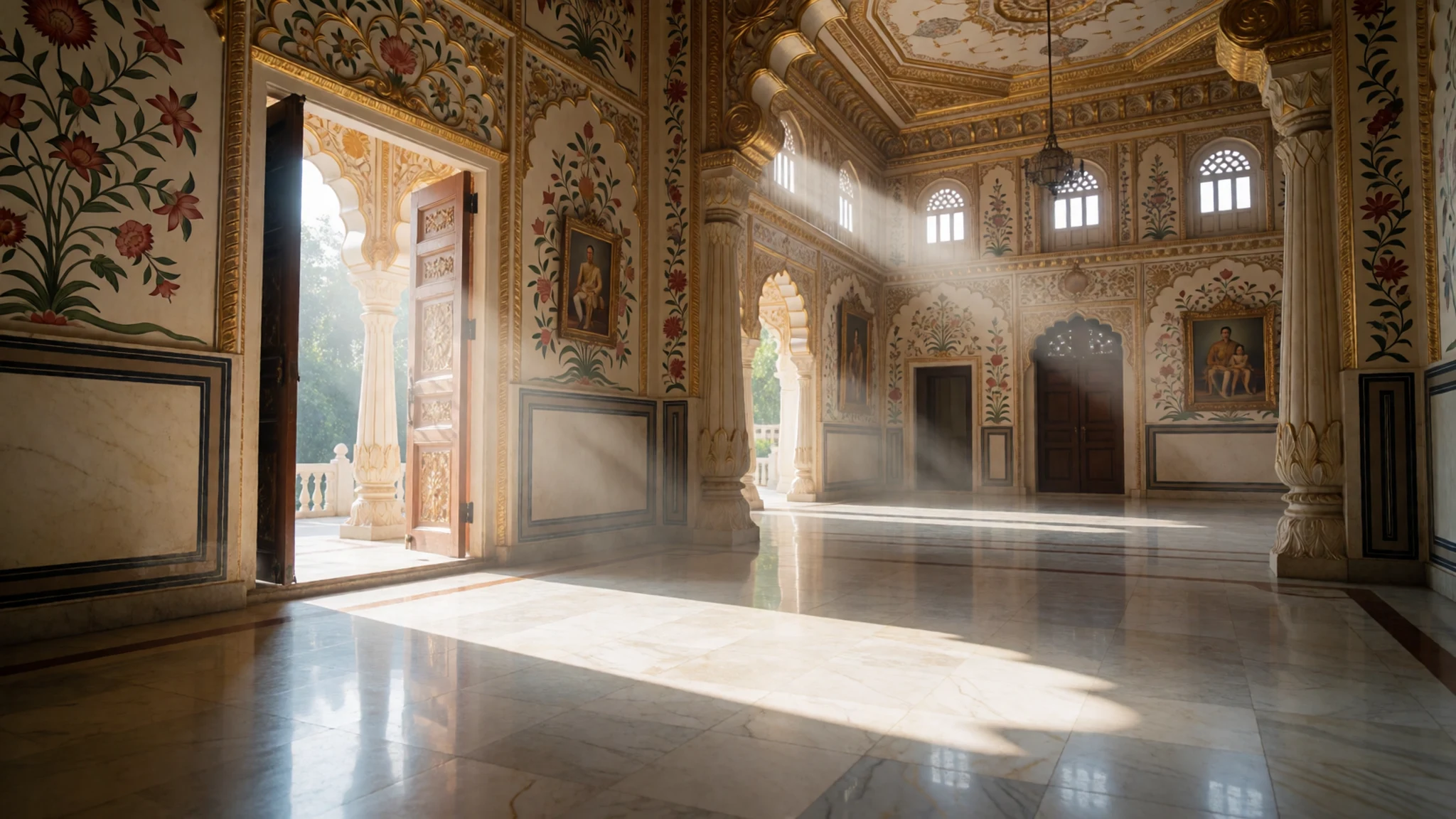
- Churu — Churu district
Churu lies at the north-western edge of the region and is known for a haveli pierced by a great many windows, set in flat, dry country. The town sees far fewer visitors than Mandawa or Nawalgarh, so it suits anyone who prefers an unhurried look at façades.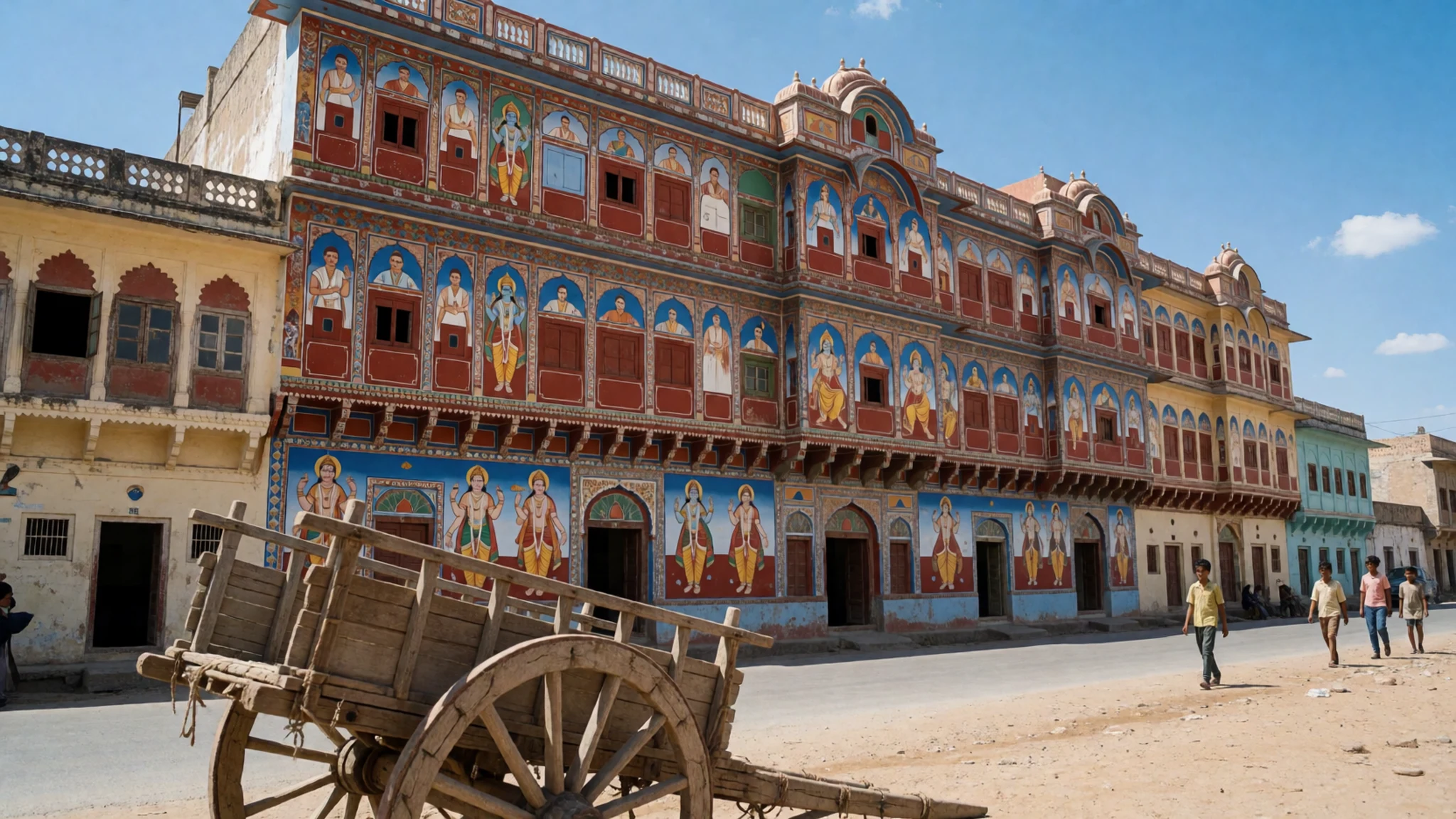
- Jhunjhunu — Jhunjhunu district
Jhunjhunu is a larger working town with painted mansions, temples and old palace buildings set among everyday traffic and bazaars. It is a practical base with frequent onward buses, and the contrast between busy market streets and quiet courtyards is a large part of its appeal.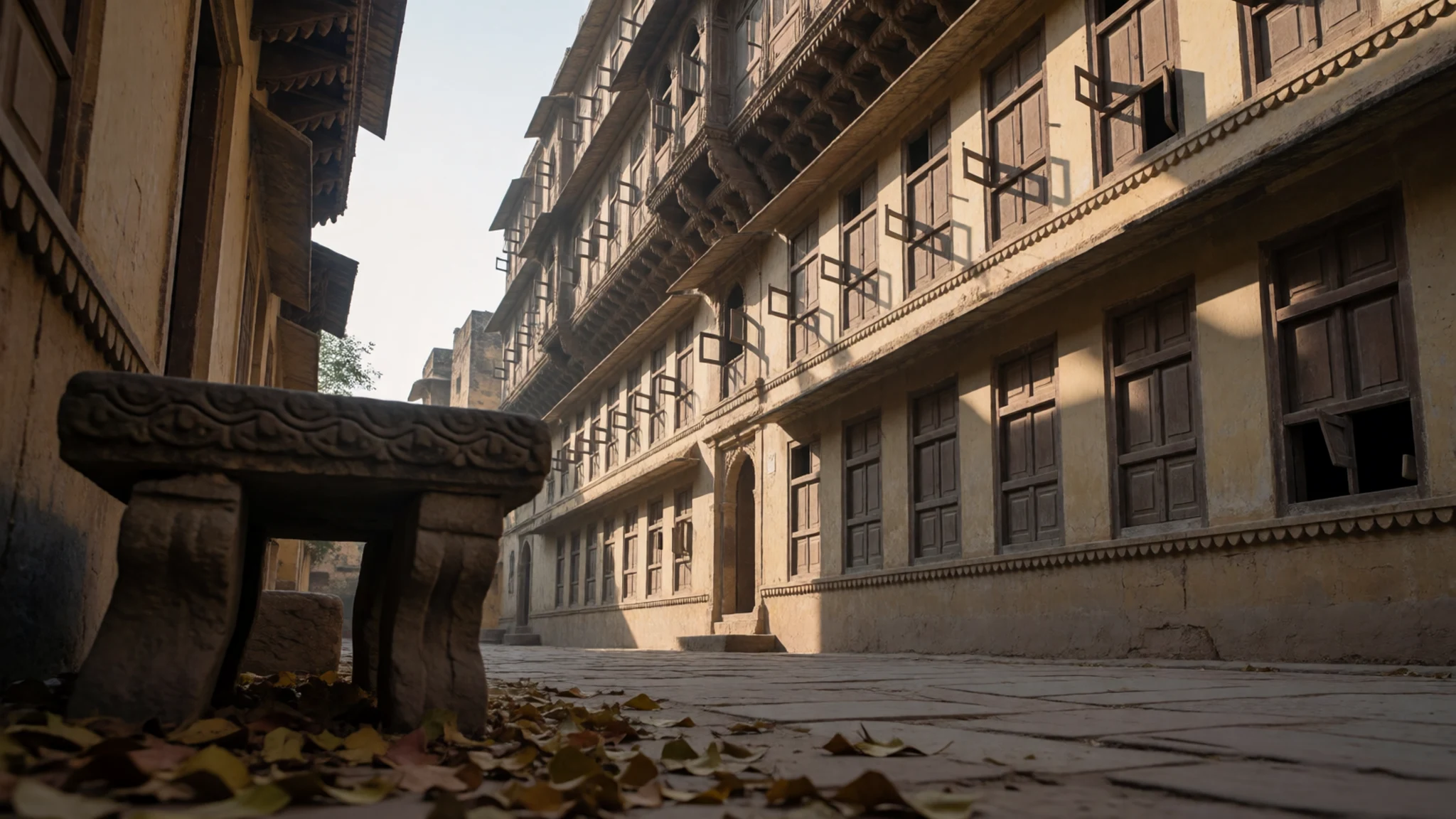
Culture
Shekhawati's culture was shaped by two groups: the Shekhawat Rajput rulers and the Marwari merchants who paid for the mansions. Merchant homes were organised around courtyards, with an outer area for business and an inner part for family life, and the painted walls worked as a public display of faith and prosperity. Subjects run from stories of Rama and Krishna to animals, festivals and domestic scenes. Religion is woven into daily life through small temples, household shrines and local festivals, and the rhythm of the year follows the monsoon, since stored water underpins everything else. Many havelis are still family property, and some are looked after by a single watchman, so a visit is often a personal arrangement rather than a ticketed attraction. The Shekhawati dialect is widely spoken, and a few words of Hindi are always welcome. In villages, many women still draw the end of a sari or odhni over the head, a custom known as ghungat. Hospitality is a point of pride, and an offer of tea is common. Visitors who accept will usually hear a good deal about the family's own haveli and the relatives who went away to the cities. Ask before photographing people, especially women, and when a caretaker opens a private haveli, take off your shoes wherever the family do and leave a small tip afterwards.
What to wear
Shekhawati's traditional dress follows wider Rajasthani patterns. Women wear the ghagra (a full skirt), a choli blouse and an odhni veil, often in cotton or silk, with bandhani tie-dye and lehariya wave-patterned dyeing common in bright reds, yellows and oranges, plus silver jewellery and stacks of bangles. Men traditionally wear a kurta or angrakha with a dhoti and a safa, the turban whose colour and tying can signal occasion or community. These outfits appear at weddings, festivals and in many villages every day, particularly among older women. In towns, everyday clothing is mostly shirts and trousers, kurta-pyjamas, salwar kameez and jeans, with traditional pieces kept for celebrations. Visitors should dress for the climate first. From April to September, loose long-sleeved cotton, a wide-brimmed hat and a scarf for sun and dust work better than shorts. Winter days are mild but nights turn cold, so bring a fleece or shawl. Cover shoulders and knees at temples and when entering family homes, and carry a scarf for the purpose. Lanes are uneven, dusty and sometimes strewn with litter, so wear sturdy closed shoes or sandals that slip off easily, since shoes come off at many doorways.
What to eat
- Dal baati churma — Family-run eateries and thali places in any market town
The region's classic meal: lentil curry with baked, roasted dough balls, crushed over with ghee, and churma, a sweet crumble of the same dough. It is mild, filling and a safe choice for anyone new to Rajasthani food.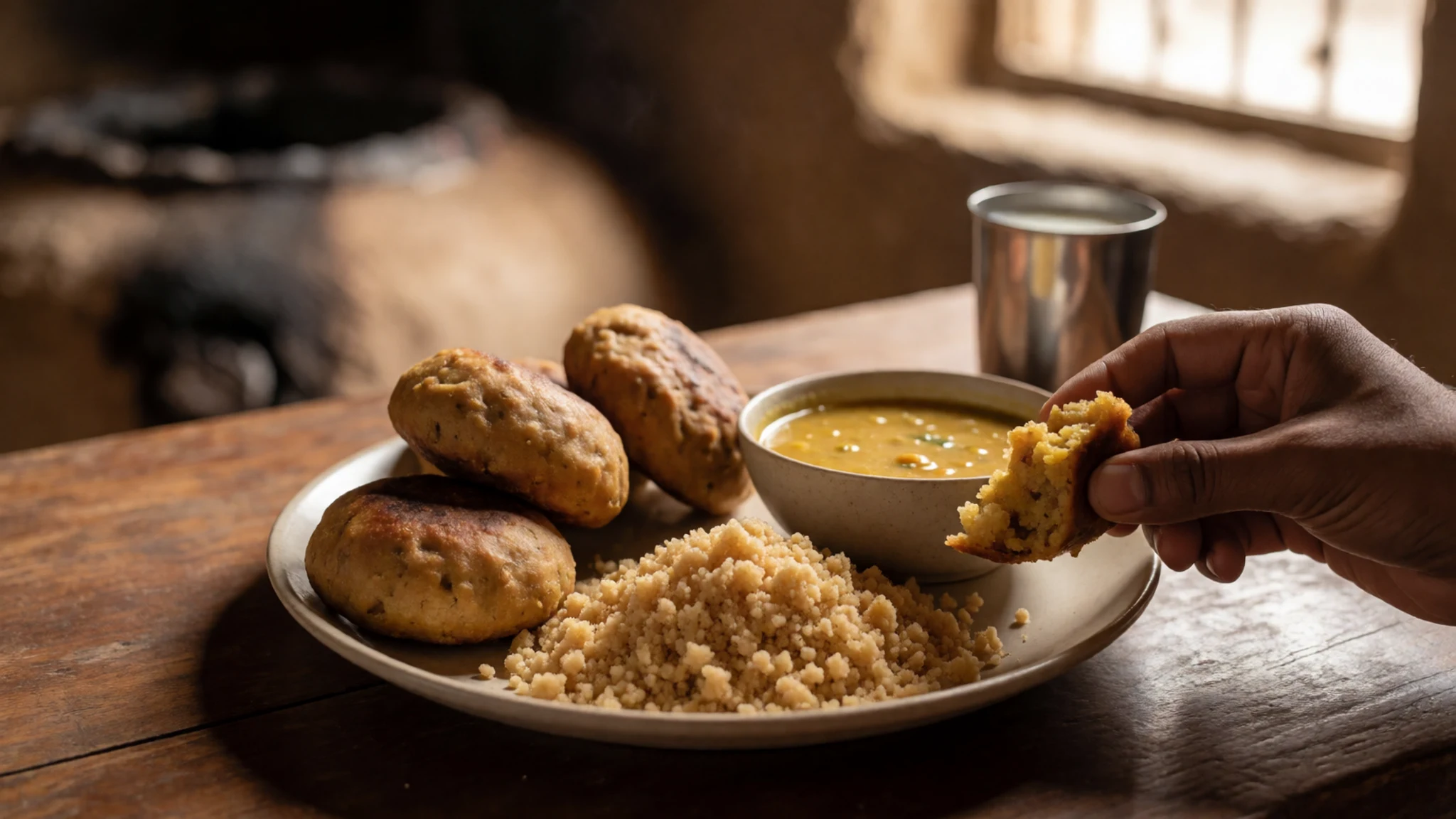
- Lahsun ki kachori — Street stalls near the main bazaars, especially mornings and evenings
A fried pastry ball with a garlic filling, often served with a sharp chutney. It can be properly fiery, so start with a small portion. Eating it hot, straight from the pan at a bazaar stall, is the point.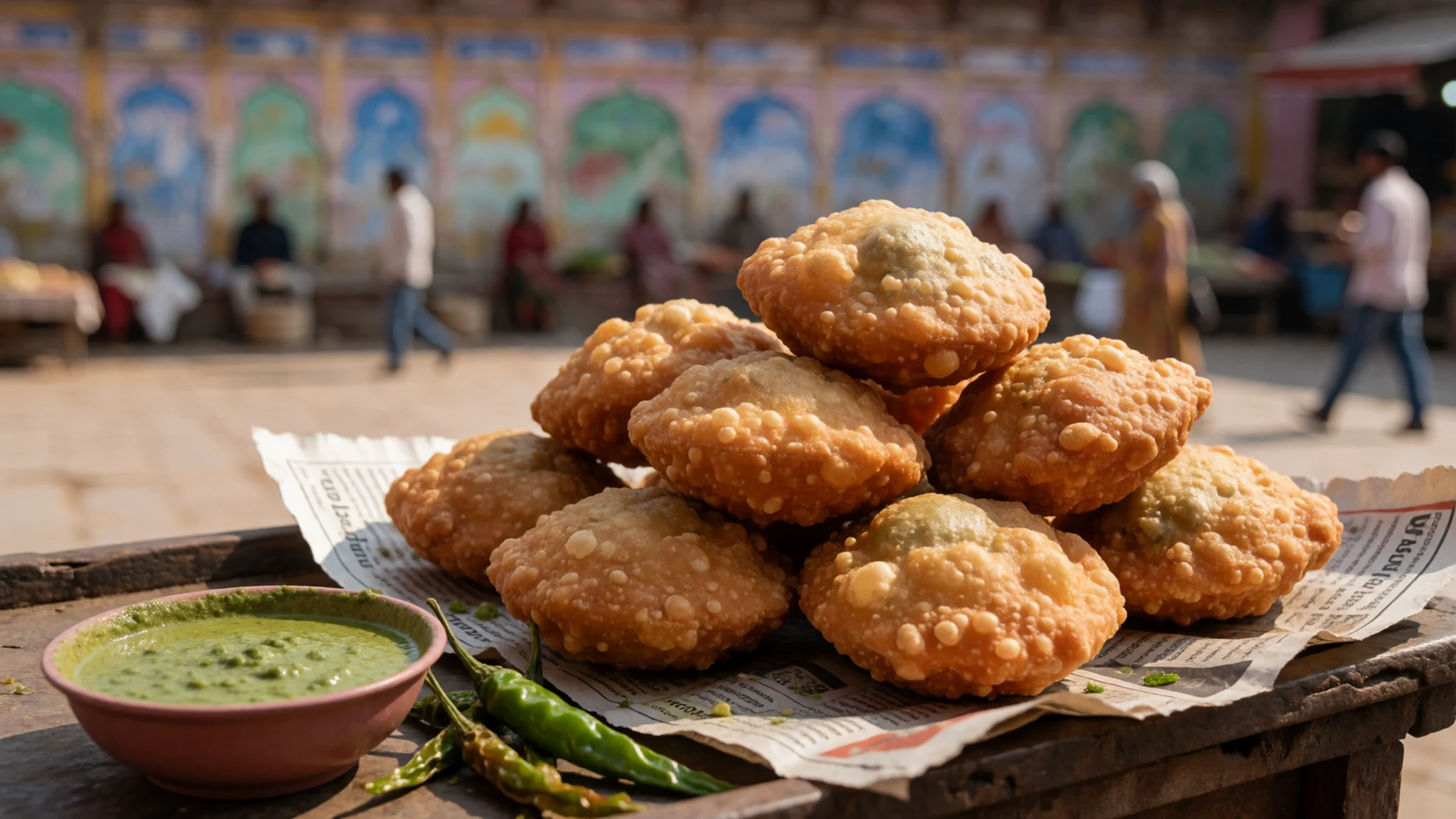
- Ker sangri — Home-style restaurants and guesthouse dinners
A desert dish of dried ker berries and sangri beans, cooked with spices and sometimes yoghurt. The flavour is tangy and slightly bitter, and it grew out of a landscape where fresh vegetables were scarce for much of the year. - Gatte ki sabzi — Vegetarian eateries and thali meals in towns
Gram-flour dumplings simmered in a spiced yoghurt gravy. It is another dish born of a dry region, built from pantry staples, and it is usually eaten with roti or rice. Often a good vegetarian standby. - Bajra roti with garlic chutney — Village homes and rural dhabas, mostly in the cooler months
A flatbread of pearl millet, a crop suited to dry land, usually eaten with ghee, jaggery or a pounded garlic chutney. It is dense, earthy and warming, and best in winter when the days are cool.
Plan it
Best time. October to March, when days are mild for walking the lanes, though winter nights can turn cold. April warms quickly, and May and June bring the loo, with temperatures that can pass 50 °C. Rain falls mainly in July and August.
How long. 2–3
Getting there. Jaipur has the nearest major airport, with Delhi as the alternative. Trains run from Delhi and Jaipur to the main towns of Jhunjhunu, Sikar and Churu, and direct buses leave Delhi from ISBT Kashmiri Gate, Sarai Kale Khan and Dhaula Kuan. The last leg between towns is by local bus or a hired car with driver. Check the regional site at http://www.shekhawati.in/.
Budget. mid
Tips
- Hire a car and driver for the day, since the towns are close but bus links between smaller ones are slow
- Start early, both for cooler air and to see havelis before tour groups arrive around midday
- Carry small notes for caretakers and tips, as cards are rarely useful in the lanes
- Bring water, a hat and sun protection, and wear shoes that slip off easily
Etiquette
- Ask before photographing people, and ask the caretaker before entering a private haveli
- Remove shoes at temples and wherever the family do, and leave a small tip for a caretaker who shows you around
Nearby
Sources
- Wikidata Q547984 (CC0)
- Wikipedia: Shekhawati (rev 1385172691) (CC BY-SA 4.0)
- Wikivoyage: Shekhawati (rev 5385935) (CC BY-SA 4.0)
- Photo: Front Facade View of Shahpura House (Digrajsingh) (CC BY-SA 4.0)
- Photo: View of a Bawdi at Fatehpur (LRBurdak) (CC BY 3.0)
- Photo: Gate of Shahpura House (Digrajsingh) (CC BY-SA 4.0)
- Photo: Shekhawati painted houses (Ahron de Leeuw) (CC BY 2.5)
- Photo: 1100 Khidkiyon Ki Haveli (Sharvarism) (CC BY-SA 4.0)
- Photo: Durbar Hall, Shahpura House (Digrajsingh) (CC BY-SA 4.0)
- Photo: Kesariya Balam (Sharvarism) (CC BY-SA 4.0)
- Photo: Maharaj Surendra Singh & Rani Ratna Kumari (Digrajsingh) (CC BY-SA 4.0)


