Udaipur
Udaipur, India
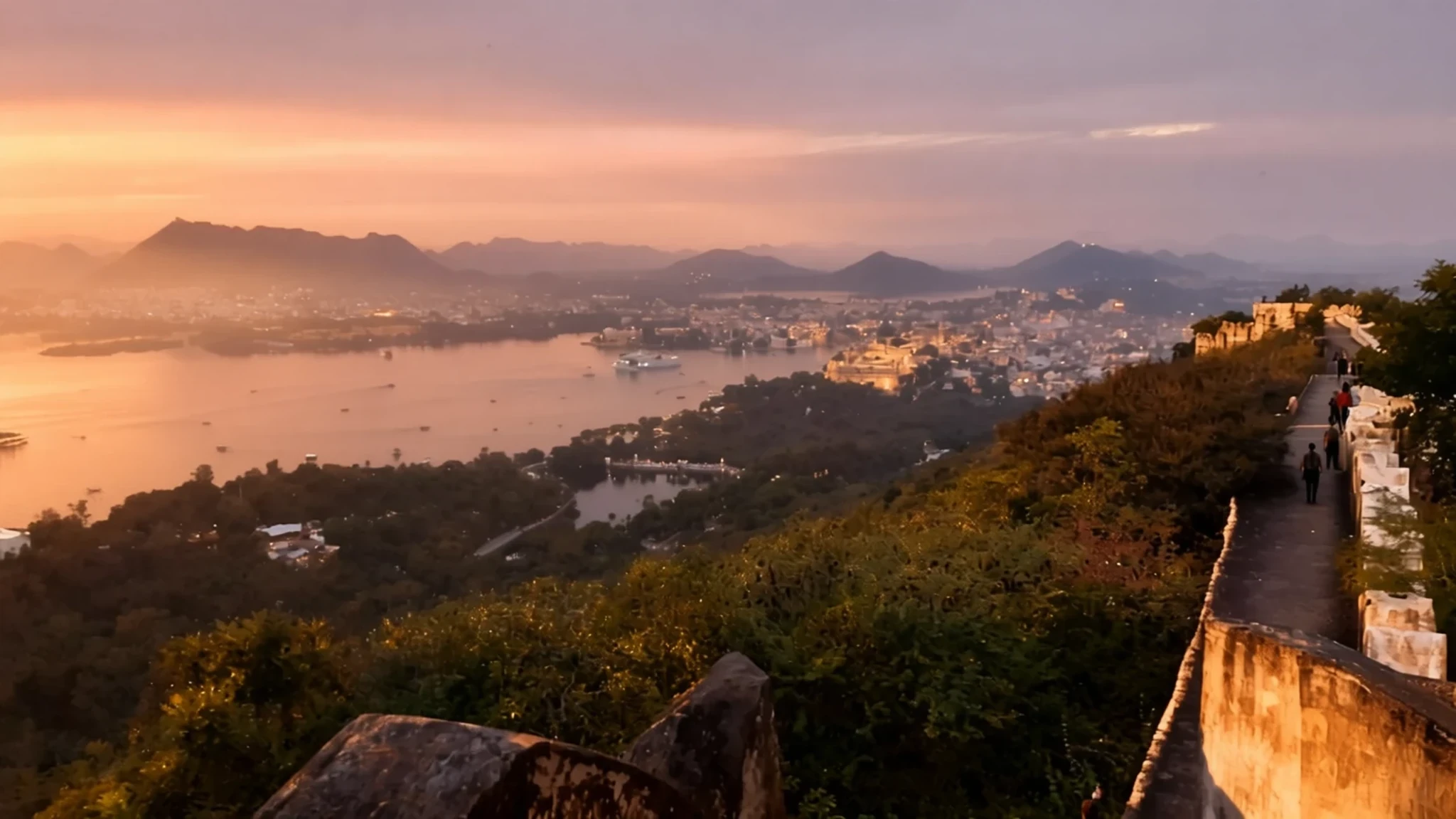
Udaipur charms visitors with grand marble palaces reflected in tranquil artificial lakes and narrow lanes steeped in Mewar history.
The place
Udaipur sits in the north-western Indian state of Rajasthan, positioned in the southernmost part of the region near the Gujarat border. Encircled by five major artificial lakes, the settlement occupies a fertile circular valley in the shadow of the Aravalli Range, which separates the terrain from the Thar Desert. As the former capital of the Mewar kingdom within the old Rajputana Agency, the city grew up around its lakes and protective hills. The surrounding hills and aquatic barriers provided natural protection and a moderating effect on the local environment. Today, the urban area serves as the administrative headquarters of its district while maintaining its distinct architectural character defined by courtyards, terraces, and white stone structures that catch the bright desert light. Water management remains central to the character of the place, with reservoirs and embankments shaping everyday movement through the old quarters. Narrow streets wind away from the waterfronts, passing small shrines, residential courtyards, and open squares where craftspeople work in traditional trades. The local economy blends tourism, traditional metalwork, miniature painting, and textile production, drawing travellers who navigate the maze of alleys on foot or by auto-rickshaw. The layout reflects centuries of careful planning around seasonal rainfall and defensive needs, creating a compact urban core where historical monuments sit directly alongside family homes and neighbourhood shops.
Its story
The foundation of modern Udaipur took place in the sixteenth century when Maharana Udai Singh II sought a more secure seat for his court. Following the capture of the vulnerable tableland fortress of Chittorgarh by Mughal emperor Akbar, the ruler decided to relocate his capital away from flood-prone Ayad and the exposed hills of the old domain. According to local legend, during a hunting expedition in the foothills of the Aravalli Range, the king encountered a hermit who blessed him and advised him to build a residence upon the ridge east of Lake Pichola, assuring him of its safety. Maharana Udai Singh II established the settlement in the Girwa Valley. The choice proved strategically sound, offering natural barriers against invading forces while providing access to reliable water sources through the expansion of dams and reservoirs. Over subsequent generations, successive rulers of the Sisodia clan added palaces, gardens, temples, and defensive walls, transforming the rocky ridge into an expansive royal complex overlooking the water. The kingdom maintained its autonomy through various treaties and conflicts until the nineteenth century, when Mewar became a British princely state. Following independence, the former princely territories integrated into the state of Rajasthan, preserving centuries of dynastic architecture, royal heritage, and regional traditions within a rapidly modernising urban landscape that continues to honour its royal past.
What to see
- Udaipur City Palace — Old City waterfront
This sprawling complex of courtyards, museums, and gardens towers over the eastern shore of Lake Pichola. Established in the sixteenth century by Maharana Udai Mirza Singh, the expansive royal residence blends Rajasthani, Mughal, Medieval, European, and Chinese architectural influences across multiple generations of royal construction.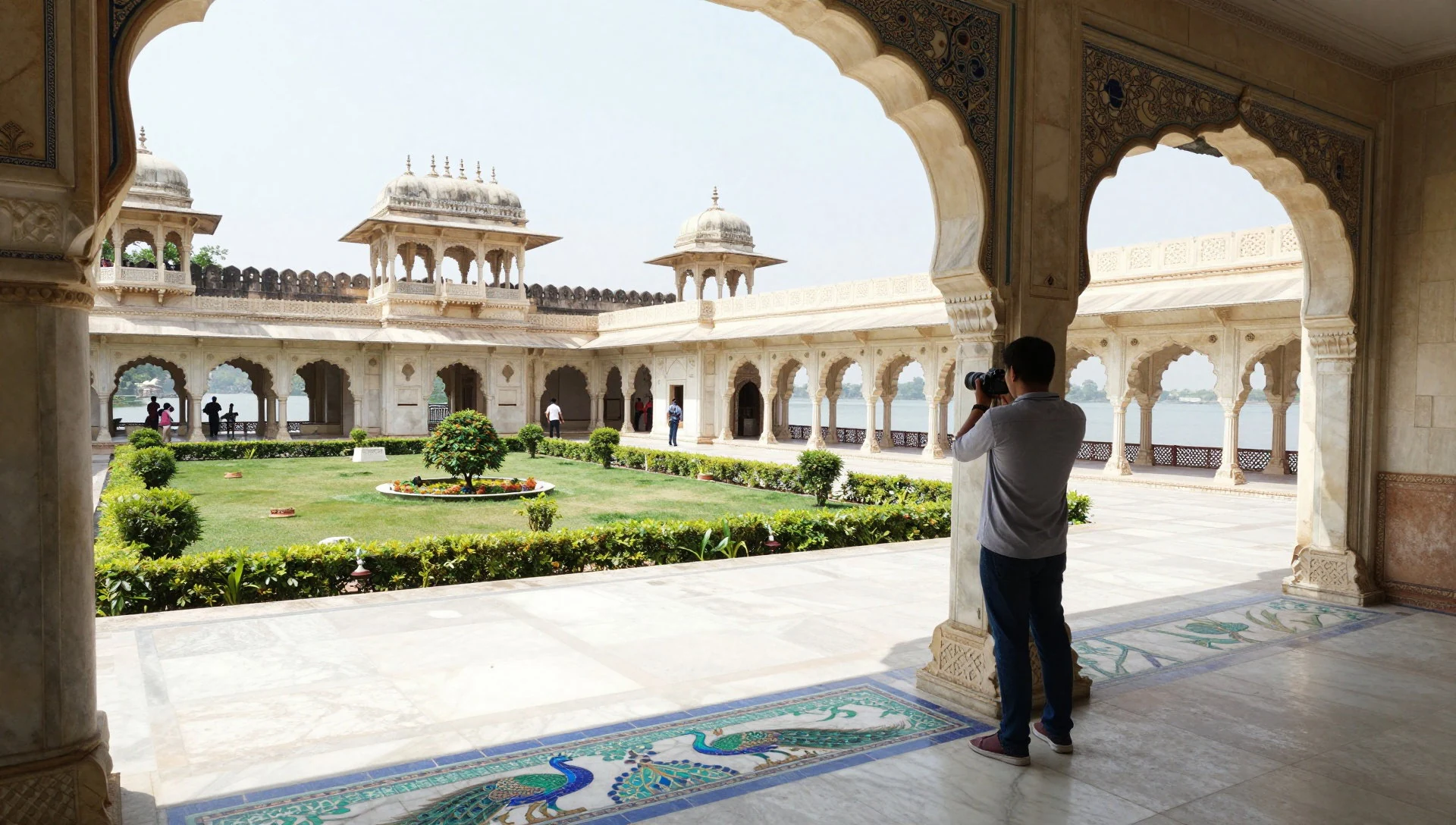
- Jagdish Temple — Near City Palace entrance
Standing in the heart of the old town just north of the royal residence, this prominent shrine honours Lord Vishnu. Built in the classic Indo-Aryan architectural style, the exterior features intricately carved stone pillars, sculpted deities, and tiered spires that draw worshippers and travellers from surrounding lanes.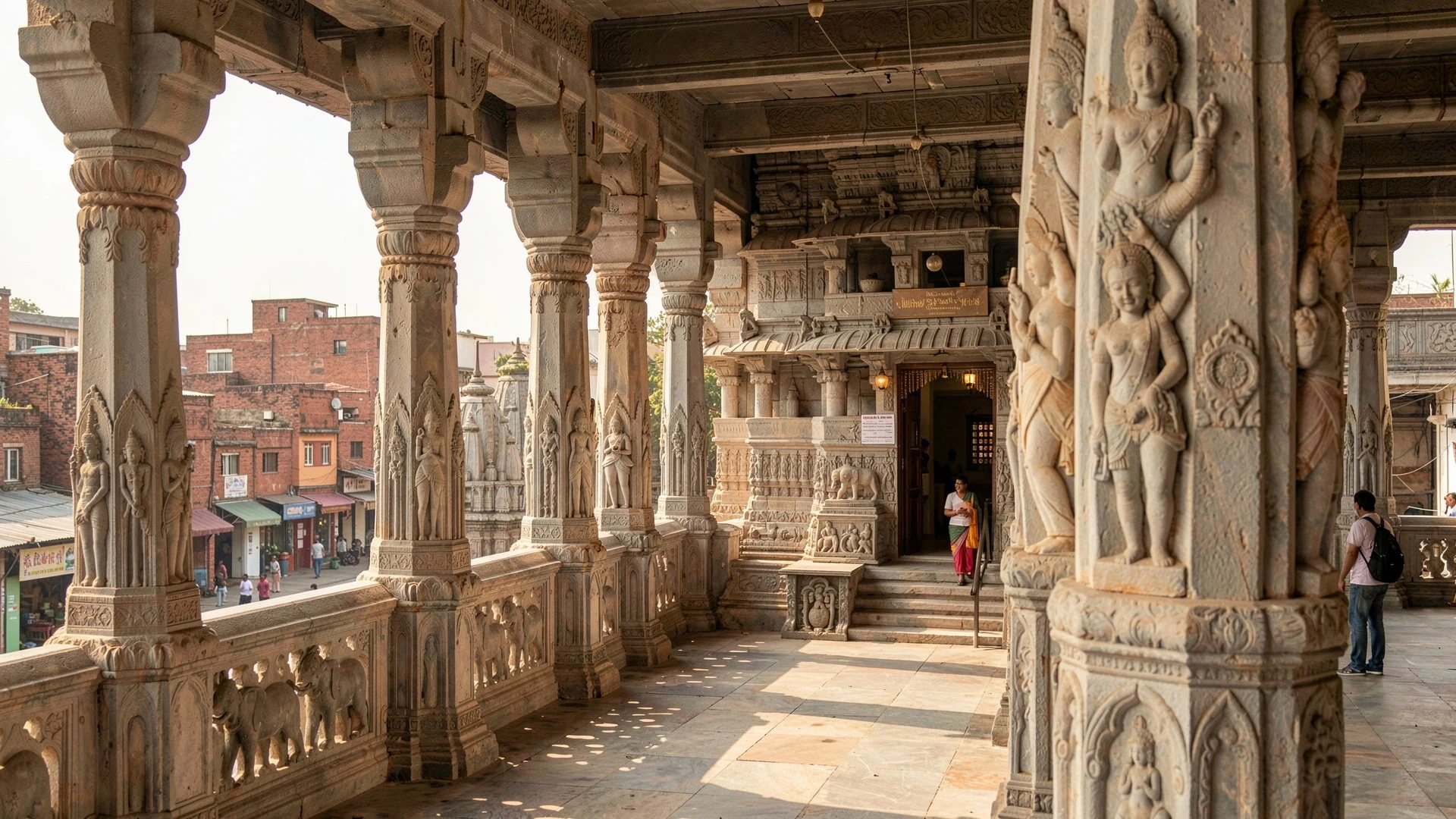
- Amar Vilas and Badi Mahal — Upper courts of City Palace
Reachable via the upper courts of the palace, Amar Vilas functions as a raised pleasure garden designed in the Mughal style with cusped arcades surrounding a square marble tub. Adjacent to it, Badi Mahal sits atop a natural rock formation rising high above the rest of the palace grounds.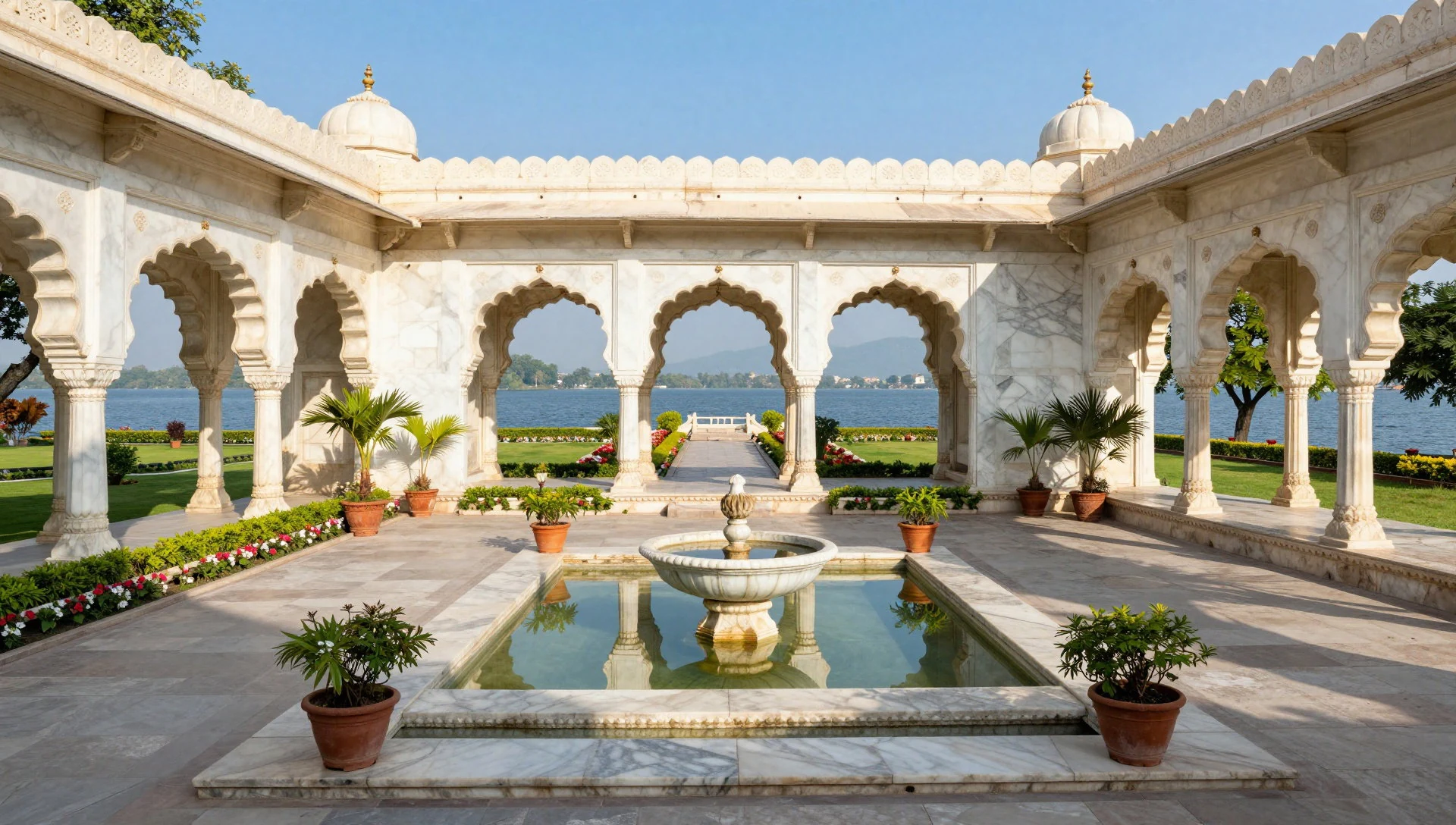
- Fatehprakash Palace and Durbar Hall — Fatehprakash Palace complex
This historic wing houses an opulent assembly hall built in the early twentieth century where royal ladies once observed court proceedings from screened galleries. The interior features rich decorative finishes and unusually large chandeliers alongside a remarkable collection of unused crystal furnishings.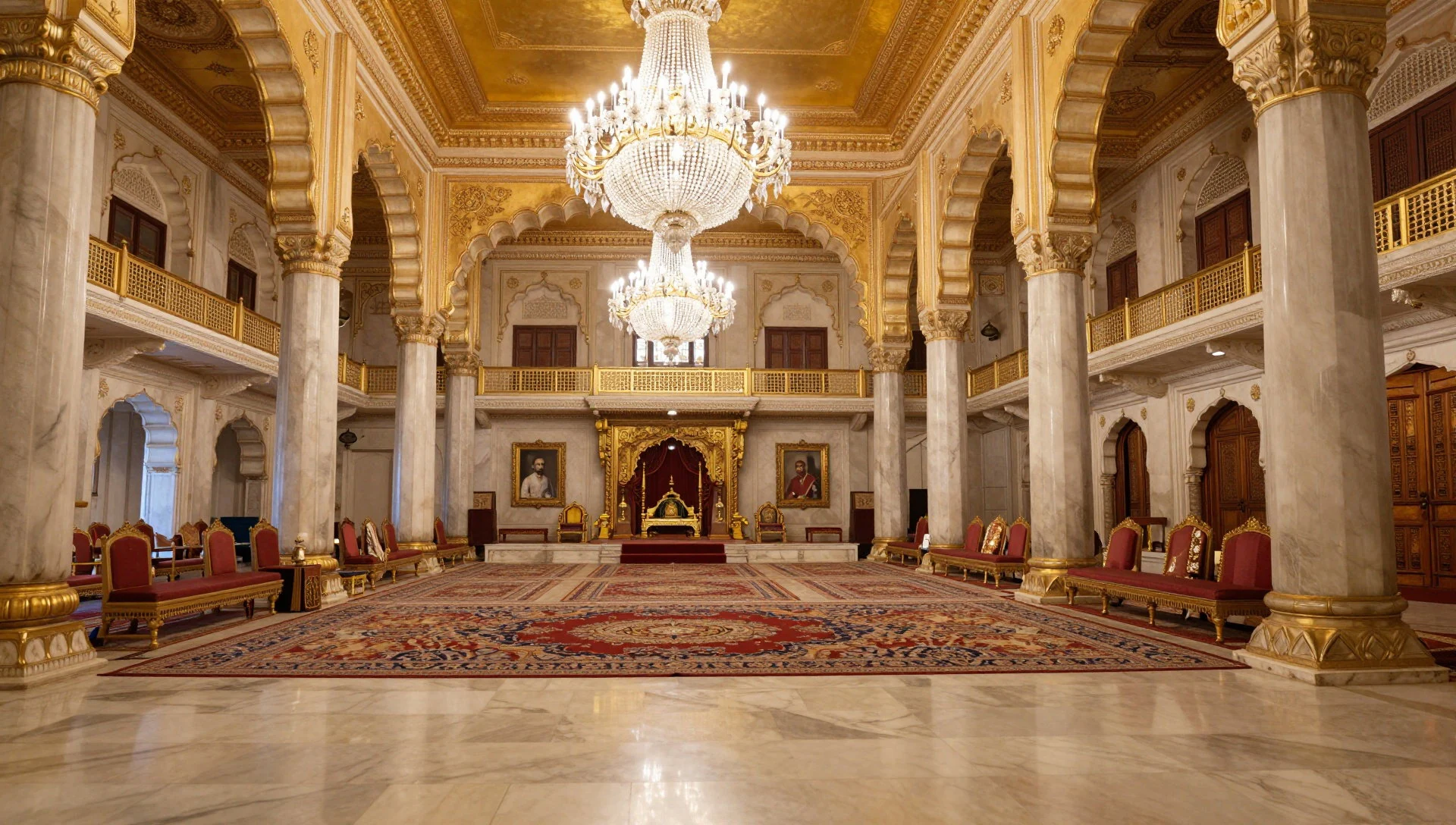
- Monsoon Palace — Sajjangarh hills west of city
Perched high on a distant hill overlooking the surrounding lakes and countryside, this hilltop lodge offers sweeping panoramic views across the valley and the Aravalli Range. Originally built to watch the gathering storm clouds during the rainy season, it provides an elevated vantage point above the urban sprawl.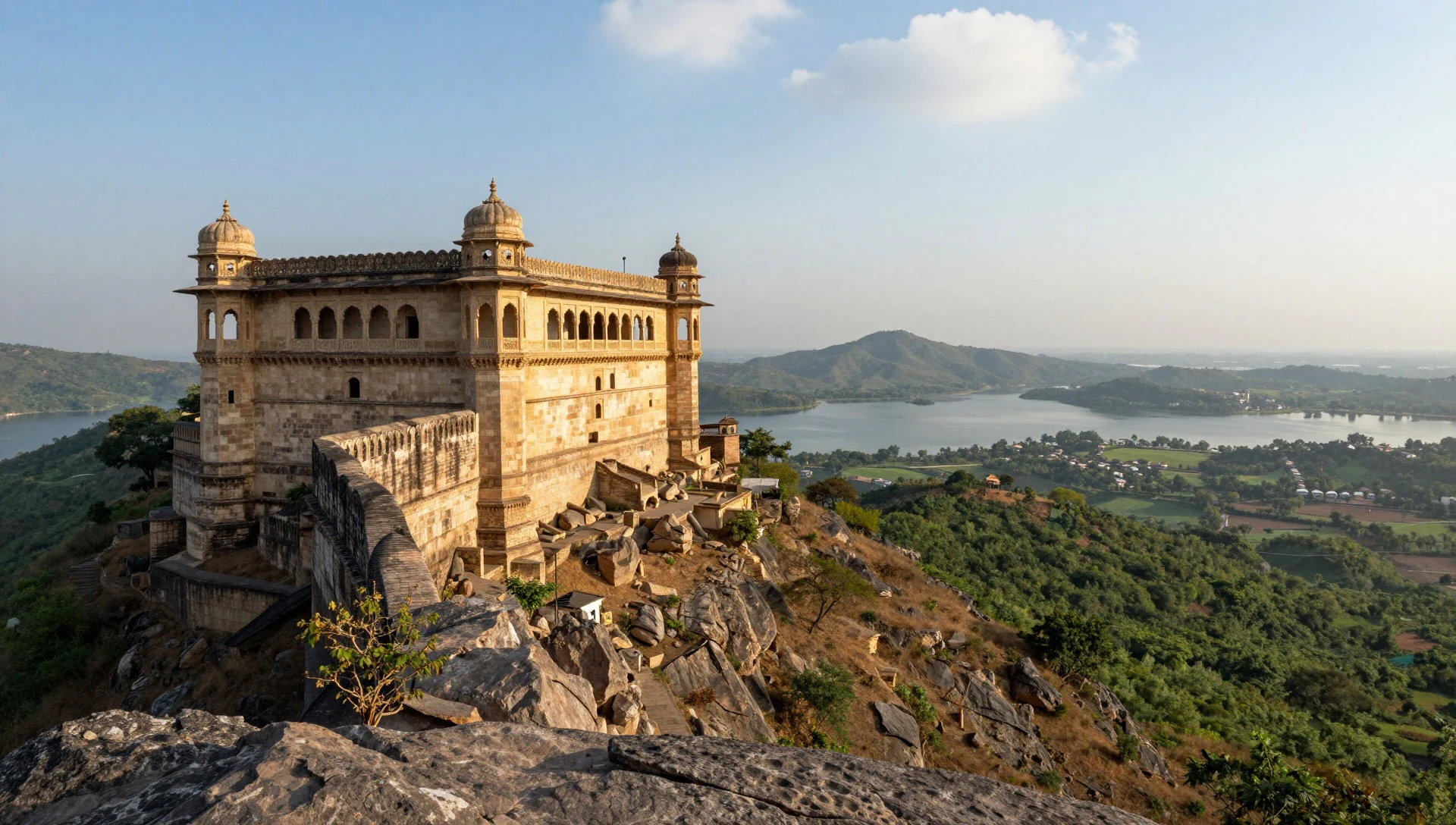
Culture
Udaipur preserves a vibrant cultural heritage rooted in the traditions of the Mewar region, balancing historic rituals with contemporary life. Folk music and energetic dance forms hold a central place in local celebrations, frequently performed during festivals and social gatherings. Traditional styles such as Ghoomar, Bhavai, Kachchhi Ghodi, Kalbeliya, and Terahtaali showcase intricate footwork, colourful traditional attire, and balancing skills passed down through generations. The community maintains deep ties to traditional arts, including miniature painting, pottery, and silver craft, which are practiced in small workshops throughout the old quarters. Festivals such as Gangaur and Mewar Festival bring processions of decorated images, music, and traditional attire to the lakeside streets, uniting residents in communal celebration. Visitors are welcome to observe these cultural expressions, provided they approach sacred spaces and local ceremonies with thoughtful consideration. Always remove your shoes before entering temples, family homes, or sacred shrines.
What to wear
Traditional dress across Udaipur reflects the rich textile heritage of Rajasthan, where garments are designed to endure warm desert conditions while displaying vibrant colours and block-printed patterns. Local women traditionally wear ghagra choli sets paired with bright odhni headscarves, crafted from cotton or lightweight silk featuring bandhani tie-dye or block-print motifs. Men often wear traditional kurtas, dhotis, and colourful turbans that historically indicated community, lineage, or regional identity. In modern daily life, urban residents wear a mix of contemporary Indian clothing such as kurtis and trousers alongside standard western attire, while older generations largely maintain traditional garments. For visitors, lightweight, breathable fabrics made from natural fibres like cotton and linen are essential for navigating the heat. Modest dressing is recommended when exploring markets, residential neighbourhoods, and sacred sites; shoulders and knees should remain covered out of respect for local customs. Comfortable footwear that is easy to slip on and off is particularly practical, as you will frequently need to remove your shoes when entering temples, traditional courtyards, and local homes.
What to eat
- Rooftop lakeside dining — Rooftops around Lake Pichola
Enjoy traditional Rajasthani thalis and continental dishes from elevated terraces overlooking the water, offering romantic views of illuminated palaces and evening boat traffic across the lake.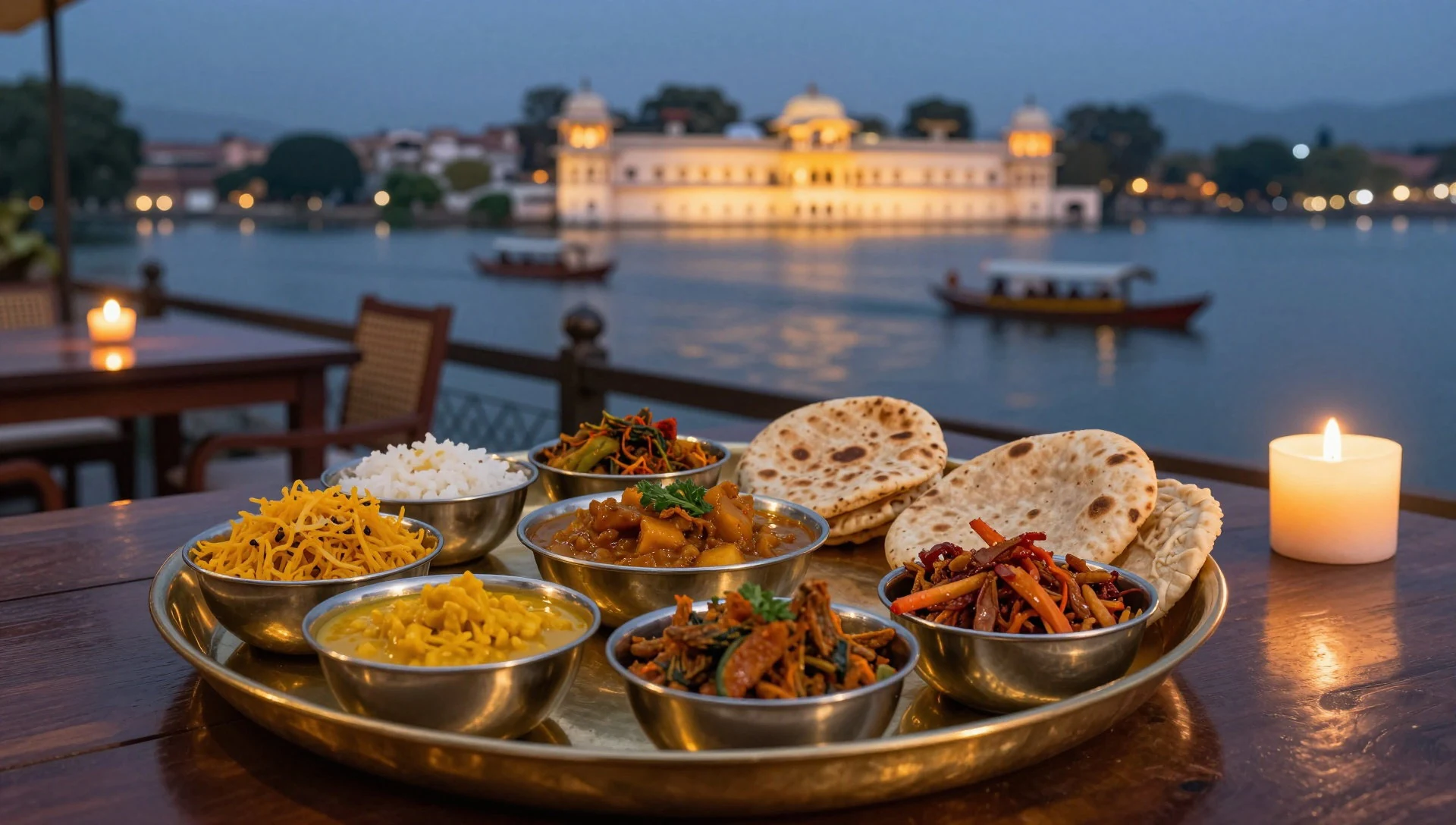
- Old city bakery treats — Lanes near Lal Ghat
Sample freshly baked cinnamon rolls, European pastries, and artisanal breads served alongside hot spiced tea and coffee in casual neighbourhood cafes tucked away in narrow lanes.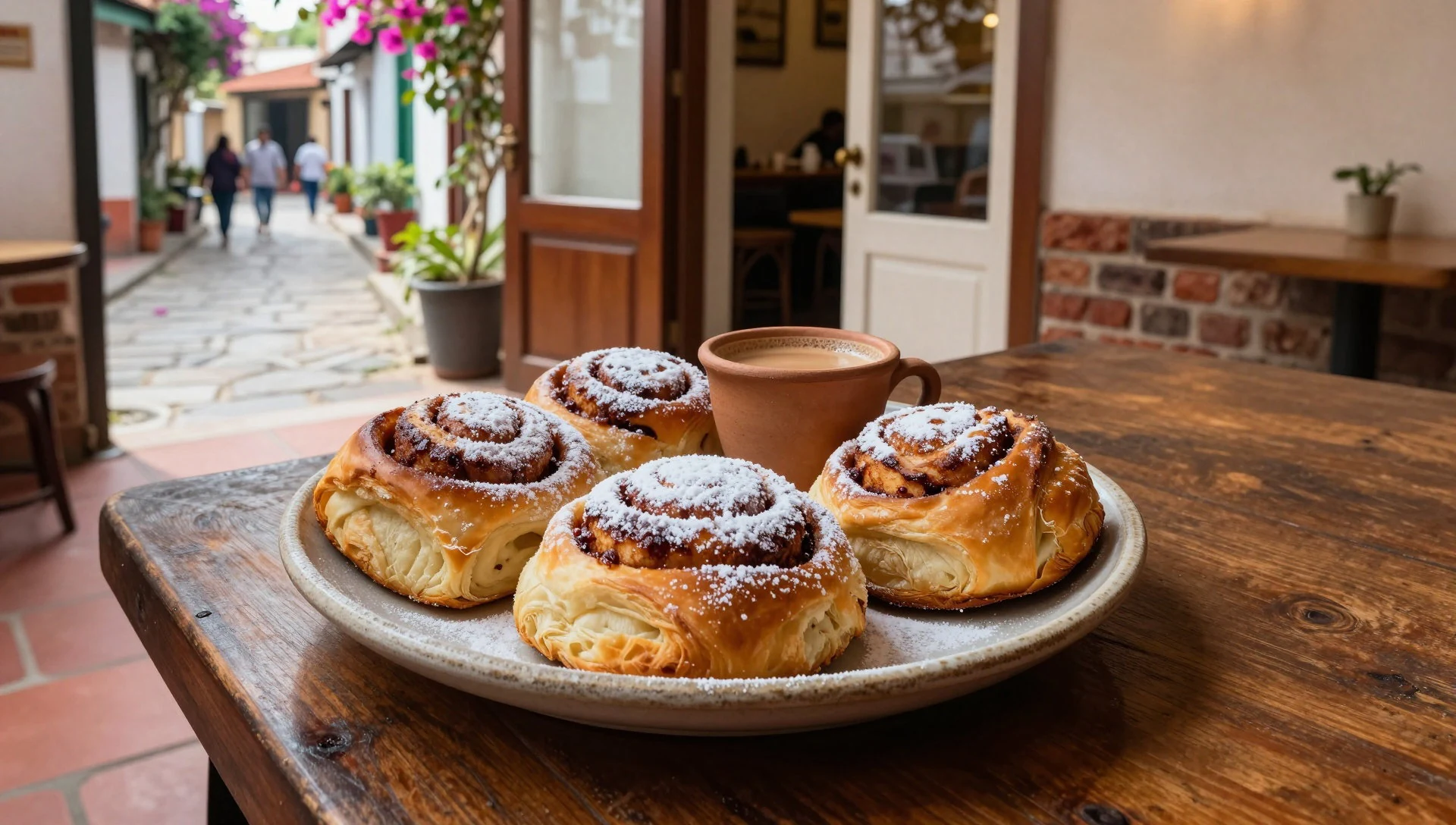
- Local street snacks — Bada Bazaar and Hathipole markets
Savour savoury local bites, crispy vegetable fritters, and spiced lentil dumplings prepared by street vendors operating lively neighbourhood stalls throughout the bustling market squares. - Traditional tandoori barbecue — Courtyard restaurants near Pratap Bhawan
Feast on marinated meats and vegetables cooked over open charcoal flames in outdoor courtyard eateries that specialise in smoked kebabs and regional barbecue dishes. - Heritage hotel buffet — Trident and heritage hotel dining rooms
Indulge in an extensive spread of royal Mewari recipes and international dishes served within the landscaped courtyards of restored lakeside palace estates.
Plan it
Best time. Winter, from December to February, offers the most comfortable weather, with mild sunny days and cool nights. Avoid the intense summer heat between March and June when temperatures soar, or embrace the lush greenery during the monsoon season arriving in July.
How long. 3–4
Getting there. Arrive via Maharana Pratap Airport, located close to the city, or take direct rail and road connections from major regional hubs across Rajasthan and neighbouring states.
Budget. mid
Tips
- Book popular heritage tours and palace tickets in advance during peak cooler months
- Explore the old city on foot or by auto-rickshaw during early morning hours before crowds arrive
- Carry cash for small temple donations, market stalls, and minor purchases
- Drink bottled or filtered water and avoid ice from unverified street vendors
Etiquette
- Remove your shoes before entering temples, homes, and sacred shrines
- Ask permission before photographing local residents during ceremonies or daily activities
- Dress modestly with shoulders and knees covered when visiting religious sites
Nearby
Sources
- Wikidata Q200340 (CC0)
- Wikipedia (rev 1381800204) (CC BY-SA 4.0)
- Wikivoyage (rev 5404686) (CC BY-SA 4.0)
- Photo 01 (CC BY-SA 4.0)
- Photo 02 (CC BY-SA 2.0)
- Photo 03 (CC BY-SA 4.0)
- Photo 04 (CC BY 3.0)
- Photo 05 (CC BY 4.0)
- Photo 06 (CC BY-SA 4.0)
- Photo 07 (CC BY 2.5)
- Photo 08 (CC BY 3.0)


