Shargaljuut
Shargaljuut, Mongolia
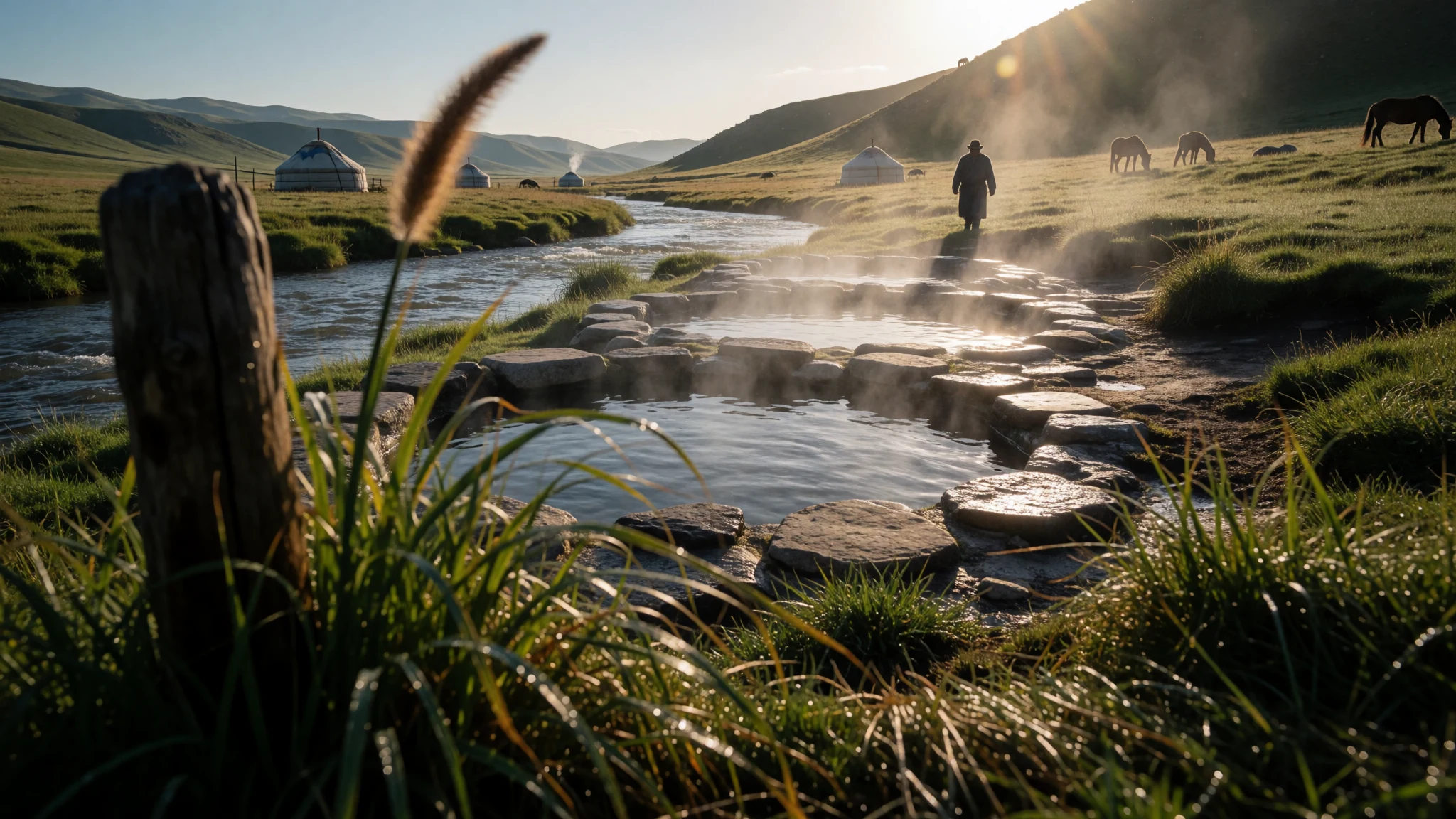
Shargaljuut is a quiet Mongolian spa settlement where hot mineral springs and sulphur mud sit in high Khangai pasture, far from any city.
The place
Shargaljuut is a small spa settlement in the Khangai Mountains of central Mongolia, in Bayankhongor Province. Officially it is a bag, a sub-district, under Bayankhongor city, though it lies 54 km north-east of that city on the Shargaljuut river, at 2136 m above sea level. Its reason for existing is hot water. Mineral springs rise here, some reaching 95°C, and a few come with sulphur-rich mud. That is why the place works as a health resort rather than a market town or a monastery centre. Around the settlement the land is high pasture, cut by the river and framed by mountain slopes. This is herding country, with gers standing in the valleys and livestock moving between seasonal grazing. Winters at this altitude are long and bitterly cold, as across most of Mongolia, while summer brings rain in many areas and chilly nights even after a warm day. Facilities are modest. Much of rural Mongolia mixes rundown Soviet-era buildings with newer guest camps, so plain comfort is the sensible expectation, not polish. Spelling is another small puzzle. Mongolian Cyrillic (Шаргалжуут) is transliterated in several ways, so a map or signpost may show a different form from the one printed here. It is a place for soaking, short walks and slowing down, with no famous monument to organise a day around.
Its story
Shargaljuut is a modern settlement, and little about its early use has been written in English, so this reading does not guess at dates for the springs. What can be said is how the wider country shaped places like it. Written history in Mongolia reaches back to the third century BC, when the Xiongnu rose to power among many nomadic peoples. Later the Mongol Empire grew out of these same steppes, yet its rulers left surprisingly few buildings at home. Karakorum, the short-lived capital, is the main exception. After the empire broke up, Tibetan Buddhist monasteries became the most visible mark on the landscape, and most were lost in the Stalinist religious purges. A handful survive as working religious sites. The communist period then brought Soviet planning, with new towns, industries and institutions, many of them plain and functional. A resort built around mineral water fits that pattern of state-supported health and rest, though the brief for this reading does not confirm exactly when or how Shargaljuut was developed. Today the settlement is small, tied administratively to Bayankhongor, and surrounded by a way of life that has changed less than the buildings: herding families, seasonal moves, and boiled mutton on the stove.
What to see
- The hot mineral springs — Shargaljuut settlement
The springs are the whole point of Shargaljuut. Some run extremely hot, up to 95°C, so bathing happens in managed pools or basins rather than straight from the source. Ask locally which facilities are open, and check how hot a pool is before getting in. - Sulphur mud — Shargaljuut settlement
Some springs here are known for sulphur mud, which visitors traditionally apply to skin or sore joints before rinsing off. The smell is strong and eggy. Treat it as a local remedy rather than a medical cure, and talk to staff first if you have a health condition. - The Shargaljuut river valley — Along the Shargaljuut river
The river runs through open pasture with mountain slopes on either side, and an easy morning walk along it shows the landscape well. Expect grazing animals, scattered gers and quick weather changes. Carry layers and water, and keep your distance from herding dogs.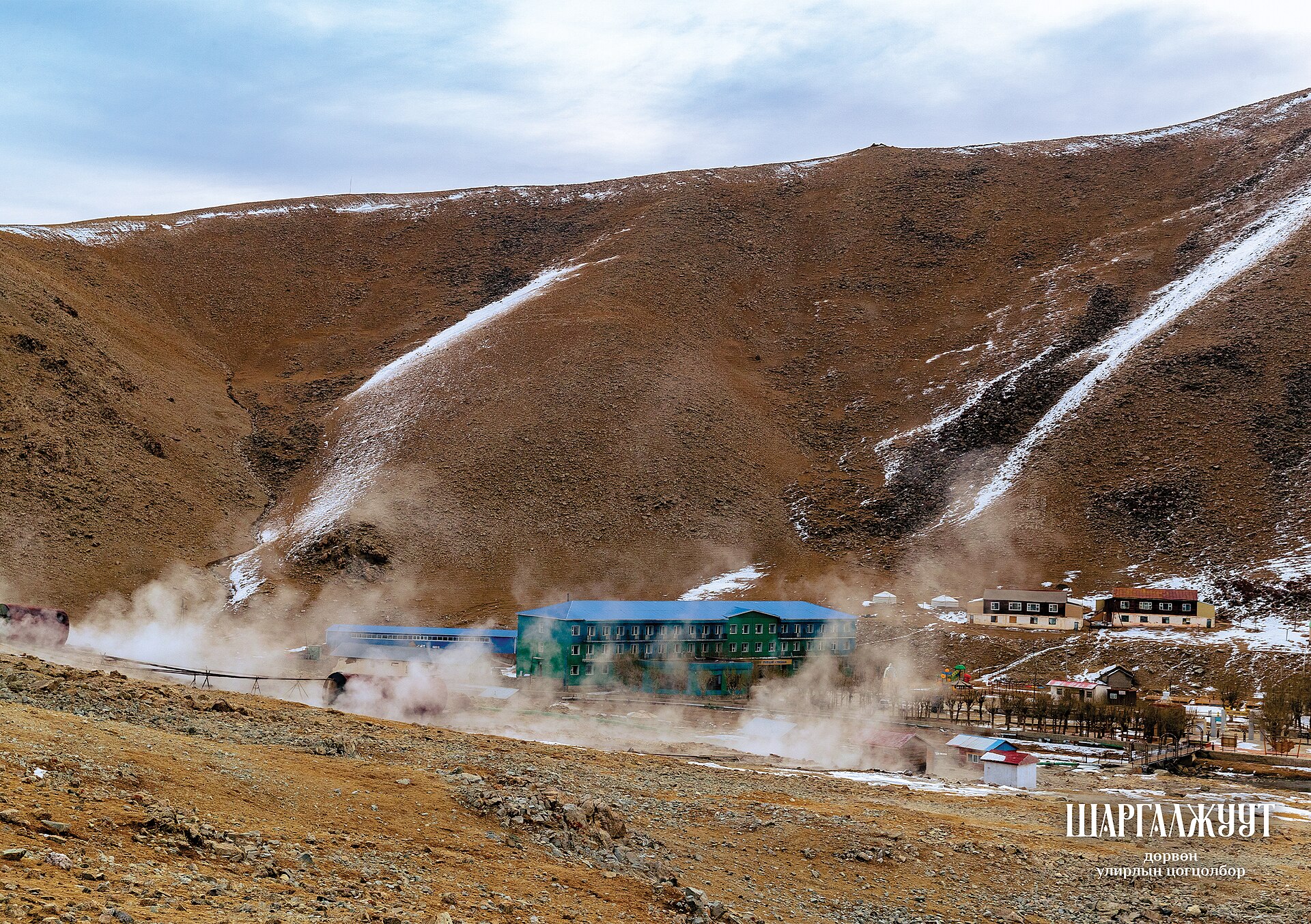
- Khangai Mountain slopes — Hills around Shargaljuut
The high ground above the settlement is part of the Khangai range, with grassy ridges that suit unhurried hiking. There are few marked trails, so go with a local guide or driver if you plan more than a short stroll, and tell someone your route before leaving. - A herder's ger — Pastures near the settlement
Visiting a ger is the clearest window into daily life here. Hosts usually offer salted milk tea and a bowl of dried snacks first. Go through a guide or your camp, bring a small gift if you can, and follow the etiquette in the Culture notes. - Bayankhongor city stopover — Bayankhongor city
Bayankhongor is the provincial centre, 54 km away, and the practical place to stock up on supplies, cash and fuel before heading to the springs. It is a working Mongolian town rather than a sightseeing stop, but a short walk gives a feel for the province.
Culture
Shargaljuut sits in herding country, so local manners follow the customs of the steppe more than the pleasantries of any city. Mongolians are generally straightforward, and people may tell you exactly what they think; take it as honesty rather than rudeness. Hospitality matters a great deal. A guest entering a ger is usually given salted milk tea and a bowl of dried snacks, and refusing a gift is considered very rude. Even a small taste of what is offered is a polite response. Items are passed and received with the right hand, palm up, and the same goes for drinking. Meat, especially boiled mutton, is the centre of most meals, and dairy comes in many forms that may take some getting used to. Anti-China feeling runs high in Mongolia, so avoid wearing clothing associated with China and avoid raising the subject in conversation. Dogs at gers and fenced yards act as guards. They are usually more bark than bite, but let the household know you have arrived before you approach. At a ger near Shargaljuut, accept the first cup of tea or bowl of snacks with your right hand, palm up, and take at least a small taste rather than refusing.
What to wear
Shargaljuut is herding country, and the traditional dress here is the deel, a long wrap-over robe fastened at the side and tied with a broad sash. Everyday deels are made from wool or heavy cotton, lined for winter, while festive ones use silk or brocade in rich colours. Herders pair the deel with a hat suited to the season and with sturdy boots, often leather with upturned toes. Deels are worn daily by some older and rural people and by many more at festivals, weddings and family occasions. Day to day, most people now wear practical modern clothing: jeans or trousers, fleeces, padded jackets and rubber or leather boots, with a deel pulled on when the weather or the occasion calls for it. Spa visitors will see tracksuits and towels as often as traditional robes. A visitor should dress for altitude and changeable weather. Bring warm layers, a windproof and waterproof jacket, a hat and sun protection even in cool conditions, and broken-in walking boots for uneven pasture. Swimwear and flip-flops suit the springs, but pack a warm robe or towel for the walk back. Modest, plain clothing is wise when visiting families, and avoid anything linked to China.
What to eat
- Buuz — Canteens and small restaurants in Bayankhongor city, and at ger camps
Steamed dumplings filled with minced mutton, often called the national dish. They are juicy, lightly seasoned and eaten by hand. A plate of them is a standard order wherever food is served in the region. - Khuushuur — Canteens, tea shops and roadside eateries
A deep-fried flatbread folded around meat and onion. It began as festive food but is now everywhere, and a few will make a filling meal. Eat it hot, as the juices inside run quickly. - Tsuivan — Local canteens and ger camp kitchens
Hand-cut noodles stir-fried with meat and a few vegetables, sometimes served with ketchup on the side. It is hearty, plain and good after a cold walk, with vegetables kept to a minimum. - Süütei tsai — Any ger visit, and with meals in restaurants
Salted milk tea is the drink of the steppe: boiled milk and water, sometimes with tea leaves and a pinch of salt. It is the first thing offered in any ger and takes some getting used to. - Aaruul and byaslag — Offered in gers, and sold at markets in Bayankhongor
Aaruul is dried curd, rock hard and meant to be dissolved slowly in the mouth. Byaslag is a mild fresh cheese, a little like paneer. Both are everyday dairy snacks in herding households. - Boodog — Family gatherings and celebrations in the countryside
A goat or marmot barbecue cooked for special occasions, often with hot stones. If a host invites you to one, accept: it is a festive dish, not a daily meal, and usually shared among a group.
Plan it
Best time. June to September, when days are warmest and the pastures are green, though rain is common in many parts of Mongolia in summer and nights can turn cool. Winters are bitterly cold, so spring and autumn need serious layers.
How long. 2–3
Getting there. Head first to Bayankhongor city, the provincial centre; check current flight, bus and shared-vehicle options from Ulaanbaatar. From there Shargaljuut is about 54 km north-east by road along the river valley, best done with a local driver. Check visa rules for your passport before you travel, as entry conditions have changed in recent years.
Budget. mid
Tips
- Arrange a driver or camp transfer in advance; the last leg is rural and public transport is limited
- Carry cash and some supplies, as cards may not work outside Bayankhongor
- Pack warm layers even in summer, since the settlement sits high and nights are chilly
- Test spring and pool temperatures carefully before getting in, as some water is extremely hot
- Keep a rock or stick in mind, and call out when approaching a ger so the guard dog knows you are there
Etiquette
- Receive food, tea and gifts with your right hand, palm up
- Take at least a small taste of what a host offers rather than refusing
- Avoid clothing associated with China and avoid raising the topic of China
Nearby
Sources
- Wikidata Q7489608 (CC0)
- Wikipedia: Shargaljuut, Bayankhongor (rev 1332278299) (CC BY-SA 4.0)
- Wikivoyage: Mongolia (rev 5427090) (CC BY-SA 4.0)
- Photo: Beautiful nature in Shargaljuut, Marketing of Shargaljuut, via Wikimedia Commons (CC BY-SA 4.0)
