Shankh Monastery
Shankh Monastery, Mongolia
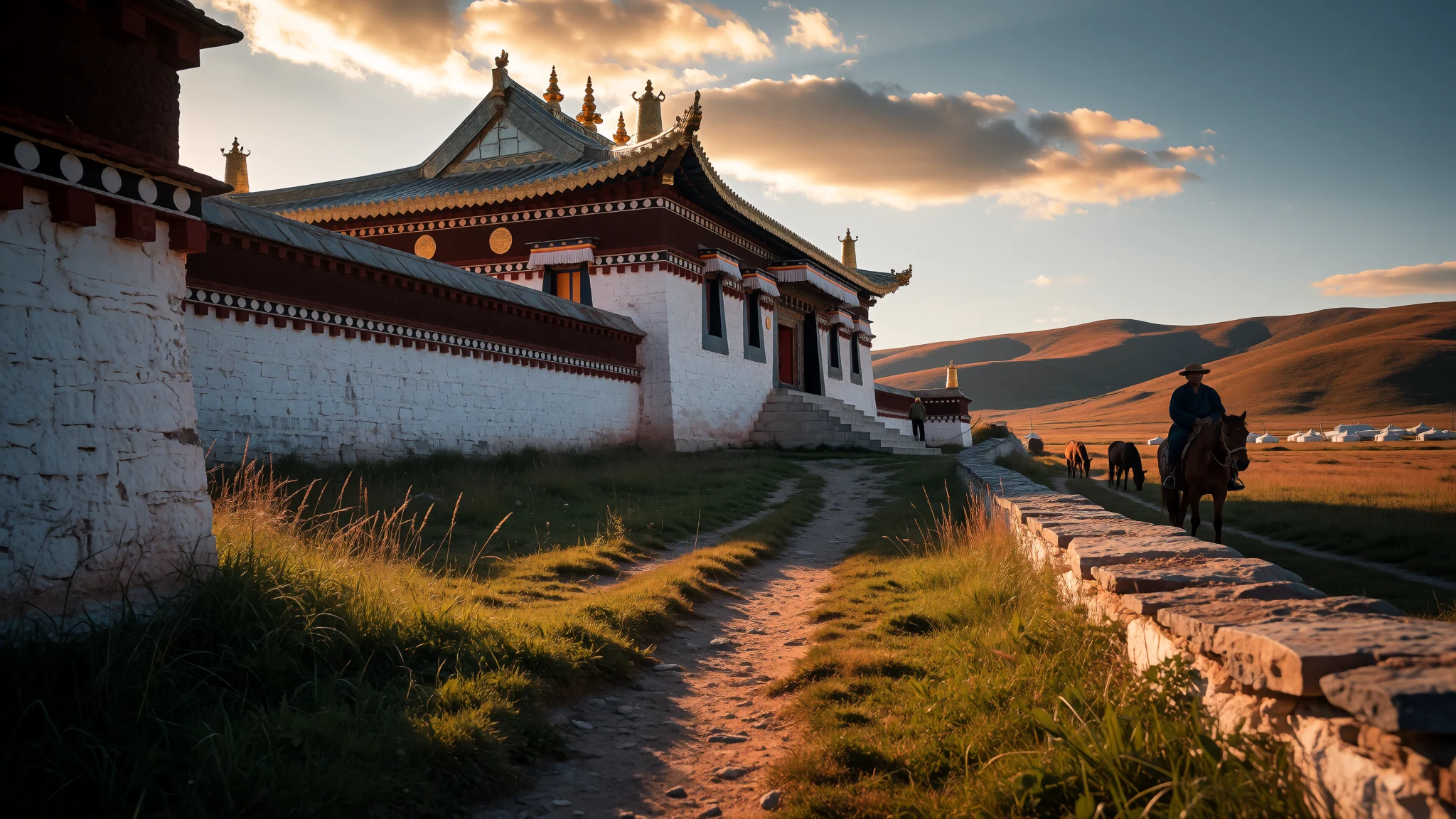
A small Gelug monastery on the Mongolian steppe whose temple survived the purges, with seven Kalachakra mandalas and the quiet of central Mongolia.
The place
Shankh Monastery (Шанх хийд, Shankh Khiid) stands on the open steppe of Övörkhangai Province, south of the town of Kharkhorin in central Mongolia. It belongs to the Gelug, or Yellow Hat, school of Tibetan Buddhism and was founded in 1647. The main temple is the building that matters most today. Inside are seven Kalachakra mandalas, which between them show 722 deities. Kalachakra is a tantric system bound up with time, astrology and ritual, and the monastery once trained monks in it. Nobody is sure what "shankh" means. One idea links it to the low range of hills between the monastery and Erdene Zuu. Another reads it as a phrase for things set out in a deliberate order. The setting is wide and quiet. Grass runs to the horizon, cattle and horses drift across the tracks, and the sky does most of the work that walls would do elsewhere. Kharkhorin itself stands beside the site of Karakorum, the old Mongol imperial capital. That capital was mostly felt tents, so very little built remains, and the story is told better by Erdene Zuu and the town museum than by ruins on the ground. Shankh is small and far less visited than Erdene Zuu. That means calm, but also few services, so bring water and snacks. Opening arrangements vary, so ask in Kharkhorin before making the trip. Summers are warm and dusty, winters severe, and shade is scarce in every season.
Its story
Shankh Monastery was founded in 1647 by Zanabazar, who was only 12 and already recognised as the first Jebtsundamba Khutuktu, the senior Tibetan Buddhist figure among the Khalkha Mongols. At first it was a camp of gers rather than a fixed complex, and it moved several times. It settled on its present site in 1787 and took the name Shankh. Before that it was often called the Monastery of the West. When the Russian scholar Pozdneev visited in 1892, he described a main temple with several large, richly decorated gers beside it, enough to shelter a couple of hundred people. A story persists that Genghis Khan's black military banner was kept here for a time. Where it is now, nobody knows. By 1921, the year of the Mongolian People's Revolution, about twenty buildings stood here and more than 1500 monks lived in them, studying philosophy, astrology and Kalachakra ritual. Then came the Stalinist purges. In 1937 the communist government closed the monastery and pulled down most of its buildings. Many monks were killed or sent to labour camps in Siberia. The main temple escaped serious damage and was used as a warehouse. Most of the relics survived because a young novice named Gombo carried them away and hid them.
What to see
- Shankh main temple — South of Kharkhorin, Övörkhangai
The main temple is the reason to come. Built in the eighteenth century and later used as a store, it still holds the seven Kalachakra mandalas. Allow time for the painted detail, and ask locally whether it is open and whether photographs are allowed.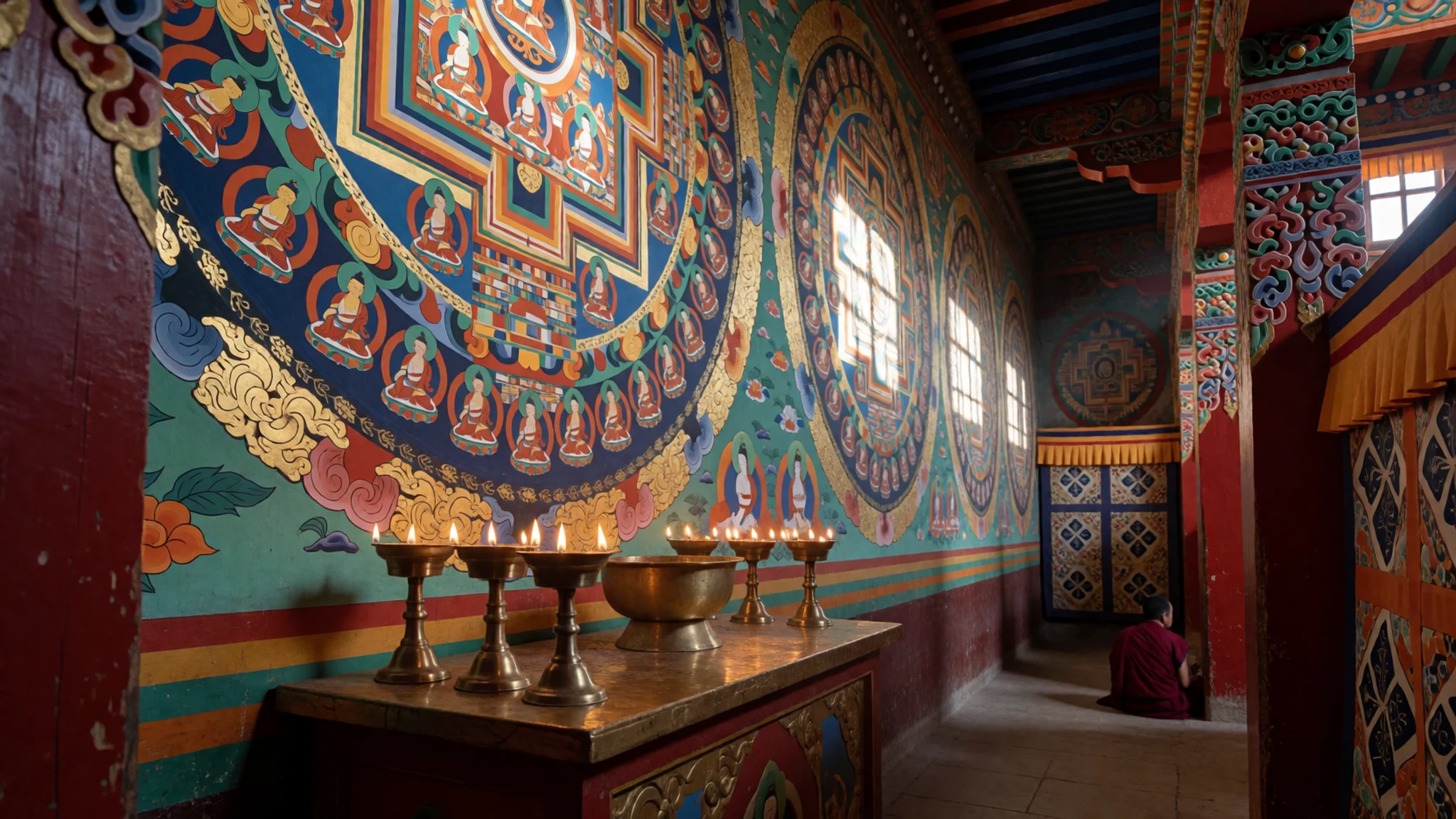
- Erdene Zuu Monastery — Kharkhorin
Erdene Zuu lies on the edge of Kharkhorin, a short drive north of Shankh, and is the usual first stop in the area. The walled grounds can be wandered freely, while the old temples inside are visited separately. Charges and photography rules change, so check on the day.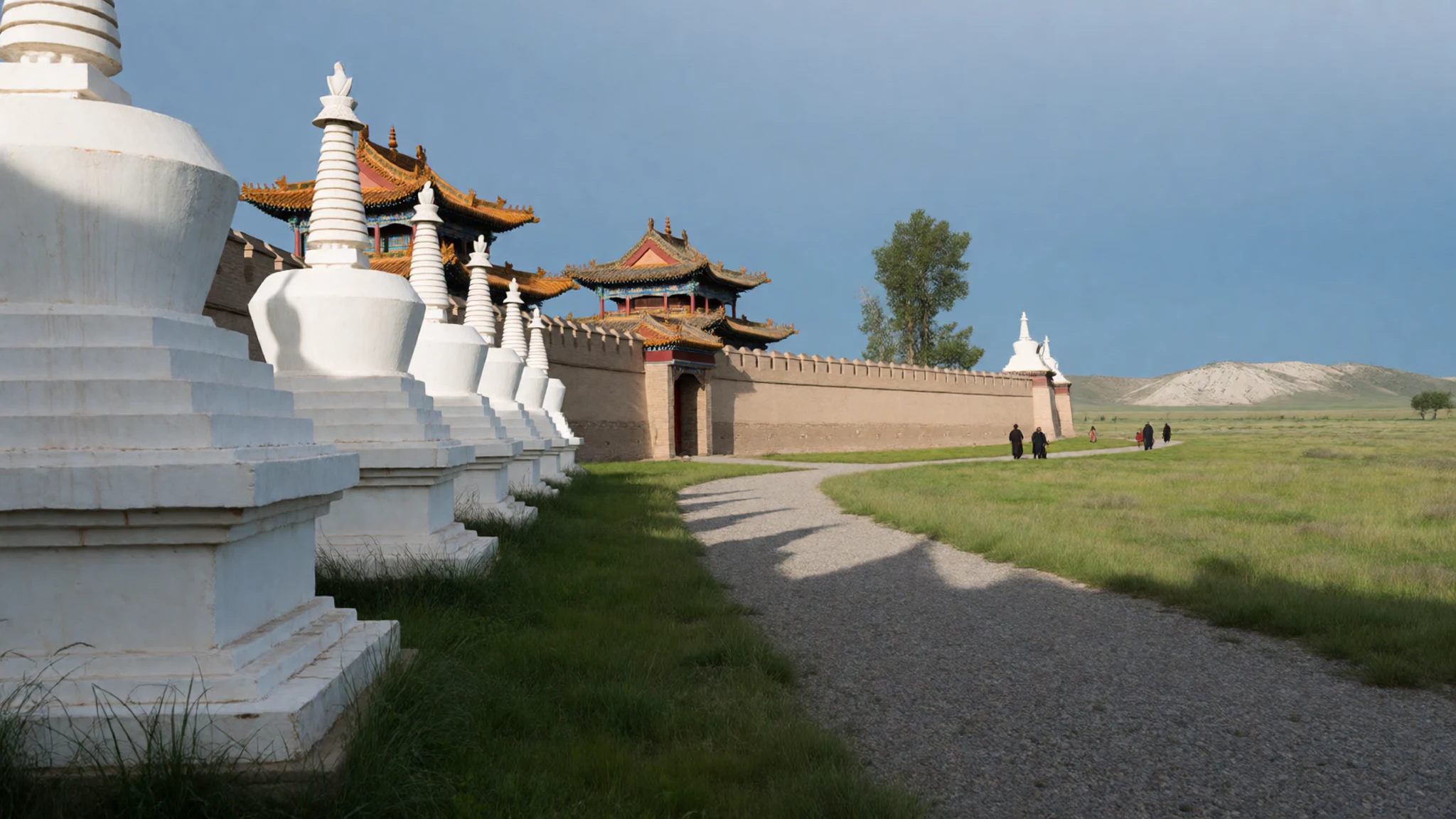
- Tövkhön Monastery — Orkhon valley, south-west of Kharkhorin
Tövkhön was founded around the same time as Shankh and lies south-west of Kharkhorin, on the west bank of the Orkhon River. The approach is by rough track, and a park entrance fee applies. It suits visitors who want hill scenery and more solitude than the town sights offer.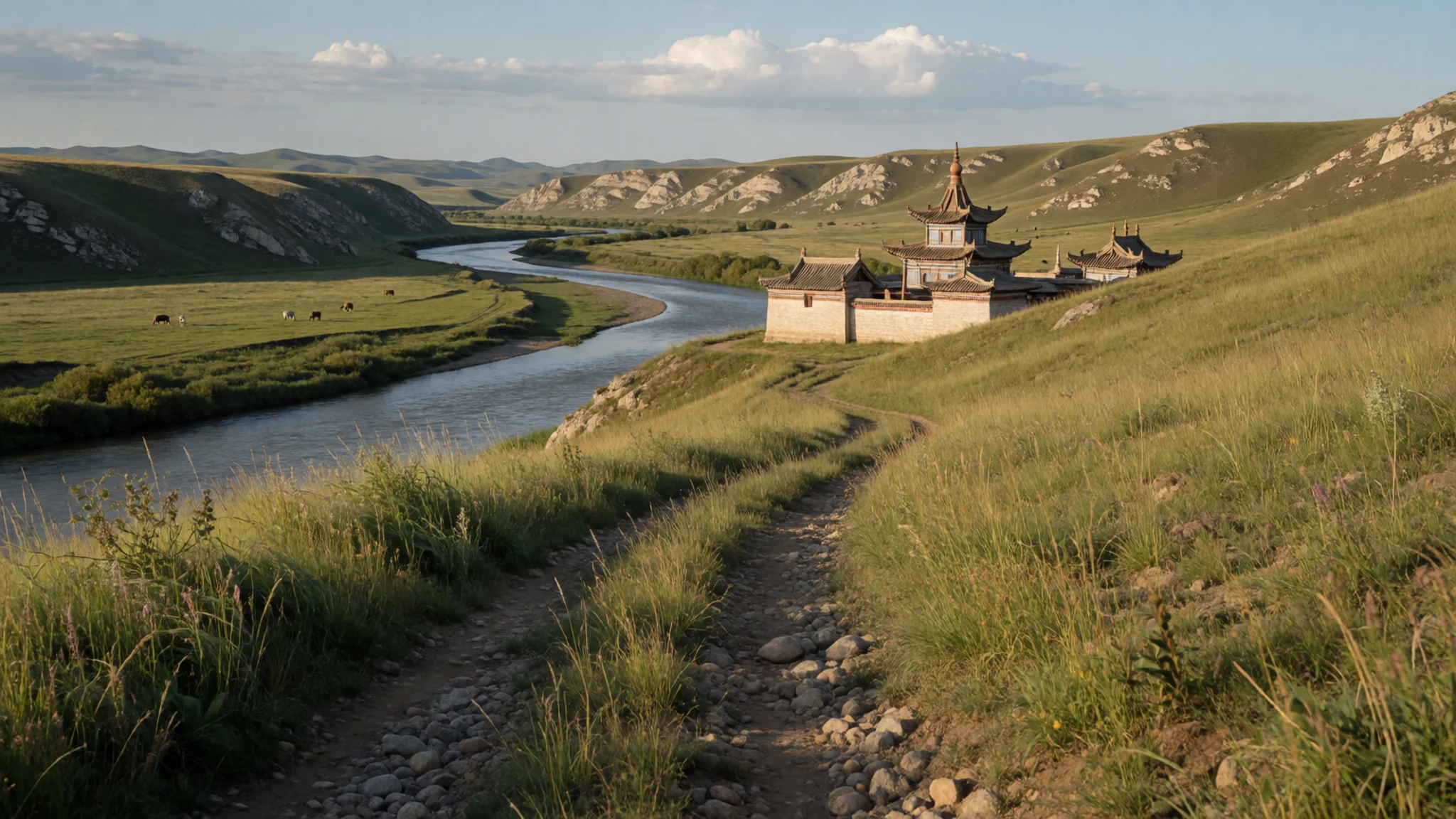
- Orkhon Waterfall — Upper Orkhon valley
The waterfall is a long day out south-west of Kharkhorin. The route crosses the river by bridge and continues west along the south bank. Tracks are rough and signposts are few, so a driver who knows the way is worth having. It combines well with Tövkhön.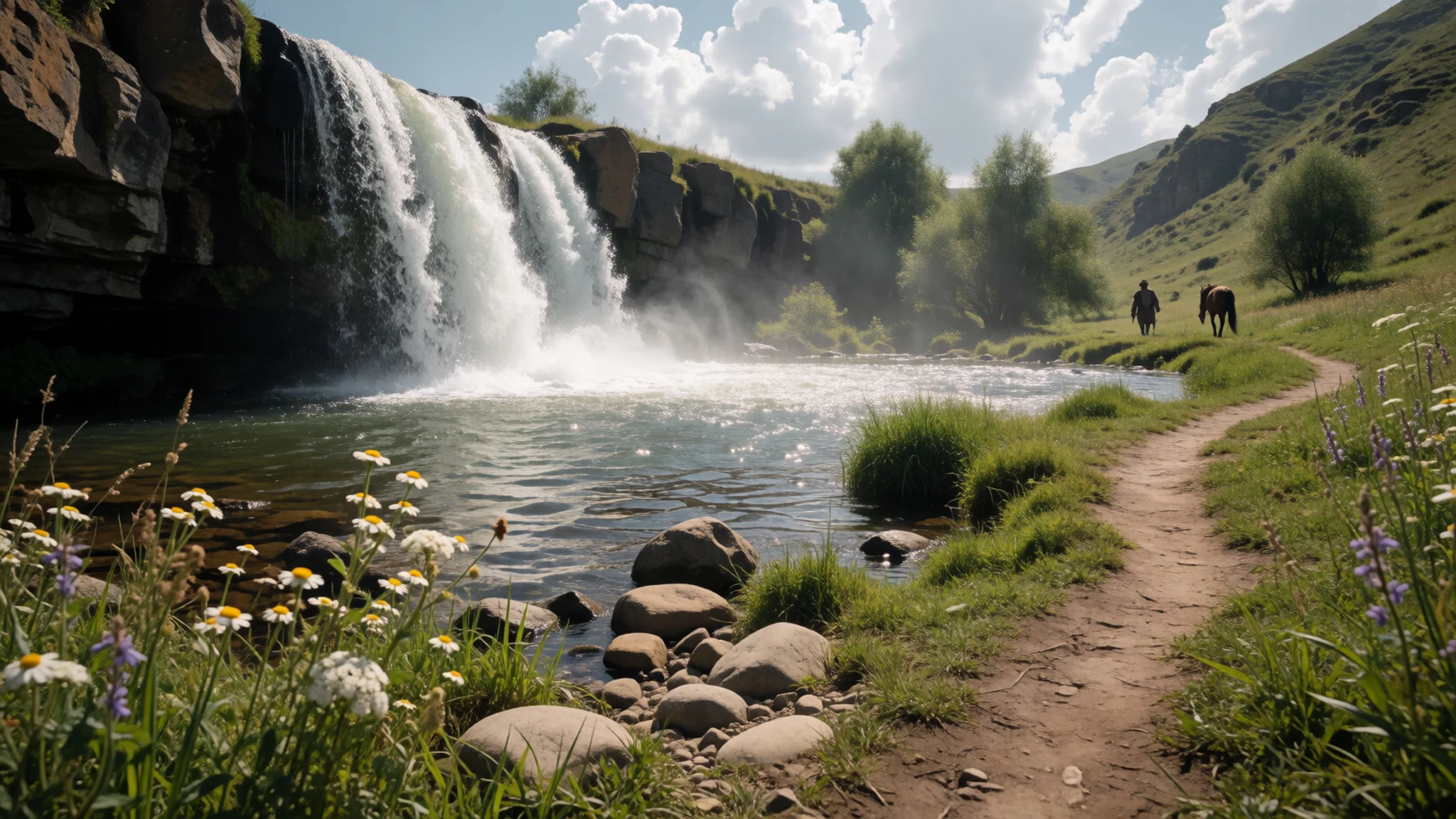
- Khar Balgas — North-west of Kharkhorin
Khar Balgas, north-west of Kharkhorin, was the capital of the Uighur Khaganate. It rewards people curious about steppe history more than anyone hoping for spectacle, because the remains are low and spread over open ground. A guide who can explain what the mounds were makes the visit worthwhile.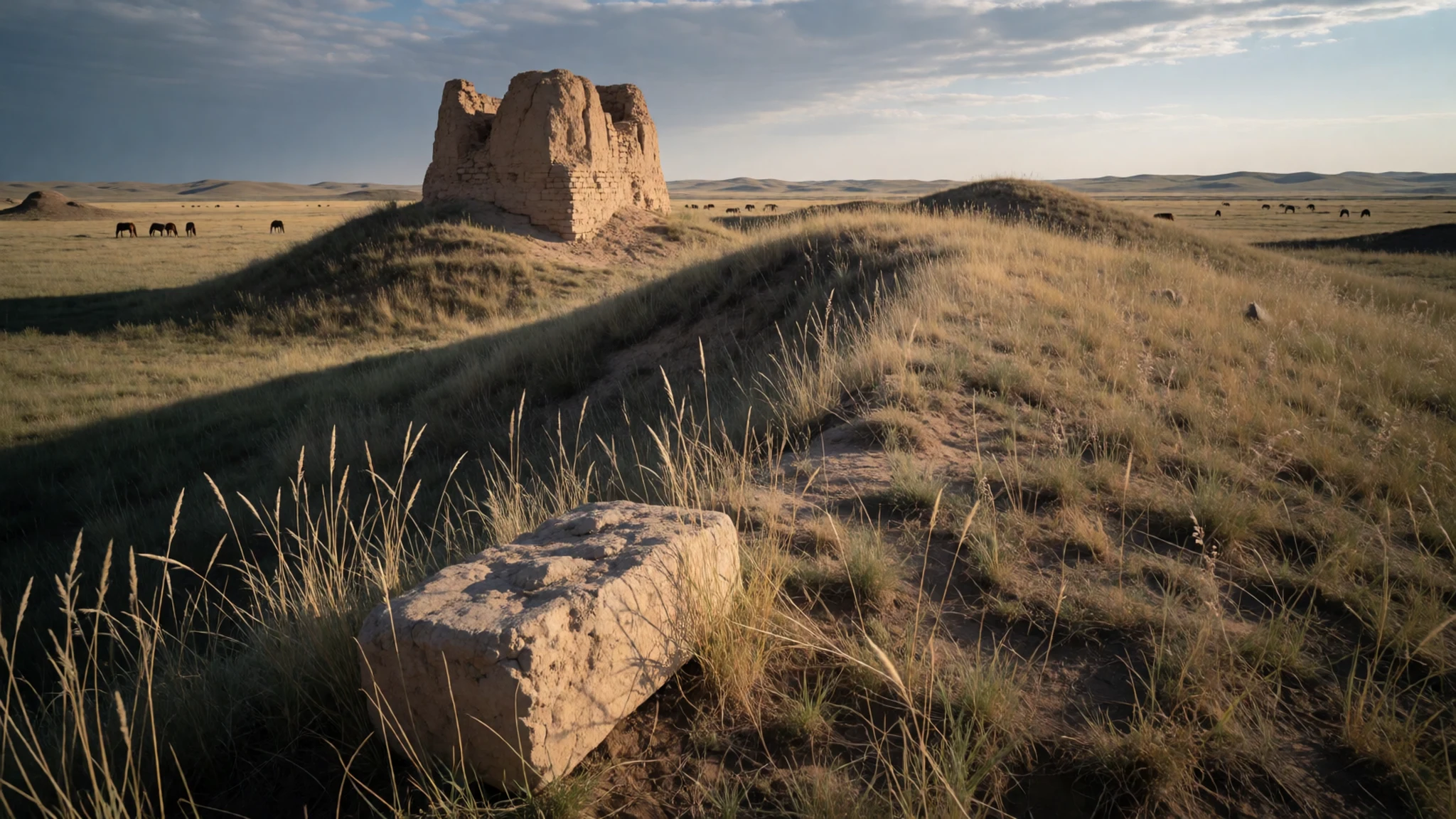
Culture
Shankh Monastery belongs to a living tradition that was very nearly erased. Tibetan Buddhism reached the Mongols centuries before the monastery was founded, and the Gelug school became dominant among the Khalkha under Zanabazar, who was also a noted sculptor and scholar. After the closures of the 1930s, religious life had to be rebuilt, and a visit to a temple here is partly a look at that rebuilding. Some practices are worth recognising. People walk clockwise around temples, stupas and ovoo, the heaps of stones and branches that mark passes and hilltops. Prayer wheels are turned in the same direction, and offerings are usually incense, butter lamps, or small gifts left at the altar. Beyond the monastery, nomadic hospitality shapes everyday manners. A guest who enters a ger is usually offered salty milk tea or something to eat, and turning it down flatly can sting. Accepting with the right hand and taking a sip is gracious, even if you do not finish it. Inside a ger, the space opposite the door is the place of honour, and the threshold and the central poles are not to be stepped on or leaned against. Walk clockwise around the temple and any sacred objects, take your hat off and keep your voice low inside, and ask before photographing monks or the paintings.
What to wear
Shankh Monastery sits in country where the deel is still everyday clothing for many herders. The deel is a long, wrap-front robe with a high collar and a fastening at the side, tied with a long sash called a büs. Summer versions are cotton or silk, while winter ones are lined with sheepskin or padded wool. Colours run from deep blue and green to bright silks for festivals. Boots (gutal) are leather and felt with thick soles and upturned toes. Monks wear maroon and saffron robes. Today most people in Kharkhorin wear jeans, fleeces and trainers, keeping the deel for weddings, festivals such as Naadam, temple visits, and for work on horseback. Visitors should dress for a climate that can swing from hot sun to cold wind in a single day. Bring layers, a windproof jacket, a sun hat, sunglasses and sunscreen. In winter, add down, thermals and insulated boots, because it gets severely cold. At the temple, cover shoulders and knees and avoid shorts and sleeveless tops. Wear sturdy closed shoes, since paths can be dusty, muddy, or littered with animal droppings, and shoes come off at some doors.
What to eat
- Buuz — Canteens near the container market in Kharkhorin
Steamed dumplings filled with minced mutton or beef, seasoned simply and eaten with the fingers. They are everyday food and a staple of festival tables. Look for them in the small canteens around Kharkhorin's market area.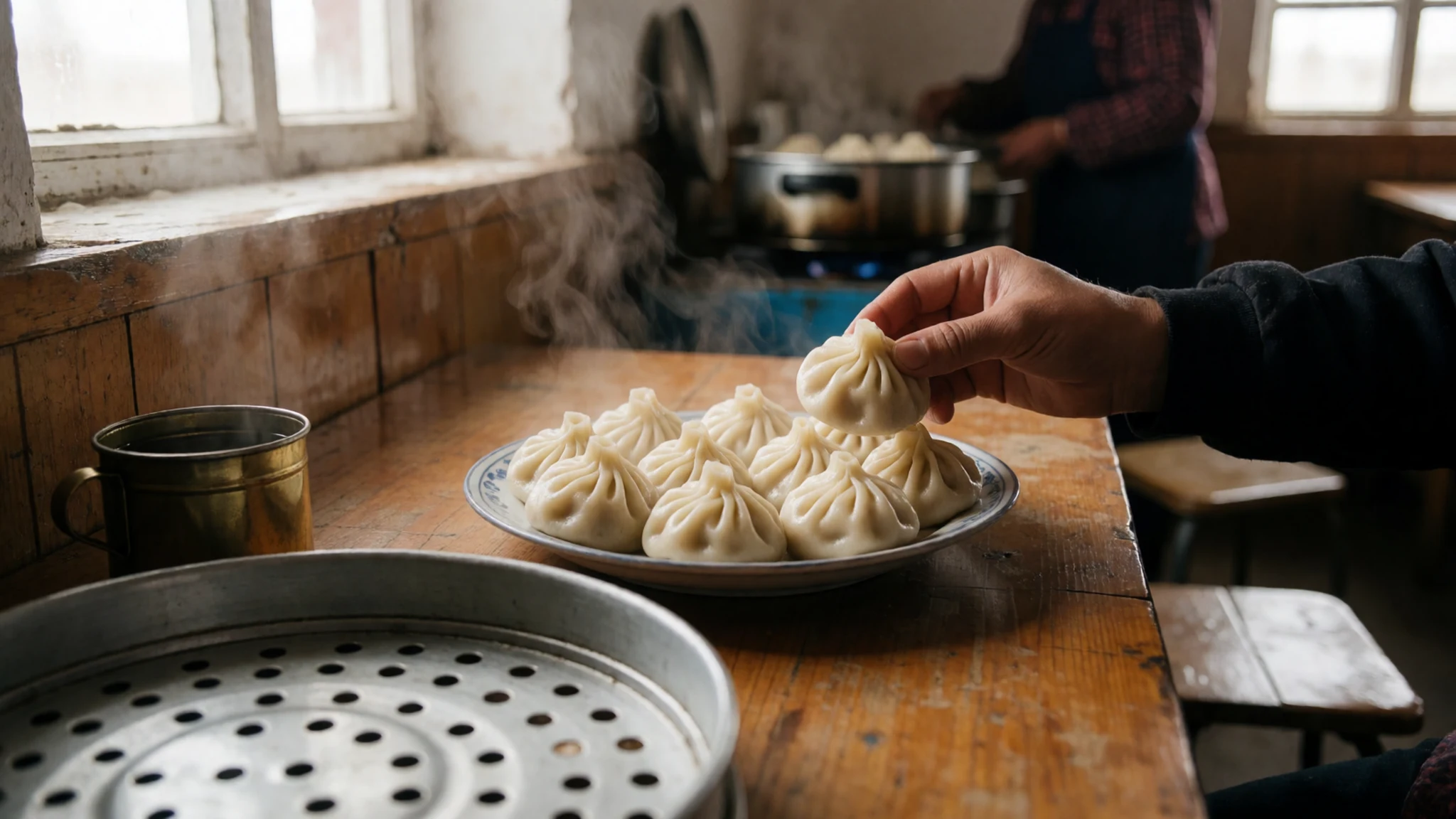
- Khuushuur — Roadside and market cafes in Kharkhorin
A flat, fried pastry parcel of minced meat, crisp at the edges and juicy inside. It is a filling lunch for travellers and often sold hot. Eat it soon after frying, with tea.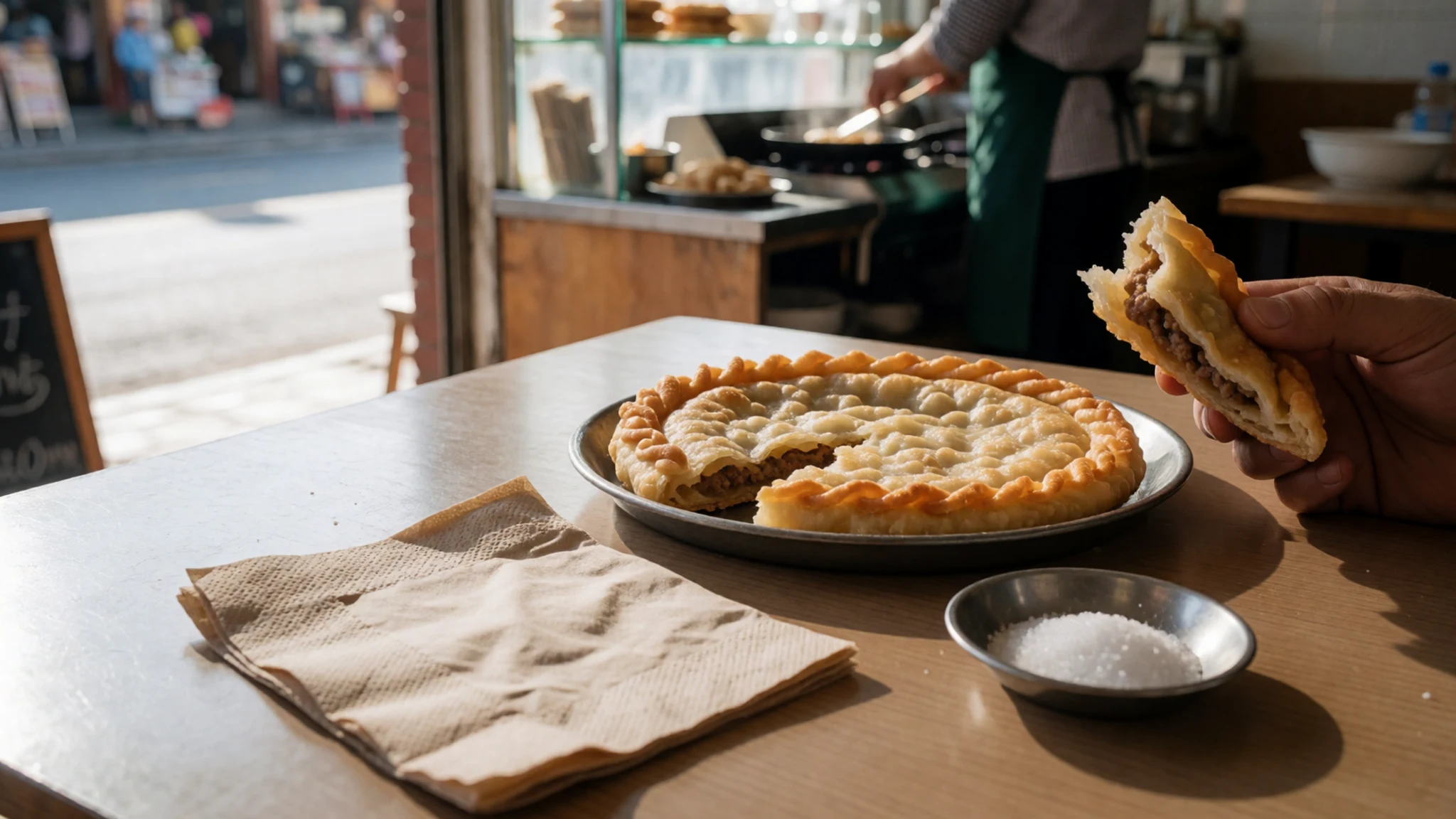
- Tsuivan — Local eateries in the town centre
Hand-cut noodles stir-fried with meat and a few vegetables, usually carrots and onion. It is a plain, warming dish that suits a cold day on the steppe. Portions are generous, so it is worth sharing. - Suutei tsai — Any ger, herder's camp or ger camp
Salty milk tea, often made with a little butter and sometimes millet. It is the first thing offered in most gers and an acquired taste for many visitors. Accepting a bowl is as much courtesy as refreshment. - Airag — Herder camps and ger camps, summer only
Fermented mare's milk, lightly sour and slightly fizzy, made in summer. Herding families offer it to guests, and the taste is quite different from the dairy drinks most visitors know. Try a small bowl first.
Plan it
Best time. June to September is the practical window, with warm days, green grass and open roads. July and August can bring heavy showers, and the sun is strong with little shade. Winter is severe, and some buses may not be heated.
How long. 2–3
Getting there. Fly into Ulaanbaatar, then take a daily bus or a tour vehicle to Kharkhorin. The journey takes most of a day, so check the timetable locally. Shared cars, jeeps and minivans run back from the container marketplace in the middle of town. Shankh is a short drive south of Kharkhorin, so hire a driver for the last leg.
Budget. low
Tips
- Check the bus timetable and booking arrangements before leaving Ulaanbaatar, as services can change.
- Hire a driver with local knowledge for Shankh, Tövkhön and the waterfall, because tracks are rough and signposts are few.
- Carry cash, since small cafes and guesthouses may not take cards, and bring your own water and snacks for day trips.
- Watch for horses and cattle on roads and pavements in Kharkhorin, and for animal droppings underfoot.
- Pack for sun, wind and cold in the same day, whatever the season.
Etiquette
- Walk clockwise around temples, stupas and ovoo.
- Cover shoulders and knees, and take hats off inside temple buildings.
- Ask before photographing monks, paintings or people in their gers.
Nearby
Sources
- Wikidata Q1630910 (CC0)
- Wikipedia: Shankh Monastery (rev 1367130057) (CC BY-SA 4.0)
- Wikivoyage: Karakorum (rev 5406284) (CC BY-SA 4.0)
- Shankh Monastery, Kharkhorin, Övörkhangai, Mongolia — Chongkian, via Wikimedia Commons (CC BY-SA 4.0)
- Shankh Monastery — Alexandr frolov, via Wikimedia Commons (CC BY-SA 4.0)

