Sarmizegetusa Regia
Sarmizegetusa Regia, Romania
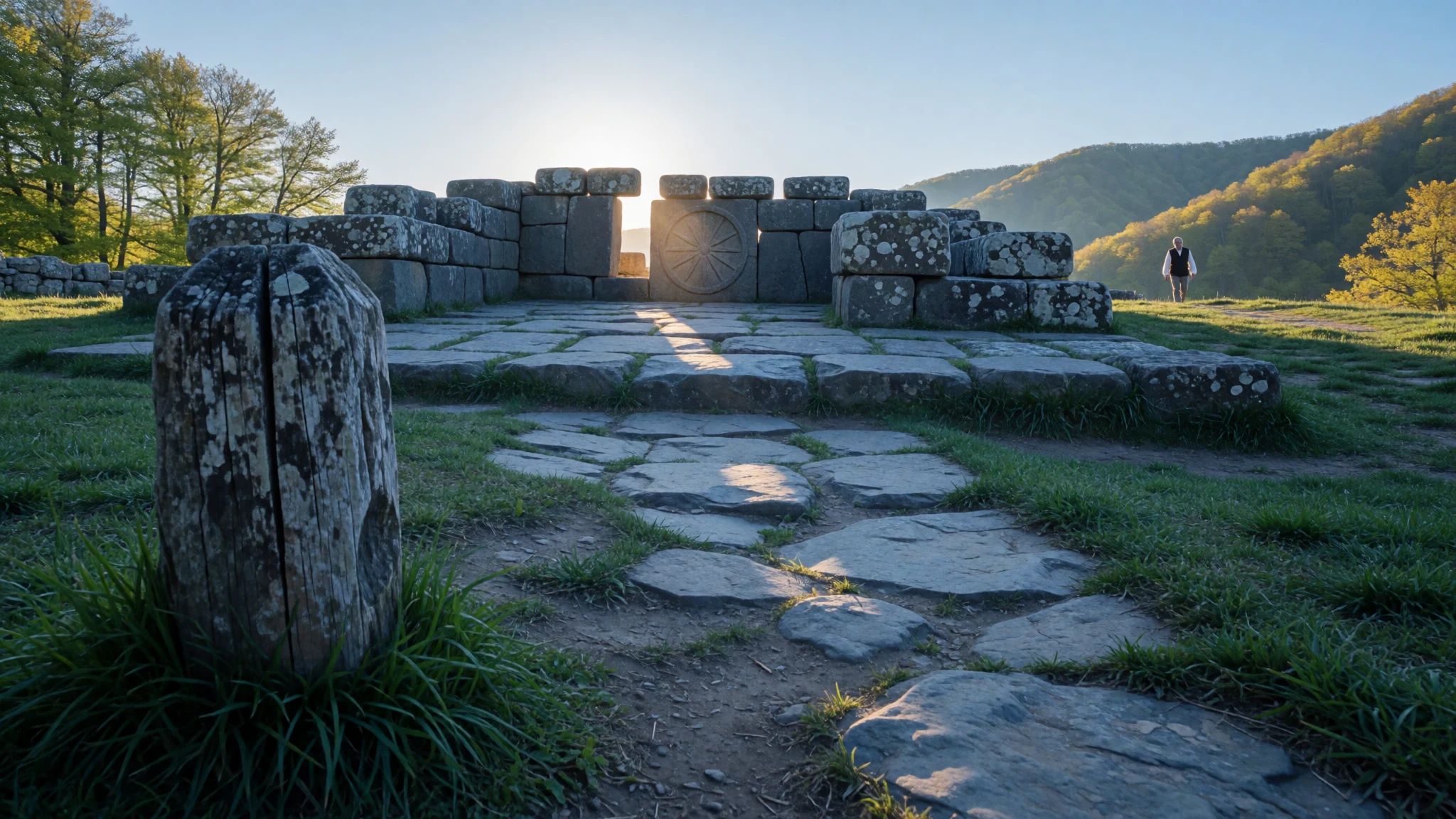
Sarmizegetusa Regia is the mountaintop capital of the Dacians, where stone sanctuaries sit in quiet forest far from any city.
The place
Sarmizegetusa Regia stands on a high mountain ridge in the Orăștie Mountains, in Hunedoara County, western Romania. The ruins belong to the village of Grădiștea de Munte, and the setting is as much a part of the visit as the stones: dense forest, cool air, and a long climb of hairpin road to get there. The Dacians made this their political, religious and military centre before Rome conquered them. The fortress was the core of a wider defensive system in these hills, and the sacred terrace, the walled citadel and the working areas sit at different levels of the slope. UNESCO lists the site, and Wikidata describes it as a dava, an archaeological site and an ancient city. Visitors often confuse it with Ulpia Traiana Sarmizegetusa, the Roman town built later on lower ground, roughly forty kilometres away. That Roman town was found first and was wrongly taken for the Dacian capital for years, which skewed early ideas about how the Dacians organised themselves. The two places are different in every way. Here there are no marble streets or theatres, only terraces, foundations, circles of stone and the bases of timber columns. Nothing is signposted heavily, so the atmosphere is more of a hillside walk than a museum visit. It is remote, sparsely served, and best treated as a full day trip from a town in the valley below.
Its story
Sarmizegetusa Regia became the Dacian capital late in the reign of Burebista, who moved the centre of power here from Argedava. It served as the capital for at least a century and a half and reached its height under King Decebal. Finds suggest that the god Zalmoxis and his chief priest mattered greatly in Dacian life. Digs have also shown a society that absorbed Greek and Roman technical and scientific knowledge. A surgeon's kit with scalpel, tweezers and tiny medicine pots turned up, as did a huge vase inscribed in Latin letters with Decebal's name and his father's. Smithies north of the sanctuary yielded hundreds of iron tools and weapons, from sickles and ploughshares to curved scimitars, showing real skill in metalworking. The end came with Trajan's Rome. After the first war the Romans pulled down parts of the walls and put a garrison inside, reusing the stonework for their own defences. Those defences were later destroyed, possibly by the Dacians themselves, then rebuilt after the final siege, when the Dacian kingdom fell. Rome then founded a new capital far below, and Hadrian later added the name Sarmizegetusa to it so that it would read as the heir of the old one. The mountain city was left to the forest.
What to see
- The large circular sanctuary — Sacred zone
The best-known structure on the sacred terrace is a great ring of timber-post bases set around a stone-paved centre. The wooden posts are long gone, so the arrangement is read from the stumps in the ground. Stand in the middle and the geometry becomes clear, and the surrounding hills do the rest.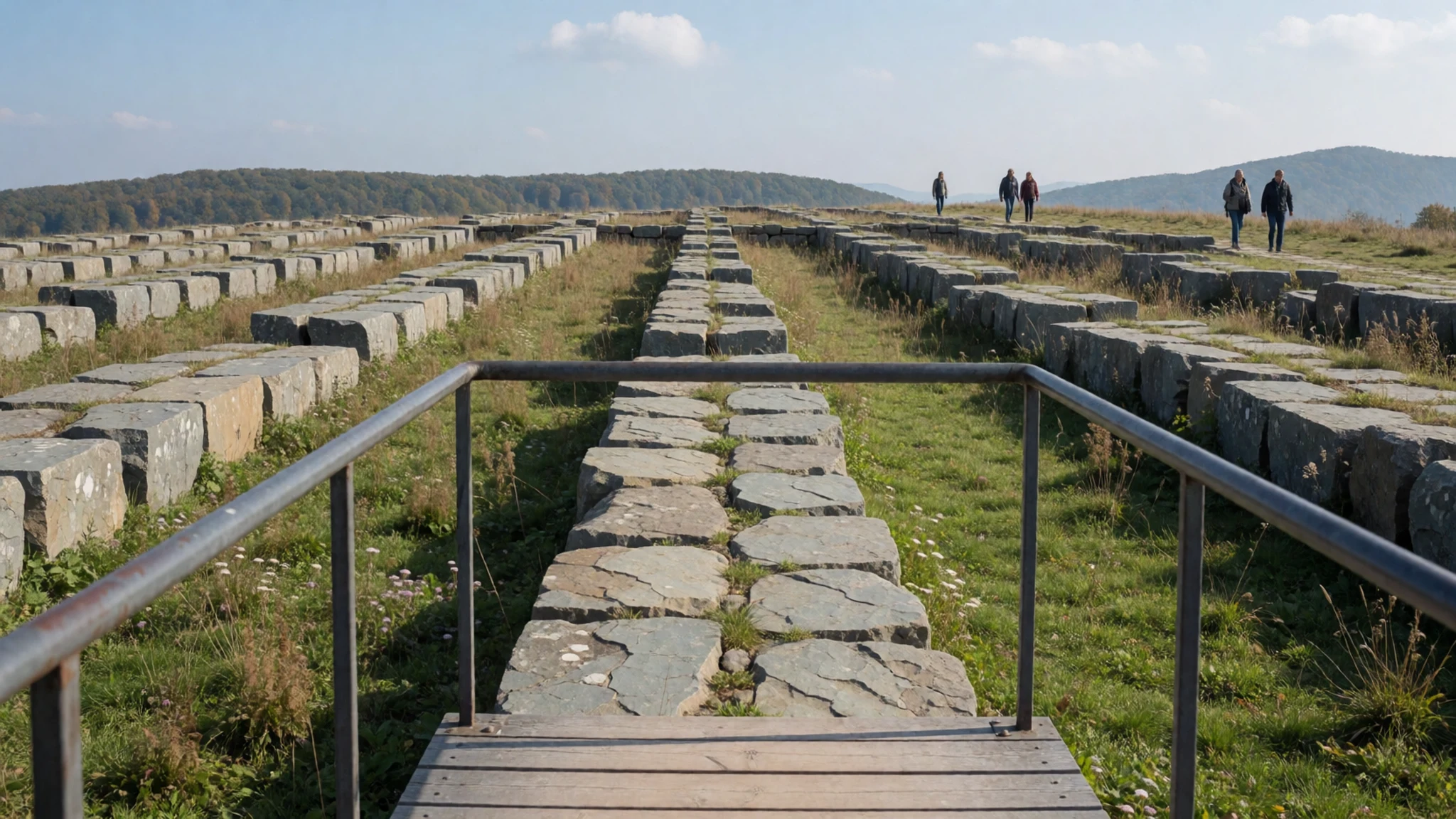
- The andesite sanctuaries and solar disk — Sacred zone
Dark andesite blocks form rectangular sanctuaries, and near them lies a round stone disc that is often called a solar altar. The pale limestone and darker volcanic stone make a striking contrast. It is worth pausing here to take in how carefully the builders chose and cut each block.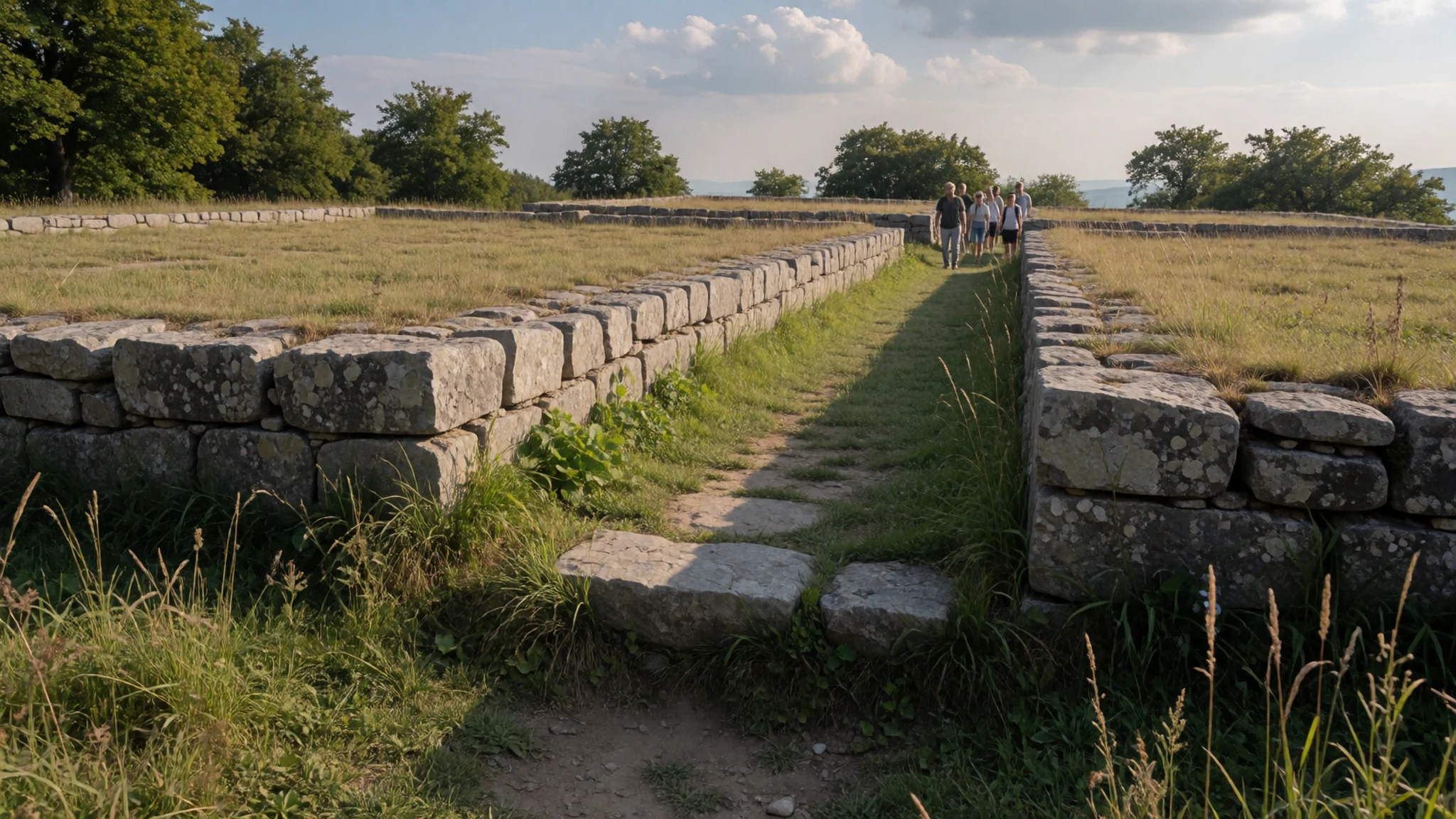
- The small rectangular temples — Sacred zone
Rows of small four-sided temple bases step across the terrace, each marked by a low stone footing or lines of stumps. They are modest to look at individually, yet together they show how densely the sacred area was built. Early morning light on the damp grass suits photographs of them.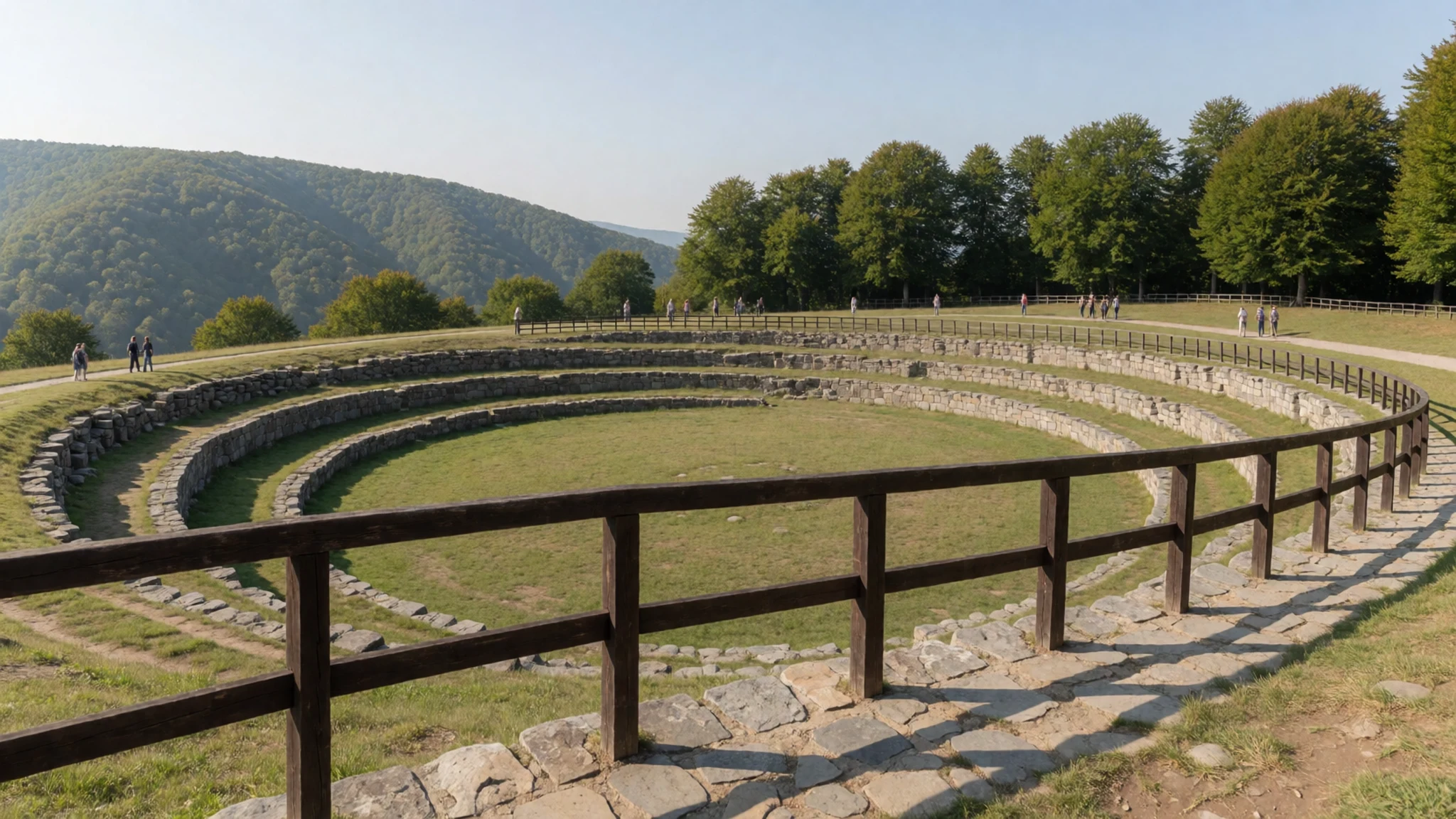
- The limestone sanctuary — Sacred zone
A broad platform of cut limestone blocks forms one of the more solid ruins on the site. It gives a sense of the scale and effort of building at this altitude, with stone hauled and shaped on a steep slope. Reconstruction work is visible here, so look for what is original.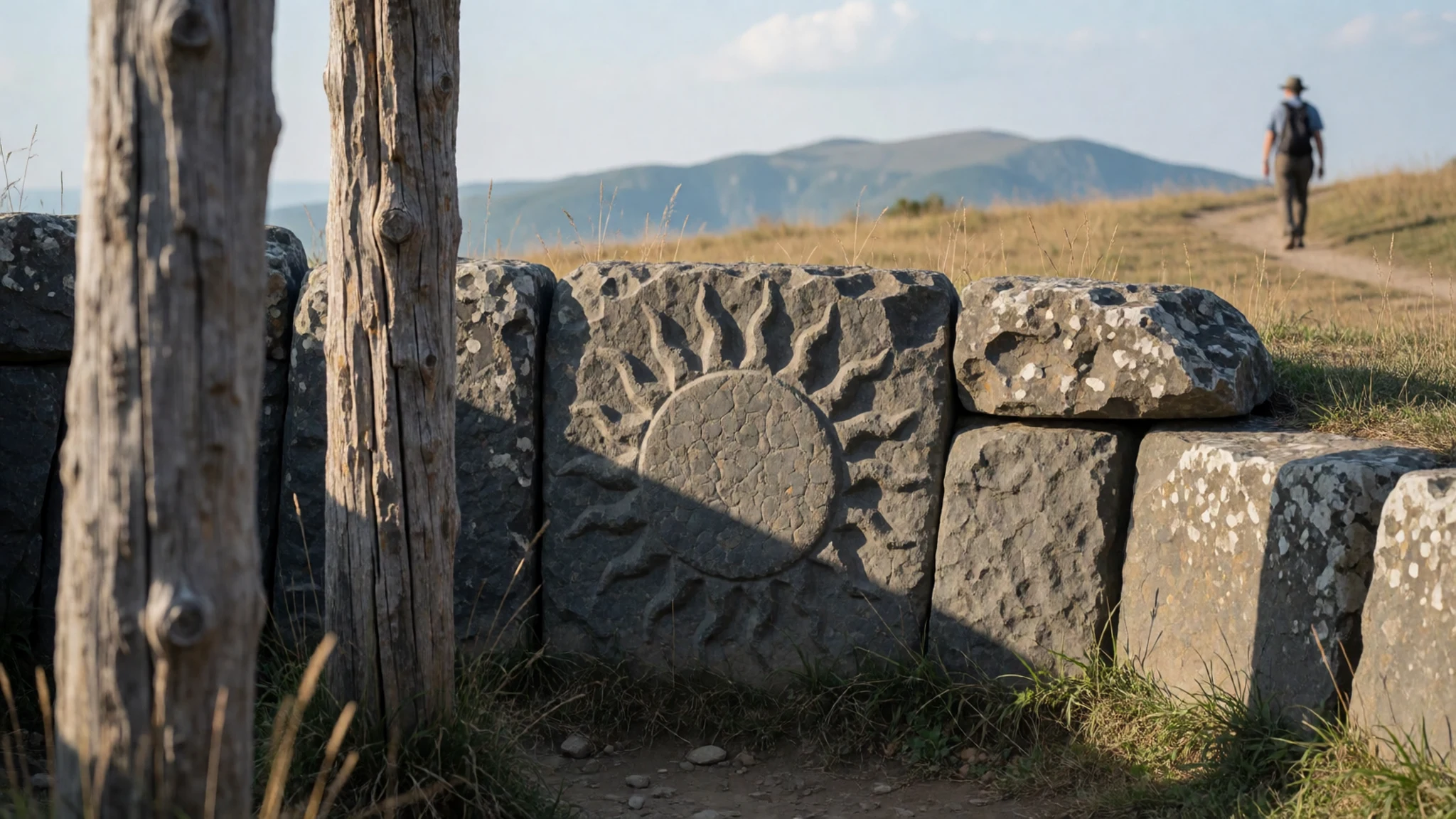
- The fortress walls and citadel — Fortress area
Beyond the sacred terrace the stone walls of the citadel run along the slope, marking the defended heart of the capital. The Romans partly dismantled and reused them, so the surviving lines are patchy. Walking the perimeter is the quietest part of the visit and shows why the mountain was chosen.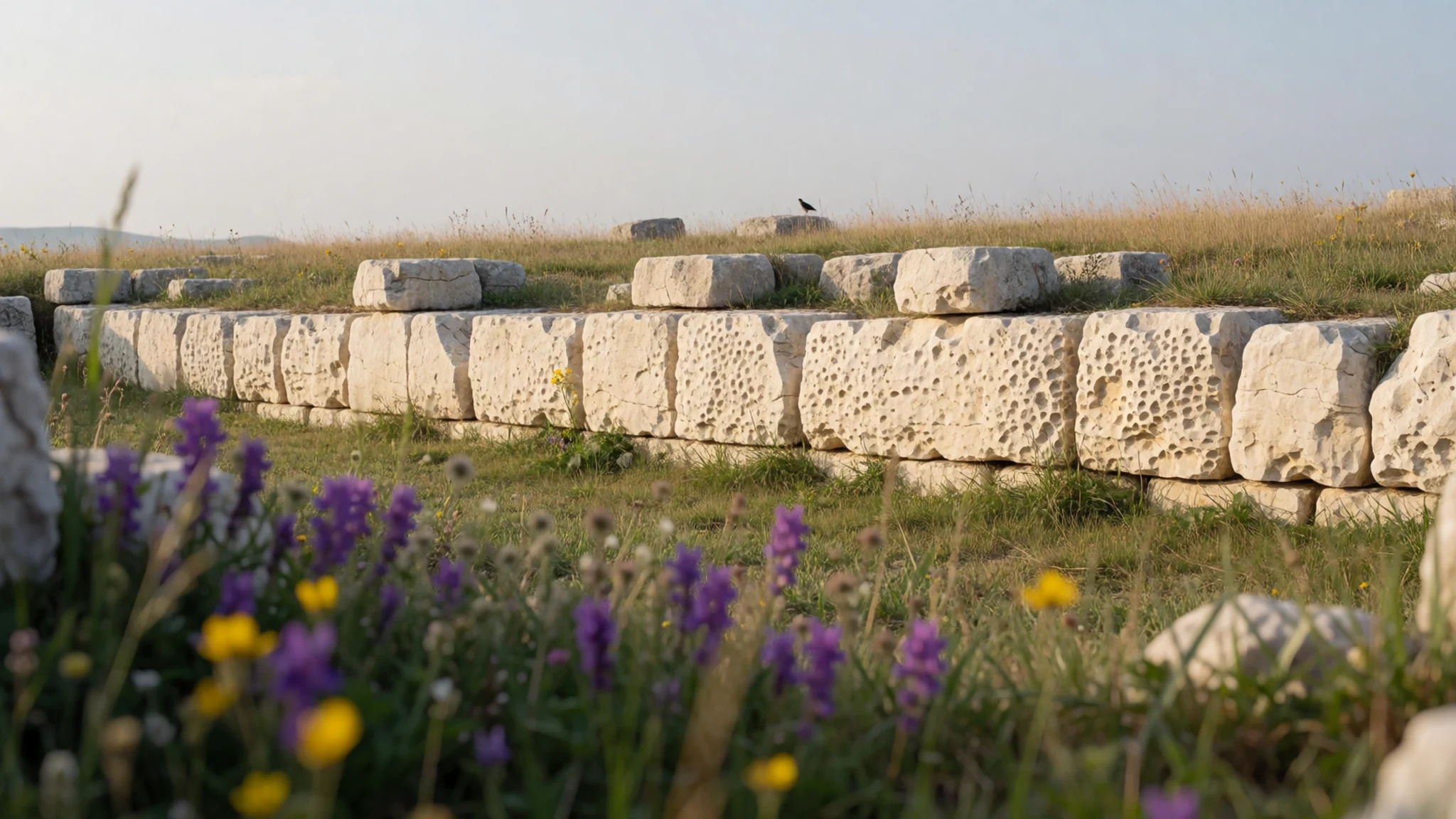
Culture
Sarmizegetusa Regia matters in Romania far beyond its stones. The Dacians are treated as the country's earliest well-documented ancestors, and Decebal is a familiar figure in schools, books and monuments. People often arrive with a sense of pride and a close knowledge of the story, so conversations with local guides and fellow visitors can be lively. Much of what is known about Dacian belief centres on Zalmoxis and his priesthood, and the sacred terrace is read as a place of ritual, with circles and discs possibly linked to observing the sky. Scholars still debate how the sanctuaries worked, and guides will sometimes offer several interpretations, so it is worth asking how sure anyone is. The site also draws modern spiritual visitors, and small gatherings or offerings are sometimes seen near the circles, particularly around the solstices. The mountain setting adds its own mood: fog, forest silence and sudden weather give the ruins an atmosphere that photographs only half capture. The Roman conquest left a deep mark on Romanian identity, and the contrast between this hill capital and the Roman town below is a common talking point. Walk only on the marked paths and do not climb on or sit on the stone bases, since the sanctuaries are fragile and under conservation.
What to wear
Little is known for certain about everyday Dacian clothing at Sarmizegetusa Regia, and what survives is mostly from Roman-era carvings, so any description is informed reconstruction rather than fact. Wool, linen and leather are the likely materials, with cloaks, tunics, trousers and caps. The Romanian folk costume, by contrast, is well documented and still worn at festivals and church occasions: white linen or cotton blouses with dense embroidery, wool waistcoats, and woven belts, with patterns that vary by region. Around the Hunedoara area you may see sheepskin waistcoats worn in cold weather. Day to day, people in this part of Romania dress simply, in jeans, fleeces, jackets and practical boots, and in villages near the site you will see work clothes more than costume. For a visitor the main concern is weather and terrain. The site sits high on a forested mountain, so it can be noticeably cooler than the valley and rain can arrive quickly. Wear sturdy walking shoes or boots with good grip, since the paths are uneven and slippery when wet. Bring layers, a waterproof jacket and a hat for sun. There is no formal dress code because it is an open-air archaeological site, but modest, practical clothing suits it well.
What to eat
- Sarmale — Guesthouses and family-run eateries in the valley villages
Cabbage or vine leaves rolled around minced meat and rice, simmered slowly and served with sour cream and polenta. A staple of Romanian celebrations and winter tables, and easy to find in village guesthouses.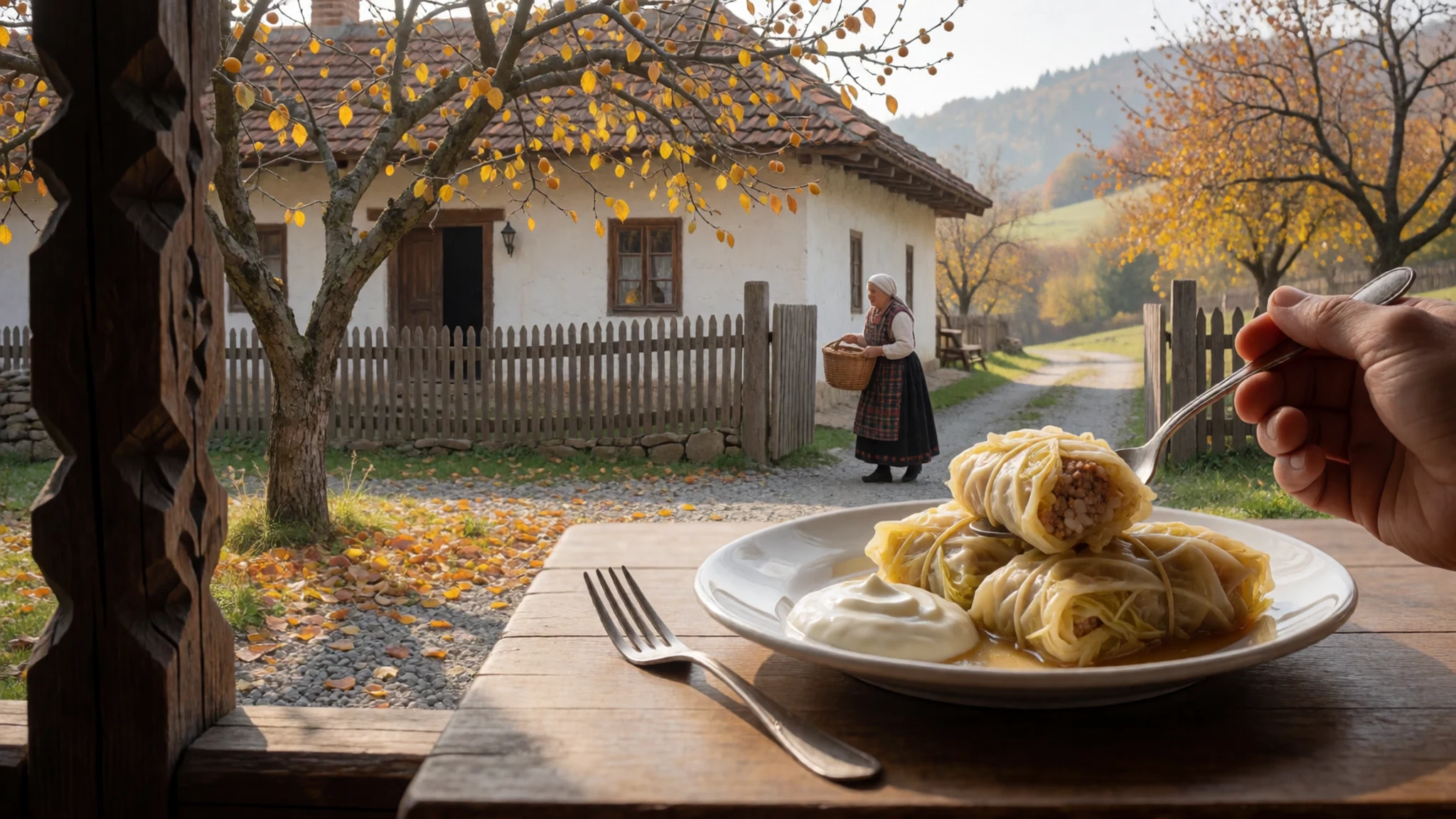
- Mămăligă — Rural guesthouses and village restaurants near Orăștie
A thick maize porridge, similar to polenta, served as the everyday bread of the countryside. It comes with cheese, sour cream, fried eggs or stew, and soaks up the sauce from richer dishes.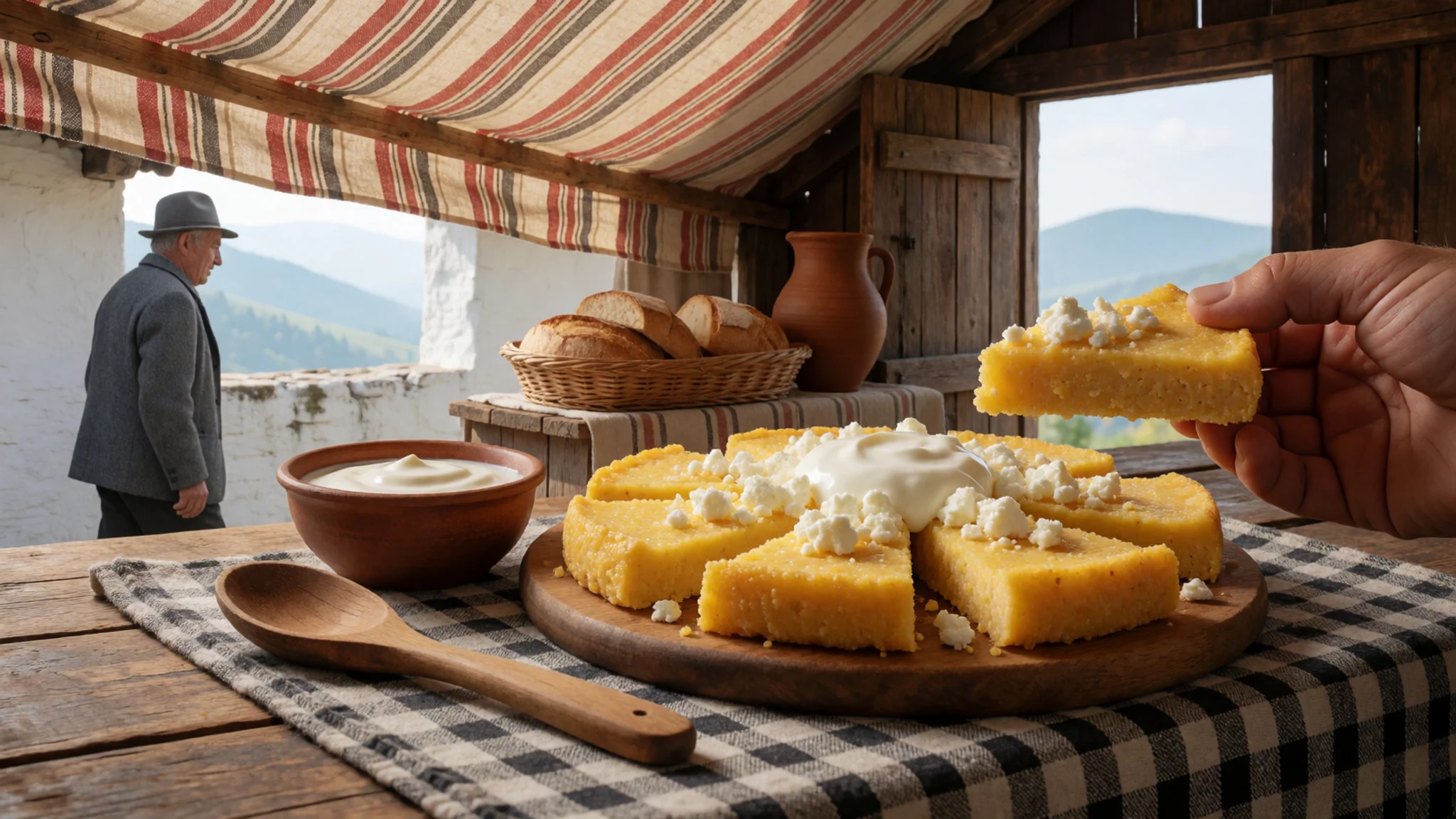
- Ciorbă de burtă — Traditional eateries in Orăștie and Deva
A sour tripe soup finished with garlic, sour cream and vinegar. It has a strong flavour and is a regular Romanian cure for a long night, though less adventurous eaters may prefer another ciorbă. - Mici — Roadside grills and market stalls in the larger towns
Small grilled skinless sausages of mixed minced meat, spiced with garlic and herbs. They are eaten hot with mustard and bread, often with a cold beer, and are a quick, cheap meal on the road. - Papanași — Traditional restaurants and guesthouses across Hunedoara County
Fried or boiled doughnut-shaped dumplings made with soft cheese, served with sour cream and sweet berry jam. They are filling and rich, a popular dessert to share after a long day outdoors, and widely offered.
Plan it
Best time. Late May to June and September to early October, when the mountain is green or turning colour and days are mild. Summer can bring afternoon storms, and winter snow can make the upper road difficult or closed.
How long. 1
Getting there. Fly to Sibiu or Cluj-Napoca, or take the train to Orăștie or Deva. From Orăștie the last leg is a winding mountain road to Grădiștea de Munte, best done by car or taxi, as public transport is limited.
Budget. low
Tips
- Check the official heritage site or local tourist office before you go for opening arrangements, as they can change
- Start early to enjoy the quiet and cooler air
- Bring water and snacks, since there is little to buy near the ruins
- Carry some cash for small guesthouses and local cafés
- Allow extra time for the slow mountain drive
Etiquette
- Stay on marked paths and do not climb on the stone bases
- Keep noise low, as many people treat the sanctuaries as a spiritual place
- Take your litter back down with you
Nearby
Sources
- Wikidata Q739802 (CC0)
- Wikipedia: Sarmizegetusa Regia (rev 1384673697) (CC BY-SA 4.0)
- Wikivoyage: Sarmisegetuza (rev 2892796) (CC BY-SA 4.0)
- FDominec, Sarmizegetusa temples (CC BY 3.0)
- Cosmin Stefanescu, Templele patrulatere mici (CC BY-SA 3.0 ro)
- Calin Jorza, Sanctuarul mare circular (CC BY-SA 3.0 ro)
- Oroles, Sarmizegetusa Regia (Public domain)
- Oroles, Sanctuarele de andezit (Public domain)
- TudorTulok, Sarmizegetusa Regia 2011 2 (CC BY 3.0)
- TudorTulok, Sarmizegetusa Regia 2011 1 (CC BY 3.0)
- Oroles, Sanctuarul mare de calcar (Public domain)


