Saqqara
Saqqara, Egypt
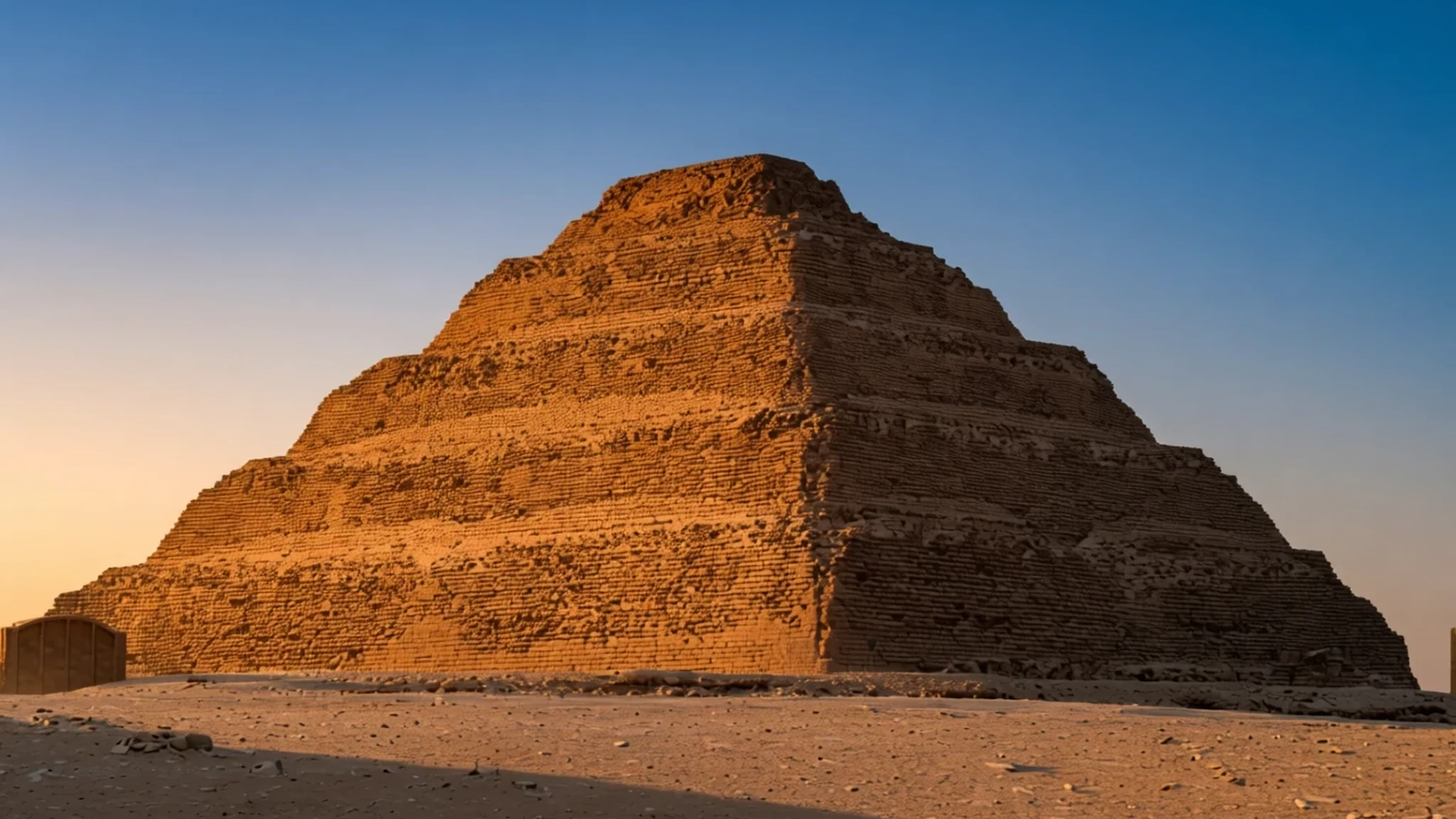
Saqqara is where Egyptian pyramid building began, set in quiet desert with painted tomb walls and far fewer crowds than Giza.
The place
Saqqara is a village on the desert edge in Giza Governorate, Egypt, standing at about 39 m above sea level. For roughly three thousand years it served as the burial ground of Memphis, the ancient capital, and the plateau is still scattered with pyramids, long-buried galleries and the flat-roofed tombs called mastabas. The site stretches for several kilometres along the desert ridge, so it feels like a landscape rather than a single monument. Distances between groups of tombs are real, and the sand is soft in places.
South of Cairo, the necropolis sits within the wider Pyramid Fields of Memphis, a UNESCO World Heritage Site listed in 1979. Its neighbours are Abusir to the north and Dahshur to the south, with Giza further along the same ridge. That makes Saqqara a natural centrepiece for a day among the lesser-known pyramids.
The atmosphere is calmer than at Giza. Tour groups arrive in waves, but the tombs are scattered widely enough that long stretches of the plateau are empty, with just wind, pale rubble and the odd camel. Below the surface, the better-preserved tombs hold carved and painted scenes of farming, fishing and feasting. The village itself is farmland and date palms, a short tuk-tuk ride from the gate. The name is often spelled Sakkara too, and the Arabic is سقارة.
Its story
Saqqara's story begins with nobles buried on the northern edge of the plateau in the First Dynasty, while the kings of that age were still laid to rest at Abydos far to the south. Royal burials arrived in the early Second Dynasty, in underground galleries cut beneath the sand. Then the kings went back to Abydos for a time, and a huge rectangular enclosure called Gisr el-Mudir hints at the experiments of the period.
The great turning point came in the Third Dynasty under King Djoser. His architect Imhotep designed a tomb complex entirely in cut stone, surrounded by a long panelled wall and filled with dummy buildings for the king's afterlife. The pyramid at its heart rose in steps, grown from an earlier flat-topped tomb. Nothing on this scale had been built in stone before, and it set the template for what followed.
Most Fourth Dynasty kings built elsewhere, but in the Fifth and Sixth Dynasties Saqqara became the royal cemetery again. Their smaller pyramids are now worn mounds, yet the inscriptions inside some are among the earliest religious texts known. Officials built decorated tombs close to their kings, and ordinary burials, including sacred animals, continued into Ptolemaic and Roman times. In the twentieth century the French architect Jean-Philippe Lauer devoted most of his working life to excavating and restoring Djoser's complex.
What to see
- Step Pyramid of Djoser — Central Saqqara plateau
The centrepiece of Saqqara, a stack of rising stone tiers that marks the shift from flat mastaba tombs to true pyramids. Walk the entrance colonnade, the great court and the dummy chapels around it. It is the best place to understand how the pyramid idea developed.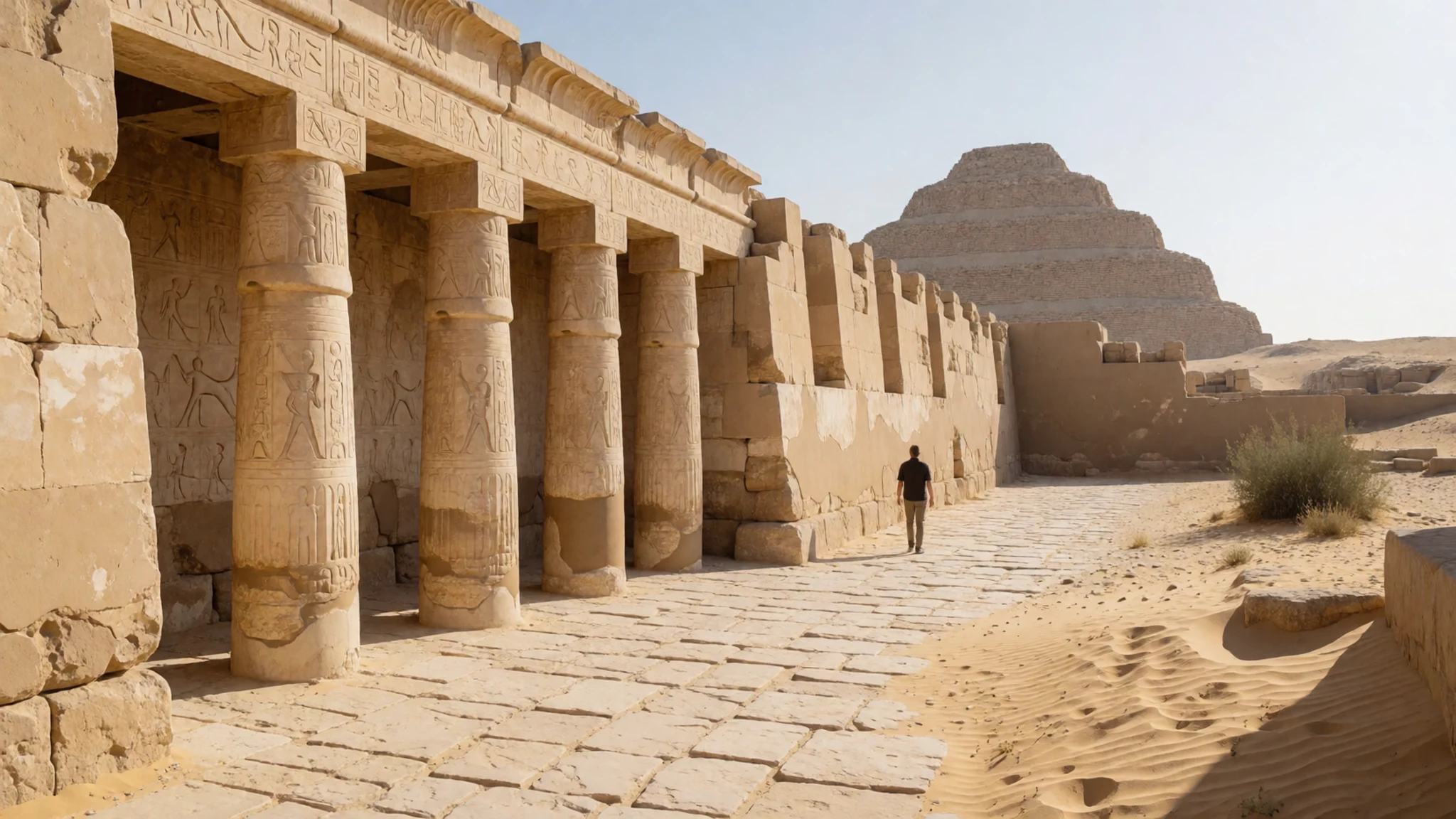
- Mastaba of Ti — North of the Step Pyramid
A classic Old Kingdom tomb of a high official, covered in carved scenes of daily life: boats among reeds, cattle being driven, craftsmen at work. It is among the richest sources on how people lived then, and the reliefs reward slow looking.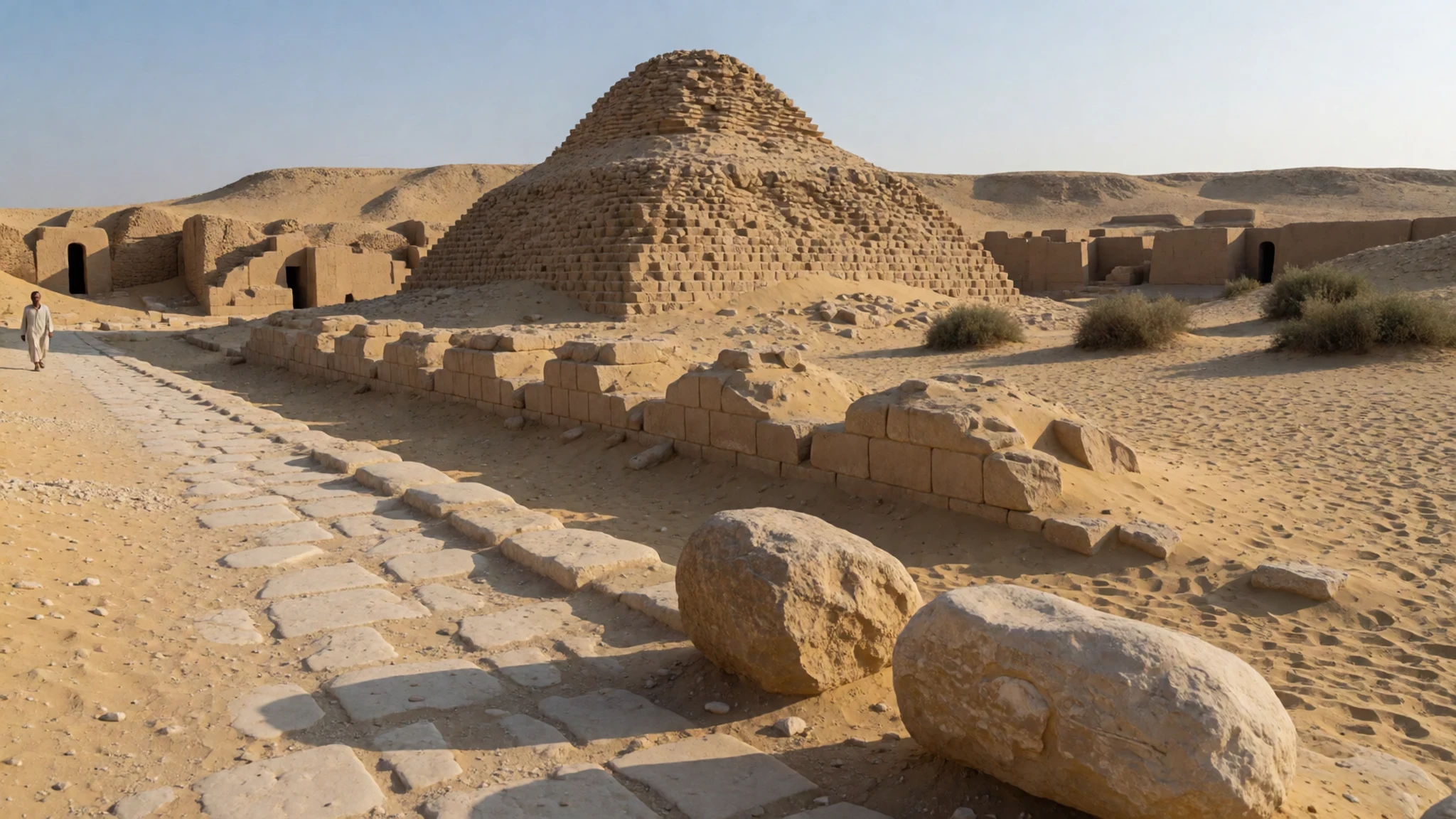
- Tomb of Mereruka — Teti cemetery, north-east Saqqara
A large, many-roomed tomb beside the Pyramid of Teti, with painted and carved walls of hunting, farming and offerings. Its size surprises first-time visitors, and the cool interior makes a welcome break from the sun. Check which tombs are open on the day.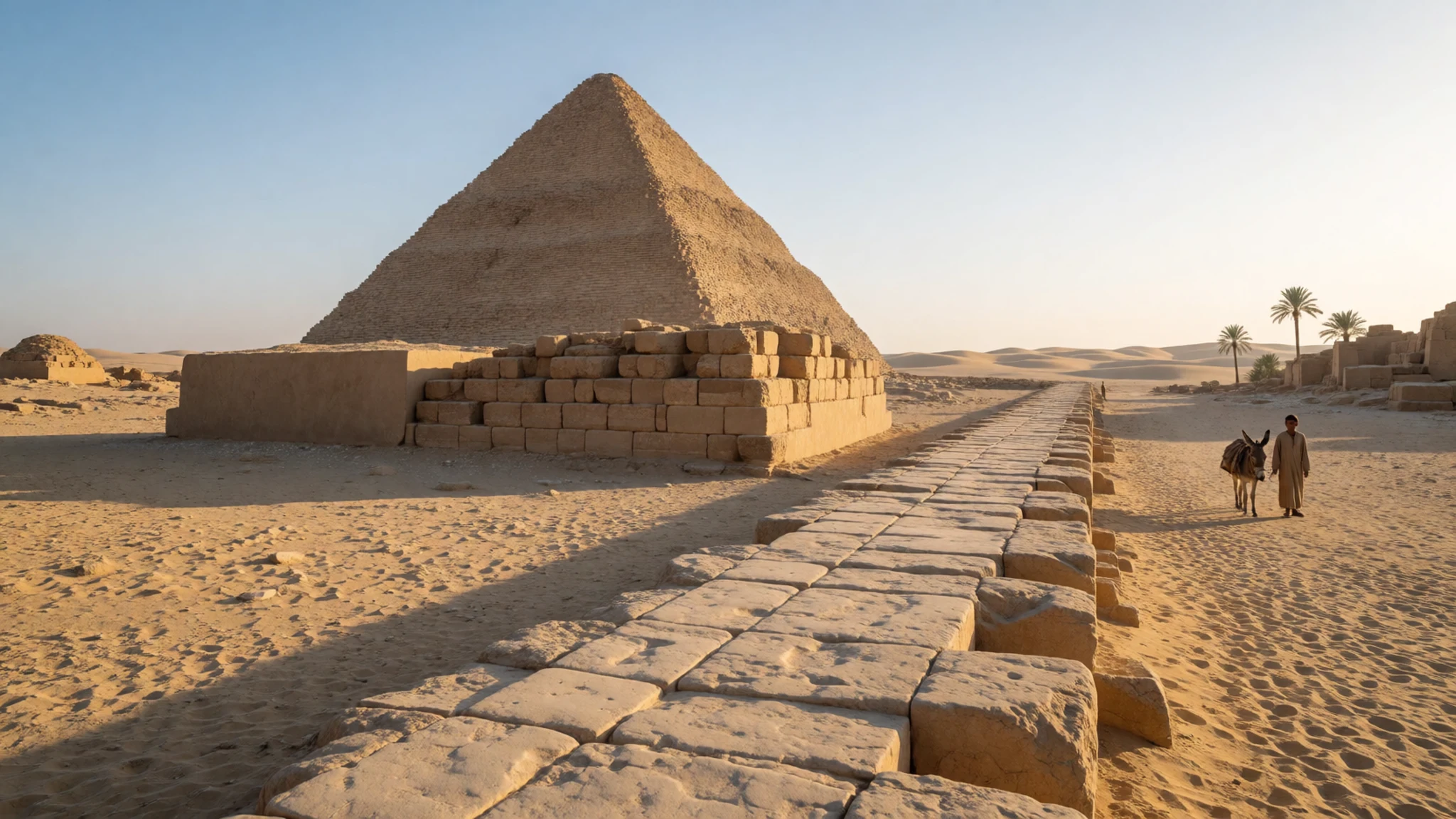
- Pyramid of Teti and its cemetery — North-east Saqqara
Teti was the first ruler of the Sixth Dynasty, and nobles quickly built their tombs around his pyramid. From outside it looks like a rubble mound, but the surrounding cemetery holds some of Saqqara's best decorated chambers.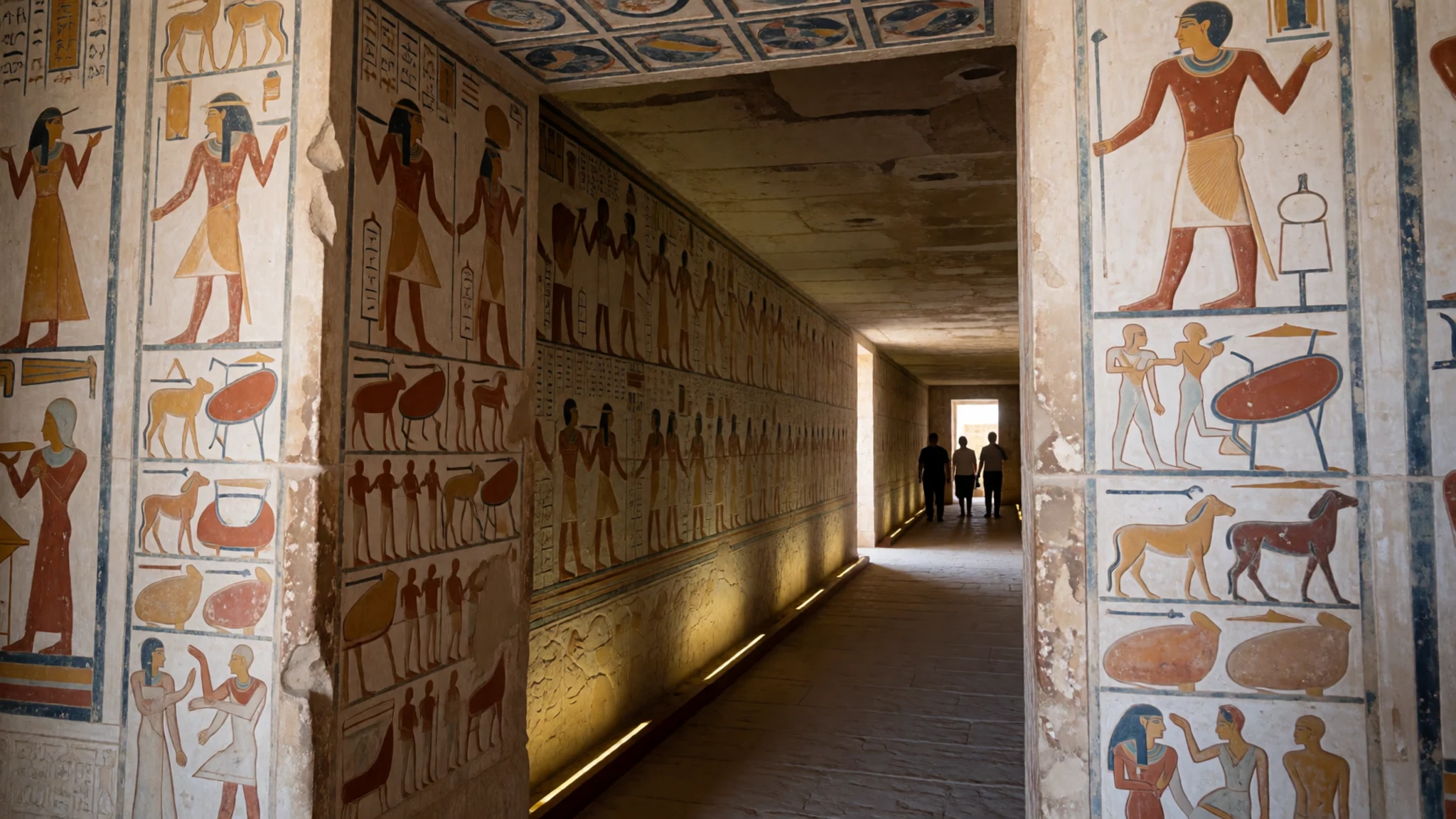
- Unas Causeway — South-west of the Step Pyramid
A long processional way leading to the Pyramid of Unas, lined with tomb chapels that have been recently opened to visitors. The reliefs and colour are well preserved, and the walk gives a sense of how the monuments were once linked.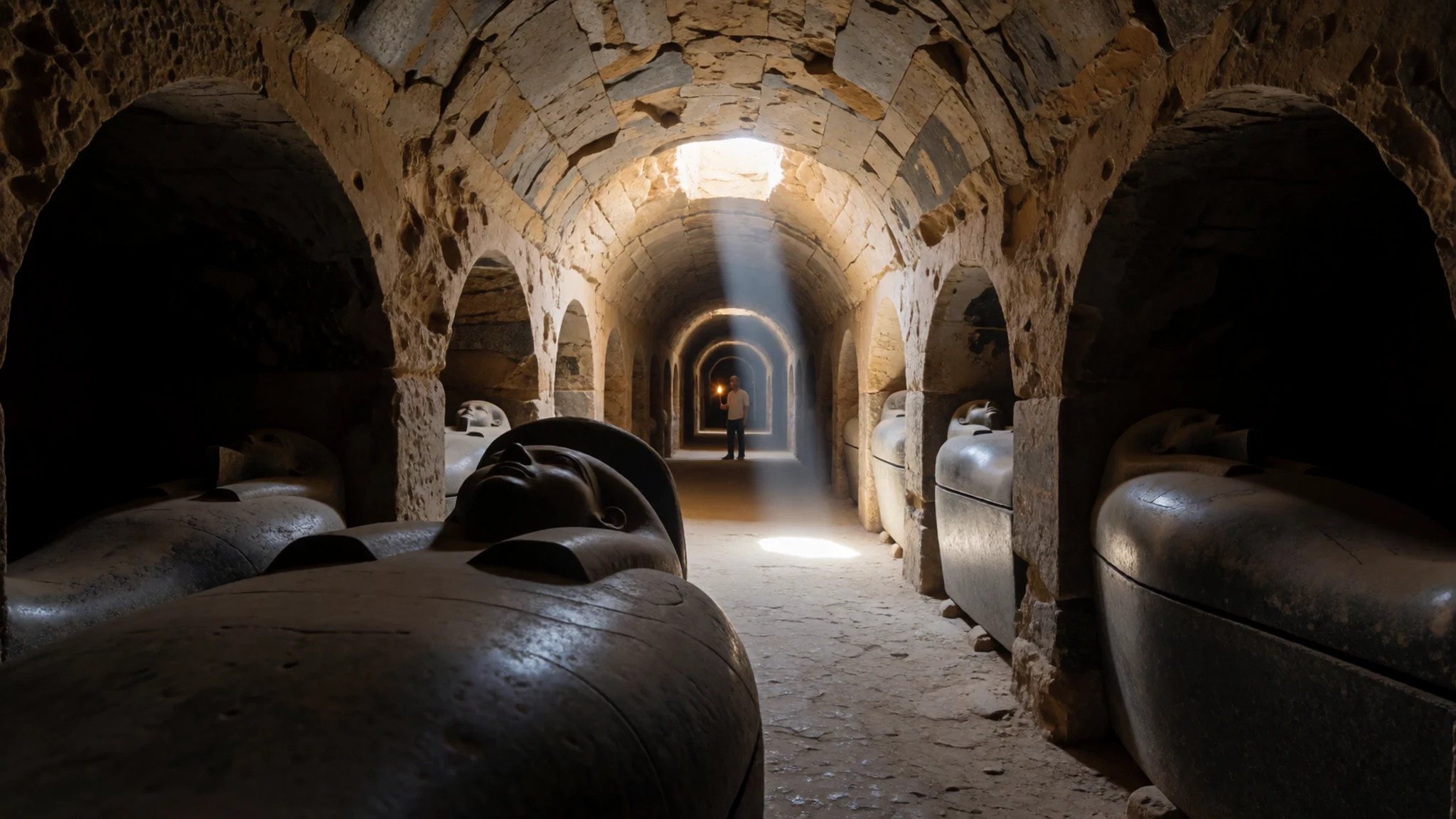
- Serapeum — North-west Saqqara
An underground gallery where sacred Apis bulls were buried in huge stone sarcophagi. The corridors are dim and the scale of the granite boxes is startling. Expect stairs and a crouch in places, and confirm opening before going.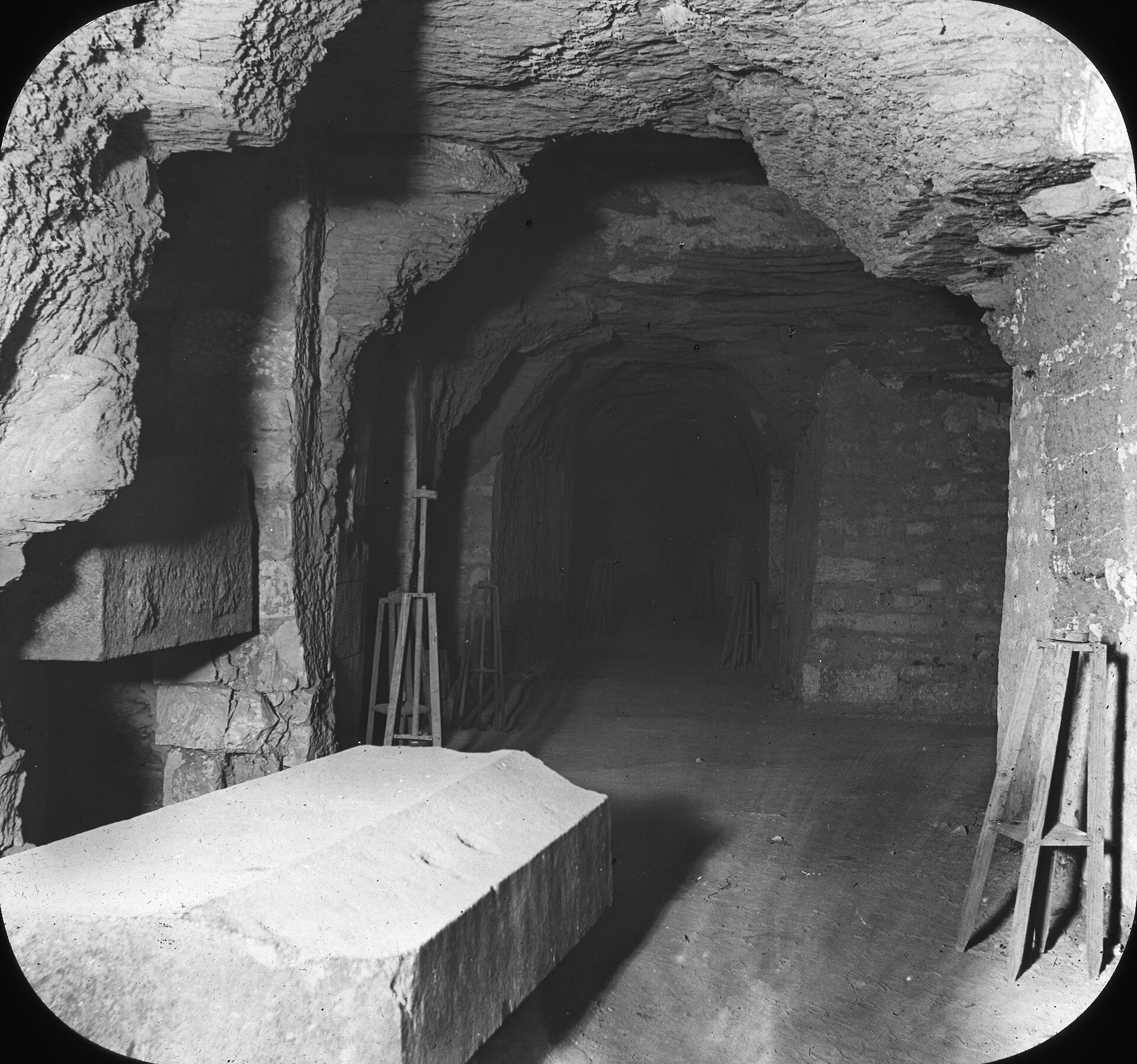
Culture
Saqqara was a city of the dead built around one belief: that a person could live on after death if the body, the name and the offerings were looked after. Tombs were designed as eternal homes. Chapels carried pictures of food, servants and fields so that the dead would never go hungry, and inscriptions asked passers-by to speak the owner's name aloud.
The place also kept a living religious role. Sokar, a funerary god of Memphis, may have lent his name to the site, though some scholars argue for a local tribal origin instead. Sacred animals, above all the Apis bull, were mummified and buried with ceremony, and priests tended the cults for centuries.
Today the site sits beside working farming villages, and Egyptian families come on weekends and holidays as well as foreign tour groups. Guides and tomb custodians are part of the visit, and many are knowledgeable about the reliefs. Some offer to unlock a door or point out details in return for a tip, which is customary and best settled politely on the spot. Mobile phone use and flash rules vary by tomb, so look for signs.
One etiquette line: do not touch the painted walls, and ask the custodian before using a camera or flash inside any tomb.
What to wear
In ancient Saqqara, the usual dress was linen, woven from flax and valued for being light and cool. Men wore wrapped kilts of varying length, women wore long sheath dresses with straps, and the wealthy added pleated, finer cloth, wigs, collars of beads and kohl around the eyes. Tomb paintings show all of this clearly, and the white linen was typical for everyday wear and for ritual.
Today, most Egyptians around the site wear practical clothing suited to heat and dust. Men often wear a galabeya, a loose ankle-length cotton robe, with a scarf or cap against the sun. Women in the village commonly wear long dresses or robes with a headscarf, while visitors from Cairo dress in everything from jeans to abayas.
For a visit, dress for sun and sand more than for any religious rule. Light, loose cotton or linen that covers shoulders and knees is comfortable and respectful in a rural area. A wide-brimmed hat, sunglasses and a scarf help with glare and wind. Wear closed shoes with grip, because the ground is loose sand and rubble, and some tombs have steep steps. Carry a thin layer for winter mornings and for cooler underground chambers.
What to eat
- Ful medames — Breakfast stalls and small eateries in Cairo
Slow-cooked fava beans mashed with oil, lemon and cumin, eaten with flatbread and often with a boiled egg. It is Egypt's classic breakfast and is cheap, filling and found at small eateries and street stalls in Cairo before the drive.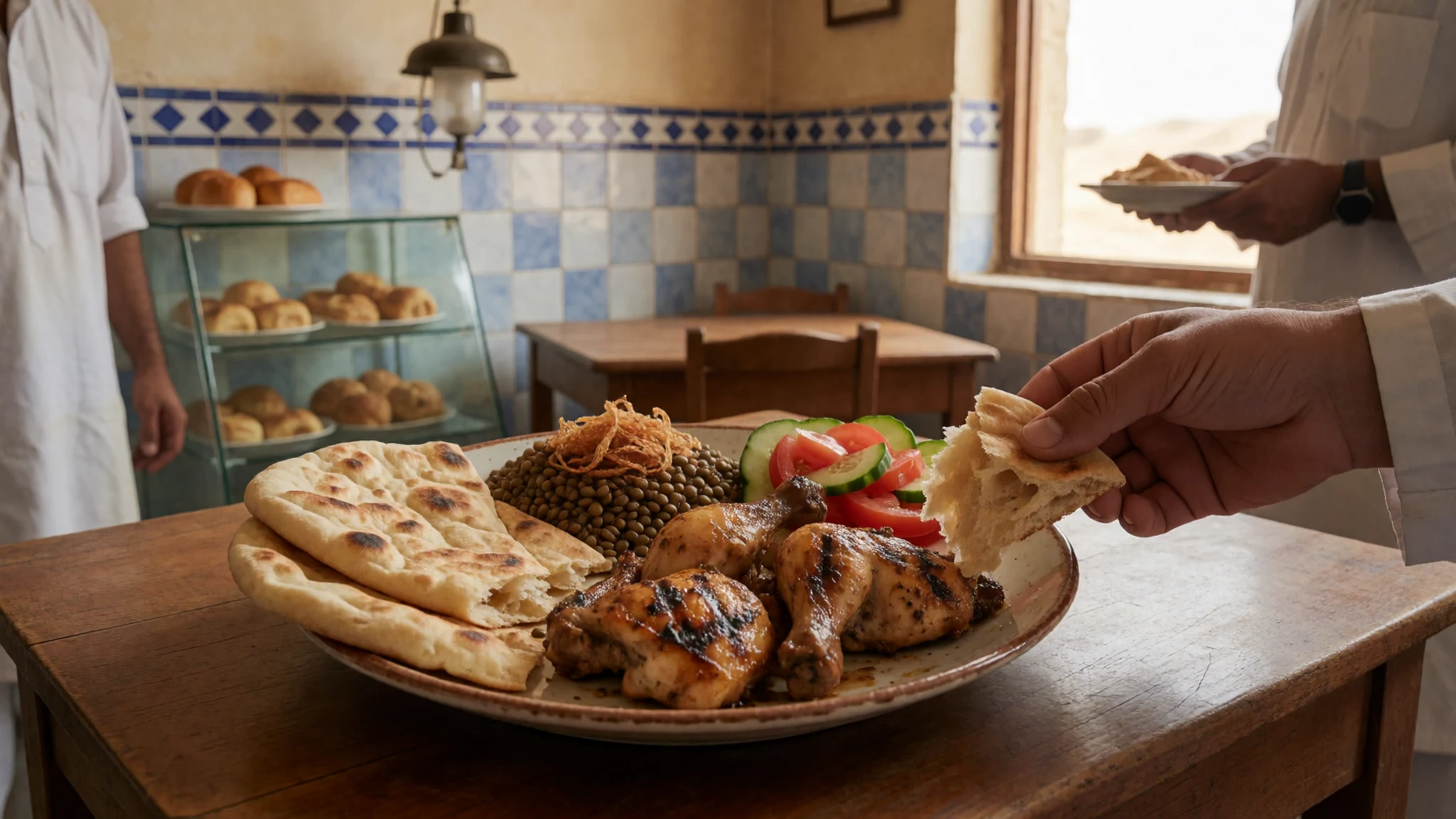
- Ta'amiya — Street stalls and sandwich counters
Egypt's falafel, made from ground fava beans rather than chickpeas, which gives a green, herby centre and crisp shell. Eaten in baladi bread with salad and tahini, it is a quick, vegetarian snack that travels well on a day trip.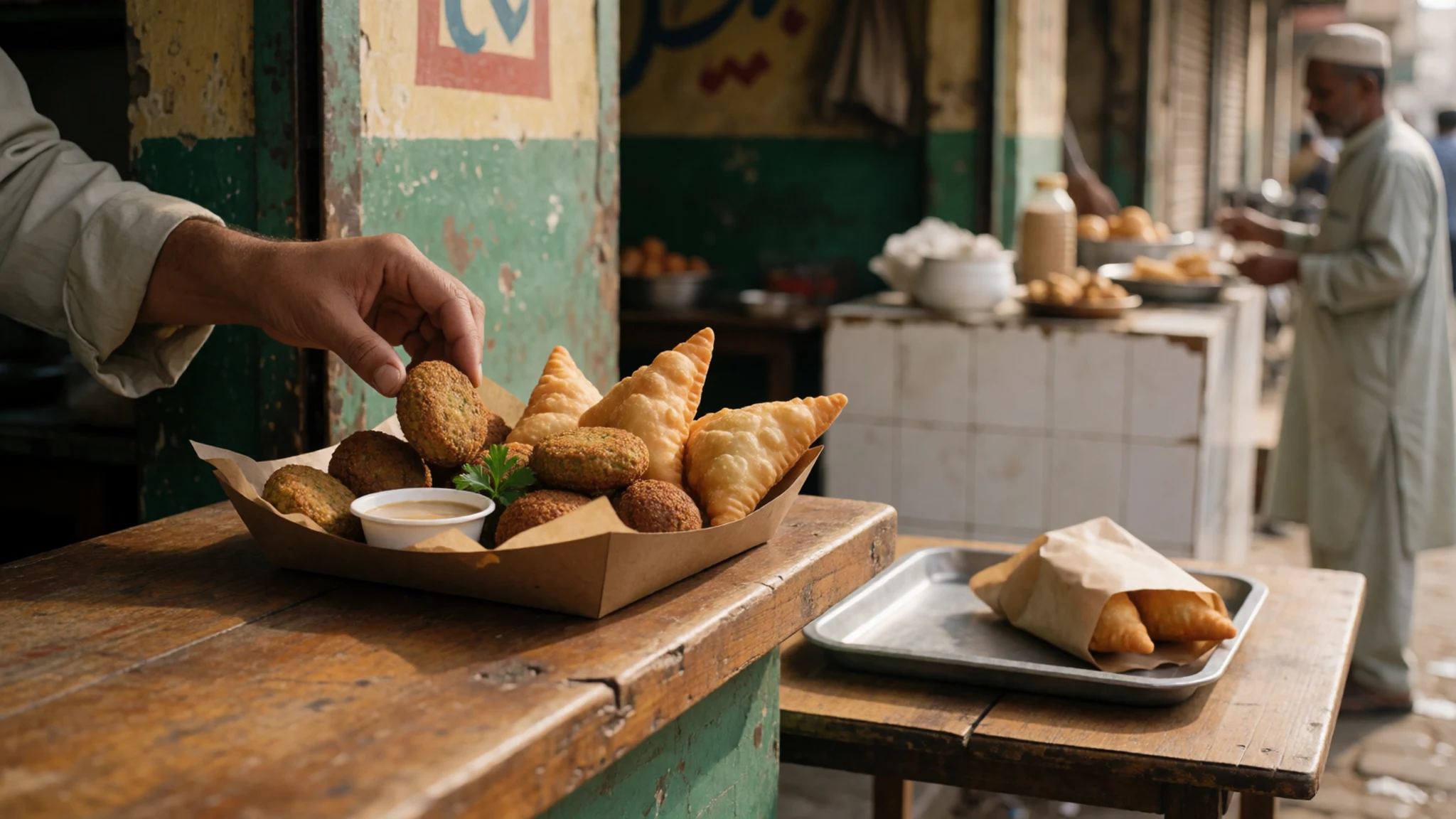
- Koshari — Dedicated koshari shops in Cairo
A hearty mix of rice, lentils, macaroni and chickpeas topped with spiced tomato sauce, crisp fried onions and a splash of vinegary chilli. It is vegetarian, inexpensive and sold all over Cairo, where dedicated koshari shops do it best.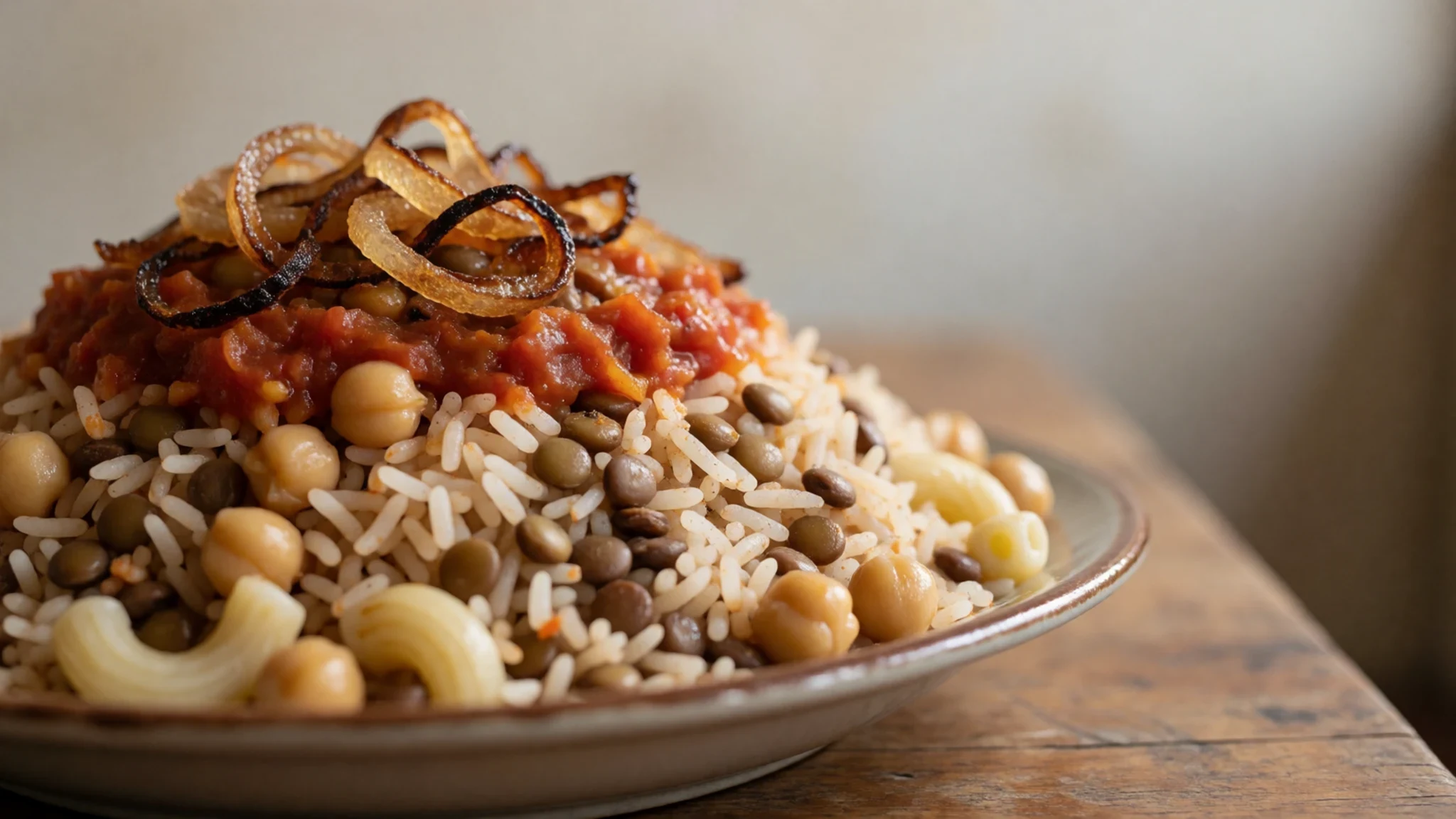
- Egyptian buffet lunch — Restaurants along the road near Saqqara
Restaurants near the Saqqara plateau cater to tour groups with buffets of grilled meat, rice, stuffed vegetables, salads, dips and bread. It is a convenient way to try several home-style dishes in one sitting after a morning of walking in the sun.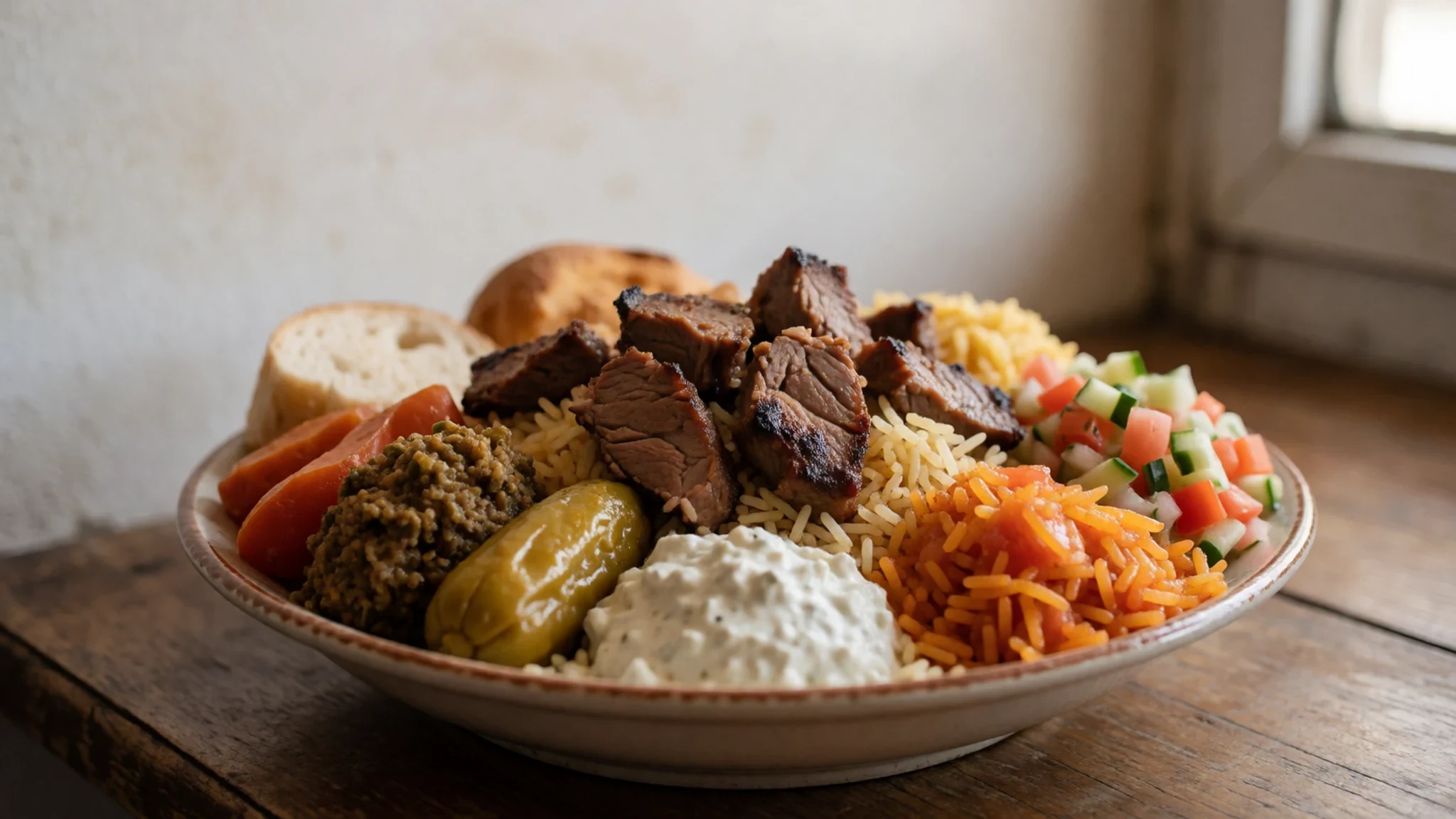
- Baladi bread and fresh dates — Village bakeries and roadside stalls near Saqqara
Round, puffy baladi flatbread is baked fresh in village bakeries, and dates come from the palm groves around Saqqara. Buying both from a roadside seller makes a simple, local snack to carry with you onto the desert plateau.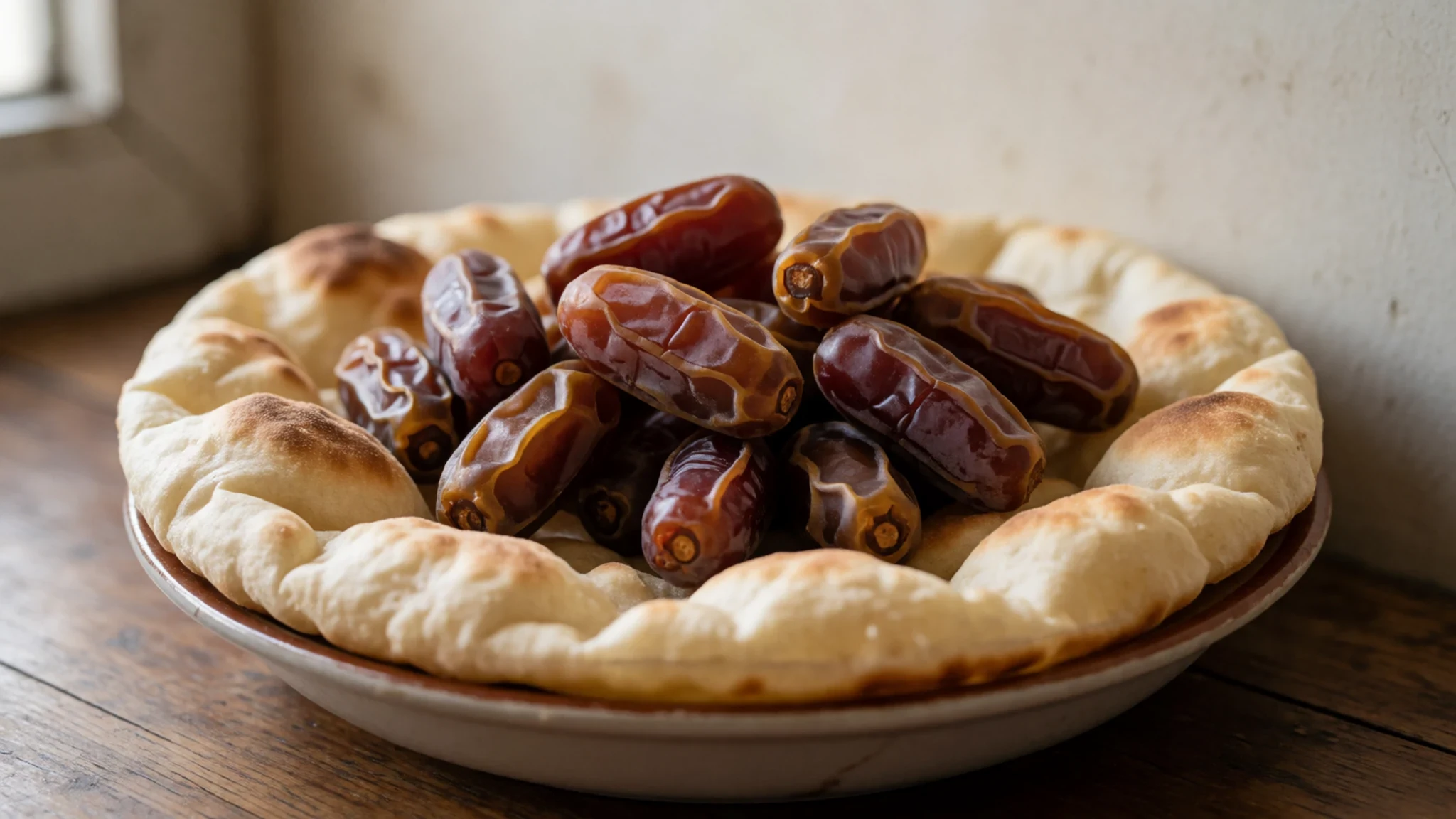
Plan it
Best time. October–November and February–April, when days are warm rather than fierce. June to August is very hot with almost no shade on the plateau, so go at opening time if you must. Winter mornings can be cool.
How long. 1
Getting there. Cairo International Airport is the nearest main airport. From central Cairo, hire a taxi or driver for the day, about 30 km south, which also lets you add Dahshur. Public microbuses run via Giza metro or El Monib station, with a final tuk-tuk to the gate, but take longer and need patience.
Budget. mid
Tips
- Book a driver a day or more ahead and agree the price before leaving, as app rides rarely work here
- Arrive at opening, as the heat and tour groups build quickly
- Check the official ticket arrangements before going, as tomb entry is often separate from general admission
- Carry cash in small notes for tips, tuk-tuks and snacks
- Bring plenty of water, sun protection and a hat, as shade is scarce
Etiquette
- Ask before photographing people, including guides and tomb custodians
- Do not climb on monuments or touch painted walls
- Agree any guide's tip politely before the tour starts
Nearby
Sources
- Wikidata Q192134 (CC0)
- Wikipedia: Saqqara (rev 1384833092) (CC BY-SA 4.0)
- Wikivoyage: Saqqara (rev 5269277) (CC BY-SA 4.0)
- Saqqara, Ancient Egypt — Vyacheslav Argenberg (CC BY 4.0)
- Saqqara pyramid ver 2 — Charles J. Sharp (CC BY 3.0)
- Lamentations pendant l'enterrement — Unknown artist (CC BY 3.0)
- Saqqara's bay south wall — Temerarius (CC BY-SA 4.0)
- Saqqara entrance to the funerary complex of Djoser — Berthold Werner (CC BY 3.0)
- Wooden statue of Kaaper — Djehouty (CC BY-SA 4.0)
- Sakkara lantern slide — William Henry Goodyear (Public domain)
- View south to the Red and Bent Pyramids — Panegyrics of Granovetter (CC BY-SA 2.0)


