Sangiin Dalai Lake
Sangiin Dalai Lake, Mongolia
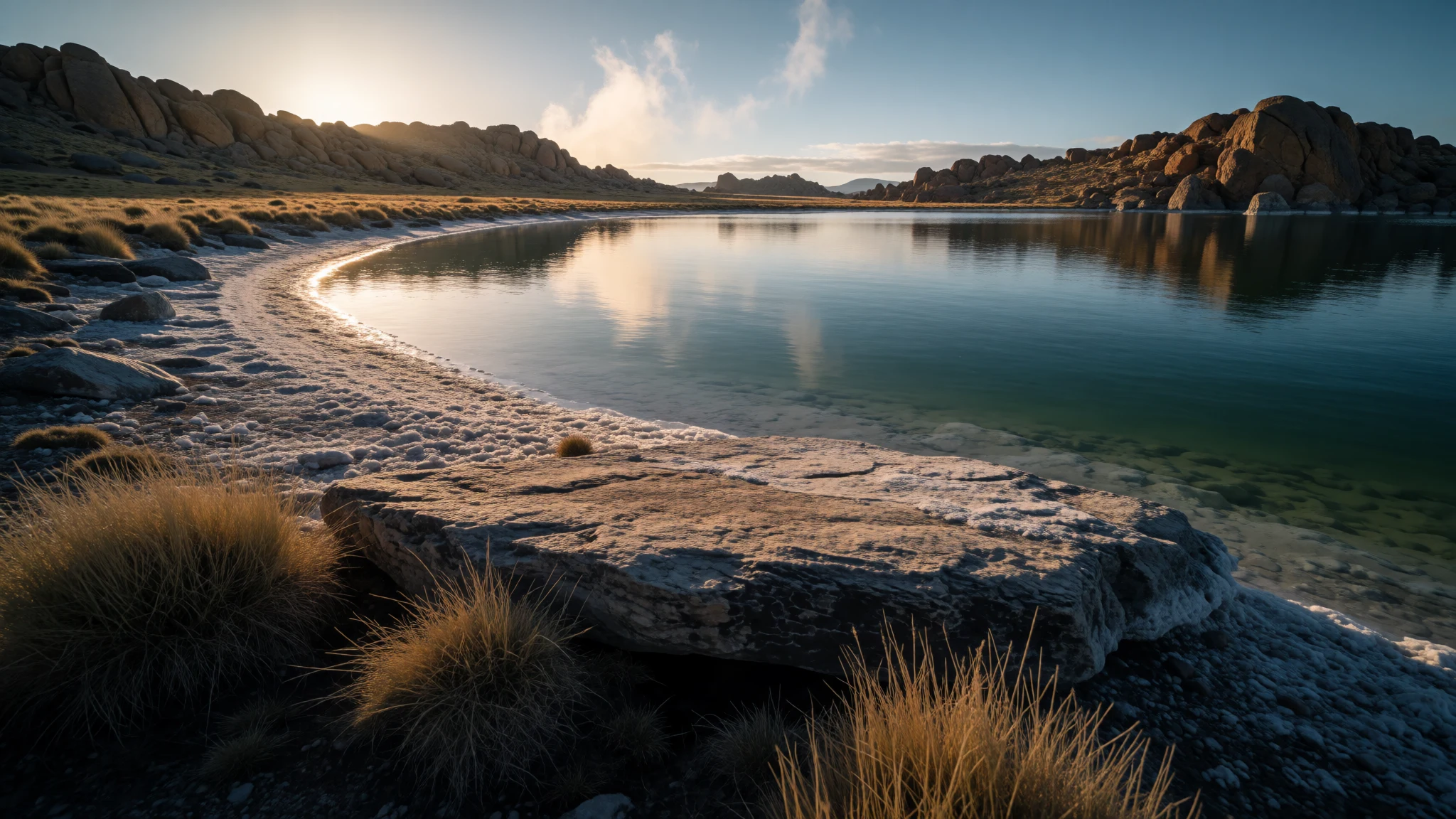
Sangiin Dalai Lake is a remote salt lake in northern Mongolia, ringed by bare mountains, for travellers who like slow, self-reliant journeys.
The place
Sangiin Dalai Lake lies in northern Mongolia, where the provinces of Khövsgöl and Zavkhan meet, and several local districts share its shoreline. It is a salt lake, the kind that forms in a landlocked country where water collects in a basin and leaves its minerals behind. The surface sits at 1988 m above sea level, high enough that evenings stay cool even in summer. Mountains, hills and bare rock close in around the water, so the setting feels more rugged than pastoral. Satellite photographs show a dark patch of water in a pale, broken landscape, and the impression on the ground is similar: wide, quiet and short of landmarks. Facilities are minimal. Nearby settlements are small, most routes are unpaved tracks, and distances are longer than a map suggests. The Mongolian name is Сангийн далай нуур, and English spellings vary because there is no single agreed way to render Mongolian Cyrillic in Latin letters, so a search for the lake may need a few attempts. Mongolia is nicknamed the Land of Blue Skies, and sun and wind are the usual weather story, with bitterly cold winters and summers that are warm by day and cool at night. Herding families graze their animals across this part of the country, so the shore is shared with livestock as much as with visitors. The lake suits travellers who enjoy slow journeys and can accept that a river crossing, a puncture or a change in the weather may rewrite the day.
Its story
Sangiin Dalai Lake has little written history of its own, so its story is really the story of the land around it. The ground here is restless. The Bolnai earthquake struck close by in the early twentieth century and was a very large quake, a reminder that these mountains and basins are still being shaped by moving rock. Beyond geology, the wider history belongs to the steppe. Mongolia was the heart of the Mongol Empire, yet the descendants of Genghis Khan left surprisingly little built evidence in their homeland. The short-lived capital at Karakorum (Kharkhorin) is the main exception, and legend holds that the only lasting structure Genghis Khan himself ordered was a storehouse for plunder. What survives is scattered: stone monuments and carved drawings across the country, some thousands of years old, and the collections of the National Museum in Ulaanbaatar. After the empire fragmented, Tibetan Buddhist monasteries became the visible markers of Mongolian history, although only a few remained standing after the Stalinist purges of religion. Near the lake, the past is therefore felt through absence as much as through ruins: pastures, passes, herding routes and the occasional monument beside a track. Mongolia also stayed hard to reach for a long time. Until the late twentieth century a visitor needed an invitation letter from someone living in the country, and even now moving between places can be slow. That isolation helps explain why a lake like this is known to few people outside the region.
What to see
- The lake shore — Border of Khövsgöl and Zavkhan provinces
The shoreline itself is the main sight: a salt lake held in a ring of bare mountains and rock, best explored slowly on foot. Light changes quickly, so early morning and late afternoon give the clearest colour on the water. Wind can be strong, so a spare layer matters more than any gadget.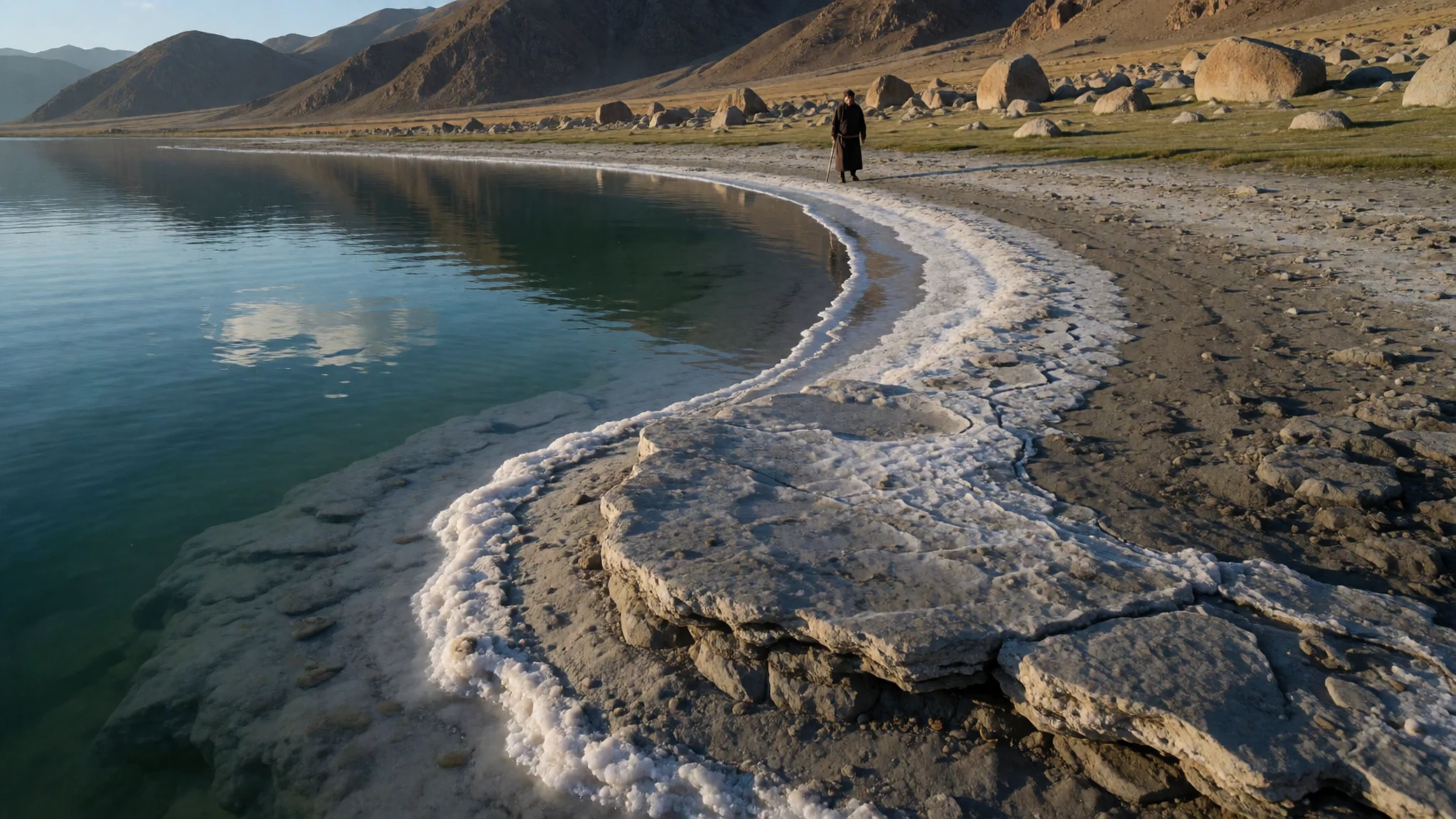
- Ridges above the basin — Hills around the lake
Climbing one of the surrounding hills gives the best sense of scale, with the water set small against rock and sky. Choose a gentle slope, set out with plenty of daylight left, and take water and a windproof. A local guide will know which ridges are safe and easy to reach.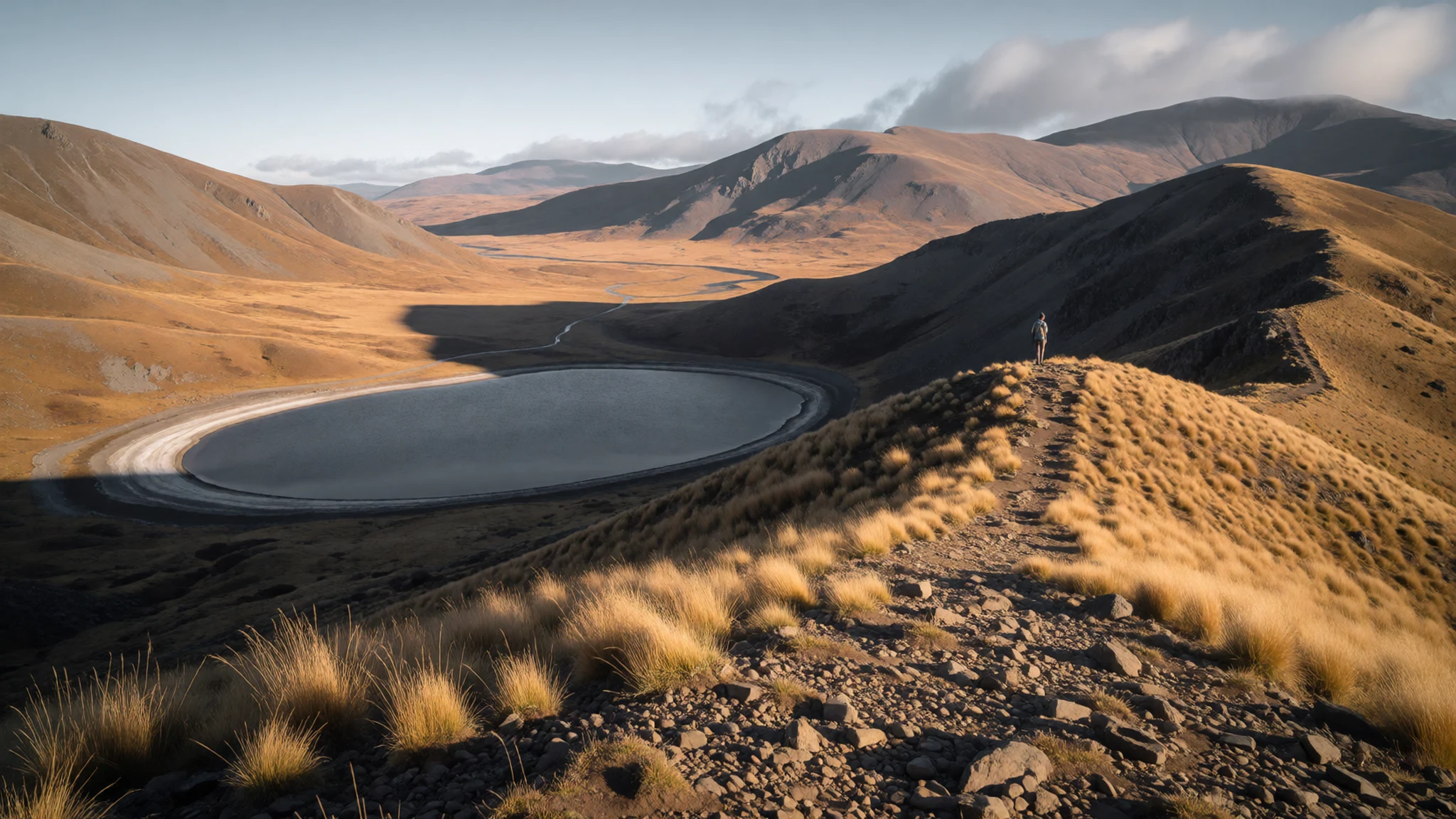
- A herding family's ger — Pastures near the lake
Visiting a family camp is often the most memorable part of a trip. Guests are usually offered salted milk tea and dried curds before anything else, and conversation follows slowly. Arrange the visit through a driver or guide rather than turning up unannounced, and bring a small gift such as sweets or tea.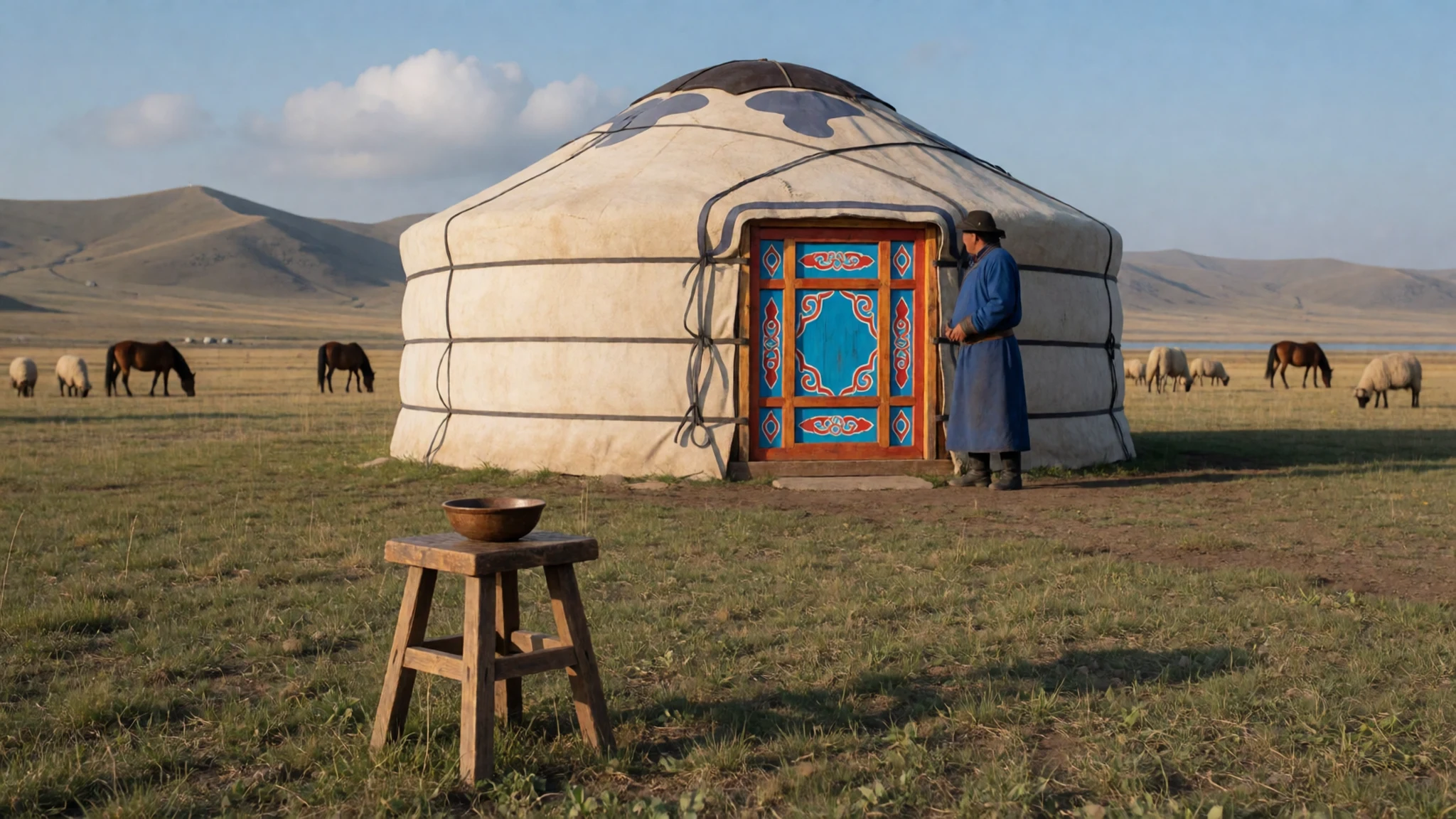
- Bolnai earthquake country — Region around the lake
The area lies close to where the Bolnai earthquake struck in the early twentieth century. Geology-minded travellers may enjoy reading the landscape for signs of faulting, though our sources list no marked trail or signage, so ask a knowledgeable local before heading out and do not expect interpretation boards.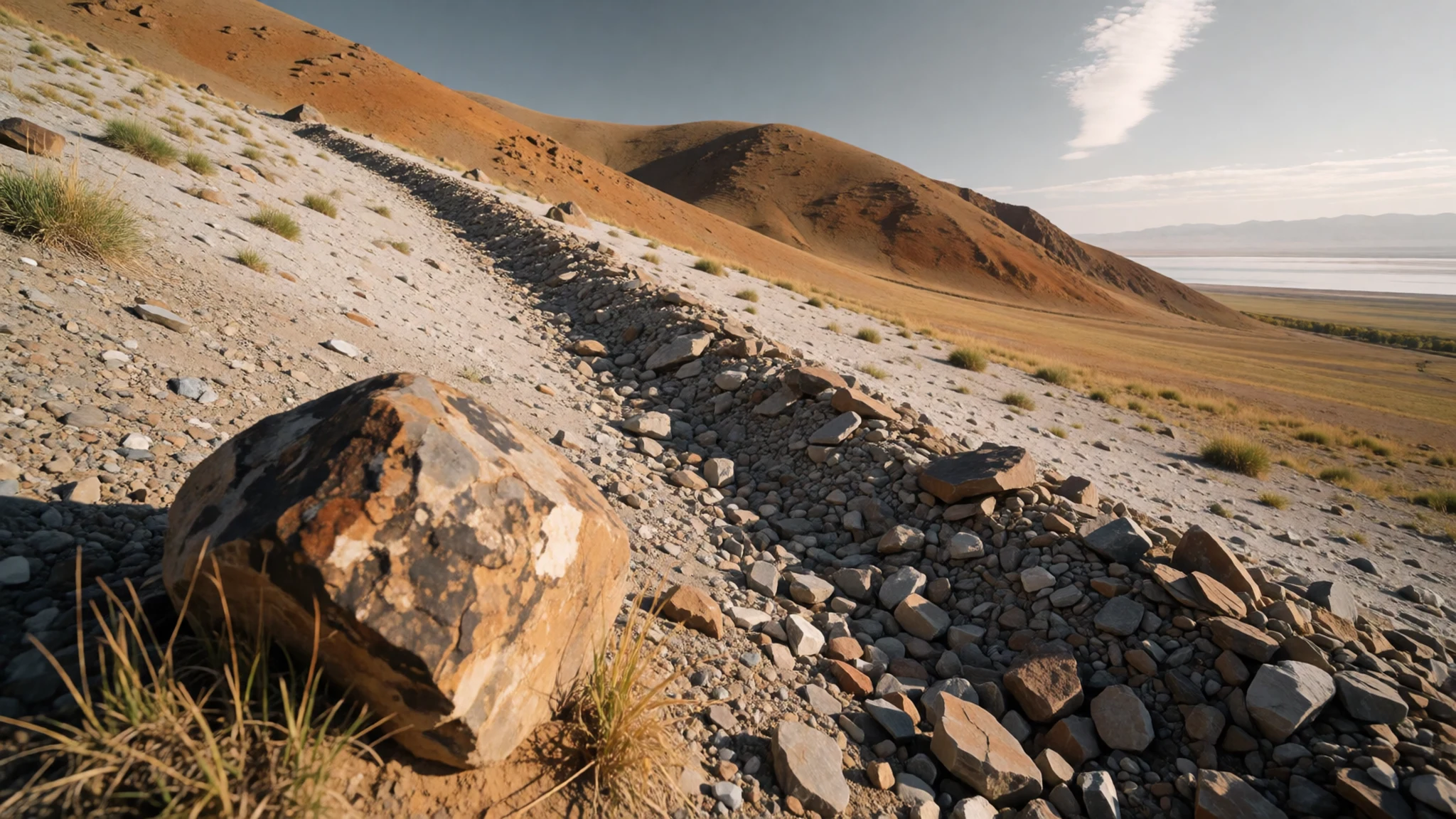
- Erdene Zuu Monastery — Kharkhorin, Övörkhangai
Erdene Zuu in Kharkhorin is a long journey from the lake, but it is the obvious place to add Mongolian history to a trip. It is an active religious site with resident lamas, close to where the short-lived Mongol capital Karakorum once stood. Check the official listings for opening arrangements.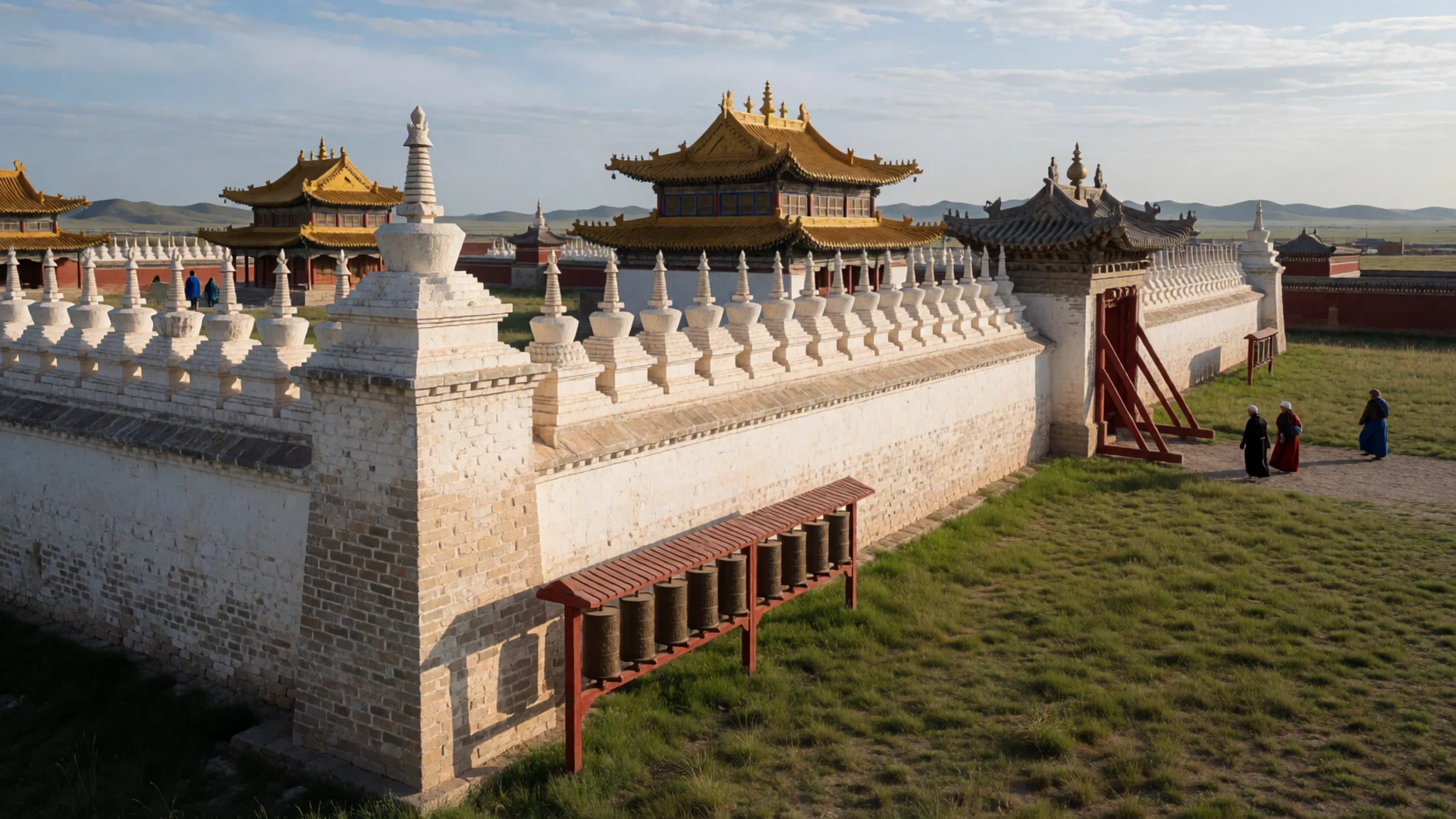
Culture
Culture around Sangiin Dalai Lake is the culture of the steppe: herding families, horses, felt tents called gers and a strong code of hospitality. Mongolians are generally direct, so expect honest opinions rather than polite hints, and do not read bluntness as hostility. Politics deserve care. Feeling about China runs high in Mongolia, rooted in historical and cultural disputes, so avoid clothing with Chinese symbols and steer clear of the subject; the Chinese province of Inner Mongolia is commonly called southern Mongolia. Tibetan Buddhist monasteries form much of the country's visible history, and the active ones, such as Erdene Zuu and Gandan, are visited by local people as well as tourists. Gifts and food carry meaning. Refusing something that is offered is considered rude, and when a plate of snacks appears, taking at least a small bite is expected. Western pleasantries often miss the mark, so following the host's lead works better than applying habits from home. A guest arriving at a ger is usually given salted milk tea first, then dried curds or other snacks, and conversation follows at its own pace. Dogs guard family camps and can be aggressive, so wait for someone to call them off before walking in. Receive anything you are offered, whether tea, food or a gift, with your right hand and the palm facing up, and take at least a small taste rather than refusing.
What to wear
Traditional dress around Sangiin Dalai Lake centres on the deel, a long wrap-over robe fastened at the right shoulder and tied with a bright sash. Everyday deels are cut from heavy cotton or wool and lined for winter, while festival versions use silk brocade in deep blues, reds and golds. Leather or felt boots with upturned toes and a hat or fur cap complete the outfit. Many herders still wear a deel daily, and everyone brings one out for Naadam, weddings and the lunar new year. In towns, people dress much as elsewhere in Asia, in jeans, jackets and trainers, and the deel is kept for occasions. Around the lake itself, practical layers and padded coats are common because of the wind and cold nights. A visitor should dress for exposure: a thermal base layer, a fleece, a windproof and waterproof shell, a warm hat and sun protection, since summer days can be warm and nights cool. Sturdy, broken-in boots suit rough ground and wet pasture. Winter travel calls for serious insulation against bitter cold. At monasteries, cover shoulders and knees and take hats off indoors. Avoid clothing associated with China, which can cause offence.
What to eat
- Buuz — Canteens and tea shops in district centres, or at a family's ger
Steamed dumplings filled with minced mutton and closed at the top with small pleats, often described as the national dish. They trace back to Chinese baozi. Order a plate with salted tea and eat them hot, in your fingers.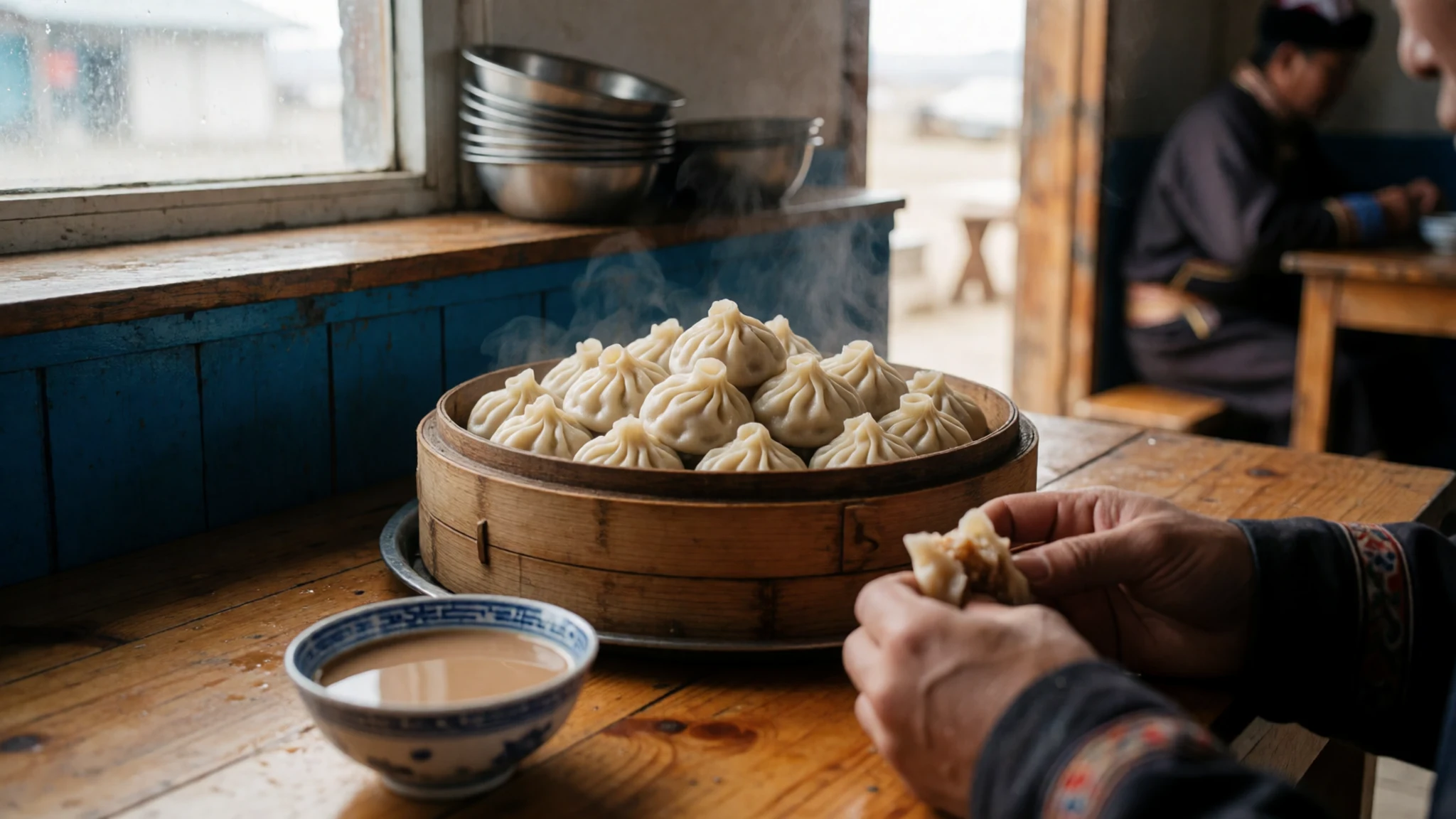
- Khuushuur — Roadside canteens and market stalls
Flat discs of dough wrapped around minced meat and onion, then fried until crisp. Once a festive treat, now sold almost everywhere. A few make a filling meal, and they travel well in a bag on long drives.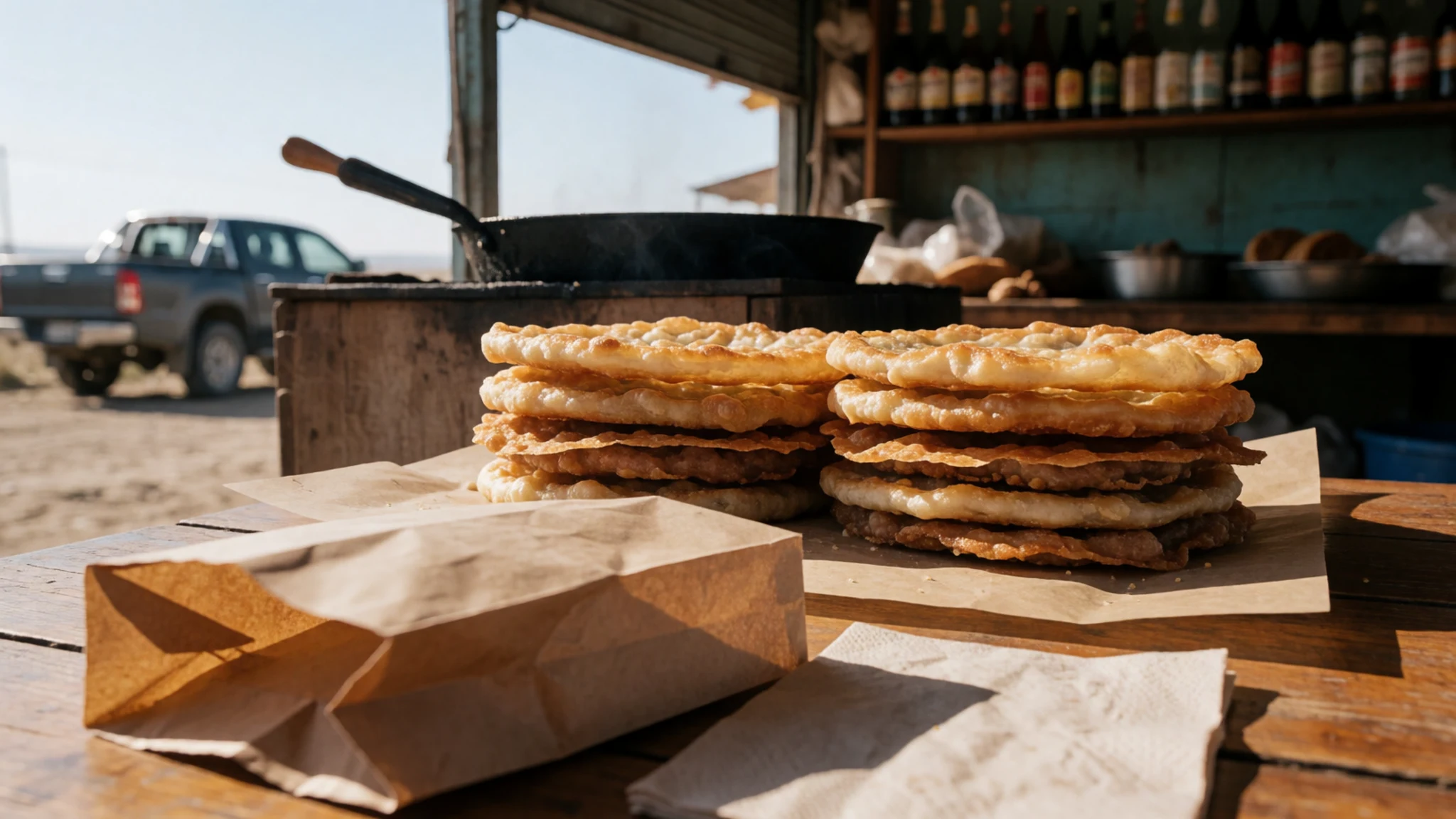
- Tsuivan — Small canteens in district towns
Hand-cut noodles stir-fried with mutton and a little vegetable, served as a quick, hearty plate. Ketchup often arrives alongside. Portions are generous, which suits a cold day outdoors or a long drive across the steppe. - Süütei tsai — Any ger, and canteens and tea shops everywhere
Salted milk tea, made from boiled milk and water with a few tea leaves and a pinch of salt. It is the first thing offered to any guest, and it accompanies meals in restaurants and gers alike. - Aaruul — Offered in gers; sold at local markets
Sun-dried milk curds that start as hard as stone. Let a piece soften slowly in the mouth until it turns into a sour, cheesy paste. They are usually set out beside the tea as a snack. - Boodog — Family celebrations and invited gatherings
A festive dish of goat or marmot cooked in a traditional way for celebrations. It is not an everyday meal, so it is worth asking hosts about well ahead, and worth trying if you are invited to a gathering.
Plan it
Best time. June to September, when days are warm and the tracks are most passable. Evenings stay cool and some areas see heavy rain in summer, while winter is bitterly cold and best left to seasoned cold-weather travellers.
How long. 3–4
Getting there. Fly into Ulaanbaatar, then continue towards Khövsgöl or Zavkhan province by domestic flight or long overland drive; check current schedules and the official airport site. The last stretch is on unpaved tracks, so hire a driver or guide who knows the area.
Budget. mid
Tips
- Check the current visa and entry rules for your passport before booking, as Mongolia has been changing them
- Hire a local driver or guide, and carry spare water, food and warm layers, because help can be far away
- Carry cash, as cards are unlikely to work outside larger towns
- Keep your distance from dogs around camps and ask a host to call them off
- Tell someone your route and expected return before leaving the last town
Etiquette
- Receive tea, food and gifts with your right hand, palm up
- Do not refuse a gift or a plate of snacks; take at least a small taste
- Avoid wearing anything associated with China, and avoid raising the subject
Nearby
Sources
- Wikidata Q2721984 (CC0)
- Wikipedia — Sangiin Dalai Lake (CC BY-SA 4.0)
- Wikivoyage — Mongolia (CC BY-SA 4.0)
- Sangiin Dalai Lake in Mongolia (NASA Landsat) (Public domain)
- Relief map of Mongolia (NordNordWest, Виктор_В) (CC BY 3.0)
- Sangiin Dalai See (2) (CC BY-SA 4.0)
- Sangiin Dalai See (Б.Баяр) (CC BY-SA 4.0)


