San Gregorio de Polanco
San Gregorio de Polanco, Uruguay
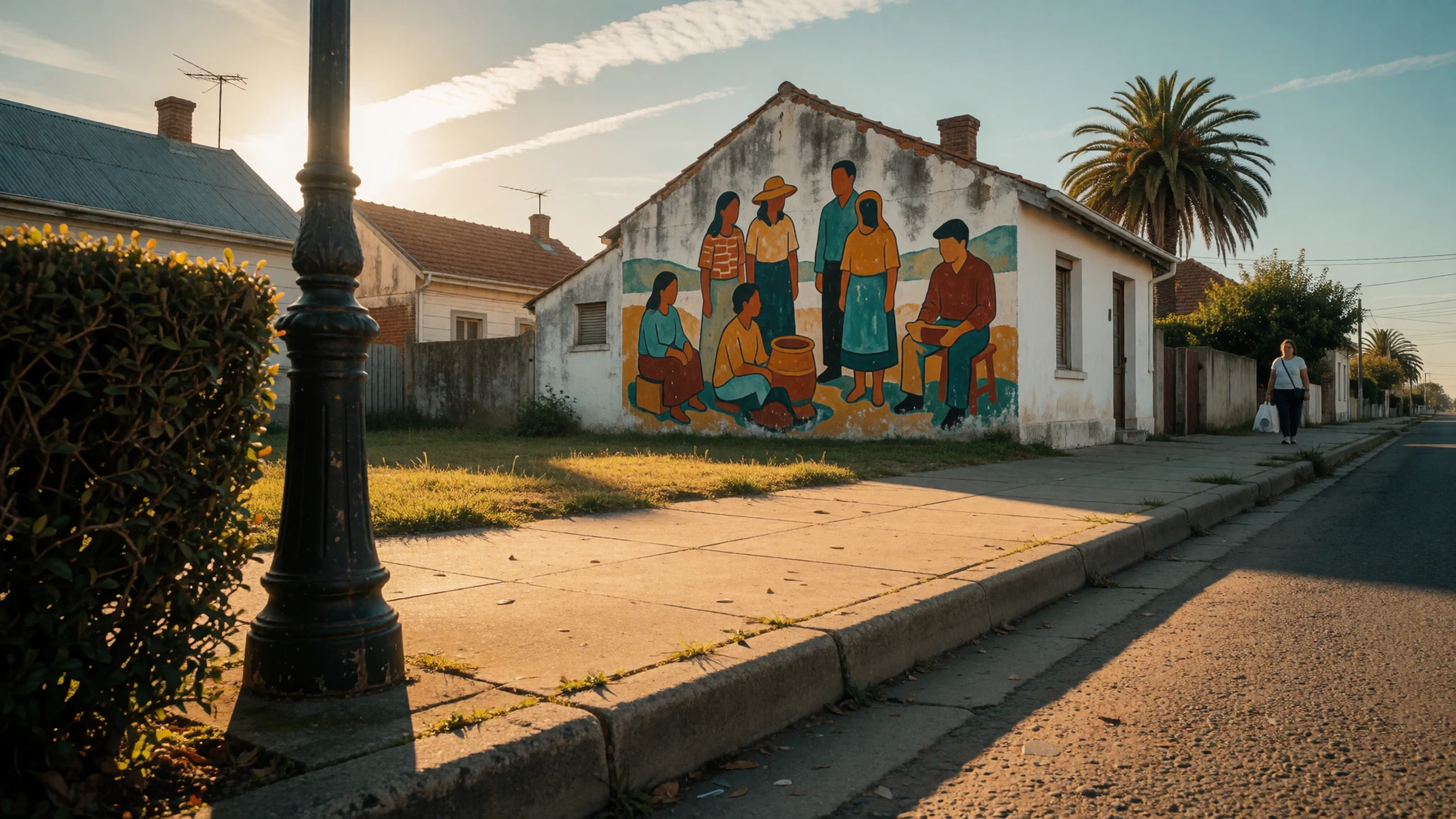
San Gregorio de Polanco is a small lakeside town in Uruguay's interior where the streets double as an open-air art gallery.
The place
San Gregorio de Polanco sits in the south of Tacuarembó Department, in the interior of Uruguay, north of the Negro River and west of the Tacuarembó River. The town gives its name to a municipality of 3,983 people, so everything here is small, slow and walkable. Nicknamed Ciudad Museo, the 'museum city', it earns the title from murals and sculptures set outdoors along its streets and squares rather than behind gallery doors.
The setting matters as much as the art. Uruguay is mostly low and gently rolling, and this part of the interior is cattle country: open grassland, wide skies, ranch gates and now and then a rider beside the road. Where the Negro River spreads into a broad lake, the town has a waterfront used for fishing, for mate on the shore and for swimming in the warm months. It is a freshwater beach rather than an Atlantic one, calmer, with no surf and no resort strip.
San Gregorio de Polanco does not run on tourism, and that shapes a visit. Streets are quiet at midday, especially in the summer heat, and some shops close for a long break. Weekends and holiday periods bring families and day-trippers from nearby towns, while a weekday outside the warm season can feel almost empty. Restaurants and rooms are limited, so the town suits a slow overnight stop better than a packed itinerary.
Its story
San Gregorio de Polanco has a quieter story than Uruguay's colonial showpieces, and its most recent chapter is administrative rather than dramatic. A national law passed in March turned the area into a municipality, one of several within Tacuarembó Department. The new body covered the same territory as the area's existing judicial and electoral district, so the boundary followed lines that locals already used for voting and courts.
Before that, local affairs ran through a Local Board that sat beneath the department's government. Critics found it too dependent: it could do little without approval from above. The municipality, with its own elected mayor and council, was meant to bring decisions closer to residents, and San Gregorio de Polanco became the seat of that body.
The landscape has its own history. The Negro River, which lies south of the municipality, has been dammed downstream for hydroelectric power, and the broad lake that now fronts the town is a product of that engineering rather than a natural lake. The shoreline residents and visitors enjoy today is therefore a modern creation, laid over older cattle country where ranching, river crossings and small settlements shaped daily life long before anyone thought of painting walls.
The 'museum city' identity came later still. Outdoor art became the way a small interior settlement gave travellers a reason to stop, and murals and sculptures accumulated over time. The result is a town whose story is still being added to, wall by wall, by artists and neighbours.
What to see
- Open-air murals and sculptures — Town centre
The town's reputation rests on its outdoor art, so the best first plan is simply to walk the central streets and squares with no fixed route. Murals cover house walls and sculptures stand in public spaces, and new pieces appear over time. Go in the morning or late afternoon, when the light is softer and the streets are cooler.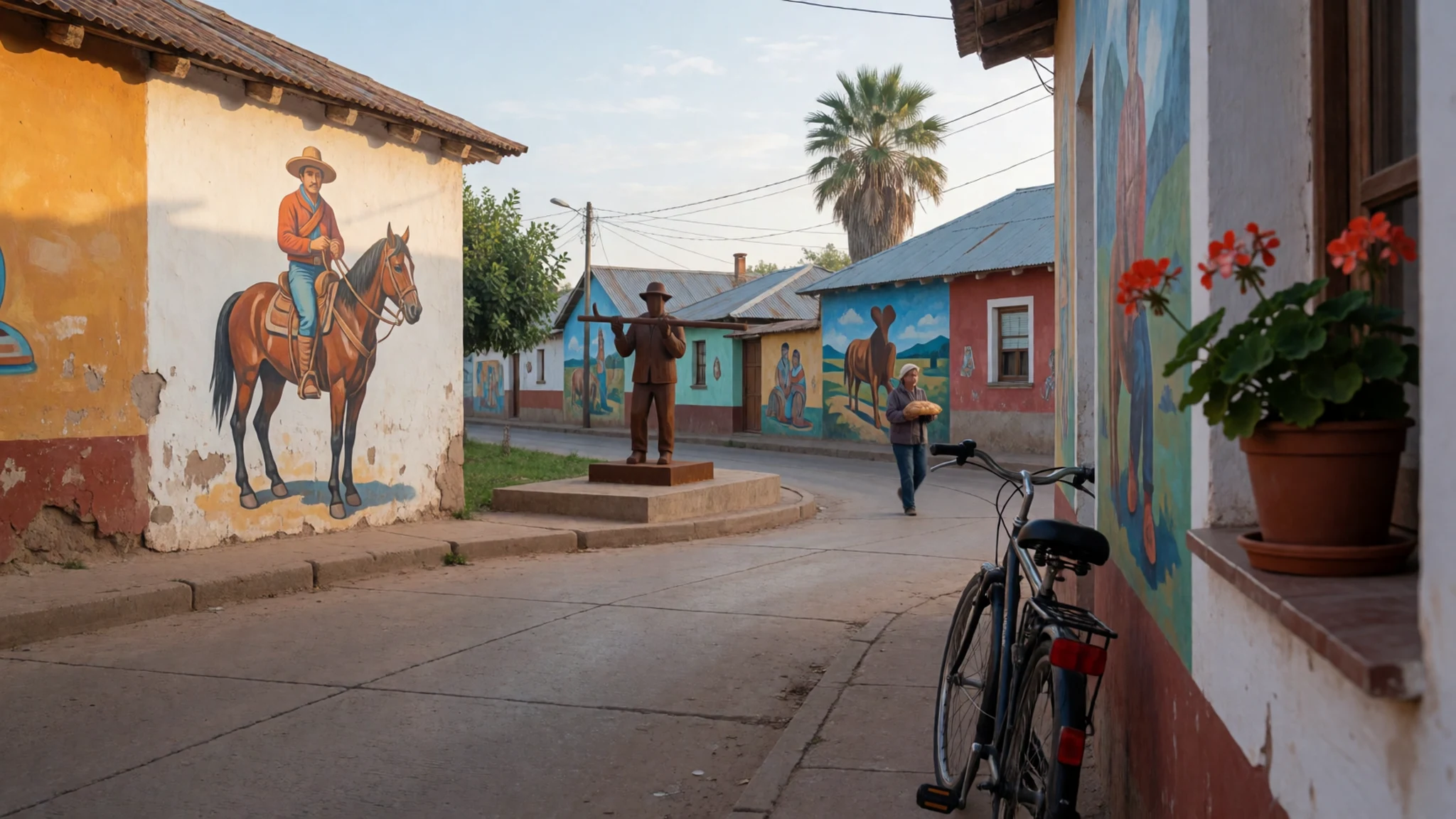
- The lakeside waterfront — Lakeshore, edge of town
The waterfront is where the town relaxes: families set up with a thermos and mate, anglers line the edges and, in the warm months, people swim. The water is calm, with no ocean surf. Take sun protection, since shade can be scarce, and stay near the shore unless a local confirms the swimming spot is safe.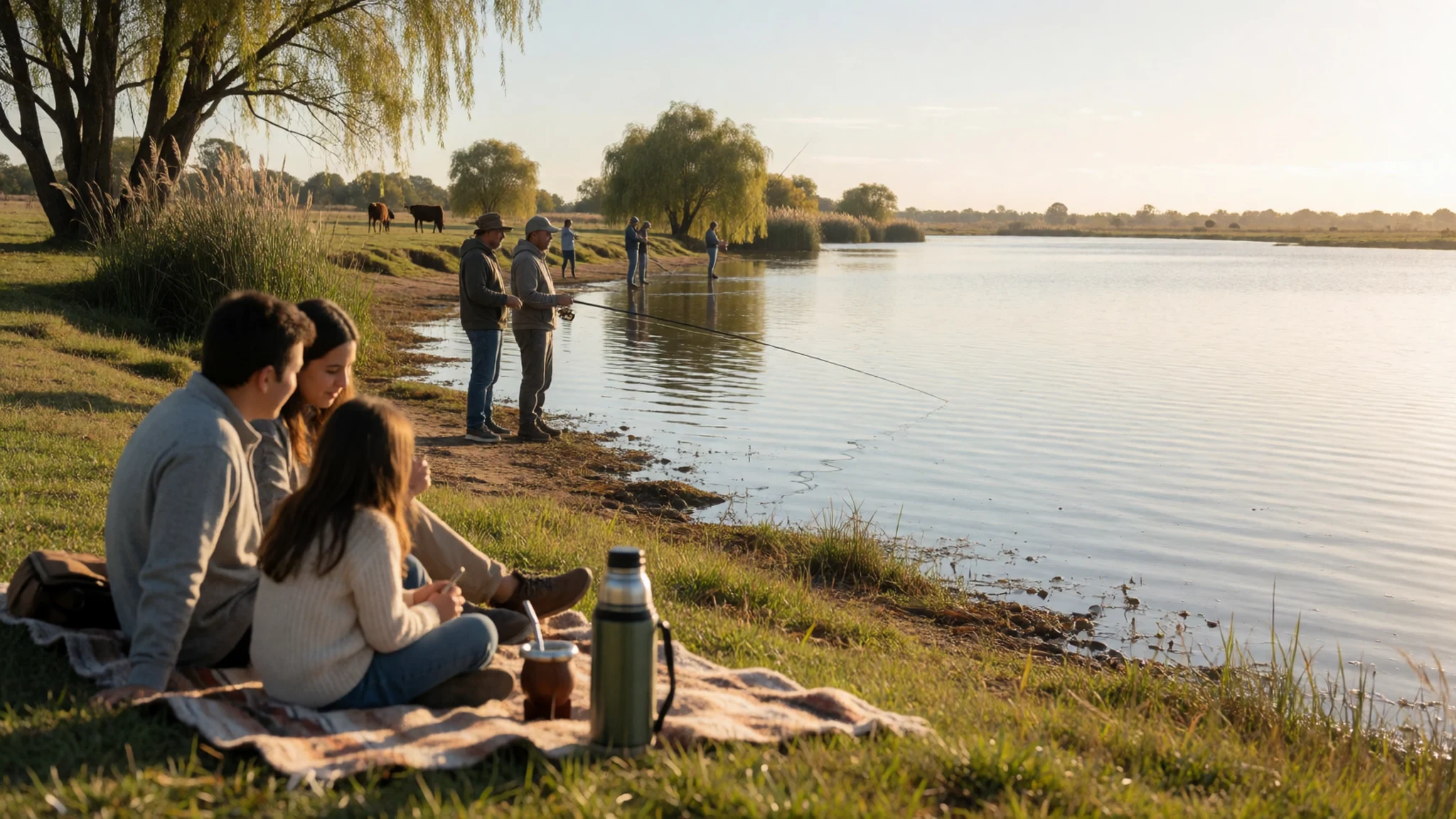
- The central plaza — Town centre
The central plaza is the town's living room, a good place to sit for an hour and watch daily life: schoolchildren, men talking on benches, mate circulating. The surrounding streets hold older houses and public buildings, which make a useful anchor for finding the murals. Summer evenings tend to be lively.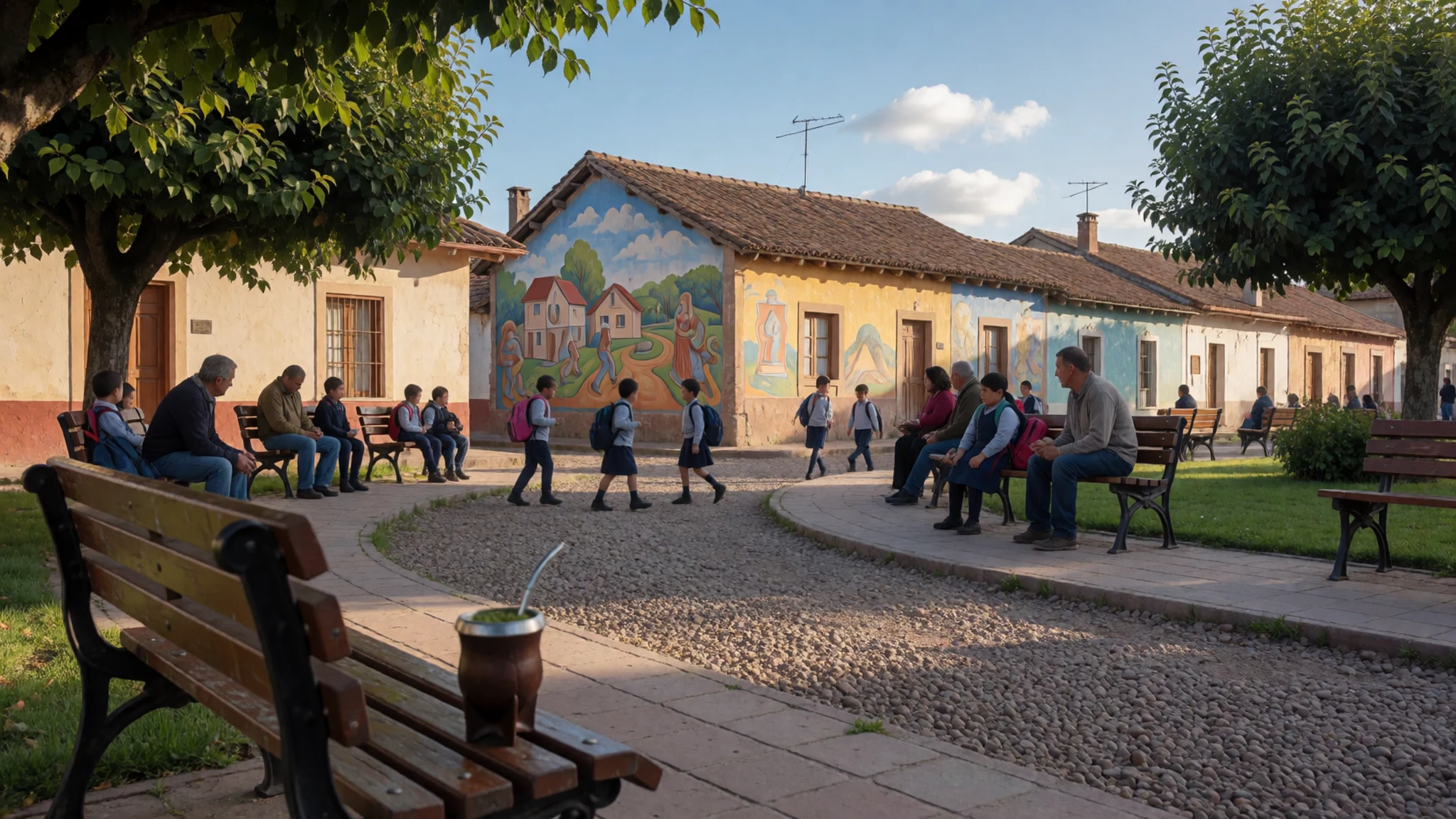
- Birdwatching along the shore — Lake edge and surrounding wetland
The shoreline and nearby wetland edges draw water birds, which suits the country's name, often glossed as 'river of the colourful birds'. Bring binoculars and go early, when the lake is still and the light is low. Walk quietly along the edge and keep a distance from nesting areas.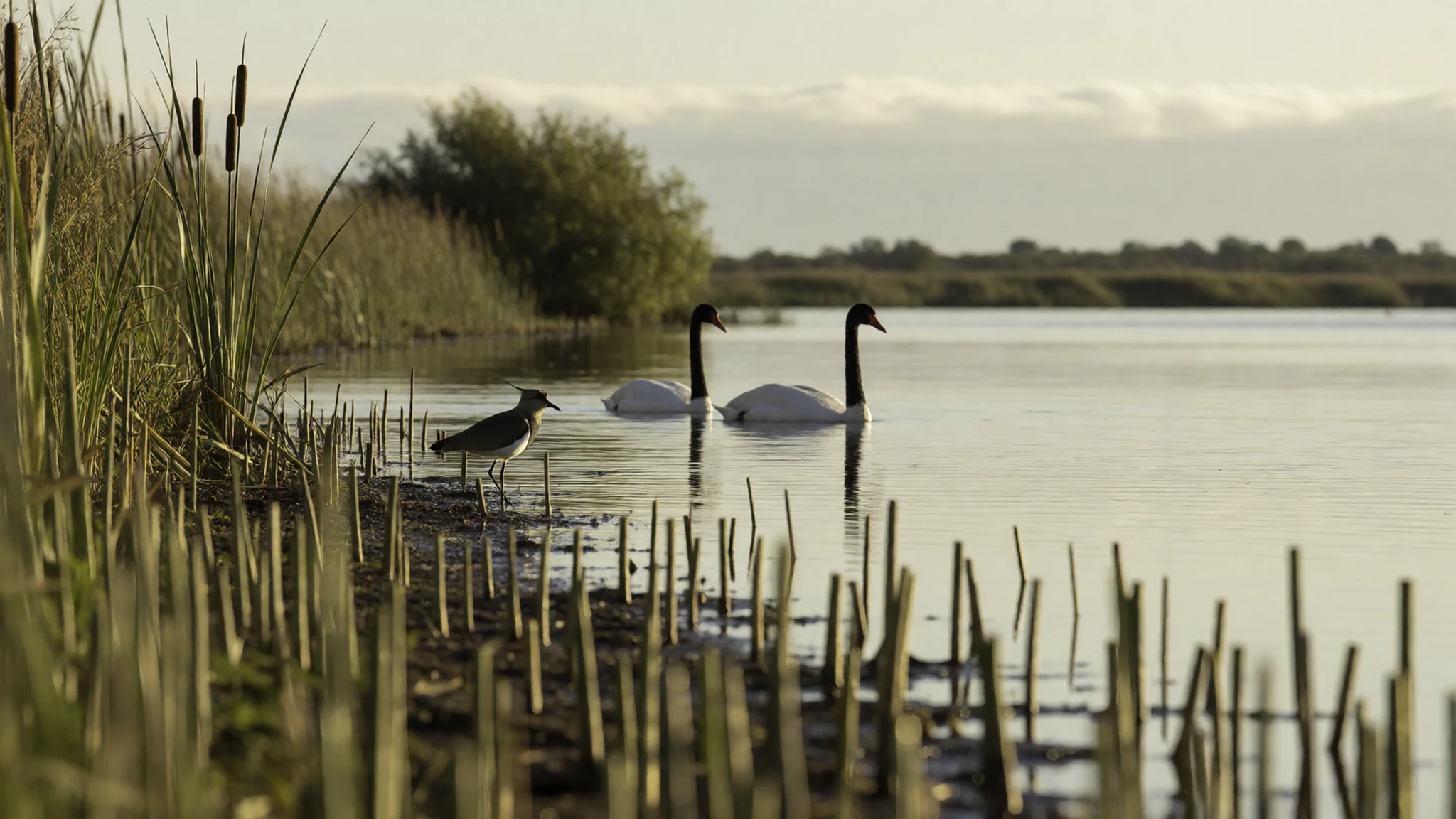
- Estancias and ranch country — Countryside around the municipality
Beyond the town lies cattle country, and Uruguay's interior has estancias, working ranches that sometimes take visitors for day tours or overnight stays. Ask locally or at your lodging about options rather than turning up unannounced. Gauchos at work in the saddle are part of ordinary rural life across the north.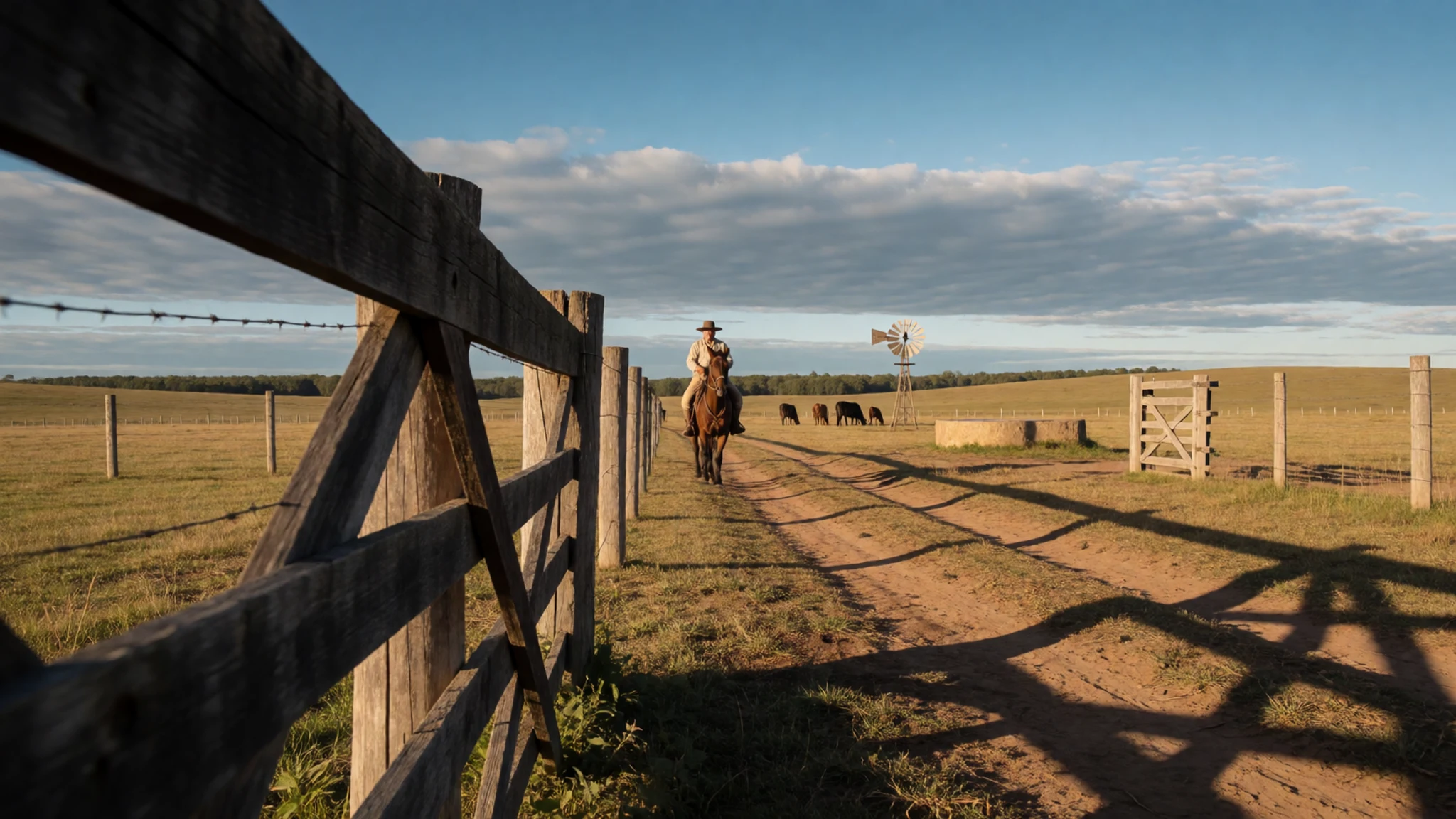
Culture
San Gregorio de Polanco shares the relaxed, courteous manners of Uruguay's interior. Uruguay keeps church and state firmly apart, and holidays are often named in non-religious terms, so churchgoing is not the centre of public life even though most people are nominally Catholic. Social life runs instead on conversation, family meals and mate, the bitter herbal infusion drunk from a gourd through a metal straw. A single mate gets passed around a circle, and being offered a turn is a sign of welcome.
Greetings are warm: one kiss on the cheek is normal between acquaintances, and a handshake is common at formal first meetings. Uruguay is also socially liberal, and visitors of all kinds, including same-sex couples, are generally treated without fuss.
Football is the other shared language, with the Montevideo clubs Nacional and Peñarol dominating conversation, and a question about last weekend's result is a safe opener. The town's identity as an open-air museum also gives residents a quiet pride in art, and asking about a mural often brings out a story about the artist or the street. Expect a slower pace, with long lunches and few rushed exchanges.
When someone passes you a shared mate, drink it through and return it, say gracias only when you want no more, and never move the metal straw.
What to wear
Traditional dress in San Gregorio de Polanco's cattle country is gaucho dress, the working clothes of the rider. The core pieces are bombachas, loose cotton or wool-blend trousers that gather at the ankle; a flat beret called a boina; a neckerchief; a wool poncho against wind and cold; and a wide leather belt, the rastra, sometimes decorated with silver. Boots or rope-soled alpargatas finish the outfit. Wool and leather hold up well on horseback, and many riders still wear these clothes for work, while festivals and rodeos bring them out more widely.
Everyday dress in town is simple and casual: jeans or light trousers, T-shirts, football shirts in club colours, trainers, and a cardigan or fleece once the sun drops. Many people carry a thermos and mate gourd, which has become an accessory in itself.
Visitors should dress for sun and changeable weather. In summer, bring light cotton, a hat, sunscreen and sandals, plus swimwear for the lake; in winter, evenings turn cool and damp enough to want a proper jacket and layers. Closed shoes are useful for dusty or muddy streets and for any ranch visit. There is no strict dress code, though covering shoulders and knees is polite in a church. Beachwear belongs at the shore, not in the shops or plaza.
What to eat
- Asado — Parrillas (grill restaurants) and weekend family cookouts
Asado, meat grilled slowly over embers, anchors Sunday gatherings across Uruguay and suits ranch country like San Gregorio de Polanco. Look for a parrilla, a grill restaurant, or a weekend family cookout. Beef usually leads, with sausages and offal alongside.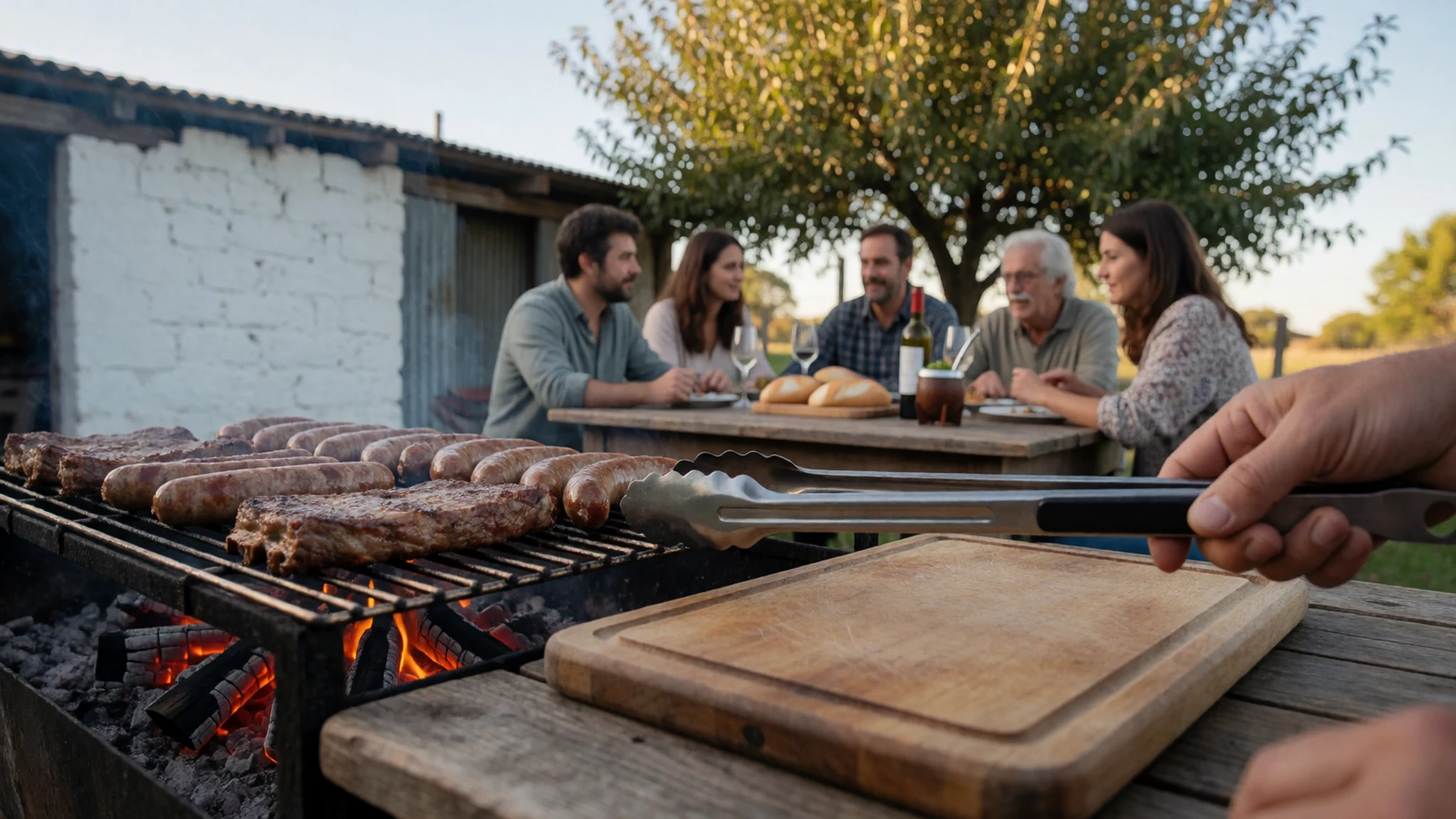
- Chivito — Snack bars, roadside cafés and simple eateries
Chivito is a Uruguayan steak sandwich piled with ham, cheese, egg, lettuce and tomato, often served with chips. Despite the name it contains no goat. Find it at snack bars, roadside cafés and simple eateries, where it makes a filling lunch.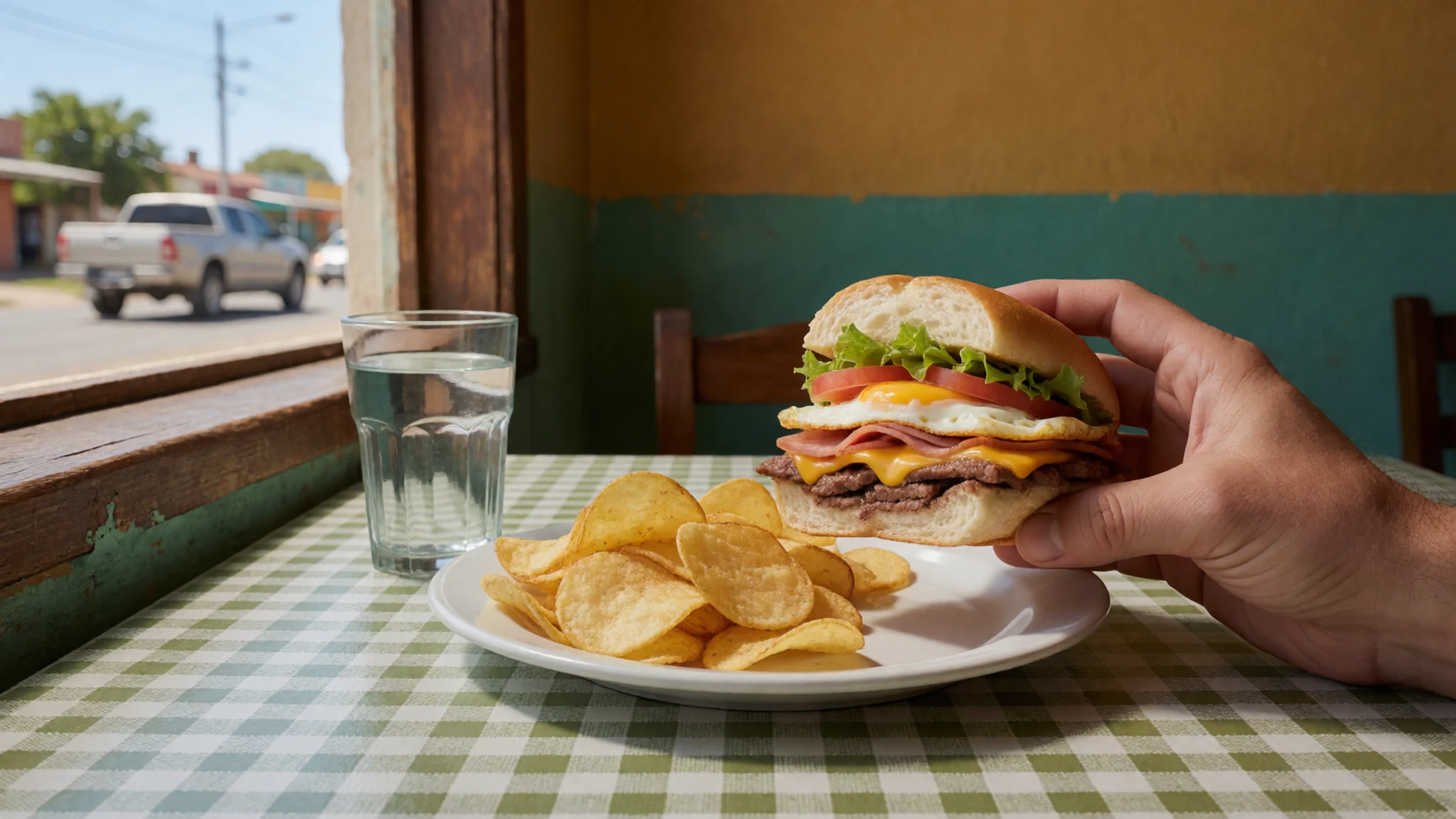
- Empanadas — Bakeries and small shops in the town centre
Empanadas, palm-sized pies filled with meat, cheese or ham and cheese, are the easy snack here. Bakeries and small shops sell them hot, either baked or fried, and they travel well in a bag for a lakeside lunch or a bus ride. - Mate — The lakeshore, the plaza and any grocery for yerba
Mate is the national habit: dried yerba leaves steeped in hot water in a gourd and sipped through a metal straw. Expect to see people carrying a thermos along the lakeshore and plaza. Sit with locals, accept a turn if offered, and buy yerba in any grocery. - Pasta and ravioli — Family restaurants and neighbourhood eateries
Pasta, a legacy of Italian immigration, is standard in Uruguay: ravioli, tallarines and ñoquis, often with a tomato sauce called tuco, which may include meat. Vegetarians should check before ordering. Try family restaurants and neighbourhood trattoria-style places.
Plan it
Best time. March–April and October–November, when days are mild and the lakeshore is pleasant to sit beside; December–February is hot and best for swimming, while June–August is cool and damp with very quiet streets.
How long. 1–2
Getting there. Fly into Montevideo's Carrasco airport, then continue by bus or hire car towards Tacuarembó Department; the last leg is by road. Check current bus operators' timetables, as services to small towns can be infrequent.
Budget. low
Tips
- Carry cash as well as a card, since small shops may not take cards
- Stock up on fuel, food and cash in a larger town before arriving
- Bring water and sun protection in summer, and walk the murals early or late to avoid midday heat
- Book rooms ahead for holiday weekends, when families and day-trippers fill the town
- Ask locally before swimming or visiting a ranch, as arrangements are informal
Etiquette
- Ask before photographing people, especially riders and families at the shore
- Greet people with a friendly buenos días when entering a shop
- Take litter away from the lakeshore
Nearby
Sources
- Wikidata Q6031483 (CC0)
- Wikipedia: Municipality of San Gregorio de Polanco (rev 1378778804) (CC BY-SA 4.0)
- Wikivoyage: Uruguay (rev 5432731) (CC BY-SA 4.0)