Saint-Laurent-du-Maroni
Saint-Laurent-du-Maroni, France
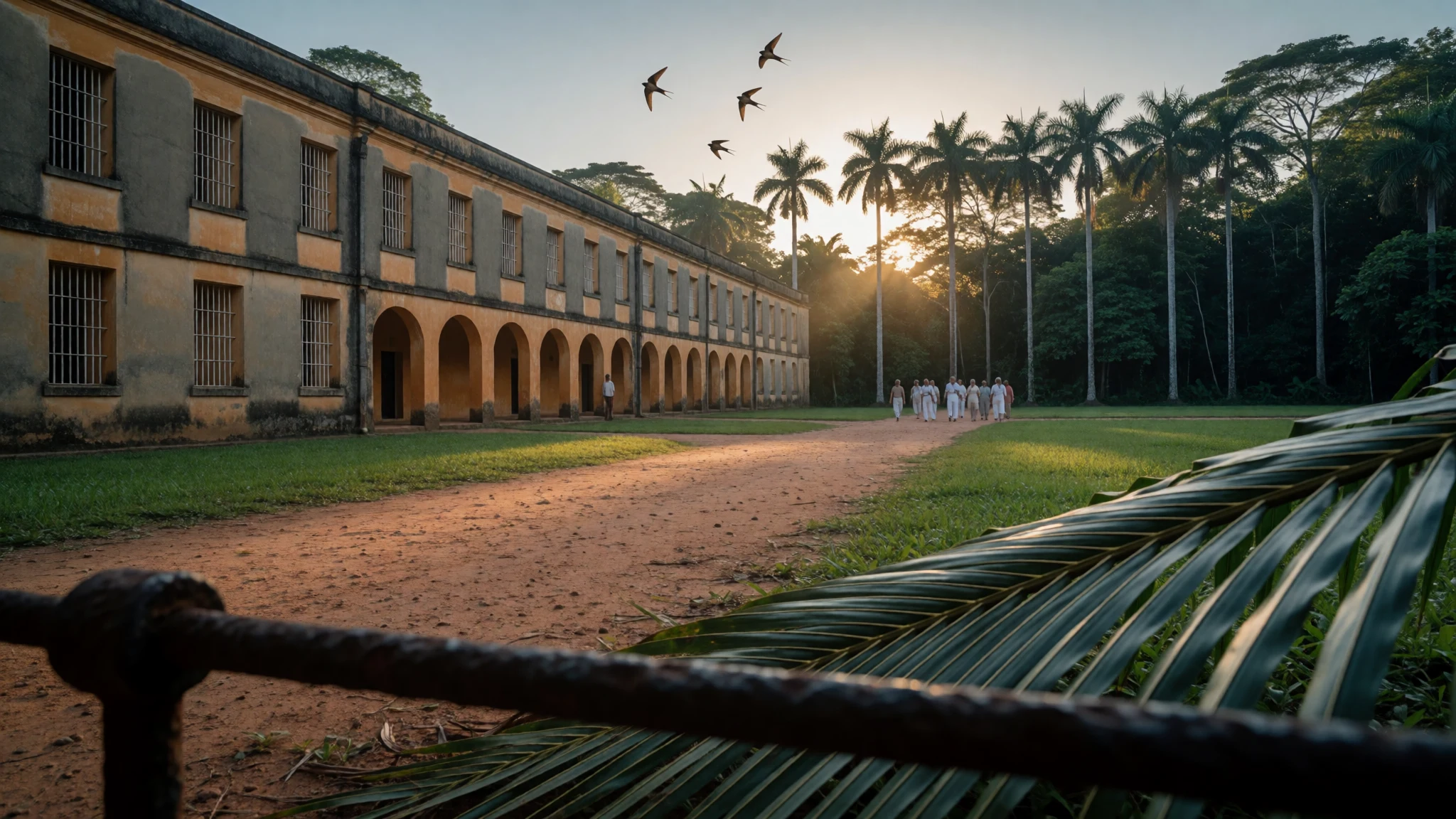
Saint-Laurent-du-Maroni pairs a haunting French penal-colony past with a lively river border town, and a gateway to Guiana's creeks and rainforest.
The place
Saint-Laurent-du-Maroni sits in the north-west corner of French Guiana, on the bank of the Maroni River, which marks the border with Suriname. Directly opposite is the Surinamese town of Albina, reached by ferry or by pirogue, the long dugout canoe that still carries most traffic on the river. The town stands only 4 metres above sea level and has no Atlantic shoreline. That was probably deliberate: the penal authorities who chose the site wanted to make escape by sea difficult.
About 54,429 people live here, which makes it the second most populous town in the territory. It is one of three sub-prefectures of French Guiana, so it carries real administrative weight, yet the feel is low-rise, hot and unhurried, with the river always close at hand.
The population is mixed, as it is across French Guiana. Maroons, descendants of enslaved people who escaped plantations and built their own river societies, are now the biggest group, followed by Creoles, Amerindians, Haitians, métropolitains from mainland France, and Brazilians. Maroon families, among them Djuka, Saramaka and Paramaccan communities, are concentrated in neighbourhoods such as la Charbonnière, les Vampires and les Sables Blancs. Amerindian villages lie on the outskirts, including Balaté, home to Arawak families, and Village Pierre, a Kalina village.
The town has several names. French Guianese Creole calls it Sen-Laurent-di-Maronni, and speakers of Eastern Maroon Creole say Soolan. Hearing all three languages in a single market morning is a fair introduction to the place.
Its story
Saint-Laurent-du-Maroni owes its existence to the French penal system. Auguste Baudin founded it in 1858 as the point where convicts shipped from France were landed and processed, in a compound called the Camp de la Transportation. An Amerindian settlement named Kamalakuli, after its chief, already stood close by.
In 1880 the town became the capital of a special prison commune, an odd arrangement in which the mayor was also the director of the penitentiary administration. Civic life and punishment were run by the same office. The Hôtel de Ville was finished in 1907, a reminder that the colony was meant to last.
Pressure to end the system grew in the 1930s. Gaston Monnerville, who entered the French parliament as a representative of the territory in 1932, made abolition a cause. A decree ended transportation in 1938, but prisoners remained, and the last of the penal establishments only shut in 1946. Three years later, on 9 November 1949, Saint-Laurent-du-Maroni took on the ordinary status of a French commune.
The past is not entirely closed. In 2025 the French state announced plans for a new high-security prison here, with a cost put at about €400m and an opening possibly in 2028. Also in June 2025, 91 hectares of state land were handed to the town, part of a wider transfer of more than 250,000 hectares to local communities for housing, public buildings and a business park.
What to see
- Camp de la Transportation — Rue Tanon, town centre
The former reception camp is the reason the town exists. Convicts, including the man later known as Papillon, were registered here before being sent on. Visits are by guided tour only, and many guides speak some English. Cells and the execution area are included; it is sobering rather than cheerful.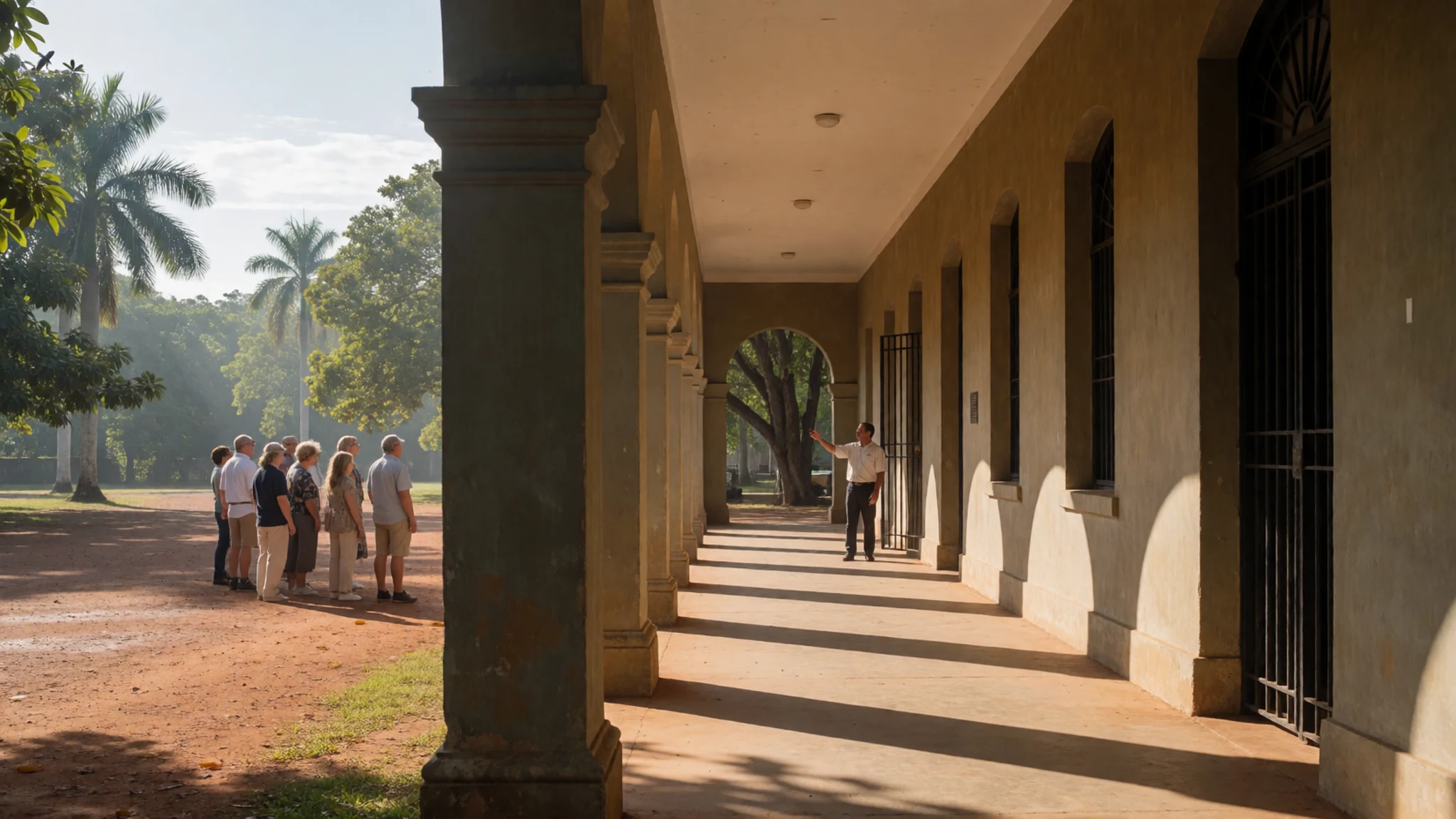
- Condemned men's block and disciplinary quarter — Within the Camp de la Transportation
Inside the camp, the cell blocks show how punishment was layered: separate quarters for those awaiting execution and for those disciplined for misbehaviour. Bare walls, small doors and weathered stone do more to explain the system than any panel. Expect heat and humidity inside, so go early.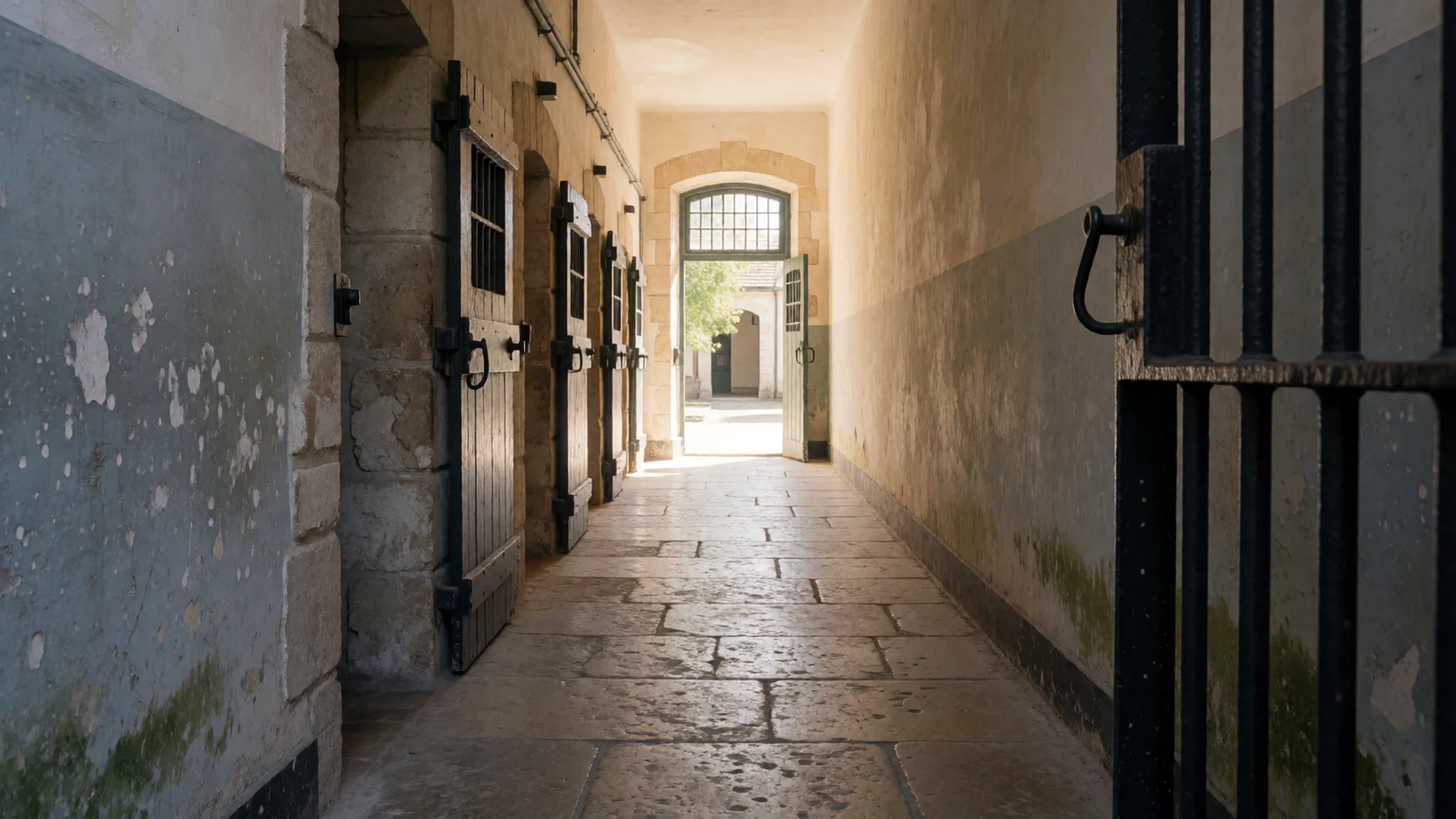
- Colonial civic buildings and the church — Avenue du Colonel-Chandon and the central avenues
A short walk links the Église Saint-Laurent, listed as a historic monument in 1995, the sub-prefecture and the Hôtel de Ville of 1907. These are modest buildings in the tropical colonial style, best seen slowly in the cooler morning, with stops for shade.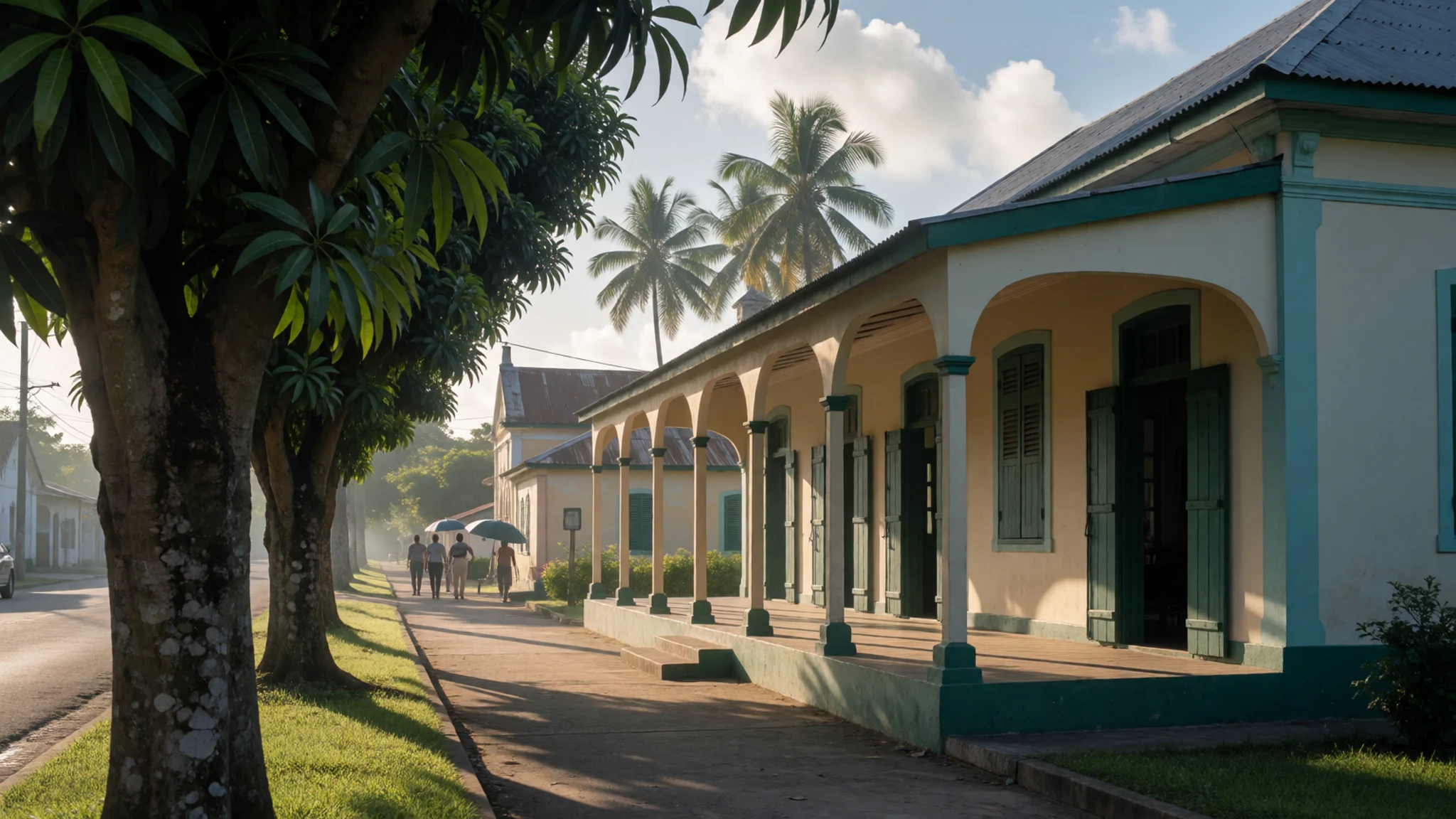
- The river front and boat trips — Esplanade Baudin, along the Maroni
The Maroni is the town's real main street. Canoes can be rented near the Esplanade Baudin, and local operators run boat tours onto the river and its creeks. The town is also a starting point for longer ecotourism trips into the rainforest. Ask the tourism office for current operators.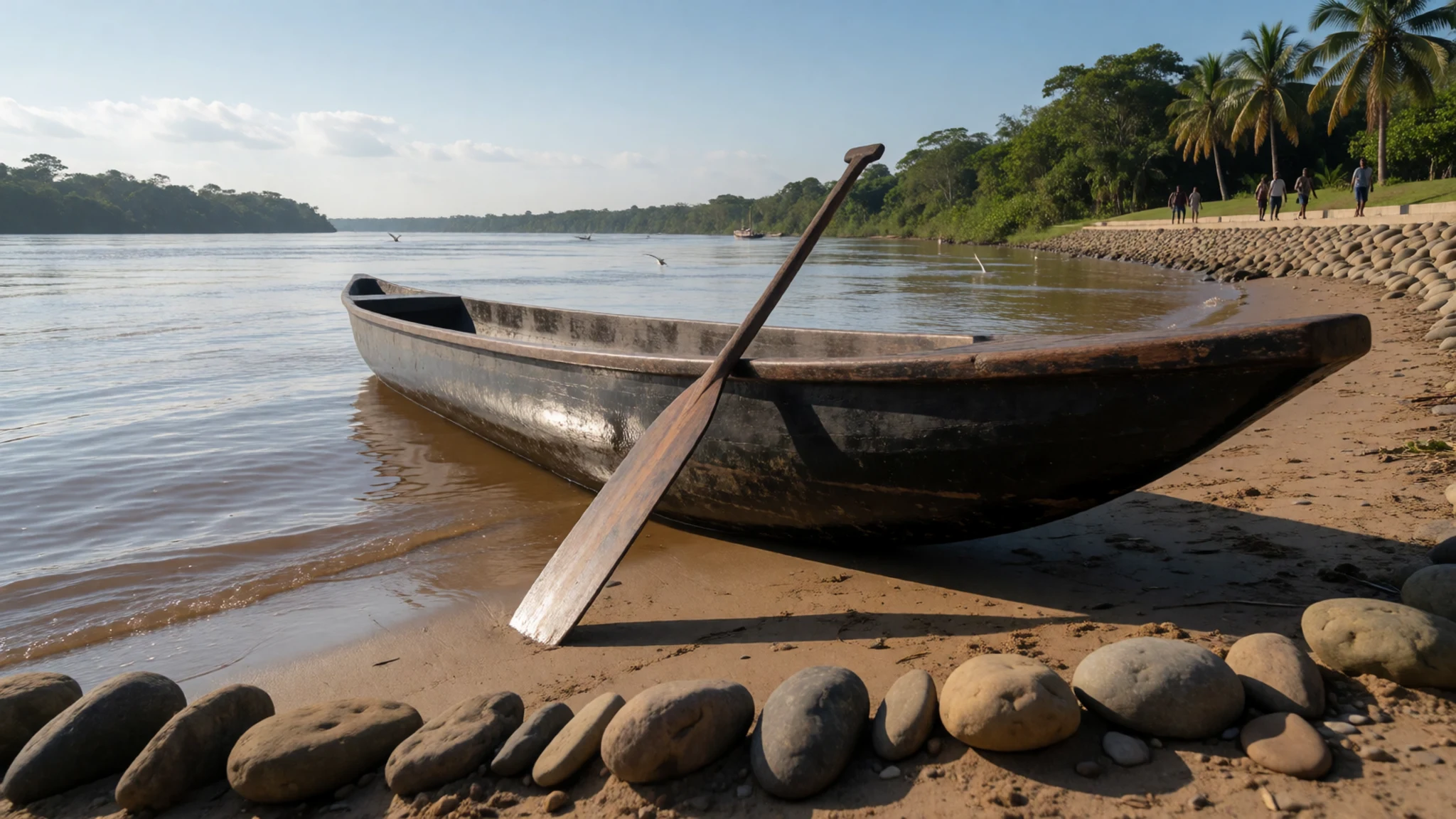
- Saint-Jean and the Saramaka woodwork road — Road south to Saint-Jean-du-Maroni, about 17 km away
Saint-Jean holds the remains of another penal site, the Camp de la Rélégation. The road there is lined with small shops run by Saramaka craftspeople, who are known for carved chairs and tables. A Maroon artisans' village also stands on the road towards Javouhey. Bring cash and leave room in the car.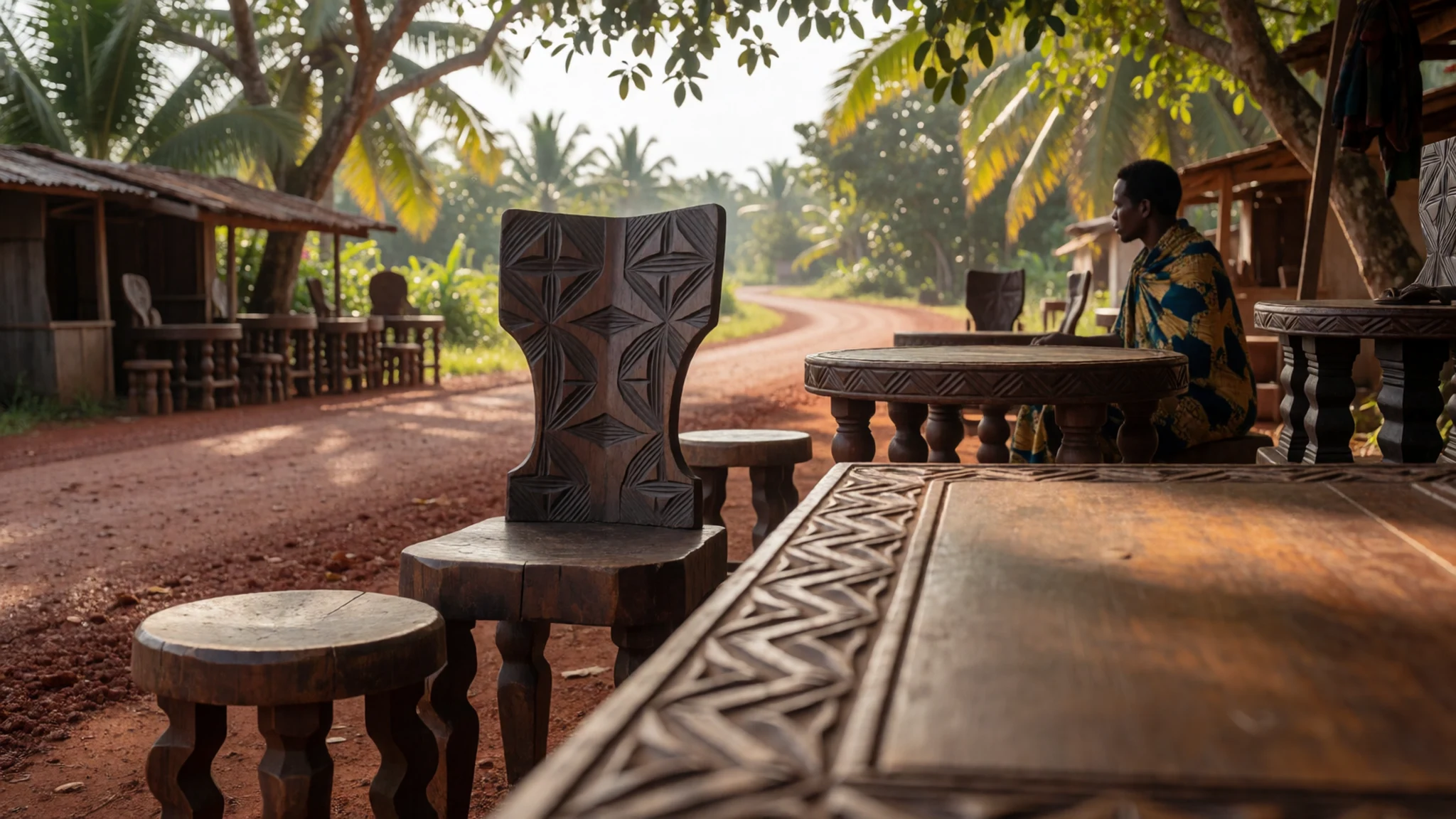
- Apatou and Voltaire Falls — Upriver, about 50 km to Apatou and 20 km further south
For a day or more away from town, boats and tracks lead upriver to the village of Apatou, and then to Voltaire Falls. The hike is described as challenging, so go with a guide or a local operator and expect mud, heat and rain at any time of year.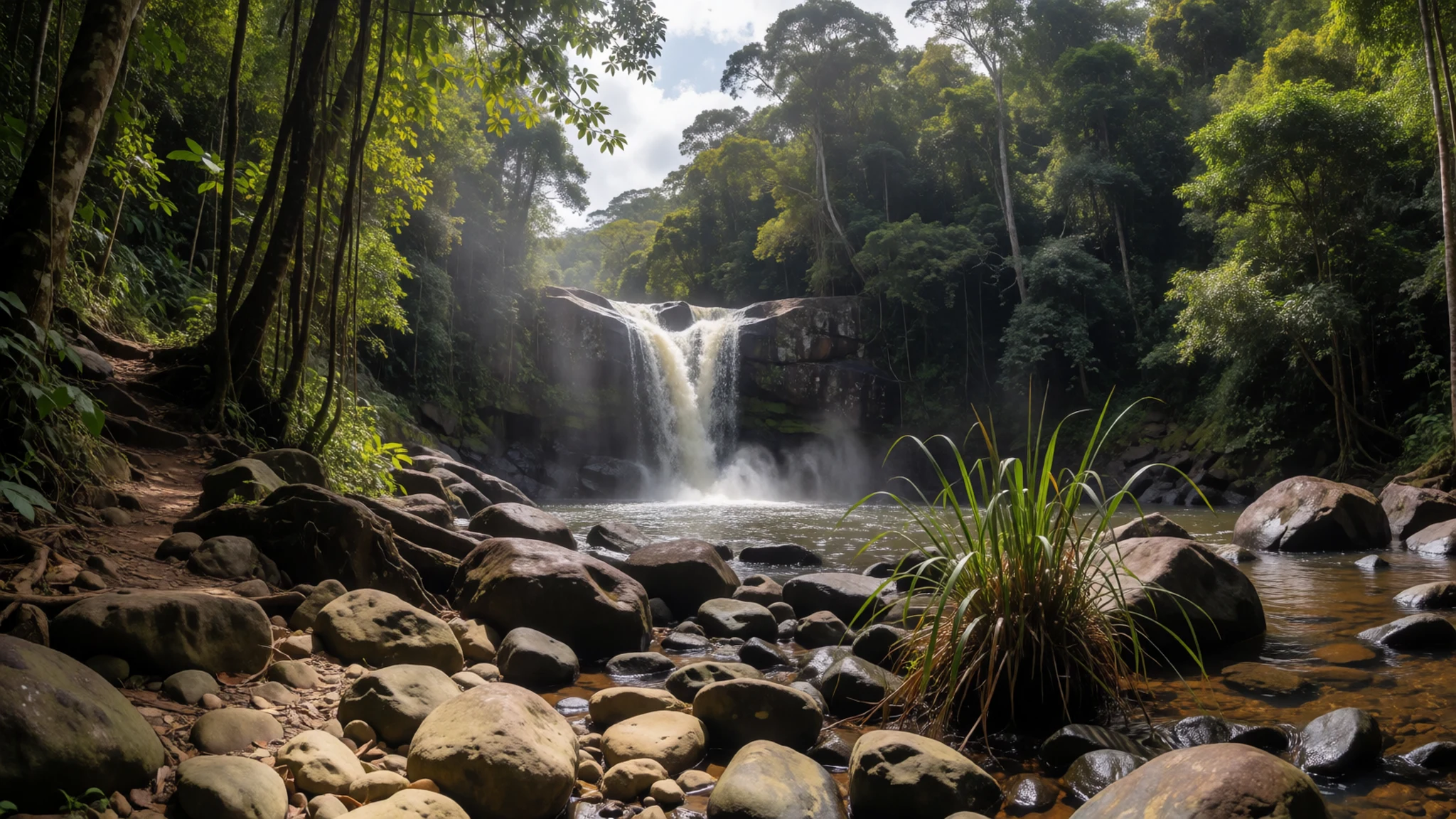
Culture
Saint-Laurent-du-Maroni is a place where several cultures sit side by side rather than blending into one. Creole, Maroon, Amerindian, Haitian, Brazilian and mainland French communities all have a visible presence, and conversation in the street can switch between French, Creoles and Portuguese within a few minutes.
The Maroon communities are central to the town's character. They keep strong traditions in woodcarving, river travel and family organisation, and the Saramaka craft shops south of town are one place where this is on show. Amerindian villages on the outskirts, Arawak and Kalina among them, add another layer, and their members have lived on this river far longer than the colony.
The prison history shapes how people talk about the town. For some it is heritage to be explained to visitors; for others it is a painful, still-present subject, especially with a new prison planned. Visitors tend to get the best conversations by listening first and asking about the town today, rather than only about the convicts.
Because of the border, daily life flows across the river. Ferries and pirogues carry people, goods and family news between Saint-Laurent and Albina, and the crossing is part of local routine rather than a tourist attraction. Public life is run on French lines, with French administration, schools and shops, while the markets and riverbanks keep a distinctly Guianese rhythm.
Ask before photographing people, their homes or their boats, especially in the Maroon and Amerindian neighbourhoods and villages, and accept a refusal with a smile.
What to wear
Dress in Saint-Laurent-du-Maroni reflects the town's mix of communities, and what is worn on ordinary days differs from what appears at celebrations. Traditional clothing varies by group. Many Maroon women wear bright wrapped cloths and headwraps in strong colours, while Creole women may wear madras-style headties and layered cotton skirts at festivals. Among Amerindian communities, beadwork and woven pieces are common on ceremonial occasions. Specific patterns and their meanings vary from family to family, so it is worth asking rather than assuming.
Day to day, most people wear light, practical clothes suited to heat that barely changes through the year: cotton shirts, T-shirts, shorts, sundresses, long skirts and flip-flops or sandals. Mainland French styles are visible among officials and school staff, and sports kit, jeans and printed wraps all mix easily in the street. People generally dress neatly for church, offices and formal occasions.
Visitors should plan for an equatorial climate: average highs around 29 °C, little relief at night and rain in every month. Light, quick-drying cotton or linen, a hat and sunglasses work best, with a thin waterproof for downpours. Closed shoes with grip are wise for the camp, forest paths and riverbanks, and sandals are fine in town. Long sleeves and trousers help against mosquitoes at dusk. In villages and when visiting the church, shoulders and knees covered is a respectful default. Swimwear belongs at the water's edge, not in town.
What to eat
- Accras de morue — Street stalls and snack counters in the town centre
Small fried fritters of salt cod, spiced with chilli and herbs, are a staple of Guianese Creole cooking. They are eaten hot, usually as a snack or starter, and are easy to find as a quick bite while walking between sights.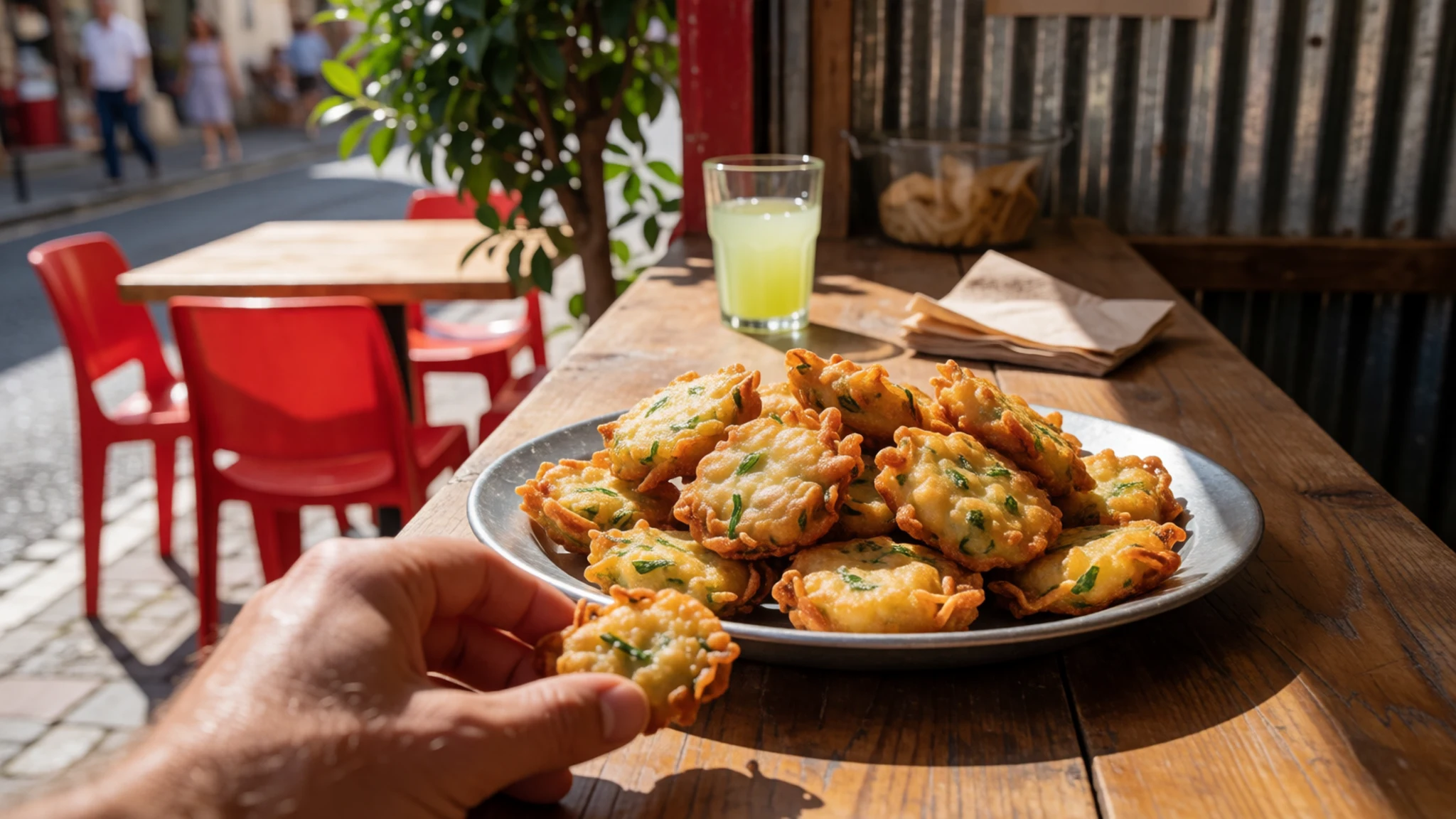
- Couac — Local markets and Maroon and Amerindian households
Couac is toasted cassava meal with a dry, crumbly texture, served alongside fish, stews and grilled meat. It is a regular part of meals along the Maroni. Ask a market seller how they like to eat it; each family has a preference.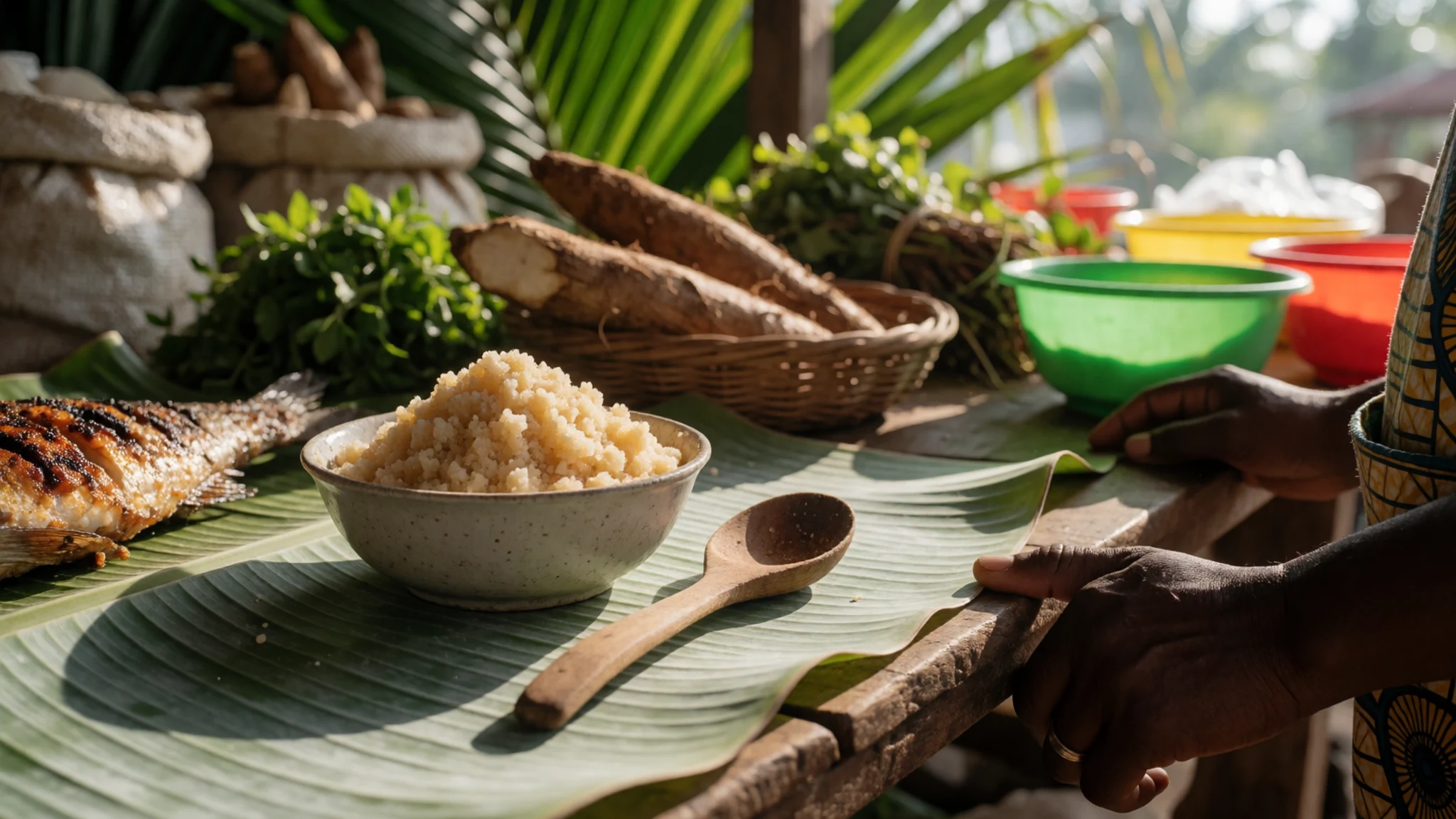
- Grilled river fish — Eateries and informal stalls near the river front
Freshwater fish from the Maroni is typically grilled or stewed and served with rice, cassava and a chilli sauce. Eating beside the river is the point. Ask what was caught that day, and be prepared for bones. - Bouillon d'awara — Family-run Creole eateries, often seasonal and by order
A rich stew built on the fruit of the awara palm, cooked with smoked fish or meat, shellfish and greens. It is a special-occasion dish, so not always on the menu. Ask at a Creole eatery whether anyone is making it. - Local sugarcane rum — Shops and bars in town; ask for the local brands
Sugarcane fields near the town supply rum sold under names such as La Belle Cabresse, made for the Saint Maurice rum company. It is strong, at 50 to 55 per cent alcohol by volume, and usually sipped slowly or mixed in a punch.
Plan it
Best time. September and October are the driest months and the hottest, with highs around 31 °C. Rain falls in every month, with at least 100 mm monthly, so showers are likely at any time. Temperatures hardly vary: lows around 24 °C and highs around 29 °C.
How long. 1–2
Getting there. Air Guyane Express flies to Saint-Laurent from Cayenne and Paramaribo. By road, Route Nationale 1 from Cayenne ends in the town; buses from Cayenne and Kourou run to Iracoubo, with onward buses, and minibuses without fixed schedules also make the trip. From Suriname, take the ferry across the Maroni from Albina.
Budget. mid
Tips
- Book camp tours and river trips through the town's tourism office or the official site, https://www.saintlaurentdumaroni.fr/, and check current hours and fees
- Start sightseeing early; the heat and humidity build quickly and showers can arrive in any month
- Carry cash for markets, craft shops and small river operators, as card acceptance can be patchy
- Bring insect repellent and drink bottled or treated water
- Keep your passport with you if you plan to cross the river to Suriname, and check entry rules beforehand
Etiquette
- Ask before photographing people, homes or boats
- Dress modestly in villages and church
- Treat the penal sites as places of suffering, not a backdrop for jokes
Nearby
Sources
- Wikidata Q319959 (CC0)
- Wikipedia: Saint-Laurent-du-Maroni (rev 1382017180) (CC BY-SA 4.0)
- Wikivoyage: Saint-Laurent-du-Maroni (rev 5416620) (CC BY-SA 4.0)
- Photo: Église Saint-Laurent (Psu973) (CC BY 3.0)
- Photo: Sous-préfecture (Danekino2) (CC BY-SA 4.0)
- Photo: Saint-Laurent-du-Maroni (Maarten van der Bent) (CC BY-SA 2.0)
- Photo: Église à Saint-Laurent-du-Maroni (Danekino2) (CC BY-SA 4.0)
- Photo: Locator map (Tschubby) (CC BY-SA 1.0)
- Photo: Condemned men's block (Ted Hill) (CC BY 3.0)
- Photo: Quartier disciplinaire (Ted Hill) (CC BY 3.0)
- Photo: Inside the bagne (Benoît Prieur) (CC BY 3.0)


