Sado Island
Sado Island, Japan
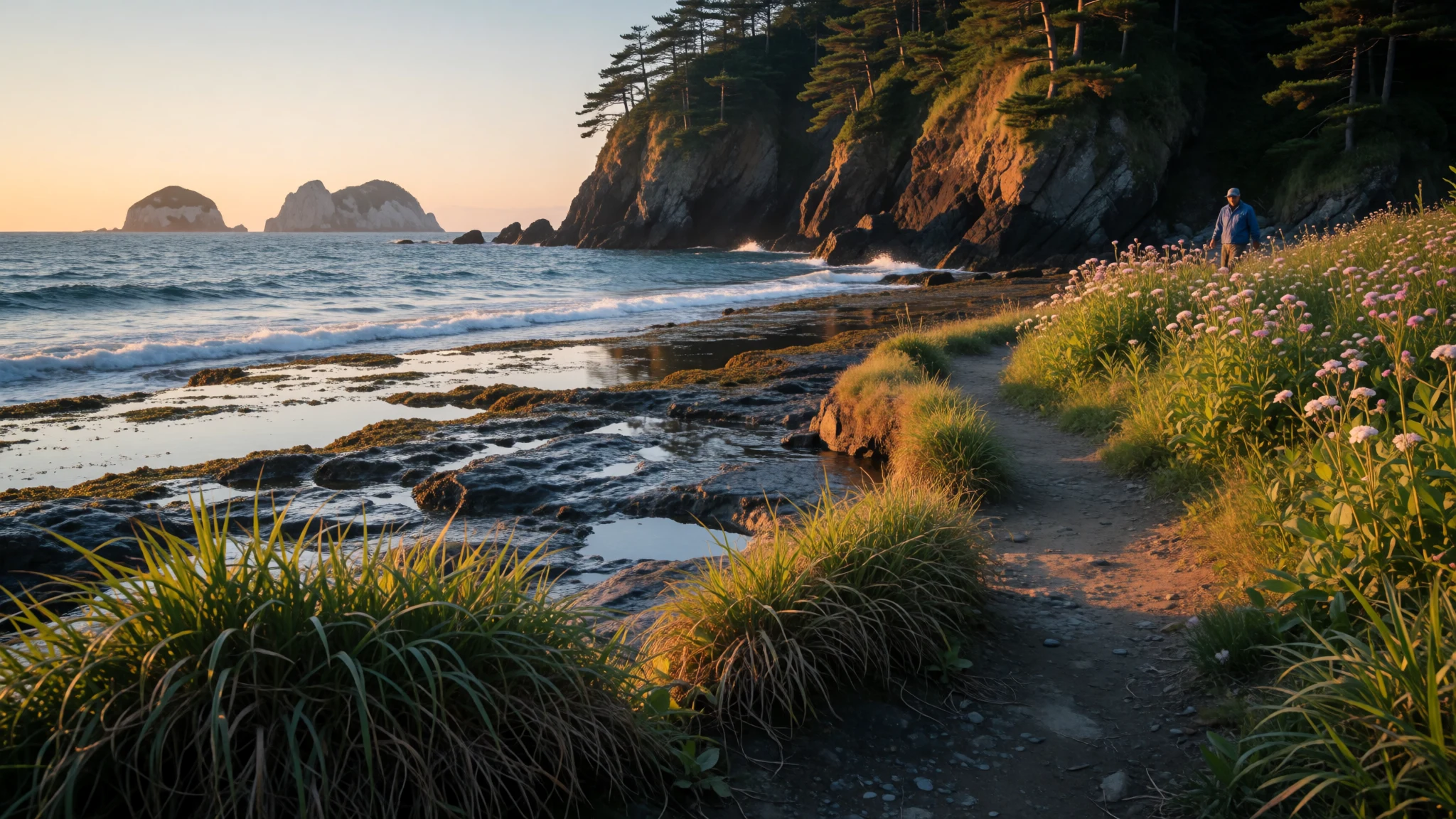
Sado Island is a big, rural island in the Sea of Japan with gold-mine history, exile stories, Noh stages, taiko drumming and quiet coves.
The place
Sado Island lies in the Sea of Japan off the coast of Niigata Prefecture and is governed as a single municipality, Sado City. About 51,000 people live on it, mostly in the central plain and in small fishing ports around the coast. The nearest point on Honshu is 32 km away across open water, which is far enough for the island to keep its own pace. Its outline is often compared to the kanji for work (工) or to a letter S, and the land follows that pattern: the Ōsado range in the north, the Kosado range in the south, and a flat, farmed plain joining them. Ōsado is the higher of the two, and its summit, Mount Kinpoku, reaches 1,172 m. The northern coast is steep and rugged, with sea cliffs and narrow inlets, and Senkaku Bay is its best-known stretch. The Kosado side is softer, with tea bushes and Satsuma orange trees on the slopes. The coastline runs for 262.7 km, so reaching the far corners takes real driving time, and public transport is thin outside the main towns. Nightlife is minimal: there are few karaoke bars and no permanent cinemas. What the island offers instead is space, sea air, old mining country and villages where fishing boats still work the harbour.
Its story
Sado Island was once part of Honshu. Geologists place the separation at roughly 16 million years ago, when tectonic movement and volcanic activity pulled the land apart. About 2 million years ago the seabed began to buckle, and the two mountain ranges rose on either side of the central plain. That uplift has not stopped, which is why earthquakes remain part of the island's story. People have lived here for about 10,000 years, and the island is named in Japan's earliest chronicles, the Kojiki and the Nihongi. Once the imperial state organised its provinces, Sado became one, and its remoteness made it a place of exile. Emperor Juntoku, the priest Nichiren and the Noh master Zeami were all sent here. Local power later passed to the Honma clan, and in 1589 the Uesugi took control after Uesugi Kagekatsu invaded. The biggest change came in 1601, when veins of gold and silver were found at Aikawa and the Sado Mine opened. Mining shaped the island's economy and drew workers and merchants for centuries. The history is not all celebration. Around 1,500 Koreans were conscripted to work in the mines during the Second World War, a claim that the Japanese government and some scholars dispute, so visitors will hear differing accounts of that period.
What to see
- Sado Gold Mine, Aikawa — Aikawa, west coast
The former gold and silver mine at Aikawa is the island's best-known industrial site, and visitors can follow two different walking courses through the workings. The split mountain called Dōyū no Warito, an old open-cast cut, is its landmark. Allow a few hours, and bring a layer, as the tunnels are cool.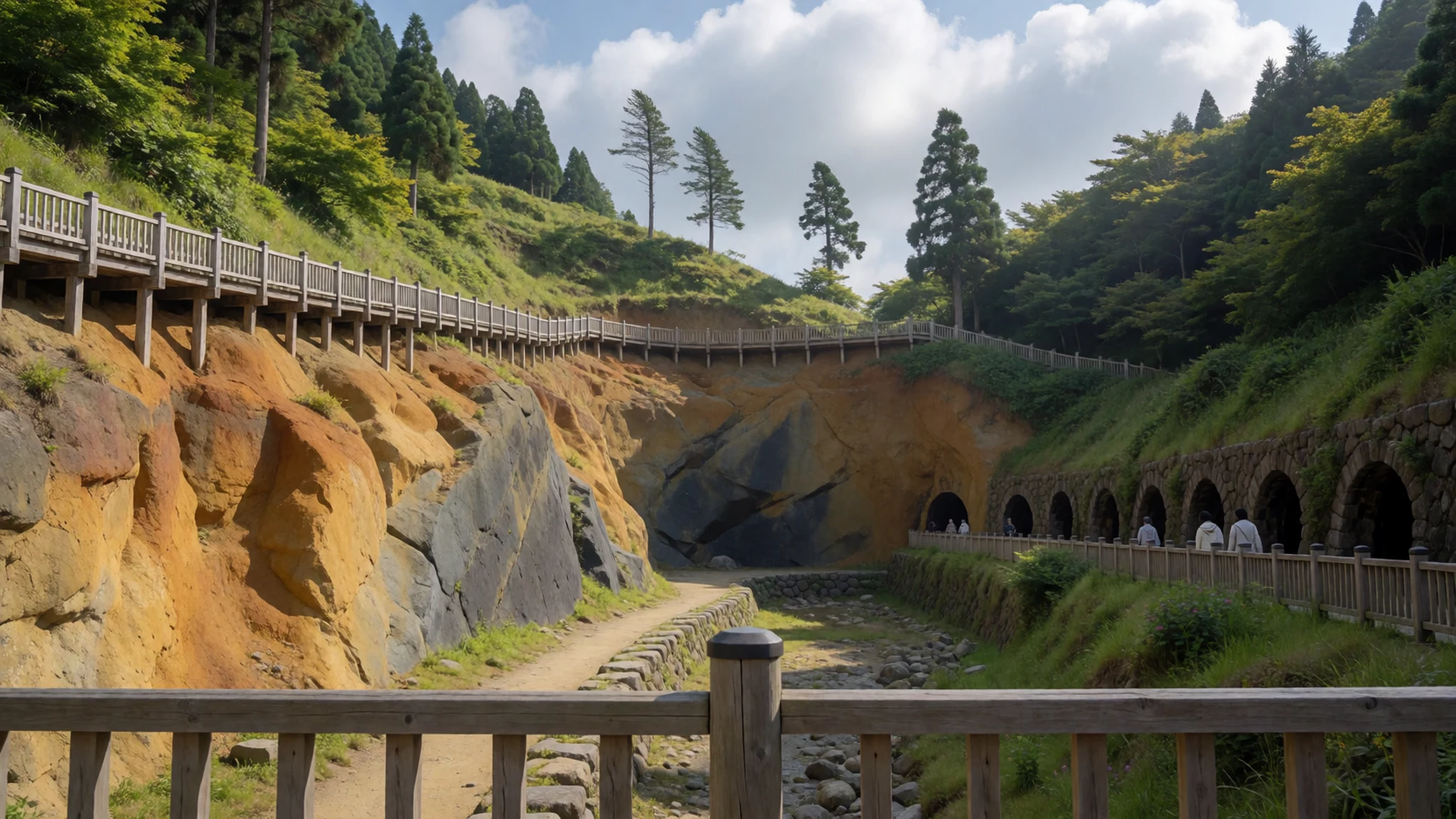
- Senkaku Bay — Ōsado coast, north
Senkaku Bay is the best-known stretch of the steep northern coast, where cliffs and rock formations drop into the sea. Most people see it from a viewpoint or from the water on a short boat trip. Sea conditions decide whether boats run, so ask locally on the day.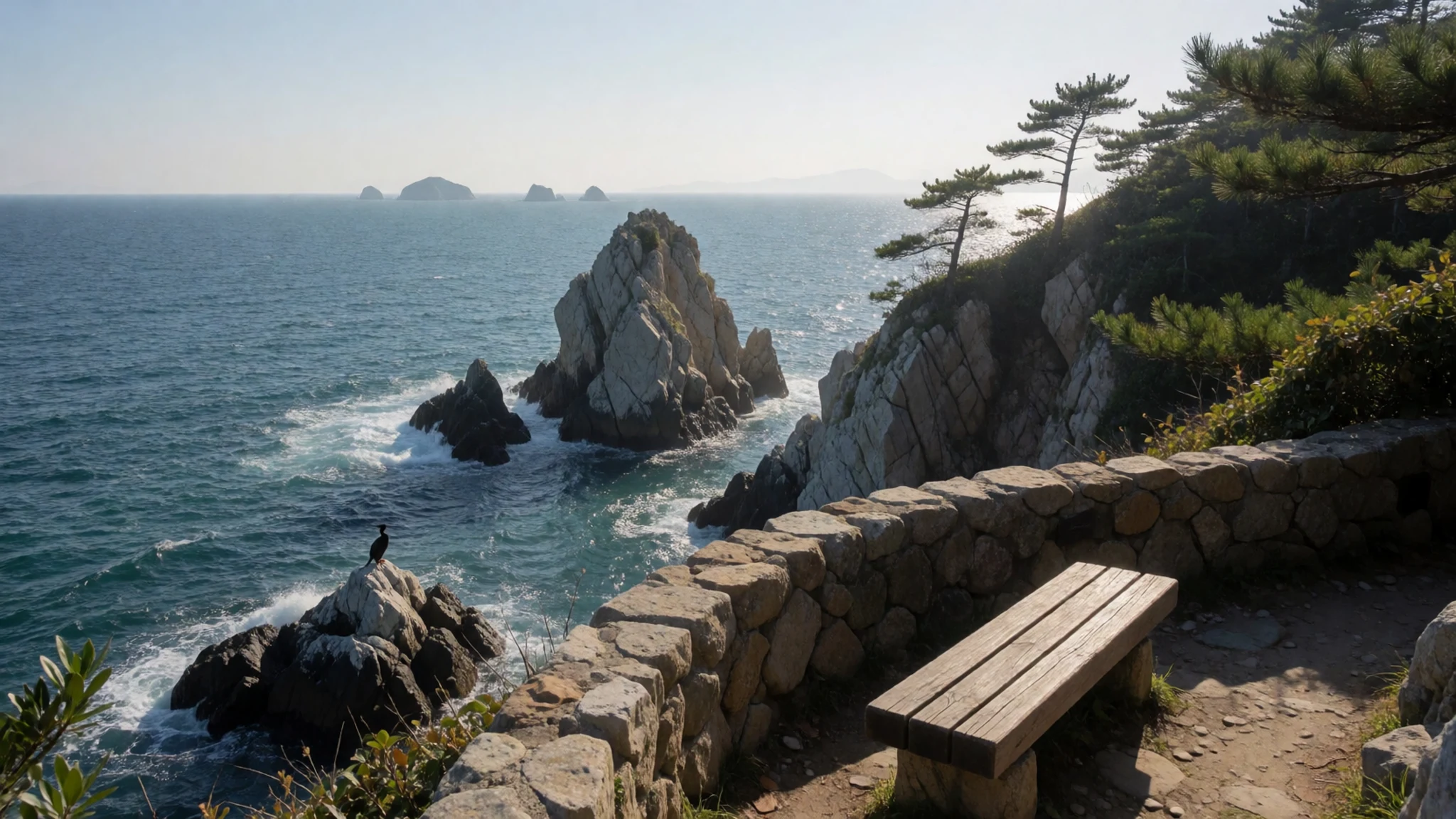
- Shukunegi — near Ogi, south coast
Shukunegi is a small harbour village on the south coast, near Ogi, with wooden houses that recall the Edo period. It is best explored on foot and without hurry. Many buildings are still lived in, so keep to the lanes, keep your voice low, and look rather than wander into private yards.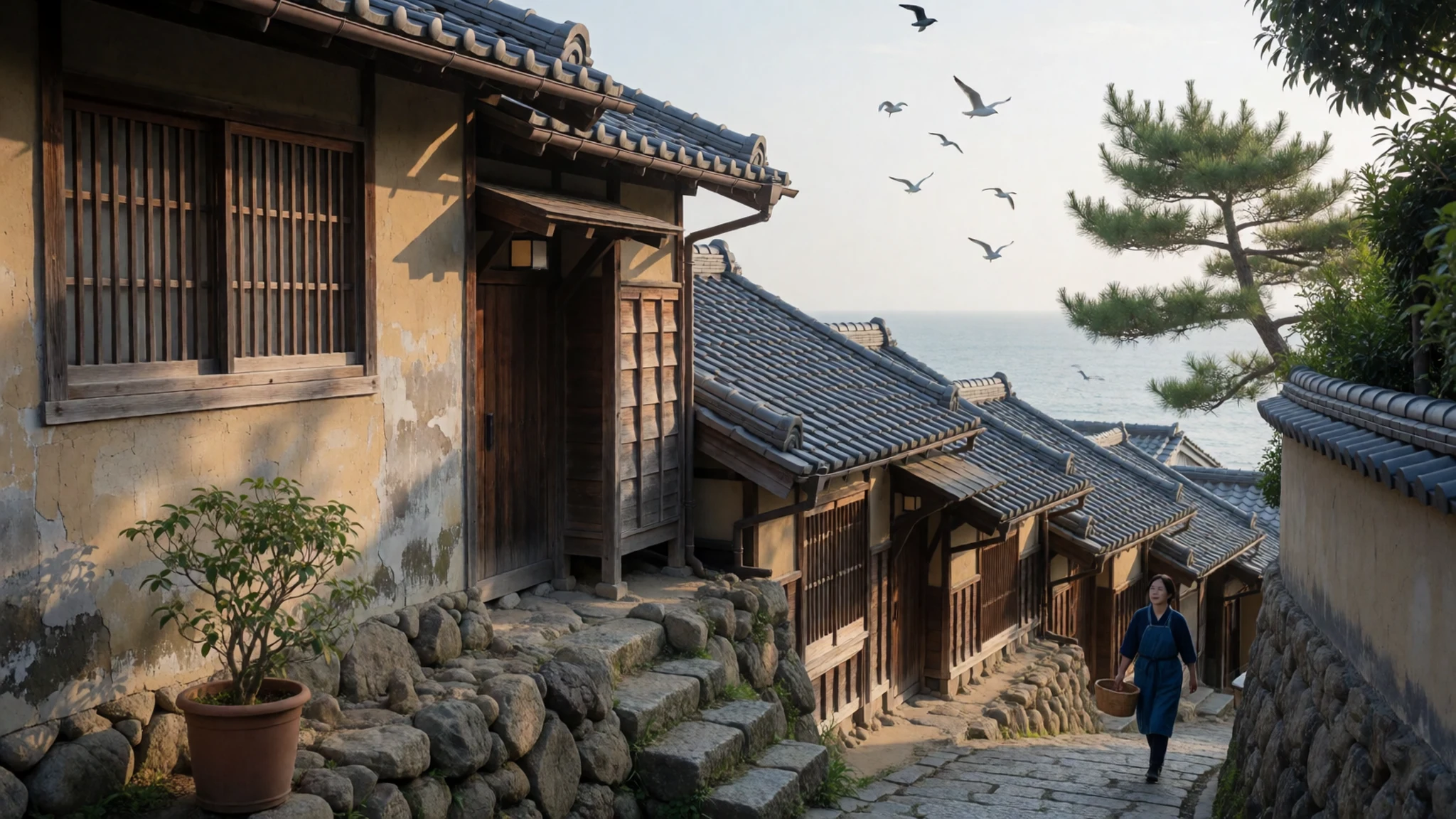
- Sado Toki Preservation Centre — central plain
Sado is the home of the Toki, the Japanese crested ibis. The last wild Japan-born bird died in 2003, so the preservation centre is where visitors can see the species today. It is a quiet, educational stop and works well on a wet day, when the coast is less inviting.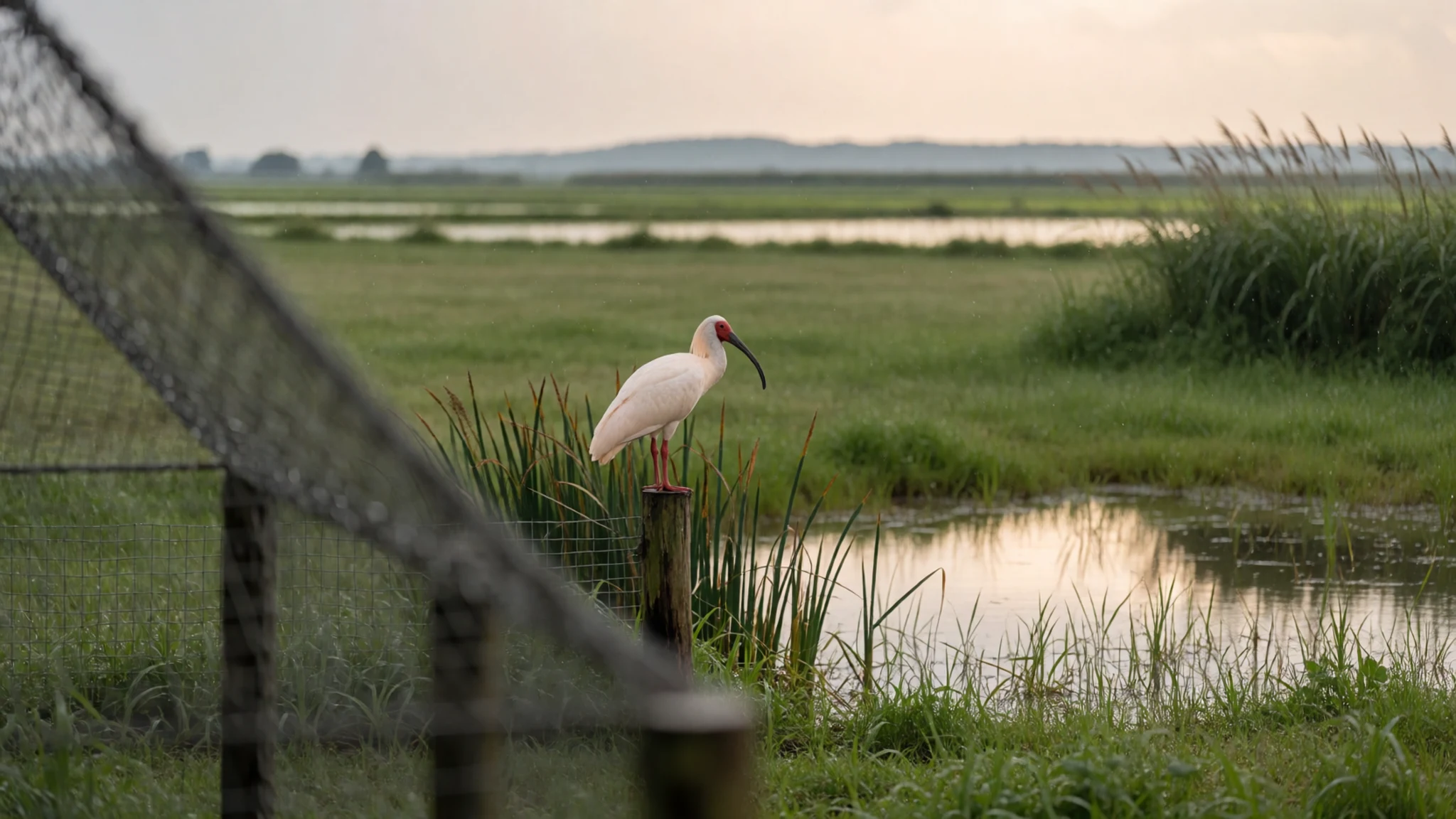
- Nashinoki-jizo — between Mano and Ogi
Between Mano and Ogi, a small, shadowy patch of woodland holds hundreds of little jizo statues. Local fishermen come here to pay respects. It is a quiet roadside stop rather than a big attraction, and it suits a slow, respectful pause in the middle of a driving day.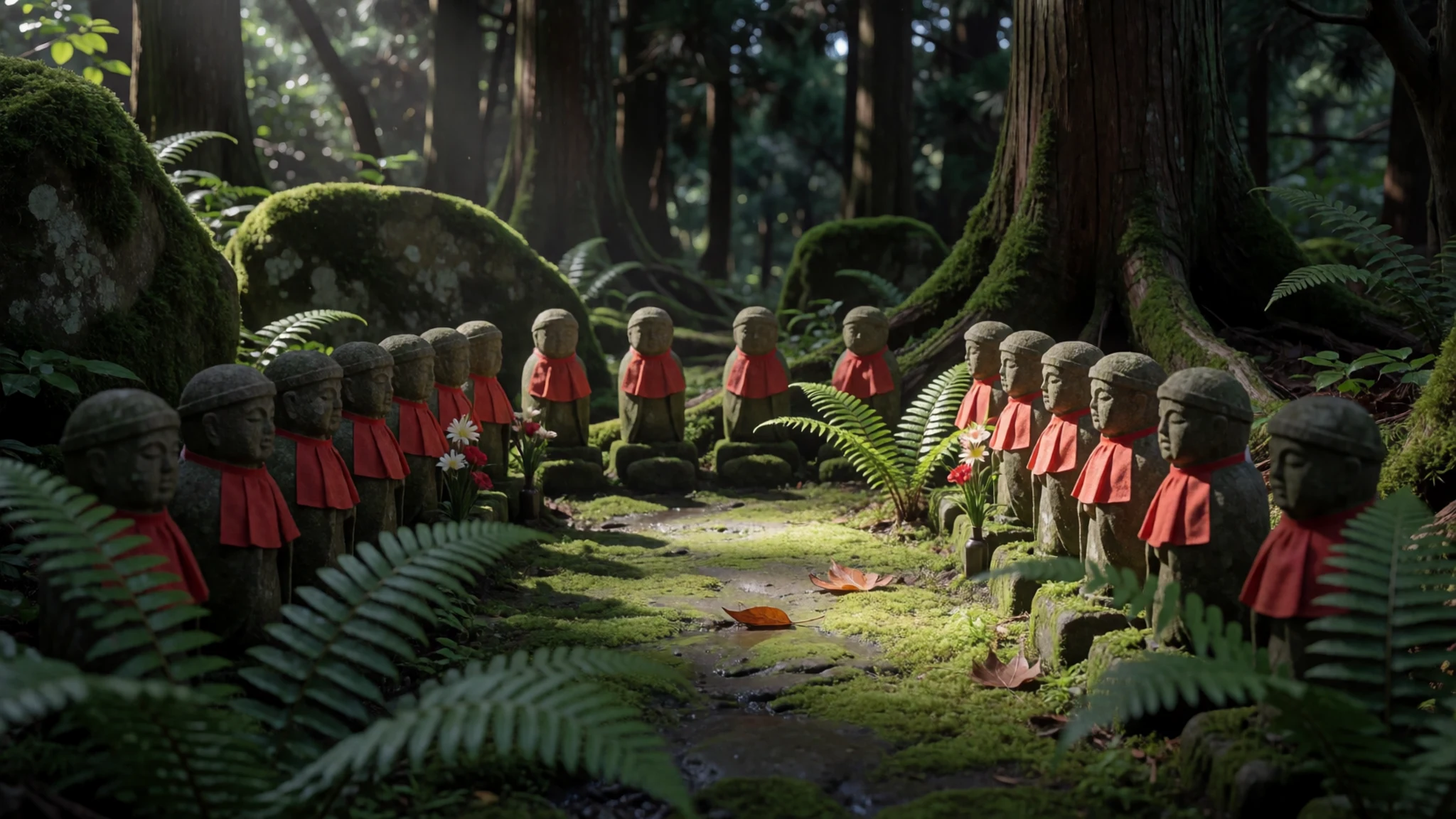
Culture
Sado Island's culture was shaped by its place on the Nishimawari sea route, which carried goods from the Sea of Japan coast towards Osaka. Ideas travelled the same way, so the island has a clear western Japanese flavour. Exile added to it: courtiers and intellectuals sent from Kyoto brought performing arts with them, and the Noh master Zeami is the best-known case. During the Edo period the island had more than 200 Noh stages, and more than 30 survive, an unusually high number for a place of this size. Local performing arts include the Ghost Taiko, and Sado is also the base of Kodō, the drumming troupe credited with taking modern taiko well beyond Japan. Its village is in the Ogi area. Another local survival is the tarai-bune, a round, tub-like boat once used in several parts of Japan but now found only here. Visitors may see one offered for short rides in the south. Daily life is rural and unhurried, built around fishing, rice and small-town routines. When you attend a Noh performance, a drumming show or a village festival, arrive on time, switch off your phone, and take photographs only where the organisers say it is allowed.
What to wear
Traditional dress on Sado Island follows wider Japanese custom. The kimono, usually silk, is worn for weddings, tea gatherings and formal occasions, while the lighter cotton yukata appears at summer festivals. Noh performers wear heavy, richly woven silk robes and carved masks. Drummers and festival teams wear happi coats, short cotton jackets, often with a tenugui cloth tied round the head. Everyday dress now is practical and rural. Most islanders wear plain, comfortable clothes, with waterproof jackets and rubber boots for fishing, farming and wet weather. Younger people dress much as they would in any Japanese town, and kimono are largely kept for special days. Visitors should plan for weather rather than formality. Sea wind can make the coast feel cooler than the forecast, rain can arrive quickly, and summer is warm and humid, so pack light layers and a windproof shell. Sturdy shoes with good grip suit coastal paths and the mine tunnels, which are cool inside. Shoes are removed at some temples, homes and museums, so slip-on footwear and clean socks save fuss. At shrines and temples, no special dress code applies, but tidy, covered shoulders and knees show respect. Swimwear belongs on the beach only.
What to eat
- Fresh sashimi and sushi — sushi bars in Sawata and harbour-town eateries
Fish landed round the island is the main reason to eat well on Sado. Sashimi and sushi are the dishes to order, and the choice follows the season and the catch. Ask what came in that day rather than choosing by name alone.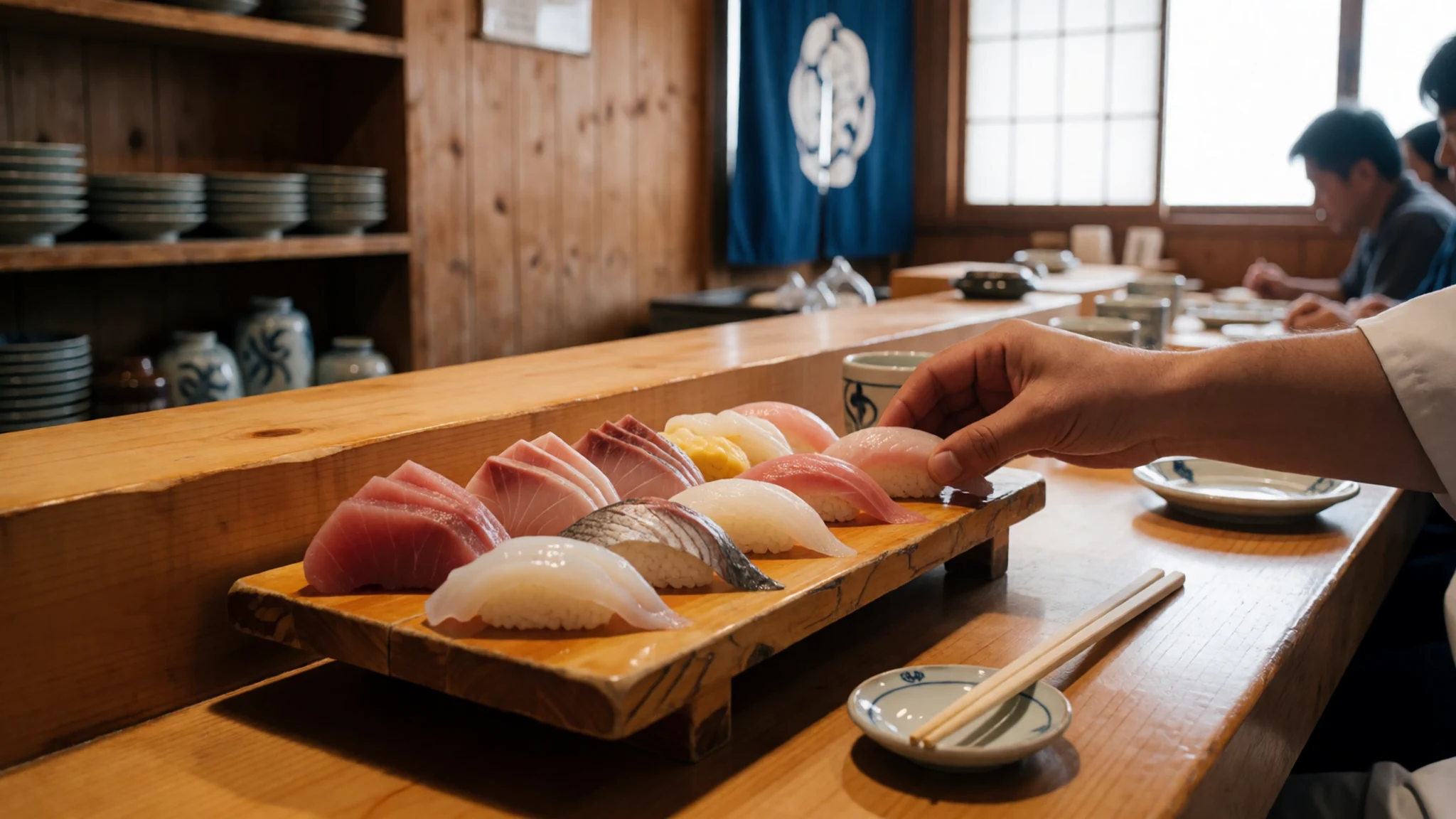
- Fish of the day set meal — local shokudō eateries in the towns
A plain, freshly cooked fish meal is the easiest everyday lunch on the island. Simple Japanese shokudō eateries serve the day's catch with rice, soup and pickles. The menu is short and the food is honest, which is the point.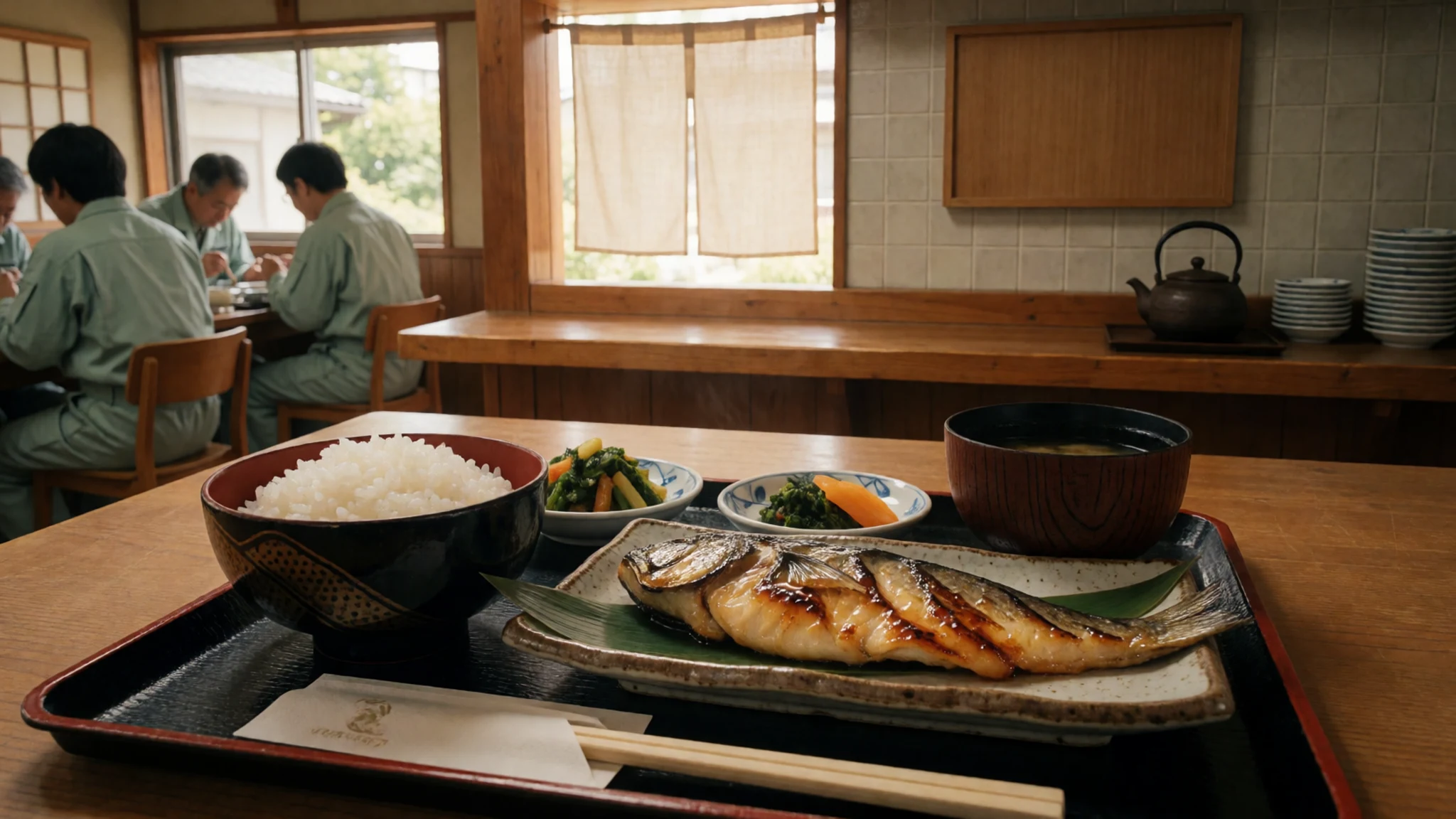
- Sado beef — restaurants in the main towns; ask locally
A small number of cattle graze the green slopes of Ōsado, and the beef is well regarded and expensive. It is a treat rather than a daily meal, best ordered as a grilled or hotpot dish where the kitchen can cook it properly. - Kamo Lake oysters — lakeside stalls and restaurants around Kamo Lake
Kamo Lake is a growing oyster-farming area. Oysters are eaten raw, grilled or fried, depending on the season and the place. Treat them with the usual care and buy from busy stalls and restaurants with a steady turnover. - Tonkatsu — tonkatsu restaurants in Sawata
For a break from seafood, a breaded, deep-fried pork cutlet is a filling alternative. It arrives with shredded cabbage, rice and miso soup, and the best rooms are the old-fashioned ones with a regular local crowd. - Yakitori — small yakitori restaurants in the main towns
Skewered, grilled chicken is a good evening choice, since there is little else to do after dark. Order several skewers and share them. Salt or tare sauce are the usual options, and a small cold drink is the usual companion.
Plan it
Best time. Late spring (May–June) and early autumn (September–October) are the easiest months, with milder weather for coastal walks and fewer sea-crossing problems. Midsummer is warm and humid, and ferry timetables can be reduced in winter or in rough weather.
How long. 3–4
Getting there. There is no scheduled air service at present, though Toki Air has announced flights from Tokyo-Narita, so check the current position. Most visitors take a Sado Kisen ferry: from Niigata to Ryōtsu (a faster jet ferry or a slower car ferry), or from Naoetsu to Ogi. The Naoetsu–Ogi line's future is uncertain, so confirm it is running. Niigata is reached by rail from Tokyo.
Budget. mid
Tips
- Check the Sado Kisen website for ferry times before booking, as services change for festivals, winter and bad weather
- Hire a car or plan taxis, since the island is large and public transport is limited
- Book accommodation early for festival dates and summer weekends
- Carry cash for small eateries, village shops and rural sights
- Camping is a workable budget option, for example near Sobama beach, south of Ogi
Etiquette
- Remove your shoes where a raised floor or slippers are provided
- Keep voices low and stay on public lanes in lived-in villages such as Shukunegi
- Ask before photographing people, especially performers and fishermen at work
Nearby
Sources
- Wikidata Q998623 (CC0)
- Wikipedia: Sado Island (rev 1381040211) (CC BY-SA 4.0)
- Wikivoyage: Sado Island (rev 5431897) (CC BY-SA 4.0)
- Photo: Sadogashima seen from the ISS (NASA) (Public domain)
- Photo: A topographic map of Sado Island (Vallee) (CC BY-SA 4.0)
- Photo: 二ツ亀 (Kosado) (CC BY-SA 4.0)
- Photo: Ohno Turtle Rock in Sado (Soica2001) (Public domain)
- Photo: 竜王洞 Cave (伊藤善行) (CC BY 3.0)
- Photo: Senkakuwan (Suicasmo) (CC BY-SA 4.0)
- Photo: Nanaura coast in Sado (houroumono) (CC BY 2.5)
- Photo: 佐渡金山のシンボル「道遊の割戸」(Muramasa) (CC BY 3.0)


Wildlife
- Japanese crested ibis (animal)
The toki, or Japanese crested ibis, is a bird from the ibis family, and it is the only member of its own little group, so there is nothing else quite like it. Sado Island is its home, which is why you may hope to glimpse one there. Keep a respectful distance, stay quiet so it is not startled, go with a local guide if you can, and never feed it.