Rocamadour
Rocamadour, France
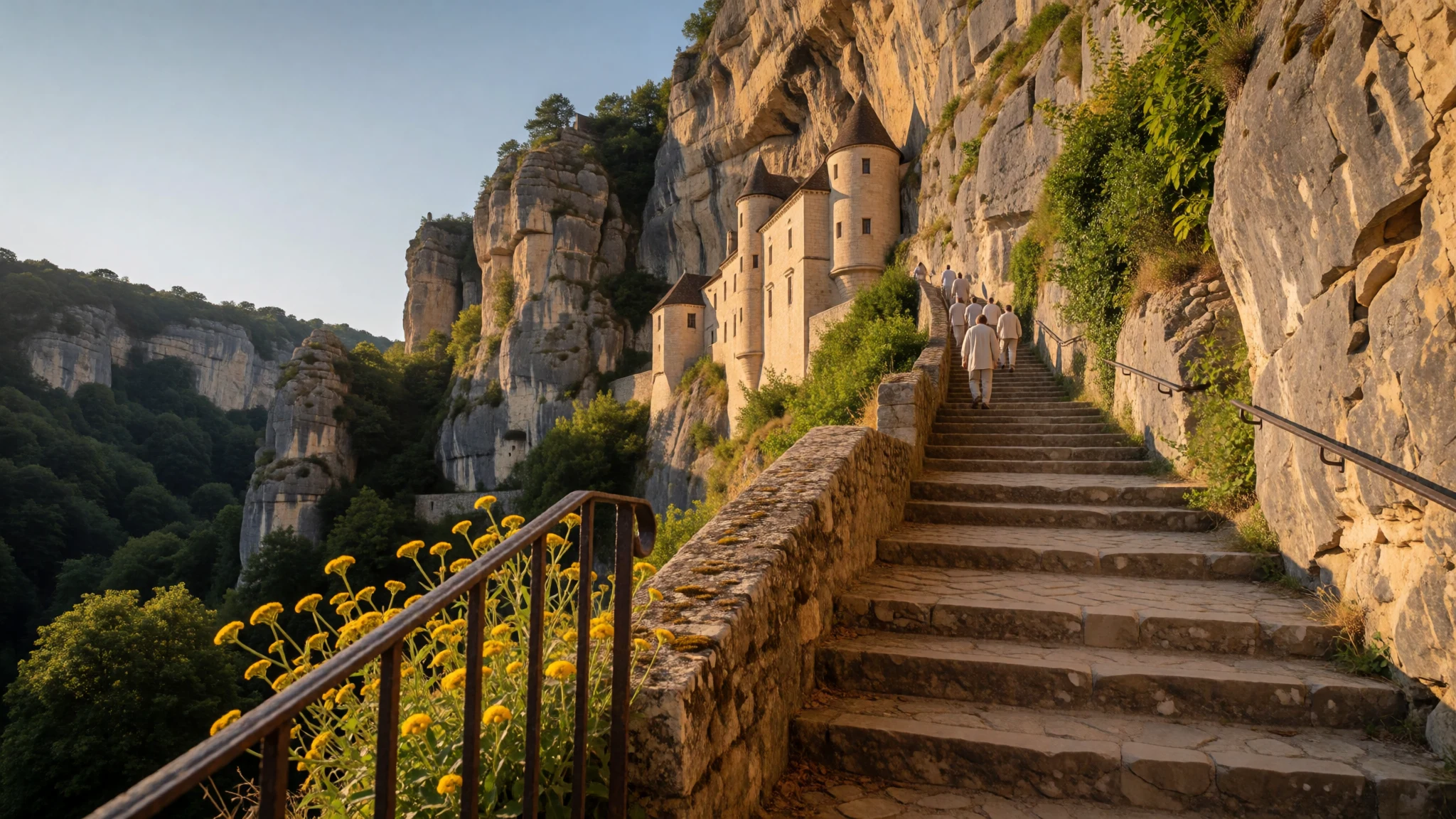
Rocamadour stacks a medieval pilgrimage shrine, steep stairs and a castle onto a limestone cliff above a quiet gorge in the Lot.
The place
Rocamadour is a village in the Lot department of south-west France, home to 597 people and built more like a stack than a settlement. Houses, chapels and gateways cling to a limestone cliff at 279 m above sea level, above a narrow gorge cut by a tributary of the Dordogne. The surrounding country is the old province of Quercy, a landscape of dry plateaux and oak scrub that now falls inside a regional nature park. The village is arranged in three tiers. Down by the stream runs the working street of shops and eateries, much of it now given over to visitors. Above it, up a long flight of steps, a small terrace gathers the sanctuaries around the shrine of the Virgin. Higher again sits the fortified level that once protected the whole complex. Pilgrims made this climb for centuries, and walkers on the route towards Santiago de Compostela still pass through. The village also gives its name to a small, soft goat's-milk cheese with protected AOC status. Some honest warnings: the lower street is narrow and thick with day-trippers in summer, the stairs are punishing in heat, and much of the interest is vertical rather than flat. Mornings and evenings are calmer once the coaches have gone. Rail is a weak option here, so most visitors arrive by road and treat Rocamadour as one stop among the Dordogne and Lot valleys, where cycling, canoeing and balloon rides fill the other days.
Its story
Rocamadour's story begins long before the shrine. Caves in the surrounding rock sheltered people in the Paleolithic, as the paintings of the Grotte des Merveilles show, and the Grotte de Linars served as a burial place and dwelling in the Bronze Age. In the Iron Age the Cadurci, a Gaulish people, settled the Lot, and a hilltop stronghold in the nearby Alzou valley may belong to their resistance against Rome. The pilgrim village came much later. A small chapel was recorded in a cliff shelter in 1105, on the boundary between the lands of two Benedictine abbeys, Tulle and Marcilhac-sur-Célé. The Latin name then in use was Rupis Amatoris, the rock of Amator. Local tradition tells of a hermit's body, found whole in a nook of the cliff and taken for a saint's, which made the spot holy. In 1112 the abbot of Tulle moved in to run the site, and in 1148 the first miracle was announced. Pilgrims followed, among them Henry II of England, Blanche of Castile, Louis IX of France, Saint Dominic and Bernard of Clairvaux. The three levels of the village, which survive today, are often read as a picture of medieval society: knights at the top, clergy in the middle and working townsfolk beside the stream. Pilgrimage once paid for the whole place. Now tourism does, and the stairs are still the main event.
What to see
- The sanctuary terrace — Middle level of the village
Rocamadour's holy heart is a small terrace where several chapels open onto one stone square, cut into the cliff. The buildings vary in age and style, and the plain, rounded look of the architecture surprises anyone expecting soaring Gothic. Allow time to sit and watch pilgrims and visitors move through.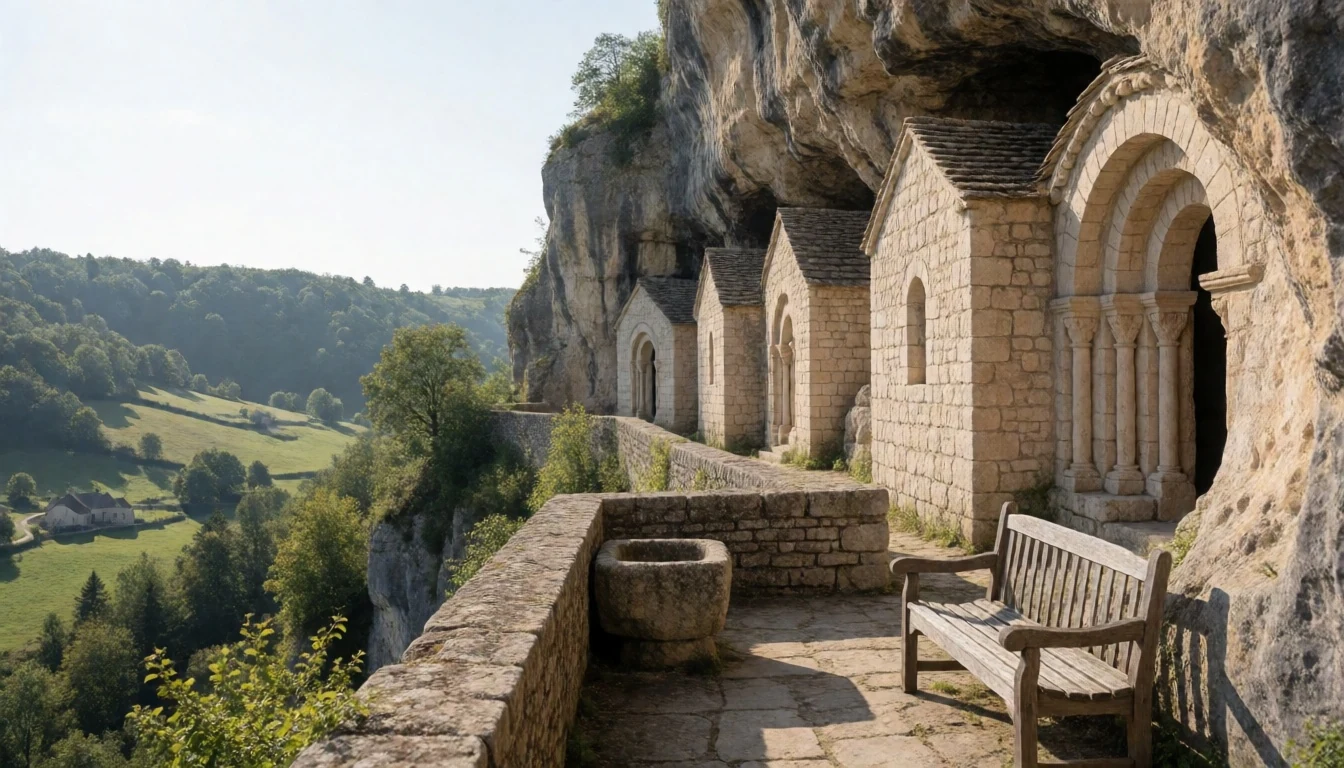
- The Black Madonna — Chapel of Notre-Dame, sanctuary terrace
Inside the shrine chapel sits a dark wooden statue of the Virgin with a child on her knee. Both figures are black, and Jesus is shown as a small boy rather than a baby, which gives the image a stern, unusual dignity. It is small, so wait for a gap in the crowd.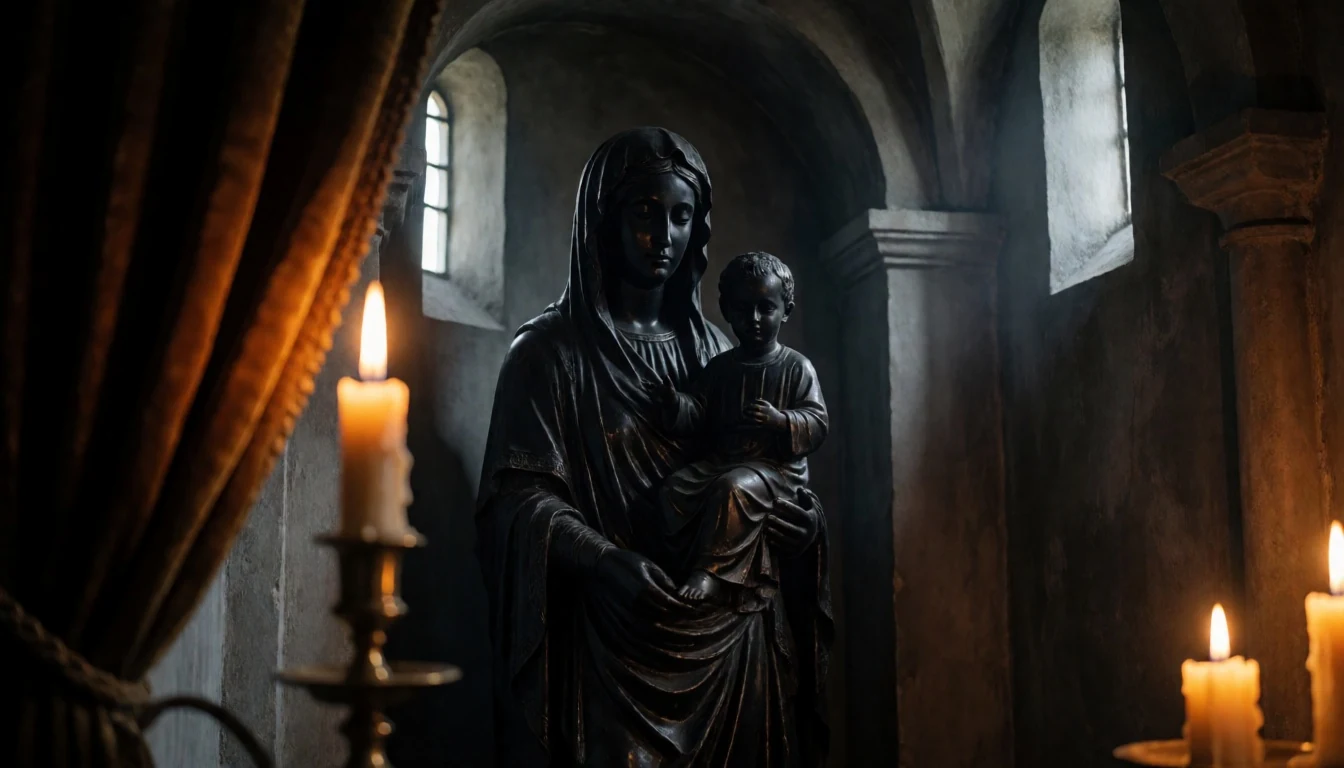
- The pilgrim stair and lower gate — Main street to the sanctuary
Pilgrims once climbed the long stair to the sanctuary on their knees, and many visitors still take it on foot instead of using the other routes. The climb begins at the lower gate by the main street. Go early, wear grippy shoes, and expect to stop for breath on the worn stone.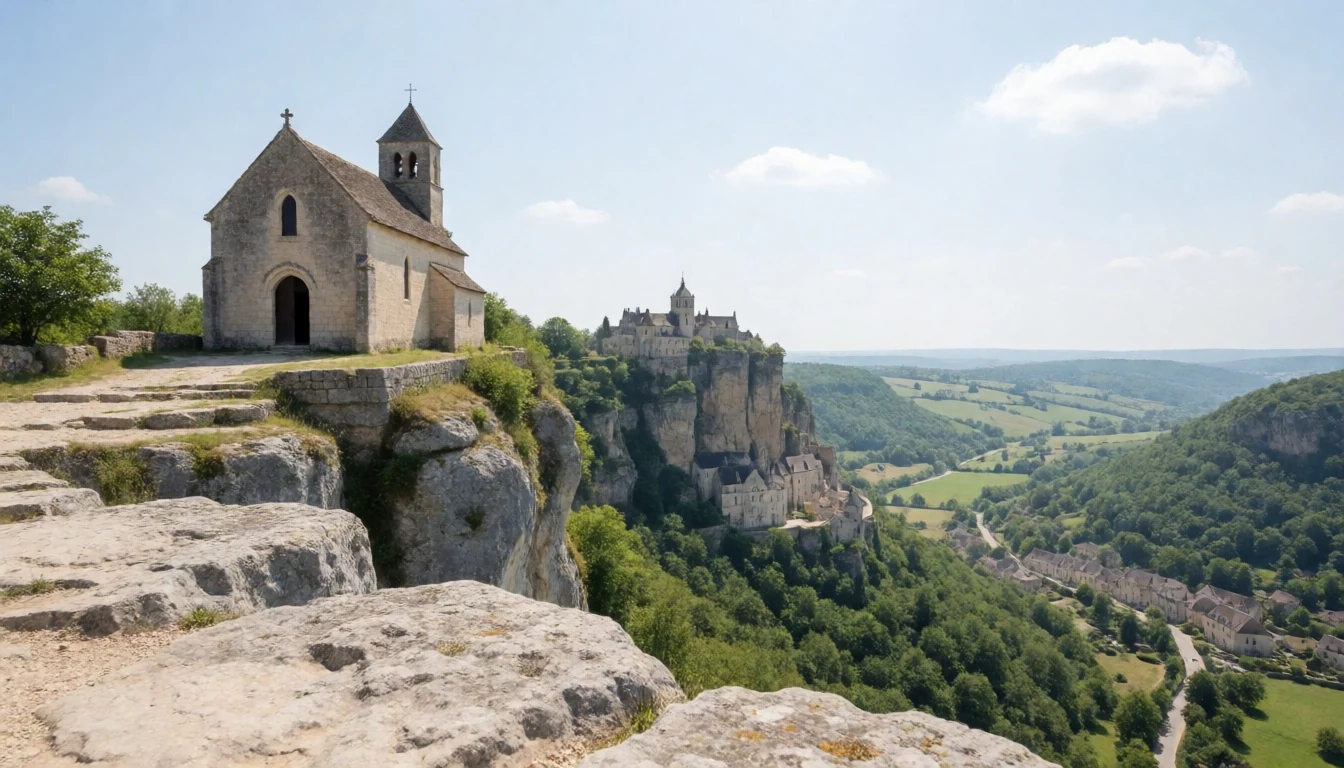
- Durandal in the rock — Rock face above the sanctuary
A sword is lodged in the cliff face above the sanctuary, named Durandal after the blade of the knight Roland in medieval legend. Whether it was ever his hardly matters. It makes a good story to look up at, and a reason to tilt your head back from the crowd.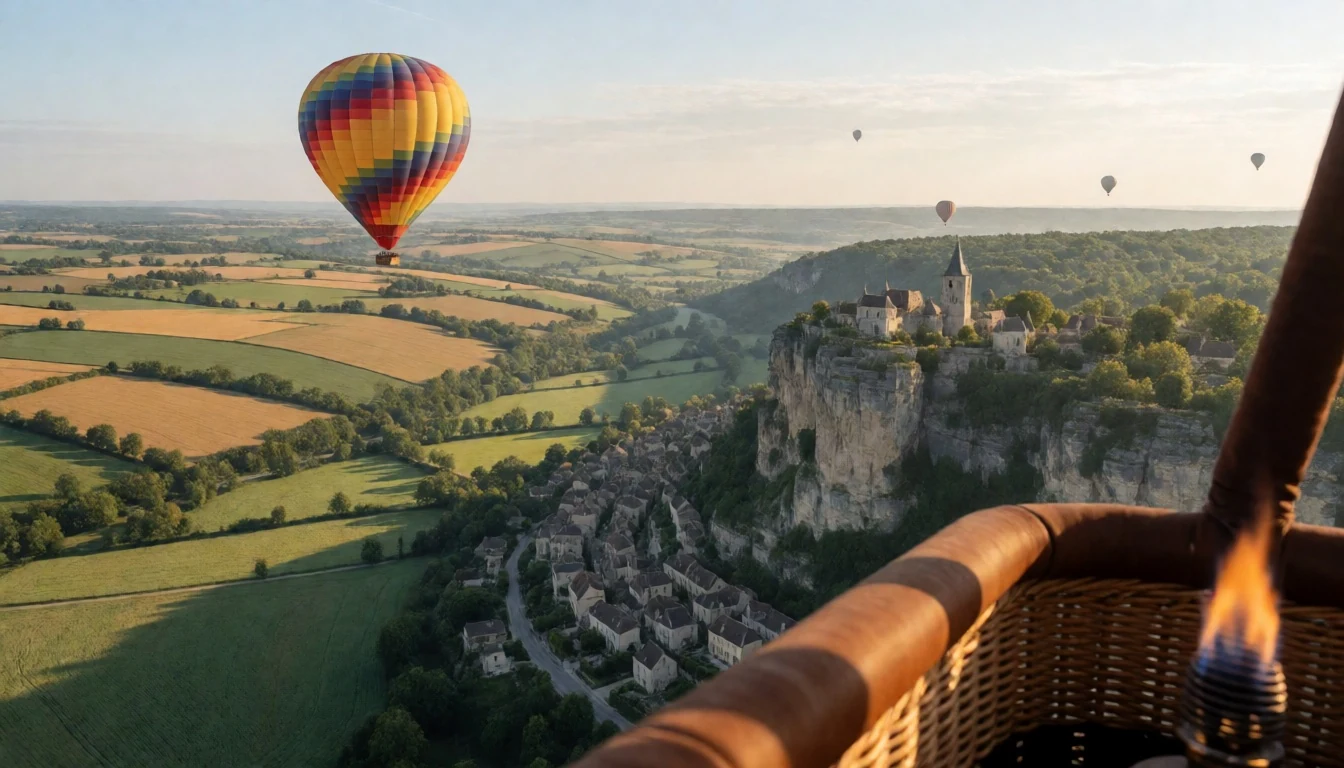
- Chapelle de l'Hospitalet and the viewpoint — L'Hospitalet, opposite the village
Across the gorge, the hamlet of L'Hospitalet holds a small chapel and the best angle for seeing the whole village stacked on its cliff. It is a gentler walk than the stairs, and a good place to arrive in late afternoon when the stone turns warm.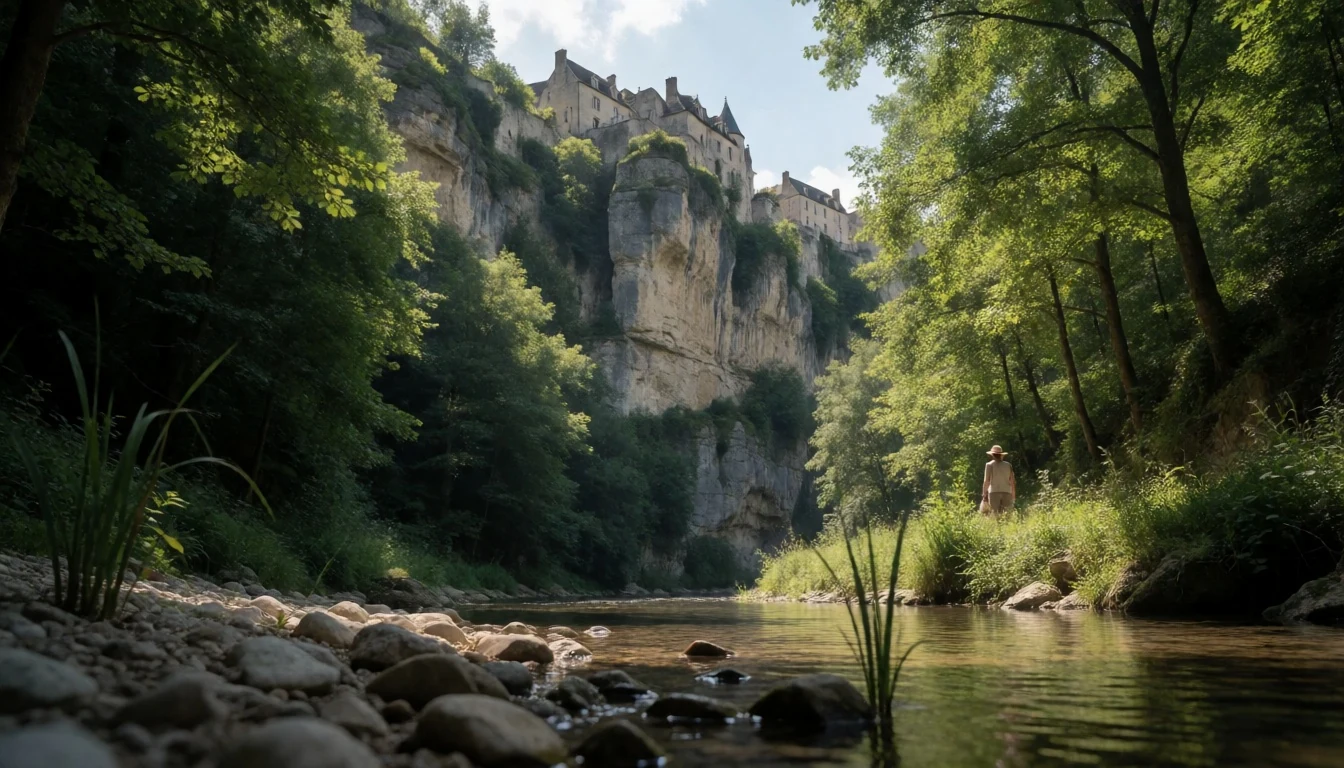
Culture
Rocamadour is still a working Catholic sanctuary, and that shapes its rhythm more than the gift shops suggest. The shrine of the Virgin has drawn pilgrims since the early twelfth century, and some visitors today come to pray, light candles or walk the route towards Santiago de Compostela, not just to take photographs. The old belief behind the place is that a body found in the cliff was a holy man's, and that the Virgin worked miracles for those who climbed to her. The dark statue in the chapel is the focus of devotion, and the stairs, the terrace and the small chapels all follow from it. Daily life in the lower street is more secular and French in tone: people greet shopkeepers with a bonjour on entering, meals are taken at set hours, and many small businesses close for a long lunch or on certain weekdays. Goat farming and cheese-making in the surrounding plateau are part of local identity, and the village cheese carries the name of the place. Seasons matter too. Summer brings crowds, while spring and autumn feel more like a village with visitors than a visitor attraction. Quiet is valued most in the early morning and at dusk, when the sanctuary terrace is closest to what pilgrims knew. Keep your voice low and cover bare shoulders and knees inside the chapels, and do not use flash or walk through while a service or prayers are under way.
What to wear
Rocamadour has no single famous costume, and the old rural dress of Quercy survives mostly in museums, festivals and family photographs. Historic working clothes were practical: wool and linen for farm work, dark shawls and aprons for women, wooden clogs and felt or straw hats for the field. Pilgrims had their own look, with a staff, a wide hat and a scallop shell, which walkers on the Santiago route still sometimes hang from their packs. What people wear now is ordinary and unfussy. Locals dress in casual, slightly neat French style, and visitors blend in with walking trousers, light jackets and sturdy trainers. Many walkers are in full hiking kit. As a visitor, the cliff terrain decides most things. Wear shoes with grip, because the stone stairs and cobbles are steep and can be slippery after rain. Bring layers for cool mornings and evenings even in summer, a hat and water for hot afternoons, and a light waterproof for showers. Because the sanctuary is a place of worship, carry a scarf or shirt so shoulders and knees can be covered inside the chapels. Beachwear and very short shorts will draw looks in the shrine area, though nobody will stop you in the village streets.
What to eat
- Rocamadour cheese — Cheese shops and local markets in the Lot
A small, soft disc of goat's-milk cheese with protected AOC status, mild when young and sharper as it ages. Buy it from cheese stalls and shops in the village or from markets in the surrounding Lot towns, and eat it with bread.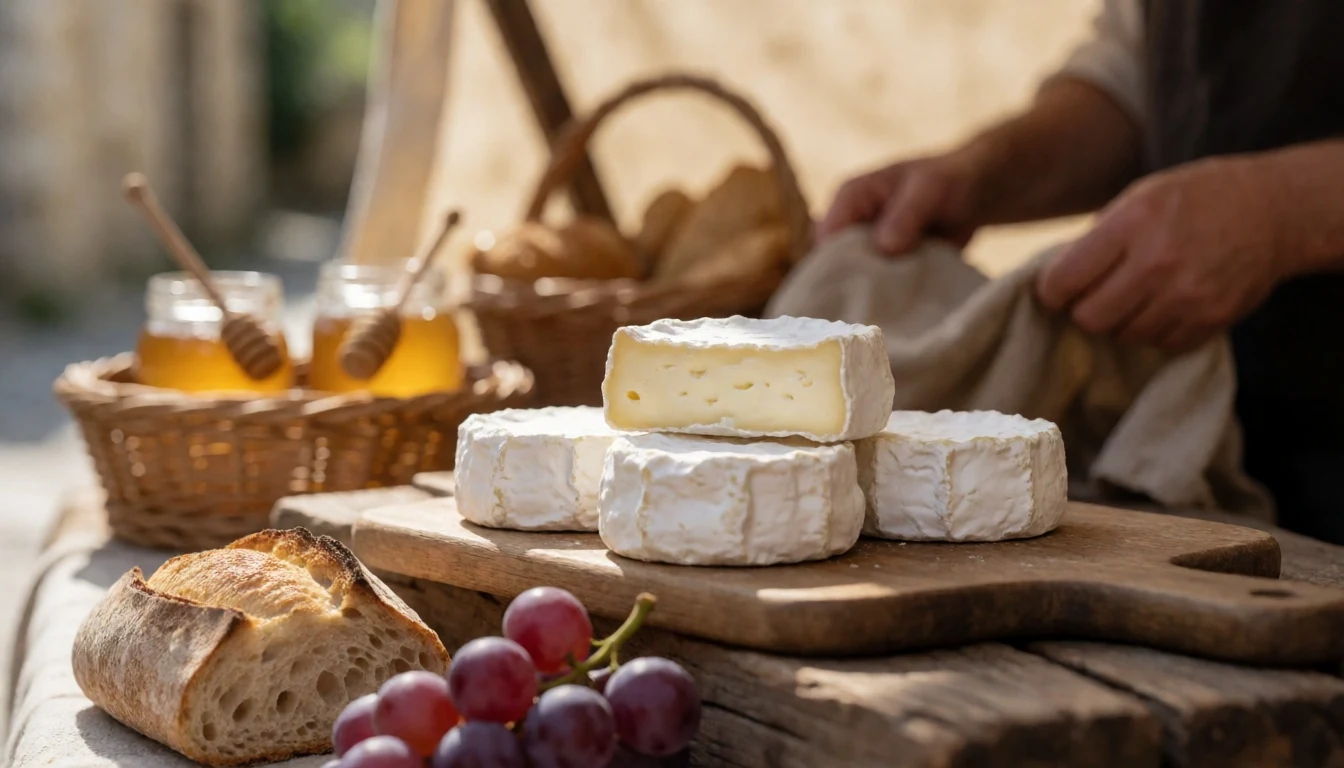
- Warm goat's cheese salad — Cafés and restaurants along the main street
A common lunch in the region: slices of Rocamadour cheese warmed on toast and laid over green leaves, often with walnuts and a mustardy dressing. It is light, quick and easy to find.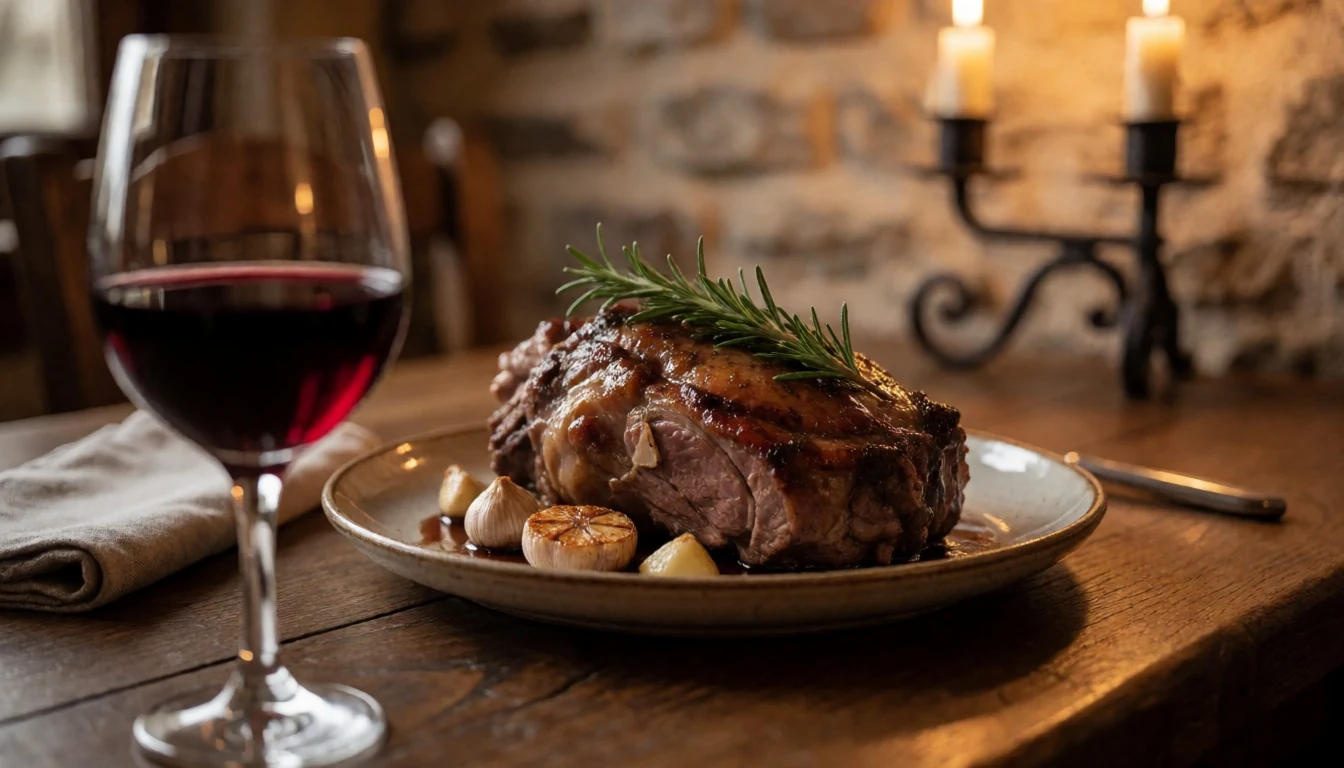
- Duck confit — Traditional restaurants in the village and valley
Slow-cooked duck leg, crisp-skinned and rich, is a south-west staple and usually served with potatoes fried in duck fat. Order it in a country restaurant on a cool evening rather than at a hot lunch. - Walnut cake and walnut products — Village bakeries and farm shops
Walnuts are grown across the region, and bakeries sell dense walnut cakes and tarts, along with walnut oil and liqueurs. They make good gifts and hold up well in a bag. - Cahors red wine — Wine shops and vineyards in the Lot valley
The Lot is wine country, and the dark, firm red from around Cahors suits duck and cheese. Ask for a local bottle in a restaurant, or visit a wine shop or cellar nearby for something to take home.
Plan it
Best time. April–June and September–October, when it is mild enough for the stairs and the village is quieter than in high summer. July and August are hotter and crowded; winter is peaceful but some businesses close, so check ahead.
How long. 1–2
Getting there. Take a train to Brive-la-Gaillarde, then a regional service towards Rocamadour-Padirac, but note that this station is a long way from the village. The practical last leg is by car or taxi, or on foot if you are walking the Santiago route.
Budget. mid
Tips
- Arrive early or stay till evening, when the day-trippers have left and the stone is at its best for photographs
- Wear shoes with grip, because the stairs and cobbles are steep and uneven
- Check the official site for opening times and events: https://mairierocamadour.fr
- Carry water in hot months, as there is little shade on the climb
- Pair the visit with a day of cycling, canoeing or a balloon flight in the Dordogne valley
Etiquette
- Cover shoulders and knees and keep quiet inside the chapels
- Do not use flash or block the aisle near the Black Madonna while people are praying
Nearby
Sources
- Wikidata Q382628 (CC0)
- Wikipedia: Rocamadour (rev 1385850142) (CC BY-SA 4.0)
- Wikivoyage: Rocamadour (rev 5314673) (CC BY-SA 4.0)
- Photo: dynamosquito, Rocamadour, Lot (CC BY-SA 2.0)
- Photo: Patrick Clenet, Rocamadour Durandal (CC BY 3.0)
- Photo: Patrick Clenet, Rocamadour vue générale (CC BY 3.0)
- Photo: Pahcal123, Chapelle de l'Hospitalet (CC BY-SA 4.0)
- Photo: Eden Briand, Rocamadour's Porte Basse (CC BY 3.0)
- Photo: mphb45, Camping le relai des campeurs (CC BY 3.0)
- Photo: Adrian Farwell, Campsite view near Rocamadour (CC BY 3.0)
- Photo: Guy MOLL, pen and watercolour sketch (CC BY 2.5)


