Rømø
Rømø, Denmark
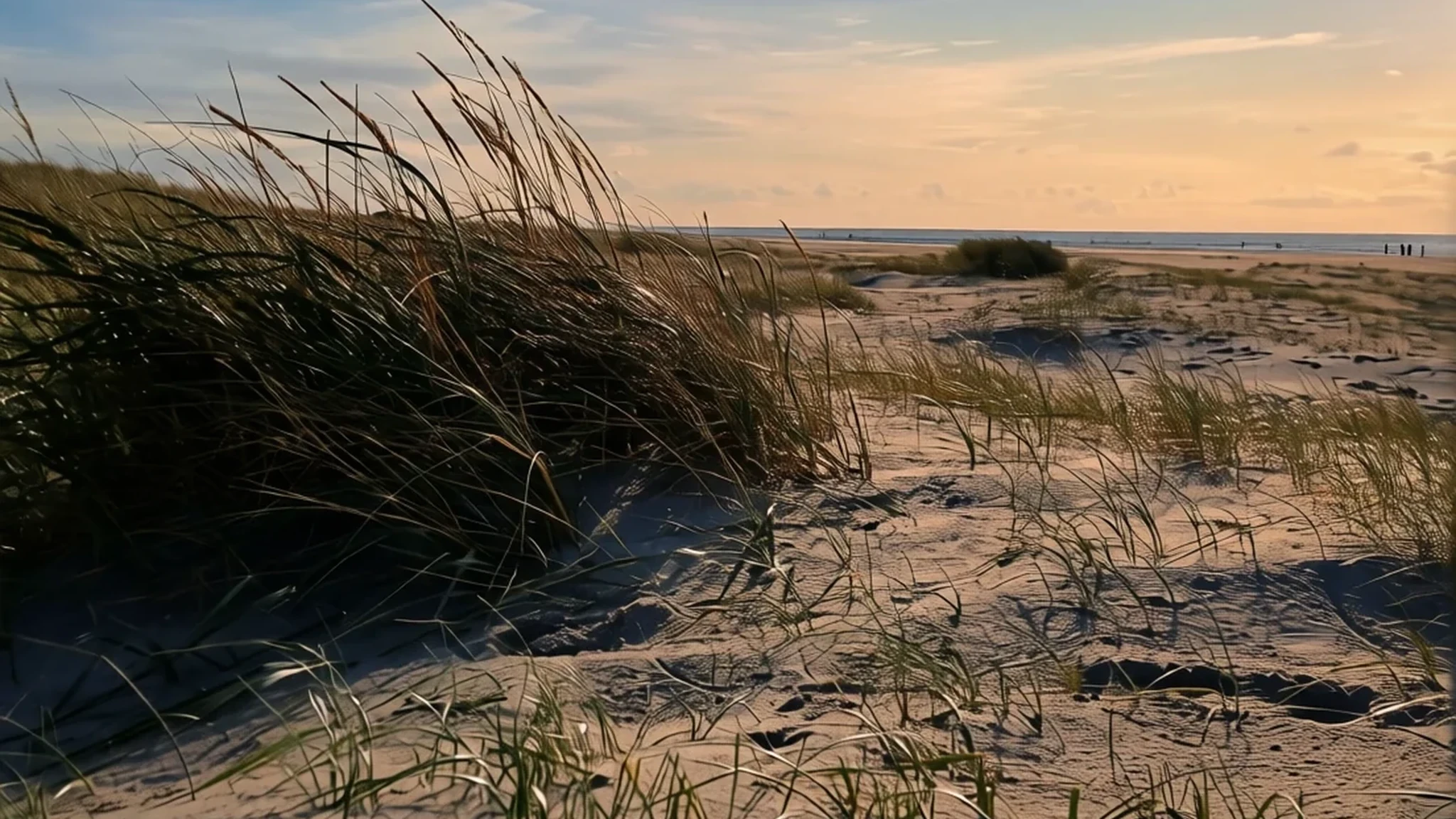
Rømø feels like breathing space: long beaches, big skies and tide-driven walks in the Wadden Sea, with a calm island rhythm.
The place
Rømø is a Danish island sitting in the Wadden Sea, part of Tønder Municipality, and it’s the kind of place where “getting away” is practical, not poetic. With a population of around 650 inhabitants and an elevation of just a few metres, it’s low, flat and open to the weather—so the landscape is always doing something: changing light, wind pushing clouds across the horizon, and the sea pulling back and returning like a daily calendar.
Most visitors come for the coast. At low tide the beach area expands dramatically, giving you space to walk where it feels impossible elsewhere. Inland and around the settlements there are smaller stops if the weather turns: museums that explain the island’s formation, local history in everyday buildings, and a church that’s worth pausing at even if the day is mostly about sea air.
Rømø is also very “stay longer, slow down”. The most common plan is renting a cottage for a week or two, but short breaks work too—especially if there’s a specific coastline walk or a nature-focused morning. From a South Jutland base it’s genuinely easy as a day trip, because the island doesn’t ask for complicated logistics once you’re there.
Crowds are usually light compared with Denmark’s city hotspots. The main buzz happens around peak summer conditions and in weather that suits beach time; the rest of the year is quieter, but windier—so a jacket is never optional.
Its story
Rømø’s story reads like the history of a frontier island—captured, exchanged, and then slowly woven into modern Denmark. Swedish troops under Carl Gustaf Wrangel took the island in the early 1640s, but Heinrich von Buchwald's Danish army seized it back shortly after. That sort of back-and-forth is a pattern you can sense when you look at the island’s small, grounded communities today.
The island also sat inside the wider politics of Southern Jutland. After the Second Schleswig War in 1864, the region became part of Prussia, later tied to the German Empire through Schleswig-Holstein. Many decades later, the area returned to Denmark in 1920 after the Schleswig plebiscite—so the cultural mix has deep roots, not just a tourist explanation.
Rømø’s human history isn’t only wars and borders. The island had a horse-drawn tram line from Kongsmark inland to Lakolk, running from 1899 to 1940, which tells you how local movement mattered on a place where land is scarce and routes are everything.
Even the modern administrative story has its own chapters: between 1970 and 2006, Rømø was part of Skærbæk Municipality, and since 2007 it has belonged to Tønder Municipality. Today, the island’s pace still reflects that mix of maritime conditions and local community—practical, watchful, and closely tied to the sea’s timing.
What to see
- Kommandørgård Museum — near Kongsmark
Kommandørgård Museum is a mansion house linked to the Thaden family, with a long domestic history behind it. It’s a good first stop when the weather is undecided, and it also gives a feel for how big estates shaped island life.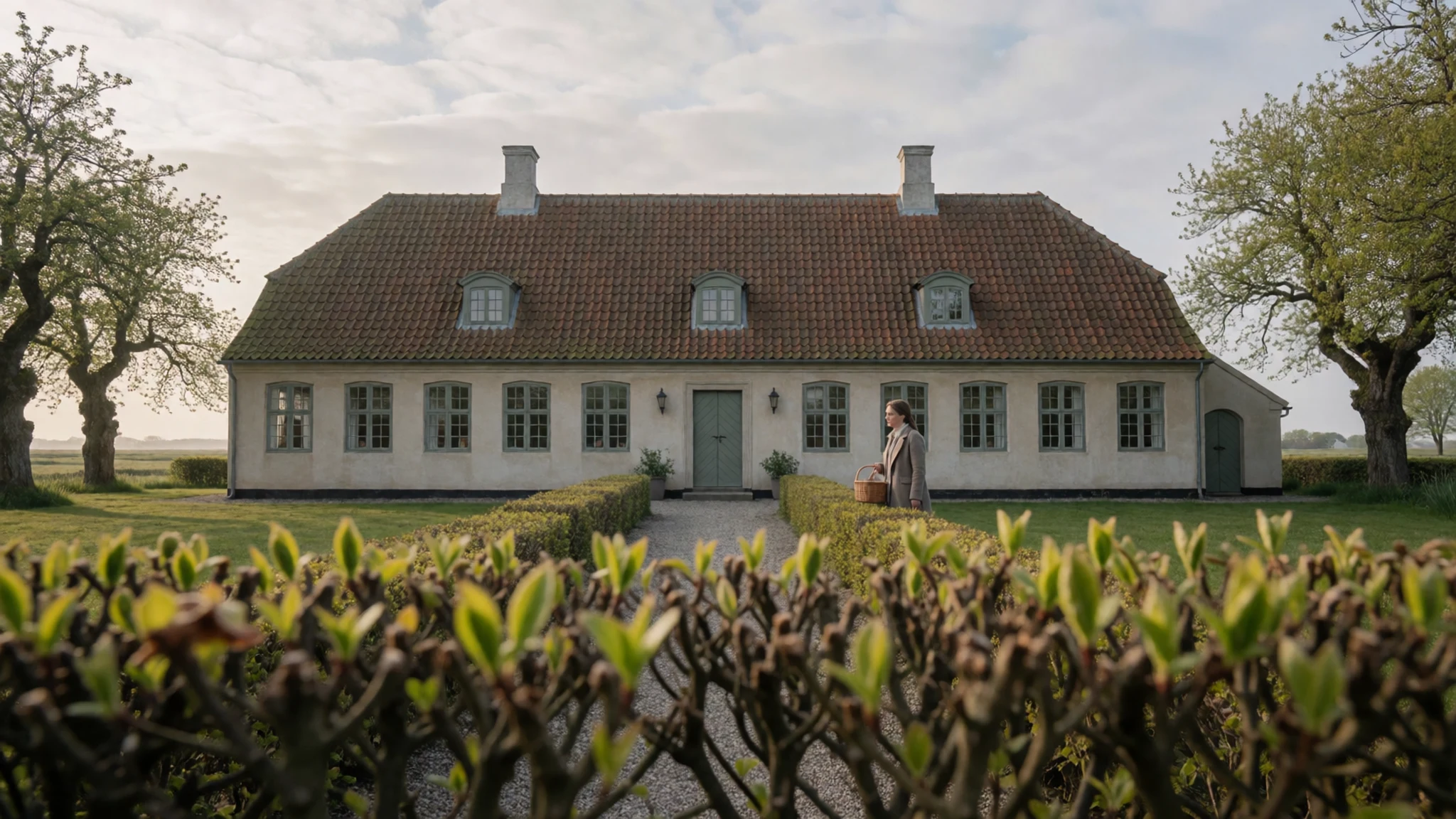
- Naturcenter Tønnisgård — Tønnisgård area
Naturcenter Tønnisgård is set up for understanding the Wadden Sea rather than just admiring it. Exhibitions help turn what looks like “empty sand” into a living system, and the centre runs organised tours and events in the region.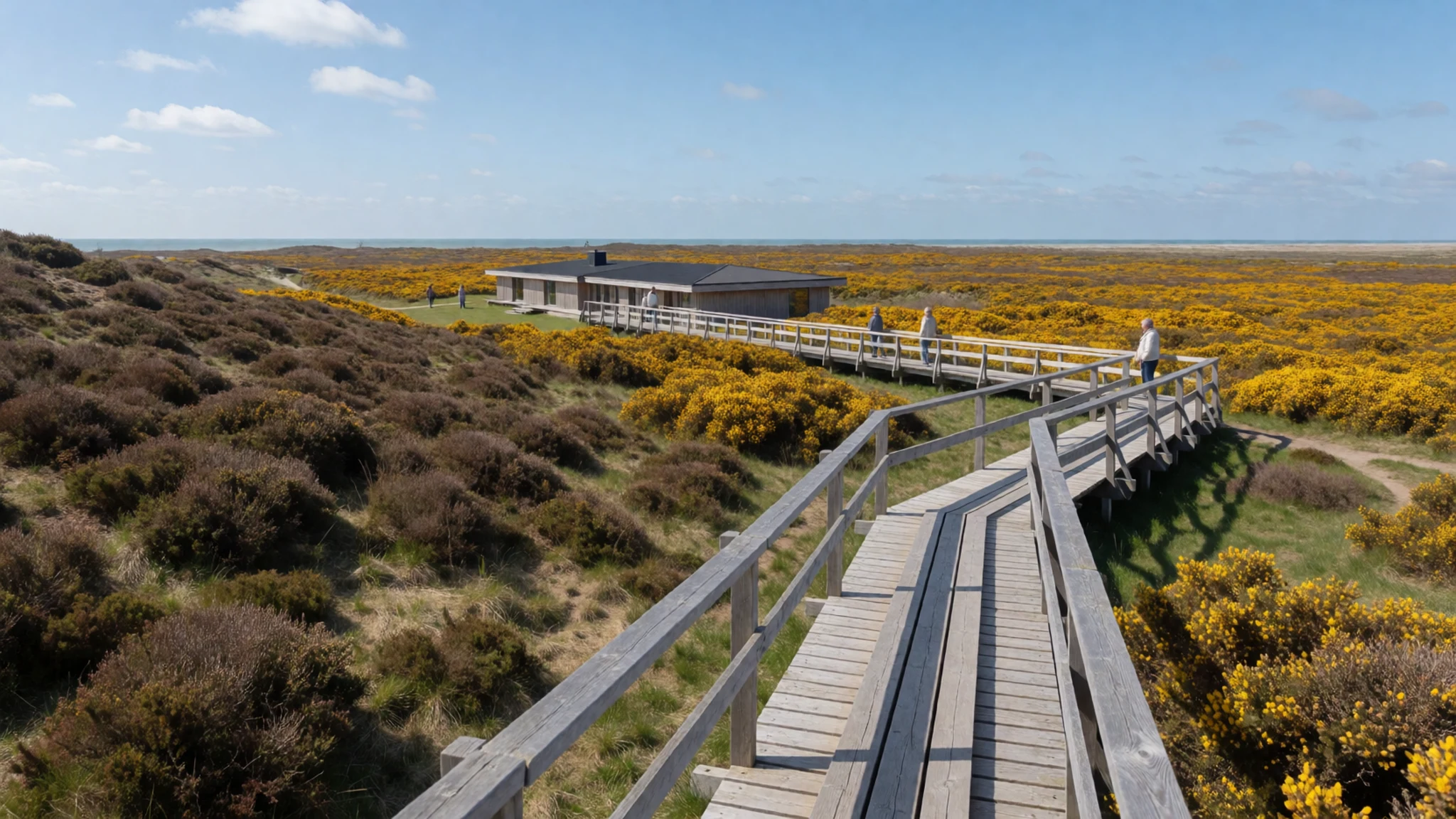
- Rømø Church (Rømø Kirke) — near Havneby
Rømø Church dates to around 1200, and it offers details you can spot slowly rather than rushing through. Inside, model ships and hat hooks give it a distinct local touch, which makes it feel lived-in.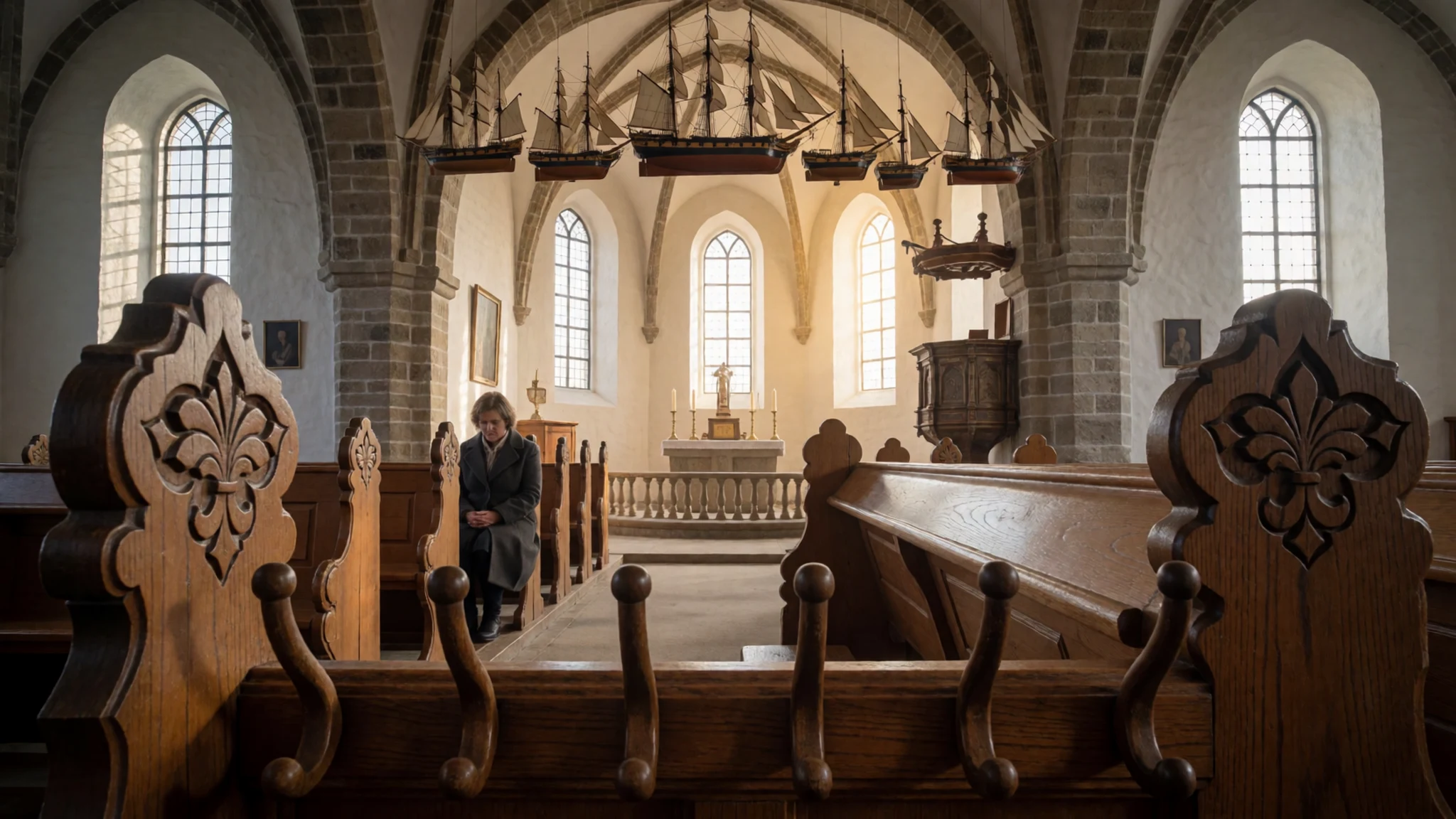
- Høstbjerg — south Rømø heath
Høstbjerg is the island’s highest point, at 19 metres, and it’s an easy climb with a clear payoff on a good day. The view ranges across heathlands, and visibility can stretch towards Esbjerg and the island of Sylt when conditions cooperate.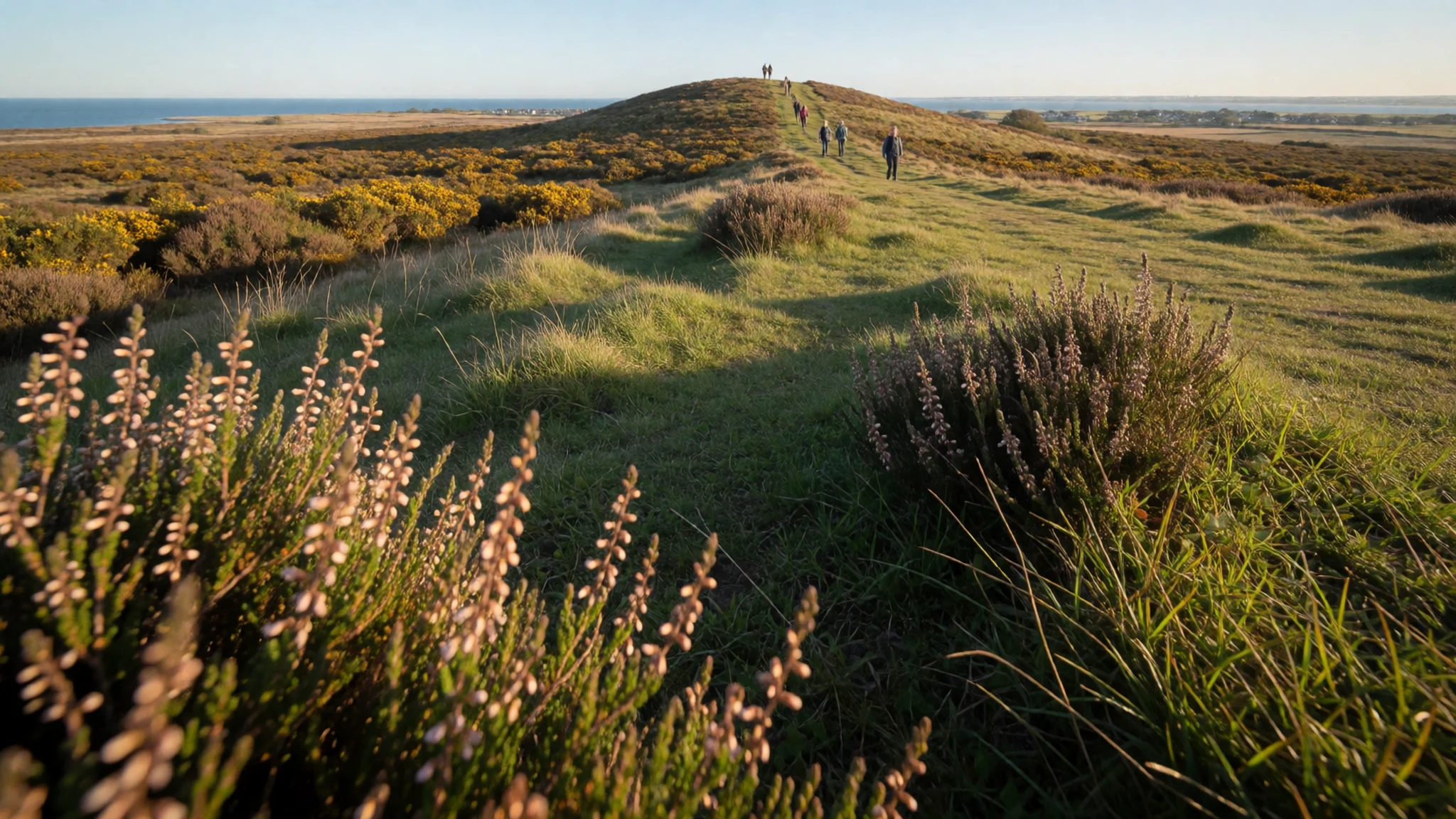
- The beach at low tide — Lakolk to the southern shore
Rømø’s beach time is its signature. During low tide the sand can stretch out to about 2.5 km across and 8.5 km from end to end, changing your walking routes hour by hour. The tide is the boss—so move with respect for it.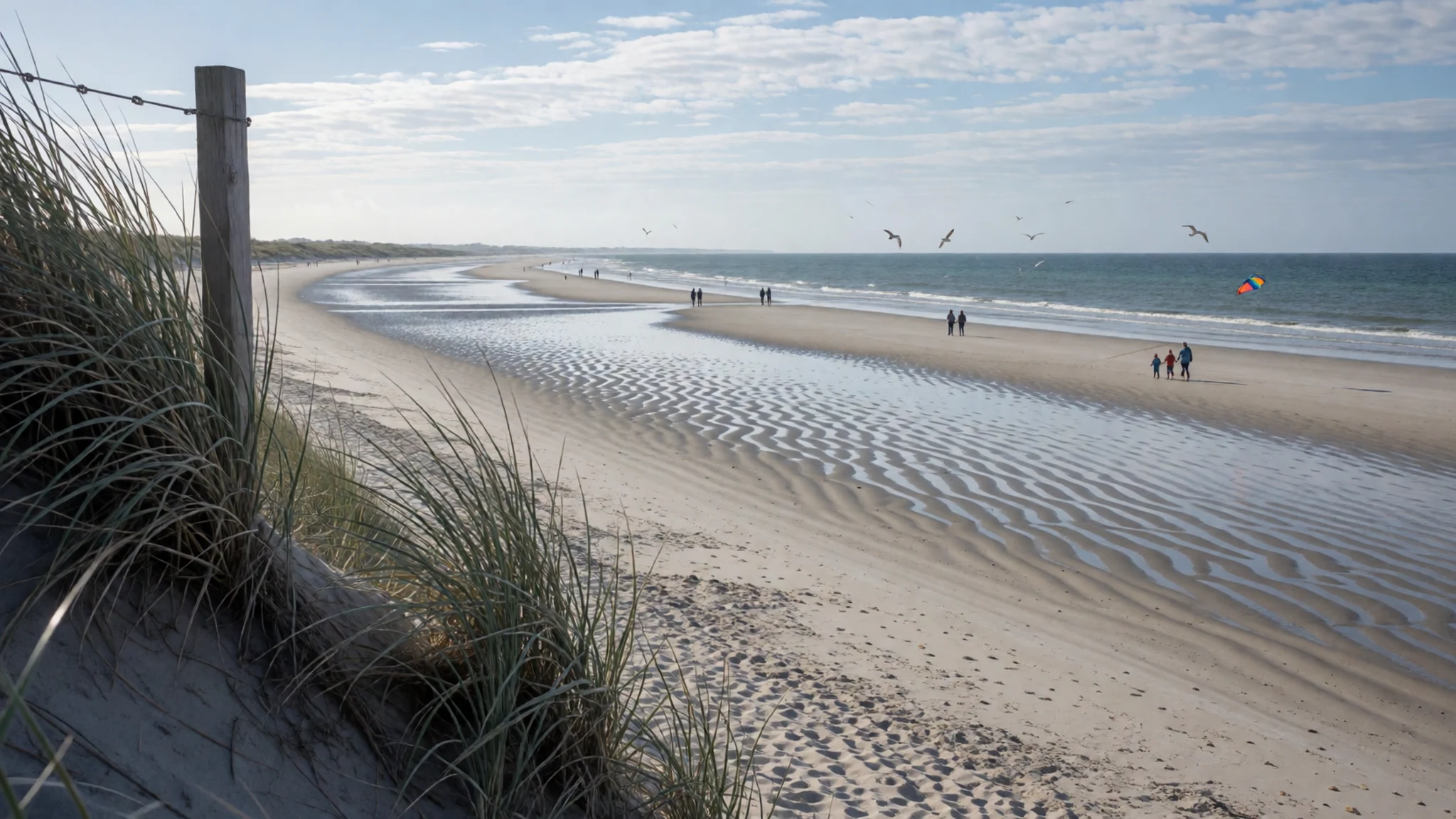
Culture
Rømø’s culture is shaped by sea work, quiet neighbourhoods and the Wadden Sea’s rules. Even when daily life looks simple, the island’s rhythm is guided by tides and wind. That practical mindset shows up in how people plan their day: outdoor time is flexible, and “going to the beach” can mean timing a route rather than just arriving at a point.
The island also keeps its hands busy with hands-on activities. Naturcentres and local museums explain the island’s formation and natural systems, while workshops and seasonal events bring visitors into the story instead of treating them like spectators. If the aim is to understand what makes Rømø “Rømø”, starting with nature interpretation is often more rewarding than only chasing views.
Relatively small communities mean the atmosphere is friendly, but it also means visitors can feel like a disturbance if they act loud or rush. On the beach especially, wind and space make it easy to think you’re alone—until you notice everyone else is also balancing sun, sand and safety.
Visitor etiquette: keep an eye on the tide and don’t wander onto unsafe sandbanks just to extend the walk.
What to wear
On Rømø, dressing well is mostly about weather and terrain. The island sits low and open, so wind is common, and beach days can swing from pleasantly sunny to chilly quickly. Traditional island dress isn’t something you’ll see daily, but you’ll still notice Danish habits in how people present themselves: practical layers are the norm, and modesty expectations are easiest to follow when covering shoulders and choosing calm, non-revealing outfits for church visits.
For footwear, expect sand and uneven ground. Trainers or sturdy walking shoes with decent grip beat fashion sandals, especially if a beach route turns into a longer-than-planned walk. Bring a waterproof jacket and something warm for evenings; the air can feel cooler after the sun drops even in fair seasons.
If visiting in colder months, add a hat or windproof layer. In summer, lighter clothing works, but it’s still wise to pack a layer you can throw on when the wind turns. When walking near coastal areas, avoid slipping gear—solid soles matter more than looking neat.
Visitor basics: pack layers, wear grippy shoes on sand, and dress modestly for church stops.
What to eat
- Seafood plates at Kommandørgården — Kommandørgården area
Kommandørgården is known for steaks and fish, and it has a large buffet. It’s a solid choice when the weather keeps the day indoors and a mixed seafood meal feels like the island’s comfort food.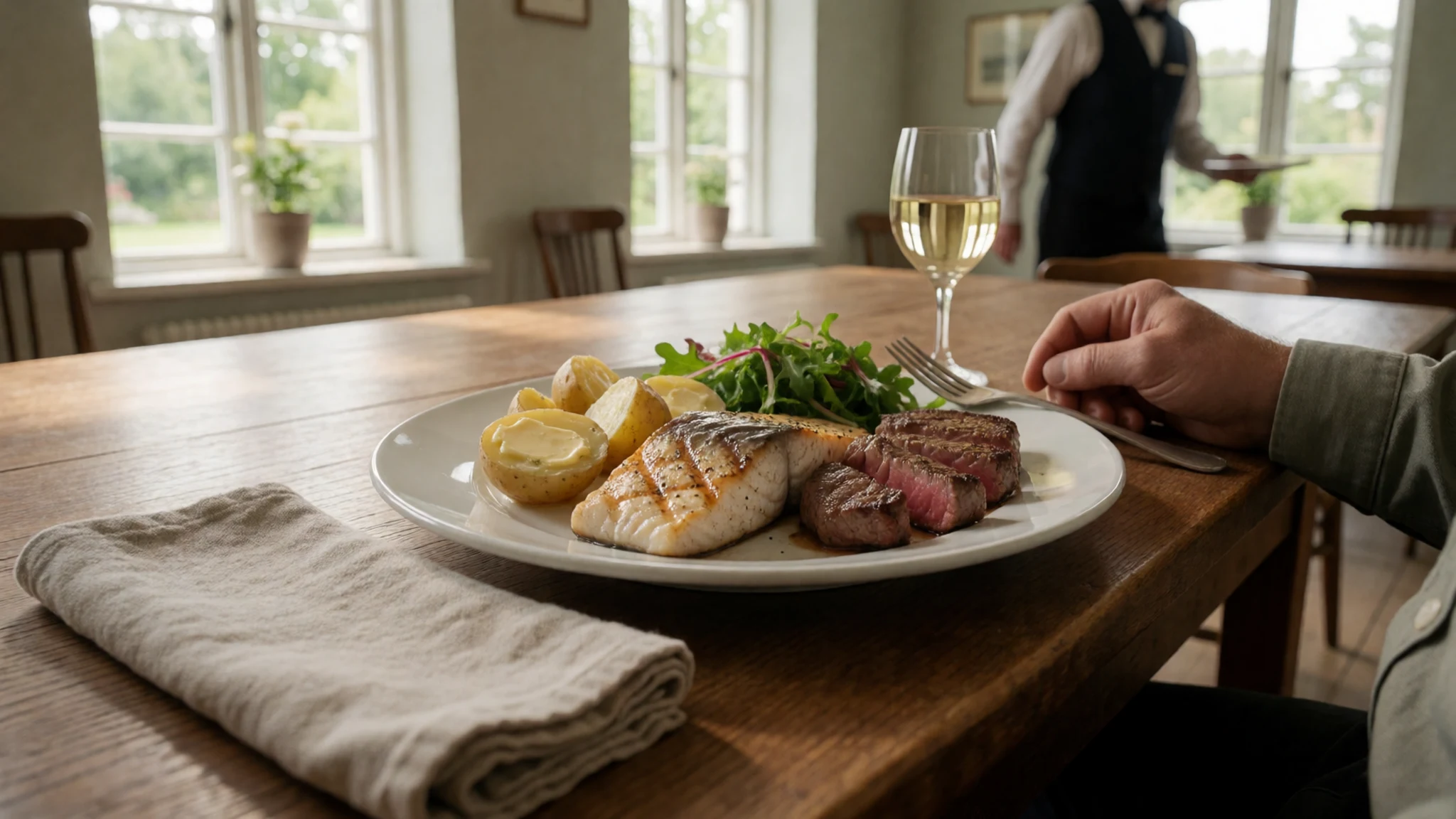
- Danish seafood at Havneby Kro — Havneby
Havneby Kro offers solid Danish food with an emphasis on seafood. It’s the kind of place that suits a hearty lunch after a beach walk, with flavours that lean traditional rather than experimental.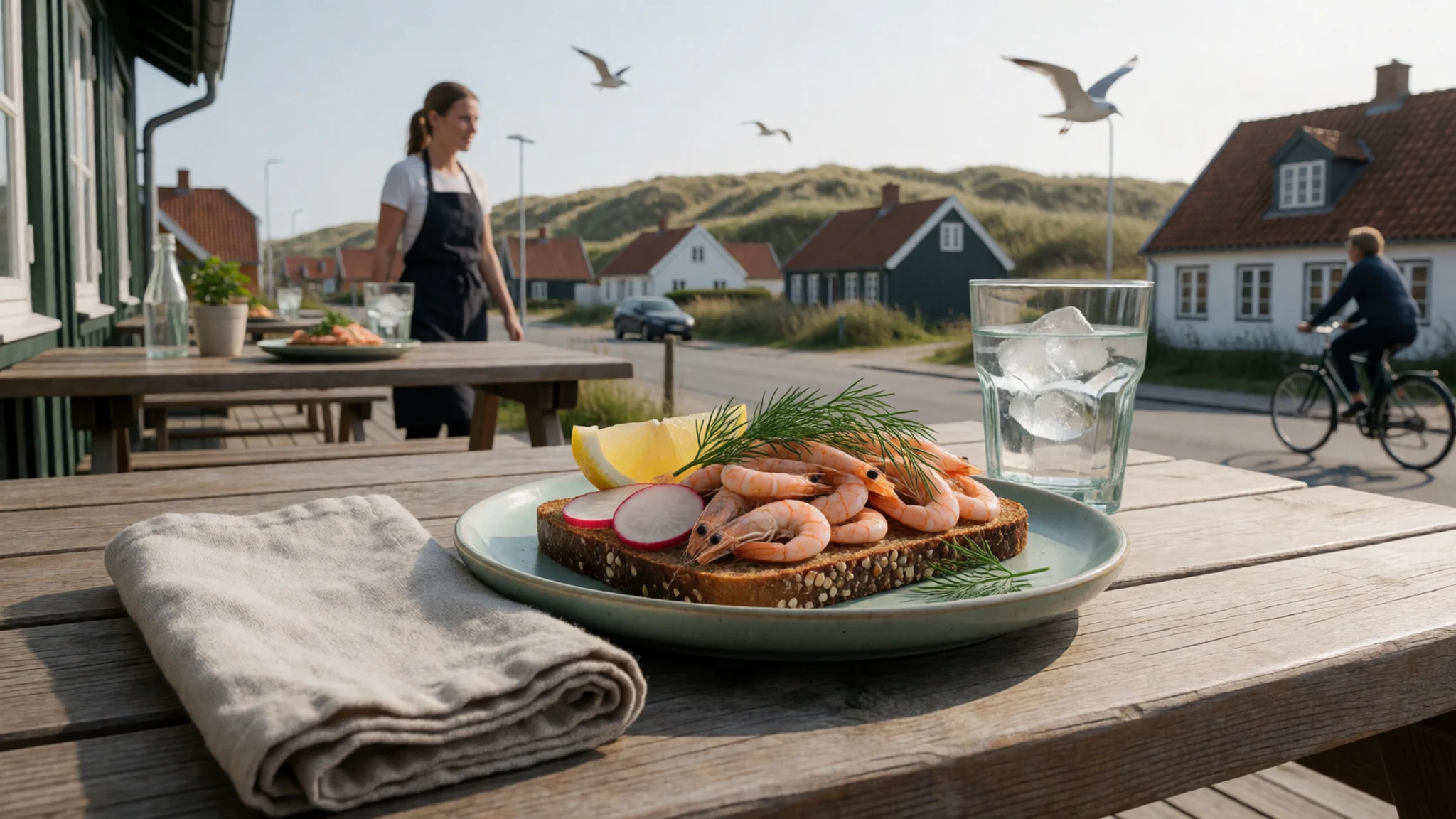
- Local fish in an informal setting at Otto & Ani's Fisk — Havneby
Otto & Ani's Fisk is very informal, focused on fresh fish. If the plan is to keep meals simple and taste-led, this is a good target—especially when seafood dominates the day’s cravings. - Wadden Sea lamb dishes — around local eateries on the island
Wadden Sea lamb is a local speciality you can connect to what you see grazing around the causeway to Rømø. On menus, look for lamb dishes that feel traditional—comforting, not flashy. - Coffee and cake at Cafe Hattesgaard — near the Cafe Hattesgaard area
Cafe Hattesgaard mixes a cosy cafe atmosphere with an antique-shop feel, and it has a big selection of cakes. It’s a good break point for a sweet pause and a warm drink when the wind makes outside time less comfortable. - Burgers and ribs at Cafe Retro — Cafe Retro area
Cafe Retro keeps things friendly with burgers and spareribs, and it welcomes dogs. It’s useful when travelling with a mixed group or when a lighter, casual meal fits better than seafood every day.
Plan it
Best time. March–May for the most comfortable stretch (milder highs and less deep cold), and again from June to August if you’re ready for the warmest weather and the heavier summer showers. The wettest months are typically August and November, while the coolest, driest-feeling period is often January through February. Late October–November is good for quieter stays, with crisp days and rain that varies by day, so bring windproof clothing year-round.
How long. 3–4
Getting there. Travel to the region by train or car, then reach Rømø via the island approaches available from South Jutland. If driving, check the current route options and any ferry or crossing arrangements before setting off.
Budget. mid
Tips
- Build the day around tide timing for beach walks; returning too late is the easy mistake
- Start nature-focused stops earlier in the day for calmer conditions and better light
- On unsettled weather days, swap beach plans for the naturcentres and museums to keep momentum
- If joining organised tours, confirm meeting points and timings locally when you arrive
Etiquette
- Watch out for the tide at all times and don’t enter areas that look cut off
- Avoid open fires anywhere on the island; barbecuing is permitted
- Use common-sense noise levels in small communities and keep paths clear
Nearby
Sources
- Wikidata Q21191 (CC0)
- Wikipedia (rev 1378906923) (CC BY-SA 4.0)
- Wikivoyage (rev 5416423) (CC BY-SA 4.0)
- Photo photos/01-r-m-udsigt.jpg (CC BY-SA 2.5)
- Photo photos/02-r-m-kirke.jpg (CC BY-SA 2.5)
- Photo photos/03-13-09-29-nordfriesisches-wattenmeer-ralfr-06.jpg (CC BY 3.0)
- Photo photos/04-lakolk-beach-r-m-3.jpg (CC BY-SA 3.0 de)
- Photo photos/05-aerial-photograph-400d-2012-05-05-8269-dxo.jpg (CC BY 3.0)
- Photo photos/06-r-m-kite-festival-2016-01.jpg (CC BY-SA 4.0)
- Photo photos/07-romo-island-harbour-dk.jpg (CC BY 2.5)
- Photo photos/08-aussenansicht-sankt-clemens-kirke-r-m.jpg (CC BY 3.0)


