Egeskov Castle
Egeskov Castle, Denmark
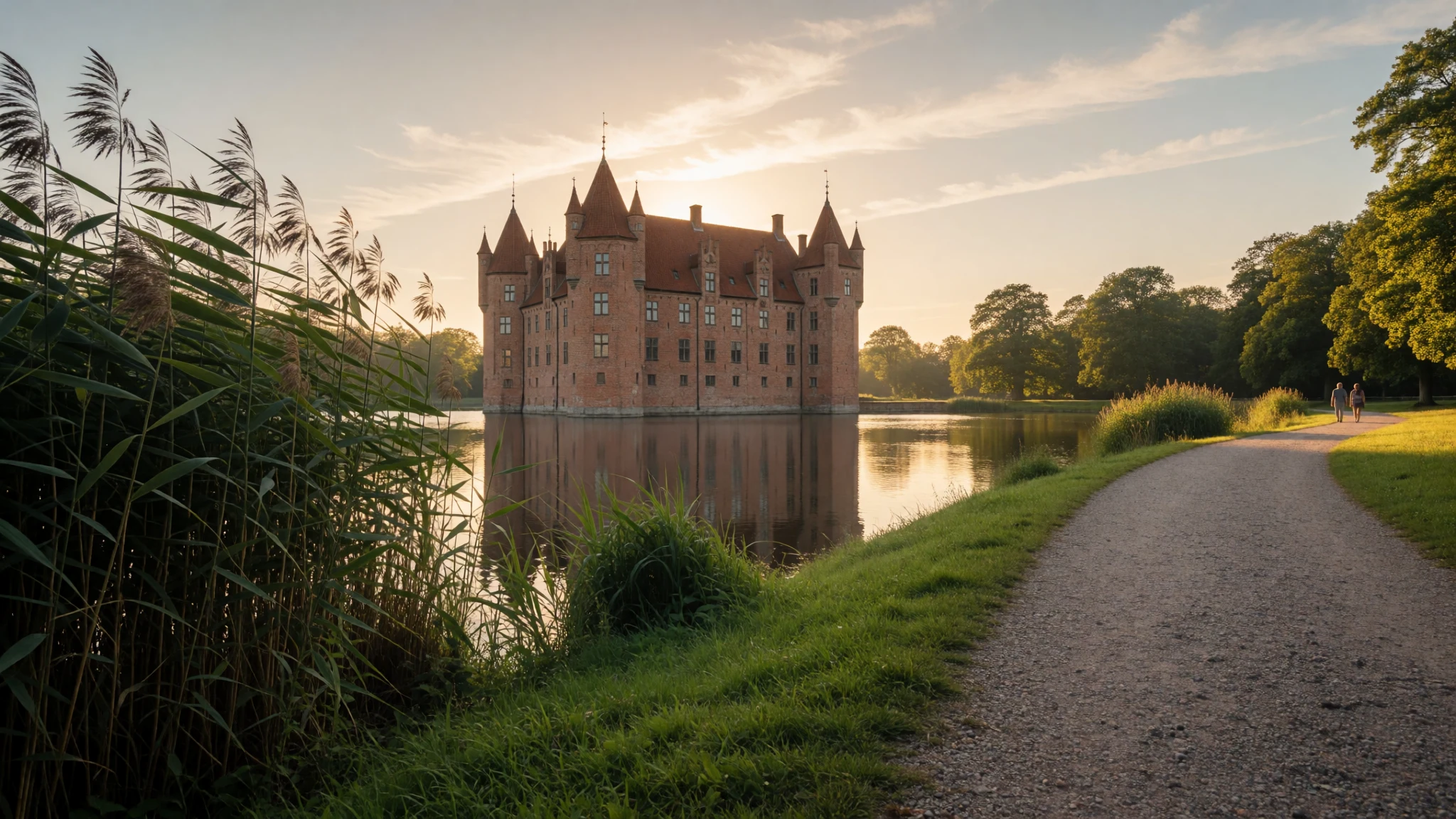
Egeskov Castle rises straight out of a Funen lake, a red-brick Renaissance fortress with gardens and a museum of old vehicles.
The place
Egeskov Castle stands beside the village of Kværndrup in the south of Funen, the island that lies between Zealand and the Jutland peninsula. From the approach, the first view is of a long red-brick building with steep roofs and slim turrets, set in a small lake so that its walls drop straight into the water. Wikipedia describes it as the best-preserved Renaissance water castle in Denmark, and the reflection on a still morning is what most photographs try to capture. The estate is bigger than the house. Around it lie formal gardens, hedged mazes, a park with old trees and a collection of vintage cars, motorbikes and aircraft that surprises people who came only for the architecture. The castle is a museum as well as a family property, still owned by a noble family, so rooms can be toured but the place keeps the feel of a home. Funen is gentle farming country, flat to rolling, with thatched villages and orchards, and the castle sits in the middle of it rather than on a dramatic crag. That gives a visit a slow, domestic rhythm. Families come for the outdoor play areas, couples for the gardens, and enthusiasts for the vehicles. Because it is a working estate with seasonal events, opening times and what is open change through the year; the official site, egeskov.dk, is the place to check before travelling. The grounds take a good half-day to cover, longer if the weather is kind.
Its story
Egeskov Castle was built in 1554 by Frands Brockenhuus, though the name Egeskov appears in records as early as 1405. The timing explains the design. Denmark was torn by the Count's Feud, a civil war, and then by the upheaval of the Reformation, and many nobles built their homes as fortresses. Egeskov's answer was water: the house stands on oak piles driven into a small lake about five metres deep, and originally the only way in was across a drawbridge. Local legend says that a whole forest of oaks went into the foundations, which is how the place got its name, since egeskov means oak forest. Nobody can count the trees now, but the story fits the setting. Ownership passed from the Brockenhuus line to the Bille-Brahe family in 1784, and in 1882 the estate was inherited by the counts Ahlefeldt-Laurvig-Bille, whose family still owns it. That continuity is part of why the building has survived in such good shape: it has been lived in, repaired and used rather than abandoned or rebuilt in a later fashion. The old wars it was built to withstand are long gone, but the house is still shaped by them. The lake that once kept enemies at a distance and the single approach across the water are now exactly what draw people to photograph it, and what make the castle feel like something from a storybook.
What to see
- The castle and its lake — Kværndrup, Funen
The main building is the reason for the trip. Walk the lakeside path to watch the red walls rise from the water, then look at the approach where a drawbridge once formed the only entrance. Morning light is usually kind, and calm days give the clearest reflection. Interior rooms can be toured; check egeskov.dk for access.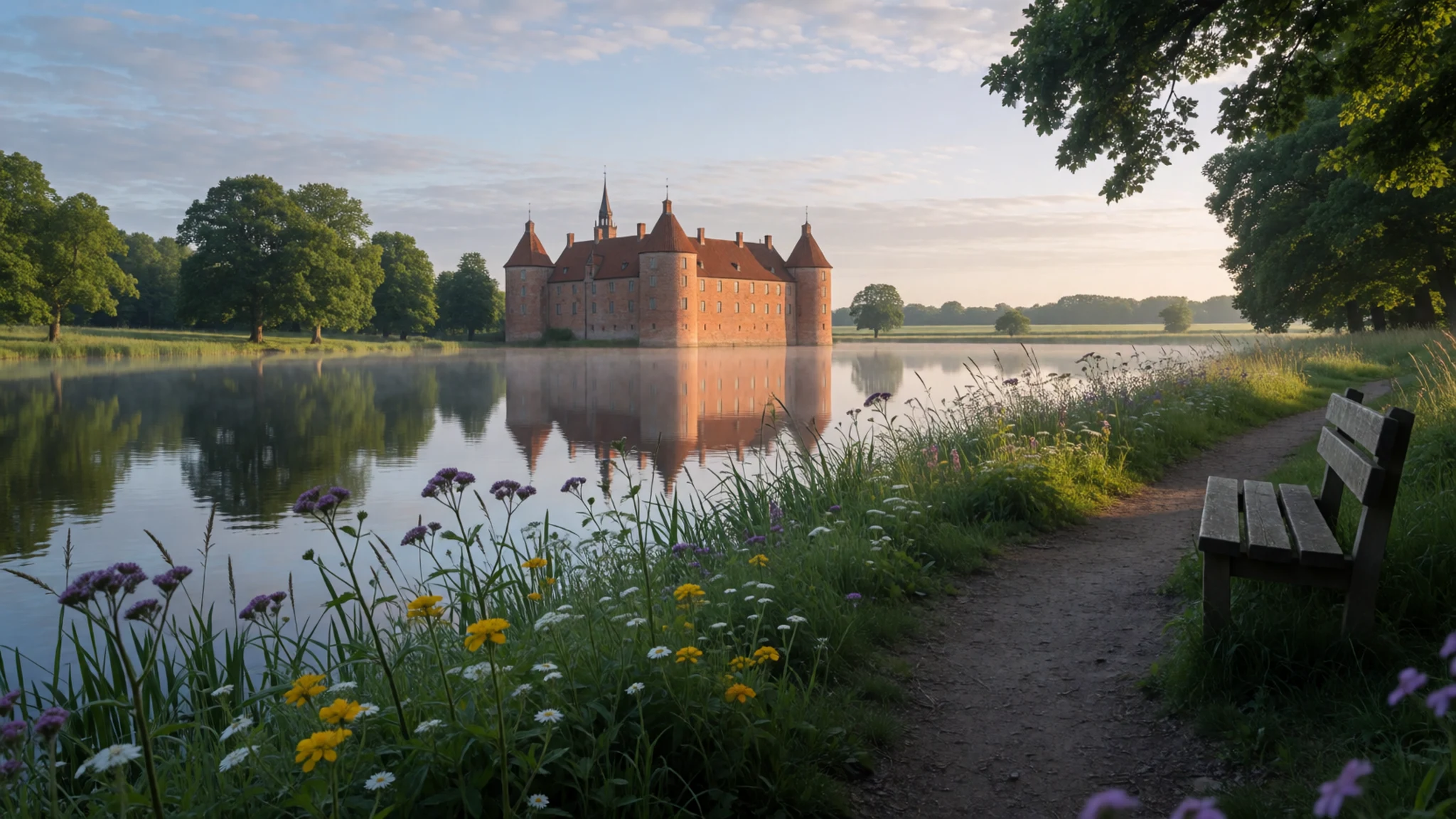
- The gardens and park — Castle grounds, east side
The gardens around the castle are laid out in separate spaces divided by clipped hedges, with flower borders, seasonal planting and long views back to the house. Late spring and summer show them at their fullest. Paths are mostly level, so the grounds suit slow walking, and there are benches where a pause makes sense.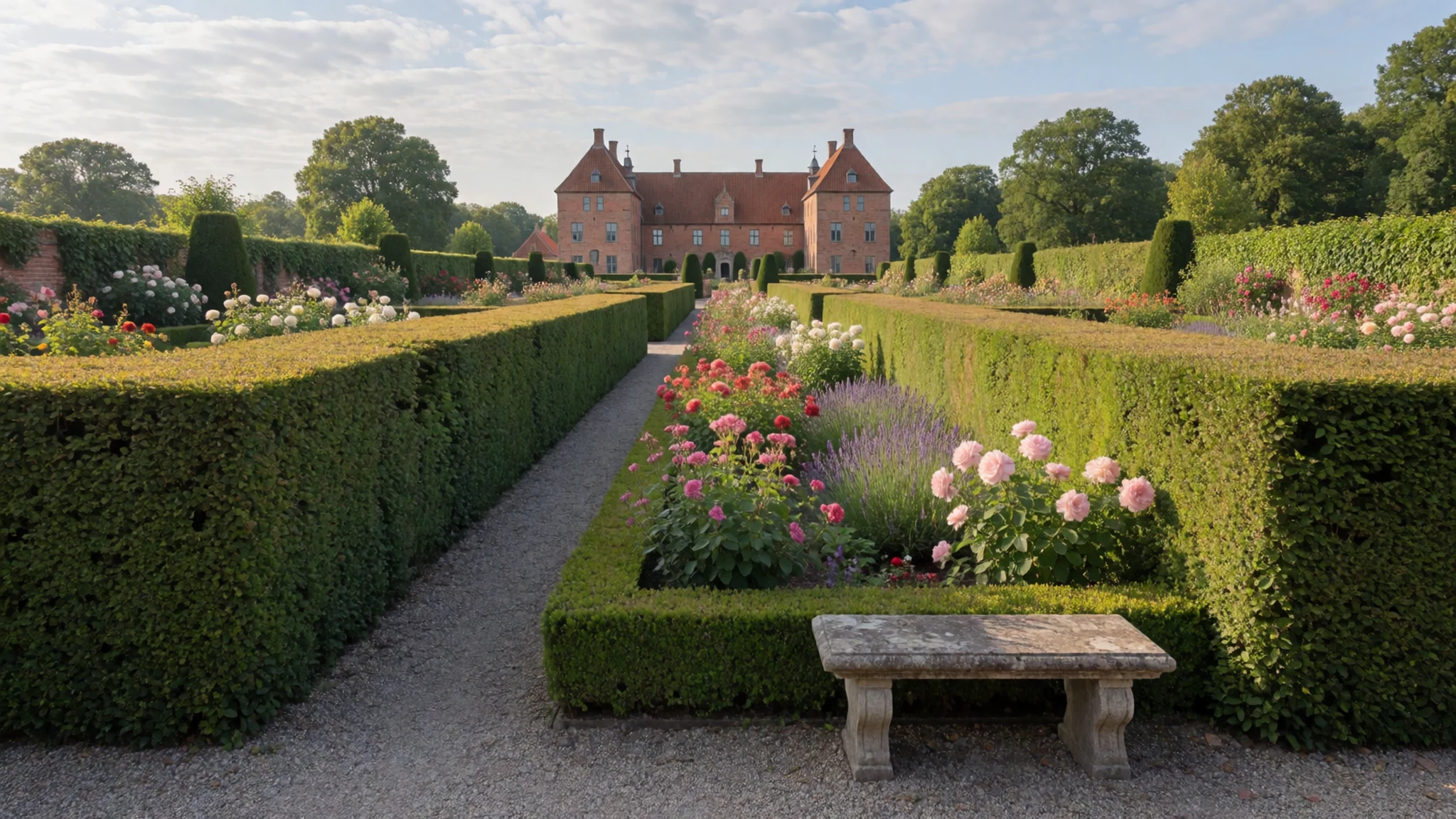
- Vintage vehicle collection — Estate outbuildings
Egeskov holds a museum of historic cars, motorcycles and aircraft in buildings on the estate. It appeals even to people with no interest in engines, because the machines are shown with period detail and the variety is striking. Allow an hour or more, and check the official site for which halls are open in the season of your visit.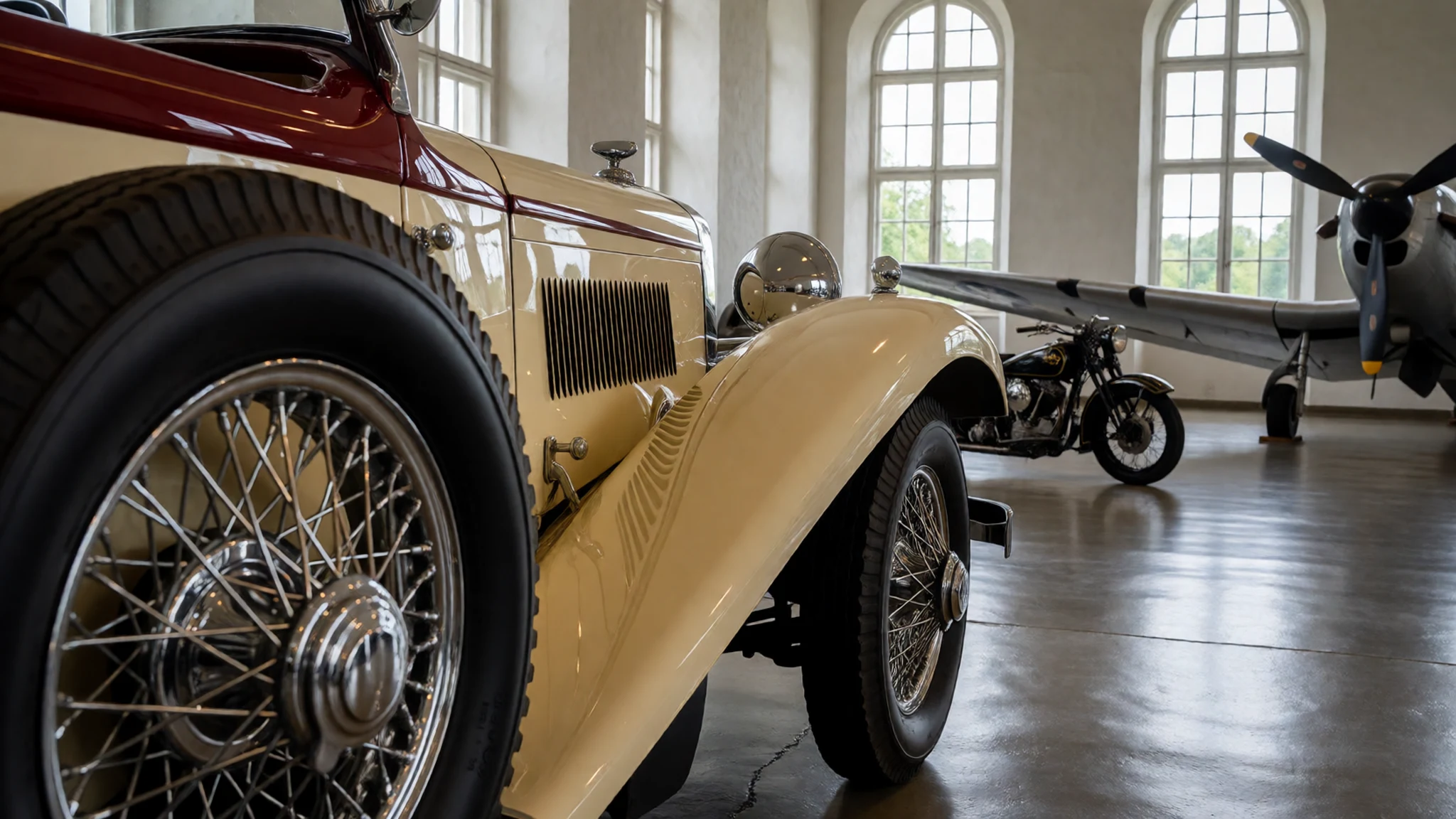
- Mazes and the treetop walk — Castle park
The estate has hedge mazes and an elevated walkway through the trees, which give children something to do and adults a different angle on the park. The walkway lets visitors look at the castle roofs from near canopy height. Features and seasons vary, so confirm what is running before planning the day around them.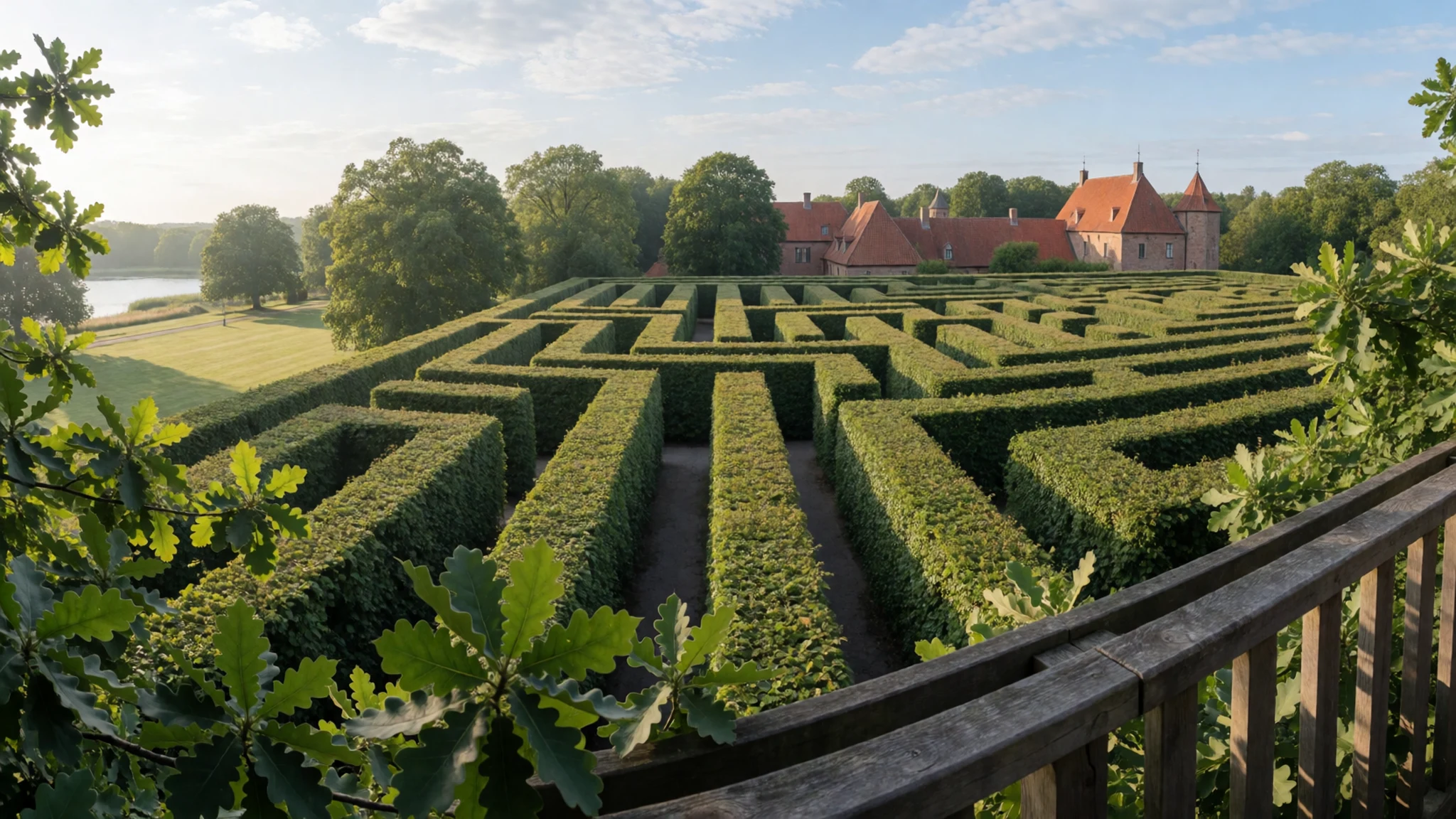
- Titania's Palace — Castle estate
Titania's Palace is an elaborate miniature palace built as a dolls' house, shown within the castle estate. Its tiny rooms repay a slow look for the craftsmanship, and adults tend to linger longer than expected. It is a good rainy-day stop, but check the official site to confirm that it is on display during the visit.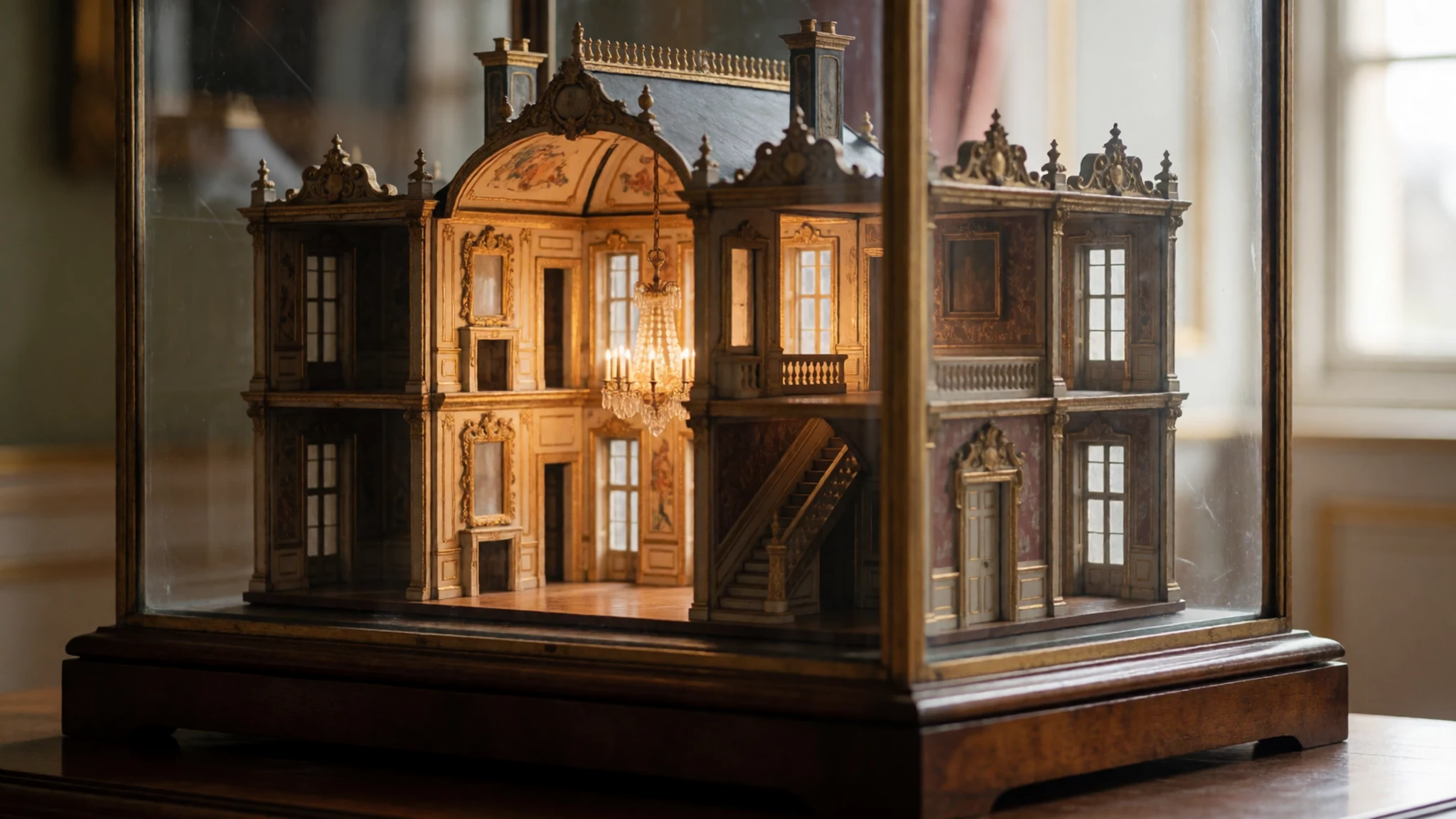
Culture
Egeskov Castle sits in a country where manners work differently from India or Britain. Danes tend to skip the verbal padding that other cultures treat as polite: requests are often made without a please, thank-yous are quick, and nobody addresses a stranger as sir or madam, which Danes feel creates distance. Visitors who expect elaborate courtesy may read this as coldness, but it is a plain style rather than rudeness. At a castle like Egeskov, that plainness shows up as simplicity. Staff are friendly and direct, signs are brief, and questions are answered without fuss. Shyness plays a part too; strangers rarely start conversations, though most people will help if asked. The estate has belonged to a small number of noble families over the centuries, and it is presented as a home with a long past rather than a monument to power. Danish visitors often arrive with picnics and children, so the grounds feel relaxed and informal. Queuing is orderly where it happens, and punctuality counts for a lot when booking tours or events. A simple hello and a smile are all the greeting that staff expect. Keep to the marked paths, stay out of the flower beds and keep voices low inside the castle's historic rooms.
What to wear
Egeskov Castle lies in a part of Denmark where traditional dress survives mainly as folk costume, called dragt, with regional variants made from wool, linen and sometimes silk, finished with embroidery, lace or woven bands. Women's outfits typically combine a bodice, skirt, apron and headwear; men's use breeches or trousers, waistcoats and jackets. Today these are worn at folk-dance gatherings, historical events and some festivals, not in daily life. Everyday clothing on Funen is practical and quiet: dark or neutral colours, jeans, knitwear, sturdy trainers and good waterproofs. Cycling is common, so function matters more than display. Smart casual is about as dressy as it gets, even near a manor house with a noble owner. For a visit, the weather decides. Even in summer the lake and open park can be breezy, and rain arrives without much warning, so bring a light waterproof and a warm layer. Paths are gravel and grass, which suit comfortable closed shoes better than thin-soled sandals. Summer days need a hat and sunscreen, since shade is patchy in the gardens. There is no dress code for the castle itself and no modesty requirement, though tidy clothes are a courtesy for the interiors. Visitors from warmer parts of India should plan for cool evenings, even in August, and pack a proper jacket for spring and autumn.
What to eat
- Smørrebrød — Village cafés and town lunch spots
Open sandwiches on dark rye bread, topped with pickled herring, egg, roast beef or fish fillet and neat garnishes. Lunch is the traditional hour for them. Look in village cafés and bakery-cafés around Kværndrup, or in the towns of Svendborg and Odense.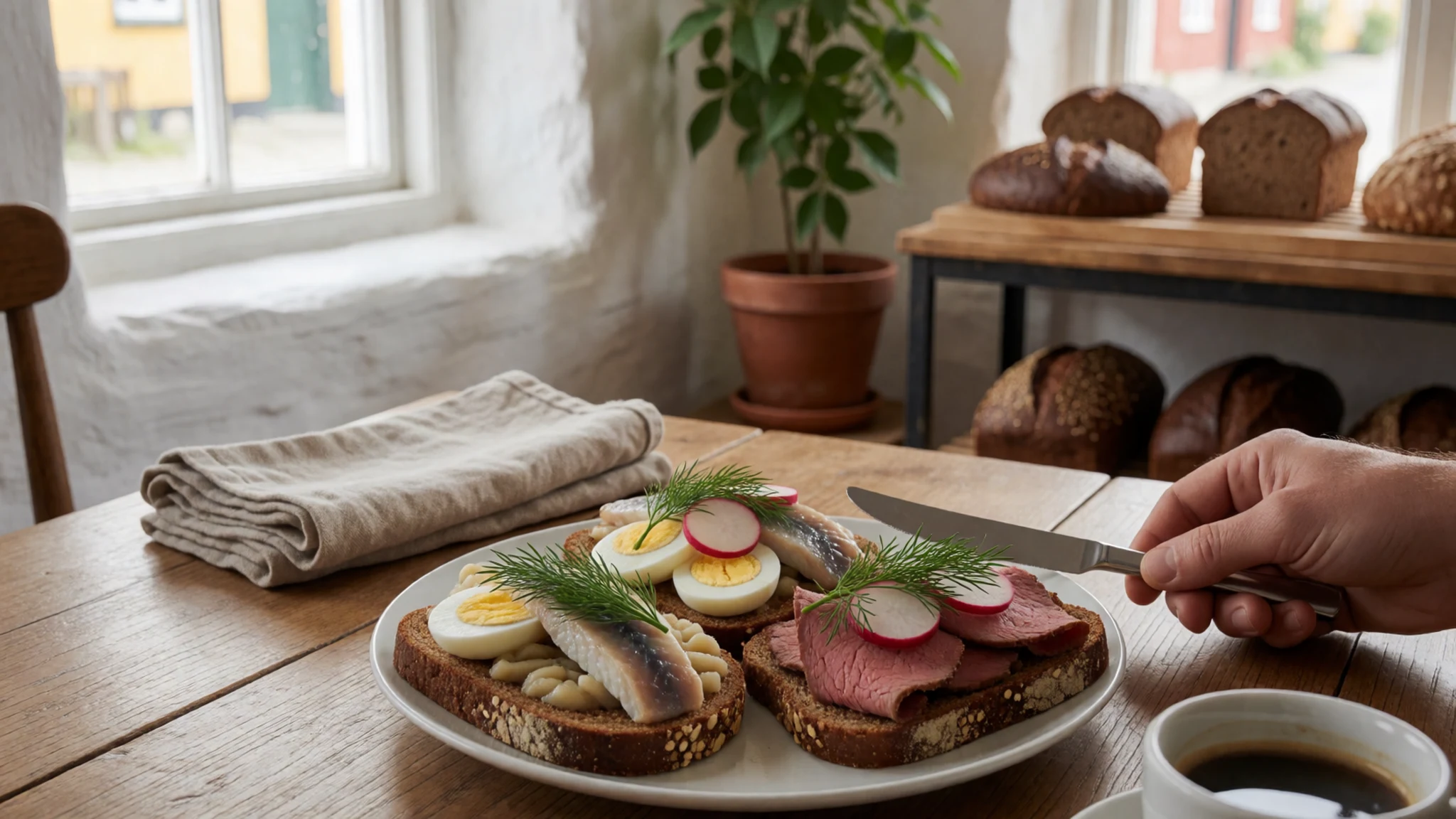
- Stegt flæsk med persillesovs — Traditional inns and café restaurants
Crisp fried pork belly with parsley sauce and boiled potatoes, a homely Danish plate. Traditional inns and café restaurants across Funen serve it. Vegetarians should ask about alternatives, since Danish home cooking leans heavily on pork.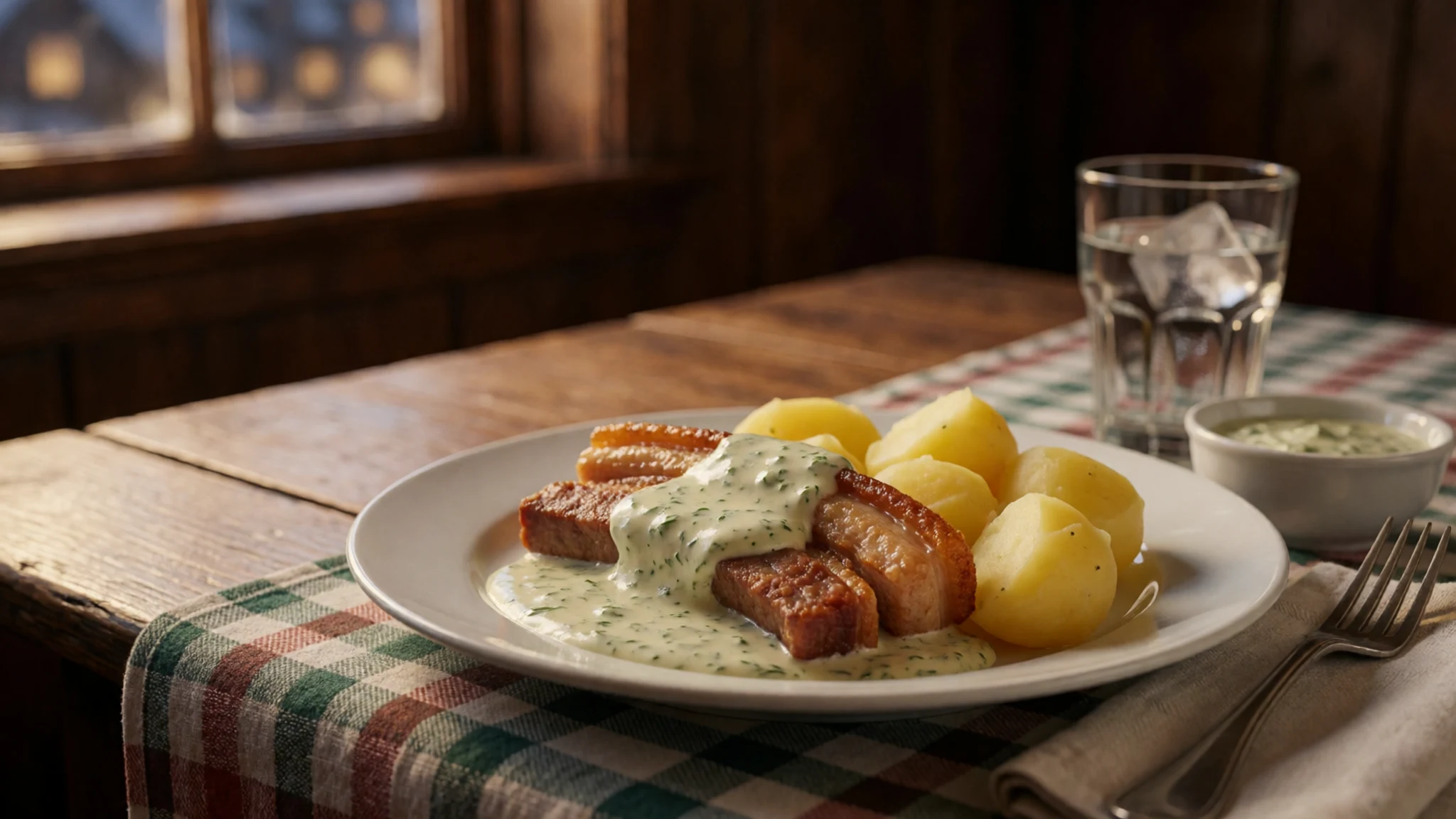
- Frikadeller — Family-run eateries
Pan-fried meatballs of pork or mixed meat, served with potatoes, gravy and pickled red cabbage. They are a standard on the lunch plate in family-run eateries, and also turn up cold in packed lunches and picnics. - Wienerbrød — Any town-centre bakery
Layered, buttery pastries sold in every Danish bakery, from cinnamon swirls to custard-filled spirals. Buy one with a morning coffee from a bakery in the nearest town centre before heading to the castle. - Seasonal farm-shop fruit — Farm shops on country roads near Kværndrup
Funen is farming and orchard country, and roadside stalls and farm shops sell apples, berries and vegetables in summer and autumn. Prices and stock vary by day, so treat it as a picnic top-up rather than a fixed meal.
Plan it
Best time. May to September, when the gardens are fully planted and daylight is long; July and August are the busiest, with Danish families on holiday. Winters are cold, grey and wet, and some attractions close, so check the official site first.
How long. 1
Getting there. Fly to Copenhagen, take an intercity train to Odense, then a local bus or taxi towards Kværndrup; driving from Odense or Svendborg is the simplest last leg.
Budget. mid
Tips
- Check opening dates and ticketing on egeskov.dk before travelling, as the estate runs seasonally
- Arrive early on summer weekends for quieter paths and calmer reflection photographs
- Cards are widely accepted across Denmark, so little cash is needed
- Bring a waterproof and a warm layer, because weather changes quickly on open ground
Etiquette
- Keep to the marked paths and out of the flower beds
- Do not touch furniture or exhibits in the castle rooms
- Tipping is not expected, as service is normally included in restaurant bills
Nearby
Sources
- Wikidata Q857504 (CC0)
- Wikipedia: Egeskov Castle (rev 1367378632) (CC BY-SA 4.0)
- Wikivoyage: Denmark (rev 5413428) (CC BY-SA 4.0)
- Photo: Malene Thyssen, Egeskov Castle, Denmark (CC BY-SA 2.5)
- Photo: KurtVl BE, Egeskov Castle (CC0 1.0)
- Photo: -Ebelien-, Kasteel Egeskov (CC BY 2.5)
- Photo: Rüdiger Stehn, Egeskov Slot (487DK) (CC BY-SA 2.0)
- Photo: Rüdiger Stehn, Egeskov Slot (488DK) (CC BY-SA 2.0)
- Photo: Nelson L., A fairy tale that gets under your skin (Denmark #6 Egeskov Slot) (CC BY 2.5)
- Photo: Chixoy, Castell d'Egeskov vista frontal (CC BY 3.0)
- Photo: Chixoy, Castell d'Egeskov (CC BY 3.0)


