Bornholm
Bornholm, Denmark
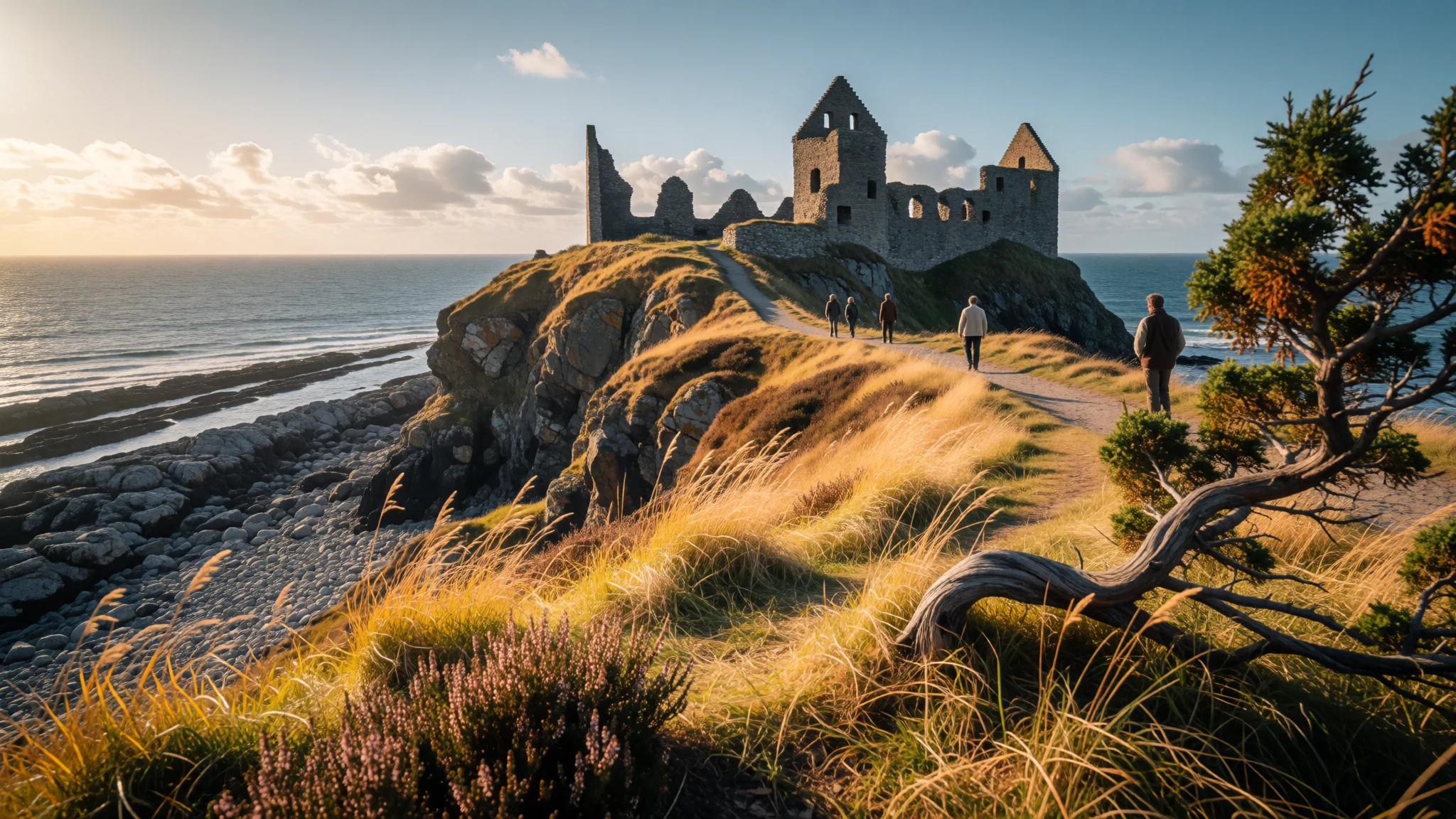
Bornholm is a granite island in the Baltic of smoked herring, round churches, a ruined castle and pale southern beaches.
The place
Bornholm is a Danish island in the Baltic Sea, lying well to the east of the rest of Denmark. Sweden sits to the north, Germany to the south-west and Poland to the south, which explains why the island has always felt like a place apart. About 39,632 people live here, so it works as a scatter of small harbour towns, farms and villages rather than a resort built for crowds.
The geology explains most of what a visitor sees. Granite underlies the island except along the southern coast, which earns it the nickname klippeøen, 'rock island'. The north is the dramatic part: bare cliffs, clefts and heathland, quite unlike the gentle rolling hills of mainland Denmark. Moving south, the land drops through pine and broadleaf forest, much of it replanted after storms in the mid-twentieth century, then through open farmland in the middle, and finally to the sandy beaches of the south.
The other nickname is solskinsøen, 'sunshine island'. Summers are bright and fairly dry, and the rock stores warmth, so autumn stays mild for longer than the latitude suggests. Intense heat is rare, because the sea tempers everything, and winters can still be raw. The climate is kind enough for a local fig, Bornholm's Diamond, to grow outdoors, a surprise this far north.
There is no railway, so people get around by bicycle, bus or hire car. Round churches, smokehouses, windmills and small galleries are spread across the island, and most of the pleasure lies in linking them together at an unhurried pace.
Its story
Bornholm's history is mostly a story of being in the way. Sitting in the middle of the Baltic, the island attracted Danish kings, Swedish armies and the merchants of Lübeck, and it changed hands more than once. Its old Norse name, Borgundarholmr, points to a high, rocky place rising out of the sea. Some scholars have even suggested that the Burgundians, and through them Burgundy in France, took their name from the island, though that remains a theory.
In the early sixteenth century the Danish crown pawned Bornholm to Lübeck, as payment for help in winning the throne. Swedish forces seized it in the 1640s but returned it in the peace that followed. The decisive episode came in 1658, when Denmark surrendered the island to Sweden by treaty and Swedish troops occupied it. Islanders were not willing to accept that. A revolt broke out within months, and on 8 December a local man, Villum Clausen, shot the Swedish commander, Johan Printzensköld. By 1660 Bornholm was Danish again. Together with the tiny Ertholmene islands, it is all that Denmark still holds of the lands east of the Øresund.
That rebellion still shapes how islanders describe themselves: independent-minded, a little stubborn, and proud of having won their island back. The ruin of Hammershus, on the north-western tip, is the physical reminder of why so many powers wanted the place. The round churches scattered inland belong to the same medieval world, and together the fortress and the churches give the island a deeper layer of history than its quiet villages first suggest.
What to see
- Hammershus — Northwest, near Allinge-Sandvig
Hammershus is a ruined medieval fortress on the north-western tip of Bornholm, near Allinge-Sandvig. Its walls stand on a rocky headland above the sea, and the site makes clear why the island was fought over for centuries. It is open ground to wander rather than a museum, and the wind is constant, so a windproof layer helps even in summer.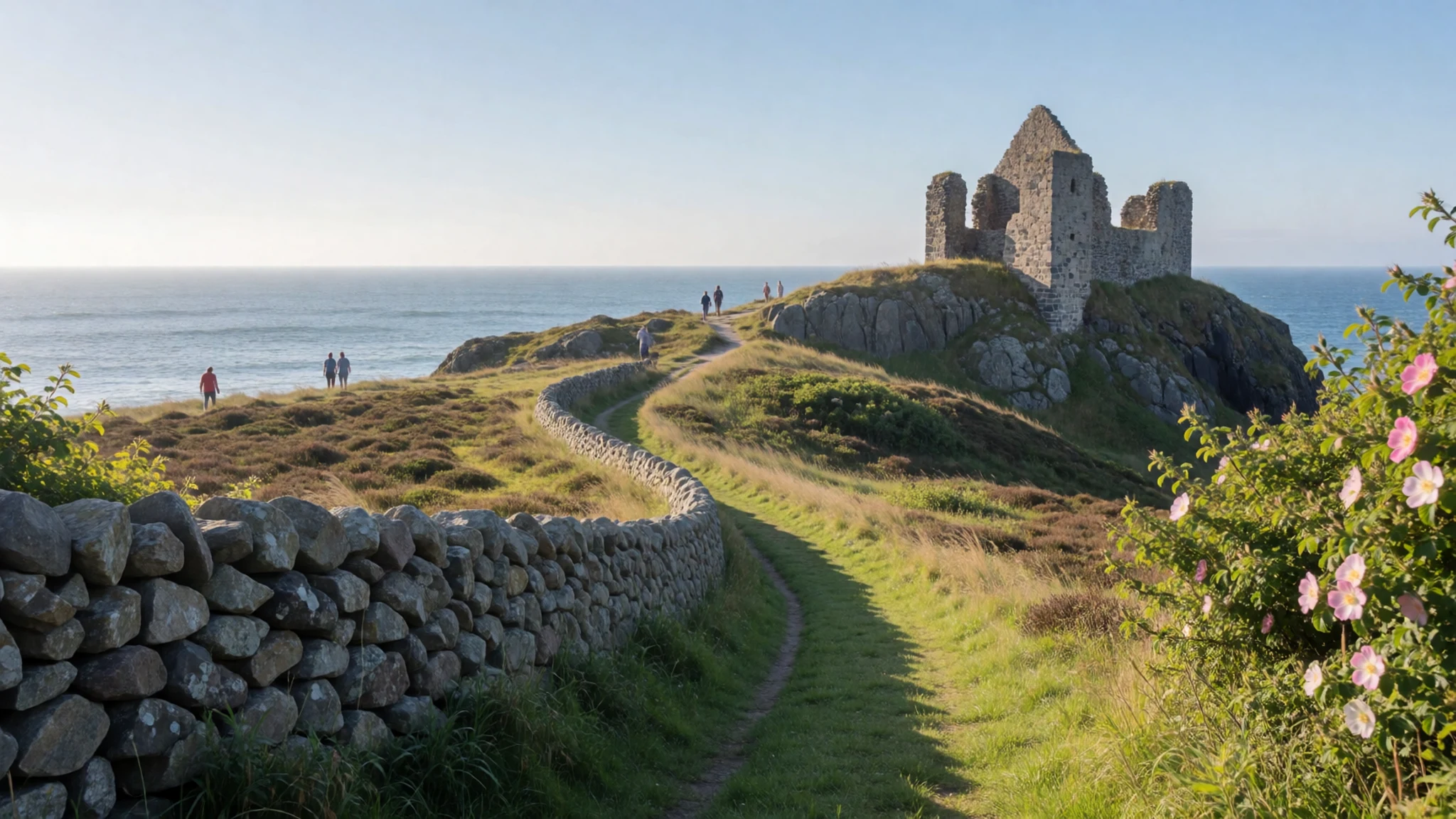
- Østerlars Kirke — Interior, east of the island's centre
Østerlars Kirke is one of the round churches that Bornholm is known for, set among farmland in the island's interior. The circular plan looks quite different from the long-naved village churches found across most of Europe. Opening times vary by season and by services, so check locally before making a special trip.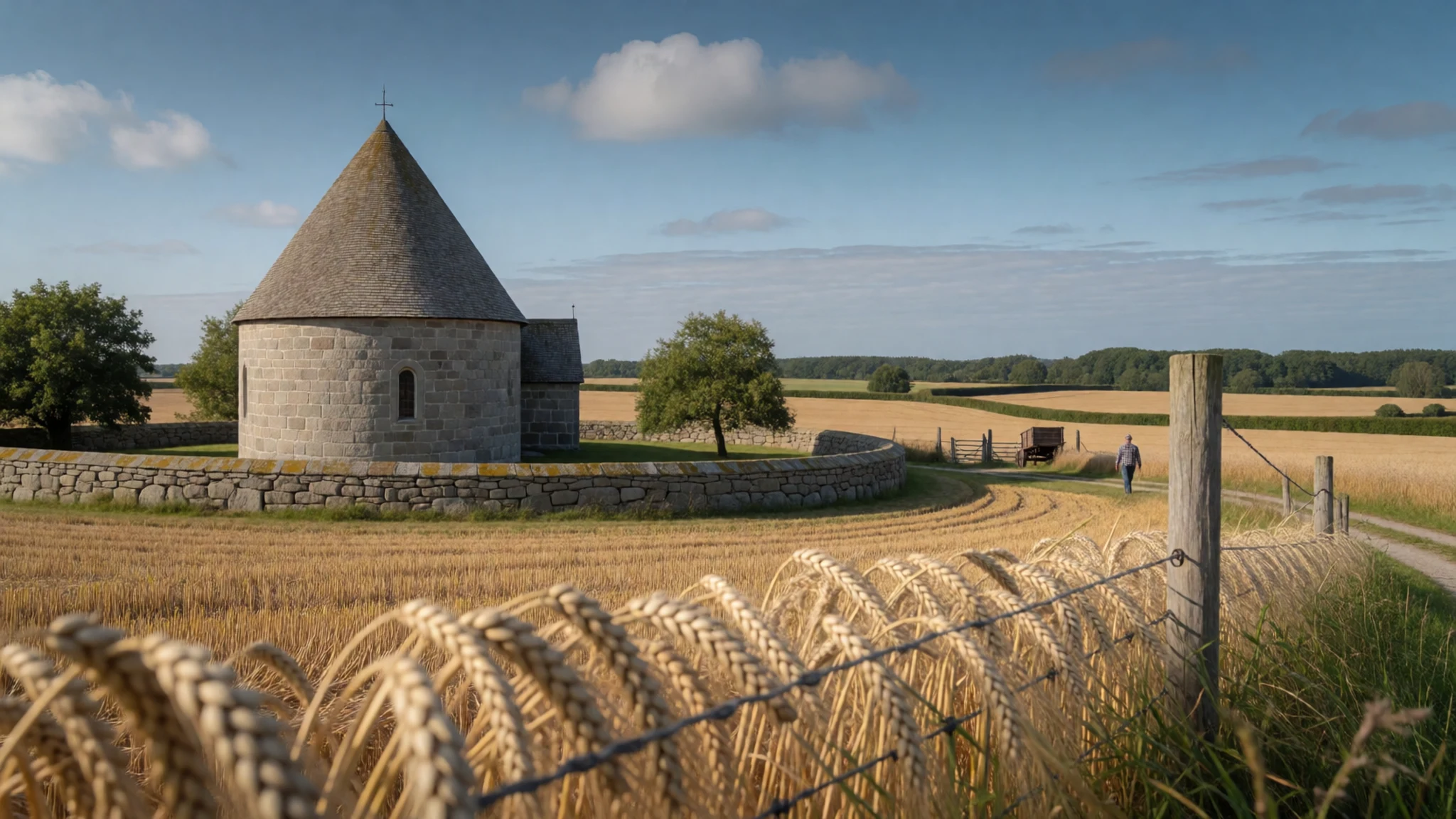
- Gudhjem — North-east coast
Gudhjem is a small harbour town on the north-east coast, with a windmill above the houses and smokehouses near the quay. Nearby are the Bornholms Kunstmuseum, set beside the sea and admired for its architecture, and the Medieval Centre, a rebuilt medieval settlement. The lanes are steep, but the harbour views repay the climb.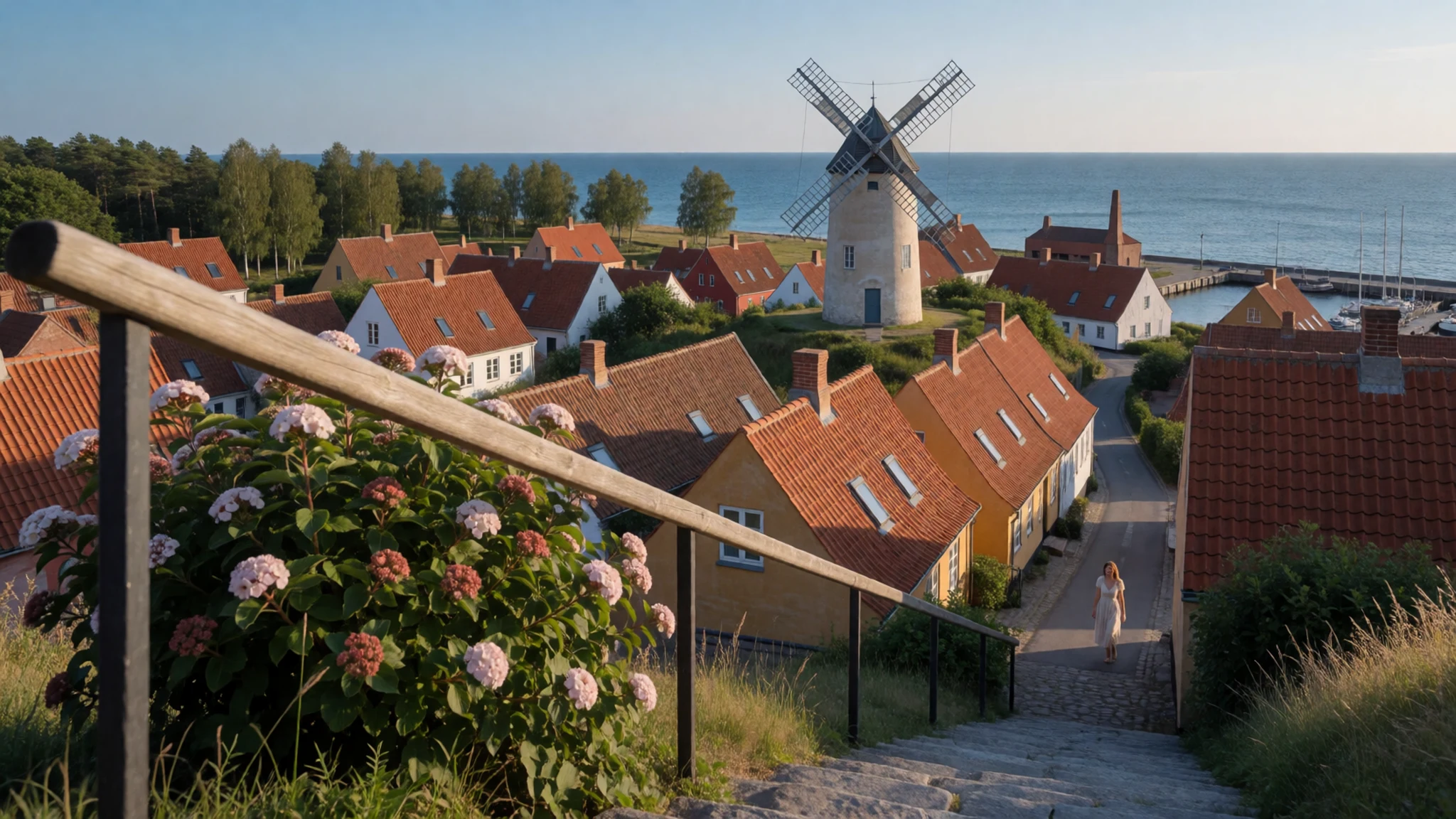
- Svaneke — Eastern point
Svaneke is a well-preserved town on the eastern point of the island, known for artists' studios, galleries and a lively market. Small streets run down to a working harbour. The town also has a brewery, Svaneke Bryghus, which makes Bornholmer Bryg, the island's own beer, served in many local bars and restaurants.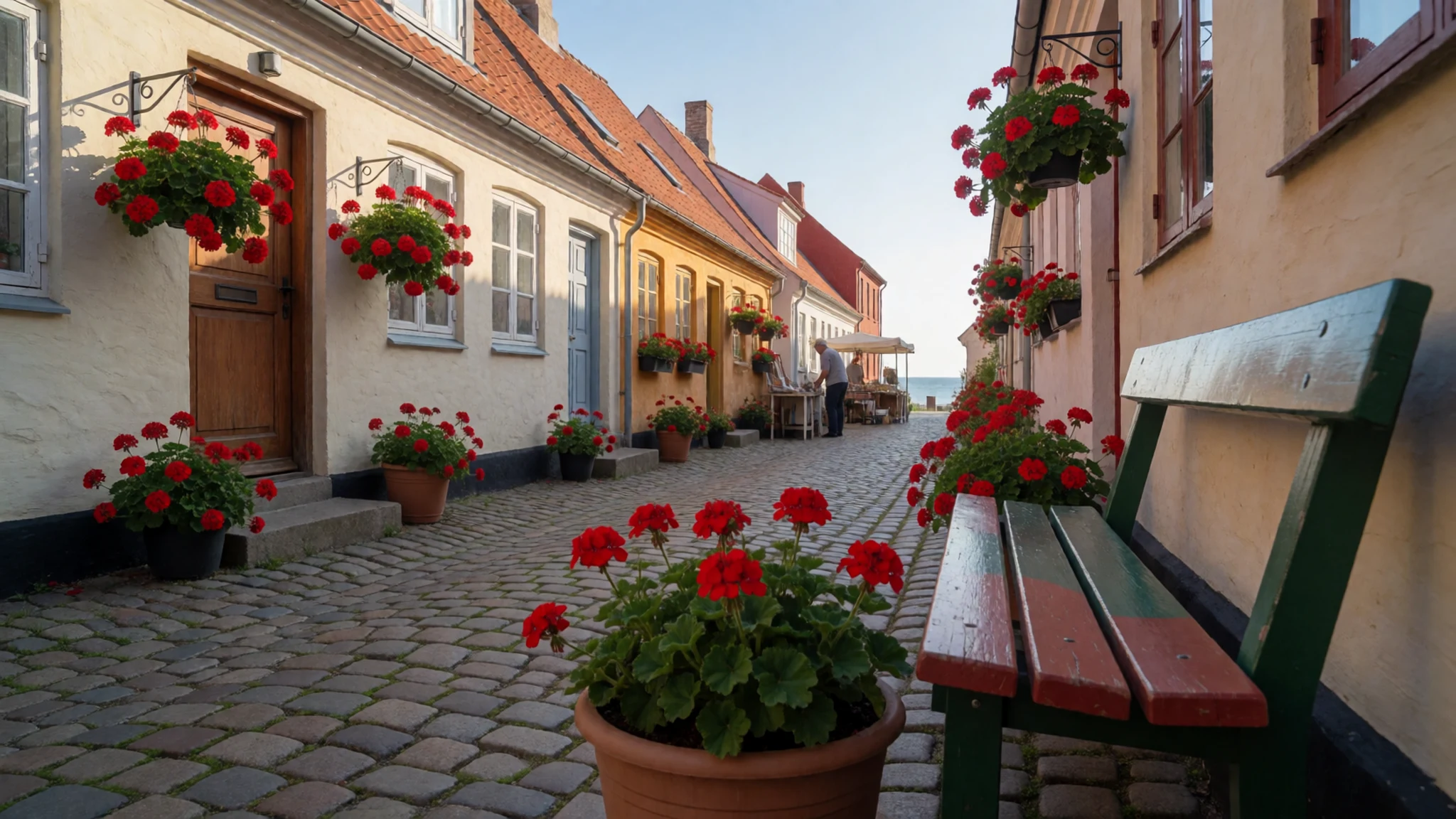
- Dueodde — South coast, near Snogebæk
Dueodde is a beach in the far south, near Snogebæk, where the sand is very fine and pale and pine trees stand behind the dunes. Sandbars mean both shallow and deeper water lie close to the shore. It fills with families in summer, but walking along the strand away from the access point thins the crowd.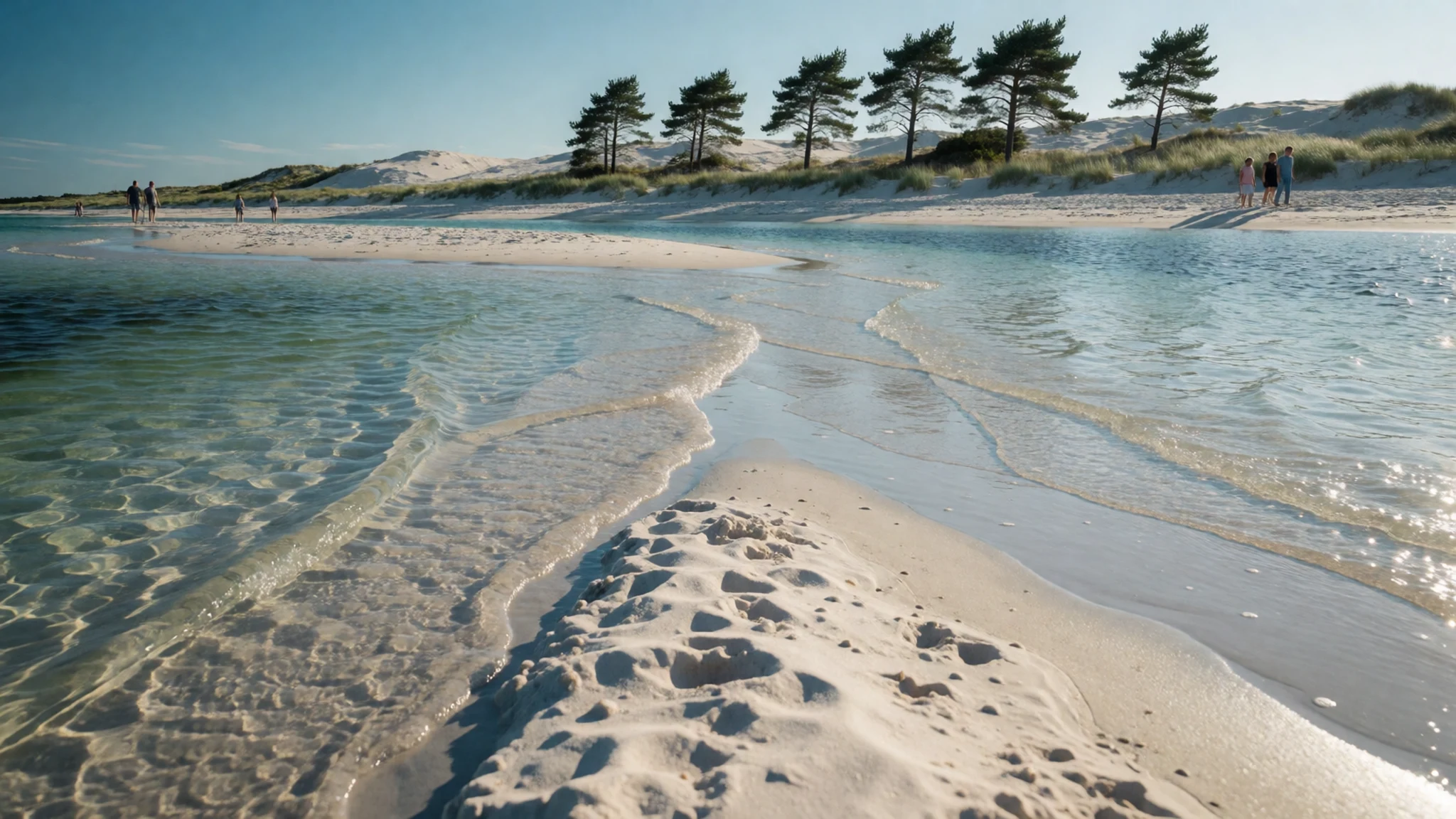
- Almindingen — Interior
Almindingen is a large forest in the middle of the island, laced with paths for walking and cycling. It offers shade on hot days and a calmer contrast to the coast. Within the wider area, Rytsker Højlyng is home to Rokkestenen, a massive boulder that makes an easy goal for a ramble.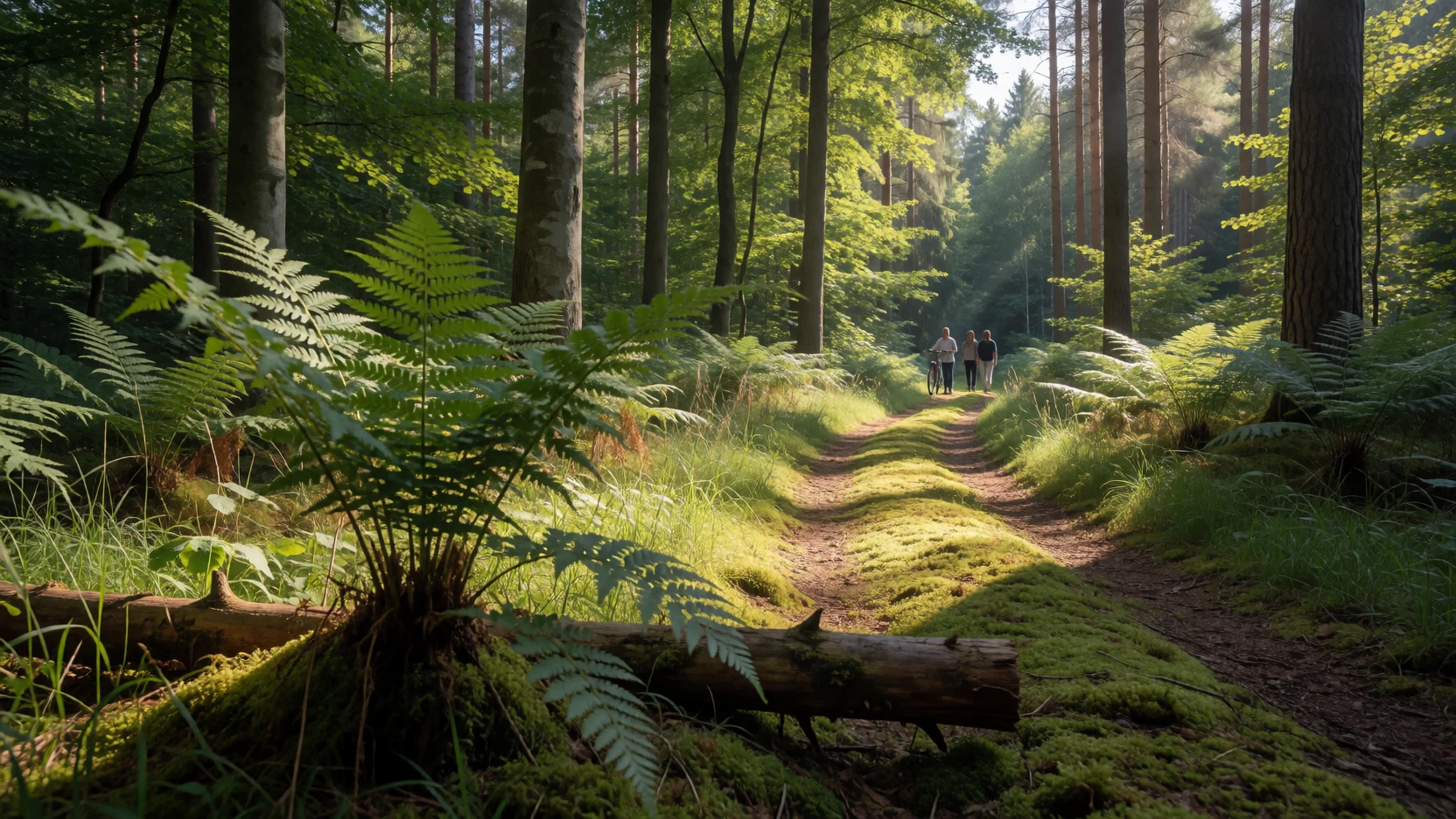
Culture
Bornholm's culture is quiet, practical and craft-minded. The island's economy has long relied on dairy farming and crafts, and that shows in the number of small studios, galleries, workshops and farm shops along the country roads. Svaneke and Gudhjem in particular have a reputation for artists, and local products such as beer, snaps, rye crackers and cheese are sold with some pride.
Most islanders belong to the Lutheran Church of Denmark, the Folkekirken, and the round churches are still part of village life rather than museum pieces. Other denominations arrived mostly in the nineteenth century, among them Baptists, Methodists and Latter-day Saints, and the Catholic church returned in the mid-nineteenth century after the Reformation. The result is a community that is largely secular in daily habits but keeps churches, church bells and seasonal festivals as part of the calendar.
Island manners are informal and understated. People queue without fuss, speak at moderate volume, and are happy to answer questions in English, though a few Danish words, such as 'tak' for thank you, are appreciated. Cycling is a normal way to get around, and drivers expect cyclists to use the marked paths. Smokehouses and harbour kiosks are often busy in summer, and patience at the counter is part of the experience.
In the round churches, speak softly, step aside for any service or funeral in progress, and ask before photographing anyone who is worshipping.
What to wear
On Bornholm, traditional dress survives mainly as heritage costume. Regional folk outfits, typically built from wool and linen with embroidered caps, aprons and bodices, are worn by dance and folk groups and at heritage events and festivals rather than day to day. The brief for this reading names no single famous costume, so it is best to ask at a local museum or tourist office when one is on show.
Everyday clothing is relaxed and practical, in the Scandinavian way. Locals wear jeans, knitwear, windproof jackets and sturdy trainers, with plain colours and little show. Bicycles are common, so many people dress for pedalling, and the same outfit goes from the harbour to the gallery to the pub. Swimwear and sandals appear as soon as the sun does.
A visitor should dress for changeable weather. Summers are bright but the sea breeze is cool, and evenings often need a jumper, so layers and a light waterproof are sensible even in July. Comfortable walking shoes matter on the granite cliffs, forest tracks and cobbled lanes, and a sun hat and sunscreen help on open beaches. There is no strict dress code at churches or in towns, though covering bare shoulders and avoiding beachwear inside a church is polite. In autumn and spring, add a warm hat and gloves for the coastal paths.
What to eat
- Smoked herring — Smokehouses in Gudhjem, Arnager and Snogebæk
Smoked herring is the island's signature food, taken warm from the smokehouse chimney and eaten with rye bread and a little salad. The smokehouses of Arnager, Gudhjem and Snogebæk sell other fish and seafood too, often to eat at outdoor tables by the harbour.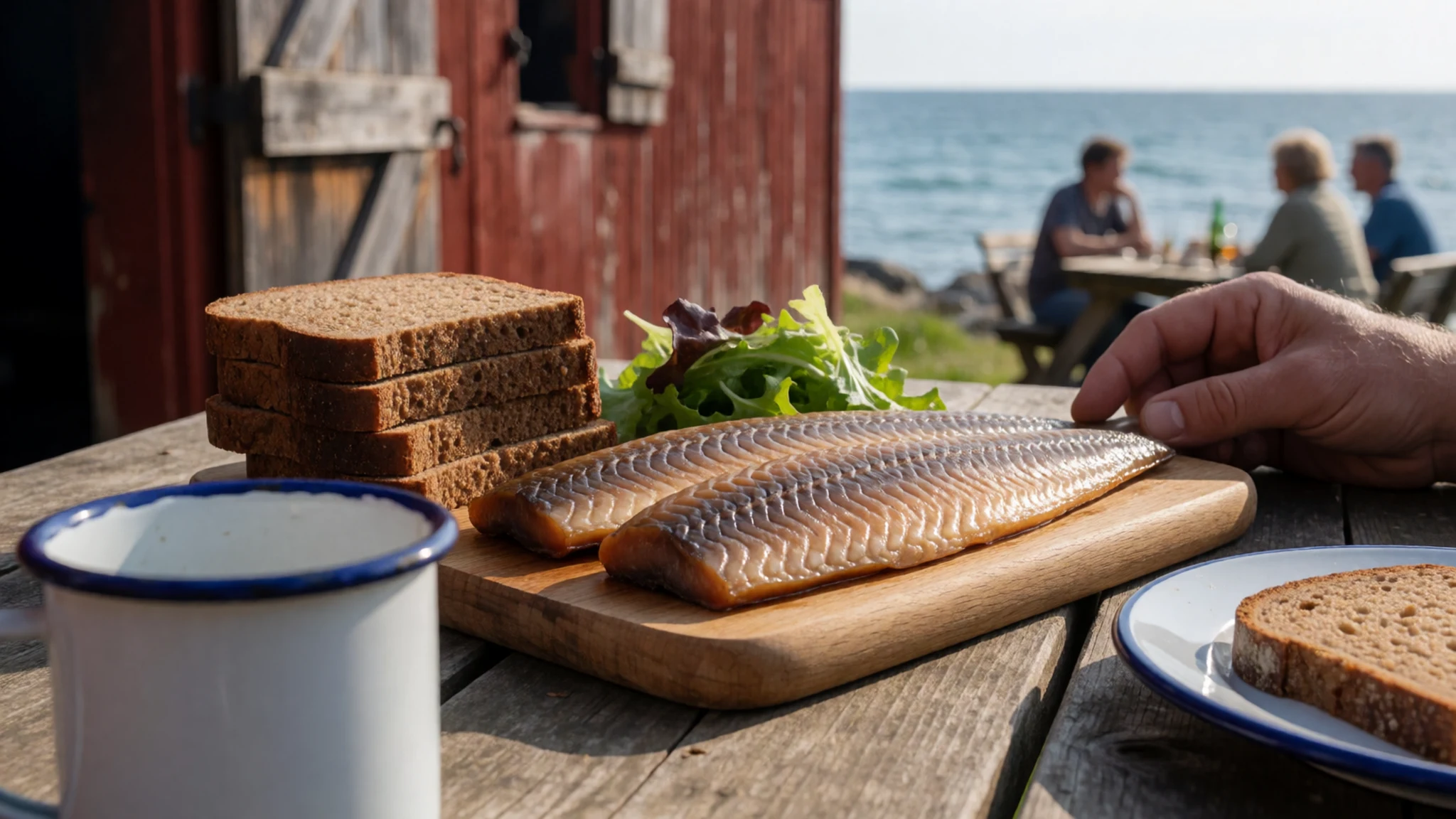
- Sol over Gudhjem — Smokehouses and cafés around Gudhjem harbour
Sol over Gudhjem, 'sun over Gudhjem', is smoked herring on rye bread topped with a raw egg yolk, said to resemble a sunrise. Rich, salty and smoky, it is best eaten with a cold drink at a harbourside smokehouse.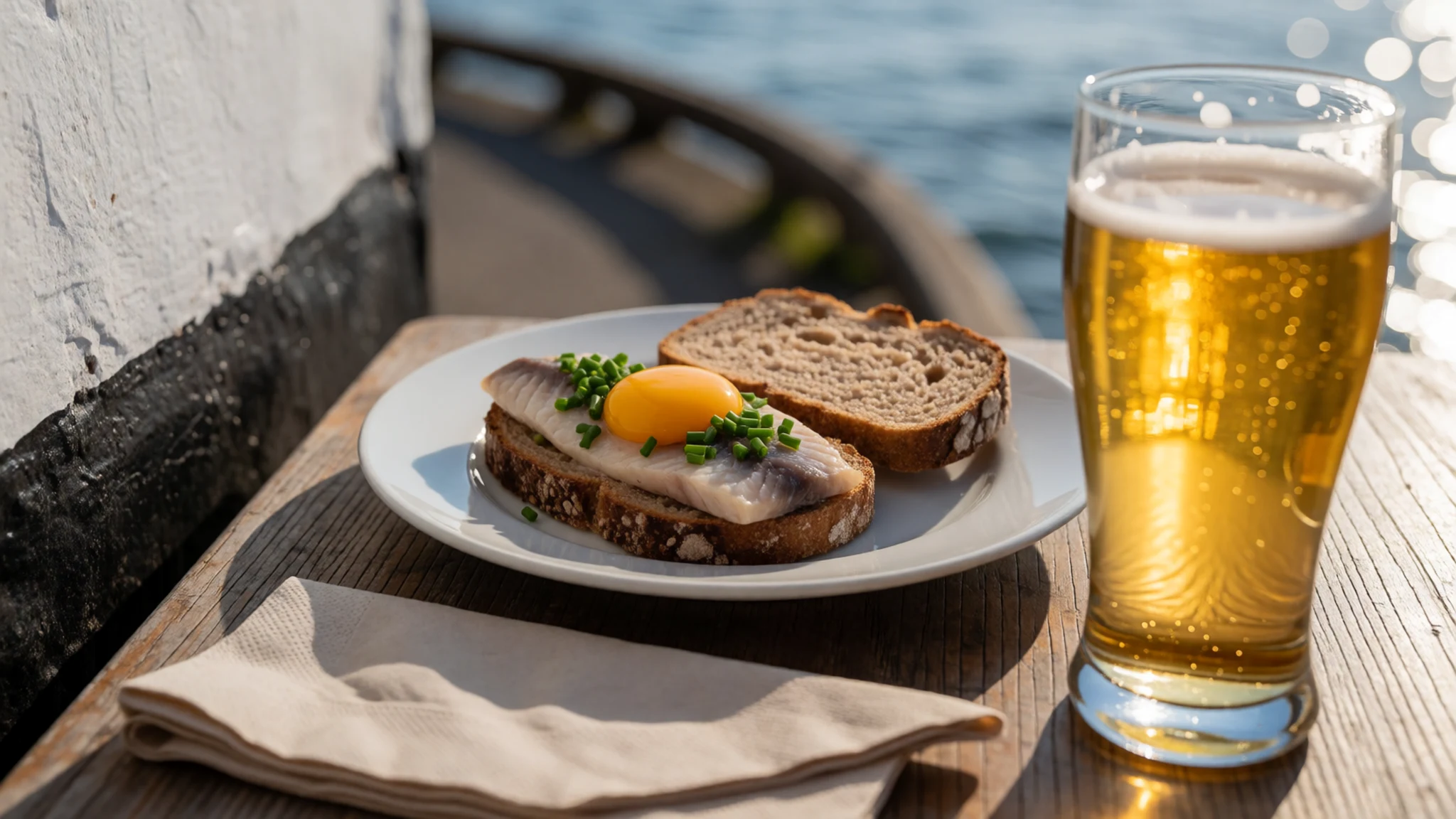
- Marinated herring on rye — Lunch counters and cafés in the island's harbour towns
Marinated herring on buttered rye with hard-boiled egg and onion is a Danish classic and appears on many local menus. Curry marinade is a popular variation. The sharp pickle against the sweet, dense bread makes a good, cheap lunch. - Smokehouse seafood buffet — Smokehouses in larger towns such as Allinge and Hasle
Larger smokehouses serve generous seafood buffets with smoked and fresh fish, prawns and salads, popular with locals and visitors alike. They can fill up in high season, so booking ahead or arriving early is sensible. Check prices locally. - Bornholmer Bryg — Bars and restaurants across the island, and the brewery in Svaneke
Bornholmer Bryg is beer brewed by Svaneke Bryghus, the island's own brewery. It is served in most bars and restaurants on Bornholm, which makes it an easy way to taste something local alongside a fish plate. - Bornholmer snaps — Shops and supermarkets across the island
Bornholmer snaps is a local spirit made by Den Bornholmske Spritfabrik and sold in almost any island shop. Small measures are traditionally taken with herring and rye bread. A bottle also makes a simple, portable souvenir.
Plan it
Best time. June to September for the warmest weather, long days and the fullest ferry timetables; July and August are busiest. Autumn stays mild for longer than on the mainland, but winters can be cold and snowy, and some seasonal services shut.
How long. 3–5
Getting there. Bornholm Airport is near Rønne, with year-round domestic flights from Copenhagen and summer-only international flights. Ferries run from Ystad in Sweden to Rønne all year, from Køge to Rønne daily, and from Sassnitz in Germany in summer. There is no railway on the island; Danish rail sells combined train-and-ferry tickets from Copenhagen via Malmö Hyllie and Ystad. Buses, bicycles and hire cars cover the last leg.
Budget. mid
Tips
- Book ferries and summer accommodation well ahead, especially for July and August and if travelling with a car, since car fares cost much more than foot passenger fares.
- Hire a bicycle or car, since there is no railway; cycle paths link many towns and beaches.
- Carry a warm layer and a light waterproof even in summer, as sea breezes can be cool.
- Check opening times of smokehouses, churches and museums locally, and the official site, https://www.brk.dk/, for current information.
- Visit popular beaches such as Dueodde early or late in the day to avoid summer crowds.
Etiquette
- Keep to marked cycle paths and give way to cyclists on shared routes.
- Speak quietly in churches and step aside for any service in progress.
- Queue patiently at smokehouse counters and harbour kiosks.
Nearby
Sources
- Wikidata Q769680 (CC0)
- Wikipedia: Bornholm (rev 1384072775) (CC BY-SA 4.0)
- Wikivoyage: Bornholm (rev 5382420) (CC BY-SA 4.0)
- Photo: Wybrzeże (Kent Madsen) (CC BY-SA 2.0)
- Photo: Wybrzeże (Lilly M) (CC BY 3.0)
- Photo: The mill in Gudhjem (Amjaabc) (Public domain)
- Photo: Windmill at Årsdale (Algkalv) (CC BY 3.0)
- Photo: Historical coat of arms of Bornholm (McLennonSon) (CC BY-SA 4.0)
- Photo: Østerlars Kirke (Per Trangbæk) (Public domain)
- Photo: Insel Bornholm, Luftaufnahme (Andreas Faessler) (CC BY 3.0)
- Map: Bornholm2021OSM (Kelisi) (CC BY-SA 4.0)


