Aarhus
Aarhus, Denmark
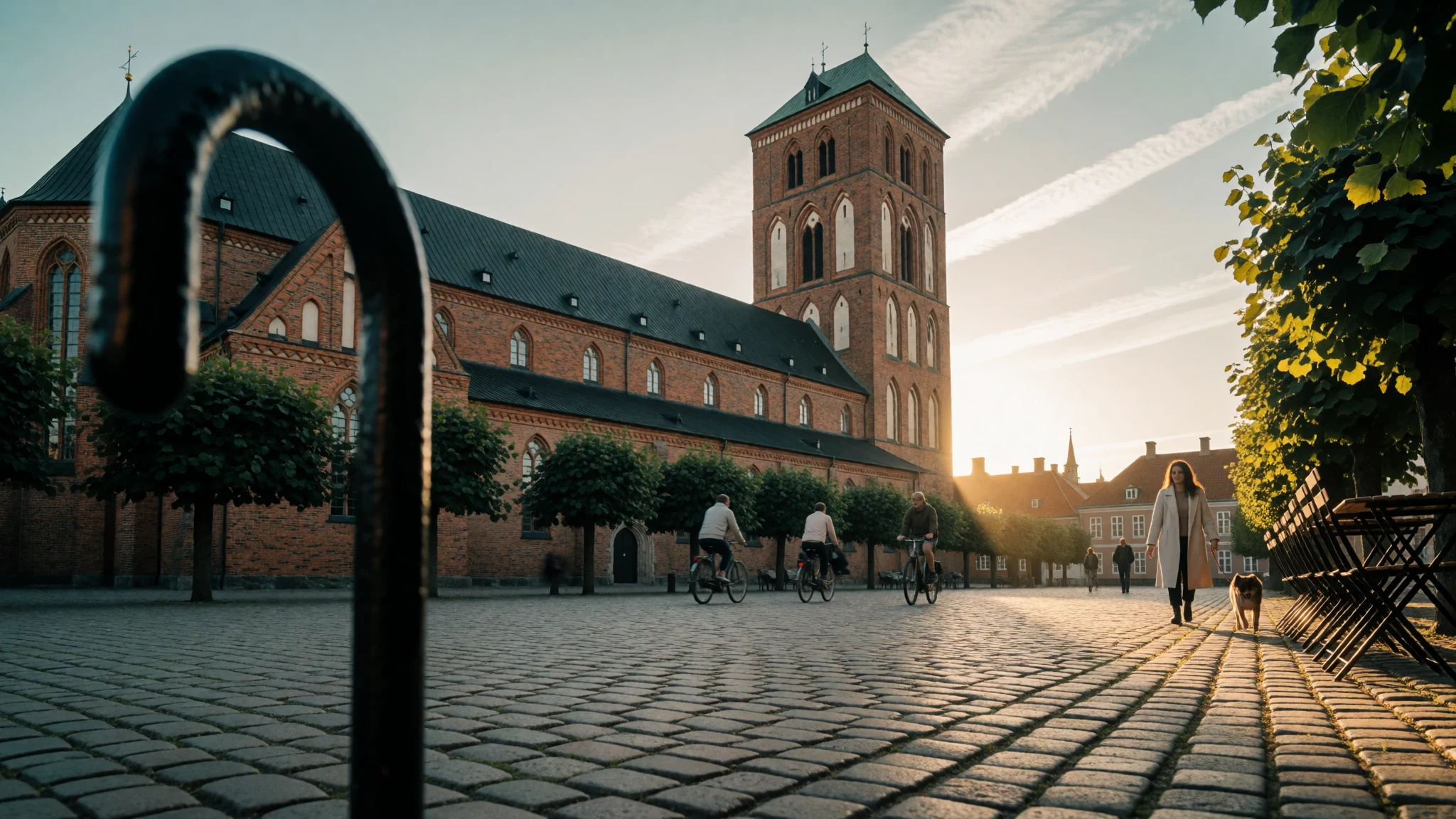
Aarhus is a compact, walkable Danish port where Viking digs, a medieval cathedral, a big art museum and a lively harbour sit within easy reach.
The place
Aarhus sits on the eastern coast of Jutland, facing the Kattegat sea, and is Denmark's second city after Copenhagen, which lies to the south-east across the water. The population is close to 290,000, yet the centre feels small: most of what visitors want is within a short walk or cycle of the river mouth where the town began.
The ground is almost flat, with an elevation of only a few metres at the harbour, so the city suits bikes and long strolls. The old core runs back from the water in a tight grid of lanes around the cathedral, with the Latin Quarter's cafés, small shops and cobbled courtyards. To the north and east, former dockland has been rebuilt as a waterfront of apartments, public swimming spots and a large library and civic building called Dokk1. To the west, a green belt leads up the river valley towards museums and woodland.
Aarhus is also a university town, the first in Jutland, which gives it a young, slightly informal mood, especially in term time. Locals like to call it the world's smallest big city, and that is a fair description: it has the museums, festivals and food scene of a much larger place, but the pace is easy.
It is a good base for Jutland. Trains run north to Aalborg and west across the peninsula, and the coast and beech woods begin just beyond the suburbs. Expect changeable weather at any time of year, and a city that is quietest in the dark months and liveliest in summer.
Its story
Aarhus began as a harbour settlement in the Viking Age, on the north side of a fjord where a river meets the sea. The facts record a founding around the year 800, and archaeologists have since found traces of a town that is a little older than that: half-sunk longhouses, hearths, glass beads and a road, uncovered during a dig in the early 2000s.
Its trade was real but modest compared with the great Viking markets at Ribe and Hedeby, and the finds point mostly towards links with Norway. Upriver, a shipyard was found at a spot once called Snekke Meadow, named for a type of longship, and it seems to have worked for some four centuries before falling out of use in the Middle Ages.
Christianity arrived early. A first church stood here by the tenth century, and the town gained earthen ramparts for defence. Over the following centuries the bishops of Aarhus built up a cluster of religious houses, which is why the medieval core still holds a great cathedral and a church with a crypt from the eleventh century. Formal market-town rights came only in the fifteenth century, and the population stayed fairly steady for a long time afterwards.
Real growth followed trade in the eighteenth century and then industry in the nineteenth, helped by the first railway in Jutland, which opened in 1862. Founding the university in 1928 completed the shift from provincial port to regional capital, a role the city still holds for trade, services and learning across Jutland.
What to see
- Aarhus Cathedral (Domkirke) — Old town
Aarhus Cathedral is the city's anchor, a long brick church in the old centre that took generations to complete. It is the longest cathedral in Denmark, and inside it feels more like a hall than a maze. Go on a weekday morning for quiet, and check the official site for opening times.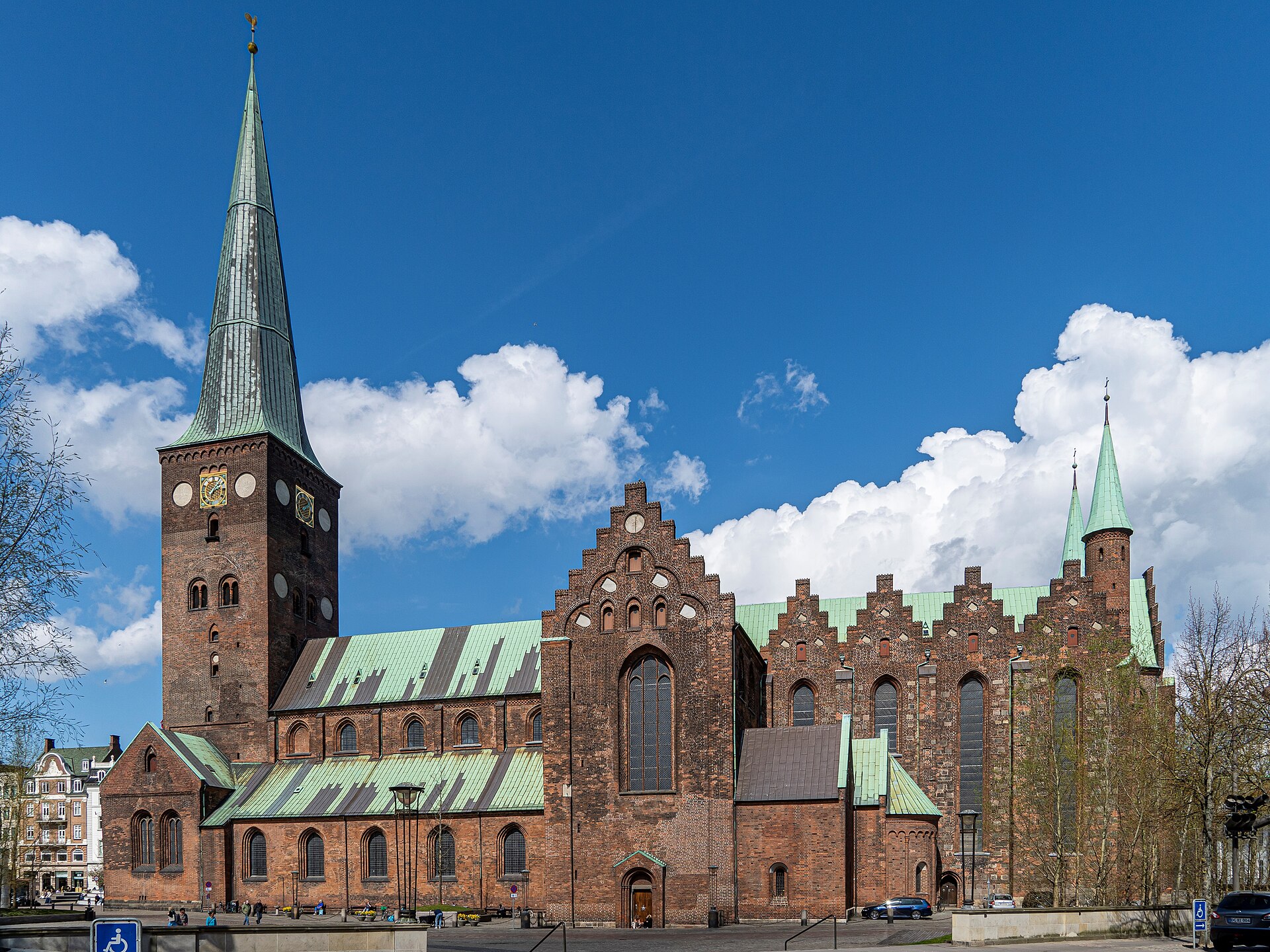
- Vor Frue Kirke — Latin Quarter edge
The Church of Our Lady has a crypt church underneath, a low stone space from the eleventh century that counts among the oldest stone churches in Scandinavia. It is small and atmospheric, a useful contrast with the cathedral nearby. Check for concerts and services before visiting. - Aarhus Viking Museum — Beside the cathedral
A small museum in the basement of a bank, facing the cathedral, built around finds dug up on that very spot. It tells the story of the Viking-age town in a compact way and takes under an hour. Pair it with the scale model of the early town at Moesgaard.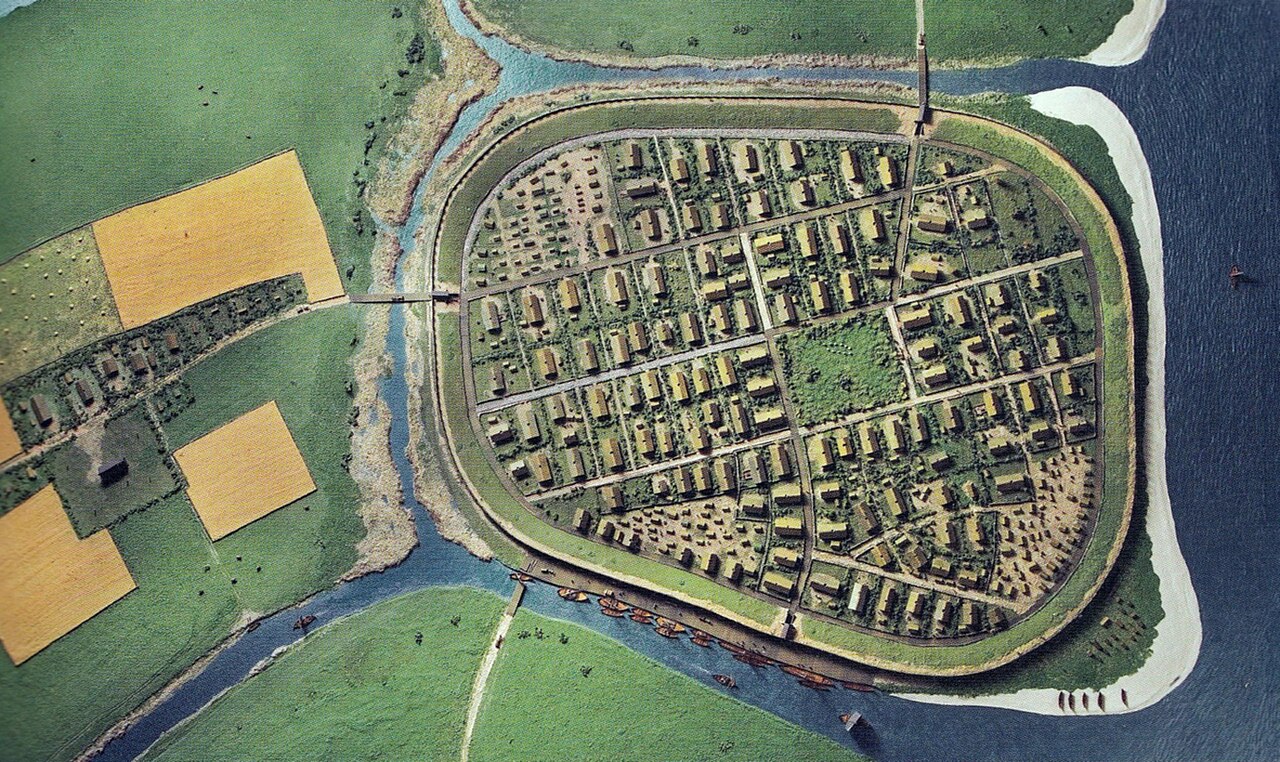
- ARoS — Central, near the river
ARoS is the city's main art museum, a big cube of galleries with changing exhibitions. The rainbow-coloured circular walkway on the roof gives a coloured view over the rooftops and is the reason many people queue. Book ahead on rainy weekends and check the official site for tickets. - Den Gamle By — Western edge of the centre
Den Gamle By is an open-air town of original Danish buildings moved here from all over the country, spanning the late sixteenth to the early twentieth century. Shopfronts, workshops and courtyards are staffed or furnished by period. It suits families and slow wanderers, and gets busy in school holidays.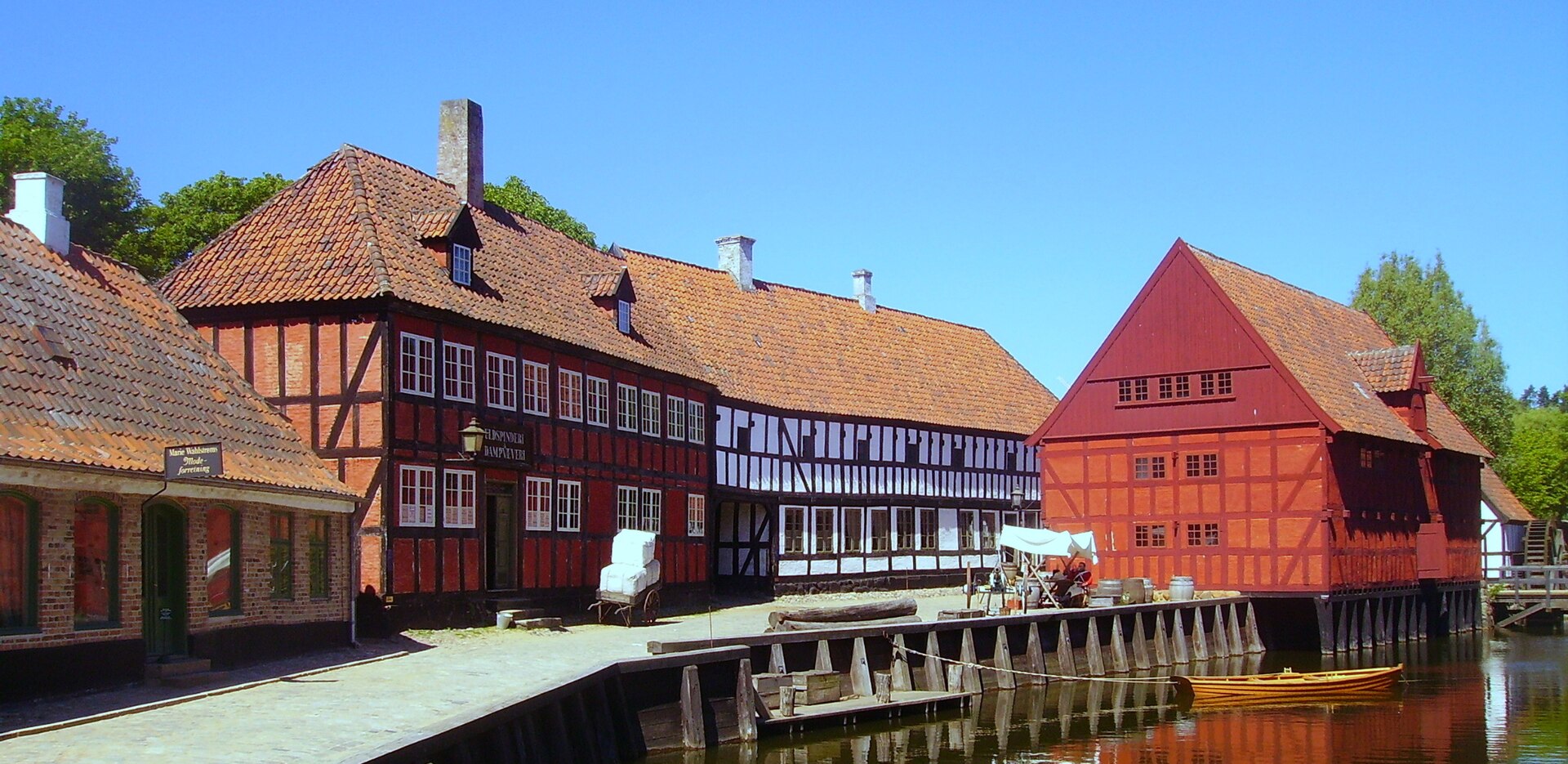
- Dokk1 and the harbour — Harbour
Dokk1 is the waterfront library and civic space, an angular building on the old docks that locals use as a living room. Around it, the harbour has been turned into walking routes, play areas and bathing spots. It is a good place to watch the city go about its day.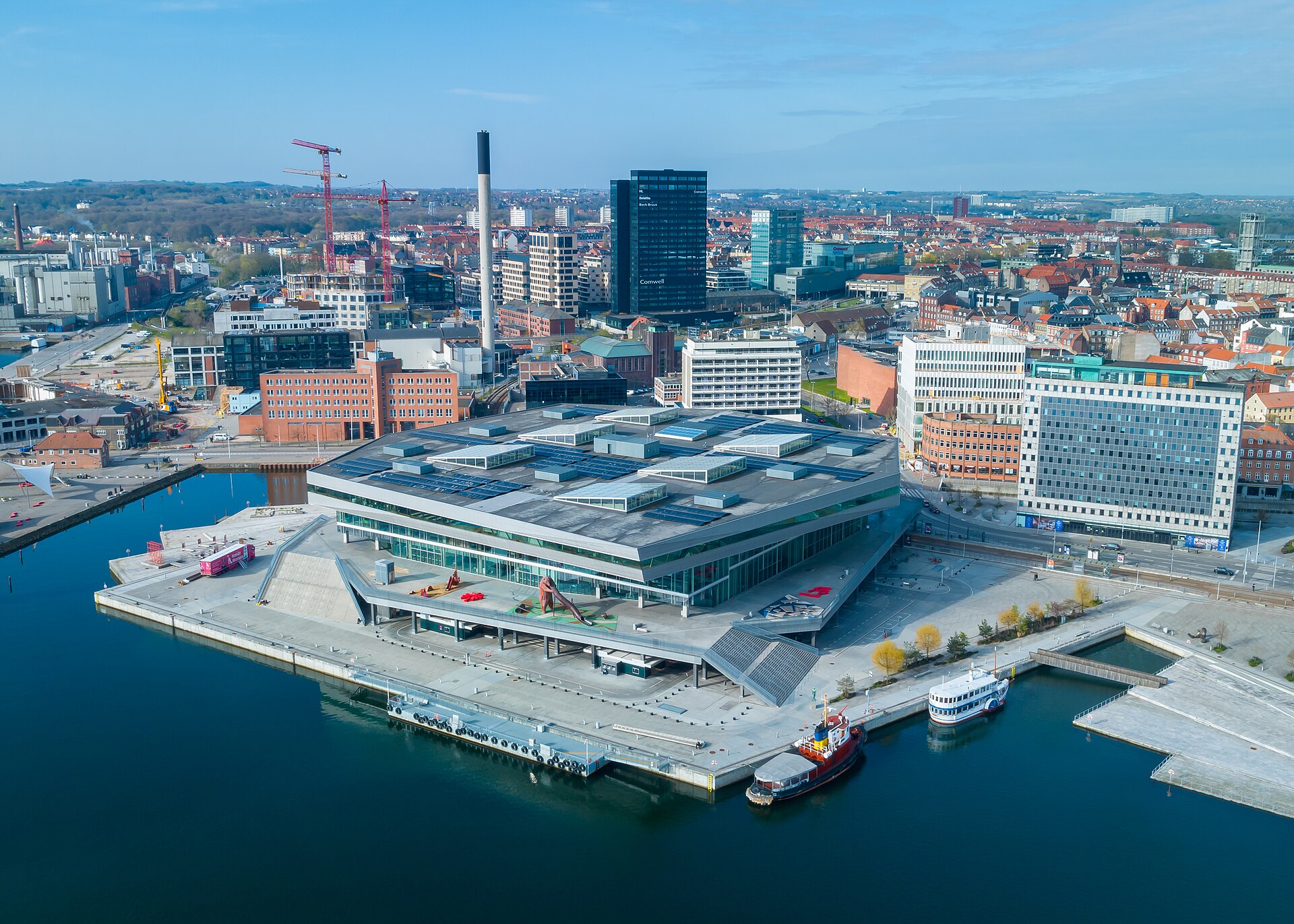
Culture
Aarhus has a lively cultural calendar for its size, with festivals, theatres, museums and sports events that draw people from across Denmark. Music is a particular strength: many Danish bands started here, and small venues keep the scene active through the year. Libraries and cultural centres are free or cheap to enter, and locals use them as everyday meeting places.
The city's long-standing nickname is Smilets by, the City of Smiles, in use since 1938 as an informal motto and later an official slogan. A newer tagline about progress was tried and quickly dropped, which says something about local taste: people here prefer warm and unfussy to polished and corporate. Other phrases, such as the city by the sea and between bay and beechwood, are still used.
Daily life is shaped by cycling, short working days and a strong idea of hygge, the cosy, low-key way of sharing time with friends, candles and coffee. Social life runs on trust: queues are orderly, noise is kept low in shared spaces, and conversation tends to be quiet and direct. Most people speak excellent English, but a greeting in Danish is appreciated. Summer evenings by the harbour and river are social times, while winter pushes everyone into cafés and concert halls.
Visitor etiquette: keep to the cycle lanes' rules by never walking in them, and wait for the signal before crossing, since bikes move fast and quietly.
What to wear
Aarhus, like the rest of Denmark, has no single everyday costume, but older rural dress survives in folk dance groups and at heritage events, including at Den Gamle By. Traditional clothing from Jutland was made from wool, linen and knitted yarn, with long skirts, bodices and aprons for women and breeches, waistcoats and caps for men, in dark reds, blues and black. It is worn today mainly for performances and celebrations.
What people actually wear in the city is plain, practical and well cut. Think dark or neutral colours, good knitwear, straight jeans or trousers, clean trainers or boots, and a bike-friendly jacket. Students dress casually, office workers smartly but without ties, and almost everyone owns a decent rain layer. Bold prints are rare, though small touches of colour on scarves or bags are common.
For a visitor, the weather decides most things. Bring a windproof, waterproof jacket in any season, with warm layers from autumn to spring and a hat and gloves for winter. Summer evenings can still be cool by the water. Comfortable, closed shoes with grip are best for cobbled lanes and wet pavements. The cathedral and churches have no strict dress rules, but covered shoulders and a quiet manner are polite, and a hat should come off inside.
What to eat
- Smørrebrød — Traditional lunch restaurants in the Latin Quarter
Open rye-bread sandwiches topped with herring, egg, roast beef or pickles, eaten at lunchtime with a knife and fork. Look for them at traditional lunch restaurants around the Latin Quarter, and take your time over a plate or two. - Flæskesteg — Roadhouse-style diners by the harbour
Roast pork with crackling, served with potatoes, red cabbage and gravy, a Danish comfort dish that turns up in winter and at family tables. Harbour-side diners often put it on the menu alongside fish and chips. - Burgers — Burger counters around the centre and near the station
Aarhus has had a friendly burger rivalry, and several small local places serve short menus of good burgers and fries at fair prices. A solid, filling option when the weather is bad and the day is long. - Shawarma and barbecue — Grill eateries near the station and on Jægergårdsgade
A wave of grill spots with Middle Eastern influences has grown across the city, serving shawarma wraps, grilled meats and salads. It is cheap, quick and popular with students, and many stay open late. - Pølser (Danish hot dogs) — Hot-dog stands and kiosks near the harbour and centre
Sausages in a soft bun, topped with fried onions, pickles, remoulade and ketchup, sold at kiosks and stands. They are a classic cheap snack for a walk by the river or harbour, and a very Danish way to eat on the go. - Wienerbrød — Neighbourhood bakeries across the centre
Danish pastry, known locally as wienerbrød, is flaky, buttery and sold fresh in bakeries each morning. Try a cinnamon swirl with coffee, and arrive early for the best choice, because favourites sell out.
Plan it
Best time. May to September for long daylight, café terraces and harbour swimming; June to August is warmest, though rain can arrive in any month. Winter is dark, cold and quiet, but cosy for museums and cafés.
How long. 2–3
Getting there. Aarhus Airport is some distance north-east of the city, with buses into the centre; many visitors fly to Copenhagen and take a train or bus across Denmark. Trains run from Hamburg with a change, and from Aalborg and other Jutland towns. Reserve seats on trains to and from Germany. In town, most sights are walkable from the central station.
Budget. mid
Tips
- Book ARoS and weekend museum slots ahead in school holidays
- Hotels cost more than in many parts of Europe, so book early or look at budget options
- Cards are accepted almost everywhere, so little cash is needed
- Rent a bike for the harbour and river paths, and carry a rain jacket in any season
- Check museum and church opening times on their official sites, and the city's site at https://aarhus.dk
Etiquette
- Stay out of the cycle lanes and wait for crossing signals
- Keep your voice low in churches, museums and on public transport
- Queue in turn at bakeries and kiosks
Nearby
Sources
- Wikidata Q25319 (CC0)
- Wikipedia: Aarhus (rev 1381824629) (CC BY-SA 4.0)
- Wikivoyage: Aarhus (rev 5424951) (CC BY-SA 4.0)
- Drone photo of Dokk1 in Aarhus, Denmark — SmartDrones Aarhus (CC0 1.0)
- Den Galme By, Aarhus — Zairon (CC BY 3.0)
- Park alle in Aarhus early summer morning — Henrik Jensen (CC BY-SA 2.0)
- Aarhus Cathedral in April 2022 — JakobSR (CC BY-SA 4.0)
- Mejlgade, skumring — aaron.bihari (CC BY-SA 2.0)
- Aarhus Ø, Kampanilen og AARhus in Aarhus — Steve Knight (CC BY 2.5)
- Aarhus city seal, stylized — Gardar Rurak (CC BY-SA 4.0)
- Scale model of Aarhus during the Viking age in Moesgaard Museum — Gardar Rurak (CC BY-SA 4.0)


