Ritsurin Garden
Ritsurin Garden, Japan
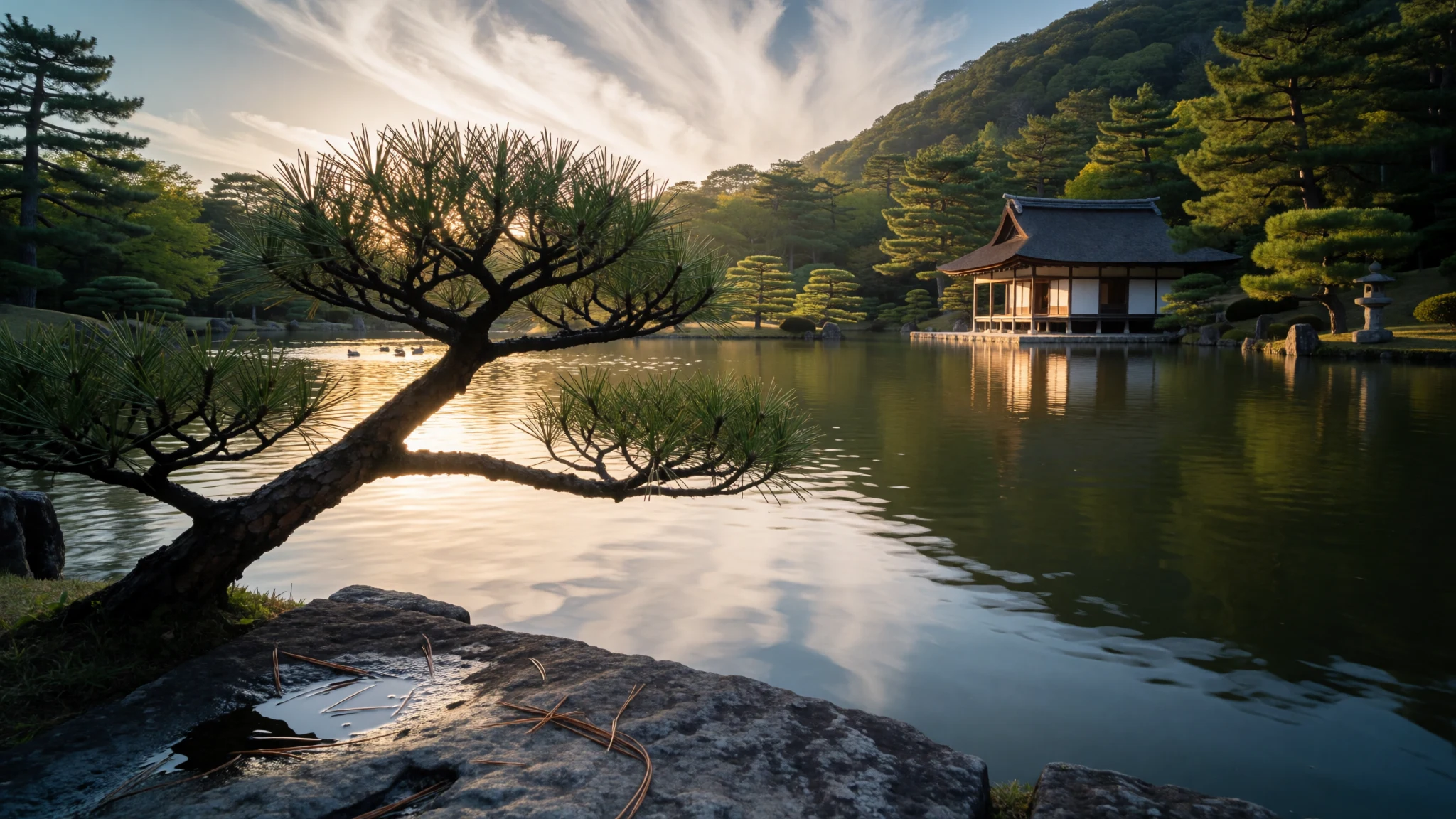
Ritsurin Garden in Takamatsu is a feudal lord's strolling garden of ponds, bridges and clipped pines beneath a wooded hill, worth a slow half-day.
The place
Ritsurin Garden sits on the southern side of Takamatsu, the port city in Kagawa Prefecture that serves as the usual gateway to Shikoku. The garden fills a former river bed at the foot of Mount Shiun, and the wooded slope works as a permanent backdrop from almost every viewpoint. It belongs to the family of daimyō gardens: strolling gardens made for a feudal lord, meant to be walked rather than admired from a single spot. Paths loop around ponds, over small artificial hills and past clipped pines, and the scene changes at each bend.
The southern half keeps the traditional layout, with historic teahouses beside the water and pines trained into careful shapes. The northern half is different. After the garden became public it was partly remodelled with European-influenced features, and a large exhibition hall and craft galleries were added toward the middle. For a time there was even a zoo and a swimming pool, both now gone. The result is a place with an old core and a plainer, more open civic side.
The garden is big enough to need real time, and the experience depends heavily on the season. Summer is hot, and winter nights can dip to freezing, so spring and autumn suit walking best. Takamatsu is also known for Sanuki udon, which is why many people pair a garden morning with a noodle lunch. For opening times and entry details, check the official site at https://www.my-kagawa.jp/ritsuringarden before setting out.
Its story
Ritsurin Garden began in 1625, when Ikoma Takatoshi, the lord of Takamatsu in the old province of Sanuki, started shaping the land around what is now the South Pond. He treated Mount Shiun, whose name means Purple Cloud Mountain, as borrowed scenery for the view behind it. His family did not see the work through. Control of the province passed to Matsudaira Yorishige, who carried the project on, and later lords kept adding ponds, hills and buildings. The finishing touches came in 1745 under Yoritaka, the fifth lord in that line, about a century after the first works.
The next big change came with the new Meiji government, which took over the garden after 1868. One early idea was to build a silk mill on the site, but that plan lapsed and the garden became a prefectural park instead. It opened to the public on 16 March 1875, which turned the private pleasure ground of a ruling family into somewhere anyone in Takamatsu could walk. The European-influenced additions, the zoo and the swimming pool all belong to that public period.
In 1953 the garden received the national designation of Special Place of Scenic Beauty, which recognises it as a landscape worth protecting in its own right. The layout visitors walk today is largely the one the lords' gardeners settled on, kept going through continual maintenance. It is a useful reminder that a garden is never really finished, only looked after.
What to see
- South Pond and Kikugetsu-tei — Southern, traditional half of the garden
The South Pond is where Ritsurin Garden began, and it still gives the classic view: water in the foreground, pines on the banks, Mount Shiun behind. Kikugetsu-tei, a historic teahouse on the shore, is the natural place to pause. Some visitors see the pond from a traditional wooden boat; check the official site for whether boats are running.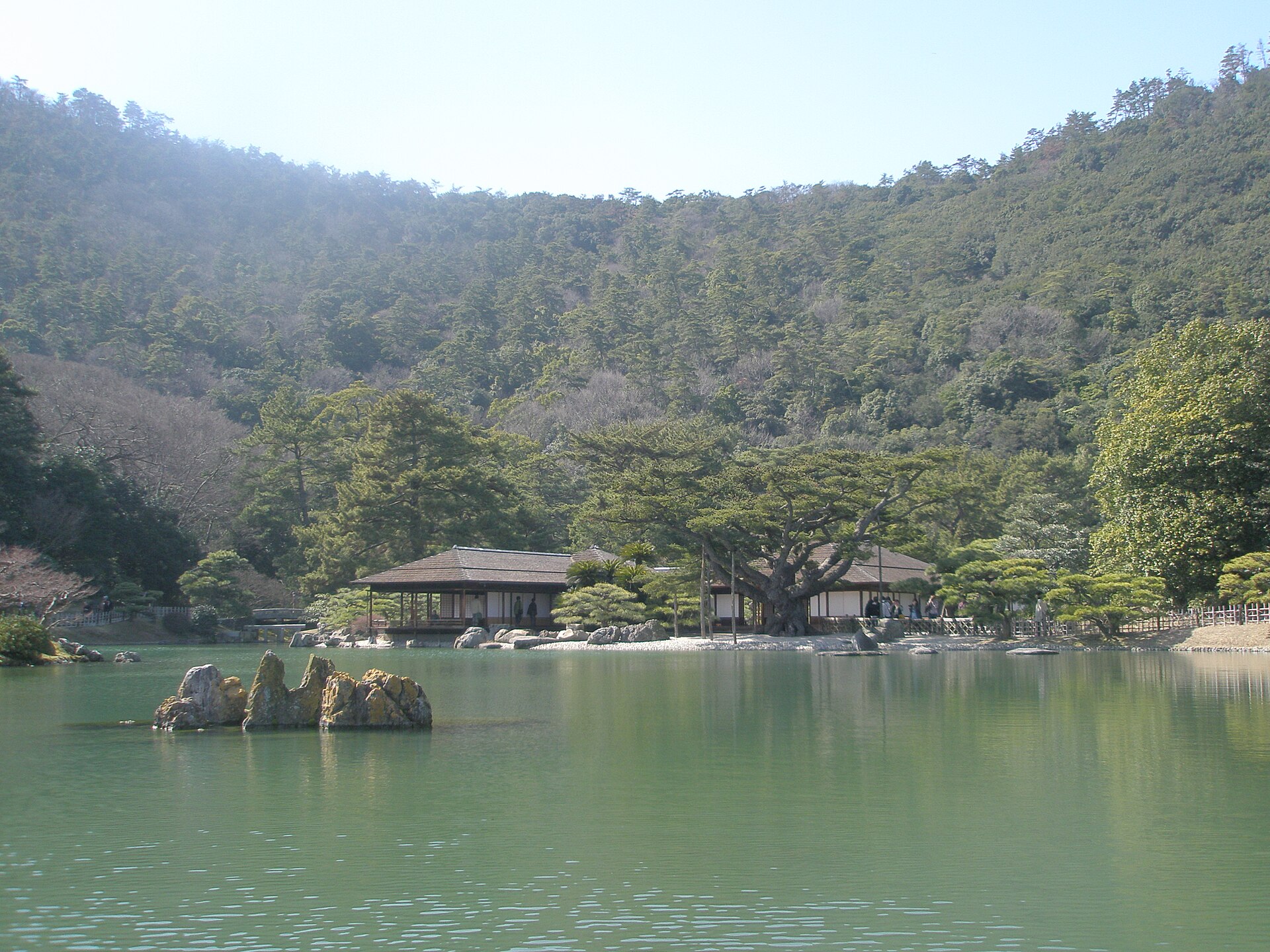
- Bridges and clipped pines — Around the ponds
The bridges of Ritsurin Garden repay slow walking. They cross the ponds at points chosen to frame the next view, and the pines beside them are trained into deliberate shapes. Early morning and late afternoon give the softest light and the calmest reflections, and autumn colour along the water's edge is a draw in November.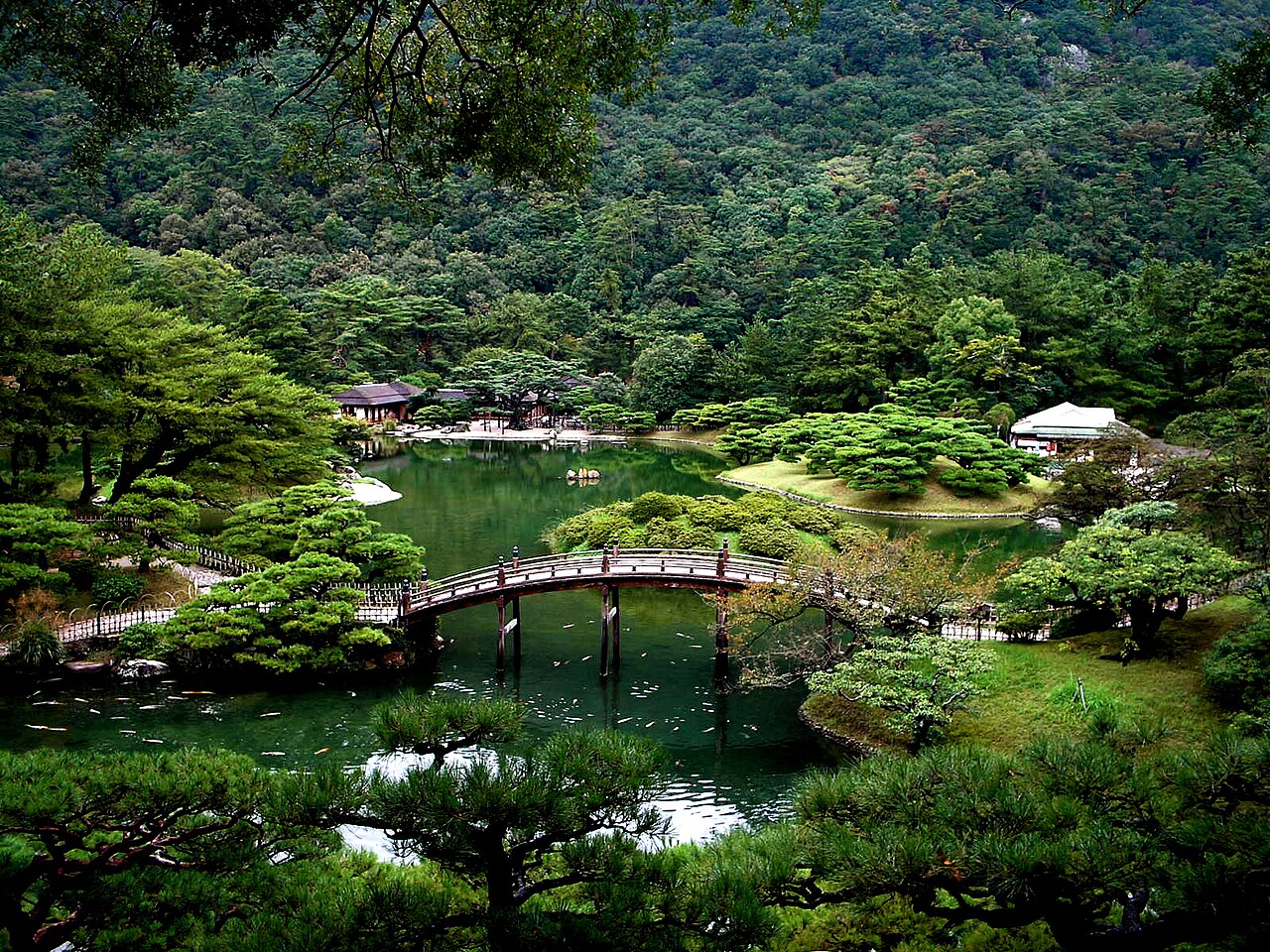
- Gun-o Pond — Within the garden
Gun-o Pond is part of the garden's wider chain of water, and photographs show a broad, calm surface with wooded hills beyond. It is a good place to see how Ritsurin Garden handles scale: open water here, tighter arrangements of stone and pine elsewhere. Allow time to walk round the edge rather than glance and move on.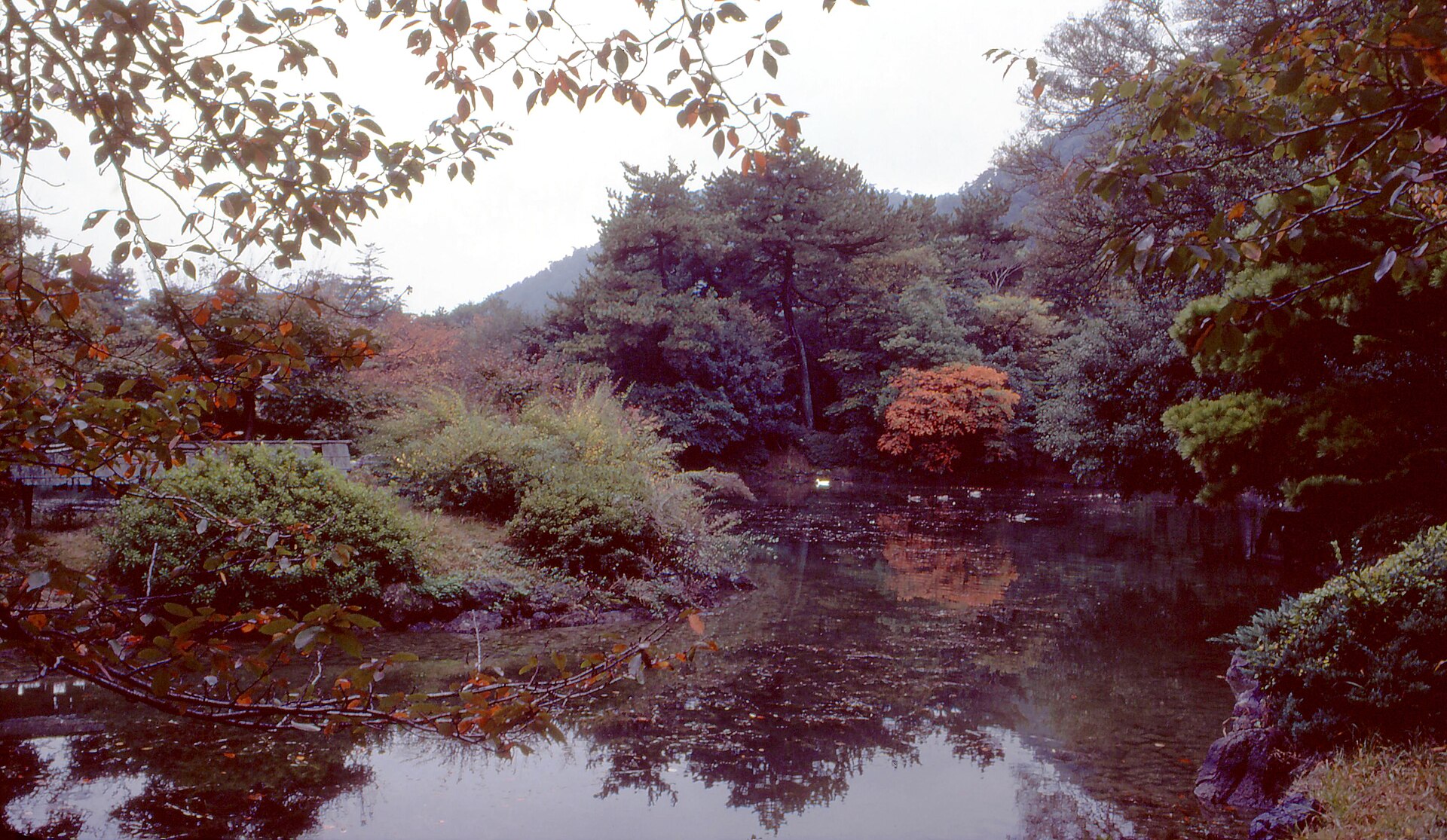
- Little Putuo stone arrangement — Within the garden
The rock grouping labelled Little Putuo (小普陀) in Ritsurin Garden shows the stonework at its most deliberate: weathered stones set in a cluster, with pine and water close by. Stop and look at how each stone was chosen and placed, instead of heading straight for the larger pond views.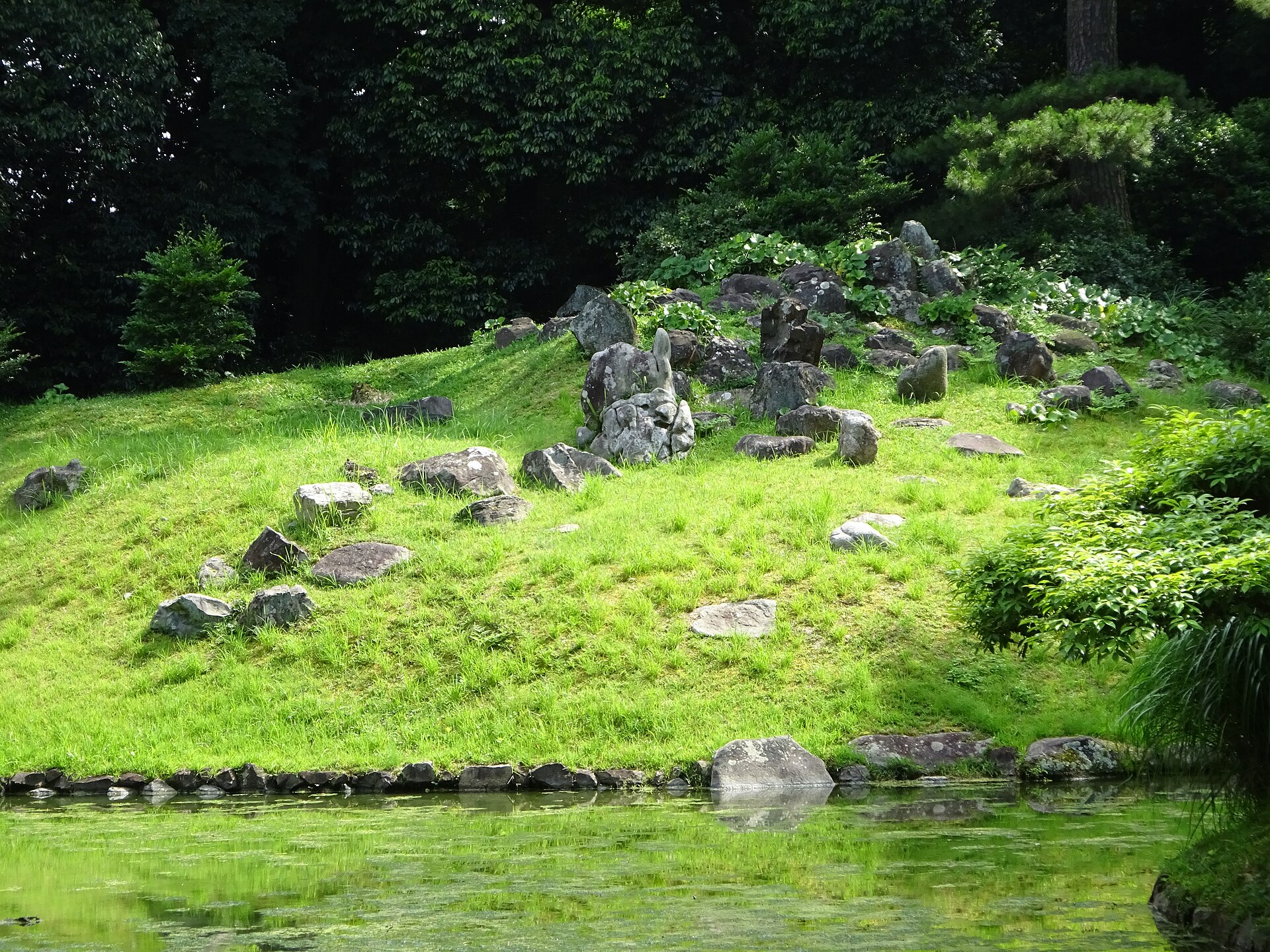
- Tamamo Park — Central Takamatsu, near the harbour
Tamamo Park, in central Takamatsu, occupies the former site of Takamatsu Castle. The main tower was dismantled in the Meiji era and is being rebuilt, so check the current state of the site before going. It makes a shorter second walk after Ritsurin Garden, with the harbour close by. - Shikokumura — Yashima, east of the city centre
Shikokumura is an open-air museum of old houses brought together from around Shikoku, laid out so visitors can wander between them. A small art museum inside holds works by Western artists, including Pablo Picasso. It suits a half-day away from the garden, especially combined with the Yashima area nearby.
Culture
Ritsurin Garden belongs to the Japanese strolling-garden tradition, in which a lord's grounds were designed as a sequence of scenes revealed one by one as the visitor walks. The idea is to compose water, stone, planting and distant hills into pictures that shift with every step. Here the wooded flank of Mount Shiun is part of the composition, borrowed from outside the garden as a backdrop, a device Japanese garden-makers use to make a space feel larger than it is.
Tea shaped much of the design. Teahouses sit beside the water so that guests could rest, drink tea and look at a framed view, and pausing on purpose is still the right way to use the place. Pines are clipped into set shapes and stones are arranged with care, so the details reward slow looking more than a quick circuit.
Ritsurin Garden is also a public park, and local people use it as one, for walks, seasonal viewing and family outings. It sits in a city proud of its identity as the gateway to Shikoku and as an udon town, and a morning in the garden followed by a bowl of noodles is an ordinary pairing for residents.
Stay on the marked paths, keep off the stones, moss and pine trunks, and speak quietly near the teahouses so that others can enjoy the view.
What to wear
At Ritsurin Garden, the traditional clothing a visitor might see is the kimono, a T-shaped robe usually made of silk for weddings, tea gatherings and other celebrations, and tied with a wide obi sash. In summer, lighter cotton yukata appear, especially around festivals. These are garments of Japan as a whole rather than a costume specific to Kagawa.
In everyday life, people in Takamatsu dress much as in other Japanese cities: neat, practical and understated, with layers in winter and light, breathable fabrics in the humid summer. Walking shoes and sun hats are common among regular garden-goers, and kimono is mostly kept for special days.
Visitors should dress for the weather and the distance. July and August can be quite warm, so wear light cotton, bring a hat and carry water. January and February are the coldest months, with occasional freezing nights, so bring a proper coat. The garden involves a lot of walking, so comfortable closed shoes are best, ideally ones that slip on and off easily because teahouses and temples nearby may ask for shoes to be removed. There is no strict dress code in the garden itself, but covered shoulders and knees are sensible at shrines and temples, such as those on the Yashima side of the city.
What to eat
- Sanuki udon — Udon shops across central Takamatsu; there are hundreds to choose from
Sanuki udon is the local noodle and the reason many people visit Takamatsu: white, thick and chewy, served in hot broth or cold with a dipping sauce. The name comes from Sanuki, the old province now called Kagawa. Try a plain bowl first, then branch out. - Curry udon — Specialist udon shops in the city centre
Curry udon sits the noodles in a thick, spiced curry sauce, a hearty bowl for cooler days. Some Takamatsu shops specialise in it, and a few have English menus, which helps on a first visit. - Udon with raw egg — Ordinary udon shops, usually listed on the counter menu
Udon topped with a raw egg is one of the many local variations, where a different topping gives the dish a different name. The egg makes the broth richer and silkier. If unsure how to eat it, ask the staff. - Chicken dishes — Chicken restaurants around the city centre
Takamatsu also has restaurants devoted to chicken, which make a good evening change after a day of noodles. Menus vary from place to place, so look at what is on offer and ask for recommendations. - Tea and a sweet — Teahouses inside Ritsurin Garden
Tea and a small sweet in a garden teahouse is a quiet way to sit and look at the view. Ritsurin Garden has historic teahouses by the water, but what is served can change, so check on the day.
Plan it
Best time. April–May and October–November, when walking is comfortable and the garden has fresh green or autumn colour. July and August can be quite warm, and January and February are the coldest months, with occasional freezing nights.
How long. 1–2
Getting there. The nearest major airport is Kansai International Airport near Osaka, with a direct airport bus to Takamatsu. From Honshū, the Marine Liner rapid train runs from Okayama to Takamatsu Station across the Great Seto Bridge in under an hour, the only rail link between Honshū and Shikoku. From Takamatsu, take a short local train or taxi to the garden; check the official site for the nearest station.
Budget. low
Tips
- Check opening times and entry details on the official site, https://www.my-kagawa.jp/ritsuringarden, before you go
- Arrive early in the day for calmer paths and softer light on the ponds
- Allow at least a half-day so you can walk the whole circuit without rushing
- Carry water in summer and a warm layer in winter
- Pair the garden with a udon lunch, and keep a little cash for small noodle shops
Etiquette
- Stay on the marked paths and keep off stones, moss and pine trunks
- Remove your shoes where a step up or slippers indicate it, such as at teahouses
- Keep your voice low near the teahouses and ponds
Nearby
Sources
- Wikidata Q1071520 (CC0)
- Wikipedia: Ritsurin Garden (rev 1380859044) (CC BY-SA 4.0)
- Wikivoyage: Takamatsu (rev 5428213) (CC BY-SA 4.0)
- Photo: Ritsurin.JPG, Leela Soden (CC BY-SA 1.0)
- Photo: Ritsurin_park16s3200.jpg, 663highland (CC BY 3.0)
- Photo: Ritsurin_gun_o_pond0006.jpg, Renehaas (CC BY-SA 4.0)
- Photo: Ritsurin_park04s3200.jpg, 663highland (CC BY 3.0)
- Photo: Ritsurin_park17bs3300.jpg, 663highland (CC BY 3.0)
- Photo: 150504_Ritsurin_Park_Takamatsu_Kagawa_pref_Japan02s3.jpg, 663highland (CC BY 3.0)
- Photo: 小普陀の石組(栗林公園), やしまのお城 (CC BY-SA 4.0)
- Photo: 南湖で和船より掬月亭を望む, やしまのお城 (CC BY-SA 4.0)


