Ream National Park
Ream National Park, Cambodia
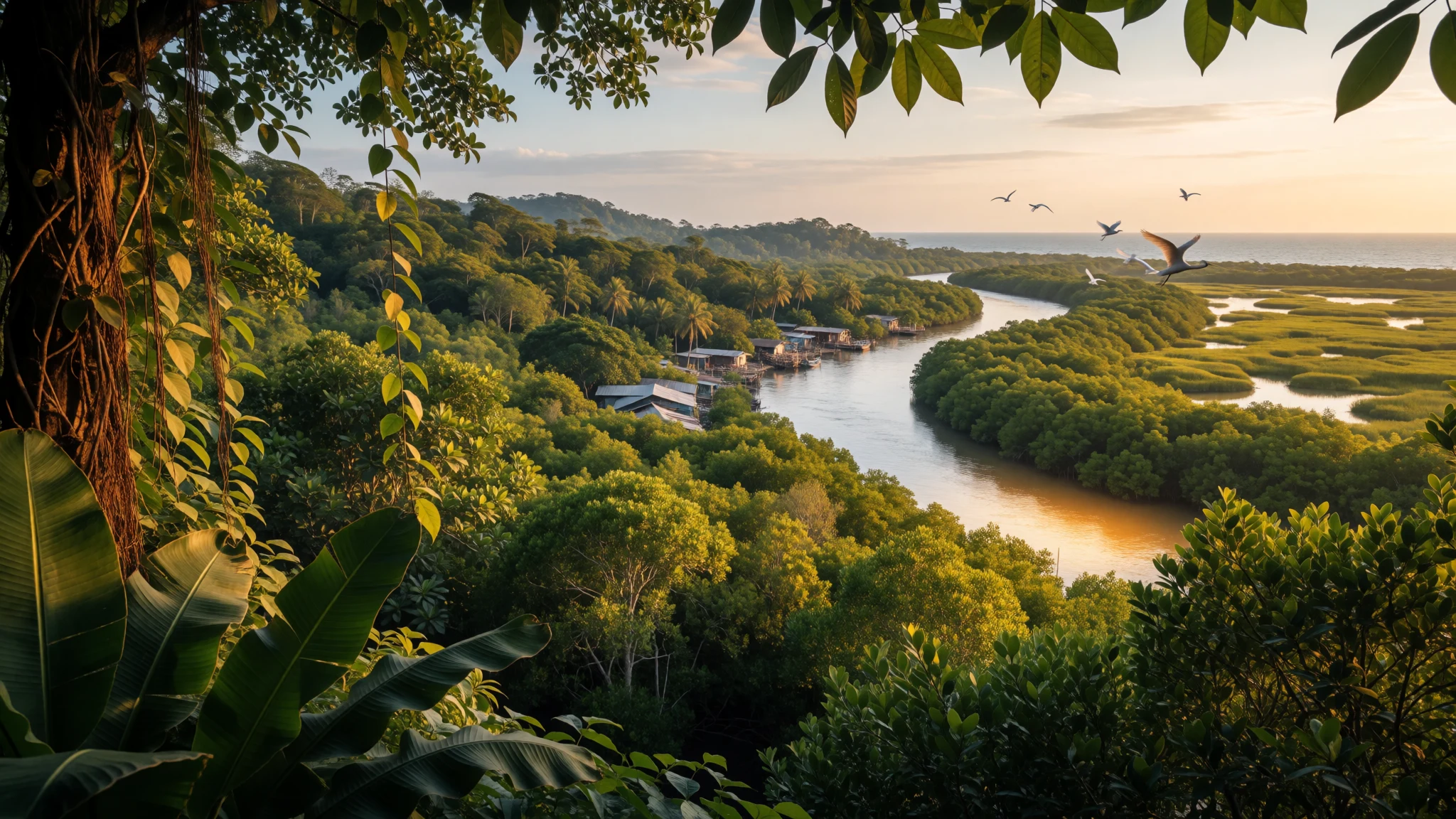
Ream National Park packs river, mangrove, forest, beach and reef into one protected stretch of Cambodia's Gulf of Thailand coast, a short run from Sihanoukville.
The place
Ream National Park sits on the Gulf of Thailand in southwestern Cambodia, about 18 km from the city of Sihanoukville, and was established in 1993. Its full official name is Preah Sihanouk Ream National Park (ឧទ្យានជាតិរាម), and both versions turn up on maps and signs. The protected area covers about 210 sq km, roughly 150 on land and 60 at sea, so a large share of it is water, reef and shoreline rather than forest. The park is a patchwork rather than a single landscape. A freshwater river, the Prek Teuk Sap, cuts through the middle and reaches the sea via an estuary. West of the river, two hills rise with a small watercourse, the Prek Sampouch, running between them. The westernmost, Phnom Mollou, reaches 277 m and is the high point of the park; its neighbour tops out at 196 m. Between the hills and the estuary lies a narrow, broken strip of wetland, screened from the sea by a thin and partly degraded fringe of mangrove. Elsewhere the park holds evergreen forest, seagrass beds, beaches, coral reefs and islands. That range of habitats, packed into a compact area, is the reason it was protected. As a day out it works best as a boat-and-walk outing rather than a resort stay, with shade scarce on the water and midday heat heavy. Visitor arrangements can change, so check the ministry website (http://www.moe.gov.kh/) or ask locally before setting out.
Its story
Ream National Park was created in 1993, at a moment when Cambodia's government began acting to protect natural resources that were under threat. The decision to protect a whole slice of coast, rather than one beach or one forest, reflects how the land works: hills feed a river, the river feeds an estuary, and the estuary feeds wetlands and the sea beyond. Take away one link and the others suffer. The park's name honours Preah Sihanouk, the same figure who gives the nearby city and province their names, which ties the reserve closely to the local identity of this corner of the country. The mangroves tell the most honest part of the story. The strip that shields the wetlands from the sea is narrow and degraded in places, a reminder that a legal boundary on a map does not by itself restore a coast. Protection here is an ongoing job, not a finished one. People remain part of the picture too. A pagoda stands inside the park, fishing boats work the coast, and a naval base lies in the same province, so the park is shared with communities and institutions that were there before visitors arrived. For a traveller, this history is useful: it explains why the park feels like a working landscape, why trails and boat trips are organised around the river and estuary, and why the rules on litter, wildlife and noise matter more than they might at a purely recreational beach.
What to see
- The Prek Teuk Sap and its estuary — Central park, river mouth
The Prek Teuk Sap is the freshwater river that divides Ream National Park and carries water to the sea. Where boat trips run, the river and estuary give the easiest view of the mangrove edge and the wetlands behind it. Mornings are cooler, and the light on the water is kinder for photographs.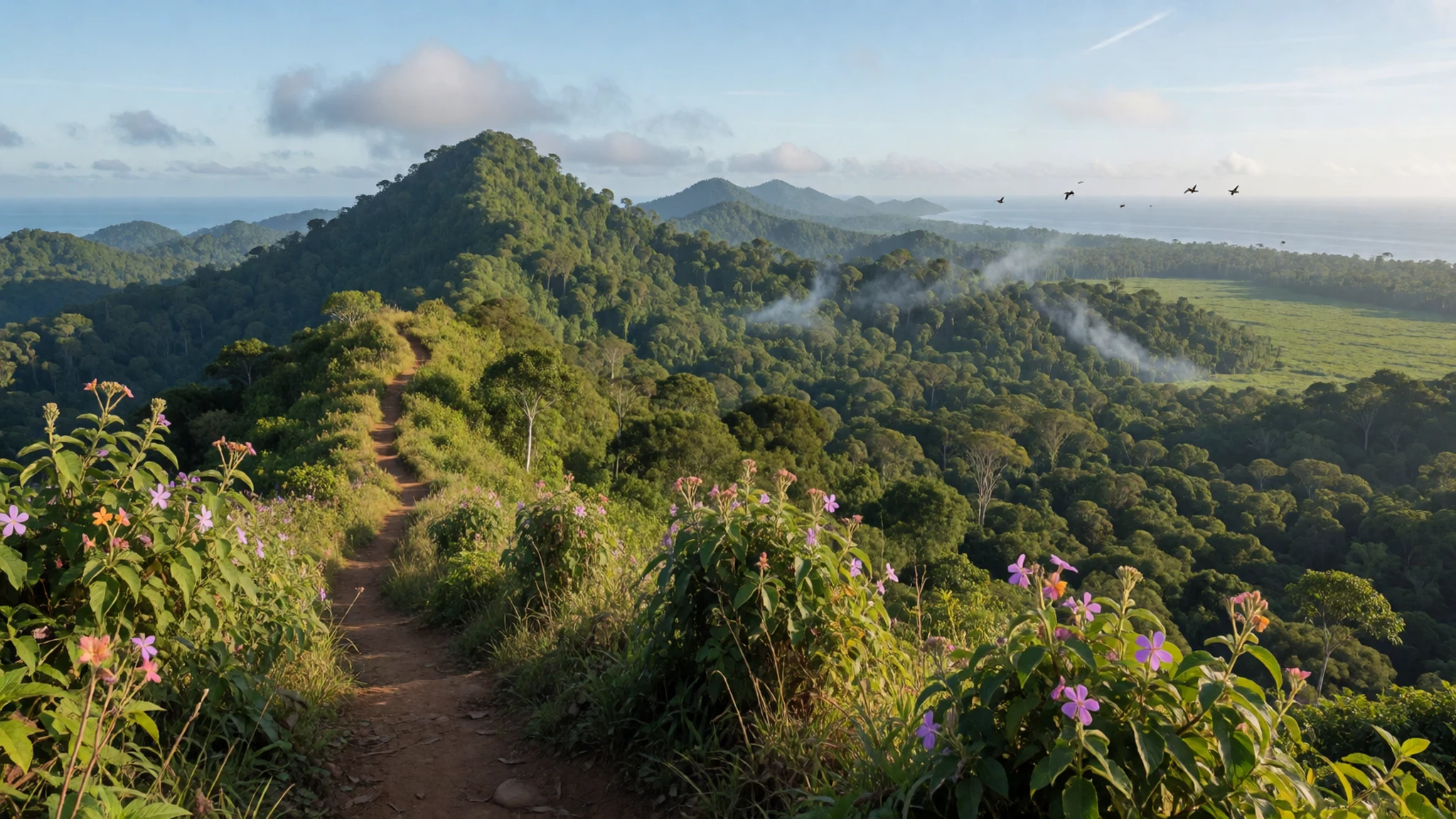
- Phnom Mollou and the western hills — Western side of the park
Phnom Mollou, at 277 m, anchors the western side of the park, with a second hill of 196 m beside it. Evergreen forest covers the slopes, and walking here is the main way to see the park away from the water. Start early, carry water, and ask park staff about current trails and guides.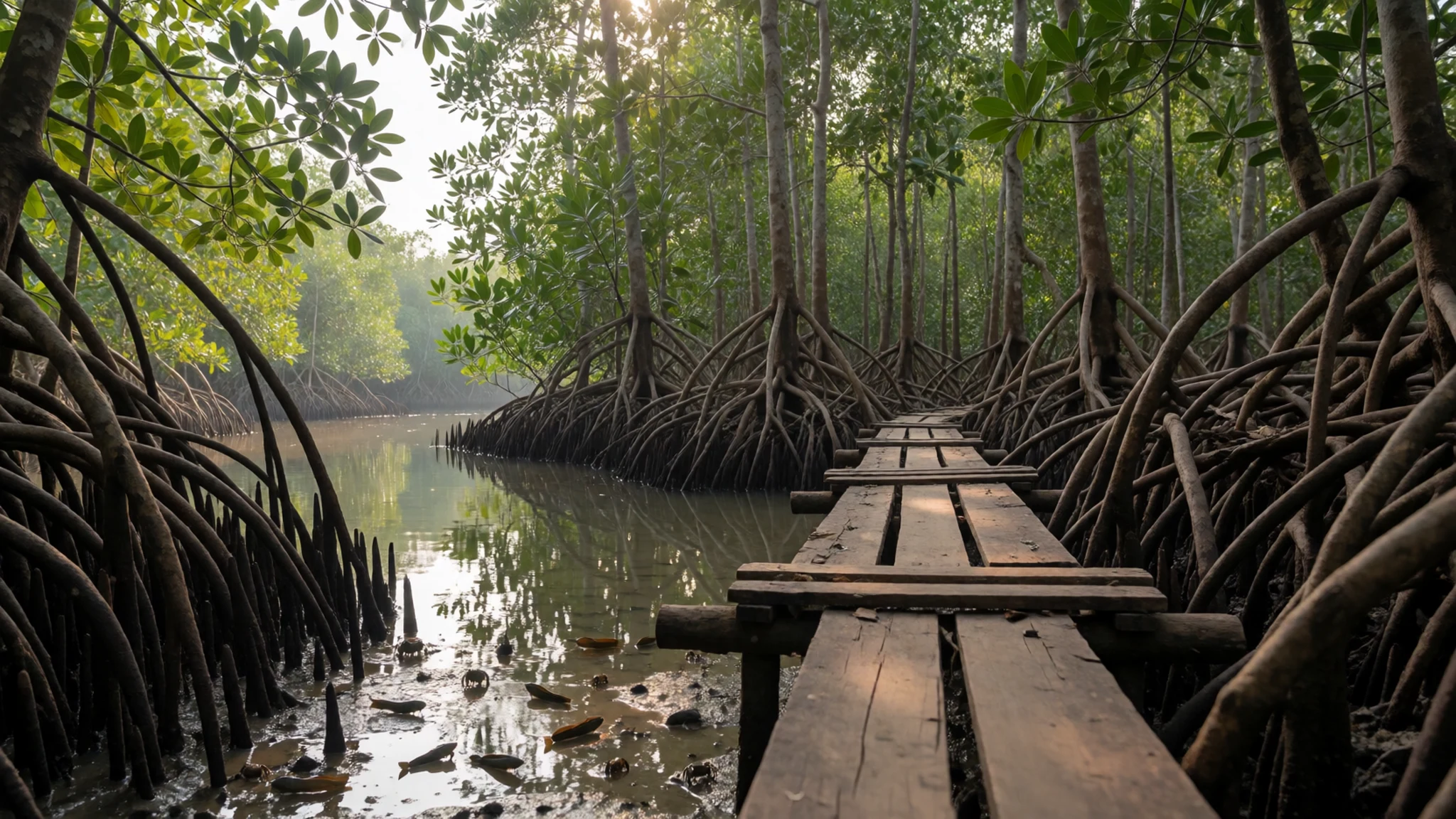
- Beaches, reef and islands — Gulf of Thailand coast
The coastline of Ream National Park has beaches on the Gulf of Thailand, with reefs and islands in the marine part of the park. Fishing boats are a common sight offshore. Whether island or snorkelling trips run depends on the sea and on local operators, so confirm conditions before paying for anything.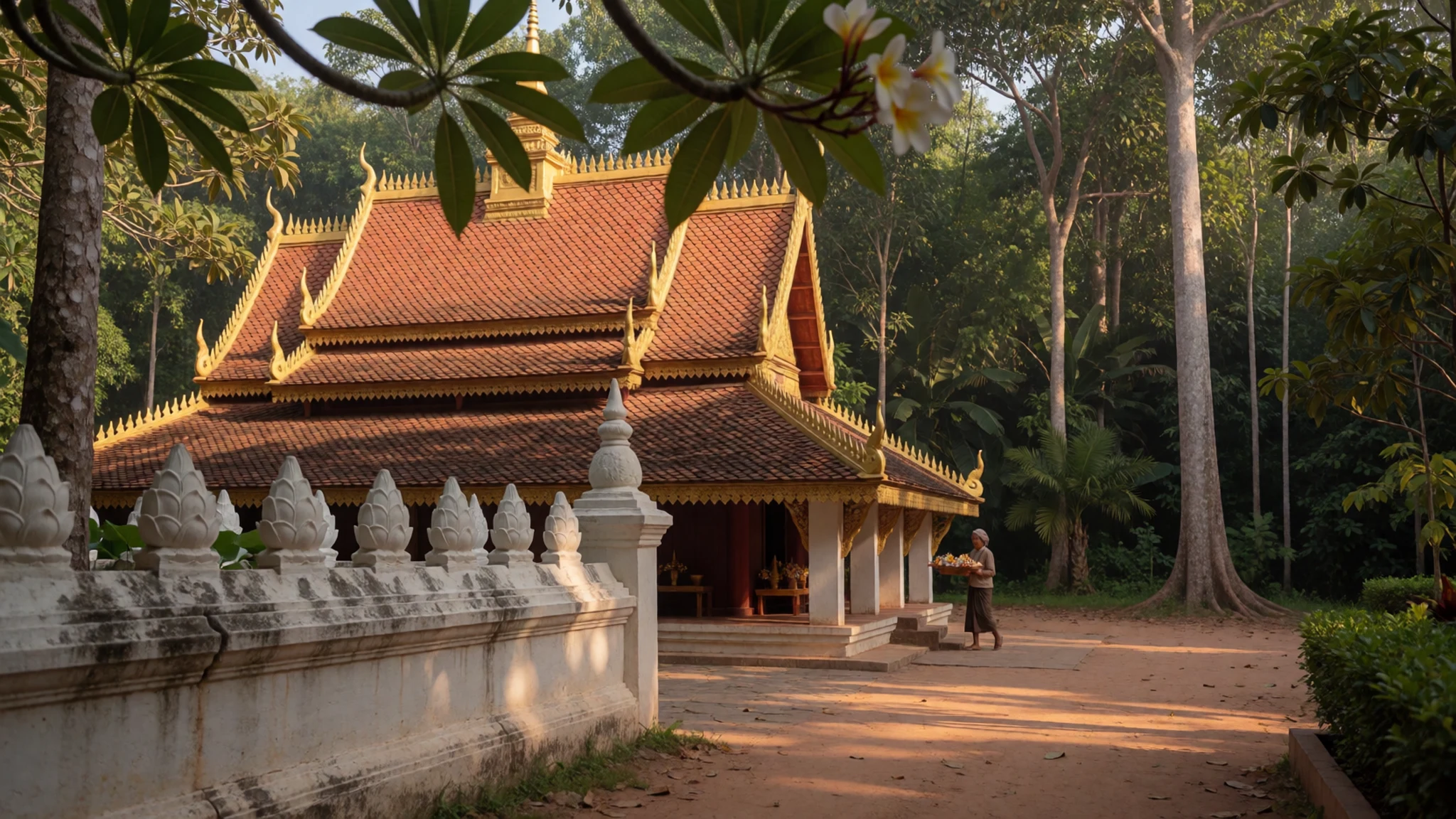
- Forest floor and fungi — Forest trails inland
Naturalists have photographed jelly fungi and bracket fungi on dead wood in the park's forest. Slow walking under the trees rewards small-scale looking: fungi, insects, birdsong, the damp smell of leaf litter. Stay on paths, touch nothing, and leave everything where it grows.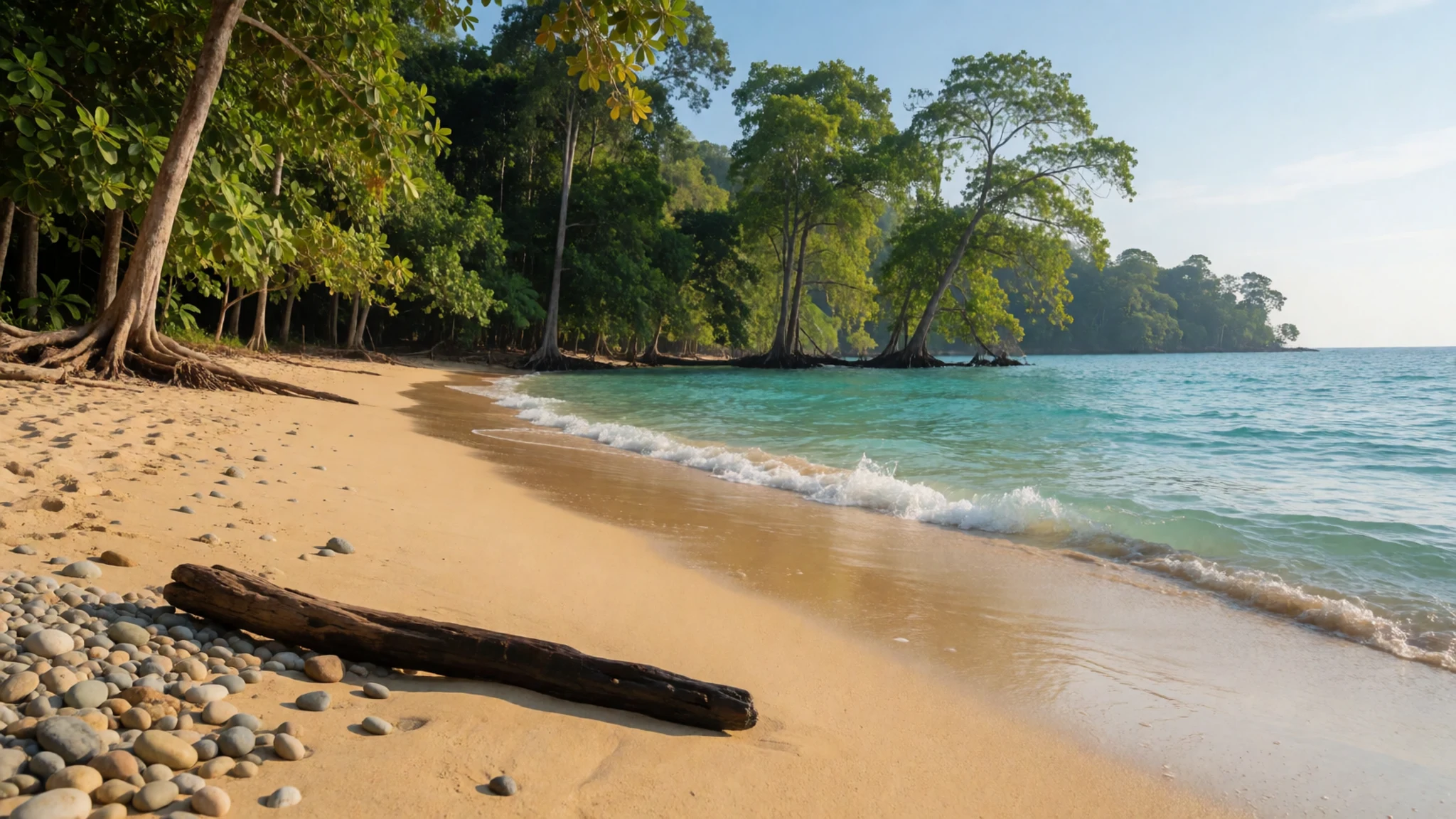
- The park pagoda — Inside the park boundary
A Buddhist pagoda stands within Ream National Park, a sign that this is lived-in land as well as protected land. Visitors can look around respectfully. Cover shoulders and knees, remove shoes before stepping into any hall, and keep voices low if monks or worshippers are present.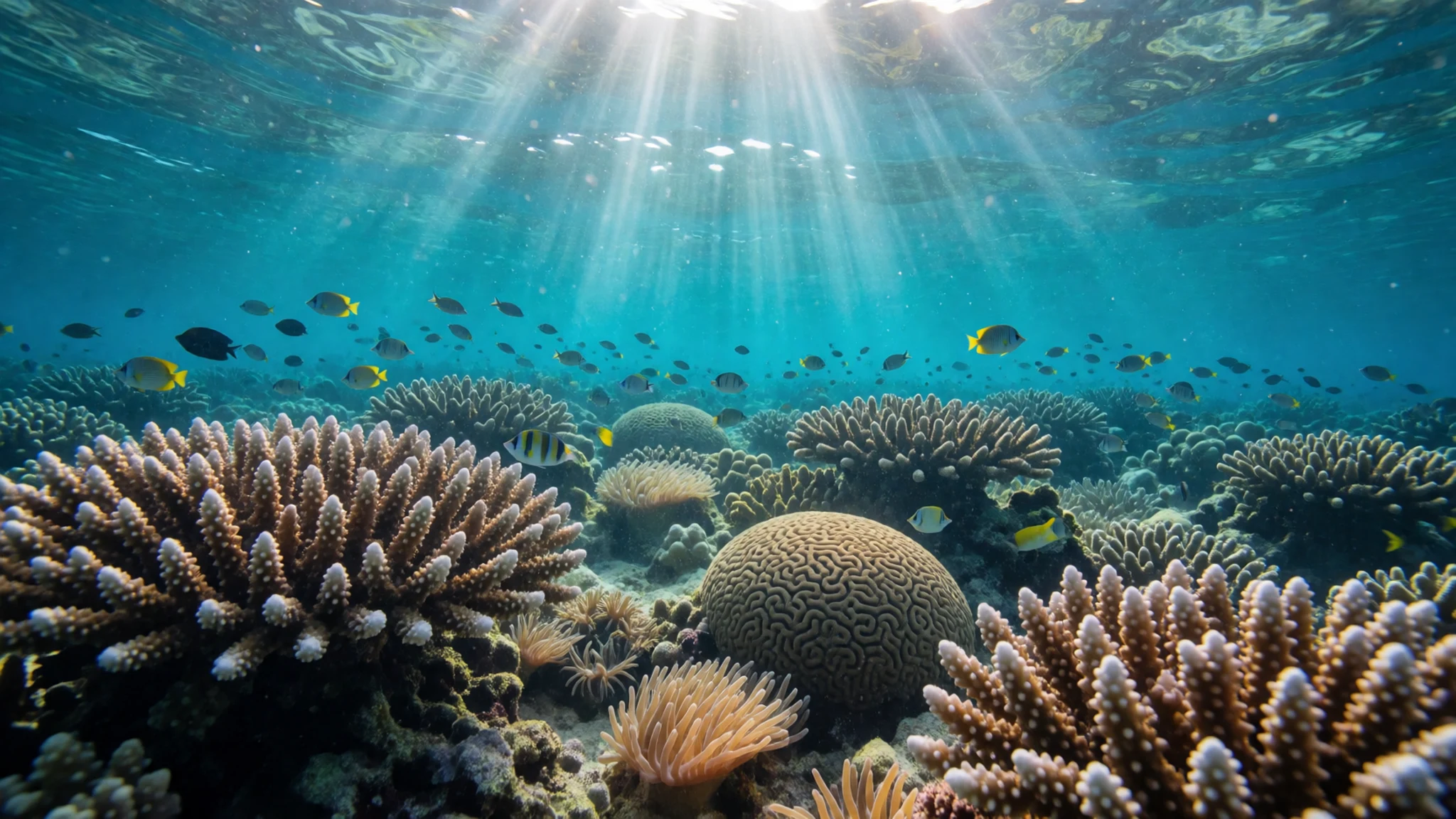
Culture
Ream National Park lies in a part of Cambodia where Buddhist practice, fishing and farming shape everyday life, and the park is a neighbour to those communities rather than an empty wilderness. Cambodia as a whole is changing quickly, and attitudes to visitors vary: places used to tourists, such as Phnom Penh and Siem Reap, are relaxed about cameras and foreign clothes, while quieter areas are more reserved. Dress is generally modest. Many Cambodian women cover most of their skin by day, partly to avoid a suntan, which is not considered attractive, and the evening dress code in towns is more relaxed. Beachwear follows the same pattern: skimpy swimwear is mostly seen on foreigners, not locals, and locals often swim in shorts and t-shirts. Pagodas, including the one inside the park, are active places of worship and not scenery, so quiet behaviour and covered shoulders and knees are expected. Young sellers of bracelets and small items are common around busy tourist spots, and a polite, friendly refusal usually works better than ignoring them. Fishing families work the coast, and the boats and nets are their livelihood, not props. Litter, loud music and wildlife disturbance are the main ways visitors can cause friction in a protected area, so carry rubbish out and keep speakers off. Always ask permission before photographing a person, especially villagers, monks and fishing families, and accept a refusal with a smile.
What to wear
Around Ream National Park in southwestern Cambodia, traditional dress still appears at weddings, pagoda festivals and national holidays. The sampot is a wrapped lower garment worn by women and, in a different style, by men, often in woven silk with patterned borders. The krama, a lightweight checked cotton scarf, is the everyday classic: farmers and fishing families use it against sun, as a head wrap, towel or sling. Day to day, though, most people wear practical modern clothes, such as cotton shirts, trousers or long skirts, and sandals or rubber shoes. Many women cover arms and legs in the daytime to stay out of the sun, while evening wear in towns tends to be more relaxed. Visitors should plan for heat, humidity and uneven ground. Lightweight, loose cotton or linen with long sleeves protects skin on a boat, and a hat and sunglasses are essential. Sturdy sandals suit boat landings, but closed shoes with grip are better for forest trails, where roots and mud can be slippery. Carry swimwear for the water, but pull on shorts and a t-shirt when walking along the beach or through a village, since Cambodian beachwear is conservative. For the pagoda, bring a light scarf or shirt that covers the shoulders, and trousers or a skirt that reaches the knee. A waterproof bag for phones and a rain layer help when weather turns.
What to eat
- Amok — Any Khmer eatery in Sihanoukville or the roadside near the park
Amok is a steamed Khmer curry, usually made with fish, served in a banana leaf or a hollowed coconut. It is mild, creamy and fragrant rather than fiery, and it is often counted among Cambodia's national dishes. A good first order.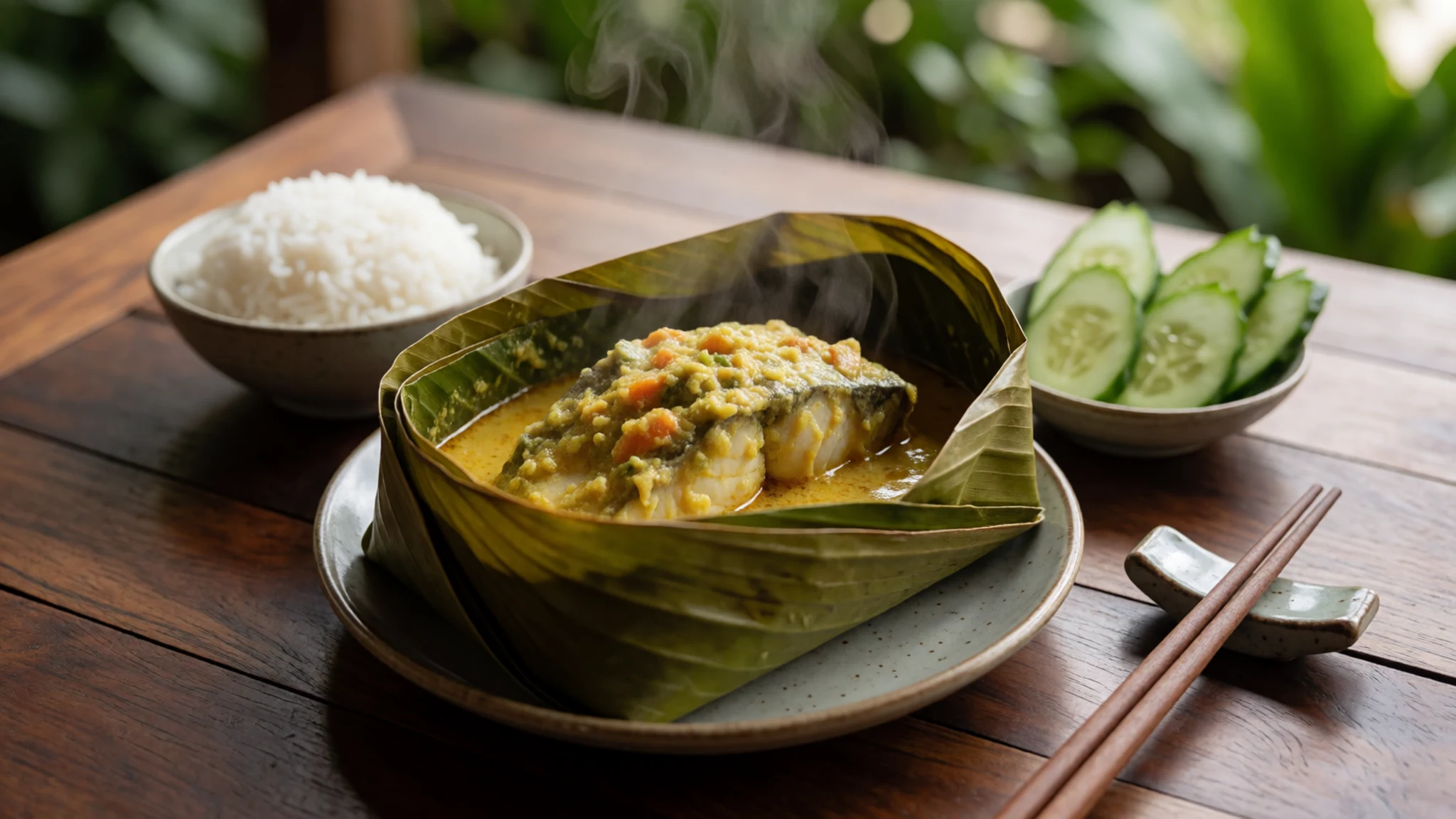
- Fresh grilled seafood — Seaside eateries and fishing-village stalls along the coast
On this stretch of the Gulf of Thailand, fish, squid and crab are commonly grilled over charcoal and served with lime, pepper and a sour dipping sauce. Choose a place where the catch is on display and busy with locals.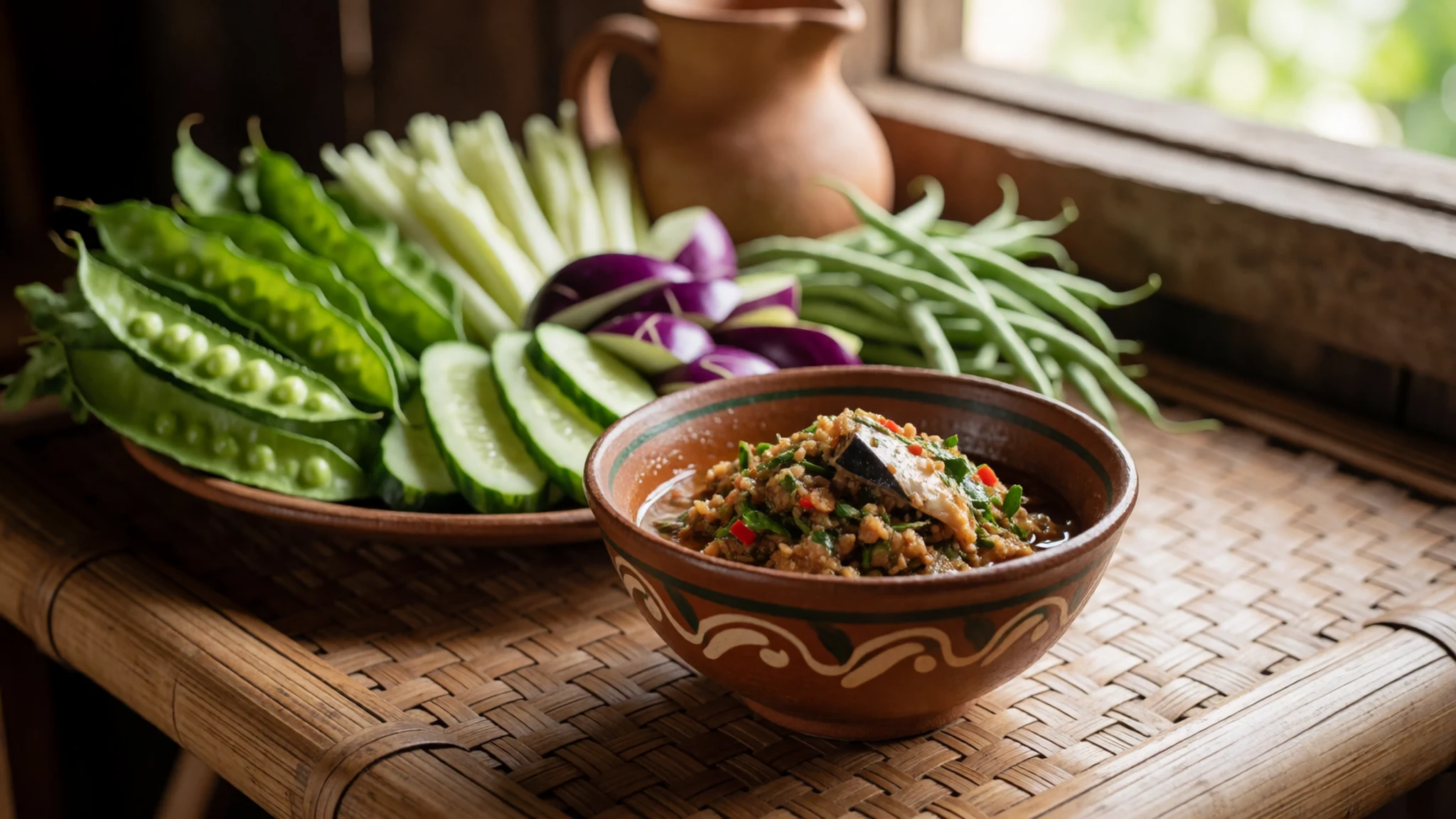
- Prahok — Local markets and family-run Khmer restaurants
Prahok is a pungent fermented fish paste used throughout Khmer cooking, in dips, soups and stir-fries. It has a strong smell and a salty, deep flavour that not every visitor enjoys, but it is central to how the cuisine tastes. - Kuy teav — Morning stalls and the town market
Kuy teav is a rice-noodle soup, usually eaten at breakfast, with a clear savoury broth, herbs and a choice of meat or seafood. Condiments are added at the table, including lime, chilli and sauces, so each bowl can be adjusted. - Lok lak — Casual restaurants and eateries in Sihanoukville
Lok lak is stir-fried beef, served on lettuce and tomato with rice and a dipping sauce of lime juice and black pepper. The pepper is the point: Khmer food leans on it more than chilli, and chilli is usually served on the side.
Plan it
Best time. November to February is the usual choice for the coast, with drier, slightly cooler weather that makes boat trips and forest walks more comfortable. Heat builds through the later dry months, and the wet season brings heavy showers and rougher seas, so check conditions before booking boats.
How long. 1
Getting there. Fly to Phnom Penh or to Sihanoukville's own airport, or reach Sihanoukville by road from Phnom Penh. Ream National Park is about 18 km from Sihanoukville, and the last leg is by road, usually a taxi, tuk-tuk or hired motorbike. Check current routes and arrangements locally.
Budget. low
Tips
- Check entry rules for your passport before travelling, since visa requirements in Cambodia depend on nationality and the official price is the one to pay
- Start early: mornings are cooler on the water and on the trails
- Carry water, sun protection and cash, as card acceptance can be patchy near the park
- Confirm boat and guide arrangements locally and with the official website (http://www.moe.gov.kh/) before relying on them
- Take a waterproof bag for phones and cameras on any boat
Etiquette
- Cover shoulders and knees and take off shoes before entering the pagoda
- Ask before photographing people, especially villagers and monks
- Carry rubbish out and keep noise down in the park
Nearby
Sources
- Wikidata Q4930573 (CC0)
- Wikipedia: Ream National Park (rev 1362900441) (CC BY-SA 4.0)
- Wikivoyage: Cambodia (rev 5395048) (CC BY-SA 4.0)
- Nature of Cambodia. Ream. — Dmitry Makeev (CC BY-SA 4.0)
- Ream National Park - padoga — Dmitry Makeev (CC BY-SA 4.0)
- Tour Map of Ream National Park, Cambodia — វ័ណថារិទ្ធ (CC BY-SA 1.0)
- Dacryopinax spathularia — Dmitriy Bochkov (Mushroom Observer) (CC BY 3.0)
- Favolus P. Beauv — Dmitriy Bochkov (Mushroom Observer) (CC BY 3.0)
- Cambodia - fishing boat — Dmitry Makeev (CC BY-SA 4.0)
- Pagoda. Ream National Park. — Dmitry Makeev (CC BY-SA 4.0)
- Cambodia, Sihanoukville Province. Ream Naval Base — Dmitry Makeev (CC BY-SA 4.0)


