Ranakpur
Ranakpur, India
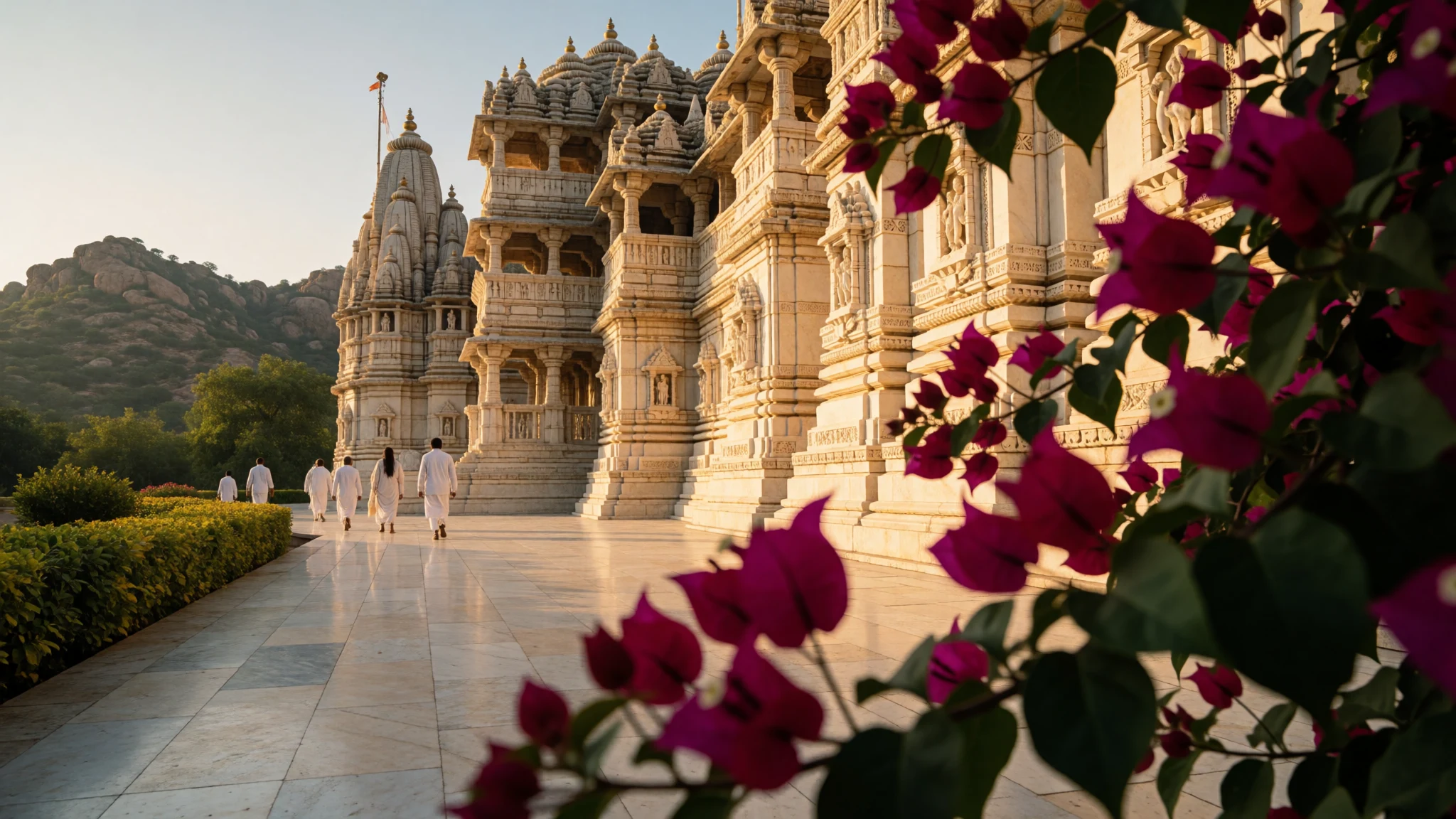
Ranakpur is a quiet Aravalli valley holding a white marble Jain temple, an easy and rewarding stop between Udaipur and Jodhpur.
The place
Ranakpur is a village in the Pali district of Rajasthan, set in a quiet valley on the western side of the Aravalli Range at an elevation of 486 m. It lies roughly between Jodhpur and Udaipur, about 160 km from the first and 90 km from the second, which is why most travellers meet it as a long day trip or an overnight stop on the road between the two cities. The surrounding country is dry, rocky woodland folded into ridges. The village itself is small: a scatter of eateries, guesthouses and stalls that exist largely to serve the temple that gives the place its fame. That temple, in pale marble, is a Jain pilgrimage site and the reason for nearly every visit. Beyond it the valley opens towards the Kumbhalgarh Wildlife Sanctuary, where local operators arrange jeep drives, walks and horseback rides. Falna is the nearest railway station, about 30 km away, and the nearest municipality is Sadri. Most people arrive by road from Udaipur. The mood shifts with the hour. Early mornings are calm, with pilgrims arriving and the hills still cool; by midday tour coaches fill the car park and the courtyards get busy. Summers are hot and dry, while the monsoon turns the slopes green and settles the dust, though hill roads can be slow. Ranakpur has no town to explore beyond the temple compound and a handful of lanes, so it suits a half day or one night rather than a long stay, and it pairs well with the forts and lakes at either end of the road.
Its story
Ranakpur's story is, above all, the story of one temple and the faith behind it. The main shrine honours Adinath, also called Rishabha, regarded by Jains as the first tirthankar of the present time cycle. A tirthankar is an enlightened teacher who shows others the way across the cycle of rebirth, and the temple is a place where that teaching is kept alive in stone and in daily ritual. It is known as the Chaumukha temple, meaning four-faced, because the image of Adinath looks out in four directions. Jain tradition reads this as a reminder of the four dimensions of the quest in life, tied to the central teachings of the religion. Around the main shrine stand two smaller temples to the tirthankars Neminath and Parsvanath, and close by is a modest shrine to Surya, the Hindu sun god, a small sign of how Rajasthan's traditions sit side by side. The valley setting matters to the story. Ranakpur grew as a place of pilgrimage rather than as a market town, and it still works that way, with rooms for devotees, a canteen cooking Jain food, and worship carrying on while visitors walk through. Exact dates, patrons and craftsmen are recorded in Jain temple histories, and accounts differ in detail, so it is worth asking at the temple office for the version they keep.
What to see
- Adinath Chaumukha Temple — Ranakpur temple compound
The main shrine at Ranakpur is the Chaumukha temple, named for the four-faced image of Adinath at its heart. It is built of pale marble, a large and airy complex with high ceilings, and the stonework repays attention from outside as well as within. Its carving differs in style from the marble work at Dilwara, so comparing the two is rewarding.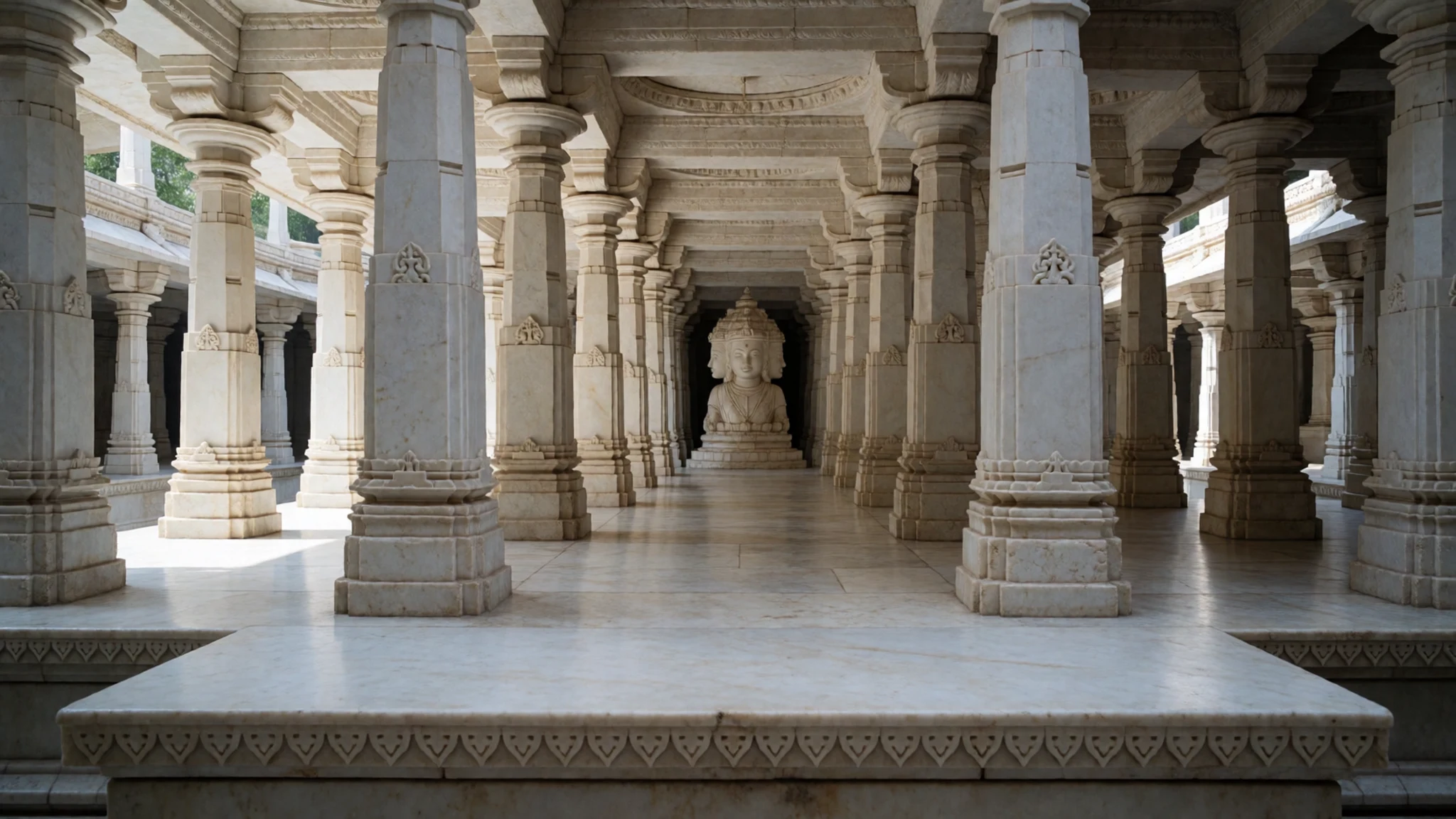
- The carved pillars — Inside the main temple
The forest of columns is the real draw. There are well over a thousand, and local guides say no two are alike. A slow walk bears this out, as brackets, dancing figures and floral motifs change from one pillar to the next. Light moves across the marble through the day, so morning and late afternoon feel quite different.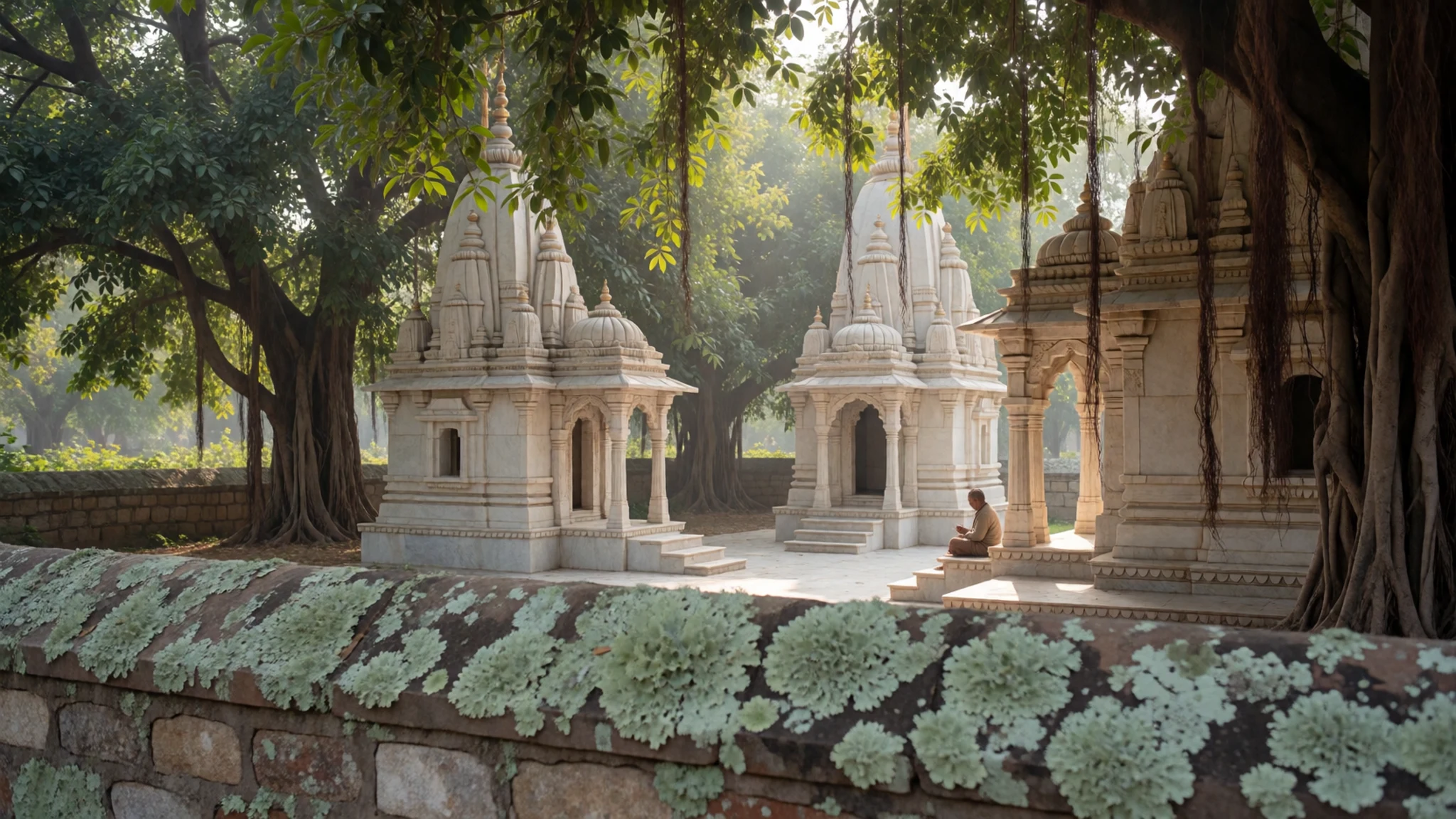
- Neminath and Parsvanath temples — Beside the main temple
Two smaller temples near the main shrine honour the tirthankars Neminath and Parsvanath. They draw fewer visitors, so they are calmer places to pause. Look at how their carving compares with the larger temple, and watch for pilgrims making offerings and prayers in the quieter corners.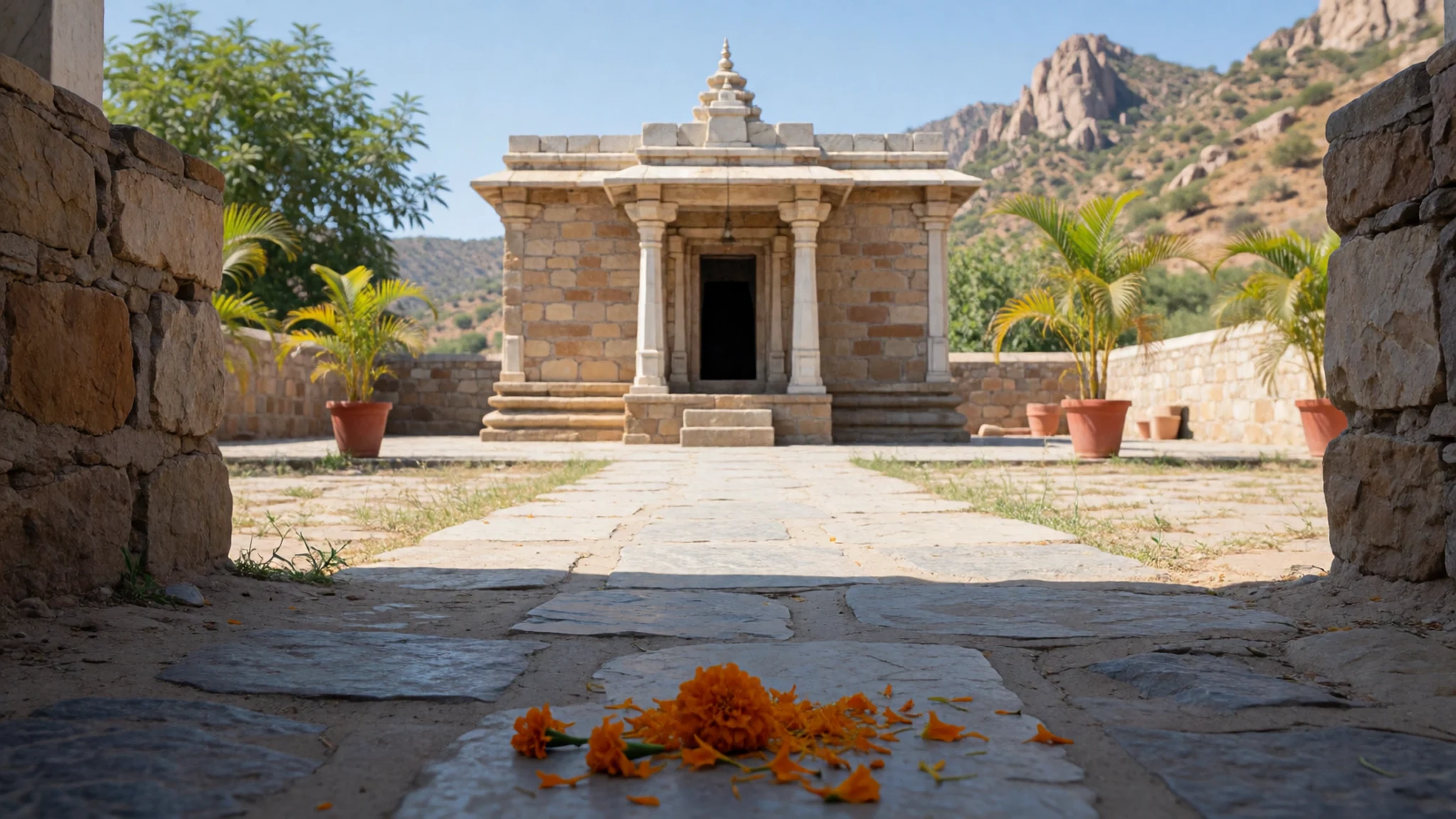
- Surya temple — Near the main temple
A small shrine to Surya, the Hindu sun god, stands close to the main Jain temple. It is modest in scale, but it shows how Hindu and Jain devotion mix in this part of Rajasthan. A short stop here makes a pleasant contrast with the busier courtyards of the larger complex.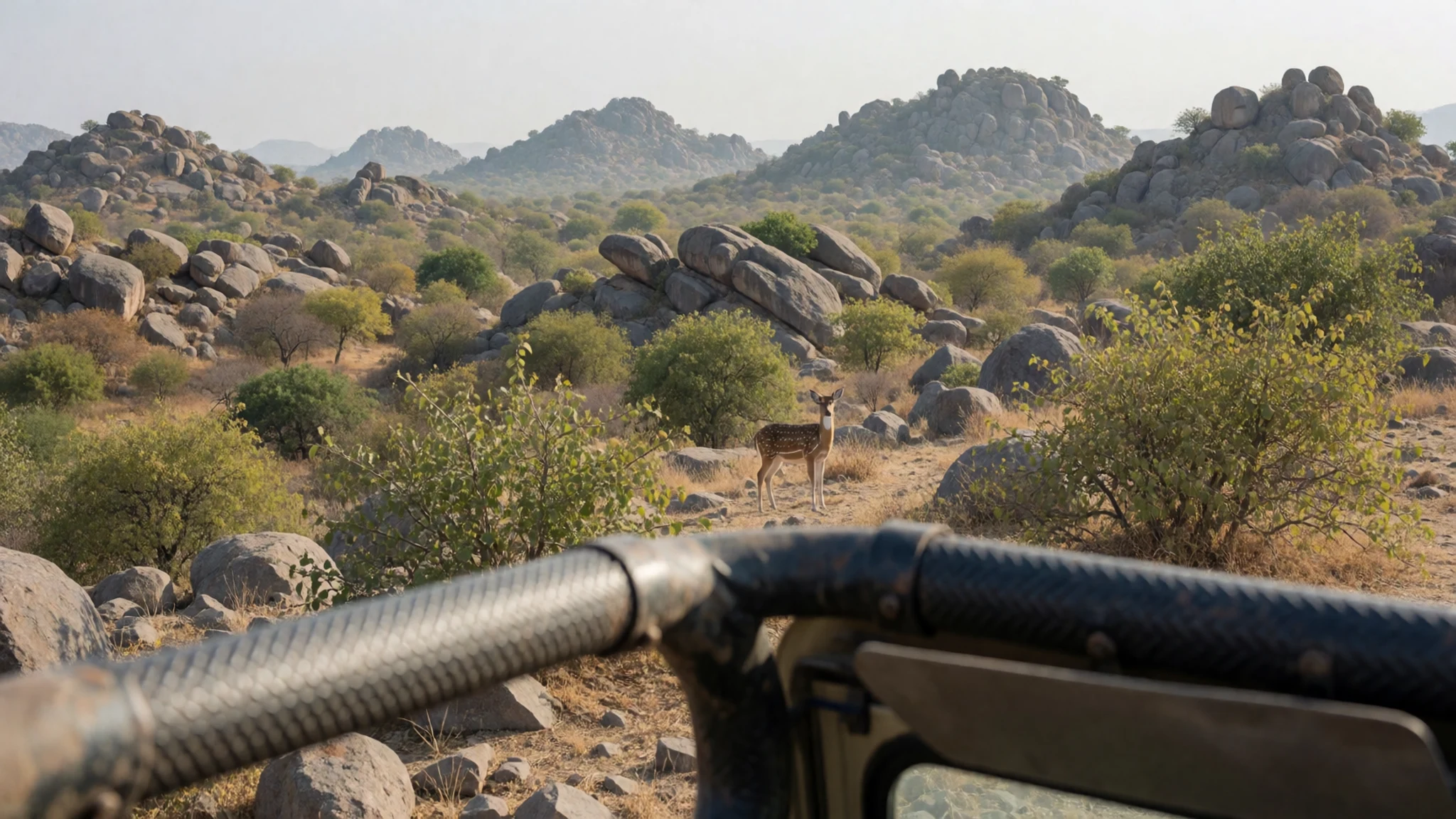
- Ranakpur valley and Kumbhalgarh Wildlife Sanctuary — Aravalli hills around Ranakpur
Beyond the temple, the valley is open to jeep safaris, nature walks and horseback rides through the Aravalli hills and the neighbouring sanctuary. These are arranged through local operators and guesthouses, so ask around the evening before. Early starts are the most comfortable, as the middle of the day is hot for much of the year.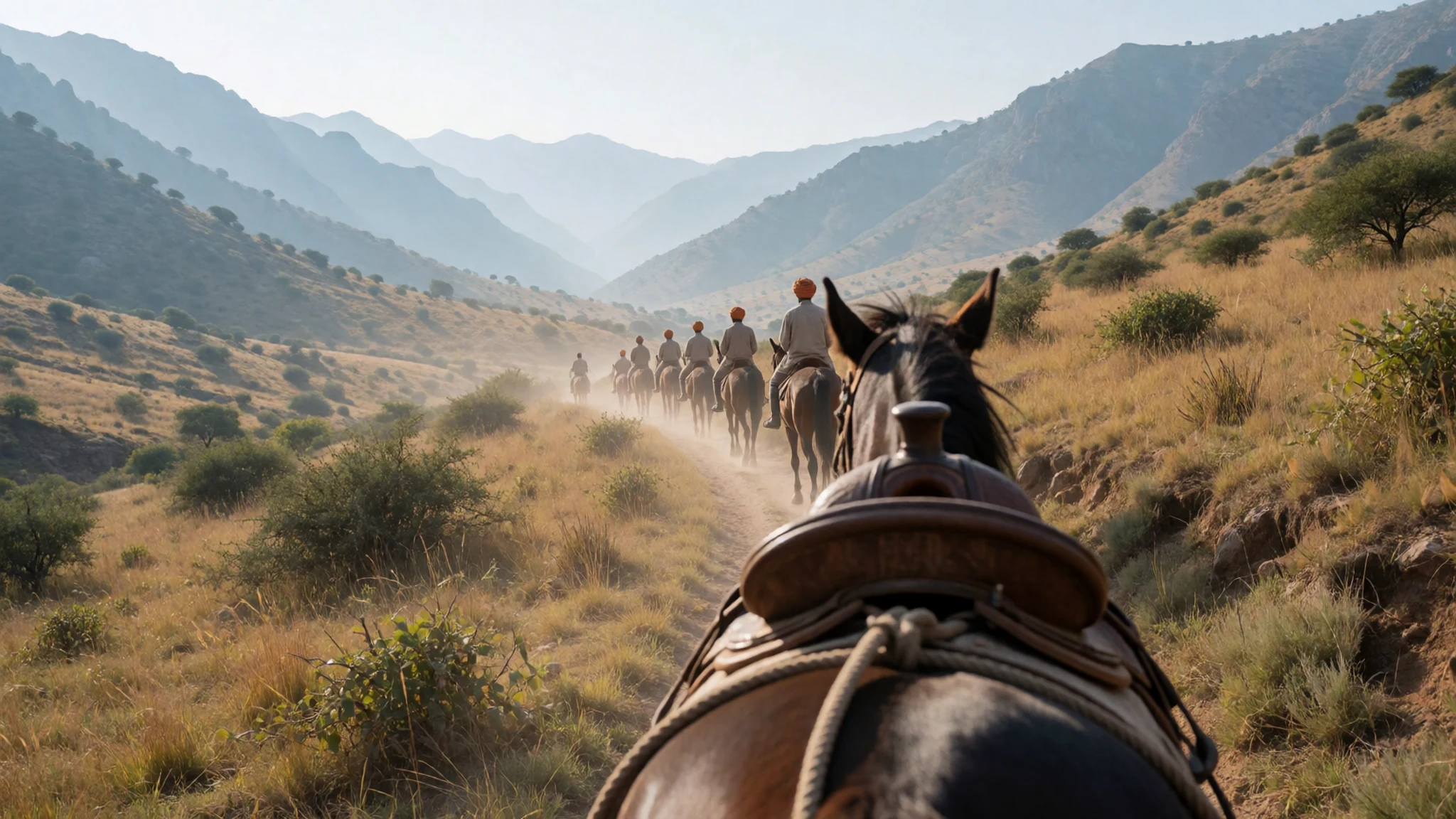
Culture
Ranakpur is first and foremost a working Jain place of worship, and its character comes from Jain values. Central among them is ahimsa, non-violence towards all living things, which shapes daily life here: food is strictly vegetarian, and the temple kitchen avoids onion, garlic and potato, partly because harvesting roots can harm small creatures in the soil. Pilgrims come to see the image of Adinath, to pray, and to take part in rituals that continue through the day, often in quiet and without fuss. Visitors of other faiths are welcome in the temple's public areas, but the place is not a museum, and the atmosphere depends on guests respecting that. Many pilgrims stay in simple rooms provided by the temple, and the temple reserves the right to refuse a room, so humility and curiosity about Jainism go a long way. The neighbouring Surya shrine is a reminder that Hindu and Jain practice overlap in Rajasthan, and the people running the canteens and stalls come from a mix of local communities. Marble, silence and patience are the themes of the place. Talk softly inside, let worshippers pass first, and ask a priest or attendant before photographing anyone at prayer. Remove your shoes before entering the temple compound, leave leather items such as belts and wallets outside if asked, and dress modestly with shoulders and knees covered.
What to wear
Around Ranakpur, traditional Rajasthani dress is still part of everyday and festival life. Men in the villages may wear a turban (safa or pagri) in bright cotton, with a kurta or angarkha and a dhoti. Women often wear a ghagra and choli with a long odhni veil, in cotton or silk, frequently dyed in bandhani tie-dye or the diagonal waves of leheriya. These are most visible at weddings, fairs and festivals. Jain pilgrims often favour plain or white clothes at the temple. Day to day, most people now wear what they wear across India: shirts and trousers for men, salwar kameez, kurtas or saris for women, and jeans among the young. Visitors should dress for heat and for a place of worship. Loose, light cotton clothes that cover the shoulders and knees are the safest choice, and a scarf or shawl is useful both for sun and for modesty. Shoes come off at the temple, so slip-ons are easier than laced boots, and socks can help on marble that heats up in the sun. A hat, sunglasses and sun cream are sensible, especially in summer. For safaris and hill walks, wear sturdy closed shoes, long trousers against thorns and scrub, and neutral colours.
What to eat
- Jain thali — The temple canteen near the compound entrance
A simple set meal cooked to Jain rules, without onion, garlic or potato. Expect dal, vegetables, rice or bread and a sweet or pickle, served plainly. It is filling, cheap by local standards and ideal after a long morning among the marble.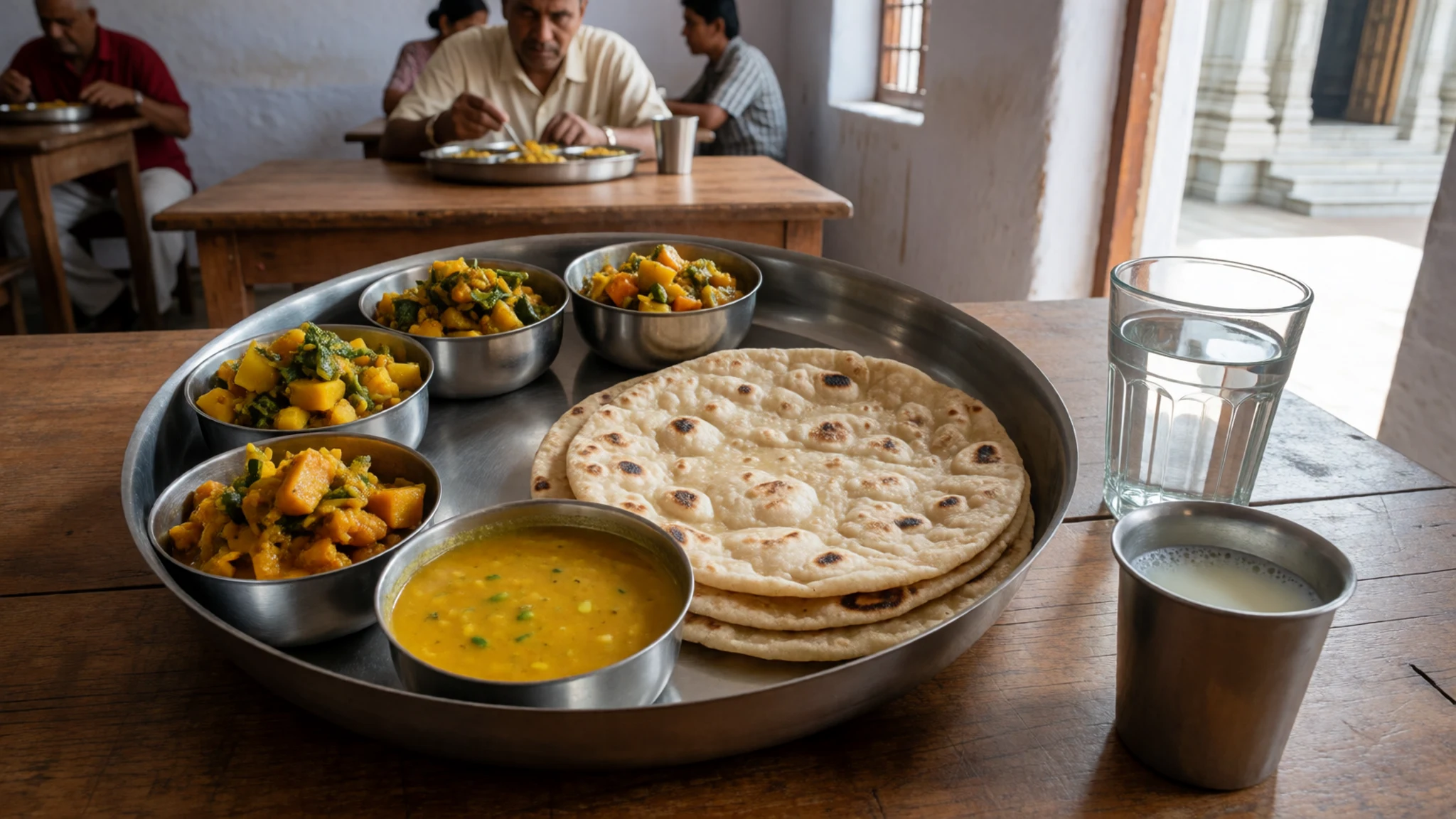
- Dal — The temple canteen and roadside eateries
The dal at the temple canteen has a good name among visitors. It is mildly spiced, comforting and eaten with rice or flatbread. Without the usual onion and garlic base, it tastes cleaner and lighter than the version served in most restaurants.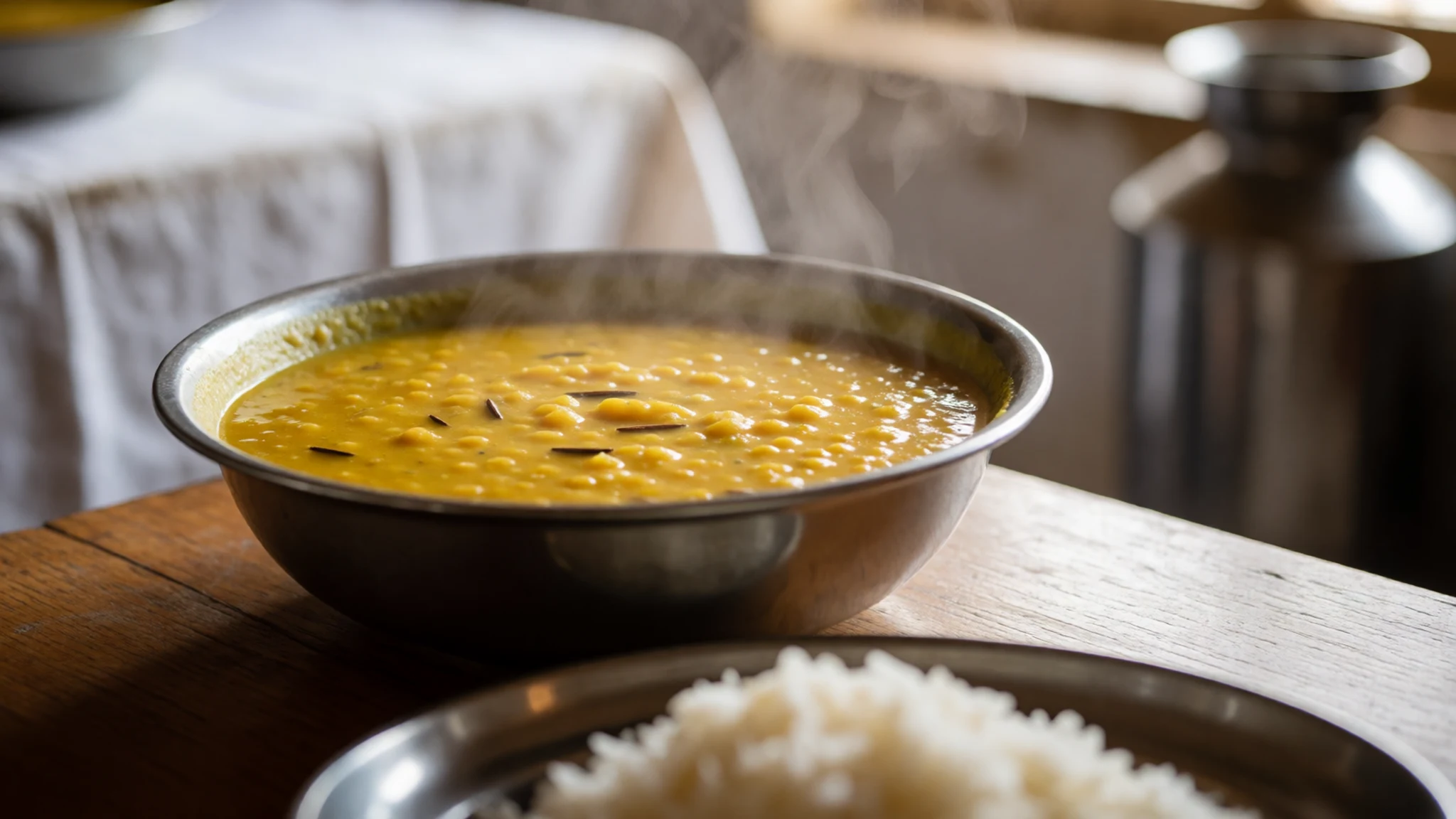
- Dal baati churma — Rajasthani restaurants and guesthouse kitchens on the Udaipur road
The classic Rajasthani plate: hard baked wheat balls broken into hot lentils and drizzled with ghee, with sweet crumbled churma on the side. It is rich and heavy, so share it, and it suits cooler months better than peak summer. - Gatte ki sabzi — Local thali restaurants in and around the village
Gram flour dumplings simmered in a tangy yoghurt-based gravy, a staple of Rajasthan's dry-country cooking. It is spicy, hearty and usually served with roti. It is a good vegetarian choice where fresh vegetables are scarce. - Masala chai — Tea stalls near the bus stop and temple approach
Sweet, milky tea brewed with ginger and spices at small roadside stalls. It is the easiest way to wait for a bus, warm up on a cool morning, or pause between temple courtyards. Ask for less sugar if you prefer.
Plan it
Best time. October to March, when days are dry and comfortable and mornings are cool; April to June is hot, while July to September brings monsoon greenery but slower hill roads.
How long. 1–2
Getting there. Udaipur is the usual gateway, about 90 km away by road, with buses and taxis taking around three hours. From Jodhpur, about 160 km away, take a train to Falna station, about 30 km from Ranakpur, then a taxi for the last leg. Check current bus timings at the station.
Budget. low
Tips
- Arrive early in the morning, before tour coaches fill the temple compound
- Check the temple's current visiting hours and ticket arrangements before going, as they can change
- Carry some cash, as small eateries and stalls may not take cards
- Bring water, a hat and sun cream for the hot months
- Book a safari or horseback ride through your guesthouse the evening before
Etiquette
- Remove shoes at the temple entrance and leave leather items outside if asked
- Dress modestly, with shoulders and knees covered
- Ask before photographing worshippers
Nearby
Sources
- Wikidata Q1425430 (CC0)
- Wikipedia: Ranakpur (rev 1376589535) (CC BY-SA 4.0)
- Wikivoyage: Ranakpur (rev 5262570) (CC BY-SA 4.0)