Ramappa Temple
Ramappa Temple, India
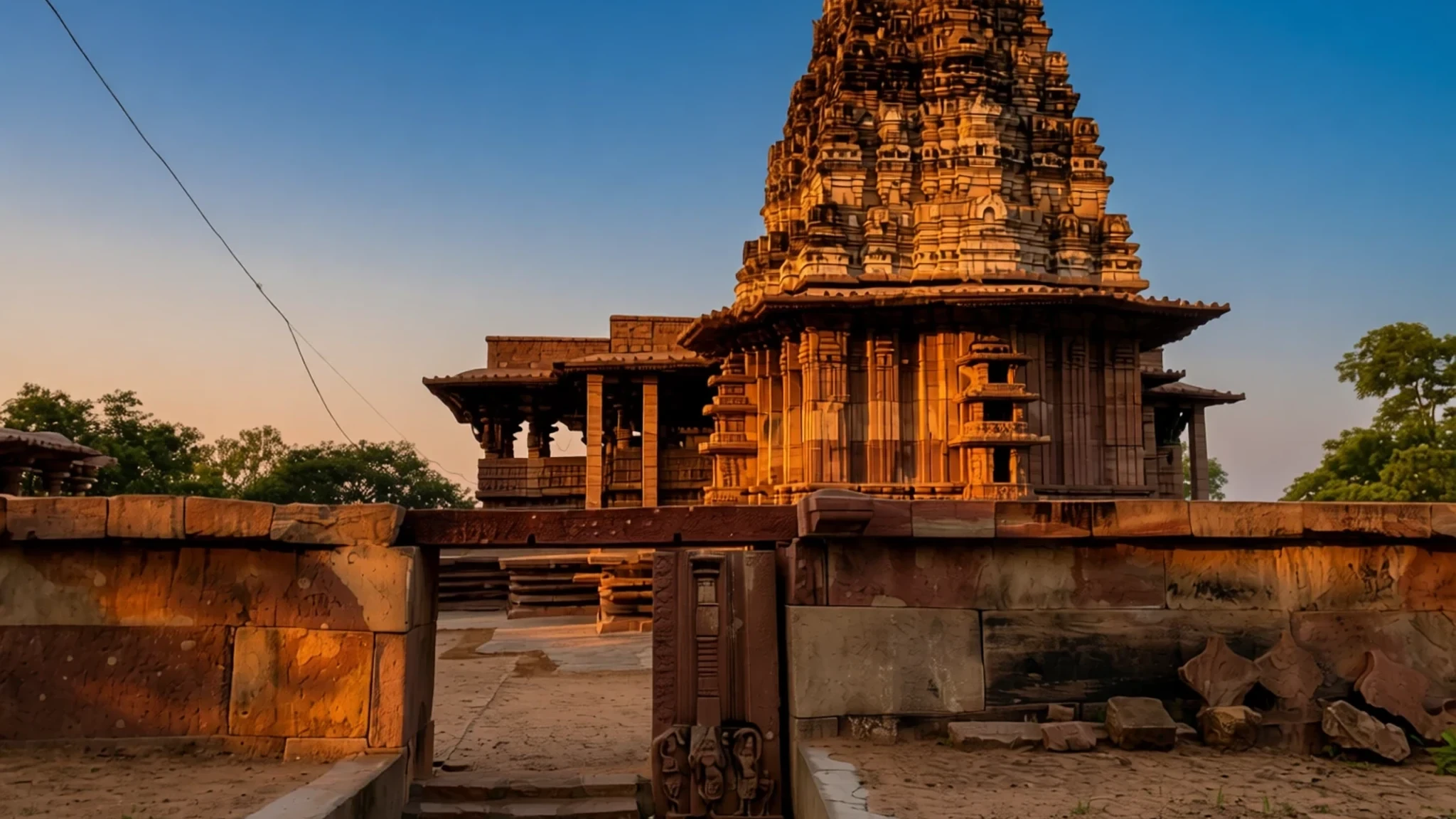
Ramappa Temple is a Kakatiya-era Shiva temple in a quiet Telangana village, famed for its carved stonework and clever engineering.
The place
Ramappa Temple, also called the Rudreshwara Temple, stands in the village of Palampet in eastern Telangana, India. It is a Hindu temple dedicated to Shiva, and it is on the UNESCO World Heritage list. The setting is rural: fields, a lake nearby, a small village, and a temple that rises from a low platform with little around it to compete.
The main shrine is built mainly of red sandstone, but the real show is in the darker stone. Pillars and brackets are carved from granite and dolerite, and the surfaces are worked in such fine detail that they reward slow looking rather than a quick circuit. The architecture blends Dravidian and Chalukyan traditions into what is known as the Kakatiya style.
Two features explain why engineers take as much interest as art historians. The tower over the sanctum is said to be built of light clay bricks that are porous enough to float, which keeps weight off the walls. The foundation is described as a sandbox, a layer of loose material meant to soak up the shaking of an earthquake. Both ideas help explain why a building so ornate has survived for centuries in a region that has seen war and neglect.
The complex is more than one building. Around the main temple are smaller stone shrines, the ruins of a kitchen block, and a closed hall holding a monolithic Nandi, Shiva's bull guardian. Parts are ruined, and that gives the site a lived-in, unpolished feel. Visitors tend to arrive by road from Warangal and Hyderabad, and crowds are modest outside festival days and weekends.
Its story
A basalt pillar discovered in a courtyard close by carries an inscription stating that Recherla Rudra, an army commander serving the Kakatiya dynasty, ordered the temple built in 1213. Building took about 40 years and ran through the reign of Ganapati, the third ruler of the line. The Kakatiyas governed from Warangal, and Ramappa is one of the finest surviving statements of their taste and wealth.
The dynasty did not last. In 1310 Malik Kafur's army invaded Warangal, and the temple suffered minor damage in that campaign. After the Kakatiyas fell, the building lost its patrons and its condition declined badly over the following centuries, with roofs, carvings and surrounding structures wearing away.
The modern rescue began early in the twentieth century. Conservation started in 1914 under the archaeological department of the Hyderabad state, directed by Professor Ghulam Yazdani. He traced missing decorations and ornaments and had them returned to their original places in 1931, and the temple was also surveyed and renovated in 1916. After Hyderabad joined the Indian Union in 1948, care of the site passed to the Archaeological Survey of India, which still looks after it.
Science came later. In 1991 the National Institute of Technology in Warangal carried out a geotechnical study to understand the foundation and structure that had kept the temple standing. Locals often call the temple by the name of its sculptor, Ramappa, rather than that of its patron, which is a rare thing for a building of this scale.
What to see
- The main Rudreshwara shrine — Palampet village
The central temple sits on a raised, star-like platform of red sandstone. Walk the full circuit of the platform before going inside, because the carving changes from face to face. The tower above the sanctum is the part said to be made of lightweight bricks.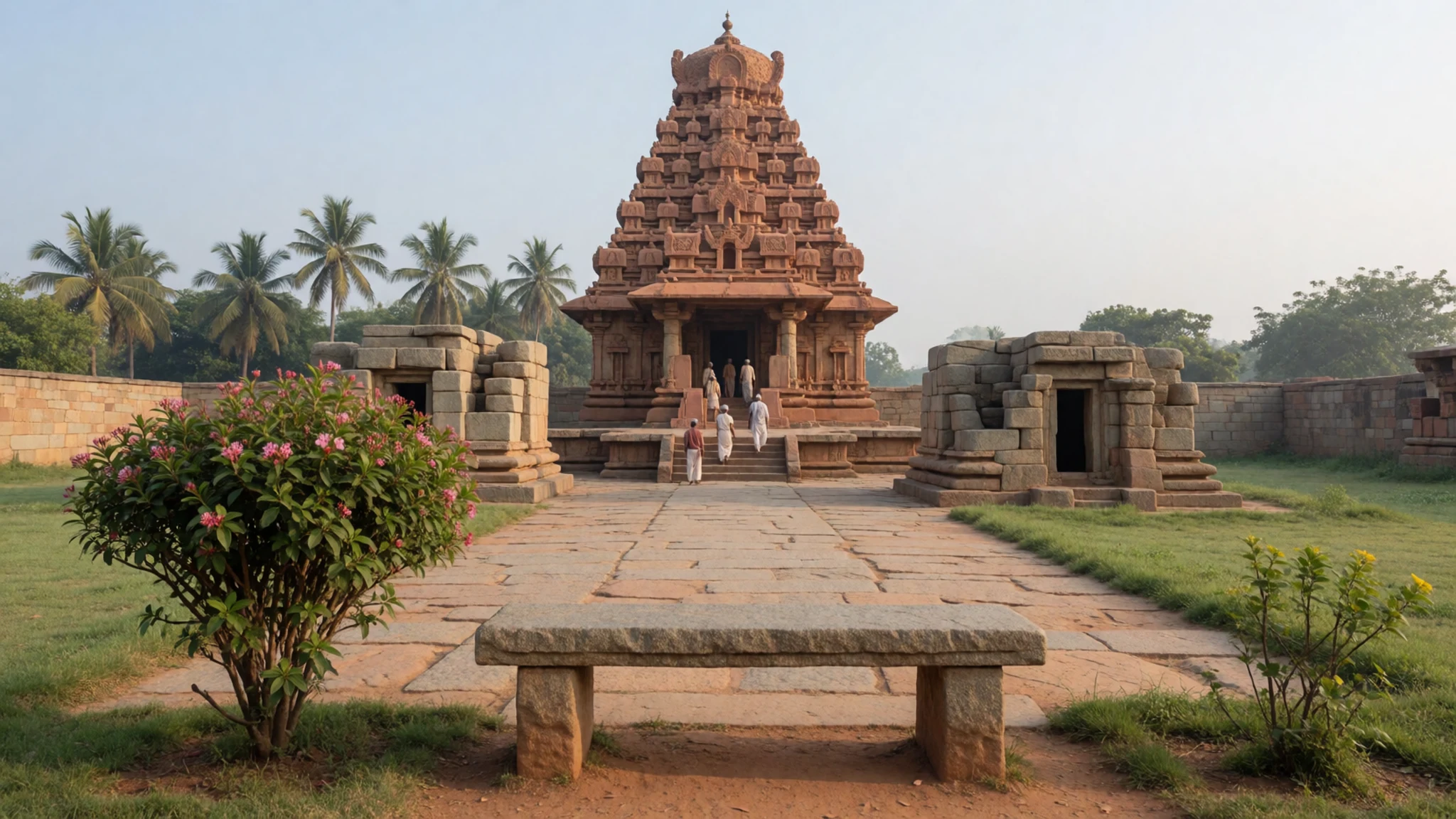
- The carved pillars and brackets — Inside the main mandapa
Inside the hall, dark pillars and bracket figures show how far stone can be polished and detailed. Look for slender dancers and musicians, and for the glossy finish on the stone. A small torch or your phone light helps in the dim corners.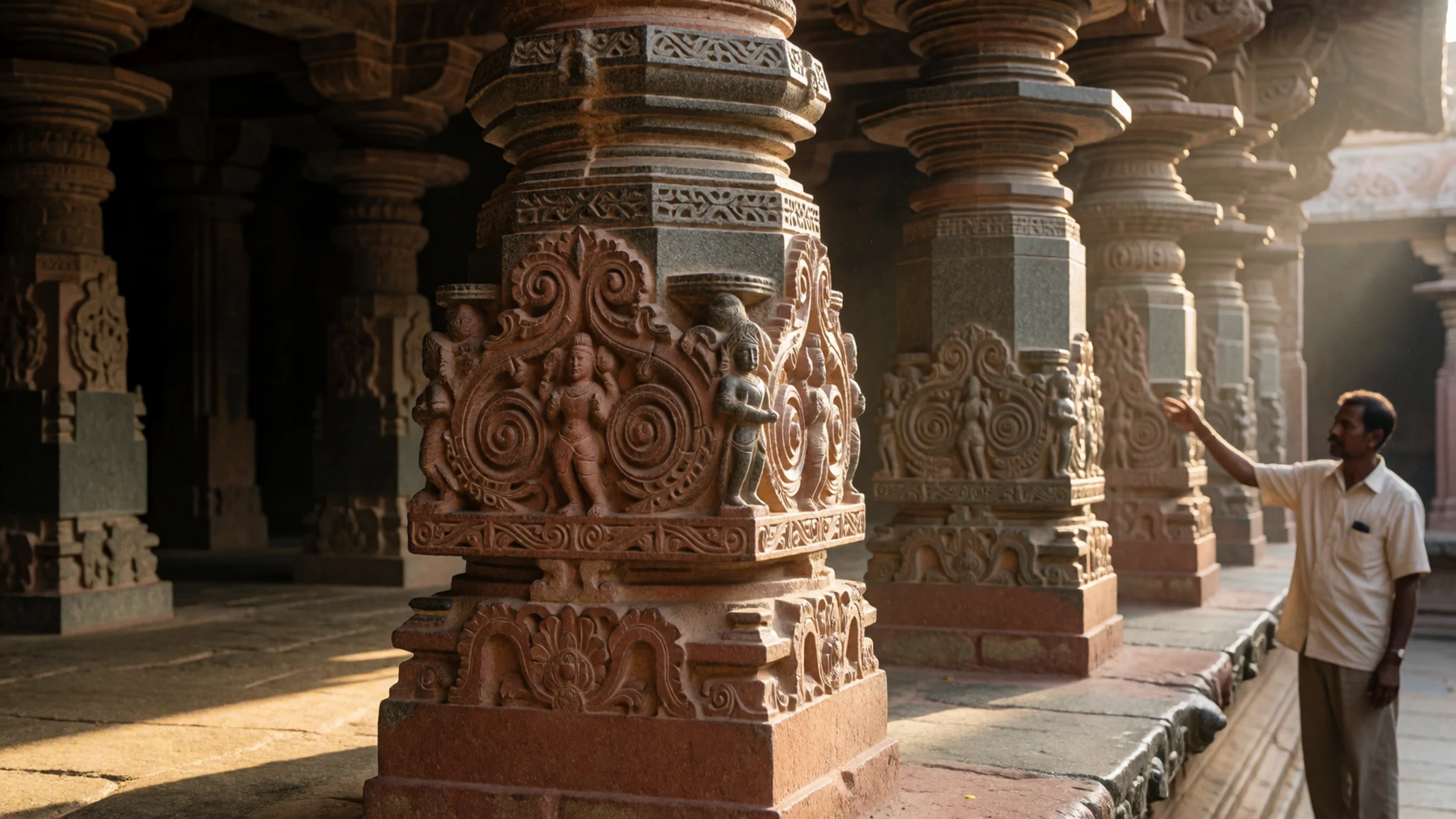
- The Nandi pavilion — In front of the main shrine
A monolithic Nandi, Shiva's bull, faces the main shrine from a closed hall of its own. The animal is carved from a single block and set in line with the sanctum, as is usual at Shiva temples. It is worth a pause for the sense of scale.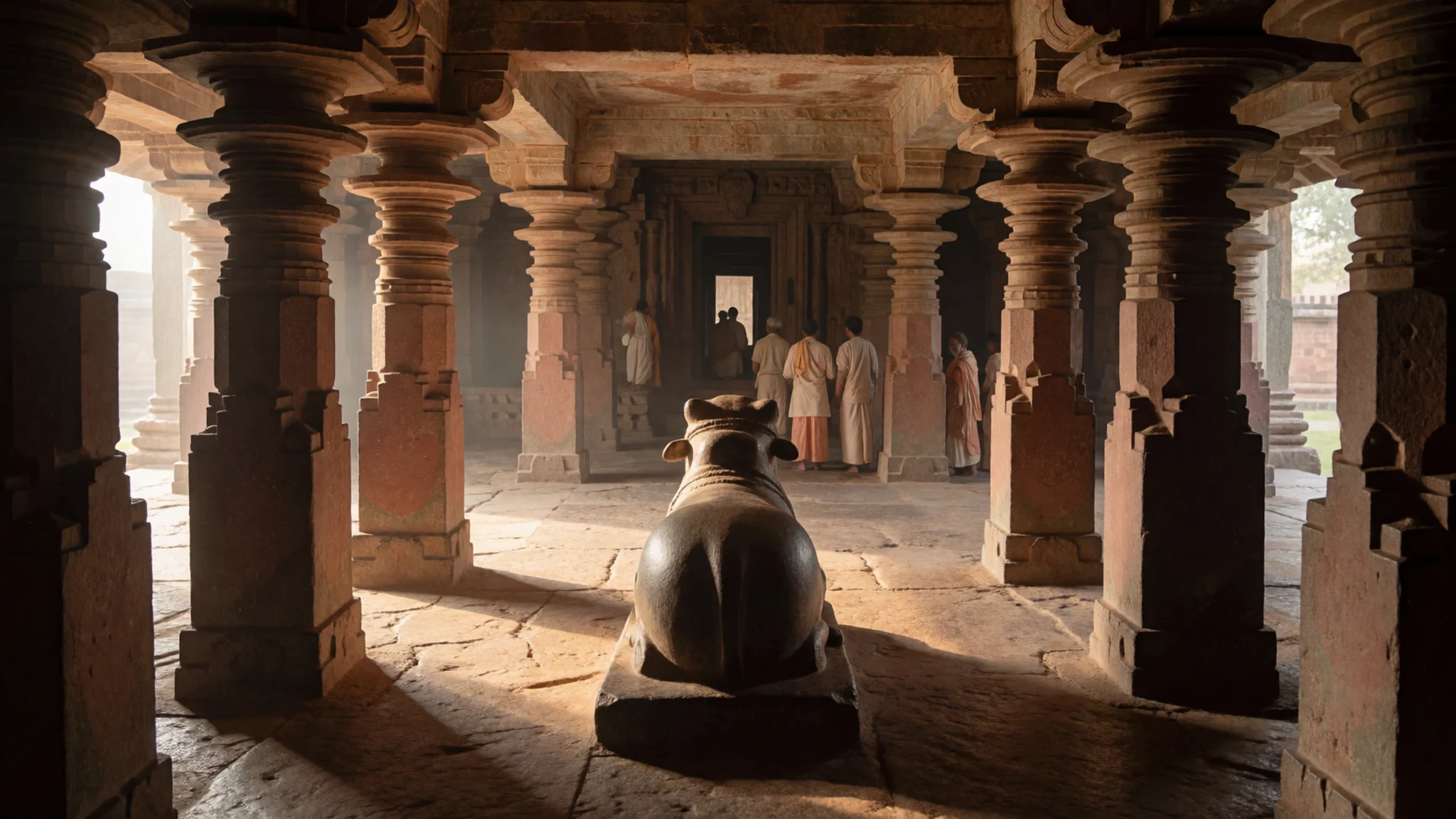
- The smaller shrines and ruins — Within the temple complex
Two smaller stone temples and the remains of a kitchen block stand within the complex. Partly ruined, they show the temple as a working institution, not just a monument. They are quieter than the main shrine and good for photographs without crowds.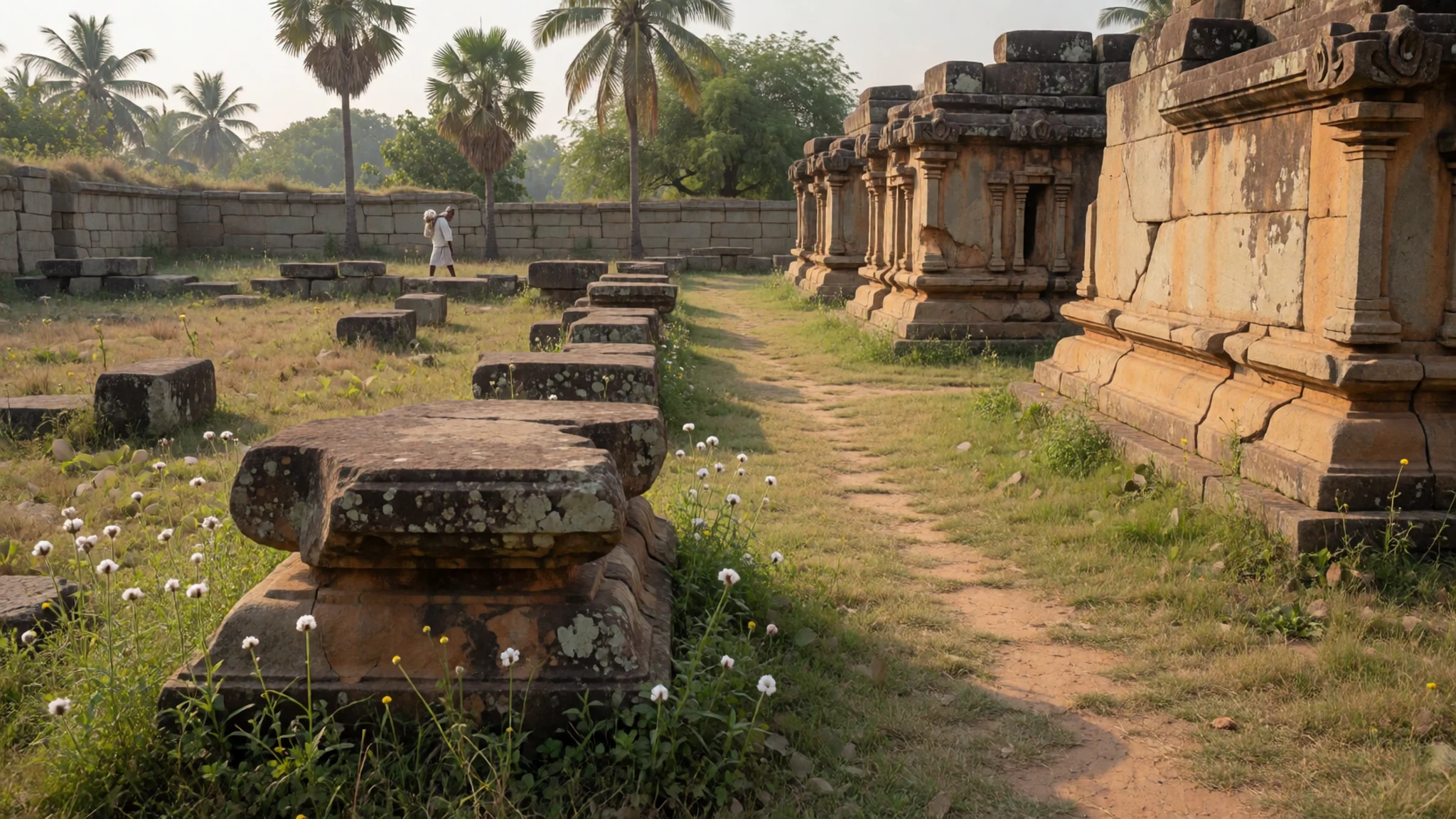
- The exterior in evening light — Temple platform and lawns
Late in the day the red sandstone warms and the carved surfaces throw longer shadows, which brings out relief that flat midday sun hides. Stay for the last hour if the site allows, and check closing times with the official source before you plan it.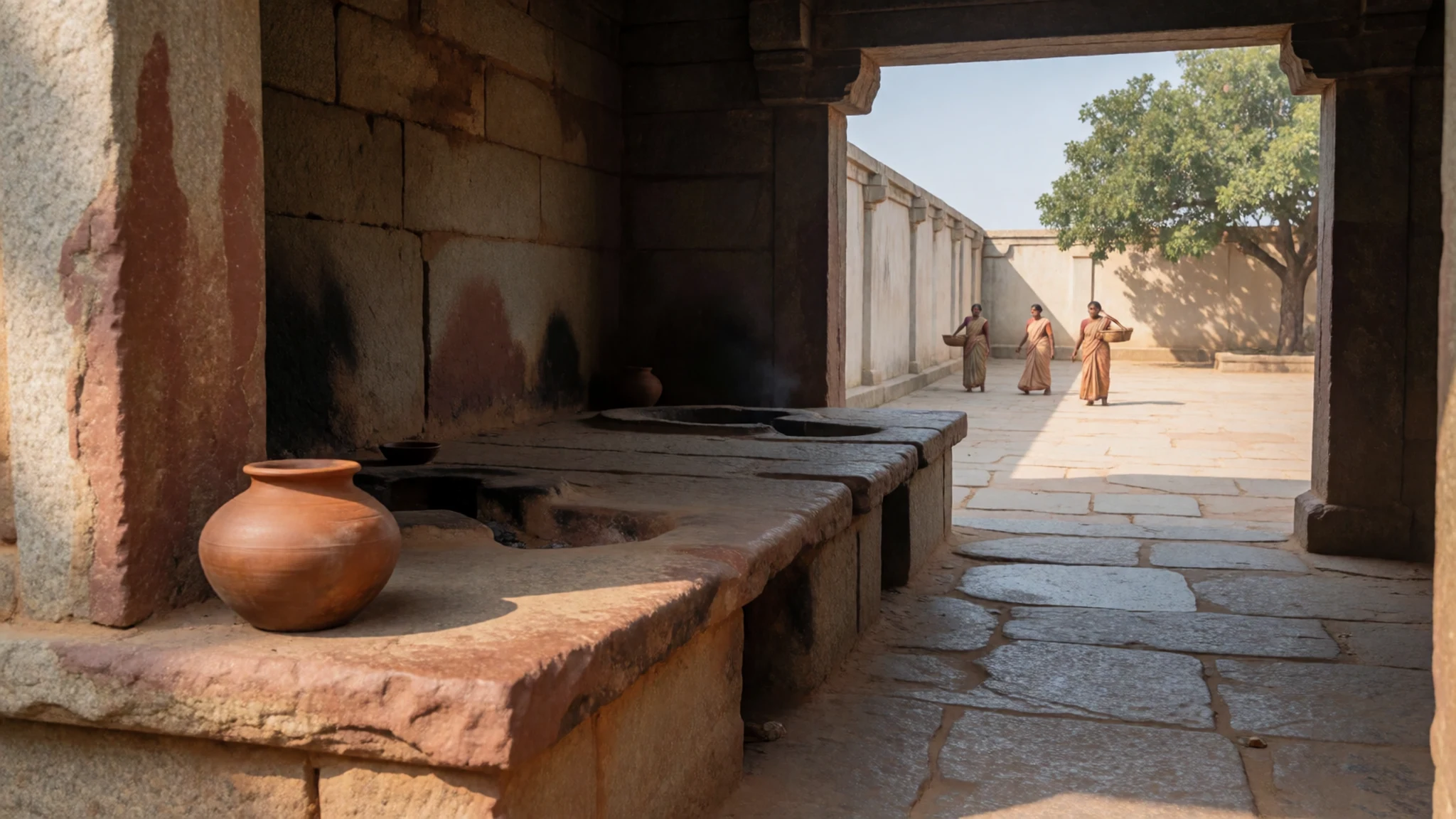
Culture
Ramappa Temple is a living Shiva temple as well as a protected monument, so the village and the visitors share it with worshippers. Telangana is Telugu-speaking, and the local manner is courteous and unhurried. Many visitors come from Warangal and Hyderabad for a day, and families often combine the temple with a picnic by the nearby lake.
Shiva is worshipped here in the form of the linga, and the Nandi bull that faces the sanctum is part of that devotion. Festival days, especially around Maha Shivaratri, bring pilgrims and noise, and the atmosphere changes from quiet heritage site to busy place of worship.
Telugu names usually run family name, given name, then an optional caste title, so a guide or caretaker is best addressed by given name, with a polite suffix such as garu if you want to be formal. A little courtesy goes a long way with the guides, many of whom are local and know the carvings well. The temple is known by two names, Ramappa and Rudreshwara, and locals use both without fuss.
Taking off shoes, keeping voices low and asking before photographing worshippers are the basics. Remove your shoes before stepping onto the temple platform and ask before photographing anyone at prayer.
What to wear
Ramappa Temple lies in Telangana, where traditional dress is the sari for women and the dhoti or lungi with a shirt for men. Pochampally ikat and Gadwal cotton-silk saris are well-known regional weaves, and cotton is the everyday fabric because of the heat. At temple ceremonies and festivals, women often wear silk saris with gold borders, and men wear a dhoti with an angavastram, a shoulder cloth.
Day to day, people in the villages and towns around Palampet wear practical clothes. Women commonly wear salwar kameez or cotton saris, and men wear shirts with trousers or a lungi. In Warangal and Hyderabad, jeans and kurtas are common among young people.
Visitors should dress for heat and for a religious site. Summer from March to June can pass 40°C, so light cotton or linen in loose cuts works best. Cover shoulders and knees; a long kurta, a light shirt with trousers, or a long skirt all do the job. Carry a scarf or dupatta if you want an extra layer inside the shrine.
Footwear matters more than usual. Shoes come off at the temple platform, and stone gets hot in the sun, so wear sandals or slip-ons you can remove easily and bring socks for hot flooring. A hat and sunglasses help in the open grounds, while sturdy shoes are useful for the uneven village approach.
What to eat
- Millet rotis (jonna rotte) — Village eateries along the road from Warangal
Millet-based breads are more common in Telangana than in many neighbouring states. Sorghum rotis are typical and are served with chutneys or a spicy curry. Look for them at village eateries along the road from Warangal.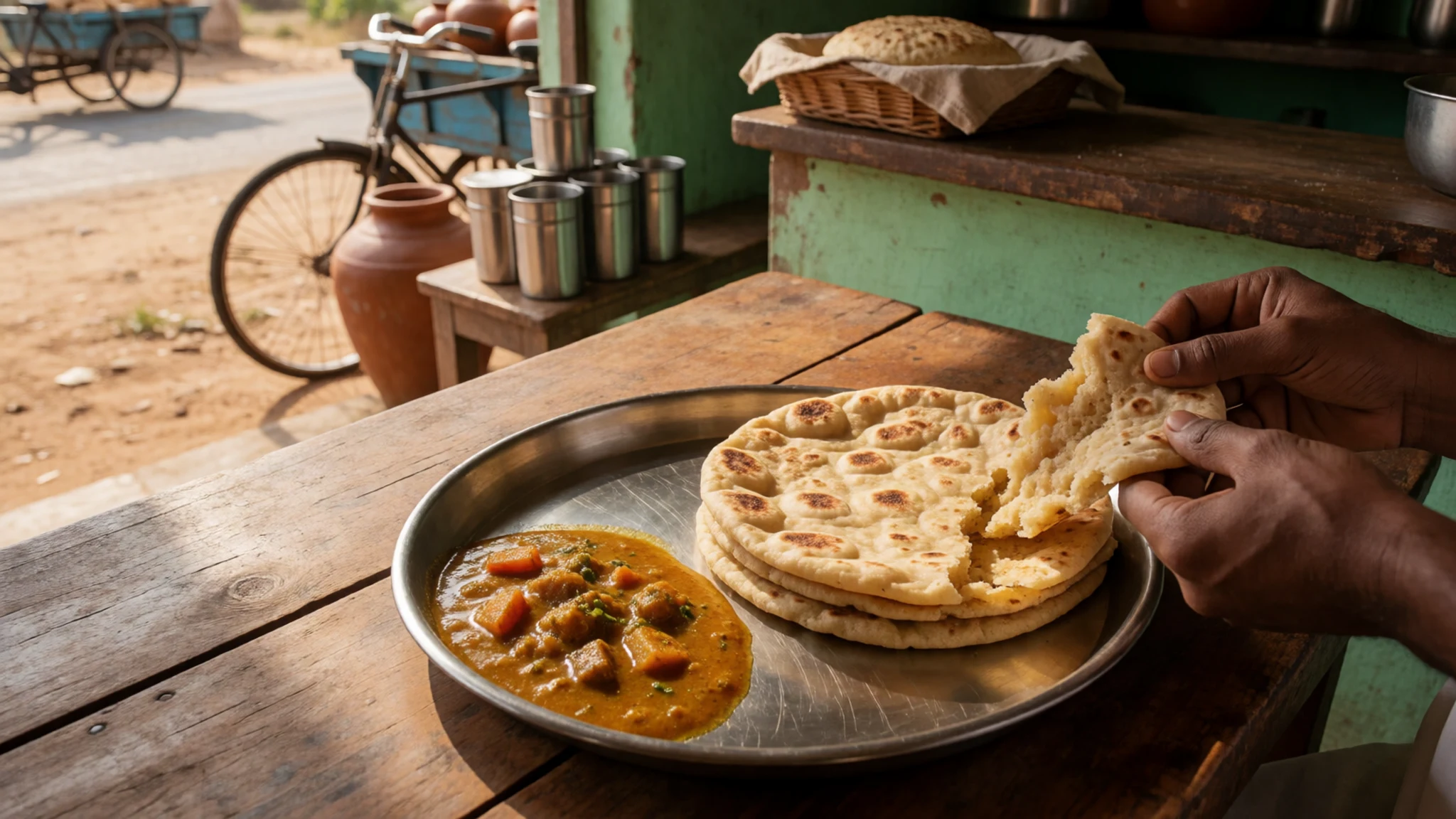
- Pulusu — Small village eateries and Warangal's local restaurants
A tangy, tamarind-based curry, known locally as pulusu or koora, often made with vegetables or fish. The sourness is what sets it apart from curries made elsewhere. Ask for the local version in any simple meals place.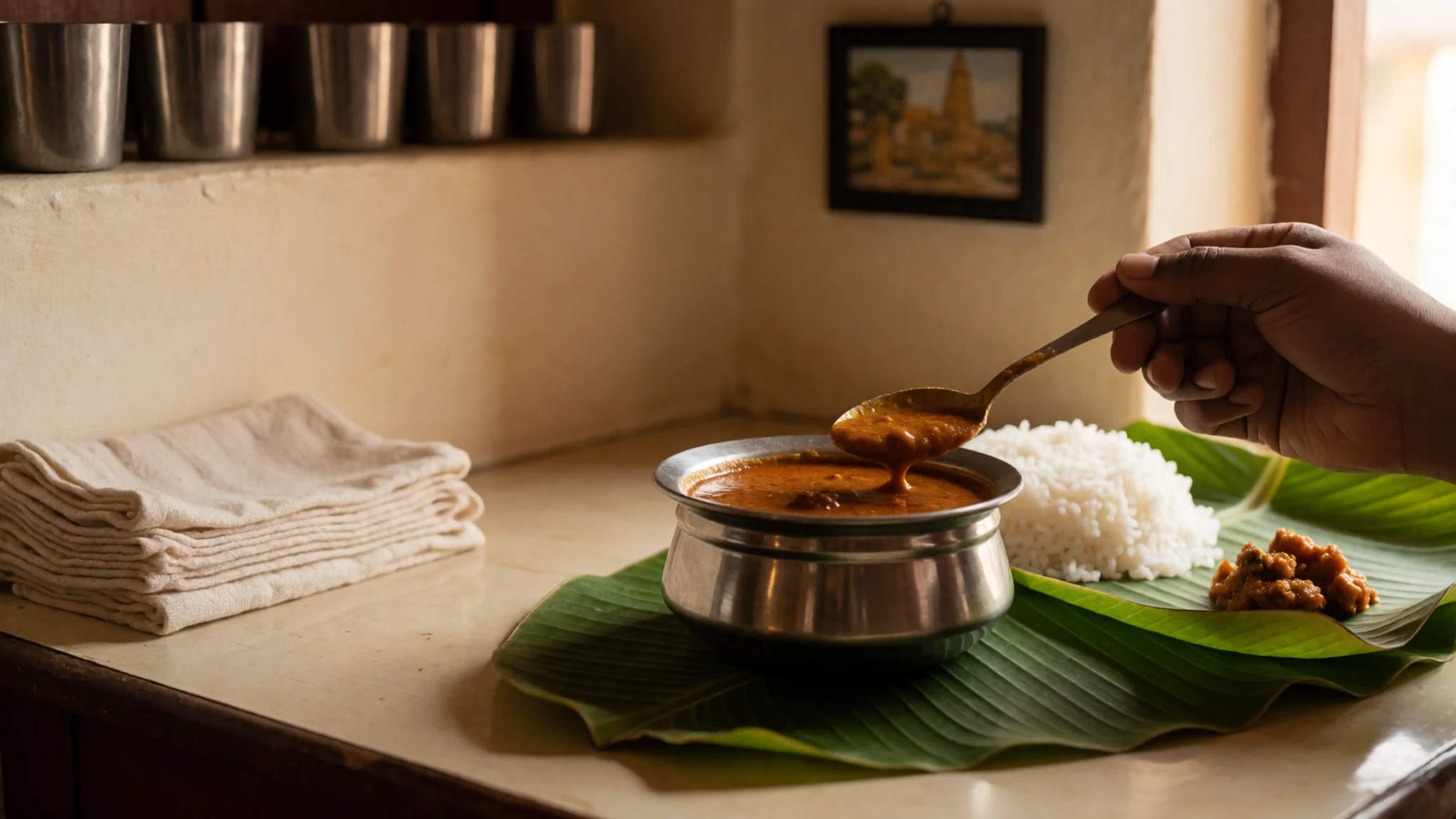
- Hyderabadi biryani — Biryani restaurants in Hyderabad and Warangal
Hyderabad is considered the birthplace of this spiced rice dish, and it is easy to find on the way to or from the temple. It is spicy, so ask for the heat level you prefer. Warangal also has good versions. - Kallu (toddy) — Licensed toddy shops in rural areas
A fermented palm sap drink sold across rural Telangana. Sweeter when fresh and stronger as it ferments, it is sold at licensed toddy shops. Try it only from a licensed seller and in small amounts. - Irani chai with Osmania biscuits — Old cafés in Hyderabad
A thick, sweet tea served with a crumbly biscuit, associated with Hyderabad's old cafés. It makes a good stop before or after the drive to Palampet.
Plan it
Best time. October to February is the most comfortable, with milder days for walking the open complex. March to June is very hot, with temperatures above 40°C, so go early if you must travel then.
How long. 1
Getting there. Fly to Rajiv Gandhi International Airport in Hyderabad, or take a train to Secunderabad or Warangal. From Warangal, the temple is reached by road in a couple of hours by taxi, car or bus; ask your driver to confirm the route.
Budget. low
Tips
- Start early to avoid heat and the weekend crowds
- Carry water and sun protection, as shade is limited
- Carry cash for small village eateries and parking
- Check the official ASI site for opening hours and any entry fee before you go
- Hire a local guide to explain the carvings and engineering
Etiquette
- Remove shoes before stepping onto the temple platform
- Ask before photographing worshippers
- Keep voices low inside the shrine
Nearby
Sources
- Wikidata Q3380656 (CC0)
- Wikipedia: Ramappa Temple (rev 1383642792) (CC BY-SA 4.0)
- Wikivoyage: Telangana (rev 5408415) (CC BY-SA 4.0)
- Master piece of ramappa temple — SukuPhotography (CC BY-SA 4.0)
- Ramappa Temple (Human Scale) — Nirav Lad (CC BY-SA 4.0)
- Ramappa Temple 6 — Rangan Datta Wiki (CC BY-SA 4.0)
- Ramappa Temple 1 — Rangan Datta Wiki (CC BY-SA 4.0)
- 13th century Ramappa temple, Palampet (130) — Ms Sarah Welch (CC0 1.0)
- 13th century Ramappa temple, Palampet (01) — Ms Sarah Welch (CC0 1.0)
- Ramappa Sculpture 036 — Tarunsamanta (CC BY-SA 4.0)
- Ramappa Temple 02 — Muralidhara Rao Patri (CC BY-SA 4.0)


