Qigu Salt Mountain
Qigu Salt Mountain, Taiwan
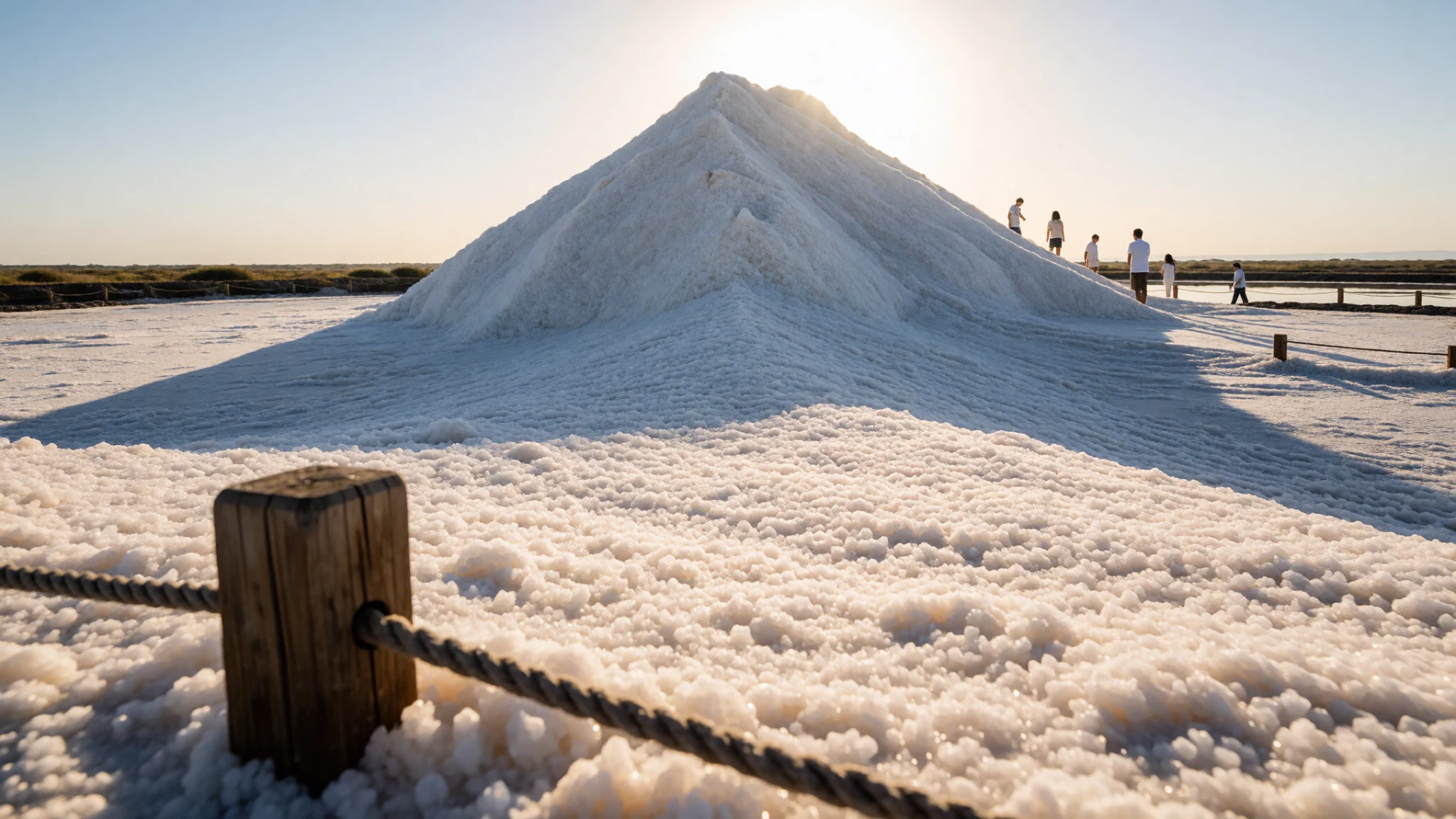
Qigu Salt Mountain is a dazzling white heap on Taiwan's flat south-western coast, an easy half-day stop beside Tainan's temples, forts and snack stalls.
The place
Qigu Salt Mountain is a white mound of salt on the low, flat coast of south-western Taiwan, in Qigu District, part of greater Tainan. Despite the name, it is a man-made heap beside old salt-making ground, and the landscape around it is as much the point as the pile itself: shallow lagoons, drained pans, mudflats and a wide pale sky with almost no shade. From the approach road the mound glows against the green of the coastal plain. Photographs show visitors climbing a worn path to the top, where changing themed displays have stood. One year's crown was a giant mushroom, and an earlier festival lantern was moved here before a typhoon brought it down. A carved stone marker near the entrance is where most people take their first photograph. This is a short, light stop rather than a day's trek, and it works best when paired with Tainan's old quarter, which lies to the south-east and holds the historic sights, temples and night markets. Expect fierce glare off the salt, heavy humidity in summer and tour-bus crowds at weekends and holidays. Salt reflects sunlight so strongly that the mound feels hotter than the thermometer suggests, and the surface can be dazzling without sunglasses. The cooler, clearer months are kinder, with a sea breeze that makes the climb and the stroll around the pans comfortable.
Its story
Qigu Salt Mountain belongs to a coastline where salt, trade and politics have been tangled together for centuries. Modern Tainan began in 1624, when the Dutch East India Company set up a base at Anping, a short way down the coast, and built Fort Zeelandia to guard a trading post on busy sea routes. Koxinga's Ming loyalists ended Dutch rule, the Qing took over after his family gave up control, and Anping later reopened to foreign merchants, who helped the area grow. When Taiwan passed to Japan in 1895, the colonial authorities ran the salt trade through the Japan Salt Company, and one of its offices and warehouses stood at what is now the Anping Tree House. That building, with banyan roots swallowing its brickwork, is the best place to feel how closely salt and Tainan's history are linked. The Salt Mountain is the later chapter. As the working salt grounds around Qigu changed, the heap and its surroundings were turned into a place for visitors, with a monument, climbing path, souvenir stalls and seasonal sculptures. It carries no grand historical weight on its own, and it is more fun if you know what lies behind it. Seen that way, the white mound is a cheerful footnote to the longer story of a coast that has been traded over, fought over and farmed for its salt.
What to see
- Qigu Salt Mountain — Qigu District, Tainan
The mound itself is a quick, bright stop. Walk the path to the top for a view over lagoons and salt pans, then look at the themed display that crowns it, which changes over time. Bring sunglasses and a hat, since the white surface throws heat and light back at you.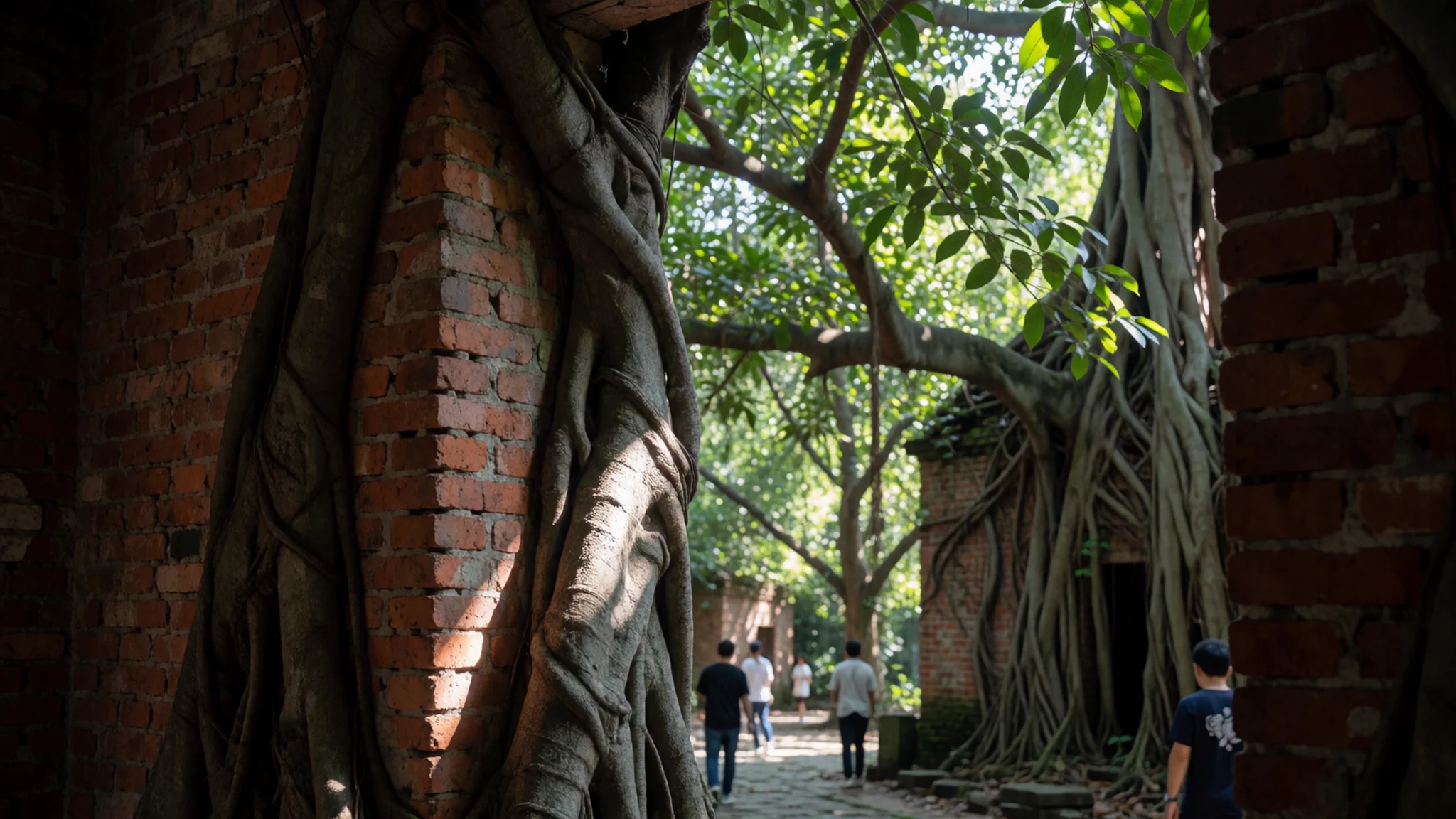
- Anping Tree House — Anping District, Tainan
A former merchant warehouse, later used by the Japan Salt Company, now wrapped in banyan roots that climb through windows and across the roof. Raised walkways let visitors look at the brickwork from above. It is the best link between Tainan's salt past and the Salt Mountain you may have just seen.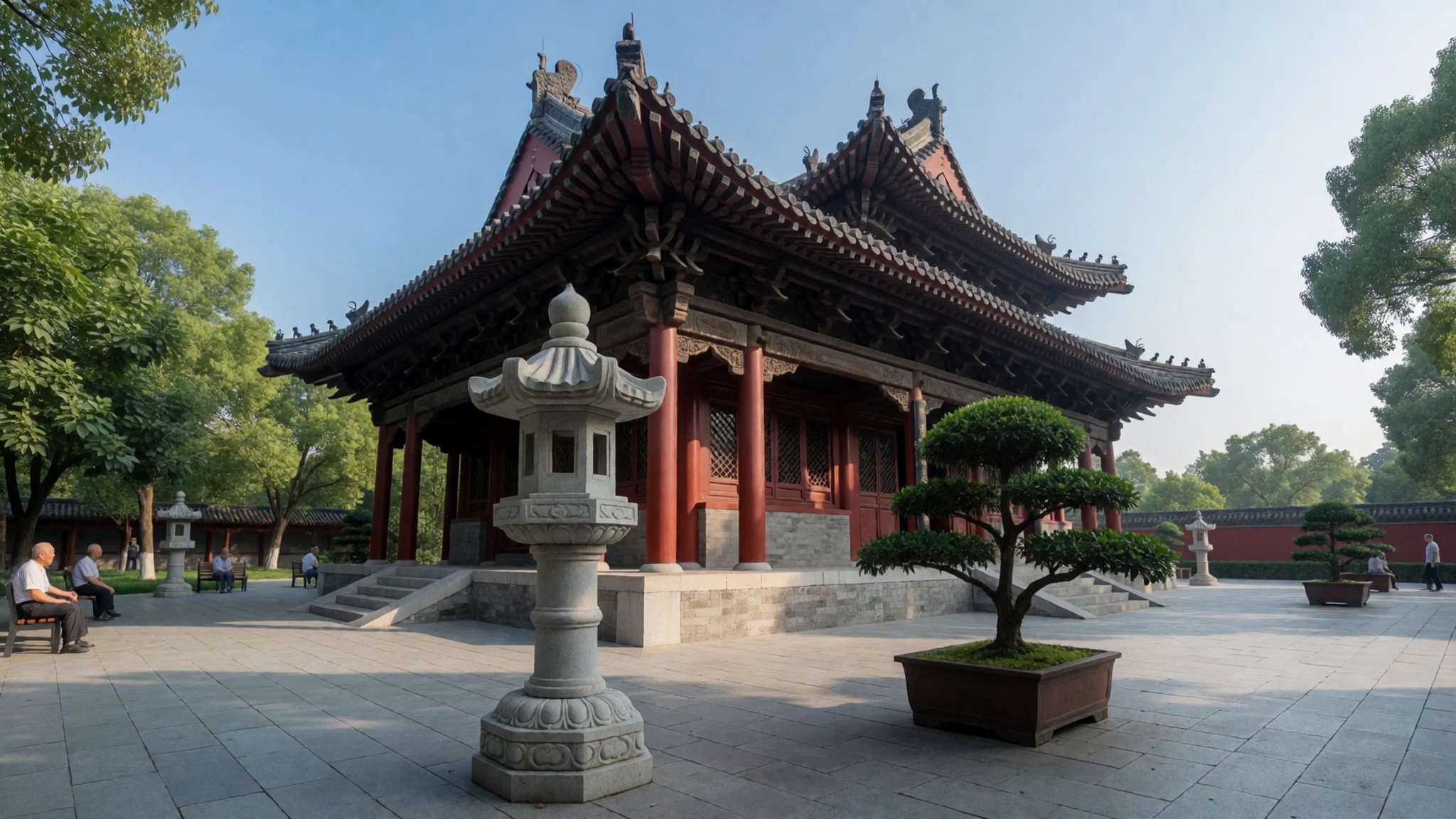
- Anping Fort — Anping District, Tainan
The site of the Dutch Fort Zeelandia, where Tainan's colonial story began in 1624. Little of the original structure survives, but the grounds, a lookout tower and exhibitions explain how Dutch traders, then Koxinga's forces, shaped the coast. Allow an hour, and note that shade is limited.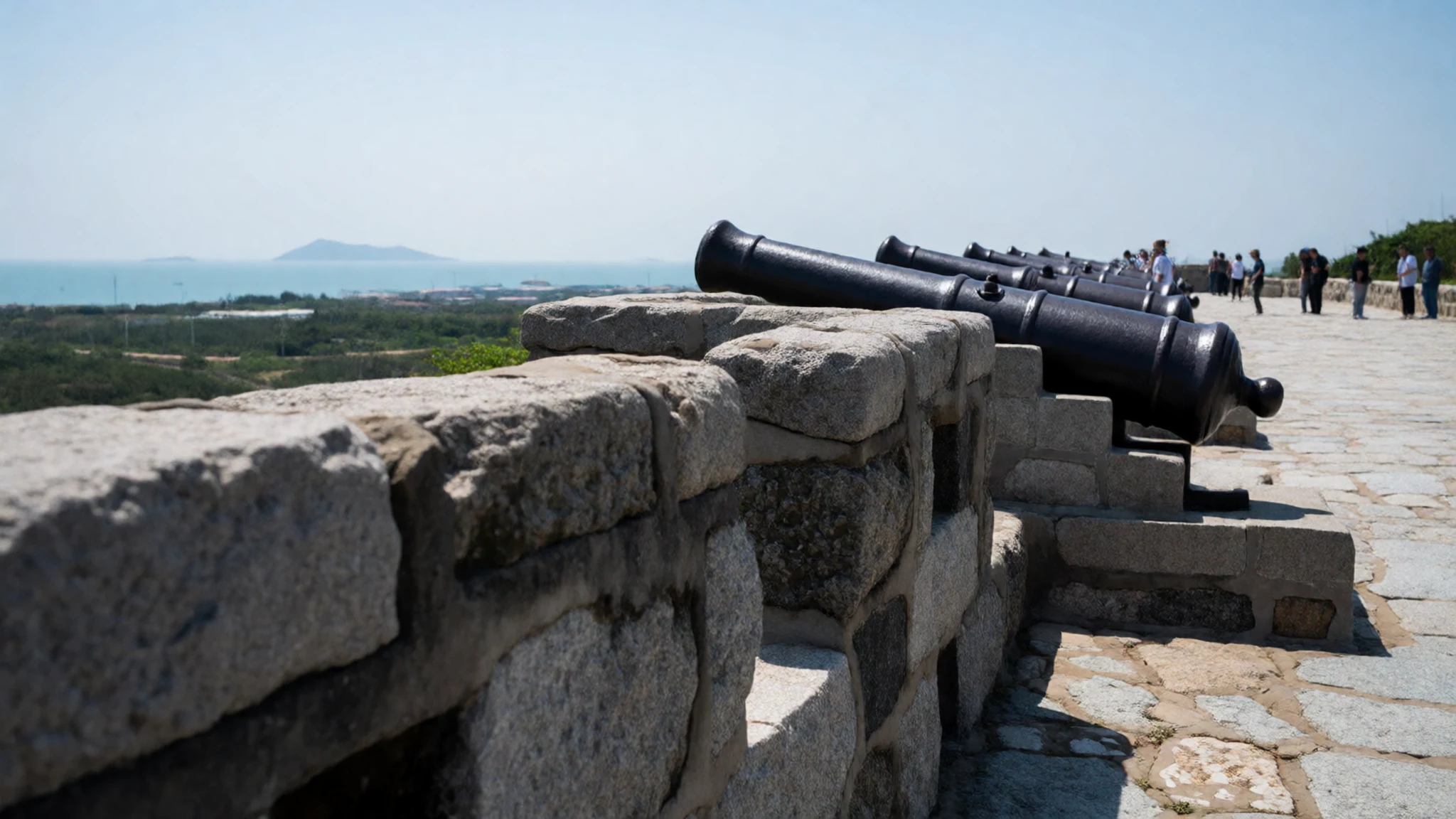
- Chihkan Tower — West Central District, Tainan
Chihkan Tower is a landmark of old Tainan, built on ground the Dutch once fortified. Its mix of Dutch foundations and Chinese-style halls shows how many hands have rebuilt it. Courtyards hold statues and stone tablets, and it makes a convenient starting point for exploring the old quarter on foot.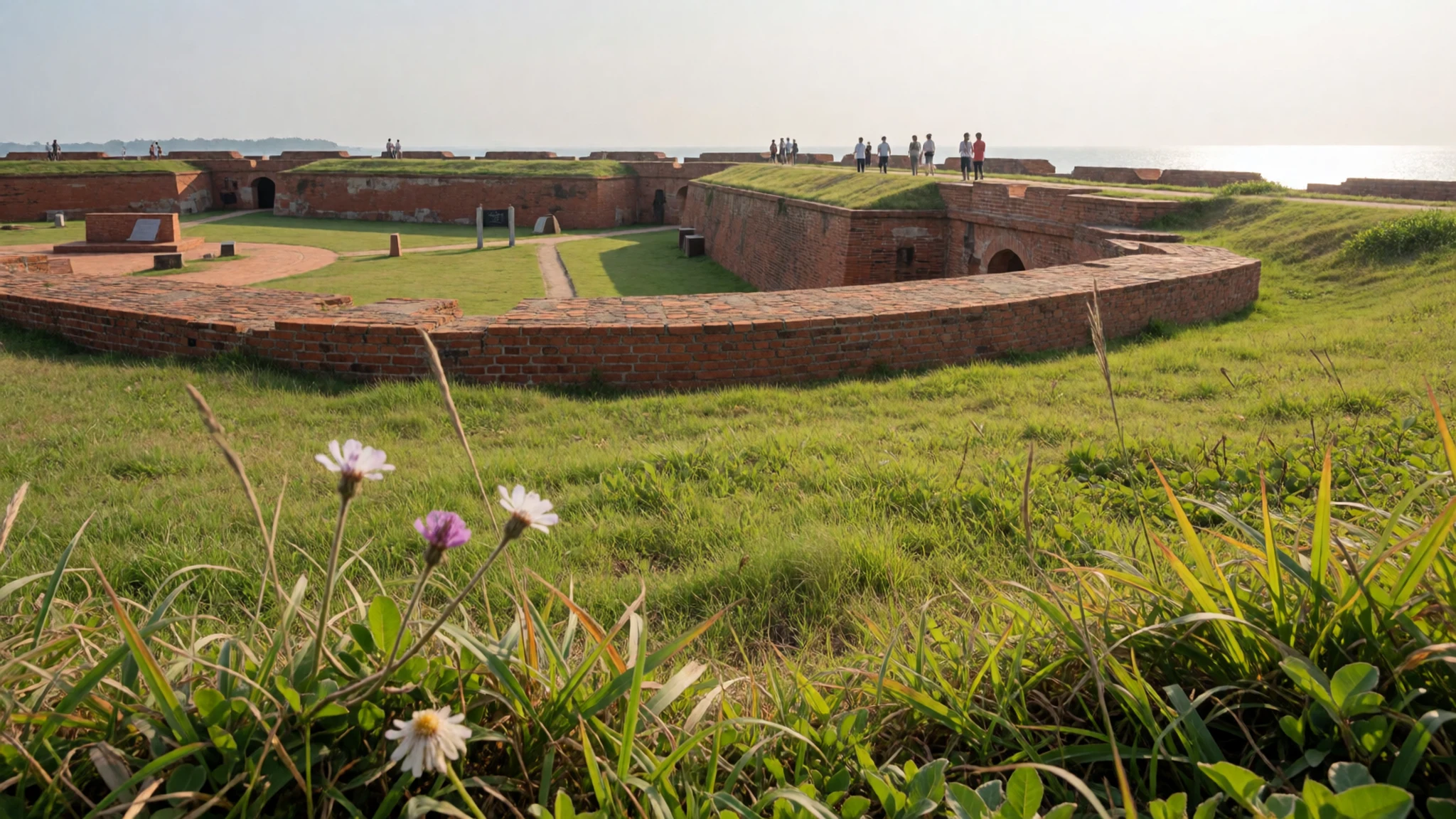
- Confucius Temple — Central West District, Tainan
A calm temple surrounded by a small park, dating from the Ming-loyalist period and long associated with learning and ritual. The architecture is restrained compared with the colourful Taoist temples nearby. It suits a quiet morning visit, and the shaded park is a welcome break from the city's heat and traffic.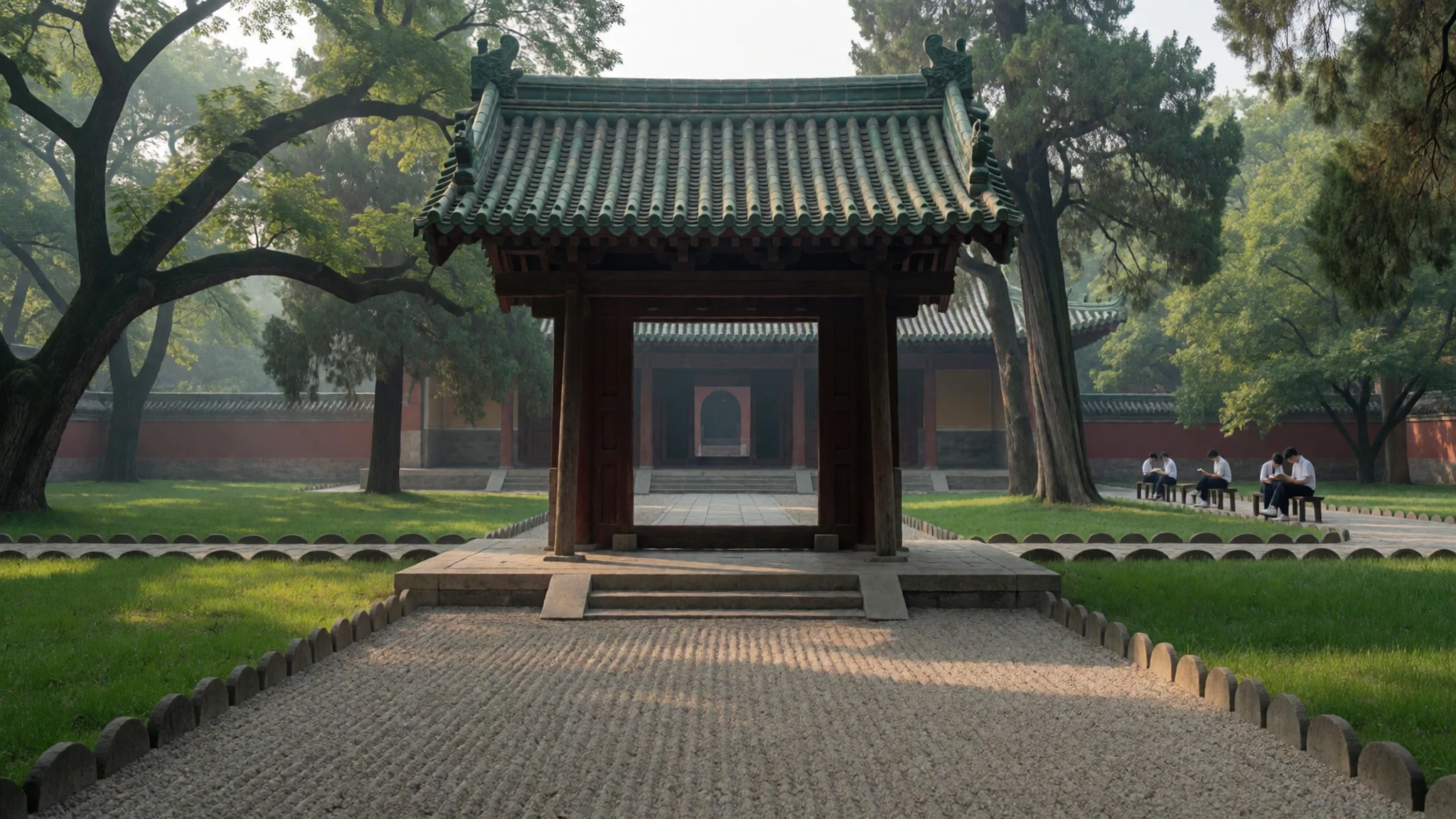
Culture
Qigu Salt Mountain sits in a part of Taiwan where everyday culture is still strongly shaped by temples, folk belief and a coastal working past. Tainan, the nearby city, is where the island's layered history is easiest to read. Dutch, Ming-loyalist, Qing and Japanese periods have each left buildings and habits behind, and the city has a deeper traditional streak than Taipei. Koxinga, the general who ended Dutch rule, is remembered locally as a folk hero and something close to a deity, with shrines in his name. Temples here often blend Taoist and Buddhist elements, with incense, paper offerings, painted guardians and statues of arhats, the Buddhist saints. Festivals are loud and communal. Processions for temple gods pass through the streets with drums, firecrackers and sedan chairs, and bangs can erupt at almost any hour, so light sleepers should not be surprised. Salt-making shaped the coast around Qigu for generations, and the white mound is partly a nod to that working landscape, now dressed up as a family outing with souvenirs, ice cream and photo spots. Food is central to social life, and the city's reputation for small dishes means a meal is usually a series of shared snacks rather than a single sit-down course. When you visit a temple, step over the threshold rather than on it, keep your voice low, and ask before photographing worshippers.
What to wear
Qigu Salt Mountain draws a mixed crowd, and clothing around it ranges from sun-protection gear to ordinary city wear. Traditional dress in Taiwan is varied. Han Chinese communities have long worn the changshan and qipao, in silk or cotton, now mostly for weddings, festivals and performances. Hakka communities are known for indigo-dyed cotton jackets, and Indigenous peoples weave patterned cloth from ramie and cotton, trimmed with beads and embroidery, and wear it for ceremonies and celebrations. Day to day, people in Tainan wear light T-shirts, shorts or thin trousers, and sandals or trainers. Sun is taken seriously, so wide-brimmed hats, sleeves that cover the arms, parasols and sun visors are common sights, especially on a white salt mound that reflects glare. Temple volunteers and older residents may dress more modestly. For a visitor, pack breathable cotton or linen, a hat and sunglasses with proper UV protection, plus sunscreen. Closed shoes with grip suit the climb, since the salt surface can be uneven and sharp underfoot, and sandals leave toes exposed to scratches. Carry a light shirt or scarf for temples, where shoulders and knees should be covered. In winter, evenings on the coast can feel cool with the wind, so a thin jacket is useful. In the summer rains a light waterproof beats an umbrella on a windy mound.
What to eat
- Dan zai mian (擔仔麵) — Old-quarter noodle shops in central Tainan
Small bowls of noodles in a savoury shrimp-based broth, topped with minced pork and a prawn. Said to have started as a fisherman's roadside snack. A portion is deliberately small, so order a second bowl or pair it with other dishes.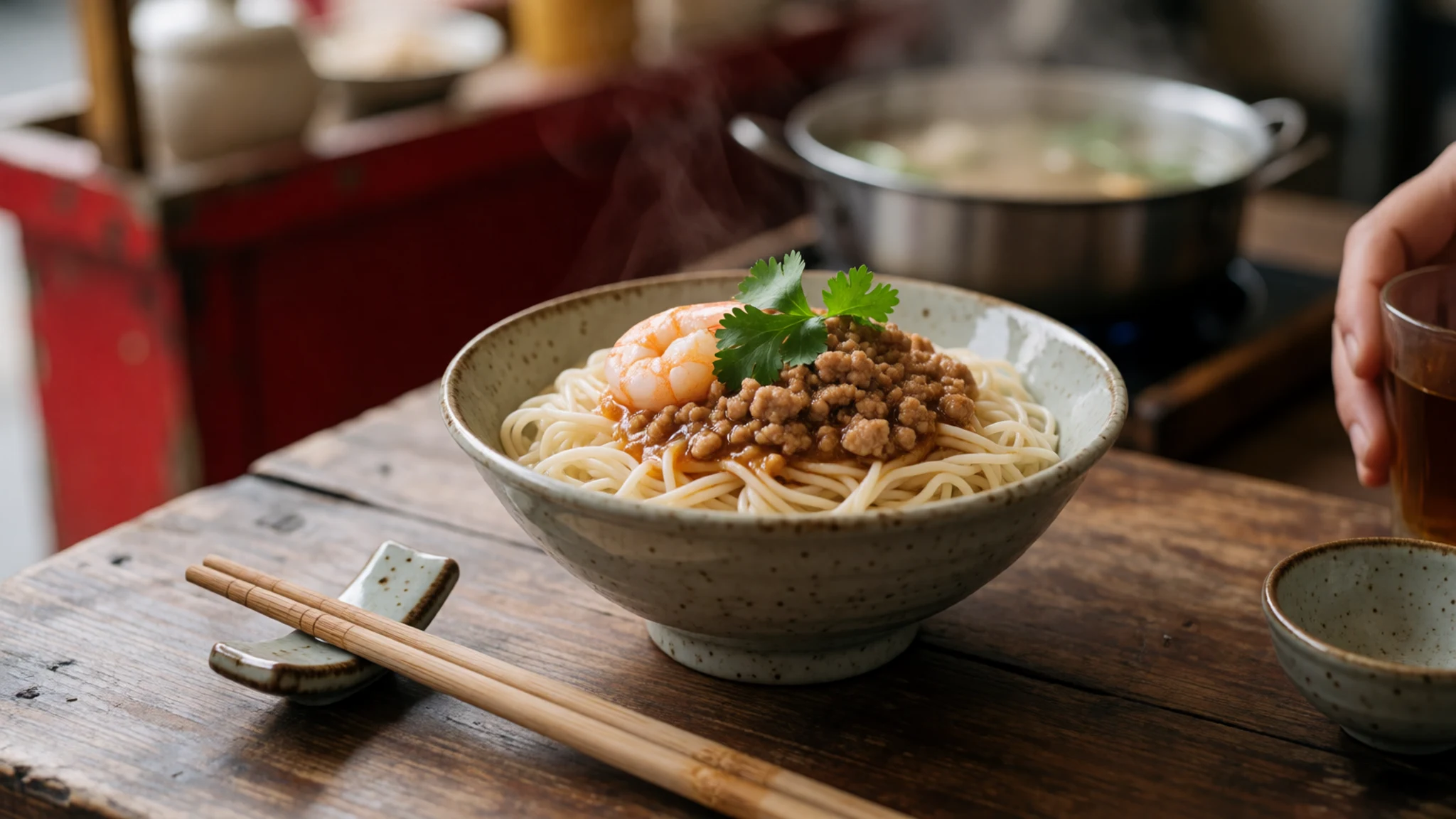
- Crab sticky rice (紅蟳米糕) — Traditional Taiwanese restaurants around the old quarter
Glutinous rice steamed with mushrooms and pork, then topped with a whole red crab. It is a celebratory dish, often served at banquets and weddings. Order it as a sharing dish for several people rather than as a single portion.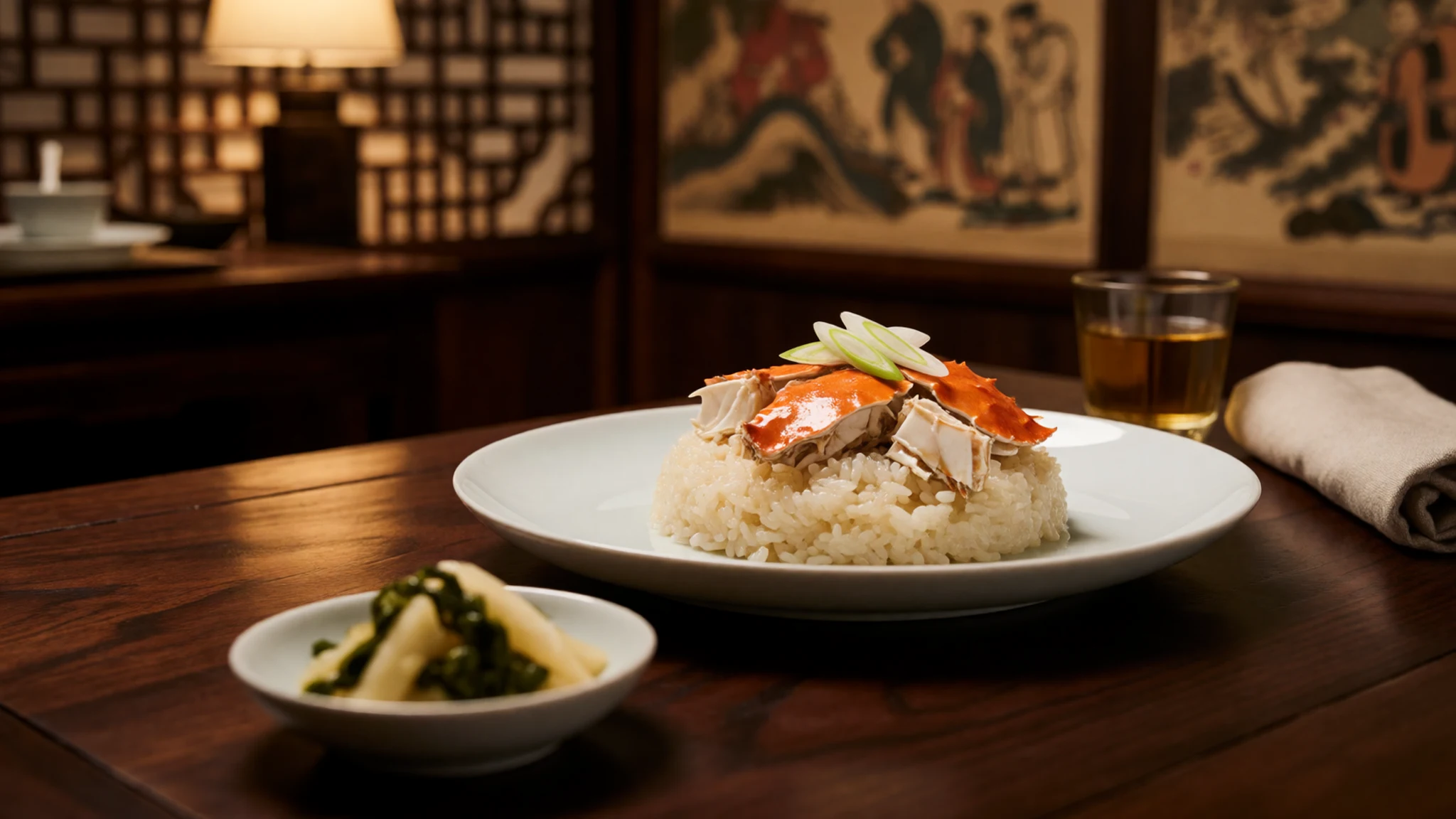
- Smoked braised meats — Specialist braised-meat shops in the old quarter
Pork and other cuts simmered in soy-based sauce and then smoked, giving a deeper flavour than plain braising. They are sold by weight, often with pickles and rice, and make a good light lunch between sights. - Night-market snacks — Garden, Da Dong and Wu Sheng night markets
Tainan is known as a city of small eats, and the night markets are where to try several in one evening: grilled skewers, fried chicken, oyster omelettes, sweet soups and iced drinks. Go hungry, arrive early and walk the full length before choosing. - Salt ice cream — Kiosks and stalls around Qigu Salt Mountain
A sweet-and-savoury scoop that plays on the local salt industry, often sold at kiosks and stalls near the mound. It is cooling after the climb. Treat it as a fun souvenir snack rather than a serious dish.
Plan it
Best time. November to March, when the south-western coast is drier, sunnier and cooler, and the long climb on the salt is comfortable. Summer is hot and humid, with typhoon risk later in the season, and the glare off the salt is harsh at midday.
How long. 1–3
Getting there. Fly to Kaohsiung International Airport or Taiwan Taoyuan International Airport, then take the high-speed rail or a regional train to Tainan; Tainan HSR Station is outside the city centre, with a local train link in. The last leg to Qigu, to the north-west on the coast, is by taxi, rental car, tour bus or a local bus from Tainan; check current routes before you set out.
Budget. low
Tips
- Go early in the morning or late afternoon, when the light is softer and the salt is not blinding
- Bring sunglasses, a hat, sunscreen and plenty of water, as shade and shops are limited
- Pair the mound with Anping and the old quarter so the trip fits a full day
- Weekends and public holidays bring tour groups, so aim for a weekday if you can
- Check the official site or local listings before you go, as opening arrangements and displays change
Etiquette
- Follow signs and paths on the mound, and do not take salt away unless it is sold as a souvenir
- Take shoes off only where asked, and cover shoulders and knees in temples
- Keep voices low in temples, and ask before photographing worshippers
Nearby
Sources
- Wikidata Q10864730 (CC0)
- Wikipedia, Tainan (CC BY-SA 4.0)
- Wikivoyage, Tainan (rev 5393005) (CC BY-SA 4.0)
- Photo: 七股盐山 - Qigu Salt Mound - 2012.02, rheins (CC BY 3.0)
- Photo: 2007 Taiwan Lantern Festival main lantern, 南瀛墨客 (CC BY-SA 4.0)
- Photo: Salt Mountain, Chigu, Tainan, Taiwan, The Erica Chang (CC BY 3.0)
- Photo: Salt Mountain in Cigu, Tainan, tommy.lan (CC BY-SA 2.0)
- Photo: Tourists climbing Qigu Salt Mountain, bangdoll (CC BY-SA 2.0)
- Photo: 七股鹽山石碑, 郭育瑋 (CC BY-SA 4.0)
- Photo: 七股鹽山 (2021 mushroom theme), 月亮灣 (CC BY-SA 4.0)


