Puerto Galera
Puerto Galera, Philippines
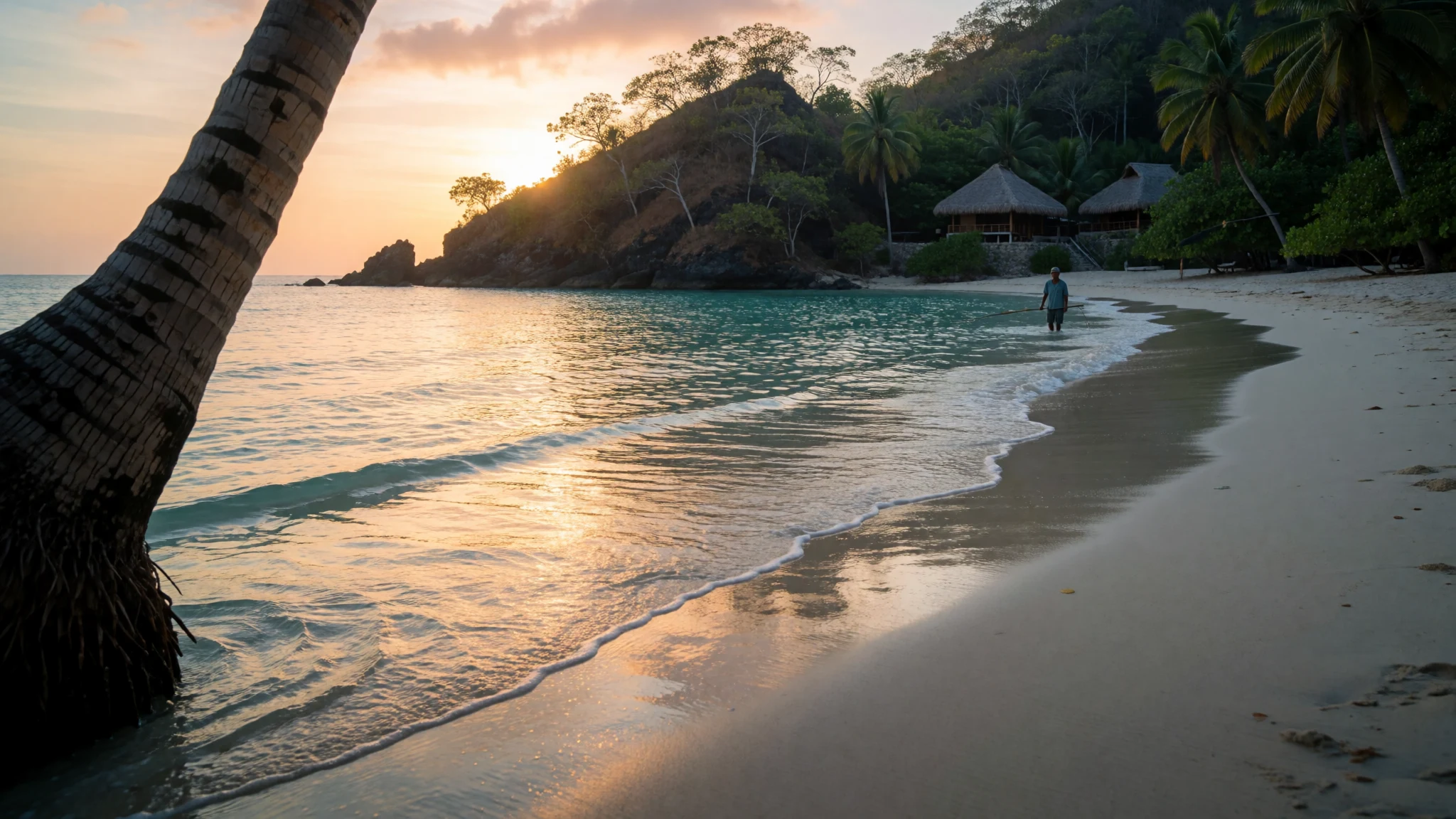
Puerto Galera packs sheltered bays, reefs close to shore and a long seafaring past into a corner of Mindoro that is reached by boat.
The place
Puerto Galera is a municipality on the north-western tip of Oriental Mindoro, the island province south of Luzon, with a population of 42,301. It sits where the Isla Verde Passage ends, roughly 130 km south of Manila and 51 km from Calapan, the provincial capital. The town is less a single centre than a scatter of bays and beach settlements. Muelle gathers around the main harbour. White Beach has its row of bungalows and bars. Sabang is the diving strip. Balatero is where the consolidated ferry port now stands. Hills rise steeply behind the coast, and the facts give 429 metres as the municipality's elevation, so the roads between bays are narrow, winding and slow. The sea, not the road, is the real entrance. Most visitors come from Manila by road to Batangas and cross by boat, and weather can rearrange a day's plans at short notice. The pull is water: calm coves, coral a short swim from the sand, and a dive trade that has operated for decades. Character changes bay by bay. White Beach is busy and loud after dark, especially at weekends and holidays. Sabang is quieter and more about the next morning's dive. Muelle is where boats, shops and eateries cluster. Calmer corners exist, but they usually mean a bangka ride or a hill walk. The municipality dates its current form to 1972, and its official website carries local notices.
Its story
Puerto Galera had a working past long before beach tourism. Its deep, sheltered bay made it a natural refuge from storms, and traders from elsewhere in Southeast Asia very probably used it, though there is no proof of any Chinese settlement. A warehouse at Muelle held supplies and black rice for trade. In April 1570 the Spaniards reached Bombon, now Batangas, and sailed on through the Verde Island Passage to this bay. They named it Puerto Galera, the port of galleons, after the ships it could shelter. Miguel López de Legazpi, the first Spanish governor-general, is tied to the early years. A garrison went up at Muelle, and watchtowers were built at Dampalitan Point to keep watch over the bay. The Spanish spent much of their effort chasing Moro raiders who were cutting into trade with Chinese merchants and local people. Those raiders proved formidable fighters and sharp negotiators, even when beaten. In 1663 the Spanish changed how the island was governed. A provincial governor, the alcalde-mayor, replaced the corregidor, and the capital moved from Puerto Galera to Baco. Through the seventeenth century, raiding badly dented the town's modest prosperity. A replica of a Spanish galera, San Miguel, now stands in the town as a reminder of the name's origin, and the harbour at Muelle still does the job that first made the place useful.
What to see
- Coral Garden — North coast
A shallow reef off the northern coast that suits snorkellers and freedivers, with coral formations in many colours and plenty of small reef fish. Sea turtles and the odd ray are reported here. Go early, when the water is calmer, and hire a boat from the nearest beach.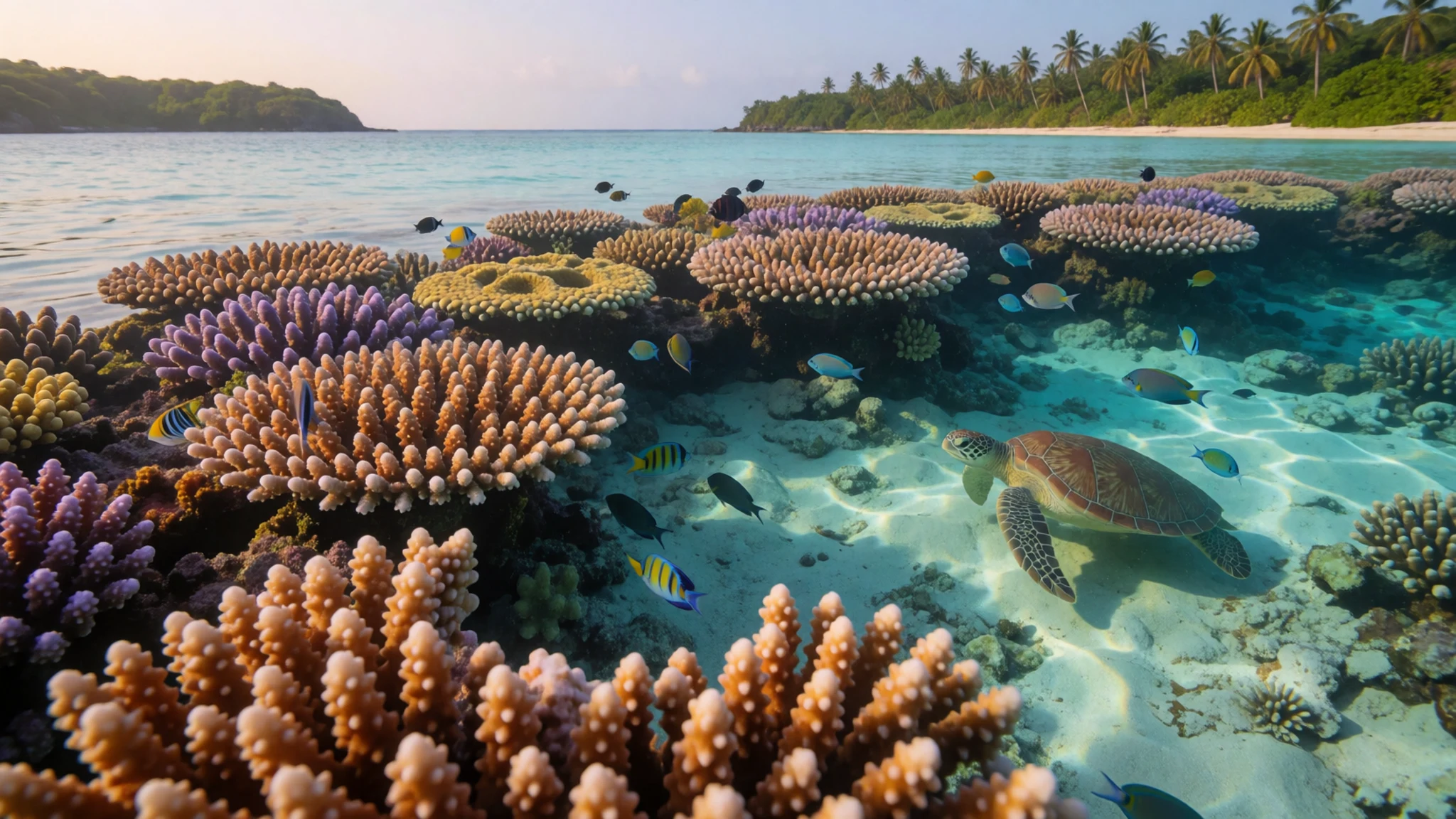
- Muelle Bay and Pier — Muelle
Muelle is the natural harbour where most boats dock, with shops, cafés and eateries along a short waterfront. At dusk, flying foxes, the giant fruit bats, leave the nearby mangroves to feed. A seat on the promenade at that hour is a good use of the evening.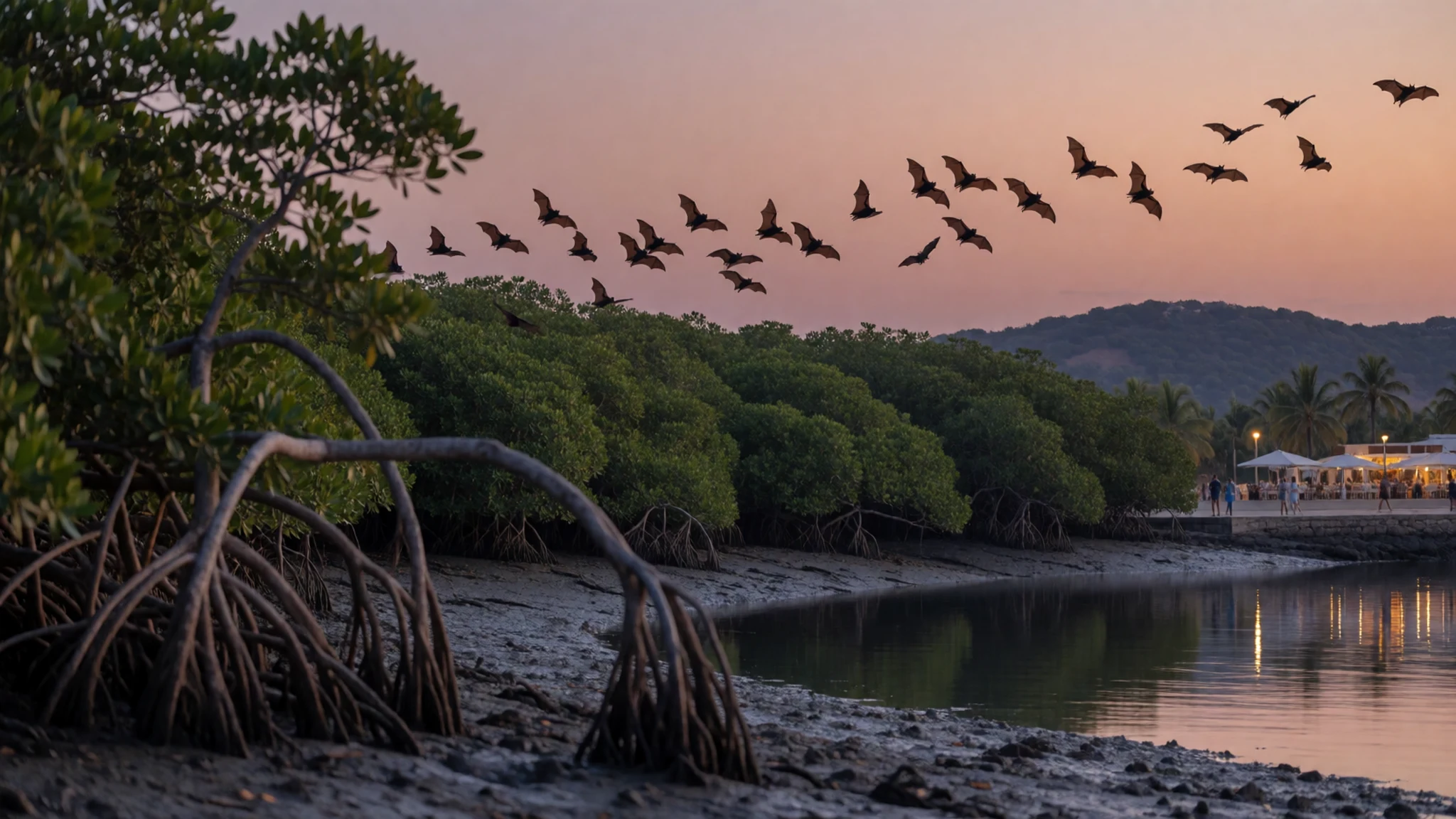
- White Beach — White Beach
The town's best-known strip of sand, lined with bungalows, bars and eateries. Mornings are calm and good for swimming. Evenings turn lively, and weekends and holidays bring crowds. The west end is generally quieter than the middle, so walk along before choosing where to stay or settle.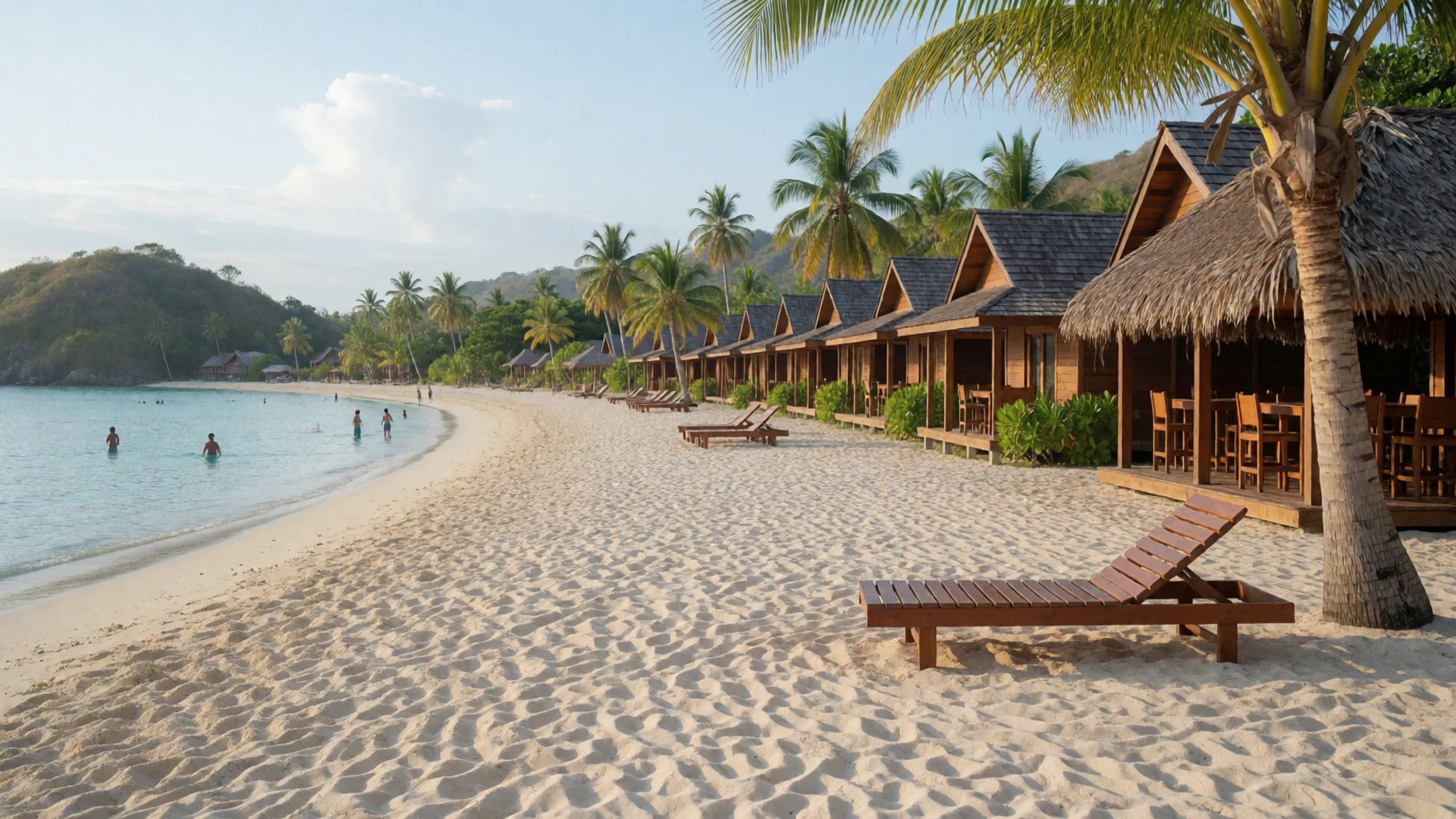
- Tukuran Falls — Inland, south of the beaches
Also called Hidden Paradise, this is a set of stepped waterfalls dropping into natural pools in thick forest. The water is cool and clear enough for a swim. It lies well south of the beaches, so plan it as a half-day excursion rather than a quick stop.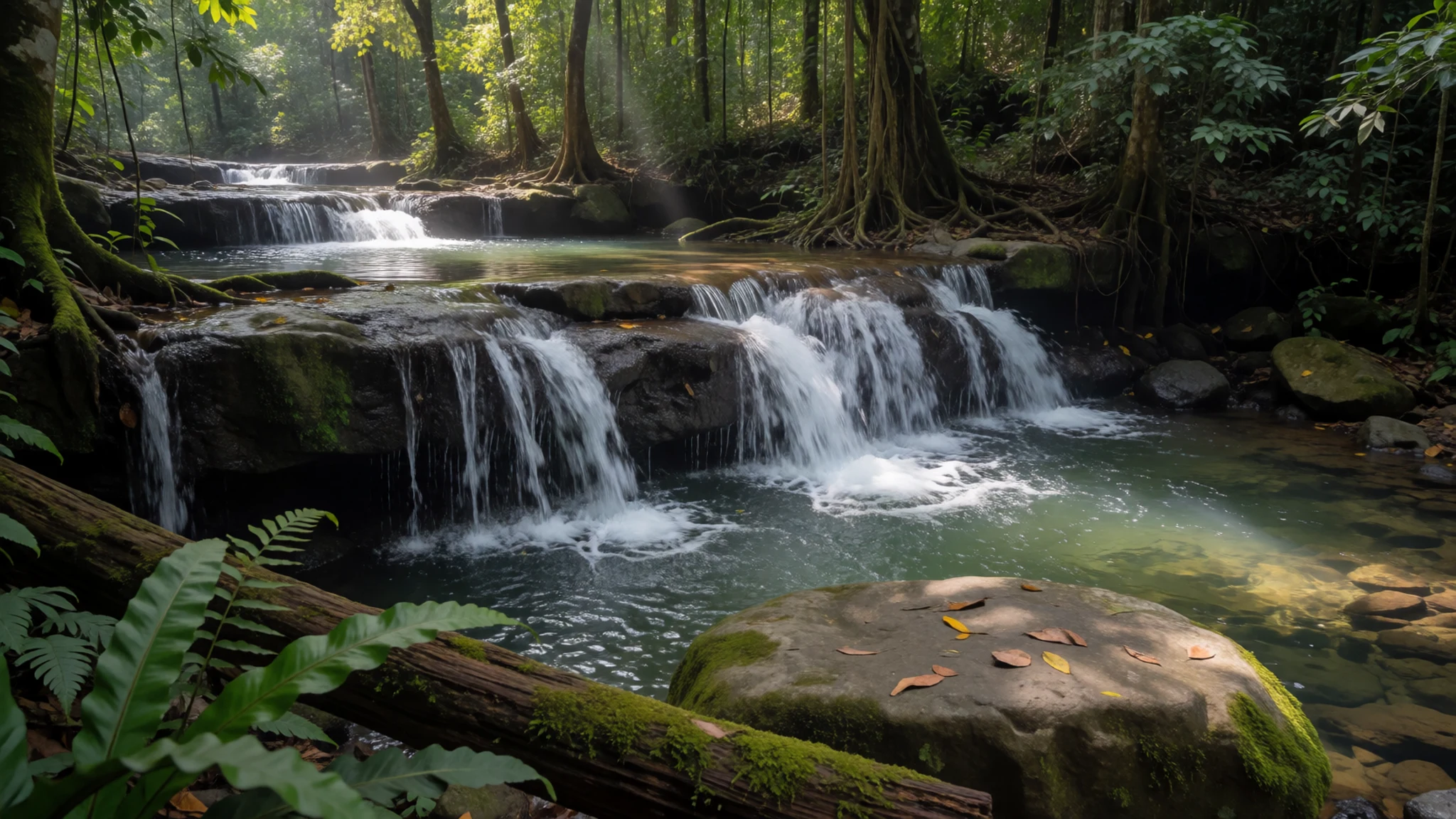
- Tamaraw Falls — Inland, south-east of town
A multi-tiered waterfall whose lower pool sits beneath a road bridge, so it is easy to reach and to swim in. The mountain water is cold after a hot day on the coast. It is a handy stop on the road between Puerto Galera and the rest of the island.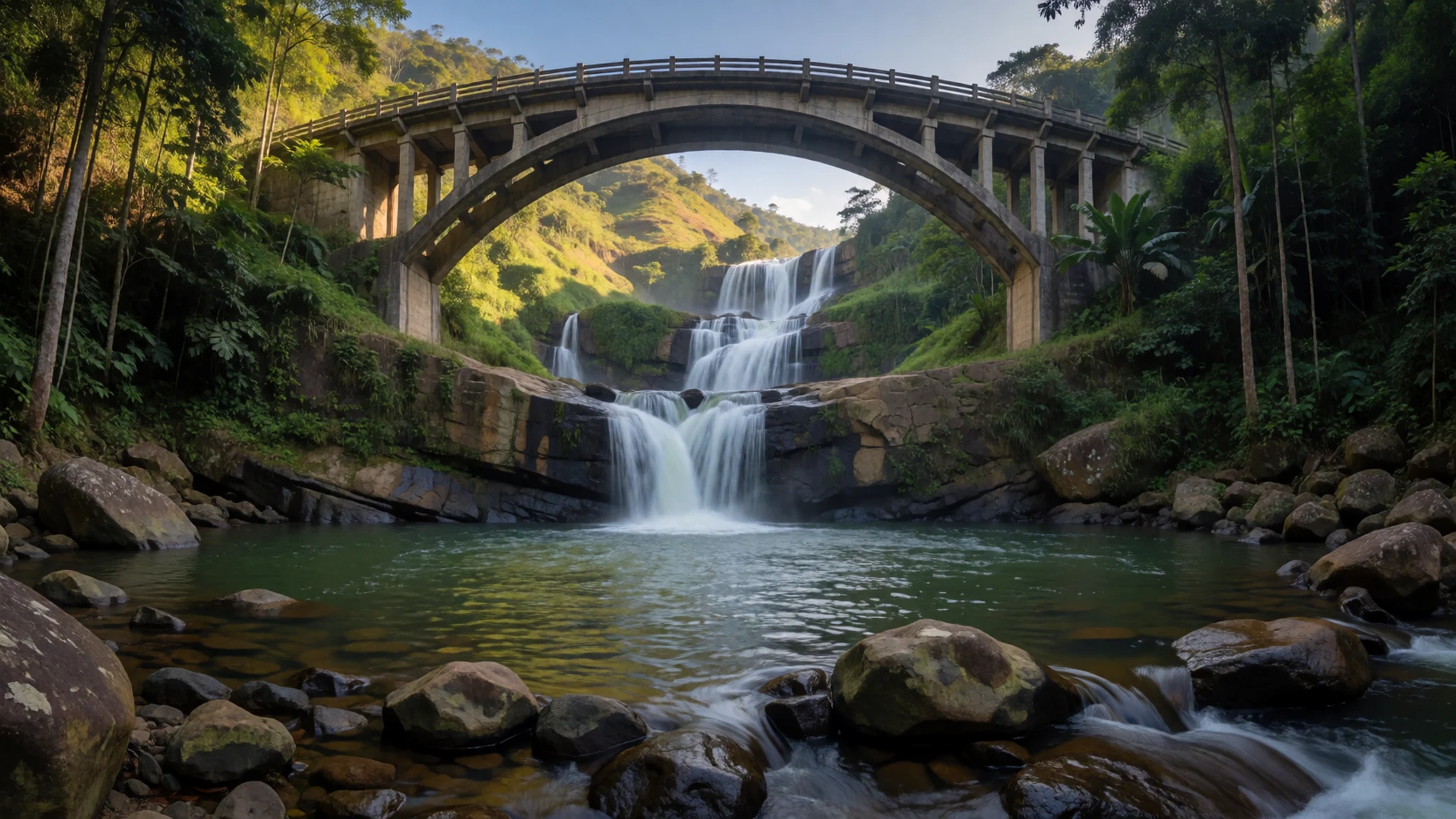
- Underwater Cave — North coast
A submerged cave on the northern coast, known for its rock formations and the marine life sheltering in them. It is a dive site, not a casual snorkel, so go with a local operator who knows the conditions and can judge the current and visibility on the day.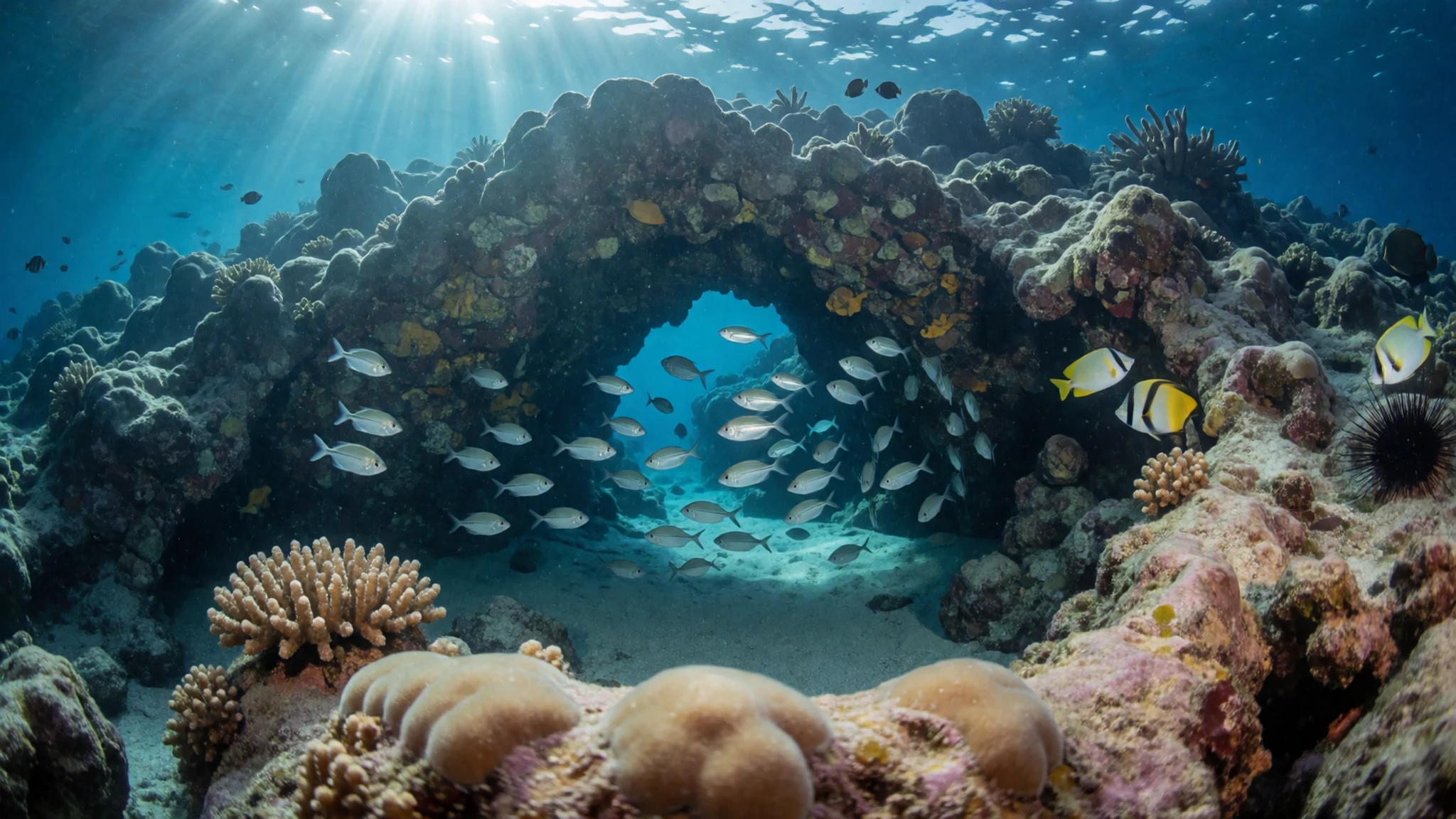
Culture
Puerto Galera is a Filipino coastal town first and a resort second, and daily life still runs on family, church and the sea. Most residents are Catholic, a legacy of Spanish rule, and town fiestas bring processions, music and shared meals that visitors are often invited to join. Mindoro is also home to the Mangyan, the collective name for several Indigenous peoples of the island's uplands, including communities in this northern part. Their languages, crafts and customs are distinct from the lowland towns, and many of their villages are not set up for tourists. Hospitality is a point of pride across the Philippines. Expect to be asked where you are from, whether you have eaten, and how you like the place. Younger Filipinos often greet elders with the gesture called mano, taking the elder's hand to the forehead, and the polite word po softens requests and answers. Tourism has shaped the beach areas, with a mix of resort workers, divers, retired expatriates and weekend visitors from Manila. Fishing boats and bangka operators still share the water with dive boats, so boat noise, anchoring and rubbish are everyday concerns for locals. Karaoke is a national pastime and can carry a long way along the beach. Ask before photographing local people, especially Mangyan visitors to town and children, and never touch or stand on coral when you snorkel or dive.
What to wear
Puerto Galera is a beach town, so clothing here is mostly about heat, salt and practicality, though older traditions sit behind it. The national formal dress is the barong Tagalog for men, a light embroidered shirt worn untucked, often in piña or other fine fibres, and the baro't saya or terno for women, with its distinctive stiff sleeves. These appear at weddings, fiestas and official occasions. Mindoro's Mangyan peoples have their own textile traditions, including woven and dyed cloth, wraparound skirts and loincloths, and baskets and belts made from forest vines. Many such pieces are now worn mainly on ceremonial days or sold as crafts. Day to day, locals wear T-shirts, shorts, flip-flops and quick-drying fabrics, and dress up a little for church and town hall business. Visitors do best with light cotton or linen, swimwear for the beach and a cover-up for walking through town, since people do not usually wander away from the sand in bare chests or bikinis. Pack a rash vest and reef-safe sunscreen, a hat, and sandals with a firm grip for wet rocks and the steep paths to waterfalls. Bring a light layer for boat crossings, where spray and wind can chill, and a dry bag for phones and cards. Smarter, covered clothes suit a church service or a fiesta meal.
What to eat
- Inihaw na isda — Open-air eateries on White Beach and near Muelle Pier
Whole fish grilled over charcoal, usually served with rice and a dipping sauce of vinegar, soy or calamansi. Look for it at open-air eateries along the White Beach strip and near Muelle Pier, where the catch comes in from local boats.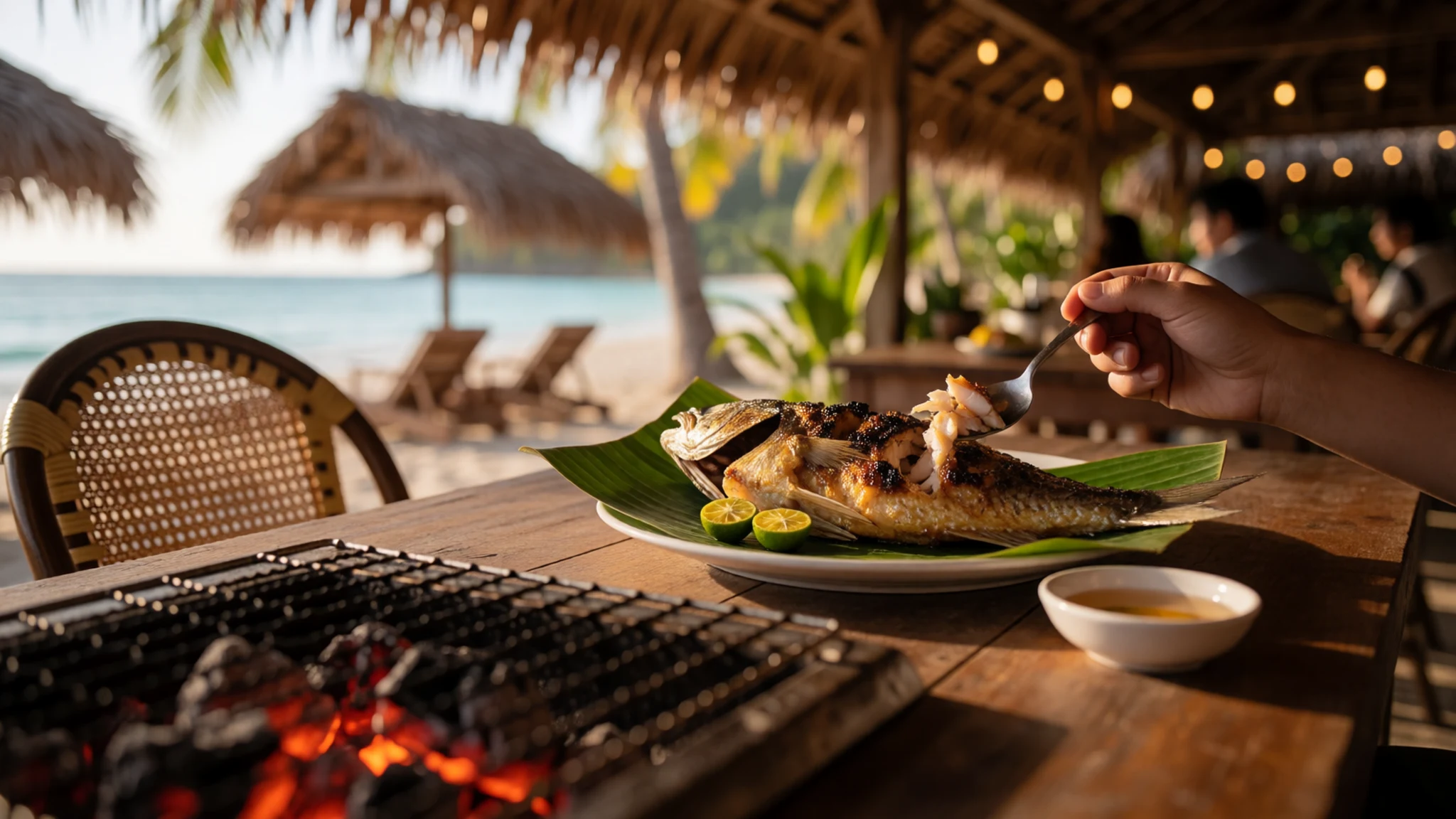
- Sinigang — Family-run eateries in the town centre
A sour Filipino soup, built on tamarind or a similar souring fruit, with vegetables and pork, fish or prawns. It is a comforting meal after a long boat day and is found at ordinary family-run eateries in the town centre.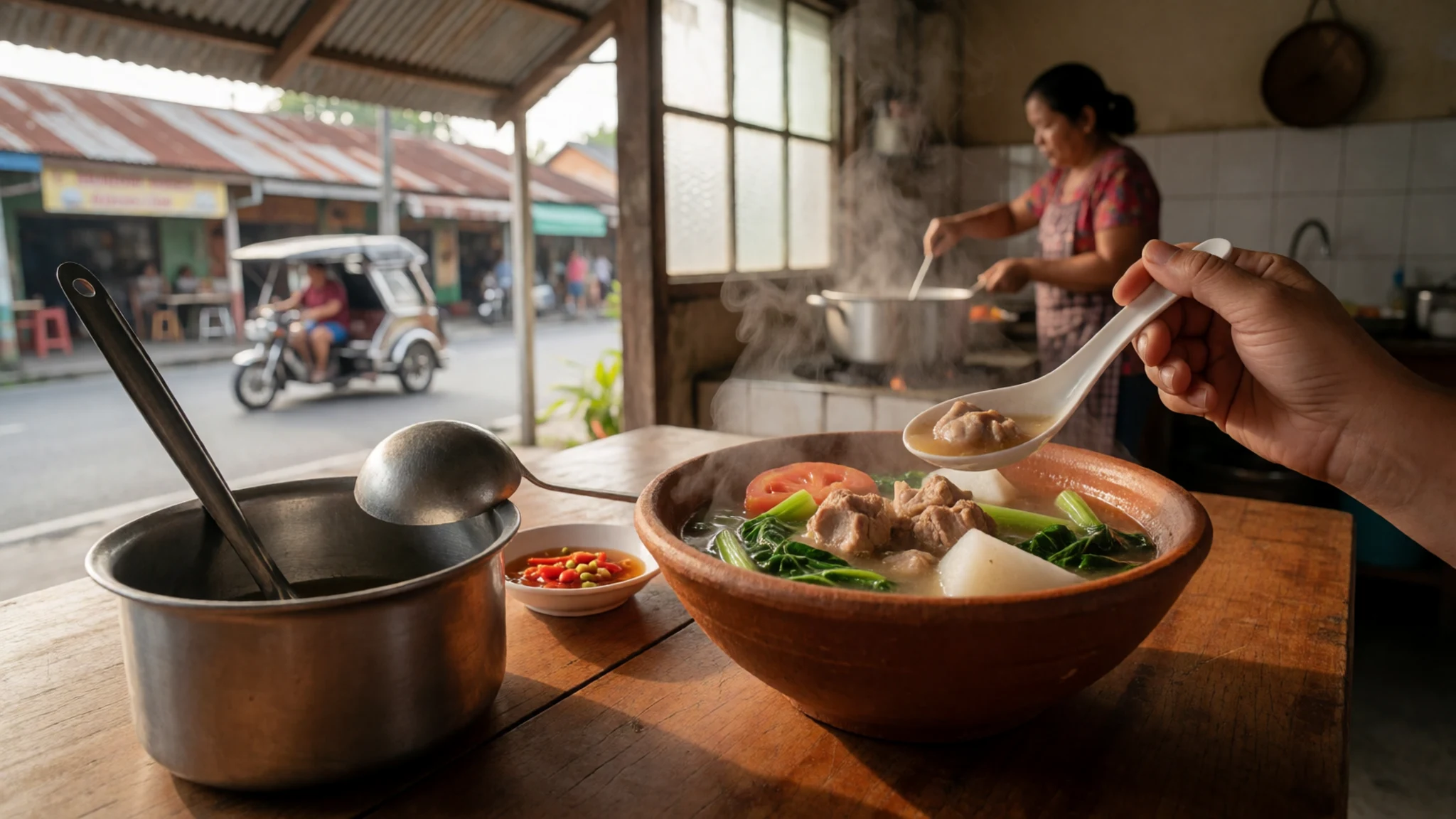
- Kinilaw — Seafront eateries at Muelle and Sabang
Raw fish cured in vinegar and citrus with onion, ginger and chilli, a Filipino cousin of ceviche. Order it only where the fish is clearly fresh. Seafront eateries at Muelle and Sabang, close to the boats, are the sensible places to try it. - Sizzling sisig — Beach bars and grill restaurants on White Beach
Chopped pork, usually from the face and ears, grilled and served spitting on a hot plate with onion and chilli. It is a bar food, so it turns up at the beach bars and grill restaurants of White Beach in the evening. - Grilled steak and sizzling plates — Casual grill restaurants around Muelle Pier
Cafeteria-style grill restaurants in town serve steaks, sizzling plates and hearty Filipino plates with rice. They are filling, simple and popular with divers after a day on the water. Many such places cluster around Muelle Pier. - Halo-halo — Stalls and cafés along the beach roads
A cold dessert of shaved ice, milk, sweet beans, fruit and jelly, often topped with ice cream or purple yam. It is the usual answer to the midday heat and is sold at small stalls and cafés along the beach roads.
Plan it
Best time. The drier months, from February to April, are the usual choice for beaches and diving, with calmer crossings from Batangas. May is the hottest month. The wettest months are October to December, which bring rougher seas and boats that can be cancelled at short notice, so leave slack in the schedule.
How long. 3–4
Getting there. Fly to Ninoy Aquino International Airport near Manila, then go by road to the port at Batangas City and take a ferry to Balatero Port, Puerto Galera's consolidated ferry port. Bangka and fastcraft operate, and there is a RoRo service. Check current sailings with the operators, as weather changes them. Resorts in Sabang may collect guests by boat. The last leg from Balatero to the beaches is a drive of about 10 km over hilly road.
Budget. mid
Tips
- Check ferry times with the operator before you travel and avoid the last sailing of the day, as weather can cancel crossings.
- Book beach accommodation ahead for weekends and public holidays, when White Beach is crowded.
- Carry cash for small eateries, boat hires and waterfall entry points, as card acceptance is patchy.
- Use reef-safe sunscreen and bring insect repellent, plus a basic medical kit for remote areas.
- Consider travel insurance that covers water sports and diving.
Etiquette
- Do not touch, stand on or collect coral, shells or marine life.
- Ask before photographing local people, and be polite when bargaining with boat operators.
- Dress modestly when walking through town or visiting a church.
Nearby
Sources
- Wikidata Q107593 (CC0)
- Wikipedia: Puerto Galera (rev 1384471298) (CC BY-SA 4.0)
- Wikivoyage: Puerto Galera (rev 5431111) (CC BY-SA 4.0)
- Photo: Una spiaggia nei pressi di Puerto Galera, Mindoro, Filippine (Paolobon140) (CC BY-SA 4.0)
- Photo: Muelle Port, Puerto Galera, April 2023 (Ralff Nestor Nacor) (CC BY-SA 4.0)
- Photo: Flag of Puerto Galera, Oriental Mindoro (Municipal Government of Puerto Galera) (Public domain)
- Photo: San Miguel (Spanish galera) replica, April 2023 (Ralff Nestor Nacor) (CC BY-SA 4.0)
- Photo: Port of Puerto Galera, April 2023 (Ralff Nestor Nacor) (CC BY-SA 4.0)
- Photo: White Beach in Puerto Galera (seav) (CC BY-SA 1.0)
- Photo: Fish in anemones in Puerto Galera (Firth McEachern) (CC BY-SA 4.0)
- Photo: Sailboat, Muelle Bay, Puerto Galera (André Héroux) (CC BY 3.0)


Wildlife
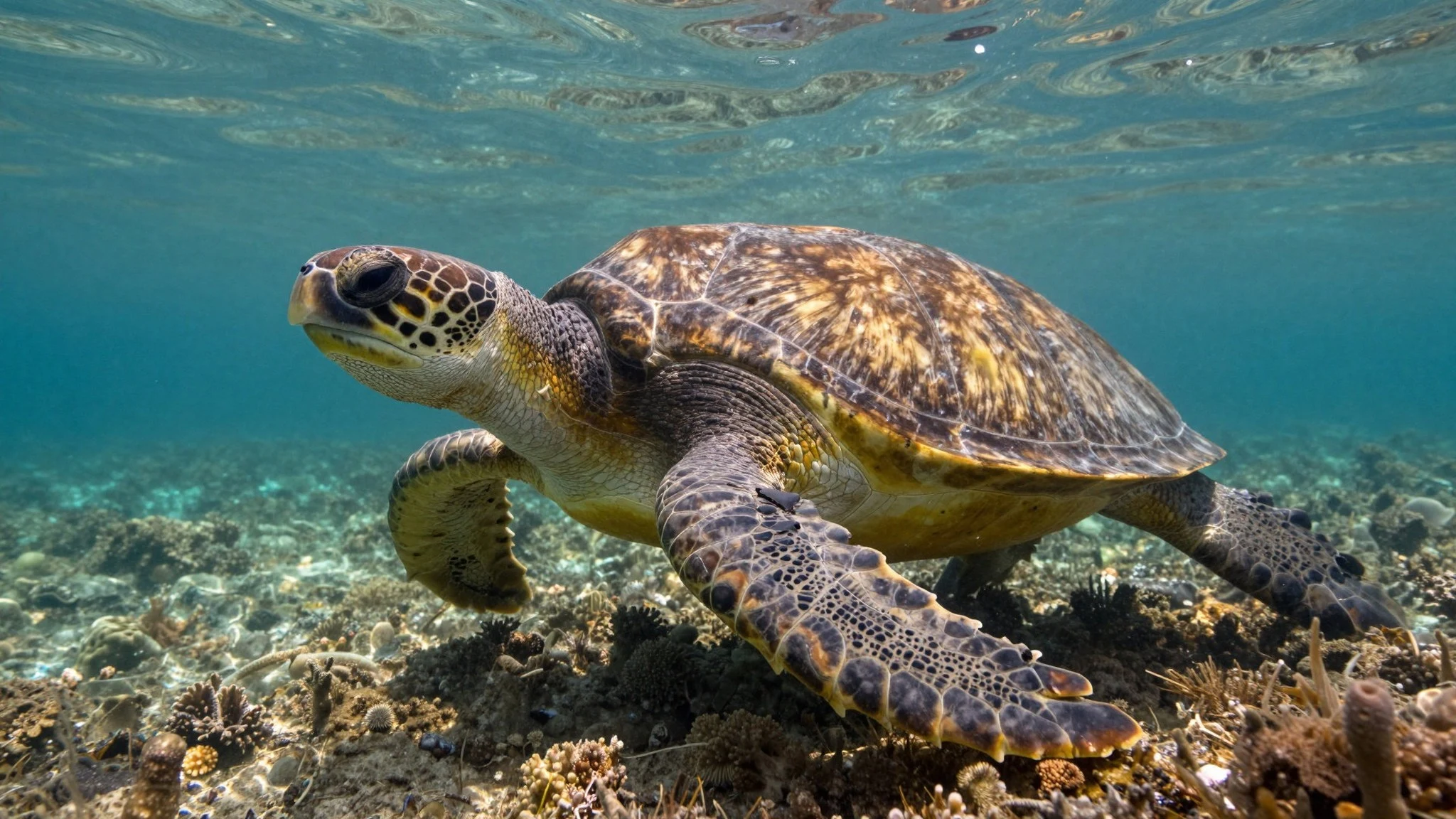
- Sea turtle (animal)
The green sea turtle is a big, gentle swimmer named for the green fat under its shell, not for the shell itself, which ranges from olive through to black. It eats nothing but seagrass. Sea turtles are reported around Puerto Galera, though exactly where and when is not recorded, so ask locally. To watch well, keep a respectful distance, stay calm and quiet, go with a local guide, and never feed it; living on seagrass, it needs nothing from you.