Pu Mat National Park
Pu Mat National Park, Vietnam
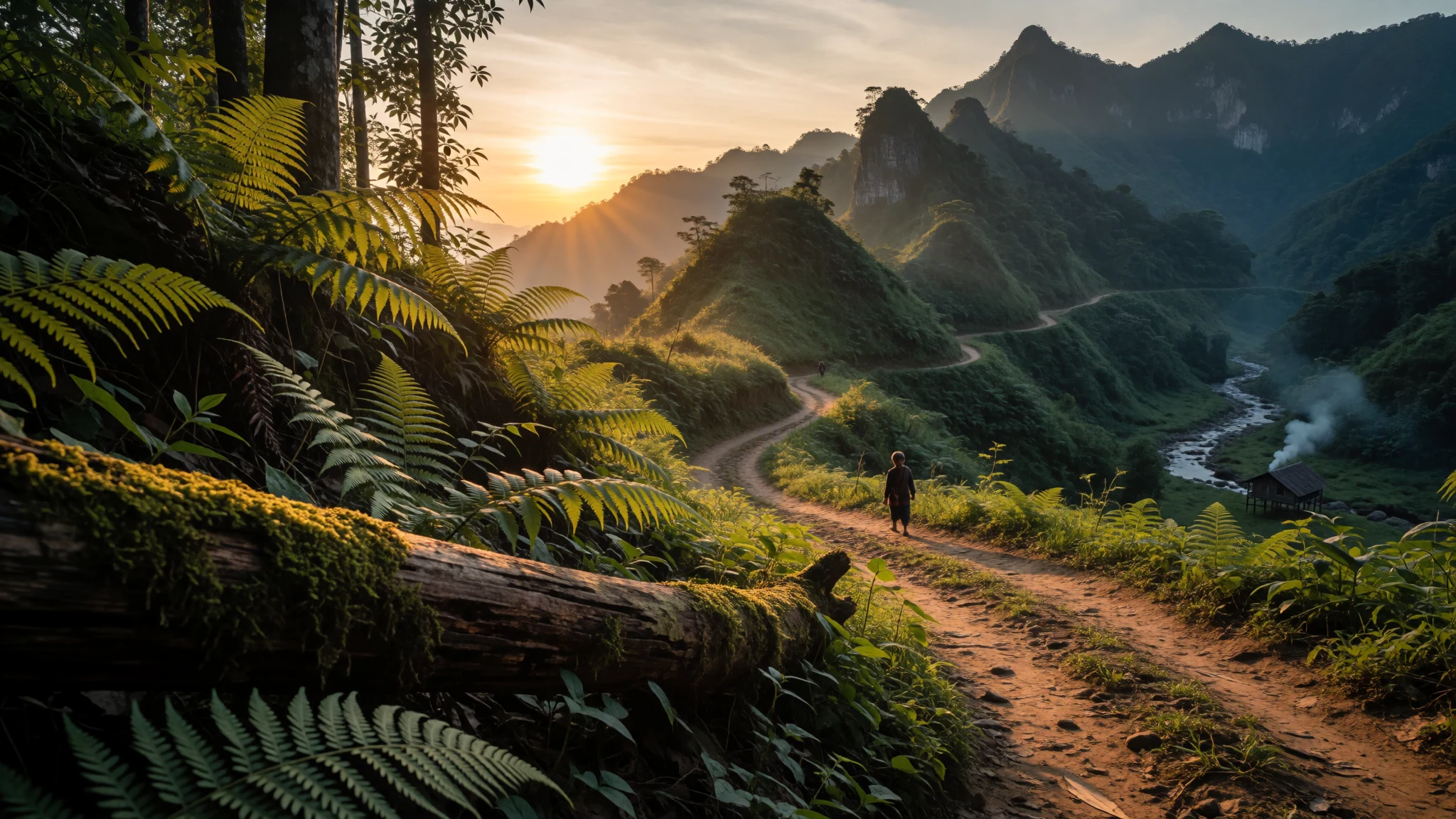
Pu Mat National Park offers quiet forest walking, river valleys and Thai village life in western Nghệ An, far from Vietnam's busier circuits.
The place
Pu Mat National Park sits in Nghệ An Province, on Vietnam's North Central Coast, where the land climbs west from the coastal plain towards the Lao border and the long spine of the Annamite Range. The park is one part of the Western Nghệ An Biosphere Reserve, so it is better read as the core of a larger protected landscape than as an island of forest. It covers 94,804 hectares across three districts: Tương Dương, Con Cuông and Anh Sơn. Most of that is strictly protected, with smaller zones set aside for ecological recovery and a wide buffer where people farm and live. The name comes from the Thai language and means "high slope", which suits the terrain: steep forested ridges, narrow valleys and clear streams feeding the rivers below. Cloud often sits on the tops in the cooler months. This is not a park of car parks and boardwalks. Facilities are modest, trails are mostly forest tracks or river routes, and a visit usually runs through the town of Con Cuông and the villages around it. The people here are largely ethnic Thai, with other upland groups nearby, and their stilt houses and farming calendar are part of what the landscape looks like. Walkers, birdwatchers and waterfall-seekers come for quiet, and should expect humidity, leeches in wet weather and patchy phone signal.
Its story
Pu Mat National Park has a short official history and a much longer human one. Upland communities, including the Thai farmers who named these high slopes, have lived, hunted and cultivated along the valleys for generations, drawing on the forest for timber, bamboo, medicine and food. The modern park began as a preservation zone, a status meant to limit felling and hunting. On 8 November 2001 the Prime Minister of Vietnam signed Decision 174/2001, which upgraded the zone to a national park. That change mattered because a national park comes with a management board, defined core areas and a duty to keep wildlife and forest intact. The park later became part of the Western Nghệ An Biosphere Reserve, a wider arrangement that tries to balance conservation with the livelihoods of people living in the buffer lands. The tension is real. Villages near the boundary depend on land and forest products, while park rules restrict what can be cut or hunted. Patrols, community forestry and small-scale visitor programmes are the usual attempts at a compromise, and how well they work differs from place to place, as in many Southeast Asian reserves. The district has also long been remote from the coast and its main roads. That distance is part of why a good deal of forest survives, and part of why a visit still feels unhurried.
What to see
- Annamite ridgelines — Western Nghệ An, park uplands
The forested ridges of the Annamite Range are the park's defining view, rolling away in layered greens with cloud caught in the folds. Clear mornings after rain give the best outlook. Go with a local guide, since tracks fork, markers are few and the terrain is steeper than it looks.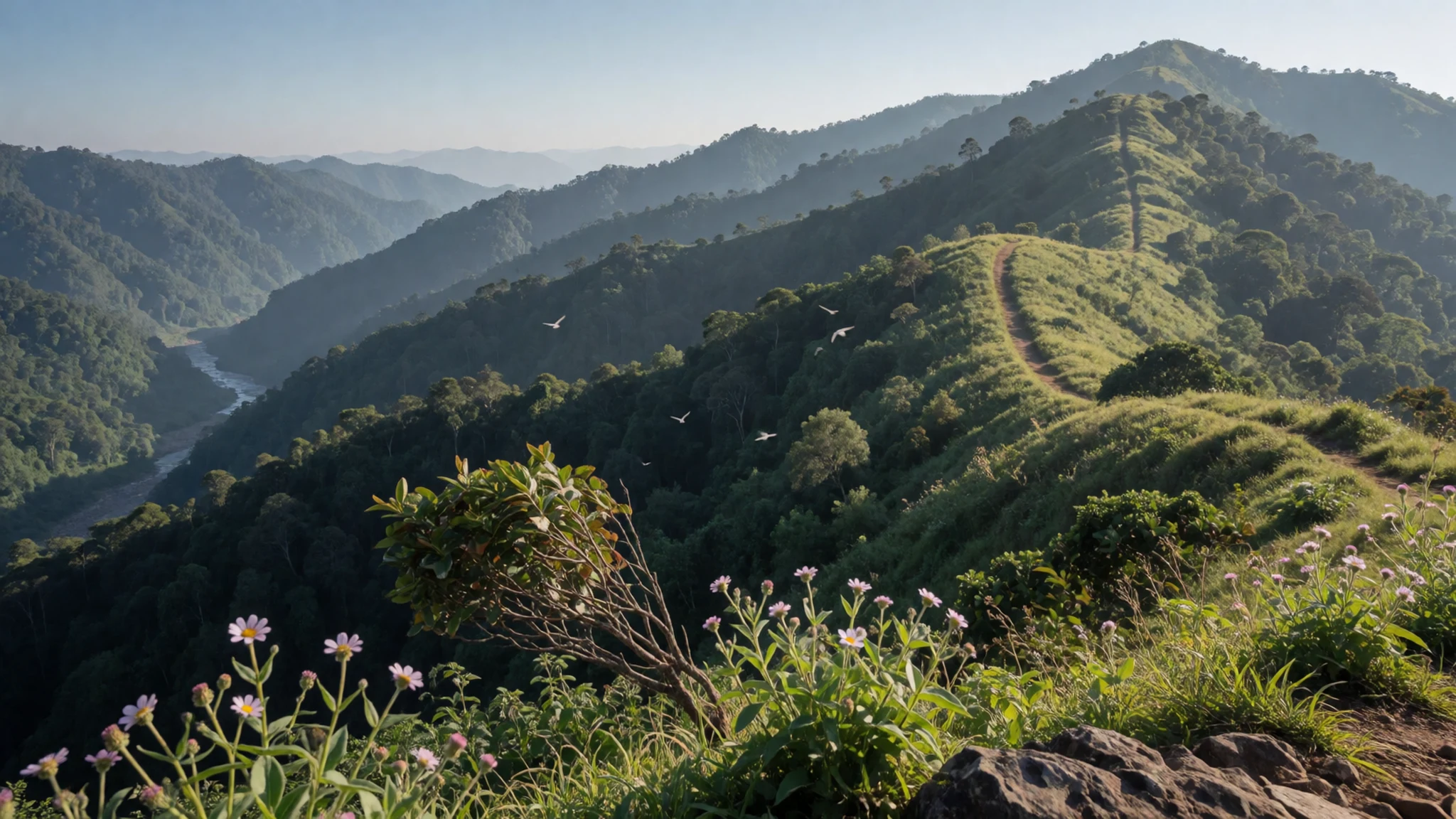
- Khe Kèm — Con Cuông district
Khe Kèm is a stream area on the Con Cuông side of the park, known for cascades and shaded pools reached on short forest paths. It suits an easy half-day. Rocks are slippery after rain and water levels can rise fast, so ask locally before wading or swimming.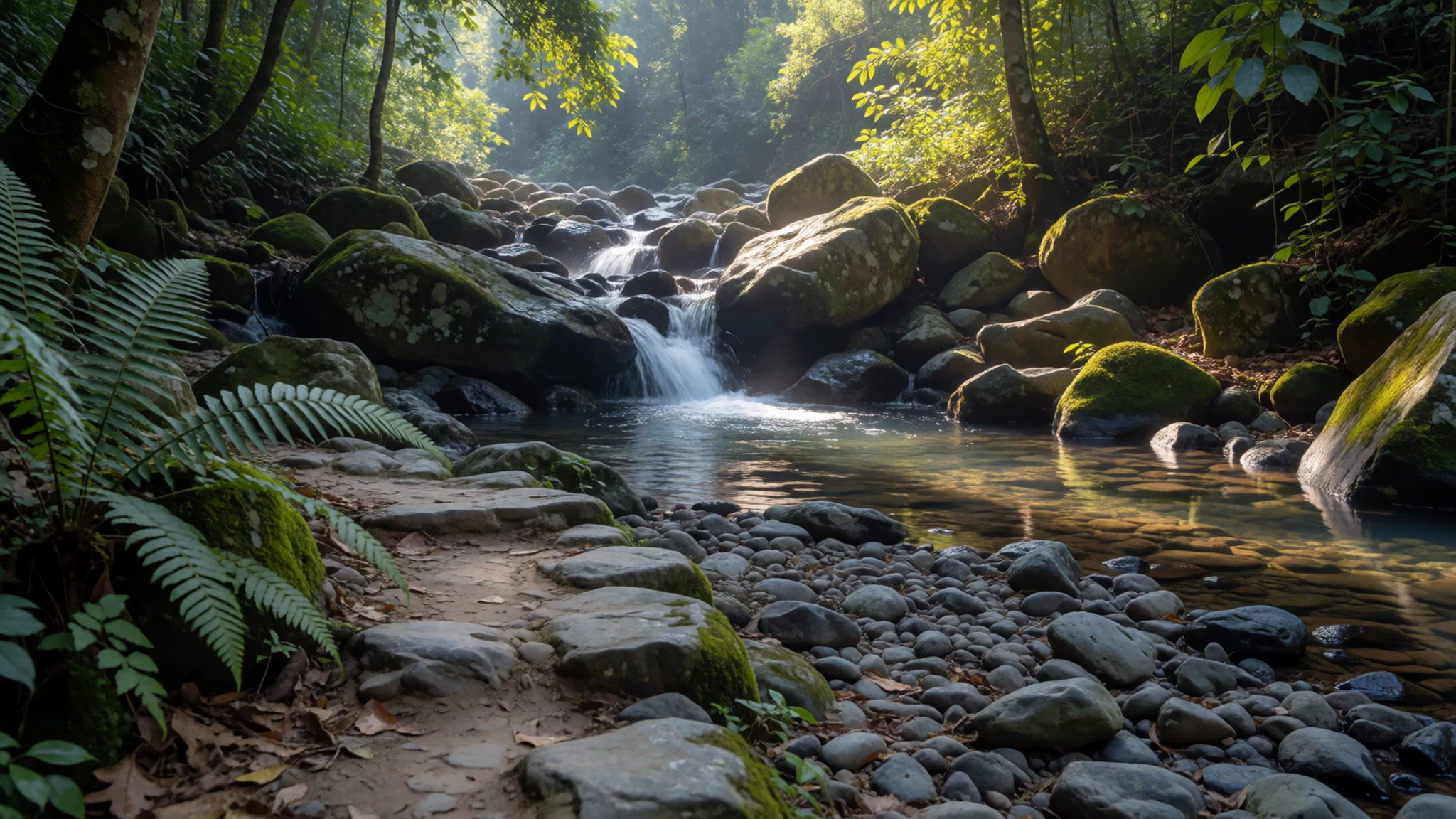
- Thai villages around Con Cuông — Con Cuông district
Stilt-house villages along the valley floors show how the park's neighbours live: rice fields, fish ponds, woven baskets, and looms under the houses. Some families run homestays. Arrange visits through a guide or the park office so that the benefit stays local and nobody is surprised.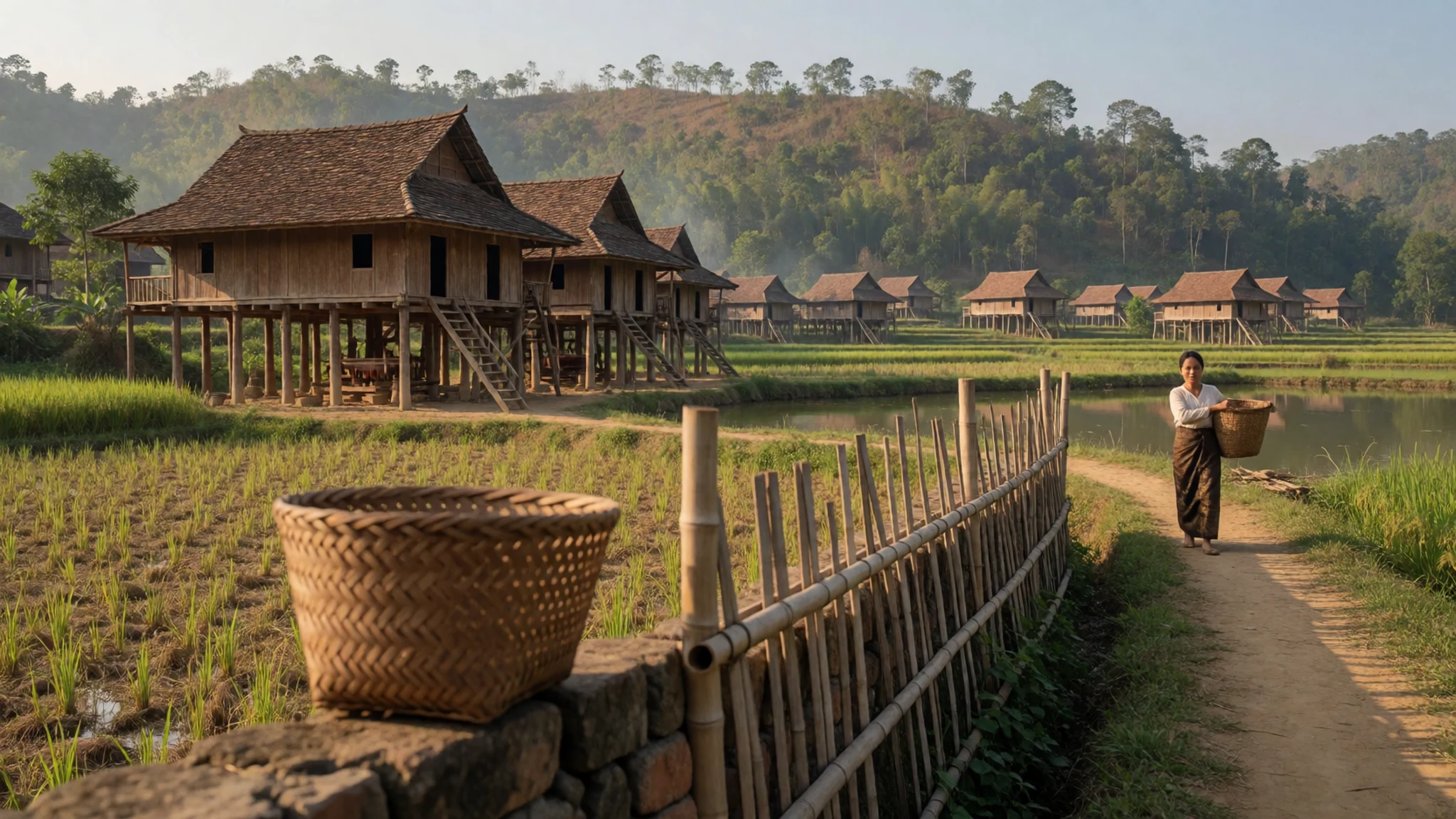
- The Giăng and Lam river valleys — Con Cuông and Anh Sơn districts
Rivers draining the park carve the valleys that carry the main road and most settlement. Boat and bank-side stops give a gentler view of the forest edge, with bamboo groves, kingfishers and water buffalo. Flow changes sharply with the rains, so confirm river conditions before booking any boat.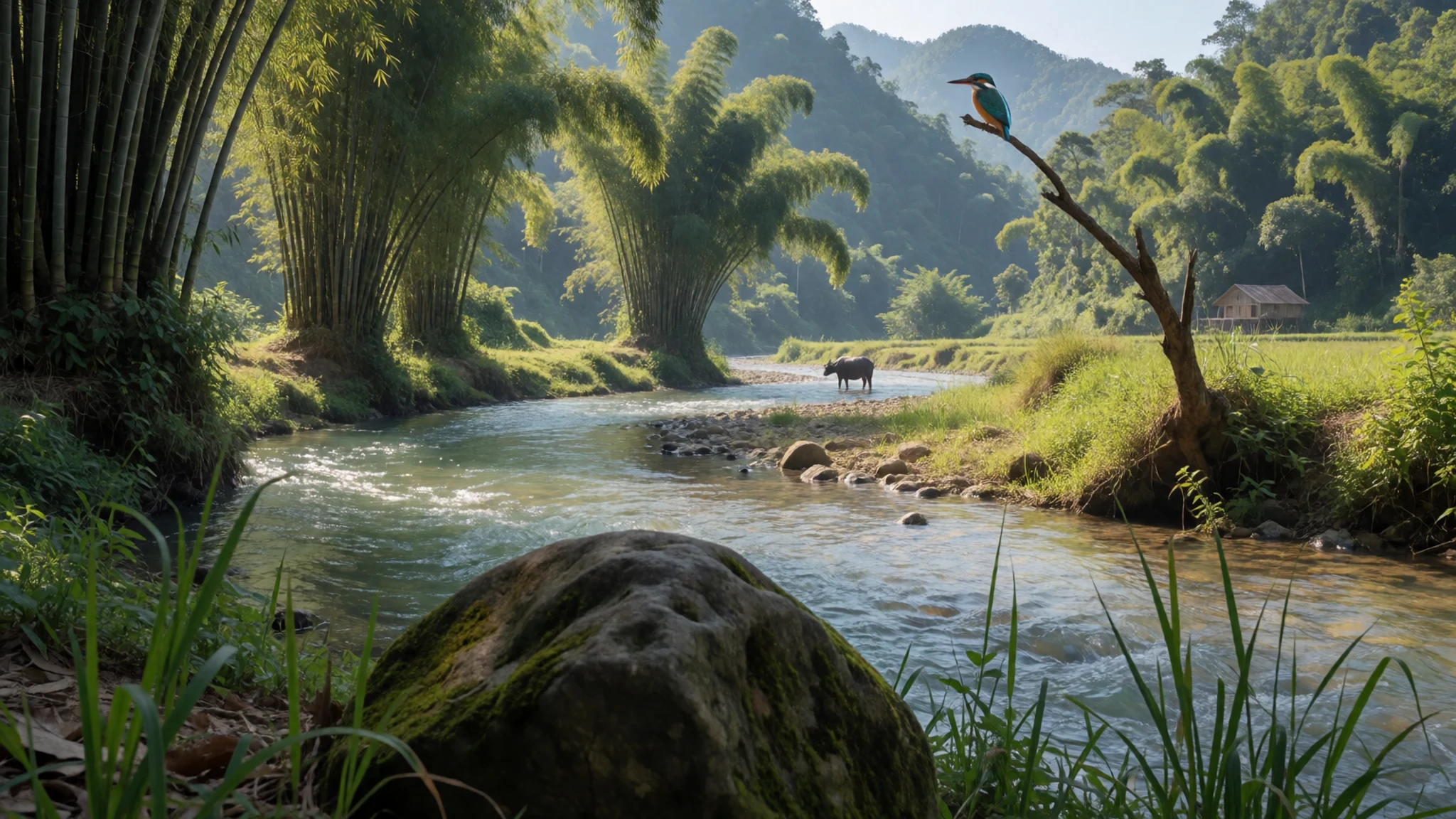
- Forest walks with a ranger or guide — Park buffer and lower core zone
Walks into the lower forest are the best way to feel the park: tall trees, creepers, calling birds and the damp smell of leaf litter. Wildlife is shy, so expect sound and sign rather than sightings. Guides are worth having for navigation, safety and reading the forest.
Culture
Pu Mat National Park lies in country shaped by the ethnic Thai of western Nghệ An, along with smaller upland groups, and the culture of the valleys follows from that. Houses stand on stilts, with living space above and livestock, tools and looms below. Rice, bamboo and river fish anchor the household economy, and the agricultural year sets the rhythm of festivals and work. Weaving is a strong tradition among Thai women, with patterns passed from mother to daughter. Spirit beliefs sit alongside Buddhism and ancestor veneration, and forests, springs and certain trees may carry sacred meaning for a village. Hospitality is warm and often involves rice wine, shared dishes and a seat on the floor mat. In the wider Vietnamese setting, family comes first, age is respected, and people are generally relaxed with visitors who are polite and patient. Because the park is also a working landscape, conversations about land, hunting and protected status can be sensitive, and it is better to listen than to lecture. Many villagers depend on guiding, homestays or craft sales, so spending locally matters. Remove your shoes before stepping into a stilt house, and ask before photographing people, their homes or any spirit shrine.
What to wear
Traditional dress around Pu Mat National Park follows the Thai communities of Nghệ An. Women wear a fitted blouse with a long dark skirt, often finished with a woven belt and a headscarf, while brocade (thổ cẩm) panels carry geometric patterns woven in cotton or silk on household looms. Men's formal dress is simpler: a dark tunic and trousers, sometimes with a sash. These outfits appear at weddings, festivals and performances rather than daily work. Day to day, people wear what the Vietnamese countryside generally wears: loose cotton shirts, trousers, rubber sandals or boots in the fields, and a conical hat or cap against the sun and rain. Younger people in Con Cuông and Vinh dress much as in any Vietnamese town, in jeans, T-shirts and school or office uniforms. Visitors should dress for humidity, insects and wet ground. Wear lightweight long sleeves and trousers in quick-drying fabric, with socks that can be tucked in to keep leeches out. Sturdy shoes with grip are better than sandals on forest paths, and a light rain jacket is useful in nearly every season. Cooler months can feel chilly and damp in the uplands, so pack a thin fleece. In villages, shoulders and knees covered is a sensible, respectful default, and swimwear belongs at the water's edge only.
What to eat
- Cơm lam — Roadside stalls and village homestays around Con Cuông
Sticky rice cooked inside a length of green bamboo over a fire, then split open and eaten with salt, sesame or grilled meat. The bamboo gives it a faint sweet smoke. It is a staple of upland cooking and a good picnic food.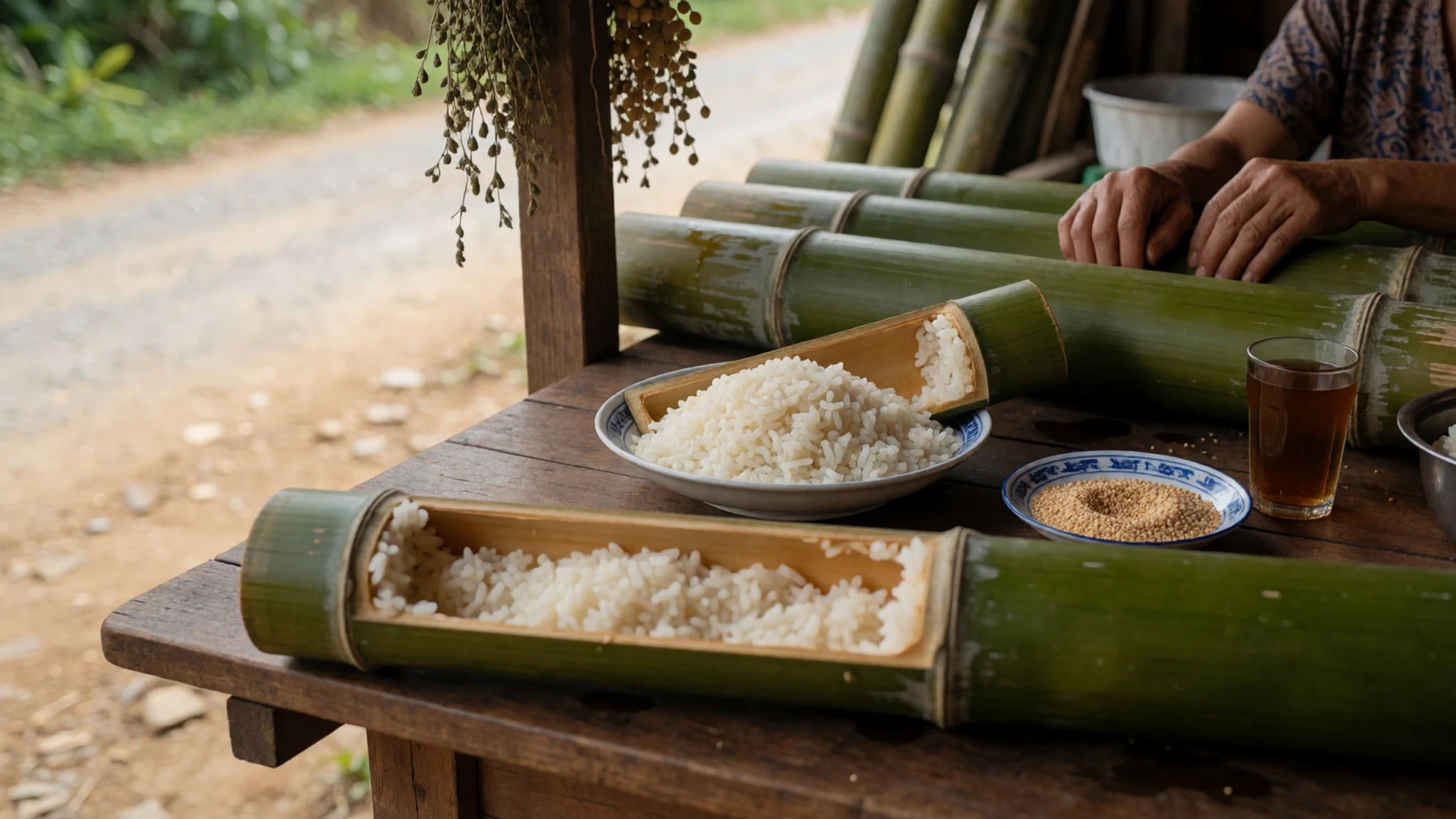
- Súp lươn Nghệ An — Eateries and street stalls in Vinh and larger district towns
A thick, peppery eel soup, a famous dish of the province, eaten with bread or rice vermicelli and plenty of herbs. The eel is crisp-fried or soft and the broth is rich with pepper. Locals tend to have it for breakfast or lunch.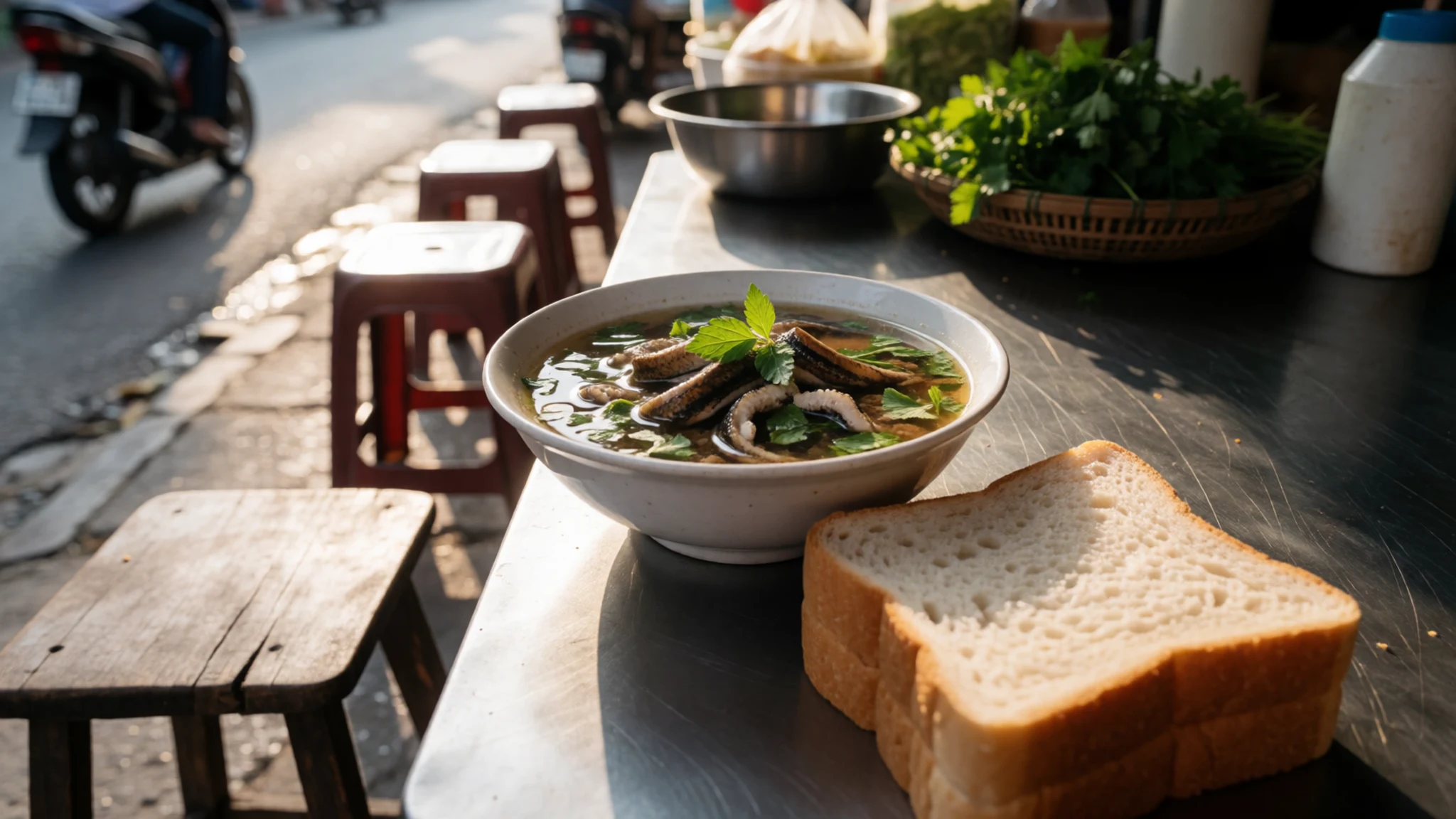
- Grilled stream fish — Riverside eateries and homestay kitchens in Con Cuông
Small fish from the rivers and streams, grilled whole over charcoal and served with salt, chilli and fresh leaves. Flavour is clean and a little smoky. Availability depends on the catch and the season. - Măng (bamboo shoots) — Village meals and the Con Cuông town market
Bamboo shoots are boiled, stir-fried or cooked into soups with pork or fish, with a slightly bitter, crunchy bite. They are a seasonal forest food, strongest in the wetter months, and often appear in home-style village meals. - Nhút — Markets in Vinh and provincial towns
A tangy pickle made from fermented unripe jackfruit or banana, linked with Nghệ An and often eaten with eel or rice. It is salty, sour and crunchy, and a good taste of local pantry cooking.
Plan it
Best time. March to May and November are the more comfortable months for walking: spring is warm and fairly dry, and November is cooler as the rains ease. Late summer into autumn is the wet season, with heavy rain, high rivers and a typhoon risk, and mid-summer can be very hot and humid. Winter is cool, damp and often grey in the uplands.
How long. 2–3
Getting there. Fly to Vinh Airport, or take the train or a long road journey from Hanoi to Vinh. From Vinh, the road runs west along the Lam river valley to Con Cuông, the usual base, a few hours by bus or private car. Check current schedules with the carriers.
Budget. low
Tips
- Contact the park office or an experienced local guide in advance; this is not a turn-up-and-wander park, and entry rules and permits are set locally, so check the official site or ask the park directly
- Carry cash, since cards are unlikely to work in villages and small eateries
- Pack insect repellent, leech socks and a rain layer, and bring drinking water or purification
- Avoid trips after heavy rain, when tracks, streams and river crossings can be unsafe
- Download offline maps before leaving Vinh, as mobile signal is patchy
Etiquette
- Take off shoes before entering a stilt house
- Ask before photographing people, homes or shrines
- Take litter out and never collect plants, animals or forest products
Nearby
Sources
- Wikidata Q2610809 (CC0)
- Wikipedia: Pù Mát National Park (rev 1381016995) (CC BY-SA 4.0)
- Wikivoyage: Pu Mat National Park (CC BY-SA 4.0)
- Rolf Müller, Annamite range Pu Mat 2007 05 (Wikimedia Commons) (CC BY-SA 2.0)
- Uwe Dedering, Vietnam relief location map (Wikimedia Commons) (CC BY 3.0)


Wildlife
- Kingfisher (animal)
Think of the common kingfisher as a small bird that lives along rivers, and in many places stays all year round. At Pu Mat National Park, boat and bank-side stops are your best chance, looking out over the gentle forest edge among bamboo groves. I have no season or time of day to give you, so ask your guide. Watch from a distance, speak softly, follow your guide's lead, and never offer it food.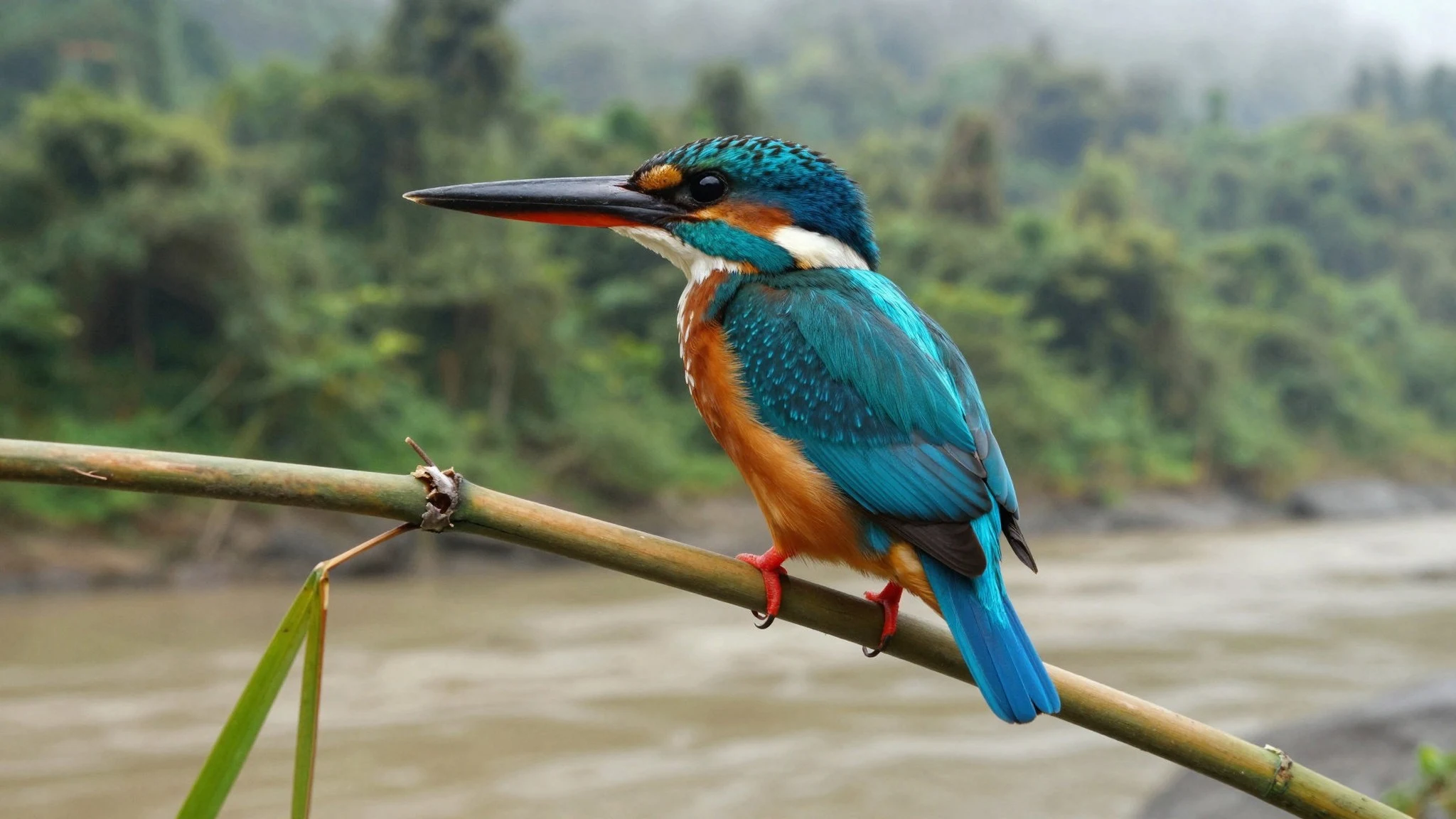
- Kingfishers (bird)
Think of the common kingfisher as a small bird that lives along rivers, and in many places stays all year round. At Pu Mat National Park, boat and bank-side stops are your best chance, looking out over the gentle forest edge among bamboo groves. I have no season or time of day to give you, so ask your guide. Watch from a distance, speak softly, follow your guide's lead, and never offer it food.