Prokletije Mountains
Prokletije Mountains, Serbia
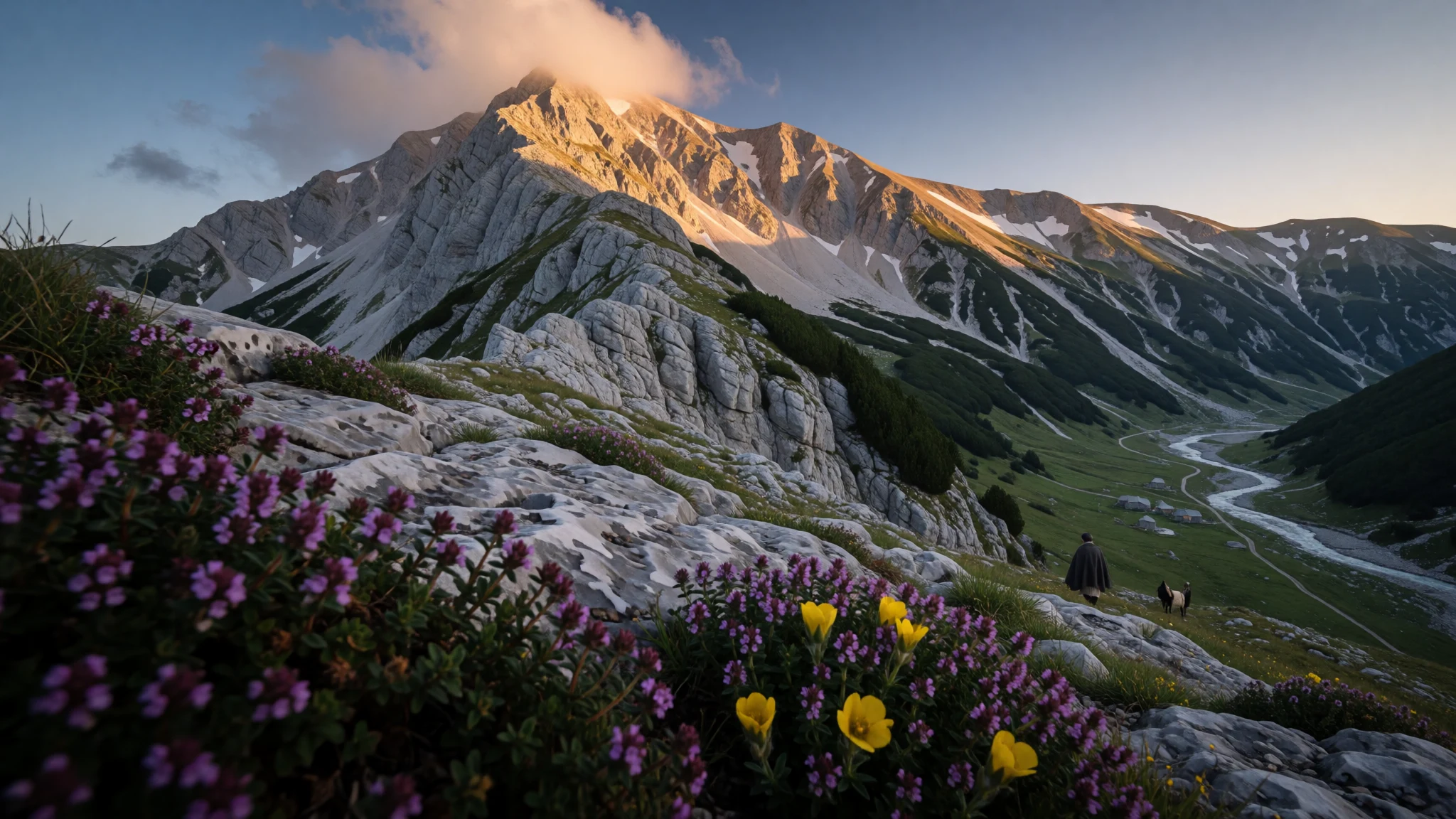
Prokletije is rough limestone mountain country spread across four borders, where walkers sleep in family guesthouses and old highland customs still shape daily life.
The place
The Prokletije Mountains, also called the Accursed Mountains or the Albanian Alps, form the southern end of the Dinaric chain and are shared by four countries: Albania, Montenegro, Kosovo and Serbia. The local names translate as Cursed Mountains (Albanian: Bjeshkët e Nemuna), and the name feels earned once the grey limestone walls, loose scree and sudden weather come into view. The range runs from the Lake Skadar side in the south-west towards Kosovo in the north-east, with the Drin and Valbona rivers marking its southern edge. The top is Maja Jezercë at 2694 m, which is also the highest summit of the whole Dinaric system. Other well-known peaks include Zla Kolata on the Montenegrin side and Gjeravica in Kosovo, both of which draw walkers in summer. Valleys such as Theth, Valbonë, Bogë and Ropojana were gouged by ice in the last glacial period, which explains their steep sides and flat floors. Rain is heavy here, and snow can linger on high ground well into summer, so conditions change fast. Villages are small, roads are narrow and often unsurfaced, and the borders, drawn through peaks and passes, matter to anyone planning a route. Most visitors base themselves in one valley village, sleep in a family guesthouse and walk out each morning on mule tracks and shepherd paths. It is working mountain country first and a hiking destination second, and that is much of its appeal.
Its story
The story of the Prokletije Mountains is written partly in ice and partly in custom. During the last ice age, long glaciers carved the troughs of Ropojana, Grbaja and Valbona, and small ice bodies still survive in shaded hollows, remarkably far south for Europe. Researchers have reconstructed the old glacier limits from the moraines and valley shapes left behind. The human story is one of isolation. Highland clans on the Albanian side lived by the Kanun, an oral code attributed to Lekë Dukagjini, which governed hospitality, property, honour and revenge. Under it, a killing could set off a blood feud, and in Theth a lock-in tower still stands where men under threat could shelter inside the family compound. Communist rule largely suppressed the practice, but the chaos after its collapse revived it for a time. Today the same code of hospitality works in a visitor's favour: guests are treated as protected, so long as they behave as guests. The mountains have also divided empires and later nations, and the present borders cut straight through peaks, so one ridge walk can cross from one state into another. Shepherds still take flocks to high pasture in summer and bring them down when the weather turns. Guesthouse tourism and better roads have reached Theth and Valbonë only recently, and the older rhythm of stone houses, small hay fields and livestock has not disappeared.
What to see
- Theth and its lock-in tower — Theth, northern Albania
Theth sits in a glacial valley ringed by pale limestone peaks, and its restored lock-in tower is one of the few left in Albania. The tower makes the old feud code easy to picture. Allow time to walk between the scattered houses, the church and the river.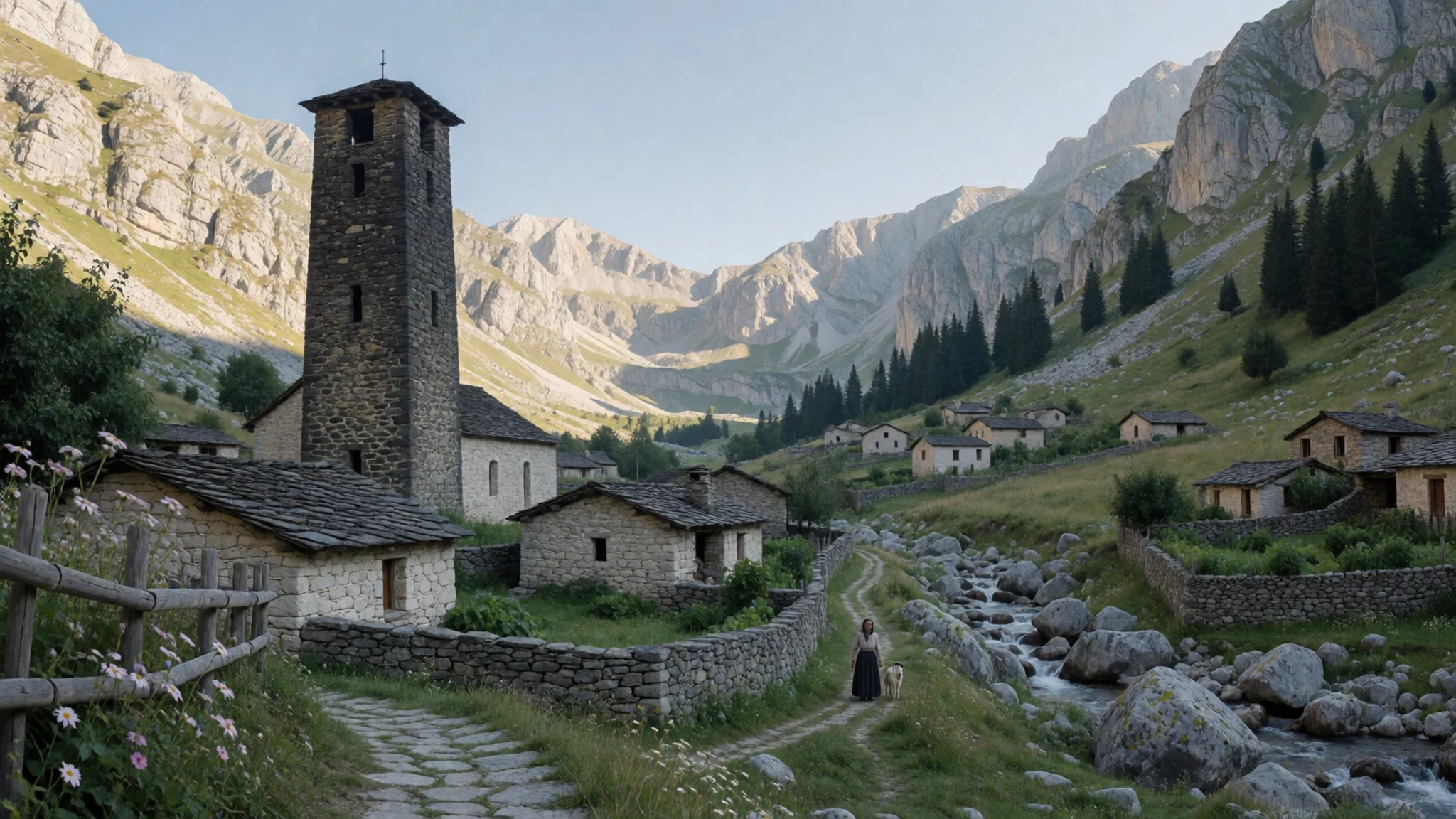
- Valbonë valley and river — Valbonë, northern Albania
The Valbona River runs through a long, steep valley with guesthouses strung along the road. The water is good for fishing, the lower paths suit gentle walks, and the rapids near Dragobia are a popular stop. Traffic is light enough that even the road is pleasant on foot.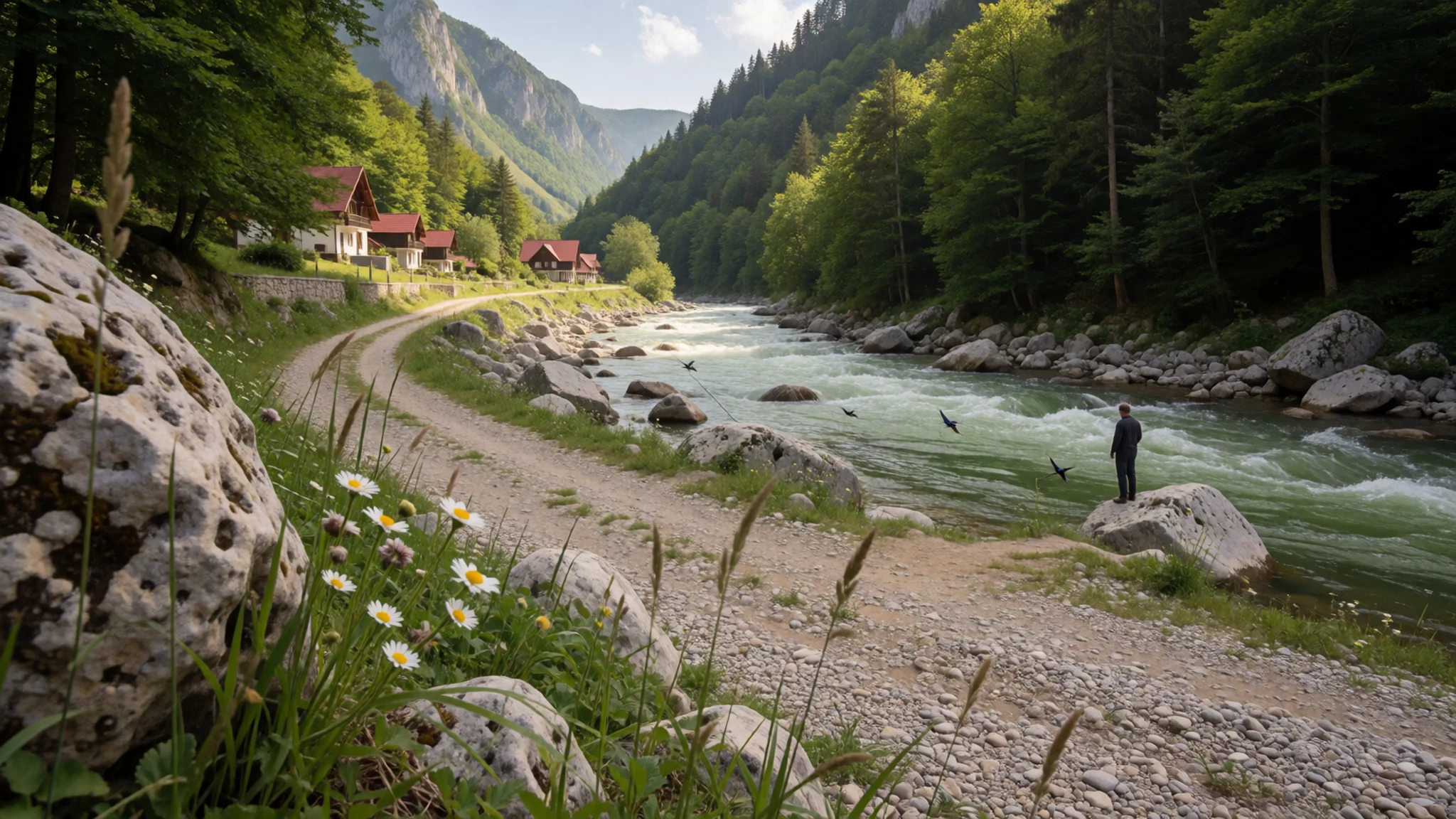
- Bogë and the Qafa e Thorës pass — Bogë, Kelmend region, Albania
Bogë is a mountain village in a high bowl, reached by a narrow paved road from the Shkodra plain. Beyond it a pass leads on towards Theth, and in the old days the road is closed by snow for months. Hikers also start long routes from here.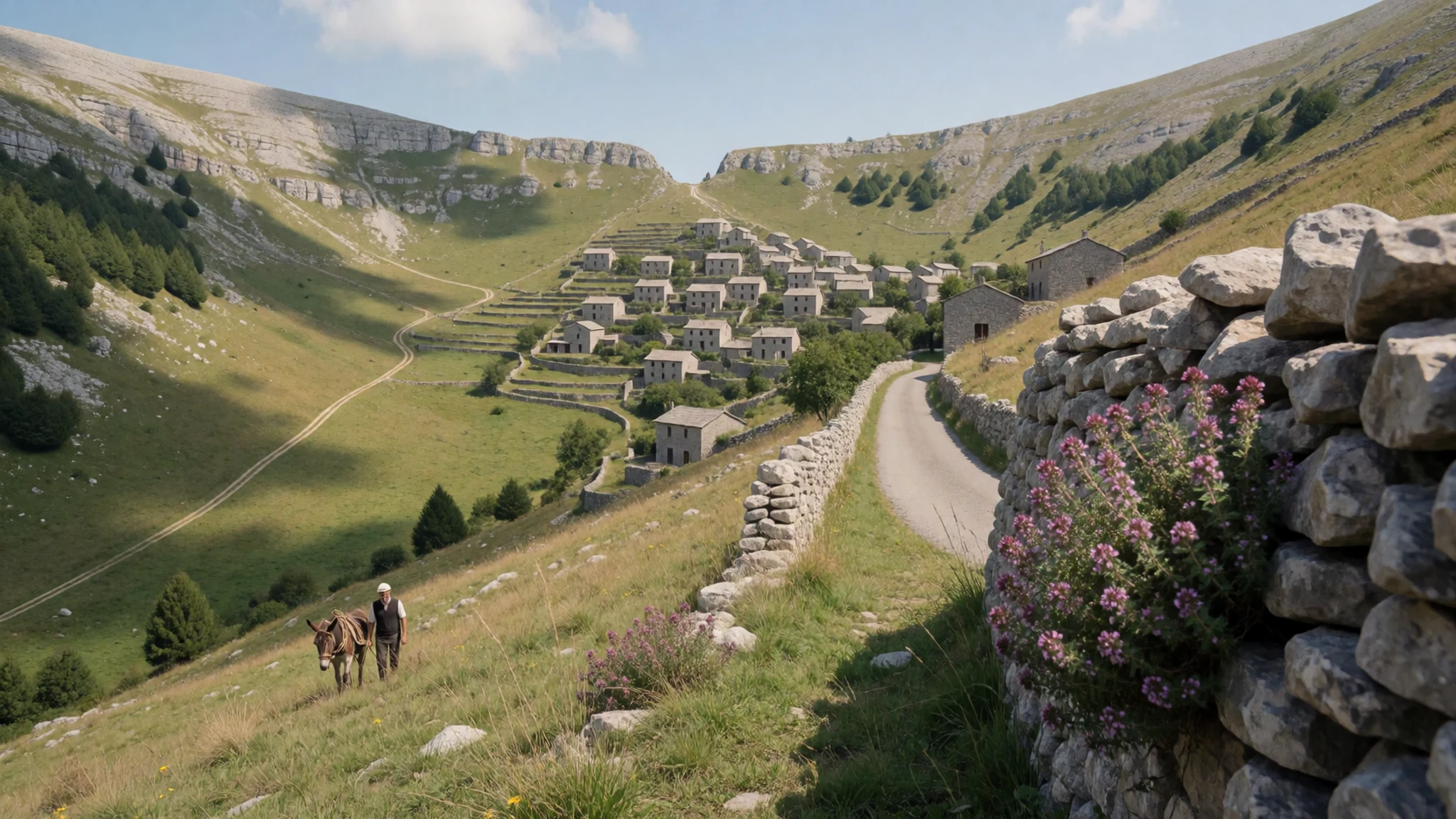
- Karanfil viewpoints and Maja Jezercë — Montenegrin Prokletije
From the Montenegrin side, high viewpoints such as Karanfil give a wide look across Maja e Bojës and Jezerski Vrh, the summit that appears in the facts at 2694 m. Expect bare rock, thin soil and fast-moving cloud rather than gentle meadows.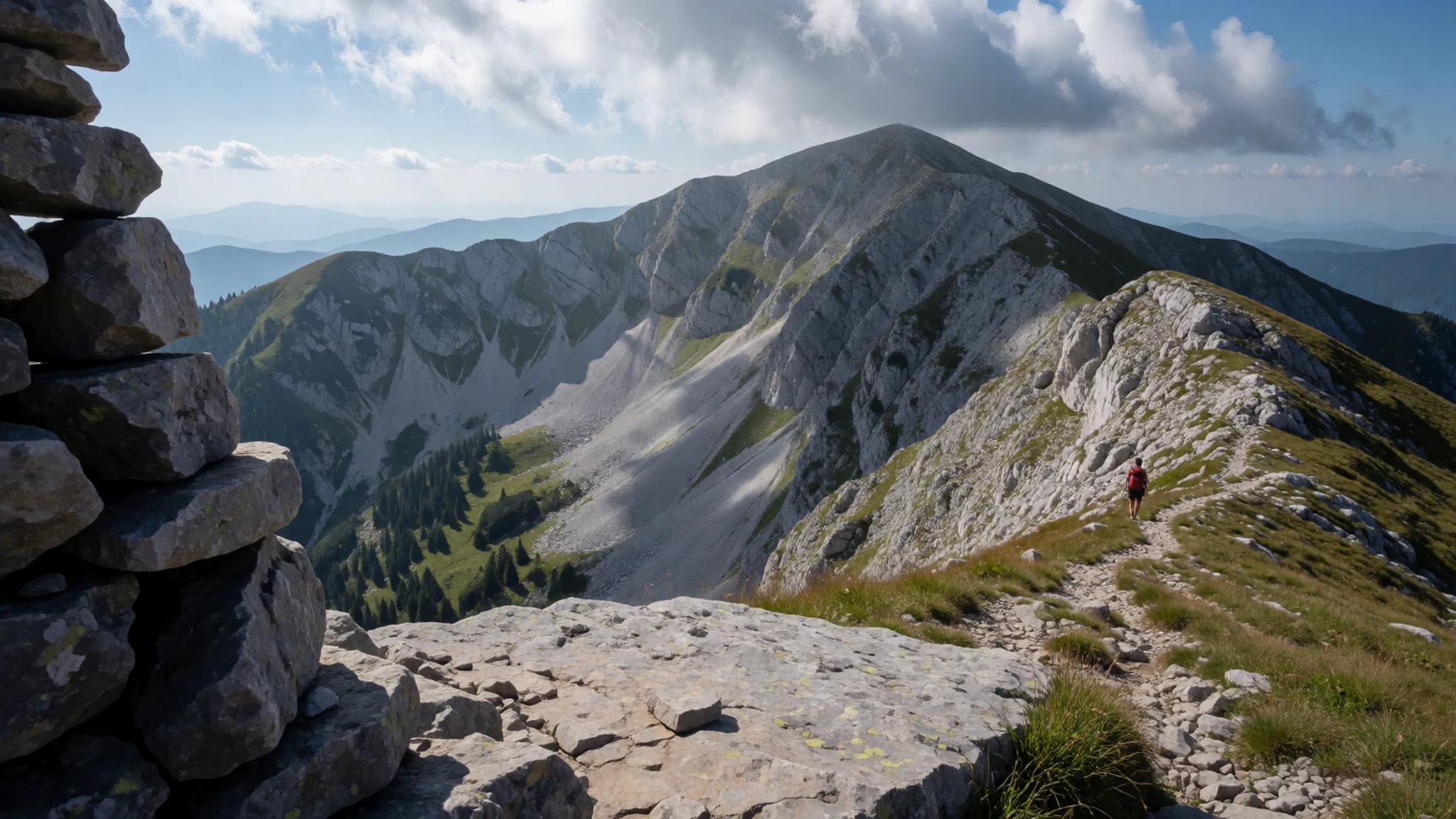
- Rugova lakes and Gjeravica — Rugova, near Peja, Kosovo
In Kosovo, glacial lakes such as Kuqishte, near Peja, sit high in the Rugova mountains and make a good day goal for walkers. Gjeravica rises beyond them and is a summit objective for stronger hikers. Carry layers, since the air is cold even in summer.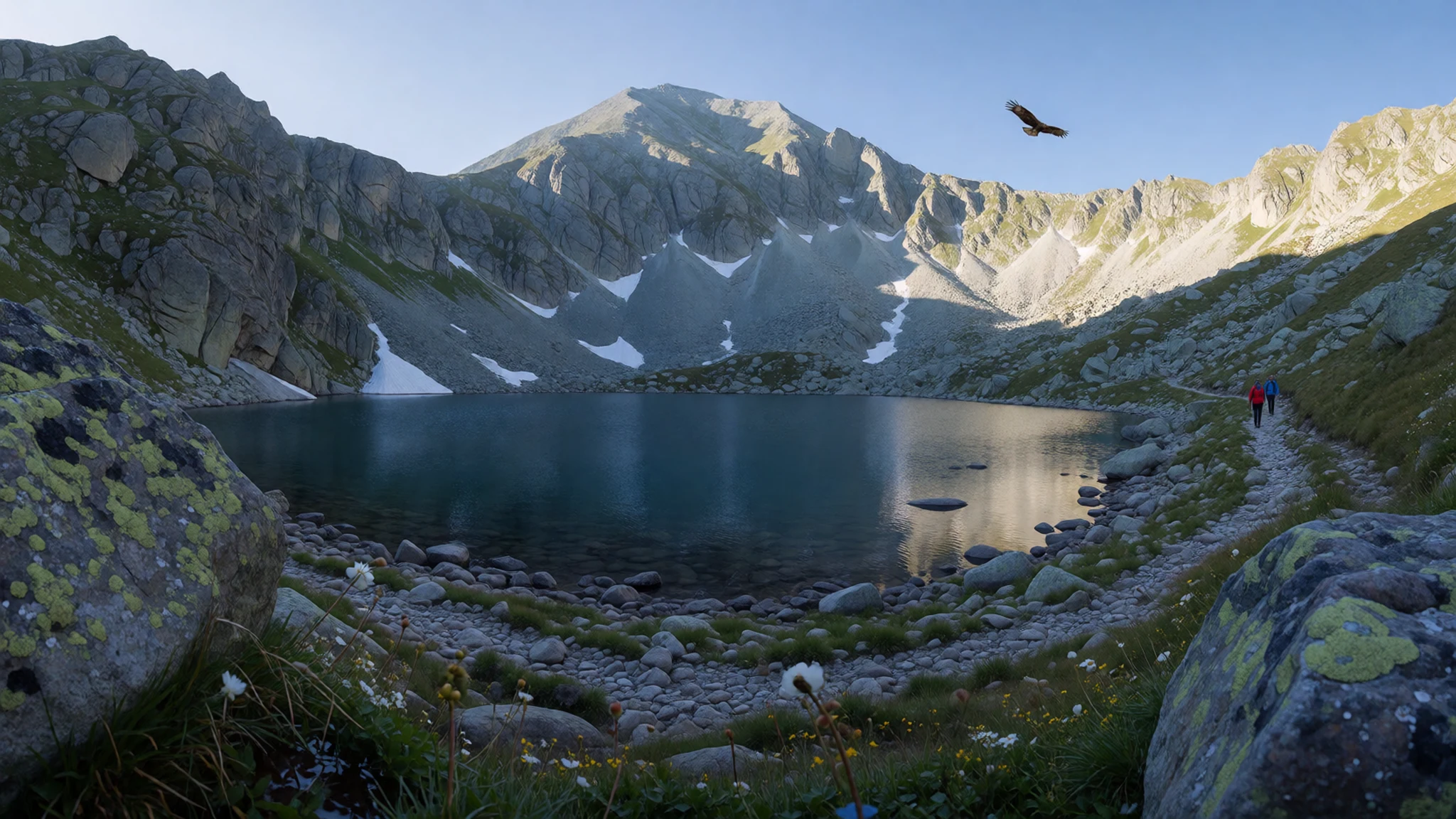
Culture
Prokletije is a meeting point of several communities. Albanian-speaking highlanders, Montenegrin and Serbian villagers and Kosovo families all live around the same peaks, and the faiths include Catholic, Muslim and Orthodox households, often in neighbouring valleys. Life in the high villages revolves around livestock, hay and the weather, and many families now also run guesthouses. The central idea in the Albanian highlands is hospitality: a guest is offered coffee, raki, bread and whatever is cooked that day, and refusing everything can look unfriendly. This comes from the Kanun, the old oral code that also shaped blood feuds, a darker side of mountain custom. The lock-in tower in Theth is the physical reminder, and local people tend to talk about it plainly as history. In summer, village festivals bring out costume, music and regional food, and the Logu i Bjeshkëve gathering in the Kelmend area, held in August, is a good example. Conversation, even with little shared language, matters more than schedules, and a slow evening at a guesthouse table is part of the trip. Many families lost relatives to the feuds or to the hard years that followed communism, so questions about politics, borders or old quarrels are best left for the host to raise. When a host offers food or drink, accept at least a small portion with thanks, and never walk off a family's land or photograph people without asking first.
What to wear
Traditional dress in the northern Albanian highlands is built from wool and felt, which suits the cold and the rough ground. Men historically wore a white felt skullcap called a plis, woven wool trousers and an embroidered waistcoat. Women's dress included the xhubleta, a heavy bell-shaped wool skirt, worn with an embroidered bodice and apron. These costumes now appear mostly at festivals and weddings, including the August mountain gathering in Kelmend, though older people may still wear parts of them day to day. What people wear now is practical: walking boots or sturdy shoes, fleece or wool jumpers, waterproof jackets and caps against the sun. In the villages, trousers and long sleeves are normal for both sexes, and women commonly dress modestly, especially in more conservative households. A visitor should pack for four seasons in one day. Bring proper hiking boots with good grip for scree and wet rock, a waterproof shell, a warm layer for the evenings even in July, and a sun hat. Shorts are fine on trails, but covered knees and shoulders show respect in villages and near churches or mosques. Light trousers also protect legs from thorny scrub and insects, and a pair of dry socks is worth carrying in a day pack, because afternoon storms are common in summer.
What to eat
- Flija — Village guesthouse tables and family homes
A layered pancake built from thin batter poured over and cooked slowly under a lid, then stacked and cut like a cake. It is popular across the mountain villages and is often eaten with yoghurt, cheese or cream.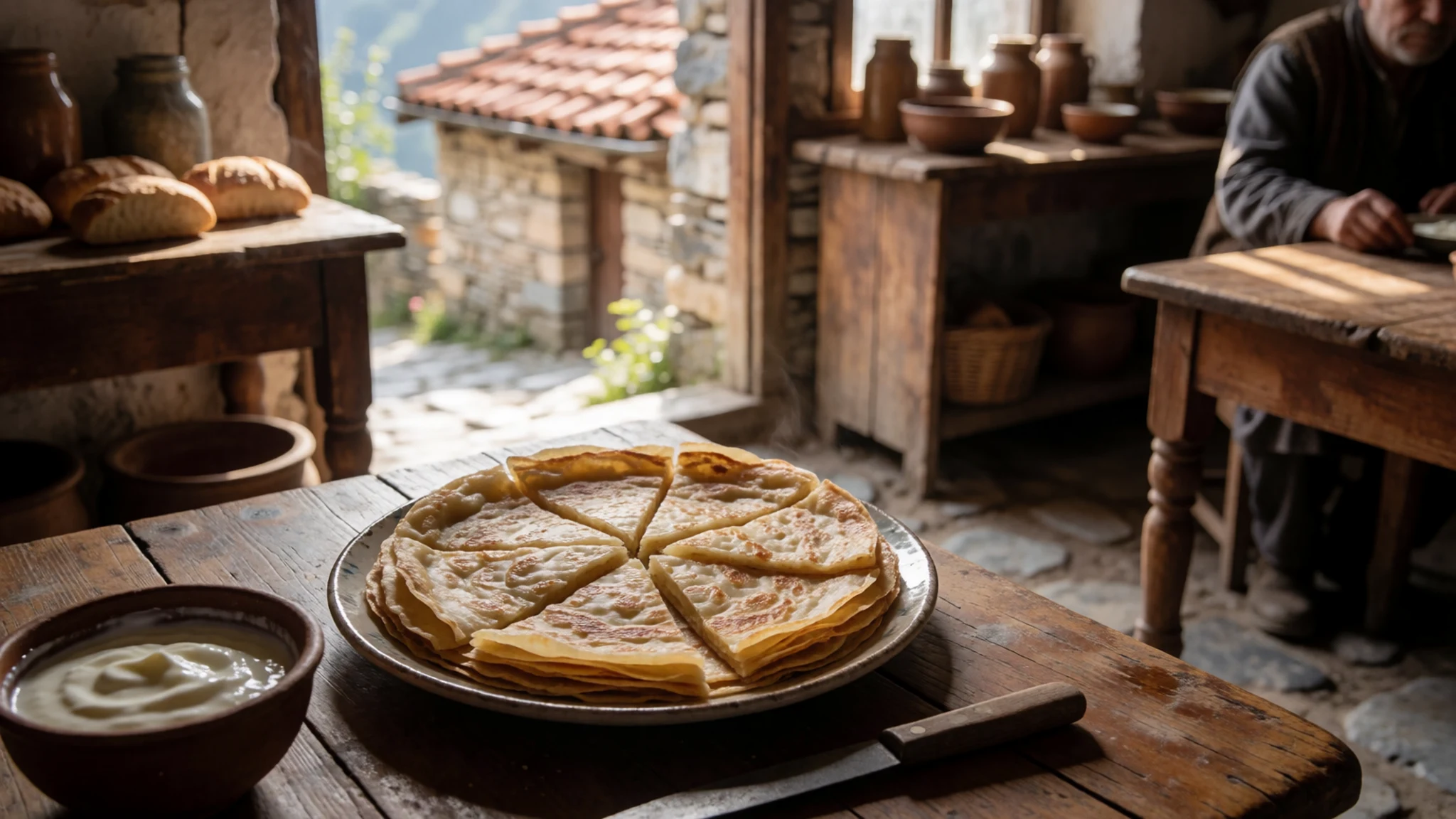
- Mazë — Family guesthouses in Theth and Valbonë
A rich mountain dish of butter, corn flour and sheep cheese, cooked until it becomes a thick, savoury porridge. It is hearty fuel after a long walk and tastes of fat and smoke.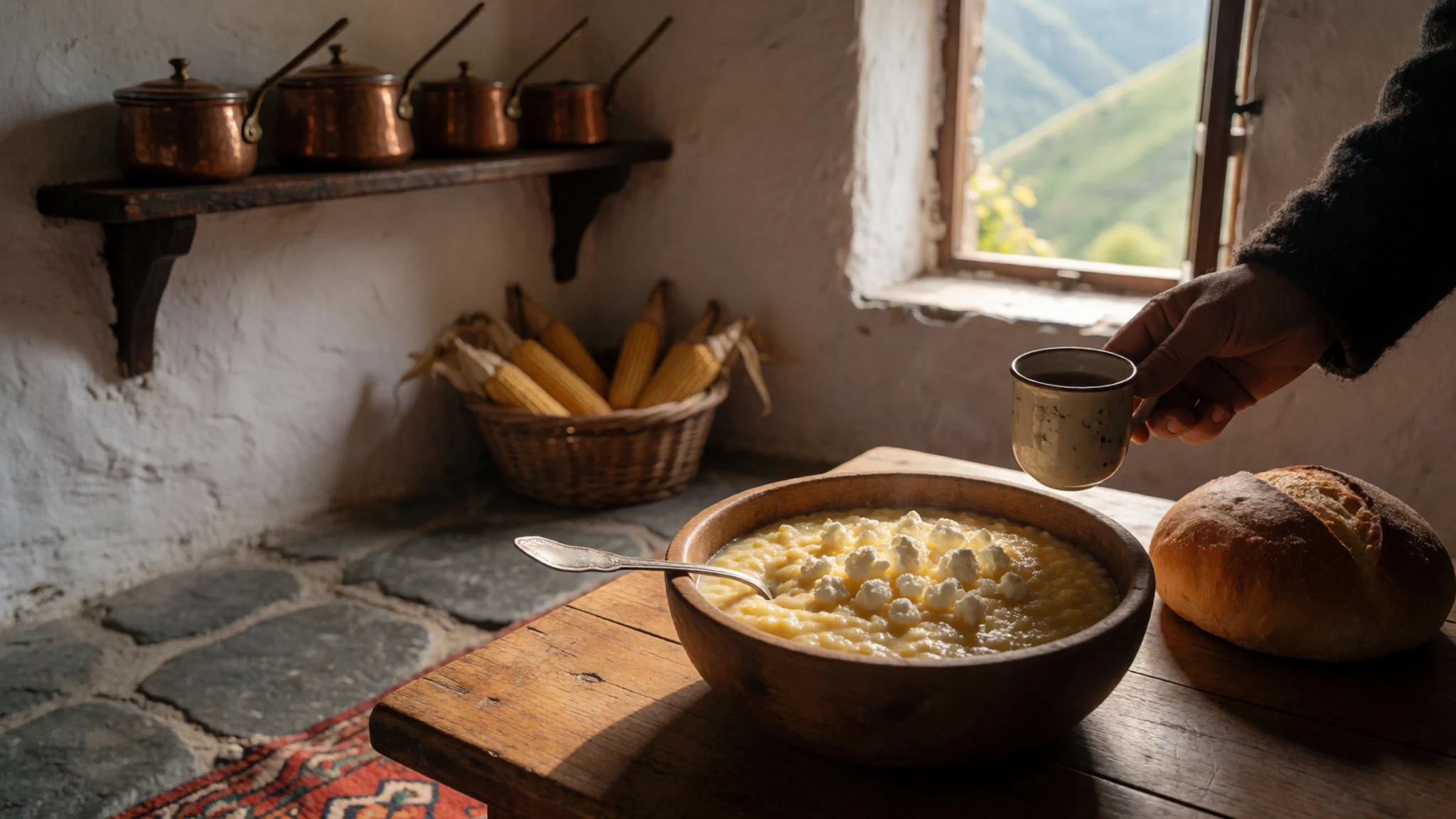
- Fërlik — Guesthouse dining rooms and village celebrations
Roast ram, cooked slowly until the meat falls apart and served in large portions at celebrations and hungry guesthouse dinners. Other mountain meats, such as goat, rabbit and wild boar, may also be on the table. - Fresh trout — Riverside guesthouses along the Valbona and valley streams
River fish baked or grilled simply with salt, often caught nearby. It makes a light change from the meat-heavy mountain menu and works best with bread, pickles and a squeeze of lemon. - Pite me mish — Village kitchens and small roadside eateries
A savoury pie with meat, vegetables and herbs, baked in a wood-fired oven so the pastry is crisp at the edges. Honey, mountain tea, local cheese and home-made jams often come alongside.
Plan it
Best time. Late June to September, when the passes are open and the high paths are mostly clear of snow; July and August are warmest but bring thunderstorms. Snow can linger on high ground into early summer, and the Qafa e Thorës road is often shut by snow from about November until late spring.
How long. 3–5
Getting there. Fly to Tirana in Albania or Podgorica in Montenegro, then travel on to Shkodra, the usual gateway for Theth and Bogë. In the main season minibuses run from Shkodra in the morning, and the journey takes a few hours on a narrow, partly rough road. A high-clearance vehicle is wise if driving yourself, and an alternative unpaved route runs through the Kiri valley.
Budget. low
Tips
- Book guesthouses ahead for July and August, because beds in the villages are limited
- Check road and pass conditions locally before setting out, especially at the start and end of the season
- Carry cash, as cards and cash machines are scarce in the high villages
- Bring a waterproof jacket and a warm layer, since weather changes quickly
- Check border-crossing rules before any walk that crosses between countries
Etiquette
- Accept food and drink from your hosts, even if only a little
- Ask before photographing people or their homes
- Dress modestly in villages and near places of worship
Nearby
Sources
- Wikidata Q615771 (CC0)
- Wikipedia: Accursed Mountains (rev 1384724683) (CC BY-SA 4.0)
- Wikivoyage: Prokletije (rev 5118481) (CC BY-SA 4.0)
- Photo: Theth Radohima MajaArapit (Albinfo) (CC BY-SA 1.0)
- Photo: Jezerski Vrh sa Karanfila (Vlado Vujisic) (CC BY 3.0)
- Photo: Albanian Alps from Air (Albinfo) (CC BY-SA 2.0)
- Photo: Đeravica (Tamnavac) (Public domain)
- Photo: Bogë Kosovë (Gjeravica) (Public domain)
- Photo: Maja Arapit (Albinfo) (CC BY-SA 2.0)
- Photo: Tamara 01 (Sigismund von Dobschütz) (CC BY 3.0)
- Photo: Liqeni i Madhe Peje Kosovo (Fatos Katallozi) (CC BY 3.0)


