Belgrade
Belgrade, Serbia
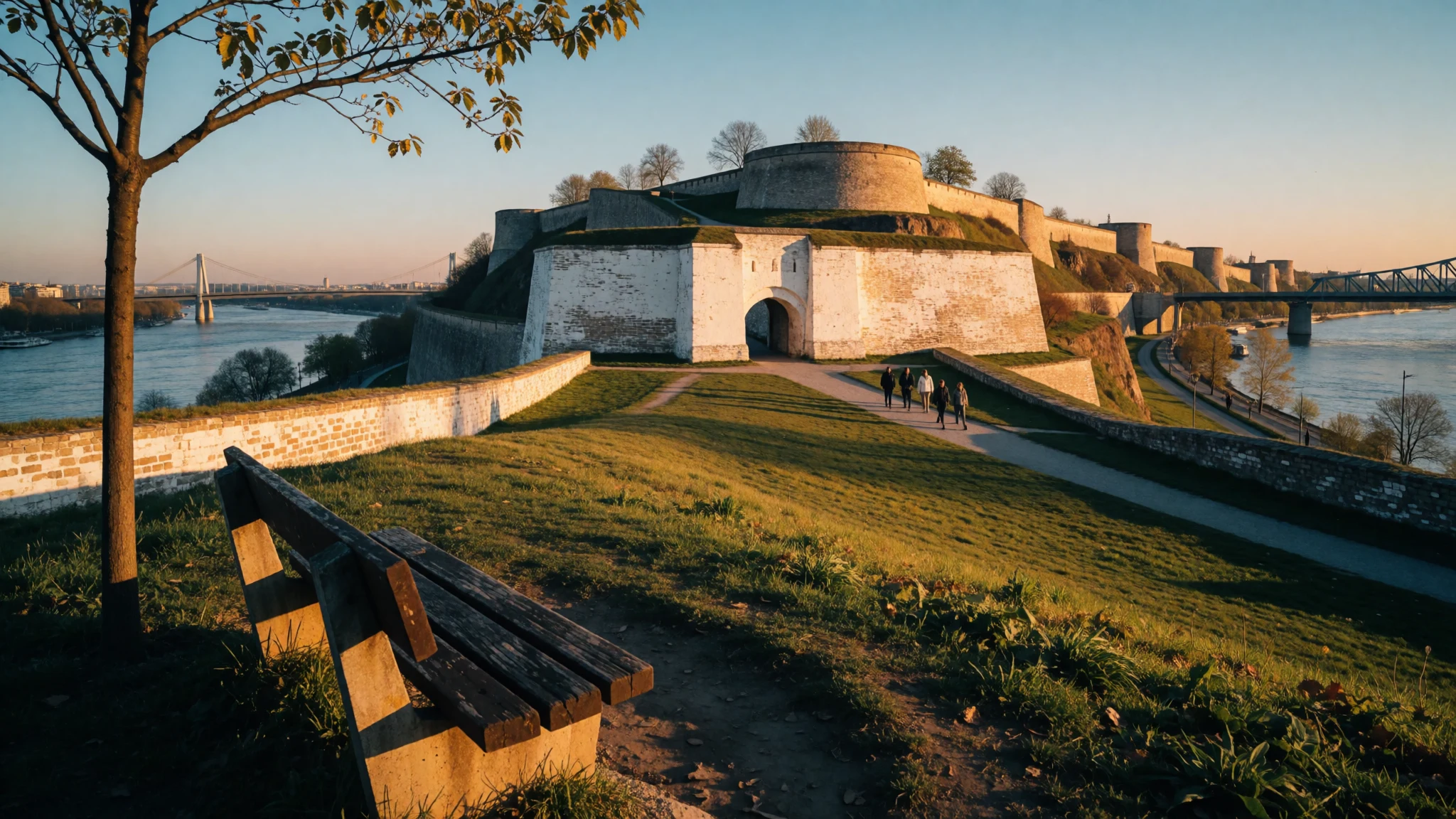
Belgrade sits where the Sava meets the Danube, a capital of fortresses, taverns and river light.
The place
Belgrade is the capital and largest city of Serbia, set where the Sava flows into the Danube and the Pannonian plain meets the Balkan peninsula. The city proper is home to about 1.2 million people, and the land sits at 117 metres. In Serbian the name is Beograd (Београд), the White City.
The confluence is the reason the city stands here. Old Belgrade climbs from the water onto a bluff; across the Sava, Novi Beograd spreads flatter and newer over the plain. Bridges carry ordinary working life between the two, and this is a capital people live in rather than a set piece kept for visitors. South and east, streets tighten into neighbourhoods of low buildings, courtyards and plane trees. Toward the airport the city opens into long residential blocks.
Over the centuries Belgrade has been held by the Kingdom of Hungary, the Ottoman Empire, the Habsburg monarchy, the Principality and later the Kingdom of Serbia, then by Yugoslavia in several forms, and by Serbia and Montenegro, before serving as capital of today's Serbia. The succession shows in the streets: a fortress over the rivers, Orthodox churches in the old core, Ottoman and Habsburg traces in the plan, concrete housing from the last century, and newer glass along the waterfront.
Belgrade keeps late hours. People gather on the banks, in neighbourhood taverns and on the pedestrian streets of the centre. Summers are heavy and bright, winters cold and grey, and walking is easiest in late spring and early autumn. The official city site is beograd.rs. The pace is direct and social, more interested in conversation than in polish.
Its story
Belgrade does not begin with a founding stone and a date. Zemun, on the Danube bank opposite the old bluff, has yielded stone tools from both the old stone age and the middle stone age. Hunters were passing through long before farmers. Among the finds are Mousterian pieces, linked with Neanderthals, and later Aurignacian and Gravettian blades that mark camps of modern humans while the ice still shaped the plains.
Farming arrived with the Starčevo culture, named for a settlement still on the map of greater Belgrade, and those early fields and villages sit under and beside today's suburbs. Vinča farmers followed those Starčevo villages and take their name from the tell at Vinča-Belo Brdo. Its villages were large and long-lived, with deep layers of houses and pottery.
Classical and medieval Belgrade is a chain of renamings on the same bluff. Thraco-Dacian communities held the region; Celtic settlers called the town Singidūn; Rome absorbed it in the reign of Augustus and, later, gave it Roman civic standing. Slavic speakers took up the site in the early Middle Ages. Byzantium, the Franks, Bulgaria and Hungary each held it in turn. The Serbian king Stefan Dragutin made it his seat, and the Slavic name Beograd, the White City, is the one that lasted.
Later sovereigns, as the city's record lists them, include the Ottoman Empire more than once, the Habsburg monarchy, a Serbian principality and kingdom, the Territory of the Military Commander in Serbia, and Yugoslavia under several constitutions, ending with Serbia and Montenegro. Kalemegdan's walls are the visible notebook of those handovers.
What to see
- Kalemegdan — fortress bluff at the confluence
Kalemegdan is Belgrade's fortress and the park around it, on the bluff where the Sava meets the Danube. Settlement here came before the later city, and the walls were rebuilt whenever a new power held the confluence. The Zindan Gate looks toward the water and the bridges, while lawns and paths run between the ramparts with both rivers in view. Belgraders still use the hill for ordinary walks.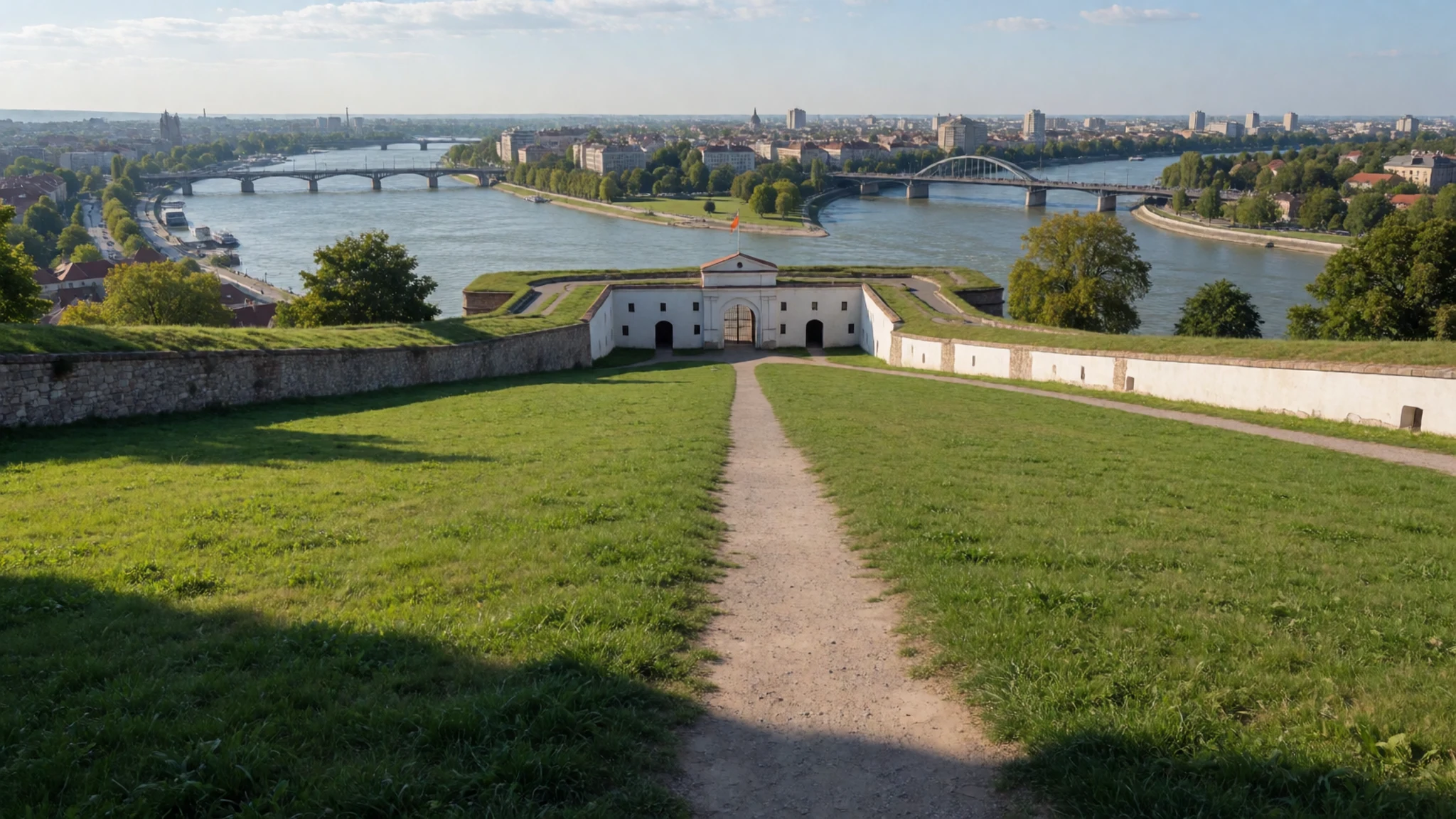
- Military Museum — Kalemegdan
The Military Museum stands inside Kalemegdan and sets out Serbia's military past in weapons, uniforms and other objects. English signage makes the rooms readable without a guide. Because the museum sits in the fortress, a visit fits the same walk as the ramparts above the rivers. Cases inside tell the same siege story as the walls outside.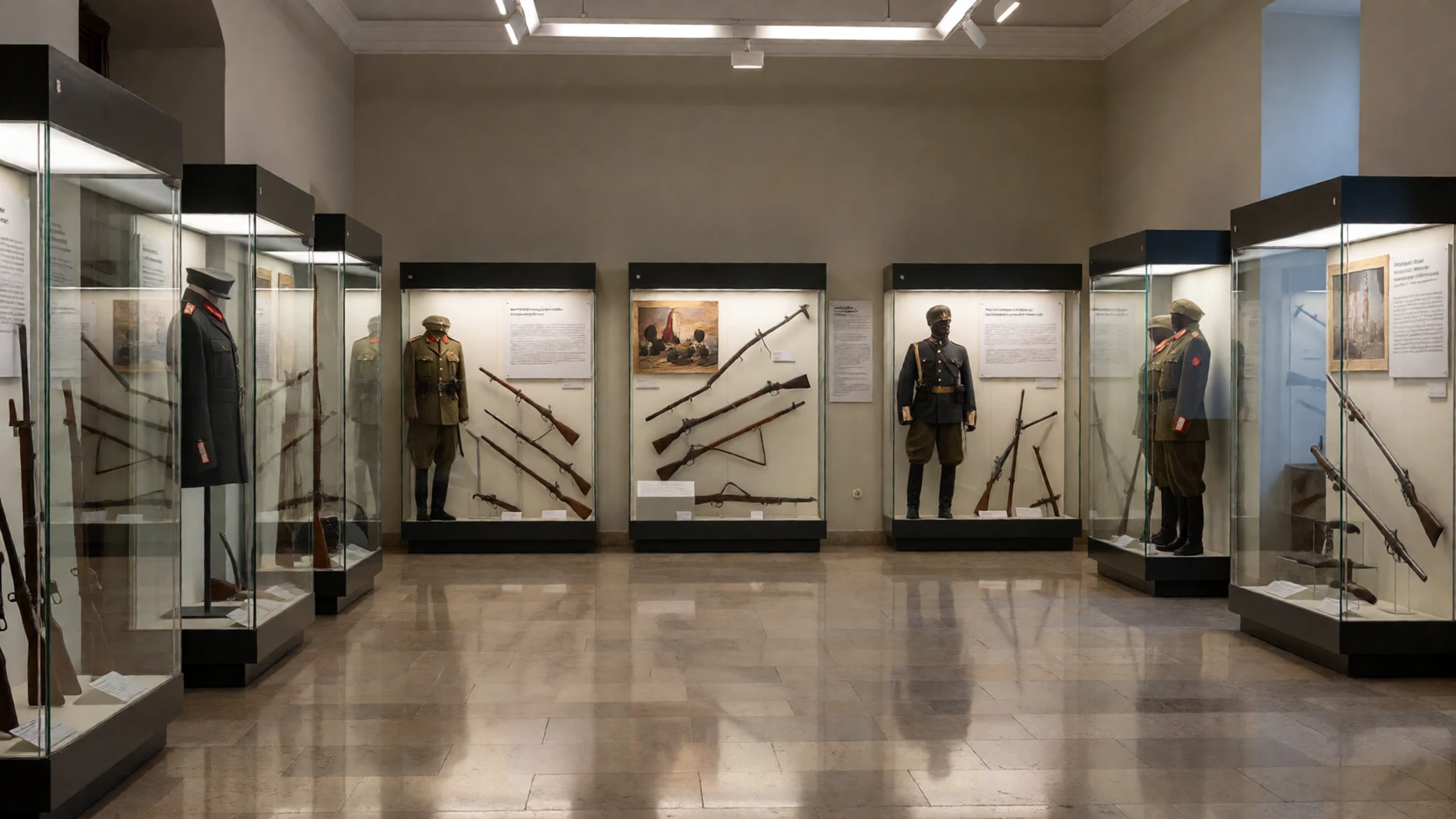
- Cathedral Church of St Michael the Archangel — old town
The Cathedral Church of St Michael the Archangel is Belgrade's Orthodox cathedral in the old town, close to the fortress slopes. The building is neoclassical and the interior is elaborate, still in use for feast days and ordinary prayer. The Museum of the Serbian Orthodox Church stands nearby, so the two form one short walk.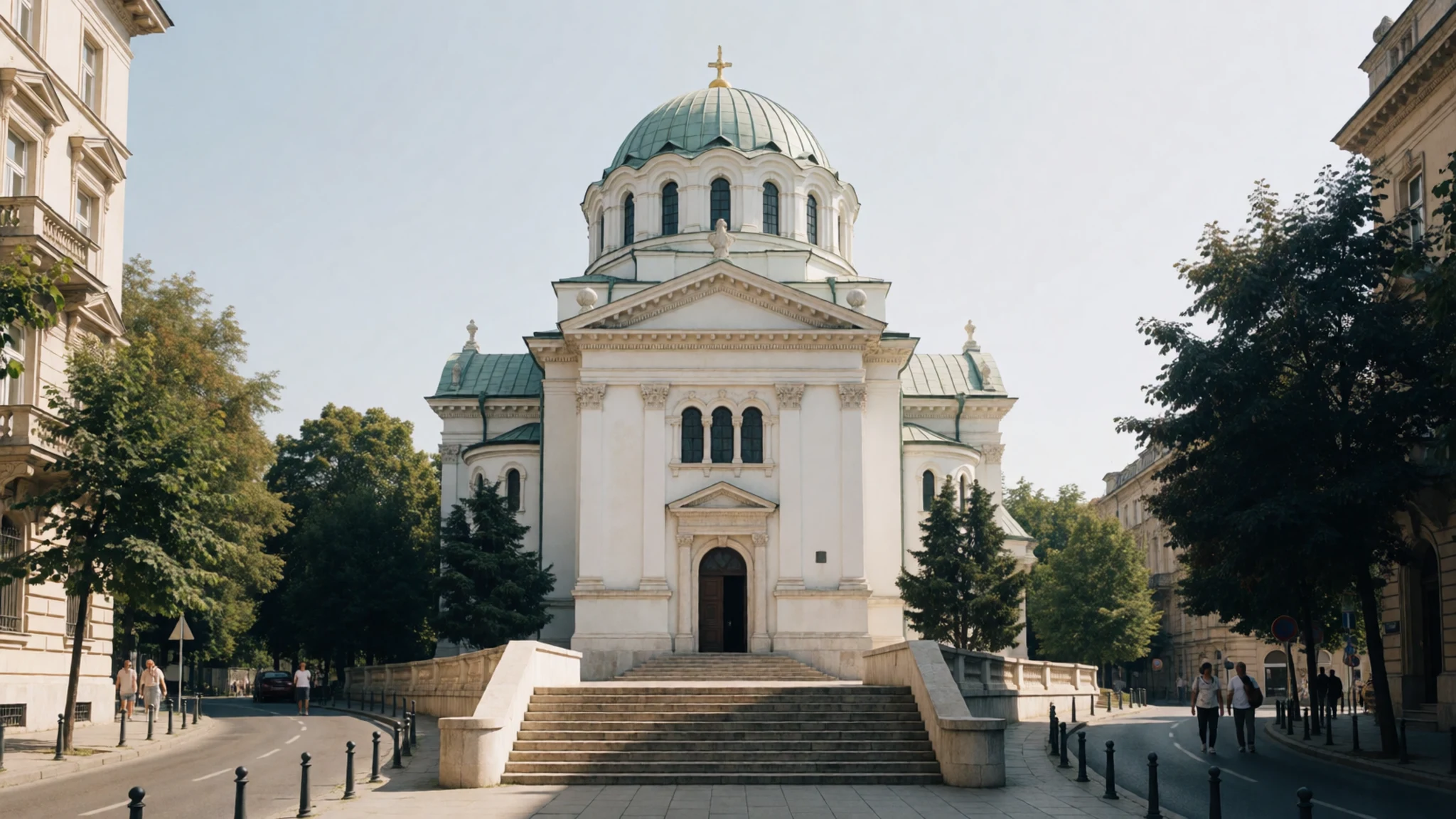
- Museum of the Serbian Orthodox Church — old town, beside the cathedral
The Museum of the Serbian Orthodox Church sits beside the cathedral and keeps icons, wall paintings and other objects from the church's history. English signage is good enough to follow the rooms without a specialist guide. The collection shows how Orthodoxy has marked Belgrade, from votive gifts to parish objects. Rooms are compact and sit in the same streets as the cathedral.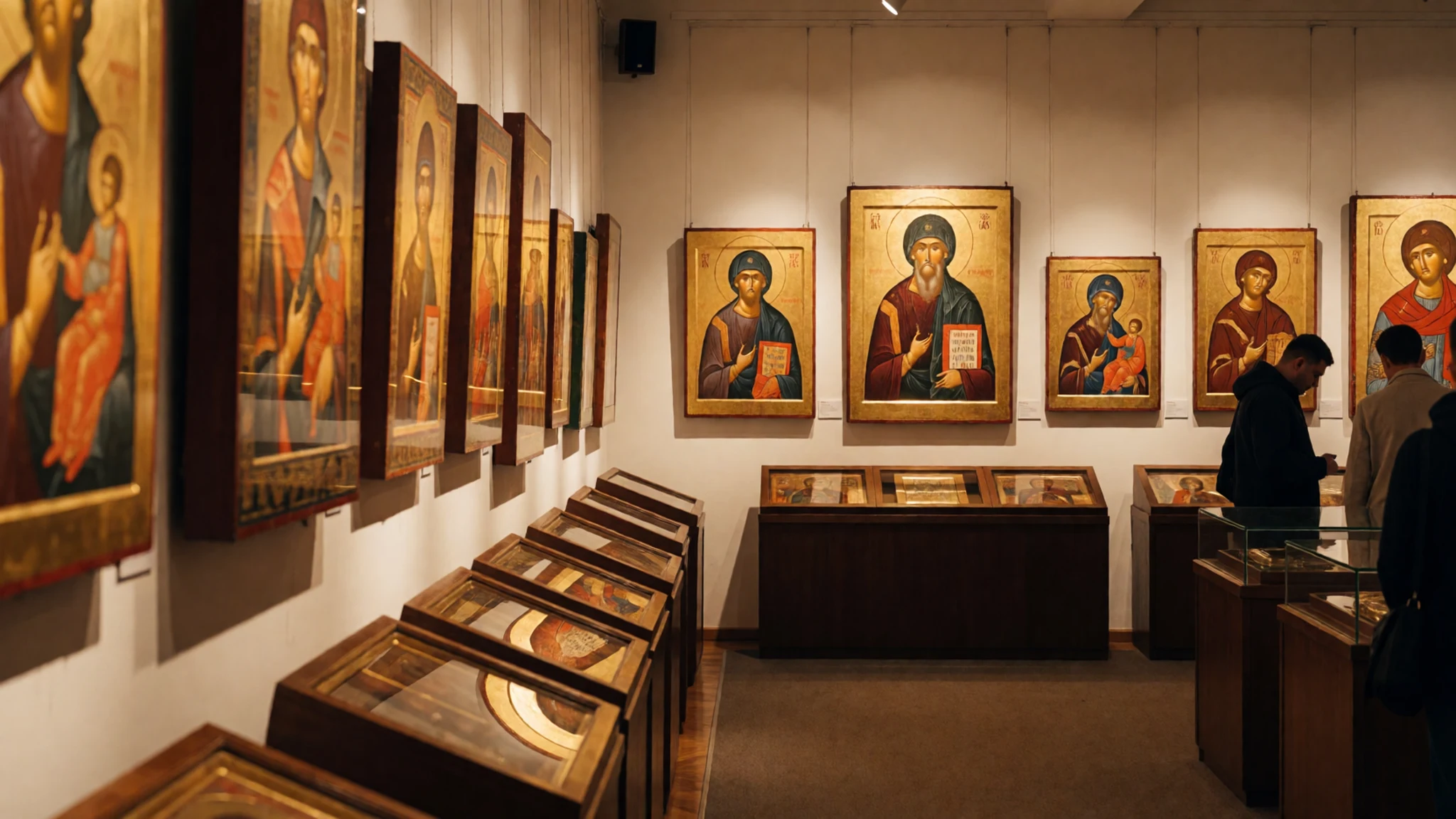
- Residence of Princess Ljubica — old town
The Residence of Princess Ljubica was built as a townhouse for Ljubica Vukomanović, consort of Prince Miloš Obrenović. Rooms keep the scale of a princely household, and the house shows the domestic side of the Obrenović court. It stands in the old town, a short walk from the cathedral and from Kalemegdan.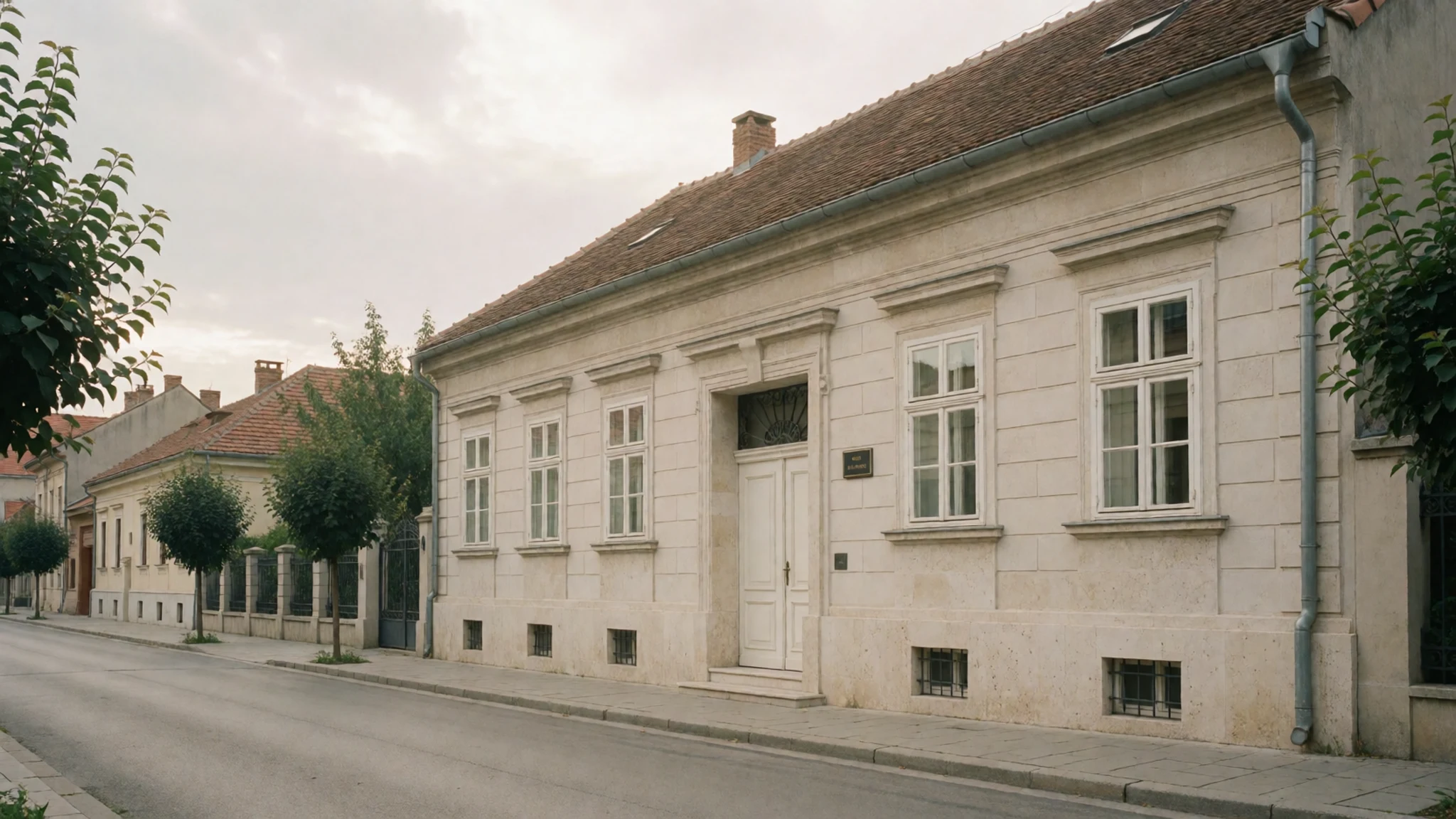
Culture
Belgrade carries a large share of Serbia's cultural life, from film and publishing to a calendar of festivals that fills the year. Film production is concentrated in the capital, and the Belgrade Film Festival, the Theatre Festival and the Summer Festival draw audiences into ordinary streets. Music has its own fixtures: BEMUS, the Belgrade Early Music Festival, the Belgrade Choir Festival and the Beer Fest, alongside a book fair that turns the autumn into a publishing season. This is a capital that treats culture as a public habit, not a side trip.
Writing from Belgrade has travelled far. Ivo Andrić wrote The Bridge on the Drina while living here; Branislav Nušić, Miloš Crnjanski, Borislav Pekić, Milorad Pavić and Meša Selimović are among the other authors tied to the city. In the visual arts, Marina Abramović and Milovan Destil Marković built international careers from this scene, and the poet Charles Simic, from Belgrade, carried the city's memory into poetry abroad.
Orthodox Christianity shapes the calendar and the look of the old town, even for residents who are not devout. Slava, the family patron-saint day, still structures hospitality in many homes. Europride has been held in the city, and public life can be politically charged around questions of identity. A visitor should dress so that shoulders and knees are covered in Orthodox churches, speak quietly, and ask before photographing people at prayer.
What to wear
Belgrade's traditional dress is the Serbian folk costume, brought out for festivals, weddings, dance companies and some family saints' days. Men combined a linen or cotton shirt with a wool or velvet jelek, woven trousers or the narrower čakšire, a sash, and the šajkača, a soft cloth cap. Opanci, flat leather shoes, covered the feet. Women wore an embroidered blouse, a fitted vest and a wool skirt or apron worked with geometric stitching, often with a belt or coin ornament. Flax, wool, cotton and leather carried the colour, red, black, white and deep blue, and in the capital this clothing is now ceremonial.
On the street, Belgrade dresses like any large European city. Office hours mean jackets, shirts and dresses; evenings lean darker and simpler, with trainers or leather shoes and a layer ready for a warm room. Weekend crowds along the waterfront dress a little sharper. Summer fabric is light; winter needs a coat, a scarf and shoes that grip wet stone. Folk costume appears when someone is performing, not on the bus.
A visitor dresses for that same continental range and for Orthodox thresholds. Covered shoulders and knees, plus a light scarf, suit church interiors; beach clothes do not, even in a hot month. Cobbles and fortress paths ask for closed, comfortable shoes. A layer for the river wind is useful in spring and autumn, and a real coat in winter.
What to eat
- Ćevapi — kafanas and neighbourhood grills
Belgrade grills serve ćevapi, small skinless sausages of minced meat, usually with flatbread, chopped onion and kajmak, a salted clotted cream. The place to eat them is a kafana, a traditional tavern, or a neighbourhood grill. It is everyday food, at midday or late in the evening.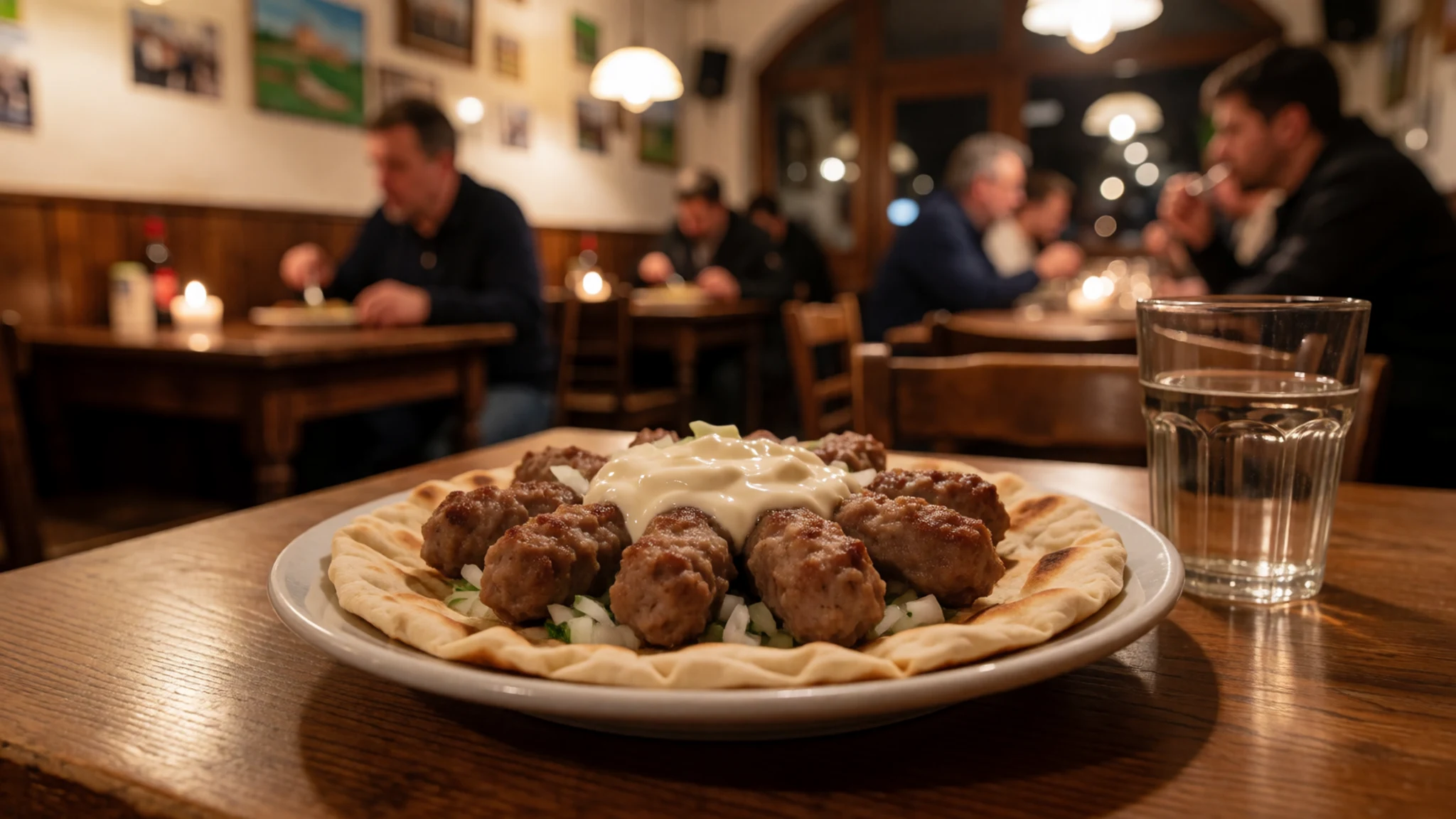
- Pljeskavica — old town and Novi Beograd grill counters
A pljeskavica is a seasoned minced-meat patty, wider than a burger, grilled and often slipped into flatbread with cheese, onion and kajmak. Traditional taverns and grill counters in the old town and Novi Beograd both serve it. It can be ordered plain, meat and bread without the extra cream.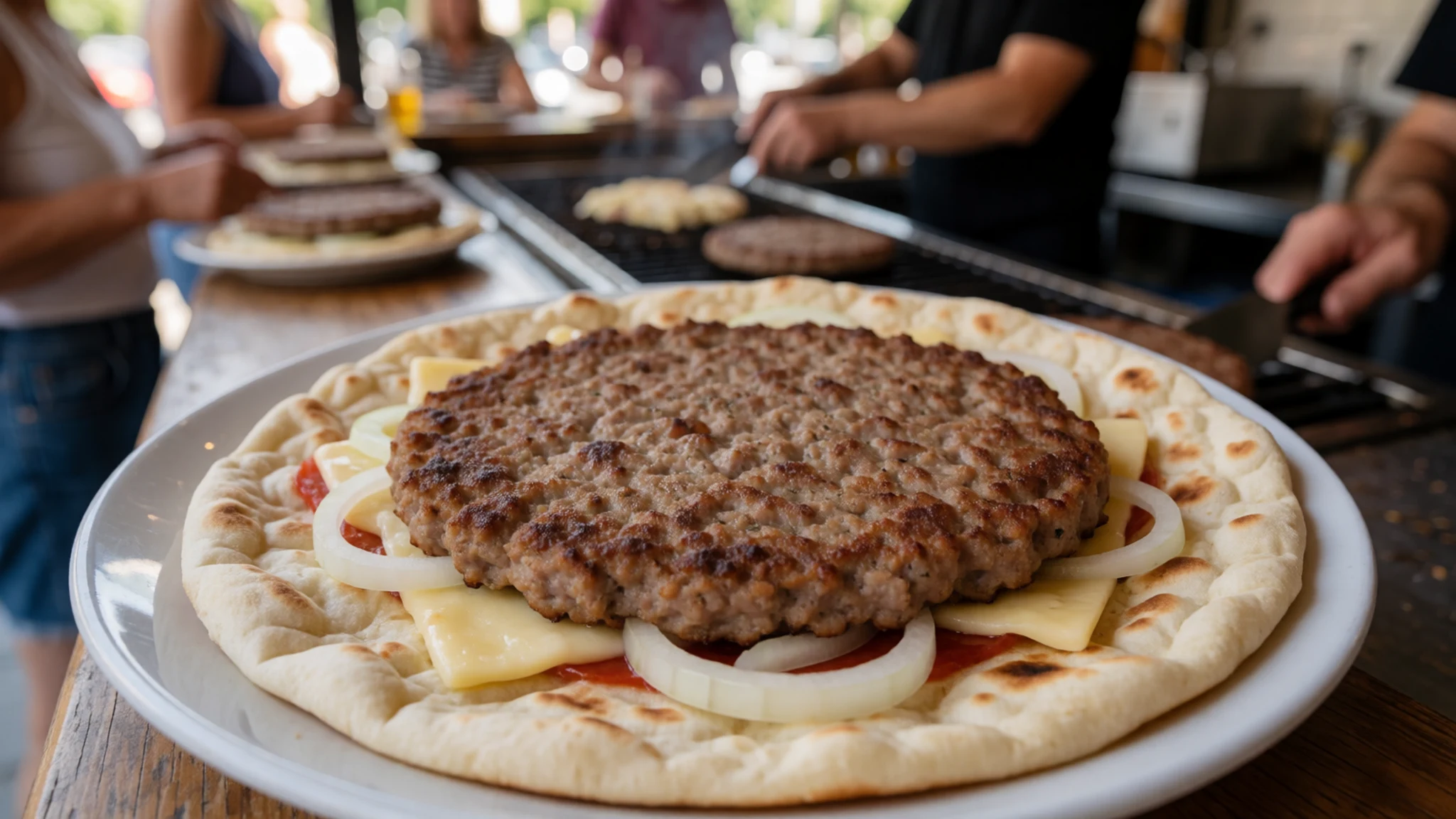
- Skadarlijske kobasice — Skadarlija
Skadarlijske kobasice are the sausages of Skadarlija, the cobbled tavern street in the centre of Belgrade, where tables stay late. They come thick and grilled, with onion, bread and often kajmak. The cobbled street, lined with taverns, is busier at night than at noon. - Burek — neighbourhood bakeries
Burek is thin dough layered with meat, cheese or spinach and baked in a round. Neighbourhood bakeries in Belgrade sell it beside the morning bread. It is eaten warm, often with yoghurt, as breakfast or a small midday meal. A cheese piece and a meat piece share the same tray. - Palačinke — cafés on pedestrian streets and river promenades
Palačinke are thin pancakes rolled around jam, walnuts, chocolate or cheese. Belgrade cafés on the pedestrian streets and river promenades serve them through the day. They are closer to a crêpe than to a thick breakfast pancake. Sweet ones close a meal; a cheese filling works as a snack.
Plan it
Best time. Late spring and early autumn are the comfortable seasons for walking Belgrade's fortress, old town and riverbanks. May, June, September and October avoid the heaviest summer heat and the coldest winter weeks. Midsummer is hot and bright, with long evenings on the water; winter is cold, grey and shorter on daylight.
How long. 3–4
Getting there. Most visitors arrive at Belgrade Nikola Tesla Airport (BEG), west of the city centre. Bus 72 runs from the airport toward the Novi Beograd rail and bus station and on to Zeleni Venac, near Republic Square. Air Serbia flies many of the regional routes, and other European carriers land here as well. Arrivals and departures share a single terminal building. For timetables and tickets, check the operator and the city site, beograd.rs.
Budget. mid
Tips
- Book rooms early if the visit overlaps a festival or a busy autumn weekend.
- Walk Kalemegdan in the morning for quieter ramparts.
- Carry some cash; smaller bakeries and taverns may not take cards.
- Confirm museum days on beograd.rs before setting out.
- Take a layer; the wind off the rivers is cooler than the streets in spring and autumn.
Etiquette
- Cover shoulders and knees in Orthodox churches, and keep voices low during services.
- Ask before photographing worshippers, clergy or street performers.
- In a traditional tavern, greet people and let the meal take its time.
Nearby
Sources
- Wikidata Q3711 (CC0)
- Wikipedia (rev 1384005166) (CC BY-SA 4.0)
- Wikivoyage (rev 5409198) (CC BY-SA 4.0)
- Photo photos/01-beograd-collage.jpg (CC BY 3.0)
- Photo photos/02-belgrade-from-the-belgrade-tower-october-2026-1.jpg (CC0 1.0)
- Photo photos/03-belgrad2006parlament.jpg (CC BY-SA 2.5 pl)
- Photo photos/04-novi-dvor-1.jpg (CC BY 3.0)
- Photo photos/05-avalski-toranj-u-beogradu-2022.jpg (CC0 1.0)
- Photo photos/06-hram-svetog-save-beograd-0005-edited.jpg (CC BY-SA 4.0)
- Photo photos/07-belgrade-waterfront-2-cropped.jpg (CC BY-SA 4.0)
- Photo photos/08-zindan-kapija-i-most.jpg (CC BY-SA 4.0)


